We were supposed to go see the latest e-bikes at CES this year, but for reasons that start with “C” and end with “OVID,” we stayed home and watched the show unfold through a computer screen.
The yearly CES show in Las Vegas is one of the world’s largest stages for consumer electronics companies to show off their latest and greatest. With record growth over the past several years, electric bikes and other micro mobility solutions were set to steal the show this year, and they did not disappoint.
From e-bikes with record-setting battery range to electrified ways to travel over snow, CES 2022 brought a number of new innovations and shined a very bright light on electric mobility. We may have missed the show in person, but we logged in virtually to see what brands were bringing to the table.
Here’s the cool new e-bikes and e-bike-adjacent things we missed playing with at CES 2022:
Delfast Top 3.0
Delfast unveiled their new Top 3.0 model, a very dirt bike looking e-bike that promises a range of up to 200 miles on a single charge. Though it has cranks and pedals, the Top 3.0’s spec sheet quickly begins to look more like an electric motorcycle than an e-bike.
Though Delfast says the Top 3.0’s speed can be limited to Class 2 settings, marketing materials and Delfast’s website boast the bike’s claimed 50 mph (80 kph) “default” speed and 56 mph (90 kph) “max” speed. There’s also the 3,000W motor, which, combined with those eye-watering speeds, make this e-bike less of an e-bike and more of an electric motorcycle. That is, unless you change the speed settings using the app.
The Bosch Smart System
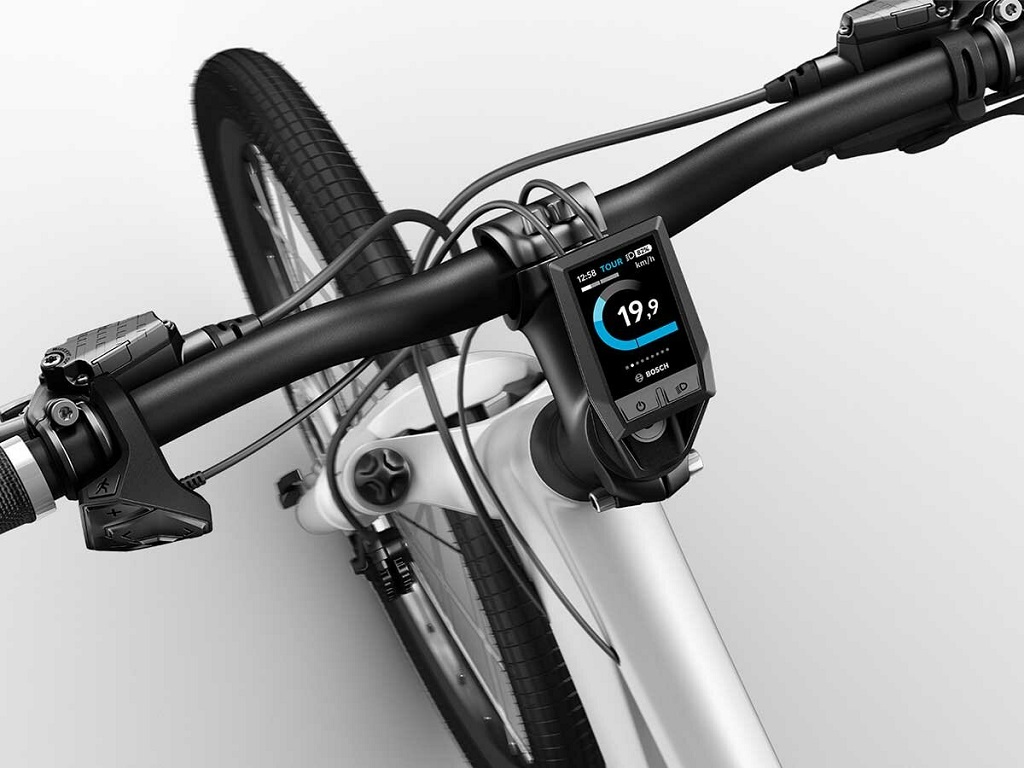
Representing the next generation of Bosch drive systems, the Smart System is Bosch’s vision for an ultra-connected e-bike future. It was formally released last August, but it earned Bosch recognition as a 2022 Innovation Awards Honoree at CES.
The Smart System is currently built around the tried and trued Performance Line CX motor and a few other new parts unveiled in August, including a larger 750Wh battery and a new wireless remote and display combo. We got to give the Smart System a try at last year’s Sea Otter Classic on a couple of BULLS e-bikes, which at the time were the only e-bikes in the U.S. equipped with the system.
Momentum Voya E+ Series
We’ll see how long that lasts.
Momentum, the urban and lifestyle e-bike arm of bicycle super company the Giant Group, unveiled the all-new Voya E+ Series at CES, a family of two lightweight commuters that claim to weigh in at just 39.7 lbs.
There’s a flat bar and drop bar model to choose from, both of which have the SyncDrive Move rear hub motor and a brand new micro battery integrated into the frame. That new battery, the EnergyPak Micro, promises a full charge in 3.5 hours and weighs in at just 8.8 lbs.
We’ve seen a handful of new e-bikes at the turn of this year that emphasize lightweight designs, including the new Aventon Soltera, which was also on show at CES but we got a sneak peek at before the show.
OKAI EB20
The new EB20 comes with the 750W Bafang Ultra mid-drive motor, a SR Suntour suspension setup and promises a full Shimano XT drivetrain (though those have been notoriously difficult to source, lately). We don’t know much about this new e-bike aside from what we’ve read in a press release and seen in photos, but it looks like it could be a neat new offering.
Moonbikes
With a 10 inch track and a whopping 3,000W motor, the Moonbike is a cross between a traditional snowmobile and an e-bike. Photos and the spec sheet show an amalgamation of parts we’d typically see on a bicycle — TRP disk brakes, an SR Suntour fork and a bicycle-ish looking front end — with parts more typical of a snow machine, namely the front ski and rear track.
It looks fun to say the least, just educate yourself on avalanche terrain and local regulations should you get one and want to venture into the wild. Snow can move on its own, people, and it tends to be not super friendly to humans when it does.
Ebike News: Momentum Lightweights, NIU Promises Low Price Double Battery Model and Much More!

Two very interesting launches are announced in this week’s news. First off Giant will be a familiar name to many readers and have chosen a US launch for a new lightweight series of e-bikes in a market perhaps better known for inclining to power and speed over lightweight e-bikes.
Secondly, probably less well-known outside Asia, and perhaps promising to break the e-bike mould even more is the Chinese moped king Niu. Despite being listed on NASDAQ and having $300M in revenue in 2019, November 2020 figures showed 98% of its sales were in China. All this could be changing with the announcement of its first conventional style e-bike – one of several innovative looking electric vehicles Niu announced that may welll be heading to the USA and Europe in 2022 – and allegedly at ultra competitive prices. Watch this space and EBR will keep you up to date!
In this week’s e-bike news:
- Giant’s lifestyle brand Momentum has two new lightweights
- China’s electric moped specialist Niu announces double battery model
- Would a 1.3lb e-bike battery be useful?
- Prices rises and shortages; more detail
Aventon Soltera: new 41 lb single speed e-bike

Post update: Catch our full in-depth Aventon Soltera review.
Aventon released its newest model on Tuesday, and it feels like a bit of a blast from the California-based company’s past.
The Aventon Soltera is a throwback to the company’s roots building simple, functional and affordable single speed and fixed gear non motorized bicycles. Like those first bikes (that’s right, Aventon got its start building traditional bikes, not e-bikes), the Soltera is an e-bike that places a premium on aesthetics and affordability.
It’s cheap — with a starting MSRP of $1,199 for the single speed variation or $1,299 if you want a 7-speed drivetrain — and the frame design echoes those of the company’s now-discontinued line of fixed gear bikes, such as the cult-loved Aventon Mataro.

It’s not identical, but the Soltera’s design has shades of Aventon’s now-discontinued line of fixed gear and single speed bicycles.
[Read more…] about Aventon Soltera: new 41 lb single speed e-bike
Zipchock E13 e-bike stand review
The Zipchock stand for electric bikes is an easy to assemble, high quality e-bike stand that allows riders to keep their e-bikes upright without a kickstand. The Zipchock design allows riders to clean, service and store their bicycles without needing to lift them into a clamp-stand or fit them with a kickstand. In this Zipchock e-bike stand review, we reviewed the Zipchock Model E13 designed for tire widths between 1 inches and 3-inches.
The Zipchock also comes in the E255 model which fits tires from 2.5-inches up to 5-inches. Between the two models there isn’t a bike we have at our Electric Bike Report headquarters that won’t be able to fit into one stand or the other.
Both these Zipchock stands bridge the gap between smaller, lighter bicycle stands and heavier, bulkier motorbike stands. The Zipchock is designed to have the best of both worlds between the two stand styles.
Zipchock stands are currently being crowdfunded on Indiegogo, with deals on the stands for those that back the campaign. The E13 we reviewed is marked down 19 percent from about $200 USD to about $165 USD.
Zipchock stand for e-bikes review: Impressions
Keep in mind that the E255 is going to be a better option for those with mountain bikes and fat tire bikes (anything above 2.5 inches). The E13 will be good for anything with a tire below 3-inches wide. The E13 and E255 both can fit both front and rear wheels with equal capability.

The Zipchock E13 is a burley bike stand built to easily support the weight of a modern e-bike without contacting the frame.
The Zipchock also comes with ground stakes for keeping the rack in place on grass and other uneven/off road surfaces. Those who go to lots of trade shows and those looking for a high quality bike stand to match their high quality bike will find a lot of value within the Zipchock. On flat ground the rack was plenty stable without the stakes, however they may be a good idea if you don’t want your stand walking off.
The E13 is a very stable stand regardless of the weight of the bike. The design uses gravity to its advantage with its down sloped ramp which cradles any wheel between 20 and 30 inches. Between the stable side plates, adjustable width and easy assembly/disassembly the Zipchock stand for e-bikes simply makes a lot of sense.

The e-bike in this photo is equipped with 2.8-inch tires, which fit easily into the E13 stand.

The stand uses an adjustable screw to manipulate how much tension is being applied to the tire.
Rad Power Bikes RadMini 4 Review 2022

Rad Power Bikes RadMini 4 Review: Summary
When I heard that we were reviewing the RadMini 4 I wondered if I was going to be able to tell the difference between its performance versus other foldable fat tire e-bikes.
I asked myself, “How much can the performance of a foldable fat tire e-bike really vary from one brand to another?” And I soon realized that they can vary in performance and experience quite a bit more than I was initially anticipating.
Testing and reviewing the Rad Power Bikes RadMini 4 showed us that not all foldable fat tires are created equal. With seemingly more refined engineering than lots of its competitors and smoother rolling tires, it didn’t take long for us to see the edge the RadMini 4 has on some other foldable fat-tire e bikes.
We quickly learned that cruising, and commuting are a couple of the activities that are even better when the Rad Power Bikes RadMini 4 is involved. Because of its 20-inch wheels and a foldable frame the RadMini 4 is ready to go wherever you are, without taking up too much space.
I had a lot of fun reviewing the RadMini 4, and it definitely provided me with a more polished experience than I was expecting.
What Is The Best Budget E-Bike?
With e-bikes offering better value than ever and companies now fiercely competing for who can come up with the best value offering in the value stakes, it can be pretty confusing trying to narrow down just how much you should spend and what features you should expect – even if you are on a pretty tight budget.
Here we try and demystify the topic by breaking budget e-bikes down into two broad price categories, low budget and lower mid-range to see just what you might expect to see in each category, whilst picking out the best value bikes out what we consider to be the very best value e-bikes out there.
Low Budget eBikes – US$1000 / £1000
Undoubtedly the hardest category to actually pick a bike in as there will be a lot of poorer quality e-bikes below these price points. EBR tends not to recommend many e-bikes below these price points and they have to stand out from the crowd. There are even e-bikes out there for just a few hundred $ but these may well be even more compromised in design or manufacturing quality than the slightly higher priced ones which themselves can be very poor. Amazon and Ebay are full of such cheaper e-bikes.
Typical purchaser complaints you might find include parts that last only a few months (including more expensive consumables like the lithium-ion battery), motors that feel underpowered compared to what they were expecting, having to deal directly with an company in Asia and waiting several weeks for replacement parts. Communication may be by email only and you may not be sure exactly who you are dealing with and where they are or what your warranty terms are (if any).
All this isn’t to say there aren’t satisfied buyers out there who have purchased such e-bikes; they may even get a few years use from their Ebay purchase but no doubt the majority of these e-bikes end up broken and at the back of the garage or at the refuse tip much more quickly than higher priced e-bikes. In other words it can be a haphazard affair.
[Read more…] about What Is The Best Budget E-Bike?
Ebike News: Mid-drive Launches from Eminent and CSC, E-cargobikes in Europe and Much More!

E-bike prices have been in the pipeline for a while but with Rad Power recently revealing the actual extent of them – up to 20% extra on quite a few models – at least now the US market will begin to be able to see if the higher price tags start to affect the phenomenal popularity of e-bikes.
Elsewhere firms like CST and Eminent are clearly hoping medium and premium priced e-bikes will not be affected by this trend to higher price tags as they choose year end to announce a range of powerful looking mid-drive machines. We also take a look at if potentially groundbreaking solid state batteries will ever arrive and the phenomenon of e-cargobikes in Europe.
In this week’s e-bike news:
- Rad Power Bikes details price increases
- CSC uses monster Bafang M620 on new fat tire model
- Eminent mtb specialists go with Shimano’s EP8 for first e-bikes
- E-cargobikes phenomenal Euro success
- Solid state batteries – reality or pipe dream?
- Updated UK trail guide for easy riders
Two Wheel Gear E-bike Bags Review — 2022

With no trunk, truck bed or passenger seat, storage space is often limited on electric bikes. That’s why a good set of bags are so important.
In this review of Two Wheel Gear’s offering of e-bike bags, we take a close look at a number of bags from the Canada-based company’s ecosystem of on-bike storage. We walk through their convertible pannier backpack, the large trunk bag and even some of their smaller bags to see how they work together and their usefulness in the real world.

Good looks and functionality are hallmarks of the Two Wheel Gear bags.
Two Wheel Gear’s innovative bags have earned the company lots of accolades in recent years and, after reviewing their lineup, we think those accolades are well deserved. They’re impeccably designed, thoughtfully appointed and incredibly useful. If you’re in the market for a set of e-bike bags, these are definitely worth a look.
Two Wheel Gear Pannier Backpack Convertible 2.0 Plus

The convertible pannier backpack from Two Wheel Gear is probably the smartest convertible bag we’ve used.
A pannier bag that quickly converts to a backpack, the Two Wheel Gear Convertible Pannier Backpack 2.0 is a smartly designed commuting bag with a padded laptop sleeve and enough room for much anything else you’d want to carry.
Two Wheel Gear sent us the larger 30L Plus version of their pannier backpack, but it’s also sold in a smaller 22L version for lighter loads. In backpack mode, the bag features two heavily padded shoulder straps with a sternum buckle.
A hidden zipper just above where the straps attach unzips to reveal the bag’s true pièce de résistance — it’s quick-attach pannier latches. Simply unbuckle the straps, tuck them inside the pouch concealing the pannier latches, fold the back of the bag into itself to reveal the latches and attach the bag to your bike. Boom — your backpack is now a pannier bag. It’s a conversion system I’ve found to work remarkably well.

The pannier latch is hidden underneath a zippered back flap. Fold the straps inside and boom, the backpack is now a pannier bag.
It does take some practice to get the hang of converting the bag quickly, but it’s about the best and cleanest solution I’ve used for a bag that converts from pannier to backpack and back again.
For storage, the 30L version of the bag we reviewed boasts a huge inner pocket large enough to easily stow shoes, a lunchbox and a change of clothes or, if you’ve already arrived at your destination, it’s large enough to carry a mountain bike-style helmet with a visor. That main compartment zippers almost entirely open for easy access, and there’s a small mesh organizer pocket for small items.
Inside another large zippered compartment is a heavily padded storage sleeve large enough for a 15-inch laptop. That compartment is backed by a semi-rigid back panel that not only protects your computer, but helps the bag hold its shape even if it’s not stuffed full.
There’s a number of other small compartments on the bag, including a soft-lined glasses compartment and another containing a bright yellow rain cover for foul weather. The bag itself is also built of waterproof-backed 600D polyester, so getting caught in the rain shouldn’t be a big issue.

The main compartment of the 30L bag is cavernous — large enough to fit a mountain bike helmet with a visor plus spare clothes.
This is the first time I’ve used a convertible pannier backpack where I didn’t feel like I had to make some sort of compromise between which worked better — the bag in backpack form or in pannier form. In pannier mode, the bag attaches to the bike quickly (once you get it down) and securely. And in backpack mode, it looks and feels like a normal high-end commuting bag. The inside compartment is huge and the organization thoughtful, the back panel of the bag is even padded so you can’t feel the pannier latches on your back.
I’ve also been really impressed with how well it works with the other bags in Two Wheel Gear’s lineup. We tested the bags on a 2022 Rad Power Bikes RadCity 5 Plus, and I was easily able to attach the pannier and Dayliner Box Bag onto the same rack with room to spare. Two Wheel Gear even made special attachment points so you can secure smaller bags to the outside of the backpack, bags like the Commute Seat Bag I’ll dive into further down in this review.
Two Wheel Gear Dayliner Box Bag

The Dayliner Box Bag attaches easily to a rear or front rack, and even has a handlebar attachment.
The Two Wheel Gear Dayliner Box Bag is a 20L weatherproof bike commuting bag designed to attach to your bike’s front rack, rear rack or handlebars, depending on your setup.
Like everything we’ve reviewed from Two Wheel Gear, the Dayliner Box Bag is a thoughtful marrying of form and function. From the outside, it’s a very clean design that looks like a cross between a large lunchbox and a nice tote bag. There’s a shoulder strap for off-bike carrying and a pair of handles should you choose to cart it around like an old-school suitcase.
Inside, nearly all of its 20L capacity is courtesy to its cavernous main compartment. Semi-rigid walls help the bag keep its shape (nobody likes a floppy bag) and there’s a few organization pockets lining the sides, including a mesh pocket, a zippered pocket and a pair of open elastic pockets I used to carry the shoes I wear when not riding.

The 20L main compartment is spacious and has a handful of mesh or elastic organizer pockets.
We attached the Dayliner bag to the rear rack of the RadCity 5 Plus, which worked really well. The attachment mechanism is simply a foolproof set of sturdy velcro straps that wrap around the rack’s top deck. I was easily able to use the Dayliner bag in conjunction with the convertible pannier backpack, but note that the RadCity comes with a very wide rear pannier rack. Had it been narrower, it may have been a hair cumbersome to use the two bags on the same rack.
But there’s a solution to this — the Dayliner bag can also attach to a front rack if you have one. If you don’t, the bag actually comes with a set of handlebar straps hidden underneath a flap.
Two Wheel Gear Dayliner Mini Handlebar Bag

Just large enough for a six-pack, the Dayliner Mini handlebar bag attaches securely to handlebars.
For smaller items, the Two Wheel Gear Dayliner Mini Handlebar Bag is an expandable roll-top 3L bag that mounts to your bike’s handlebars.
We say small because it’s one of the smaller bags we reviewed from Two Wheel Gear, but it really punches above its paygrade in the carrying capacity department. It’s designed to carry things like a phone, wallet and other accessories in an easy-to-reach location on the bike, but its roll-top design helps it carry much more.
Most notably, it’s at least large enough to fit a six pack of cans plus a few other items.
Like its larger counterparts, it’s made of TPR waterproof backed 600D polyester and uses a set of quick release straps to mount to your handlebars. Inside, there’s a pair of mesh elastic pockets and the roll top opening also features a zipper, so it can still securely close even if you jam it so full it won’t roll.
Two Wheel Gear Commute Seat Pack 1.5L

A fairly standard looking seat bag, the Two Wheel Gear version is large, full of pockets and weatherproof.
The Two Wheel Gear Commute 1.5L Seat Pack is an oversize saddle bag not quite of bikepacking proportions, but large enough to carry tools, a tube, a pump and even a light jacket or your phone.
It’s the pretty typical seat bag design — a zippered and weatherproofed main compartment with mesh organizers and a key clip — but the Commute Seat Pack has a few additional features that make it cooler than some of its competitors. In addition to its main compartment, there’s also a zippered side pocket large enough for some cash or cards and the buckled attachment that holds the bag onto your seat rails is adjustable backwards and forwards, making it compatible with a broad range of seats.
But perhaps the coolest feature is that you don’t have to attach it to your seat at all. There’s a second set of attachment points designed specifically to piggyback onto the convertible pannier backpack.

Probably the coolest feature of the seat bag is its ability to not be a seat bag. Special attachment points on the convertible backpack turn it into a piggyback bag with extra storage space.
Ebike News: Mercedes Branded E-bikes, E-bike Tax Legislation Hits Roadblock and More!

If you are a car company and want some powerful green credentials in a world where electric cars are still struggling for sales in most countries, what better way to get it than by introducing your own-branded e-bikes? Well, no better way if you are Mercedes Benz….
Also in this week’s news, we update you on the latest in the e-bike tax credits saga as it appears to be stumbling in the Senate and take a look at e-cargo hire in the UK’s Manchester, possible trail restrictions in Italy and the bike transformation of a European capital once renowned for its crazy motor traffic.
In this week’s news::
- Mercedes Benz’s new N+ e-bikes
- Senator threatens to derail Build Back Better and its e-bike tax credits
- Pedego gets major cash boost
- E-bike ski clips
- Cargoroo comes to Manchester
- Italy’s new trail laws
- Paris’s huge bike plans revealed
E-bike Trends to Expect in 2022

But 2022 will see new systems and new technologies in e-bikes – some perhaps potentially game-changing new technologies. So let’s dive in and take a look at what 2022 might have in store for those interested in e-bikes and electric micromobility.
MOTORS WITH OTHER FUNCTIONS?
MOTOR PLUS GEARS IN ONE UNIT
Although they have been in the offing for a while, even the comparatively less complex design problem of integrating gears and motor in a single hub has so far not been successfully adopted in a widespread way by e-bikes.

2022 could really be the year that changes all that as in September Bafang announced their H700 combined rear hub and automatic gear change unit would be available for series production. It claims 2 speed automatic shifting, has a 30Nm torque rating and can be used with belt drives, so it is clearly aimed at the city bike and commuting segment. At 7 lb / 3.2kg it is pretty lightweight. Bafang says automatic shifting is achieved by measuring the current speed with the bike changing gear itself accordingly. Whilst automatic gears themselves are nothing new, combining them with a rear hub motor certainly looks to be a technical step forward.
Even more complex is the task of combining multiple gears into a mid-drive motor, and although these systems have been announced previously by the likes of Revonte and Valeo, they have yet to achieve widespread adoption as both companies have been participating in what could fairly be described as ‘partner projects’ with smaller companies. Another younger company coming up on the rails is Scotland’s Intra-Drive who have also developed a combined eight-speed motor drive which is said to be heading down the crowdfunding route.
Could 2022 be the year the picture changes, with bigger companies adopting this impressive sounding technology? The French Valeo system in particular sounds good on paper, combining a 130Nm motor with 2kW peak power and a 450% gear range. Both Revonte and Valeo say they will start series production of their motors in 2022 with the first e-bikes with them going on sale in 2023.
A similarly complex technical goal is perhaps fully automatic power levels – the likes of GoCycle have a very effective traction control system on their latest version of the G4 electric folder, but the wider goal across the e-bike industry is for a rider to be able to get on an e-bike that will sense just how much effort is required and adjust the power level accordingly. You might imagine this is just a case of the bike detecting hills and applying more power but there are of course many other factors that might affect the power required at any given moment, such as headwinds and the surface under the wheels – much more tricky things for electronic systems to detect.
There are of course semi-automated systems already out there, with Bosch, Yamaha and Panasonic mid-drives having ride modes that allow motor power to vary depending on the demands placed upon it, but it may be that 2022 sees more developments in this direction. One Japanese based motor manufacturer looking to bring automated power application to hub motors is Vinka. Their Auto VA+ system featured on their RH60 motor looks a fairly unremarkable 250W unit capable of delivering 30Nm of torque, except for the fact that Vinka claims it alters the level of power provided in response to how the e-bike is being ridden. It will certainly be interesting to see if any e-bike manufacturers adopt the tech in 2022.
Perhaps 2022 will also see more developments in the wireless control area of e-bikes. Currently wireless units are mainly used to do relatively simple things like change power levels (some third party units like the Garmin eBike Remote already work with some high end models). But one development that we are yet to see is wireless throttles which are a technical challenge of a higher order. Some retrofit kits out there have tried wireless cadence sensors but these don’t seem to have taken off in a big way. Poland’s interesting looking Vekkit kit ceased production in late 2021 though the budget Ultra kit from the UK is still available.
MORE CHINESE MID-DRIVES FOR EUROPE?
Chinese firm Bafang, previously known best for budget hub motos, are clearly making waves in the European mid-drive market after many years of Chinese firms being kept at arm’s length by punitive tariffs and rules against e-bike imports from China.
Bafang now have a presence in the Netherlands, Germany, USA and in 2019 opened a factory in Poland to focus specifically on the production of mid-drives for the European market – thereby presumably avoiding tariffs. A good example of a mid-priced mid-drive e-bike on the European market is Eskute who use the Bafang M200 mid-drive on their Voyager Pro and Wayfarer Pro models. EU and UK e-bikers in particular may see yet more competitively priced mid-drives in 2022.
Bafang’s success here must surely have been noticed by other Chinese mid-drive manufacturers such as Ananda and Tonsheng, both of whom made the trip to Eurobike trade fair in September 2021, the latter for the first time. Europe itself has a number of mid-drive manufacturers who could look to grow in 2022 and appear on more e-bikes including Oli (who already feature on Olympia and Bianchi e-bikes) and Sachs.
HOW FAR WILL AUTOMATION AND CONNECTIVITY GO?
WHOLE SYSTEM CONNECTIVITY – HOW GOOD IS YOUR APP?
The big question remains, just how far is it possible for machines to imitate human behaviour in a truly accurate and helpful way? Anyone who uses predictive typing on digital devices knows it can be helpful but can also throw up some very odd results too.
So, Bosch’s new ‘Smart’ system that rolls out in 2022 will be a big deal for the company. On the surface it doesn’t look that different; there is a bigger battery and the same Performance Line CX mid-drive plus a smaller Kiox 300 display. The most important point though, say Bosch, is that all these components are connected together via the eBike Flow app and so can be updated wirelessly, giving the whole system much more potential to have new features added via software updates in future.
Currently the eBike Flow app promises to interface with other apps such as Apple Fitness, with more in the pipeline. There is also the ability to set the level of power assist in each of the four levels to suit your needs via the app – not just the % of support but torque, speed and ‘dynamic’ (perhaps meaning the rate of acceleration). If you want to go minimalist you can, as the new remote displays basic info such as battery charge level and power level, so this is all you need for e-biking if you want to dispense with displays altogether.
As it stands the eBikeFlow app actually gives a rider less connectivity options compared to the current Bosch eBike Connect system, so 2022 and beyond are clearly the time Bosch are looking to take the system up to and further than what was previously on offer.
2021 saw the launch of Specialized’s new Mastermind display system which has wireless low energy Bluetooth and Ant+ connectivity. Firstly this means you can connect to the Specialized app which, in higher spec 2022 models gives control over performance settings such as rate of acceleration and torque pressure sensing and, perhaps most usefully, allows riders to see how many charge and discharge cycles your battery has had and so whether it is within it’s warranty parameters.
In addition though it has the potential to connect to Garmin devices such as rear view radar (again this comes included on some higher spec models). It also has an electronic lock feature. With new features able to be added wirelessly, again expect more developments on the Mastermind in 2022.
With the likes of ‘smart’ connected city e-bikes from Van Moof and Cowboy attracting huge funding in 2021 it will be interesting to see how they respond to the potential competition from the likes of Bosch and Specialized in 2022.
BRAKING, SUSPENSION AND BEYOND….
Talking of predictive, automatic and wireless tech as we were above, SRAM’s Rockshox Flight Attendant system was premiered at Sea Otter 2021 and might just start to make its way onto e-bikes in 2022. In the manufacturer’s words Flight Attendant is ‘The only automatic suspension system that listens to the rider and responds in real-time. Flight Attendant uses a suite of sensors to read rider and terrain inputs to anticipate the perfect suspension position—enabling you to ride faster, ride longer, and spend less energy adjusting your suspension and more time focusing on what matters most: the unbridled joy of riding.’
Whilst further development of Bosch’s ABS anti-lock, electronically monitored braking looks like it might take a back seat for a little while (the new Smart system is not compatible with the current version), Italian firm Blubrake have been developing an ABS system aimed specifically at speed pedelecs and e-cargo bikes, where quick and safe deceleration is extra important – and Blubrake is much less visually obtrusive than the Bosch system. Whilst still a premium feature, you may start to see it on more and more e-bikes in 2022.
Note Shimano also has a patent on an ABS braking system but as yet no actual product, but clearly the race for the most effective system is on…
Arguably though, it is e-scooters – where safety concerns, especially in their interactions with vehicles and pedestrians around them are currently constantly in the news – that stand to benefit most from automated ‘safety’ features. If city authorities with safety worries about e-scooters can see the manufacturers taking steps to make the vehicles safer, they are clearly more likely to encourage them. Here’s a few examples pioneered in 2021 that you might see more of in 2022 (and undoubtedly there will be more new developments too):
‘Unagi’s new electric scooter can tell you when you’re approaching a stop sign or a giant pothole’ say the high-end e-scooter manufacturer. The Model Eleven e-scooter boasts ‘object detection’ thanks to built-in camera and sensors. Apparently ‘While the scooter isn’t autonomous, a “longer-term vision” is to use all the information from the camera and sensor to prompt the scooter to take over and brake, or slow down, in dangerous situations. But it’s not there yet.’
MIT spin-off Superpedestrian are owners of e-scooter rental company Link. Superpedestrian unveiled their military sounding system of ‘Pedestrian Defense’ in 2021 and you could well see more of it in 2022. The company hails it as ‘a breakthrough in preventing sidewalk riding and other unsafe scooter behaviour.’ Apparently ’The new system doesn’t just detect unsafe behaviours, such as riding on the pavement, but also puts a stop to them in real-time in order to prevent serious injuries.’
A real coup would be share e-scooters that park themselves, and although the Spin S-200 system was publicised at the start of 2021, things have gone quiet since. But could 2022 be the year it starts to make an impact in the real world?
MORE ‘URBAN MOBILITY’ LAUNCHES
With ‘net zero’ being the thought on the minds of many people and organisations around the world, the more practical and easy to ride urban e-bikes are the more popular they will be. So expect to see plenty more urban e-bikes launched in 2022 with easy to use, low maintenance features such as belt drives and step thru frames.
Evelo’s Omega Step-thru will be one of the most anticipated e-bikes of 2022 as it fulfills this city bike brief in spades, blending comfort, power and low maintenance in one package. It will feature a Dapu 750W mid-drive with an optional second rack mounted battery for huge range, Enviolo AUTOMATIQ CVT gearing and Gates Carbon Belt drive system.
A more European take and on the low maintenance city e-bike and equally anticipated in 2022 is Cube’s Supreme Hybrid model with super smooth welding and some models featuring a belt drive, suspension seatpost and Schulz Speedlifter stem that allows the bars to be turned at 90 degrees for easy storage in hallways and the like.
Although launched in the US at the end of 2021 those in Europe might expect to see the futuristic -looking Vaast E/1 appearing on their streets. It’s termed an ‘urban adventure e-bike’ and features a Bosch Performance Line CX mid-drive, front and rear carriers as standard and an innovative-looking Naild React full-suspension system, said to separate pedalling from suspension movement.
There are very few electric trikes around, let alone tilting trikes. So the fact Cube made great play of their prototype tilting design in 2021 augers well that the bike will appear in the future, whether that be 2022 or beyond; Cube are a company focused on producing as many e-bikes as possible at the best price possible and unlikely to spend time on a project for publicity’s sake only. The trike itself is based on BMW’s Dynamic Cargo concept. The front connects to the rear via a pivot axle. This allows the ‘bike’ part of the vehicle, which carries the rider, to tilt for corners, while the rear loading platform remains stable. The idea is to preserve the bike ride feeling of a regular bike but also have the stability of a non-tilting rear load area.
One Cube bike that will be appearing in e-bike shops in 2022 and clearly aimed at city dwellers is the Fold Hybrid, their first folding e-bike and like all their other production models utilising a Bosch mid-drive. The Cube Fold Hybrid will be available in both belt drive/5-speed gear hub and chain-derailleur versions. The two versions will feature a Bosch Active Plus mid-drive and the hub-geared model will have the Performance motor. Only euro prices have so far been released; €2,899 for the Fold Hybrid Sport and €3,299 for the hub-geared Fold Hybrid with the punchier motor.
MORE SINGLE SPEED AND CARBON E-BIKES?
SINGLE SPEEDS
Taking the opposite approach to all the high tech e-bikes featured so far, many single speed e-bikes try to make things about as simple as you can get. You can check out our full article on the subject here, but you can expect more single-speed launches in 2022. Here are a few to look forward to:
A very classy looking single speed with excellent torque sensing and electronic key plus mudgards and lighting. Projected UK availability Feb/March 2022
A lightweight looking machine with carbon belt drive, torque sensing, a small, powerful motor and an attractive price tag. Projected global availability January 2022.
The new name for London firm Analog Motion and a company with a successful track record of both running crowdfunding campaigns and producing single speed e-bikes. Their current indiegogo campaign promises a very attractively priced single speed with belt drive, balloon tyres and an airsprung saddle. Projected UK availability March 2022.
MORE CARBON FRAMED E-BIKES
More crowdfunding is sure to be taking place in 2022 and as well as single speed projects keep an eye out for more carbon as a rash of small firm launches in 2021 of lightweight carbon-framed e-bikes might start rolling onto the streets in 2022.
It was hard to know where to put this tech packed e-bike but we eventually settled under carbon fibre simply because the funky-shaped frame with integrated display and lighting stands out so much. However, it also features what seems an almost impossibly advanced list of tech features for a reasonable price, including voice control, fingerprint unlocking, GPS tracking, millimeter-wave radar and gyroscopic sensing. Shipping globally, estimated Feb 2022.
Evari UK
Touted for release in 2022 is the UK’s Evari, with a sleek carbon monocoque frame, distinctive blade forks, a Bosch Performance Line CX motor and its own app plus a host of high tech features.
Perhaps most novel of all next year’s touted carbon offerings is the Buddy Bike from Norway which features ‘a seamless carbon/composite frame…..injected in Germany and….less energy-intensive than the production of traditional bicycle frames. It is made of 100% recyclable carbon composites where a return pan system has also been introduced. The top model Buddy Bike sX1 has a powerful engine from Germany’s Sachs at 112 Nm. Adapter solutions enable several engine options such as Bosch, Bafang or others.’
WILL BATTERY E-BIKE RECYCLING TAKE OFF? AND OTHER BATTERY MATTERS
Lack of recycling facilities could lead to huge environmental problems and damage the very positive impact e-bikes have had in the US and UK. Lithium batteries are dangerous and difficult to recycle but it is entirely possible and economic to do so; specialist knowledge and infrastructure are what’s required. In a recent report, e-bike industry expert Ed Benjamin warned of a ‘tsunami’ of old e-bike batteries that would need to be disposed of in coming years.
Good news though – February 2022 should start to see US e-bikers being able to return old e-bike batteries to a growing network of e-bike dealers. The scheme was kickstarted by Specialized and recycling specialists Redwood in the US with PeopleForBikes later teaming up with Call2Recycle, described as the nation’s largest most reliable battery recycling program experts, to launch the first industry-wide e-bike battery recycling program in the United States.
Over in the UK Specialized has announced an e-bike battery recycling joint venture for 2022 with Ecolamp, a UK waste disposal carrier with a history of recycling household electronics and in a separate scheme with Bristol’s Eco Recover and Midlands firm Fenix the plan is collect many more old e-bike batteries for Fenix to recycle – they claim they are the only UK-based solution for lithium-ion battery recycling so if they don’t recycle them the materials will be exported to the USA or Europe for recycling or even worse end up as landfill.
SIGNS OF MORE RADICAL CHANGE?
It’s always fun to look a bit further into the future and speculate if 2022 will see any developments in various possible long term trends.
2021 saw Van Moof announce their dual-motored V e-bike project – an e-bike with a potential top speed of 37mph. They make it clear it’s a long term project and it seems regulatory change will be needed if they are to ever become really popular. If e-bike speed limits were ever increased it seems BMW for one will be ready to enter the fray; their concept bike with multiple electric assist limits controlled by geofencing was outlined in 2021 and it will be interesting to see if the project goes further in 2022.
Velomobiles and ‘e-bike powered mini-cars’ didn’t have a great 2021 with both DryCycle and Bio Hybrid ceasing their efforts. But 2022 is bound to see more try; for example joining existing projects such as Frikar and CityQ will be Hopper, who premiered in 2021 at Eurobike. If the Citroen Ami, a small, low speed electric car has success in 2022 in the UK and the US it may well give a boost to the popularity of all those nascent ‘e-bike car’ projects out there, as people get more used to seeing very small three and four wheeled fully enclosed vehicles on the street.