

Best Electric Bikes Under $1,000 | 8 Best Options For 2026
Jul 01, 2026
 18 Comments
 Share
Share
When you’re on a budget, it can be tough to find the right balance between an affordable electric bike and a quality electric bike — but it’s not impossible. To help you sort out the affordable gems from the cheap lemons, the Electric Bike Report team has compiled our list of the best electric bikes under $1,000.
To be fair, it’s not easy to make a quality e-bike under $1,000 (even before inflation), so we’ve resigned ourselves to raising that price cap a little here and there to include some great deals. These bikes are priced near enough to that mark – or we’ve seen them on sale often enough – that we consider them worth a mention.
With a majority of budget e-bikes being sold online, it can be difficult to judge whether the bike you’re looking at is worth your money. Lucky for you, the experts here at Electric Bike Report have ridden hundreds of e-bikes. We are extremely familiar with all the bikes on this list, and we’re confident they’ll serve you well.
Please note that over the past 12+ months, the e-bike industry has been affected by numerous tariffs. The prices noted here were under (or around) $1,000 at the time of writing, but they may change at any point.
Our Best Electric Bikes Under $1,000:
*Electric Bike Report aims to help consumers find the right electric bike for their needs. When you buy a product we recommend, we may earn a commission.
Sponsor
Sponsor
Watch Our 2026 Best Electric Bikes For $1000 Video
Lectric XP 4
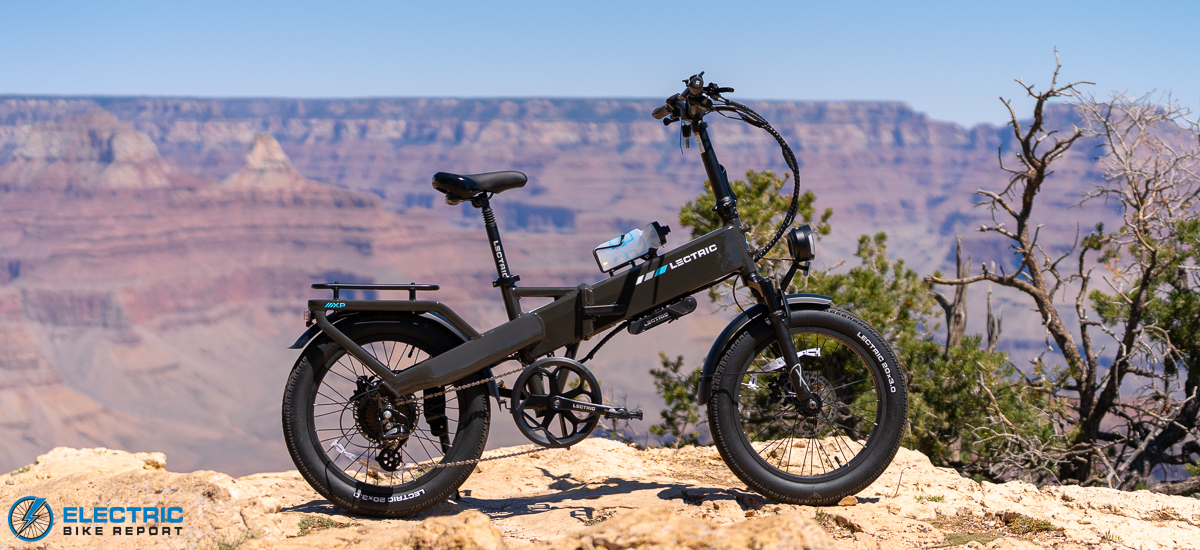

Lectric caught lightning in a bottle with the XP. This compact folding bike took off and became the number one selling e-bike in North America, with over 400,000 riders and counting. Its secret? Packing in more performance and features at the $999 mark than anyone thought possible.
Now in its fourth iteration, the Lectric XP 4 takes things even further in terms of design, functionality, and fun—while still holding the line at that same budget-friendly price. It’s easily one of the best values in the e-bike world today.
The XP 4’s 500W motor delivers impressive punch, and its 10.4Ah battery provides solid real-world range. Riders get a comfortable, upright ride thanks to relaxed geometry, upgraded touch points, and an easy-to-navigate color display.
It’s also a folding bike that doesn’t feel flimsy. The frame packs down small enough to fit in most car trunks, but still feels planted and stable at speed. That confidence is boosted by an intuitive torque sensor and an 8-speed Shimano drivetrain that makes hitting top-end Class 3 speeds doable, but you can push softer for a more mellow and slow ride too.
Versatility is another standout trait. The 150-lb capacity rear rack supports a wide range of use cases, from carrying another adult (with passenger package add-ons), to mounting a Yepp child seat, or even outfitting it with cargo accessories like fishing rod holders or insulated food delivery bags.
And if you want even more power and range, for a few hundred dollars more, Lectric offers an upgraded XP 4 model with a 750W motor and a massive 17.5Ah battery—one of the largest we’ve ever seen in a folding frame.
Oh, and did we mention it set new benchmarks in our hill and brake tests? The XP 4 didn’t just catch on—it earned its place as a best-seller for all the right reasons.
Looking at similar bikes? Check out the top-recommended electric folding bikes.
XP 500: Read Full Review | Watch Our Video Review
XP 750: Read Full Review | Watch Our Video Review
 Pros
Pros- The XP 4 has great acceleration and climbing power thanks to its 500W motor (while the 750 has even more).
- Pedaling is efficient at higher speeds thanks to an 8-speed drivetrain and an 11-32t cassette.
- The bike’s hydraulic disc brake system functions well with one of the best results we’ve seen in our brake test.
- A suspension fork with 50mm of travel makes for smoother travel on bumpy roads.
- Carrying a passenger is possible with the rack’s 150-lb weight capacity, a new Passenger Mode, and a line of optional accessories including a Yepp Maxi Child Seat.
 Cons
Cons- When folded, the frame can make contact with itself. Add a little rubber or silicone patch to make sure the paint doesn’t chip.
Ride1UP Portola

We might have awarded the Lectric XP 3.0 as the best multi-purpose option, but the Ride1UP Portola is a strong competitor. It, too, packs in a whole bunch of features for the same price point of around $1k.
The Portola was clearly made to match (and beat) the XP. It lines up spec-for-spec in many areas and kicks things up a notch in others.
Case in point: the Portola is equipped with expected features such as a suspension fork, hydraulic disc brakes, and a welded cargo rack with a 130-lb weight capacity. And yes, it also folds down for easier storage or transport.
It’s also equipped with an exhilarating and punchy 750W motor. The Portola is a fairly small e-bike, but the motor makes it quite mighty.
We dig the Portola’s sleek appearance and solid ride feel. It handles better than many other folding bikes we’ve tested thanks to a non-telescoping stem that doesn’t have the notorious wiggle telescoping ones often do. As a result, however, the bike is a bit more suited for smaller riders below 6′ (or those who don’t mind limited leg extension).
We’re impressed with the Portola’s value, too; it’s worth every penny of its price tag.
Sponsor
Pros- It’s one of the most feature-packed e-bikes on the market for $1000 with hydraulic brakes, a suspension fork, a 750W motor, a passenger-capable rack, etc.
- We liked the handling and overall ride feel from the reinforced stem and the grippy tires.
- The 8-speed drivetrain is unique at this price, providing a gearing range capable of moving quickly or climbing.
- The Portola is more refined than most folders, with added touches including reinforced clamps and a strap for keeping the bike together when folded.
Cons- Leg extension runs on the small side, so the bike is best for riders under 6′.
Retrospec Chatham Rev 3
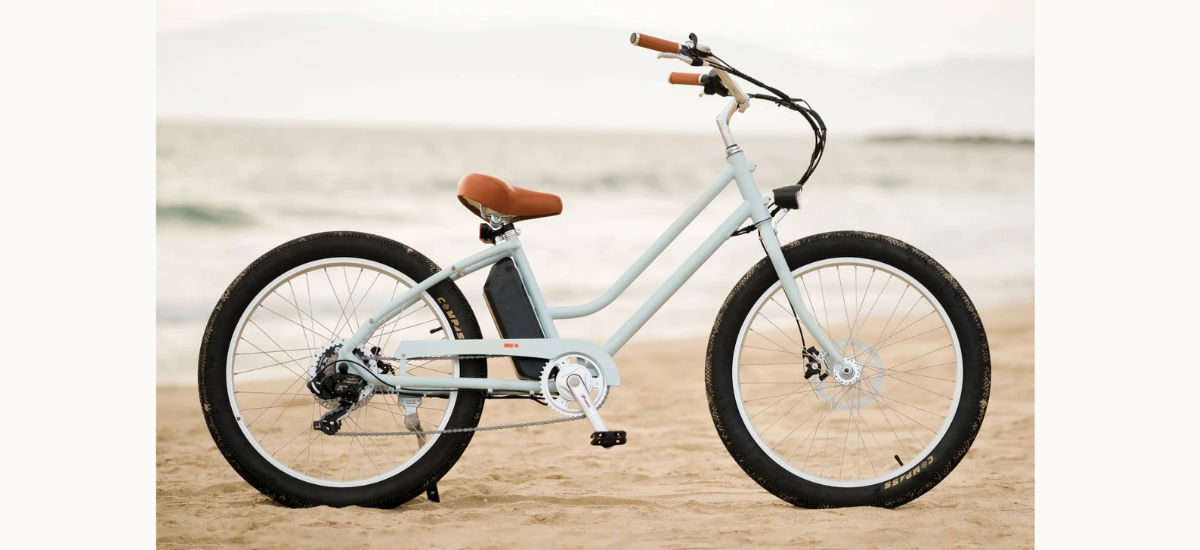
There are a lot of e-bikes in the world that are technically affordable. The Chatham Rev 3 is one of the few that actually delivers a good, well-equipped cruiser-style e-bike while doing so. At right around $1,000, it’s one of the least expensive full-size, non-folding e-bikes we’ve tested — but it feels like something you’d expect to pay a few hundred dollars more for.
Retrospec got here by focusing on the essentials and skipping the extras. No suspension fork. No torque sensor. A 350W rear-hub motor instead of a 500W. Mechanical disc brakes instead of hydraulics. On paper, that list might read as a collection of compromises, but in our experience, it doesn’t feel that way.
The 350W motor is more capable than its spec suggests. In our Hill Test, it climbed on par with the throttle average for similar bikes, and was faster than average when pedaling — making its performance more meaningful than its modest size might suggest. Its cadence sensor does the work for you rather than asking you to match it, which makes the Chatham particularly easy to ride.
The brakes and tires also deserve a mention. Despite the mechanical setup, the Chatham stopped in 19’5″ in our Brake Test — well ahead of the 22’0″ average we’ve recorded from similar models. Credit goes partly to its wide 26×3″ tires, which provide grip while absorbing bumps along the way, which is especially appreciated on a bike with a rigid fork.
Available in both high-step and step-thru frame styles with a combined rider height range from 5’2″ to 6’4″, the Chatham isn’t trying to be a niche bike. It comes in six color options, has a clean color TFT display, and is genuinely simple to operate from the first ride. If you want a comfortable, no-drama beach cruiser that can handle some hills and happens to be priced well under $1,000, this one is hard to pass up.
Pros- The cadence sensor makes pedaling easy and low-effort, great for new riders or those who just want a relaxed experience.
- Despite mechanical brakes, the Chatham posted an above-average stopping distance in our Brake Test — better than most similar models.
- The 350W motor handles hills better than expected, finishing our pedal-assist Hill Test a few seconds faster than the cruiser average.
- Solid riding position and wide, swept-back handlebars make for a comfortable and ergonomic ride.
- Both high-step and step-thru frames are available, covering a wide height range from 5’2″ to 6’4″.
Cons- Mechanical disc brakes and a 7-speed drivetrain work well here, but hydraulics and an extra gear or two would add real value at this price.
Lectric XP Lite 2.0
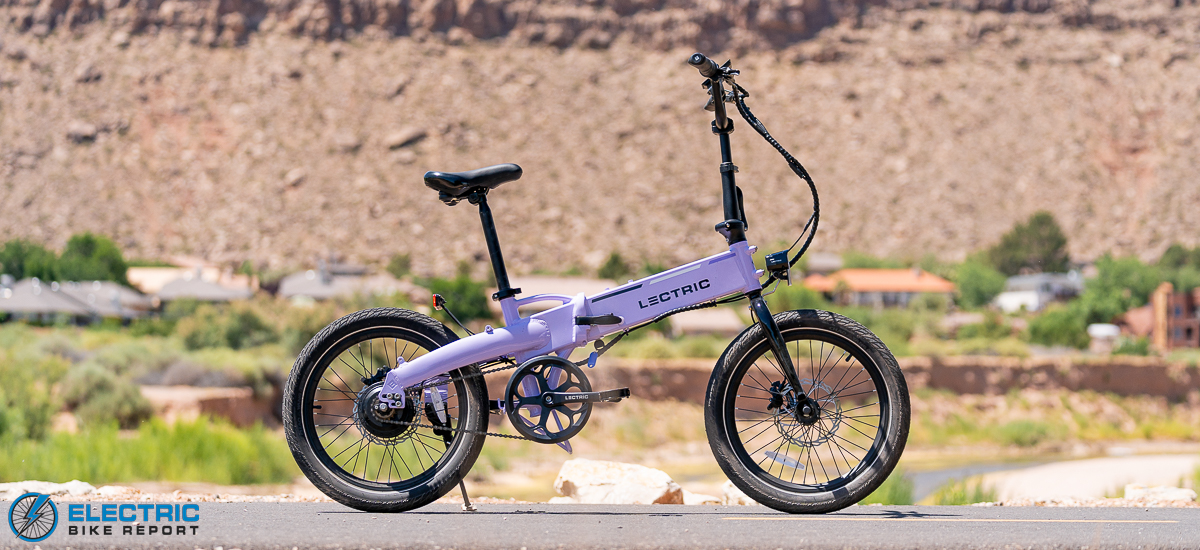
To put it simply, the Lectric XP Lite 2.0 is the most affordable e-bike to earn our stamp of approval. And if we’re being honest, we don’t just give it a thumbs-up; we give it an emphatic two.
The number of features Lectric packed into the Lite is impressive. It’s the lowest-priced e-bike we’ve tested with hydraulic disc brakes, and its color display looks better than many black-and-white LCDs we’ve seen on bikes double the price. At the time of writing, Lectric is also throwing in their “Elite” 850-lux headlight.
To be clear, sacrifices had to be made to achieve such an affordable price tag, but these trade offs also have upsides. For example, the Lite 2.0 has a single-speed drivetrain, but this ultimately makes it less complicated to operate. The bike’s 300W motor and 374-Wh battery might seem limiting on paper, but the pairing gave us respectable mileage in our Range Test.
The Lite is also one of the more practical and portable folding e-bikes we’ve tested, as it weighs less than its more heavily-specced cousins.
To offset some of its limitations, Lectric offers a handful of uncommon upgrade options, including a larger 672-Wh battery and a Gates Carbon belt. The latter option takes an already low-maintenance setup and gives it a longer life, a smoother feel, and quieter operation!
The bottom line is that, while the Lectric XP Lite 2.0 is relatively stripped-down, most riders won’t miss anything—especially at this price.
Sponsor
Pros- We don’t think you’ll find better value at the Lite 2.0’s price point below $1k.
- Those who want more can choose to upgrade to a Gates Carbon Belt Drive or get nearly double the range with a larger battery.
- The included hydraulic disc brakes are extremely rare on e-bikes at this price point.
- A low weight of 48 lbs makes the Lite 2.0 an extremely portable option.
- The color display is another uncommon feature we love!
Cons- It’s to be expected with a single-speed drivetrain, but the bike ghost pedals at higher speeds.
Retrospec Beaumont Rev 3 ST
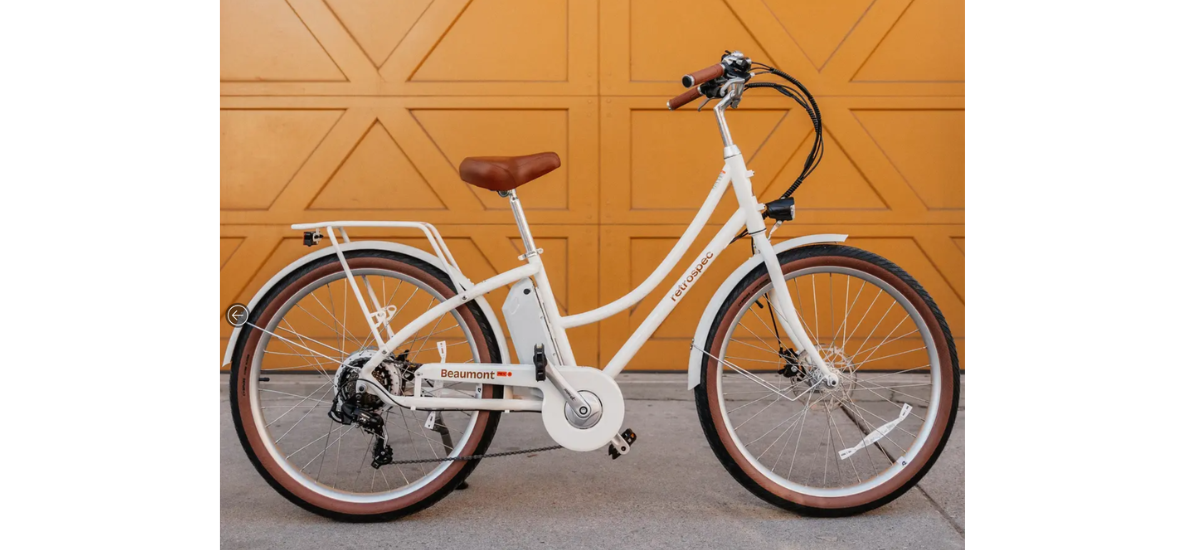
The Beaumont Rev 3 ST proves that affordable pricing doesn’t have to come at the cost of style. Five color options on a bike priced at or under $1,000 is unusual, and it says something about how Retrospec thinks about this bike — it has genuine personality baked in, every bit as important as budget-friendliness and real-world performance.
The riding experience itself is intentionally calm. A 350W rear-hub motor with a cadence sensor keeps the power delivery gentle and undemanding — easy to manage for newer riders, and genuinely enjoyable for anyone who just wants to cruise. It’s not going to win any hill tests, and Retrospec isn’t pretending otherwise. What the Beaumont does well is exactly what it’s designed for: relaxed, comfortable riding in flat or gently rolling terrain.
It also comes loaded for commuting. Full fenders, a rear cargo rack, integrated lights, and a chain guard are all included. In the budget cruiser category, those extras often raise the price, but here, they’re just part of the package.
The step-thru frame fits riders from 5’0″ to 5’10”, which is a narrower range than most bikes on this list — something to check before buying. But within that range, the upright riding position, adjustable stem, and wide Dutch-style handlebars make the fit feel natural and comfortable. The 27.5×2.4″ tires roll smoothly and soak up enough road texture to keep the ride pleasant despite the rigid fork.
For the right rider — someone who wants a stylish, easy-going cruiser they can ride to work or the park without breaking the bank — the Beaumont Rev 3 ST is likely to be a really satisfying option.
Sponsor
Pros- More color options (five) than most bikes in this price range — more personality than the typical budget cruiser.
- Comes fully outfitted for commuting, including fenders, a rear cargo rack, integrated lights, and a chain guard.
- Gentle, approachable power delivery is easy to manage for new or returning riders.
- Comfortable upright riding position with multiple adjustment points to tailor the fit.
- Relaxed handling and smooth-rolling 27.5×2.4″ tires make for a pleasant, low-stress ride.
Cons- Fits a narrower height range (5’0″–5’10”) than most bikes on this list — taller riders should look elsewhere.
- Mechanical brakes and the 350W motor keep performance modest; not the bike for hilly terrain or riders who want more power.
Sponsor
GOTRAX F3 2.0
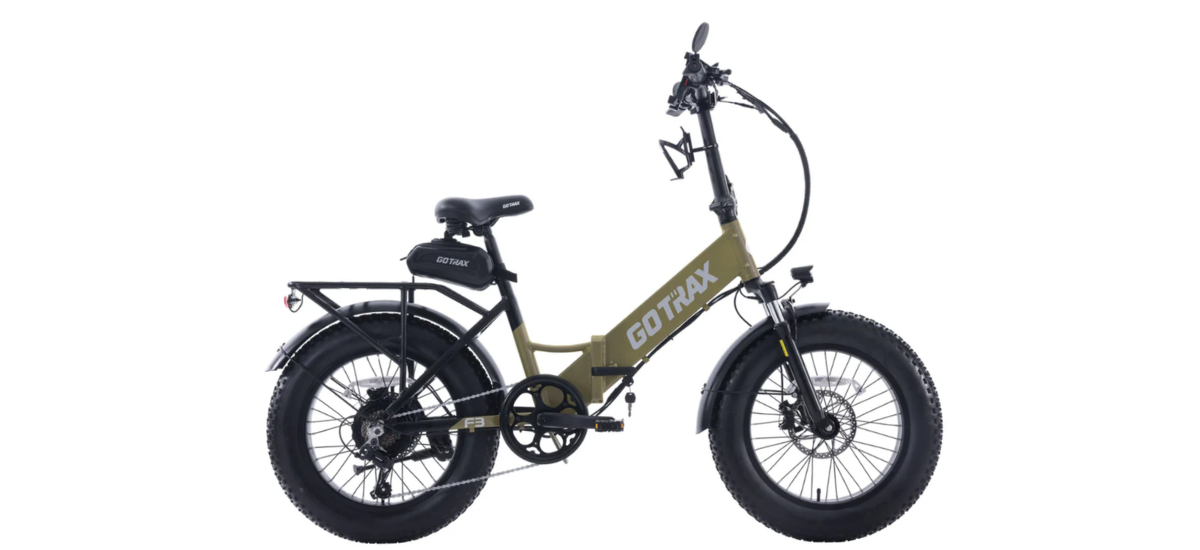
Note: The GOTRAX F3 2.0 is still going through our full testing process at the time of writing. This section is based on our initial riding impressions and available data. The complete review is in progress — check back for full test results.
At $949, most folding fat tire e-bikes make you wait to buy the extras separately. The GOTRAX F3 2.0 doesn’t require such a compromise. Accessories such as side mirrors, a phone holder, a bottle cage, a small storage bag, a folding lock, and a 3-amp fast charger are all included out of the box. It’s one of many things that makes this bike a steal — and one that’s worth considering.
Compared to the narrower tires common on folding bikes in this price range, the 20×4″ fat tires add meaningful cushioning over rough pavement, gravel, and dirt paths. The ride feels planted and forgiving in a way that most similarly priced folders, especially ones that sacrifice comfort for weight savings, simply don’t.
Power comes from a 500W rear-hub motor paired with a cadence sensor — enough muscle to be capable while also feeling controlled and approachable. The bike ships as Class 2 but can be unlocked to Class 3 through the display. GOTRAX advertises up to 60 miles of range from the 672Wh battery, which is a larger capacity than most competitors at this price, and we’ll be putting that claim to the test shortly.
Clearly, the F3 is not trying to be the fastest or most powerful option on this list. Instead, what it does is put together a well-rounded, practical package that works for a wide range of riders without requiring extra steps to make it functional from day one.
Pros- Comes loaded with accessories — side mirrors, phone holder, bottle cage, storage bag, folding lock, and a 3-amp fast charger — all included at $949.
- 20×4″ fat tires add real comfort and versatility over rougher terrain compared to narrower folding bike alternatives.
- 672Wh battery is larger than most competitors at this price; GOTRAX advertises up to 60 miles of range.
- 500W motor with cadence sensor keeps the power delivery approachable and easy to manage.
- UL2849 certified.
Cons- Full test results are still in progress — range, hill, and brake performance are not yet confirmed from our standardized testing.
GOTRAX Ranger
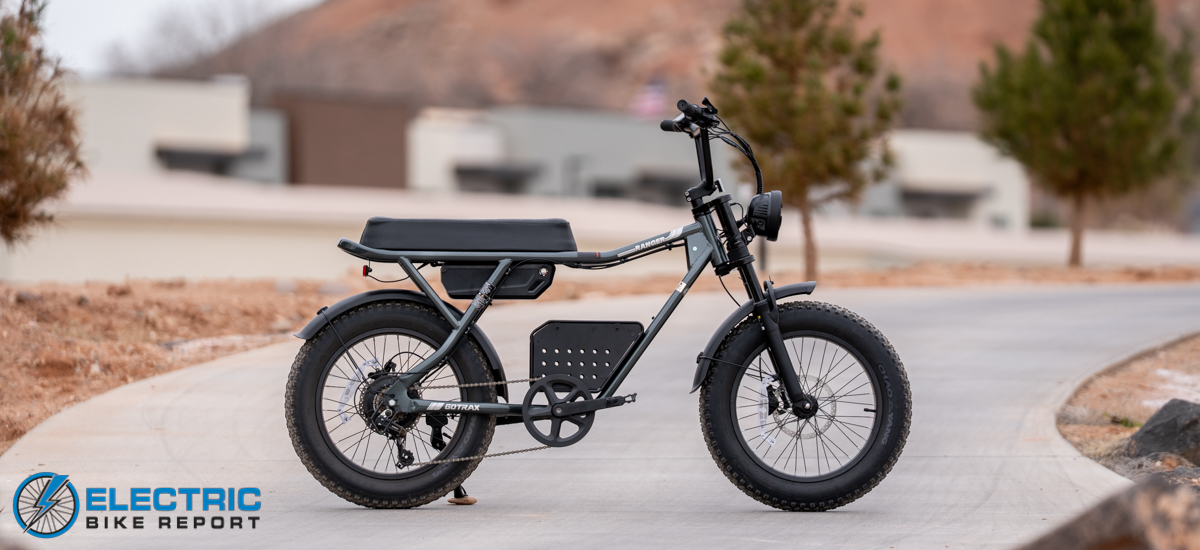
The moped-style e-bike category has been blowing up, often with models that cost well north of $1,000. The GOTRAX Ranger sits at $899 and it doesn’t feel like a compromise; it’s every bit as fun as you’d expect.
Part of that comes down to ride comfort. The combination of a dual-crown suspension fork, a long bench-style saddle, and 20×4″ fat tires gives the Ranger a smooth, cushioned feel that holds up on rougher pavement.
The brakes deserve their own mention. In our Brake Test, the Ranger stopped in 16’3″ — one of the shortest distances we’ve recorded from any e-bike we’ve ever tested, across every style and category. That result, from a bike at this price, is remarkable! Hydraulic disc brakes at this price point are uncommon already; performing at this level is something else entirely.
Hill climbing was solid too. Despite weighing 81 lbs — considerably heavier than the 500W bikes we compared it against — the Ranger actually finished our Hill Test faster than that group’s average on both throttle and pedal assist. Clearly, the motor punches above what its spec suggests.
It’s also genuinely easy to ride. The throttle accelerates gradually while still feeling plenty capable, and the five assist levels are evenly spaced and straightforward to understand. Most riders will end up relying heavily on the throttle, which is exactly what a moped-style bike is built for.
For riders who want the moto look without the moto price — or parents shopping for a teenager who wants something cool but not overpowered — the Ranger is the answer to a question the market hasn’t had many good answers to.
Sponsor
Pros- Priced around $899, it’s one of the most affordable moped-style e-bikes tested — and it feels and performs like it should cost more.
- Brake test result of 16’3″ is one of the best stopping distances ever recorded across all e-bike styles in EBR testing.
- Hydraulic disc brakes are included — rare on e-bikes anywhere near this price.
- Smooth, cushioned ride quality from the dual-crown suspension fork, bench saddle, and 20×4″ fat tires.
- Approachable power delivery with no jarring surges; easy to operate for newer or younger riders.
Cons- The bar-based battery readout fluctuates with motor draw, making it harder to estimate remaining range accurately.
- Throttle speed isn’t tied to the assist level, which limits how precisely riders can control their speed.
Heybike Mars 2.0

The Heybike Mars 2.0 is one of the punchier and more powerful bikes on this list, so if you want something fast that’ll get you over some steep hills easily, this bike fits the bill! Depending on which version of the bike you get, it has speeds up to 32 miles per hour, and it did a really solid job in our Hill Test.
We liked that the Mars came with both a suspension fork and a suspension seatpost to make the ride cushioned and comfy. Many of the bikes on this list can be upgraded to include a suspension seatpost, but in this case, it comes standard. The fork has 65 millimeters of travel, and the seatpost has 45 millimeters, so there’s plenty of squish for riding on or off-road in comfort.
The final highlight is the Heybike app that the Mars 2.0 can be paired with. This is one of the more functional apps you’ll find on a bike at this price point; you can use it to change class settings and the top speeds of each of the bike’s assist levels, plus you can track ride data and get turn-by-turn navigation using either Apple or Google Maps.
Pros- A zippy 750W rear-hub motor (peaking at 1200W) delivers snappy acceleration and solid hill-climbing ability.
- Smooth and cushy ride quality, courtesy of a 65mm-travel suspension fork and a 45mm suspension seatpost.
- Fine-tune your top speed and PAS settings through the Heybike app for a personalized riding experience.
- The rear cargo rack isn’t just functional with its 120-lb capacity—it also adds to the bike’s sleek aesthetic.
Cons- The cadence sensor keeps the ride effortless, but a broader gear range would help prevent ghost pedaling at higher speeds.
- We’d like it if the app’s speed limits could change PAS and throttle independently.
Why We Consider E-Bikes Around $1,000 “Entry-Level”
Buying an e-bike much cheaper than $1,000 can be likened to gambling. With costs cut so low — added to the high likelihood you’re ordering a bike that cheap off a website — you really don’t know what you’re going to get.
The truth is that e-bikes are not cheap machines. Quality e-bike motors and batteries are not inexpensive to make, so they’re not typically cheap to buy.
We’ve found a handful of companies that do a good job building safe, durable, and inexpensive e-bikes, but some others do little to ensure that the products they sell will work as advertised. Amazon and AliExpress are the Pandora’s Box of cheap e-bikes, so it’s wise to steer clear of them.
While there are some exceptions, our general rule of thumb is that $1,000 is your best starting point. That’s enough money to get you quality components and trustworthy manufacturing. It’s also the most common lowest price we see from reputable e-bike manufacturers.
How We Picked The Best E-Bikes Under $1,000
Every bike on this list has been tested and reviewed by the experts here at Electric Bike Report, but we had to whittle it down from the hundreds we’ve ridden. To determine which bikes made the cut, we considered the following factors:
- Utility/Usefulness: Just because an electric bike has two wheels and a motor doesn’t mean it’s going to be useful. We analyzed each bike’s practicality to ensure that it lived up to its claimed capabilities.
- Quality to Price Ratio: Regardless of how much you spend, the bike has to be worth the money. The higher the price, the more features and performance we expect from it. Each of these bikes matched or exceeded our expectations.
- Longevity: There are plenty of bikes you can purchase under $1,000 that probably will not last more than a year or two. We made sure that wasn’t the case with each bike we chose by examining its componentry, its build quality, and its manufacturer.
- Ride Quality: Is the bike worth riding? Five miles into a ride, are you still comfortable? We considered these factors (and many more) to ensure that the comfort, handling, and features of each bike added up to an enjoyable, comfortable, and user-friendly experience.
- Diversity: A wallet-friendly list that contains only city bikes or beach cruisers wouldn’t be useful to shoppers seeking something of a different style. We selected a variety of options of different styles to appeal to a broad range of tastes.
Bottom Line: There Is Probably an Electric Bike Under $1,000 For You
The market is flooded with electric bikes under (or around) $1,000, but when you take quality, style, and availability into account, that list gets a lot shorter.
Every bike on our list is there for a reason. All of these bikes meet the qualifications for what we would look for in a budget-friendly electric bike. With so many options to choose from, which is right for you? We encourage you to read, compare, and ask questions!
What did you think about our picks for the best electric bikes under $1,000? Are there ones we missed that you’d like us to review? Let us know in the comments below!
Sponsor
Sponsor
Reader Interactions
Comments
Leave a Reply




Enjoyed the write up. The lectric bike looks like the one for me. Can upgrade seat post and saddle for 99 more and also has a basket set front and back for about 148. Good deal
Prices have certainly gone up, and availabilty gone down. https://wooshbikes.co.uk/?rambletta is the only one I can find at the moment. I built my own with a step-through frame from AliExpress. I could not find a frame anywhere else. That cost about £800 with a 15ah battery, rack, mudguards etc. This may not be feasible for many, but is worth considering if you cannot find what you want.
Allow me suggest the Oggi Lite Tour E-500 from Brazilian Oggi Bikes. An 8 gear e-bike perfect for urban rides. It’s light, kind aggressive with 700cc (witch makes it very fun for those experienced on standard bycicles) and can be perfectly ridden without electric assistance even in climbs (due it’s Shimano Acera 8 speed setup)
That’s a cool looking $1500 bike. Then again, a lot of $1500 bikes look cool compared to $1000 bikes.
You guys are way off base. Ecotric offers a great product! No mention however! Many customers report thousands of mostly carefree riding with many, many options and GREAT CS!
Wrong. I have an Ecotic and nothing but problems. Chain broke off, gear not shift. Battery not seat in right ( fitting ) . Just very cheap bike. Never buy anything from that company.
4″ fat tires provide you with the comfort, stability, and confidence to take your Superhandsome wherever you want to adventure.
Electric bikes can help to alleviate some of the strain so that you can pedal easier and enjoy the activity of cycling more. In fact, whenever you feel tired after climbing up a steep hill, you can just activate your electric bike and let it do the heavy lifting while you enjoy the scenery.
Been researching e-bikes for purchase to take on RV trips. Good information about economical bikes.
Thank you 🙂
For those who already have a decent bicycle you should look into conversion kits. For under $500, including battery, I converted my Trek into a great ebike that after 2 years is still running flawlessly.
What about HeyBike? They have a whole line of $800 electric bikes.
I would appreciate I ate any feedback.
We’d need to test them out first before we could weigh in on them.
There are too many options on this “under $1,000” list that are, indeed, over $1,000.
Do u know anything about natko step though pony or Elegance ebiked for under $1000
Hi Colleen, thanks for the question! I’m not familiar with that brand, but after glancing at the pages for those bikes, a few things jumped out. First, price – they’re significantly below the level we consider to be a good starting place to balance quality, longevity, and performance. Second, they don’t give much detail on the components they use. Third, the motors and batteries on those bikes are relatively low-powered, which isn’t bad if you know to expect you’ll be putting in some legwork, but won’t give you as much assistance as most of the bikes on our list above.
This article is dated November of 2023 yet all the comments are dated prior to that. How does that work?
Hi Bill, thanks for the question. We originally created this page prior to November of 2023, but we made our most recent update to the content on the page at that time.