

Pedego Launches Two Second-Gen E-Bikes, Section 301 Tariffs Replace Section 122, Trek Limits Its eMTBs to 20 MPH │ TWR Ep 94
Aug 02, 2026
 1 Comments
 Share
Share
Plus PeopleForBikes’ Push for Domestic Bike Assembly, Victoria BC’s Bike Route Network, Aventon Level 4 REC vs Trek Borrego, & More!
Pedego is back with the first two bikes in its second-generation lineup, and the changes run deeper than the new angular frames. The Ridge Rider 2 and Latch 2 both get 750W motors, 835 Wh batteries with LG cells, and prices that undercut what we’re used to seeing from the brand. New Pedego Holdings CEO Larry Pizzi says four more models are coming before the end of the year. Is this the reset Pedego needed?
The tariff situation shifted again. The Section 122 tariffs that applied to every US trading partner expired on July 24th after a court ruled them illegal, and the administration has replaced them with new Section 301 tariffs of 10% and 12.5% that cover more than 99% of imports. Most of the countries that actually build bikes and e-bikes are on the list. How these interact with existing duties determines whether prices move, and we break that down below.
Trek announced that every eMTB it sells in the US will be limited to Class 1, and the company is asking the rest of the industry to do the same. President John Burke framed it as protecting trail access now rather than explaining its loss later. Not everyone in the industry sees it that way. Will other brands follow?
We also dig into PeopleForBikes’ campaign behind H.R. 3904, a bill that would let manufacturers import components tariff-free for the purpose of domestic assembly. Response from bike companies has been mixed, and the objections are worth hearing out. Read on below, or watch and listen above!
Sponsor
Sponsor
This Week’s E-Bike News Headlines
Pedego Launches the Ridge Rider 2 and Latch 2, Its First Second-Gen Models
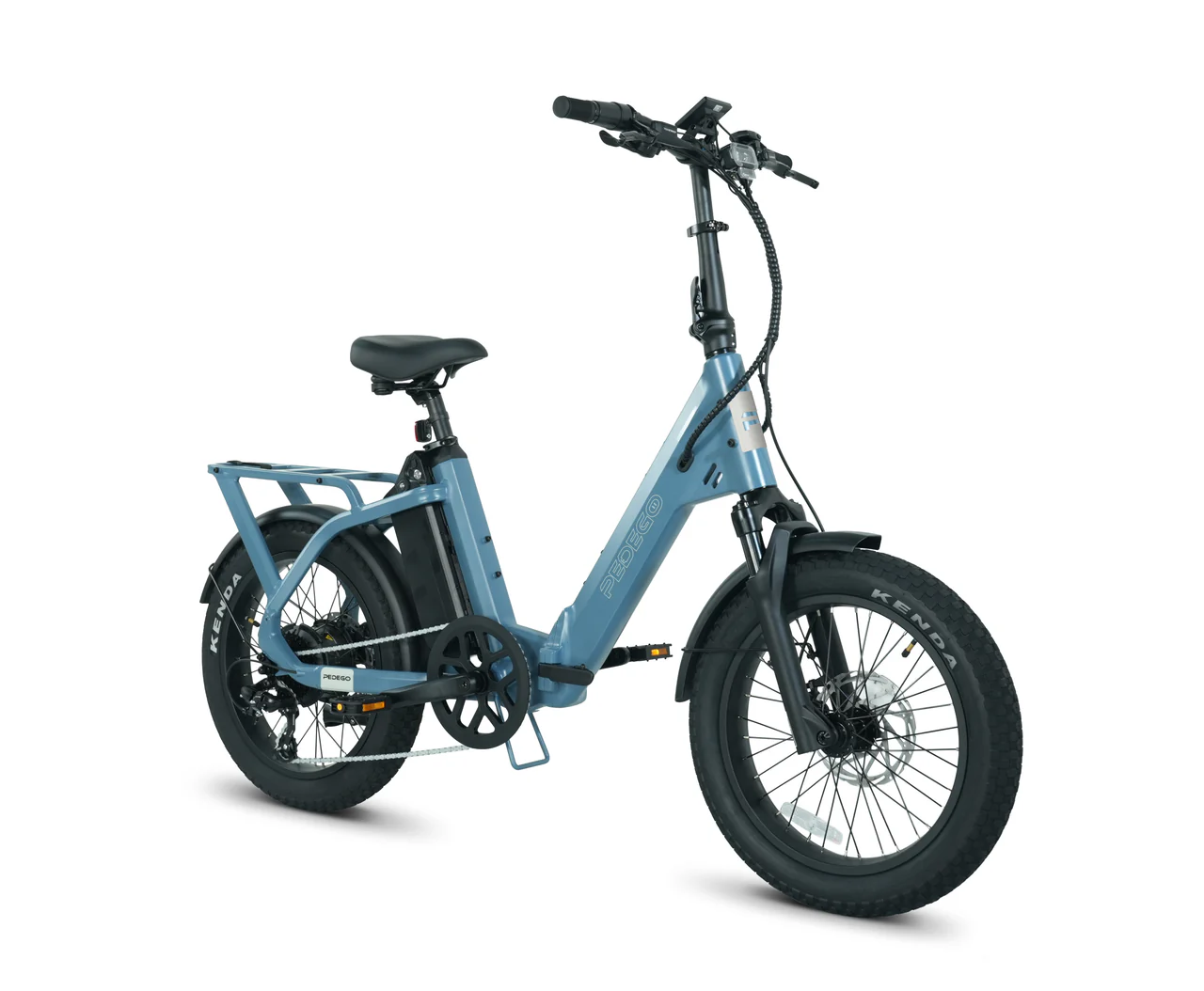
Image Source: Pedego
Pedego has released the first two bikes in its second-generation lineup. The Ridge Rider 2 is a step-thru, SUV-style commuter, and the Latch 2 is what the brand calls a mid-size folding e-bike. Both ship as Class 1 and Class 2 e-bikes, and dealers can enable Class 3 mode where it’s legal.
The two share a long list of hardware. Each runs a 750W rear-hub motor with 90 Nm of torque, an 835 Wh battery built with LG cells, and a pedal assist system with both torque and cadence sensing modes. Both also get a twist throttle, a color display, integrated lights with turn signals, an 80mm coil fork, UL 2271 and 2849 certification, and Pedego’s 5-year warranty. The frames have been redesigned with a more angular, contemporary look.
The Ridge Rider 2 adds an 8-speed Shimano drivetrain with an Acera derailleur, a 30mm suspension seatpost, Tektro hydraulic brakes with a 203mm front rotor and 180mm rear, 27.5×2.4″ tires, and an MIK-HD rack rated for 100 lbs. Pedego claims up to 90 miles of range. MSRP is $2,195, with a launch price of $1,999 running until August 16th.
The Latch 2 uses a 7-speed Shimano drivetrain, Tektro hydraulic brakes with 180mm rotors, 20×3″ tires, and a welded rack that also carries 100 lbs. It sells for $1,695.
Larry Pizzi, CEO of New Pedego Holdings, isn’t downplaying what’s ahead. “The Ridge Rider 2 and Latch 2 are just the opening act. With four more Pedego 2.0 models launching before the end of this year, we are fundamentally redefining what riders and dealers should expect from a premium electric bike – exceptional quality, serious performance, and prices that make sense. This is the new Pedego.”
Our Take:
Spend more than a few seconds looking at these bikes and the acquisition shows through. Urtopia’s parent company bought Pedego, and a lot of the components are now shared between the two brands. We don’t see that as a knock. It’s a pretty clear explanation for how Pedego arrived at $1,999 for a fully equipped, UL-certified commuter with an 835 Wh battery, which is not the price range the brand has been known for.
Four more models before the end of the year is an aggressive schedule, so we’ll be watching how the rest of the 2.0 lineup shakes out. In the meantime, our sister channel, Electric Bike Review, has already published reviews of both bikes. Head over there if you want a closer look before the launch pricing on the Ridge Rider 2 runs out.
New Section 301 Tariffs Replace the Expired Section 122 Tariffs

Last week the administration announced new Section 301 tariffs of 10% and 12.5% that apply to more than 99% of all imports. Six countries fall under the 10% rate, including Canada, Mexico, and the EU. A total of 54 countries are subject to the 12.5% rate. Several major bike and e-bike producers are on the list, including China, Taiwan, Vietnam, Cambodia, and Malaysia. Steel and aluminum products already covered by Section 232 tariffs, bike chains being one example, are not affected.
Some context helps here. Before this, imports from all US trade partners were subject to a blanket 10% Section 122 tariff, which was put in place after the administration’s IEEPA tariffs were ruled illegal. The Court of International Trade then ruled the Section 122 tariffs illegal as well. They expired on Friday, July 24th, and the administration has appealed that decision.
Where it gets complicated is the overlap with Most Favored Nation duties. Many bikes and related products carry MFN duties between 5.5% and 11%, and the new Section 301 tariffs will not stack on top of them. If a product’s MFN duty is higher than the Section 301 rate, nothing changes. If it’s lower, the total gets raised to the 301 rate. A product from Taiwan or the EU with an MFN duty under 10% goes up to 10%. Products from Switzerland, Korea, and Japan with duties below 12.5% go up to 12.5%. Anything already above those numbers stays put.
As we’ve covered before, these tariffs are meant to penalize countries that import goods made with forced labor, along with countries whose laws against it aren’t strictly enforced. There’s an interesting wrinkle with Canada: Canadian products appear on the list, but bicycles made in Canada are exempt under the United States-Mexico-Canada Agreement. The administration has threatened a 50% tariff that would apply to exempted products, currently set to take effect August 18th.
Our Take:
We’ve said it before and we’ll say it again: the constantly shifting tariff situation is a mess. Tracking what applies to which product from which country now requires a spreadsheet and a decent amount of patience.
We don’t support forced labor, and we understand the reasoning behind going after it. We also don’t want to see bike prices climb any higher than they already have. Our hope is that this gets resolved in a way that removes the tariffs and keeps bikes at prices people can actually afford.
Trek Limits Its US eMTBs to 20 MPH and Urges the Industry to Do the Same
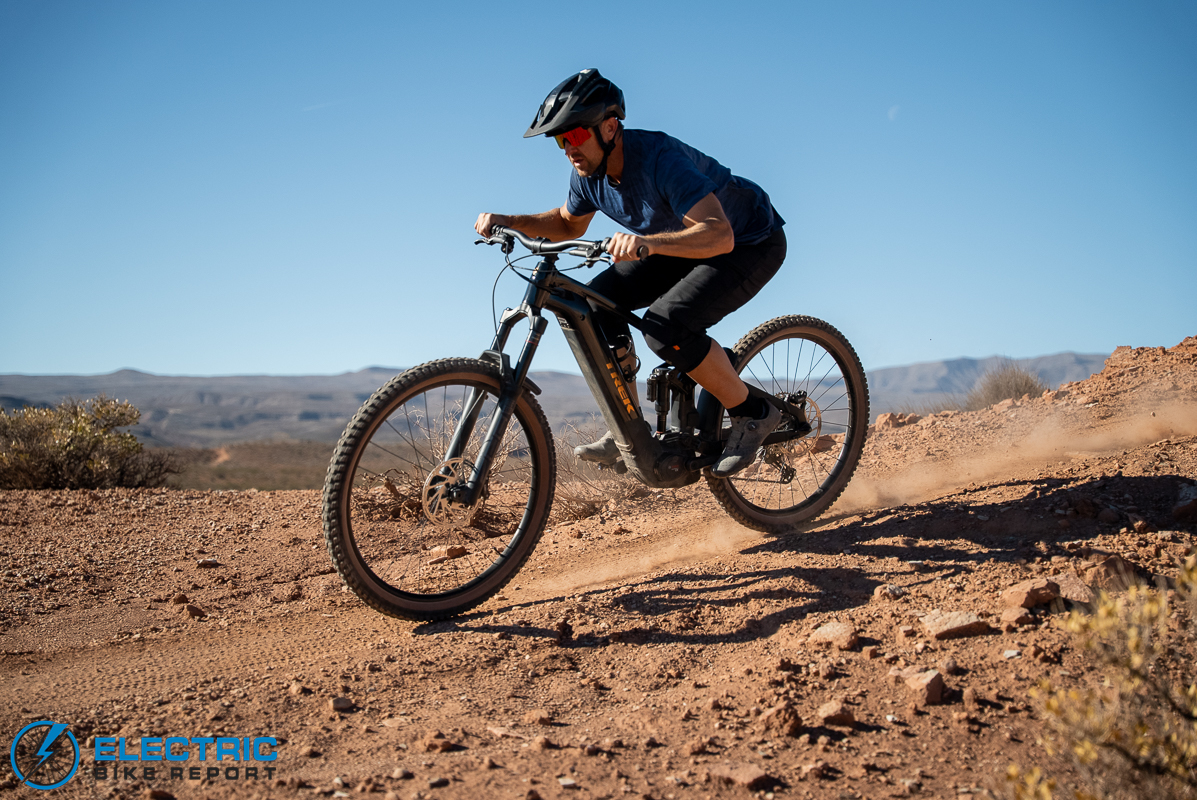
Image Source: Trek
Trek announced that every eMTB it sells in the US will be limited to Class 1. The restriction is self-imposed. The company says it wants to be a better neighbor to analog mountain bikers and other trail users, and to avoid abusing the respect and permissions that e-bike riders have been granted. Trek is also concerned that manufacturers pushing past or flatly ignoring speed and power limits will bring crackdowns and restrictions down on everyone.
Trek President John Burke put it this way: “As an industry, we’ve worked for decades to earn access to trails and bike paths. We’d rather lead with responsibility today than explain tomorrow why riders lost access to the places they love and to a sport that makes the world a better place.”
He continued, “Trek’s mission is to change the world by getting more people on bikes. E-bikes are a great way to get more people riding, but that’s only possible if people continue to have access to places to ride. These limits are about protecting what all riders have.”
The company is encouraging other manufacturers to make the same move, pointing to rider safety, trail access, and growth of the sport. This applies to eMTBs only. Trek will keep selling other e-bikes with throttles and pedal assist up to 28 mph.
Our Take:
This is a slightly odd move coming from Trek. Their eMTBs have traditionally kept assist levels pretty modest, while the real push on power output has come from elsewhere. Avinox, for one, has defended its numbers publicly, saying the company prioritizes safety and legality while giving heavier riders and riders with disabilities a way into the sport.
We land somewhere in the middle. Safety matters and protecting trail access matters, but we also want to see as many people out riding as possible. Education is a huge piece of this. If you’re new to riding, be considerate of the other people on the trail and look into some training.
PeopleForBikes Backs a Bill to Bring Bike Assembly Back to the US
Image Source: The Pros Closet
Last summer, Florida Republican Representative Vern Buchanan and California Democratic Representative Mike Thompson introduced the US Bicycle Production and Assembly Act, H.R. 3904. The bill would create a 10-year window in which manufacturers could import foreign-made bike components without paying import taxes, as long as those components go toward bikes assembled in the US.
The numbers behind the push are stark. According to PeopleForBikes, the US produced 9 million bicycles a year in 1997, about 75% of the domestic market. Today, more than 97% of the bikes sold here are built elsewhere and imported. Companies that want to assemble domestically currently pay the tariffs we just covered on imported frames and components. The bill’s premise is that a decade of relief would buy the industry enough time to build the infrastructure needed to make bikes here affordably.
Chris Bell, PFB’s Director of Federal Policy, said, “Policymakers have increased the pressure to ‘build at home’ without addressing the specific challenges faced by the U.S. bicycle industry. We saw an opening to shape the conversation before the conversation got shaped for us. We want to create a business environment where our members have the ability to scale up their domestic production and assembly.”
He added, “Today, tariff barriers make it economically unrealistic for the vast majority of the U.S. bicycle industry to even consider building on U.S. soil. HR 3904 removes those barriers. Our goal is to give many bicycle companies something they haven’t had in a long time: a choice.”
PeopleForBikes launched a website to gather support for the bill. It includes a fact sheet, a summary, the full text, and a tool that helps people contact their congressional representatives.
Response from the industry has been mixed. Cane Creek President and CEO Brent Graves sees a gap in the legislation, since it doesn’t address companies that assemble in the US and then export. “This bill is an issue for me because it leaves domestic parts assemblers out in the cold,” he said. “Sure, parts we assemble that go to domestic bike assemblers would be tariff-free, but as I understand it, parts that Cane Creek assembles that are sold to non-domestic bike assemblers would face a tariff. Why is assembly of a bike treated better than assembly of a bike suspension fork? To add insult to injury, Cane Creek has been assembling in the U.S. for 50 years, but a start-up domestic bike assembler would get preferred tariff treatment.” He also doubts the bill would change much, saying he doesn’t believe Americans want to work in factories.
Others see real upside. Pat Cunanne, an industry veteran who advises Hyper Bike Company, said, “If HR 3904 passes as-is and the 301 tariffs stay in effect, there will be a huge transfer of assembly back to the USA. Hyper would start assembly quickly; our plans are ready to implement.” Pivot CEO Chris Cocalis agrees. Before the Section 301 tariffs, Pivot did all of its assembly in the US, and the tariffs forced the company to scale that back. “Passage of HR 3904 would make U.S. assembly very attractive to not only Pivot, but I assume most of the largest brands in the U.S. as well,” Cocalis said. “Long-term, I believe it would bring back some component manufacturing to the U.S. to support the increased assembly volume similar to what has occurred in Europe.”
Our Take:
Graves raises a fair point. It’s tough to justify why assembling a complete bike gets better treatment than assembling a suspension fork, and a company that’s been building here for 50 years shouldn’t end up at a disadvantage compared to a brand-new operation. There are wrinkles to work out.
Even so, the direction is a good one. We’re glad to see PeopleForBikes pushing for domestic production instead of waiting to see what gets decided for the industry. If you agree, head to PFB’s website and use their tool to tell your representatives to support the bill.
Sponsor
You Asked, We Answered. Questions Covered In The Weekly Recharge
- Is the Trek Borrego overpriced next to the Aventon Level 4 REC at $1,999?
- Which is the better pick for a shorter rider in hilly terrain: the Aventon Level 4 REC or the Aventon Pace 5 REC?
- How does the Monarc Tracer compare to the Velotric Discover 3?
- Are beach cruisers really heavier than commuters, or is that just a style penalty people assume?
E-Bike Deals Found This Week
- Heybike – View Heybike Deals
- Mars 3.0 – $1,199 – Highly responsive full-suspension fat tire folding e-bike
- Alpha – $1,299 – Remarkably affordable mid-drive fat tire e-bike
- Saturn – $999 – One of the best prices we’ve seen on a full-suspension moped-style e-bike
- Lectric – View Lectric Deals
- XP Lite2 Long-Range – $999 – Comes with rack, fenders, suspension seatpost, side mirrors, and a phone mount. A simple but effective single-speed folding e-bike.
- XPedition2 Dual Battery – $1,799 – Comes with orbitor handrail attachment, suspension seatpost, phone mount, and elite headlight. One of the most value-packed cargo e-bikes we’ve tested.
Make sure to tune in to the full episode to see the e-bike trail system highlight and rider of the week! Want to be featured in future episodes? Comment on any YouTube video or page of the website, or send to [email protected].
Sponsor
*Please help support our efforts at Electric Bike Report. We work hard to provide the highest quality content, news, and reviews for our readers – and our sponsors make all of this possible. Please visit our sponsors from their ads on our website and let them know that you appreciate what they do for the e-bike industry and Electric Bike Report
Sponsors
Sponsor
Reader Interactions
Comments
Leave a Reply




I am strongly against Trek and Bosche’s policies. Some cars and SUV’s have top speeds of over 150mph but we still allow them on city streets with 25mph speed limits. I want to be able to ride an ebike at 28mph with a throttle on the street to get to a trail where I would be perfectly ok with a speed limit for all bikes both electric and nonpowered. I think we need a 20mph assist limit on bikes for young teens and then 2 classes of ebikes for adults those with top assisted limit of 28mph and another class for ebikes with assist at speeds of more than 28mph. I think throttles should be permitted on all ebikes. We shouldn’t worry so much about the capabilities of the 2 wheelers and be more concerned with reckless operation of any bike at any speed. BTW, I have owned a class 3 Trek Allant +8S for about 5 years. When I bought it I would have preferred Trek eMTB but didn’t want to be limited to 20 assist. If I were buying an ebike today I would not buy a Trek because I would want one do everything ebike 28mph, throttle and suspension. Many are now offered from other companies at prices much less than Trek.