

Premium E-Bike Maker Leaves the US, CA’s Conflicting E-Bike Bills, IL May Require Insurance & Registration | TWR Ep 80
Apr 26, 2026
 3 Comments
 Share
Share
Plus E-Bike Bills in Minnesota, New Laws in Utah, Best Folding E-Bike Breakdown, New Orleans Bike Levee Top Trail, & More!
This week in e-bikes, Riese & Müller adds their name to the latest list of European brands walking away from the US market, citing tariff chaos that’s made long-term planning nearly impossible. If you’ve been eyeing one of their bikes, the clock is ticking.
On the regulatory front, states aren’t waiting for the feds to figure it out. Illinois and California both have bills moving through the pipeline that could reshape who can ride what, how fast, and where licensing, registration, and motor limits are all on the table.
The conversation around how to regulate e-bikes and e-motos continues, with some bills proposing harmful, sweeping crackdowns on everything with an electric motor. Other states are proposing a more measured approach. Continue reading below to find out more!
Sponsor
Sponsor
This Week’s E-Bike News Headlines
Riese & Müller To Pack Up And Leave the US This Summer
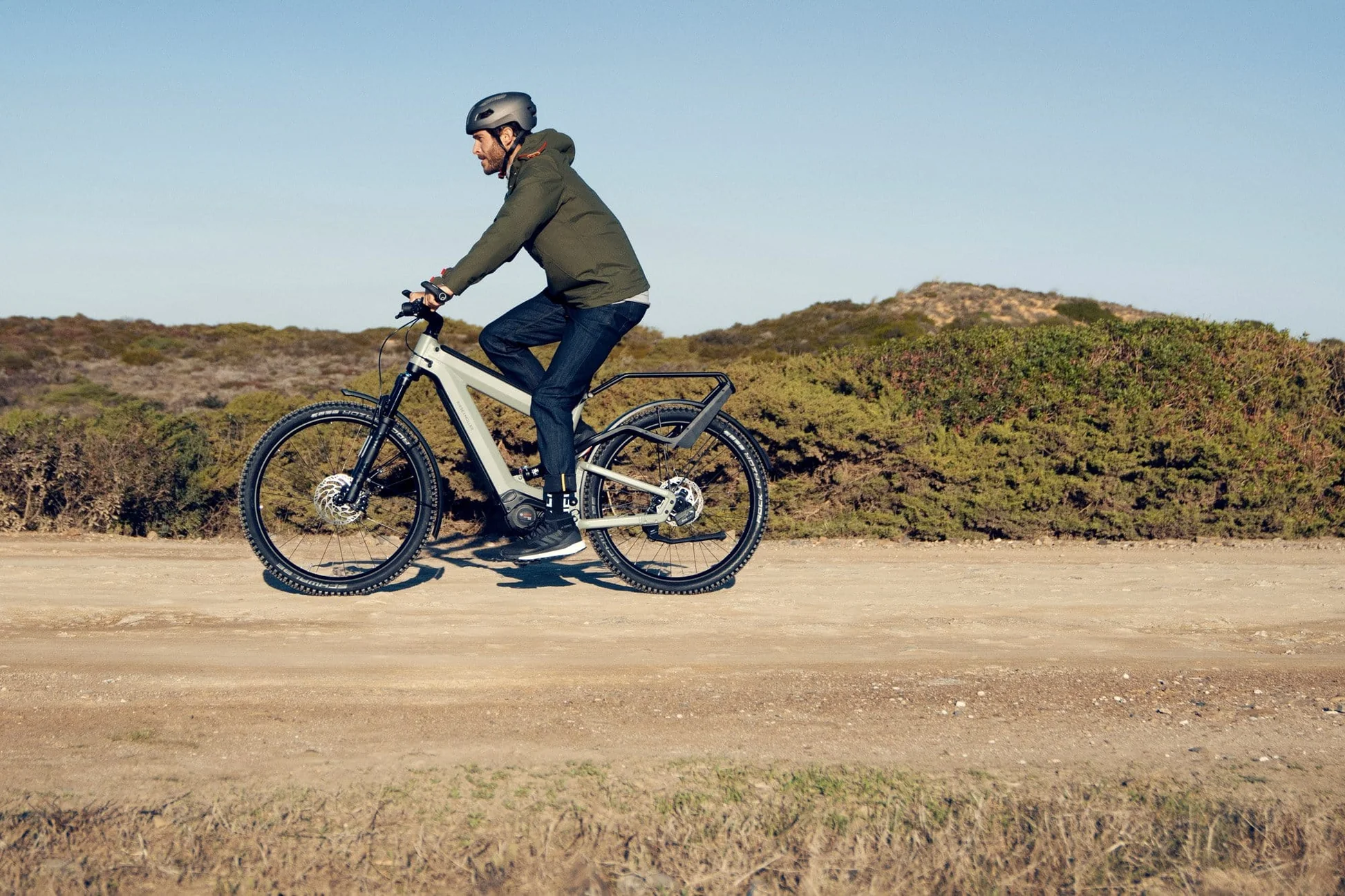
Image Source: Fly Rides USA
Riese & Müller, the German maker of premium urban and cargo e-bikes, has announced it will fully withdraw from the US market on July 31st of this year. The company first paused US shipments back in August 2025 due to tariff volatility, specifically a 50% tariff on steel used in e-bikes.
While that particular tariff has since been removed, the damage to long-term planning was already done. R&M cited “persistently challenging and increasingly volatile market conditions” as the driving force behind the decision. Canada, Australia, and New Zealand are not affected by the decision.
The US withdrawal will be structured to protect existing dealers and customers. Dealers will retain access to components, technical documentation, and support after sales end, and all warranty obligations will be honored. Orders can still be placed through July 31st, after which remaining dealer inventory will sell until it’s gone.
Our Take:
From our point of view, this decision is not a surprise, though it is disheartening. After last August’s pause in imports, the writing was on the wall for Riese & Müller. Tariff whiplash makes it nearly impossible for foreign brands to plan inventory, pricing, or distribution with any confidence.
R&M follows a similar path to Stromer, who made comparable statements before their own US exit. While the two companies are different, our staff’s experiences and difficulties in trying to source Stromer parts leads us to urge caution with any Riese & Müller purchases.
Two California Bills Take Different Approaches to E-Bike Regulation
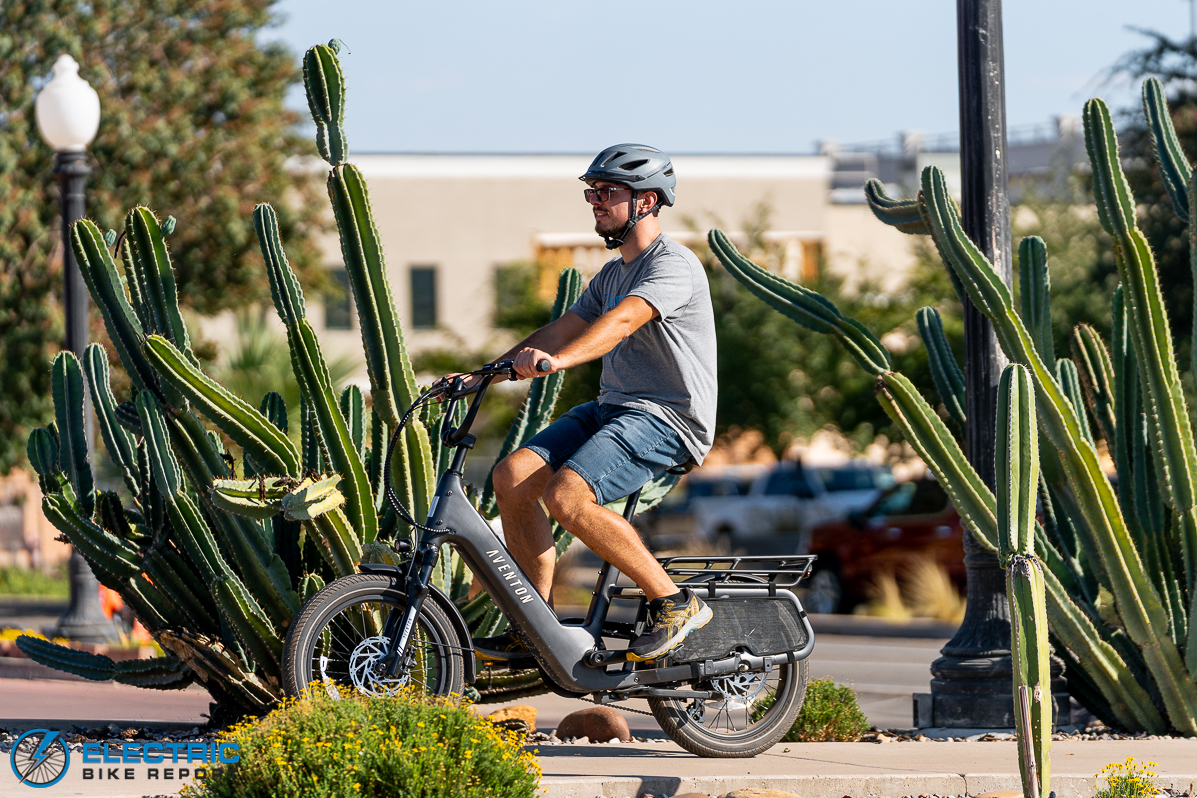
California has two separate bills moving simultaneously through its legislative process. AB 1557 would drop Class 1 and 2 e-bike speed limits from 20 mph to 16 mph and cap motors at 250W nominal, a dramatic reduction from the current 750W limit. Cargo e-bikes, however, would get an exception, still allowing motors up to 750W.
Additionally, the bill would make it illegal for manufacturers and retailers to make or sell e-bikes with motors that can exceed 750W. Companies that break this law could be punished with a fine of up to $15,000 with their first offense—and up to $50,000 for each future violation.
Current law prevents riders younger than 16 from using Class 3 e-bikes, but this bill would prevent kids in this age group from using any e-bikes that exceed 250W nominal.
Supporters of this bill are mainly medical groups and some cities, while opponents include most bicycle advocacy groups and retailers. The bill passed unanimously in California’s State Assembly and is now moving on to be heard by the Judiciary and Appropriations Committees.
Meanwhile, California’s SB 1167 aims to clarify e-bike and moped definitions. It prevents vehicles with motors exceeding 750W, throttle speeds above 20 mph, pedal assist that exceeds 28 mph, or the ability (as intended by the manufacturer) to be modified to do any of these things from being advertised, sold, or labeled as an e-bike.
The bill also replaces the definition of a motorized bicycle, now referring to them as mopeds. By the included definitions, a moped is considered a two- or three-wheeled vehicle with strict motor power limitations (4 brake horsepower). They are also specified as being designed for highway use, with speeds not exceeding 30 mph.
A third change is the addition of electric motors to the definition of a “motor-driven cycle.” These vehicles now include those with motors under 3,750W that produce up to 5 brake horsepower.
This bill was introduced by California Senator Catherine Blakespear and was developed in conjunction with PeopleForBikes, CalBike, and other industry-related groups. At this time, SB 1167 passed in the California Senate Transportation Committee, and now moves to the Senate Natural Resources and Water Committee for consideration.
Our Take:
With a bill in Minnesota similar to SB 1167 currently in the works, we find California’s approach to be cleaner and more respectful to current e-bike classifications. E-bikes and e-motos need separate definitions that respect lawful users, makers, and sellers of each product—not laws that hamper one type in an effort to curb the other.
It is somewhat perplexing, however, that the two CA bills are moving simultaneously through the state’s legislative process with such different—and seemingly contradictory—approaches.
To be clear, we do not support the restrictions put forth by AB 1557. While similar to current EU regulations, the enactment of this bill could decimate e-bike use in California, make similar restrictions in other states more likely, and make it much more difficult for manufacturers to make and sell e-bikes that meet varying restrictions in different states.
An Illinois Bill Would Require High Speed E-Bikers to Carry License, Registration, and Insurance
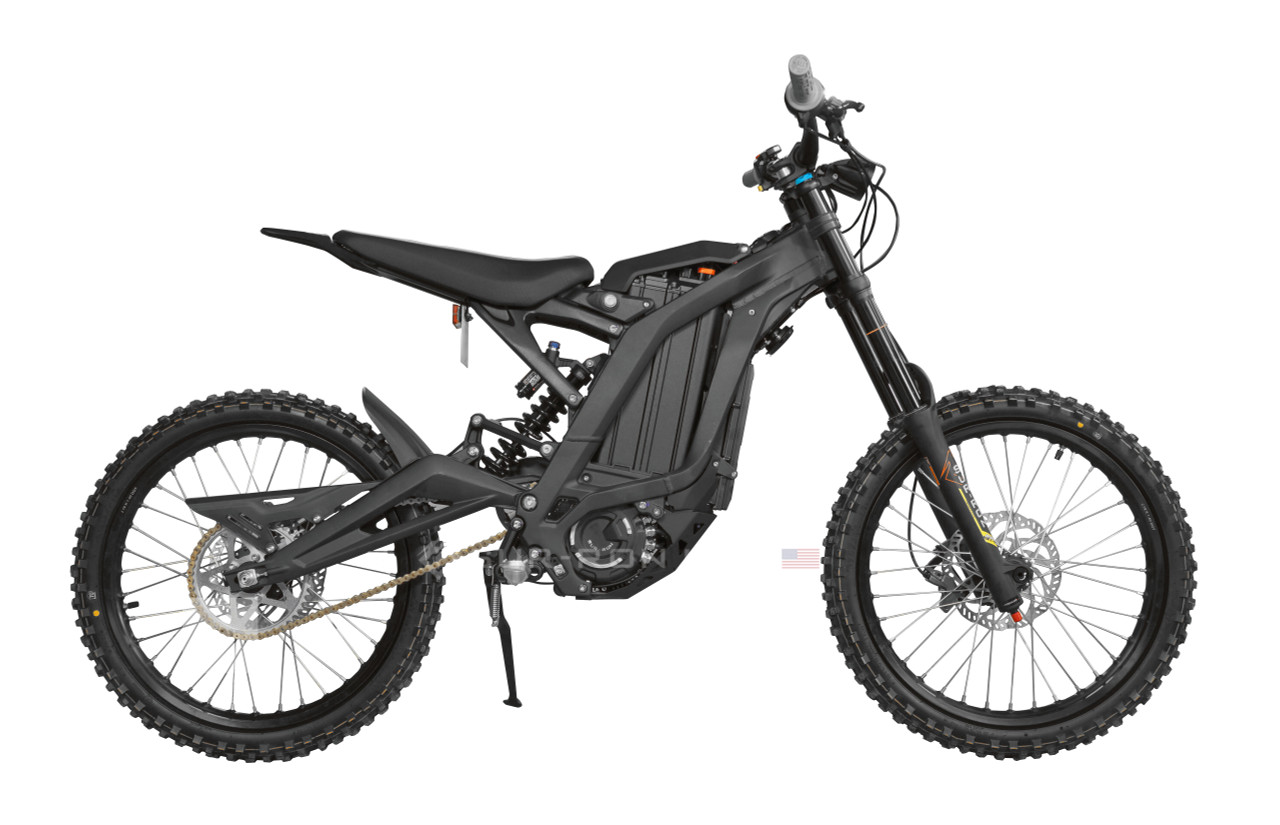
Image Source: Sur-Ron USA
In Illinois, SB 3336 would require riders of e-bikes and e-motos capable of exceeding 28 mph to carry a driver’s license, registration, title, and insurance. Class 1 and 2 e-bikes would remain largely unchanged, though riders would need to be at least 15.
Additionally, the bill would require other mobility devices, such as electric scooters, skateboards, and unicycles, to be limited to 28 miles per hour on roads, paths, and sidewalks. It would mandate that riders of these devices be at least 16 years old.
This bill was created by the Illinois Secretary of State Alexi Giannoulias as part of his Ride Safe, Ride Smart, Ride Ready campaign. The operation seeks to update the state’s laws and improve education and training around micromobility.
Giannoulias commented about the bill, saying, “As these devices become faster, heavier and more powerful, our laws must keep pace to protect riders and the public.This initiative closes dangerous regulatory gaps, creates uniformity across Illinois communities and ensures riders understand the responsibilities that come with high-speed electric devices. We’re replacing a confusing patchwork of local rules with clear statewide standards that prioritize safety.”
As of the writing of this post, the bill passed the Senate unanimously in a 54-0 vote, and is now headed to the House for consideration. If enacted, the law would go into effect on January 1, 2027. Importantly, e-bikes and e-motos purchased before that date would be exempt from the title requirement.
Our Take:
While this bill’s proposed action is relatively sudden and strong, the move to require users of high-speed e-bikes and e-motos to carry insurance, registration, etc. makes sense. After all, these products are different from, and potentially more dangerous than, e-bikes restricted to the Class 1, 2, and 3 limits of 20 and 28 mph, respectively.
Ultimately, the range of different e-bike-related bills currently being considered in various states underscores the need for a unified approach to their regulation. Federal definitions and laws governing e-bikes and e-motos would make it easier for brands to make and sell their products, while giving consumers some relief in knowing that the products they buy are legal in their areas.
Gear Highlight – VelociRAX 6 Max Vehicle Rack
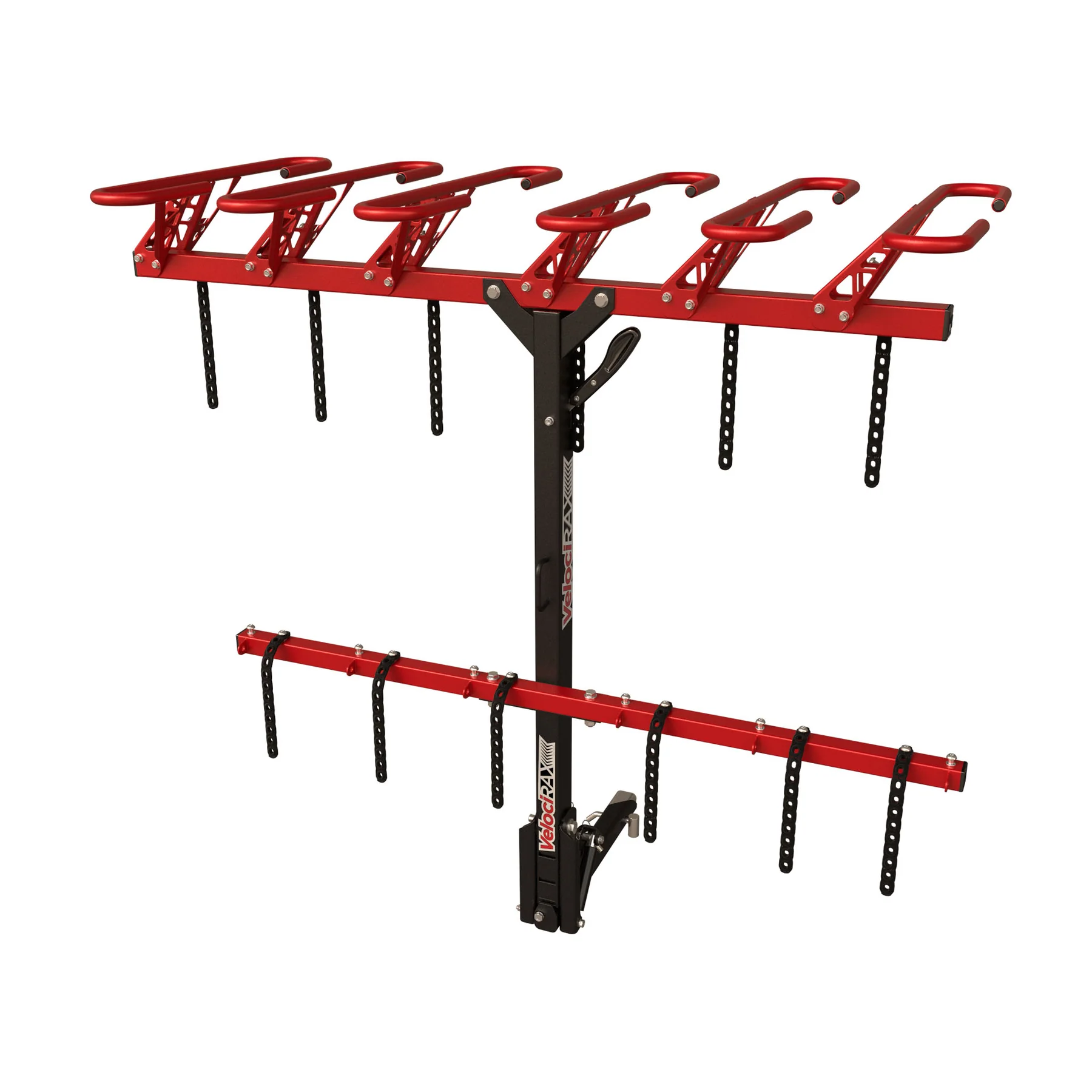
Image Source: VelociRAX
It’s no secret, E-bikes are heavy. That’s just the reality, and it’s why vehicle racks that aren’t rated for e-bikes aren’t a good solution when you’re trying to load more than one or two of them. The VelociRAX 6 Max was built with that problem in mind; it hauls up to six bikes using a roll-in, roll-out system that eliminates lifting (almost) entirely.
Each tire basket supports up to 100 lbs, the total rack capacity is 300 lbs, and it handles wheels from 20-29 inches with tires up to 3 inches wide. So whether you’re mixing e-bikes with kids’ analog bikes for a family trip or hauling a group of riders to a trailhead, it’s likely going to cover the load. It mounts to a 2-inch Class 3 hitch, locks with a keyed hitch pin, and includes a garage-mount bracket for home storage.
There are a few things to know going in. The rack itself weighs 98 lbs, and getting it back to vertical when fully loaded with e-bikes can be difficult, but leaving the last bike off until it’s upright makes it manageable. Fender compatibility is also an issue right now, which is worth noting given how many commuter and cargo e-bikes run fenders.
Otherwise, the 6 Max’s no-lift loading is the headline feature; it’s built to match the demands of carrying large and heavy e-bikes. At the time of writing, it runs $1,179.
Sponsor
You Asked, We Answered. Questions Covered In The Weekly Recharge
- How should I store my bike and care for my battery in winter?
- Which of the best folding e-bikes are the most comfortable and easiest to pedal without power?
- Would we be more likely to recommend the Aventon Aventure M or one of Aventon’s Level 4 models (the rear-hub REC or mid-drive ADV) to a rider looking to handle city riding, steep hills, and some off-roading?
E-Bike Deals Found This Week
- Aventon’s Spring Sale
- Pace 4 cruiser is $1,599
- Level 3 commuter is $1,699
- Aventure 3 fat tire is $1,799
- Aventure M mid-drive fattie is $2,699
- Velotric’s Earth Month Deals
- T1ST Plus city e-bike – even bigger discounts! – $1,249
- Fold 1 Plus folding e-bike – $1,399
- Breeze 1 city cruiser – $1,699
- Nomad 2 fat tire – $1,899
Make sure to tune in to the full episode to see the e-bike trail system highlight and rider of the week! Want to be featured in future episodes? Comment on any YouTube video or page of the website, or send to [email protected].
Sponsor
*Please help support our efforts at Electric Bike Report. We work hard to provide the highest quality content, news, and reviews for our readers – and our sponsors make all of this possible. Please visit our sponsors from their ads on our website and let them know that you appreciate what they do for the e-bike industry and Electric Bike Report
Sponsors
Sponsor
Reader Interactions
Comments
Leave a Reply




My take is that these proposals are alright.
Both seem reasonable, the IL bill needs to include Class 3 bikes.
However, The bills need to be combined and require recognition of and vehicle like treatment of, vehicles exceeding these existing bike Class limits as Vehicles, not bikes.
In reality emoto’s are not ebikes, but yet in the world they are. It’s the ambiguity that’s lead to this. It needs to be Federal Regulation so it’s uniform or the complexity will add an unnecessary layer of compliance cost and continued confusion that will kill the business.
We also need to allow these 28+ mph bike-like vehicles, treat them as vehicles, regulate them and lets have a fast commute class of electric bike-like vehicle. Something that will also speak to the type of e- utility/delivery vehicles ALSO is proposing.
Please consider ending your phrases on a more enthusiastic up note – I guess you’d say.
You’re now sounding rather droll. Like:
Da, da, daaa;
Da, da, daaa. Etc. (into infinity…: )
Just trying to help okay? 🙂
J
Or maybe you should take your meds. are you sure you haven’t fogotten to do that today?