Puckipuppy Poodle Review: A Surprisingly Capable $999 Commuter E-Bike
Aug 26, 2026
 0 Comments
 Share
Share
This Class 3 commuter offers eBike must-haves at an incredible value – as long as you’re okay with a few quirks.
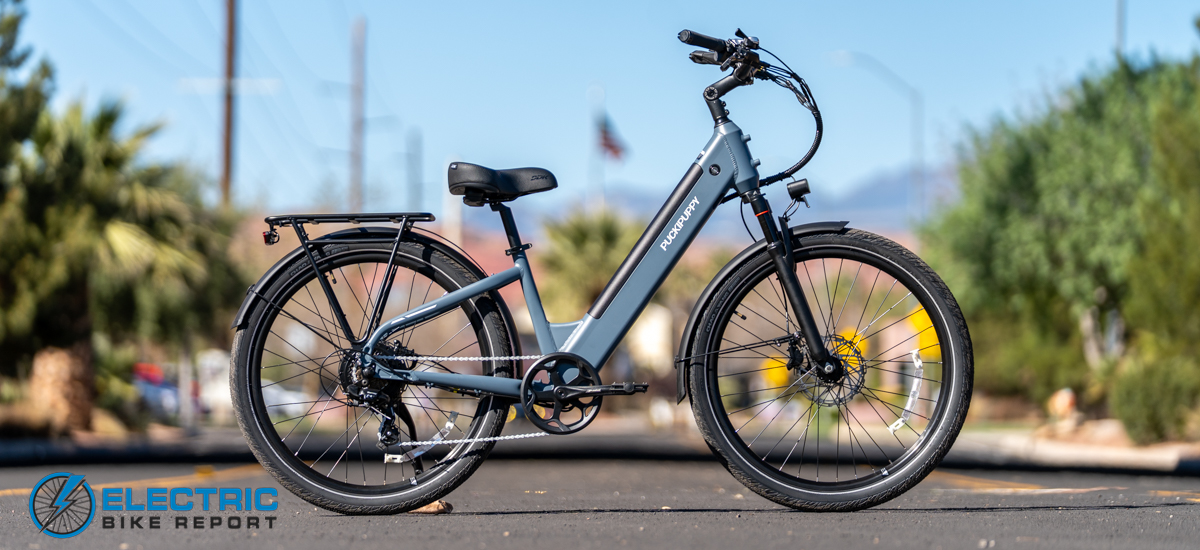
The Puckipuppy Poodle aims for a very clear target. This bike seeks to provide all the hallmarks of a dutch-style commuter at the $1000 mark – While this is a relatively simple goal, that certainly doesn’t make it easy. The reality of value eBikes is that there is going to be compromise. It’s extremely difficult to nail down a perfect product at this price point, and while cost-effective options are getting better and better, working within the confines of a budget still presents a challenge. The question becomes about where compromise was made.
This is one of the hardest parts of producing a budget eBike; brands have to choose what to prioritize. Typically, my belief is that fundamentals should be king. Options in this range don’t need to be perfect, but they should get the basics right. It seems like the Poodle shares this philosophy. The bike is equipped with a 750W motor, 720Wh battery, hydraulic disc brakes, and a whole host of accessories. Numbers like that aren’t always seen in the budget segment, and a glance at the spec sheet suggests that Puckipuppy knows their audience.
If you want a Class 3 commuter that won’t break the bank, this review is for you. We dove into our real world testing to find out: Does this Class 3 commuter really deliver all that it promises? Or is this value-based package too ambitious? Read on to see what we found!

Sponsor
E-Bike Category:Commuter / Cruiser
E-Bike Class:Class 3 (Pedal Assist to 28 mph)
Note: Throttle Exceeds Class 2 Speeds
Note: Throttle Exceeds Class 2 Speeds
Sponsor
Puckipuppy Poodle Video Review
 Pros
Pros- Currently priced at $999, the Poodle offers great value.
- Hydraulic disc brakes are great to see at this price point.
- Puckipuppy includes an expansive accessory pack that includes fenders, a rear rack, a bag, and much, much more.
- Class 3 capability, as well as stable handling, make this a worthy commuter.
- The coil fork and relaxed geometry make for solid comfort, even over longer rides.
 Cons
Cons- As tested, this bike is class 3 only. While it does have a throttle, it exceeds the 20 mph speed limit, which pushes it out of the class 2 delineation.
- The battery readout doesn’t decrease predictably, which makes it hard to estimate the remaining range.
- PAS 1 provides very low power, making it a relatively impractical mode.
ELECTRICAL SPECS & FEATURES
- Battery: 48V 15Ah (720Wh)
- Charger: 48V 2.0
- Display: LCD Color Display
- Motor: 750W Rear Hub Motor
- Headlight: Integrated
- Taillights: Integrated
- Pedal Assist: 5 levels
- Claimed Range: 45 – 75 miles
- Throttle: Thumb Throttle
- App: None
- UL Certification: UL 2271 by SGS, UL 2849 currently in progress
Weight & Dimensions
- Claimed weight: 63.1 lbs
- Tested Weight: 63.7 lbs
- Rider height range: 5’3″ – 6’4″
- Total payload capacity: 350 lbs
Components & Accessories
- Brakes: Logan Hydraulic Disc Brakes
- Fenders: Alloy
- Fork: 80mm Coil Fork
- Frame: Stepthrough Alloy
- Drivetrain: Shimano 7 Speed
- Grips: Rubber, Butterfly-Style
- Saddle: Faux Leather Comfort
- Handlebar: Alloy sweepback bars, adjustable stem
- Kickstand: Included
- Pedals: Platform
- Tires: Chao Yang 27.5 x 2.4, Street Tread
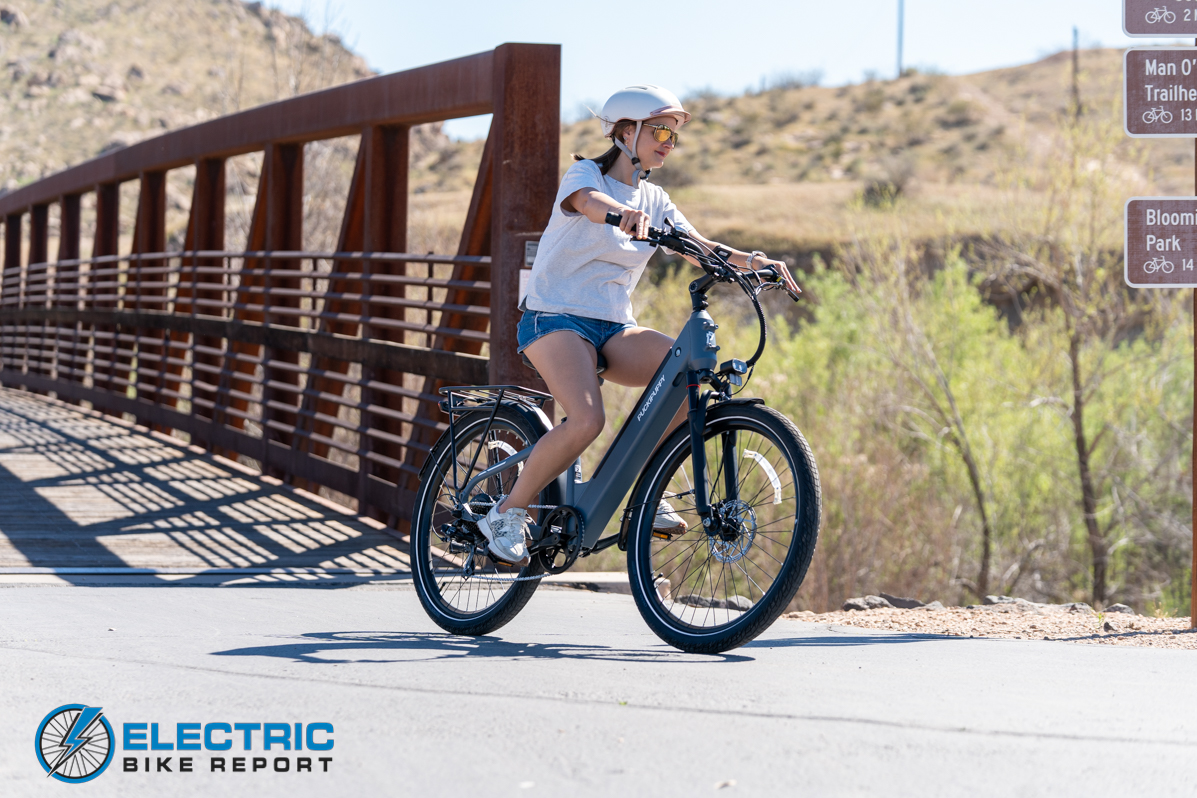
The Poodle gets you a proper eBike experience for a steal.
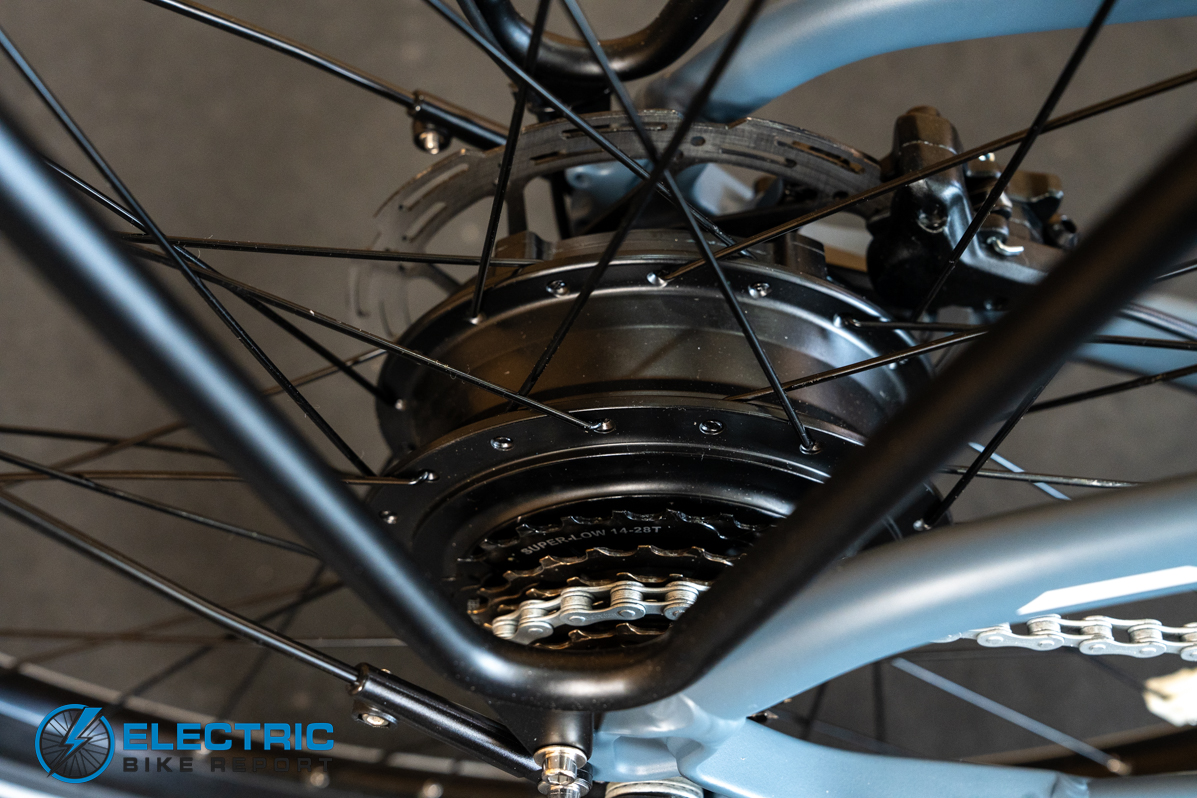
750W power at this price? Yes please.
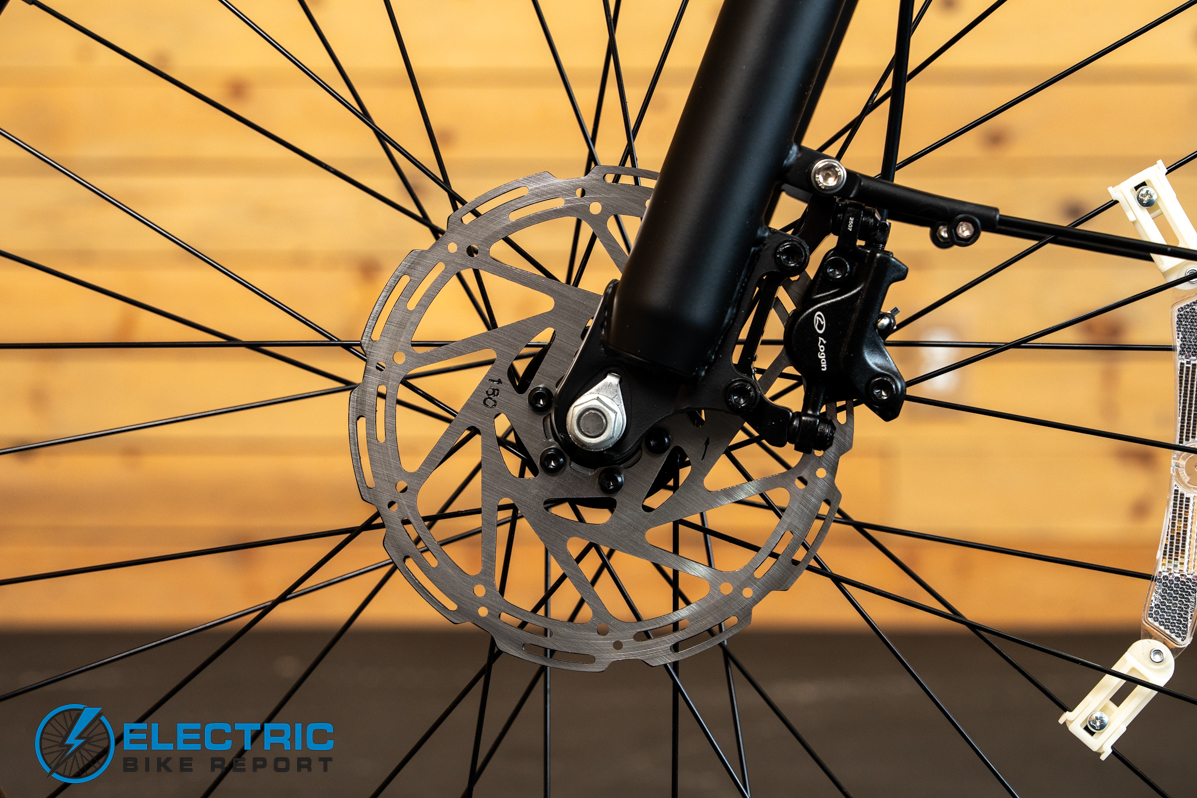
More evidence of good value with the Hydraulic brakes.
Puckipuppy Poodle Review: Speed Test
The speed test is all about discovering how a bike is programmed. Well-programmed eBikes tend to make incremental increases in power as you move through the assist levels, resulting in linear acceleration and a predictable experience. We’re also checking to see if the bike reaches/adheres to its advertised speed limits. Puckipuppy states that the Poodle is a class 2 / 3 bike, as it provides pedal assist to 28 mph and is supposed to throttle to 20 mph. There is no limiting the pedal assist to Class 2 speeds on the Poodle.
With that in mind, I began my speed test with no assist power, which resulted in an average speed of 8.8 mph. Part of the reason why we do this is to see if there’s a meaningful gap between leg-power-only and the lowest assist level. On the Poodle, there isn’t. I increased to PAS 1 and didn’t feel anything from the motor, which the speedometer also reflected: I continued to sit around 8.8 mph. I jumped up to PAS 2, and that caused the assist power to step in. Here, I averaged 11.4 mph. From there, I continued working my way through the levels, and PAS 3 settled at 14.8 mph, PAS 4 at 18.5mph, and PAS 5 jumped near the class 3 ceiling at 27.2 mph.
There’s a few eccentricities here. The first is that PAS 1 has a very low speed limit; it will provide assistance under about 7 mph, but the motor cuts out upon crossing that threshold. Most riders will very naturally reach higher speeds than PAS 1 is designed for; you can use it, but only expect motor power at very low speeds. The second is that the gap between PAS 4 and PAS 5 is a large jump – almost 10 mph from one level to the next. The motor surges strongly here, and while this is something owners would get used to, we’d like to see a more predictable curve. The space between these two levels is very significant.
It’s also worth noting that there is some ghost pedaling in the higher assist levels. The 7 speed drivetrain is smooth, but it doesn’t have much range. This, combined with the bike’s cadence sensor, are the main factors here; however, this isn’t unexpected, especially at this price point. Frankly, it isn’t as bad as some other bikes in the budget segment.
We also tested the Poodle’s throttle. The bike is smooth and predictable off the line, but accelerates with reasonable quickness. However, we noticed that the Poodle will throttle past the class 2 speed limit of 20 mph. The bike regularly tops out at 28 mph on throttle. This appears to be a programming quirk rather than a deliberate departure from Class 2 requirements.
The main takeaways here: The programming isn’t perfect, and there’s some room for improvement. We’d particularly like to see the throttle speed limit addressed, as the current setup does affect the legality of the Poodle. However, with that said, this bike is capable of class 3 speeds, and the pedaling experience is leisurely and relaxed. For $1000, the Poodle does have what it takes to be a casual, capable commuter.
Sponsor
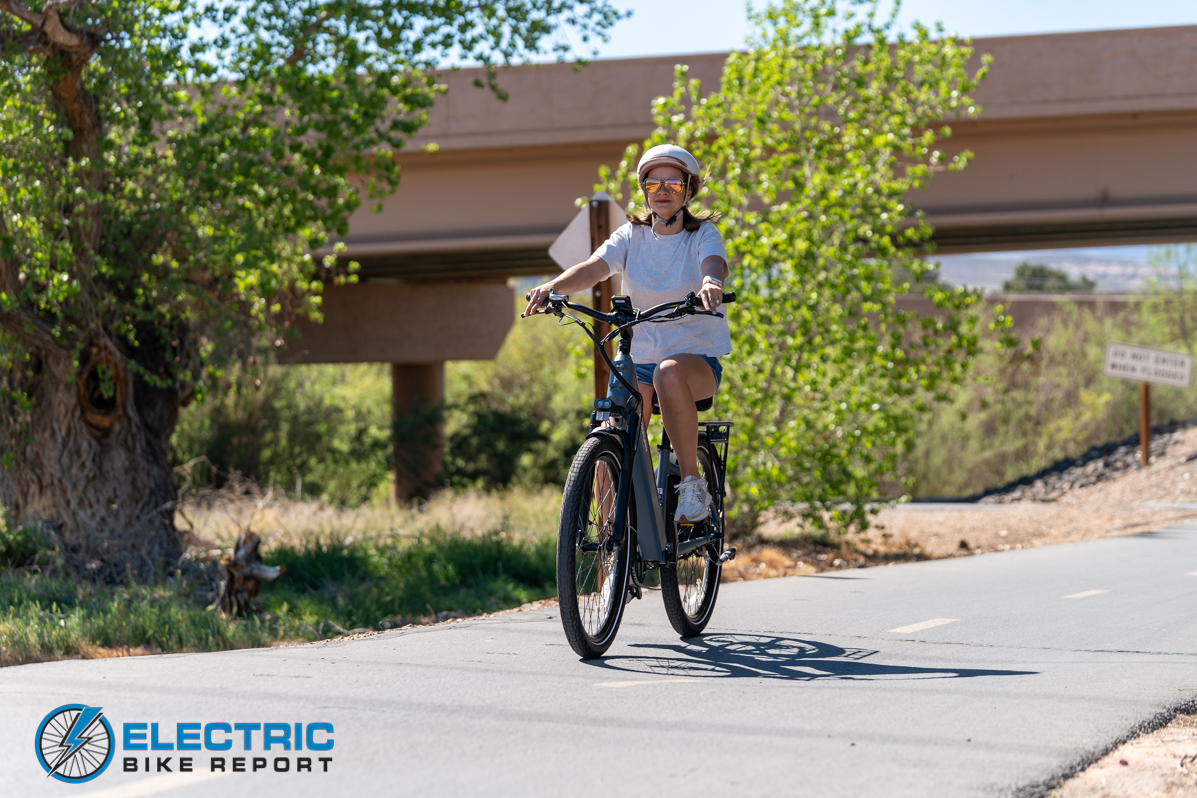
The Poodle is available in four colors: Sage Green, Dusty Purrple, White, and the Slate Blue that our test bike has.
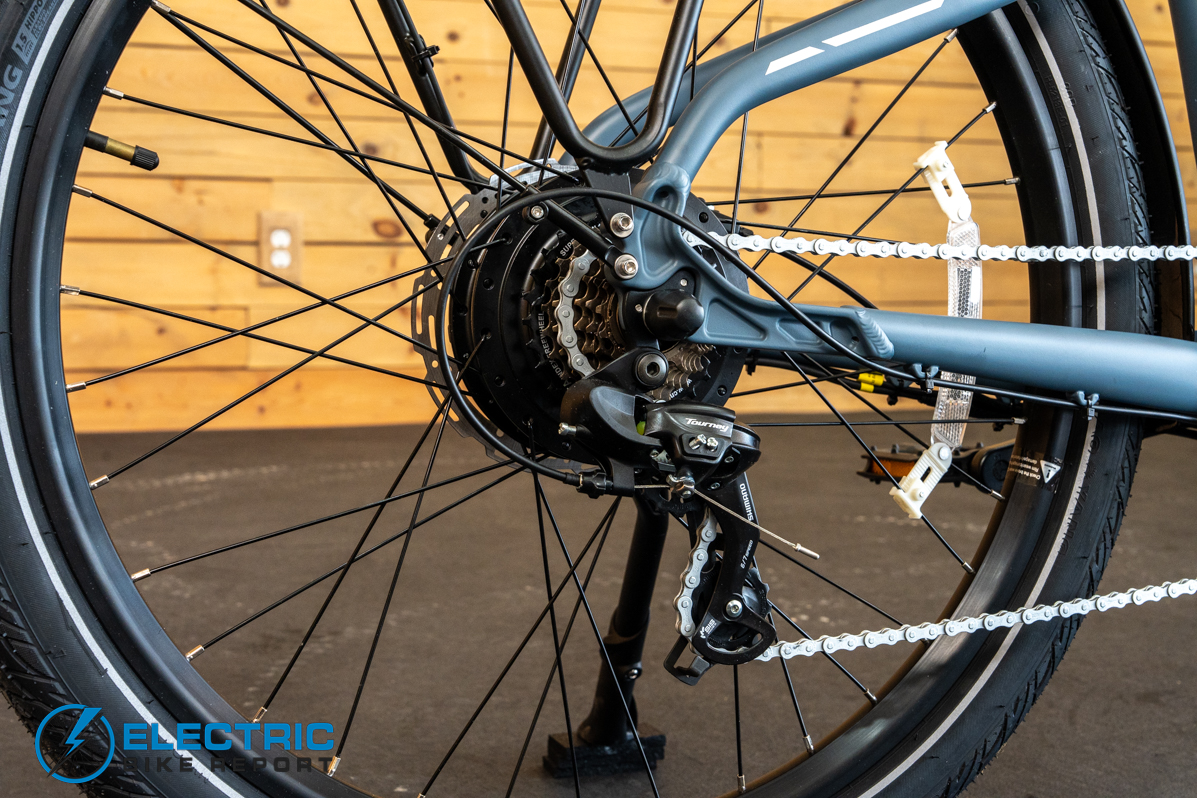
The 7 speed drivetrain has limited range, but provides smooth and reliable shifting.
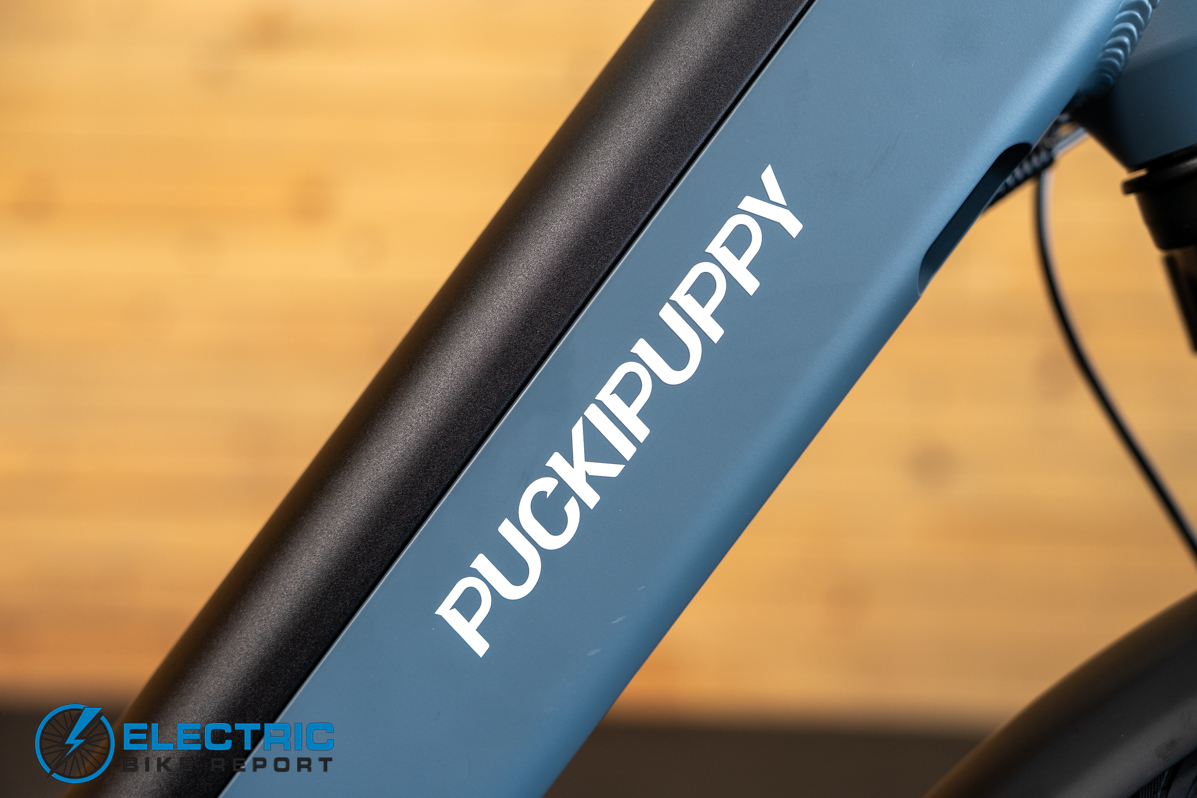
A 720 Wh battery for this price is pretty impressive.
Puckipuppy Poodle Review: Range Test
The Poodle does have a sizable battery – 720 Wh is a decent number for the price. We completed our usual minimum and maximum power range tests to see if the specs translate to real world performance. A quick note on the Poodle – as I’ve mentioned, this bike does not adhere to the class 2 speed limit of 20 mph. We usually test each bike in class 2, but here, we used class 3, since that’s the only available option. This really only affects the high power results.
Using minimum settings, the Poodle reached 73.4 miles, while the class average was almost identical at 72.9 miles. It’s worth mentioning that we initially started this test using PAS 1, but found that the lowest assist level simply wasn’t providing enough power. We eventually chose to increase to PAS 2, as that functioned as a more practical mode; PAS 1 is very slow and doesn’t give enough power for even short climbs. This does have some impact on the final numbers. That 73 mile result was completed using a mix of both assist levels, although it was mostly using PAS 2. Had we increased the assist from the start, it may have reduced the range by a little bit – just something to be aware of if you’re prioritizing big range numbers.
As for the max power test, the Poodle did 26.62 miles. This is behind the category average of 36.07 miles, however, the comparison class completed the test at class 2 speeds. It’s tough to say exactly, but the Poodle’s specs are comparable with many of the other bikes in the discussion, and if it did have class 2 speeds, I’d estimate it would be in the neighborhood of average.
There are a few essentials here: First, the low power range is solid. It’s enough to go on a few rides between charges or go on longer outings, which is great considering the cost. We would definitely recommend using PAS 2 though. As for the high power test, it’s a passable result. The ability to limit this bike to 20 mph would undoubtedly increase the test numbers, but this data does give us a picture of how far you can go while using class 3 speeds. With that in mind, a commuter frequently cruising at roadside speeds can expect range results very similar to ours; likely enough to get to and from work, but charging will be a more regular occurrence.
Sponsor
Sponsor
Puckipuppy Poodle Review: Hill Test
Decoding the Poodle’s hill test results requires a bit of perspective. Again, this bike is solidly in budget territory, and most of the bikes in its class cost double the price (or more). With that in mind, this bike completed our hill test in 2:08 at 14.2 mph using max pedal assist. This puts it behind the category average of 1:51 at 16.6 mph. On throttle, the Poodle summited in 2:14 at 13.5 mph. The class mean was also faster here, sitting at 1:57 and 15.5 mph.
As I mentioned, this is one of the least expensive options in its class. At this price point, a 750W motor is impressive; however, it seems that the motor they chose is a more budget oriented option. When compared with other 750W bikes, the Poodle is on the slower end of the spectrum. Alternatively, when we compared with 500W bikes, it is faster; this seems like an obvious statement – but let me explain. The main point here is that Puckipuppy’s decision to fit a 750W motor still adds value. At this price point, smaller motors are the norm. While the poodle isn’t a standout against its powerhouse competitors, it’s still very good for its price point.
An analogy to explain this: Performance wise, the Poodle is third-string on varsity, but would be a starter and key player on JV. For the money, it’s hard to complain about the performance here. The Poodle has enough power to handle that hill on the way to work, and it costs less than many other class 3 commuters.
Sponsor
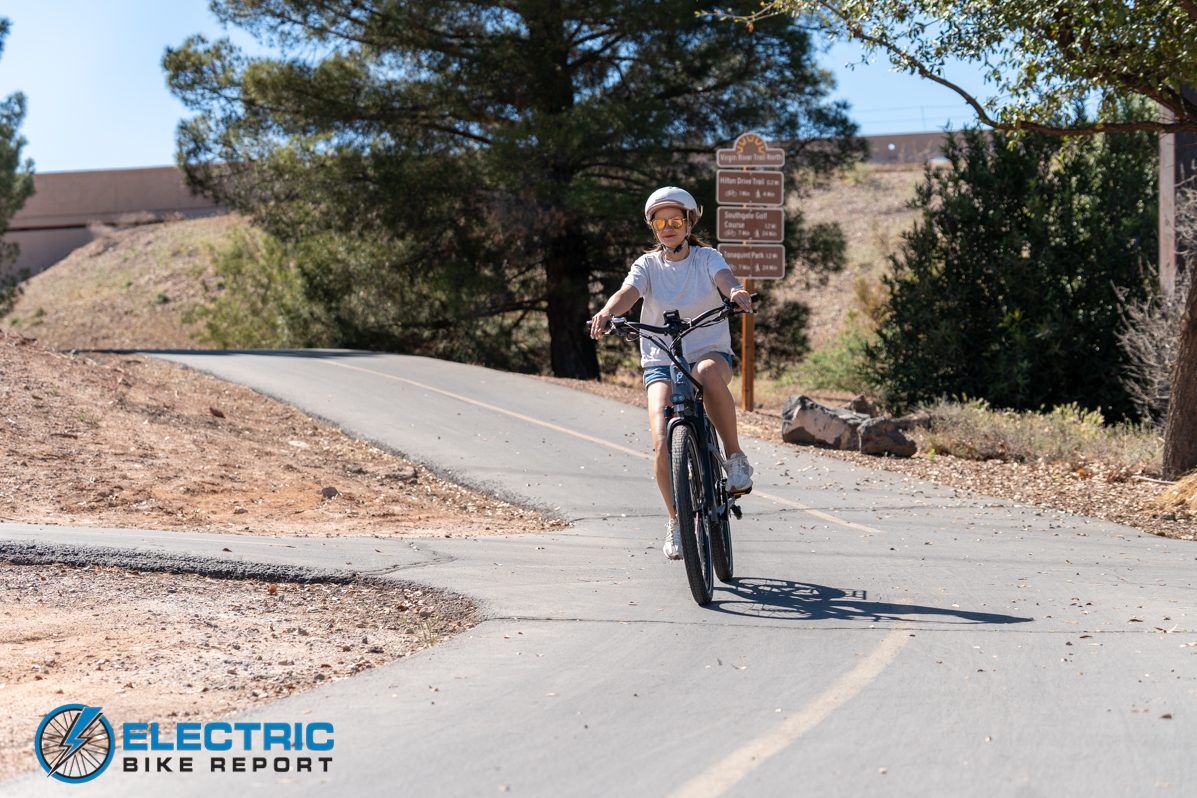
Stable handling inspires confidence, even as you near the Class 3 speed limit.
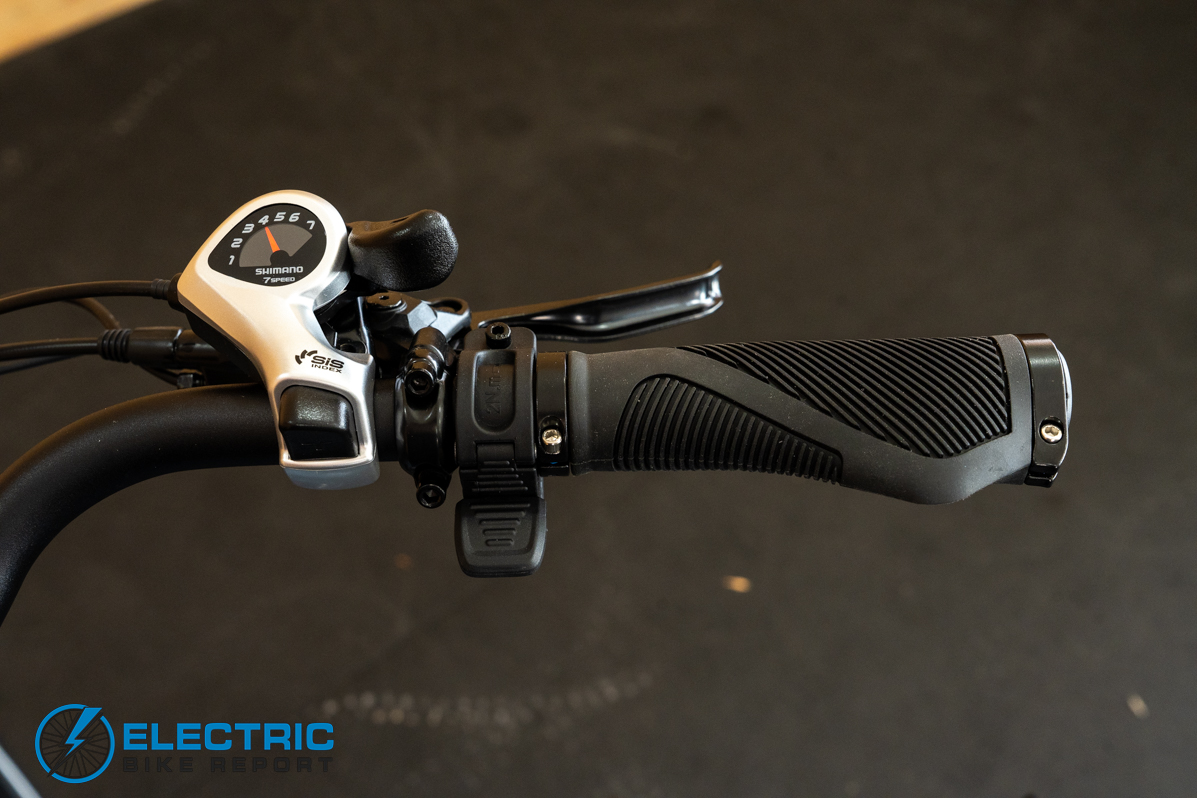
The thumb shifter is simple – nothing fancy.
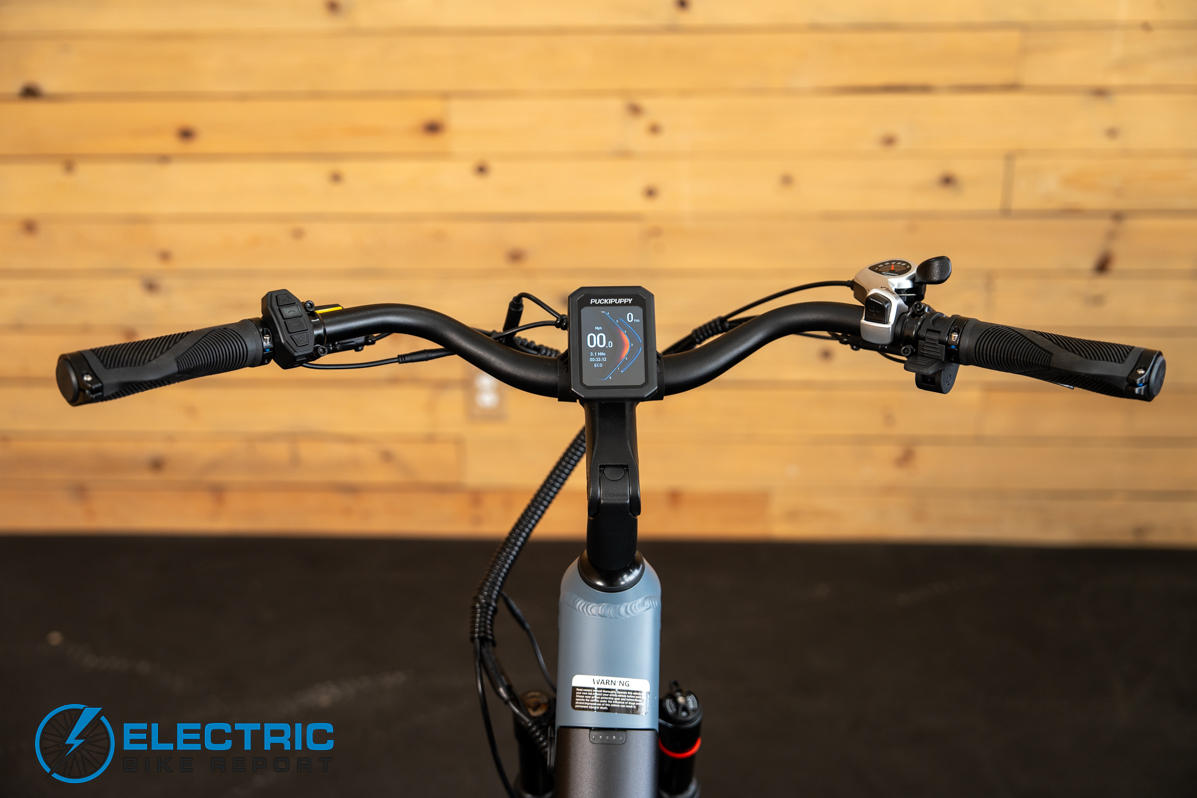
The stem has between 0 and 90 degrees of adjustment – enough to dial in your ideal riding position.
Puckipuppy Poodle Review: Brake Test
Hydraulic brakes are perhaps the most impressive part of the Poodle’s value-oriented package. They aren’t always seen at this price point, but it’s a worthy upgrade. The modulation, stopping power, and reliability consistently exceed that of mechanical brakes – Good choice by Puckipuppy.
Over three runs, the Poodle stopped at an average distance of 23 feet 5 inches, while the class average was 21 feet 5 inches. While this is behind average, it’s certainly not a dealbreaker. The brakes are still a safe and reliable option; Once again, this bike costs significantly less than many of its counterparts.
I also found the braking system to be consistent. Even after repeated hard stops, the lever feel remained supportive and familiar, and there was no sponginess or fading to be found. Logan seems to be a more budget option, and that could be an explanation for the longer-than-average stopping distance.
As for the rest of the system, Puckipuppy chose 180 mm diameter, 1.85 mm thick rotors for the front and rear. These rotors are relatively burly, which helps explain why these feel so dependable even after hard usage.
Once again, when we compared this to other similar bikes, this is one of the least expensive in the category. The other Class 3 commuters that we’ve tested are considerably more costly, and while they post better numbers here, the gap isn’t massive. These are solid results, and they line up with what we’d expect from a budget build.
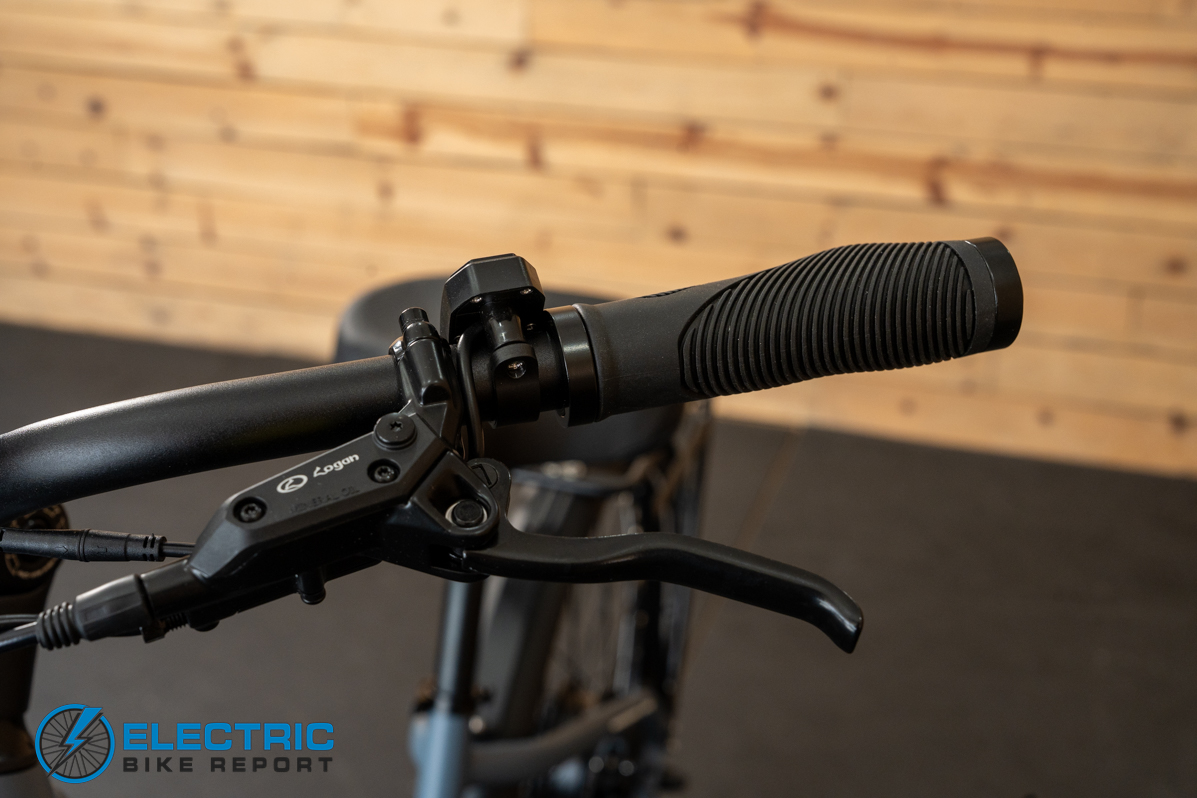
The brake levers offer a consistent feel.
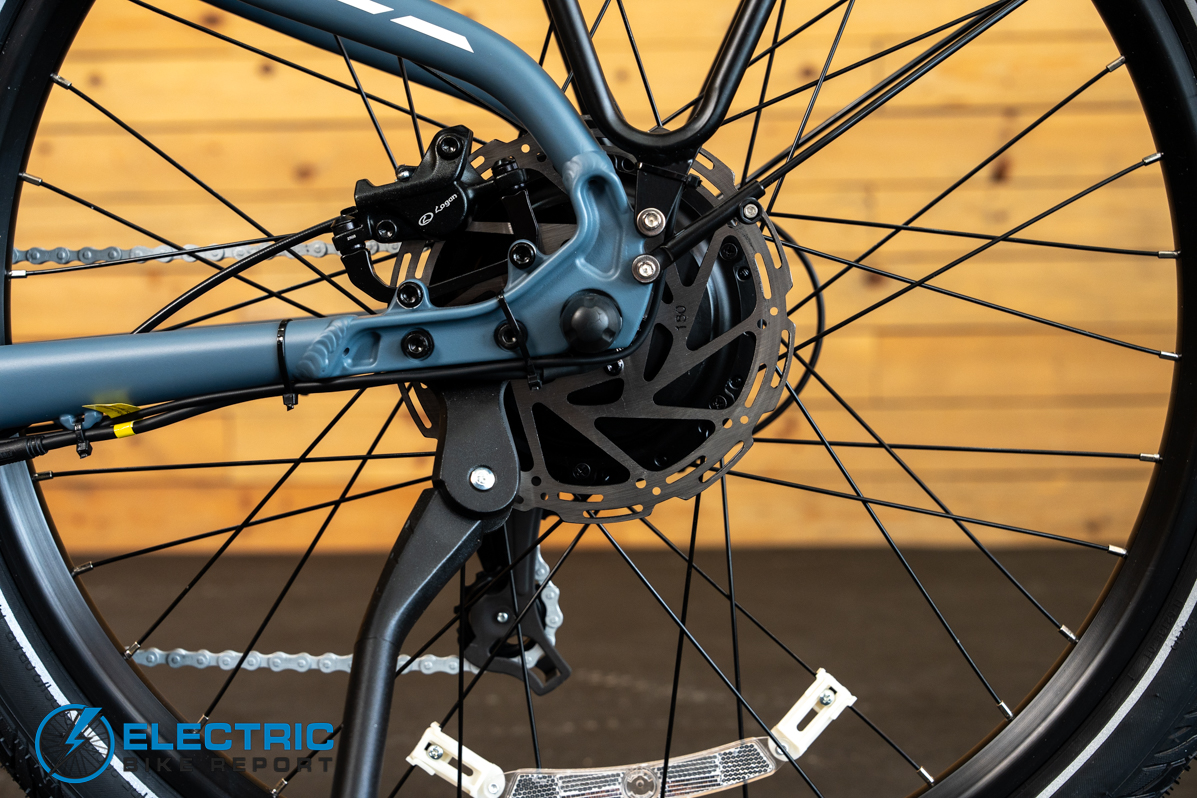
180 mm rotors are a solid size, which helps prevent brake fade.
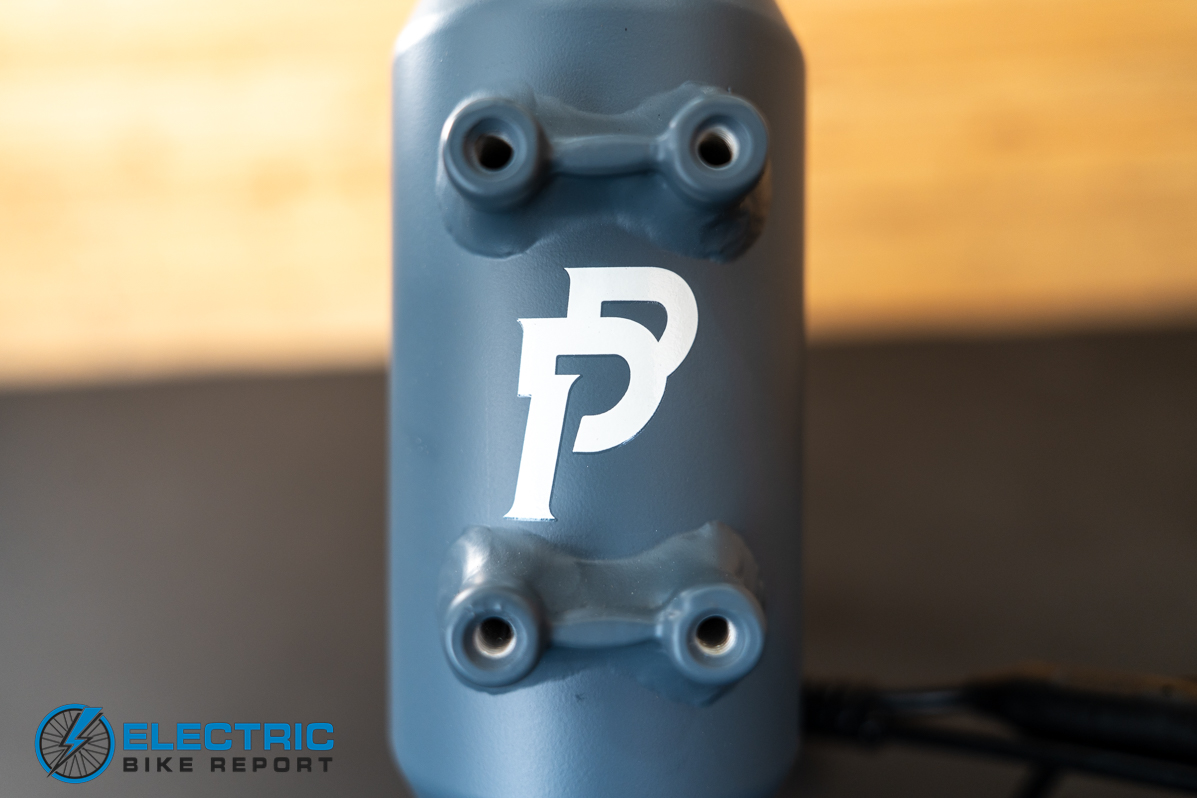
Mounts for the (included) front basket.
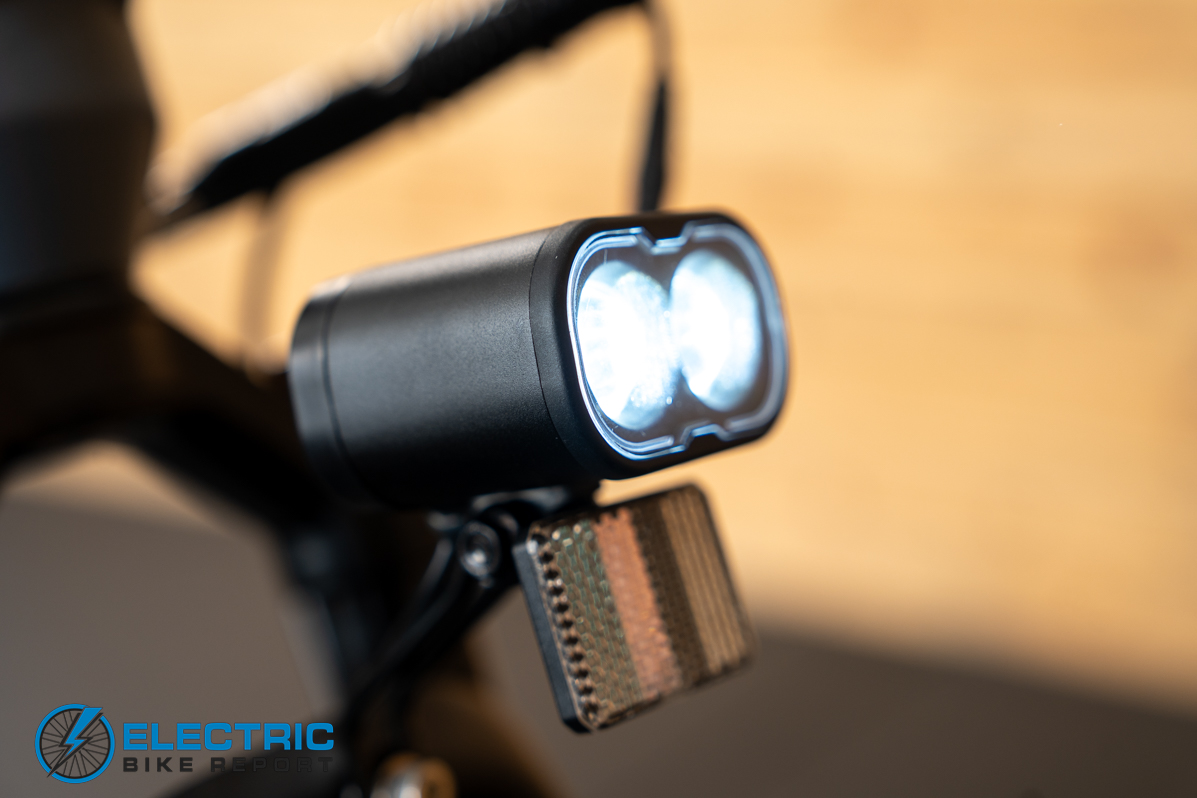
A headlight is included, but the accessory pack also includes another light.
Puckipuppy Poodle Review: Ride Quality
Ride quality can be a tough thing to get right, and it’s often where we see budget bikes showing their limits. I wouldn’t say that’s the case for the Poodle. Puckipuppy appears to have put in decent thought on the overall feel and characteristics of the bike.
One example is the adjustability. The Poodle features a 0-90 degree adjustable stem, as well as an adjustable seatpost. The stem allows riders to dial in a riding position that works for them; while the stepthrough frame generally lends itself towards a more upright stance, the option to go a bit more aggressive is there thanks to the adjustability.
As for fit, Puckipuppy says that the Poodle can accommodate riders from 5’3″ to 6’4″. While this isn’t wildly off target, taller riders will struggle to get proper leg extension. I’m 6’3″ and felt that the reach was comfortable, but my legs were rather cramped. Above about 6’1″, the Poodle is passable, but not perfect in terms of sizing. However, riders on the shorter end of that range will likely fit well.
The front coil fork does a respectable job of soaking up bumps and uneven pavement. It does feel slightly sticky under larger compressions, but that’s not unexpected at this price level. Overall, it does add some extra cushion, and riders that want suspension will be pleased.
One particular area I want to highlight is the stability and handling. At class 3 speeds, the Poodle feels settled and predictable. This is key on a purpose-built commuter, and I’d feel comfortable riding this on the road. Generally, the ride quality is solid, especially on a $1000 bike.
Puckipuppy also offers even more value with an included accessory pack. This package is extensive – it includes a rear rack, alloy fenders, front basket, protective cover, air pump, helmet, glasses, cargo bag, and (believe it or not) more. I will say that certain parts of this package wouldn’t be my first choice – A higher quality helmet and air pump would be things to purchase separately if you don’t own them. However, the rest of the kit does add real utility, and therefore real value.
One spot for improvement is motor engagement. The cadence sensor is a little inconsistent, and the power delivery isn’t always as smooth as we might hope. Once you’re up to speed, it’s less of an issue, but starting out can feel a little choppy. I also noticed some overrun. As a general rule of thumb, the sensor seems to lag behind rider input by an extra second or two.
The other potential improvement to be made is the LCD display. The battery readout is expressed in a long bar as opposed to a percentage. We also found it to be inconsistent, and consequently, it was hard to predict the bike’s remaining range.
Outside of a few quirks, the big message here is that the Poodle does offer great value and a respectable ride quality. It feels safe, reliable, and the long list of extras is a nice plus.
Sponsor
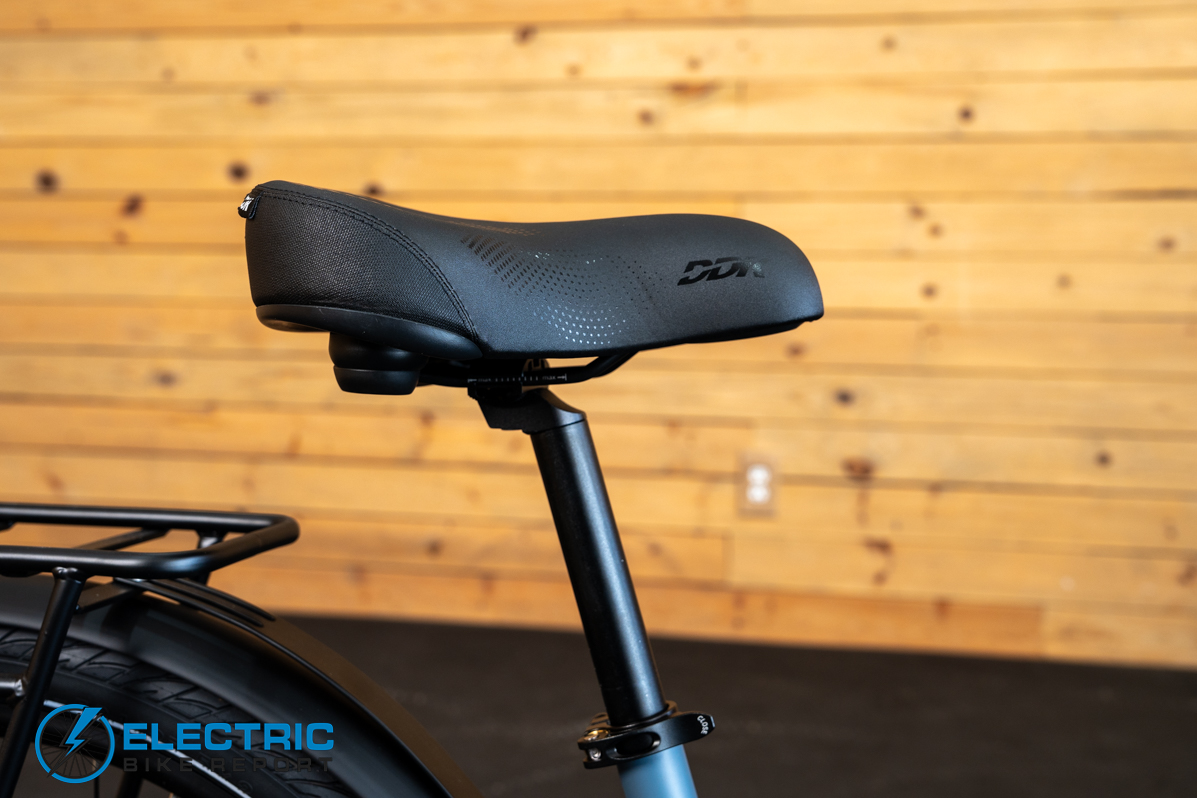
The saddle is thick and plush.
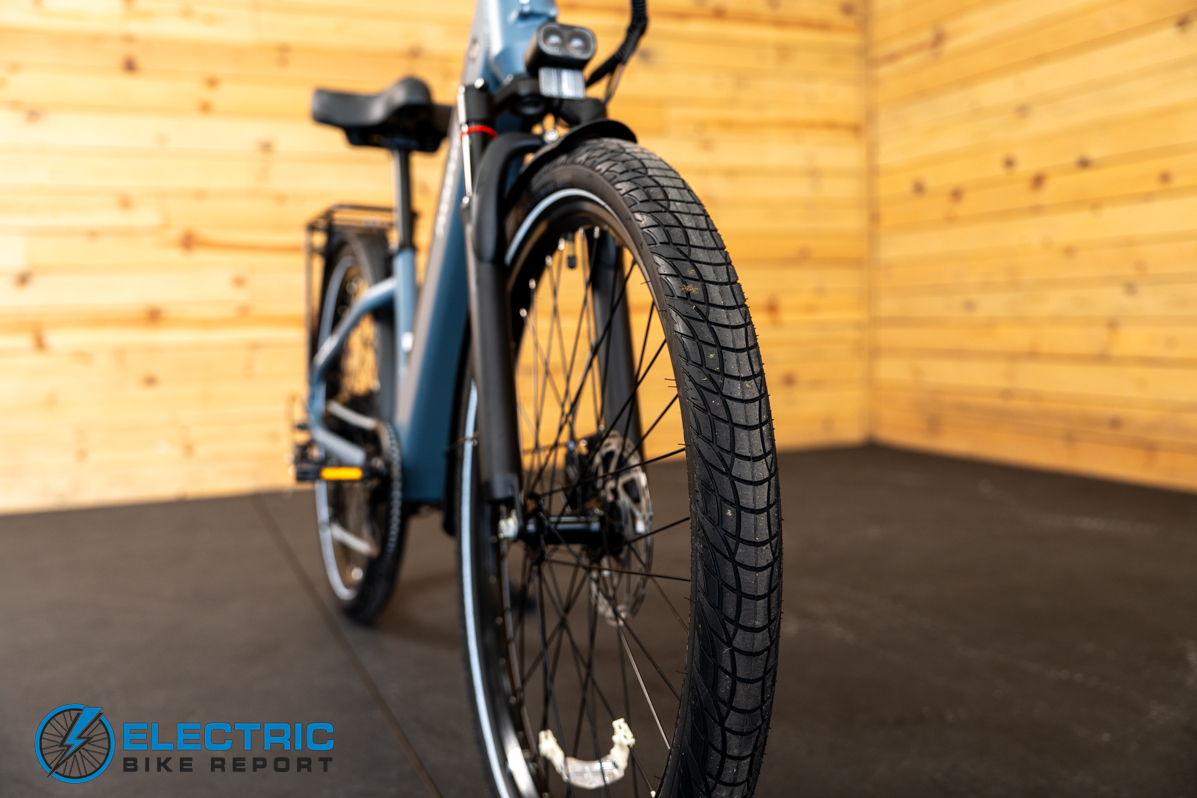
The 27.5 x 2.4 tires feature a fast-rolling street tread.
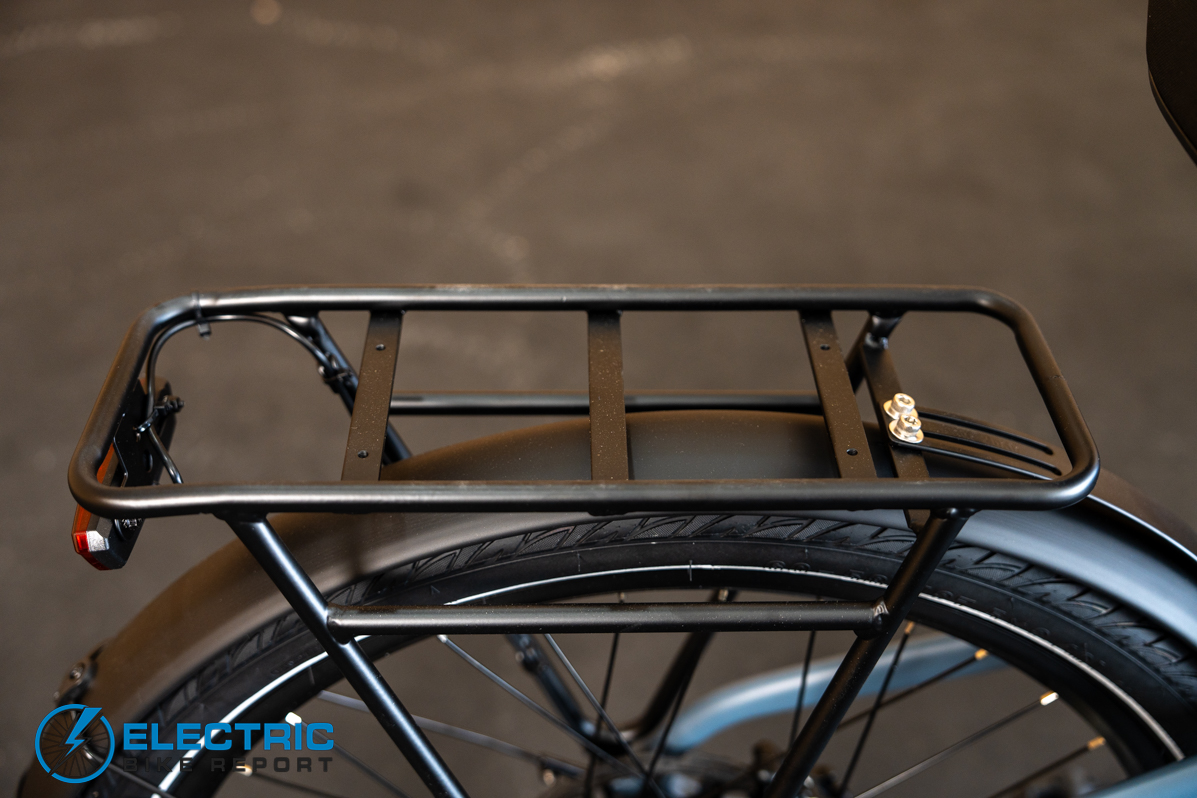
The rack is great for light cargo on the way to the office.
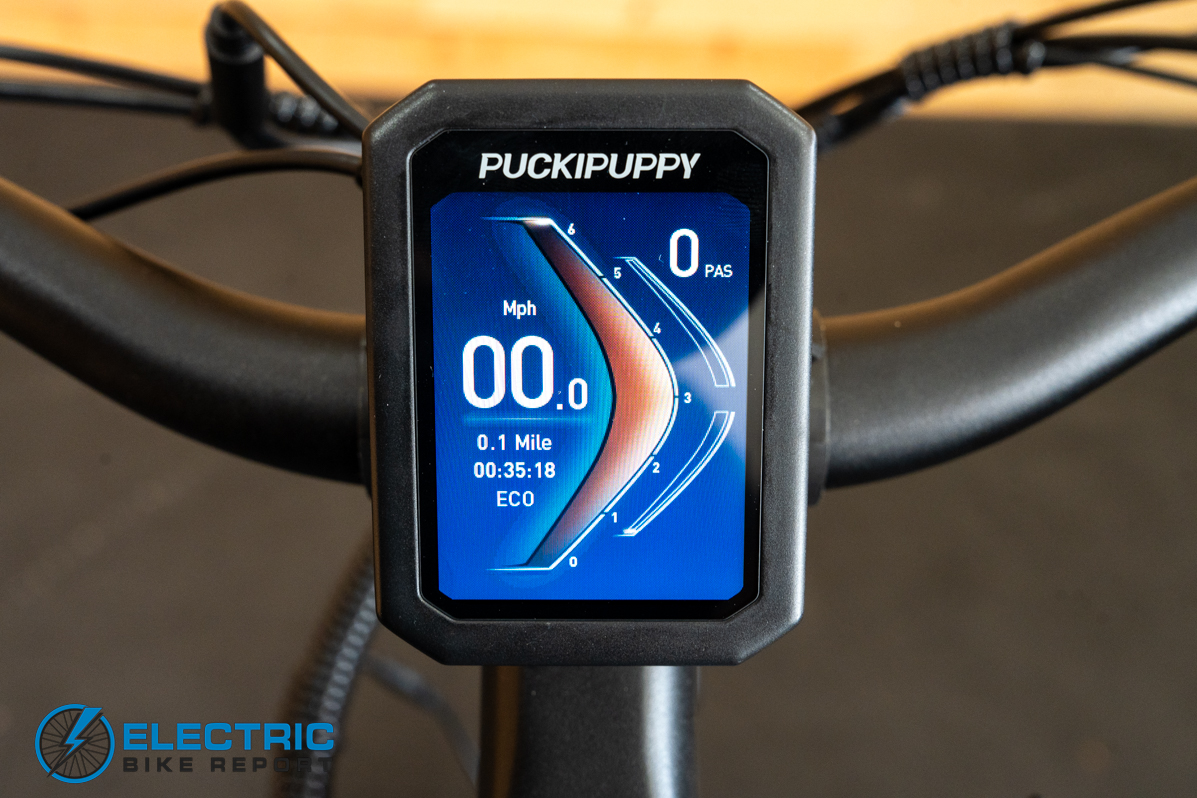
The boomerang in the center functions as the battery readout.
Puckipuppy Poodle Review: Summary / Where to Buy
The bottom line is that the Poodle is a budget eBike, and it does feel like it. However, this isn’t necessarily a negative thing; there is still a lot of value here. For $1000, you’re getting a legitimately useful, capable commuter. The motor, battery, and brakes are all sufficient for commuting and leisure rides.
When looking at performance across the board, there’s a tendency to immediately recognize the top bikes. There is something to that – we all love a high-end product. However, the Poodle truly offers a fun, capable, and practical eBike experience for a steal. At this price point, the components are solid, and the accessory package is also a huge win for buyers.
To me, the Poodle is a case of light beer. Sure, a $25 cocktail is nice on occasion, but sometimes, it just makes sense to get more for your money. A cold PBR on the porch can be just as enjoyable as top-shelf bourbon – You just have to be in the mood for it.
As much as I appreciate the value-oriented approach, Puckipuppy could improve a few things. The throttle should stop at 20 mph in order to keep this complaint with the 3 class system, and a more predictable battery readout would be very welcome. However, if you can live with a few quirks, this bike does pack in great value and usability. It’s worth taking a look at if you want a Class 3 commuter that won’t drain your savings.
Happy Riding! Make sure to let us know if you have any questions or if you think we left anything out in this review of the Puckipuppy Poodle down in our comments section.
Sponsor
Sponsor
Reader Interactions
Leave a Reply