Puckipuppy Poodle Pro Review | The Ideal Budget Commuter?
Sep 25, 2026
 0 Comments
 Share
Share
This budget friendly commuter has shown some serious improvement.
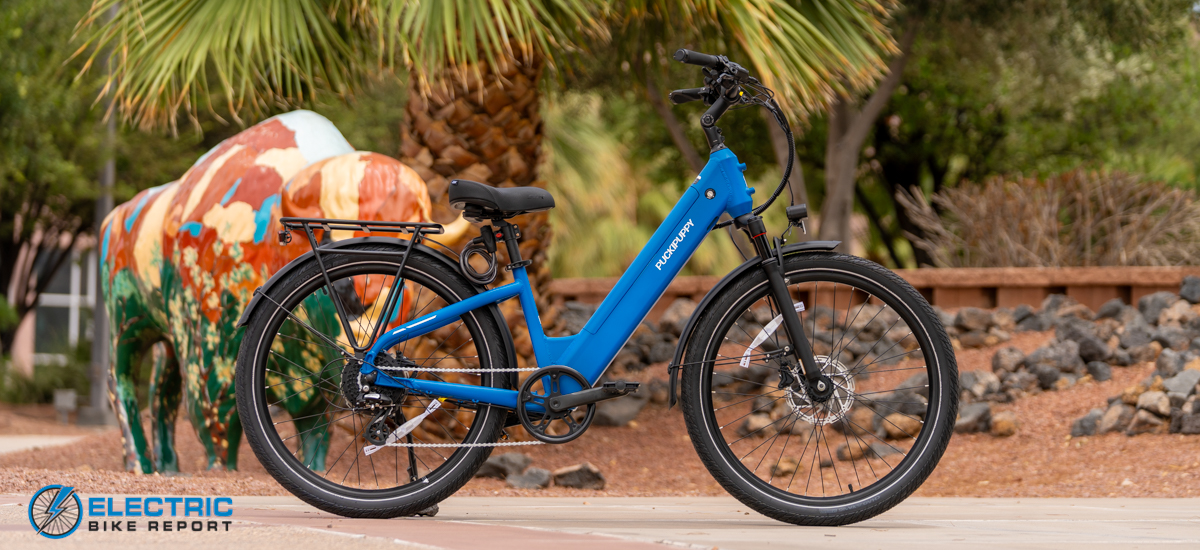
We’ve recently had quite a few bikes from Puckipuppy come through our door, and at this point, I’ve reviewed a few of their offerings. The theme is consistent across the board: These bikes are about getting the most for your money.
The Poodle Pro stays true to this ethos – however, the “Pro” part of the name delineates its upgraded status. The budget commuter formula stays the same; this model still has approachable handling and classic Dutch-style geometry. However, it also gets a more powerful motor, a choice of torque and cadence sensors, an upgraded 8-speed drivetrain, and a removable “key” display.
Like other bikes from this brand, the on-paper value proposition is strong. As I mentioned, I’ve reviewed several bikes from Puckipuppy, and I will admit that I thought I knew what to expect here – I was wrong.
The Poodle Pro pleasantly surprised me. It keeps the friendly price and accessibility of previous Puckipuppy models, while making some very welcome advancements. From my perspective, this is one of the best bikes they’ve produced.
With that said, there are a lot of options out there. My question is; how does this bike stack up to them? Is this a can’t-miss competitor?
We put the Poodle Pro through our full scope speed, range, hill, and ride quality tests to find out!

Sponsor
E-Bike Category:Commuter / Cruiser
E-Bike Class:Class 2 (Throttle to 20 mph)
Class 3 (Pedal Assist to 28 mph)
Class 3 (Pedal Assist to 28 mph)
Sponsor
Puckipuppy Poodle Pro Video Review
 Pros
Pros- As we’ve seen with other bikes from Puckipuppy, the Poodle Pro offers a lot for the money.
- The Pro model does meaningfully improve upon the standard edition – the sensor choice and programming are the biggest advancements.
- The coil fork and adjustable stem allow for solid comfort.
- Easy and approachable handling; it’s stable, but also nimble.
- The Poodle Pro offers solid power, especially at this price point.
- The removable display is a simple, but beneficial security feature.
 Cons
Cons- Out of the box, the bike can feel underpowered, especially while using the torque sensor; we recommend turning the intensity up to level “5” to fix the issue.
- There are speed caps in each PAS level, which does limit the benefits of having a torque sensor – the limit takes away some of the modulation that a torque sensor provides.
ELECTRICAL SPECS & FEATURES
- Battery: 48 V 15 Ah (720 Wh)
- Charger: 54.6 V, 2.0 A
- Display: Removable LCD
- Motor: 750W, 1350 W Peak Rear Hub Motor
- Headlight: Integrated
- Taillights: Integrated
- Pedal Assist: 5 levels
- Claimed Range: 45-75 miles
- Throttle: Thumb Throttle
- App: None
- UL Certification: UL 2271 by SGS, UL 2849 in progress
Weight & Dimensions
- Claimed weight: 63.1 lbs
- Tested Weight: 65.16 lbs
- Rider height range: 5’3″ – 6’4″
- Total payload capacity: 350 lbs
Components & Accessories
- Brakes: Logan Hydraulic Disc Brakes
- Fenders: Plastic, Front and Rear
- Fork: Coil Suspension Fork
- Frame: Step-thru Alloy
- Drivetrain: Shimano Altus 8 speed
- Grips: Rubber, Butterfly Style
- Saddle: Faux Leather Comfort Saddle
- Handlebar: Alloy Backsweep Bars, adjustable stem
- Kickstand: Included
- Pedals: Platform
- Tires: Chao Yang 27.5 x 2.4, Street tread
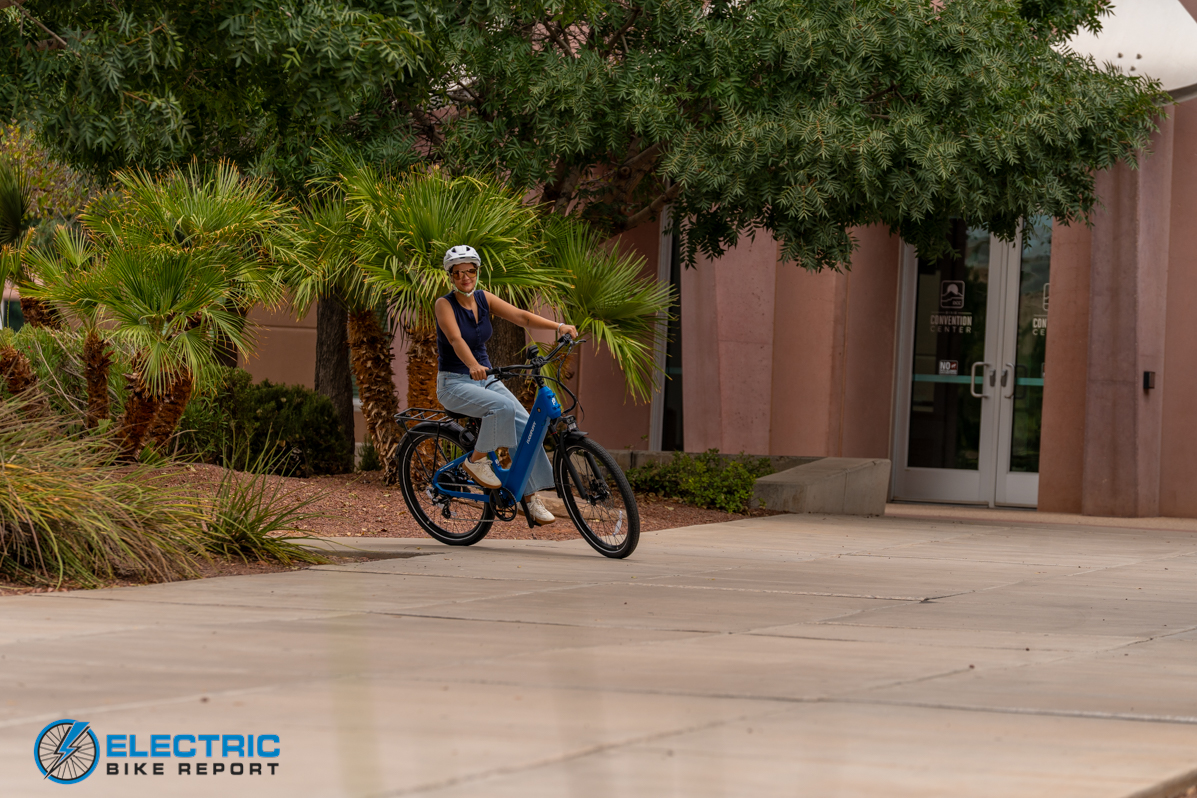
This budget commuter surprised us – it was even better than we expected.
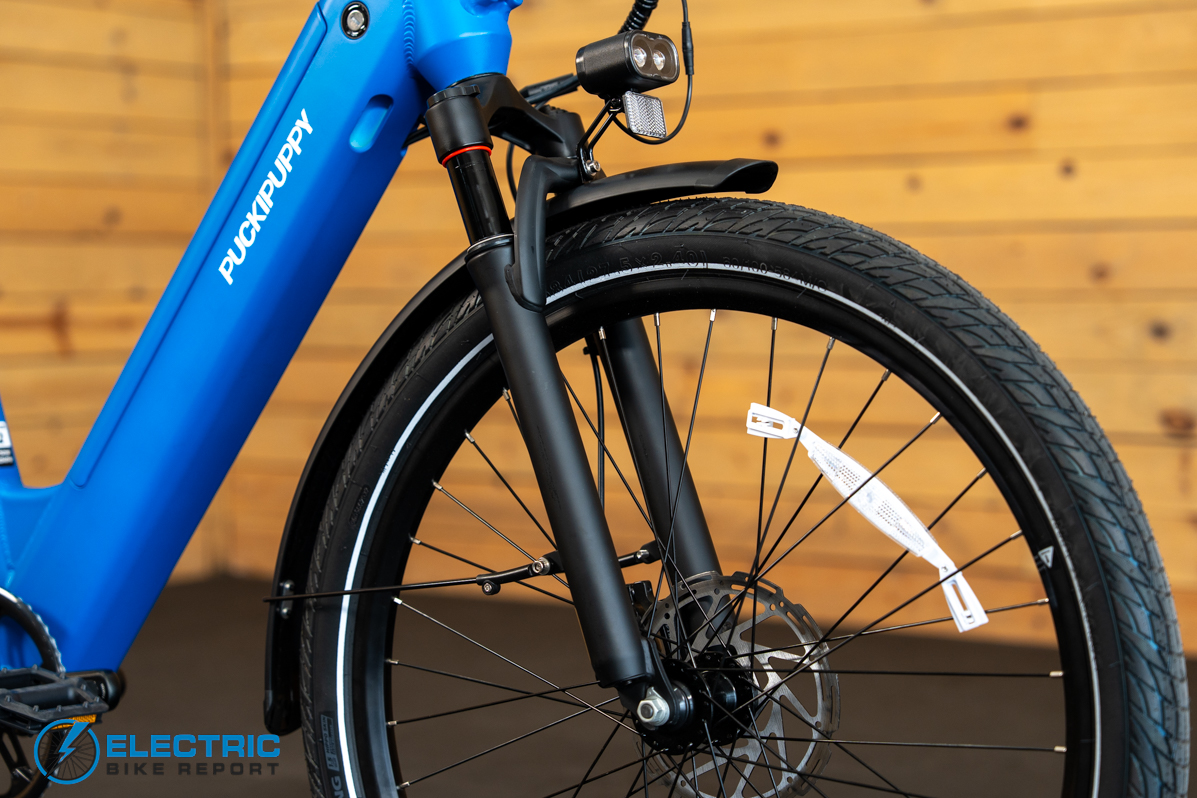
A front suspension fork helps keep it smooth… great for bumpy roads on the commute.
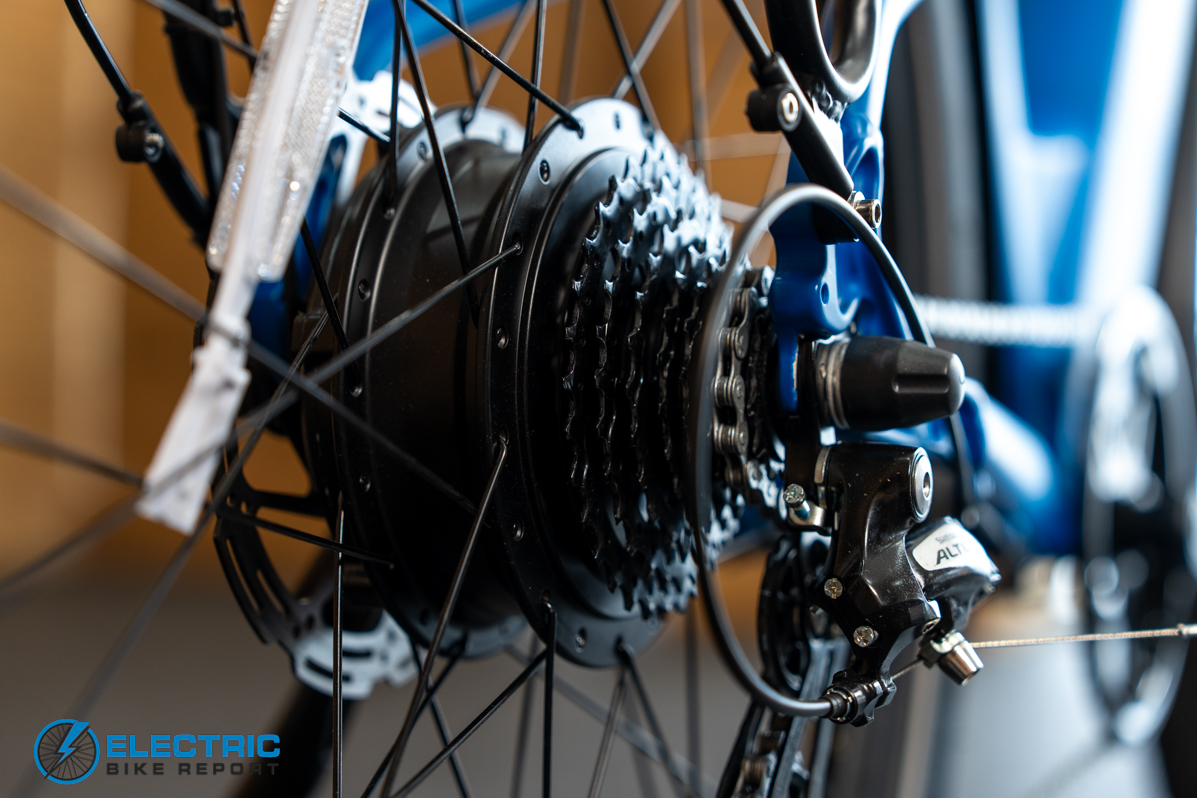
An 8 speed drivetrain is one of the major upgrades on the Pro model.
Puckipuppy Poodle Pro Review: Speed Test
Our speed test is designed around understanding a bike’s programming. Generally, we’re looking for smooth and incremental increases in power as the bike climbs through the assist levels. We’re also checking to see if the bike reaches/adheres to advertised speeds.
I’m happy to report that compared to previous Puckipuppy bikes I’ve reviewed, the Poodle Pro shows solid improvement in the programming department. For starters, it has class 2 and 3 pedal assist options; historically, Puckipuppy’s bikes have only had class 3 pedal assist, so they deserve some credit here.
We tested the Poodle Pro at both class 2 and 3 speeds, as well as using its torque and cadence sensors. I began the speed test by pedaling with no motor power. Here, I averaged 8.6 mph. The Poodle Pro isn’t awful to pedal without the motor, but like all eBikes, working with the PAS system is preferable.
At class 2 speeds while using the torque sensor, PAS 1 averaged 8.6 mph, PAS 2 settled at 11.1 mph, PAS 3 at 14.2, PAS 4 at 17.0, and PAS 5 reached 20 mph.
The class 3 torque test saw the Poodle Pro settle at 11.4 mph in PAS 1, 15.4 mph in PAS 2, 19.4 mph in PAS 3, 22.6 mph in PAS 4, and 28.2 mph in PAS 5 with an extra push on the pedals.
In cadence mode at class 2 speeds, PAS 1 averaged 8.8 mph, PAS 2 did 12.3 mph, PAS 3 15.1 mph, PAS 4 17 mph, and PAS 5 reached 20 mph.
With the speed limit raised to the class 3 cap, cadence mode yielded 11.4 mph in PAS 1, 15.1 mph in PAS 2, 19.9 mph in PAS 3, 24.0 mph in PAS 4, and 28.2 mph in PAS 5.
Let’s simplify this a bit; in general, the test shows incremental and progressive power increases. However, there are some details to address.
First, each PAS level seems to have a speed limit. Once the bike hits that preset cap, the motor cuts out – as a result, I found the higher assist levels to be more intuitive, especially when using the cadence sensor.
Out of the box, this torque sensor requires a healthy amount of effort. With extra pedal input, it will spit out some power, but can still feel slightly lacking. To fix this issue, we’d recommended turning up the “intensity” settings from 3 up to 5 in the display menu. This makes the bike much more peppy – thankfully, it’s an easy solution.
In cadence mode, there is some ghost pedaling as you crest the class 2 cap, but the 8 speed drivetrain keeps it relatively minimal. This is also to be expected at this price point.
I do want to point out that this bike does adhere to the 3 class system – the standard version of the Poodle that we tested missed the mark there. To me, that alone might be worth the upgrade to the Pro model; I’m glad Puckipuppy has made improvements there.
The big takeaway here is that the programming is respectable on this bike. It’s not the most refined, but I’d still give it a passing grade, especially at this price point.
Sponsor
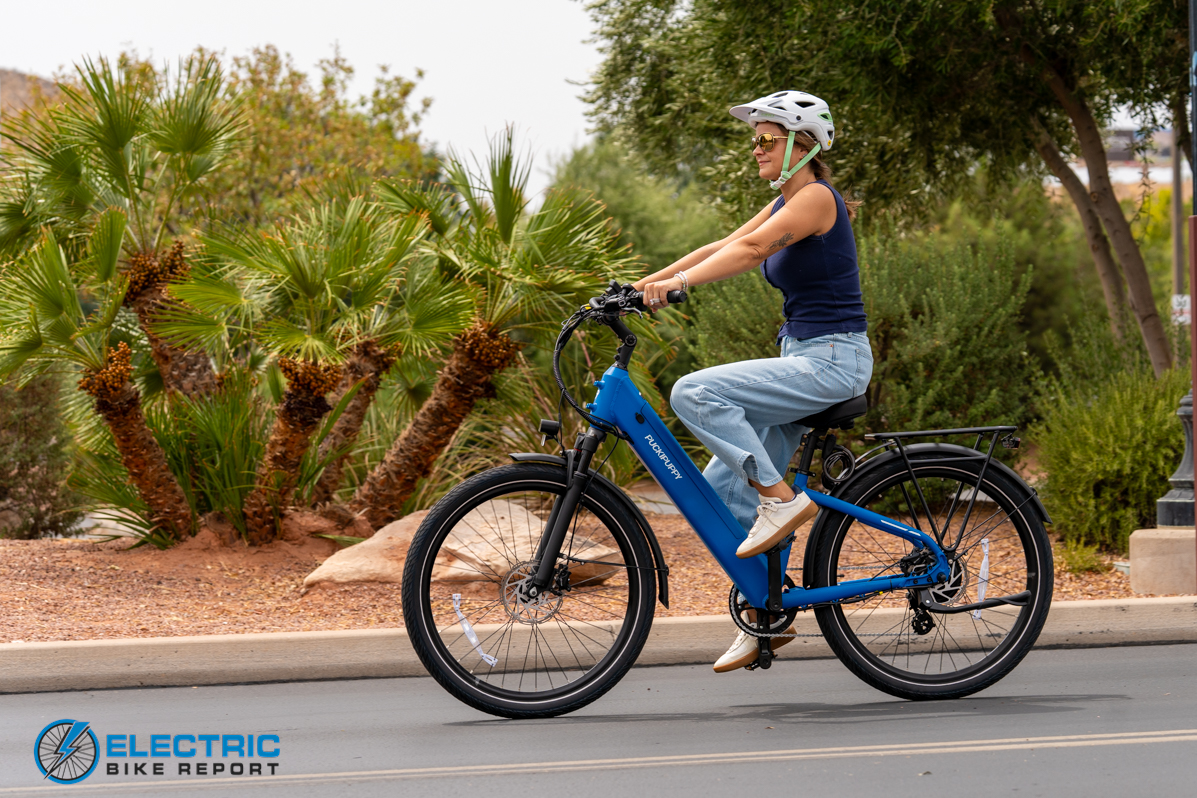
The Poodle Pro is available in 4 colors: Red, White, Grey, and this Royal Blue.
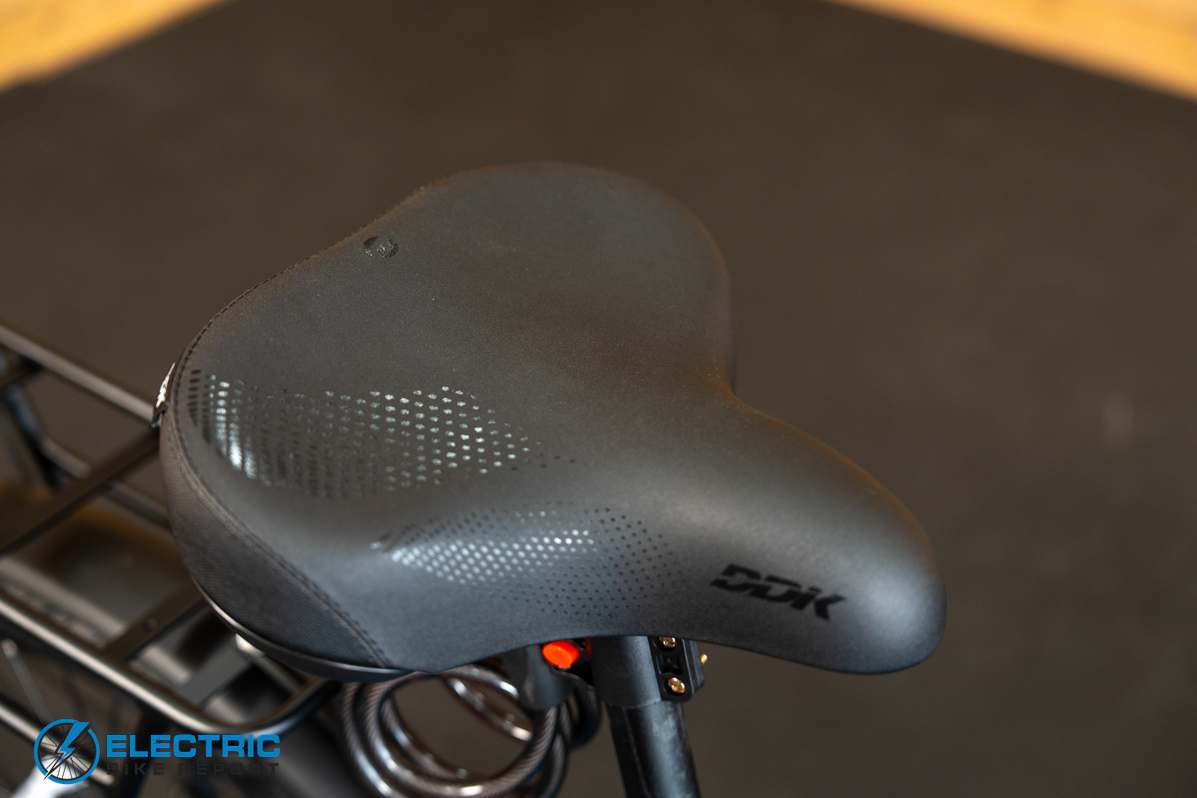
The stock saddle is very wide and cushy; it’s a little soft for me, but I suspect lots of owners will like it.
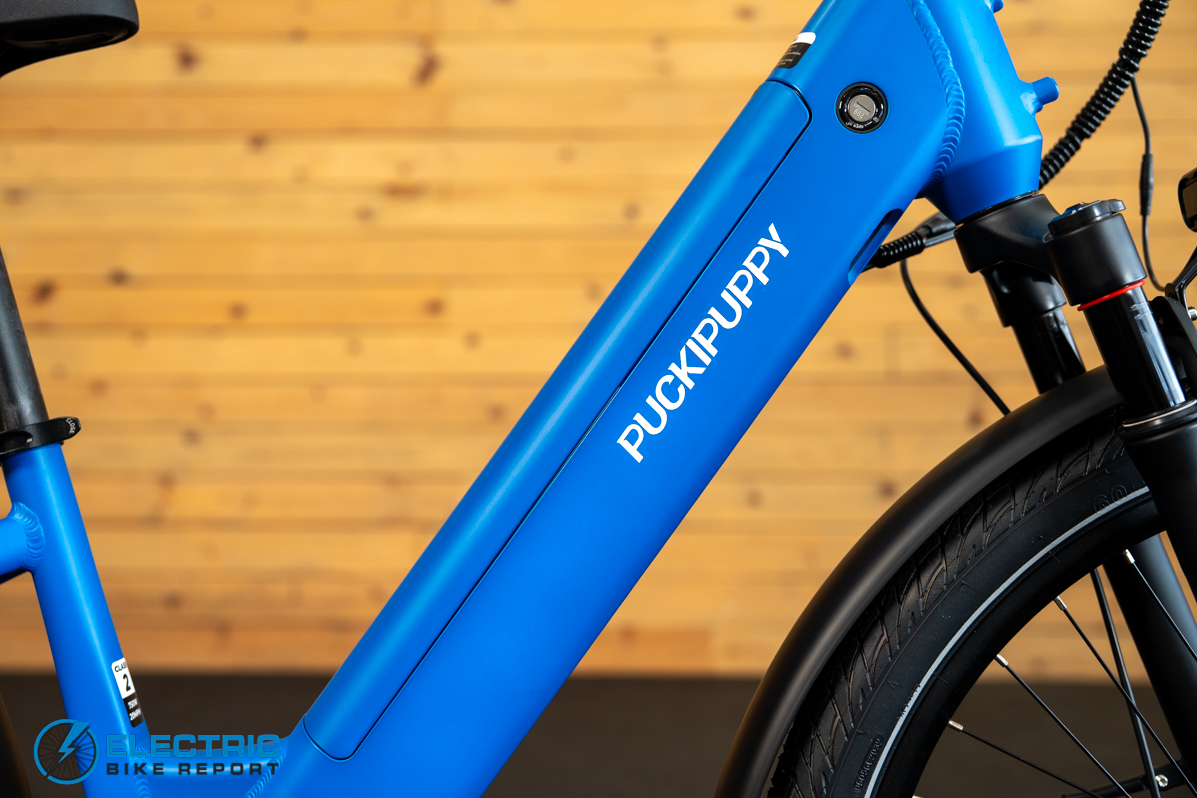
Another detail on the “Pro” model is that the battery matches the frame paintwork.
Puckipuppy Poodle Pro Review: Range Test
The Poodle Pro put on a fantastic performance in the range test. We do two trials; one using low power settings, and another using high power.
Using maximum assist settings, the bike did 54.92 miles – head and shoulders above the category average of 34.47 miles.
On low power, the Poodle Pro stretched to 87.37 miles, while the class average was 65.97. Once again, an outstanding showing.
I do want to mention that we tested the Poodle Pro’s low power range using PAS 2. PAS 1 is very light on power, and we felt that bumping up the assist level would provide more practical data.
If it isn’t obvious by now, the big takeaway is that the Poodle Pro has enough range for a wide variety of uses. Unless you’re planning on knocking out roadie-style miles, this bike won’t let you down. Commuting, errands, and fun rides are all well within the job description.
So, what’s behind these remarkable results? The explanation has a few variables. First, at 720Wh, the battery is slightly larger than average. That’s a piece of the puzzle, but that’s unlikely the cause by itself.
The power delivery on the Poodle Pro is also a potential contributor. We tested the range with the bike’s out-of-the-box “intensity” configuration, which is set to “3”; with this setup, the Poodle Pro can be a bit reluctant to dish out power, especially without a strong pedal input. As a result, we noticed that the bike averaged lower speeds throughout the course of the tests; for example, using max power settings, this bike averaged 15.05 mph, while similar bikes came in around 19.07 mph.
Like we discussed in the speed test, this bike feels best when the intensity settings are maxed out at “5”. In that case, you will get less range, but you’ll also get more power. To me, that’s a worthy tradeoff. Given the as-tested numbers, I’d still expect the range to be very respectable with higher intensity settings. Overall, this is a good showing.
Sponsor
Sponsor
Puckipuppy Poodle Pro Review: Hill Test
Hill performance is a priority for many eBike riders; the Poodle Pro’s upgraded motor packs a 1350 W peak and 75 nm of torque. Our test rider, Justin, climbed the Devil’s Backbone segment once on throttle and once using maximum pedal assist.
On throttle, the Poodle Pro posted 2:06 at 14.4 mph while the average of similar bikes was 2:03 at 14.8 mph. Using the PAS system, this bike climbed the hill in 2:00 even at 15.1 mph. The mean of comparable bikes here was 1:59 at 15.5 mph.
The main idea: The Poodle Pro lands squarely in average territory – at this cost, that’s a win. This bike is on the affordable end of the comparison class, but it still hangs in with its more expensive counterparts.
I do want to revisit the intensity settings again – turning these up to 5 will yield the best hill performance, so that’s what we recommended doing.
With that said, I did some hill testing on my own with the bike set to “3” intensity, and it’s still a passable hill climber, especially in cadence mode. The Poodle Pro is respectably quick up inclines, but more importantly, it fulfills the eBike promise of making hill climbing easier.
Justin noted that he put in some effort, but not an extreme amount. With the intensity settings maxed out, I had a similar takeaway – To me, that’s the key metric of a bike’s climbing performance, and the Poodle Pro delivers.
Overall, it’s hard to take issue with this showing. Want solid hill climbing at a great price? It’s here.
Sponsor
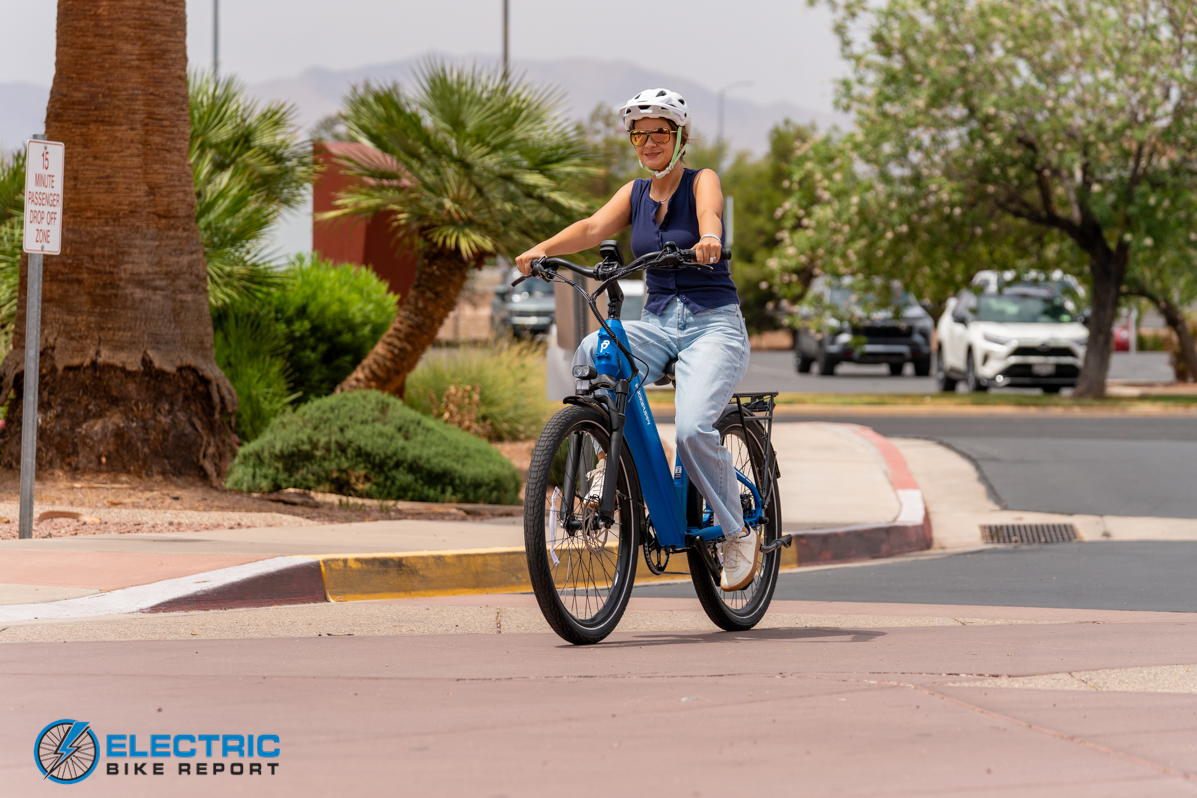
Puckipuppy struck a great balance between stability and nimbleness on this bike.
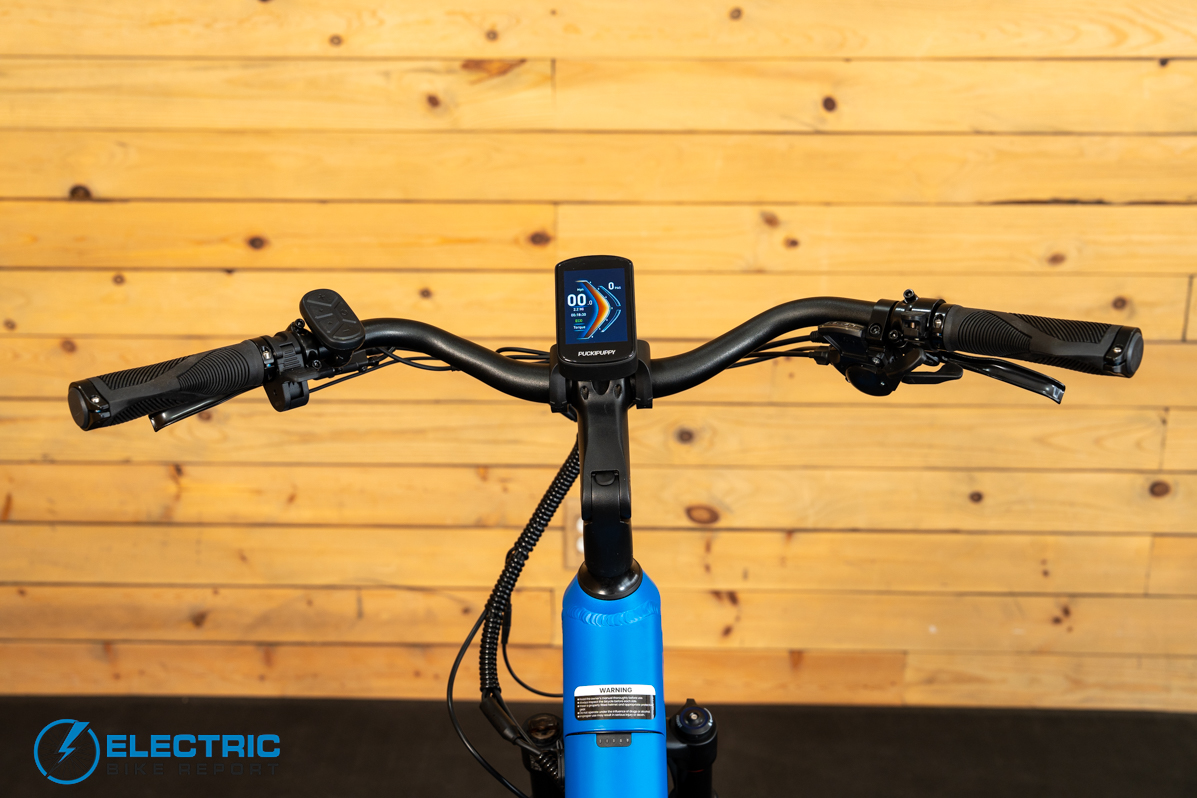
The cruiser style bars are paired with an adjustable stem.
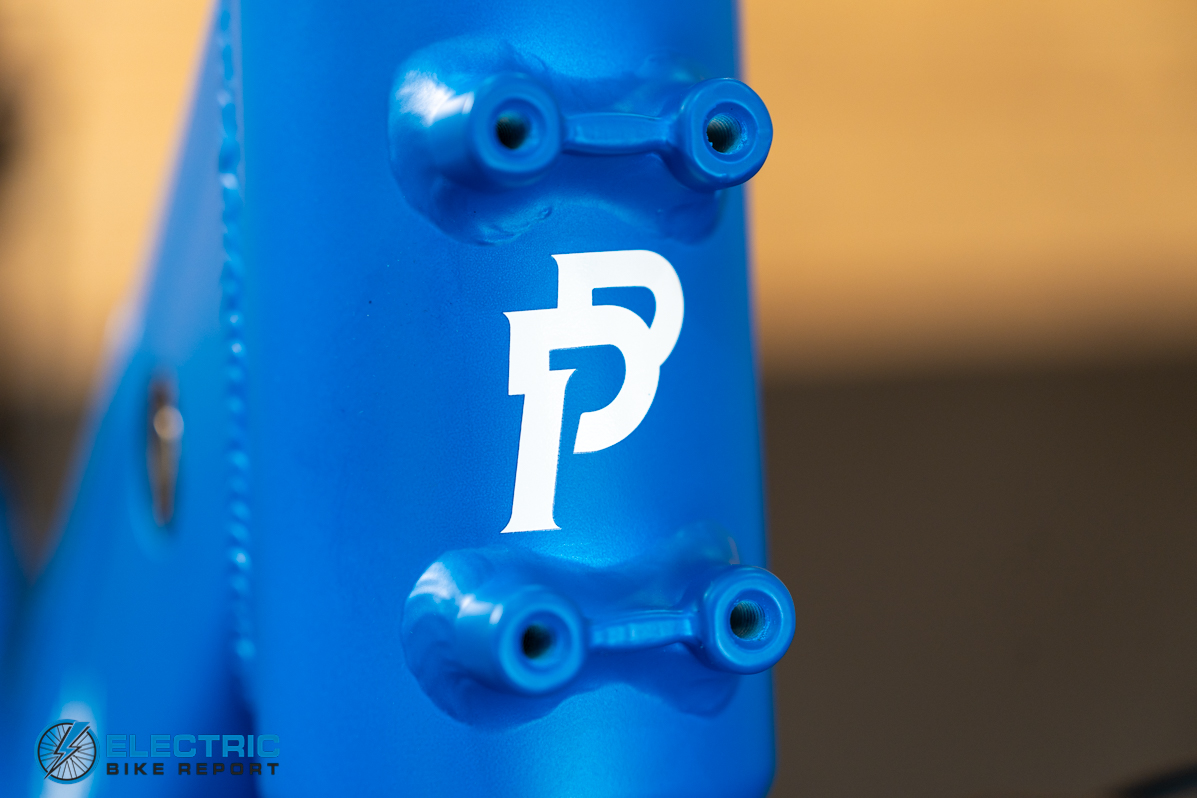
Mounts for a front basket – Puckipuppy has one available as an optional extra.
Puckipuppy Poodle Pro Review: Brake Test
Time to “brake” it down (I know, I know – fellow reviewer John Bozick has been a bad influence).
For our brake test, we bring every bike up to 20 mph, apply the brakes and come to a complete stop, then measure the distance. We do three runs and average them for the results.
The Poodle Pro recorded an average stopping distance of 22 feet 3 inches. The class average was 21 feet 5 inches.
Candidly, the difference here is relatively minimal – we’re talking about a footsteps’ worth of length between the Poodle Pro and the average. These brakes are well within the safe range.
The Poodle Pro has Logan 2 piston hydraulic brakes paired with 180 mm, 1.85 mm thick rotors front and rear. This is the same setup I’ve seen on several other Puckipuppy bikes, and my impressions have remained consistent; these are solid, no-frills brakes that do what they need to do. Not much more, not much less.
The modulation is decent, and lines up with what we’d expect at this price point. They aren’t super aggressive stoppers, but I also wouldn’t say that they’re soft or spongy. From a personal point of view, I felt that these were trustworthy, and I’d feel comfortable running this bike with the brakes as-is. However, if you prioritize a more premium feel, an upgrade might be worth it.
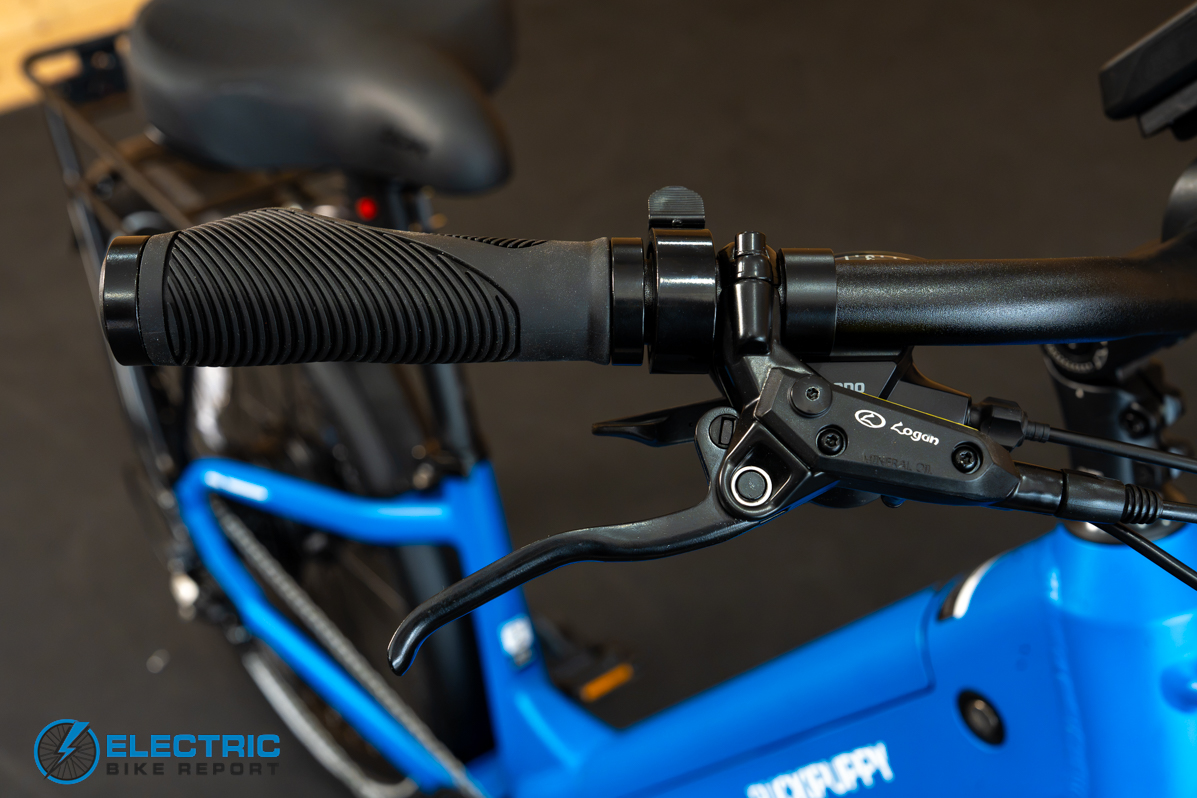
I did like that the levers were full metal.
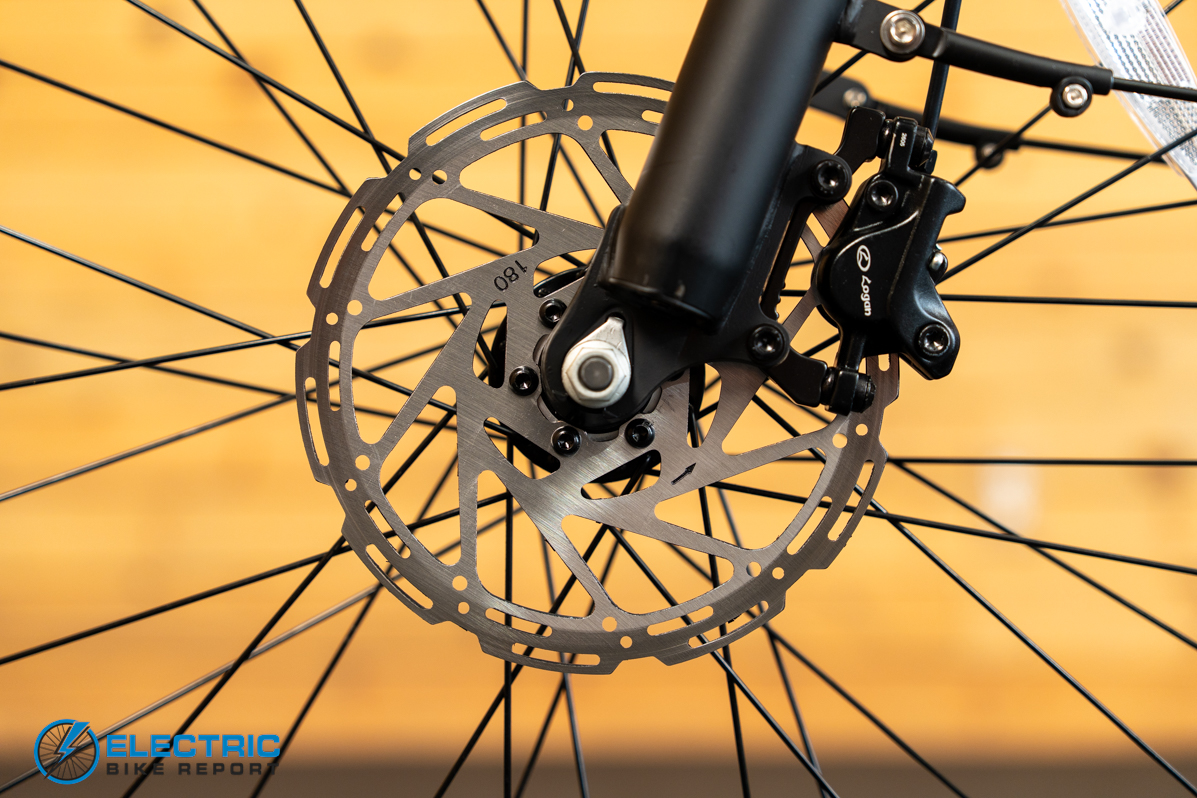
The rotors are 180mm, 1.85 mm thick, front and rear.
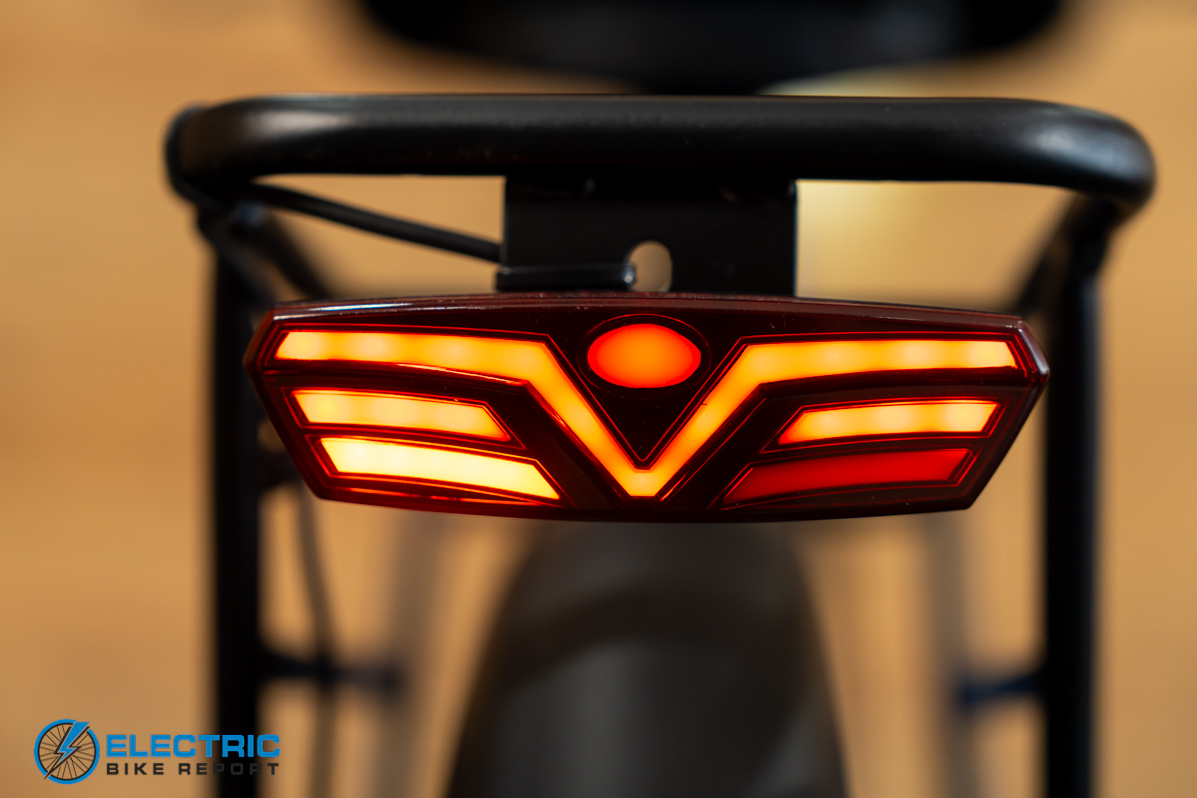
The taillight also has turn signals – perfect for the commute to work or school.
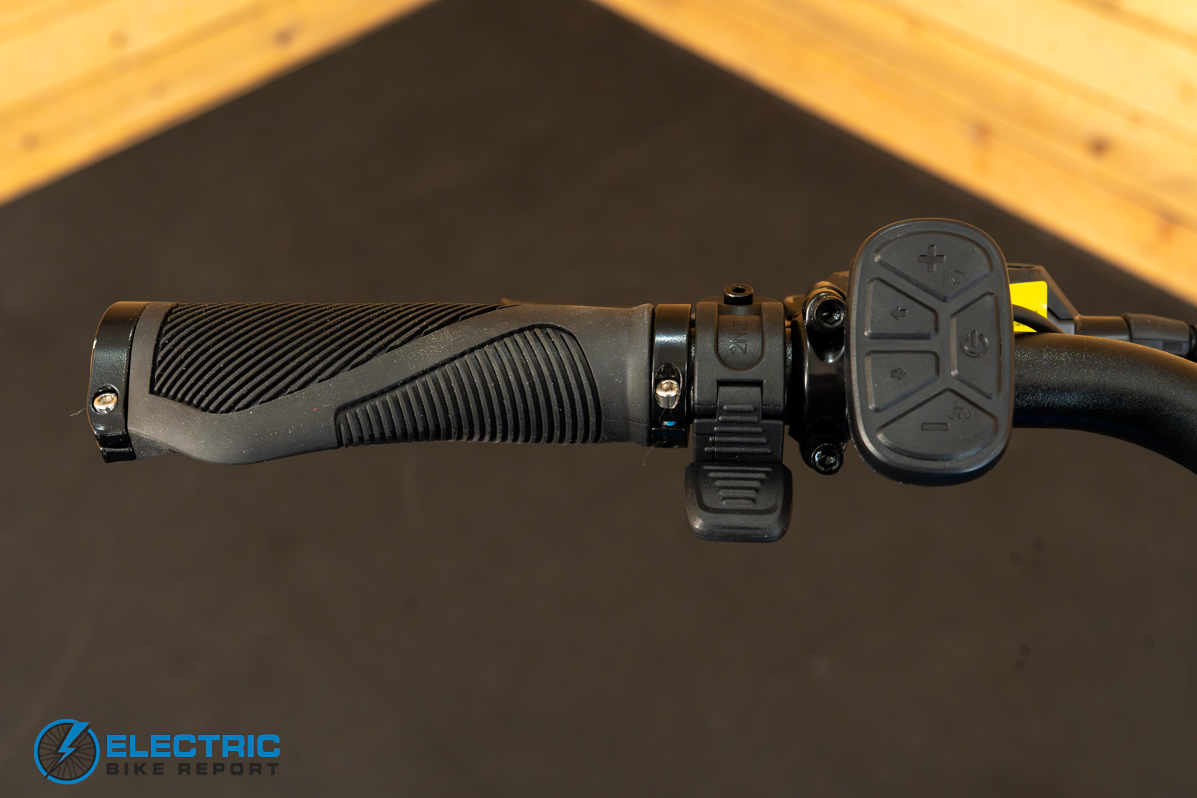
I almost always prefer thumb-activated throttles to twist-activated ones, so I was glad to see that here.
Puckipuppy Poodle Pro Review: Ride Quality
Ride quality is a crucial section of any eBike review, but in my personal opinion, it’s a particularly important part of cruiser and commuter bikes. The whole point of this class of bike is to be pleasant and practical.
The Poodle Pro is tasked with checking those boxes AND still hitting the budget-friendly price point.
Impressively, it does. Let’s start with the nuts and bolts: Sizing wise, Puckipuppy says that this bike will accommodate riders from 5’3″ to 6’4″. I’d say that this is mostly accurate, but at 6’3″, I struggled to get proper leg extension. It’s worth noting that I do have a longer than average inseam, but I’d still suspect taller riders would have similar findings.
However, the adjustable stem allows for riders to find a comfortable reach/riding position – the stepthrough frame is generally suited to a more upright riding position, but if you prefer a more forward lean, the option is there.
The 2.4 inch wide tires strike an impressive balance between nimbleness and grip; in fact, the whole bike has solid handling characteristics that walk this line. The Poodle Pro has the stability that I’d want from a roadworthy commuter, but is also easy and enjoyable to cruise on.
One of the upgrades on the Pro model is the choice of torque or cadence sensors. We’ve discussed the pedal experience already, but I also want to cover the motor engagement while using each sensor.
The torque sensor is decently natural. It engages fairly quickly, but feels more subtle in the lower assist levels. I’d actually characterize that as a pro – it’s smoother than I initially expected it to be.
In cadence, the bike takes about a full cycle of the pedals before the assistance steps in. Additionally, there is some overrun when you back off the power. It’s usually no longer than a second, and once you know it’s there, it’s generally a non-issue; but it is present.
The suspension fork does a nice job of adding a layer of smoothness to the ride. This bike is intended for paved paths and roads, and with that in mind, the fork handles bumpy pavement well.
The removable display is also a nice security feature – it functions as a “key” so nobody can turn on your bike once removed. It’s a simple, but practical addition that boosts peace of mind when your bike is separate from you. I’d still use a lock though.
If the goal is to be pleasant and practical, the Poodle Pro scores. It has legitimate chops for commuting, and it’s comfortable and fun enough that you’d probably consider taking the long way to work.
Sponsor
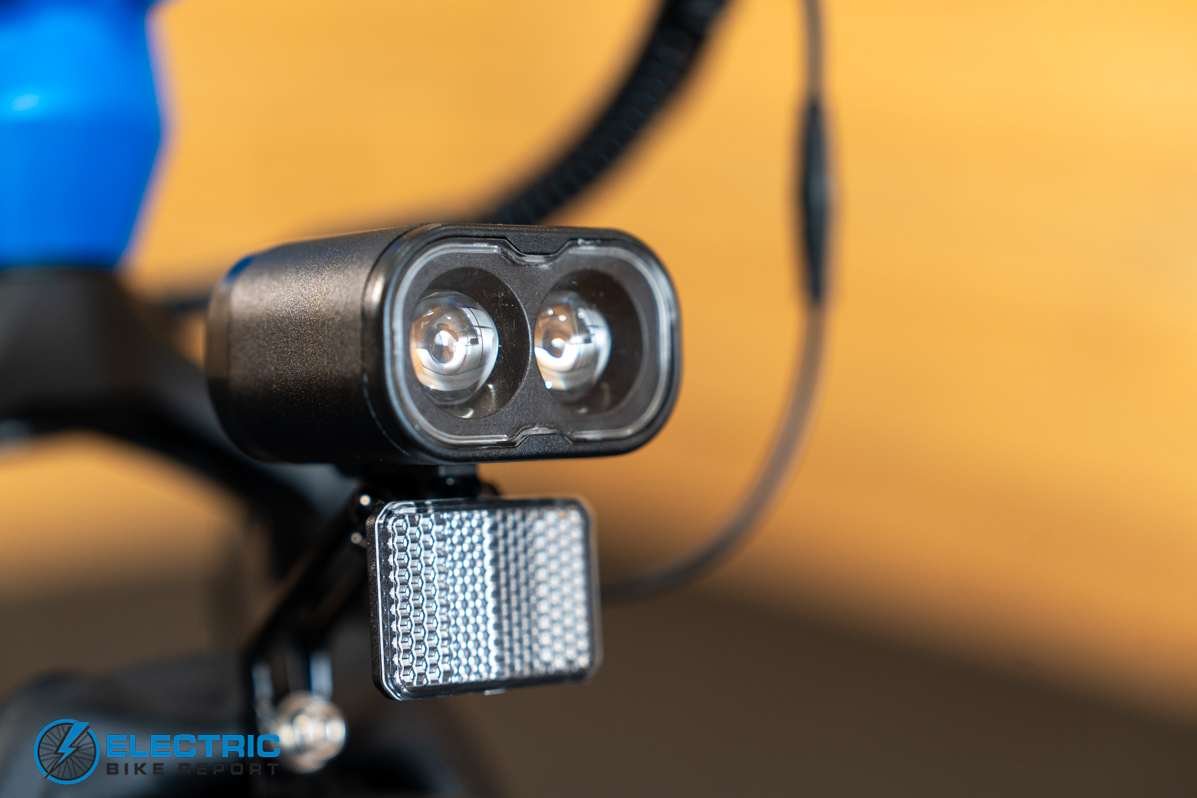
An included headlight keeps the ride going after dusk.
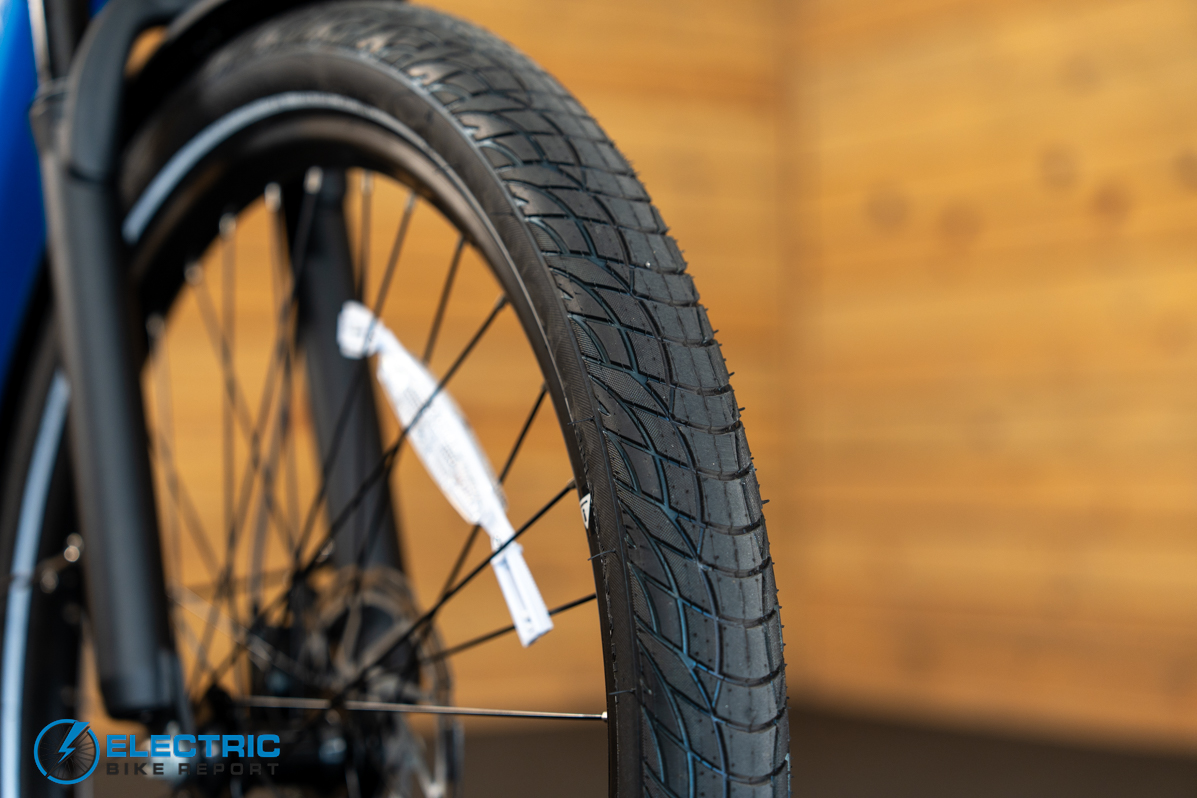
27.5 x 2.4 inch tires give solid grip without feeling sluggish.
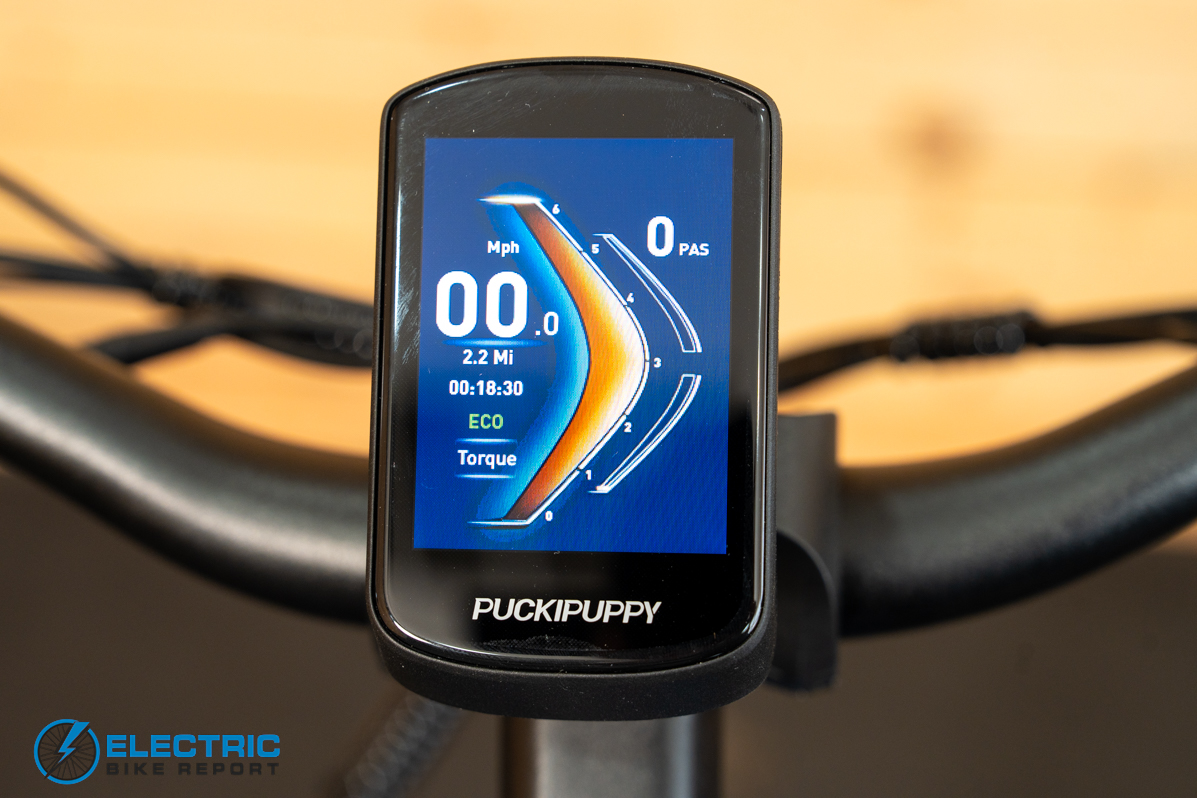
The main display is simple, but effective. That central bar is the battery meter.
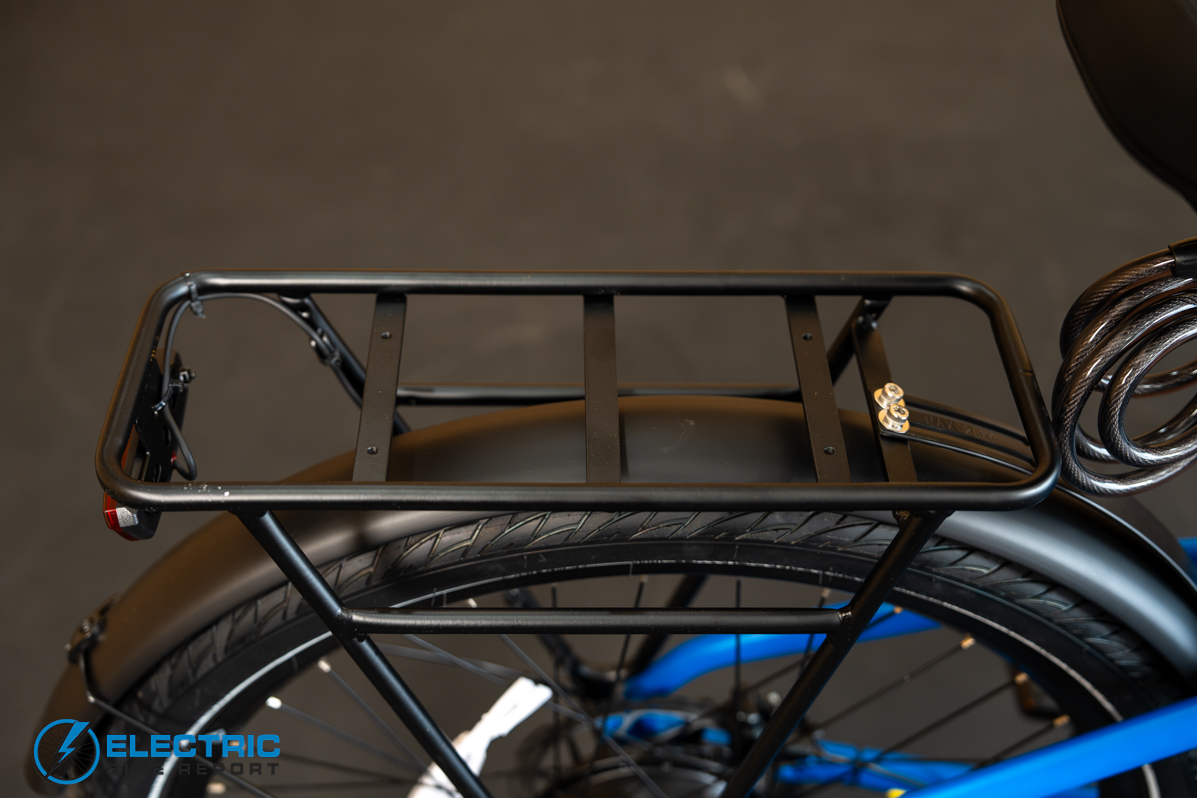
The rear rack is perfect for deliveries and daily essentials alike.
Puckipuppy Poodle Pro Review: Summary / Where to Buy
I’m impressed with the Poodle Pro, and here’s why: This bike still holds true to Puckipuppy’s value first approach, but it smooths out the rough edges that I’ve historically seen on their products. It shows a lot of growth – compared to their previous offerings we’ve reviewed, the Poodle Pro has made real progress, especially in programming and safety.
Puckipuppy should use this bike as a template for their future offerings. Yes, there are some areas for improvement; but this fits legal class standards (older models did not) and is still available at an accessible price. Puckipuppy – go this direction. The Poodle Pro is your guide.
For the money, this bike offers real fun, useful practicality, and respectable performance. Range, ride quality, and value are all strong suits. If you’re looking for a commuter that won’t break the bank, this is worth considering.
The main critique is on the bike’s out-of-the-box power output. As discussed, we found it to feel underpowered with default settings. The issue is easily resolved by turning up the intensity settings – with this in mind, we’d like to see Puckipuppy ship the Poodle Pro with intensity setting “5” as standard.
Overall, this bike is a step in the right direction for Puckipuppy, which is also hugely beneficial to riders. Cheers to the Poodle Pro.
Happy Riding! Make sure to let us know if you have any questions or if you think we left anything out in this review of the Puckipuppy Poodle Pro down in our comments section.
Sponsor
Sponsor
Reader Interactions
Leave a Reply