Lectric XPress2 Review | Commute & Cruise However You Choose
May 19, 2026
 0 Comments
 Share
Share
This value-packed e-bike offers two frame and riding styles, torque and cadence sensing modes, and commuter essentials at an approachable price.
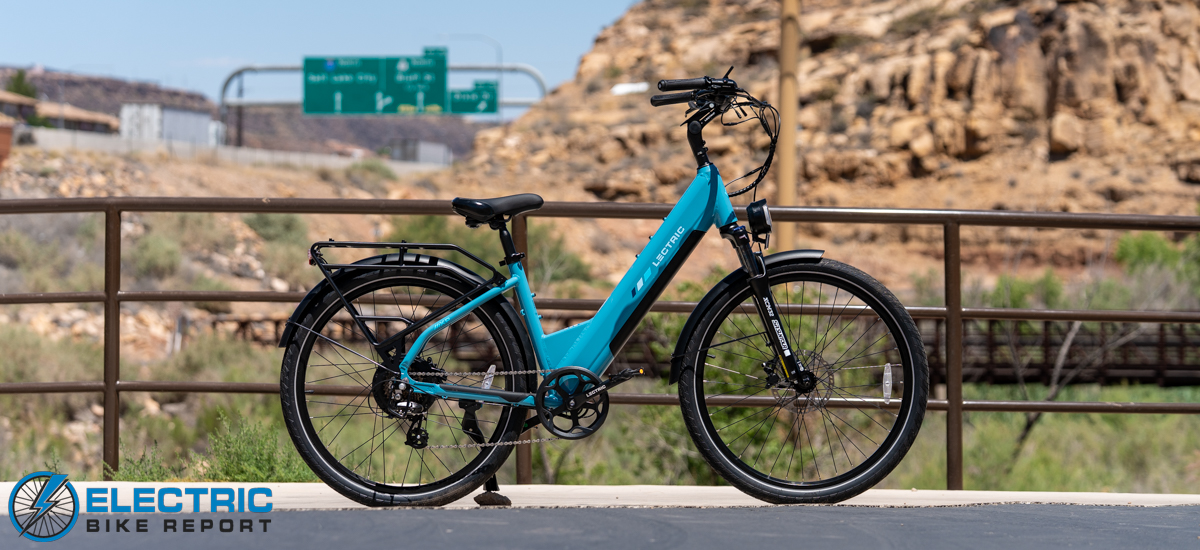
The original XPress was a milestone for Lectric for a variety of reasons.
First, it was the brand’s first full-size, non-folding e-bike. Second, it was the first Lectric model equipped with a torque sensor, and the lowest-priced e-bike with this sensor type we’d seen upon its release. Finally, the bike came in two distinct flavors: a high-step commuter and a step-thru city cruiser—both with 500W and 750W options.
Now, the XPress2 continues Lectric’s long-standing tradition of giving riders more bang for the buck.
This new-and-improved version of the bike offers the same two frame style options, though both are only available with a powerful, hill-crushing 750W motor. In fact, the specs have improved almost across the board, with 8-speed drivetrains, custom—and seriously capable—Star Union hydraulic disc brakes, and an SR Suntour XCM suspension fork.
Additionally, the XPress2 now includes a sharp color TFT display, which comes with a slick user interface and a host of customization options. Perhaps the most notable of these is the ability to switch between torque- and cadence-sensing pedal assist modes, giving riders the choice for an active and responsive ride, or a more relaxed and low-effort experience.
The addition of an included cargo rack, fenders, and integrated tail/brake lights with turn signals rounds out this value-packed package. For the price, the XPress2 clearly brings a lot to the table. Does its real-world performance hold up, too?
Keep reading below to learn more about its results in our standardized testing, and to see how it compares to similar models on the market.

Sponsor
E-Bike Category:Cruiser/Commuter
E-Bike Class:Class 1 (pedal assist to 20 mph)
Class 2 (throttle to 20 mph)
Class 3 (pedal assist to 28 mph)
Class 2 (throttle to 20 mph)
Class 3 (pedal assist to 28 mph)
Sponsor
Lectric XPress2 Video Review
 Pros
Pros- It pedals easily and handles hills with ease, with a 750W hub motor that produces more power than average for its style.
- Customization is among the bike’s top priorities. Choose between torque and cadence-sensing modes, switch between Classes, adjust throttle behavior, and more!
- There’s a frame/riding style for everyone, with a sporty high-step model and a relaxed, upright step-thru version to choose from.
- Unlike the original XPress, it comes standard with commuter essentials, such as integrated brake lights, turn signals, fenders, and a cargo rack with a 60-lb max payload.
- Other upgrades include more color options, an 8-speed drivetrain, an SR Suntour suspension fork, and a color TFT display with a new UI.
- Both versions of the bike fit a wide range of riders between 5’2” and 6’4”, with the ST model offering more adjustability and an 18.5” standover height.
- The bike has solid stopping power, thanks to Lectric’s custom 602 hydraulic disc brakes, made in partnership with Star Union.
- The XPress2’s new motor is remarkably quiet. At the most, it makes an unobtrusive hum, but in lower assist levels, it’s whisper-quiet.
 Cons
Cons- The battery charge readout drops by 10% at a time. making it tough to estimate the bike’s remaining range. A more precise readout would be more user-friendly.
- Lectric’s cadence-sensing mode feels more natural than most, but considering that the XPress2 has a torque mode, limiting speed in each assist level may be more user-friendly for its cadence mode.
ELECTRICAL SPECS & FEATURES
- Battery: 48V, 672 Wh (14 Ah) battery
- Charger: 2A standard, 5A upgrade available
- Display: Detachable 3.5” TFT color display
- Motor: 750-watt nominal brushless gear hub motor (1,310 peak) with 85 Nm of torque
- Headlight: Integrated LED
- Taillights: Integrated LED with turn signals
- Pedal Assist: 5-Levels of pedal assist
- Claimed Range: up to 60 miles
- Throttle: Left thumb throttle
- App:N/A
- UL Certification: UL 2271 & UL 2849 Certified
Weight & Dimensions
- Claimed weight: 64 lbs
- Tested Weight: 72 lbs (including 8-lb battery)
- Rider height range: 5’2” – 6’4”
- Total payload capacity: 330 lbs
Components & Accessories
- Brakes: StarUnion 602 hydraulic disc brakes, 180mm rotors
- Fenders: Not Included
- Fork: SR SunTour XCM 32 suspension fork with a thru-axle, 80 mm of travel
- Frame: Aluminum
- Drivetrain: Shimano Altus 8-speed drivetrain, 46T Chainring, 11-32T Cassette
- Grips: Lock-on grips
- Saddle: Custom
- Handlebar: hybrid sprint handlebars (HS), comfort curve handlebars (ST)
- Kickstand: Included
- Pedals: Quick release pedals
- Tires: Puncture-resistant 27.5” x 2.1” slick tires, with Slime installed
Lectric XPress2 Review: Model Options
While the previous version of the Lectric XPress had two frame styles and two spec tiers, the XPress2 has a single spec level in both high-step (HS) and step-thru (ST) frame styles. Each model comes in a single frame size with a recommended height range of 5’2” to 6’4”, though the ST has a more accessible frame with a much lower standover height of 18.5”.
The XPress2 has four colors divided between the HS and ST models. The high-step frame comes in Tempest Grey and Pine Green, while the step-thru frame is offered in Stratus White and Raindrop Blue.
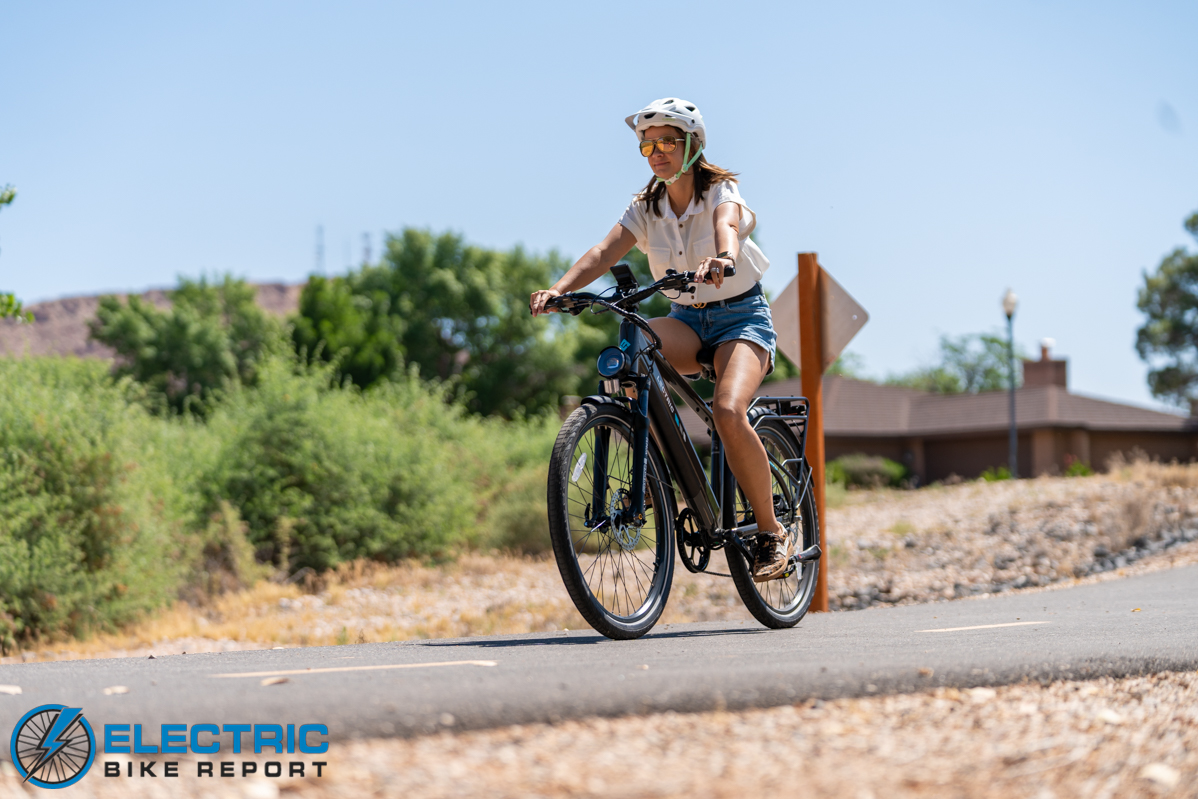
The high-step XPress2 is ideal for commuters, fitness enthusiasts, and anyone seeking a sportier, sharper-handling ride.
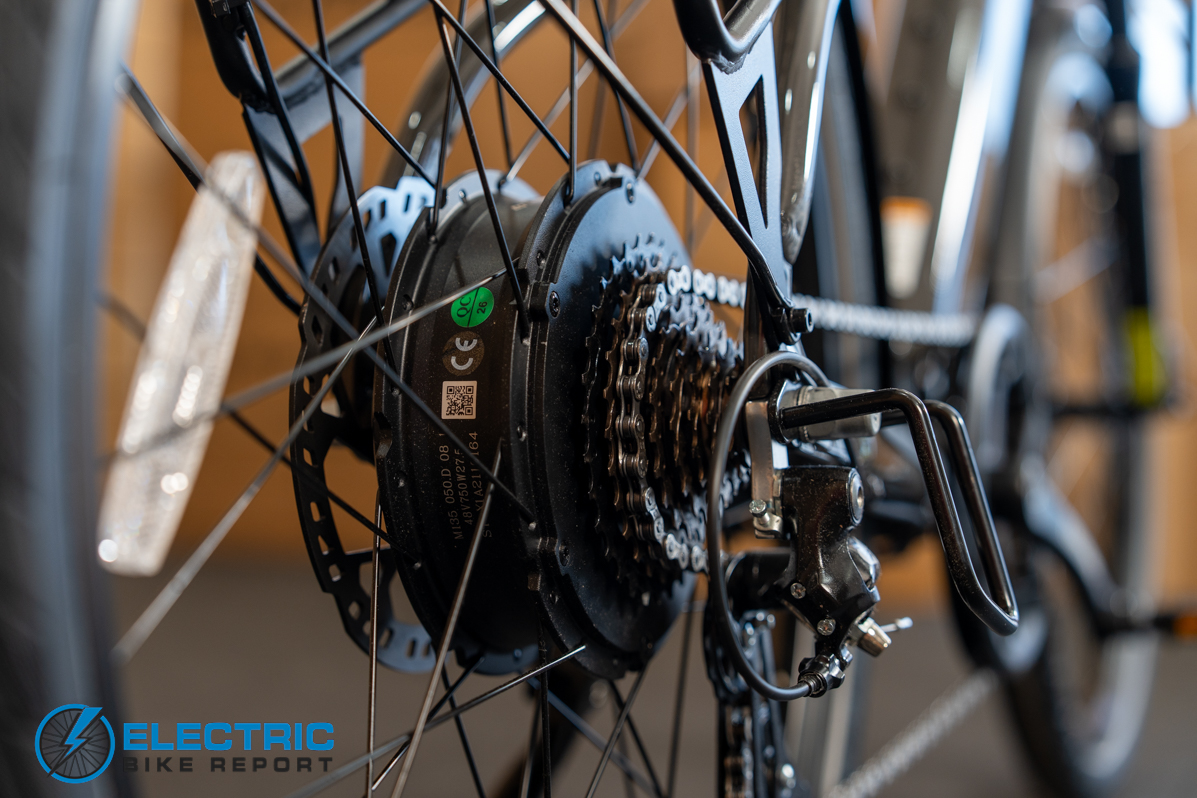
A powerful 750W rear-hub motor offers both torque- and cadence-sensing pedal assist.
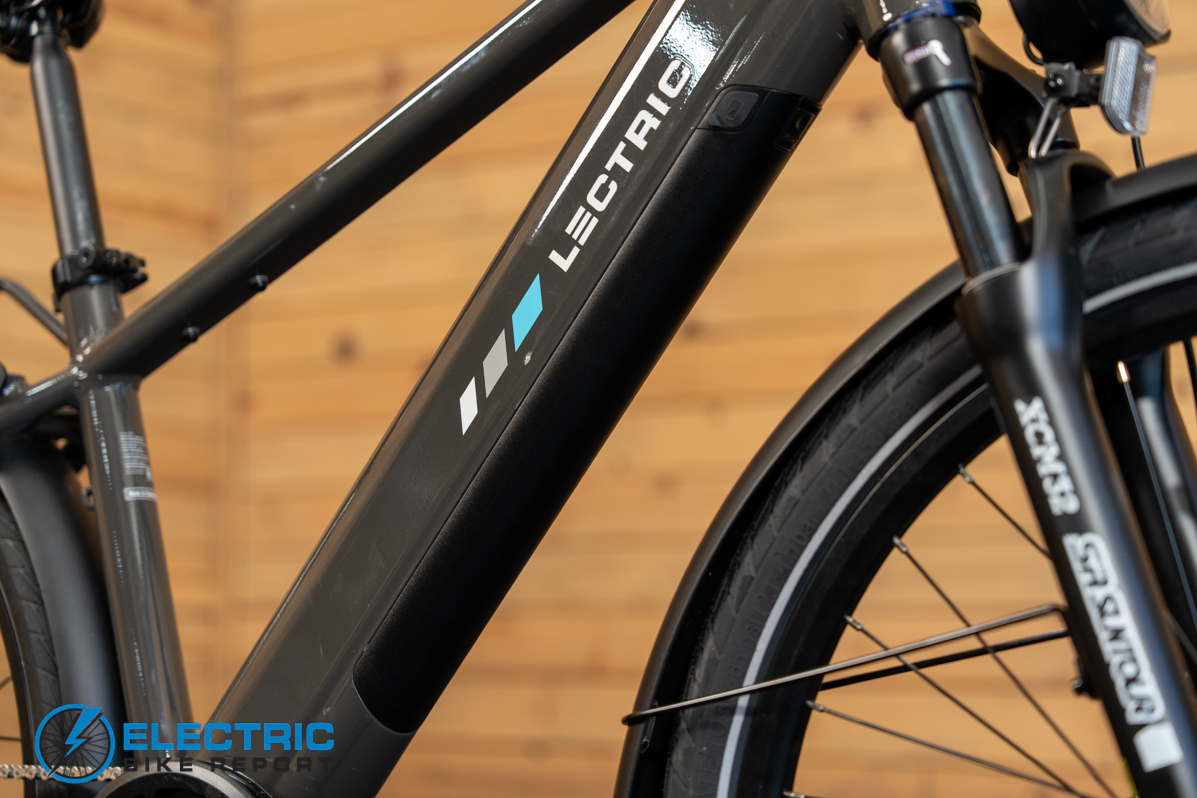
The XPress2’s 48V, 672 Wh battery nests in the down tube but can be removed for charging.
Lectric XPress2 Review: Speed Test
With the XPress2’s new customization options, we spent a while testing the bike in many combinations of settings. I performed our Speed Test by riding the bike on a flat, paved path in each of its assist levels to find its average speeds. I performed four individual pedal tests in the bike’s torque and cadence-sensing modes using both Class 2 and Class 3 modes.
I started the test without pedal assist, pedaling from a complete stop and holding a comfortable speed just above 9 mph. Due to the bike’s 70+ lb weight, getting it moving required some effort, but maintaining speed was relatively easy.
In the XPress2’s torque-sensing mode, the bike generally delivered incremental and meaningful differences in power and speed as I moved up through its five assist levels. In Class 2 mode, the 20 mph ceiling limited the bike somewhat, as shown by my ability to reach its top speed in Sport+ and Turbo. This restriction was gone in Class 3 mode, allowing me to step up gradually to the increased 28 mph speed.
There were some slight variations in my results from both torque mode tests due to the bike’s ability to fluctuate power based on how hard I pedaled. Overall, though, it maintained a relatively high baseline of motor output in each assist level, giving the ride an uncommonly relaxed feel while still being responsive and somewhat natural.
In the bike’s cadence-sensing mode, its power output was steady regardless of my effort, so I kept my pedal pressure light. The motor’s force increased as I stepped up through the assist levels, though its speed was never capped (except at the maximum). Riding on flat ground, it was powerful enough to reach 20 mph in its second assist level when in Class 2 mode, maintaining the same speed as I moved through its three higher power settings.
In Class 3 mode, the bike showed much more variation in speed with its higher ceiling. In both cases, however, there seemed to be a low-power mode (Eco) followed by four significantly higher power modes with gradual increases in motor output, as shown by the Class 3 graph.
The XPress2 has one other variable that I tested outside of the formal Speed Test, called “Assistance Level” in its display menu. This parameter, which has options for both “Standard Torque Multiplier” and “Increased Torque Multiplier,” is set to the former by default. When the latter is used, the bike accelerates faster and provides an extra boost to make pedaling easier.
Overall, the bike performed well in this test, though prospective buyers should be aware that, even in its torque-sensing mode, the XPress2 feels less responsive and analog-like than many other e-bikes with torque sensors. Lectric takes a somewhat different approach, prioritizing enjoyment and ease of pedaling while still offering some adaptability.
If there is any critique that I have for this section, it is that the bike reached its maximum speed in four of its five assist levels in Class 2 Cadence mode. Lectric originally designed its cadence programming, based on power output instead of speed, to feel more natural than the assist systems of other bikes.
With the option to use a more responsive torque-sensing mode, having more granular control over speed (and more differentiation between assist levels) in cadence mode might be more user-friendly to riders familiar with cadence-based systems.
When testing the throttle, I found that, by default, each pedal assist level corresponded to a different acceleration level. In Eco, the bike picked up speed calmly and gradually, while in Turbo, it was steady and quick after easing off the line. I liked the user-friendly nature of this approach, though the throttle can be adjusted through the display menu to provide full force in all assist modes.
Sponsor
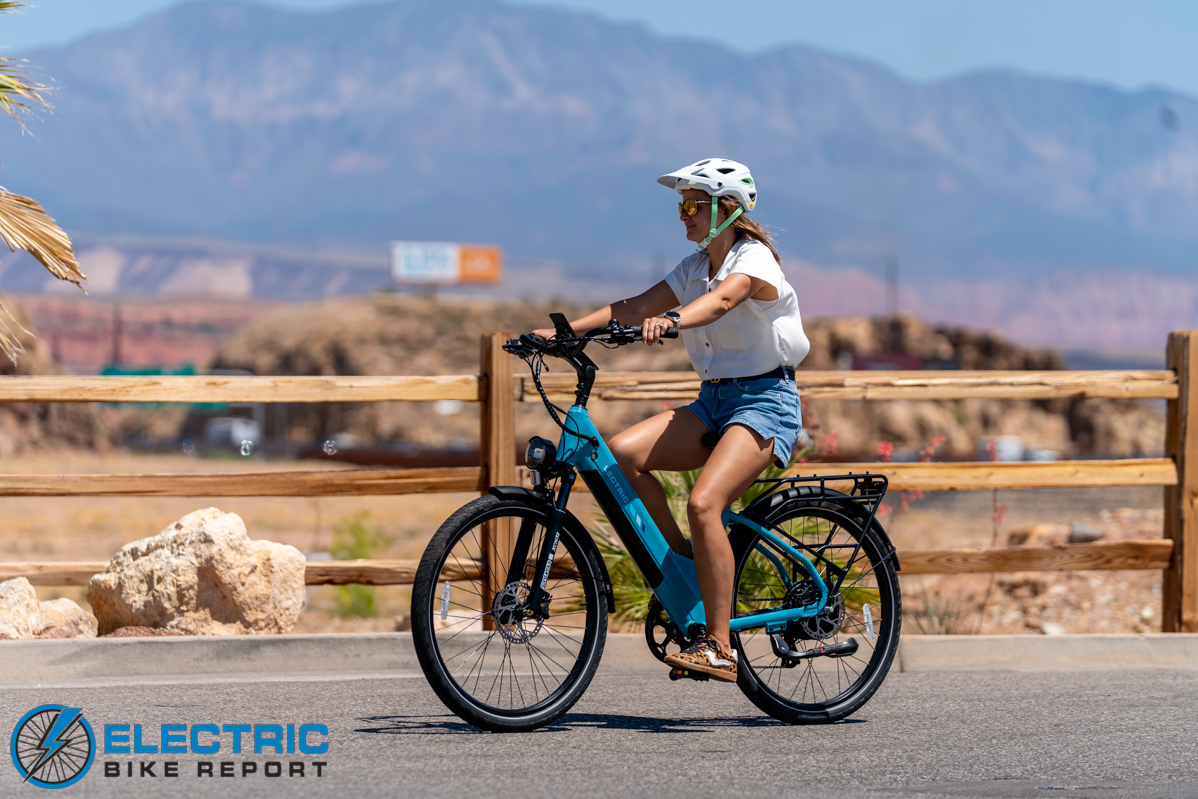
Riders seeking a more relaxed, more customizable experience might prefer the upright, Dutch-style XPress2 ST.
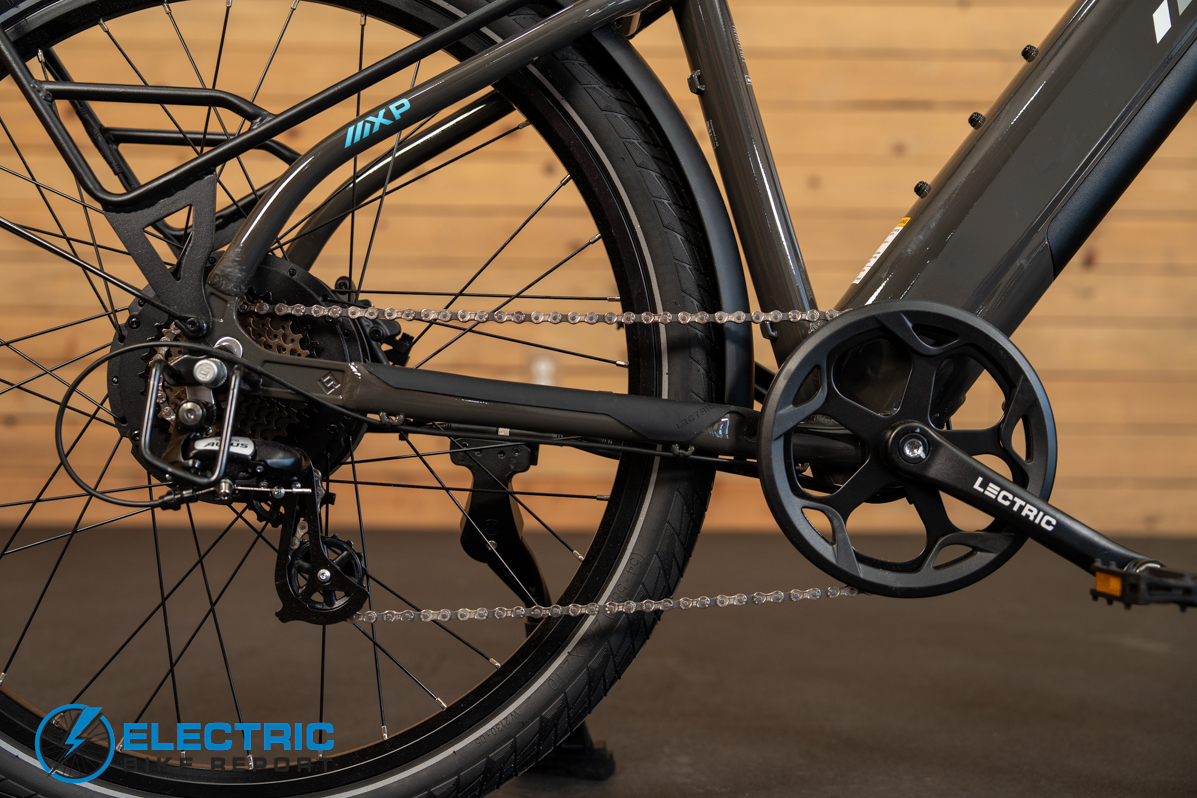
An 8-speed Shimano Altus drivetrain offers reliable shifting, operated by a trigger-style shifter on the right handlebar.
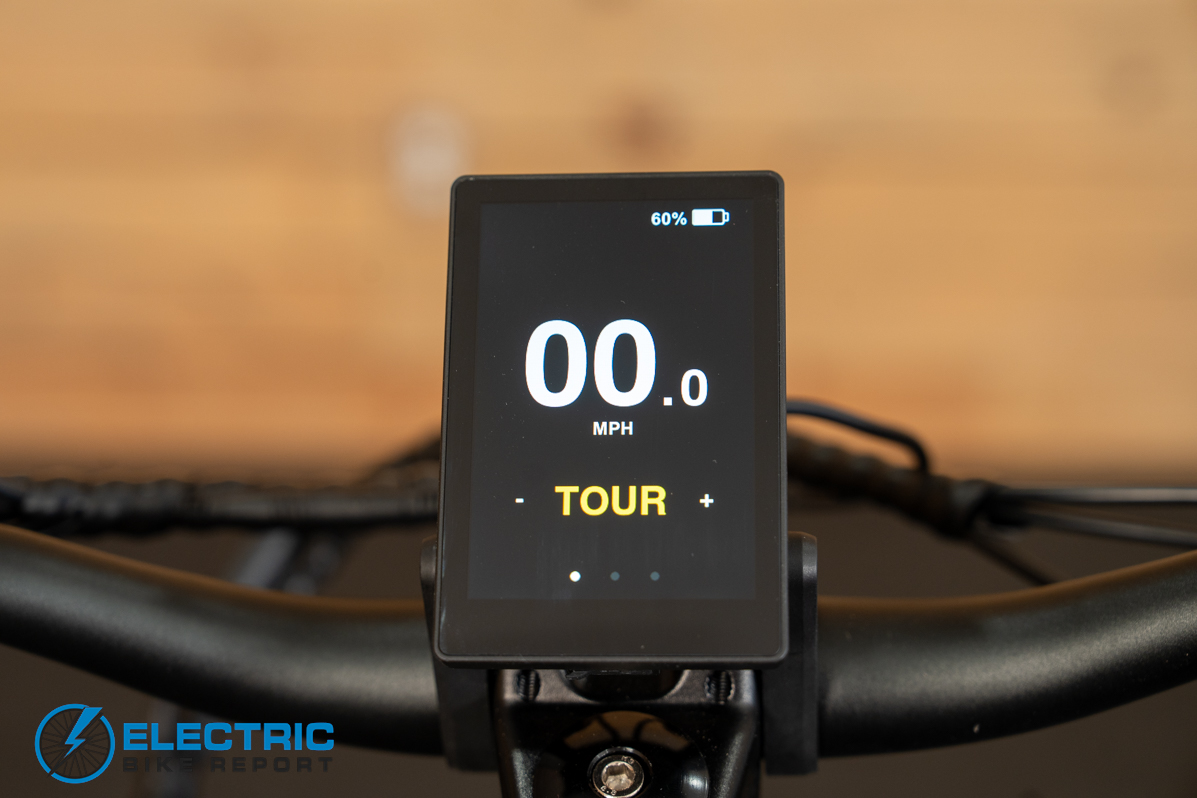
The color TFT display is clean and well-organized, with a battery readout that changes in 10% increments.
Lectric XPress2 Review: Range Test
Our Range Test is designed to provide real-world expectations for the distance a bike can travel on a single battery charge. We perform two tests using the method explained in the graphic above to establish benchmarks for minimum and maximum range; the XPress covered 33.6 miles and 52.6 miles in its high- and low-power tests, respectively.
Similar commuter and city cruiser e-bikes averaged similar-to-significantly-higher results of 35.6 and 75.9 miles in their Range Tests. Lectric advertises up to 60 miles of range, so our results differed somewhat from that estimation, but there is a good reason why.
Following our usual approach, we tested the XPress2 in its default Class 2 torque-sensing mode. We began our test using Eco mode, the lowest assist level. After a few miles, however, we decided to increase the power level to Tour, as we found it somewhat difficult to maintain constant power output from the motor; in my experience, it seemed to cut power at around 11 mph.
Our use of this higher-powered mode is reflected in the bike’s energy efficiency when dividing its battery capacity by its mileage in both tests.
While similar e-bikes we’ve tested averaged 9.5 watt-hours per mile (Wh/mi) in their low-power Range Tests, the XPress2 used a much higher 12.8 Wh/mi. This, combined with a slightly smaller than average battery (672 Wh, compared to the average of 695 among similar models), yielded fewer miles when riding in Tour mode.
The XPress2’s roughly average maximum-power test result, however, aligns well with its average energy consumption. It used 20 Wh/mi in its Turbo mode test, while similar models averaged 20.2 Wh/mi. Considering that the bike did not differ much from the average among its peers in this test, it would make a good cost-saving option for riders who plan to use high levels of pedal assist regularly.
I have one area of critique to point out: like other Lectric models, the XPress2’s battery charge readout on the display adjusts in increments of 10%. Whether riding or refueling, this can make estimating range (is it at 61% or 68%?) and remaining charge time difficult. We encourage Lectric to use a more granular and precise charge meter in the future.
Otherwise, in our experience, a real-world range of roughly 34-53 miles is plenty practical for the demands of most riders. Considering that most folks we interact with have a round-trip commute of less than 20 miles, the XPress2 should cover even extended commutes with room to spare. Those taking shorter trips or using lower assist levels should expect multiple rides from a single charge.
The XPress2 comes with a standard 2A charger that should recharge the battery in roughly 7 hours, though our contact at Lectric shared that a faster charger will be available as an upgrade. Judging by the marketing materials claiming the potential for a full recharge in under three hours, we’d expect this to be a 5A charger.
Sponsor
Sponsor
Lectric XPress2 Review: Hill Test
The XPress2 proved highly impressive in our Hill Test. Using the testing method and location explained above, we recorded two excellent scores. Our test rider, Justin, completed the throttle test in 1:48 at an average of 16.8 mph, while his Turbo mode test clocked in at 1:40 with a speed of 18.1 mph.
Similar e-bikes, including some of the best cruisers and best commuters we’ve found, averaged slower times in both portions of the test. Their throttle times rounded out to 2:05, while their max-assist pedal tests were 2:01 on average.
The reason for the XPress2’s success in this test is clear and simple: its 750W rear-hub motor is more powerful than average when compared to its peers. Despite weighing a bit more than average (72 lbs, compared to 65.4 lbs), the XPress2’s peak of 1,310W and maximum of 85 Newton-meters (Nm) of torque are both significantly above the averages of 998W and 71 Nm of torque.
Essentially, the XPress2 is on the heavier side for an e-bike of its style, but its motor is more than powerful enough to counterbalance the additional weight. Note that we performed our formal test with the aforementioned “Increased Torque Multiplier” setting active.
In my personal experience at our secondary test location, the bike felt steady, strong, and safe while climbing using its throttle. In its cadence-sensing mode, it powered up the hill even more confidently with the addition of a low level of effort. Using torque-sensing pedal assist, the experience felt slower due to the more active nature of this mode.
Interestingly, despite their difference in feel, my cadence- and torque-mode pedal results were identical. I tested the bike with both the standard and increased torque multiplier settings, and when the latter was active, pedaling uphill felt noticeably faster and easier, though it made only two seconds of difference in the end.
Clearly, the XPress 2 has plenty of muscle for handling steep climbs and hilly terrain. With the ability to help the rider along or do all of the heavy lifting, it’s undoubtedly a good option for riders concerned about their ability to manage uphill travel.
Sponsor
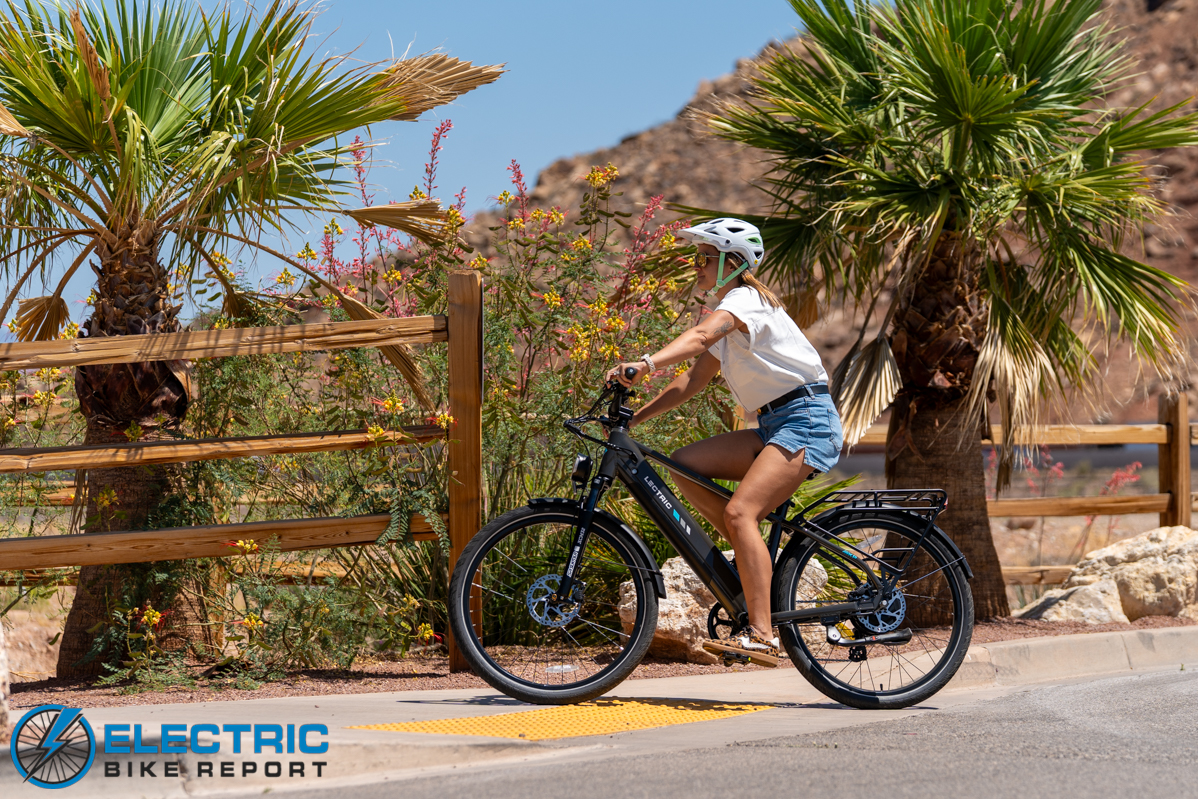
The XPress2 is well-equipped for daily use right out of the box, with great components, a customizable ride feel, and commuter-friendly accessories.
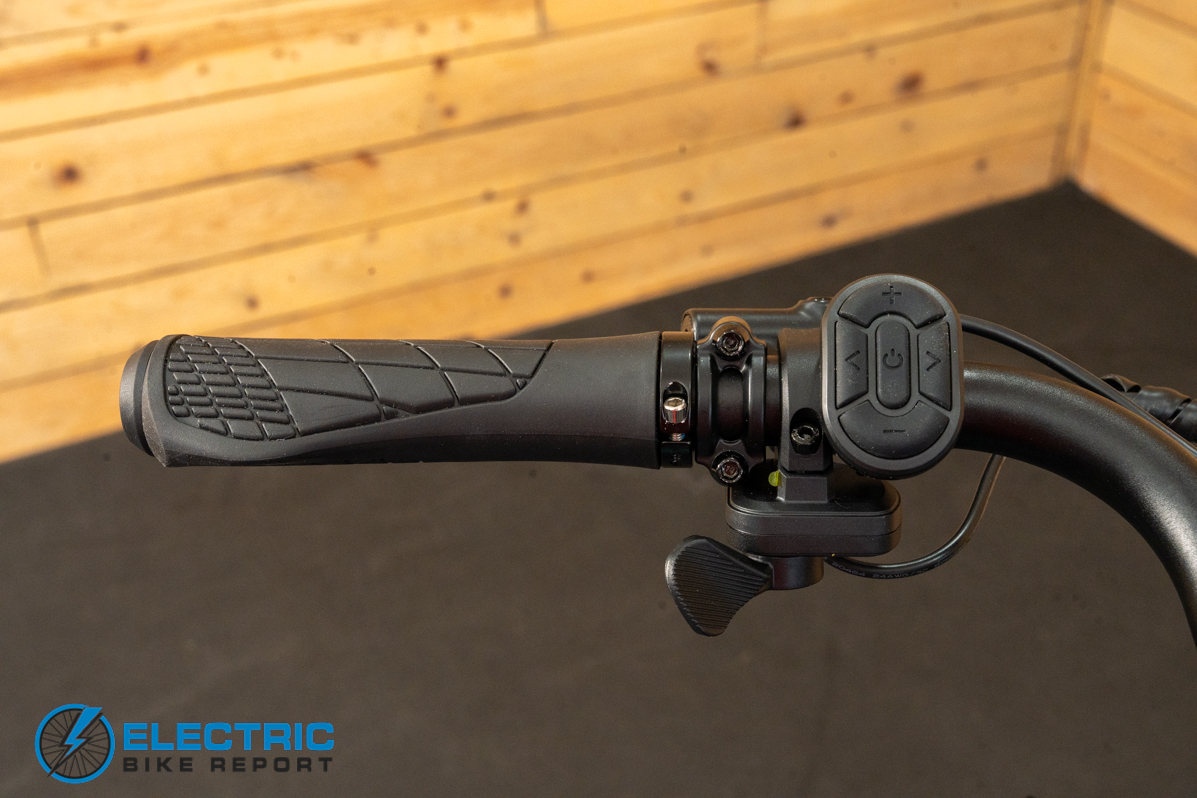
A thumb throttle sits on the left handlebar between the grip and button pad.
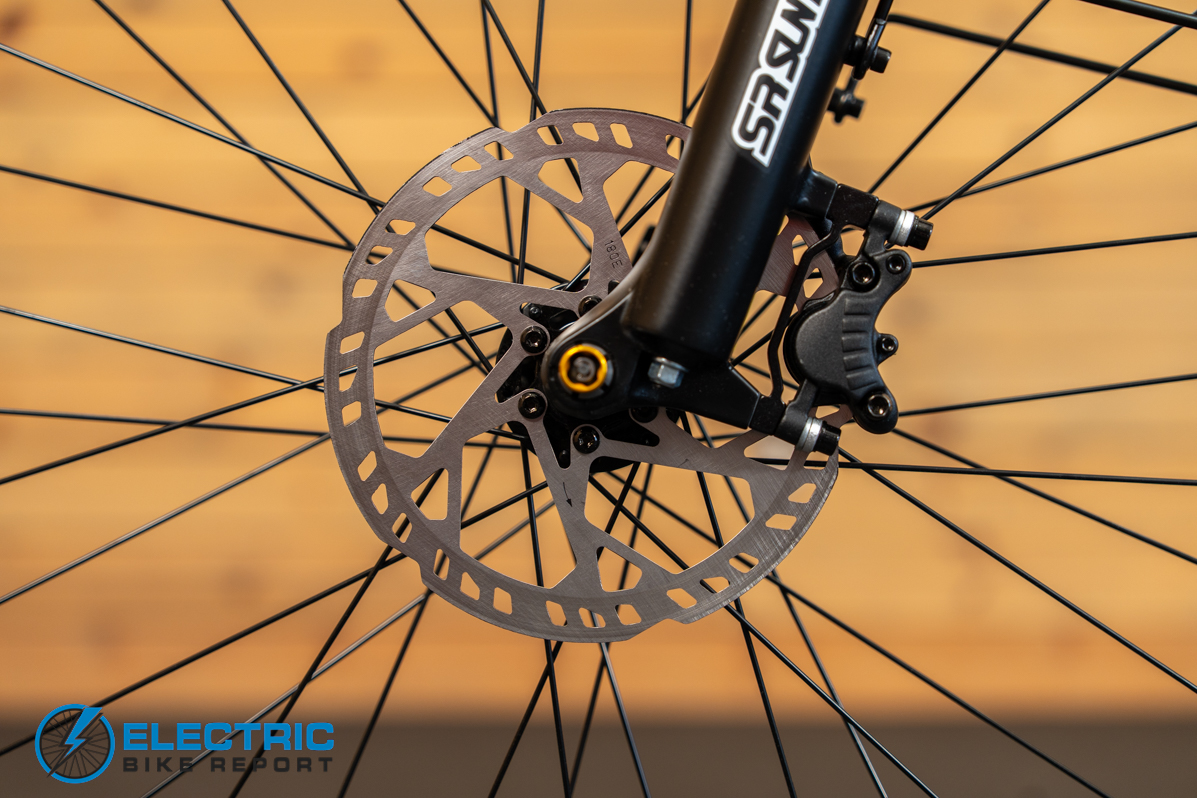
The XPress2 features a custom Star Union 602 hydraulic disc brake system.
Lectric XPress2 Review: Brake Test
Like Lectric’s flagship folding e-bike, the XP4 750, the XPress2 is equipped with a set of custom hydraulic disc brakes: Star Union’s 602 model. We tested both the ST and HS versions of the bike using the method above. The high-step averaged 22’0”, while the step-thru model stopped in 21’6”. Combined, the bikes scored a 21’9” average.
Similar commuter and city cruiser e-bikes we’ve tested averaged 22’0”, making the XPress2’s braking power roughly average to slightly above average. Interestingly, the feel of these brakes did not quite match the bike’s performance, but there may be a good reason for that.
In my personal experience on the bike, I found the XPress2’s brake setup remarkably strong and capable. The brakes provided strong bite without feeling too aggressive, modulated speed well with moderate pressure, and brought the bike to a stop quickly and forcefully every time.
We attribute this stopping power to the bike’s thicker-than-average 180×2.3mm rotors and its organic/resin brake pad material. The rotors dissipate heat well to prevent fade, while the brake pad material provides the strong initial bite I described above.
Due to its relatively slick tires, however, the bike was prone to skidding. While this behavior wasn’t out of the norm, it did seem to be the factor that extended its stopping distance somewhat beyond our expectations when going by feel.
To be clear, the XPress2 has an impressive set of brakes that we can say confidently are safe, reliable, and well-matched to the bike’s weight and speed capabilities.
Its relatively average stopping distance might be improved by swapping the stock tires for a model made from a softer, grippier compound, though we do not feel Lectric should make any changes. Based on our testing, the XPress2’s standard setup will likely be more than powerful enough to satisfy the vast majority of riders.
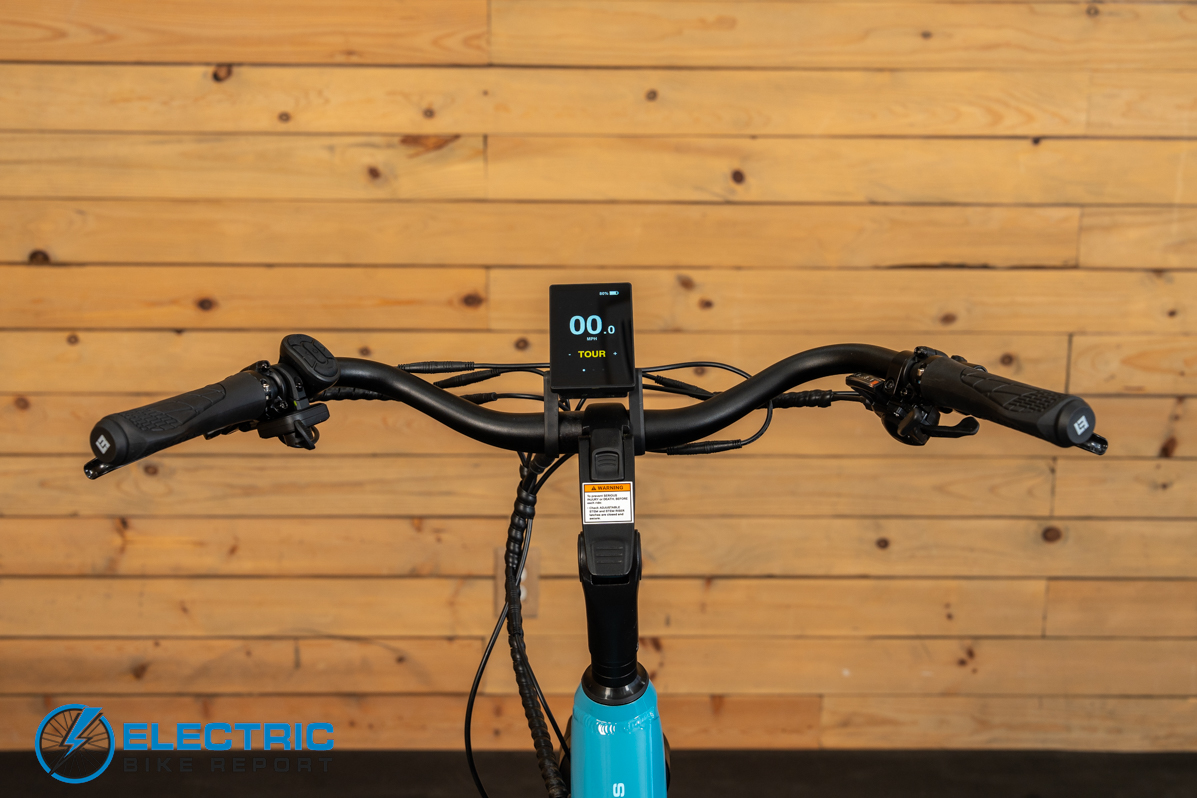
Curved, Dutch-style handlebars on the step-thru model allow for an upright riding position.
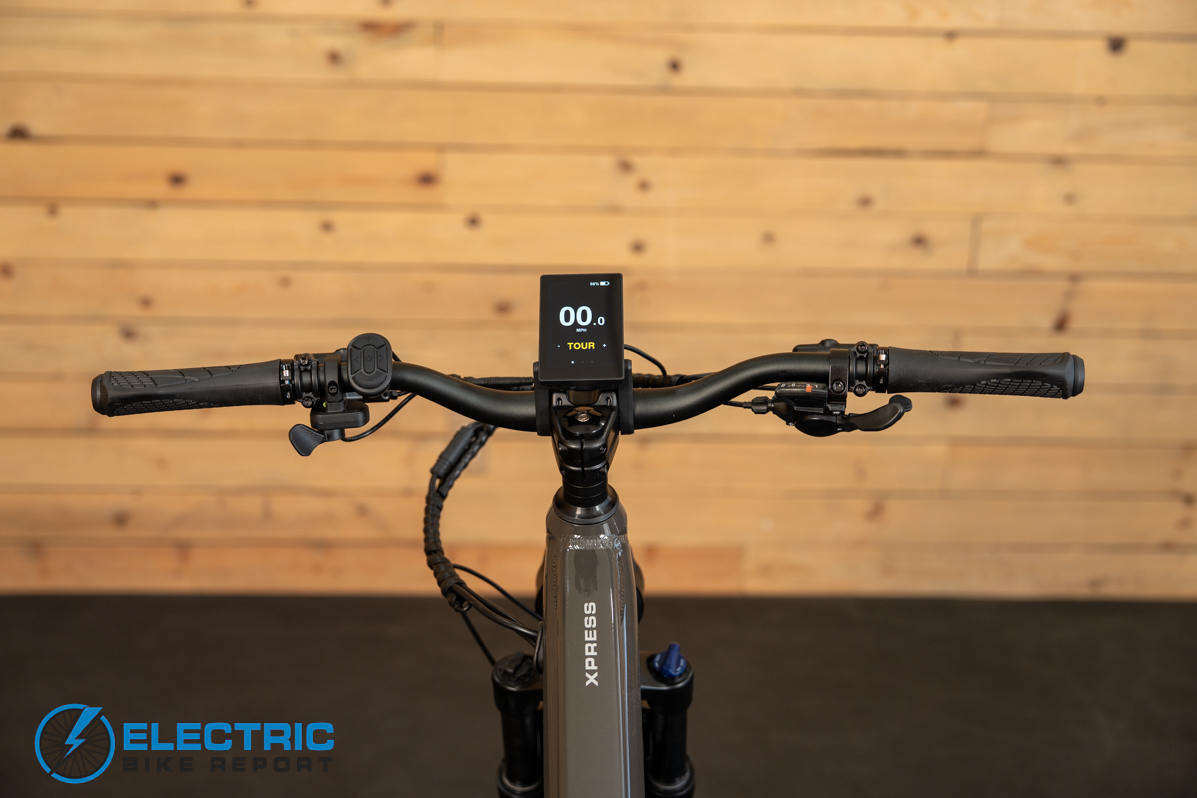
The high-step XPress2 features flatter handlebars and more forward-leaning riding position.
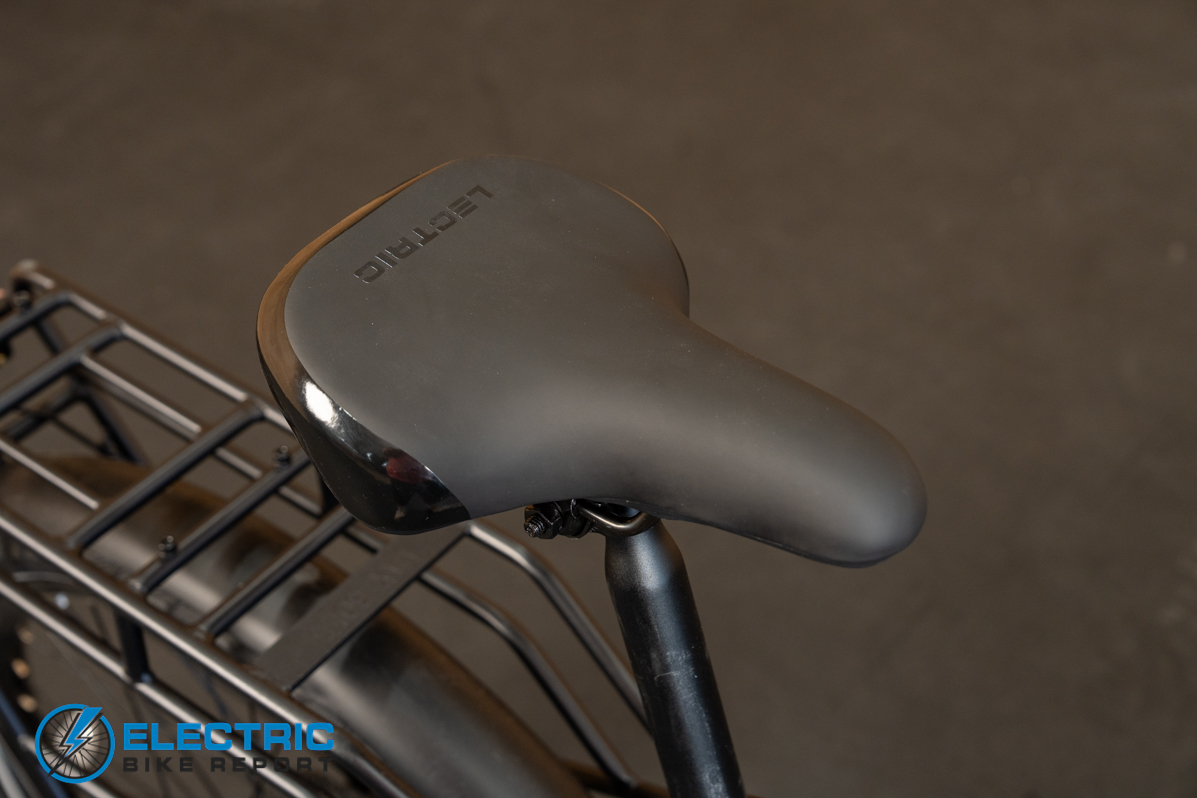
While not on our test bike, the custom sport saddle comes standard with a suspension seatpost.
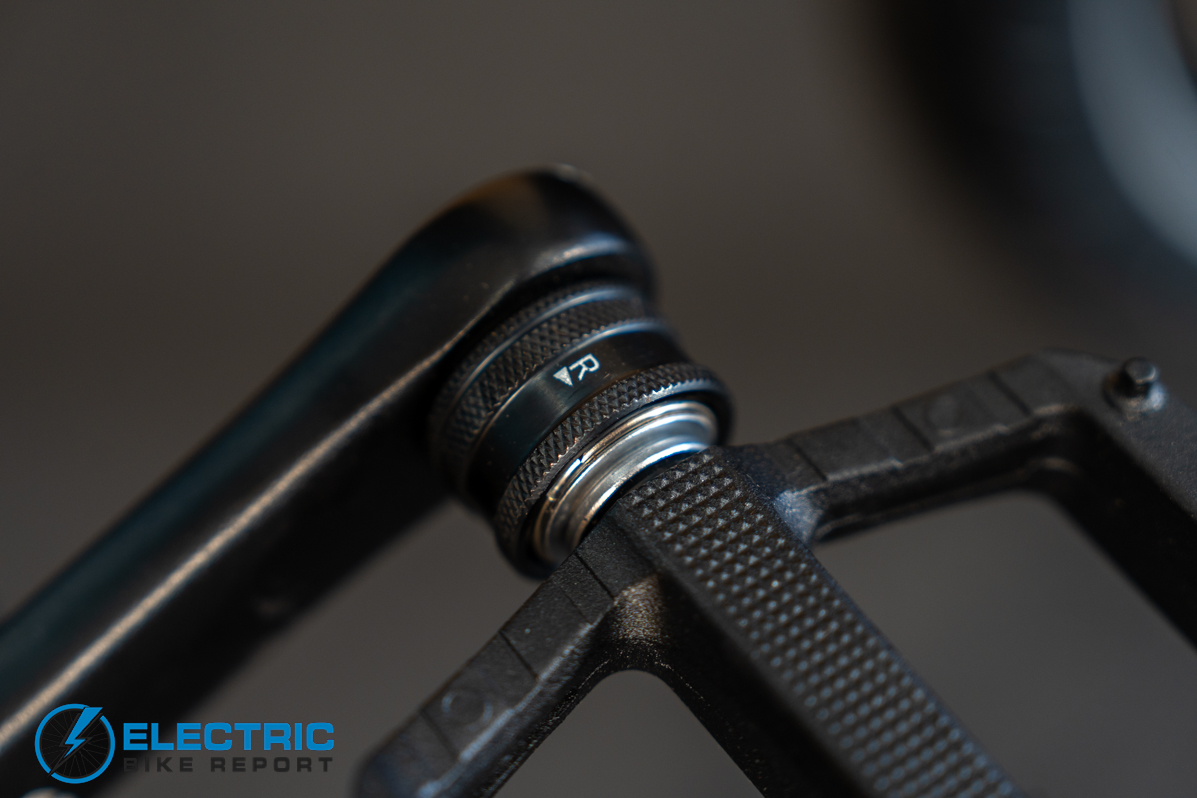
The quick-release pedals pop off quickly for transport, storage, or pedal replacement.
Lectric XPress2 Review: Ride Quality
If I were to summarize the XPress2’s ride quality, I would say that it felt pleasantly (and somewhat unexpectedly) sturdy, adaptable, and well-put together. Let me explain: Lectric’s e-bikes have always offered solid performance, excellent value, and a high degree of affordability—but there was a time that some of the brand’s products felt cheap.
The XPress2 is an excellent reminder of how far Lectric has come. As stated in the intro, the bike’s price has been raised by a small amount, but to justify this increase, almost every aspect of the bike’s ride feel has been improved and refined. It now boasts great components across the board, along with a boatload of features to enhance its functionality and overall ride quality.
Lectric offers a single frame size for both the HS and ST versions; I’ll explain more detail about their differences in feel below, but the recommended height range for both models is 5’2” and 6’4”. I split my ride time between the two models, finding both suitable for my height of 5’11”.
Both models offer 12” of saddle height adjustment, allowing for comfortable and efficient leg extension. The two styles also include soft and supportive ergonomic rubber grips, Lectric’s custom saddle (fine, but somewhat firmer than I personally prefer), and the brand’s custom quick-release (and quickly-installing) pedals.
Our test bikes did not include suspension seatposts, but our contact at Lectric stated that both versions of the XPress2 should have them. As such, our test bikes could feel somewhat bumpy, but consumers should expect a much smoother ride experience.
The HS and ST models differed in their handling, but both weighed the same 72-ish lbs, giving them a planted, solid feel. Their 27.5×2.1” street tires rolled efficiently, providing good traction and stability on paved surfaces, accelerating quickly, and adding some cushion to the ride.
Compared to the original version of the XPress, this second iteration of the bike offers a variety of meaningful upgrades. The Suntour suspension fork felt more robust than those found on many comparably-priced e-bikes, and the jump from Shimano’s 7-speed Tourney drivetrain to its 8-Speed Altus is always appreciated due to the quality of its parts and the crispness of its shifting.
Like other Lectric models, the XPress2 does a great job of balancing a functional set of features with generally straightforward operation. With things like integrated turn signals and a sophisticated settings menu, it offers far more than just the basics, but it didn’t feel overcomplicated or overwhelming to learn—it simply added a couple of extras to what felt like a straightforward bike.
That settings menu is worth diving into in more detail: it’s among Lectric’s most customizable. Riders can quickly switch Classes, acceleration/torque levels, sensor modes, throttle behaviors, and more. While the bike is set up well for new riders out of the box, these options offer more personalization for those who want to tweak the bike’s feel.
Lectric XPress2 HS vs ST Version
As I mentioned above, there are some important differences between the HS and ST versions of the XPress2. With the information below, you should be better able to decide which of the two is the right choice for you.
The step-thru XPress2 is essentially a Dutch-style city cruiser, with a V-shaped frame, curved, relatively narrow handlebars, and an upright riding position. The bike has an 18.5” standover height that makes it easy for riders to get on and off, and, in my experience, the seating posture ensures no back, shoulder, or neck strain. This model fits riders from 5’2” to 6’3”.
It is the more adjustable of the two models, largely due to a quick-adjust stem that allows riders to alter the handlebar height/angle and reach to their preferences. As such, most folks will likely find this the most comfortable XPress2, though others may prefer the HS model’s sharper, more aggressive feel.
The high-step version of the bike has a fairly traditional commuter design, with a diamond frame that requires swinging a leg over the saddle to mount. While its weight balance is comfortable, this model pitches the rider forward, outstretching the arms and putting some body weight on the flat handlebars. It fits those between 5’4” and 6’4”.
This version of the bike features a sporty, more performance-focused feel than the ST. It also has less adjustability, with the seatpost and saddle rails being the primary adjustment points. Any changes to handlebar height or reach would likely require swapping out the non-adjustable threadless stem and/or handlebars.
In terms of handling, the ST model felt more nimble than the HS due to its lighter front end. Impressively, even the ST felt stiff and true when maneuvering, despite its absence of a top tube. The high-step version handled crisply and predictably, though its weight was somewhat more noticeable and forward.
Ultimately, the choice likely will come down to your preferred focus. If you prefer relaxed comfort, the ST will be right up your alley. If you’d rather have a sporty, sharper feel, the HS may be the better choice.
Sponsor
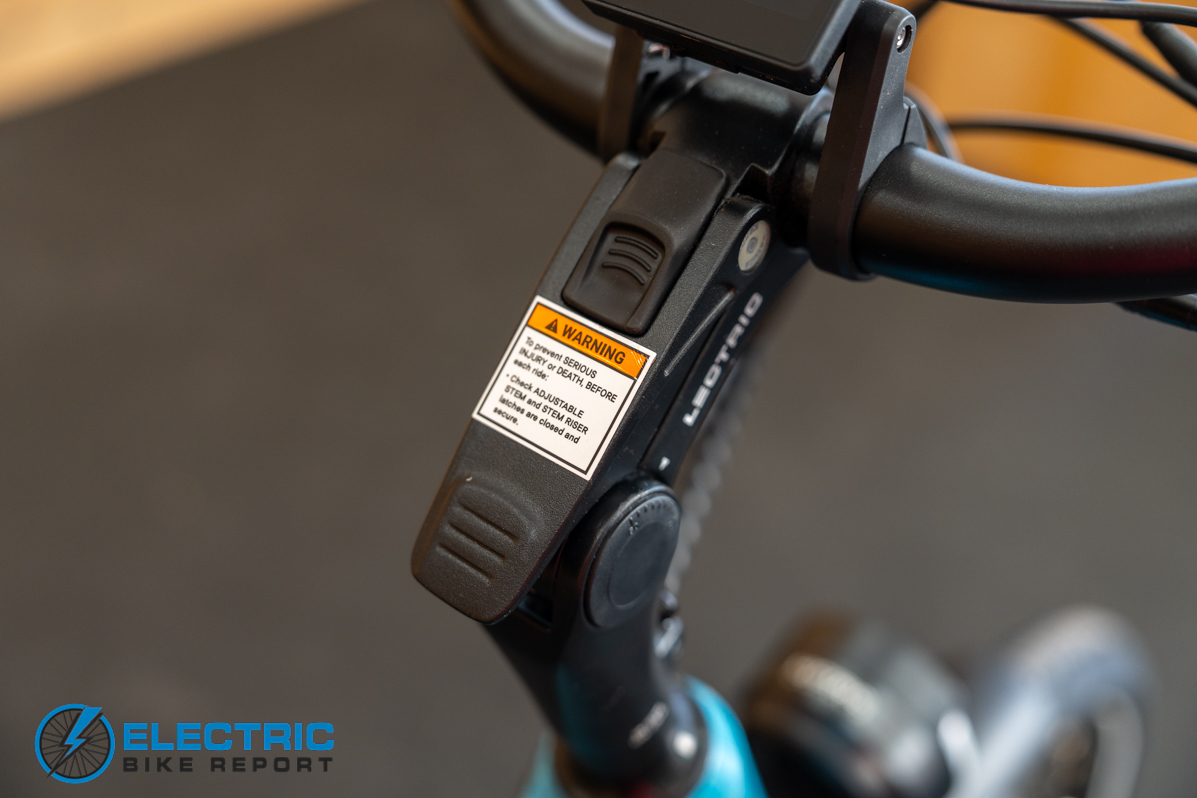
Riders can adjust the handlebar height, reach, and riding position via the adjustable stem.
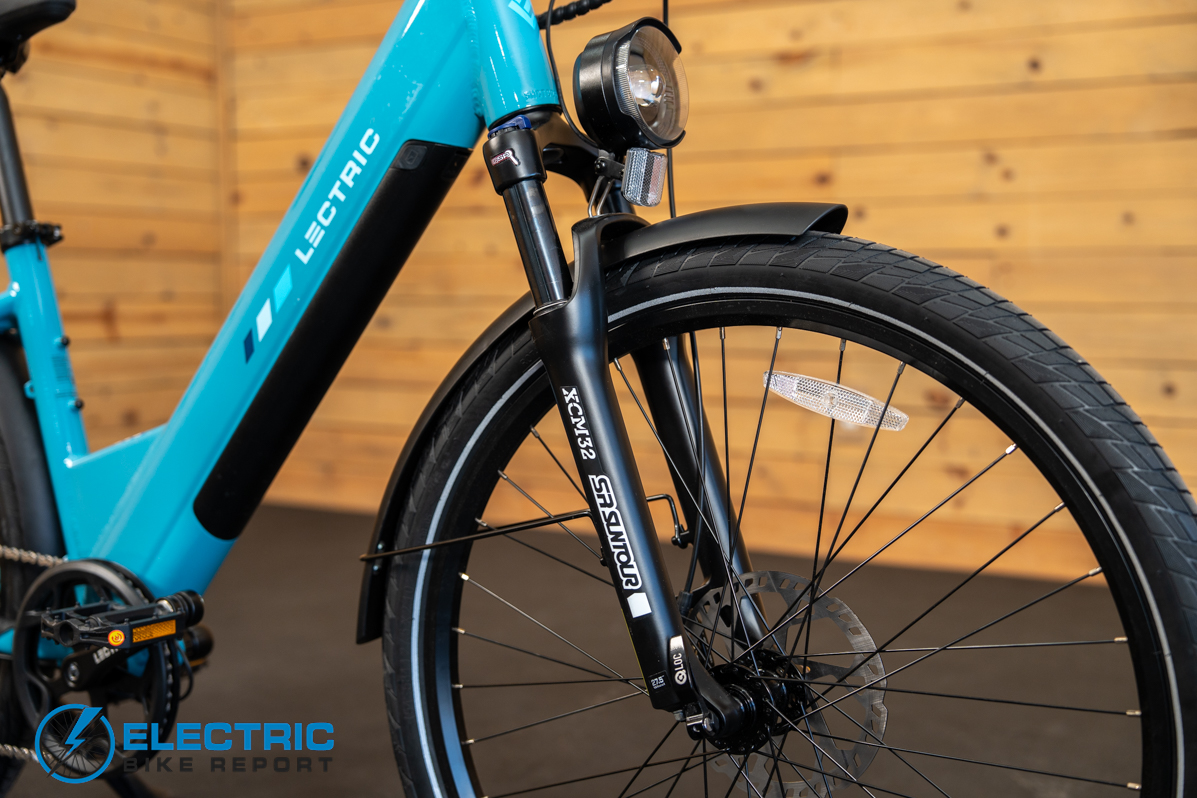
An SR Suntour suspension fork provides 80mm of travel to improve comfort.
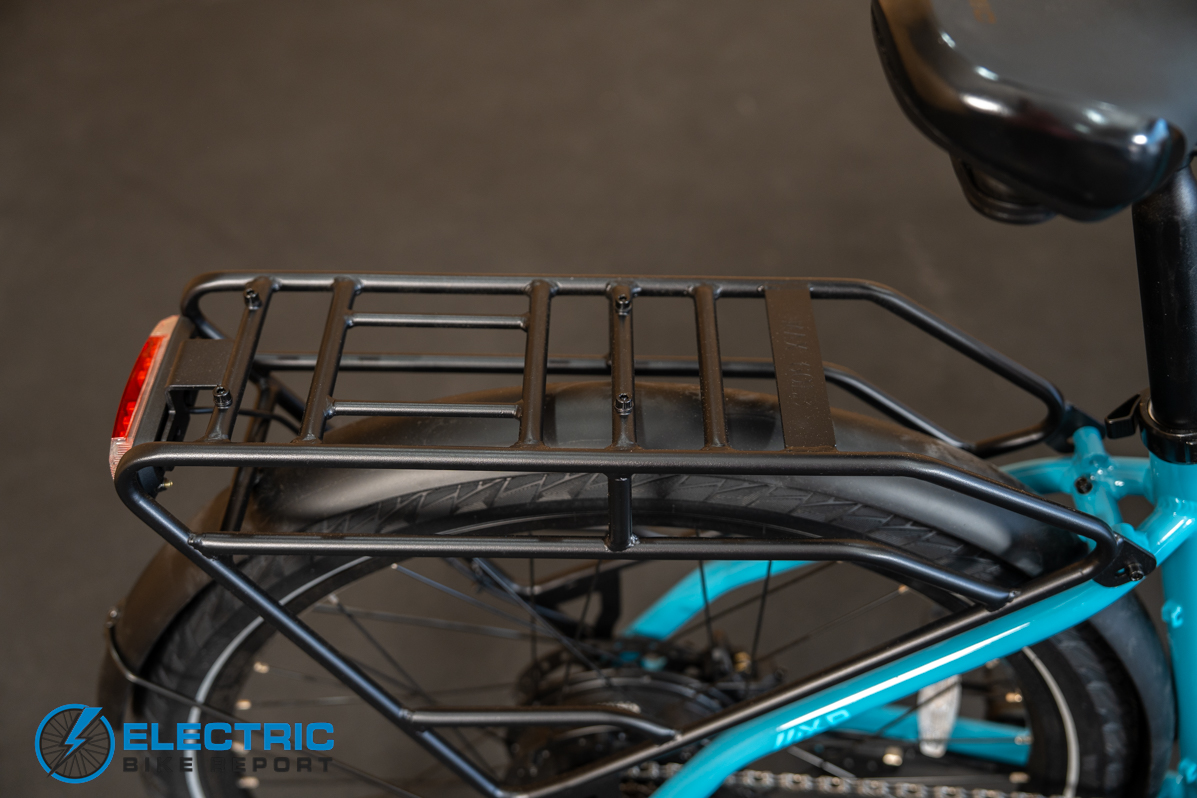
The included rear cargo rack is rated for up to 60 lbs of carrying capacity.
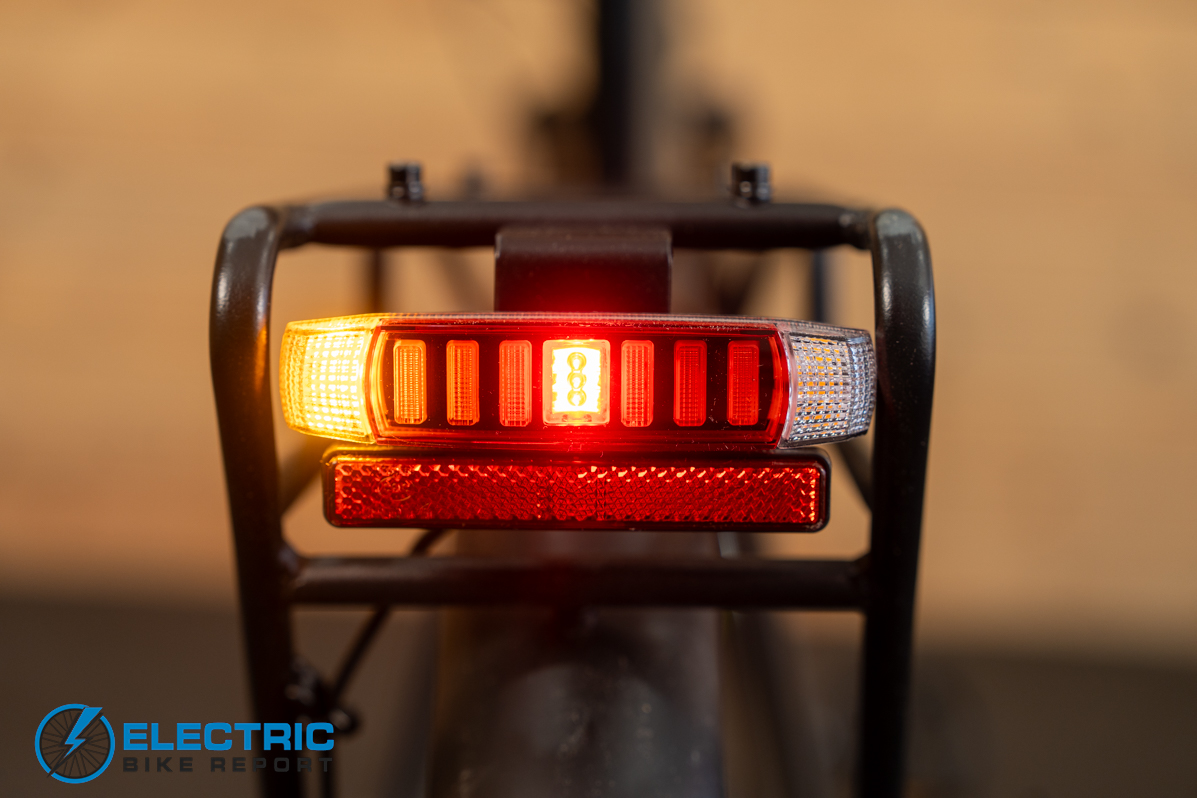
The XPress2’s taillight includes turn signals and a brake light function.
Lectric XPress2 Review: Summary / Where to Buy
The first time you make a new recipe, sit down to start a new hobby, or otherwise step out of your comfort zone, it’s generally safe to bet you won’t be as successful as your fourth or fifth attempt. E-bikes are similar; brands tend to make better bikes as they grow, branch out, and gain more experience.
We’ve seen this trend with Lectric before, but the XPress2 is another excellent example of the company’s progress. The first version of the bike was a great start in a new direction, but its successor feels significantly more polished, thoughtful, and well-put-together.
In addition to its new features and improved componentry, the XPress2 proved every bit as capable in our testing. In most cases, its programming is intuitive, and its range is highly practical for its style. It is an impressive hill climber, and its custom brakes are a safe, strong pairing with its power and speed.
As always, there is still some room for improvement: the programming of its cadence mode and the precision of its charge meter are the areas that stood out the most.
But otherwise, the XPress2 makes for an extremely compelling commuter or city cruiser. At the end of the day, it’s a comfortable, enjoyable, and remarkably versatile package from a brand that, at least until now, has been relatively budget-tier.
We’re pleased to say that the XPress2 really doesn’t feel like a budget bike at all. Instead, it’s a value-packed ride that delivers on all fronts. This quality makes it easy to recommend for riders of all ages, styles, and experience levels; the bike is customizable, fun to ride, and well-equipped for leisure, exercise, and/or daily trips to and from the office.
Happy Riding! Make sure to let us know if you have any questions or if you think we left anything out in this review of the Magnum Bliss down in our comments section.
Sponsor
Sponsor
Reader Interactions
Leave a Reply