

JackRabbit MG Cargo Review | This Bunny Means Business
Jul 08, 2026
 3 Comments
 Share
Share
This fun-size, throttle-powered micromobility device boasts a comfortable ride and more carrying capacity than most longtail cargo e-bikes.
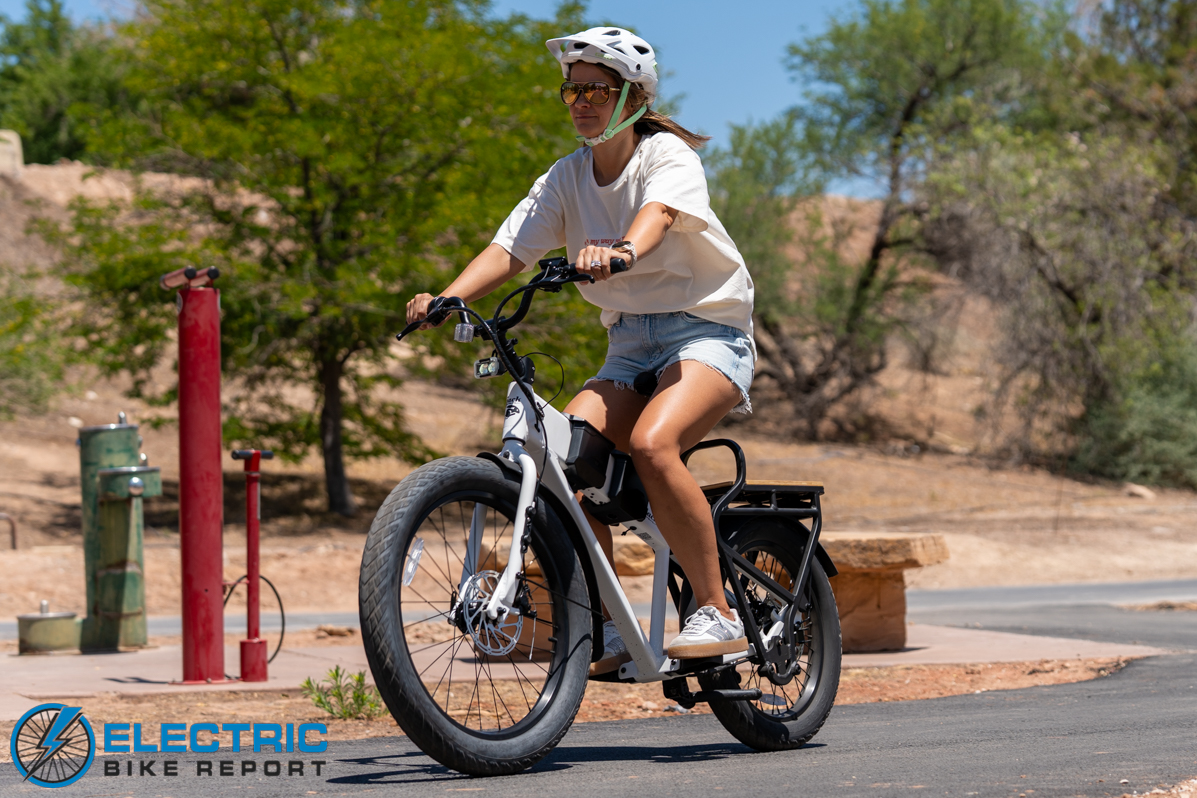
Some of the most fun I’ve ever experienced while testing e-bikes (and similar micromobility devices) happened thanks to JackRabbit.
The company got its start making small, throttle-powered two-wheelers made to cross college campuses quickly, but later branched out to off-road and passenger-capable models—all of which have been a blast to ride. Now, the JackRabbit MG Cargo aims to add even more utility to the lineup, while keeping the same focus on portability and fun.
With a compact frame, a manageable tested weight of 56 lbs, and a payload capacity of 500 lbs, the MG Cargo is advertised to be far more of a workhorse than its size suggests. Going into our review, I admit that I was a bit skeptical—after all, this much carrying capacity pushes the JackRabbit beyond the limits of most longtail cargo e-bikes.
This, however, is exactly why we do what we do: testing e-bikes and similar products in the real world allows us to report on the accuracy of their marketing claims.
Now is a good time to be clear about one thing: despite being labeled micro e-bikes, all JackRabbit models fall into a relatively unique category of powered micromobility devices. While they are bike-shaped, the absence of operable pedals makes them more like scooters than e-bikes. As such, you might want to reference your local laws regarding such products to ensure you can ride them where you intend to.
The MG Cargo’s carrying capacity is just one of many things we evaluated in our series of standardized performance tests. Range is another important factor for many consumers, along with climbing power and braking performance. See our full review below to learn how JackRabbit’s latest model performed!

Sponsor
E-Bike Category:Utility / Moped
E-Bike Class:Powered Micromobility Device
Sponsor
JackRabbit MG Cargo Video Review
 Pros
Pros- It’s so much fun to ride! The MG Cargo has JackRabbit’s usual smile-inducing energy with controlled power for effort-free hauling.
- The bike has a mind-blowing 500-lb payload capacity. We pushed it to this limit and it proved fully capable of handling the weight.
- The MG Cargo feels both agile and stuck to the ground, thanks to its wide, stable tires, short wheelbase, and relatively narrow handlebars.
- Speed is easy to control, with three distinct speed-limited power levels and a comfortable half-twist throttle.
- With a flat-folding design, removable batteries, and a total weight of 56 lbs, it’s extremely portable and easy to fit in tight spaces.
- One size fits nearly all: with a height range of 4’9″ to 6’8″, both tall and short riders can enjoy the pedal-free riding experience.
- The mixed wheel setup, with a 24″ front wheel and a 20″ rear wheel, keeps cargo weight low while making it more comfortable to roll over bumps.
- It’s remarkably customizable on your own or via JackRabbit’s ModRabbit marketplace. Swap handlebars, grips, or tires, add a child seat or cargo storage, and load up with extras to show your style.
 Cons
Cons- Loading up can be a bit unstable; a wider dual-leg center stand would help to keep weight balanced when adding extra weight.
- By the numbers the bike’s braking performance was solid, but its hybrid hydraulic system required fairly firm grip strength to stop quickly.
ELECTRICAL SPECS & FEATURES
- Battery: Li-Ion 36V 20Ah 720Wh
- Charger: 110-240V input, 42V 4A output
- Display: Color screen with speed, distance, battery, mode, lights, and auto-off
- Motor: 749 Watt cargo-geared rear hub brushless motor, 1080W peak, 70 Nm torque
- Headlight: Dual LED Front Light
- Taillights: Integrated LED
- Pedal Assist: ECO, MID, HIGH & OFF-ROAD
- Claimed Range: 48+ Miles
- Throttle: Twist grip throttle
- App: N/A
- UL Certification: Tested & compliant with UL2271 & UL2272
Weight & Dimensions
- Claimed weight: 55 lbs
- Tested Weight: 56 lbs
- Rider height range: 4’9″ to 6’8″
- Total payload capacity: Up to 500 pounds (227 kg) of balanced payload
Components & Accessories
- Brakes: Front and rear 2-piston hydraulic
- Fenders: Plastic
- Fork: Rigid
- Frame: Monocoque 6061-T6 aluminum alloy
- Drivetrain: N/A
- Grips: Ergonomic
- Saddle: Leather
- Handlebar: 610mm Mid-Rise
- Kickstand: Dual-leg Center Stand
- Pedals: Forged aluminum black Mega Metal Footpegs
- Tires: 24″ x 3″ Front Street Tire, 20″ x 3″ Rear Street Tire
Three power levels / speed settings give riders useful options for starting up, cruising casually, or rolling swiftly up to 20 mph.
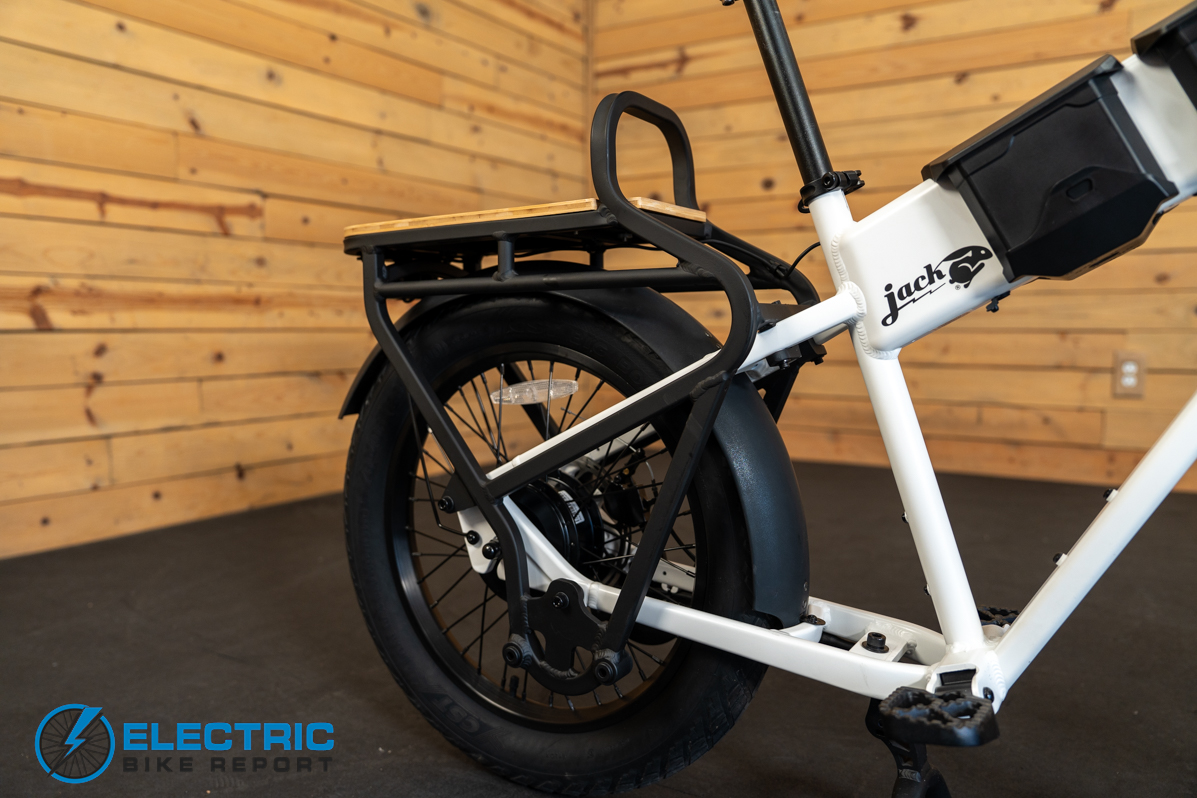
A sturdy rear cargo rack allows the MG Cargo to carry up to 500 lbs between its rider and any passengers or cargo.
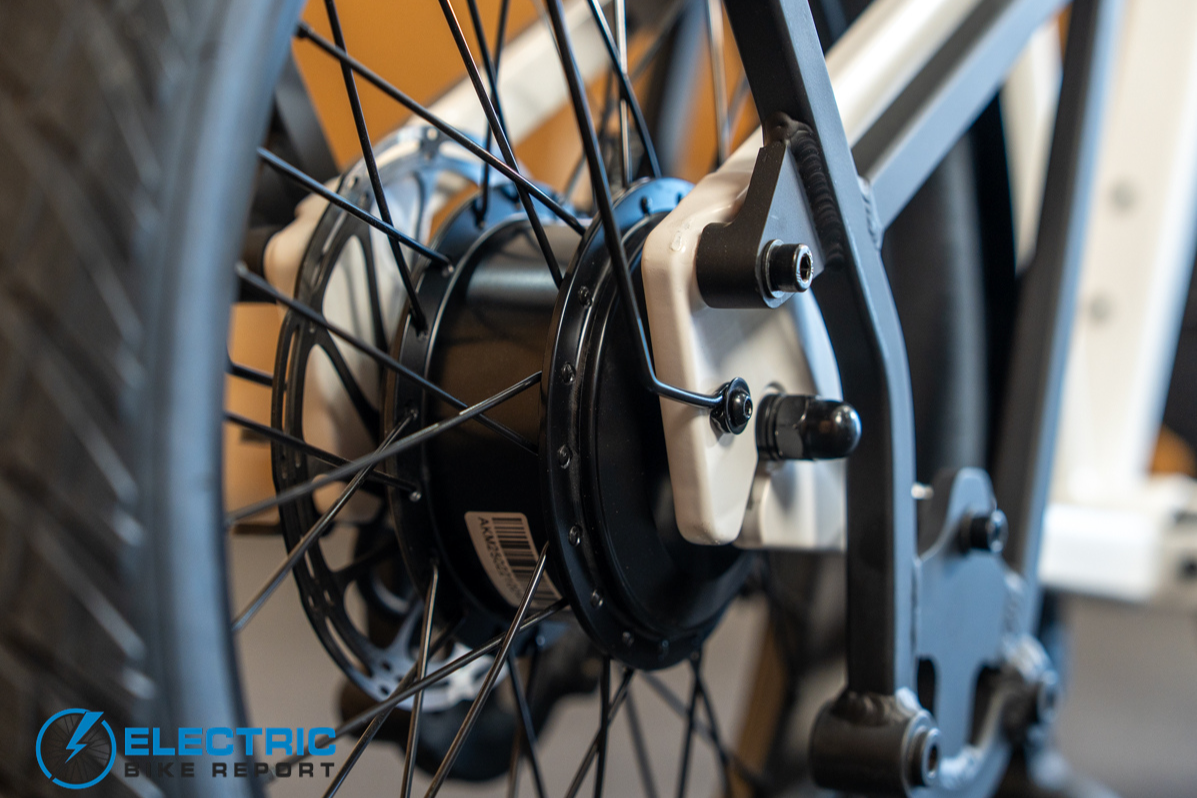
The 749W rear-hub motor makes cruising fun and hauling extra riders or gear practical.
JackRabbit MG Cargo Review: Speed Test
Speed matters on a cargo hauler in a way it doesn’t always matter on e-bikes of other styles. You’re not just moving yourself; you’re moving weight, and a motor that feels adequate when the bike is unloaded can feel sluggish the moment you add cargo or passengers.
To test the speeds of the MG Cargo’s three power levels, I rode the bike on a flat, paved surface using throttle only, since there are no pedals to supplement the motor. In its lowest setting, the bike brought me up to speed with a gradual, controlled start. Level two settled into a comfortable cruising speed, while level three pushed the bike to its default 20 mph max—speedy without feeling too punchy or overpowered.
The bike’s acceleration felt approachable, pushing off gradually, then picking up speed swiftly. When stepping up through its three power levels, its speeds felt intuitive and well-distributed throughout, which gives you options and good control when riding with or without cargo. Most importantly, it’s just good fun.
I spent most of my time riding in the mid and high settings, but all three have their place. The low setting works as a startup mode or a slow-speed hauling setting. The mid level felt like a natural cruising speed for neighborhoods or paths, and the high setting does a good job of getting you to your destination quickly.
There is also a 24 mph off-road mode available. I tested it briefly, and with my weight of around 205 lbs and about half of the battery charge depleted, I reached around 21.5 mph. It’s entirely possible that the bike could reach 24 mph on a full charge.
Overall, the MG Cargo performed well here, with a lively, appropriately-powerful motor and a balanced variety of speeds to choose from.
Sponsor
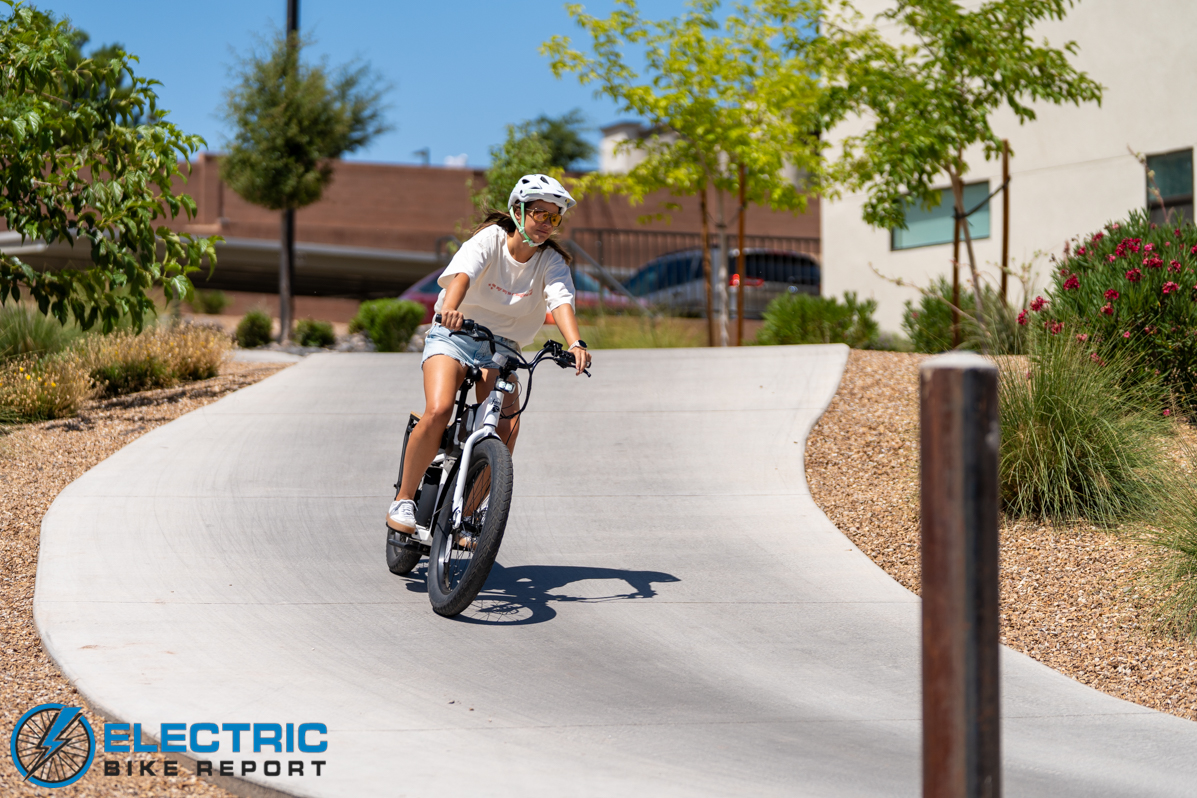
A mixed wheel setup with a 24″ front wheel and 20″ rear wheel helps keep cargo weight low and provides comfort when rolling over bumps.
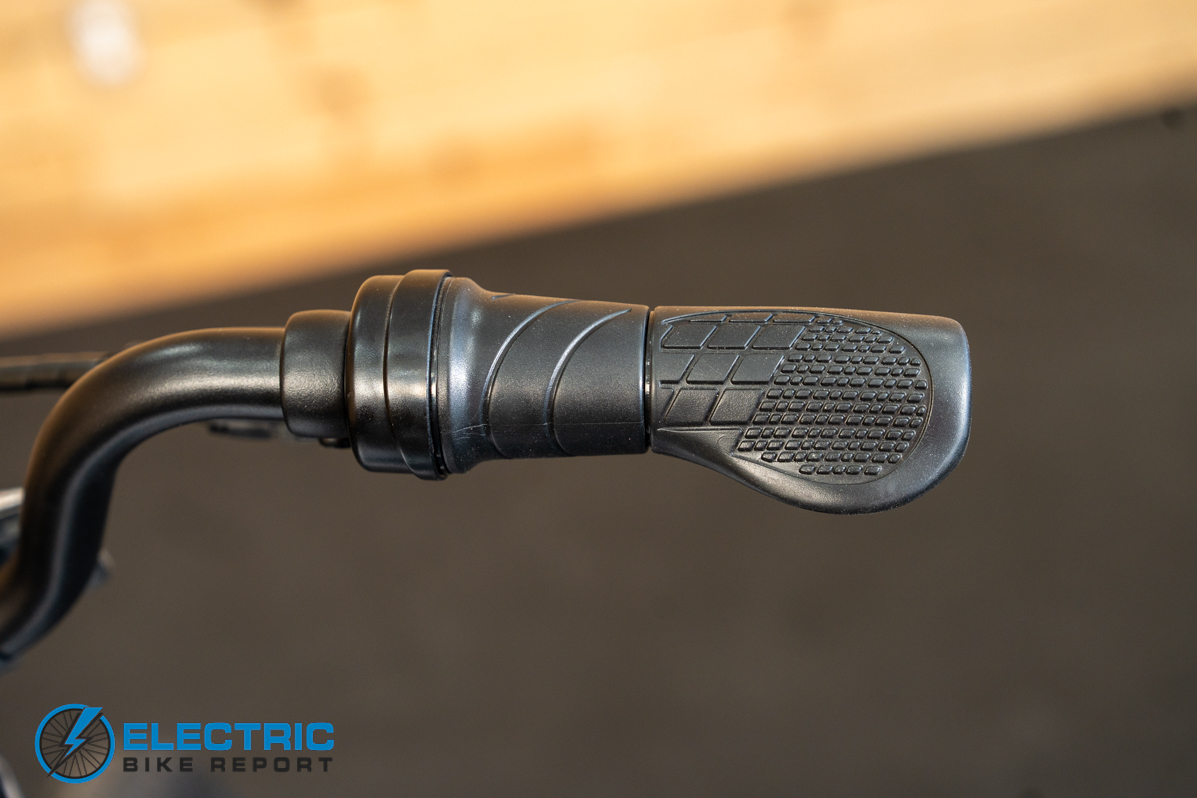
The right grip includes a half-twist throttle that is intuitive and comfortable to hold.
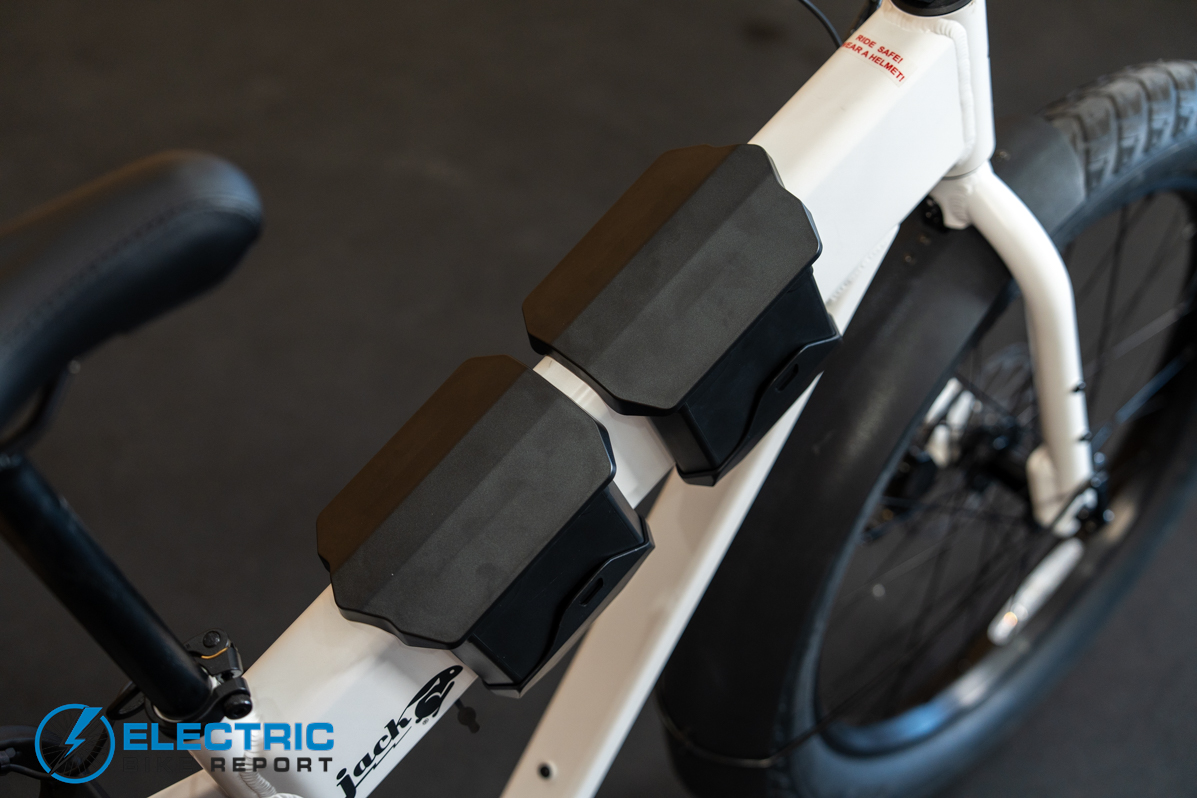
Dual 360 Wh Range Buster batteries keep the MG Cargo rolling for lots of miles.
JackRabbit MG Cargo Review: Range Test
Range testing on a throttle-only micromobility device like the JackRabbit MG Cargo is a different exercise than testing a pedal-assist e-bike. Without any human input contributing to propulsion, every mile comes directly from the battery, which means the result is a measure of how efficiently the motor and battery work together.
For our test, we ran the MG Cargo at its highest speed/power setting until its full batteries were depleted. The mileage achieved during this test allows us to provide riders a usable minimum range estimate, though riders using slower speed modes will extend that figure.
The bike covered 33.2 miles on a single charge, which places it closely with a category average of 32.7 miles for similar folding and utility-style bikes. Considering that the comparable e-bikes we used for comparison had pedal assist contributing to their range results, the fact that this bike matched them on motor power alone is impressive.
Looking at the bike’s energy efficiency by dividing battery capacity by mileage, the JackRabbit MG Cargo used roughly 21.7 watt-hours per mile (Wh/mi) in its throttle-only range test. Similar e-bikes we tested used a slightly higher 23.1 Wh/mi in their highest level of pedal assist.
Weight is a likely contributing factor to this energy efficiency; the MG Cargo weighs around 56 lbs, while e-bikes in the categories we used for comparison averaged a significantly higher 71.9 lbs.
The JackRabbit’s 720Wh battery capacity and 42V 4A charger are also worth noting. Like many other models in the company’s lineup, the MG Cargo uses two 36V, 360 Wh “Range Buster” batteries that fit both inside and around its down tube. By the math, the included charger should power them both up in around 5 hours.
It’s also worth noting that, by default, the batteries are easily removable—perhaps more than we’d like. The power packs secure into place with a knob instead of a keyed lock. We’d prefer the locks as standard, but JackRabbit does offer optional locks at an additional cost for those who prefer more security.
During my testing, I spent considerable time riding and evaluating the bike before returning to our office, and was surprised by how much charge remained. That kind of reserve is reassuring when you’re carrying a load and can’t predict exactly how long the return trip will take.
The bottom line is that the MG Cargo has an ample supply of power to keep it rolling for a long time, whether carrying cargo or simply taking it for a cruise.
Sponsor
Sponsor
JackRabbit MG Cargo Review: Hill Test
A cargo bike that can’t climb is a cargo bike that can’t do its job, so we tested the MG Cargo at our standard location, called the Devil’s Backbone. The MG Cargo’s 749W rear hub motor is relatively compact for a bike claiming this much carrying ability, which made our hill test one of the sections I was most curious about going in.
Our test rider, Justin, completed the MG Cargo’s trip up our test hill in 1:45, beating the category average of 1:51 for folding and utility-style bikes. That margin is not dramatic, but it is consistent with what the bike felt like on the climb.
Justin noted the motor was remarkably quiet throughout his test. In my personal time on the bike, the MG Cargo felt steady climbing hills without cargo. Adding around 60 lbs of weight slowed things down considerably, but the bike kept moving.
Interestingly, the MG Cargo is a bit less powerful than our group of comparison models. These comparable bikes average 1,197W peak and 81 Nm of torque, while the MG Cargo’s motor produces 1,080W and 70 Nm of torque.
Once again, the bike’s advantage is weight. At 56 lbs, it is carrying significantly less mass up the hill than its peers, which allows it to be faster on the uphill—even with somewhat less muscle.
At the end of the day, the bike is remarkably capable on hills when loaded. Riders carrying heavy loads should expect a drop in climbing speed, and those in particularly steep areas may want to plan routes accordingly. For most folks and most hills, however, we expect the MG Cargo’s climbing capability to be more than enough.
Sponsor
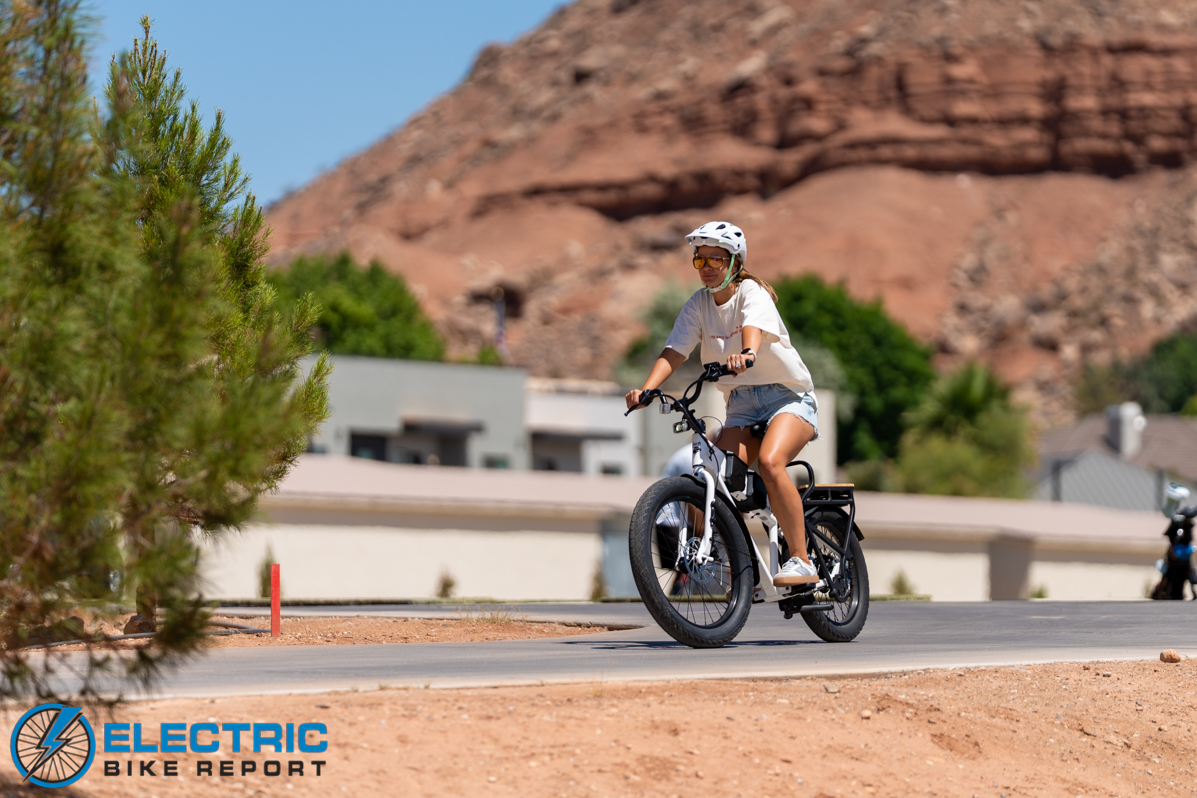
Like all JackRabbit models we’ve tested, the MG Cargo is loads of fun wherever you choose to ride.
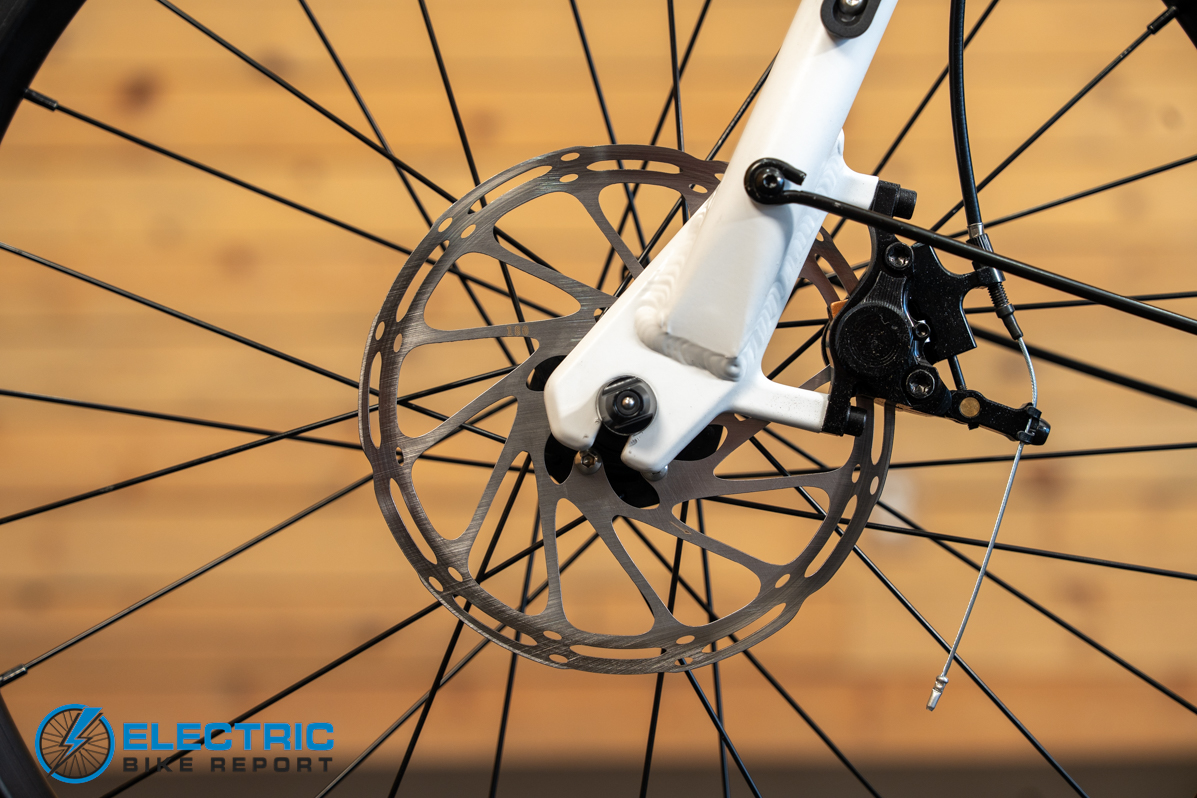
A hybrid brake system uses mechanical cables to operate a hydraulic caliper.
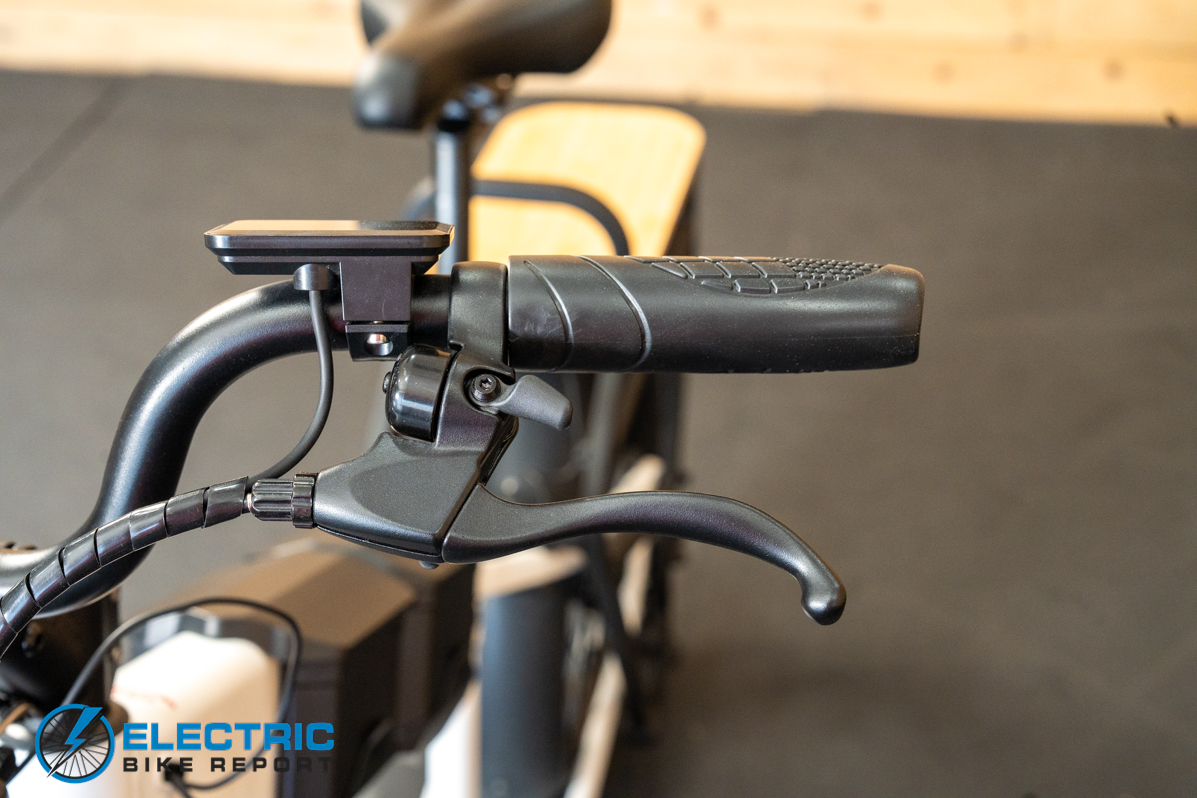
The bike’s front brake lever includes a useful, trigger-operated bell.
JackRabbit MG Cargo Review: Brake Test
Braking performance on a cargo bike is essential, as it determines whether the bike can reliably manage the added momentum that comes with a heavy payload. Another aspect of braking is whether a rider of average grip strength can make use of a bike’s stopping power when they need it quickly.
Those two questions shaped how we evaluated the MG Cargo’s brake system and overall stopping performance.
The MG Cargo uses a hybrid brake system with a two-piston hydraulic caliper system actuated by mechanical cables rather than hydraulic lines at the lever. It pairs these calipers with 180mm rotors, which are relatively standard on e-bikes and sized appropriately for the bike’s weight class.
When testing the MG Cargo, our test rider, Michael, brought the bike up to 20 mph, applied the brakes in a controlled manner, then measured how far it traveled before stopping. The average of three tests came out to be 23’2″, against a category average of 19’6″ for folding and utility-style bikes.
This difference is significant, but context matters here: many e-bikes in these categories have some of the shortest stopping distances we’ve recorded. Additionally, the MG Cargo’s result is somewhat beyond the 21’5″ average across all categories and models of e-bikes, though it is still well within the range we consider safe and effective.
The MG Cargo’s hybrid brakes stopped the bike consistently throughout our testing, though they asked for relatively firm pressure in return. The mechanical cable actuation has the same feel as a traditional mechanical brake system, even though the caliper itself is hydraulic.
The upside of this system is that maintenance is low, and far less messy than standard hydraulic systems. The trade-off is that riders with limited hand strength may find hard stops more demanding than expected.
With a 500-lb payload capacity, this is also worth being aware of before loading up. The heavier the cargo, the more stopping distance the bike will need, and the more pressure the rider will need to apply to the levers.
Considering that the bike stopped effectively, we don’t feel the need to recommend any changes, but we might recommend that riders get some practice to find the system’s feel and limitations.
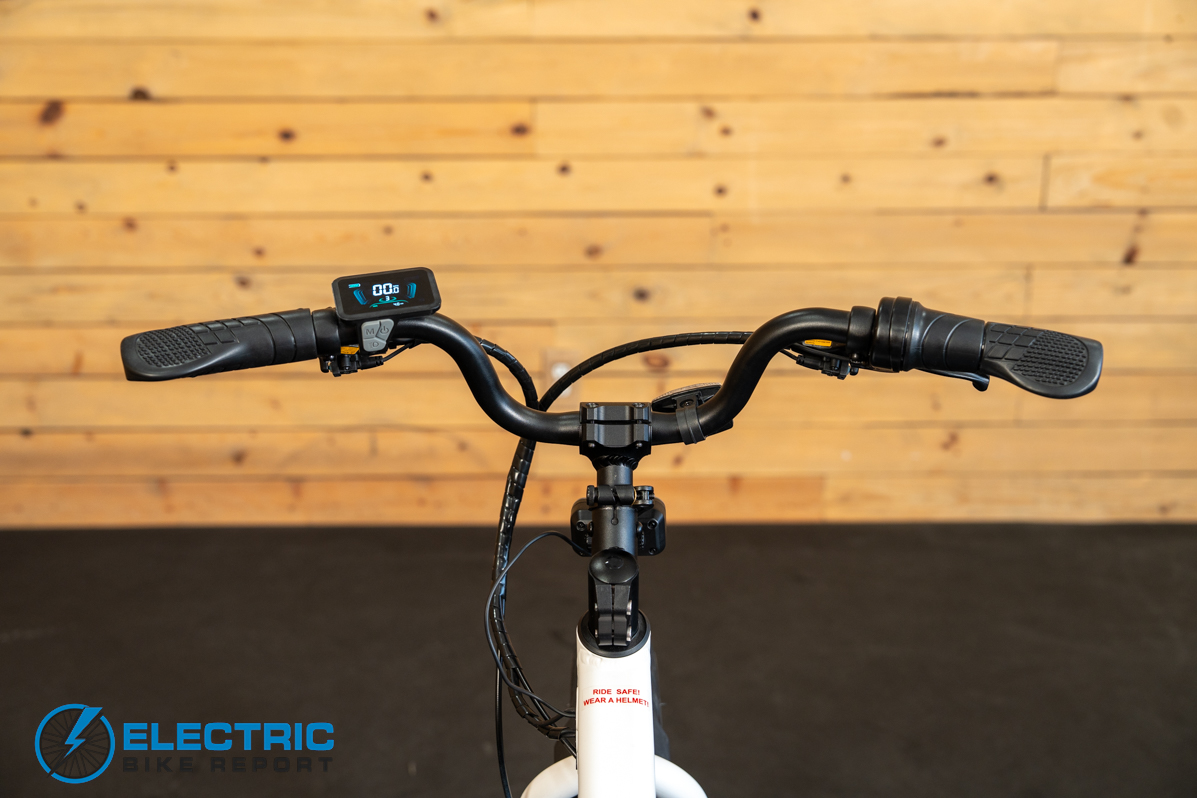
The mid-rise 610mm handlebars rotate sideways to fold nearly flat, making storage and transport much easier.
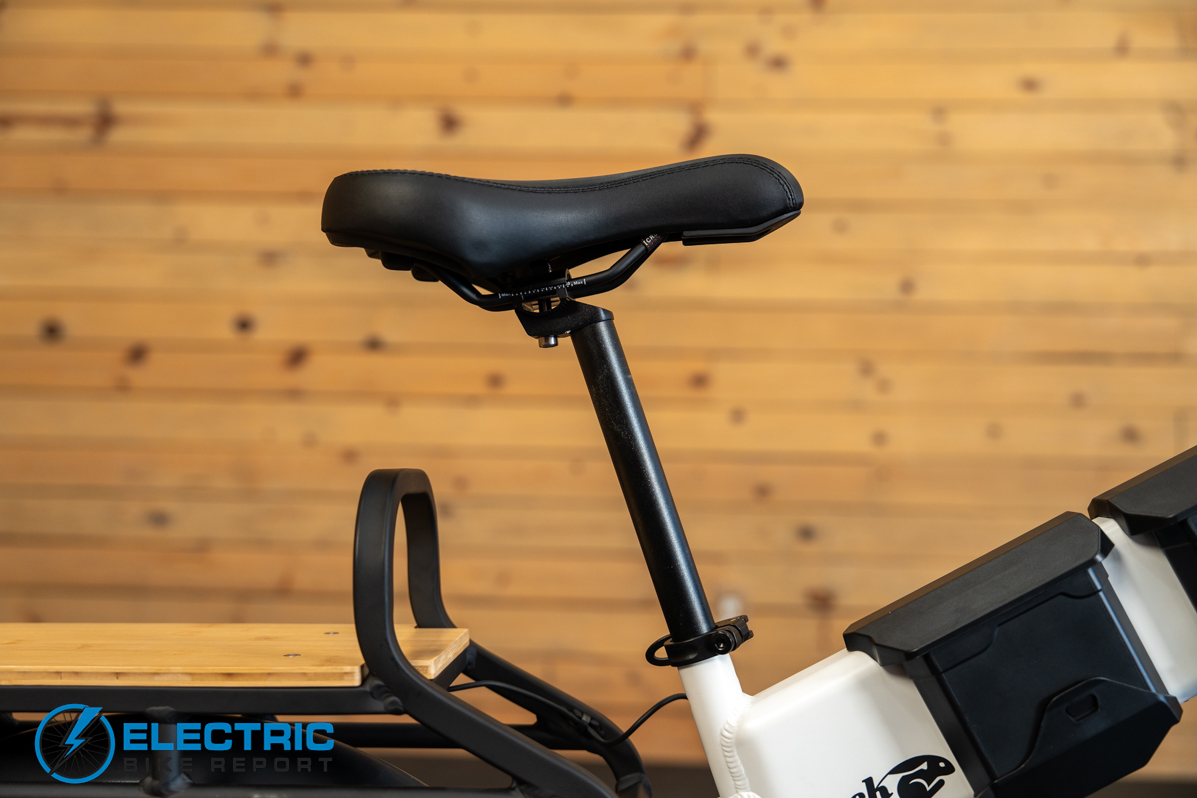
While the default saddle works well, JackRabbit also offers a suspension seatpost upgrade.
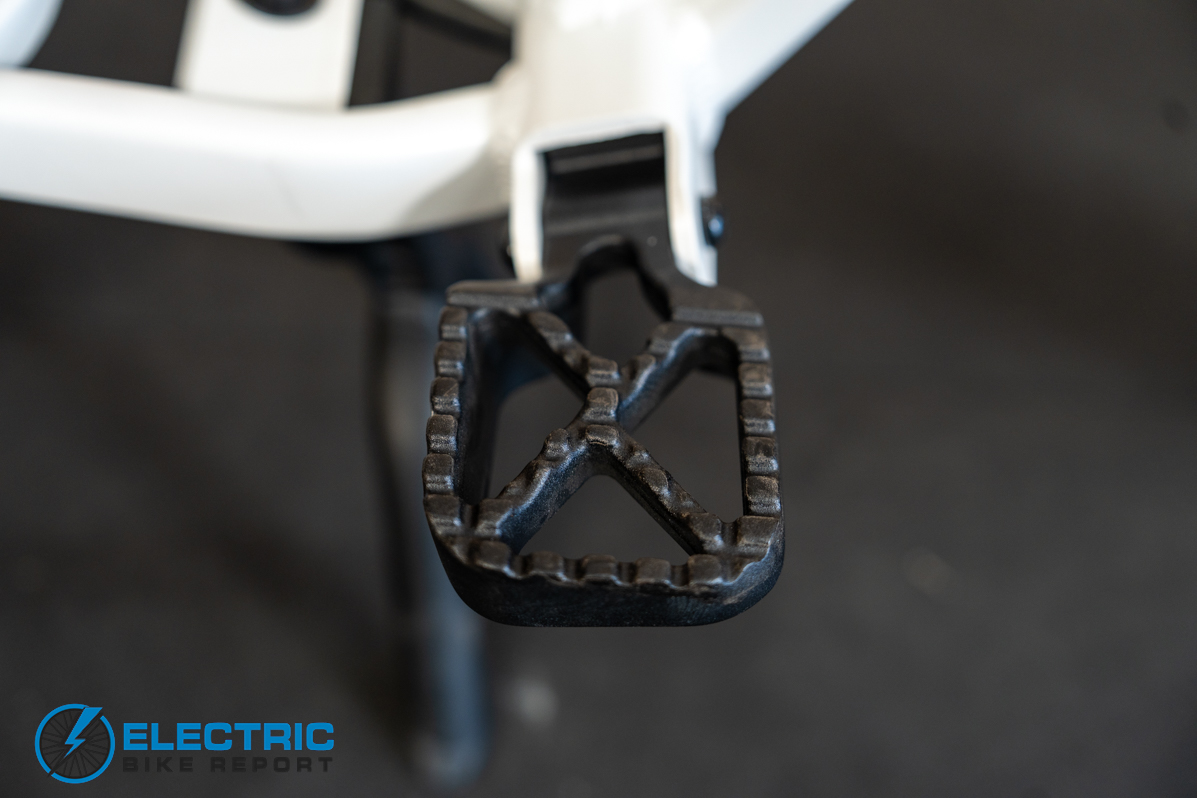
Instead of pedals, the MG Cargo features folding footpegs.
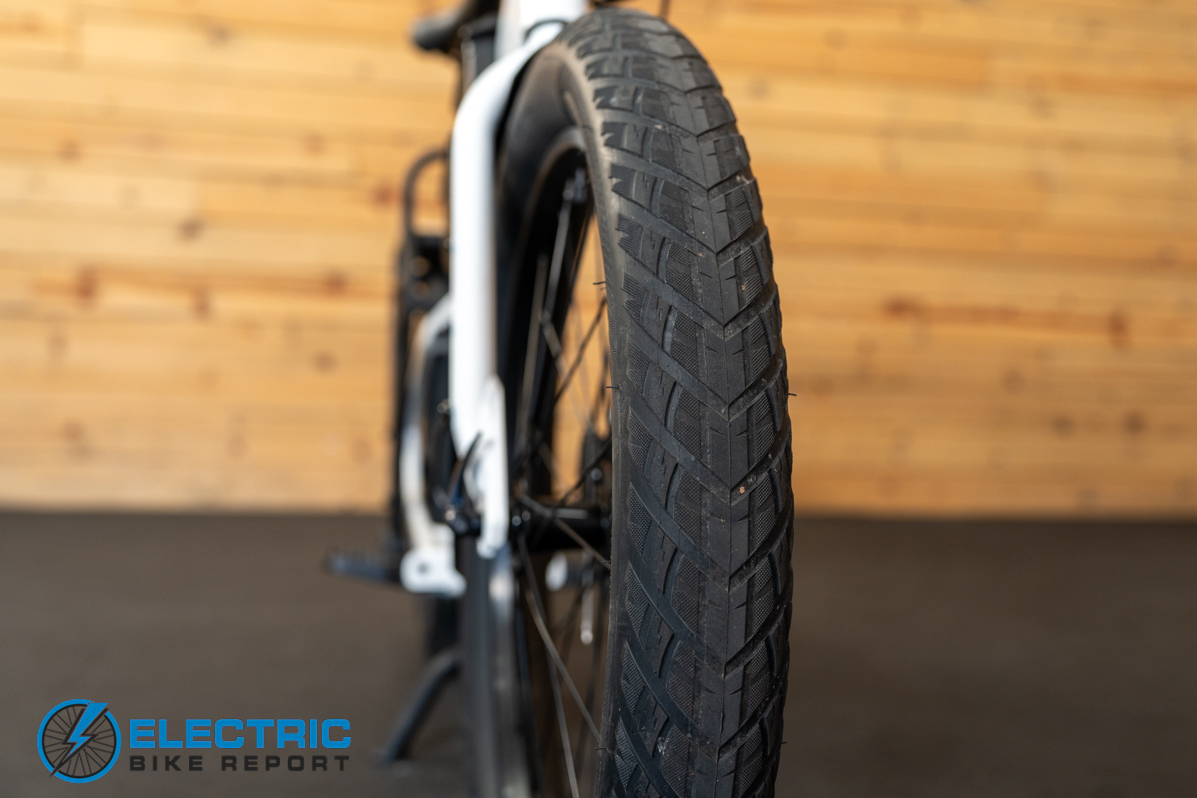
3-inch-wide tires make for a stable riding platform and a cushioned ride.
JackRabbit MG Cargo Review: Ride Quality
Taking the MG Cargo for a spin feels like a treat. It’s difficult to explain why riding one puts such a consistent smile on your face, but JackRabbit has managed it across their entire lineup. Our discussion about ride quality has to start there, because no amount of technical analysis fully accounts for it.
I suspect that JackRabbit’s defining fun factor has something to do with the bike’s compact size, lively motor, and effortless, throttle-only propulsion. Like prior models I’ve tested, the MG Cargo consistently made me feel like a kid again—in the best possible way.
Since the bike is throttle-only, riders don’t need to worry about leg extension or saddle height in the same way they would on a pedaled bike. This means the MG Cargo’s 4’9″ to 6’8″ height range is uncommonly wide. At 5’11”, I found the riding position slightly forward-leaning but comfortable, with about eight inches of saddle height adjustment on the standard seatpost and a set of mid-rise handlebars with an adjustable angle.
The handlebars measure roughly 610mm wide, which may be somewhat narrow for riders with broader shoulders. Fortunately, swapping handlebars is a straightforward modification through JackRabbit or third-party sources.
The mixed wheel setup is one of the more thoughtful details on this bike. The 24″ front wheel smooths over bumps, while the 20″ rear wheel keeps the cargo platform (and its center of gravity) low and easier to balance. Both tires are 3″ wide, so they provide a cushioned and stable ride feel.
While the bike is clearly intended to be ridden mostly on paved surfaces, it was more confident than the street-tread tires suggested it would be on loose gravel. Those who want more robust off-road capability can upgrade to a set of knobby tires.
Handling feels fairly sharp and potentially a bit twitchy, though the MG Cargo is generally nimble due to its compact size. Under load, the handling character changes (as we would expect). The bike is a bit harder to balance at a stop, and there is a sense of drag when starting up and climbing hills.
Cornering requires some over-steering to compensate for the frame flex that comes with the added weight. It is present mid-corner, and worth being aware of the first few times you ride loaded. The flex is not alarming, and it is not unusual, but it does mean the steering feels slightly looser than it does when unladen.
Now is a good time to bring up one of our few points of critique: the bike’s dual-leg center stand. It’s possible that the problem would be alleviated when using panniers or JackRabbit’s optional Side Rack Kit, but when adding cargo to a rack-mounted basket, the bike could be tough to balance. A wider center stand would help to keep the bike stable when loading up.
It’s also worth acknowledging JackRabbit’s broad customization. Its community is packed with owners who love to modify (or mod) their bike, whether independently or via the company’s ModRabbit marketplace. Owners can swap tires, grips, pedals and/or saddles to matching colors, add cargo or passenger accessories, upgrade handlebars, add suspension, and more.
We tested a couple of the MG Cargo’s optional accessories. The Kinekt suspension seatpost, which smooths the ride significantly, trades about two inches of saddle height adjustability for increased comfort. The FidLock Uni Connector can be used to convert any water bottle to use a magnetic quick attach/release system. The FEND folding helmet, which includes integrated front and rear lighting, effectively folds down to fit in a backpack or gym bag.
As I touched on in the Speed Test section above, the motor is tuned to feel both approachable and strong.
The user interface is about as simple as it gets: three buttons for power, lights, and on/off. There is no app, no Bluetooth pairing, and no settings menu to navigate, which makes the bike friendly for new riders and those who don’t want a huge learning curve.
Sponsor
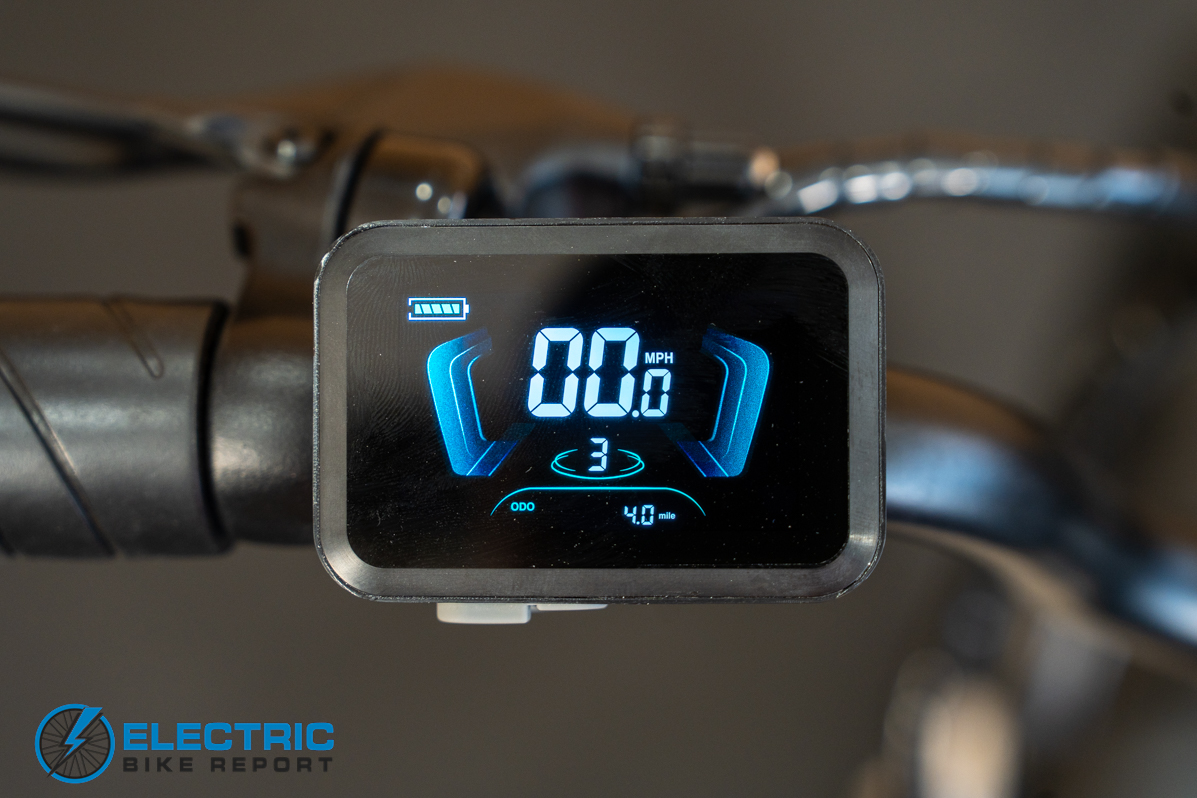
The small display/control panel is appealing, straightforward and easy to read.
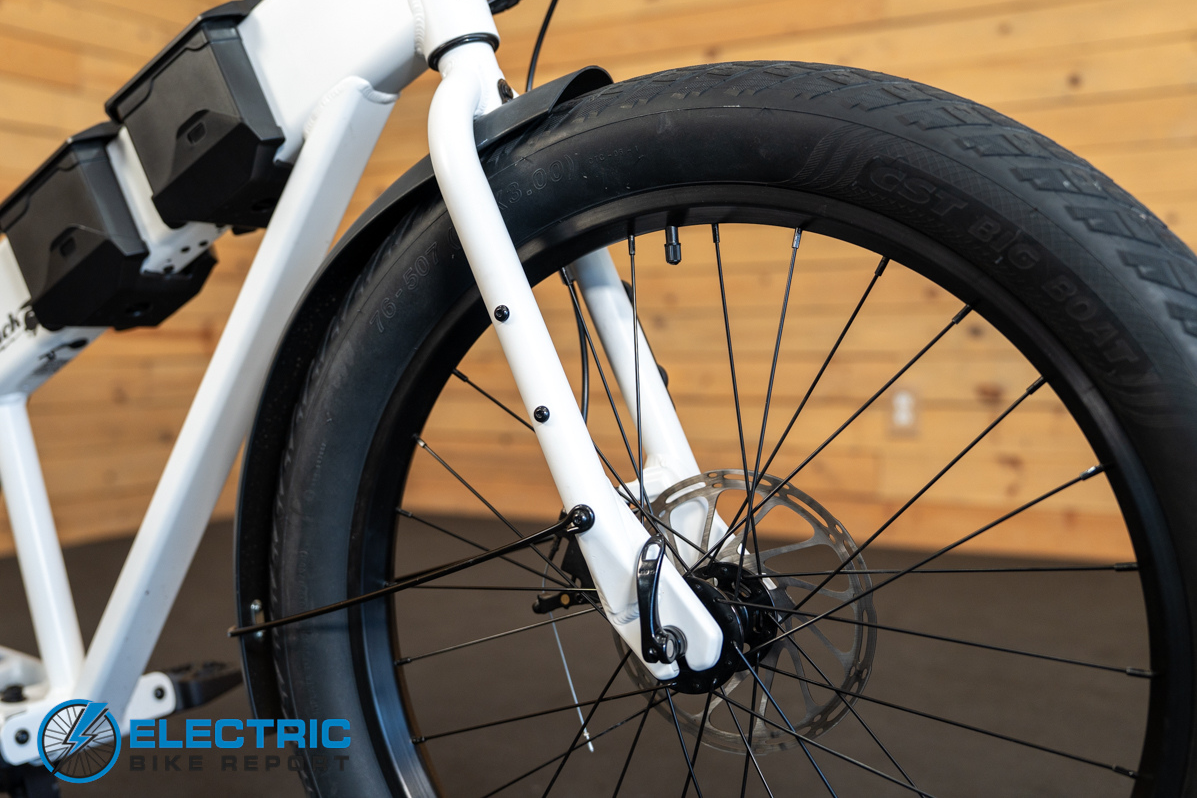
A rigid fork with included mounting points offers utility and predictable steering.
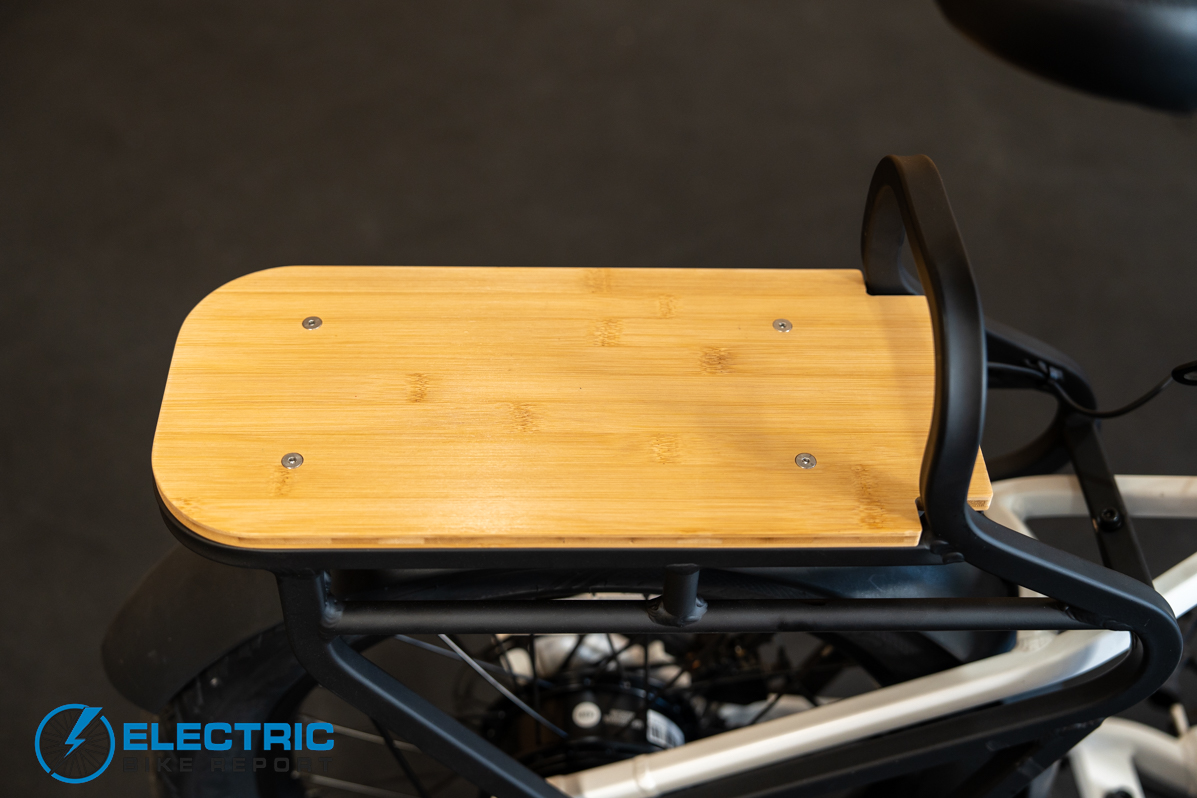
The cargo rack features a built-in handle and a solid bamboo deck.
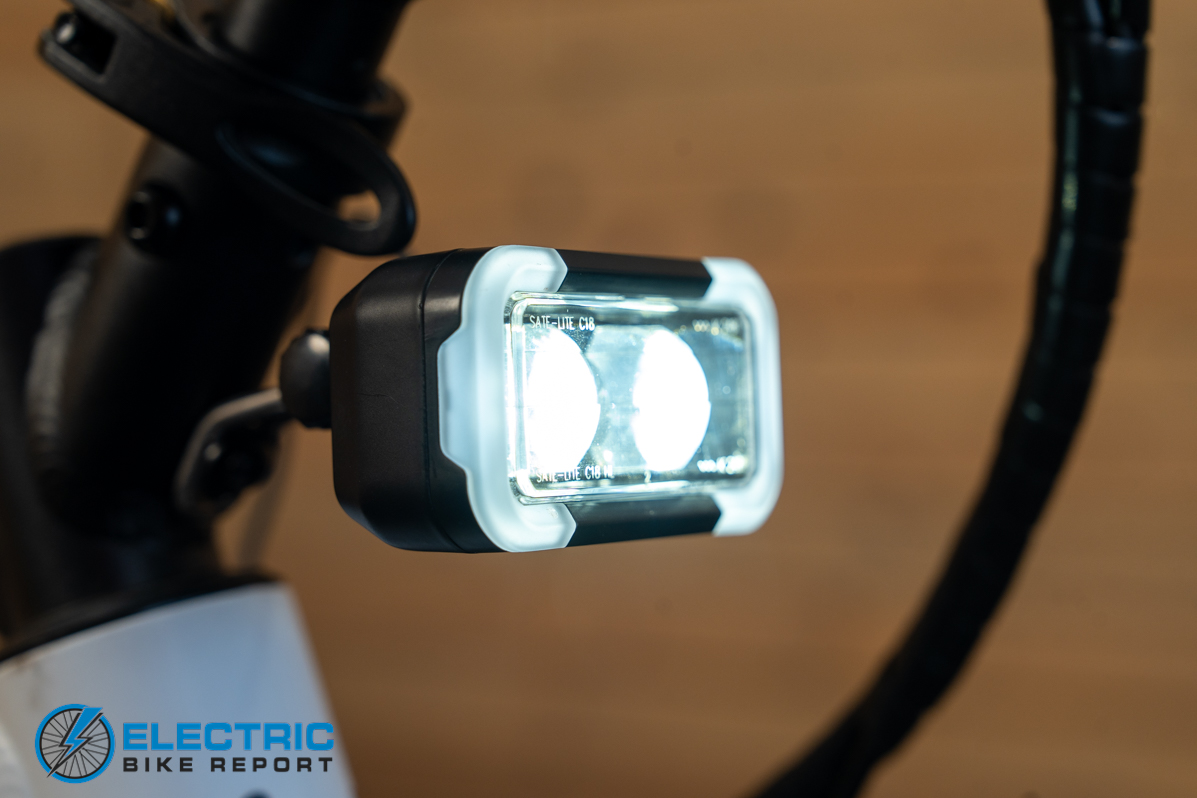
The MG Cargo comes equipped with an integrated dual-LED headlight.
JackRabbit MG Cargo Review: Summary / Where to Buy
I think the best word for the MG Cargo is “unexpected.” It’s a 56-lb bike-shaped, throttle-powered electric vehicle with a staggering 500 lbs of payload capacity. It folds nearly flat, it’s impressively utilitarian, and it’s extremely lively and fun to ride. And like other JackRabbit models we’ve tested, there’s not quite anything like it elsewhere.
The MG Cargo proves that a micromobility device can be both remarkably practical and exceptionally fun at the same time. Our testing showed that this bike is great for riders who need a compact, foldable hauler for urban errands, family transport, and/or apartment-friendly storage—as well as those who simply want an enjoyable way to get around.
Performance-wise, it did a solid job in all areas of our testing. Its range and climbing ability both hold up against those of many folding and full-size utility e-bikes. It has a balanced range of speeds with three easy to use settings. And its brakes functioned well, while coming with a tradeoff or two.
The MG Cargo’s wide height range means most people can get comfortable on it without modifications, and JackRabbit’s wide range of accessories means it can grow into whatever role you need it to fill. Additionally, the ModRabbit marketplace is a valuable resource for those looking to adapt their ride to fit their personality.
Riders with limited grip strength who need consistent stopping power with minimal effort may need to consider a bike with a true hydraulic brake system, while those who want or need a more stable loading platform may want to upgrade the included center stand.
Otherwise, the MG Cargo is a smile-inducing, ultra-portable, remarkably capable, and seriously customizable fun-size ride that’s easy to recommend. If you want an enjoyable, pint-sized micromobility device that gets the job done without taking up a lot of space, this bike is purpose-built for you!
Happy Riding! Make sure to let us know if you have any questions or if you think we left anything out in this review of the JackRabbit MG Cargo down in our comments section.
Sponsor
Sponsor
Reader Interactions
Comments
Leave a Reply




AFAICT, this is an electric scooter, and California CVC 22411 states it must have a max speed of 15 mph with several other restrictions for electric scooters. This, IMO, is a blatant disregard for the law.
Guessing it won’t be sold in California then.
The throttle-powered, pedal-free design makes this a very interesting and portable alternative to traditional longtail cargo bikes.