This Canyon E-Bike Has Massive Range | Canyon Precede:ON Comfort 7 Review
Aug 08, 2026
 0 Comments
 Share
Share
Stellar fundamentals, natural pedaling, and outstanding smoothness.
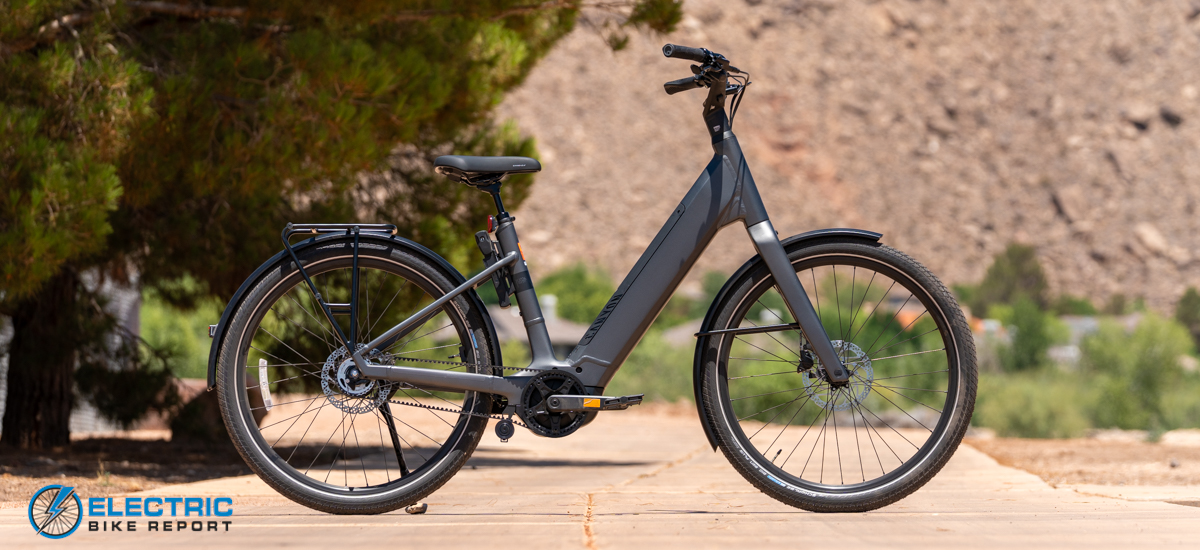
E-bikes today have truly developed into their own category. Yes, they do still share many similarities with the traditional bicycle; but powerful motors, ride tuning, and throttle propulsion have made E-bikes a bespoke, unique type of transportation. The modern E-bike is an amazing tool – but, what if you’d like a mix of old-school and new-wave? What if you want a bike that has the soul of an analog option, but also the convenience of new tech? Canyon’s Precede: ON Comfort 7 has you covered.
This is a cruiser style E-bike with a 250W motor, customizable pedal assist modes, and a 625 Wh battery. It also features class 3 capability, a Shimano Nexus Belt Drivetrain, and app connectivity. The Precede does have many of the traits of a modern E-bike. However, as I spent some time with it, I understood that this bike is more than just another entry into the E-crusier market – It’s a bridge between the conventional and the new frontier.

Sponsor
E-Bike Category:Cruiser, Commuter
E-Bike Class:Class 1 (Pedal Assist to 20 mph)
Class 3 (Pedal Assist to 28 mph)
Class 3 (Pedal Assist to 28 mph)
Sponsor
Canyon Precede:ON Comfort 7 Video Review
 Pros
Pros- Quality components and build – this bike is very confidence inspiring.
- The Bosch Flow app has lots of features, including ride tuning, navigation and security.
- Very good brakes, both in performance and feel.
- The belt-style drivetrain is smooth and responsive, and requires less maintenance than chain setups.
- Bosch’s mid-drive motor is incredibly smooth and natural.
- Massive range! Make sure you check our range test for details.
 Cons
Cons- We’d like to see a basic screen display included – the bike currently just has a remote with a simple LED light.
- With default settings, the bike doesn’t feel inclined to cruise at class 3 speeds. You have to work more to carry speed – This can be easily fixed with ride tuning in the Flow App, but we’d prefer to see the bike ship with slightly more power out of the box.
ELECTRICAL SPECS & FEATURES
- Battery: Bosch Powertube 625
- Charger: Bosch 2.0 A
- Display: Bosch Remote Control, No Screen
- Motor: 250 W Bosch Performance Line Sport Mid-Drive
- Headlight: Integrated
- Taillights: Integrated
- Pedal Assist: 7 swappable levels, 4 active at one time
- Claimed Range: 80 miles (Bosch eBike Range Tool)
- Throttle: None
- App: Bosch Flow, Canyon App
- UL Certification: UL 2849
Weight & Dimensions
- Claimed weight: 60.2 lbs
- Tested Weight: 61.5 lbs
- Rider height range: 5’3″ – 6’5″
- Total payload capacity: 308 lbs
Components & Accessories
- Brakes: Shimano MT 200 Front, UR 300 Rear Hydraulic Disc Brakes
- Fenders: Alloy Front and Rear
- Fork: Carbon Rigid
- Frame: Stepthrough Alloy, included lock storage
- Drivetrain: Shimano Nexus Belt Drive, 5 speed
- Grips: Ergon GA3 mini-wing
- Saddle: Selle Royal Essenza+, Moderate Wide
- Handlebar: Single unit backsweep bars
- Kickstand: Yes
- Pedals: Platform
- Tires: Schwalbe Big Ben Plus Reflex, 27.5 x 1.15
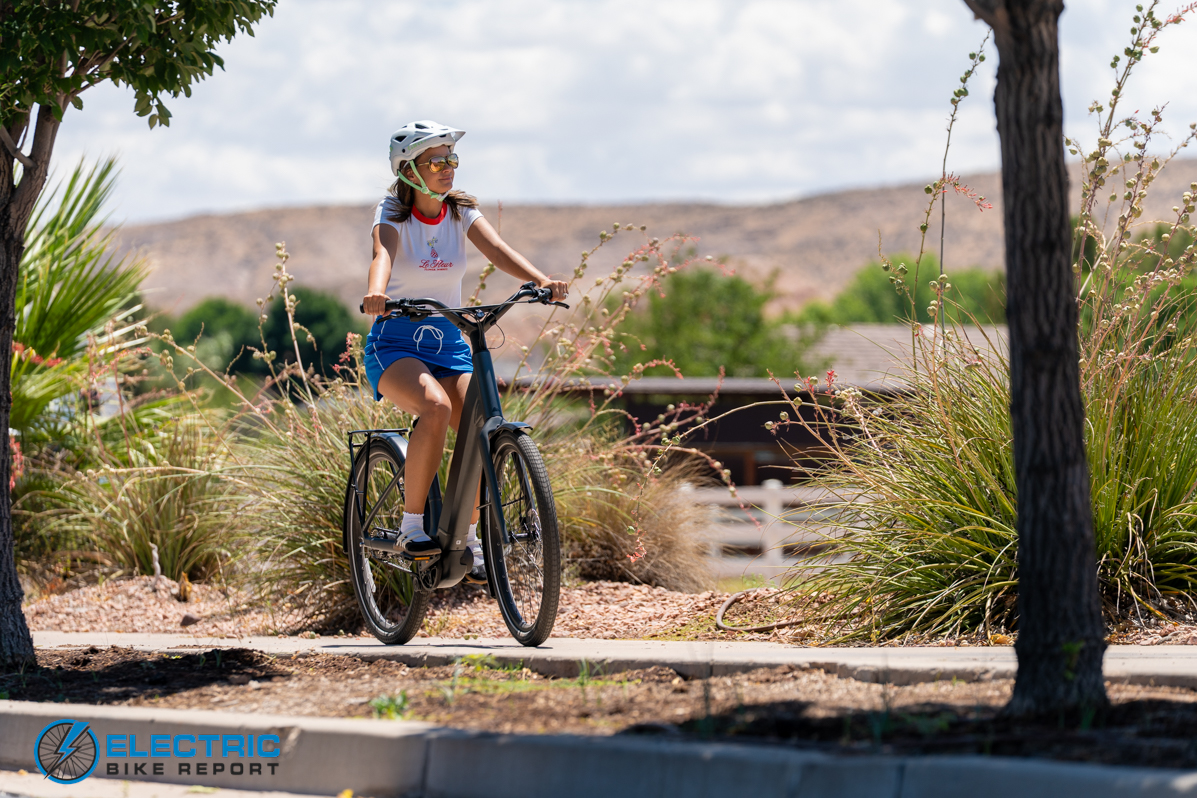
The Precede is smooth and natural. Great for city cruising!
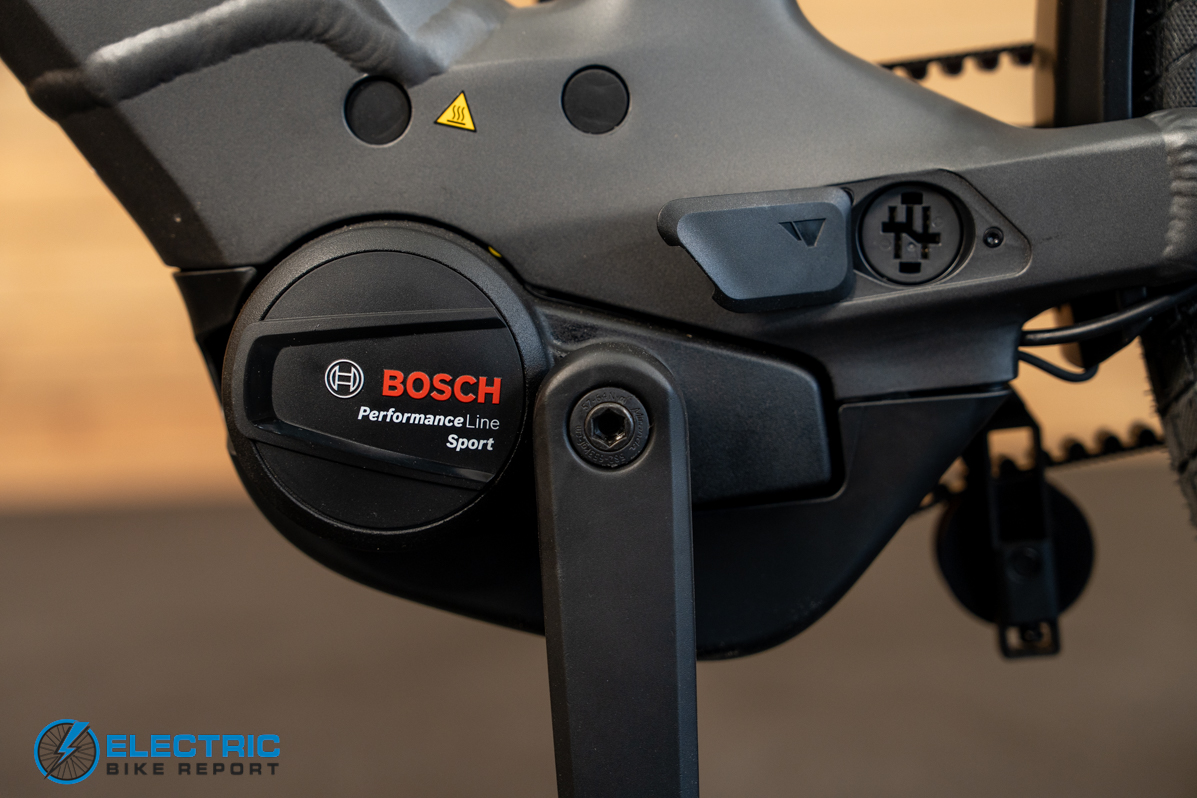
Bosch’s Performance Line Sport motor has a big impact on how the Precede feels.
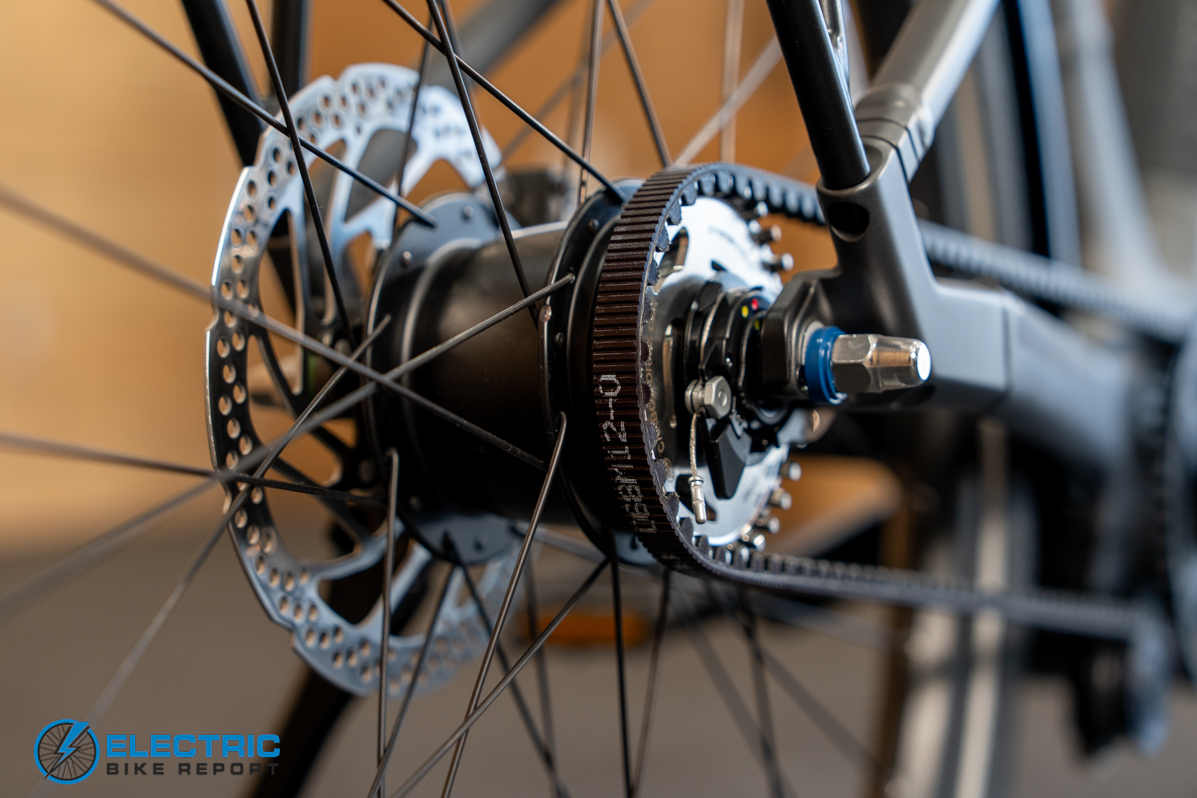
We loved the belt drive – it’s very smooth and requires less maintenance than a chain would.
Canyon Precede:ON Comfort 7 Review: Speed Test
We set up our speed test to understand how a bike feels when moving through the assist levels. Good programming feels incremental and predictable as you increase each pedal assist setting. Usually, we test each bike as it ships, but here, we took a slightly different approach.
Out of the box, the Bosch mid-drive motor is relatively light on power. I was conscious of the fact that my pedal input played a very significant role, and that the Precede wasn’t going to do all of the work for me. This isn’t inherently bad; but with default settings, this bike feels more analog. If a more traditional pedaling feel isn’t your thing, the solution lies in the Bosch Flow App. Here, there are options for ride tuning – specifically, you can increase the motor response and the assist output. We maxed both of these settings for our speed test, as we found the bike to feel much more powerful and peppy in this configuration. For riders that lean more towards the electrified side of things, this is the setup we’d recommend; But, know that the choice between an active or leisurely pedaling experience is available.
I began the test under my own power with no motor assistance. Here, I averaged 8.2 mph. This bike is actually fairly manageable when pedaling without power; I wouldn’t be excited about a dead battery, but it’s not an awful bike to pedal without assist. From there, I stepped up to Eco mode at class 1 speed. The motor engaged immediately and I settled in at 12.2 mph. I increased to Tour mode, and the motor gave a subtle, but present bump in power – I averaged about 14.7 mph. From there, I went to Sport and averaged 16.7 mph, then maxed out at 20 mph in Turbo.
At class 3 speeds, Eco settled at 11.5 mph. It felt very similar to my previous run – very fast but also very natural motor engagement. Tour averaged 14.7 mph, Sport settled at about 20.2 mph, and Turbo settled around 23 mph. However, with some extra encouragement, Turbo would give assist up to almost 26 mph.
In my test, I found the bike to feel very smooth and natural. Each increase is extremely approachable, but still useful. The Bosch mid-drive provides great support, but without dominating the experience – you know it’s there, but very rarely does it demand attention. As for the assist spacing, the bike offers a linear and sensible curve at both class 1 and class 3 speeds. Each level feels separate and useful. The programming here is defined by how intuitive it is; once I turned up the power output settings, everything felt as it should be.
“Auto” mode is also an option. This feature is designed to sense your pedaling situation and respond without any manual adjustment of assist levels. For example, if there’s a sudden headwind or climb, the system will automatically increase the motor support. Generally, I found “Auto” to be pretty intuitive – it’s pretty quick to step up the power when needed, but it’s best suited for low speed cruising. I preferred Turbo mode for commute-adjacent situations.
This is, overall, very good programming. Again, for those that want the full Ebike experience, we recommend increasing the motor output and sensitivity via the app; beyond that, the pedaling experience here is excellent.
Sponsor
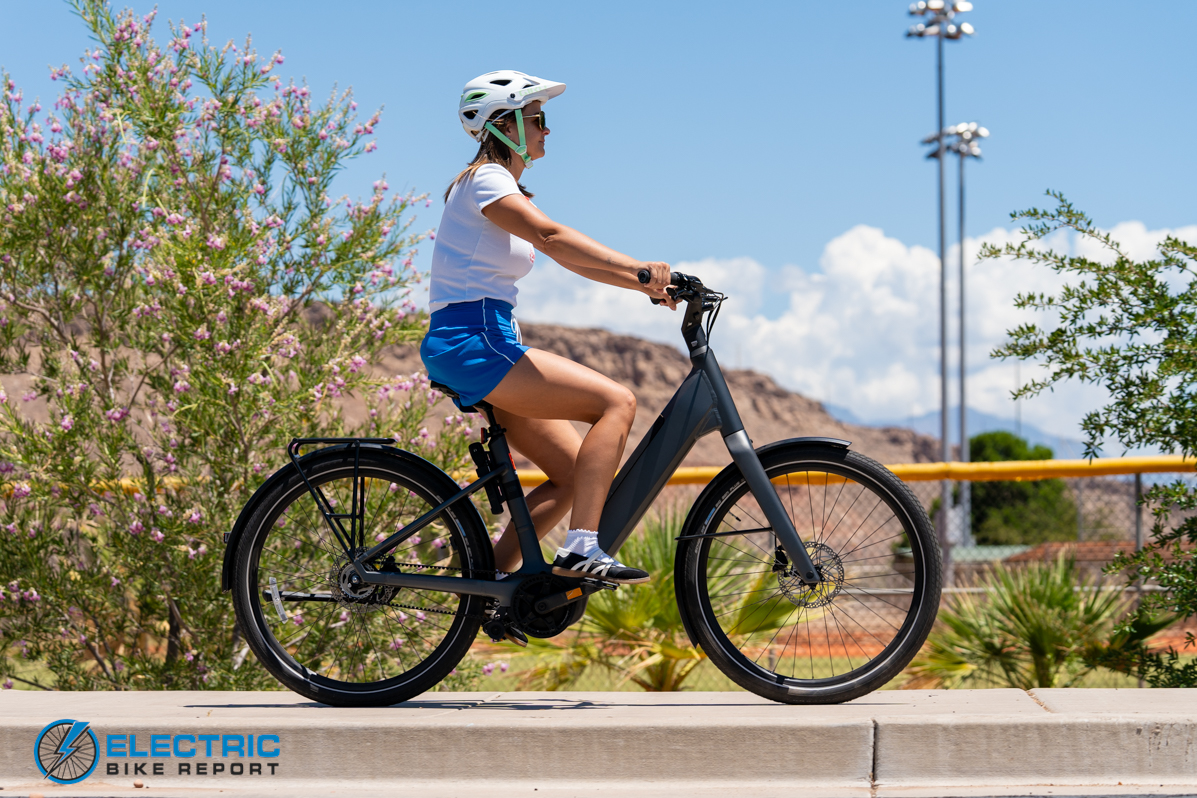
Just one color is available – the sleek anchor gray pictured above.
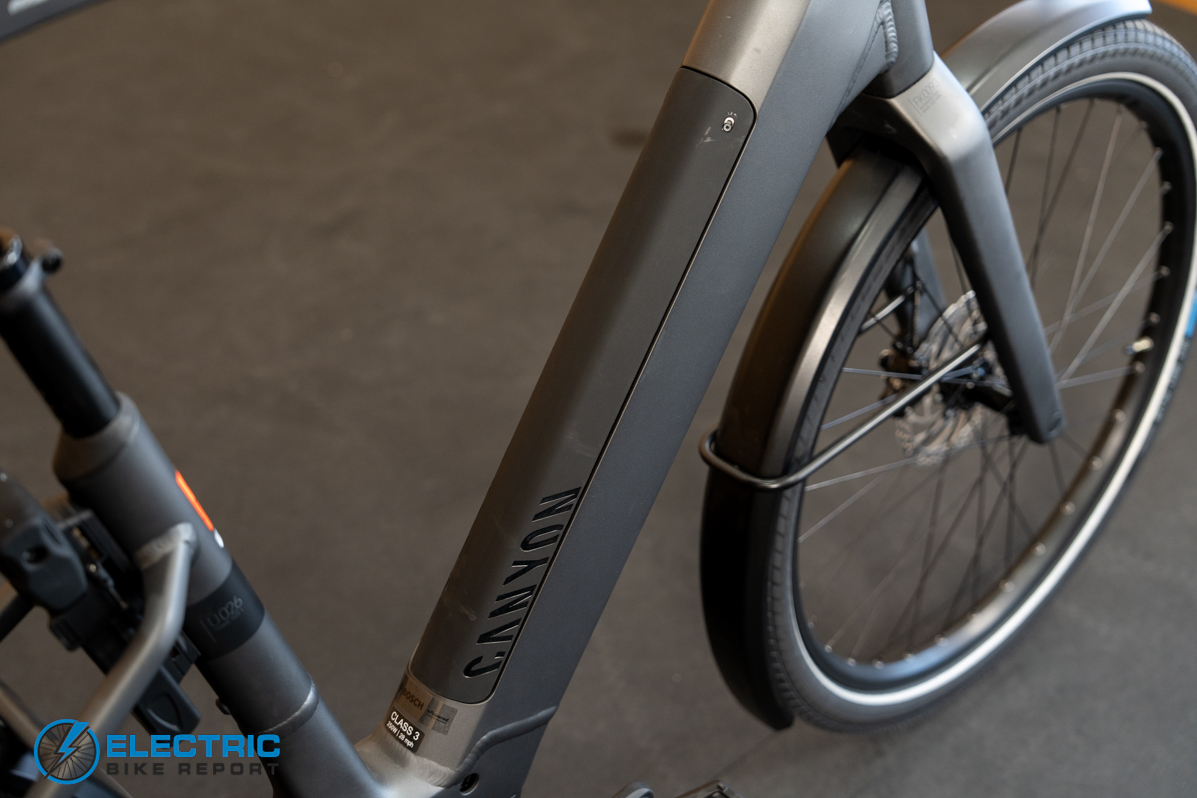
The 625Wh battery lives in the downtube, but can be easily removed.
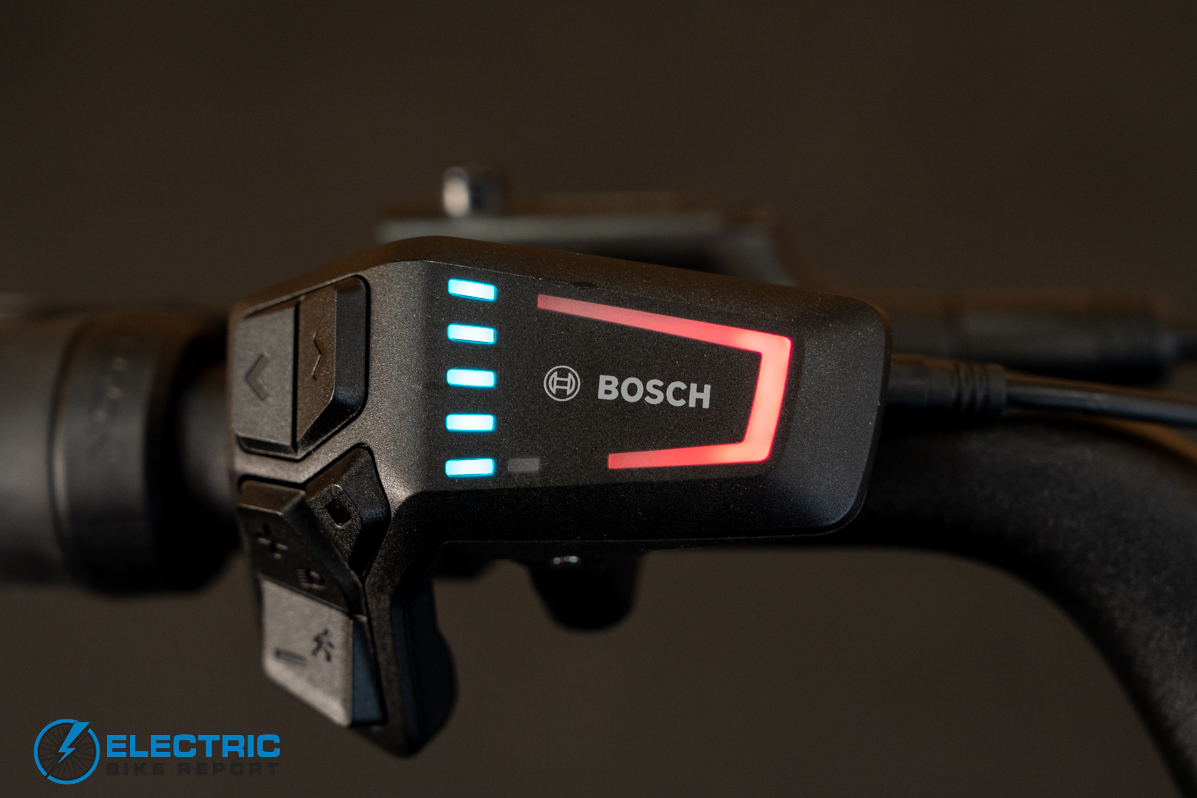
While a screen display would be nice, the LED remote is simple and gets the job done.
Canyon Precede:ON Comfort 7 Review: Range Test
Like I mentioned in the speed test, the ride tuning options in the Flow app can change the pedaling experience drastically. They can also affect range – we did our usual high and low power range tests with default settings, and the results were surprising.
In the maximum power test, the Precede: ON Comfort 7 did 64.69 miles. This is more than double the category average of 31.71 miles! This is a great result, but it does come with a caveat. I mentioned in the speed test that this bike requires solid effort, even with the assist on, and that holds true here. Generally, it always feels as if you’re doing your share of the work, and the motor doesn’t like to coast at speed with leisurely pedaling. So, while the motor does provide assist for a long way, expect to be contributing some leg power, and potentially going slower.
As for the minimum power test, we conducted this segment differently than usual; we tested the bike’s low power mode for about 40 miles, then calculated the expected range results based on the distance we had done and the battery’s remaining life. We chose to do this due to a combination of this bike’s massive range capability and the scorching Southern Utah temperatures. To do the full thing would have required many, many hours in the saddle in a place that routinely sees 105 degree days. Regardless, our estimate puts the bike at 131.6 miles of range, which is far beyond the class average of 64.69. Another impressive showing, but again, there are some things to be aware of here. We used Eco mode in this portion of the test, and this assist level provides very modest power. During the low-level run, I also felt that I was doing a significant amount of the work, and often found myself temporarily increasing the assist level during climbs or headwinds. In other words, it felt like an analog bike here.
The big numbers here indicate that the bike is drawing very little power over the course of a ride. This is a double-edged sword; the bike will give you assist power for a very long time, but the support is more conservative, and you’ll need to put in a fair amount of effort.
Because of this, we decided to do an additional high-power test with the motor output settings turned up. Here, the Precede did 39.15 miles. This is still excellent, and continues to keep the bike above the class average mentioned earlier. Yes, the range is shorter, but we found the bike to be much easier to pedal with these settings; it no longer felt so analog. The pedaling experience is still natural, but the effort is greatly reduced, and we were able to carry speed with ease. This is the setup I’d recommend for most eBikers.
So, what we have here is essentially bookend range numbers, and they’re all impressive. You can expect 39 to 65 miles when in Turbo, depending on the ride settings you use. Using some math, we can deduce that Eco will get you in the neighborhood of 75-130 miles. You’ll get very good range regardless of what ride configuration you choose.
Sponsor
Sponsor
Canyon Precede:ON Comfort 7 Review: Hill Test
Hill performance is a big priority for many riders. After all, one of the big perks of electric assist is an easier time tackling elevation. The Precede was a decent performer. With default settings, this bike finished the climb in 2:20 and averaged 12.9 mph when using max pedal assist. This is just slightly behind the class average of 2:13 at 13.9 mph. There is no throttle on this bike, so this is the only test we did.
There’s another factor here though; this class of bike sees a wide range of motor sizes. Some options also feature 250W powerplants, but others are larger. Yes, the bikes with larger motors do post better numbers, but the Precede still hangs in with the pack. Our hill tester, Justin, commented that the bike felt smooth and natural when hill climbing. In my own testing, I had similar takeaways. With that said, we both noticed that some exertion was necessary when hill climbing on this bike – nothing crazy, but the bike does ask for a bit of effort.
I also tried climbing hills with the ride settings maxed (like we’ve been discussing). It’s worth noting that while this bike posts a decent time out of the box, increasing the motor output makes it even better. On another local hill, I ran two hill tests. One was with factory settings, another with the maxed power. I found that with the altered tuning, the bike climbed about 14% faster than with standard configuration.
In a nutshell, this bike is a solid hill climber – the pedal assist provides helpful but not excessive power. If you want a bike that supports your pedaling, but doesn’t completely subdue it, this is a good option. Additionally, you can make it an even stronger contender with ride tuning.
Sponsor
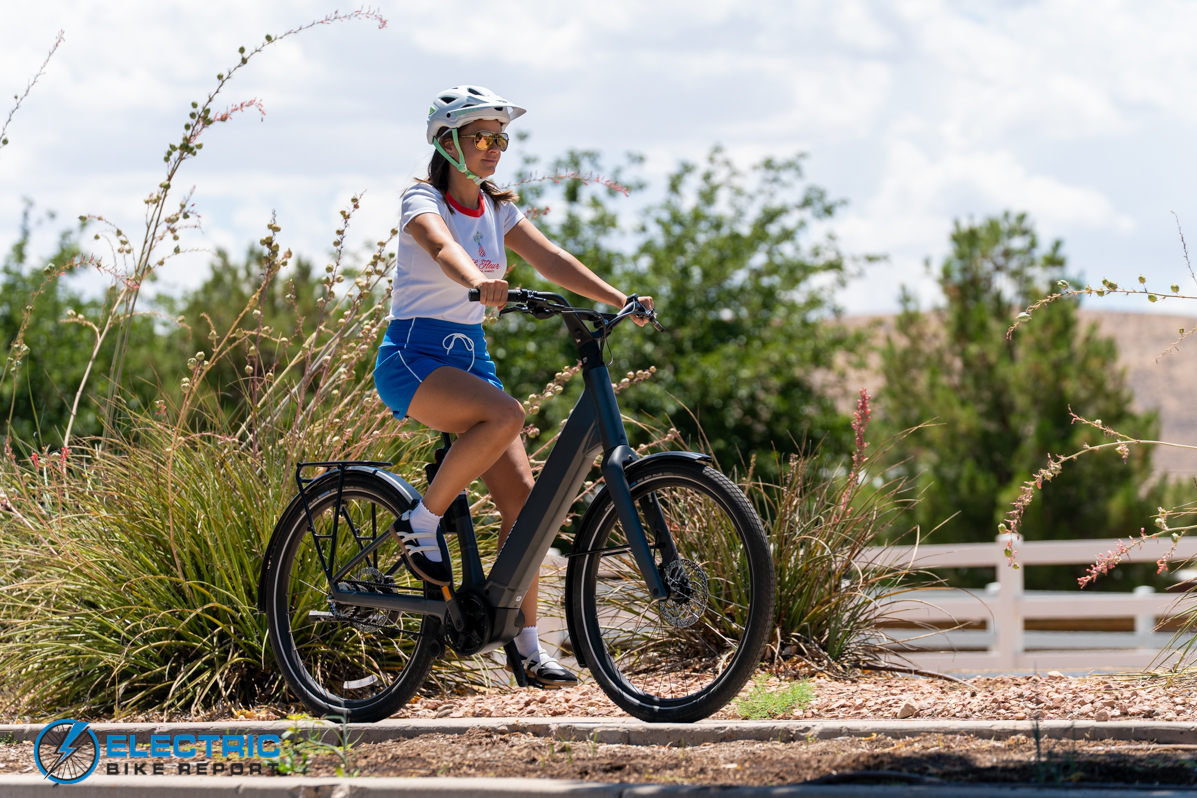
Cruising and commuting are both great use cases for the Precede.
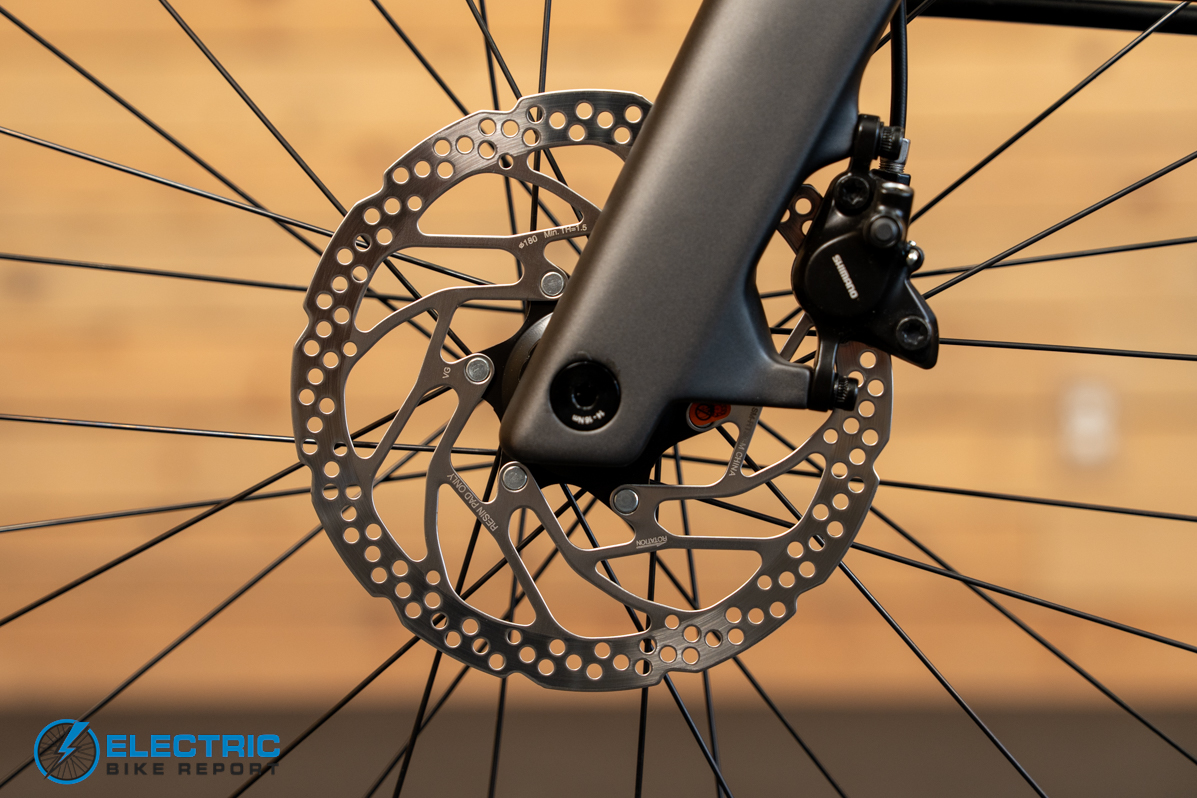
180 mm rotors front and rear are a big part of this bike’s braking performance.
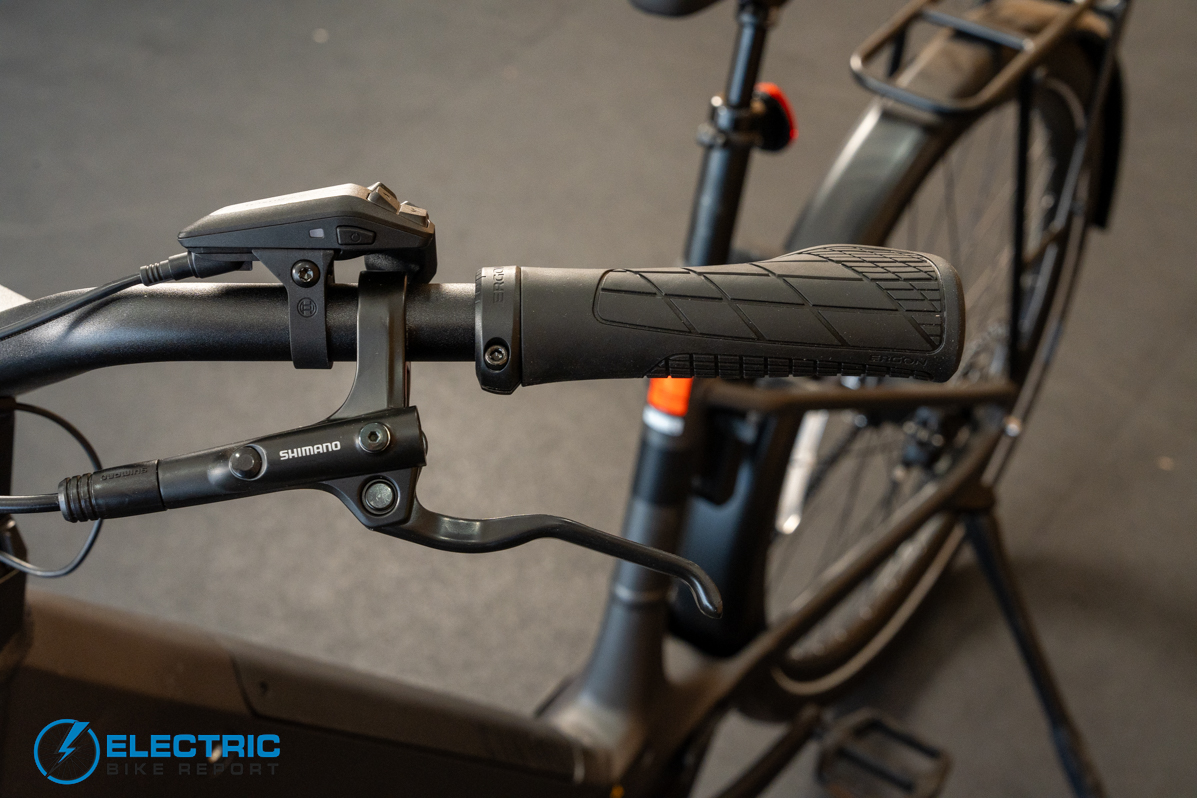
The levers feel supportive and strong.
Canyon Precede:ON Comfort 7 Review: Brake Test
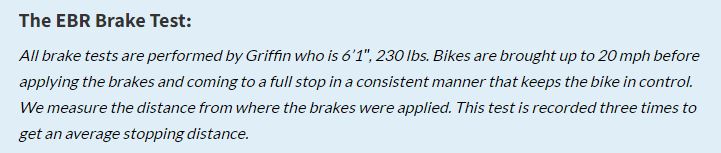
Canyon equipped the Precede: ON Comfort 7 with a Shimano MT-200 brake in the front, and a Shimano UR 300 in the rear. Both are two-piston hydraulic brakes paired with 180 mm rotors front and rear. This system helped bring the bike to an average result of 19 feet 7 inches. This is an impressive showing, as the class average was 22 feet 1 inch – a significant difference.
These brakes are great on paper, and happily, great in the real world too. Shimano is one of the biggest, most trusted names in the business, and these brakes are a perfect example of why – They feel supportive and powerful without being grabby. I also appreciate how well these modulate. I felt like I could always find the exact sweet spot for braking strength, even after repeated uses.
It goes deeper than “Shimano makes good brakes.” They do – but the rotor size and thickness also help here. At 1.75 mm thick and 180 mm in diameter, these are in the medium-to-large size range, and that helps with heat dissipation. Better heat management means more consistent performance, as well as better braking power.
It’s also worth noting that despite the fact that the bike uses two different caliper models, the feel is consistent between the two. Put simply, this is a very good braking setup that riders can trust. These brakes, like the rest of the components, are reputable and reliable.
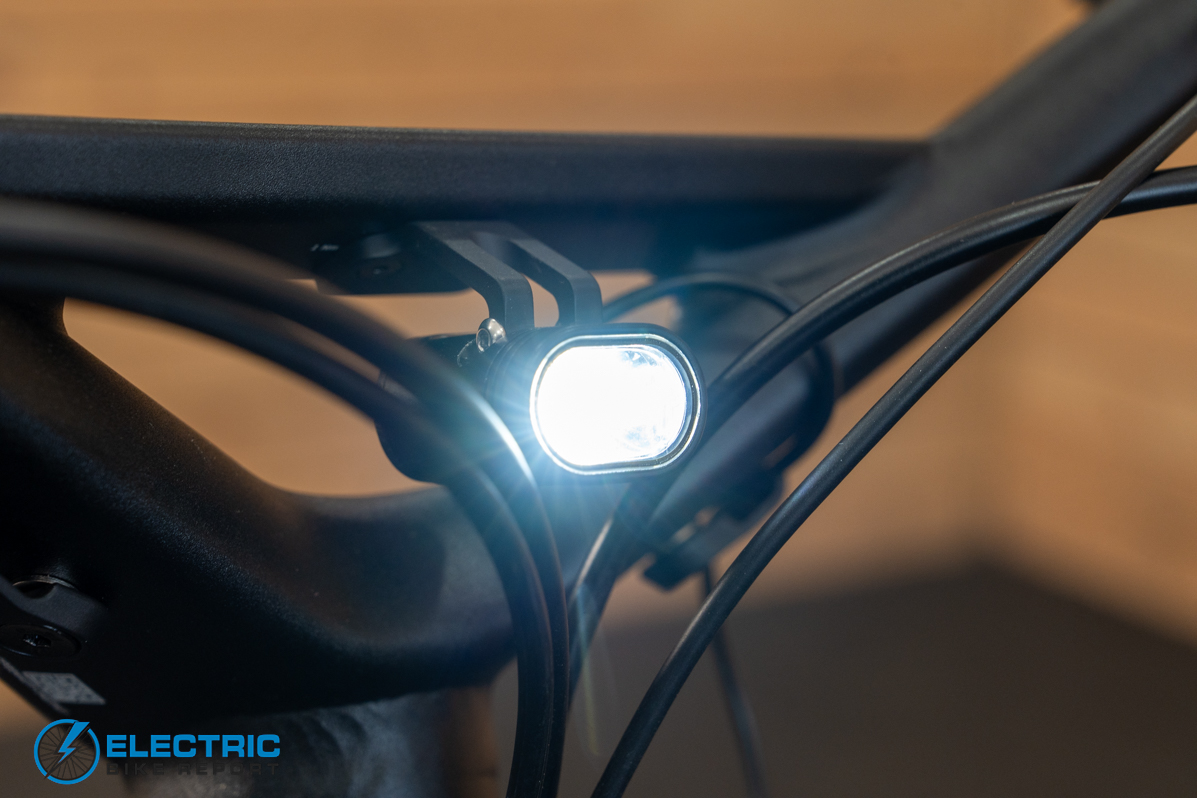
A small, but mighty headlight.
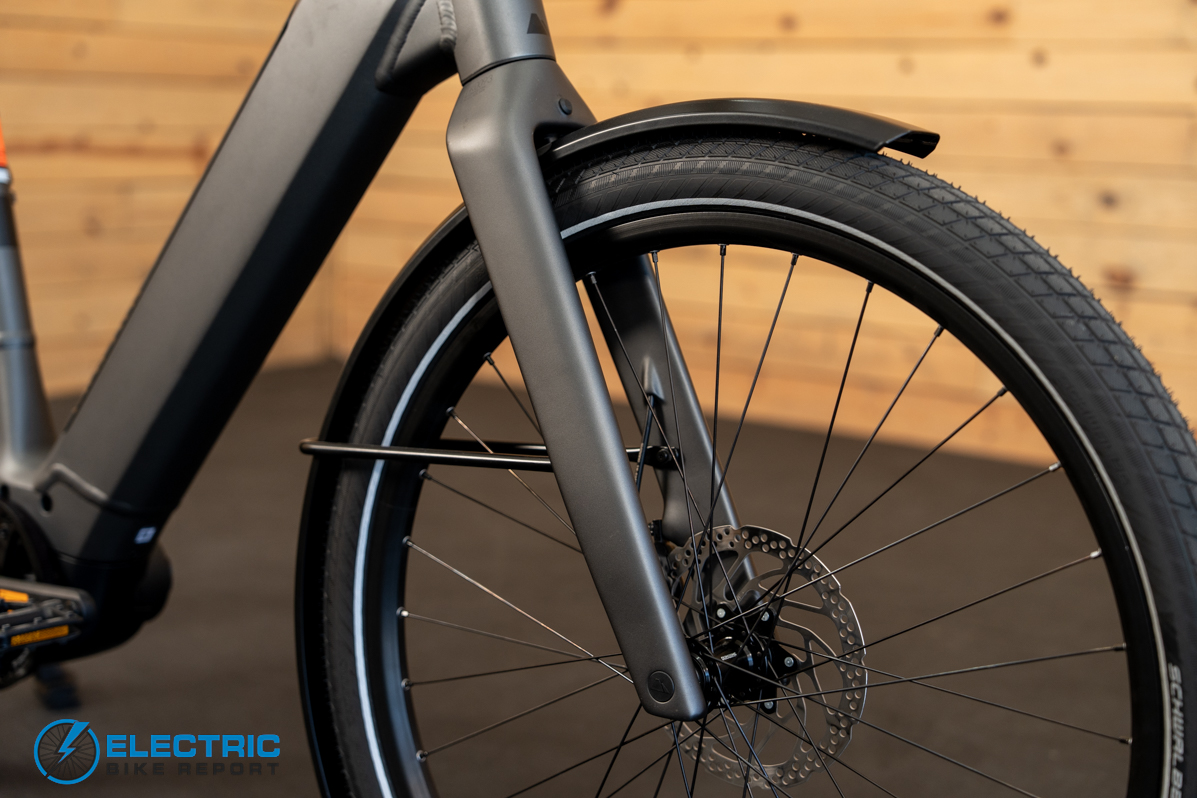
The fork is carbon, and it helps the bike feel light and responsive.
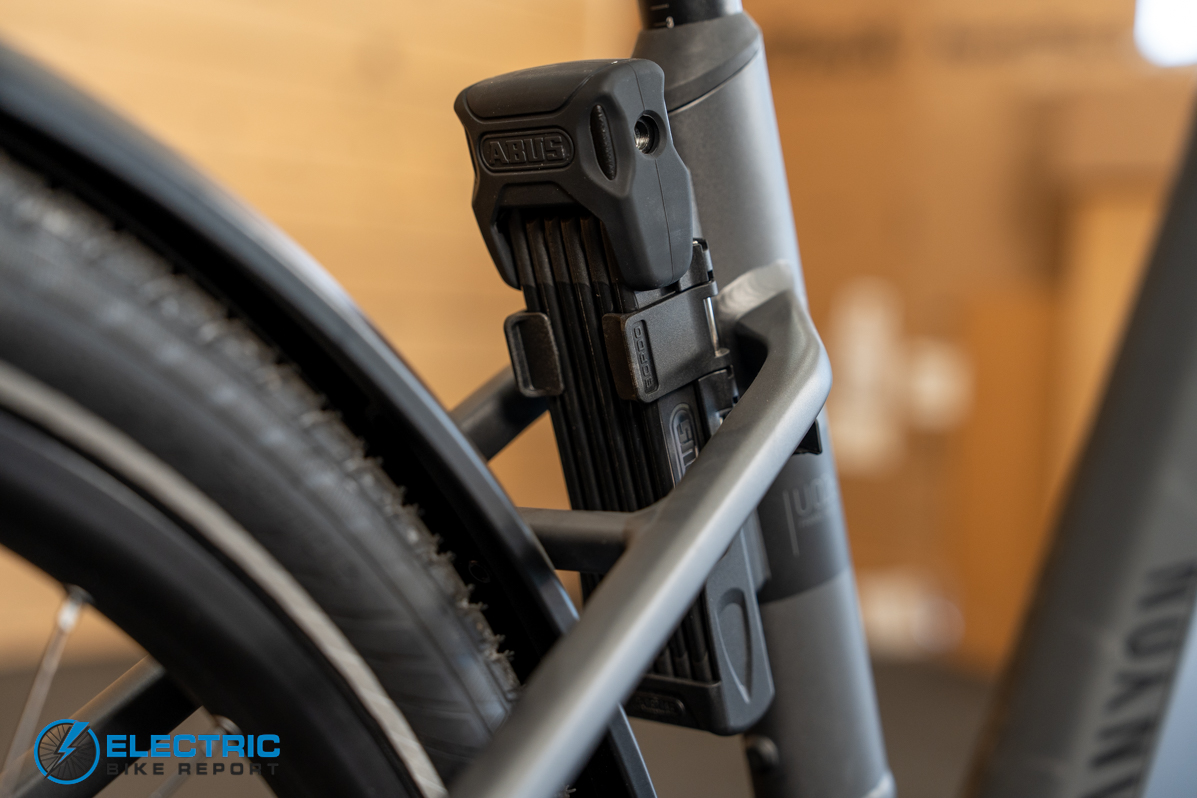
Notice the integrated lock storage.
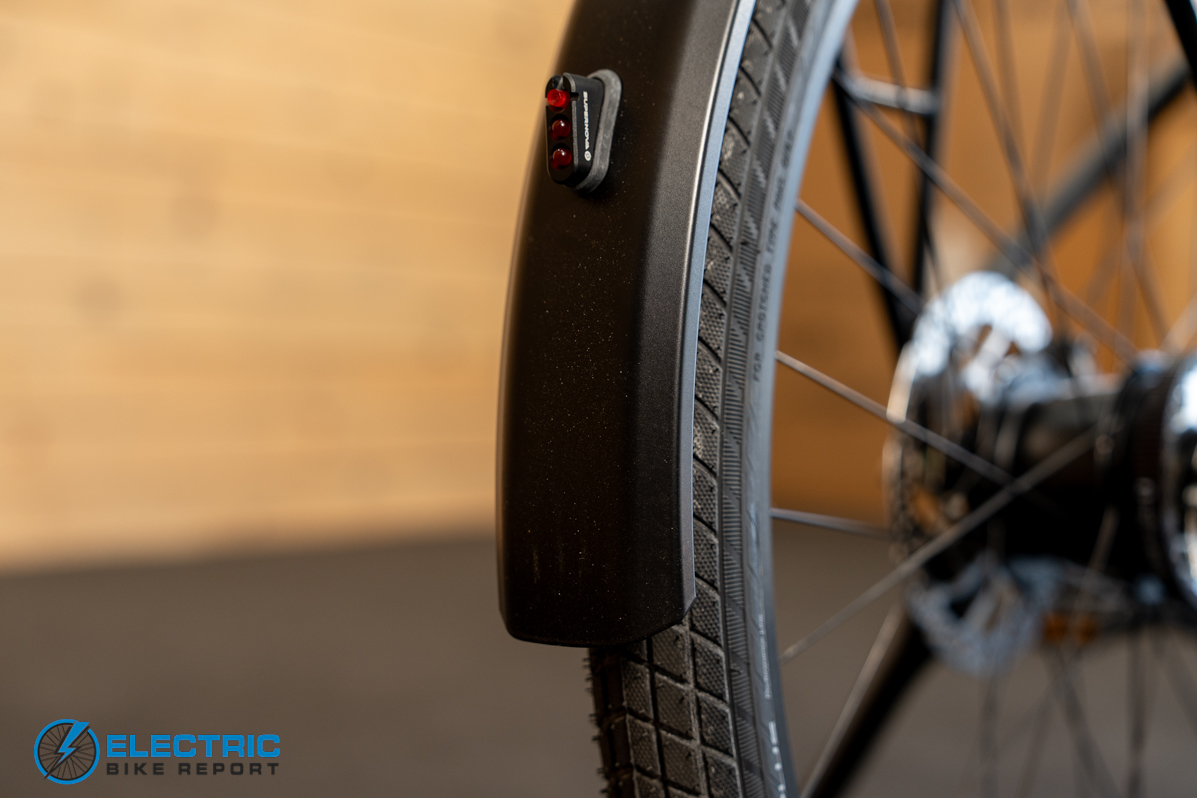
Full coverage alloy fenders are standard.
Canyon Precede:ON Comfort 7 Review: Ride Quality
Canyon has been in the bike industry for decades, and they know how to make a quality product. I’ve ridden several bikes from Canyon, and found all of them to be confidence inspiring. The Precede: ON Comfort 7 is no different.
This bike could be used for cruising or commuting. While it generally leans more towards the leisure side, we could see the Precede fit either use case. The stepthrough frame comes in one size, and can accommodate riders from 5’3″ to 6’5″. At 6’3″, I was impressed with the fit. The seatpost can be extended significantly, and I was able to get near perfect leg extension, which I don’t often find on unisize bikes.
Despite the fact that the frame here is fully rigid, I found the Precede to be impressively comfortable. Part of this is due to the suspension seatpost; but mostly, it was the geometry. Everyone is different, but the upright riding position fit me extremely well – I felt that my weight was evenly distributed between the saddle and handlebars, and even after several hours in the saddle, I had no major aches or pains.
Handling is another high point on this bike. The carbon fork, along with the 27.5 x 2.1 inch tires, make for responsive and nimble steering. It’s a very easy bike to manage; cornering and high speeds feel intuitive and effortless.
Additionally, the Precede comes with a lock, rear rack, and an integrated headlight/taillight. The Bosch Flow app is also loaded with features. There’s ride tuning, a choice of assist levels, navigation, security features, and a display mode. Despite the fact that this bike is mostly well-equipped, there is no screen display. The app’s display mode works well, but it requires mounting your phone to the handlebars. The cockpit is made up of a stem/handlebar combo unit, and its shape doesn’t fit traditional phone mounts well (It’s possible, but not ideal). Canyon does offer a mount that is designed specifically for this setup – but you’ll need to purchase it separately. We’d prefer to see a small screen included in the cockpit. The app gets the job done, but it would be nice to see a basic display with need-to-know information.
The motor engagement, as discussed in the speed test, is quick and natural. I also took a liking to the belt-drive system. It feels smooth, and the decreased maintenance is a big plus.
Overall, the Precede does very well in this segment. The build quality is outstanding, and the bike is very fun to cruise on.
Sponsor
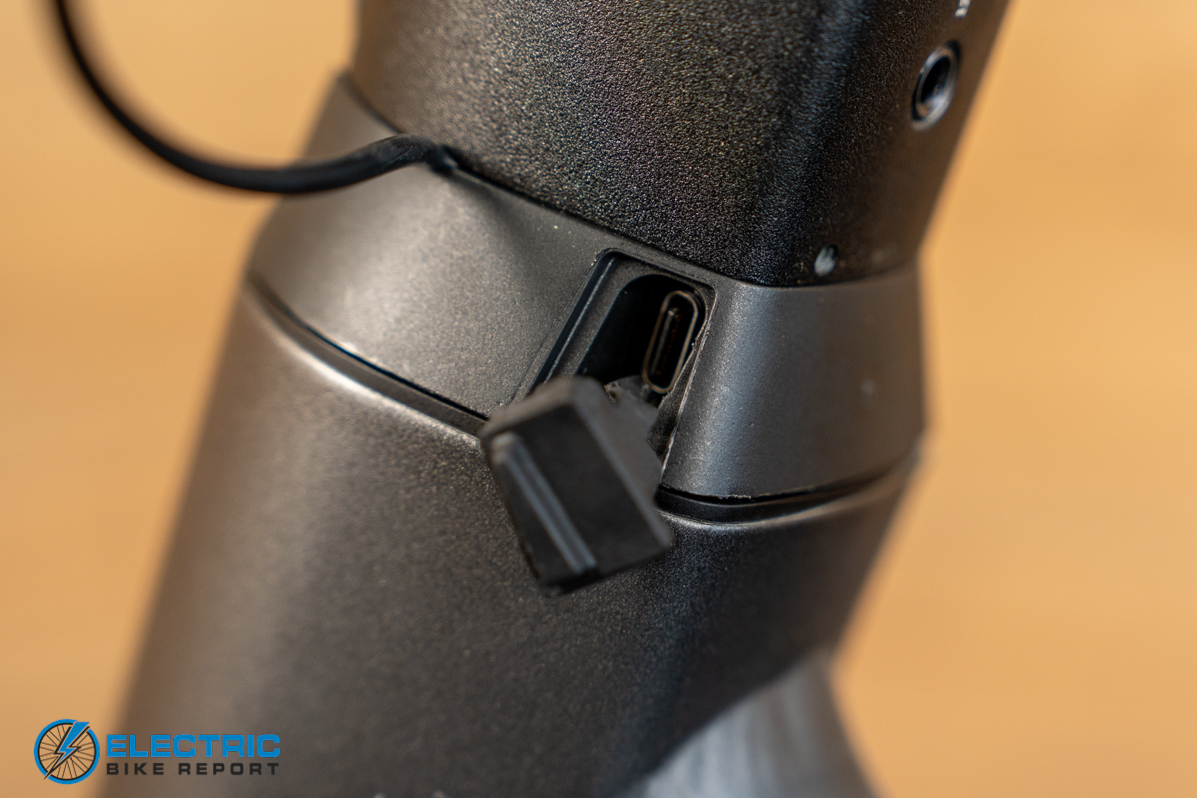
A small charging port on the headtube – so you can keep your phone’s battery up while using the Flow App.
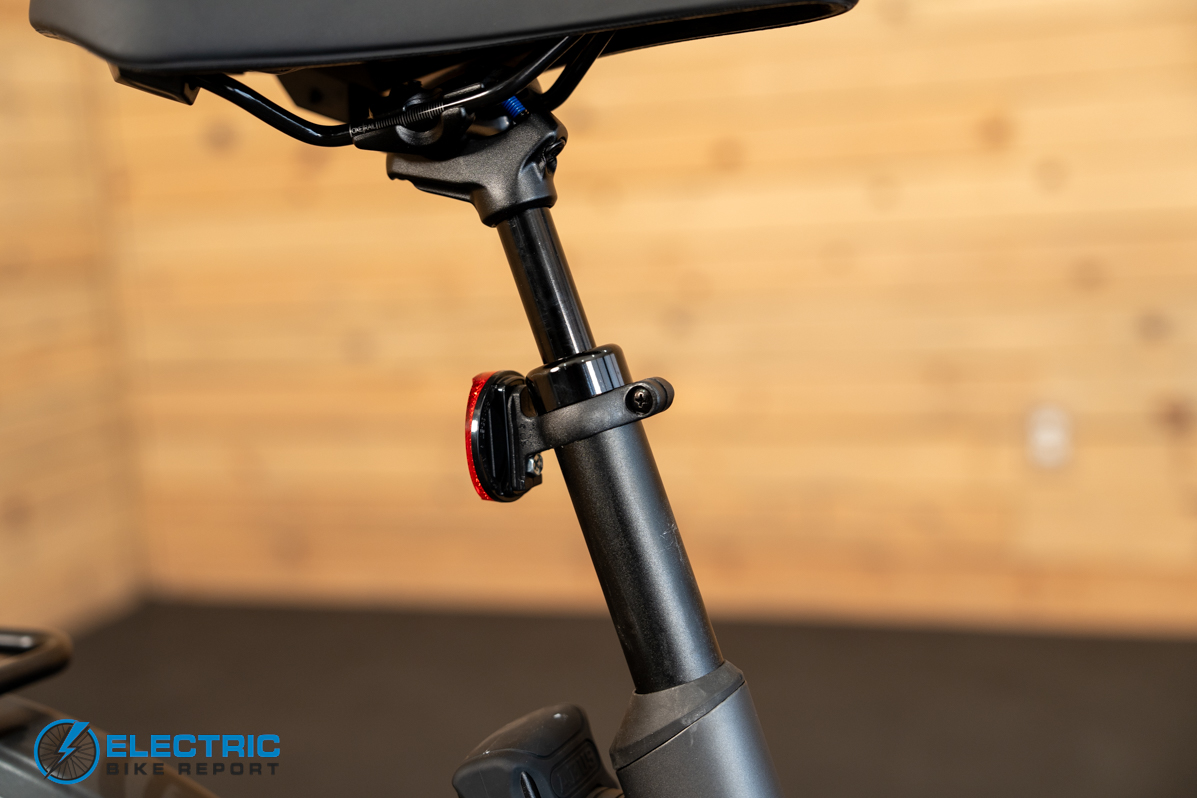
The suspension seatpost was a great decision on Canyon’s part.
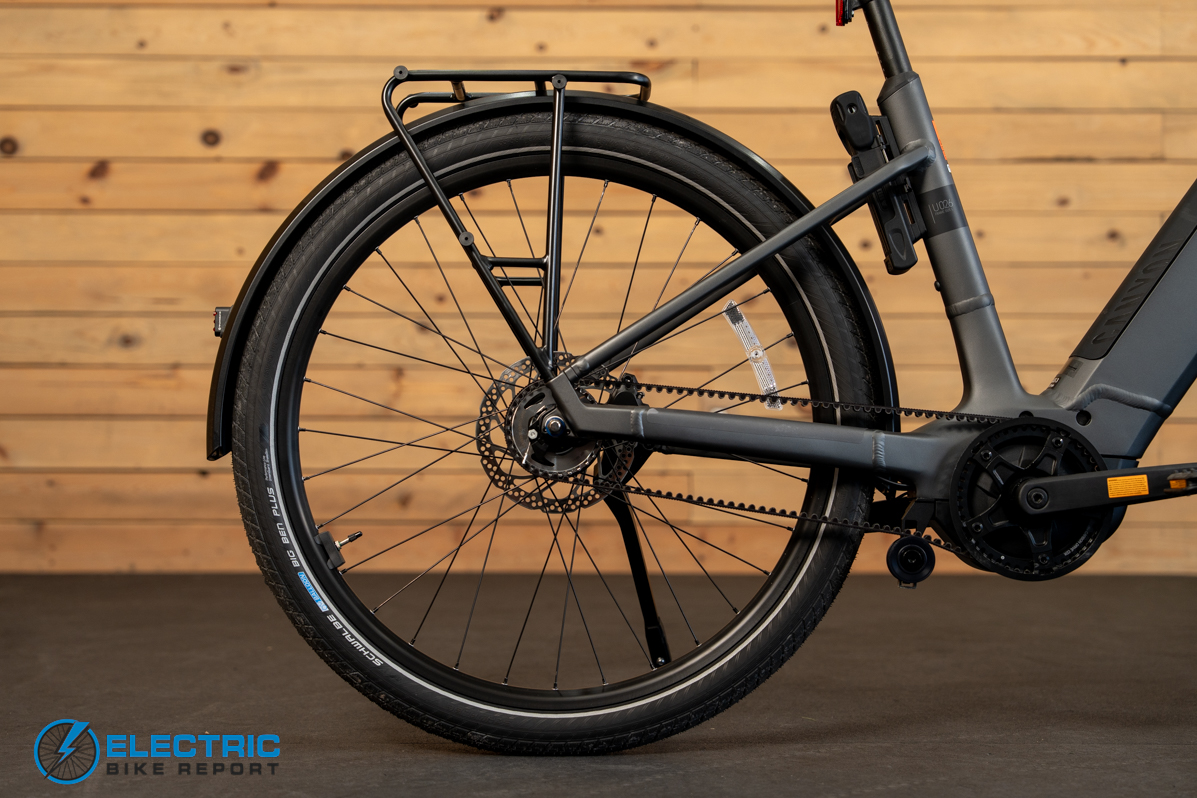
A rear rack helps build the case for commuting ability.
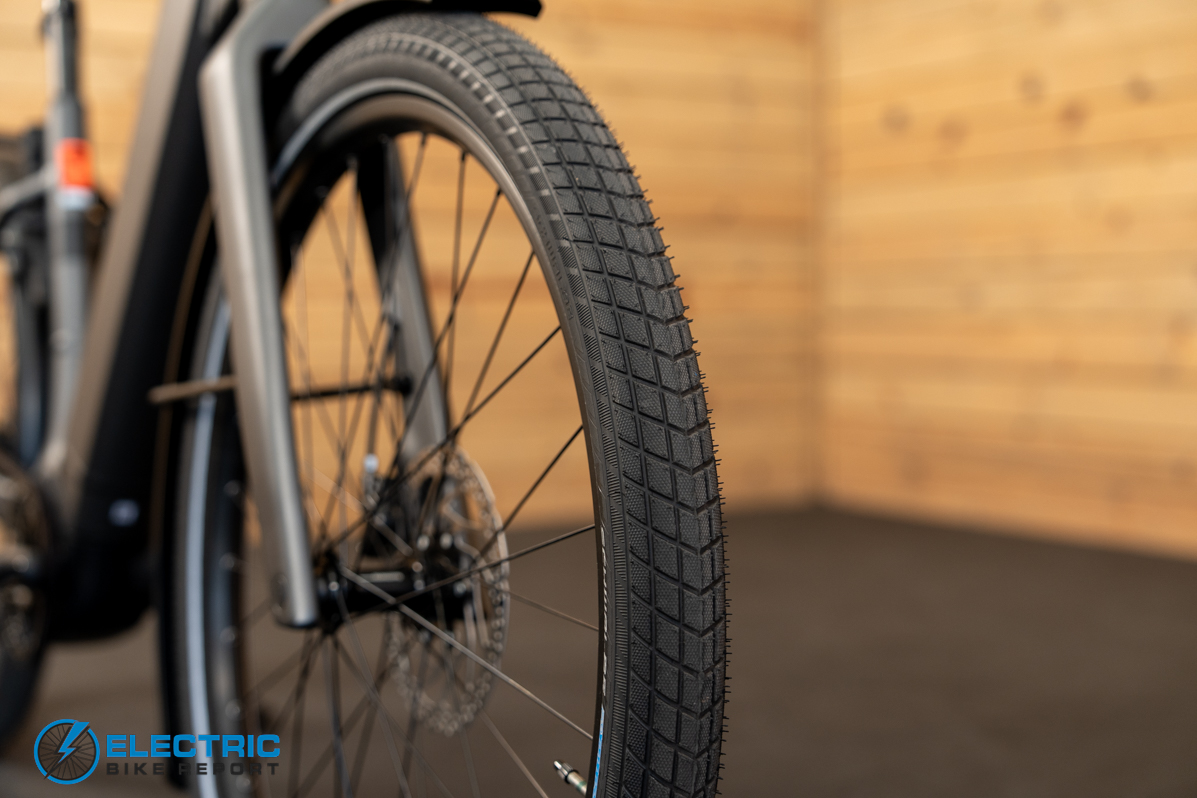
Fast-rolling street tires.
Canyon Precede:ON Comfort 7 Review: Summary / Where to Buy
There’s no doubt that Canyon has made a well-engineered, quality cruiser in the Precede. There’s a lot to like here; the motor is smooth, it’s comfortable, and the components are great. It’s also a good performer – the range and brake tests were particularly above the norm.
One of the defining characteristics here is the actual feel and personality of the bike. What I like most about the Precede is that it can offer both traditional and modern experiences. More seasoned cyclists may prefer the natural pedaling experience, while leisure riders may choose the amped ride settings. As a result, this is a great cruiser option – especially for those who are looking to strike the middle ground between traditional, non-electrified bicycles and the new-school power that many bikes have today.
We’d like to see a few changes – first, a screen display would be a welcome addition. The app is a good alternative, but it would be nice to access the need-to-knows without a smartphone. The bike is also reluctant to hold high cruising speeds using its default settings. This easily improves when you increase the motor output and sensitivity via the Bosch Flow App; a swipe of the screen solves the issue, so this isn’t necessarily a con, but it’s good to be aware of.
Beyond these, this bike is a very solid cruiser. The performance, quality, and fun factor are all here.
Happy Riding! Make sure to let us know if you have any questions or if you think we left anything out in this review of the Canyon Precede: ON Comfort 7 down in our comments section.
Sponsor
Sponsor
Reader Interactions
Leave a Reply