Plus 1,100 organizations and business appeal for cycling infrastructure, transportation cases for e-bikes and more!
The legislative season is well underway, with state leaders drafting and voting on bills across the country. We’ve covered a number of proposals that could impact e-bikes, but the latest out of Florida feels a little different. Rather than taking a heavy-handed approach, it would essentially turn common courtesy into law by clarifying expectations when cyclists share multi-use paths with pedestrians.
Staying in the world of politics, the federal transportation bill is set to expire this fall. In response, a large coalition of organizations, businesses, and elected officials has sent a letter to Congress urging them to keep prioritizing cycling infrastructure in the next bill, and to avoid slipping back into a “cars and bridges only” approach.
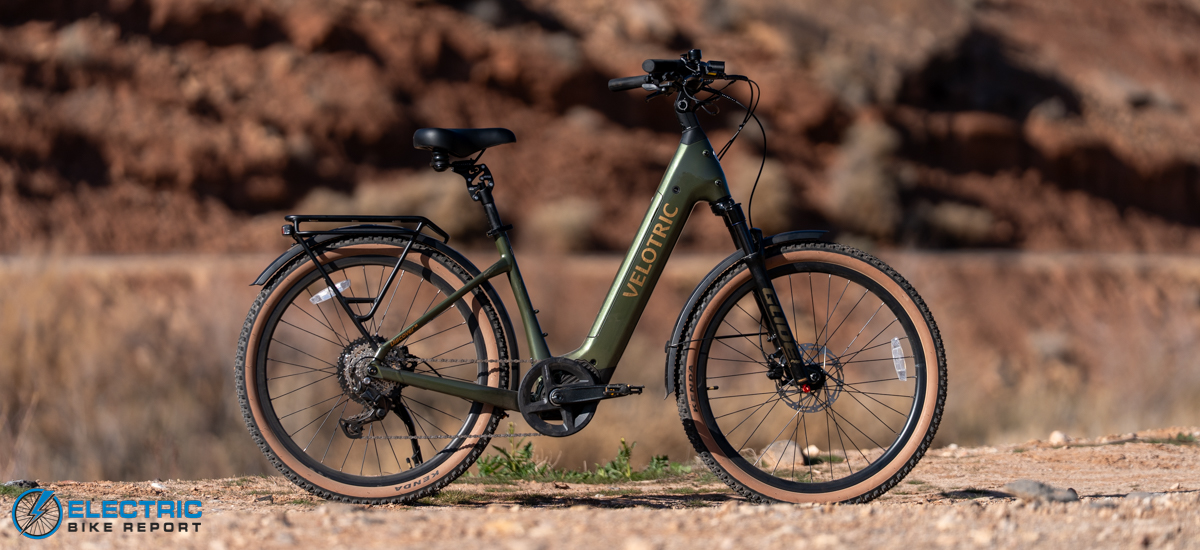
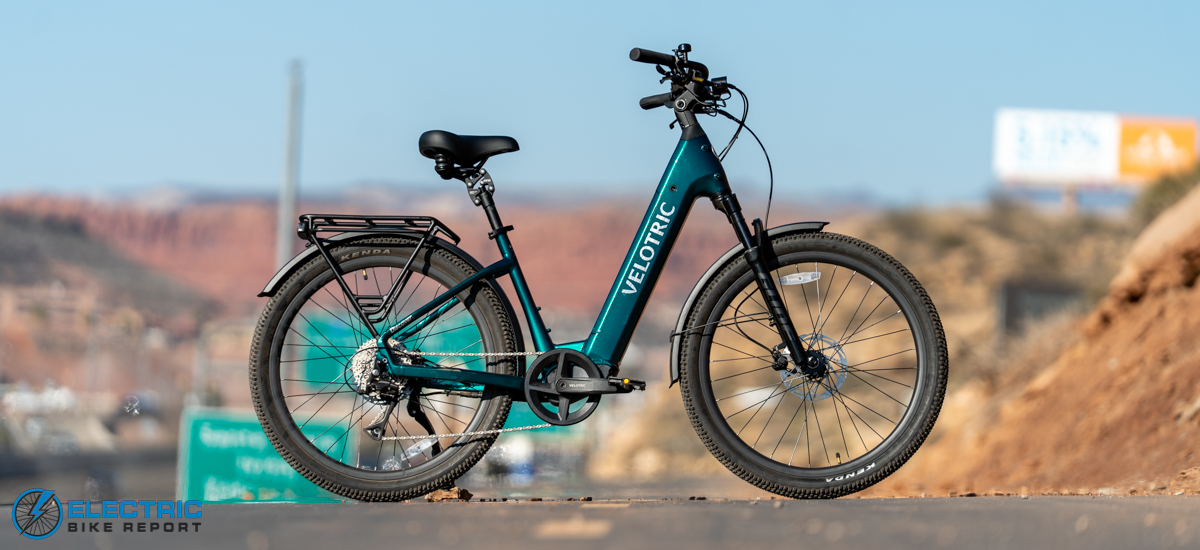
Also this week, John and Griffin dig into listener questions about the newly released Velotric Discover 3, options for transporting folding e-bikes (bags and other solutions), and whether folding models actually need cargo racks.
This Week’s E-Bike News Headlines
Over 1,100 Groups and Politicians Urge Congress To Keep Investing In Cycling Infrastructure.
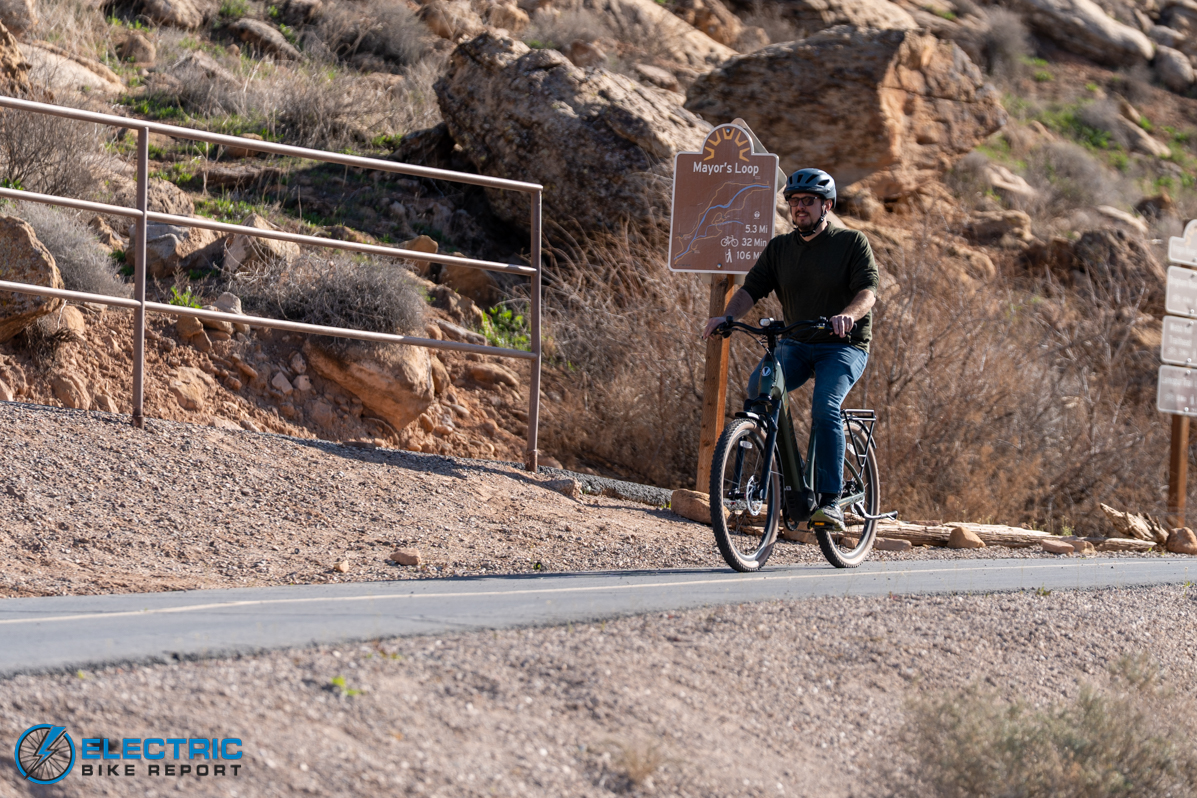
A broad coalition of politicians, businesses, and advocacy groups sent a letter to Congress ahead of the Infrastructure Investment and Jobs Act’s September 30 expiration. The letter urges lawmakers to maintain and increase funding for cycling and pedestrian projects in the next federal transportation package.
The signers include Sen. Shelley Moore Capito (R–WV) and Rep. Sam Graves (R–MO), along with ranking members Sen. Sheldon Whitehouse (D–RI) and Rep. Rick Larsen (D–WA). The coalition also includes organizations such as American Trails, the League of American Bicyclists, PeopleForBikes, Rails to Trails Conservancy, and the Safe Routes Partnership.
Supporters say the letter is a proactive push to ensure that walking and biking investments don’t shrink after the current bill sunsets, particularly if federal priorities shift back toward a more vehicle- and bridge-centric approach. The coalition highlights recent progress in expanding multi-use trail networks nationwide, noting more than 42,500 miles of multi-use trails developed under the current initiative.
Our Take: E-bikes have helped a lot of people discover the benefits of cycling who might not have otherwise given it a shot. But access is only part of the equation. People also need to feel safe. Separated multi-use paths are a big deal for that, and they make riding feel more approachable for beginners, families, and anyone who simply doesn’t want to mix it up with traffic.
With more than 1,100 groups signing on, the message to Congress seems pretty clear: protected, connected places to walk and ride matter, and they’re worth continuing to fund.
Two Proposed Florida Bills Would Introduce Situational E-Bike Speed Limits And Create A Task Force To Better Understand E-Bike Accidents.
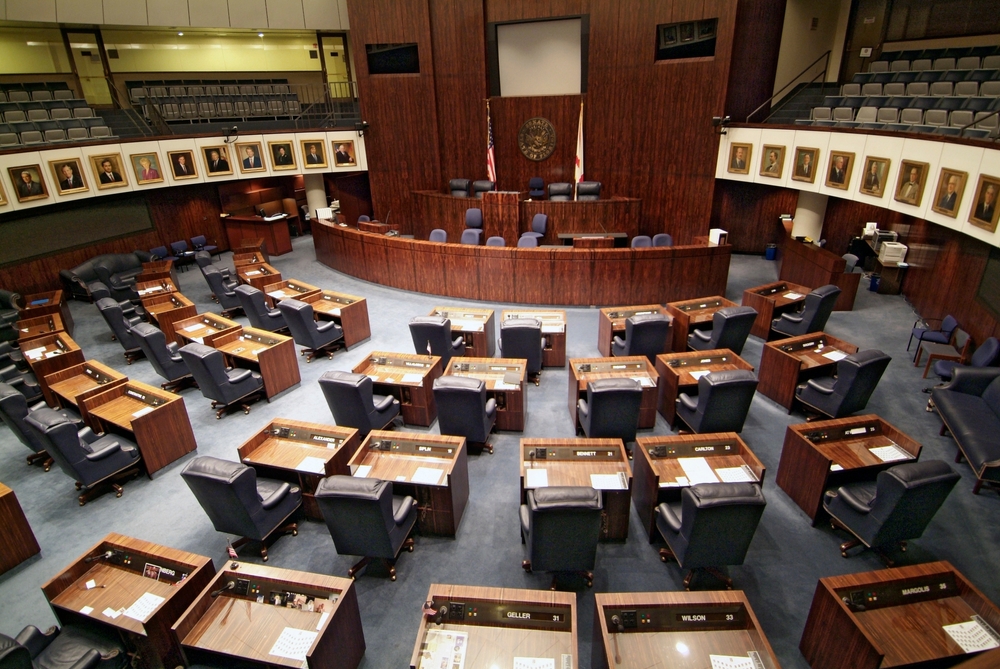
Senate Bill 382 and House Bill 243 are moving through the Florida Legislature. Together, the bills aim to improve safety on shared multi-use paths and establish clearer expectations for how e-bikes interact with pedestrians. Under the proposals, riders would need to slow to 10 mph when they’re within roughly 50 feet of pedestrians, yield to them, and give an audible signal (such as a bell or verbal warning) before passing. The measures are framed as safeguards for crowded public spaces that weren’t originally designed with motor-assisted bicycles in mind.
The legislation would also direct law enforcement to more precisely record e-bike-related crashes and establish a task force to analyze e-bike accident data, rider behavior, and interactions with other path users, with an eye toward future regulation.
Supporters say the goal isn’t punishment, but clarity and improved safety where pedestrians and faster-moving riders share the same space. Critics argue the changes could be overly restrictive, or a sign of broader overreach to come.
The bills have not yet become law, but they have cleared early subcommittee stages with broad approval.
Our Take: We’ve been fairly critical of some recent e-bike legislation, but this one seems reasonable. A 10 mph speed when approaching and overtaking pedestrians is already best practice, and turning that expectation into law feels like a fair safety step for both riders and walkers.
The task force also makes sense. We’ve seen too much sloppy reporting that can’t tell a Surron from a Lectric XP, so improving crash reporting and creating a group that can actually study the data feels like a positive move, not a negative one.
Trek Launches New Premium Comfort Commuter: The Charter+
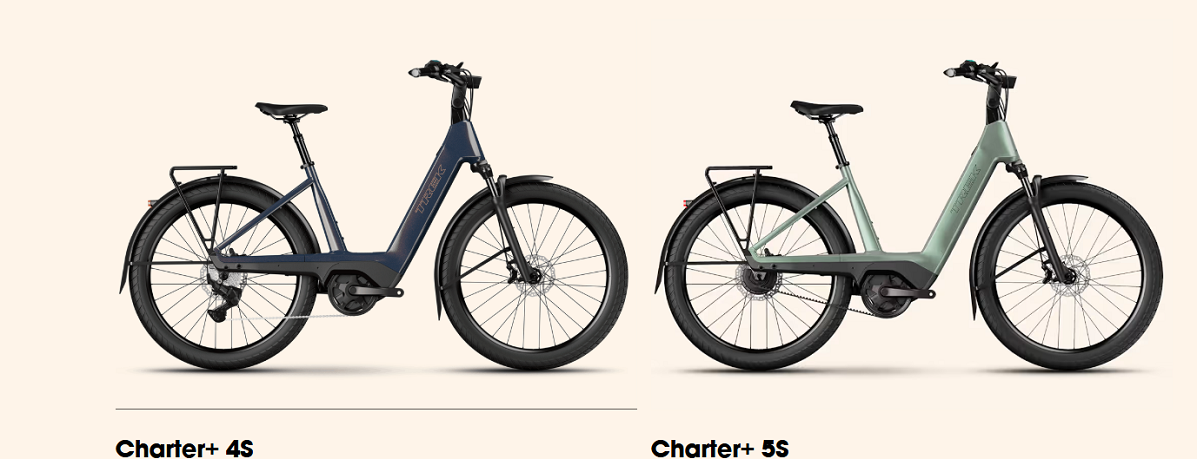
Trek just introduced the all-new Charter+, a premium, comfort-focused commuter available in two models: the Charter+ 4S and Charter+ 5S. Both bikes are built around Trek’s Alpha Platinum Aluminum frame, with step-through options on both models and a high-step option available on the 4S. Power comes from the Bosch Performance Line Sport motor, providing pedal assist up to 28 mph.
Shared components include:
- Bosch Purion 200 display
- Suspension seatpost
- E-Bike Flow app integration
- Bontrager E6 27×2.4” tires
- Adjustable stem
- MIK HD rear rack rated for 60 lbs
- Full fenders + chainguard
The 4s features:
- 540Wh Bosch battery
- Shimano CUES 9-speed drivetrain
- Shimano mt200 brakes
- SR Suntour NVX32 fork with 63mm travel
- MSRP: $3,999
The 5s features:
- 800Wh Bosch battery
- Shimano mt401 brakes
- Gates CDX belt drive paired with Shimano Nexus 5-speed internal hub with Auto-Shift
- Shimano MT401 brakes
- SR Suntour Mobie 34 fork with 80mm travel
- MSRP: $4,499
Our Take: The Charter+ lineup looks like a strong entry in the premium commuter category, and on paper, it’s tough to find much to nitpick. If anything stands out, it’s how much more bike you appear to get for just $500 more with the 5S. A bigger battery, upgraded brakes, more suspension travel, and an automatic drivetrain is a meaningful jump, not a small step up. We’re interested in how the two models compare in real-world use and hope to receive one for testing soon.
You Asked, We Answered. Questions Covered In The Weekly Recharge
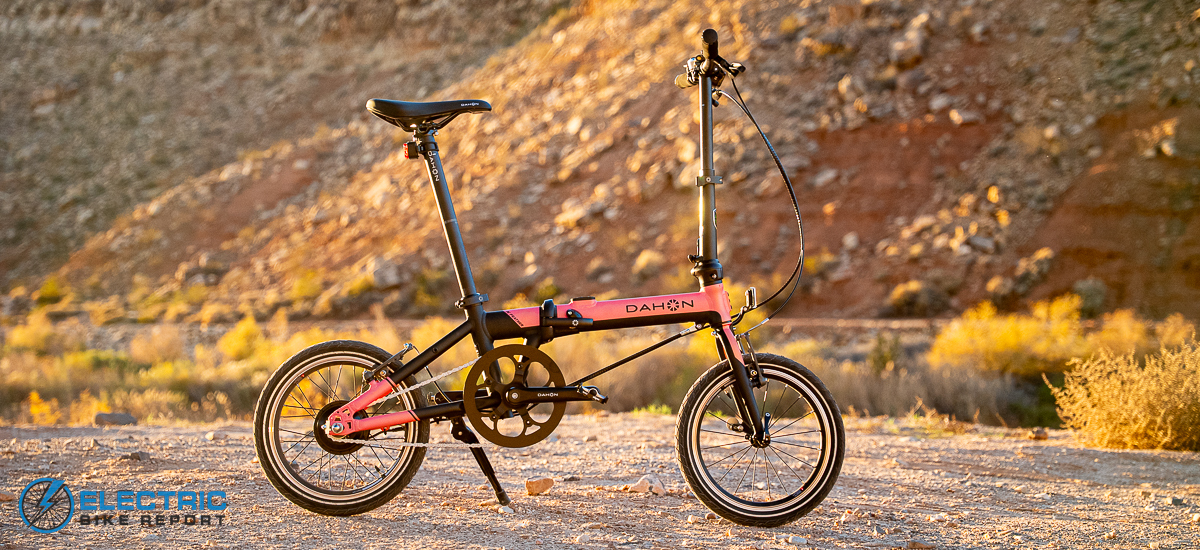
- Is there a folding e-bike that comes with a hard case or other option for transportation and storage?
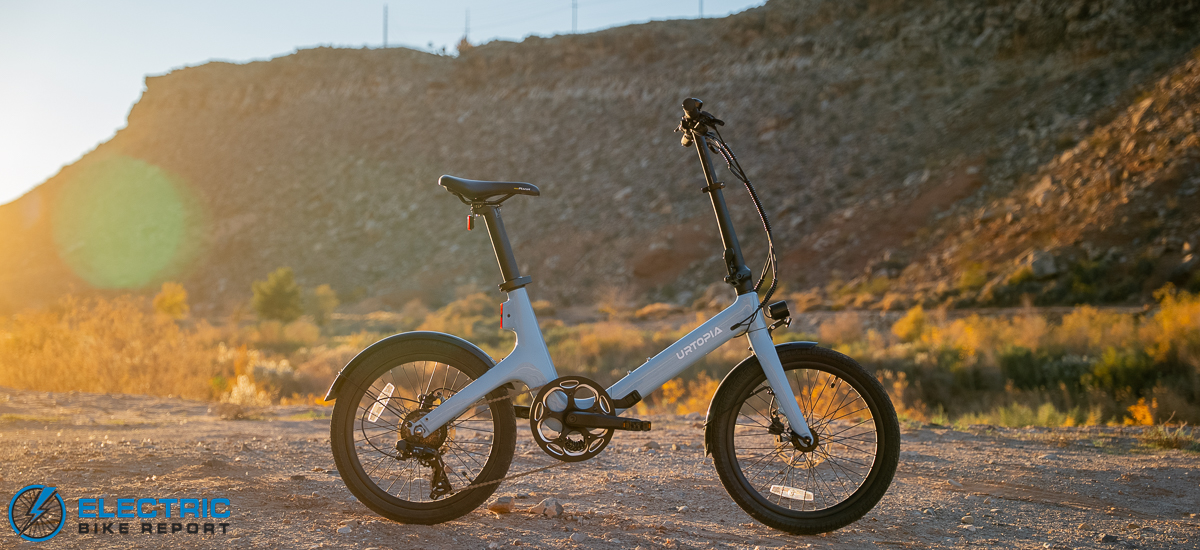
- Does a lightweight folding bike like the Urtopia Carbon Fold ST even need a rack to carry gear?
- Can you get a folding e-bike with BMX-style handlebars?
- How does the new Velotric Discover 3 compare to the old Discover 2?
- Help picking between the Discover 3, and the Nomad 2X.
E-Bike Deals Found This Week
- Ride1Up’s President’s Day Sale
- $600 off Prodigy V2
- Smooth pedal assist from Brose mid-drive
- A hybrid bike that’s equally great on mild hardpack or for everyday commuters
- Euphree’s City Robin X+ Sale
- $450 off
- Dual suspension step-through cruiser.
- Great range, power, and utility on a more comfortable ride than most.
Make sure to tune in to the full episode to see the e-bike trail system highlight and rider of the week! Want to be featured in future episodes? Comment on any YouTube video or page of the website, or send to [email protected].