AIMA Key West Review | Laid-Back & Charming
Dec 12, 2025
 0 Comments
 Share
Share
A pleasant, lightweight cruiser with an easygoing personality. The Key West delivers a peaceful ride with a livelier side you can tap into—and thoughtful touches that make daily use a breeze.
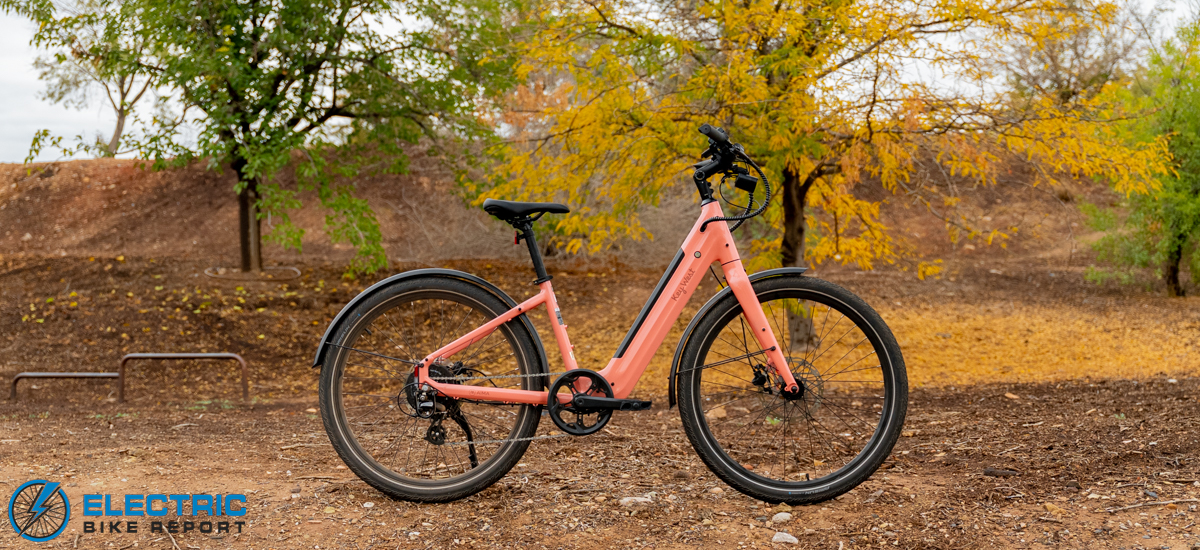
I can stand on a soapbox and praise e-bikes at a moment’s notice, but they’re not without some drawbacks, such as they’re often heavy and cumbersome. That extra weight can make loading them onto a bike rack tricky or intimidate smaller riders who just want something easy to move around.
That’s one of the Key West’s main goals: to deliver a cruiser-style e-bike experience that’s lighter and more manageable without sacrificing the joy and convenience that make e-bikes so appealing. Weighing in around the mid-50s, it packs a 500W motor, a 614Wh battery, and an easy step-through frame designed for comfort and accessibility.
I liked how adaptable it felt. The adjustable stem makes dialing in your fit easy, and the ability to toggle between torque and cadence sensor modes lets you choose between a more natural, responsive ride or near-effortless power. You can even fine-tune that assistance through the Bafang Go app.
Speaking of the app, it’s a surprisingly capable companion, with features like forwarding text notifications and turn-by-turn navigation right to the bike’s display. Those small conveniences add up.
The Key West feels laid-back and approachable, yet lively and colorful. It’s a relaxed cruiser that can still keep up when you want to pick up the pace. Check out our testing results below to see whether this beachy, easy-riding e-bike might be your perfect match.

Sponsor
E-Bike Category:Cruiser
E-Bike Class:Class 1 (pedal assist to 20 mph)
Class 2 (throttle to 20 mph)
Class 3 (pedal assist to 28 mph)
Class 2 (throttle to 20 mph)
Class 3 (pedal assist to 28 mph)
Sponsor
AIMA Key West Video Review
 Pros
Pros- Lighter weight design. It’s a nimble-feeling cruiser that’s easy to handle on and off the bike.
- Responsive, engaging ride feel that balances comfort with a bit of zip when you want it.
- Excellent safety package with oversized 203mm rotors, bright integrated lights, and turn signals.
- Solid frame construction feels stable and well-balanced, backed by a lifetime warranty.
- Relaxed cruiser-style handlebars and an adjustable stem help riders of varying heights find their fit.
- Bright 4” display with Bafang Go app integration adds turn-by-turn navigation and text notifications.
- Power delivery can be customized. You can choose torque or cadence sensing and fine-tune assistance through the app.
- Comes well-equipped with thoughtful extras like fenders, a horn, and high-visibility lighting.
 Cons
Cons- No direct-to-consumer option, though AIMA’s dealer network is expanding quickly.
- Switching between Class 2 and Class 3 requires a dealer-provided passcode.
ELECTRICAL SPECS & FEATURES
- Battery: Removable Internal Lithium-ion 48V, 12.8Ah (614Wh)
- Charger: 48V, 3 Amp Fast Charger, about 5 Hours to a Full Charge
- Display: BAFANG C010 4.0 inch TFT Smart Display w/Navigation, Incoming call & Text message alerts
- Motor: 500W, 48V Brushless Rear Hub Motor, 793W peak, 59Nm torque
- Headlight: Integrated Headlight
- Taillights:Tail Light, and Turn Signals
- Pedal Assist: Customizable w/Torque & Cadence Modes, 5 PAS Levels
- Claimed Range: 24 to 50 Miles
- Throttle:Thumb Throttle, Throttle on Demand
- App:Bafang Go
- UL Certification:2849
Weight & Dimensions
- Claimed weight: 54 lbs (w/o fenders)
- Tested Weight: 56.7 (with fenders)
- Rider height range: R: 4’11” – 5’10”, L: 5’4” – 6’1”
- Total payload capacity: 320 lbs
Components & Accessories
- Brakes:Tektro Hydraulic Disc Brakes,2-piston, 203 mm Rotors f/r
- Fenders: Plastic, included
- Fork:Rigid Aluminum Fork
- Frame: 6061 Single-Butted Aluminum Alloy Frame with Internal Battery
- Drivetrain: Shimano 8 Speed, 12-32t, 46T Chainring
- Grips: Ergonomic Comfort
- Saddle: AIMA Lightweight Performance Saddle
- Handlebar: Aluminum Alloy Double Wall, 31.8mm, 680mm
- Kickstand: included
- Pedals: 9/16″ Alloy Platform
- Tires: Choayang Arisun 27.5″ x 2.1″
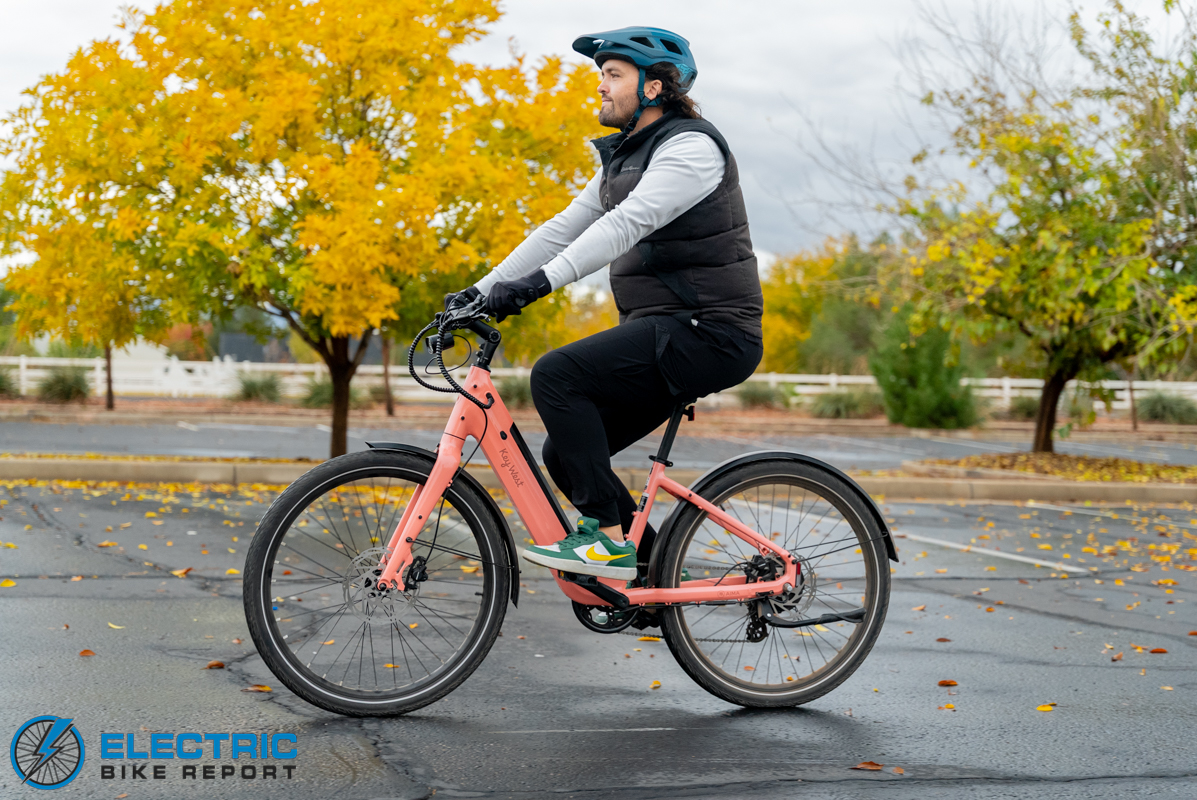
Ready to roll rain or shine, the included fenders were nice for keeping us riding even on days like this one.
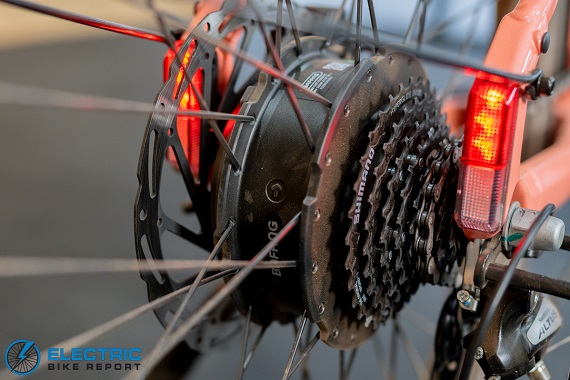
Not all 500W are created equal. This one has some pep, but can easily be reeled in for simple cruising too.
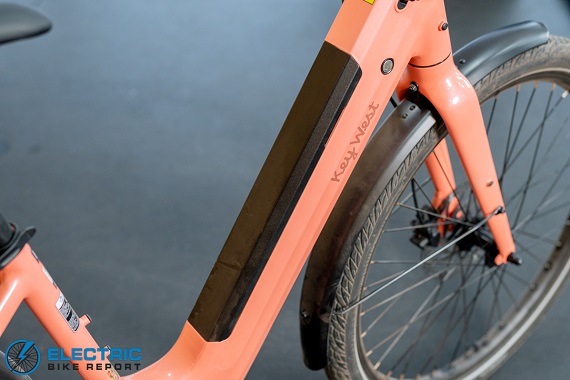
Clean battery installation. Always nice to have the option to remove it to charge it more easily, or get it on a bike rack easier too.
AIMA Key West Review: Speed Test
When it comes to speed, the acceleration of the Key West is smooth. It ramps up nicely, with enough horse power to gallop on the high power options. You can reach class 2 speed limits fairly easily, but that’s the product of a lighter bike with a peppy motor.
The motor isn’t loud, accelerates smoothly, and actually feels livelier than many other 500W setups I’ve tried. The gearing gives you enough range to pedal comfortably up to the bike’s 28 mph top speed in torque-sensing mode, and shifting remained crisp and dependable throughout testing.
Of the four different speed tests I did, the Class 2 cadence test felt all too similar. Speeds really bunch up at PAS 2-5. That’s just due to how the system governs speed, in the Bafang app you can see the percent of motor power breakdown, so if you want a little more variety it’ll require some tinkering.
I think the sensor switching is a great feature we’ll see on most bikes in the future, it’s definitely been a trend lately and I like giving people optionality. I like the natural feel of a toque sensor, but those with bad hips or knees might like easier power without needing to push as hard.
A pleasant surprise came from the Bafang Go app. It’s come a long way from being one of the least useful apps around to now offering a clean dashboard and meaningful control. You can adjust settings like top speed, acceleration profile, and power output across assistance levels. It’s got real tuning flexibility.
The only small hiccup is that switching from Class 2 to Class 3 requires a passcode, which you’ll need to request from your AIMA dealer. That’s a minor inconvenience, though, for what’s otherwise a well-dialed speed experience with plenty of customization.
Sponsor
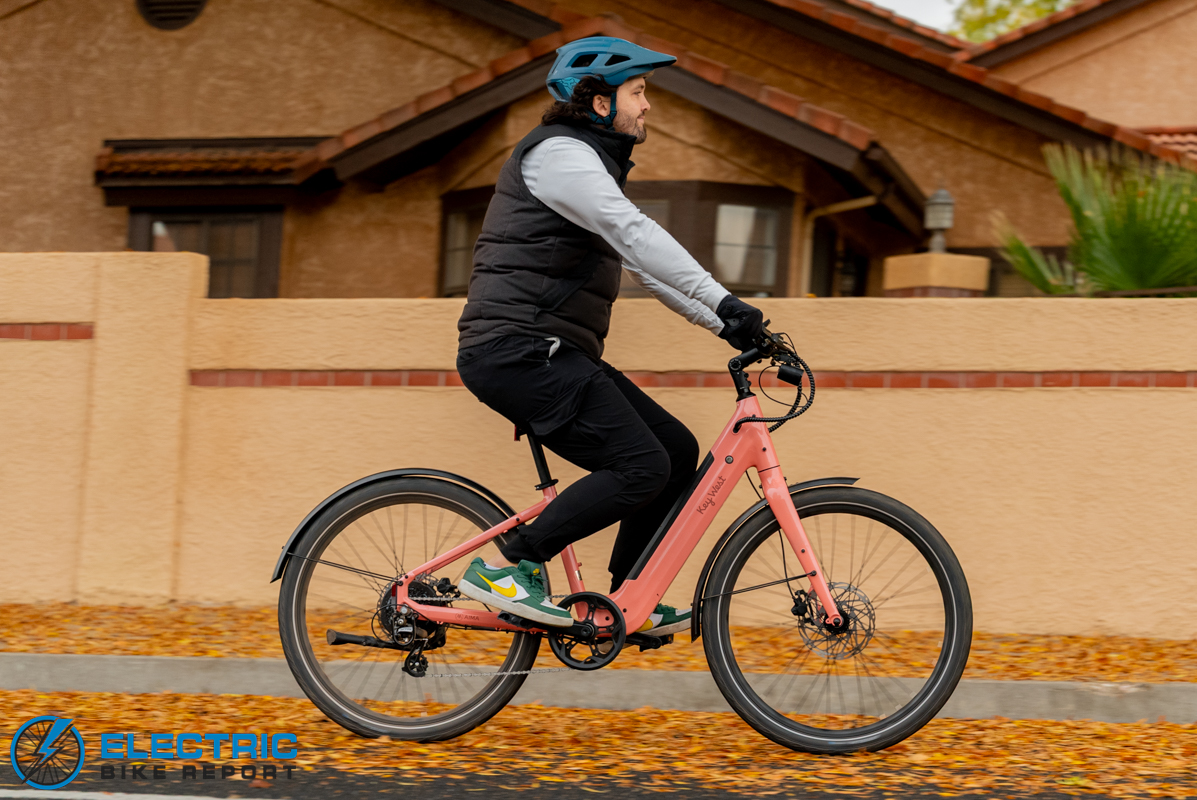
Even with the stem pushing the reach forward, it’s esy to remain upright and relaxed on the Key West thanks to the geometry.
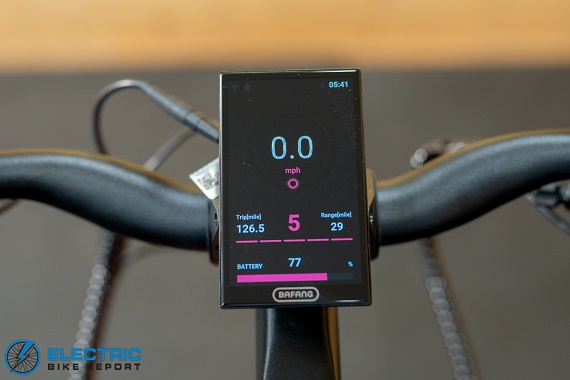
The TFT display is visible in any condition, and can get message notifications when connected to the app.
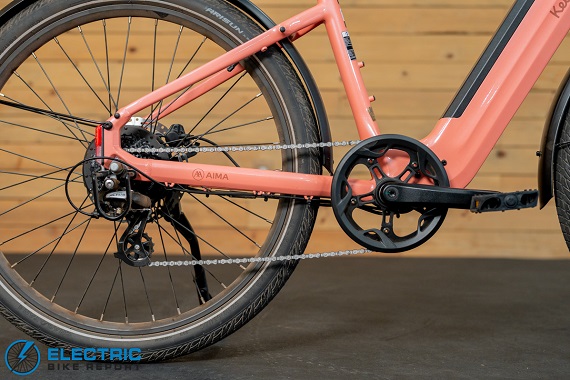
The drivetrain is reliable, although we did notice some chain slap that left smudges.
AIMA Key West Review: Range Test
We often like to see a 1:1 ratio between a motor’s nominal wattage and the battery’s watt-hour capacity. That pairing typically provides a solid day-to-day range; enough capacity for quick errands, leisurely rides, or a decent-length commute without anxiety.
The Key West’s 500W motor and 614Wh battery hit that mark nicely, and the use of a torque sensor helps stretch things even further. Because the motor responds proportionally to your pedaling effort rather than simply turning on and off, torque-based systems tend to be more energy-efficient than cadence sensors. For that reason, we used the torque sensor mode for our range testing.
Our results actually beat AIMA’s quoted range of 24 to 50 miles. We recorded 32.3 miles in Turbo mode and an impressive 73.2 miles in Eco.
Of course, those numbers will vary depending on how you ride. Using cadence sensor mode or cruising at Class 3 speeds will bring the range down a bit and lineup more closely with AIMA’s quote. But even so, those are great results that suggest you won’t need to charge too often.
When you do, the included 3A charger quickly refills the 614Wh battery, reaching a full charge from empty in about five hours.
Sponsor
Sponsor
AIMA Key West Review: Hill Test
Bafang is one of the largest e-bike motor manufacturers in the world, and their catalog runs the full spectrum from high-powered speed demons to more modest, budget-friendly options. The one AIMA chose for the Key West falls squarely on the pleasant end of that spectrum. It’s quiet, smooth, and well-synced with your pedaling, yet it can still punch above its weight when the road tilts upward.
On our Devil’s Backbone hill test, the Key West posted a throttle-only time of 2:05, averaging 14.5 mph. With pedal assist, that time improved to 1:52, for a 16.2 mph average.
Those numbers stack up nicely. Across all the bikes we’ve tested on this climb, the current averages are 2:01 (throttle) and 2:06 (pedal). That puts the Key West right around or slightly better than our all-bike average.
Narrowing it down further—comparing only to bikes with 500W hub motors or cruiser-style frames—it performs roughly 10 seconds faster than the category norm.
The bike’s lighter weight likely contributes to that efficiency, as does its 793W peak output and 59Nm of torque. It’s got enough juice to keep things fun without sacrificing smoothness or control. Whether tackling the steep grades of Backbone or rolling suburban inclines, the Key West climbs with confidence and composure.
Not all 500W cruisers handle hills equally well. The Key West definitely finds itself on the stronger side of that comparison.
Sponsor
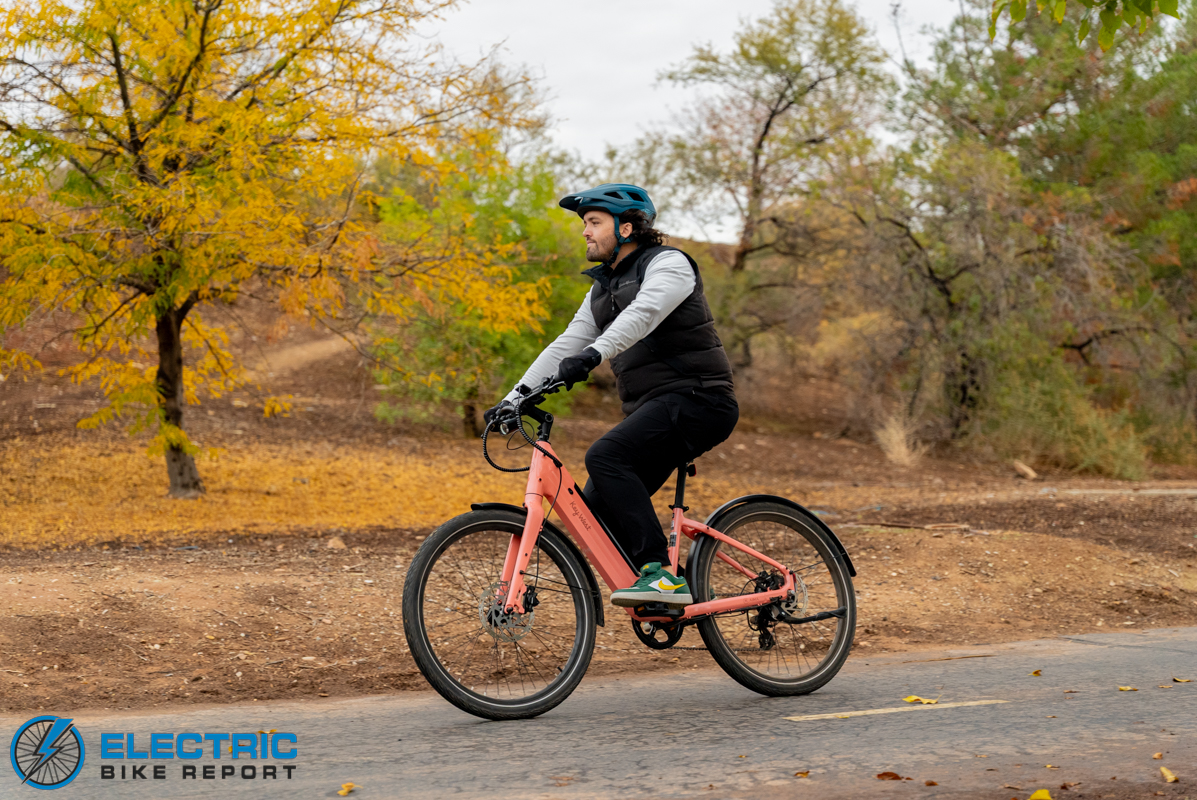
The lightweight touch of the Key West feels great on the road.
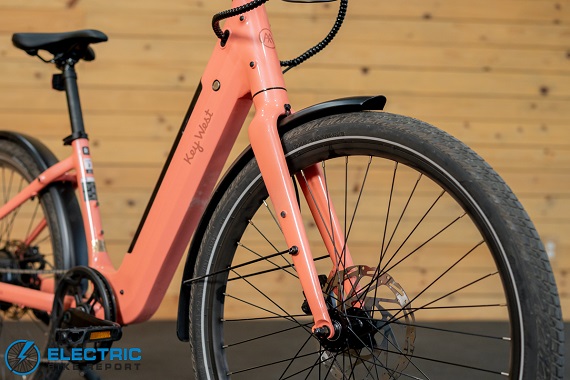
He rigid fork keeps the weight low and the handling sharp.
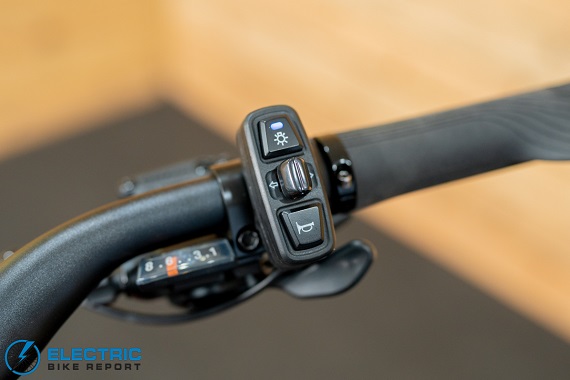
Horn, lights, and turn signals, oh my!
AIMA Key West Review: Brake Test
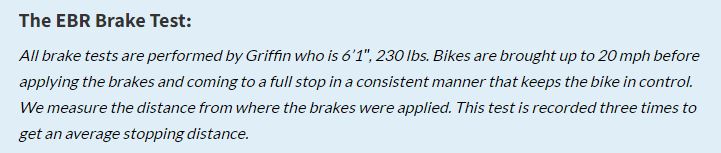
It’s been a few years since my college business classes, but I still remember professors emphasizing how every brand should be known for something—whether that’s great customer service, sleek design, or even a signature touch (like Chick-fil-A’s “my pleasure”). I like that AIMA seems intent on being known for oversized brake rotors—because that’s a great thing to hang your hat on.
The Key West uses Tektro 2-piston hydraulic brakes paired with big 203mm rotors. That extra size gives the brakes more leverage, helping the bike slow down faster while also reducing brake fade on longer descents where you’re feathering the levers more frequently.
And the results back it up: we recorded an average stopping distance of 20 feet, 11 inches in our brake test. That’s about a full foot better than our current average across nearly 280 bikes tested with me as the rider.
Tektro’s components have a solid reputation for reliability, so you can expect plenty of miles before needing replacements. You may need to bleed the system eventually, which is doable with some YouTube guidance. However, since AIMA sells exclusively through a dealer network, you can always bring it back to your local shop for quick and professional service.
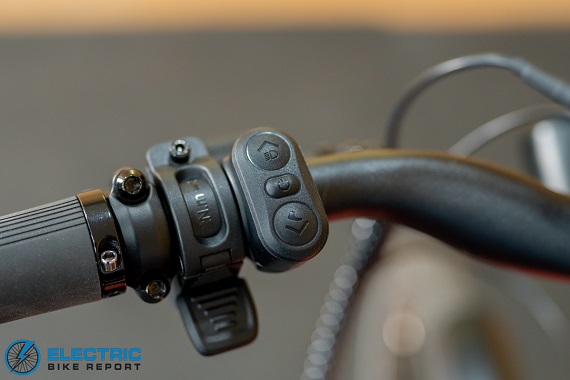
If you’re needing a break from the pedals, you can hit the throttle instead.
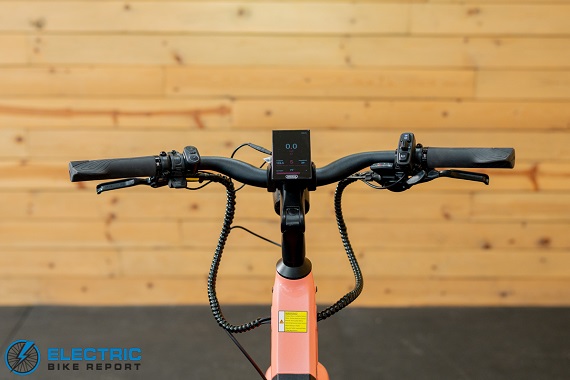
Slight sweep to the handlebar helps the rider stay relaxed.
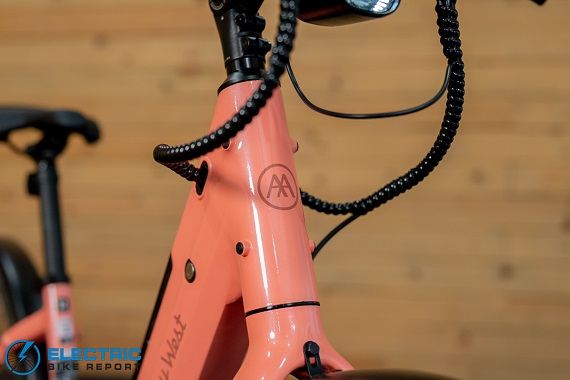
We always appreciate cable braiding.
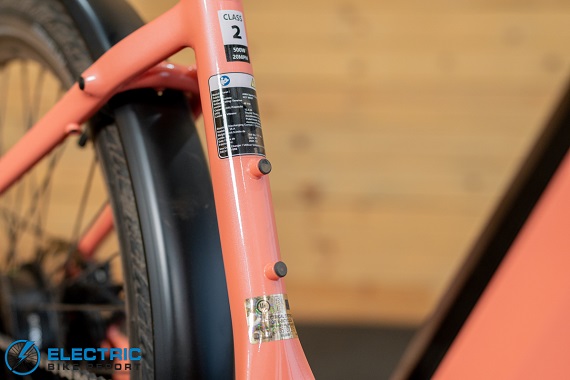
You can add a water bottle cage or bring a lock with you with the mounts along the seat post.
AIMA Key West Review: Ride Quality
I was pleased with the testing numbers, but the real standout of the Key West is how it feels on the road. To be fair, our test bike came in a regular frame size, which I would’ve ideally ridden in a large—but even with that small fit handicap, the ride quality impressed me.
The frame feels remarkably solid for a step-through. It’s planted and confidence-inspiring, tracking straight as an arrow. Sure, there’s some flex—it comes with the territory when you lose the top tube—but the Key West still feels well-built and composed.
I liked the boxier downtube design and the clean finish with minimal visible welds. The bike looks tidy and refined, especially in the Coral colorway we tested (and that bright blue option online looks great too). The cable management is neat, and the included headlight and integrated taillights not only complement the design but also add real-world visibility and practicality.
There’s no suspension, true, but that’s intentional. The rigid fork keeps the weight low and handling crisp, while the geometry and adjustable stem help riders dial in a comfortable, upright position.
The supporting components all perform well. Shifting is crisp, the gear range is appropriate for casual cruising or moderate hills, and the narrower tires help with agility and rolling efficiency. They can get a little slick in wet conditions, so it’s best to corner with care when the roads are damp. The included fenders, however, make those rainy rides a bit easier to handle.
I was also pleasantly surprised by how useful the Bafang Go app has become. My last experience with it was limited, but it has clearly evolved. Paired with the Key West’s bright 4” TFT display, the app now supports turn-by-turn navigation and even text notifications right on the screen. You can disable those alerts if you’d rather ride distraction-free, but it’s nice to have the option—and it adds a layer of connectivity you don’t often see in this category.
Sponsor
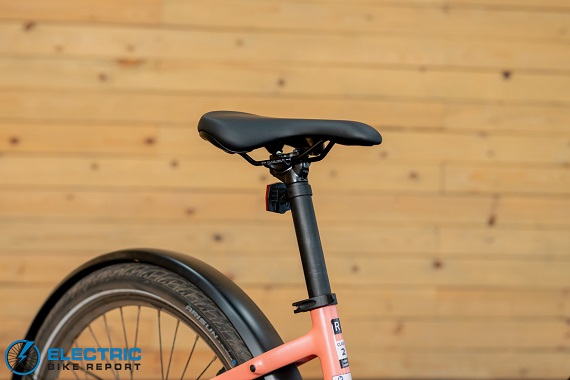
A nice and comfy saddle n about 6” of seat post adjustment.
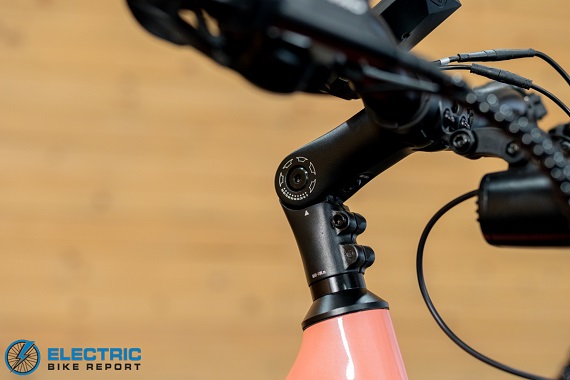
We’re big proponents of adjustable stems on cruisers. It makes finding a comfortable hand position much easier for different heights.
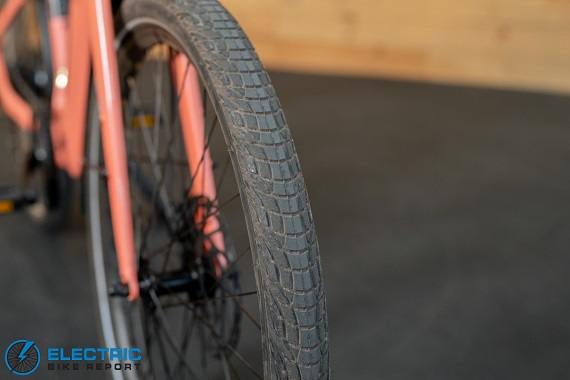
The tread pattern is semi-slick. It’s narrow and efficient on the tire, but air down a bit if riding in wet conditions like we were when testing.
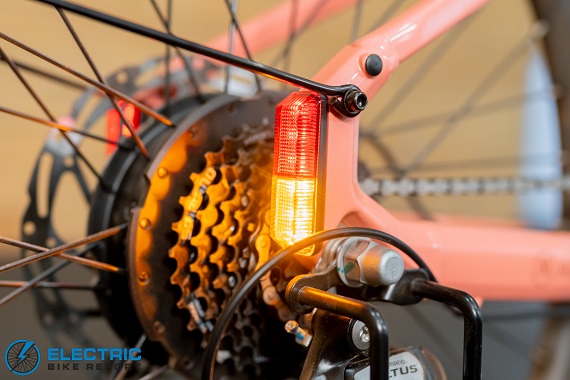
Nice and bright turn signals and brake lights.
AIMA Key West Review: Summary / Where to Buy
AIMA is still a relatively new brand to me, but they’re quickly making a strong impression. Much like the Santa Monica we previously reviewed, the Key West hits its intended mark with confidence. It’s lightweight and nimble, rides with a solid, well-built feel, and gives you the flexibility to tailor your power delivery for a gentle cruise, a brisk commute, or anything in between on paved roads.
The bike blends charm and practicality nicely. It’s got style to spare and some genuinely thoughtful tech features: turn signals that chirp to remind you when they’re still on, integrated navigation and message alerts through the app, and multiple engagement modes so you can fine-tune your ride feel. It’s all functional, not gimmicky.
The component package suits the price point well, and the sizing should accommodate most riders comfortably. There really aren’t many serious drawbacks here. If you have an AIMA dealer nearby, the Key West is absolutely worth a test ride—it’s a smooth, capable, and quietly impressive cruiser that lives up to its easygoing name.
Happy Riding! Make sure to let us know if you have any questions or if you think we left anything out in this review of the AIMA Key West down in our comments section.
Sponsor
Sponsor
Reader Interactions
Leave a Reply