Addmotor Freetan M-368X Full-Sus Semi-Recumbent eTrike Review
Oct 14, 2026
 0 Comments
 Share
Share
A large, stable, powerful, and extremely comfortable e-trike with a relaxed and reclined riding position.
In recent years, many e-bike companies have expanded into the electric tricycle market as a secondary venture. It makes sense; the two types of electric mobility devices often share many components, features, and goals. Whether used for exercise, leisure, transport, or utility, both are designed to help their riders achieve more with the help of a motor.
In our experience, however, electric trikes made by e-bike-first brands often have some limitations in size, power, and overall comfort. This is generally because they have restrictions on package size and price, which gives their manufacturers only so much room—both literally and figuratively—to work with.
Addmotor is a little different.
As primarily a maker of electric tricycles, with e-bikes being its secondary concern, it sells 23 unique models (at the time of writing). Given this relatively unique perspective, we were excited to review one of its most uncommon offerings: the Freetan M-368X Full-Suspension Semi-Recumbent eTrike.
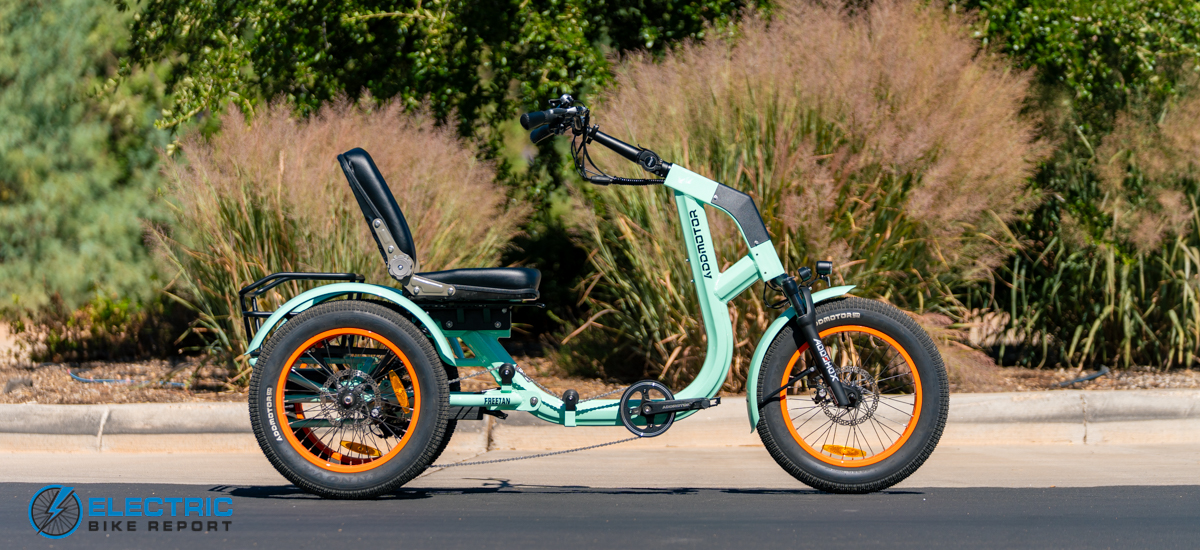
As its name suggests, this is a comfort-focused tricycle with a somewhat-reclined riding position. The concept of this trike likely sounds like a no-brainer, but in practice, the idea requires some unique engineering to achieve. The Freetan features an extended, almost dragster-like frame with a multi-angle steering mechanism and a padded, tractor-like seat.
This design makes the Freetan M-368X one of the largest and most vehicle-like mobility devices we’ve tested, but it also promises one of the most adjustable, comfortable, and accessible riding experiences we’ve seen.
Determining whether it lives up to this claim is one of our goals for this review, and comparing its performance to similar models is another. Are you better off buying an electric trike from a brand that only dabbles in making them, or a company that almost exclusively deals in three-wheelers? Continue reading below to find out!

Sponsor
E-Bike Category:Electric Tricycle
E-Bike Class:Class 1 (pedal assist to 20 mph)
Class 2 (throttle to 20 mph)
Class 2 (throttle to 20 mph)
Sponsor
Addmotor Freetan M-368X Full-Sus Semi-Recumbent eTrike Video Review
 Pros
Pros- Comfort is the Freetan M-368X’s MO; the combination of its 20×4″ fat tires, full suspension, and padded seat make it both smooth and supportive.
- Its fit is remarkably customizable, with a sliding seat, adjustable stem, and rotating handlebars. The Freetan fits those from 5’1″ to 6’7″.
- Getting around is relaxed and easy, thanks to the trike’s powerful 750W motor, 7 pedal assist levels, half-twist throttle, and single-speed drivetrain.
- Accessibility is also front-and-center, with a remarkably low 11.4″ standover height, making mounting and dismounting a breeze.
- A potted battery offers many benefits: increased safety and fire resistance, water resistance, and the ability to better handle bumps.
- Its high payload capacity allows it to carry riders up to 280 lbs, plus up to another 100 lbs of cargo.
- This trike has lots of personality, with its unique frame and a variety of five splashy color options.
 Cons
Cons- It delivers a lot for its price point, but items such as hydraulic brakes, a 3+ amp charger, lock-on grips, a color display, and a reverse throttle would add value and enhance its user experience.
ELECTRICAL SPECS & FEATURES
- Battery: 48V*20 Ah (960 Wh) Samsung Battery, Potted
- Charger: 48V*2.0A 5 Pins US Standard DC Charger 5 Pins With Auto Magnetic Suction
- Display: Addmotor 5-Inch LCD Display
- Motor: 750W Rear-Drive Motor, Peak 1400W, 90 Nm Torque
- Headlight: Powered By Main Battery And Controlled By the uneven buttons
- Taillights: Powered By Main Battery And Controlled By Display with Brake Light Function
- Pedal Assist: 7 Level Pedal Assist
- Claimed Range: 85 Miles (PAS1)
- Throttle: Variable Speed Control – 1/2 Twist Throttle
- App: None
- UL Certification: Unknown
Weight & Dimensions
- Claimed weight: 148 LBS
- Tested Weight: N/A (Its weight exceeded the capacity of our scale)
- Rider height range: 5’1″-6’7″
- Total payload capacity: 280 LBS (Rider) +100 LBS (Cargo)
Components & Accessories
- Brakes: Mechanical Disc Brakes On Each Wheel, 180mm Front / 2*180mm Rear Rotors on 3 Wheels, Parking Brake
- Fenders: Alloy
- Fork: ADDSHOX 20″ Oil Spring Suspension Fork
- Frame: 6061 Aluminum Alloy Frame
- Drivetrain: Shimano 7-Speed, 38T chainring, 14-28T cassette
- Grips: Ergonomic Faux Leather, press-fit
- Saddle: Adjustable PU Saddle with Backrest, Adjustable angle 90°-170° and position
- Handlebar: Adjustable Handlebar, 730mm
- Kickstand: N/A (Parking Brake)
- Pedals: Plastic platform
- Tires: 20″ X 4.0″
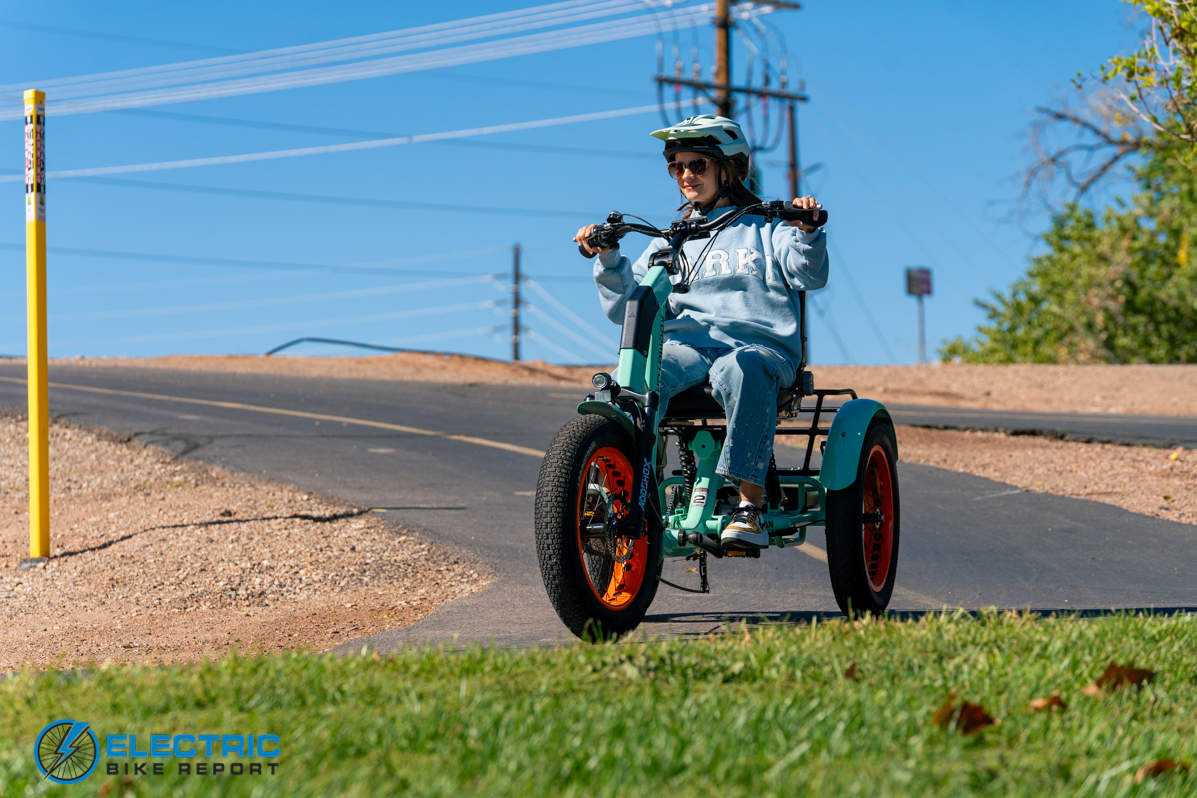
With a low center of gravity and a relatively long footprint, the Freetan feels generally planted and stable even when cornering.
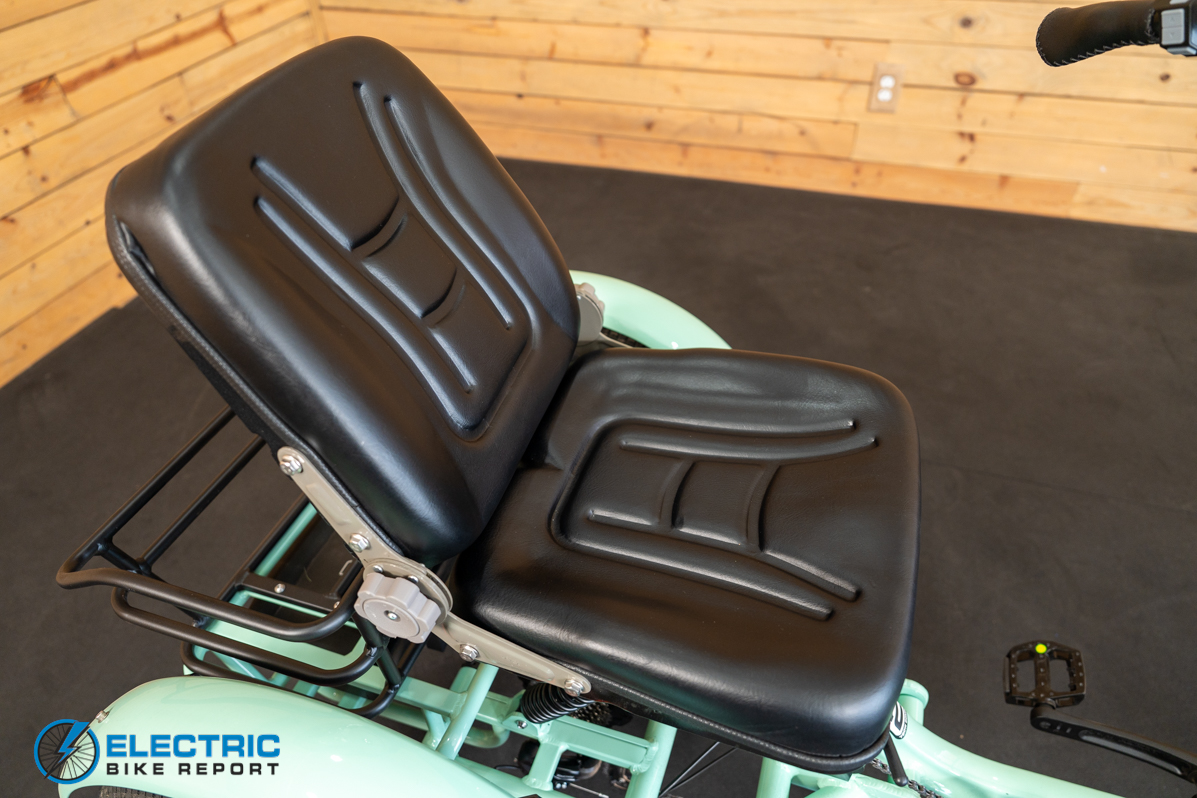
The padded polyurethane seat slides longitudinally and its backrest angle can also be rotated for comfort.
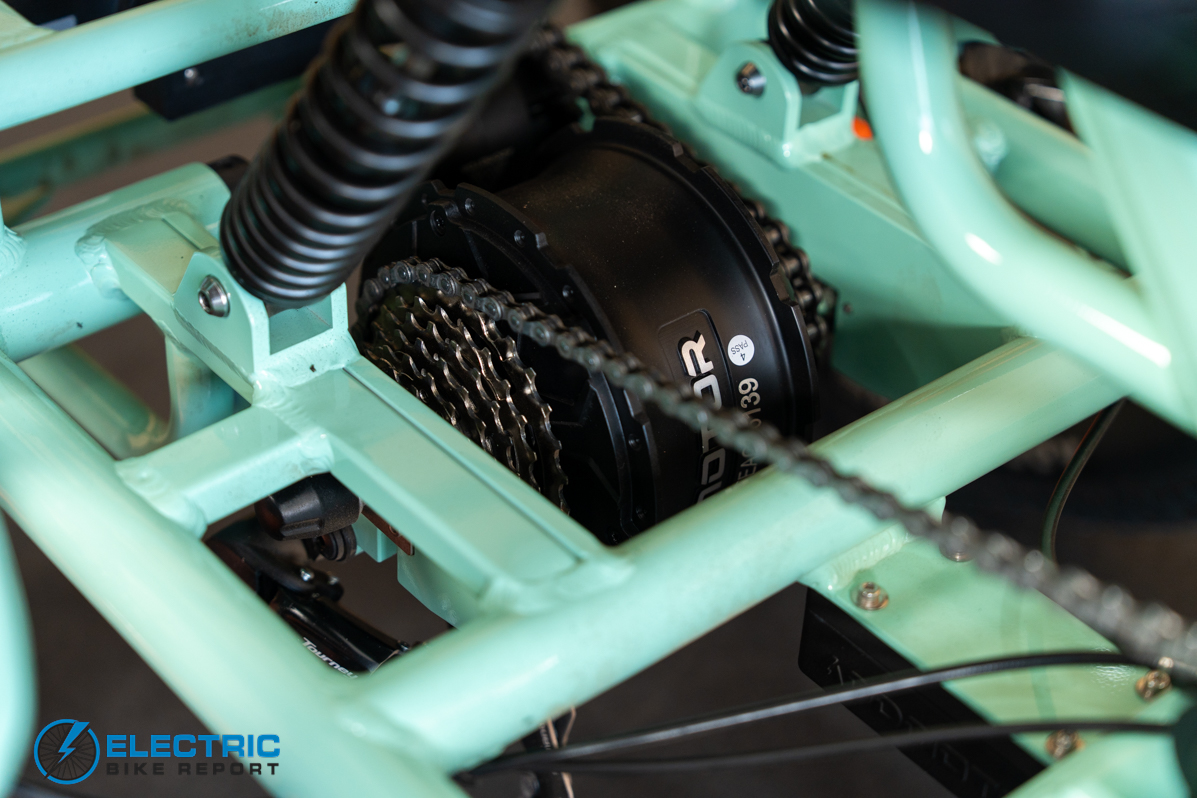
Addmotor equipped the trike with a powerful 750W motor mounted beneath the seat, which is connected to a differential axle.
Addmotor Freetan M-368X Full-Sus Semi-Recumbent eTrike Review: Speed Test
We conduct our Speed Test on a flat segment of our local paved, shared-use trail system. This test has multiple goals: we want to see if the e-bike or e-trike in question can reach its advertised speeds, evaluate its programming, and ensure that its acceleration force is safe while matching its style.
I rode the Freetan M-368X in each of its seven pedal assist system (PAS) levels—and tested its throttle—to complete the test. During the pedal test, I monitored my average speed, then later used this data to make a visual representation of its power distribution (see the graph above).
Before I explain my analysis of this data, I want to comment on how easy the Freetan is to pedal without power. I tested this before engaging the PAS to understand how well a rider could move the trike if the battery expired. While I didn’t move the trike remarkably fast under pedal power alone, it was unexpectedly comfortable and easy to ride; traveling a couple of miles on flat ground without power likely wouldn’t be a concern.
With the PAS active, each setting corresponded to a preset speed limit; roughly 5, 7, 10, 12, 14.5, 17 and 19.5 mph, respectively. Upon reaching roughly these speeds, the motor held steady to keep me at a controlled pace.
As shown by the graph, the power and speed increase of each assist level was measured and consistent. This had multiple benefits: it made each level feel distinct, it made controlling speed easy, and most importantly, it made selecting the right level easy and intuitive.
I spent most of my time riding in PAS 5, 6, and 7. This is important to mention because, in contrast with many other more compact electric trikes, the Freetan felt stable, balanced, and easy to control. Trikes are often relatively easy to tip up on two wheels, but the Freetan’s low center of gravity and long wheelbase helped it feel more confident than I initially expected at speed.
If this were an e-bike, I would usually say that seven assist levels feels like too many choices, but in this case, I appreciated the variety. The lowest levels accommodate new riders who may be uncertain and those who prefer a calm, gradual pace.
The middle levels provide options for those who want a balance between efficient travel and controlled speeds. The highest are suitable for riders who are experienced and confident—though it’s also worth noting that users can adjust the trike’s maximum speed via the display’s settings menu.
When testing the throttle, the Freetan’s power was noticeable. While I wouldn’t describe its acceleration as punchy, it came on with a quick ramping-up, then increased speed steadily before reaching somewhere between 19.5 and 20 mph.
Overall, I like what Addmotor has done here; the Freetan M-368X is strong, adaptable, and intuitive to grasp. It offers a wide range of speeds and settings for riders of different experience levels. This gives it the potential to be somewhat faster than most of the other e-trikes I have reviewed, but it balanced that speed with a safe, sturdy, and predictable feel.
Sponsor
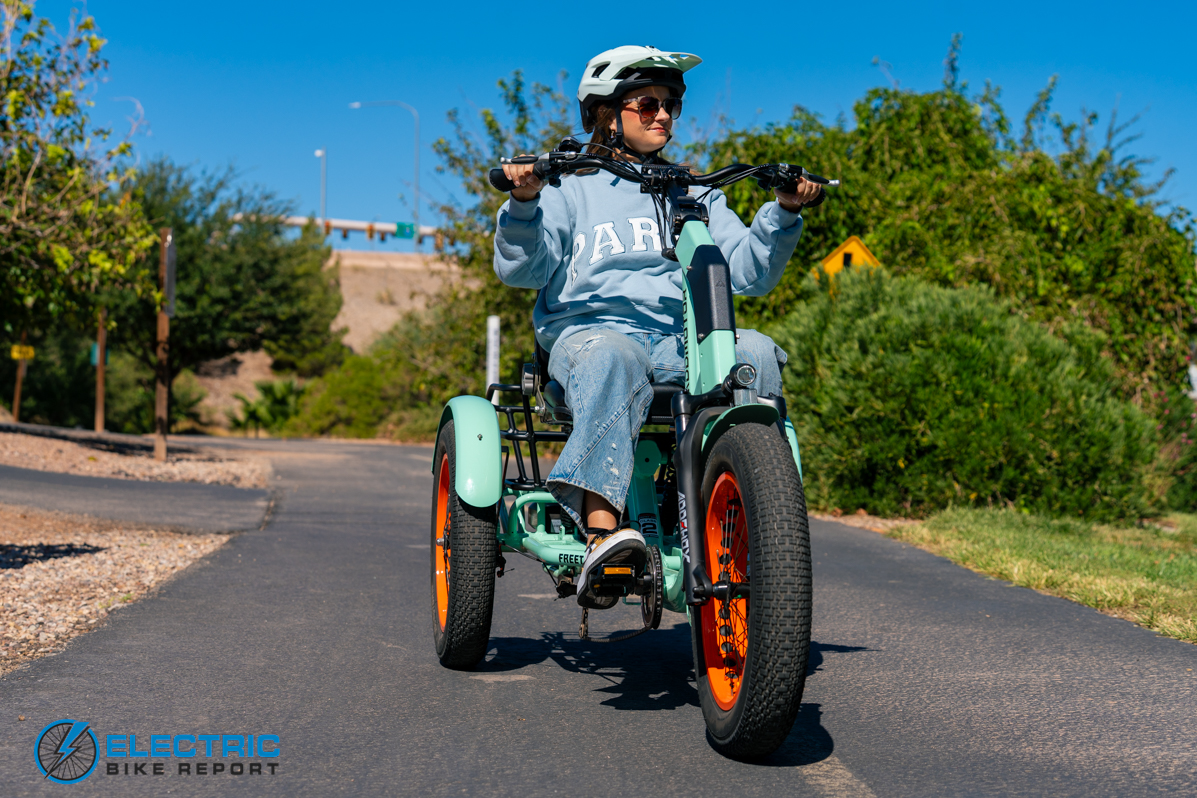
We appreciated the Freetan’s controlled, approachable low-speed settings, as well as its manageable, safe feel under higher speeds.
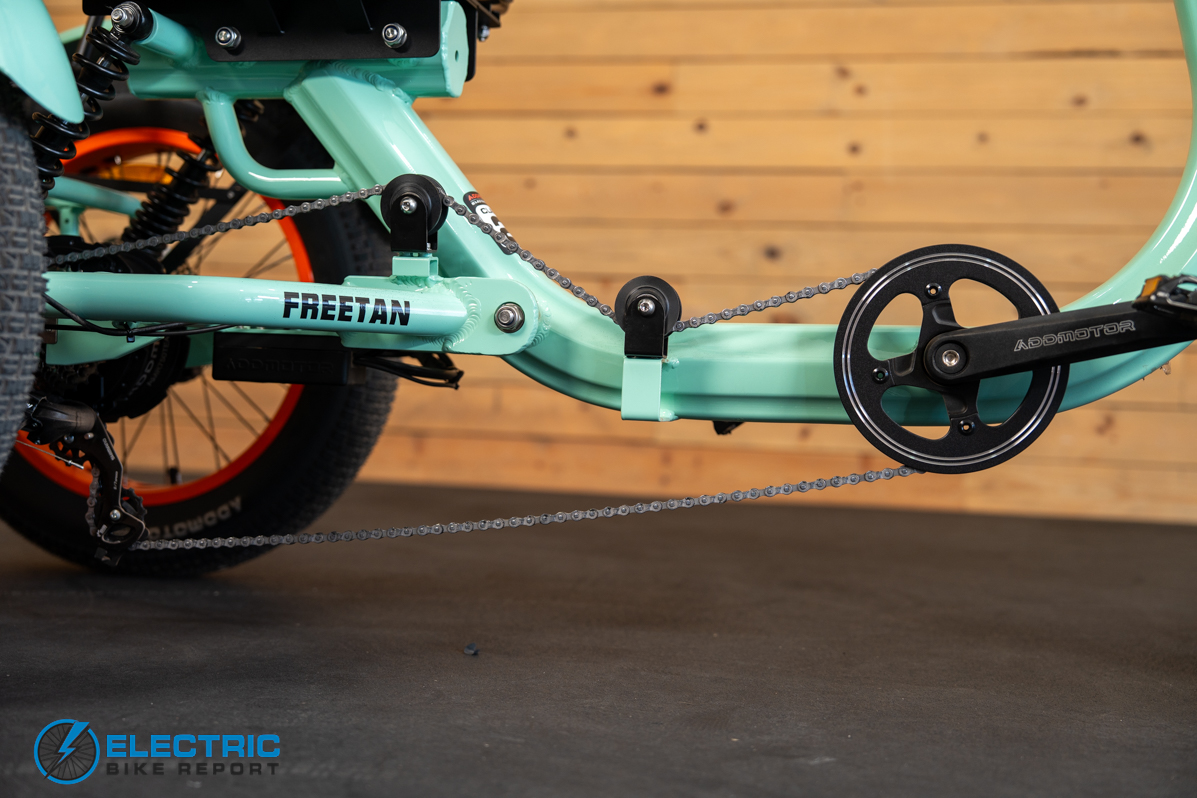
A 7-speed drivetrain offers flexibility for pedaling on both flats and hills.
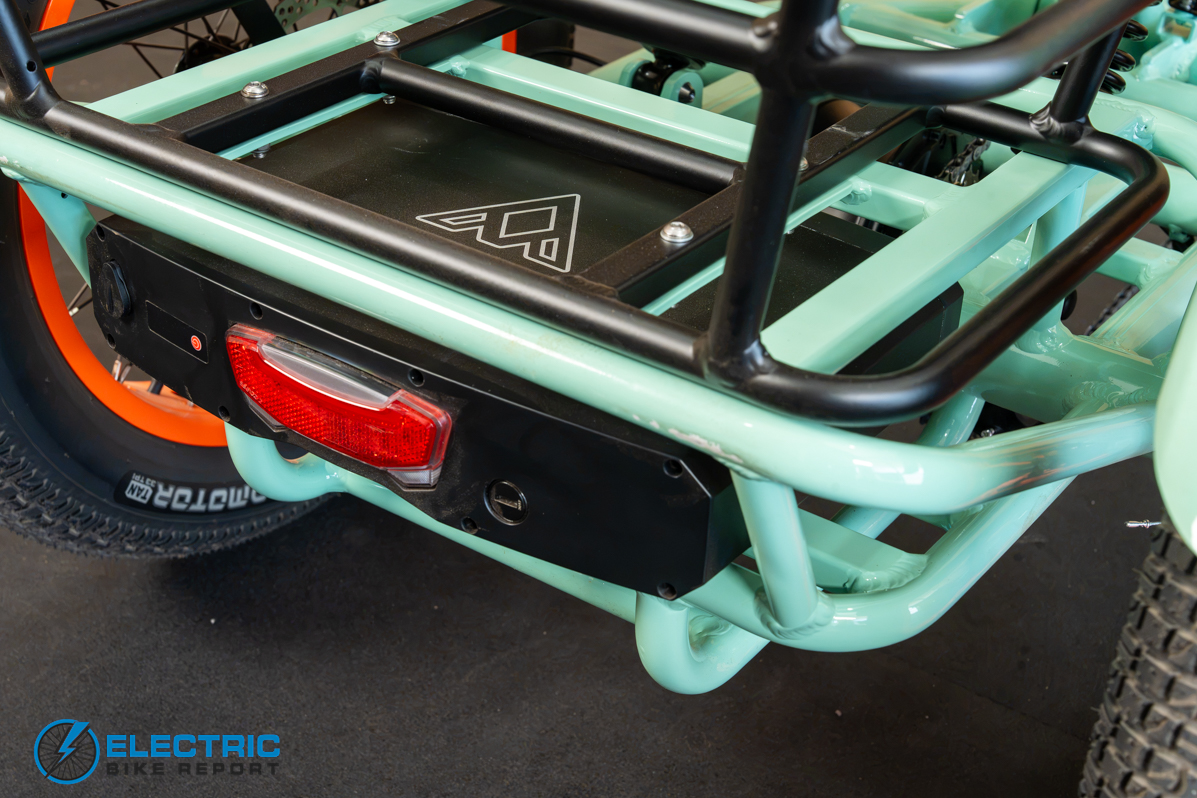
The trike’s large 960Wh battery is mounted beneath the cargo rack unobtrusively.
Addmotor Freetan M-368X Full-Sus Semi-Recumbent eTrike Review: Range Test
Range is, of course, one of the most important factors in an electric mobility device. If you purchase a trike with too little range, you’re likely to be disappointed that you can’t stay out longer or frustrated that you can’t reach your destination.
Since electric tricycles aren’t known for their speed in their lowest PAS levels (as shown by the Speed Test above), we test each using only its highest power setting. This gives us a realistic floor; most riders should reach this benchmark and have the potential to exceed it.
Our test rider, my colleague Ryan, traveled 40.1 miles using the Freetan’s highest assist level, PAS 7. For context, other e-trikes we’ve reviewed covered an average of 37.2 miles, so the Freetan is in the same ballpark.
It certainly is ahead in both motor power and battery capacity. Most of the other models in our comparison group had 500W motors and batteries that averaged 717 Wh, while the Freetan carries a 750W motor and a 960 Wh battery.
With a larger-than-average motor, however, comes higher power demands (hence the larger battery). Case in point: the same group of other models used an average of 19.4 watt-hours per mile (Wh/mi), while the Freetan M-368X’s motor consumed a significantly higher 24 Wh/mi.
Still, a minimum of 40 miles of range should cover even relatively extreme use cases; it’s sure to be generous enough for most leisure, exercise, or errand-running rides. Many riders will likely get multiple trips before needing to recharge.
Of course, our test rider weighed 200 lbs, and we conducted this test without cargo, so potential buyers who are heavier or who plan to carry cargo should expect fewer miles.
The trike’s charger is one of our primary areas of critique. Given its remarkably large battery, which the included 2A charger will take roughly 10 hours to top up when completely depleted, we hoped to see something like a 4A charger to made recharging more manageable and less time consuming.
Ultimately, the Freetan gave us average to above-average results, so we consider it to be appropriately specced for the needs of most riders.
Sponsor
Sponsor
Addmotor Freetan M-368X Full-Sus Semi-Recumbent eTrike Review: Hill Test
To test the Freetan M-368X’s uphill power, we tested both its throttle and pedal assist system on an extended climb (as explained in the graphic above). Our test rider, Justin, completed the throttle portion of the test in 2:15 with an average of 13.4 mph. His pedal time added a few seconds, with a result of 2:20 at 12.9 mph.
Overall, the trike performed very well here. Other trikes we’ve tested at the same hill averaged significantly longer times of 2:29 on throttle and 2:27 when pedaling. This is interesting because, while the Freetan has some clear advantages in terms of raw power, it also has a significant drawback.
As I mentioned in the section above, most of the other trikes in our comparison group had 500W motors that were less powerful than the Freetan’s 750W motor. On average, these motors could reach a peak of 1161W and produce 73 Newton-meters (Nm) of torque, while the Addmotor tops out at 1400W and 90 Nm.
At face value, these differences could explain the Freetan’s faster climbing times, but its results are even more impressive when considering weight.
Trikes tend to be relatively heavy; models in our comparison group weighed an average of 95 pounds. Being significantly larger and bearing more complex construction than many of these models, the Freetan is advertised to weigh 148 lbs. We were unable to weigh the trike—it was too heavy for our scale—but we’re confident that it’s in that ballpark.
Even when exceeding our category average by roughly 50 lbs, the Freetan managed to complete its test successfully and climbed faster by a significant margin, making the job of reaching the top both relatively quick and low-effort.
I had a similar experience when testing the trike at our secondary location, Pilot Hill. On throttle, the trike moved both steadily and confidently, hardly losing steam. Under pedal power, the climb was slightly more active, but still remarkably easy—this was actually the faster of my two tests.
It’s worth noting that I tested the Freetan twice at this hill: once after a longer test ride and some filming, and again after a fresh charge. The experience above was my second attempt, performed after a full charge. The first time I attempted the test, the trike seemed to lose power and struggle somewhat as I climbed.
It’s entirely possible that the motor just needed to cool down after my other testing. As I explained above, after topping up and a few hours of rest, the experience was completely different.
Overall, based on the Freetan’s formal test results and my second trip to Pilot Hill, I feel I can confidently say that this is undoubtedly one of the more powerful and capable three-wheelers we’ve tested, and that this trike is built to handle hilly terrain.
Sponsor
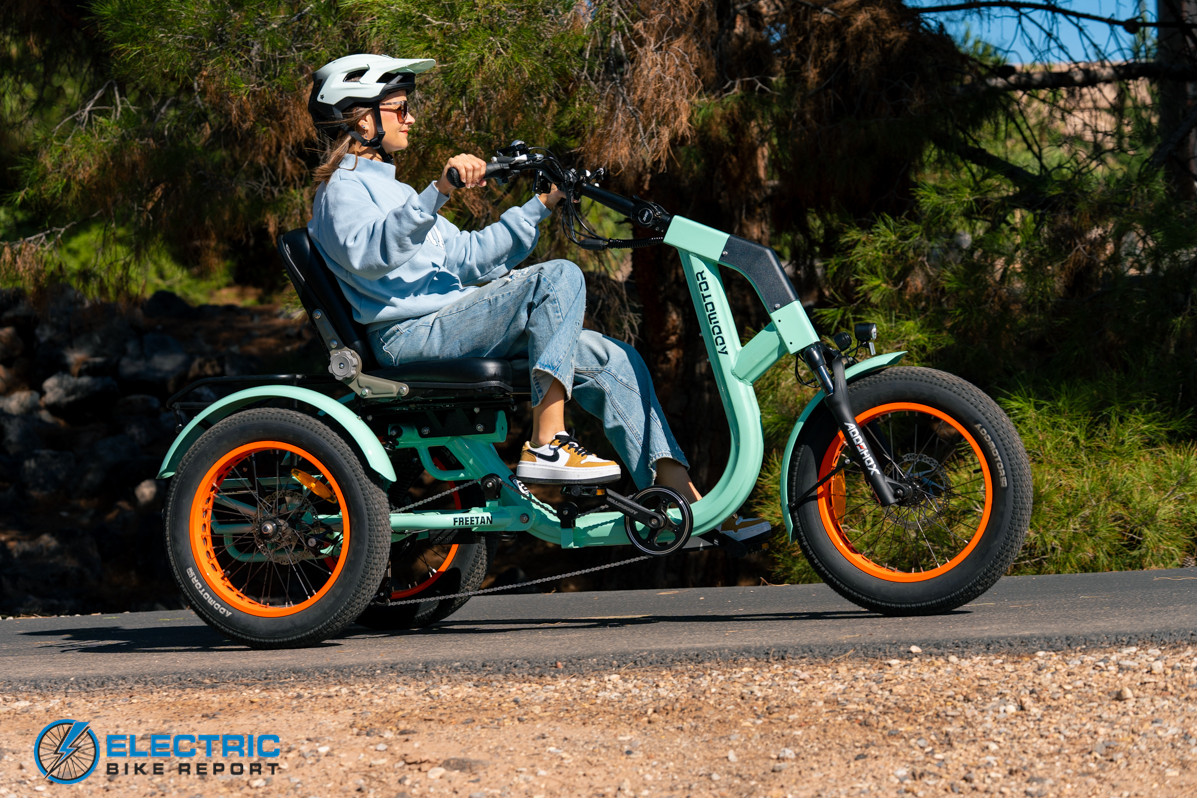
Addmotor offers five color options: Green, Mint Green (shown), Blue, Gulf Blue, and Orange.
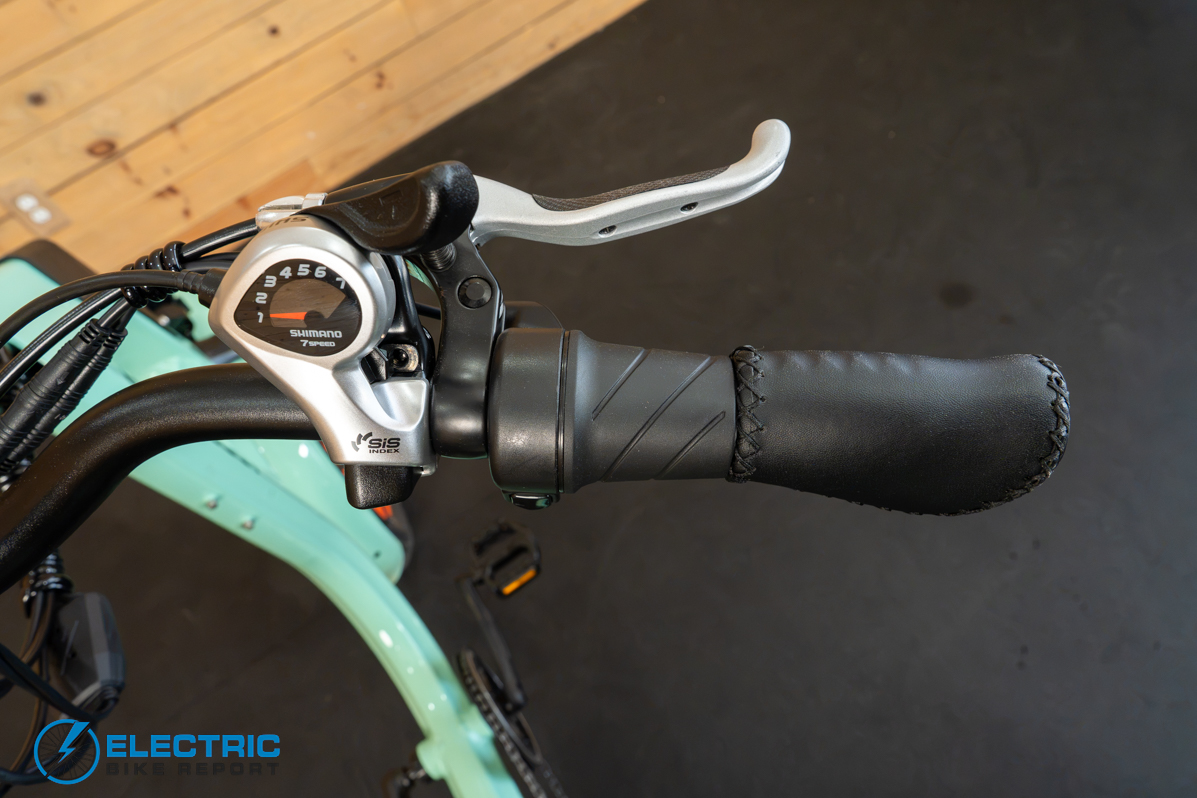
We found the half-twist throttle comfortable and easy to use for long rides.
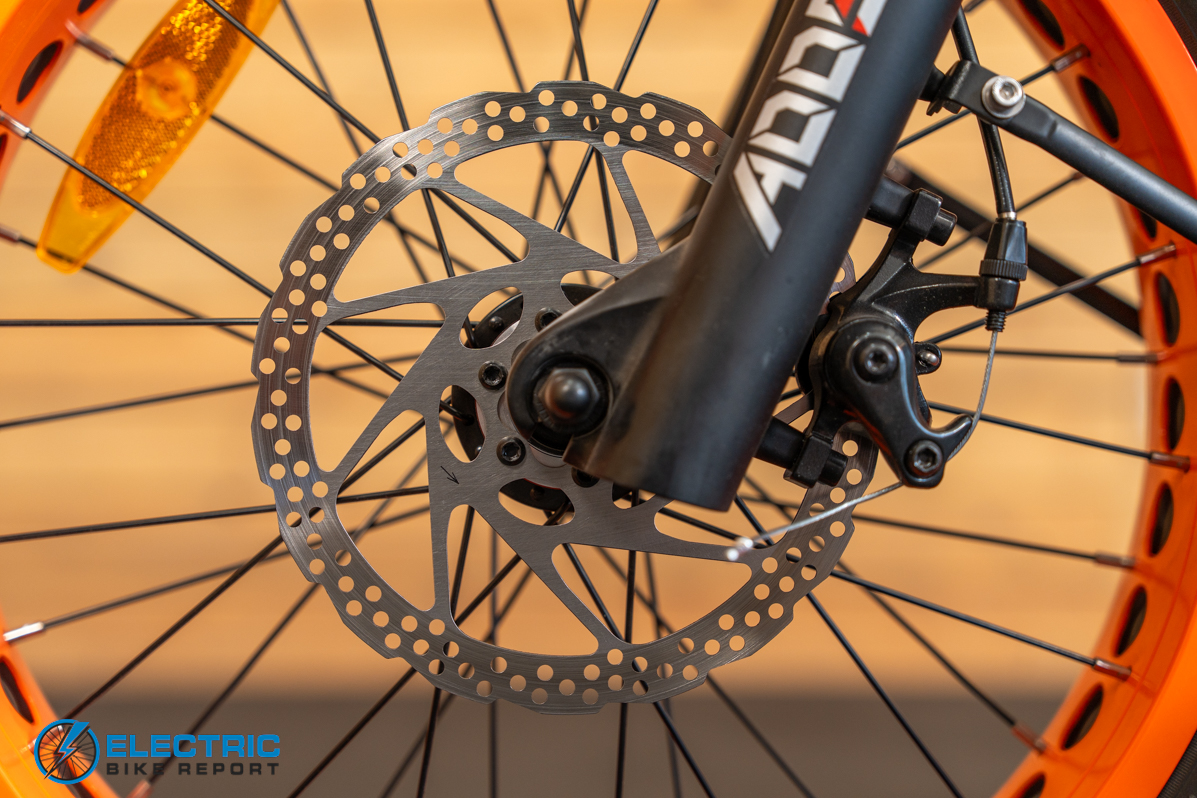
Addmotor equipped the Freetan with three brake calipers and rotors: one on each wheel.
Addmotor Freetan M-368X Full-Sus Semi-Recumbent eTrike Review: Brake Test
As with its previous tests, the Addmotor Freetan M-368X performed well in our Brake Test.
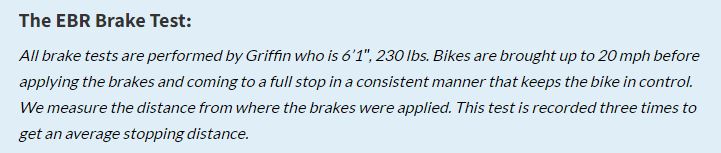
Our method for testing the stopping power of trikes is as follows: our test rider, Michael, brings each to roughly 15 mph (a common speed limit shared by many models) before applying the brakes. He then measures how far the trike travels before stopping completely. We average the results of three tests for a final score.
While other trikes we’ve tested averaged a moving distance of 12’5″ after their brakes were applied, the Freetan averaged an even 13’0″.
This distance is somewhat beyond the average, but given the fact that this model exceeds the average weight of other trikes by roughly 50 pounds, we consider it both safe and impressive.
Comparing brake systems between electric tricycles can be somewhat difficult, as they tend to vary widely in style and type, but a majority rely on hydraulic systems with two calipers and rotors. In contrast, Addmotor equipped the Freetan with mechanical disc brakes that use 180mm rotors on all three wheels.
Mechanical brake systems are generally considered less effective than hydraulics, but in this case, the addition of a third rotor seems to have offset that to a large degree. As is common with this style of brake, the Freetan’s brake levers require fairly firm grip pressure to stop quickly, but overall, the system modulated speed with relative ease and brought the trike to a halt reliably.
Considering that electric tricycles are often used by aging riders with limited grip strength, we encourage Addmotor to switch to a hydraulic system in the future for increased ease of use. With its current setup, however, we’re satisfied with the Freetan’s overall braking capability. Despite being among the heaviest trikes we’ve tested, it performed consistently well.
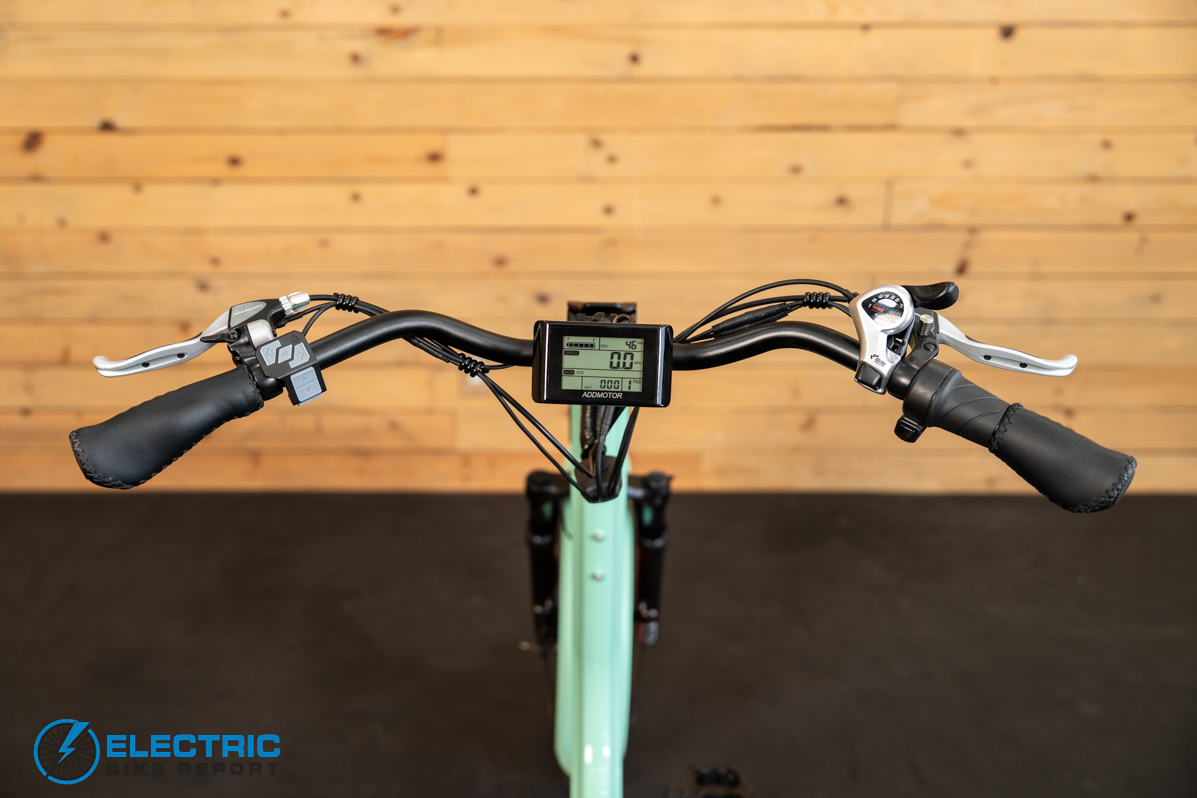
A set of swept-back cruiser-style handlebars with ergonomic faux leather grips provide responsive steering and access to all controls.
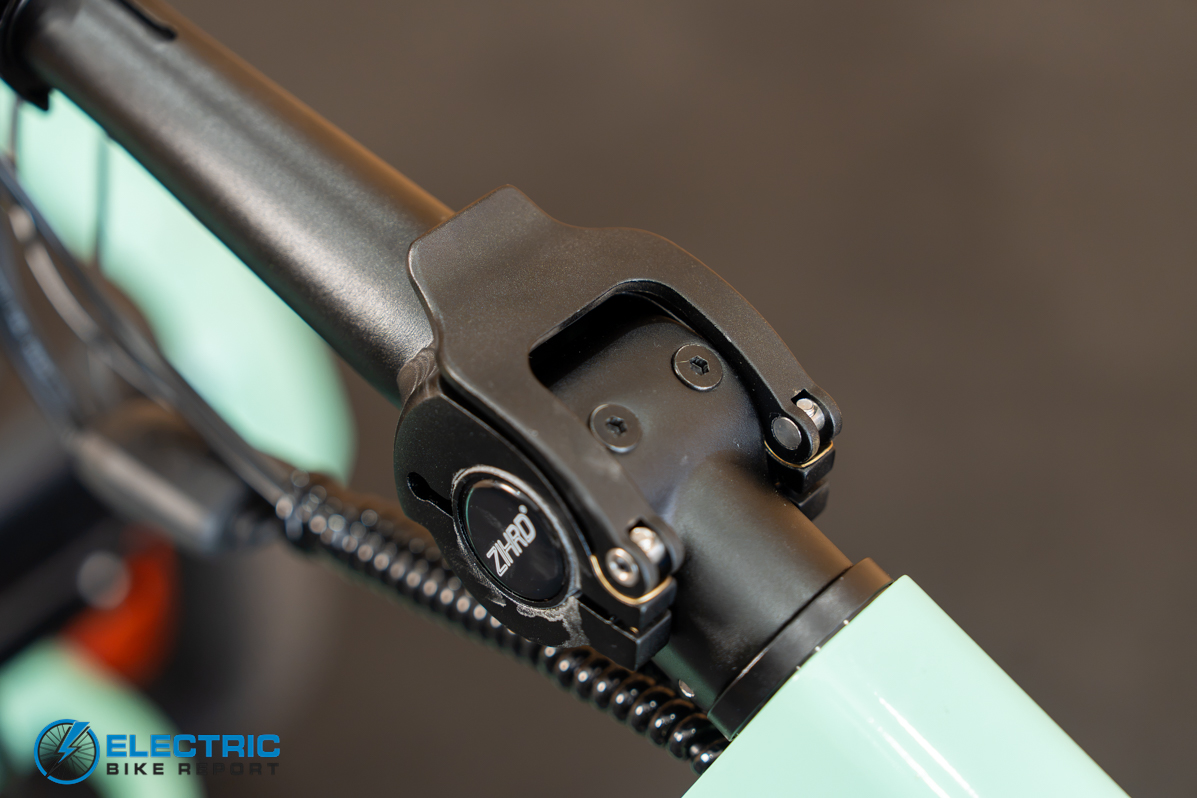
The stem telescopes and rotates vertically, ensuring that riders have easy and comfortable access to the handlebars.
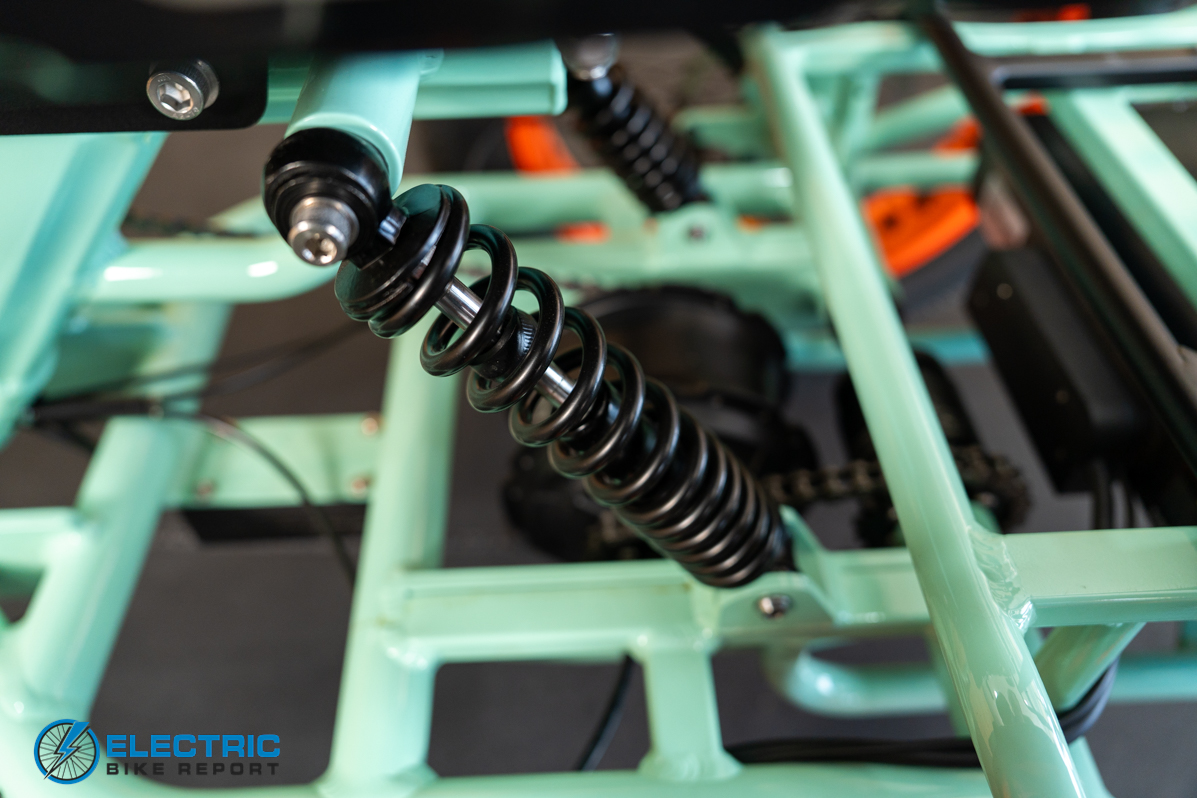
Two coil shocks beneath the seat complement the trike’s stout suspension fork when smoothing out bumps.
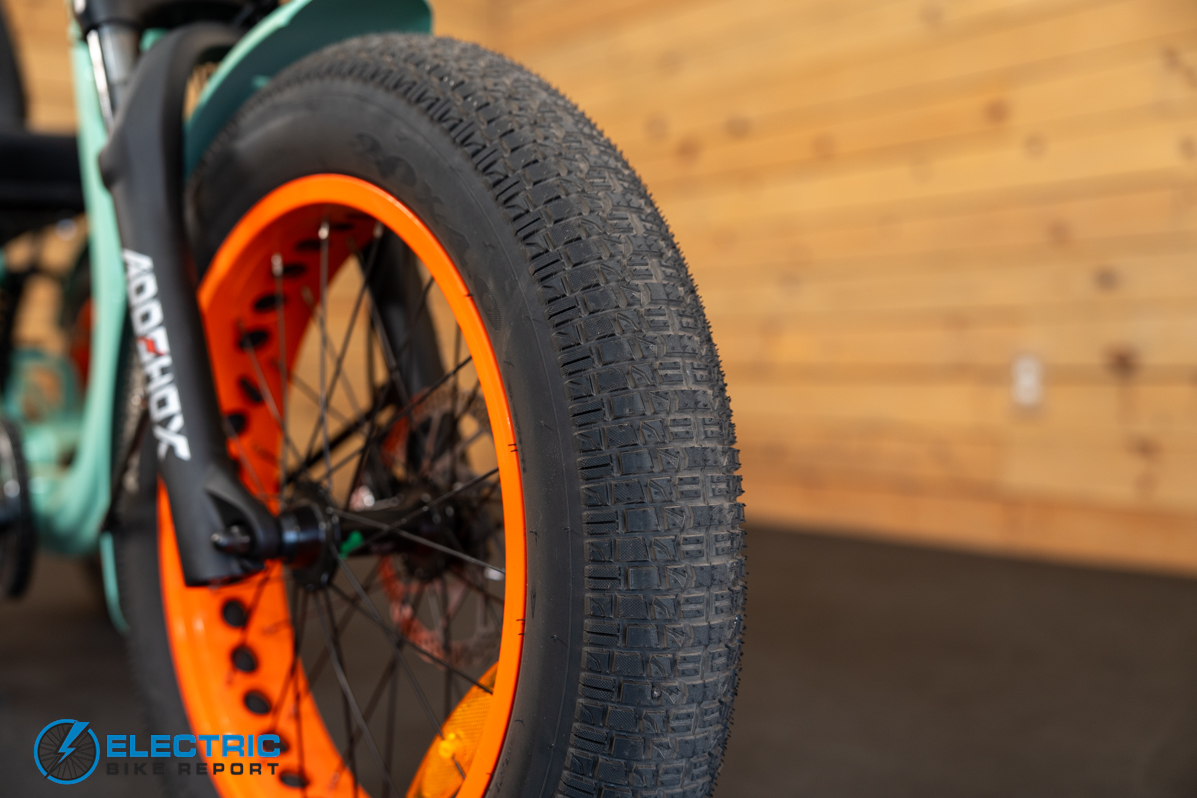
20×4″ fat tires offer cushioning, low rolling resistance, and traction on paved or unpaved surfaces.
Addmotor Freetan M-368X Full-Sus Semi-Recumbent eTrike Review: Ride Quality
While the Freetan M-368X has performed well in the sections detailed above, ride quality is perhaps its greatest strength. As I touched on in the introduction to this review, this trike is geared towards comfort, but the overall package is well-rounded.
Addmotor offers a single frame size with a recommended fit range between 5’1″ and 6’7″. With its relatively large footprint, this is understandable; shorter riders may be able to find a comfortable seating position and throttle around, but the Freetan is clearly designed with average to tall riders in mind.
At 5’11”, I felt perfectly accommodated, which was no shock given the trike’s huge range of adjustability. Riders can adjust the padded seat’s backrest angle and its longitudinal position (it moves forward and back on rails). It’s also possible to adjust the handlebars’ vertical positioning with a rotating adjustable stem, their longitudinal position via a telescoping function, and their sweep/angle by loosening the stem’s top plate and rotating their position.
As a semi-recumbent trike, the Freetan’s seating position is relatively uncommon; riders aren’t fully reclined, but tilted backward somewhere between a supine and upright position. With this design and the forward location of the bottom bracket, pedaling feels like more of a forward movement than a downward one.
The result is a relaxed, supported, and enjoyable ride. All in all, it’s one of the most adaptable and comfortable setups I’ve encountered, which means that it’s almost guaranteed that the majority of riders should be able to find a suitable fit. The Freetan’s remarkably low standover height of 11.4″ also makes it incredibly easy to get on and off – provided you can push or pull yourself up from the seat.
In terms of handling, the Freetan is relatively unique for a delta-style (one wheel in front, two in back) trike. More compact delta-style trikes tend to be tippy when cornering, but the Addmotor’s long wheelbase helps it to feel more stable in comparison; it’s still possible to tip up on two wheels when cornering sharply at higher speeds, but overall, the trike feels generally planted.
It’s worth mentioning the Freetan’s steering mechanism; there’s a noticeable angle in its steering column formed by a universal joint (shrouded by a removable cover plate). This allows the handlebars to rotate more vertically instead of horizontally. It’s a cool setup that makes this semi-recumbent design work.
Combined with the Freetan’s 20×4″ fat tires, it also has the benefit of giving this trike very responsive steering. Small movements of the handlebars translate to impactful (but still predictable) changes in direction. In my experience, this approach fits the Freetan’s relaxed vibe well.
Those tires are worth mentioning more about, too—they have a unique hybrid tread (I call them “city knobs”) that balance traction with low rolling resistance. They performed well on both paved surfaces and pea gravel, making the Freetan suitable for cruising streets, paved paths, and relatively smooth dirt or gravel multi-use trails.
The tires also work well in conjunction with the trike’s full suspension. It is equipped with a beefy 80mm suspension fork and two coil shocks beneath the seat. In my experience, larger dips and bumps were still noticeable, but the ride was generally smooth and comfortable most of the time.
As I touched on in the Speed Test section above, the Freetan’s 750W motor definitely puts some power behind the ride. There’s ample muscle for tackling hills and accelerating, though it generally stays controlled and easy to manage.
One thing I didn’t hit is how the motor engages. Addmotor’s website explains that the trike uses a combination of both torque and cadence sensors, though in my experience, the Freetan is much more cadence-based than torque-based.
While there did seem to be some responsiveness to power output based on my pedal pressure, most of the time, the motor delivered steady output as long as I turned the cranks. The result is an easy experience that’s suitable for new riders and those looking for a casual, low-effort feel.
In terms of its features and accessories, the Freetan M-368X is well-equipped without being overloaded. It includes fenders, a rear cargo basket, integrated lights and turn signals, an electronic horn, and side mirrors. It also has a button to deactivate the throttle, which can eliminate the possibility of accidentally engaging it, or instantly limit the trike to Class 1 functionality if riding in a location where throttles are not allowed.
I’ve mentioned a few areas with room for improvement, but I’d like to include a few more under the same overarching theme. Along with hydraulic brakes and a faster charger, I’d love to see a color display, lock-on grips, and a reverse throttle function to increase the Freetan’s overall value. These are relatively small upgrades that would greatly enhance the trike’s already great user experience.
A final word about the trike’s user interface; the black-and-white display, while basic, is well-organized and completely usable. There are a handful of customization options that can be accessed through a simple settings menu—things like speed, backlight brightness, etc.
The Freetan does not pair with Addmotor’s app, but it can still be used to get turn-by-turn navigation, to track rides, and to interact with other Addmotor riders via a social-media-like platform.
All in all, the Freetan M-368X offers a lot, including a remarkably adjustable and comfortable ride. Many of these features are above and beyond what we’re used to seeing on e-trikes, though with the Freetan’s price point of roughly $3,300 (at the time of writing), they are things that you should expect to pay more for.
Sponsor
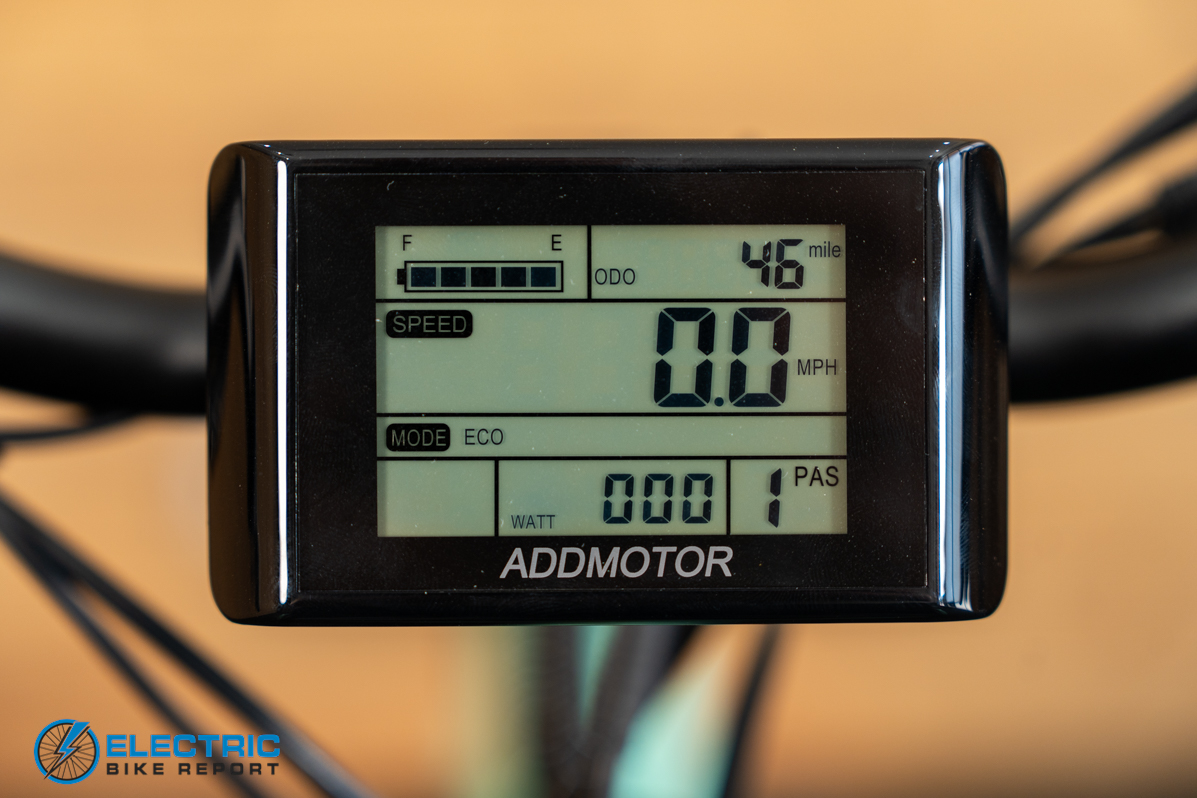
The black-and-white display is well-organized and presents data clearly and legibly.
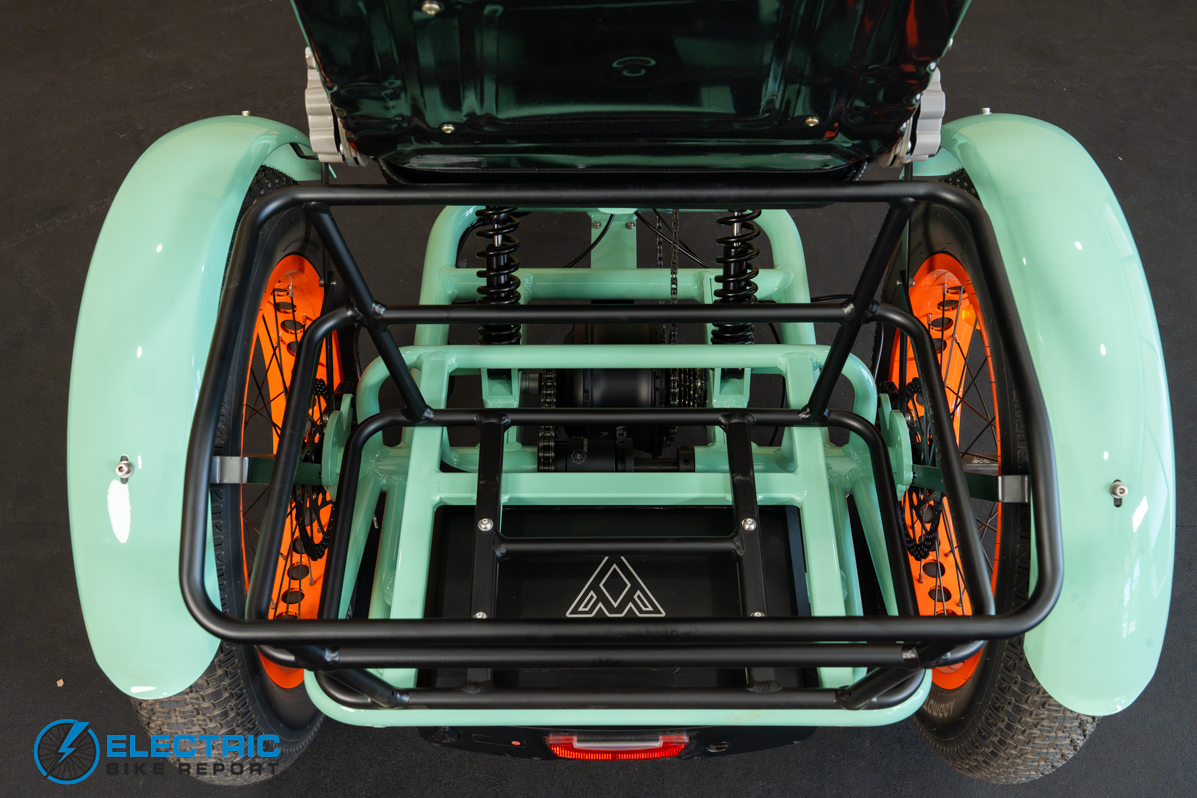
The Freetan’s cargo basket is rated to carry up to 100 lbs.
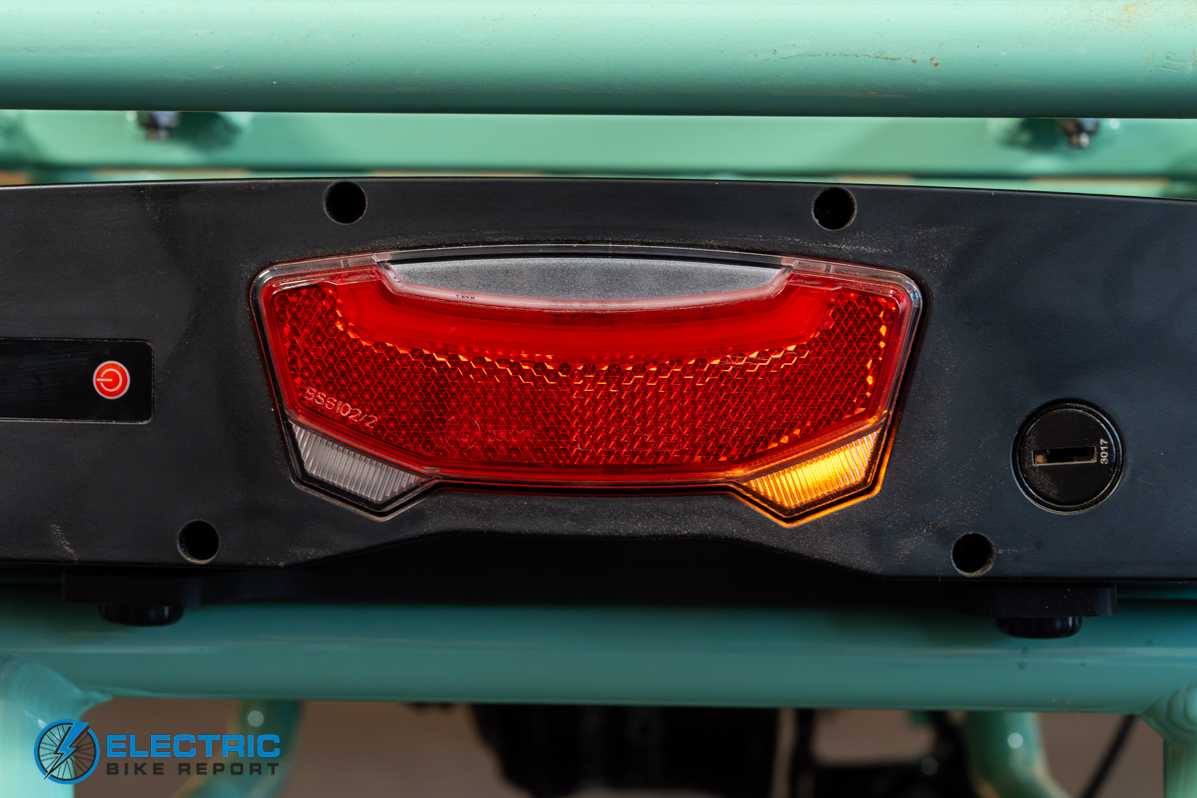
We were pleased to see turn signals integrated into the battery/tail light—though they were somewhat tough to see in daylight.
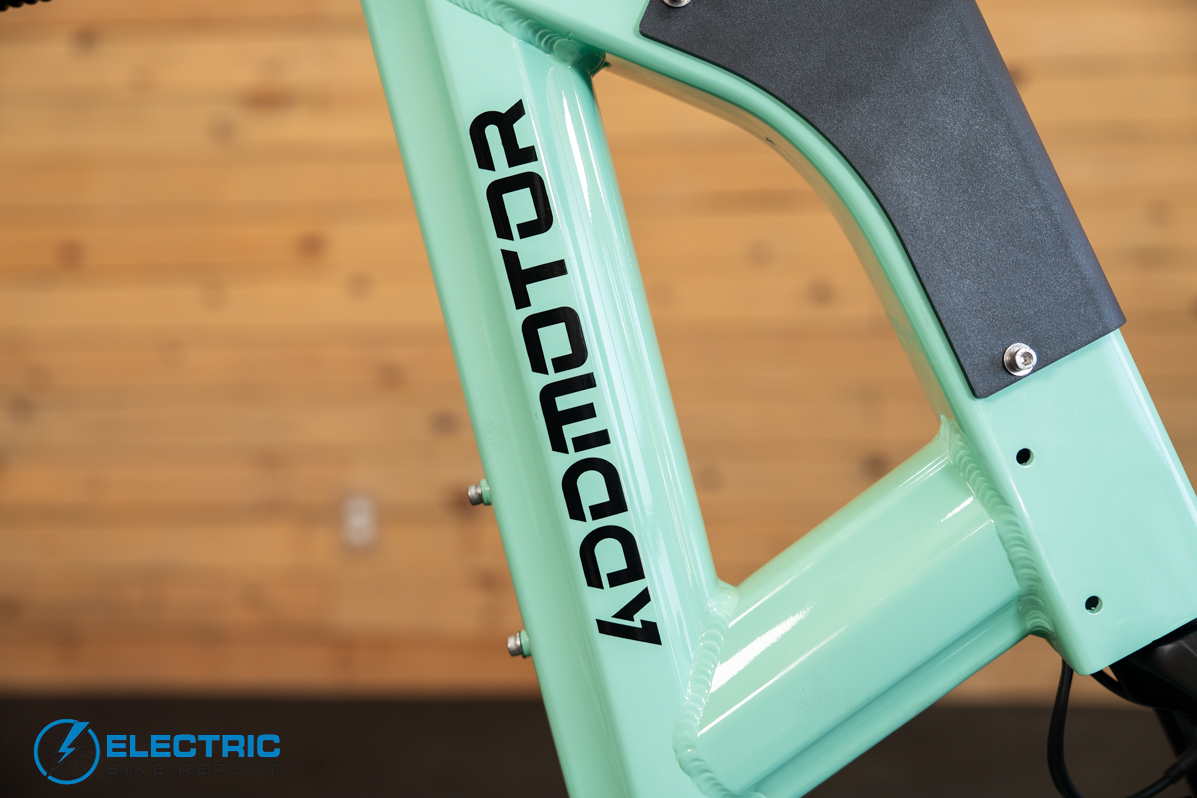
The Freetan’s angled steering column contains a universal joint to allow steering to work with the stem at any angle.
Addmotor Freetan M-368X Full-Sus Semi-Recumbent eTrike Review: Summary / Where to Buy
Considering Addmotor’s reputation as an established maker of quality e-trikes for adults, we were excited for the opportunity to work with the brand—and hopeful that the Freetan M-368X would live up to the hype. As we’ve seen throughout this review, the trike delivered solid performance, great overall functionality, and a supremely comfortable ride.
I think it’s safe to say that, at least so far, we’re impressed.
Case in point: the Freetan scored well in all areas of our testing. It is both powerful and controlled, with intuitive programming and a wide range of assist levels to suit the needs of different riders. It also has great range potential, strong climbing capabilities, and safe braking. Ride quality was another strength—in our experience, the Freetan is fun, easy, and thoroughly enjoyable to ride.
We find the Addmotor Freetan M-368X easy to recommend for those seeking a plush, adaptable, and seriously capable electric tricycle. Its sizing and weight capacity makes it ideal for average and taller riders up to 280 lbs who don’t mind the trike’s relatively large footprint. In our experience, it’s equally ideal for leisure, exercise, and errand running.
Priced around $3,300, the Freetan is a mid-to-premium-tier product. In most areas, its feel and performance are reflected in its cost, but we feel there is still some room for improvement in terms of overall value and quality of life. Our wishlist for the future includes items such as a faster charger, a hydraulic brake system, a color display, lock-on grips, and a reverse-throttle function to enhance maneuverability.
Wishlist items aside, however, the Freetan’s greatest draws are its comfort and cool factors. Riding this trike feels extremely comfortable, but it’s also one of the more unique e-trikes out there—and for that reason, it’s sure to turn some heads. Getting out and about isn’t about drawing attention, but this trike is hard to miss, and there’s something about that element that also inspires some confidence.
Happy Riding! Make sure to let us know if you have any questions or if you think we left anything out in this review of the Freetan M-368 Full-Suspension Semi-Recumbent eTrike down in our comments section.
Sponsor
Sponsor
Reader Interactions
Leave a Reply