

Monarch Marker Review: Two Batteries, Big Power, Huge Value
Jun 02, 2026
 3 Comments
 Share
Share
This fat-tire adventurer punches above its weight class in more ways than one.
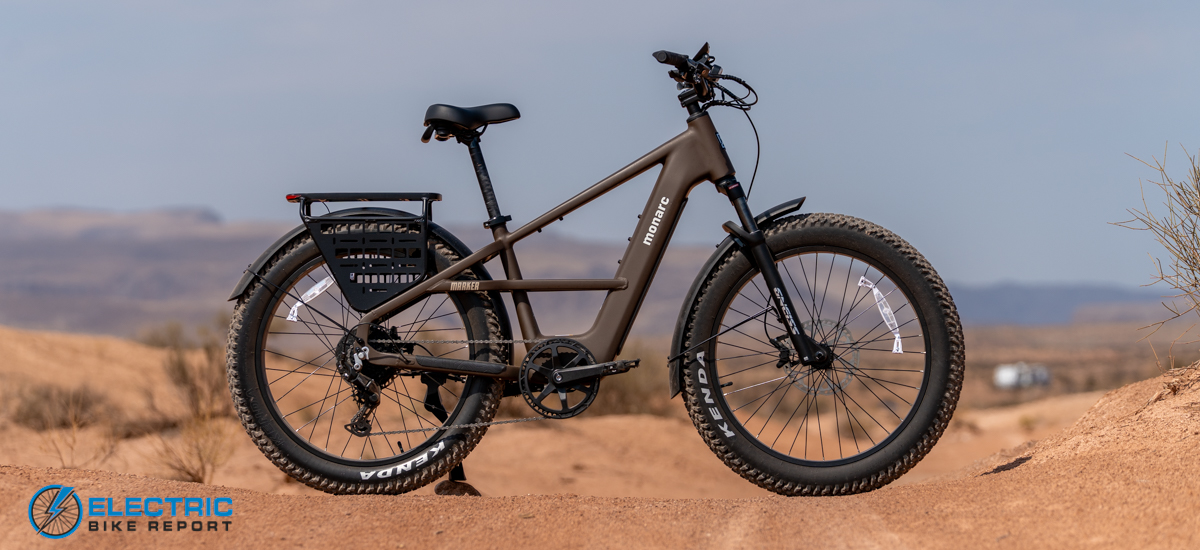
When the Monarc Marker debuted a few months ago, we were extremely impressed with the spec, value, and customization of the bike. Our first ride review gave a glimpse into much of what this bike had to offer, but we didn’t get to fully put it to the test – until now. I knew that the complete review was coming down the pipeline, and I had been hoping that I’d be the one that got to do it. Lucky me!
Part of the reason for my enthusiasm was due to the fact that the Marker holds nothing back. It’s not just the powerful motor, fat tires, and striking looks; Monarc has gone above and beyond to give riders as much value as possible.
One example of this is that each Marker ships with two batteries – no upcharge. The bike only runs on one at a time, but bring the extra along, and you’ve effectively doubled your range. There’s also a Shimano Cues 9 speed drivetrain and Talon 4 piston brakes, which are both remarkable to see on a $2000 bike.
There is no doubt that Monarc swung for the fences with this one, which I love. The amount of bike they’re offering for the money is impressive, but an eBike is only as good as the sum of its parts. Based on the specs, we’d expect the Marker to be very good, but there’s only one way to find out.
We put the Marker through our complete test process to see if it really delivers. Read on to see how this fat-tire adventurer did!

Sponsor
E-Bike Category:Fat Tire
E-Bike Class:Class 1 (Pedal Assist to 20 mph)
Class 2 (Throttle to 20 mph)
Class 3 (Pedal Assist to 28 mph)
Class 2 (Throttle to 20 mph)
Class 3 (Pedal Assist to 28 mph)
Sponsor
Monarc Marker Video Review
 Pros
Pros- Excellent value. At roughly $2,000, this bike has a very impressive spec sheet.
- Monarc includes two batteries, meaning double the range!
- The 750W motor peaks at 1638W… this bike is powerful.
- The PAS system is great – It’s rewarding, easy, and fun.
- Several options for ride tuning and customization, plus an app coming soon.
- The Talon four piston brakes are a highlight, especially at this price.
- Smooth, stable and confidence inspiring ride quality. Special shoutout to the Gneiss fork.
 Cons
Cons- The Marker is quite heavy. This is expected on fat-tire bikes, but there’s definitely some heft here.
- The frame geometry isn’t as accommodating for taller riders.
ELECTRICAL SPECS & FEATURES
- Battery: 48V, 15 Ah (21700 LG cells), Smart BMS, IXP7 rating (per battery)
- Charger: 5A Fast/Smart Charger
- Controller: 30A
- Display: 3.5″ Color Touch (CAN), Bluetooth-enabled
- Motor: 750W Bafang Rear-Hub Motor (1440W Peak), Custom tuned, 90 Nm
- Headlight: Integrated
- Taillights: Integrated, with Turn Signals
- Pedal Assist: 5 Levels
- Claimed Range: 60 Miles (one battery)
- Throttle: Right, Thumb
- App: Coming Soon!
- UL Certification: UL 2271, UL 2849
Weight & Dimensions
- Claimed Weight: 87 lbs
- Tested Weight: 87.92 lbs (Step-Thru), 88.34 lbs (High-Step)
- Rider Height Range: 5’2″ – 6’3″ (Step-Thru), 5’4″ – 6’5″ (High-Step)
- Total Payload Capacity: 330 lbs
Components & Accessories
- Brakes: Star Union Talon P4 Four-Piston Hydraulic Disc Brakes
- Fenders: Polypropylene Flex Fenders
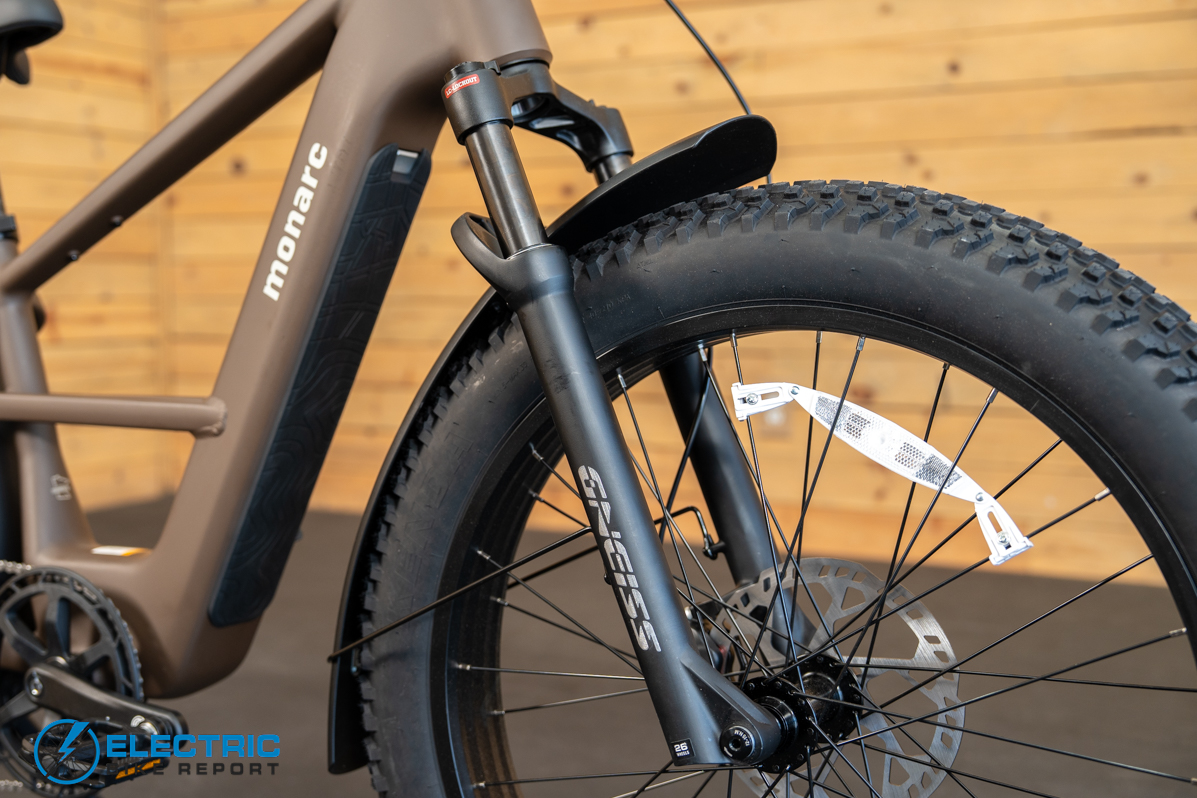
- Fork: Gneiss 80mm, Thru-axle, Reverse arch
- Frame: Aluminum, ST and HS
- Drivetrain: 9-Speed Shimano CUES 11-36T Cassette, Clutched Derailleur
- Grips: Ergonomic Lock-on
- Saddle: Custom
- Handlebar: (HS Rise: 50mm Sweep: 10mm Width: 710mm) (ST Rise 120mm, Sweep: 30 Deg, Width: 710mm)
- Kickstand: Included
- Pedals: Platform
- Tires: Kenda 26×4″ (option for 1.5 lbs of pre-installed Slime)
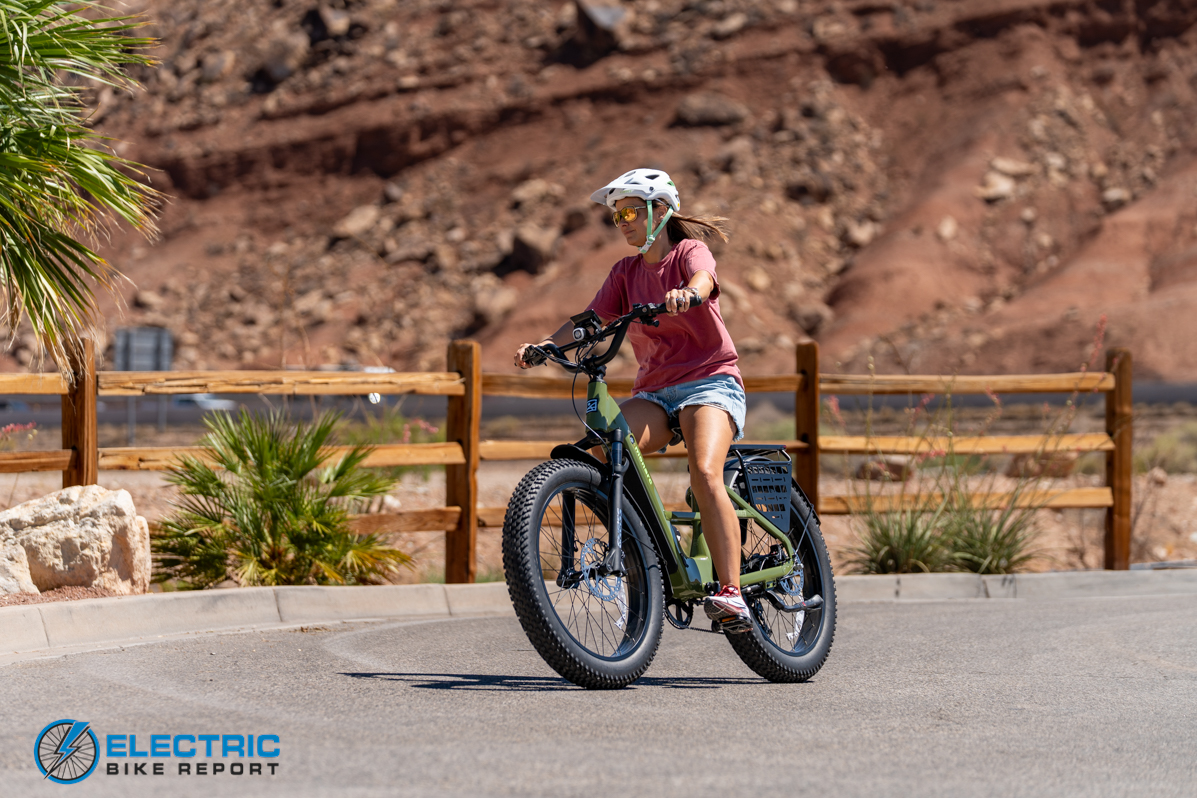
The Marker is at home on the bike path, at the campground, and just about everywhere in between.
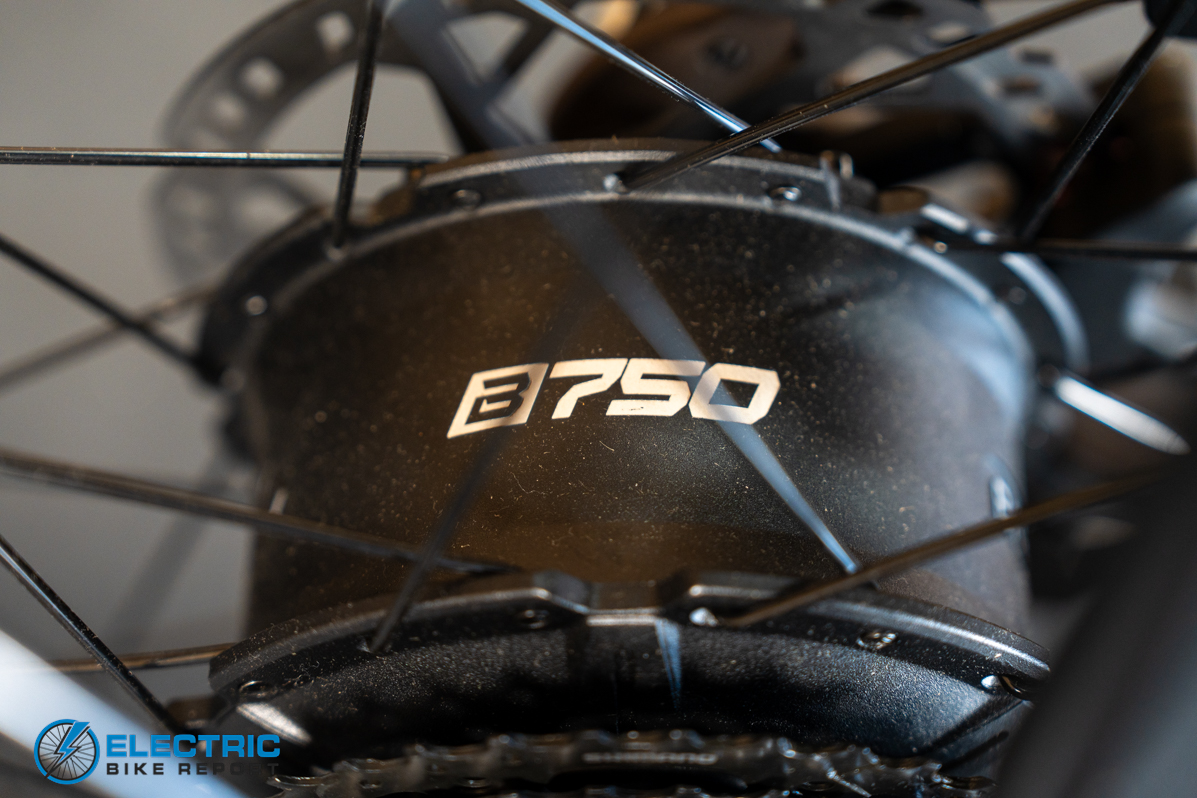
The Bafang 750W motor peaks as high as 1638W!
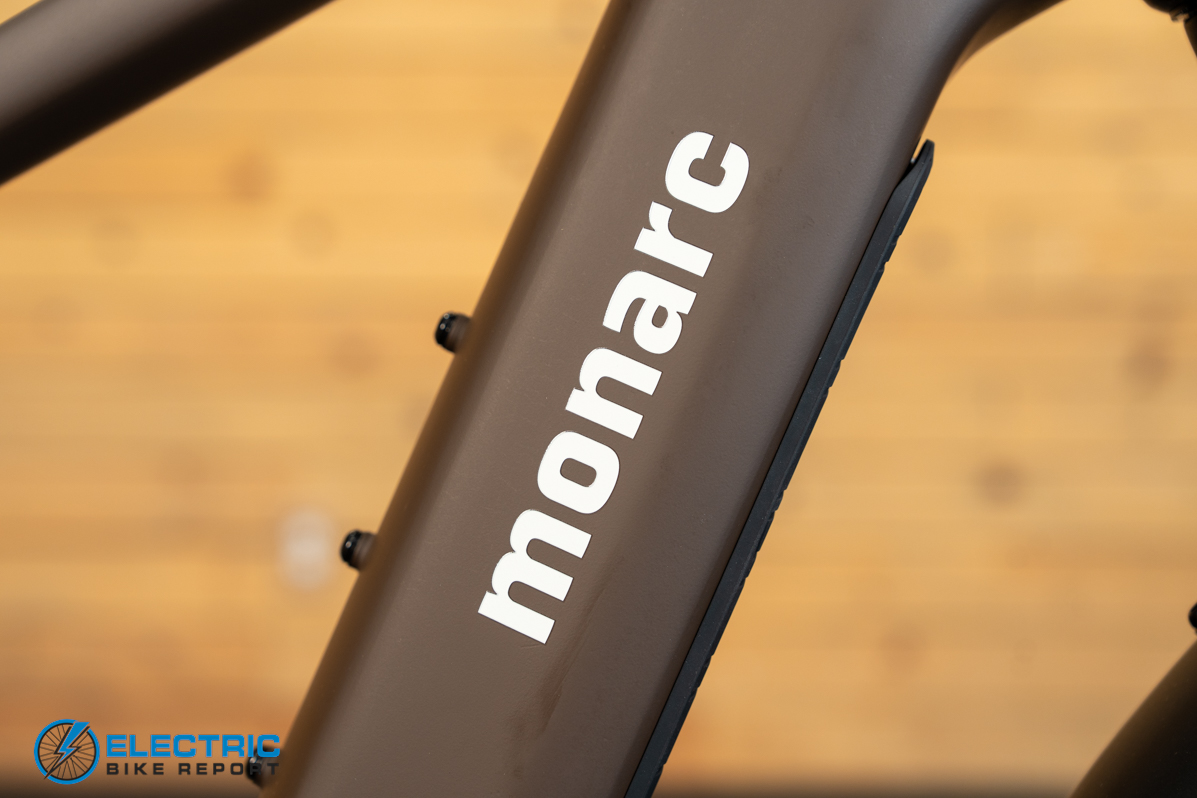
The sturdy and stable frame is key to the Marker’s personality.
Monarc Marker Review: Speed Test
Our speed test is designed around understanding how brands program their bikes. The Marker has several options for customization, including ride tuning for each of its 5 assist levels. To keep things simple, we left these settings untouched for the speed test. Rather, we focused on the Marker’s speeds using both torque and cadence sensors, as well as at class 2 and 3 speeds.
I began the test by pedaling with no assist, and I averaged 7.1 mph. This is usually a challenge on the burlier, fat tire eBikes, and that was the case here too. It’s a good thing the Marker has a powerful motor to level the playing field.
My first run saw the bike at class 2 speeds using the torque sensor. The lowest assist level is called “Cruise”, and there I averaged 9.3 mph. I continued moving through the levels, where Breeze settled at 14.5 mph, Explore at 17.5 mph, and Sport and Boost both topped out at 19.5 mph.
The class 3 torque sensor test yielded 9.2 mph in Cruise, 14.1 mph in Breeze, 19.3 mph in Explore, 23.1 mph in Sport, and 28 mph in Boost.
As for the cadence test: At class 2 speeds, Cruise averaged 12.7 mph, Breeze did 19.4 mph, and Explore, Sport and Boost all settled at 19.5 mph.
With the speed limit raised to the class 3 cap, Cruise did 12.1, Breeze sat at 20.5, Explore at 25.3, and Sport and Boost both hit the 28 mph limit.
That’s quite a lot to digest, but there are a few key takeaways that matter here.
First, in Torque mode, the Marker gave me a lot of reward for my effort. I was able to accelerate with ease, and even minimal pedal input seemed to result in the motor providing strong and supportive power.
Cadence mode felt equally as powerful, and even easier to pedal. As is typical with cadence sensors, as long as the pedals are turning, the bike will give you the output.
Regardless of what mode you use, the Marker offers a rewarding and laid-back experience. The power is more than enough, but it still feels approachable as you move from one assist level to the next. This isn’t always an easy balance to strike, but Monarc hit the nail on the head.
You may notice some overlap in speeds, particular in cadence mode. However, the levels still feel unique from one another; while the speeds may be similar, the acceleration and power delivery steps up predictably with each increase.
We also tested the Marker’s throttle, which felt smooth and dialed-in. It’s quick to 20 mph, but not jarring off the line.
Overall, I’d give the marker high praise in the speed test. Riders that want a powerful, gratifying PAS system will be very satisfied, and the grunt is very easy to get along with.
Sponsor
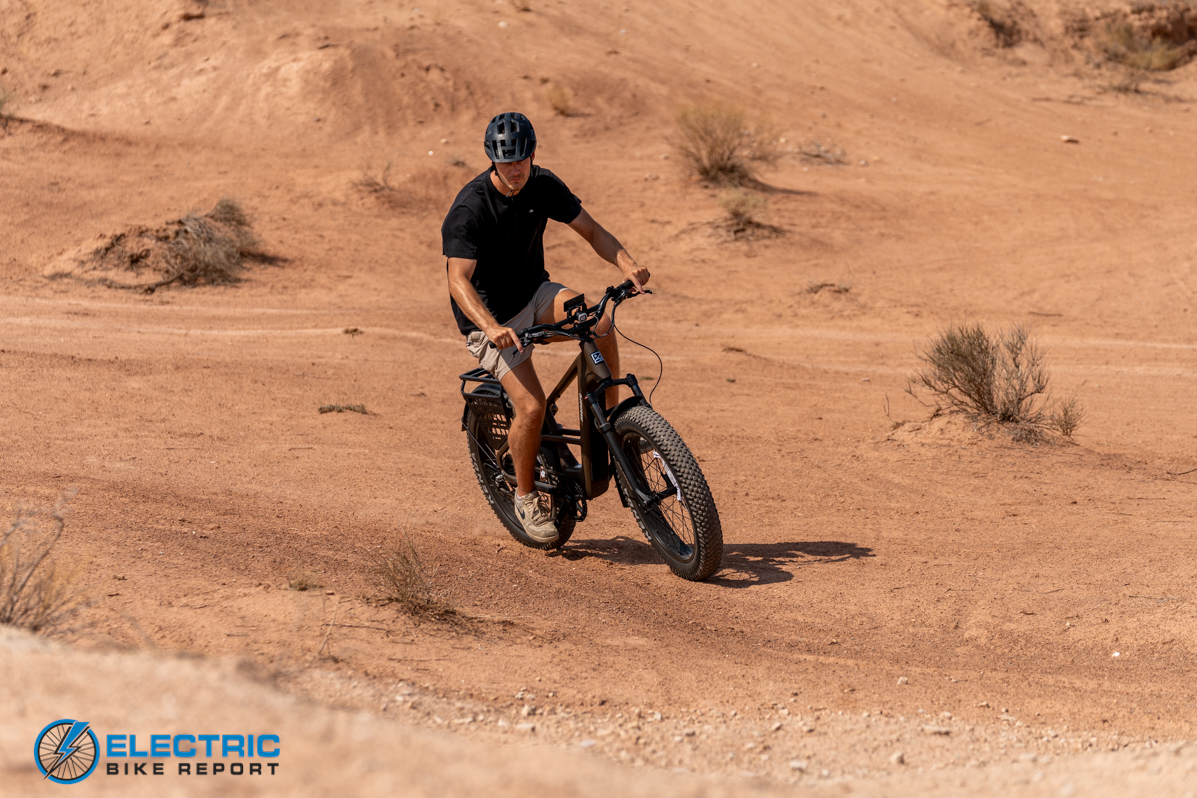
This bike isn’t afraid to kick the dust up.
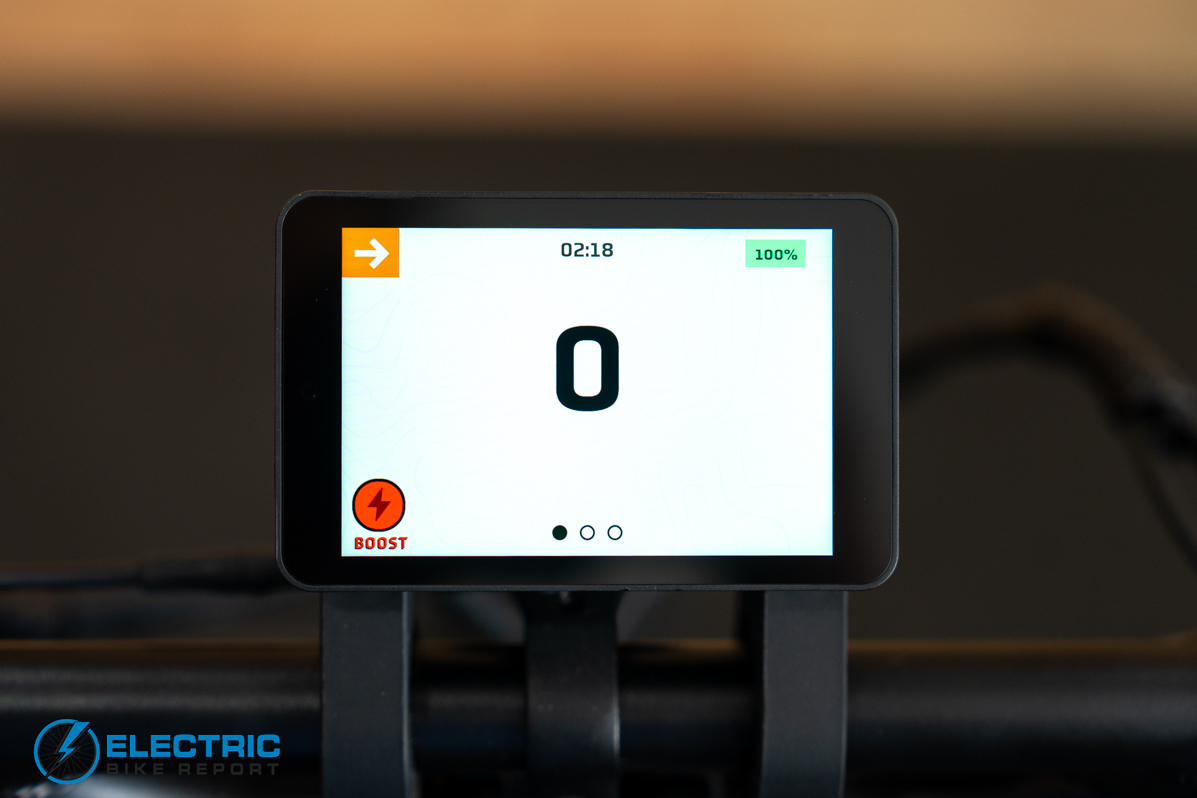
A touch screen display is a rare, but very welcome feature.
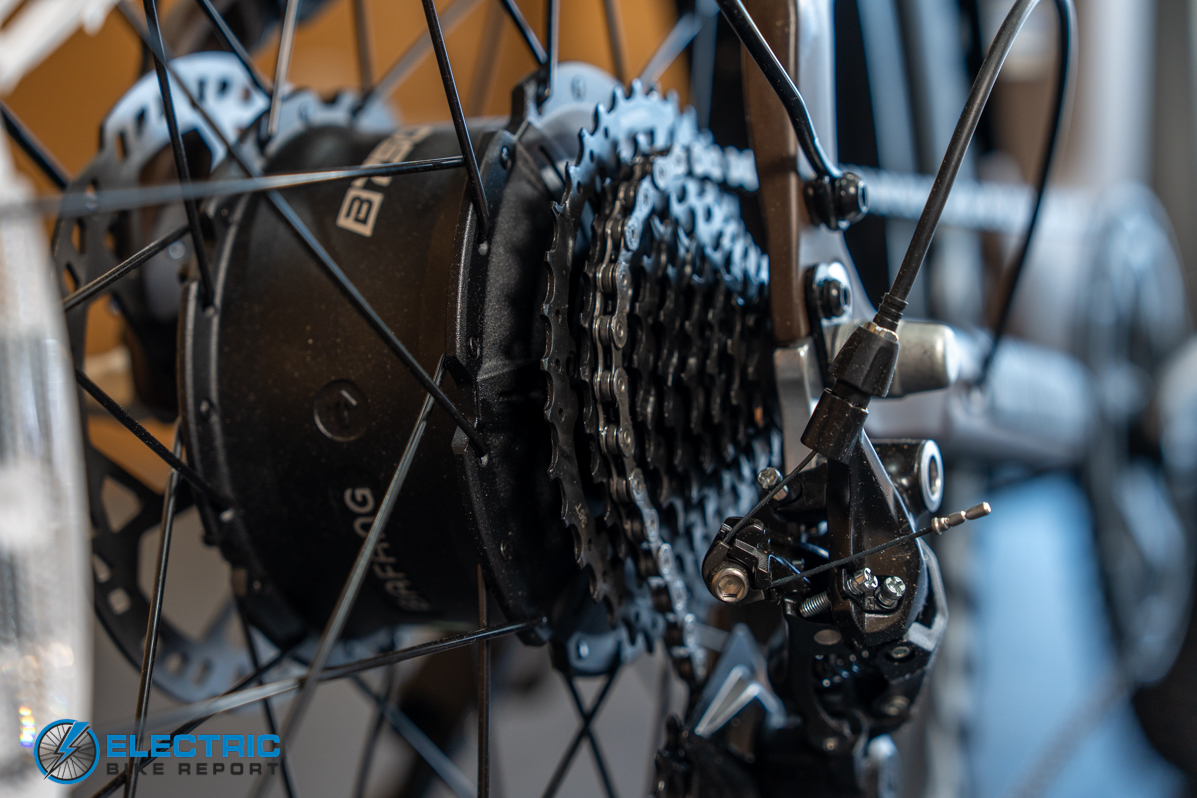
Shimano’s Cues 9 speed is reliable and crisp.
Monarc Marker Review: Range Test
Monarc states that one of their goals is to replace car trips with bike trips. With that in mind, there’s no doubt that range is a key metric for this bike. Good range = more opportunities to grab your helmet and leave your car keys.
We tested the Marker’s range in two trials. One using “Boost”, and another using “Cruise”. This gives us a picture of the battery life when using both maximum and minimum power.
In Cruise, the Marker did 60.93 miles, which puts it slightly below the category average of 70.54 miles. The maximum power test saw the bike do 32.53 miles – also just slightly behind the class, which came in at an average distance of 35.2.
There’s a few context points here. First and foremost, Monarc’s claimed range is 60 miles, which is right in line with our results. Secondly, the average battery size in the category is about 820 Wh – In short, the slightly shorter range is due to a slightly smaller battery.
While the battery is a little smaller, 720 Wh is still a respectable size. We also calculated energy consumption by dividing watt hours by mileage, and found that the Marker was right in line with the average of similar bikes.
The other factor here is the included extra battery. Yes, if you bring it along, you’ve doubled your range; but that’s not the only benefit. Longevity is a key pro of the second powerpack. Splitting time between the hardware can reduce wear on each one, and it also enables the opportunity for more intentional charging. Riders could charge each battery up to 80% rather than maxing it out, which would increase the amount of cycles left in its life.
Generally speaking, the Marker definitely has the juice to replace car trips, as well as handle long days in the saddle. The fact that the range is marginally shorter than average (60 miles is still decent) is especially easy to forgive when considering the extra battery. Well done, Monarc.
Sponsor
Sponsor
Monarc Marker Review: Hill Test
There’s no delicate way to say this: The Marker crushed our hill test. We did our usual throttle-only test, then a run using max pedal assist power. In both trials, the Marker was well above average.
Starting with the throttle, the Marker completed the climb in 1:41 at 17.9 mph. The category average was 1:49 at 16.6 mph. As for the pedal test, the bike summited in 1:38 at 18.5 mph. The mean of similar bikes was 1:47 at 17.1 mph.
The most impressive part of this performance isn’t just that the Marker is above average. The Marker is a standout in a class of already good hill climbers. Every bike in the comparison class is equipped with a 750W motor or bigger, and many of them also post very solid times. The Marker is a star player amongst a lot of talent.
My own time on the bike aligned perfectly with this. The Marker is a powerhouse, and it’s not shy about it. Not only does it make quick work of inclines, it makes it easy. I was able to climb hills with minimal effort using the PAS system, and the throttle doesn’t struggle either.
The reason for this performance is pretty cut and dry. The Marker’s Bafang 750W motor peaks at 1638 watts, and features 85 nm of torque. In other words, this bike feels powerful – because it is. The grunt is genuinely impressive.
Such power is impressive on essentially any eBike, but when you consider the price point, these results are even more compelling. This segment is another win for the Marker.
Sponsor
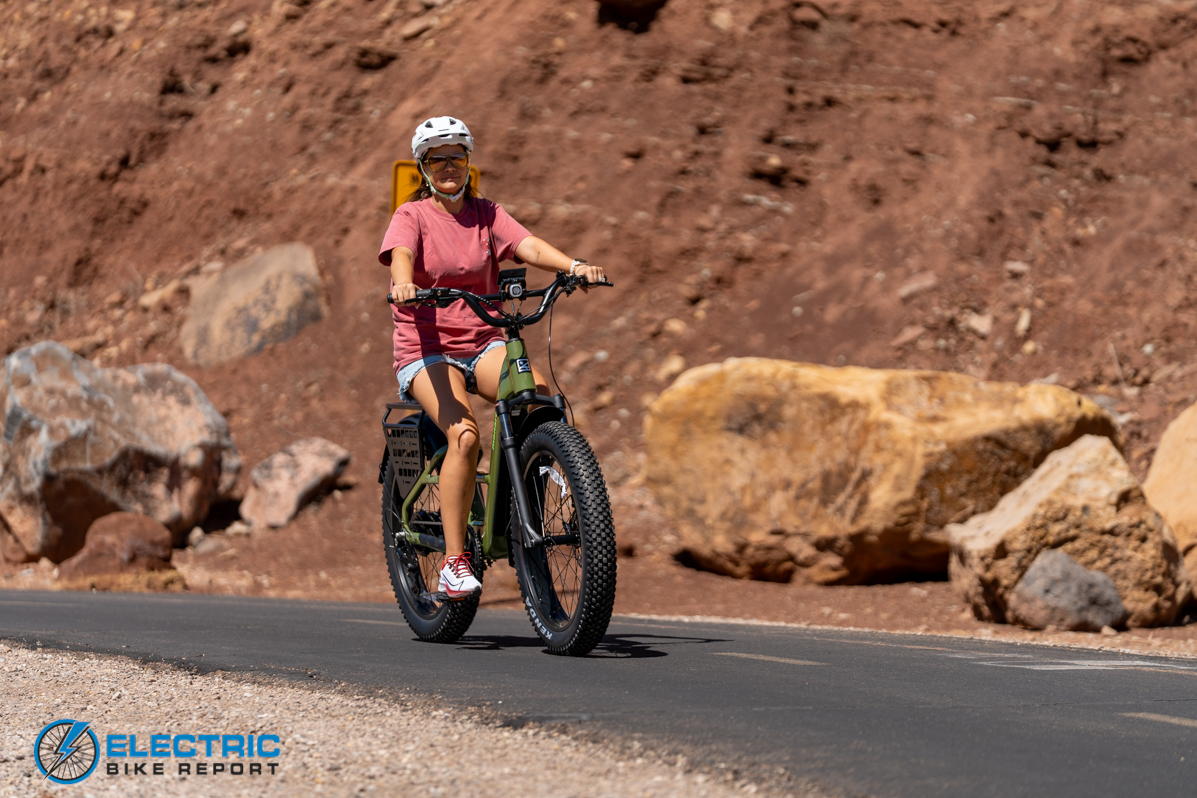
The step-thru is better suited for shorter riders.
The battery housing is easily accessible so you can quickly swap out the empty brick for a full one.
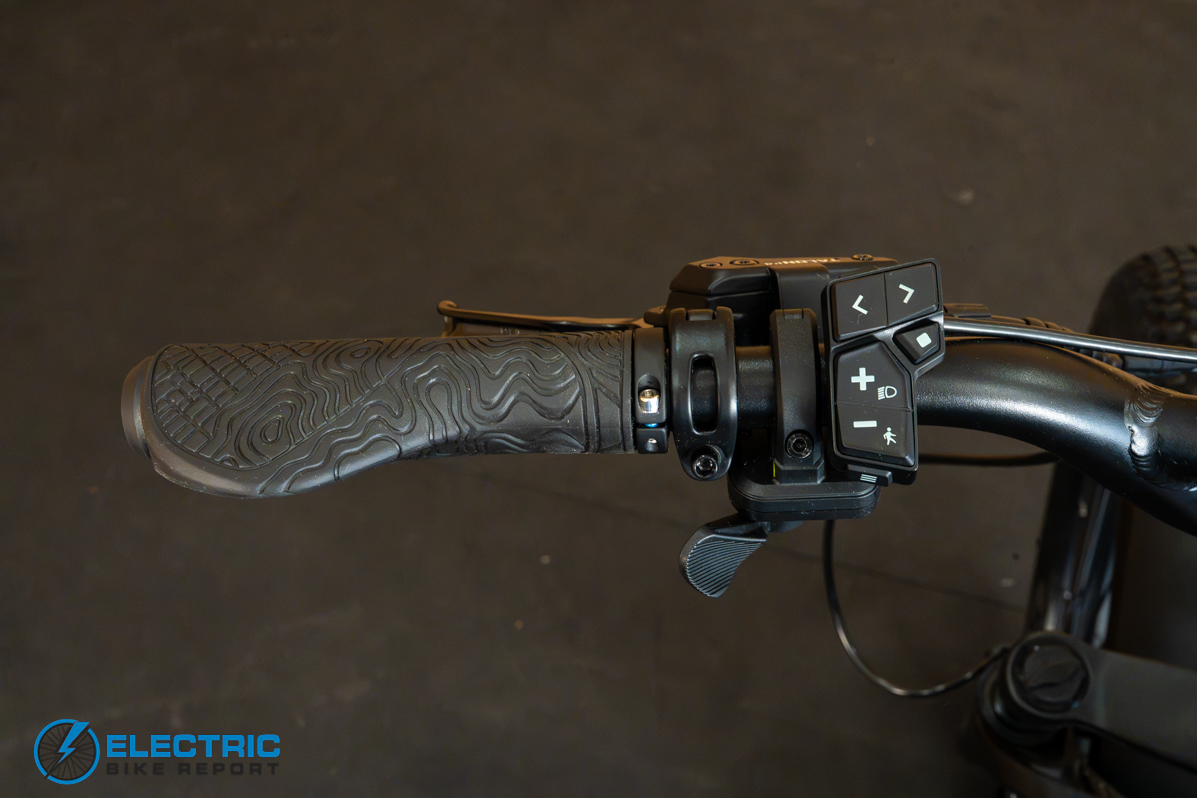
Not only are the lock-on grips comfortable, but the topo-inspired theme matches the display and battery cover.
Monarc Marker Review: Brake Test
Getting more for your money is one of the central pillars of the Marker, and the braking system follows this trend. The bike’s quad-piston Talon P4 brakes were developed by Star Union, and they’re paired with a 203 mm front rotor and a 180 mm rear rotor.
Four piston brakes are rarely seen on $2,000 bikes, which adds even more to the Marker’s value case. The argument becomes even stronger when you look at the performance; this bike recorded an average stopping distance of 19 feet 2 inches, while the category comparison came in at 22 feet 2 inches.
Just about any way you slice it, these are great results, and the reason for it is relatively simple. 4 piston brakes tend to have more power, better heat dissipation, and modulation than 2 piston options. Most of the bikes in this category come with 2 piston setups, and while that isn’t a bad thing, the Marker’s brakes just have more to give.
The staggered rotor sizes are also a factor here. The 203 mm front disc is very large, and since the front wheel handles the majority of the force under braking, this was a sound decision. By no means is the 180 mm rear rotor undersized – but the front hardware is better equipped to dissipate heat and provide reliable stopping power.
The power here isn’t just an on-paper stat. The Talon P4s feel strong, steady, and predictable. Even after repeated use, no fading or softness appeared, and I found the modulation to be very good. Frankly, to me, these felt on par with brakes from premium brands. Overall, the Marker posts re-“Markable” (pun intended) results in the brake test.
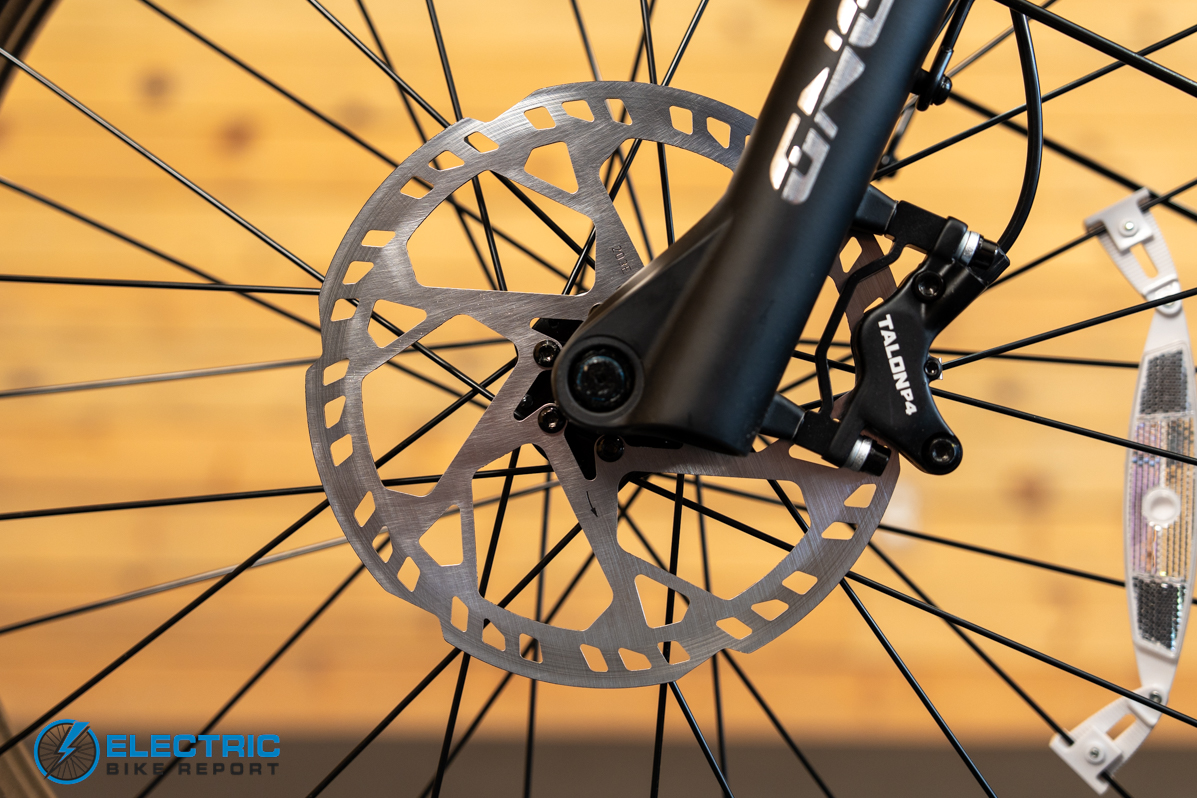
The larger, 203 mm front disc.
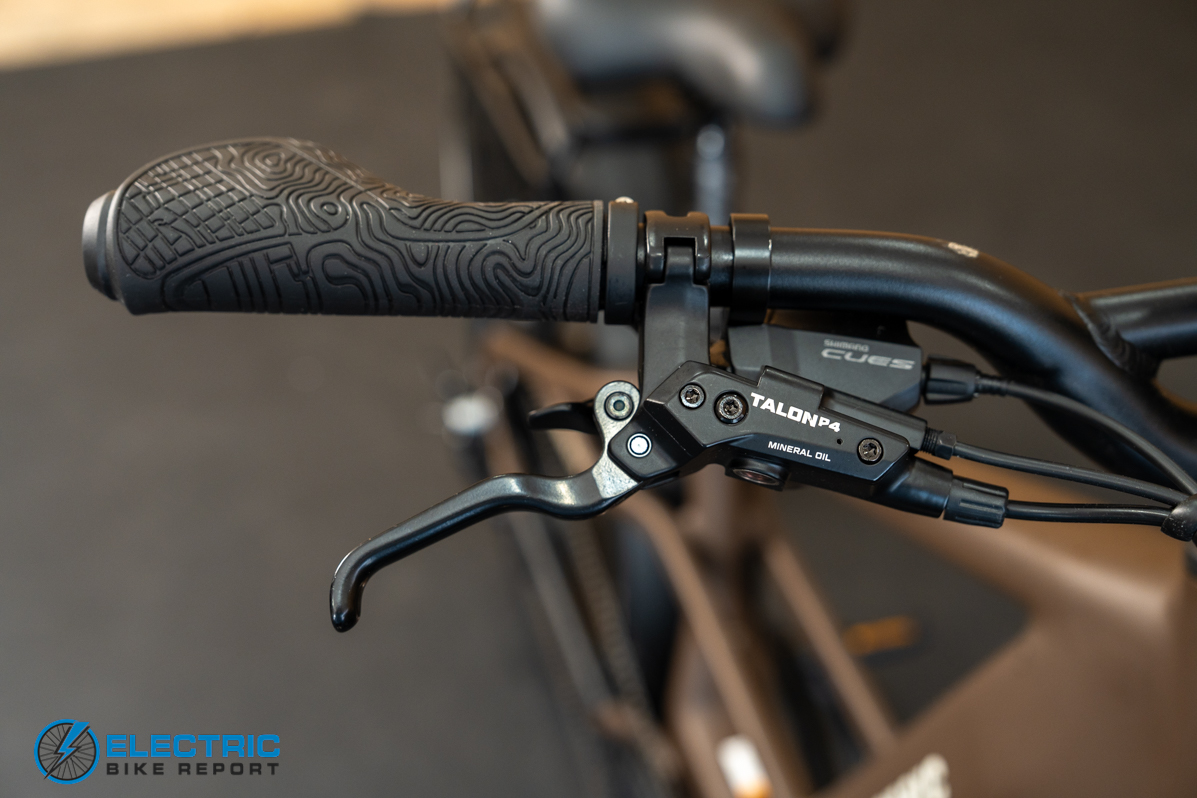
Four piston brakes typically have improved modulation, and that’s the case here too.
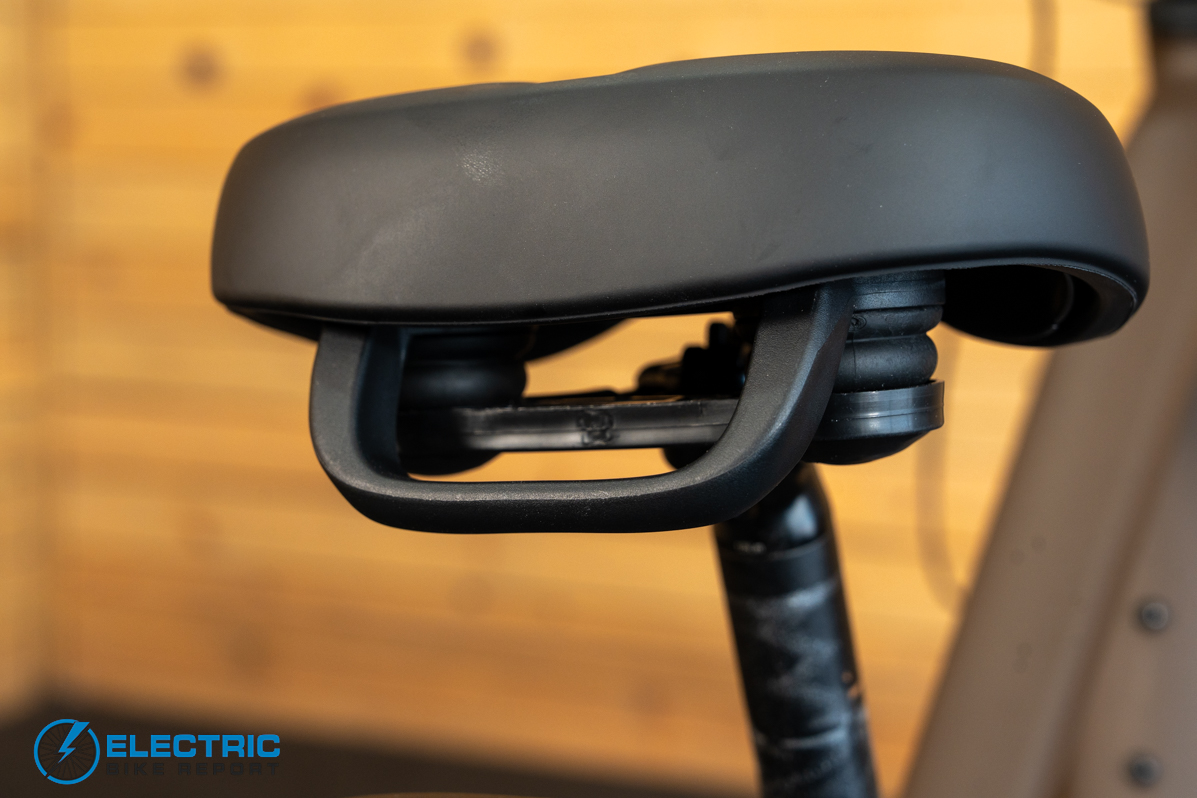
Little details like this handle on the saddle are great – it makes it easier to move the bike around a garage or tight space.
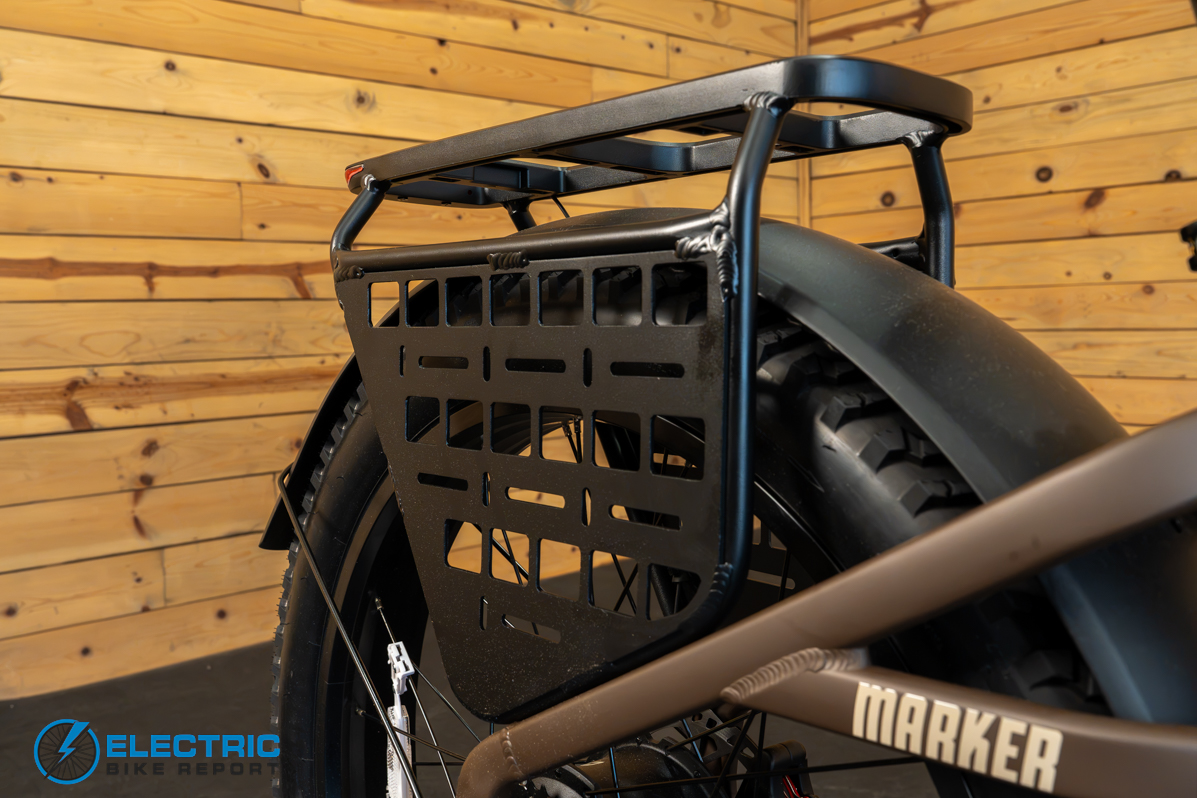
The MIK rack is compatible with a whole host of accessories, and it’s good for 66 lbs.
Monarc Marker Review: Ride Quality
Monarc is clear that ride quality was a priority on this bike, and in some ways, that can be the hardest section to nail down. Good parts and specs can get a bike pretty far, but how it feels is equally paramount.
I’ll be honest – Personally, fat-tire eBikes aren’t usually my thing. I can understand wanting a burly frame and wide rubber, but I typically prefer lighter and more minimalist alternatives.
The Marker felt hell-bent on changing my mind, and I’ll grudgingly admit, it won me over very quickly. While it doesn’t have the nimbleness that I usually gravitate toward, it’s an extremely confidence-inspiring bike.
The Gneiss fork was developed in-house, and I was impressed with its performance. Relative to other options we see at this price point, it felt smooth and fluid. This, combined with the 26 x 4 inch Kenda tires, make for a genuinely steady and comfortable ride. There’s a lot of grip coming in and out of corners – on pavement, the bike feels like it’s glued to the surface.
Off the asphalt, the Marker keeps its composure and steadiness. I think most riders interested in fat-tire eBikes want exactly that – stability on and off the bike path. I’m happy to report that Monarc hit the bullseye here.
The sturdy and predictable ride manners are very easy to get along with, but there is a trade off. This bike is definitely on the hefty side, as our tested weight was 88.34 lbs. Monarc actually addresses this on their website: they say that the Marker is designed with adventure, durability, and stability in mind, and with that comes some extra weight. That’s a fair statement, although I still wouldn’t mind a little bit less bulk.
Motor engagement is another highlight on this bike. Regardless of the sensor choice, I noticed that the power is never very far away. The torque sensor is quick to respond to even slight effort, and cadence mode is very active as well.
While the value and performance are great, the Marker has even more to offer. Details matter too – and Monarc paid attention. The touch screen display is a perfect example. It’s extremely clean and intuitive, but riders can still dive into the nuts and bolts of ride tuning and customization. Owners will have lots of options for dialing in their bikes here. Currently, the display is the key to doing so, but Monarc is currently working on an app that will offer further features, like navigation and data tracking.
There’s also a few optional extras that may interest riders. Among them are tire pressure sensors, a radar monitoring system, and a smart helmet. The helmet is particularly interesting to me – For the launch of the Marker, it’s currently included at no extra cost, and it offers the ability to answer calls, listen to music, hear navigation cues, and pair with the radar system.
The big picture here is that Monarc got the ride quality right. However, there is one area for improvement.
I found the fit to be slightly limiting. Each frame option is limited to one size – at about 6’3″, I am towards the upper end of the range for both the high-step and step-through options. Interestingly, I was able to get proper leg extension on both (rare for me on unisize bikes, so kudos there), but the reach and general dimensions of the bike felt small. This wasn’t a massive stumbling block, but taller riders should be aware that the Marker runs on the smaller end of the spectrum.
Outside of that, there’s very little to complain about on this bike. Monarc’s focus on ride quality is apparent – the Marker has a very good ride quality, and it comes at great value.
Sponsor
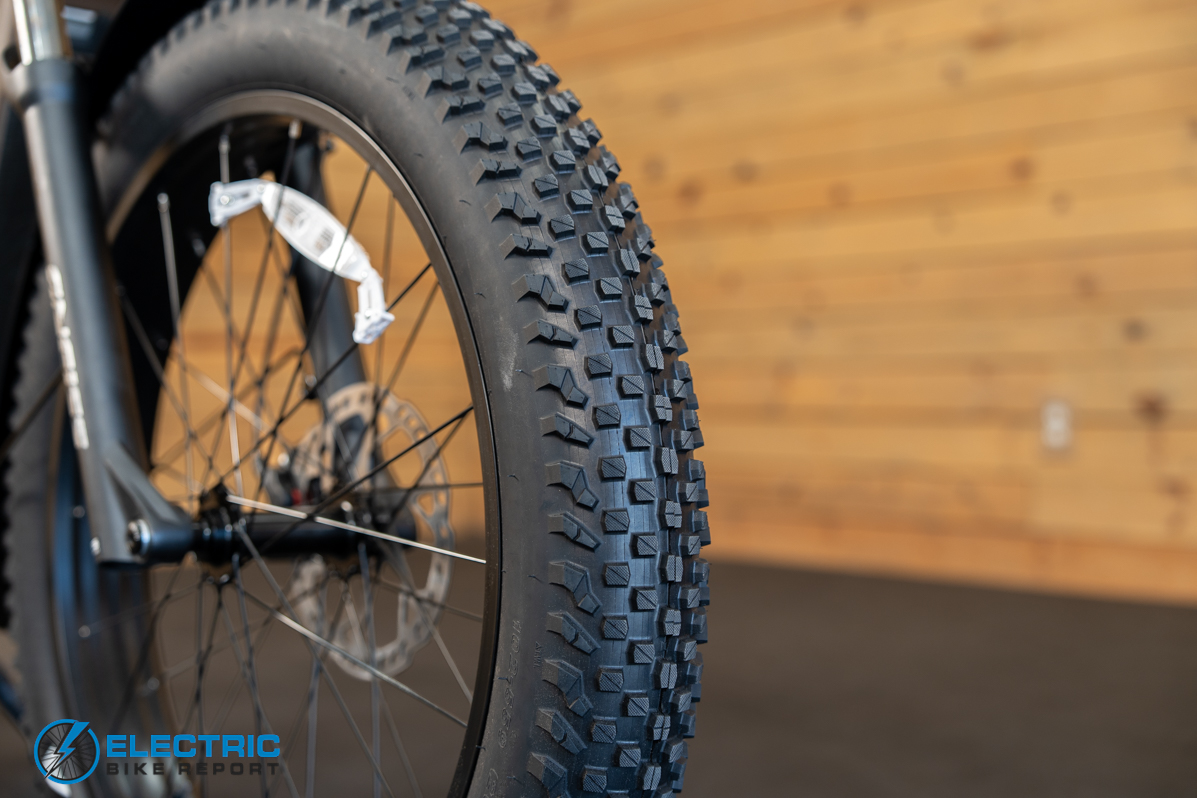
Kenda 26 x 4.0 rubber gives grip on and off the asphalt.
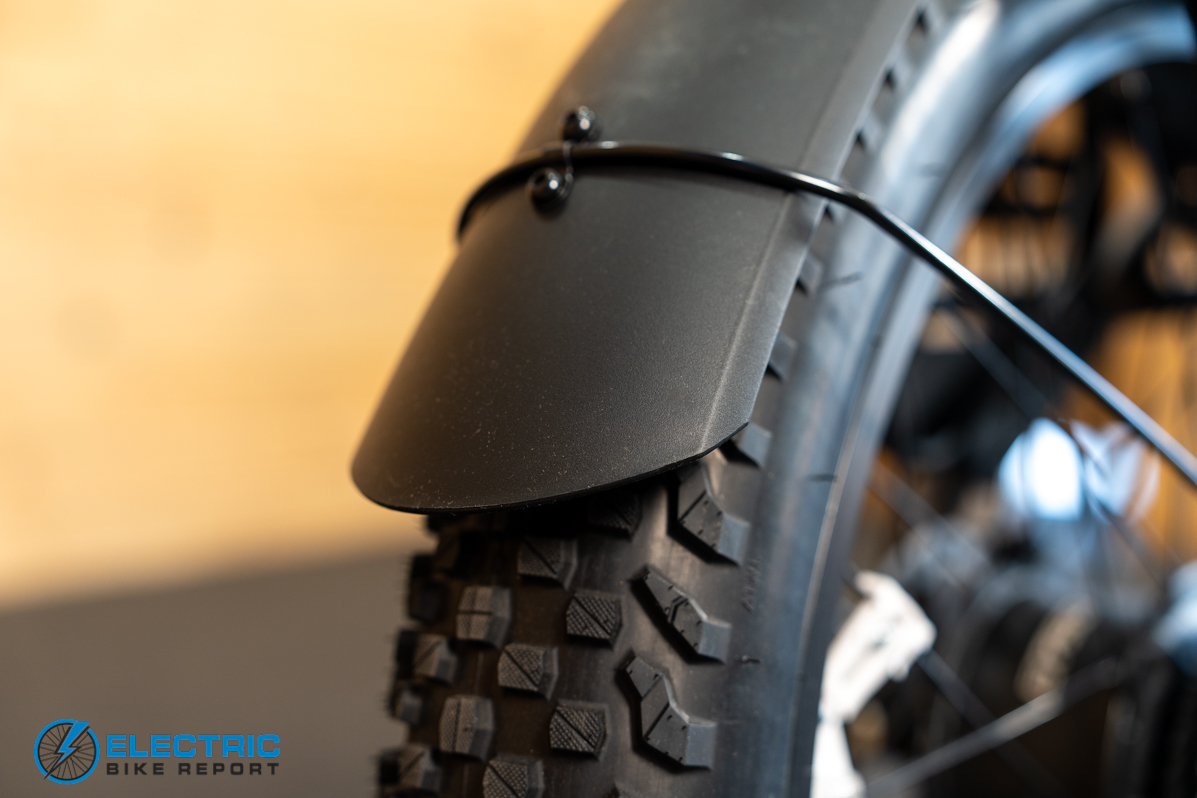
Flexible, damage resistant fenders are standard.
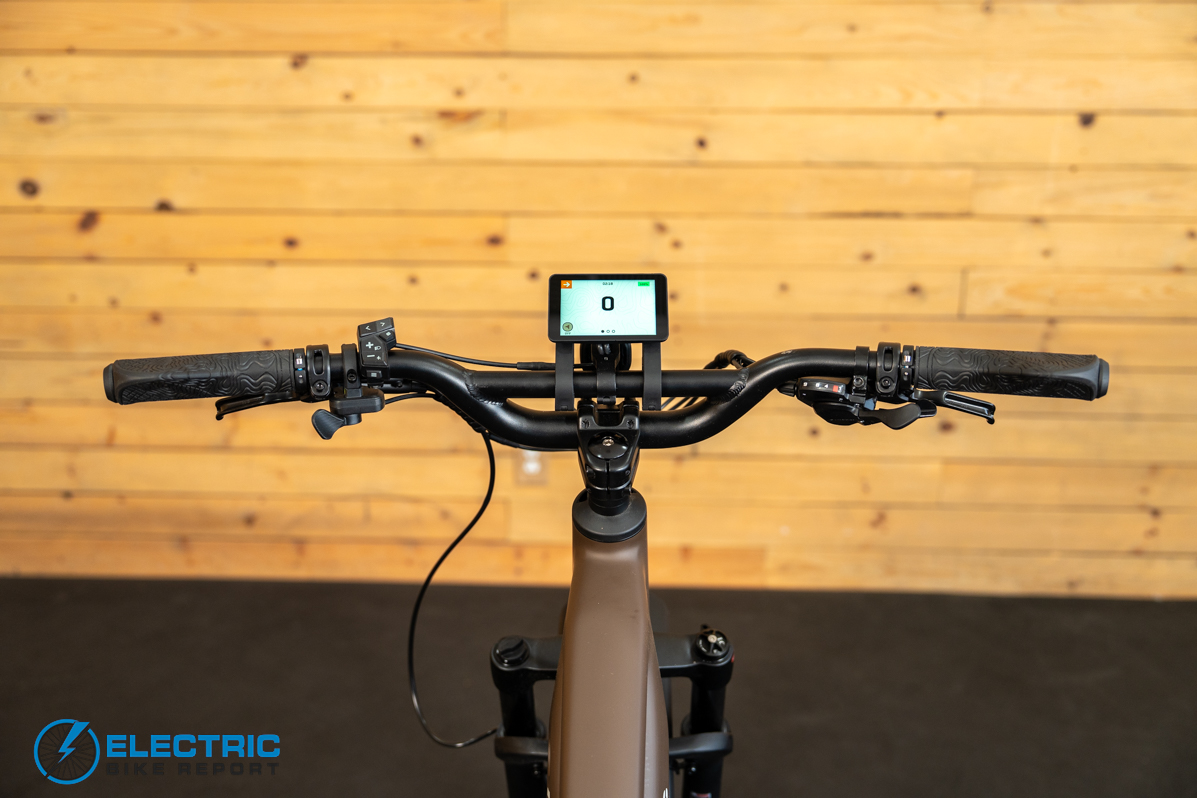
The touch screen display is central to the cockpit – nice and easy to see.
The Gneiss reverse-arch fork was developed in-house by Monarc.
Monarc Marker Review: Summary / Where to Buy
Monarc is early in their story. The brand launched just a few months ago, and this is one of its first offerings.
If this is the beginning, I can’t wait to see what else they’ll do.
The performance is, across the board, outstanding. It has power for hill climbing, a very rewarding PAS system, and superb stopping power.
For $2,000, there’s a lot of bike here. Things like the extra battery, 4 piston brakes, and 9 speed drivetrain offer serious value. This is especially true especially considering they aren’t just afterthought add-ons – they’re quality components.
The focus on ride quality is also another strong point. It’s easy to tell that Monarc was deliberate in their design, and riders will feel this too. The choice in frame options helps broaden the audience for the Marker, as cruisers and adventurers alike will be taken care of.
The only critiques are on weight and sizing. It is a fat tire eBike, so some mass is expected, but we wouldn’t mind seeing the Marker shed a few pounds. As for the sizing, the reach is a tad short, and may not be perfect for taller riders. With that said, many could still make it work.
Overall, this fat-tire adventure machine packs power, comfort, versatility and value. It’s extremely easy to recommend this bike to anyone that’s interested in a bike for the pavement and the trail.
Happy Riding! Make sure to let us know if you have any questions or if you think we left anything out in this review of the Monarc Marker down in our comments section.
Sponsor
Sponsor
Reader Interactions
Comments
Leave a Reply




when will the full review happen?
We’re still waiting on a production model from Monarc, but once we receive it, we’ll get it through our testing process as soon as possible!
I’m needing a bike that can climb punchy, rolling hills. I got a Vtrick Disc2 last year and it falls short on 12-15% hills near my home. I’ve lost weight since then (22#) but think I might need something with a top tube and better climbing, including maybe a granny gear.
How does this compare to the Vtrick Summit 2?