

Velotric Discover M Review | Refined Comfort & Customization
Feb 10, 2026
 2 Comments
 Share
Share
This relaxed, mid-drive equipped cruiser/commuter hybrid offers easy pedaling, a soft and smooth ride, and loads of personalization options.
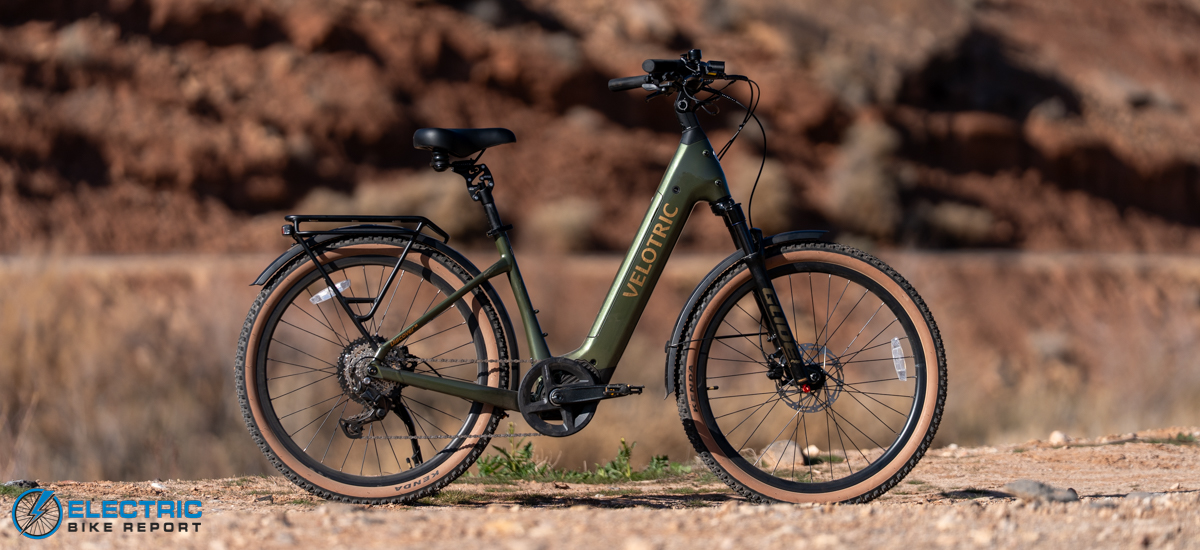
The Discover line of commuter / cruiser e-bikes have been Velotric’s flagship models from day one. The brand got its start with the original Discover 1 after a successful crowdfunding campaign, while the subsequent, more polished Discover 2 signalled a clear redefining of Velotric’s focus and approach.
The company’s newest Discover models mark another advancement for Velotric. Instead of a single e-bike, the latest generation has been split into two spec tiers for riders with different budgets, performance needs, and experience levels: the Discover 3 and the Discover M.
So which model is right for you?
That depends on the specific riding experience you prefer. We’d suggest thoroughly reading (or watching) our full reviews for each bike before deciding, but we can offer some insight up front.
The refined, top-tier Discover M, which we will focus on in this review, features a powerful, responsive mid-drive motor, distinct programming, and a high-capacity battery. The base model, which we cover separately in our Velotric Discover 3 review, offers a rear-hub motor, a step down in other specs, and a lower price.
The Discover M’s overall ride quality is best defined by its motor. In contrast to a rear-hub, which gives riders the sense of being pushed from behind, a mid-drive feels much more intuitive, balanced, and synergistic. It amplifies your pedal power, making it seem that you’re riding a “regular” bike—one that’s faster, easier, and more fun.
Like its sister model, the Discover M provides comfort, useful features, and customization options in spades. Its ride is softened by a cushy saddle and both a suspension fork and seatpost. Riders can switch between torque and cadence-sensing modes for active pedaling or relaxed cruising, and program the pedal assist system for a personalized feel.
If you want more information about this bike’s ride feel and real-world performance, continue reading below to find out how it scored in our standardized Speed, Brake, Range, and Hill tests!
***You can save $60 when using the code: EBReportDM01at checkout

Sponsor
E-Bike Category:Commuter / Cruiser
E-Bike Class:Class 1 (pedal assist to 20 mph)
Class 2 (throttle to 20 mph)
Class 3 (pedal assist to 28 mph)
Class 2 (throttle to 20 mph)
Class 3 (pedal assist to 28 mph)
Sponsor
Velotric Discover M Video Review
 Pros
Pros- The Discover M feels remarkably natural, balanced, and responsive to pedal, thanks to its custom 500W mid-drive motor.
- It’s incredibly customizable, with programmable pedal assist levels, torque and cadence sensing modes, and profile-based smart tuning.
- Comfort is front and center, with upright positioning, a tunable air suspension fork, a suspension seatpost, and a cushy saddle and grips.
- The ride experience is enhanced by uncommon features, including an Auto Assist mode, Cruise Control, Location Tracking, NFC Card Unlocking, an MIK-HD cargo rack, etc.
- It’s suitable for riders of all heights and weights, with a 440-lb capacity and the ability to accommodate those between 4’11” and 6’7”.
- SUV features such as knobby tires and a suspension fork allow the Discover M to venture off pavement and onto dirt roads, gravel paths, etc.
- It has meaningful component upgrades when compared to the Discover 3, including a 9-speed drivetrain, a sturdier suspension fork, a larger battery, etc.
- The step-thru frame boasts a glossy, automotive-quality paint job and a convenient standover height of just 15.6 inches.
 Cons
Cons- The bike displayed some minor inconsistencies in motor output and programming during testing. We expect that an OTA update could solve these hiccups.
- While the base model offers five color options, the more premium Discover M is limited to just two.
ELECTRICAL SPECS & FEATURES
- Battery: 48V, 16.7Ah (801.6Wh), IPX7, Certificated by UL 2271
- Charger: 48V, 3A Fast Charger
- Display: 3.5″ Full color, High brightness, Bluetooth,NFC, Adjustable Angle
- Motor: 48V, 500W, 960W(Peak Power),100Nm
- Headlight: 500LM High-output Integrated LED, Adjustable Angle
- Taillights:Braking Indicator, Turn Signal, Rear Light Steady/Flash, Integrated with Rear Rack
- Pedal Assist: 4 Riding Modes +Auto Mode/Ride Tuning
- Claimed Range: Up to 95 Miles
- Throttle:Trigger-control, Removable
- App:Velotric app
- UL Certification:UL2849 & UL2271
Weight & Dimensions
- Claimed weight: 60lbs
- Tested Weight: 66 lbs (including 10 lb battery)
- Rider height range: Regular:5’2”~5’11”, Large:5’9”~6’7”(With Suspension Seatpost)
Regular:4’11”~5’9”, Large:5’6”~6’4”(Without Suspension Seatpost) - Total payload capacity: 440 lbs
Components & Accessories
- Brakes:Tektro Hydraulic Disc Brake, 180mm Front/180mm Rear Rotors
- Fenders: Aluminum Alloy, Front and Rear Full Coverage
- Fork:Air suspension 80mm Travel with Lock-out, 34mm Inner Tube, Rebound adjustable
- Frame: Triple-Butted Aluminum Alloy
- Drivetrain: SHIMANO Cues, 9-speed, 46T chainring, 11-46T cassette
- Grips: Durable Ergonomic Grips, Lockable
- Saddle: VELOTRIC Comfort Ergonomic Seat
- Handlebar: Aluminum Alloy, Ф31.8mm, 680mm(R)/700mm(L)
- Kickstand: Aluminum Alloy, Included, Rear Mount
- Pedals: Plastic
- Tires: KENDA 27.5×2.4″ eBike Puncture Resistant Tires
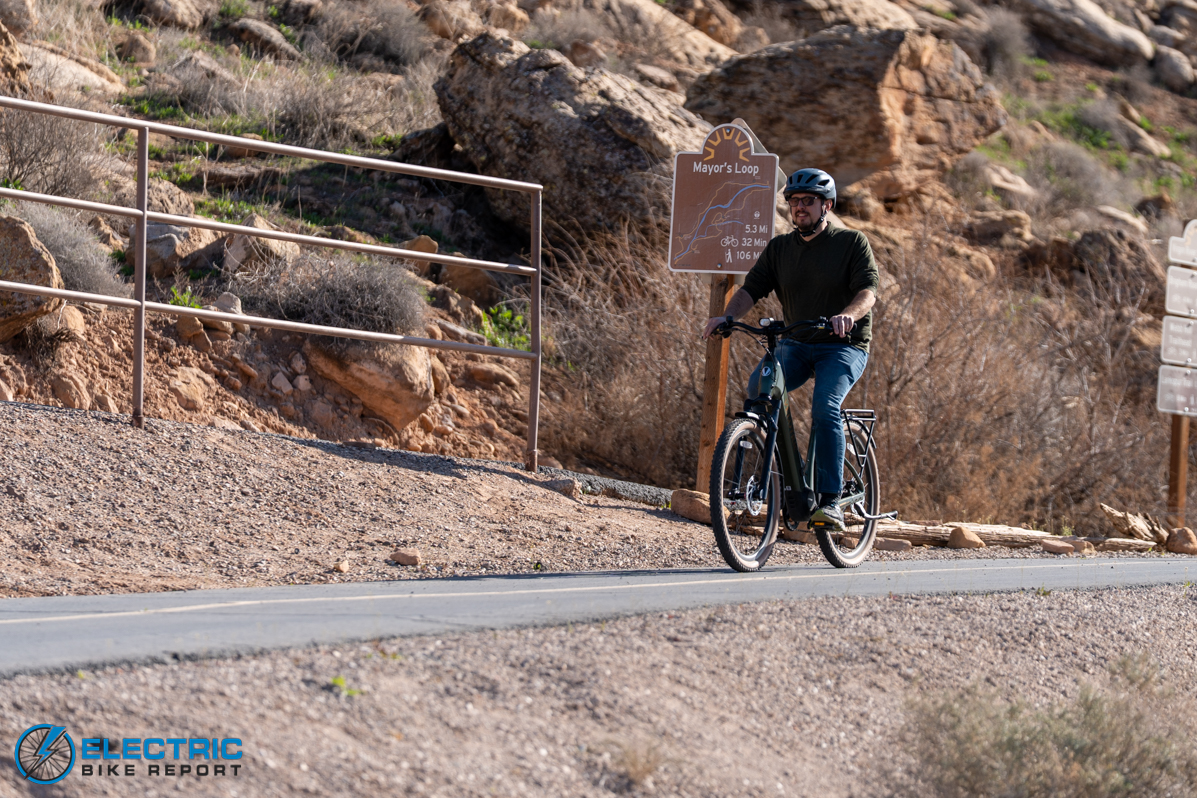
Riding the Discover M is more comfortable than ever, with an adjustable air fork, a suspension seatpost, and comfortable cruiser geometry.
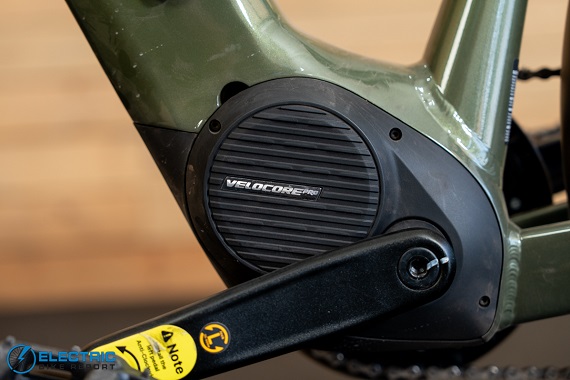
The Discover M’s 500W Velocore motor is Velotric’s first mid-drive, and it packs a punch!
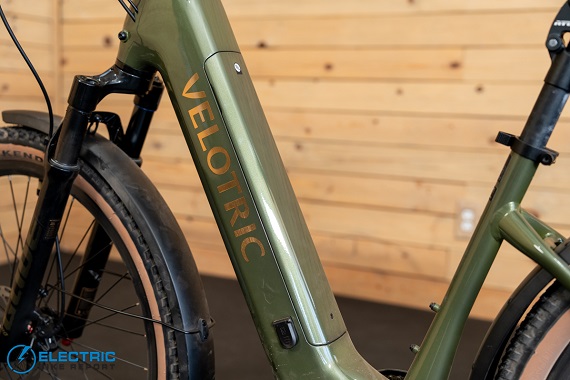
An 802 Wh battery is cleanly integrated into the bike’s down tube, which shows off the Olivine Green paint job nicely!
Velotric Discover M Review: Speed Test
To test the Discover M’s speed capabilities, I rode the bike on a paved, mostly-flat trail while tracking my average speed. Like most Velotric models, the Discover M can quickly switch between Class settings and sensor modes, so I tested the bike using both torque and cadence-sensing modes with both Class 2 (20 mph) and Class 3 (28 mph) maximum speeds.
As shown in the graphs above, my average speeds increased relatively steadily throughout each test. As I stepped up through each of the bike’s standard four pedal assist settings (Eco, Trail, Sport, and Boost), the motor delivered more power, either giving me more return for my effort in the torque sensing mode or carrying me up to a higher speed in the cadence mode.
When in its torque-sensing mode, the motor‘s output varies in relation to rider effort, giving more power when pressing harder into the pedals. In this mode, the Discover M feels much like an analog bike, albeit one that is faster and less strenuous to pedal.
Overall, the bike rode well when relying on the torque sensor, though I wasn’t quite able to reach 28 mph in Class 3 mode. This shows that there may be a bit of room for improvement in the bike’s gearing, though the bike did feel plenty fast and powerful.
Cadence mode is not dependent on the effort applied by the rider. Instead, it cares only that the cranks are turning consistently. In this mode, the motor carries the bike up to within a particular window of speeds depending on the assist level, surging in power when falling below the programmed limit and backing off when approaching the high end.
These surges in speed could be a bit jarring, and the bike didn’t maintain speed as consistently as other Velotric models I’ve tested with rear-hub motors. While this could likely be fixed with an over-the-air (OTA) update in the future, I’d recommend that riders keep the bike in torque-sensing mode for the best experience in its current state.
Overall, the programmed power distribution of the main four assist levels was well-balanced, with meaningful differences in power and speed between each setting. One of the Discover M’s best features, however, is the customizable nature of its pedal assist system; riders can change its power and sensitivity via the Ride Tuning feature in both the display menu and the Velotric app.
The bike has one other pedal assist level, called Auto, which automatically shifts the motor’s output across its full range of power in response to the rider’s effort and surrounding environment. This mode responded rapidly, with sometimes punchy acceleration in response to changes in my pressure or the grade of the path I was riding.
Acceleration is another aspect of the bike that can be customized, again via the display or app. The “Experience” setting, which offers Slow, Smooth, and Turbo modes, allows riders to choose from gradual, steady, or punchy acceleration for both the throttle and pedal assist system. By default, both are set to smooth for a balanced experience.
It’s worth mentioning that, even when set to Turbo, the throttle’s power felt more reserved than when I was pedaling. Considering that the motor’s high torque output could quickly chew up the drivetrain if it wasn’t reined in, this makes sense to reduce wear and the need for parts replacement.
This test showed that the Discover M’s default settings make for a generally easy and intuitive experience. While the bike was not quite able to reach 28 mph in all conditions when unlocked to Class 3 mode, its speed capabilities and power levels felt appropriate for its style. The bike performed well overall, and we greatly appreciated the ability to tune and personalize its pedal assist system.
Sponsor
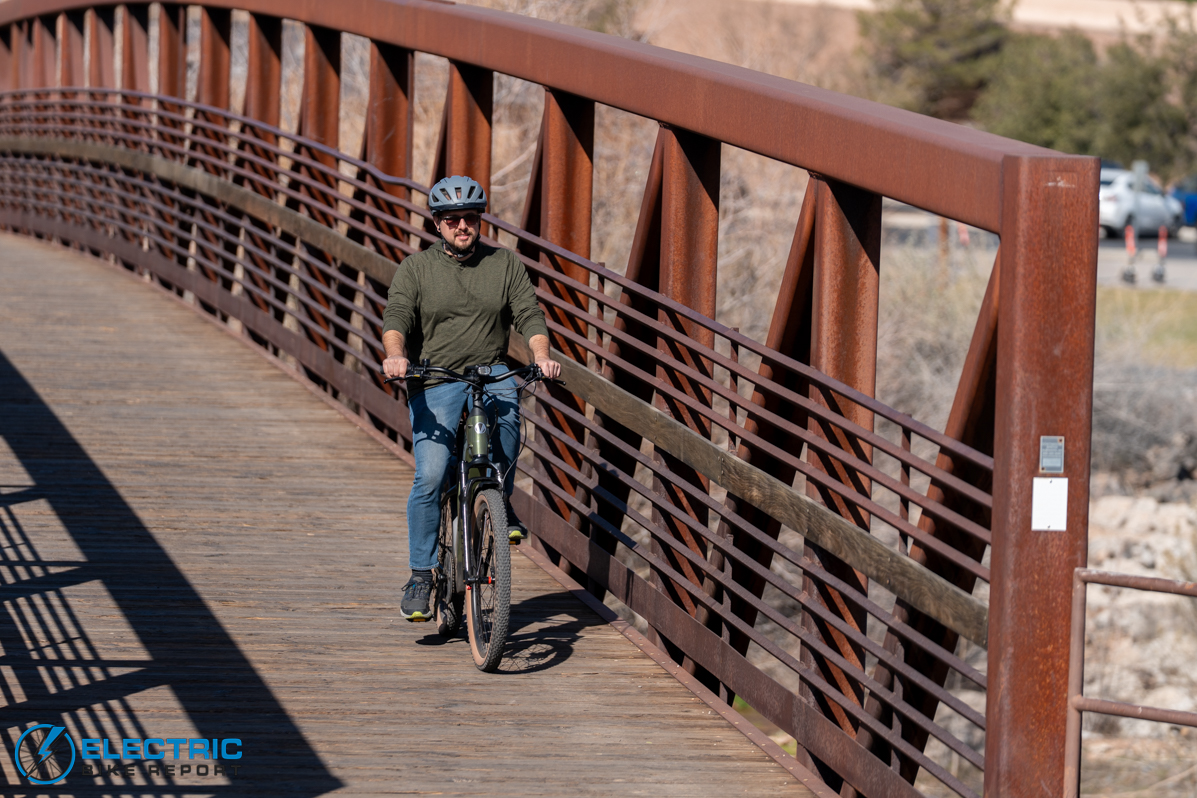
While other Discover models have felt great, this version of the bike is remarkably smooth and natural-feeling.
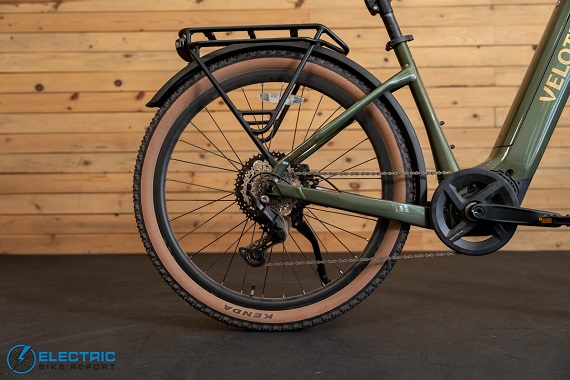
This version of the Discover features a 9-speed Shimano CUES drivetrain.
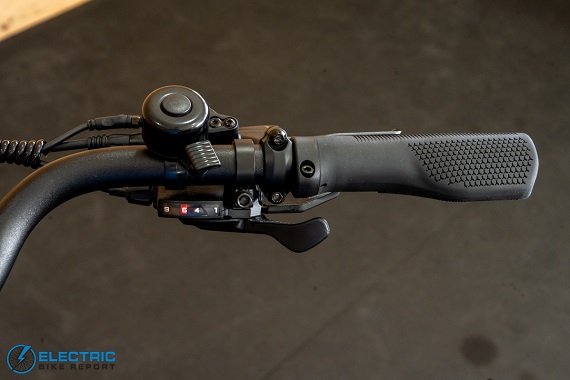
A trigger-style shifter on the right handlebar operates the bike’s drivetrain.
Velotric Discover M Review: Range Test
An e-bike’s range is a top concern for most consumers, especially with commuter and hybrid-style e-bikes like the Discover M. We test every model to determine the minimum and maximum distance it can travel on a single charge using the method explained above. With its 500W mid-drive and an 802 Wh battery, our testers covered 32.3 and 81.2 miles.
Similar e-bikes on the market, including the rear-hub-equipped Velotric Discover 3, travelled 34.3 and 70 miles in their testing. Compared to this baseline, the Discover M scored relatively average to above average, meaning that it is well-suited for daily use as a commuter, errand-runner, or leisure bike.
While Velotric’s advertised range of up to 95 miles from a charge may be hopeful, the bike scored well overall. Its most notable advantage was its larger-than-average battery; a total of 802 Wh gave it roughly 135 Wh of additional capacity over the 667-Wh average.
During our testing, the bike’s motor used, on average, 9.9 watt-hours per mile (Wh/mi) of charge in its Eco mode test and 24.8 Wh/mi in its Boost mode test. For reference, similar models used 10 Wh/mi and 19.9 Wh/mi in their low- and high-power tests, respectively.
Clearly, the bike’s ample battery size allowed it to meet the max-assist average mileage and exceed the low-assist average in our testing, despite using significantly more power than most similar models in Boost.
Based on our interactions with readers and viewers, most travel around 20 miles or less per round trip when riding. Depending on their weight, terrain, speed, and chosen assist level, our testing shows that the average rider should expect a maximum of around four round trips per charge (when using the lowest assist level).
Note that our testing was performed with the bike’s standard settings in Eco and maximized motor output in Boost. Those using the default Boost settings may exceed our results, while those increasing the output of Eco might expect less. We recommend that riders making large adjustments to programming perform their own range test to learn the bike’s capabilities under personalized riding conditions.
An additional thing to note is that Velotric advertises a throttle-only range of up to 70 miles. We did not test the Discover M via this method (an approach we usually reserve for moto-style e-bikes), but our results typically fall below a bike’s high-power pedal assist mileage. As such, we’d expect roughly half of the advertised mileage or less when using the throttle.
Since a battery’s capacity in amp-hours (Ah) can be divided by its charger’s output in amps (A), the Discover M’s 3A fast charger should power up its battery in just over five and a half hours. As a final note, we greatly appreciated the fact that the display shows an estimated remaining charge time when plugged in; it’s an uncommon feature that proved useful and accurate!
Sponsor
Sponsor
Velotric Discover M Review: Hill Test
We test every e-bike’s ability to climb difficult hills using the method explained above. The Discover M exceeded our expectations in both its Boost mode and throttle-only tests, with results of 1:45 and 1:56, respectively. Similar models scored roughly 2:02 and 2:11, making Velotric’s cruiser/commuter at least 15 seconds faster than average.
Once again, we maximized the bike’s motor output in Boost mode, giving it the best possible chance on our test course. It’s also worth noting that we tested the Discover M using its torque-sensing mode, which requires active pedaling; it is possible that we would have had even faster results in the bike’s cadence-sensing mode.
In most cases, we’ve found that e-bikes with rear-hub motors typically offer faster and easier hill climbing than those with mid-drive motors. The Discover M’s 500W motor, however, is more powerful than most (mid-drives often run between 250W and 350W), which clearly levels the playing field.
Nowhere is this more obvious than in the motor’s torque output. While models in our comparison group (which included many e-bikes with rear-hub motors) averaged 82 Newton meters (Nm) of torque, the Discover M’s custom Velocore mid-drive produced 100 Nm.
This was clearly enough to offset the difference in peak wattage; the Discover M’s motor maxed out at 960W, while those in our comparison group averaged 1033W. It’s worth noting, however, that the comparing power output between the different motor types isn’t exactly apples to apples; a 500W mid-drive is often relatively in line with a 750W rear-hub motor.
In real life, the Discover M’s power translates to a remarkably relaxed and easy climbing experience when pedaling. Based on my personal experience, most riders should summit most hills with relatively light pressure on the pedals when in torque mode and with very relaxed effort when in cadence sensing mode.
Those who prefer to let the motor do all of the heavy lifting can employ the throttle. A benefit of mid-drive-equipped e-bikes with throttles is that the rider can take advantage of the gearing in the same fashion as when pedaling. As such, Discover M riders should downshift when approaching grades to give the motor better mechanical advantage.
Sponsor
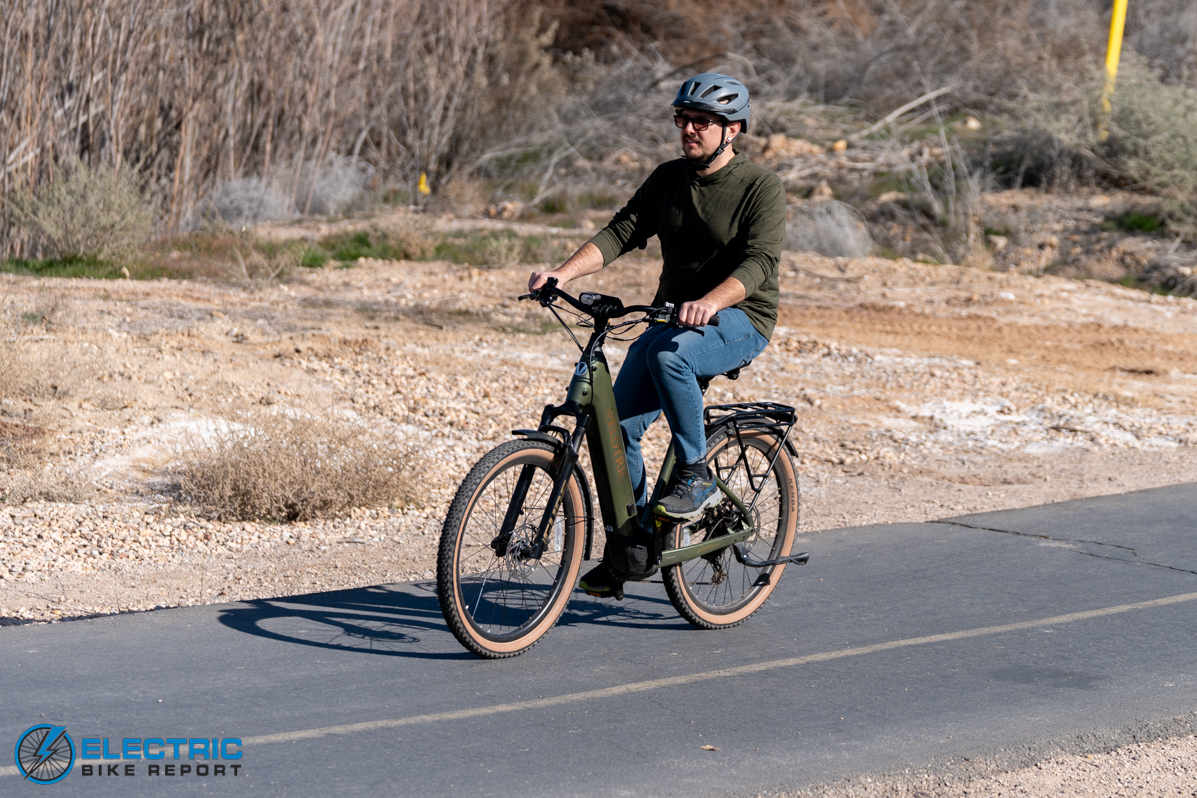
While the bike is a Class 2 with 20 mph pedal assist and throttle speeds, it can be quickly switched to a Class 1 or 3 at the press of a button (or through the app or display).
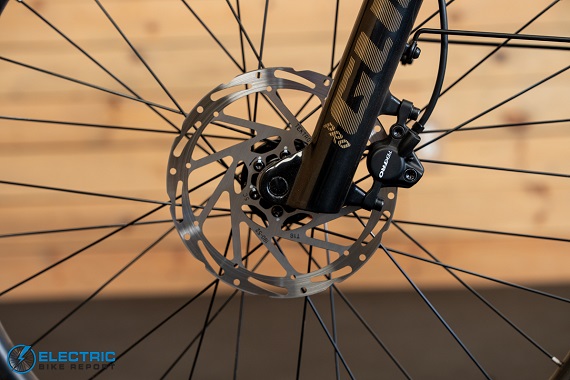
Tektro hydraulic disc brakes are paired with two-piston calipers and 180mm rotors
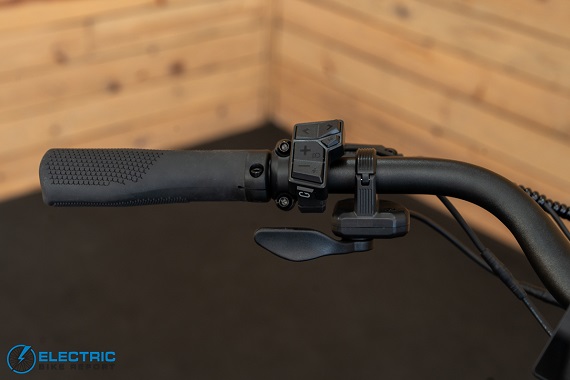
The throttle lever is positioned next to the control pad on the left handlebar.
Velotric Discover M Review: Brake Test
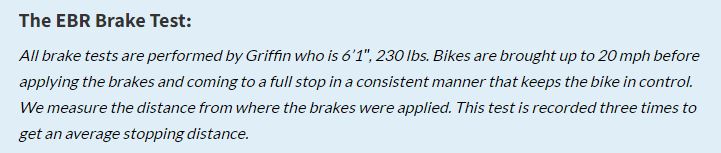
An e-bike’s braking capability is another crucial part of its performance. We’ve discussed the bike’s ability to effectively get up to speed above, but our Brake Test measures its ability to slow and stop safely. Using the method above, we recorded the Discover M’s average stopping distance to be 23’ 1”.
Similar cruisers and commuters, including many of the best commuter e-bikes we’ve tested, averaged scores of 21’ 11”. As such, the Discover M placed roughly 14 inches beyond average, still falling well within our range of safe and expected results.
Velotric equipped the Discover M with Tektro’s TDK171, a two-piston hydraulic brake system, and 180mm rotors on both wheels. This setup is relatively common among similar e-bikes and those of other styles in the Discover’s price range; it has consistently demonstrated effective and reliable performance in our testing.
Considering our familiarity with the Discover M’s brake system and the fact that its weight of 66 lbs lines up identically with the average among similar bikes we’ve tested, we must consider other variables to explain why its braking was somewhat slower than average.
The bike’s tires are a likely cause for the difference. In contrast with most similar models used for comparison equipped with urban tires, the Discover M rolls on knobby 27.5×2.4” tires. This type of tread is somewhat less grippy on paved surfaces than smoother types, though it gives the bike greater versatility and the ability to cruise on dirt or gravel paths.
A slight drop in braking power seems a fair trade for the increased versatility; the Discover M still showed a high degree of effectiveness and safety. In my personal testing, braking felt quick, strong, and somewhat aggressive in a confidence-inspiring sense. During hard braking, the bike exhibited some skidding and fishtailing, so I’d recommend some practice to get a feel for it.
Otherwise, the Discover M performed well, earning it our stamp of approval.
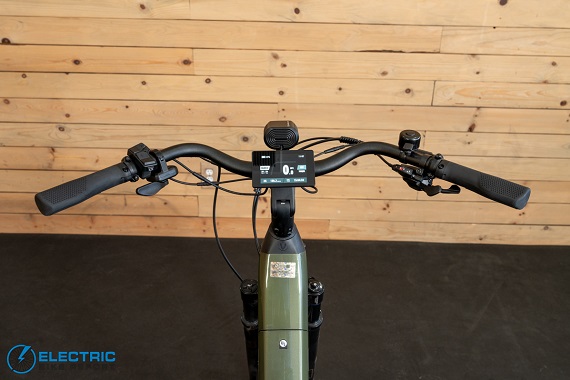
Depending on frame size, the Discover M includes either 680 mm or 700 mm curved, cruiser-style handlebars.
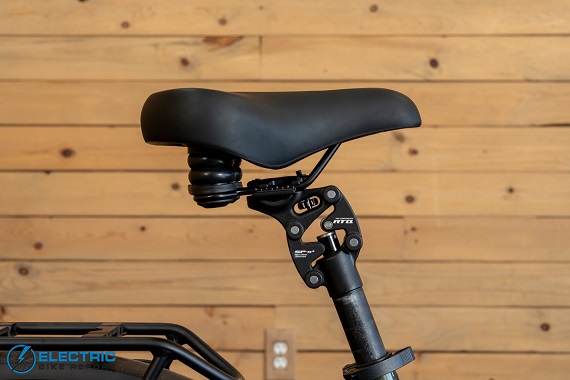
The included rocker-style suspension seatpost makes riding over bumps super smooth.
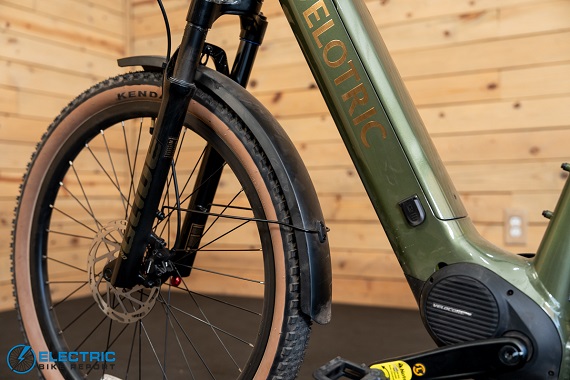
An adjustable Trama air fork offers rebound and compression adjustment for different preferences.
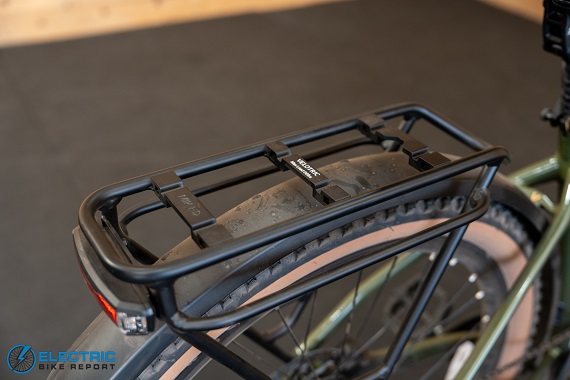
The MIK-HD cargo rack is ready to work, with a 66-lb carrying capacity and compatibility with locking accessories.
Velotric Discover M Review: Ride Quality
As we’ve covered in the sections above, the Discover M’s measurable performance was solid. In this section, I’ll discuss the more personal and subjective aspects of the bike’s fit and feel.
Velotric offers two frame sizes for the Discover M, which can fit a wide range of riders depending on how they are equipped. With the included suspension seatpost, the Regular frame fits those between 5’2” and 5’11”, while the Large accommodates those from 5’9” to 6’7”. With a standard seatpost, those ranges can be lowered; the Regular goes from 4’11” to 5’9”, while the Large’s range is reduced to between 5’6” and 6’4”.
Being a 5’11” rider, I tested the Large frame. With six inches of saddle height adjustment and an adjustable stem with 60 degrees of rotation, it was easy to find a comfortable fit with proper leg extension. The curved, cruiser-style handlebars promoted an upright, strain-free riding position, while the saddle and suspension kept the ride smooth and enjoyable.
The bike’s handling was generally relaxed and predictable. It steered comfortably, encouraging a leisurely approach to riding. I noticed a fair amount of frame flex when taking corners at speed, which I attribute to the step-through frame design and the placement of the motor, though it didn’t feel egregious.
Cruising generally felt smooth and stable, thanks in large part to the relatively wide tires. Their knobby tread maintained grip on pea gravel and hard-packed dirt, making light off-road adventures both possible and easy.
In the grand scheme, the Discover M’s user interface is relatively complex, though I found its controls intuitive and easy to grasp. Much of the bike’s complexity can be avoided by choosing to use the default settings, which I think are well-suited for riders who want a bike that functions well up-front without diving into the display menu or the Velotric app.
Case in point: by default, the bike is set to Class 2 mode, enabling pedal assist and throttle function up to 20 mph. It is set to torque-sensing mode, which feels familiar to a “regular” bike, and its acceleration, responsiveness, and overall power are generally well-balanced.
For those who appreciate customization, however, the Discover M (and most other Velotric models we’ve tested) absolutely shine. Both the display menu and Velotric app offer the ability to adjust speed/Class, sensor mode, acceleration force, and throttle behavior. Users can also adjust the programming of each pedal assist level and set up security features.
App users can also enable a custom riding mode allowing a hybrid Class 2 and 3 setup or allowing throttle speed to reach 28 mph. They can also use the app to track ride data and sync with Apple Health.
A new feature with the Discover M is the ability to enter a rider profile, including information such as height, weight, age, preferred speed, and typical riding environment. Marketing materials suggest that this feature can automatically alter the bike’s feel and settings to suit the rider once the information is synced, though I didn’t notice much difference—perhaps this is another element that could be improved with an OTA update.
Aside from noticing some areas in the bike’s programming with room for improvement, my only other point of critique is the bike’s limited color selection. While the more affordable Discover 3 offers five options, Velotric’s premium model is limited to only two—Olivine Green and Platinum Silver.
Like previous models, the Discover M includes Apple Find My™ technology to enable location tracking and a lost mode if the bike is stolen, though this version of the bike is also compatible with Android’s Find My system.
Another new feature is the ability to pair an NFC security card to the display (our test bike came with two), requiring riders to unlock the bike to use the interface and motor power.
Other features I appreciated were the bike’s MIK-HD cargo rack, cruise control mode, comprehensive IPX6 rating, and its battery’s IPX7 rating. The rack can carry up to 66 lbs and be outfitted with a child seat, pet carrier, or other locking accessories. The cruise control function allows riders to cruise without pedaling or holding the throttle. Such high IP ratings allow the bike to be pressure washed and ridden in the rain without worry.
In summary, the Discover M offers a comfortable, responsive, and easy ride that can largely be tailored to the preference of its user. With so many customization options, loads of utility and versatility, and a robust feature package, the bike’s overall ride quality is something special.
Sponsor
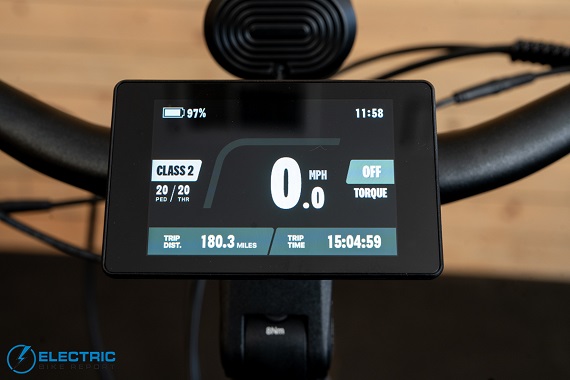
Velotric’s color display looks great, with simplified assist levels and a Class/speed indicator.
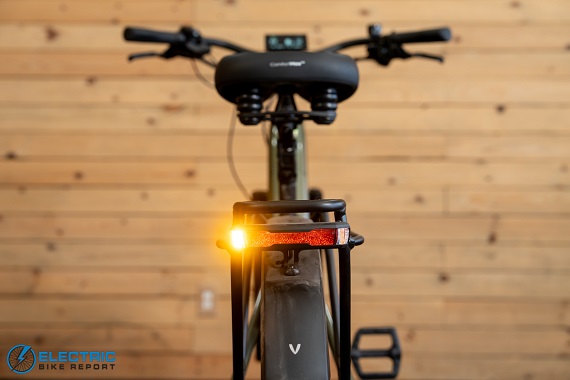
The bike’s taillight includes turn signal indicators complemented by an alarm to help you remember to turn them off.
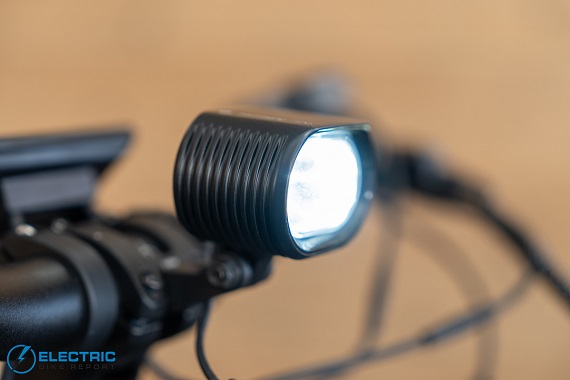
A bright integrated headlight puts out serious power to light the way.
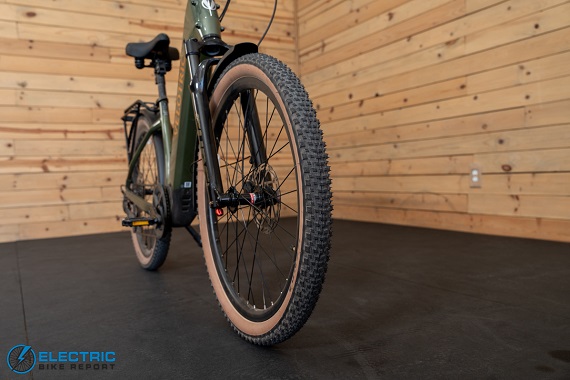
The Discover M features knobby tan-wall tires that look great and add loads of versatility.
Velotric Discover M Review: Summary / Where to Buy
Without mincing words, the last-gen Discover 2 was one of Velotric’s best e-bikes, and one of our most-recommended models. It proved to be ideal for commuters seeking a comfortable and reliable daily ride, seniors looking for an easy-pedaling e-bike with style, and tech enthusiasts wanting a connected, customizable experience.
The Discover M builds on that foundation, but is effectively a step up in refinement and personalization. It offers better specs, a more analog-like feel, an even smoother and more comfortable ride, and a fully programmable pedal assist system that allows the bike to be made as powerful and responsive or relaxed and approachable as you like.
In all areas of our testing, the bike proved to match or exceed the performance of similar cruiser and commuter-style models we’ve evaluated previously. Its default motor settings are generally balanced, intuitive, and approachable. Its range is likely to be plenty for both casual riders and daily commuters, while its braking performance was consistent and strong. Finally, it has ample climbing power, making hilly terrain enjoyable and easy.
***You can save $60 when using the code: EBReportDM01at checkout
Our only points of critique were relatively minor, with a few areas of its programming that would benefit from an OTA update being our primary focus. Once updated, Considering its premium features and higher price when compared to its sister model, the Discover 3, we’d also like to see at least the same number of color options.
Otherwise, the Discover M is an excellent product that highlights Velotric’s growth and evolution. With a custom mid-drive and granular customization options, it expands into new territory for the brand while continuing to deliver the quality, performance, and comfort we’ve come to expect from previous models.
Based on our testing, we highly recommend the Discover M to riders who prioritize enjoyment and reliability. Whether used for occasional leisure rides, regular exercise, or daily travel and errand running, the bike offers a robust user experience that makes it a suitable car alternative or a supplement to a healthy lifestyle.
Happy Riding! Make sure to let us know if you have any questions or if you think we left anything out in this review of the Velotric Discover M down in our comments section.
Sponsor
Sponsor
Reader Interactions
Comments
Leave a Reply




My experience with the Discover M has been an absolute disaster. Based on your review and others, I purchased my bike on April 2. You mentioned some “minor motor output issues”. However I have experienced major problems with the motor. Currently the bike is unrideable because there is no power output in torque or cadence sensor mode. The bike can be powered solely by throttle. I have worked with the dealer from which I purchased the bike and they have been unable to provide a solution. Velotric has not answered my support request nor provided solutions to the dealer. I find it hard to believe that you have not had a similar experience if you kept the Discover M long enough. I would suggest that buyers avoid this bike fo the time being. If Velotric solved the problems I will post a follow up, just to be fair
Update to my previous post. I have to say that the bike shop from which I purchased the bike has been fantastic and very supportive in solving the problems. Finally on Friday May 22nd the tech team at Velotric contacted the dealer with a suggestion of what to do. They want the dealer to disconnect the wires to the controller and then reattach. Velotric is claiming that this has never happened to any other mid-drive that they have manufactured (lucky me). This will be done after Memorial Day and hopefully it will provide some clues (bad controller or bad motor?). This experience is one good reason to buy from a local bike shop if you can.