

Best Commuter Electric Bikes | 17 Tried & Tested Daily Rides
Aug 10, 2026
 4 Comments
 Share
Share
The daily commute for an average person can be many different things. It can be dozens of miles spent in a car each morning and evening, an hour or two on public transit per day, a couple of three-block walks, etc. From our point of view, there’s no reason why your trip shouldn’t be spent on one of the top commuter electric bikes!
From powerful speedsters and sporty, long-haul pedalers to elegant and comfortable cruisers, our team of reviewers has tested the best commuter e-bikes money can buy. We’ve compiled our favorites to help you pick the bike that fits your needs.
The commuter e-bikes included on this list will not just get you to your destination without sweating through your clothes; they’ll get you there quickly and have the battery capacity to cover long distances with ease. More importantly, these bikes will make the job of getting to your job much more fun and enjoyable!
Since commuting can mean so many different things depending on where you live and work (especially here in the U.S.), we’ve tried our best to stick to bikes designed primarily for this specific purpose.
These bikes are primarily built for pavement, and their motor and battery systems were chosen with speed, efficiency, and longevity in mind. If you’re looking for a lighter-duty commuter more at home in a bustling urban environment, check out our list of the best city and urban e-bikes; otherwise, keep reading below!
Our Best Commuter Electric Bikes of 2026
- Aventon Level 4 REC
- Ride1Up Vorsa
- Velotric Discover 3
- Lectric XPress2
- Ride1UP Prodigy V2
- Monarc Tracer
- Urtopia Carbon Atom
- Aventon Level 4 ADV
- Velotric Discover M
- Euphree Stellar Falcon 2
- Velotric Tempo
- Priority Skyline
- Mokwheel Tarmac
- Heybike Hybrid
- Tenways AGO X
- Trek FX+ 7S
- Specialized Turbo Vado SL 2 6.0 EQ Carbon
*Electric Bike Report aims to help consumers find the right electric bike for their needs. When you buy a product we recommend, we may earn a commission.
Sponsor
Sponsor
Watch Our 2026 Best Commuter E-Bikes Video
Aventon Level 4 REC
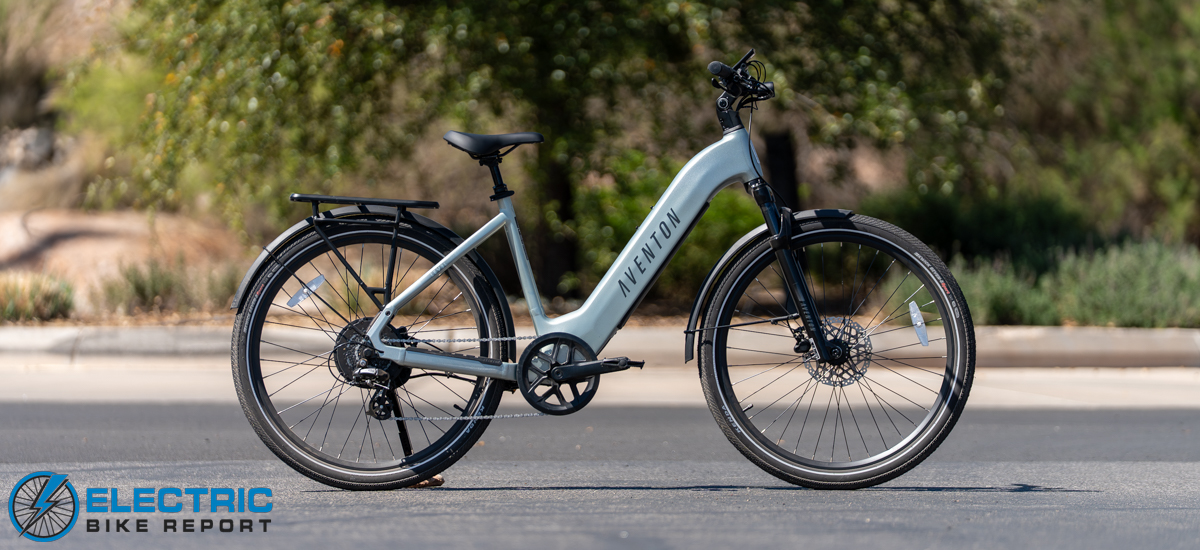

The Aventon Level 4 REC e-bike is a true step up from the Level 3, aimed at daily commuters who want a fast and sporty ride. It has a stronger 750W motor, added regenerative braking, brake lights, and a redesigned interface. These features make it feel noticeably stronger from a stop. That extra power handles sustained climbs with ease.
Riders can choose between torque and cadence sensing modes. The difference between the two is easy to feel. Torque mode has a more responsive feel for a natural ride, while cadence mode makes it extremely easy to cruise at a steady, low-effort pace. Its RideTune system also allows riders to adjust how each assist level behaves through the app.
The Level 4 REC stretched well past the commuter category average in Eco mode, supported by the added regenerative braking. The ACU smart module adds built-in security features like GPS tracking, remote lockout, and geofencing. Fit is another standout feature. With four frame sizes, it supports a wide range of rider heights, roughly 4’11” to 6’4″.
If you want a powerful commuter to ride long distances with comfort and real peace of mind built-in, this has the features and performance you need for a great value.
 Pros
Pros- The 750 W rear-hub motor is a real climber! Pulling away from a stop feels punchy and sustained climbs go down easy.
- It has a great amount of range with the eco mode going well past the commuter category average, all possible with the new regenerative braking. Brake lights are also integrated, a nice fix from the Level 3.
- The customizable pedal assistant was super handy by being able to swap between torque and cadence modes, or fine-tune each level through the RideTune app.
- Built-in security is a big win, with 4G GPS tracking, remote lockout, and geofencing through the ACU smart module.
- Four frame options across high-step and step-thru styles fit riders from 4’11” to 6’4″.
 Cons
Cons- At 71 lbs, it’s a beast to lift onto a car rack or haul upstairs.
Ride1Up Vorsa
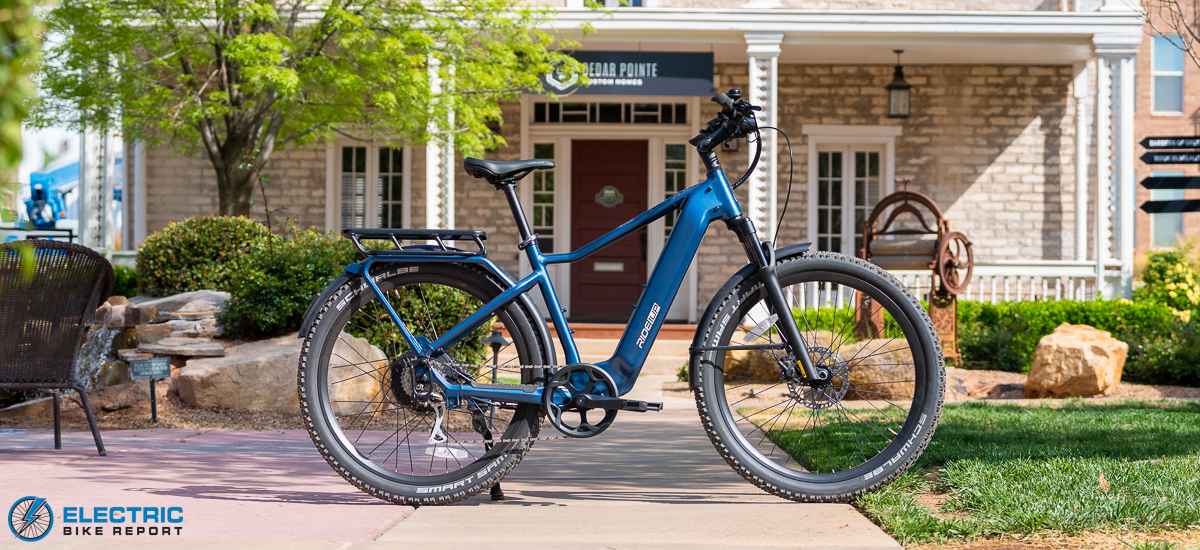
E-bikes of all styles usually have their limitations; you aren’t likely to find a lightweight city bike in the wilderness or a full-suspension mountain bike on the subway. Ride1Up’s Vorsa may be the exception to this rule. As a jack of all trades, it blends the features of an SUV-style commuter with the utility and carrying capacity of a cargo e-bike.
The Vorsa features a powerful 750W motor with a largely customizable pedal assist system (PAS). Riders can select either a torque- or cadence-sensing mode to alter the bike’s required activity level and feel. Furthermore, the power output of its five PAS settings can be customized through the bike’s display to optimize range, climbing power, speed, etc.
It also has impressive versatility (or, perhaps, “Vorsa-tility”) with an integrated passenger-capable, high-capacity modular cargo rack. The rack is compatible with a host of accessories and has an impressive payload capacity of 150 lbs, making the Vorsa comparable to many long-tail cargo bikes.
The bike also features an 8-speed Shimano Acera drivetrain, hydraulic disc brakes, a suspension fork with 100mm of travel, and a set of efficient-yet-grippy Schwalbe Smart Sam knobby tires. This combination makes it effective on paved roads and capable on fire roads or gravel multi-use trails, so it’s well-suited for commuting and off-the-clock adventuring.
In our experience, few e-bikes can pull off one job as well as the Vorsa can do it all! It’s a value-packed, multifunctional commuter we highly recommend for those serious about hauling and exploring off the beaten path.
Sponsor
Pros- The Vorsa is a speedy, powerful climber thanks to its torquey 750W hub motor.
- Its pedal assist system can be completely customized! Bump the power down to extend its range, increase its wattage and torque for an easier ride, and swap between torque and cadence sensing modes to change the feel of the ride.
- The bike is a fantastic all-rounder, with high speeds and great range for commuting, knobby tires and a suspension for off-roading, and a high carrying capacity for passengers or cargo.
- Ride1Up added Apple Find My technology for location tracking and security.
- The value is huge! You aren’t likely to find a bike this versatile at this price elsewhere.
Cons- We hoped the display would save settings for different rider profiles; power settings will need to be updated every time when switching between torque and cadence modes.
Velotric Discover 3
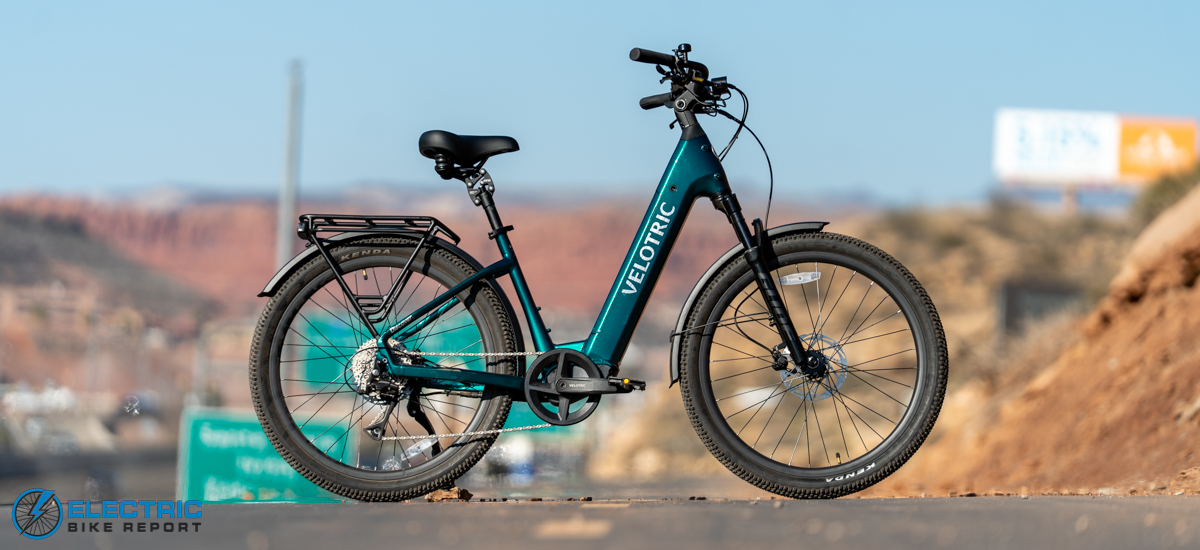
I like commuters to feel a bit sporty, handle well, and offer the kind of flexibility that fits a wide range of daily routines. My idea of a commute might look very different from yours, but the Velotric Discover 3 adapts easily to nearly any way you conceptualize a commute.
As a hybrid commuter/cruiser, it leans confidently into its commuting strengths. You get programmable speed and motor-engagement settings from the 750W hub motor, an air fork and suspension seatpost that take the edge off harsher pavement even at higher speeds, and Kenda tires with enough tread to handle the occasional shortcut through loose or uneven surfaces.
At the same time, it’s perfectly happy behaving like a relaxed cruiser. The upright riding position and narrower handlebar create a calm, yet still lively feel, and the bike comes stocked with city-ready essentials: headlights, turn signals, and a horn. The 66-lb-rated MIK rear rack is a great touch too, letting you add or swap accessories in seconds.
The Discover 3 wears a lot of hats, but it pulls off the commuter role as well as anything in its class, especially if you want a capable step-through with a slightly more relaxed character thanks to its frame design and body positioning.
Pros- One of the more comfortable bikes to commute on around with the body posture, adjustable stem, air fork and suspension seatpost.
- We liked the bike’s handling and the stability of the 2.4″-wide tires with the tread for looser terrain.
- Full safety certification with both UL 2271 and UL 2849 approval.
- High weight capacity MIK rack for easy accessory usage.
- Great motor engagement with optional ways to tailor the experience.
Cons- The app crashed a few times during testing.
Lectric XPress2
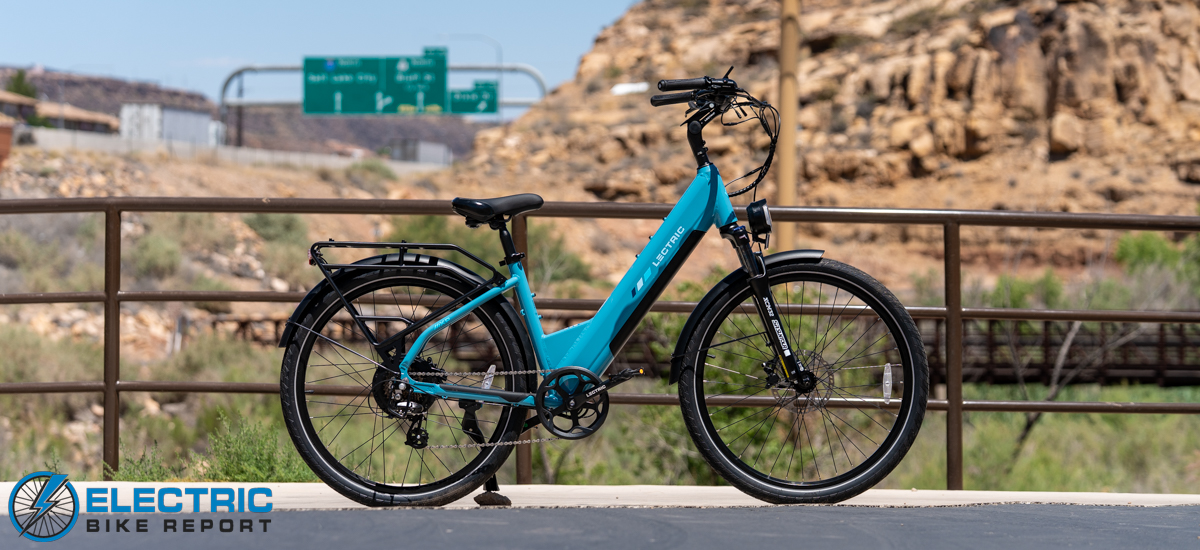
There’s a version of Lectric known for folding bikes that fit in your trunk and cost less than a grand. The XPress2 is something else. It’s the brand’s full-size commuter and it earns a place on this list by doing more than nearly anyone would expect at the price.
The setup starts with two distinct frame styles. The high-step version has a traditional diamond frame with flat handlebars and a forward-leaning, sporty feel. The step-thru flips that entirely with Dutch-style handlebars, an upright position, and an 18.5″ standover height that makes it easy to get on and off in traffic. In our testing we felt zero back, shoulder, or neck strain with the step-thru’s seating posture. Both fit a height range of 5’2″ to 6’4″, so it covers most riders.
What makes both versions work is the motor. Lectric’s 750W rear-hub motor puts out 1,310 watts of peak power and 85 Newton-meters of torque. This is good for bikes in this class, and you can feel it. It’s also among the quietest motors we’ve tested; in lower assist levels, it’s almost silent.
Riders can switch between torque and cadence-sensing modes directly through the display, along with Class settings, throttle behavior, and torque multiplier levels. We like this isn’t a bike that forces you into one riding style. Torque mode rewards active pedaling and cadence mode is for pure cruising. As a commuter this allows you to choose how active you want be on the bike on a daily basis.
The XPress2 also comes loaded with what it should: integrated turn signals and brake lights, a cargo rack rated to 60 lbs, fenders, and a suspension fork.
For riders who want a versatile, daily-ready commuter and don’t want to spend a fortune to get one — we can’t recommend the XPress2 enough.
Pros- Powerful 750W hub motor handles hills with ease and produces more peak power than average for its class.
- Choose between torque and cadence-sensing modes, switch between Classes, and adjust throttle behavior through the display.
- Two frame styles — sporty high-step and relaxed step-thru — suit different commuting preferences and rider types.
- Comes standard with commuter essentials: integrated brake lights, turn signals, fenders, and a 60-lb-rated cargo rack.
- Upgrades over the original include an 8-speed drivetrain, SR Suntour suspension fork, and a color TFT display with a redesigned interface.
- Motor is remarkably quiet — nearly silent in lower assist levels.
Cons- Battery charge readout drops in 10% increments, making it hard to estimate remaining range precisely.
- Cadence mode could benefit from more granular speed differentiation between assist levels.
Ride1UP Prodigy V2
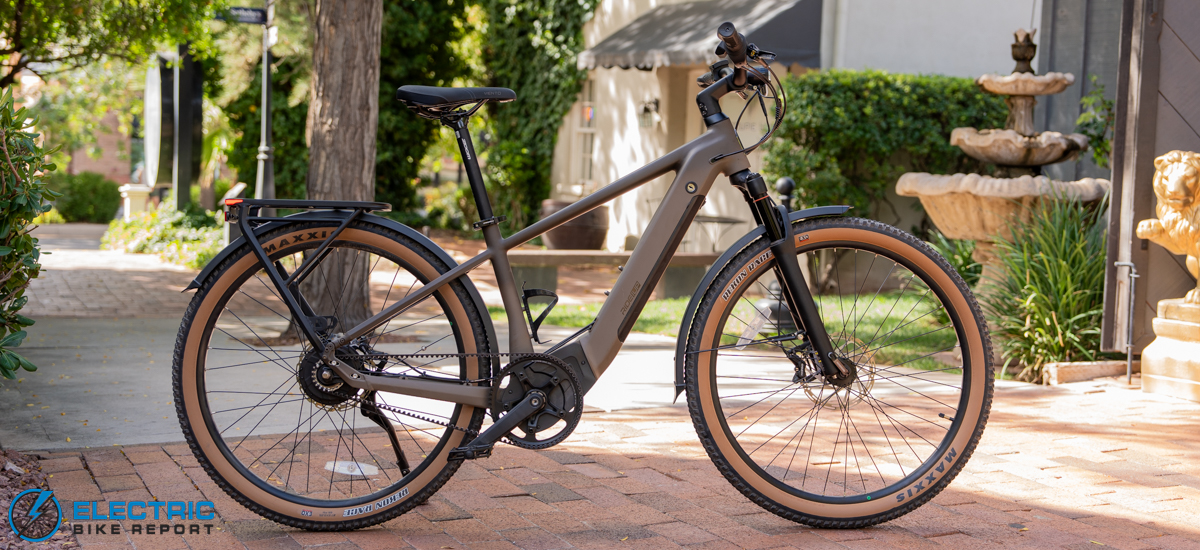
In true Ride1UP style, the brand took everything that was great about the original Prodigy and made the second iteration of the bike better. It’s a hugely versatile e-bike with the capability for both trekking and commuting. On top of that, it packs tons of value for a higher-end feel than you’d get anywhere else for the price.
The Prodigy V2 LX includes premium components such as a dialed-in 250W mid-drive motor from Brose, a sealed continuously variable transmission (CVT) from Enviolo, a clean and quiet belt drive from Gates, and a 4-piston hydraulic brake system from Tektro. With this setup, the ride feels intuitive, responsive, and easy.
For example, it’s easy to forget that the Brose motor is even there; if it weren’t for the increased speed and ease of pedaling, the Prodigy V2 LX rides like a normal bike. The CVT feels smooth and offers the ability to perfectly tune the pedal resistance to match your environment. With a belt drive, maintenance demands are lower, and riders don’t need to worry about getting smeared with grease from a chain.
Another standout feature was the bike’s 504-Wh battery; this grants the Prodigy V2 LX a phenomenal range. Ride1UP advertises between 30 and 50 miles, but our tests suggested that it has the potential to keep motoring on for up to around 90.
Considering that the bike includes fenders, lights, and a rear cargo rack with a 40-lb capacity, it’s no wonder we consider the Prodigy V2 LX to be the best affordable commuter e-bike with a mid-drive motor!
Pros- Delivers an awesome, natural ride feel with a Brose 250W mid-drive. It can go fast (if you want) and power you up just about any hill.
- Dialing in the bike’s feel is easy and smooth with the Enviolo CVT hub.
- The 36V, 504 Wh battery powered the bike above 60 miles in our testing, but we think it could hit around 90.
- Great handling on paved surfaces and enough tread for some light off-roading.
Cons- With one frame size, smaller riders may need to go with the LS model.
Monarc Tracer
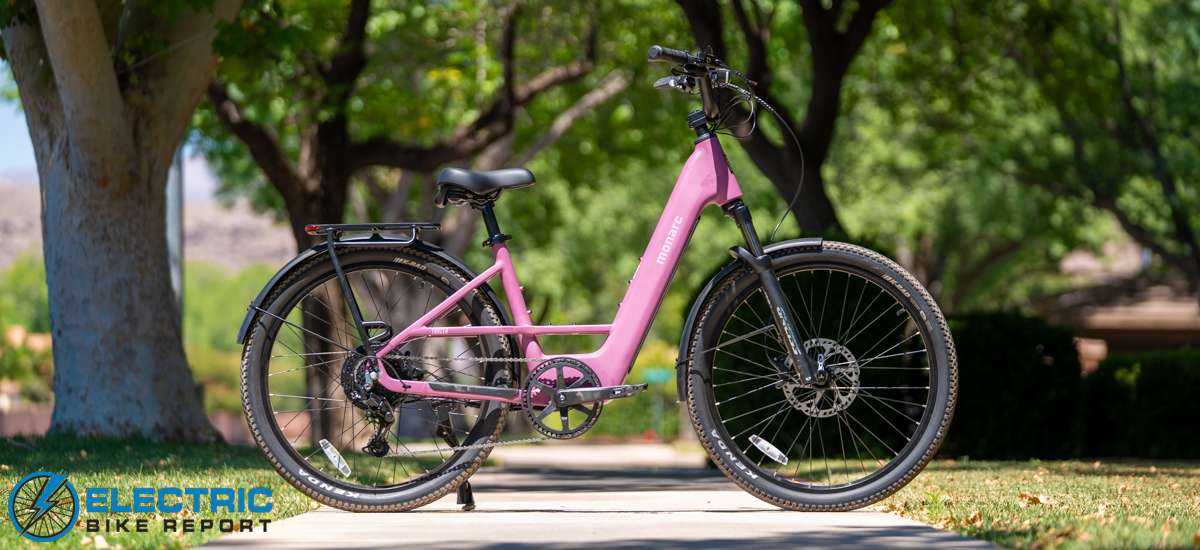
Most e-bikes ship with one battery. The Monarc Tracer ships with two.
The dual-battery setup is insane, but the component package underneath is what makes this bike one of the best value on this list. The brakes are four-piston hydraulics with a larger-than-standard front rotor. The drivetrain is a 9-speed Shimano Cues which is a step above what we typically see at this price. The motor peaks at 1,638 watts, well beyond the average for SUV-style commuters. It also has full ride customization options available through a 3.5-inch color touchscreen. For a sub-$2,000 bike, that’s a lot of bike.
On the road, the Tracer feels exactly as planted as it looks. It corners without any detectable flex, steers predictably, and handles with more agility than a 75.5-lb bike has any right to. The riding position sits in comfortable, slightly sporty territory. It has enough forward lean to feel purposeful on a daily commute without being aggressive.
For commuters, the range story is what changes the calculus. On a single battery, results are solid. With the included second battery, you’re looking at roughly double the distance, enough to cover extended commutes and errand runs without range anxiety. Monarc is also building out a connected accessory ecosystem: a smart helmet, rear vehicle detection radar, and tire pressure monitors are already available and a Bluetooth app on the way.
Riders who want a workhorse that handles the week and the weekend equally well — and who’d rather not pick between range and performance — will find the Tracer hard to walk away from.
Sponsor
Pros- Ships with two 720 Wh batteries, effectively doubling range compared to similarly-priced single-battery competitors.
- Lively and easy to pedal thanks to a powerful 750W motor with 1,638W peak output — among the stronger performers in its category.
- Four-piston hydraulic disc brakes with a 203mm front rotor deliver stopping power well above the class average.
- 9-speed Shimano Cues drivetrain is a step above the 8-speed setups common at this price.
- Fully customizable motor output through the touchscreen display; switch between torque and cadence-sensing modes.
- Growing connected accessory ecosystem includes a smart helmet, rear vehicle detection radar, and tire pressure monitors, with a Bluetooth app on the way.
Cons- At 75.5 lbs, it’s better suited for riders who store their bike in a garage than those who need to carry it upstairs or load it onto a car rack.
- Single frame size in both step-over and step-thru styles; riders on the shorter or heavier end of the range may bump up against its limits.
Urtopia Carbon Atom
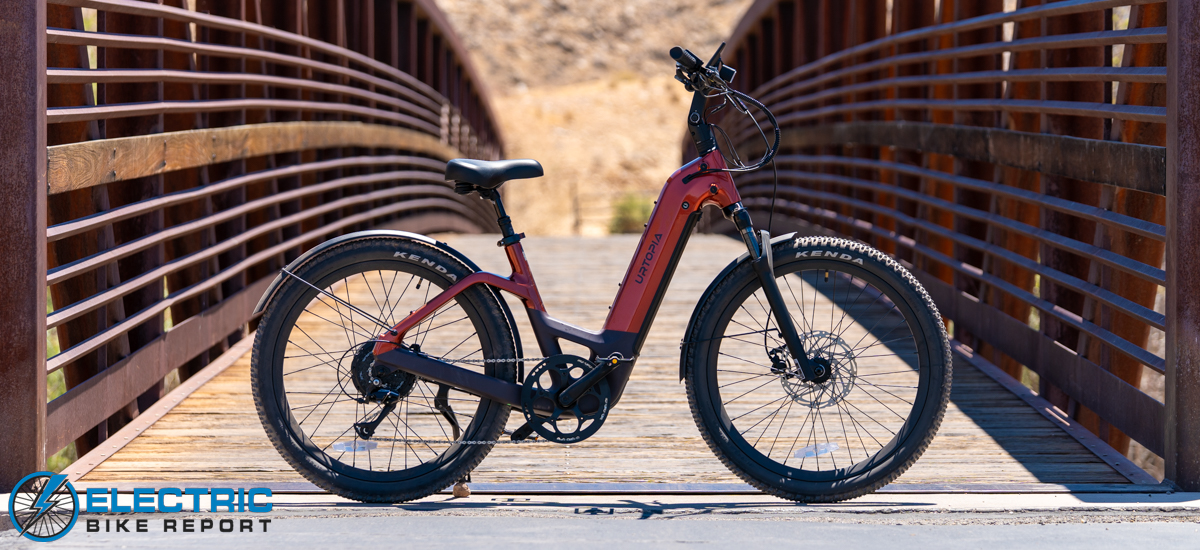
Most e-bikes ask you to pick a riding style and commit. The Urtopia Carbon Atom doesn’t work that way.
In its three torque-based assist modes, the bike reads your pedal pressure and responds proportionally. It has a natural feel that experienced cyclists tend to gravitate toward. This changes when you bump up to Turbo, the feel of the bike changes completely. The motor holds steady output regardless of effort. This is one bike with two completely different riding experiences. It had great hill test times and solid range from the 835 Wh battery.
The carbon fiber frame is part of what makes this bike work. Urtopia uses Toray T1000 material — the same grade found in aerospace and Formula 1 applications. Pair that with an 80mm suspension fork, a 30mm suspension seatpost, a remarkably cushy saddle, and the Carbon Atom is a really comfortable bike for longer commutes. You can hear during our hill test that the motor was whisper-quiet under load, and is one of the quietest on this list.
For commuters who occasionally push off the pavement, the 26×2.4″ Kenda tires earn their place. Wide enough for stability and cushion on rough surfaces, but light enough not to drag on the road. The knobby tread gripped well on gravel and packed dirt in our testing. All the bike customization options are available in the display rather than an app, which keeps the experience straightforward.
Commuters who want one bike for every kind of day — steady morning commute, low-key evening cruise, and a weekend gravel detour — will find the Carbon Atom is a great choice.
Pros- Unique pedal assist system with three torque-based modes for a natural ride feel, plus a cadence-based Turbo mode for near-effortless pedaling.
- Comfort-focused build with a suspension fork, suspension seatpost, and a cushy saddle that works well on longer commutes.
- Toray T1000 carbon fiber frame adds stiffness while absorbing road vibration better than comparable aluminum frames.
- 835 Wh battery is above average for this class; range is practical for daily use.
- Strong performance across the board in braking and hill climbing.
- All customization — motor tuning, speed settings, Turbo mode — accessible through the display without an app.
Cons- Single frame size; riders at the shorter or taller ends of the 5’3″–6’3″ range may find the fit less precise than they’d like.
Aventon Level 4 ADV
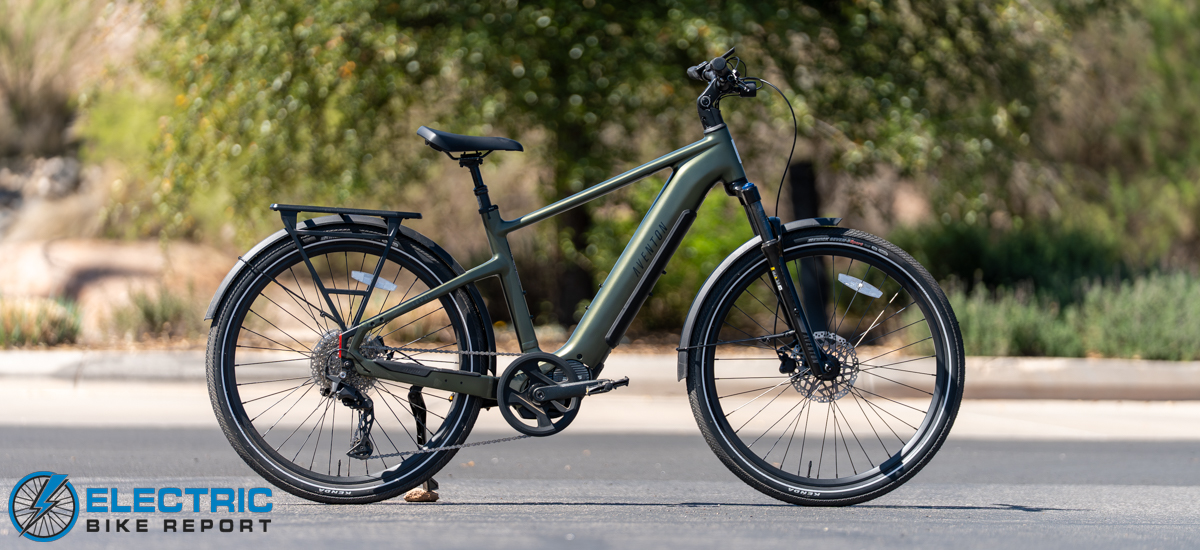
The Level 4 ADV is the more refined sibling of the rear-hub Level 4 REC. As the mid-drive version of Aventon’s commuter line, its ADV’s custom 250W Ultro S delivers a smooth, natural pedal feel that’s closer to a high-end bike with a steady boost than a typical e-bike. It’s also about seven pounds lighter than the REC, which makes it more nimble in tight turns and easier to handle off the bike.
Range is where the ADV really shines. In Eco mode, it can push past 100 miles. Perfect for those long cruises! The 800Wh battery and its highly effective motor both do a lot of the heavy lifting.
One of the ADV’s most interesting features is that it can be ridden as a fully automatic e-bike. Pair the Auto assist level with the electronic auto-shifting system and the bike adjusts power and gears on its own as the terrain changes. Riders who want more control can fine-tune motor torque, peak power, and sensitivity through the Aventon app.
This e-bike is the full package, with 100mm suspension fork, 50mm suspension seatpost, IP67-rated motor, UL 2849 / UL 2271 certification, built-in GPS tracking, and five frame sizes covering 5’3″ to 6’3″. These premier features are the perfect fitting for the commuter category, especially for riders who want a premium feel in a daily driver they can rely on.
Pros- The Ultro S mid-drive feels smooth and natural; pedaling is fun and you barely know it’s an e-bike if you weren’t paying attention.
- It’s a real upgrade over the hub-drive REC, with nicer parts, a bigger battery, and a few more tricks up its sleeve.
- Set it to Auto and the bike handles the rest, shifting gears and adjusting power on its own, and Aventon’s app lets you mess with just about everything else from motor tuning to GPS tracking and geofencing.
- Five frame sizes across high-step and step-thru styles cover riders from 5’3″ to well past 6’3″.
- The 100 mm fork and 50 mm suspension seatpost keep things comfy, and it still handles sharp enough to feel sporty when you want it to.
Cons- The Tektro hydraulic brakes are solid, but we’d really like to see brake lights in the next version; it feels like a miss for a commuter.
- The electronic shifting looks cool but it’s a bit slow, so you’ll want to plan ahead before hitting a climb.
Velotric Discover M
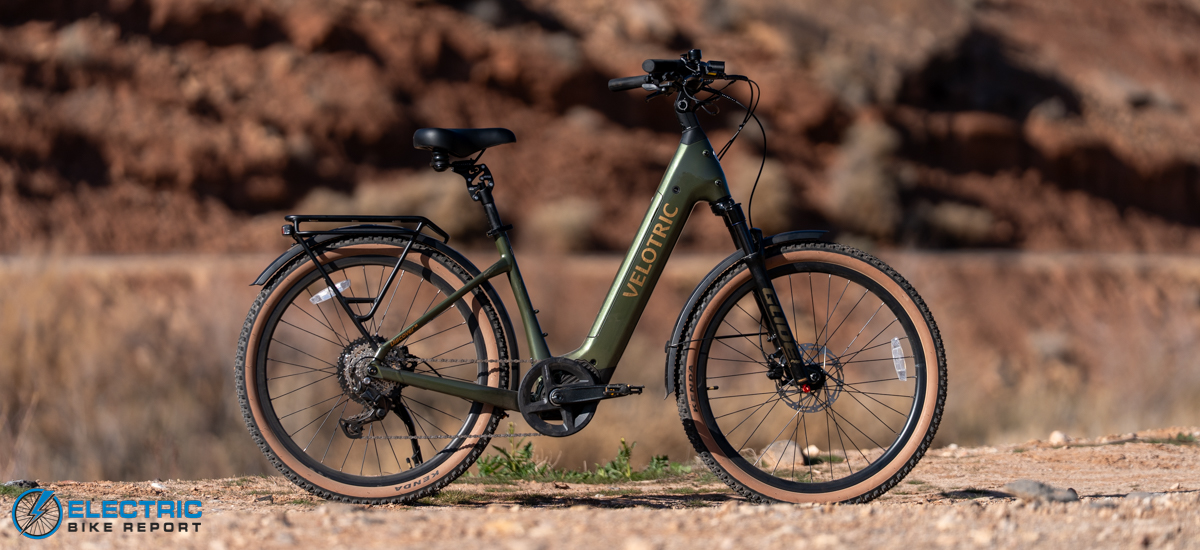
Commuters prioritizing comfort, a robust feature package, and a highly functional app should pay close attention to the Velotric Discover M. This top-tier version of the brand’s Discover 3 model includes many of the same customization options and features with many component upgrades—and, most importantly, a powerful custom mid-drive motor.
The Discover M’s ride quality gets a step up from its rear-hub-equipped sister model. The 500W Velocore motor makes the Discover feel like a non-electric bike with lower-effort pedaling and faster speeds for those who want them. In fact, many aspects of the bike’s feel and performance can be customized via the bike’s display menu or the Velotric app.
Riders can switch between torque and cadence sensing modes, quickly scroll through Class settings, raise or lower the acceleration intensity, and choose whether throttle speed is tied to assist level. Users can also fully program each pedal assist level or even set up a custom riding mode with separate adjustable speed limits for the throttle and pedal assist.
The bike is loaded with commuter-friendly features that encourage the bike’s use as a car alternative. With integrated lights and turn signals, a child-seat-capable MIK-HD cargo rack, an effort-free cruise control mode, and Class 3 speed capabilities, the Discover M allows riders to get to work or school quickly and comfortably. It’s a highly adaptable and reliable daily ride!
Pros- The custom Velocore mid-drive delivers smooth and responsive power, making the Discover M feel intuitive and fun to ride.
- Its speed settings, power levels, acceleration force, and pedal assist feel can all be tweaked and tuned via the app or display menu.
- A high-capacity 802-Wh battery gives the Discover M excellent long-range potential well above the cruiser / commuter category averages.
- The ride is smooth and comfortable, thanks to the bike’s included suspension fork and seatpost, cruiser-style saddle, and rubber grips.
- It’s packed with extras, such as an MIK-HD cargo rack, knobby tires, turn signals, an Auto assist mode, and more.
Cons- It’s nitpicky, but considering the bike’s price point, we would have liked to see more color options.
Euphree Stellar Falcon 2
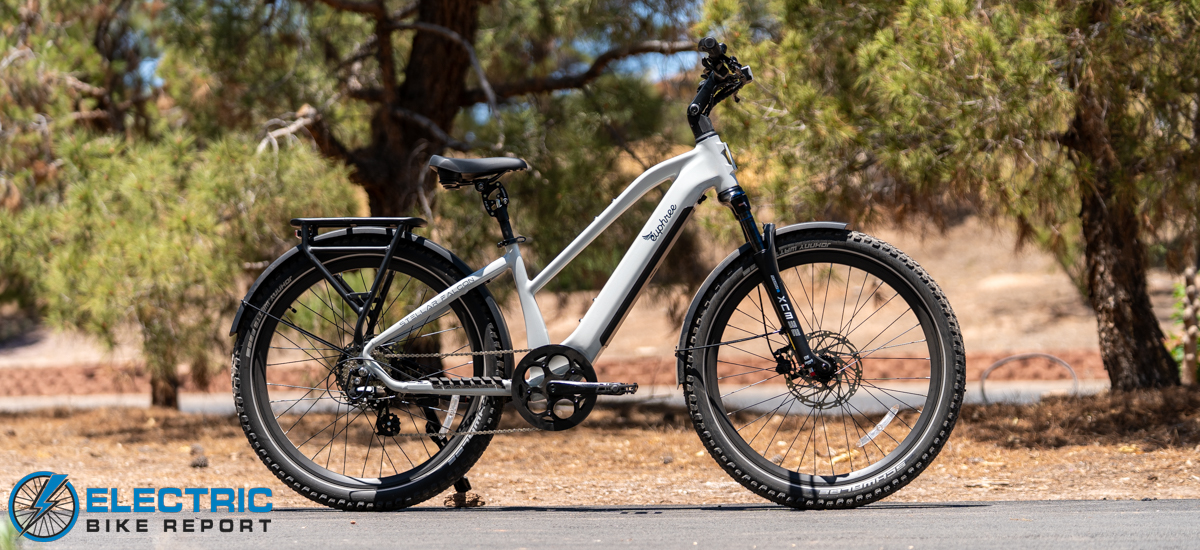
The Stellar Falcon might be the smoothest SUV-style e-bike we’ve tested. And that is saying something with the quantity of e-bikes we have tested.
Euphree built this bike around the ride feel, and it shows. The air fork and suspension seatpost work together in a way that makes rough pavement feel almost irrelevant — the fork handles the sharp hits, the seatpost absorbs what filters through, and the Schwalbe Johnny Watts 27.5×2.8″ tires cushion everything underneath. At 6’3″, right at the top of the size range, we were still comfortable after several hours in the saddle. The handling is what surprised us most: not an ounce of twitchiness, yet the Stellar Falcon stays light and airy through corners. The adjustable stem lets riders shift between a more upright city posture and a sportier lean — we liked both. Bafang motor, Shimano Altus drivetrain, Tektro hydraulic brakes, Selle Royal saddle — someone at Euphree made intentional choices here.
Torque sensing mode is where the motor performs best, with clean separation between the four assist levels and a natural, responsive feel. Range came in below the class average on the low-power test, which is worth knowing — but 40 miles in max-power mode is practical for a daily commute with room to spare on errands.
For commuters who prioritize how a bike feels over how long its spec sheet is, the Stellar Falcon 2 is one of the easier bikes on this list to recommend.
Sponsor
Pros- Exceptionally comfortable ride thanks to the combination of SR Suntour air fork, suspension seatpost, and wide Schwalbe tires.
- Handling is smooth and confidence-inspiring — no twitchiness, yet the bike stays light and maneuverable.
- Name-brand components throughout: Bafang motor, Shimano drivetrain, Tektro hydraulic brakes, Selle Royal saddle.
- Available in both mid-step and step-through frame styles.
- Adjustable stem accommodates both upright and more aggressive riding positions.
- Torque and cadence sensing modes give riders a choice of pedaling experience.
- Well-equipped out of the box: rear rack, suspension seatpost, and integrated lights all included.
Cons- Range came in below class average on the low-power test — riders who rely heavily on Eco mode may want to factor in more frequent charging.
- Cadence mode has noticeable overlap between assist levels; torque mode is the stronger setting.
Velotric Tempo
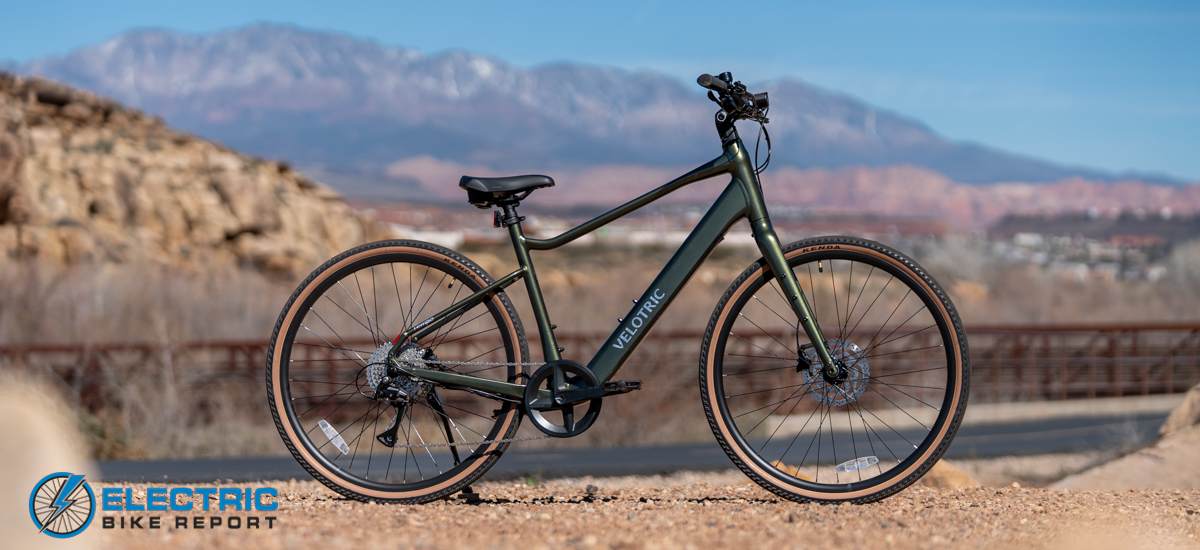
The Velotric Tempo is built around fitness, and the whole bike is shaped by that choice. At 42 lbs with a 350W motor, it’s one of the lighter entries in the city/urban category, and when you’re not pedaling, it pretty much just sits there. When you are, it adds just enough push to stretch your ride.
What really sets it apart is Pulse Mode. The bike comes with a heart rate monitor, and once you pair it and set a target zone, the motor adjusts power on the fly to keep you there. We haven’t seen anything like it on another e-bike, and it’s easily the most clever feature on the Tempo. You can also choose between torque and cadence sensing or tune the motor through the Velotric app.
For a city bike, the Tempo is also better equipped than we expected. The throttle and cruise control are nice to have, the 500-lumen headlight is seriously bright, and Velotric went with 180mm brake rotors instead of the usual 160s, so you can feel the extra stopping power. The puncture-resistant Kenda hybrid tires roll fast on pavement but hold their own on dirt, and Eco mode comfortably stretches past 70 miles, which is past what we typically see in the city/urban category.
It’s not a hill crusher, and pushing past 25 mph takes more legwork. But for fitness riders, light commuters, or anyone who wants a real bike feel with a smart little assist, we highly recommend the Tempo.
Pros- Power delivery is smooth either way you slice it; torque mode keeps you active and cadence mode lets you cruise without breaking a sweat.
- For a city bike, it’s seriously comfortable. The relaxed geometry, plush saddle, fat 700x42c tires, and soft grips all work together.
- You can tweak just about anything through the app or display: power output, Class settings, and how punchy the acceleration feels.
- It comes with things most city bikes skip: a throttle, cruise control, brake lights, turn signals, even NFC card security, plus a built in heart rate monitor and a new Pulse mode for fitness riders.
- Range is impressive and it has a ton of frame sizes, styles, and colors, just about anyone can find a fit.
Cons- The battery is removable but ours got a bit creaky under hard pedaling; it could use vibration damping.
Sponsor
Priority Skyline
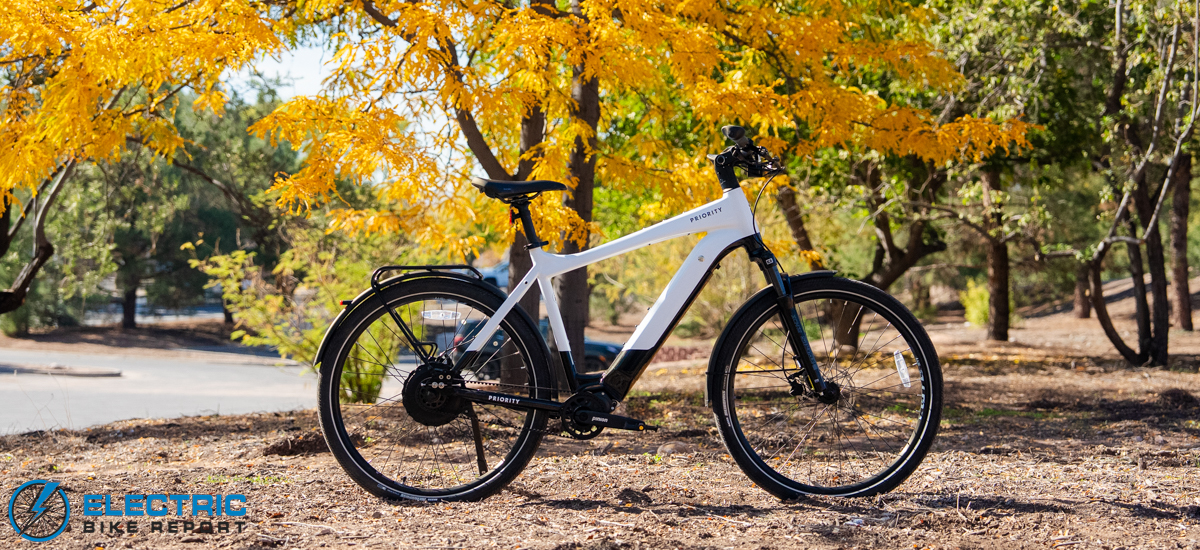
Most commuter e-bikes come with a chain drive. You lube it, you clean it, you replace it eventually. The Skyline skips all of that.
Priority paired a 12-speed Pinion gearbox with a Gates Carbon belt — a combination that’s fully sealed, requires no chain lubrication, and shifts electronically at the push of a button. The belt alone is rated to last twice as long as a chain, and the gearbox needs nothing more than an annual oil change. Two semi-automatic shifting modes handle the grunt work: one downshifts automatically when you stop so you’re always in an easy gear to pull away; the other downshifts while coasting to keep your cadence where you want it. We found these modes made the ride experience very enjoyable. At around $4,000, the Skyline is one of the most affordable bikes with this drivetrain — most bikes with Pinion systems cost considerably more.
Priority’s 750W torque-sensing hub puts out 90 Newton-meters of torque and reads pedal pressure naturally enough that we spent most of our time in the lowest assist level — not because the higher levels aren’t useful, but because PAS 1 already felt that good. The handling matches with 740mm handlebars and 27.5×2″ Maxxis tires give the Skyline a nimble, precise feel that’s better than you might expect from a 68-lb e-bike.
Three frame sizes cover riders from 5’4″ to 6’3″, and the adjustable stem lets riders fine-tune their position. The Skyline does have a sporty forward-leaning geometry, so keep that in mind if this is an e-bike you’re considering.
Commuters who want a high-tech, low-maintenance daily rider — one that’s as satisfying to operate as it is to ride — will find the Skyline worth every bit of the asking price.
Pros- 12-speed Pinion C1.12i gearbox with electronic and semi-automatic shifting is low-maintenance, fully sealed, and a genuine upgrade over traditional drivetrains.
- Gates Carbon belt drive requires no lubrication and outlasts chains by a significant margin.
- 750W torque-sensing motor delivers natural, responsive power — the bike feels like a strong analog ride rather than a typical e-bike.
- Precise, agile handling from 740mm handlebars and 27.5×2″ Maxxis tires — more nimble than the weight suggests.
- Three frame sizes and an adjustable stem give riders a precise, customizable fit from 5’4″ to 6’3″.
- One of the most affordable e-bikes available with the Pinion drivetrain system.
Cons- Throttle has a brief delay when engaging from a standstill — not present when the bike is already moving.
- In Class 3 mode, PAS 1–4 are capped at 23 mph rather than the full 28 mph maximum.
Mokwheel Tarmac
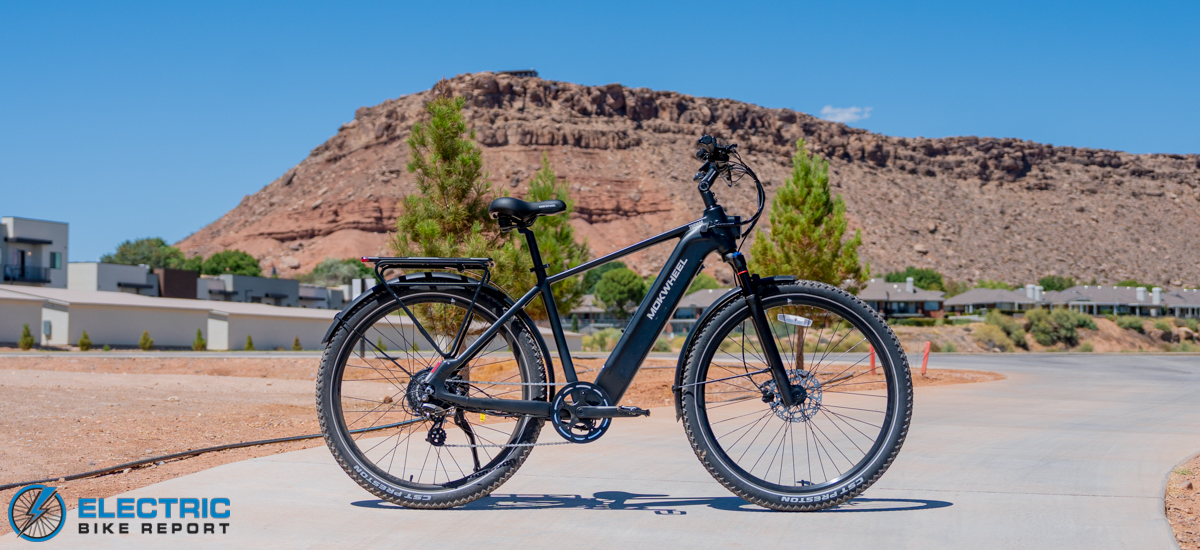
Most commuters ask for a little give-and-take. You pedal, the motor helps, and the effort adds up. The Tarmac mostly just handles it.
Mokwheel programmed each of the five assist levels with a preset speed ceiling, and the motor carries you there with minimal pedal pressure. In the lower levels it’s steady and effortless — closer to a cadence sensor than a torque sensor. At higher levels, it reads your effort and adapts. Either way, the ride stays easy. We exceeded Mokwheel’s advertised maximum range by more than 15 miles in our low-power test, finishing well above the category average for similar commuters.
Riders can adjust the speed limits for all five assist levels through the display — along with throttle behavior and acceleration intensity — so anyone who wants more urgency off the line or a lower top speed in each mode can dial it in without an app. The detachable display doubles as a security measure; the bike simply won’t start without it. Out on the road, the 29×2.35″ CST Preston tires are knobbier than what most commuters carry, which gives the Tarmac some confidence on light dirt and gravel when the route calls for it. The head-tube-integrated headlight is a design detail we don’t see often and liked immediately.
Two frame sizes cover riders from 5’5″ to 6’7″. Not many bikes on this list have this big of height range on the high end, so if you’re a taller rider this one should be on your short list.
Riders who want a low-effort daily commuter — one that can stretch well past a round trip on a single charge — will find the Tarmac hard to pass up.
Sponsor
Pros- Hybrid torque-plus-cadence pedal assist system delivers low-effort pedaling with granular speed control at each assist level.
- Highly customizable: adjust speed limits per assist level, throttle behavior, and acceleration force through the display.
- Range exceeded Mokwheel’s advertised maximum in our low-power test, finishing above the category average for similar commuters.
- 29×2.35″ CST Preston knobby tires extend the Tarmac beyond pavement for light off-road use.
- Detachable display functions as a built-in security feature — the bike won’t power on without it.
- Well-equipped for commuting: integrated lights, turn signals, fenders, and a 55-lb-rated cargo rack all included.
Cons- Default settings on our test bike exceeded legal Class 2 and Class 3 speed limits; Mokwheel should ship the bike with speeds set to meet these requirements.
- Frame sizes best suit average-to-tall riders (5’5″–6’7″); no step-thru option currently available.
Heybike Hybrid
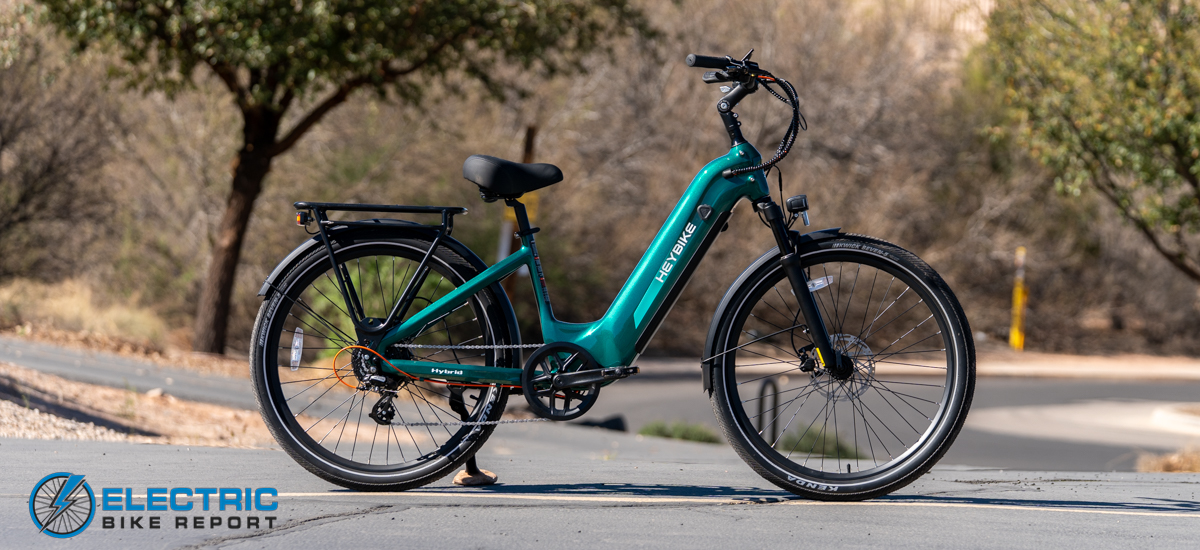
Heybike called it the Hybrid for a reason. It’s a cruiser that commutes. Finding a comfort bike that can cover a hundred miles on a charge isn’t easy — and in our range test, it actually did.
The 864 Wh battery is the foundation of this bike, and it’s hard to miss: the down tube is scaled up noticeably to house it. In our low-power test, we covered 104.7 miles — past Heybike’s advertised 100-mile ceiling and well past the category average for similar bikes. Commuters who charge infrequently, or who just want to stop thinking about the battery altogether, will find the Hybrid hard to beat.
The adjustable stem is a small thing that makes a real difference — push it back for a relaxed, upright cruise or lean it forward when you want a sportier feel. A cruiser-style spring saddle and 100mm suspension fork smooth out the ride feel. At 72 lbs the bike is heavier than average for this style, but it handled with more agility than we expected — crisp steering and confident through corners. Having both cadence and torque modes is also a big plus. You can also switch to cadence mode when you’re climbing or hauling cargo and the motor holds steady output without requiring much from you. Torque mode gives you a more engaged, responsive feel which is great for commuting.
The Hybrid is well-equipped for daily use. The cargo rack rated to 66 lbs, it has integrated lights with turn signals, fenders, and a 440-lb total payload that opens the door for heavier riders or anyone running cargo. The Heybike app rounds it out with customizable assist speeds, ride tracking, and navigation.
Commuters who want serious range without giving up a comfortable ride will find the Hybrid gives you both better than almost anything else at the price.
Pros- Massive 864 Wh battery delivered 104.7 miles in our low-power range test — past Heybike’s advertised maximum and well above the category average.
- Dual torque and cadence sensor modes let riders choose between a responsive, engaging feel or a steady, low-effort cruise.
- Comfort-focused build: cruiser-style spring saddle, 100mm suspension fork, and adjustable stem for upright or forward-leaning positions.
- Impressive 440-lb total payload capacity suits heavier riders and those carrying cargo or a child passenger.
- Cargo rack rated to 66 lbs; includes integrated lights, turn signals, fenders, and an electronic horn.
- Heybike app offers customizable assist speeds, ride tracking, and navigation via Apple or Google Maps.
Cons- Battery charge readout was inconsistent during testing — fluctuated depending on motor load, making range estimation harder than it should be.
- Single frame size; shorter riders may need to consider the Heybike Venus instead.
Tenways AGO X
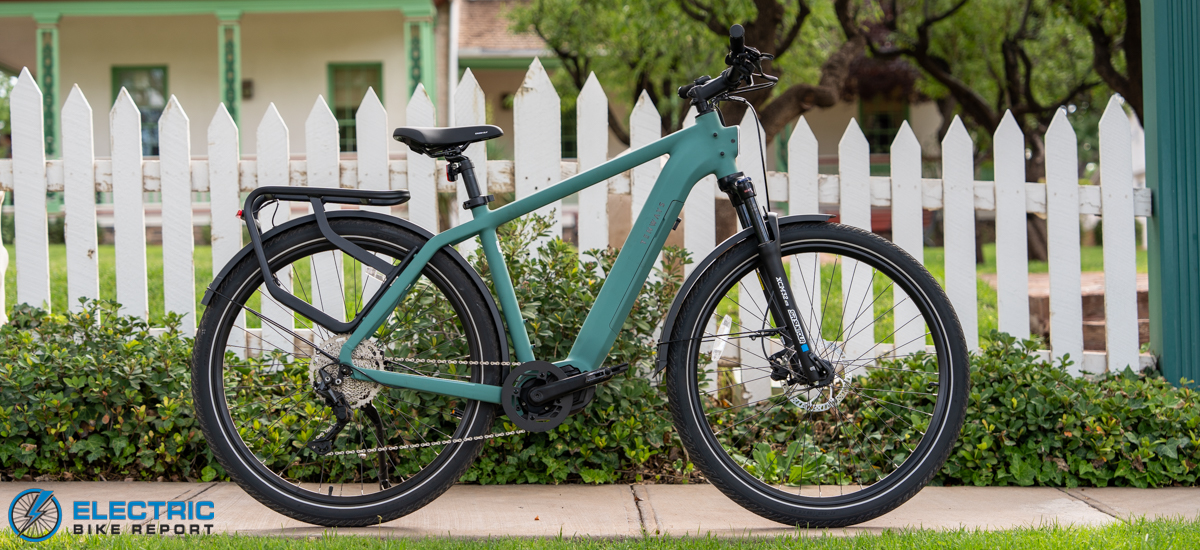
Marketed as an “E-Bike SUV,” the AGO X from Tenways made an outstanding impression with its design and componentry; its hybrid design features many elements that you’d typically find on an entry-level eMTB.
We especially enjoyed the power and feel of the bike’s 250W Bafang mid-drive motor. It packs some punch for when it’s needed, but its output never felt overpowering. Combined with the responsiveness of its torque sensor, the AGO X delivered a natural-feeling ride that didn’t feel overpowering.
One of the bike’s more uncommon features (at least for a commuter) was its set of super-wide, 770 mm handlebars. These gave us great balance and stability in addition to providing excellent steering control.
With those handlebars, an SR Suntour suspension fork, a Shimano Deore drivetrain geared well for climbing, and the reserved but impactful motor, the AGO X is a multipurpose machine that’s set up well for riding off-road. We recommend swapping out the tires for something with better traction on loose ground, but otherwise, the bike has a solid foundation for rougher terrain!
Pros- Great stability and control from the wide 770 mm handlebars and 2.125″-wide tires.
- It feels responsive and natural with a 250W motor that matches the output of the rider’s pedaling.
- Lots of off-road potential with entry-level eMTB components like the drivetrain, suspension fork, and handlebars.
- Tenways’ design is clean and contemporary – this bike will turn heads!
- An attractive and easy-to-use interface with a colorful display.
Cons- With so many features adding up to a capable adventurer, we hope Tenways offers the option for knobbier tires in the future.
Trek FX+ 7S
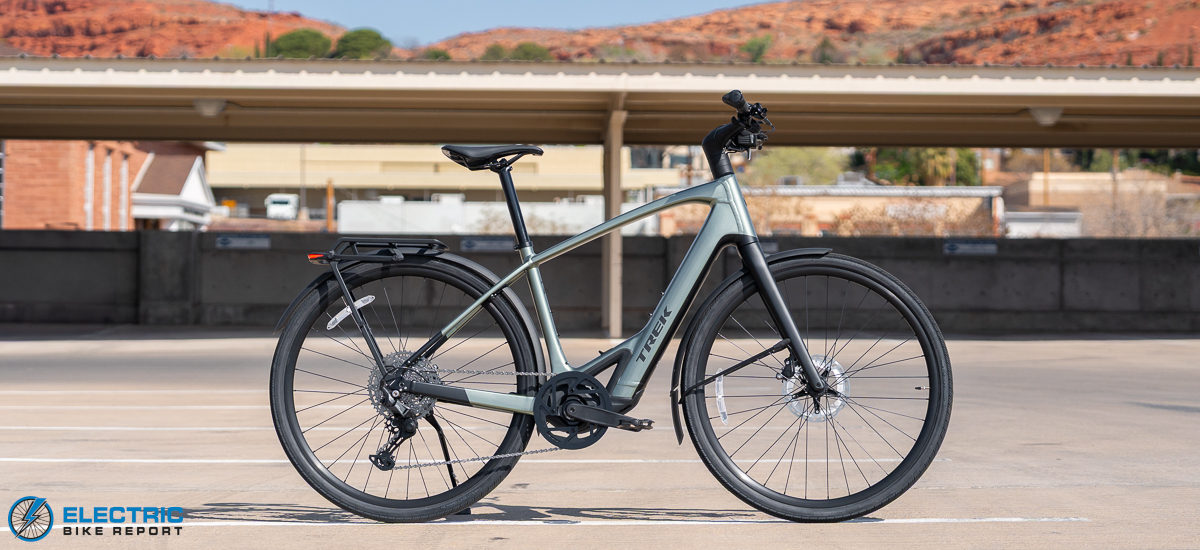
While the Trek FX+ 7S stands out with a robust commuter-style build, it tips the scales at an impressively light 43 lbs, making it one of the lightest-weight e-bikes on this list. The bike’s low weight gives it fantastic handling, quick acceleration, and a high portability factor, but we liked it for far more than just its slim impact on the scale.
For starters, this bike delivers one of the most surreal motor experiences we’ve encountered. Its TQ mid-drive motor is engineered for near-silent operation and provides incredibly natural-feeling assistance.
Don’t be surprised if you notice your speed climbing on the display before you even register the added help at your feet—it’s that seamless. But don’t confuse subtlety for weakness; the motor still delivers a meaningful boost, making it easier to go farther, faster (and with more fun).
The FX+ 7S is well-equipped in terms of technology. A Quadlock-compatible mount is built directly into the stem, offering wireless phone charging and seamless integration with the Trek Central app for ride data and turn-by-turn navigation.
We consider the FX+ 7S an ideal choice for longtime analog riders looking to transition to electric, with enough built-in tech to impress even the most digitally inclined cyclist.
Pros- Exceptionally quiet, natural assist – The TQ drive system stands out for how quietly and seamlessly it amplifies your pedaling, delivering power that feels intuitive rather than intrusive.
- Impressively lightweight – At just 42 lbs (size L), this is a highly portable e-bike that’s easy to lift, store, and maneuver through urban environments.
- Thoughtful tech features – From the Trek Central app’s ride data to the Quadlock-compatible stem that wirelessly charges your phone, the tech enhances the ride without overcomplicating it.
- Surefooted, playful ride quality – The frame’s geometry and grippy tires deliver confident cornering and stable handling, especially at higher speeds.
Cons- The display looks sleek, but its low placement makes it tough to read while riding. Thankfully, the Trek Central app and the Quadlock phone mount offer a user-friendly alternative.
Specialized Turbo Vado SL 2 6.0 EQ Carbon

The Specialized Turbo Vado SL 2 is a premium commuter that’s well worth the investment. Not only does it have a remarkably natural-feeling ride with nimble handling, but it’s also backed by a global brand with decades of experience in the industry. Trust us, this is a difference that you can feel; the Vado SL 2 feels highly ergonomic and well-constructed.
It’s also one of the more high-tech e-bikes we’ve reviewed! The Turbo Vado SL 2 is relatively simple and easy to use right out of the box, but users who enjoy feeling more connected can dive into motor tuning and set up security features once paired with the Specialized app. The bike also uses integrated Apple Find My™ technology for location tracking in the event of theft.
The bike’s extremely lightweight carbon fiber construction is one of its biggest highlights. In addition to making the bike more portable by reducing its weight, carbon fiber also helps to soften bumps and enhance handling. The Vado SL 2 feels remarkably agile and responsive—plus, it can get up to its 28 mph maximum in a flash.
This is also a highly versatile e-bike; while it’s completely at home in the bike lane or on shared-use paths, it’s not limited to paved surfaces. The Vado SL 2’s knobby tires are appropriate for light dirt and gravel, and its MIK-HD cargo rack allows it to be equipped with a variety of storage accessories. It can even carry a child seat!
Specialized designed the Turbo Vado SL 2 to be a functional replacement for a car, and we think they pulled it off. If you’re looking for a dependable, highly functional, daily-use e-bike for exercise, errand running, commuting, and even some adventuring, look no further!
Pros- The Vado SL 2’s carbon fiber frame and fork make it agile, comfortable, and extremely quick.
- The Specialized 1.2 SL motor delivers an incredibly natural-feeling ride. You might not know you’re on an e-bike until you check the speedometer!
- While it can be simple and straightforward if you like, the Specialized app offers a variety of customization and security options.
- The ability to tackle paved roads and paths, light unpaved trails, and even carry a passenger makes this a remarkably versatile commuter.
- The Vado SL 2 gave us excellent results in our Range Test, and it can ride even longer with an optional 160-Wh range extender battery.
Cons- The battery can be removed for service but not for charging; users will need to bring the bike inside and plug it in.
How We Picked the Best Commuter Electric Bikes
There’s no such thing as the perfect commuter e-bike. There are just too many factors to consider and too many different things that each person needs for their daily commute. But there is such a thing as a really, really good commuter. We’re here to help you find that bike.
We’ve had our hands on each and every one of the e-bikes on this list. The bikes we test are put through a number of assessments, including hill climb, range, and braking tests, to get a feel for how they actually perform in the real world. Our team of testers then puts their heads together to compare notes and opinions.
To make this list, we evaluated commuter e-bikes based on a few key criteria, mainly:
- Range: The average commute in the U.S. is about 15 miles one way, so a good commuter should be able to go twice that distance (you’ve got to get to and from work, right?) on a single charge. So, a minimum 30-mile range is essential.
- Speed and power: Commuters should be fast, so most bikes you’ll see on this list are Class 3 (speed pedelec) e-bikes with a top speed of 28 mph. They also need to have enough power to get you to and from your destination without breaking much of a sweat. Some of these bikes come as Class 3s, and others can be turned into a Class 3 by changing some settings.
- Comfort and efficiency: A commuter bike, at least in our opinion, should feel something like sitting on a well-balanced eMTB. You should be comfortable enough to show up at your destination without lower back pain, but in an efficient enough body position that your pedaling actually gets you somewhere.
- Components and extras: Does it have Bluetooth to connect to your phone? Will the bike help you navigate, carry your groceries home, and illuminate your surroundings? If that sounds like we’re describing extras that make a good car, it’s because we kind of are. Commuter e-bikes are made to replace cars, so they should have some of the same features.
- What does the manufacturer say it was built for? This may sound obvious, but it’s actually not. E-bike categorization is nebulous at its best and downright nonsensical at its worst. However, e-bike manufacturers do their best to describe the best intended use of their bikes, so we take that into account. We sometimes break from their definition when categorizing bikes for our best lists, but not always.
This is not an exhaustive list, especially considering that one person’s daily commute can be wildly different from the next. Instead, this list is a catalogue of some of the best dedicated commuter e-bikes, according to the Electric Bike Report staff’s collective expert opinion.
Does that mean you can’t commute on an eMTB or an electric cruiser? You absolutely can; it all depends on what you want from your commute.
Bottom Line: Pick a bike that matches your commuting needs
There’s an adage in the cycling world that there is no one bike that’s perfect for everyone, but there is the perfect bike for each person. Remember that when you’re shopping around, especially when it comes to commuters.
From coast to coast, what constitutes a daily commute varies wildly depending on where you live. A commuter in West Texas, for example, is going to need something much different from their commuter e-bike than a person in Portland, Maine.
The most important thing to do before buying a commuter e-bike is to really think hard about what you want your bike to do. The former bike salesman in me wants to say that the only way to answer that question is to go ride as many e-bikes as you can, but it’s not entirely good advice, considering many, many e-bikes are sold “direct to consumer” or DTC.
It’s entirely likely that the best bike for you can’t be ridden until you buy it and it’s shipped to your door. If that’s the case, research is your best friend. Our bike reviews are useful resources, and if you’re a newbie to e-bikes, we’ve got a handy guide that’ll help you get started.
As a reminder, we’ve tested hundreds of e-bikes of all sizes, shapes, and styles. Our standardized performance tests give us solid metrics we can use to compare similar models. We take our mission to steer you toward the best e-bikes seriously, and we’re happy to assist you further if you have any questions.
Have a bike that you think would be a good contender for our best page? Let us know in the comments section below. At the very least, we always want to know what our readers are riding.
Sponsor
Sponsor
Reader Interactions
Comments
Leave a Reply




The era of $6000 bikes has got to end!
Your ebike reviews here reminds us that, bike commuters today, are serious about their mode of transportation, and they’re love for ‘the great outdoors.’ I still remember when the Honda Prelude came out with 4 wheel steering. And now, we see Tesla’s throughout California! It’s similar bikes. I think Trek, Specialized and Giant, ‘The big 3,’ have much competition in the ebike market. And we’re glad because it minimizes they’re monopoly of the industry and forces them, along with Cannondale, to deliver a better product that consumers can afford. This particular report proves that. And we love it! Thank you so much Ed.
If you do a lot of commuting like I do (16,000 kms a year typically) the R&M with belt drive is the cat’s meow. I’ve just clocked my first 5,000 kms on my Charger 3 and the only maintenance has been an oil change in the E14 hub.
On derailleur based bike it would have been 2-3 chains, and likely a cassette and jockey wheels. The low maintenance with a belt drive is a real treat after 50+ years of wear and tear.
h there. i have a Radcity 5+ and I want a new ebike for 2025. I can’t decide between the Radster Road and the Velotric Discover 2…for city commuting mostly..some bike paths. Mostly paved…what are your thoughts? Thanks