Specialized Turbo Vado 3 EVO First Look, Velocomp’s Torque Sensor Alternative, E-Bikes Free From Section 232 Tariffs | TWR Ep 78
Apr 13, 2026
 0 Comments
 Share
Share
Plus, Lectric Enters Canadian Market, Aventon Level 4 ADV vs Velotric Discover M Comparison, Autoshifting Pros & Cons, & More!
There’s so much to cover in this week’s e-bike news! From a new (and highly anticipated) commuter to promising sensor technology and a bit of relief when it comes to e-bike imports, there’s a ton of good stuff to get into!
Specialized released the Turbo Vado 3 EVO, a well-equipped, secure, and high-tech version of its sporty commuter e-bike. The EVO has three trim levels with varying tiers of components and integrated technology that we dive into below.
Velocomp, a manufacturer of wireless devices designed to optimize cycling performance, has rethought e-bike sensor technology. Their new PowerBoost system promises a more affordable price and a similarly natural feel when compared to torque sensors. We can’t wait to get our hands on it!
Finally, pressure from the cycling industry and community seems to have staved off a proposed 50% tariff on imported steel and aluminum bicycle and e-bike components. An updated list of products subject to Section 232 tariffs no longer includes most bicycle-related products, which may help to keep prices down in the future.
Read more details below—or see our audio and/or video podcasts above!
Sponsor
Sponsor
This Week’s E-Bike News Headlines
Specialized Releases the Turbo Vado 3 EVO
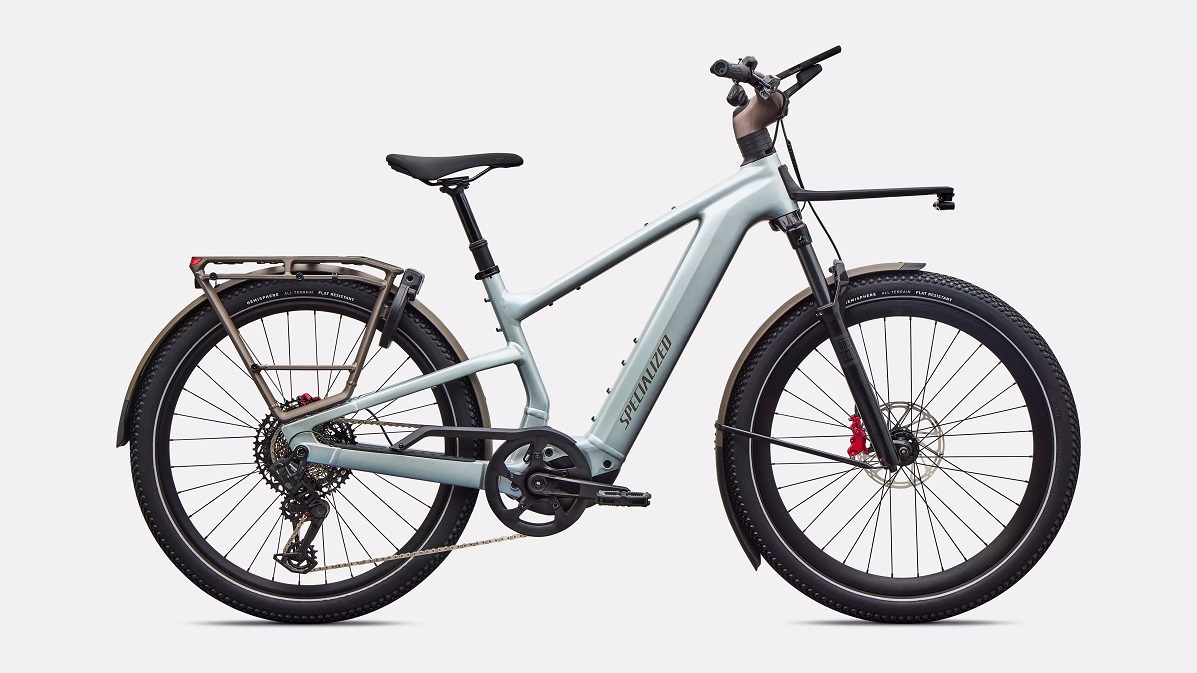
Image Source: Specialized
The new Turbo Vado 3 EVO, a more robust and off-road-friendly version of the bike, comes in three trim levels: the 4.0, 5.0, and 6.0 models. All three use the 250W Specialized 3.1 mid-drive with 810W of peak power and 105 Nm of torque, and are powered by fully integrated but removable 840 Wh integrated batteries.
Additionally, the bikes come in four frame sizes, fitting riders from 5’1” to 6’4”. They feature suspension forks with 120mm of travel, 40mm suspension seatposts, and 27.5×2.6” Specialized Hemisphere all-terrain tires. All trim levels include an MIK-HD rear rack and are compatible with optional MIK front racks. They also feature 4A fast chargers, with the claim of reaching 80% charge in less than an hour.
The Vado 3 EVO offers built-in compatibility with Apple Find My and pairs with Apple watches for heart rate monitoring, ride tracking, etc. All trim levels include some form of integrated security, along with custom stem/handlebar setups with stem-mounted color displays. As with other Specialized e-bikes, motor tuning is available via the Specialized app.
There are a few key differences between the three trim levels:
The 4.0 model includes an SR Suntour suspension fork, two-piston Shimano MT200 hydraulic brakes, and a 9-Speed Shimano CUES drivetrain. This version features a standard color display, and a basic battery and motor lock. Its starting price is $4,500.
The 5.0 is also equipped with an SR Suntour fork, but includes upgraded four-piston Tektro T5040 hydraulic brakes with 2.3mm thick rotors and an 11-speed Shimano CUES drivetrain. It also features a hi-res touchscreen display with wireless phone charging via an integrated quadlock mount. It comes with an additional integrated wheel lock and has a price of $5,200.
At the high end, the EVO 6.0 offers the most robust component package. It features a RockShox Psylo suspension fork, four-piston SRAM DB6 hydraulic disc brakes, and a 12-speed SRAM S1000 Eagle AXS drivetrain with electronic shifting. Like the 5.0 model, it includes a touchscreen display and quadlock phone mount, but also includes a digital lock bypassed via the app or a security PIN, as well as an integrated rear-facing radar system. This version of the bike costs $7,000.
Specialized also released a non-EVO version of the Vado 3 that isn’t (or isn’t yet) available in the US. Instead of the EVO version’s full 27.5” wheel setup with 2.6” tires and 120mm of suspension travel, it offers a relatively unique (for a commuter) mullet setup with a 29” front wheel and 27.5” rear wheel. Its 2.3” tires are narrower, and its fork travel is more conservative, at 90mm.
Our Take:
This bike—especially the 6.0 trim level—looks extremely promising! In our experience, Specialized’s e-bikes always feel incredibly ergonomic and precise, and we have no reason to expect anything different this time around.
Specialized’s 3.1 mid-drive is powerful, offering the torque and peak output to make pedaling both natural and easy. The new integrated tech, like the radar system, is both cool and practical. Admittedly, it does feel a bit odd that Specialized has leaned hard into Apple technology instead of something more universal.
With brands like Aventon and Velotric recently stepping up their game with models like the Level 4 ADV and Discover M, respectively, it will be extremely interesting to see how the Vado 3 EVO’s performance compares. Will Specialized still have the edge against these more affordable models? Only time—and testing—will tell.
Velocomp Debuts PowerBoost, a Torque-Sensor Alternative for E-Bikes
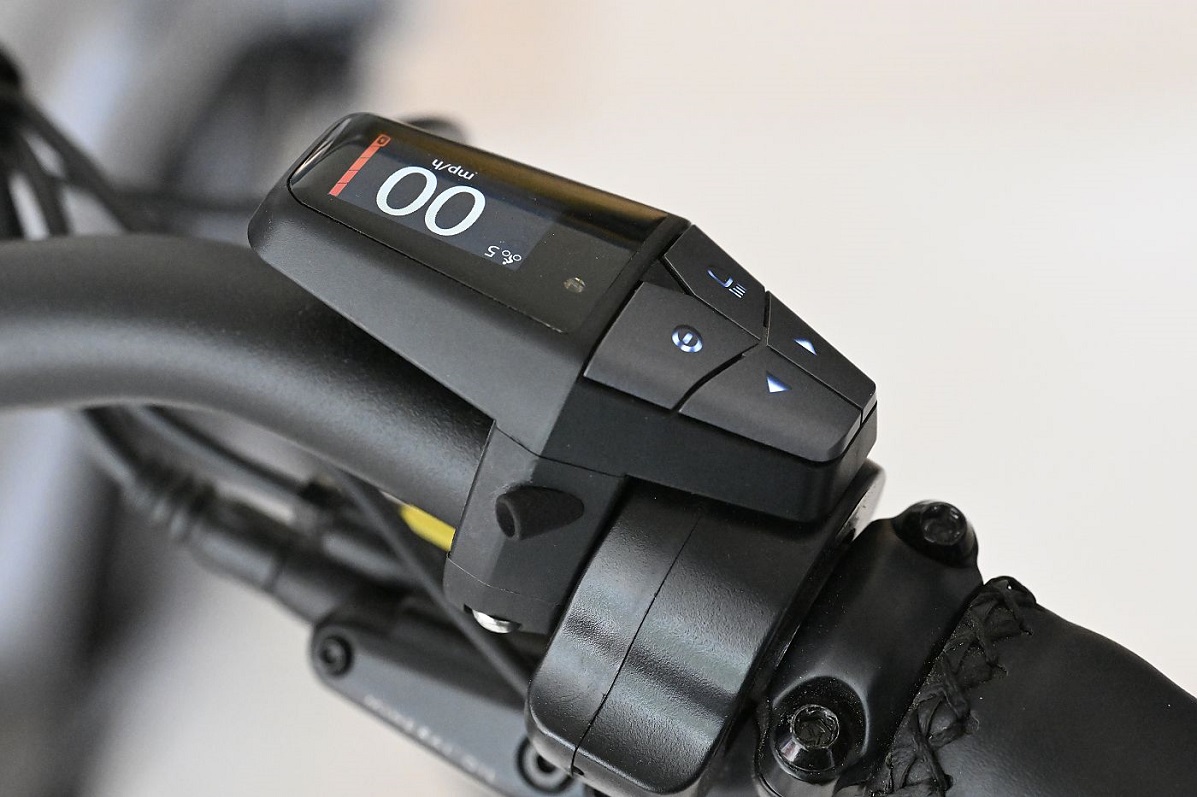
Image Source: Bicycle Retailer
At the present time, Velocomp is known primarily for two handlebar-mounted performance optimization devices called the PowerPod and Aeropod. The former is a wireless power meter that pairs to a bike via ANT+ and measures rider effort in both legs. The latter is a similar device that measures aerodynamic efficiency, helping riders optimize their position, clothing, etc.
The company’s newest technology, called PowerBoost, goes in a different direction. It is designed as an alternative to torque sensors, being easier and more affordable to produce—while touting a similarly natural feel. In contrast with torque sensors, Velocomp’s PowerBoost technology is integrated into a handlebar-mounted display, where it’s more accessible and less prone to getting splashed than bottom-bracket-mounted torque sensors.
Velocomp’s CEO, John Hamann, explained the technology by saying, “PowerBoost delivers expensive torque sensor performance without the cost and complexity of traditional torque sensors. PowerBoost applies our proven and patented combination of accelerometer, air pressure, and barometric sensor technology to deliver enhanced e-bike performance and high reliability. Among its many features, e-bikes with PowerBoost offer slope-adjusted starting motor torque, deliver an easy, natural pedaling experience irrespective of wind and hill conditions, and display real-time slope and wind speed information.”
Velocomp has partnered with AVS Mobility to produce components with PowerBoost built-in. They can be added to any e-bike and are commercially available to bike manufacturers for around $40.
Our Take:
Having witnessed the rise of torque sensors to their nearly-ubiquitous current status, we haven’t thought much about their alternatives—or what might come next—before reading about the PowerBoost system.
Like most pieces of new technology, it’s highly intriguing, and we’re curious how natural a pedal assist system using PowerBoost would feel. If it truly is more affordable and easier to produce, it’s entirely possible that it will become more widespread, though it’s hard to imagine that torque sensors wouldn’t have some advantage or tradeoff to make them worth their higher price.
We are hopeful that we’ll have the opportunity to test e-bikes with this technology in the near future!
Bikes and E-Bikes will NOT be subject to Section 232 Steel and Aluminum Tariffs
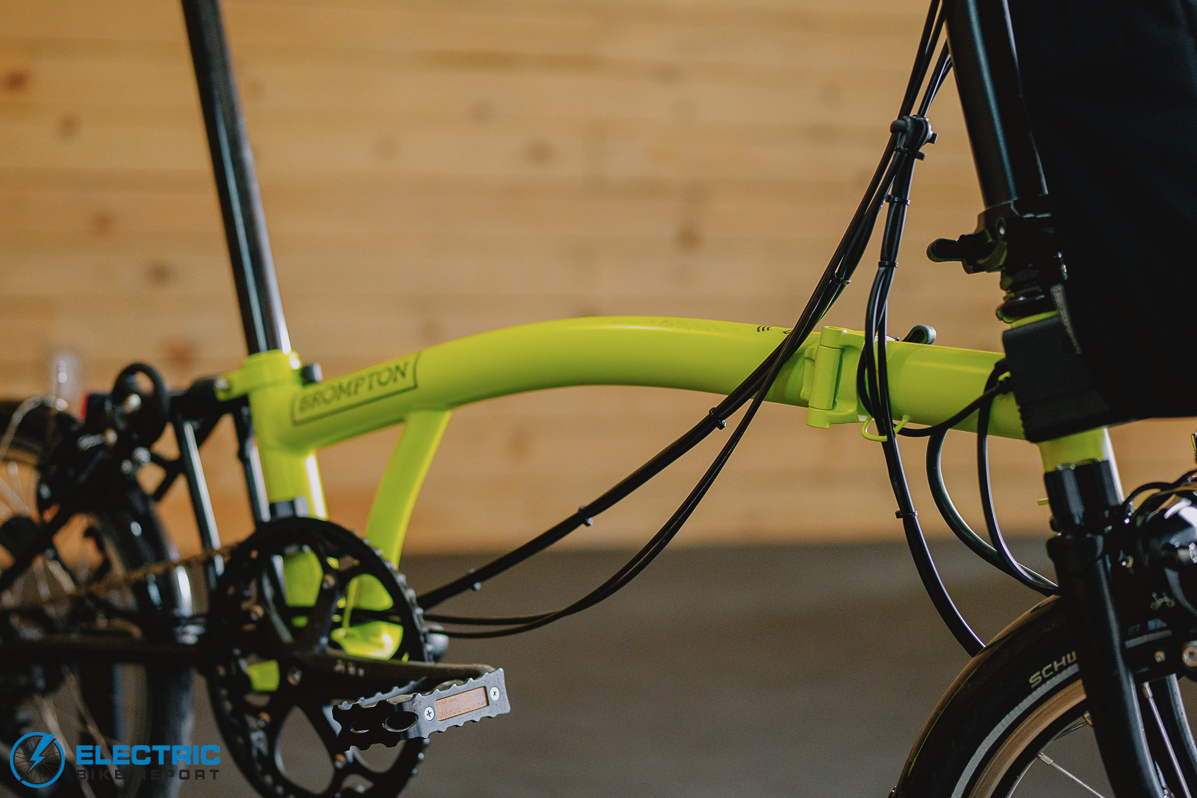
Last fall, Guardian Bikes, a US-based manufacturer of primarily children’s bicycles, proposed up to a 50% tariff via Section 232 on imported steel and aluminum products. If approved, this tariff would have applied to the majority of imported bike frames and many of their components..
Following Guardian’s request, members of the bike industry responded strongly to the company’s proposal, submitting over 1,300 comments that opposed it. Both individuals and industry-related groups also reached out to lawmakers and the Department of Commerce, encouraging them to reject the implementation of this request.
Last week, the White House released an updated list of products affected by Section 232 tariffs, which did not include bikes. E-bikes, e-bike parts, and exercise bikes were also removed from a steel tariff list. Some small bike-related parts still remain affected, however, including steel chains, chain parts, hardware, tools, bearings, etc.
PeopleForBikes stated that the proposal to tax bike and e-bike frames was “completely terminated.”
The group’s statement continued, saying, “There will not be future rounds of inclusion requests. Instead, the Secretary of Commerce and U.S. Trade Representative are authorized to monitor imports, periodically assess the progress of Section 232 tariffs towards achieving their stated goals, and consider input from trade groups and other stakeholders in determining whether additional derivative products need to be added or tariffs adjusted.”
Our Take:
This is a huge win for the bicycle and e-bike industry! Of course, it would be better if all bike and e-bike components (including chains and bearings) were left out, but those are relatively small potatoes in comparison to frames and other large components. Had such foundational elements been subject to massive tariffs, prices could have risen dramatically.
This turn of events is evidence that speaking up works, and we’re hopeful that e-bike prices will remain stable—and most importantly, affordable—for the foreseeable future.
We’re happy to keep you informed on trade issues that can affect e-bikes and their prices, and we’re grateful for your support in voicing your concerns and opinions to those with more decision-making power.
Gear Highlight – PNITRI Phone Mount
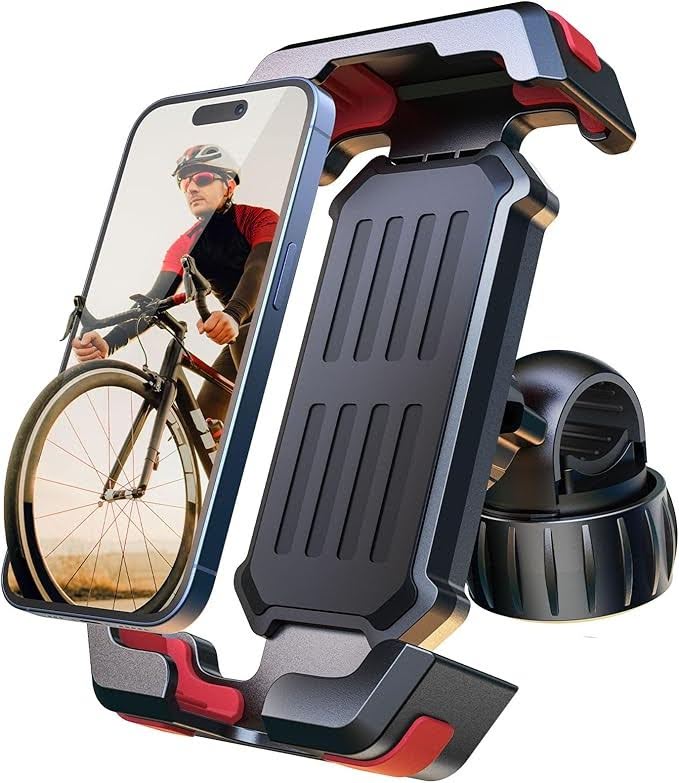
Image Source: Amazon
After testing various types of handlebar-mounted phone holders, the PNITRI phone mount has become our preferred choice. It’s cheap, lightweight, secure, and it attaches in seconds. It attaches via a threaded clamp with rubber inserts that twists to tighten, and features a toggle lock to keep phones held tightly in place.
Additionally, the mount uses a ball joint, allowing users to change the angle of their phone once secured. Admittedly, it can sometimes rattle and move while riding, but no more than other models we’ve tested. Its convenience and affordability are nearly unbeatable! We think it’s hard to go wrong with the mount’s list price of around $13.00.
Sponsor
You Asked, We Answered. Questions Covered In The Weekly Recharge
- With Griffin now gone, how will we conduct our Brake Tests going forward?
- Is the Aventon Level 4 ADV really capable of 120 miles of range with meaningful power?
- Is it better to have a commuter with a suspension fork or one without?
- How well does the Level 4 ADV’s automatic shifting feature work?
- How does the Velotric Discover M compare to the Aventon Level 4 ADV?
E-Bike Deals Found This Week
- Lectric’s April Showers Sale
- Lectric ONE Pinon-equipped mini commuter – just $1,899 with included rack and fenders
- XP Lite2 Long-Range models are $999 or $1,099 with included rack, fenders, suspension seatpost, upgraded headlight, and bike lock
- Amflow’s Sale
- Amflow PL Carbon Pro – punchy, powerful eMTB with dialed-in pedal assist – $1,600 off, down to $8,599
Make sure to tune in to the full episode to see the e-bike trail system highlight and rider of the week! Want to be featured in future episodes? Comment on any YouTube video or page of the website, or send to [email protected].
Sponsor
*Please help support our efforts at Electric Bike Report. We work hard to provide the highest quality content, news, and reviews for our readers – and our sponsors make all of this possible. Please visit our sponsors from their ads on our website and let them know that you appreciate what they do for the e-bike industry and Electric Bike Report
Sponsors
Sponsor
Reader Interactions
Leave a Reply