

Turbo Levo Gen 4 Power Update, E-Bike Delivery Ban, Orbea’s IoT-Enabled Rallon RS | TWR Ep 71
Feb 22, 2026
 1 Comments
 Share
Share
Plus Bike Share Sabotage in London, Vermont’s Longest Rail Trail, Velotric Discover 3 vs Discover M Comparison, & More!
We have e-bike news of all kinds to highlight this week, from an over-the-air (OTA) update that enhances Specialized’s eMTB motors, to a potential ban on some e-bikes in Boston, to a mind-blowingly high-tech new downhill eMTB.
Specialized’s latest OTA update increases the peak power output of its 3.1 mid-drive on both S-Works and non-S-Works Turbo Levo Gen 4 models. Does this move effectively keep the brand competitive in the eMTB power wars?
A Boston City Councilor proposes a ban on e-bikes used as delivery vehicles after receiving an abundance of complaints about their reckless use. But would a ban solve the problem?
Orbea releases the Mallon RS, an impressively connected yet modestly-specced electric mountain bike. Through Internet of Things (IoT) functionality, the bike’s suspension, motor, and dropper post communicate and synchronize to optimize its ride experience. Will we see this tech on future e-bikes?
Continue reading below for more information!
Sponsor
Sponsor
This Week’s E-Bike News Headlines
Specialized’s Latest OTA Update Boosts Turbo Levo 4 Power
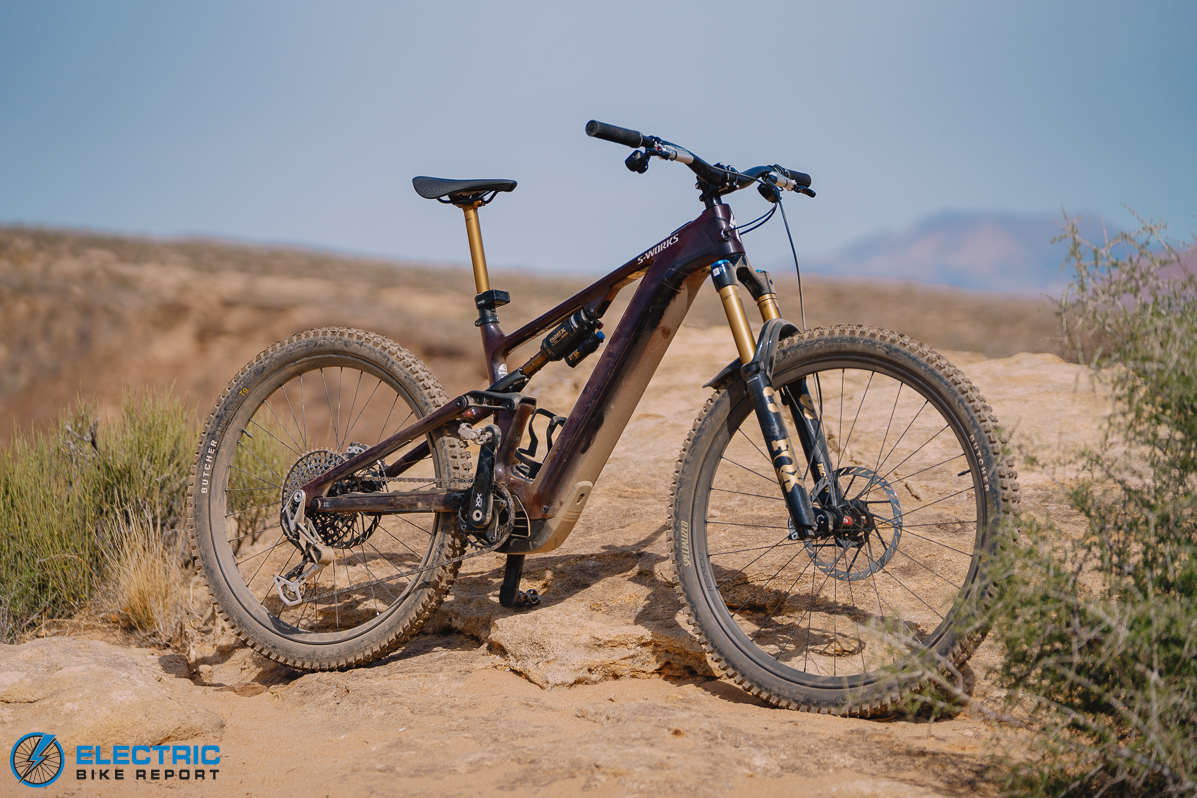
The update, which can be downloaded via the Specialized app, increases power on the Specialized 3.1 motor on both S-Works and non S-Works models of the Turbo Levo Gen 4.
For the top-tier S-Works model, the update raised the motor’s peak output to 850W (a 130W increase), while its torque output remained at 111 Nm. Non-S-Works Turbo Levos received a larger boost to both peak power and torque, adding 144W and 4 Nm to reach a peak of 810W and 105 Nm.
The update also added to and refined many of the bike’s features. A new setting for Dynamic MicroTune matches rider input 1:1, so a rider pedaling with 100W gets 100W of power from the motor. It smooths power drop off at the legal speed limit to give pedal assist a more natural feel.
Additionally, the update improves overrun responsiveness and allows its power to be customized, with an option to stop overrun when backpedaling. Finally, it adds three speed settings for walk mode instead of one, allowing riders pushing the bike to have it match their speed.
Specialized’s Leader of Turbo Technology, Marco Sonderegger, explained the changes, saying, “With Over-the-Air updates, every Turbo bike becomes a living, evolving machine that gets better over time. With a simple software update done from the convenience of their home, riders’ bikes get more powerful, more refined, and more personalized.”
This increase in the Turbo Levo 4’s motor power follow recent updates from other brands. For example, Avinox increased the power of its motor to 1000W peak and 120 Nm via an OTA update. Bosch also pushed out an update to its Gen 5 Performance Line CX mid-drive, boosting its power to a maximum of 750W and 100 Nm of torque.
Brands are clearly competing for the top spot, though each company’s motors have a different feel and performance
OTA updates are great—they allow for improvements over time as tech improves, so you don’t have to buy new things all the time to get the updates
Our Take:
Clearly, the makers of popular eMTBs and/or their motors are vying for the top spot in these torque wars, though each brand’s motor has a unique feel and performance. While Avinox is taking no prisoners with its mid-drive’s massive power output, Specialized’s update seems to be an effort to make its motors more comparable without being overpowered.
Over-the-air updates are a thing of beauty when it comes to e-bikes, as they allow bike owners to benefit from refinements as technology advances. Instead of having to purchase an entirely new product when an improvement is made, riders can simply connect to the app, then download and install the app—all without lifting more than a finger.
A Proposed Boston Ordinance Would Ban E-Bikes as Delivery Vehicles
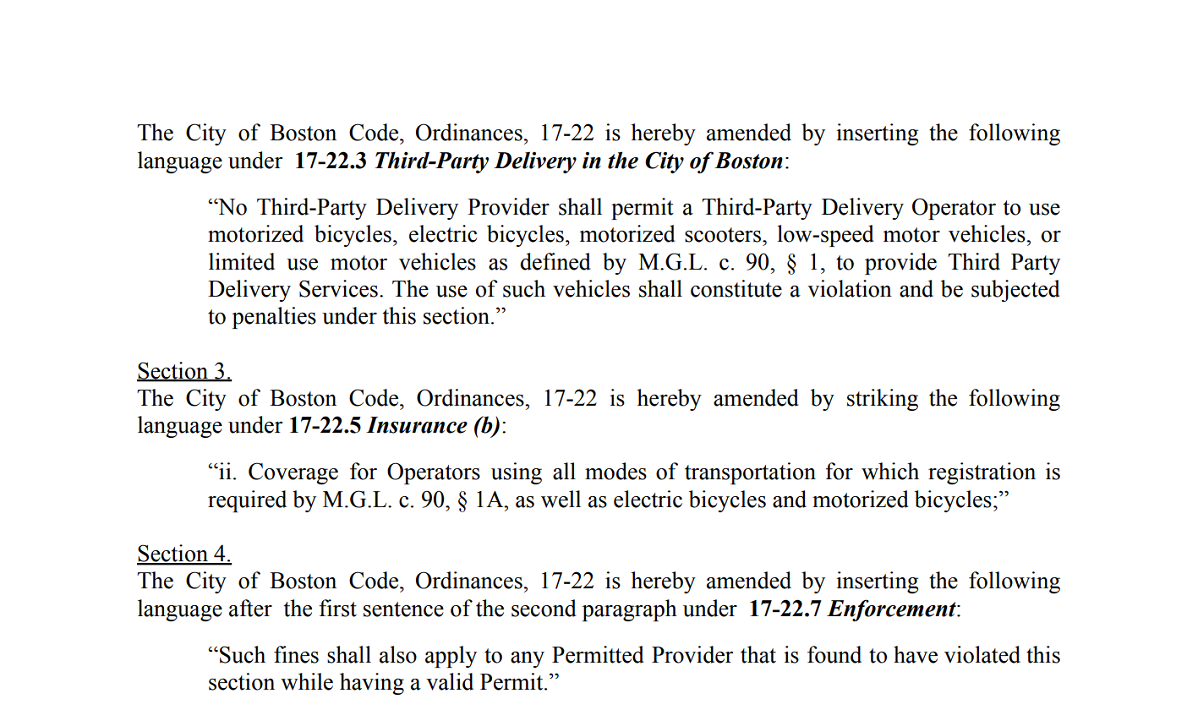
Under the proposal, delivery workers for companies such as DoorDash or UberEats would be prohibited from using e-bikes, motorized scooters, or mopeds as a means of making deliveries.
The proposal was introduced by Boston City Councilor Ed Flynn, and it serves as a response to numerous complaints he has received about delivery drivers/riders behaving recklessly.
Flynn’s proposal states, “On a near daily basis, city residents have shared how these motorized vehicles, which can travel more than 20 mph, do not obey the rules of the road – driving the wrong way on our streets, on sidewalks, speeding, running stop signs and red lights, weaving between vehicles at red lights, and posing an unpredictable danger to pedestrian safety.”
At the time of writing, the ordinance proposal is under review, but public reactions have been mixed. Some support the idea, others are concerned about the ban causing deliveries to become delayed or more expensive, and still others have voiced concerns about the ban unfairly forcing current workers out of a job if they are unable to afford buying a car.
In its current form, the ordinance ONLY targets delivery drivers, so all other Boston residents could still use e-bikes and exhibit the same reckless behaviors unless traffic laws are more thoroughly enforced.
Our Take:
We oppose any measures that unfairly single out e-bikes as a source of problems, and strongly believe that better education and enforcement would be an optimal solution. After all, the operators of the e-bikes referenced in Councillor Flynn’s proposal are the ones at fault, not the e-bikes themselves. Furthermore, legislation that targets one type of rider without affecting all users of specific vehicles or mobility devices seems ill conceived.
As a former food delivery worker, I can personally attest that deliveries can be made quickly, efficiently, and safely. I would urge delivery app companies to incentivize their workers to behave responsibly and complete each job while following traffic laws, even if doing so would cause deliveries to be marginally later.
Orbea Launches the (Almost) Fully Automatic Rallon RS Downhill eMTB
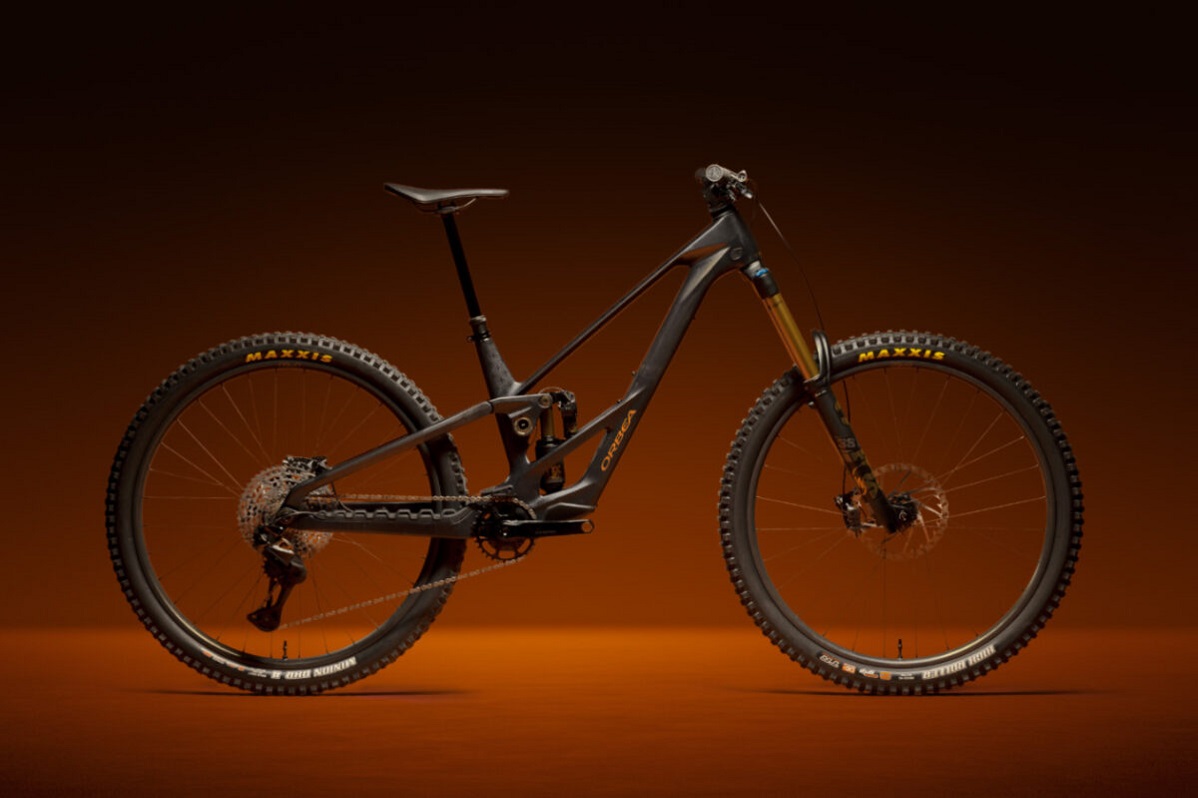
Image Source: The Loam Wolf
The Rallon RS is a collaboration between Orbea, Fox, and TQ. It was designed to be as synergistic and optimized as possible, providing subtle power to compensate for the climbing inefficiencies of downhill bikes. Despite having a motor, it is not listed as an electric bike on Orbea’s website.
Unlike other eMTBs, the Rallon RS’s motor, derailleur, dropper post, suspension, and control panel are all electronic, connected, and powered by the main battery. The bike is equipped with TQ’s HPR40 mid-drive, Fox’s eNEO Live Valve Shock, and Orbea’s MC10-RS dropper post—all of which communicate with each other and adapt based on riding conditions.
According to an article published by the Loam Wolf:
- “The shock receives inputs such as cadence, rider power, motor power and bike speed from the TQ motor. Orbea’s custom algorithms use this data to deliver more predictable and responsive suspension behaviour.”
- “The MC10-RS dropper communicates its exact position multiple times per second through an optoelectronic Time-of-Flight sensor. This is an industry first. When the dropper is lowered, the shock stays fully open to optimize downhill performance.”
- “The TQ motor recognises when the bike is pointed downhill with the dropper lowered and adjusts its assistance to avoid unwanted inputs in technical terrain.”
The bike also uses Orbea’s RS-HMI (Rider Synergy-Human Machine Interface), which allows riders to select between riding modes for the motor, smart dropper functions, and suspension settings. It pairs with Orbea RS Connect app for motor tuning and OTA updates.
Additionally, the bike features impressive yet modest specs, including 200W of peak motor assistance and 40 Nm of torque, and a 290 Wh battery capable of over a mile of total possible climbing range (roughly 5,900 feet). The Rallon RS is also compatible with a 160 Wh range extender that Orbea claims can grant riders up to 55% more range.
The Rallon RS uses a carbon fiber frame made with advanced construction techniques. It can be ran with a full 29” setup or as a mixed-wheel mullet style eMTB. Its geometry is also adjustable, offering both a flip chip and headset adjustment for balance and head angle tuning. Depending on the selected frame size, it is compatible with 210-240mm dropper posts.
Orbea sells the bike for £9,499 / $12,820 or £12,499 / $16,870.
Our Take:
IoT technology has made some e-bikes smarter, but the Rallon RS is on another level. On a bike with many electronic components all powered by a single battery, it makes sense for the parts to sync and communicate automatically. Such a concept allows technology to optimize functionality for the rider, instead of making the rider manually adjust elements individually.
While the Rallon RS is certainly a premium offering, we have hope that this kind of technology will become more affordable in coming years. We also hope to see similar collaborations between component manufacturers in the future!
Sponsor
You Asked, We Answered. Questions Covered In The Weekly Recharge
- Do e-bikes with rear hub motors and mid-drive motors require different shifting techniques?
- What belt-drive-equipped e-bikes would we recommend to a rider seeking a touring/gravel bike with a max budget of $4,000?
- How do the Velotric Discover 3 and Discover M compare?
- Why does the Velotric Discover M’s throttle not function in Class 1 and 3 modes?
E-Bike Deals Found This Week
- Amflow Spring Sale – up to 20% off powerful eMTBs
- Amflow PL Carbon – $1,000 off the M/L sizes, $1,500 off the XL ($6,499 and $5,999 respectively)
- Fox 36 Performance, SRAM Eagle 70, Magura MT5
- PL Carbon Pro – $1,600 off, down to $8,599
- Fox 36 Factory, SRAM X0 Eagle, Magura MT7 Pro
- Amflow PL Carbon – $1,000 off the M/L sizes, $1,500 off the XL ($6,499 and $5,999 respectively)
- Aventon’s Sale
- Pace 500.3 city cruiser – last chance to get this bike at $,1499
Make sure to tune in to the full episode to see the e-bike trail system highlight and rider of the week! Want to be featured in future episodes? Comment on any YouTube video or page of the website, or send to [email protected].
Sponsor
*Please help support our efforts at Electric Bike Report. We work hard to provide the highest quality content, news, and reviews for our readers – and our sponsors make all of this possible. Please visit our sponsors from their ads on our website and let them know that you appreciate what they do for the e-bike industry and Electric Bike Report
Sponsors
Sponsor
Reader Interactions
Comments
Leave a Reply




In reference to the e-bike delivery ban proposal in Boston, the sensible way would be to have better enforcement by, (1) having e-bike owners register their bike and have a license plate like any other motorcycle and (2) more traffic enforcement in general.
E-bike riders are not the only ones driving recklessly these days.