Cikada Touring E-Bike Review | In It For The Long Haul?
Dec 05, 2025
 0 Comments
 Share
Share
The Touring is a comfortable, responsive hybrid commuter/cargo carrier that’s well suited for a wide range of uses.
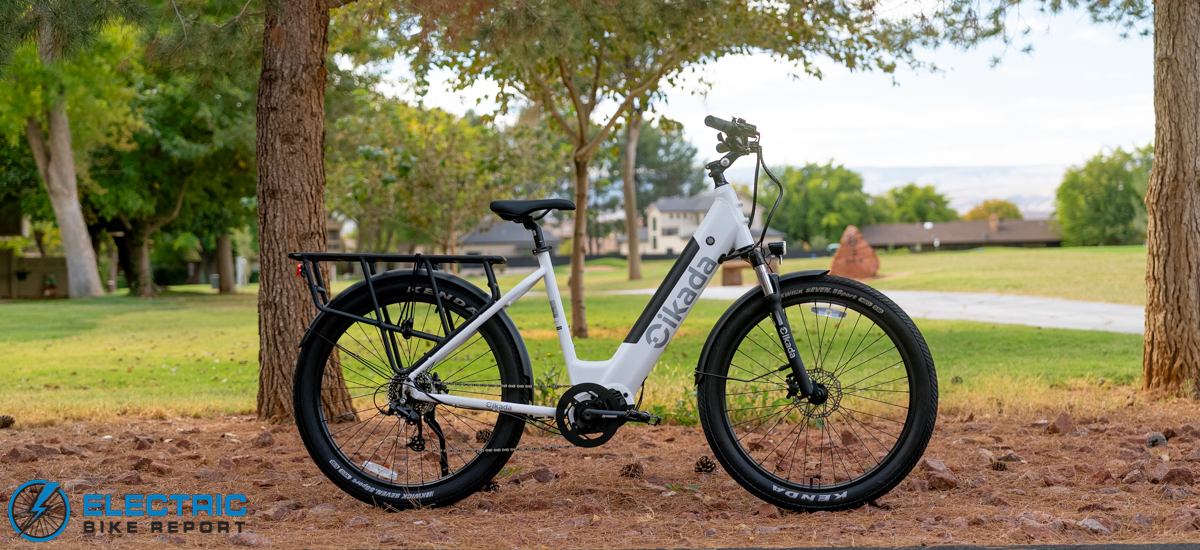
E-bikes are often relatively specialized, meaning that they are engineered to fulfill a specific role related to their style or category. This focused design commonly results in bikes that can perform one or two tasks exceptionally well while also having some glaring weaknesses in other areas.
For example, an electric mountain bike (eMTB) might offer extreme agility, traction, and shock absorption for rocky trails, while suffering some loss of energy efficiency when riding on paved surfaces. In another case, folding e-bikes often sacrifice some comfort and steering control for increased portability and compactness.
The Cikada Touring E-Bike occupies a relatively unique middle ground between a commuter e-bike and a cargo hauler. As its name might suggest, it’s intended for comfortable, long-distance rides on streets and paved paths.
As such, it’s more versatile than most e-bikes of a single style. The Touring’s design makes it suitable for getting to the office, grabbing dinner or groceries on the way home, and loading up for a long day of sightseeing and adventuring on the weekend.
The bike’s biggest strengths are its 350W mid-drive motor, sizable 720 Wh battery, and extended rear cargo rack. The torque-sensing motor delivers power naturally in response to the rider’s effort while the battery fuels the mid-drive on long rides. The rack offers a long platform that can be equipped with a handful of accessories and can carry up to 77 lbs.
The Touring impressed us with its overall comfort, responsive pedal assist system (PAS), and range capabilities, but as with any e-bike, it’s not perfect. Keep reading to find out how the bike performed in our real world tests, how it compares to similar models we’ve tested, and what areas have room for improvement.

Sponsor
E-Bike Category:Commuter
E-Bike Class:Class 1 (pedal assist to 20 mph)
Class 2 (throttle to 20 mph)
Class 2 (throttle to 20 mph)
Sponsor
Cikada Touring E-Bike Video Review
 Pros
Pros- The Cikada Touring feels both powerful and natural to pedal, with a 350W Bafang mid-drive and up to 90 Nm of torque.
- This bike is ready to work! With an extended cargo rack that can carry up to 77 lbs, it’s far more utilitarian than the average commuter e-bike.
- It’s well-equipped for long-range travel, as the bike’s results in our Range Test section show. We even exceeded Cikada’s advertised range!
- We found the bike both comfortable and adaptable. Its two frame sizes, adjustable stem, and ergonomic handlebars ensure a proper fit with a relaxed feel.
- It features nimble handling and great stability thanks to the 27.5×2.8” Kenda tires.
- The bike’s functionality can be expanded with optional accessories, including cargo baskets, a front rack, and tire pressure sensors that pair with the Cikada app. It can also carry a child seat!
- Its mid-drive motor is equipped with a throttle, allowing riders to leverage the drivetrain for climbing or getting up to speed without pedaling.
 Cons
Cons- The Touring’s brakes felt acceptable during our testing, but we suggest an upgrade due to its longer than average stopping distance and cargo-hauling capability.
- While its power and feel were solid, we found the Bafang mid-drive to be distractingly loud.
ELECTRICAL SPECS & FEATURES
- Battery: 720Wh (48V / 15Ah) LG 21700 cells, 7.5–8h charge, removable with lock
- Charger: 2A
- Display: BaFang DP C221.CAN
- Motor: BaFang M410 mid-drive, 350W / 90Nm
- Headlight: Integrated LED
- Taillights:Integrated LED
- Pedal Assist: 5 assist modes, integrated torque sensor
- Claimed Range: Up to 75 miles
- Throttle:Right hand twist throttle
- App:Cikada App
- UL Certification:Certified to meet UL 2271 & UL 2849 standards
Weight & Dimensions
- Claimed weight: 66 lbs
- Tested Weight: 64.5 lbs
- Rider height range: 5’2” – 5’9” (M), 5’5” – 6’4” (L)
- Total payload capacity: 309 lbs
Components & Accessories
- Brakes:Star Union Hydraulic disc brakes, 160mm (6.3″) rotors, power cut-off
- Fenders:Plastic Front and Rear
- Fork:Zoom suspension fork, OLD 15×110mm (0.6″×4.3″), travel 60mm (2.4″)
- Frame: 27.5″ 6061 aluminium
- Drivetrain: Microshift 8-speed, 44T chainring, 11–34T cassette
- Grips: Velo anti-slip rubber/gel
- Saddle: Ergonomic leather saddle, steel rail
- Handlebar: Zoom aluminium rise bar, 680mm (27″) width, Ø31.8mm (1.25″)
- Kickstand: Aluminium
- Pedals: Alloy body, 9/16″ steel axle, 112×108mm (4.4″×4.3″), with CPSC reflector
- Tires: Kenda 27.5×2.8, anti-puncture, reflector strip
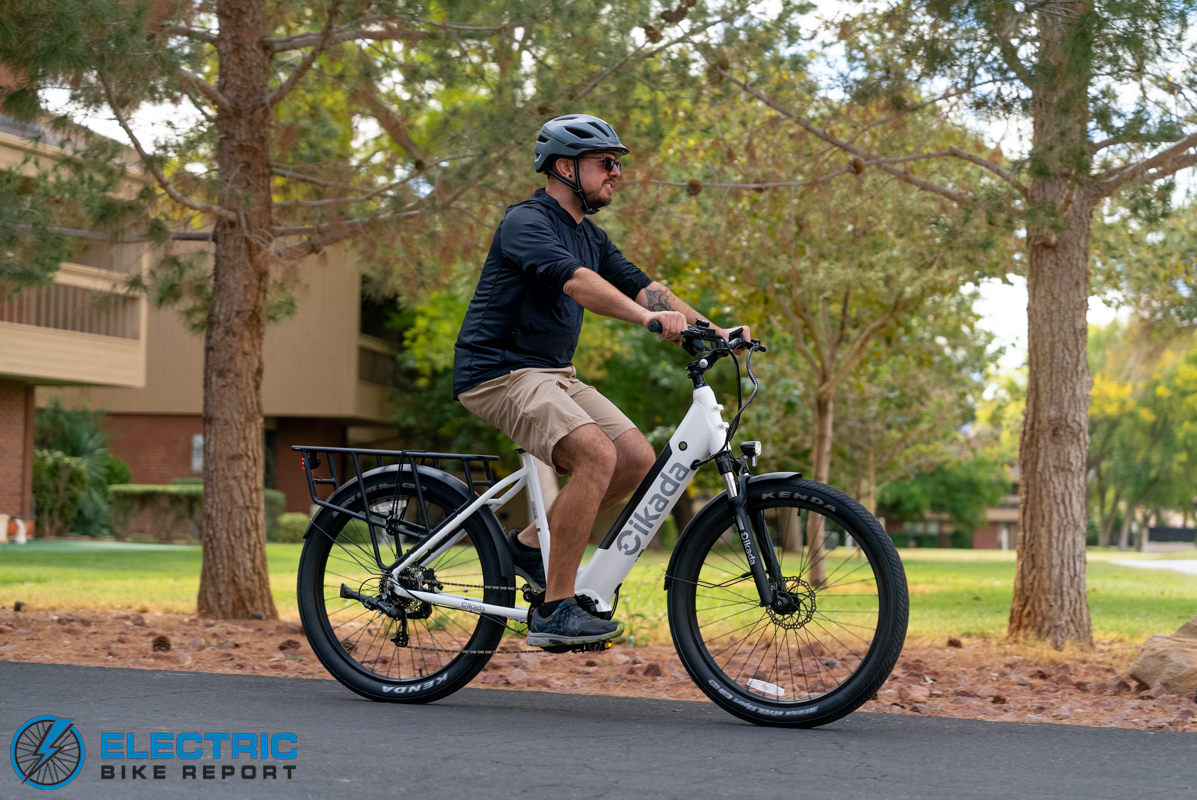
The Touring’s riding position can range from upright and relaxed to sporty and forward-leaning, depending on how riders set the bike’s adjustable stem.
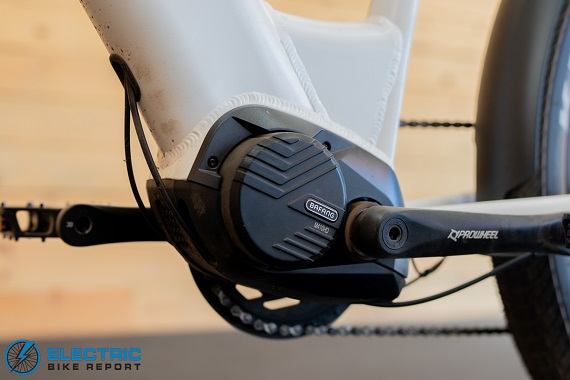
The 350W Bafang mid-drive delivers power naturally, responding to how hard you pedal.
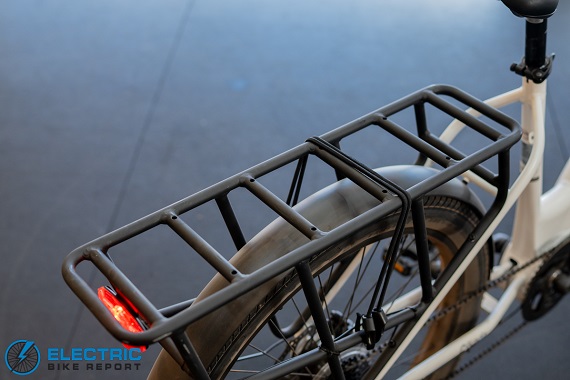
An extended cargo rack can carry up to 77 lbs and is compatible with a child seat.
Cikada Touring E-Bike Review: Speed Test
With its 350W Bafang mid-drive motor, the Cikada Touring offers throttle and pedal assist up to 20 mph. We tested the bike’s ability to reach its maximum speed, as well as the power distribution of its five PAS levels, by recording our average speeds while riding on a paved shared-use path. We also tested its throttle acceleration when starting from a stop.
The results of my pedal test are as follows:
- No PAS – 10.2 mph
- PAS 1 – 12.2 mph
- PAS 2 – 14.1 mph
- PAS 3 – 17.1 mph
- PAS 4 – 18.8 mph
- PAS 5 – 19.0 mph
I began without pedal assist, where the Touring moved relatively comfortably under leg power alone. The lowest assist levels felt distinctly natural (like pedaling a non-electric bike), but as I increased the power setting, my speed and the resulting push from a single pedal stroke escalated as well.
While there seemed to be a jump in power when moving from PAS 2 to PAS 3, the overall programming seemed intuitive. Each time I raised the assist level, the motor’s output ramped up expectedly to provide more return for my effort.
As the graph shows, I wasn’t able to reach 20 mph in this test. The motor seemed to stop at around 19 mph, which added enough resistance to the pedals that I topped out around 19.4 mph with added leg power. While I expected to reach slightly higher speeds, I don’t mind the more conservative limit on a bike capable of hauling a fair amount of cargo.
Outside of the test, I found myself riding primarily using PAS 1 or 2 on our relatively flat trail system. Higher power levels provided faster acceleration, but I found myself only needing this added push when tackling some of the largest hills local to our area; even the low-mid assist settings felt capable when combined with the 8-speed drivetrain.
When testing the throttle, I found that it started gradually, then picked up speed steadily before reaching the same 19 mph limit. My selected PAS setting had an influence on the bike’s acceleration; PAS 1 felt extremely reserved, while PAS 5 was faster and more forceful.
Overall, the Touring performed solidly in this test, with a well-balanced PAS, controllable acceleration, responsive power delivery, and an active, engaging ride.
Sponsor
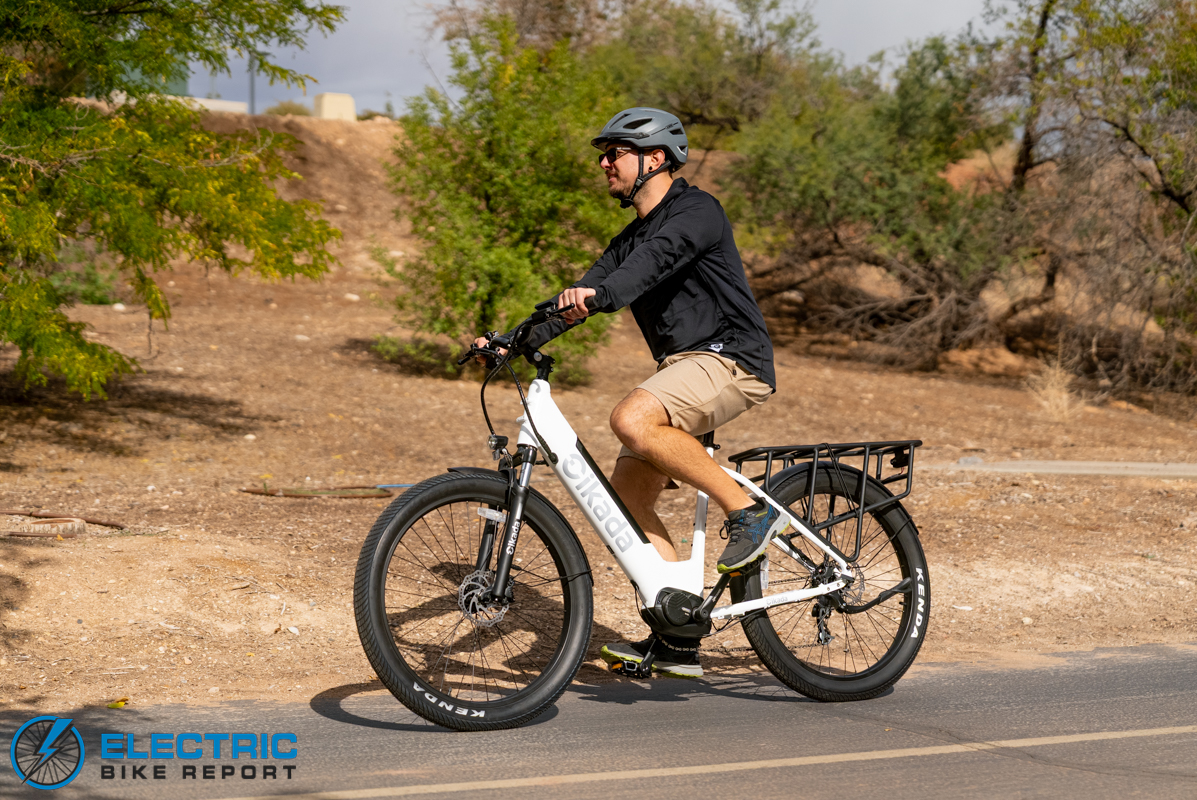
We found the Touring’s 20 mph speed effective, safe, and suitable for carrying cargo or a passenger.
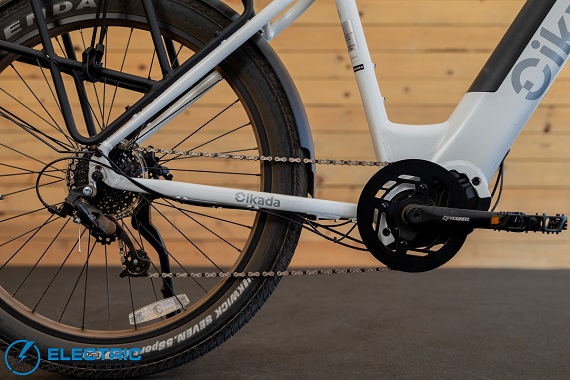
The bike’s 8-speed Microshift drivetrain felt well-balanced for its Class and cargo capabilities.
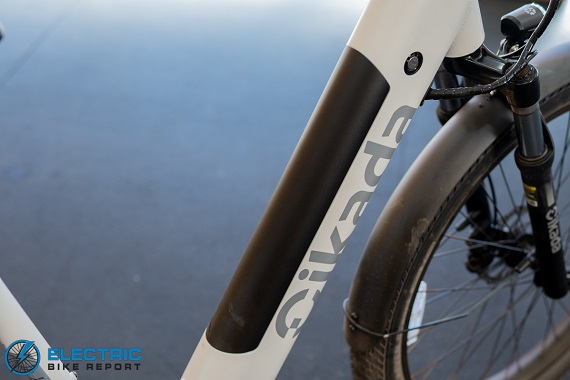
A 720 Wh battery powers the bike’s mid-drive, sits flush with the down tube, and is removable for charging.
Cikada Touring E-Bike Review: Range Test
As I touched on in the introduction to this review, the Cikada Touring proved capable of extended rides, thanks to its combination of an efficient 350W mid-drive and a comparatively high-capacity 720 watt-hour (Wh) battery.
We tested the bike’s range by riding it until its fully-charged battery was drained, performing a test in both the bike’s highest and lowest assist levels. When riding without cargo (adding weight will likely reduce range), our team of test riders reached 35.3 miles in PAS 5 and 121.8 miles in PAS 1.
A group of similar commuter-style e-bikes, including both those with mid-drive and rear-hub motors, traveled 34.2 and 68.4 miles on average. In comparison, the Cikada Touring’s results were roughly average in its PAS 5 test and exceptionally above average in its lowest assist level. In fact, the Touring’s low-assist results are among the longest we’ve seen when testing e-bikes from all categories and styles!
In terms of actual energy efficiency, the Cikada used 5.9 watt-hours per mile (Wh/mi) in PAS 1 and 20.4 Wh/mi in PAS 5. Its competitors averaged 9.7 and 19 Wh/mi in their low- and high-assist tests, respectively. By those numbers, the Touring was slightly less efficient than average in its PAS 5 test but noticeably more efficient in PAS 1.
There are two likely reasons for the bike’s excellent performance results in its lowest assist level. First, I mentioned that our comparison group contained both e-bikes with mid-drives and rear-hub motors. The former are typically more energy efficient than the latter, therefore the Touring has a natural edge over many comparable models with hub motors.
The second reason for the bike’s impressive PAS 1 result is its battery capacity. We prefer e-bikes batteries with capacity in watt-hours equal to their nominal motor power in watts. With a 720 Wh battery and a 350W motor, the Touring exceeds double this ratio. For perspective, only a few of its competitors with mid-drives have similarly large power packs.
With that in mind, we would appreciate it if the bike shipped with a faster charger in the future. The included 2-amp charger takes roughly 7.5 hours to top off a fully-depleted battery, which works well when charging overnight, but a 3-amp charger would reduce this time to only around 5 hours.
Touring e-bikes are meant for long-distance travel, and in this test, the Cikada Touring proved that it lives up to its name. With such impressive potential, the bike is well-suited for a variety of uses, including travel across or between cities, daily commuting or errand running, and shorter leisure or exercise rides.
Sponsor
Sponsor
Cikada Touring E-Bike Review: Hill Test
The Cikada Touring successfully completed both portions of our Hill Test, which is explained in the graphic above. On throttle-only power, it finished the climb in 2:42, but when our test rider pedaled using the highest assist level, the Touring reached the finish line in 2:17.
At face value, these results appear much slower than average when they are viewed side-by-side with those from many comparable e-bikes we’ve tested, but a deeper explanation of the details is warranted.
A group of similar models, including many of the best commuter e-bike we’ve tested, averaged 2:04 when completing the test on throttle and 2:09 under pedal power.
As in the case of the Range Test section above, this group contains many e-bikes with rear-hub motors, which commonly climb faster than those with mid-drives. Bikes like the Cikada Touring, however, often feel more natural in comparison, though they are relatively rarely equipped with throttles.
At this time, we have only one similar throttle-equipped mid-drive commuter to compare with, and that bike was faster due to its more powerful motor. However, other commuters with mid-drives completed the pedal test in 2:18, making the Cikada’s result average in comparison.
I personally tested the Touring at our secondary location near the Electric Bike Report office, called Pilot Hill. There, the throttle felt relatively slow but steady as it carried me to the top. Pedaling in PAS 5 felt active, but I completed the climb quickly and breathing only slightly heavier than when I began the test.
Based on my experience, I would expect the bike to require moderate pedal effort when loaded with cargo. Depending on the hill, riders may need to supplement throttle power with pedaling when under load.
Considering that many other similar e-bikes with mid-drive motors do not come equipped with throttles, I recommend thinking of the Cikada’s throttle as a bonus feature; it’s a luxury that you may be able to take advantage of under certain conditions. When pedaling, however, the Touring effectively flattened hills each and every time we encountered one.
Sponsor
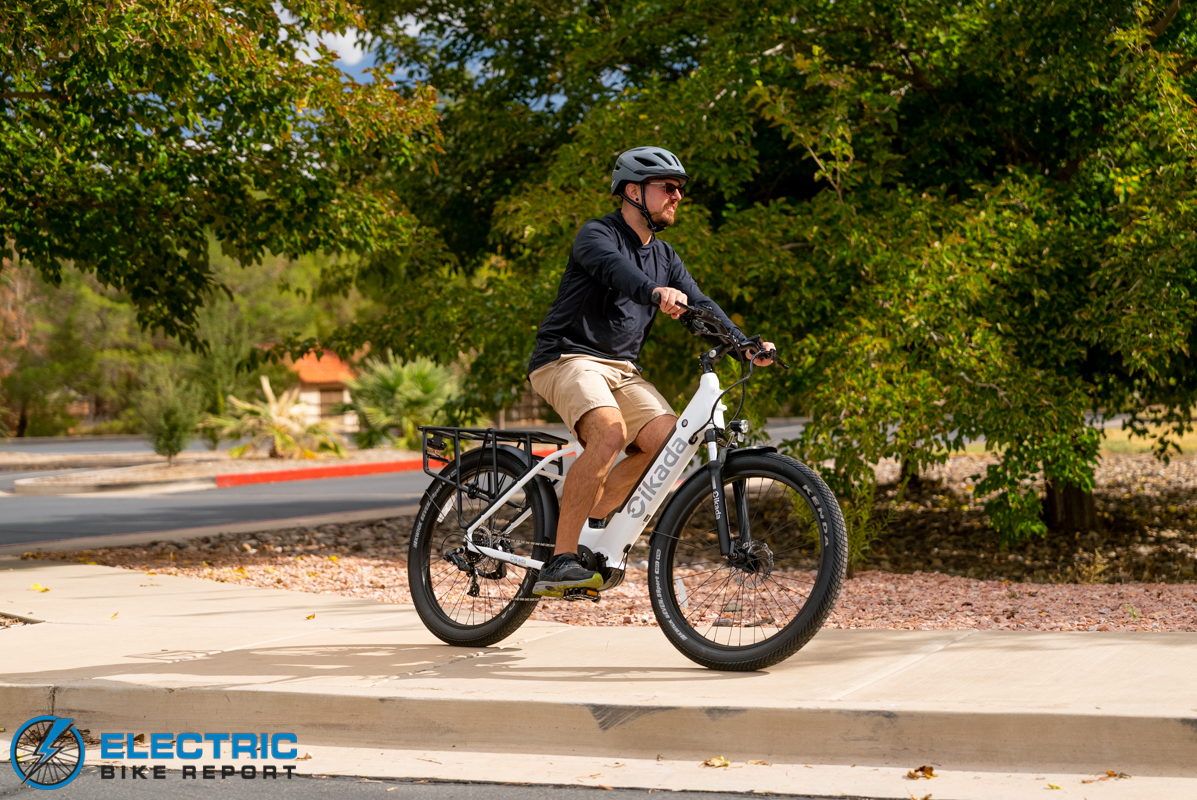
The Cikada Touring is well suited for daily commuting, leisure riding, exercise, and beyond.
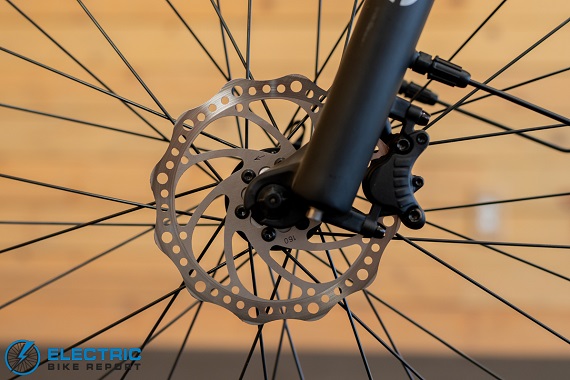
Cikada paired 160mm front and rear rotors with the Touring’s 2-piston hydraulic brakes.
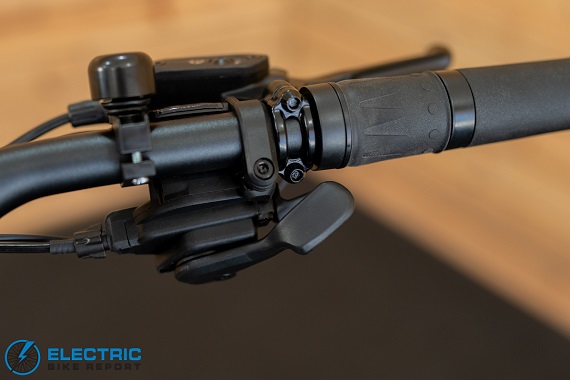
The bike’s half-twist throttle sits on its right handlebar, making up part of the grip.
Cikada Touring E-Bike Review: Brake Test
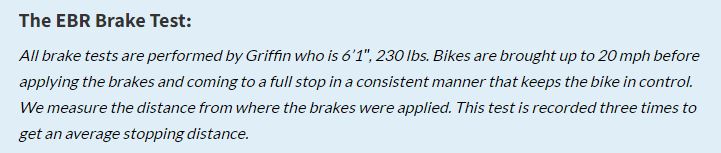
After three brake tests where we brought the Cikada Touring E-Bike up to speed and measured the distance it traveled before stopping, its average score was 29’ 5”. In comparison, other commuter e-bikes we’ve tested averaged 22’1”, making the Touring significantly slower than average.
The bike is equipped with Star Union hydraulic disc brakes, pairing two-piston calipers with 160mm rotors. In my personal testing of the Touring, I found the brakes generally effective. The bike’s longer-than-average stopping distance was noticeable at times, particularly when riding downhill, but I can’t say the bike felt unsafe.
With that perspective in mind, I was surprised to note that the bike’s test result was over seven feet beyond average.
We typically recommend changes to e-bike brake systems when their test results extend beyond the 25-foot mark. Considering the Touring’s extended stopping distance, and the fact that the bike is equipped for moderate cargo hauling, we recommend that Cikada upgrade its brake system for improved performance—especially with added weight.
Larger and potentially thicker brake rotors would likely shorten the bike’s average stopping distance by better dissipating heat.
With that critique out of the way, I want to also give some credit to Cikada for cleverly equipping the bike with a hydraulic system that incorporates locking parking brakes. While many similar models use standard brake systems without this feature, the Touring’s brakes can provided added stability and safety when loading the cargo rack.
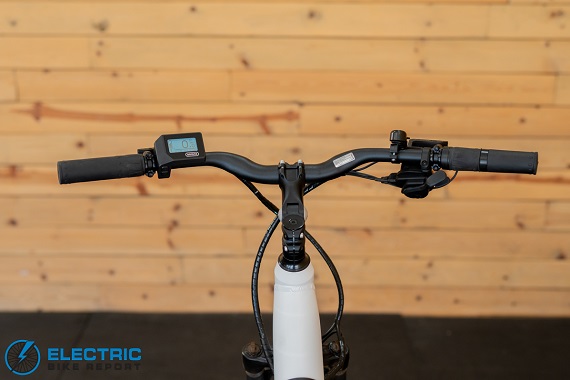
The Touring’s cockpit layout is clean and simple, with straightforward controls and easy operation.
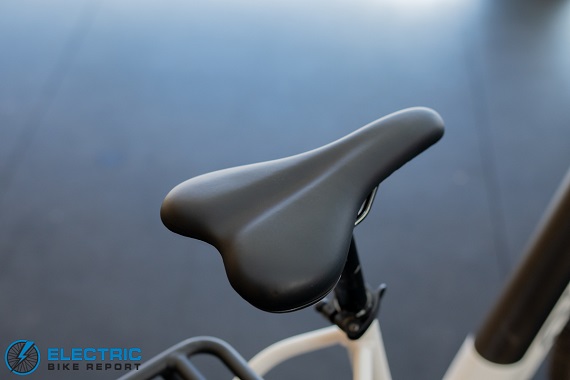
I found the relatively slim saddle to be on the firm side, though its profile is well-suited for long distance rides.
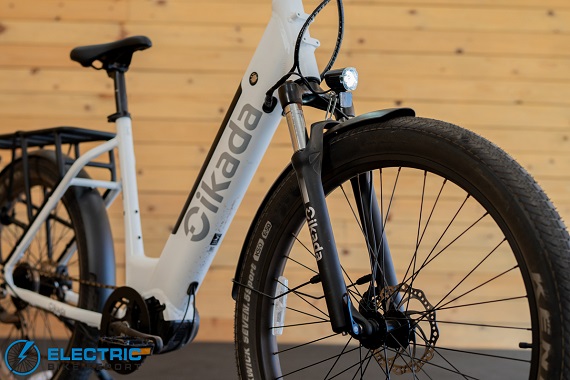
A 60mm suspension fork provides enough cushion to smooth bumps and rough pavement.
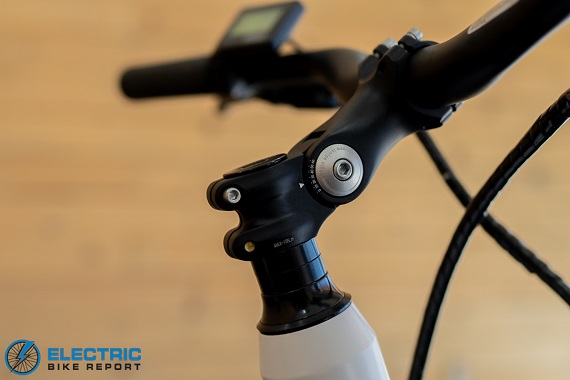
The adjustable stem alters both the bike’s handlebar height and its reach distance, changing its fit and riding position.
Cikada Touring E-Bike Review: Ride Quality
Ride quality can be easily summarized as a measure of a bike’s overall feel and operation. The subject is complex and multifaceted; we’ll explore many of the elements that relate to ride quality in this section of our review. Overall, the Cikada Touring felt well put together, though we identified some areas with room for improvement.
A bike’s frame design and sizing are two significant factors influencing its ride quality. The Cikada Touring has two frame sizes: a medium for riders between 5’ 2” and 5’ 9” and a large for those from 5’ 5” to 6’ 4”. We tested the larger of the two, and at 5’ 11”, I found the bike well-proportioned and comfortable to ride.
The bike features a seatpost with around 4.5 inches of height adjustment, allowing me to reach proper, efficient leg extension when pedaling. I found the slim, performance-oriented saddle to be on the firm side, but considering that saddle preference is highly personal, I don’t consider this a fault. I also appreciated the step-thru frame’s 17.5-inch standover height, which made mounting and dismounting a breeze.
Another major element of its comfort was an adjustable stem that changes handlebar height, reach, and the bike’s riding position. I set the handlebars fairly high for a relatively upright and relaxed position, but those who prefer a sportier feel might opt for lower handlebars and a longer reach.
Speaking of handlebars, the Touring’s slightly-swept, ergonomic handlebars and rubber grips felt great. In combination with the bike’s mid-weight frame and 27.5” wheels, they provided excellent steering control that contributed to the bike’s nimble handling.
For comfort, the bike includes a coil suspension fork with 60mm of travel, which is sufficient for absorbing bumps on paved roads and paths. While there is no rear suspension, the Touring’s uncommonly-wide 2.8” tires are large enough to provide some cushioning in addition to making cruising and cornering feel stable and balanced.
I’ve discussed the natural and responsive feel of the Touring’s motor, which I consider a highlight of the bike’s feel and performance, but it came with a couple of drawbacks. First, while I’m not often one to complain about motor noise, I (and the Electric Bike Report team) found the Bafang mid-drive uncommonly loud.
Additionally, while I was never in situations where it was a problem, riders should be aware that the motor has relatively significant overrun, meaning that it supplies power for a period of time after the rider stops pedaling.
Another consideration is the right-hand half-twist throttle, which can be easy to engage when shifting or casually riding. Again, I did not find this to be a problem during my testing, but it could result in reduced range/energy efficiency if the rider unknowingly activates the throttle while pedaling.
A feature I liked was the bike’s 8-speed Microshift drivetrain, which felt satisfyingly snappy and is operated by a trigger-style shifter on the right handlebar. The drivetrain’s gearing range felt sufficient for the Touring’s speed capabilities and most hills, though some steeper grades may require more effort than others.
The bike’s user interface is relatively straightforward, consisting of a small combination display/control panel mounted on the left handlebar. I would have preferred a color screen instead of the black and white display, but the readout showed speed, battery charge, PAS level, etc., in an easy to read manner, and the buttons were intuitive and simple to operate.
We typically prefer percentage-based battery charge indicators to the display’s bar-based readout, but those who feel similarly can take advantage of the Cikada app. The mobile app, which pairs via Bluetooth, has a customizable dashboard that presents ride data. It can also track rides over time, sync with optional tire pressure monitors, and provide maintenance-related messages and reminders.
The tire pressure sensors are just some of the accessories that the Touring can be equipped with. While Cikada’s website does not have the items listed for purchase at the time of our review, the company plans to offer cargo baskets and a front cargo rack to expand the bike’s carrying capability. Our contact told us that the rack is also compatible with Thule’s Yepp 2 Maxi child seat.
Along with the cargo rack, the bike ships with integrated lights, including an LED headlight and a tail light that functions as a brake light and fenders. Our test bike was also equipped with a bungee for the cargo rack.
All in all, the Cikada Touring is comfortable, functional, maneuverable, and easy to operate, with solid ride quality that makes it enjoyable to ride.
Sponsor
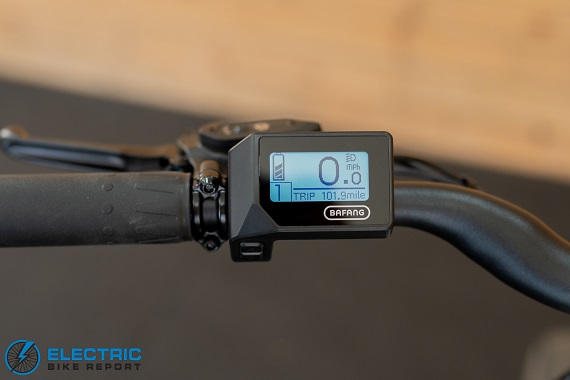
The display combines a small button pad with a black and white screen.
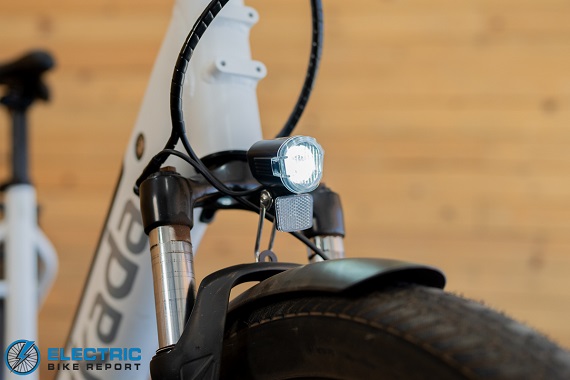
An integrated LED headlight increases nighttime visibility.
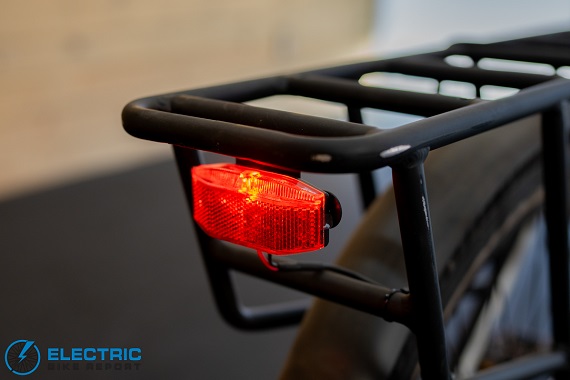
The included tail light functions as a brake light when the rider applies the brakes.
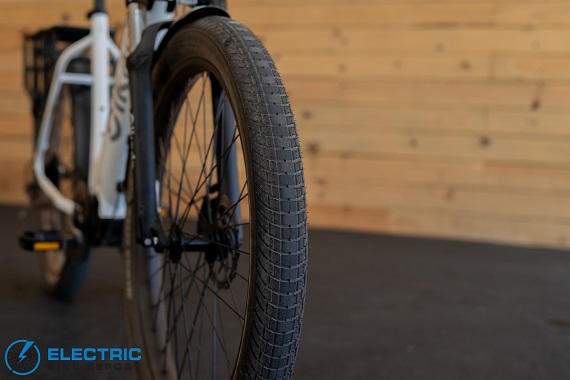
The bike’s uncommonly-wide 2.8” tires make loading and riding feel stable and balanced.
Cikada Touring E-Bike Review: Summary / Where to Buy
The Touring is the first e-bike from Cikada that our team has reviewed, and it impressed us with its overall feel and performance. Based on the bike’s appearance and on-paper specs, we anticipated that it would prove itself able to handle a variety of uses, and we were pleased to note that it generally succeeded.
As its results in our Range Test showed, the Touring is capable of long-distance adventuring, but it’s a versatile e-bike that is also practical for daily use closer to home. We expect that riders seeking a multipurpose e-bike for commuting, exercise, casual cruising, errand running, and beyond, will find it an appealing and worthwhile purchase.
We appreciated its intuitive programming, approachable power levels, and natural-feeling pedal assist. We also found its climbing performance to be respectable for its style and specs, with enough power to flatten hills and carry cargo or a passenger.
Our major points of critique revolved around the bike’s brake system and the relatively loud nature of its motor. Its brakes felt good during normal operation without cargo, but an upgrade would ensure shorter, safer stopping distances when under load. Its motor felt and performed well, but we found it uncommonly and sometimes distractingly noisy.
Otherwise, we consider the Touring well-specced and properly equipped for its intended uses; the bike is comfortable, engaging, energy efficient, uncomplicated, and user-friendly. Those interested in learning more can view our video review near the top of this page or visit Cikada’s website using the link above.
Happy Riding! Make sure to let us know if you have any questions or if you think we left anything out in this review of the Cikada Touring E-Bike down in our comments section.
Sponsor
Sponsor
Reader Interactions
Leave a Reply