Aventon Level 4 ADV Review | Is This the Perfect Commuter?
Mar 30, 2026
 0 Comments
 Share
Share
With a mid-drive motor and fully automatic pedal assist and shifting options, this Level offers premium features for experienced cyclists and new riders alike.
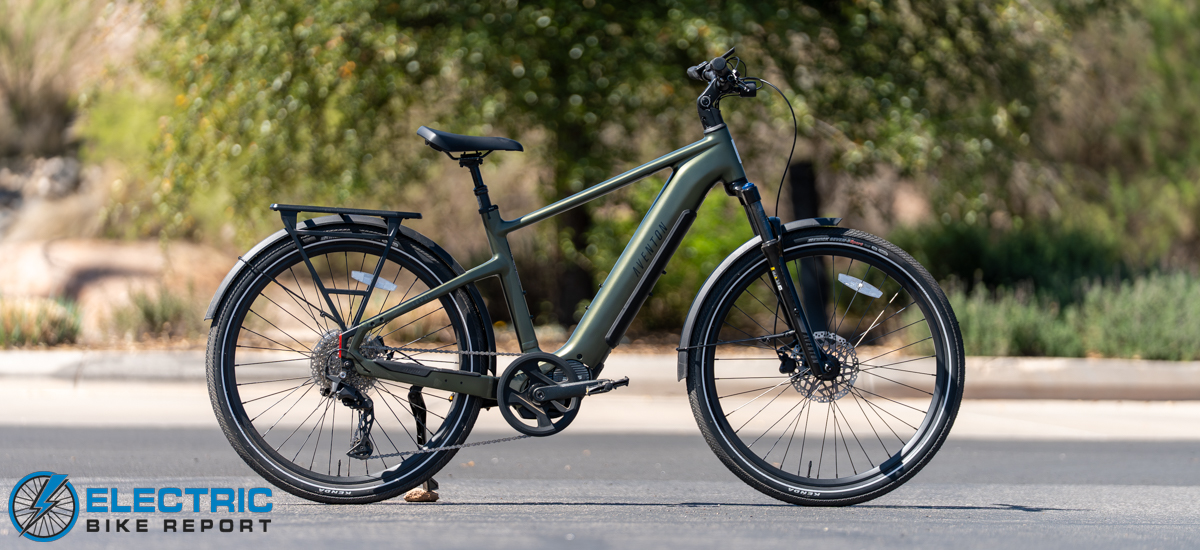
While there’s no such thing as a perfect e-bike, every now and then, one comes along that feels *this* close to reaching its full potential. Aventon’s last-gen Level 3 was one such model; it was a fresh take on the brand’s dedicated commuter, boasting a sharp design, a host of integrated tech and security features, a dialed-in pedal assist system, and more.
Our experience left us dreaming about a future where the Level would come equipped with a mid-drive motor instead of a rear-hub—and we were thrilled to learn that the Level 4 ADV would offer just that. In fact, the 4th generation of this bike now comes in both mid-drive and rear-hub versions; we reviewed the hub-motor-equipped Level 4 REC separately.
The Level 4 ADV, part of Aventon’s Adventure line, boasts a host of upgrades in addition to its custom 250W Ultro S mid-drive. The Level 4 ADV features a redesigned frame, a high-capacity 36V, 800 Wh battery, a 10-speed Shimano CUES drivetrain, a new display/user interface, and an electronic shifting system with automatic shifting capabilities.
When the auto shifting is combined with the bike’s Auto assist level, which can fluctuate power output across the motor’s full range, riders can simply hop on, pedal, and let the bike adapt to its rider and surroundings.
Both versions of the bike come equipped with the incredible suite of customization and security features shared by nearly all other Aventon models. Riders can lock the wheel and battery, tune motor output, and access location tracking, motion detection, geofencing, and remote disabling features through the brand’s app.
On paper, the Level 4 ADV is a compelling commuter e-bike that seems to offer a premium user experience at an approachable price. Its spec sheet—and our built-up hopes and dreams—set a high bar for the bike to clear. After hands-on experience, did it live up to our expectations? Find out in the full review below!

Sponsor
E-Bike Category:Commuter
E-Bike Class:Class 1 (pedal assist to 20 mph)
Class 2 (optional throttle to 20 mph)
Class 3 (pedal assist to 28 mph)
Class 2 (optional throttle to 20 mph)
Class 3 (pedal assist to 28 mph)
Sponsor
Aventon Level 4 ADV Video Review
 Pros
Pros- The Level 4 ADV delivers an engaging and exhilarating ride with natural-feeling pedal assist from its custom 250W mid-drive motor.
- Compared to the rear-hub Level 4 REC, the ADV offers many upgrades to justify its higher price, including better components, a bigger battery, and even more cool tech.
- It’s ideal for those with range anxiety, giving us one of the best Range Test results we’ve seen from similar commuter-style e-bikes.
- Like other Aventon models, the Level 4 ADV stands out from the competition due to its customization and security features. Tune the motor, track its location, and more!
- It can be ridden as a fully automatic e-bike, with a tunable auto shifting mode and an Auto assist level.
- Aventon offers a total of five frame sizes between the high step (HS) and step-thru (ST) frame styles, each equipped with an adjustable stem. This allows it to fit riders 5’ 3” to well over 6’ 3”.
- Its ride is smooth, comfortable, and off-road-friendly thanks to its 50mm suspension seatpost and 100mm suspension fork.
- The bike’s handling is excellent, with a sporty, sharp, and responsive feel that matches its appearance and speed capabilities.
 Cons
Cons- While the Tektro hydraulic brakes performed well, we encourage Aventon to use a system that enables brake lights in the future.
- The bike’s electronic shifting is cool, but somewhat limiting. Multiple gear changes require some advance planning and time.
ELECTRICAL SPECS & FEATURES
- Battery: Removable Internal Lithium-ion. 36.4V, 22Ah, 800Wh, Samsung 21700 58E cells 42V/4A
- Charger: 42V/4A
- Display: Aventon A280 Customizable Center Display
- Motor: Aventon Ultro S (100Nm, 750W Peak)
- Headlight: Integrated LED
- Taillights: Integrated LED
- Pedal Assist: 3 PAS Levels, Auto Mode
- Claimed Range: Up to 110 Miles
- Throttle: Compatible, Not included
- App:Aventon App
- UL Certification:UL 2849 & UL 2271
Weight & Dimensions
- Claimed weight: 61 lbs
- Tested Weight: 64.1 lbs
- Rider height range: 5’3” – 6’3”
- Total payload capacity: 300 lbs.
Components & Accessories
- Brakes:Tektro HD-M3120 2-Piston Hydraulic Disc Brakes, 180mm 6 Bolt Rotors, Front and Rear
- Fenders:Plastic Full Coverage, Front and Rear
- Fork:100mm Suspension Fork, 15x100mm
- Frame: 6061 Aluminum
- Drivetrain: Shimano CUES 10-spd, 48T chainring, 11-39T
- Grips: Aventon Lock-On Grips
- Saddle: Aventon Saddle
- Handlebar: 31.8mm, 680mm Width, 30mm Rise
- Kickstand: Included
- Pedals: 9/16” Composite Platform
- Tires: Kenda K1052, 27.5×2.2”
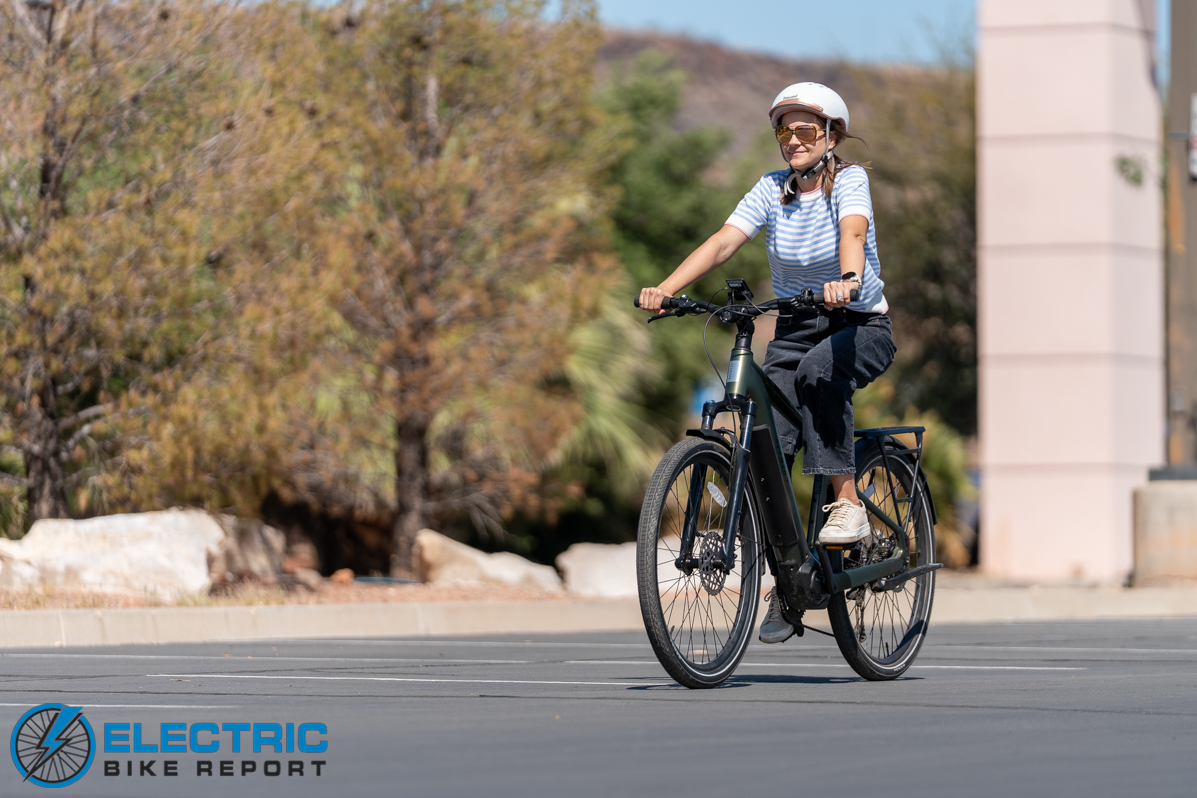
With an efficient motor and a comparatively huge 800 Wh battery, the Level 4 ADV is capable of seriously impressive range.
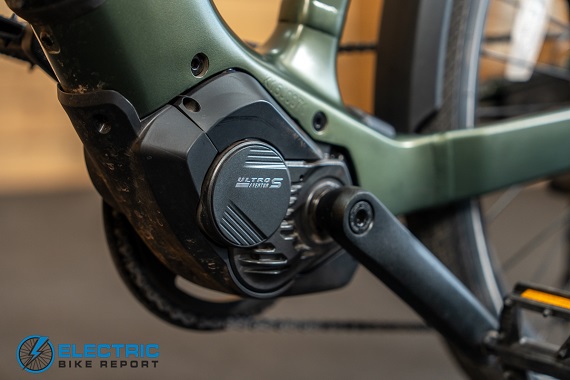
Aventon’s custom Ultro S mid-drive motor makes up the heart of the Level 4 ADV. It’s natural, responsive, and powerful.
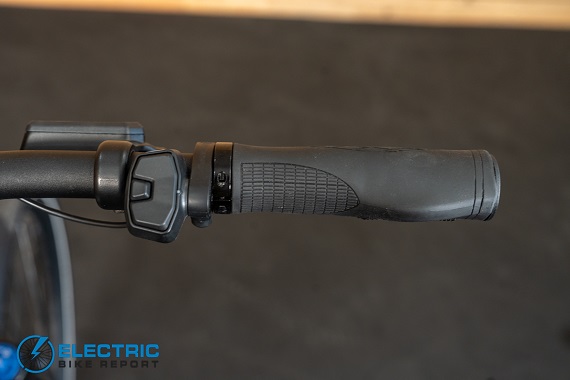
The Level 4 ADV’s drivetrain is operated electronically by the shift buttons on the right handlebar.
Aventon Level 4 ADV Review: Speed Test
I personally completed our Speed Test for the Level 4 ADV. Our goal for this test is to understand the bike’s programming and see if it can reach its advertised maximum speeds. To do this, I rode it on a paved multi-use path in each standard assist level (I omitted Auto mode) and in both its Class 1 and Class 3 modes, monitoring my average speed as I went.
With only three standard pedal assist levels, the test was quick and easy. I began pedaling with no assistance from the motor to see how difficult the bike was to move. While I could tell it was an e-bike, the task was relatively comfortable and easy due to the Level 4 ADV’s moderate weight and gearing.
As shown by the graph of my average speeds above, the motor delivered steady, intuitive increases in power as I moved through Eco, Sport, and Turbo modes—just what we hope to see in this test.
This linear pattern translated to higher speeds with nearly the same level of effort, giving me more return for the effort I applied. The bike pedaled to 20 mph easily in the Class 1 test and averaged just below 28 mph in the Class 3 test.
E-bikes with mid-drive motors are renowned for their natural, analog-like feel, and I was pleased to note that the Level 4 ADV followed suit. I was impressed with the smoothness, responsiveness, and overall capability of Aventon’s custom Ultro S mid-drive. The motor effectively made pedaling easier while leaving me feeling in control, and if I didn’t glance down at the speedometer, it was hard to tell I was on an e-bike.
The Level 4 ADV is compatible with an optional throttle, though our test bike did not include this feature. As an alternative to our usual throttle acceleration test, I instead performed a pedal acceleration test using the Auto mode that I left out of our standard test.
I found this mode generally intuitive, providing plentiful power for quick acceleration when starting up, pressing into the pedals, or climbing uphill. While I preferred Sport for relaxed riding and Turbo for speedier travel, I would realistically be likely to set the bike to Auto more often than not. It was peppy, helpful, and fun—without seeming to burn through battery charge too quickly.
I should note that the descriptions and test results above reflect the Level 4 ADV’s default settings, but its motor output can be customized via the RideTune menu in the Aventon App. There, three sliders adjust the motor’s torque, peak power, and sensitivity, allowing riders to tweak and customize Eco, Sport, and Turbo modes to their liking.
In my experience, the Level ADV’s default programming is user-friendly and easy to grasp. Eco felt best for fitness enthusiasts or those who prefer the most natural experience. Sport seemed ideal for light to moderate exercise and relatively casual travel. Turbo was best for hills and riding at high speeds. As such, I consider the bike to have performed extremely well in this test.
Sponsor
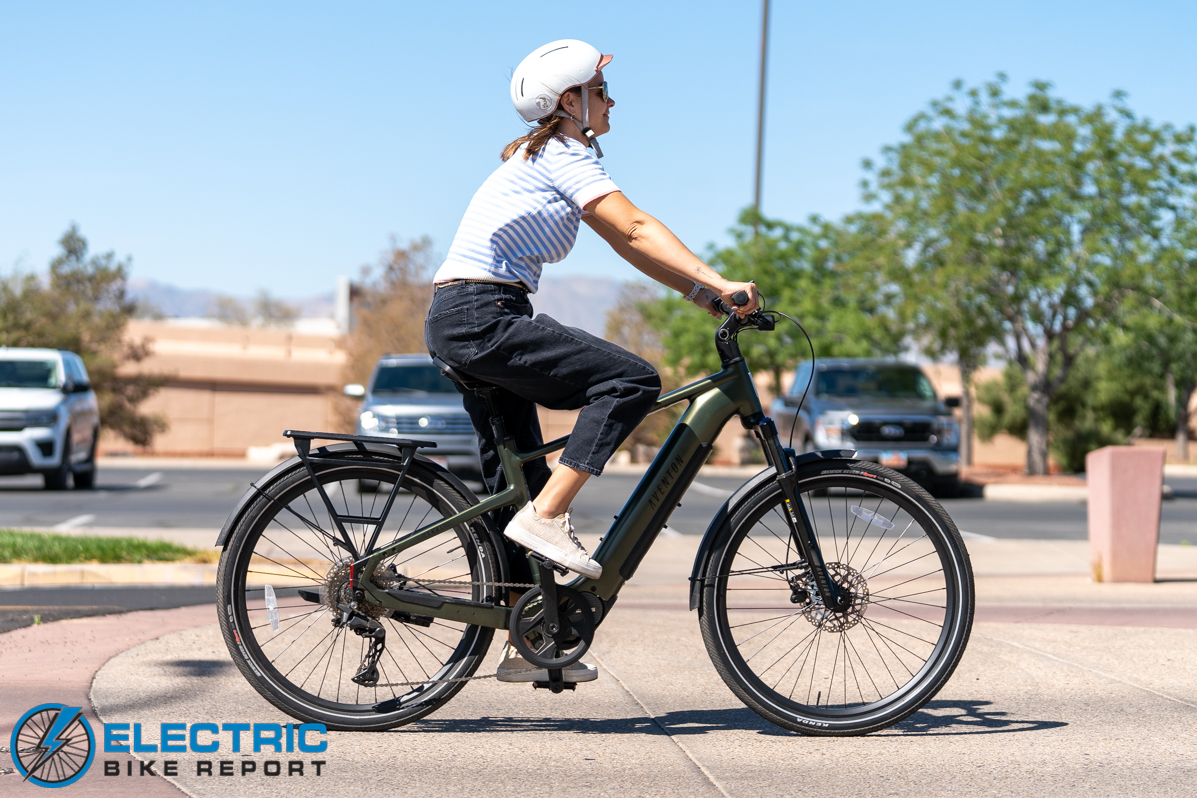
The Level 4 ADV is available in Camouflage (pictured), Haze (purple), and Matte Black.
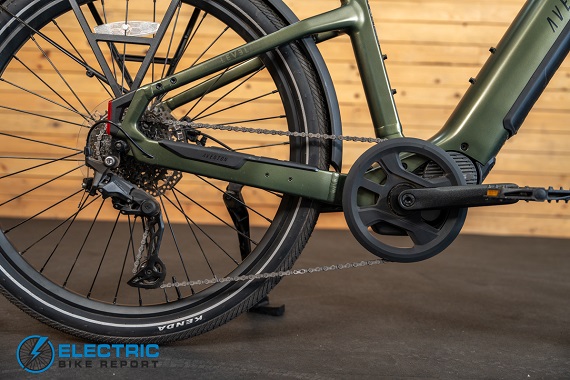
A 10-speed Shimano CUES drivetrain is paired with electronic shifting and auto-shifting capabilities.
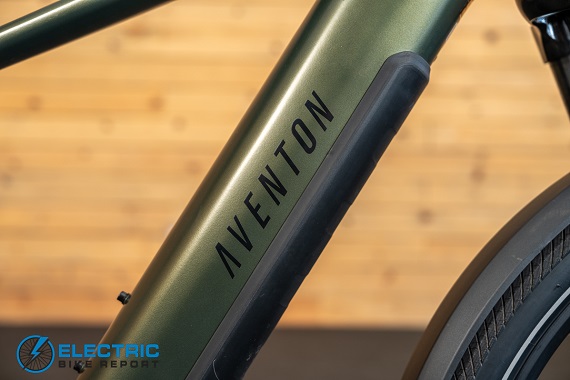
The ADV’s substantial 800 Wh battery locks inside the down tube but is removable for easy charging.
Aventon Level 4 ADV Review: Range Test
We were floored by the Level 4 ADV’s performance in our Range Test, as the bike placed within the top five longest results we’ve recorded—this includes all of the hundreds of e-bikes we’ve tested!
Using the method explained in the graphic above, our team of testers traveled 54.6 miles in Turbo and a jaw-dropping 120.8 miles in Eco. Both results are far above our commuter category averages; a group of similar e-bikes we’ve reviewed averaged 35.3 and 69.7 miles in their high-power and low-assist tests, respectively.
One of the ADV’s advantages is its mid-drive motor. E-bikes with mid-drives typically outpace those with rear-hub motors in our testing due to their ability to multiply rider effort instead of simply adding to it.
Evidence of their efficiency can be easily seen in our data. Only a handful of the other commuter-style e-bikes we’ve reviewed have been equipped with mid-drives, but when looking at Range Test results from e-bikes of all styles, only one model with a rear-hub motor has placed in the top 10.
To be clear, we do not consider the commuter e-bikes in the average range to be bad by comparison. These e-bikes are average for a reason; we consider them to be appropriately specced for their category. Models such as the Level 4 ADV that exceed averages by such a large margin, however, have earned additional recognition.
The ADV proved remarkably energy-efficient for a commuter-style e-bike. Using our mileage results and the bikes’ battery capacities to calculate the amount of energy used per mile, the Level used 6.6 watt-hours per mile (Wh/mi) in its Eco test and 14.7 Wh/mi in Turbo.
E-bikes in our comparison group averaged 10.4 and 20 Wh/mi, respectively. This means that they used up charge faster and covered less ground—assuming that they carried the same size battery.
In fact, battery capacity is another of the Level 4 ADV’s advantages. While our comparison group carried power packs with an average of 697 Wh, the ADV boasts 800 Wh of capacity. This, coupled with its above-average energy efficiency, allowed it to surpass most of its competitors.
So what does this mean for riders in the real world?
Considering that many folks travel less than 20 miles round trip when commuting daily, our results show that two to three round trips may be possible when using the Level 4 ADV’s highest assist level. Those using less power or taking shorter trips should expect more—with the potential to cover well over 100 miles before needing a recharge.
As a side note, I should mention that we performed our testing using the bike’s default programming and Class 1 speed settings. Riders who increase power via the RideTune feature and/or who travel at speeds above 20 mph should expect less range.
For reference, the Level 4 ADV is packaged with a 4A charge that should recharge a fully drained battery in about five and a half hours.
Sponsor
Sponsor
Aventon Level 4 ADV Review: Hill Test
The Level 4 ADV was also impressive when climbing our test hill, the Devil’s Backbone (see above). Since our test bike did not include the optional throttle, we performed only a pedal test using Turbo. Our test rider, Justin, finished the climb in 1:49 at an average speed of 16.6 mph.
Considering that mid-drive-equipped e-bikes are often slower than those with rear-hub motors in this test, the ADV did well. A group of similar bikes, including some of the best commuters we’ve tested, averaged an even 2:00 in their max-assist pedal tests. This places the Level somewhat ahead of the pack, despite many of its competitors bearing hub motors.
An e-bike’s torque rating affects its ease of pedaling uphill. It should come as no surprise, then, that while the Level 4 ADV’s motor isn’t capable of reaching the average of 1031W of peak power, it boasts more torque than average. Aventon’s custom Ultro S mid-drive can produce a strong 100 Newton meters (Nm) of torque, while the Level ADV’s competitors in our comparison group averaged a less-impressive 80 Nm.
The difference in feel was noticeable in practice. I tested the Level 4 ADV at our secondary location, the nearby Pilot Hill, and found that the experience of riding uphill was active but speedy. Climbing required a light to moderate amount of legwork, but I reached the top of the hill faster than expected and without being out of breath.
It’s hard to say whether the ADV would be capable of climbing the Devil’s Backbone with its optional throttle, though throttle-equipped e-bikes with mid-drive motors have the advantage of using their gearing to make the task easier.
Clearly, the Level ADV is extremely effective at helping its rider handle terrain via pedal assist. Those who don’t mind somewhat active pedaling should expect no trouble when approaching hills of any size, but those who want an even more relaxed experience may prefer the rear-hub-equipped Level 4 REC that we reviewed separately.
Sponsor
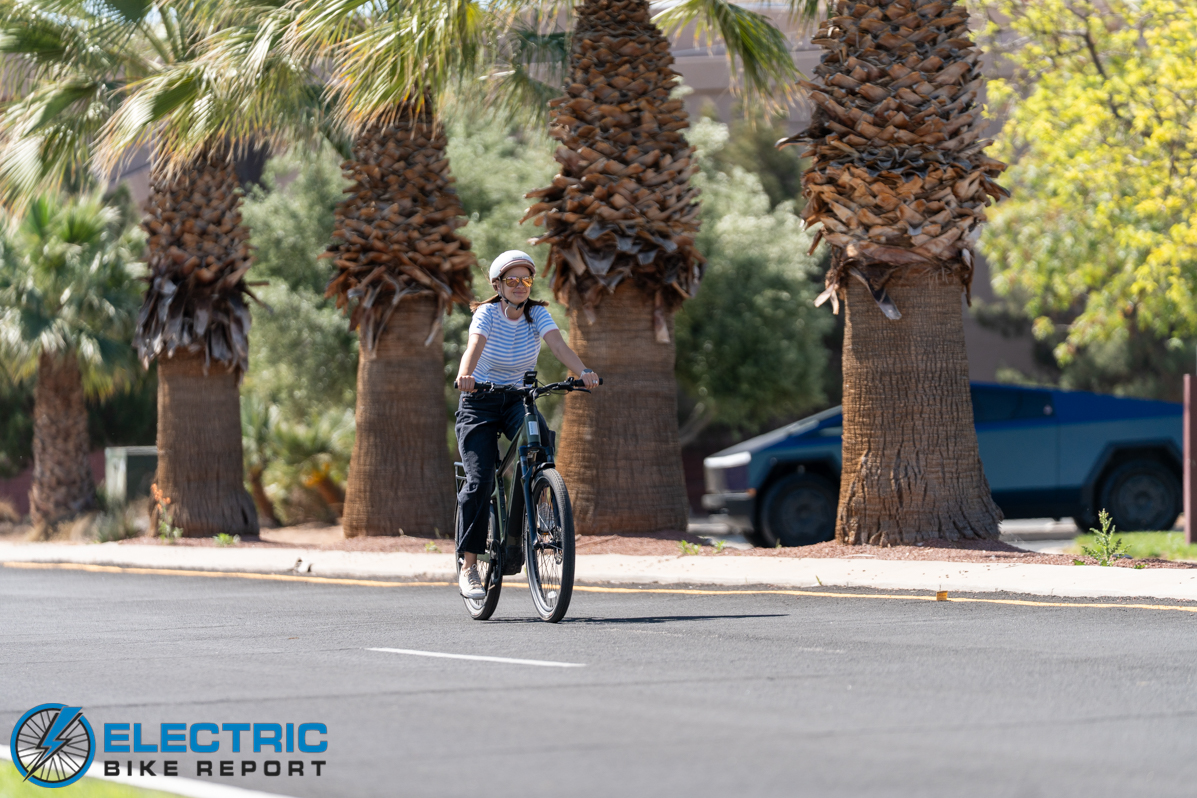
With both an automatic shifting mode and an Auto assist level, riding the Level 4 ADV can be as easy as pedaling and enjoying the view.
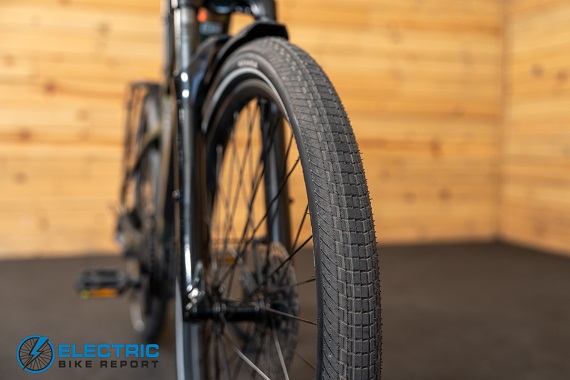
Kenda’s Kwick Seven-5 street tires provide solid traction on paved roads or paths.
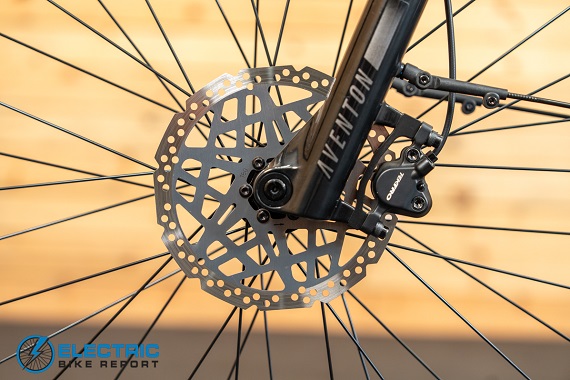
Tektro’s HD-M3120 hydraulic brake system pairs 2-piston calipers and 180mm rotors.
Aventon Level 4 ADV Review: Brake Test
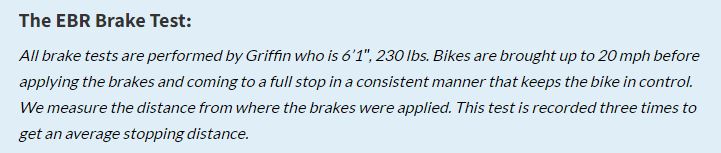
After gathering three Brake Test results using the method above, the Level 4 ADV’s average stopping distance came out to be an impressive 20’0”. Similar models we’ve tested averaged 22’0”, which places the ADV’s score exactly two feet ahead of the pack.
This e-bike has a slight advantage of being lighter than average, and therefore slightly easier to bring to a stop; its competitors average 67 lbs, while it weighs 64.
Even so, we attribute the Level 4 ADV’s success to its brakes: the two-piston Tektro HD-M3120 hydraulic system with 180mm front and rear rotors. This model is somewhat less common than some other, similar systems, but we’ve seen consistently good results from bikes that use it.
Case in point: the ADV’s sister model, the rear-hub-equipped Level 4 REC, employs nearly identical brakes with a motor cutoff feature (the HD-E3120 system). That bike’s Brake Test average was slightly longer than the ADV’s result at 20’2”, which we attribute to its higher weight of around 71 lbs.
While the Level 4 ADV performed extremely well in this test, I do have one point of critique to address. Without a motor cutoff function, the M3120 brake system does not allow for brake light functionality in the bike’s taillights, unlike the REC model. Considering the Level’s primary function as an urban commuter e-bike, we encourage Aventon to include brake lights on the ADV version in the future.
Otherwise, the bike’s feel and performance are solid; the brakes felt capable without being too aggressive. The tires could squeal and skid under hard braking, and a softer compound may add comfort and improve braking performance further, but these are minor concerns that are not unusual.
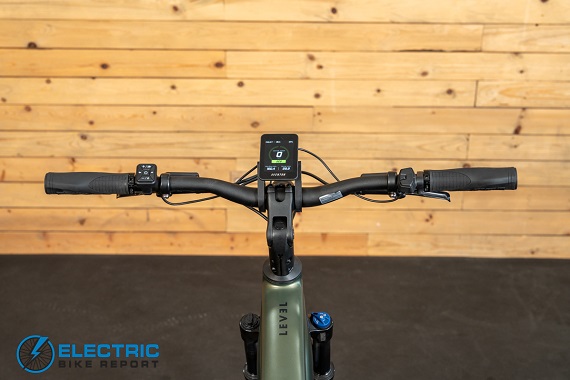
Like its sister model, the ADV is equipped with 680mm handlebars on an adjustable stem.
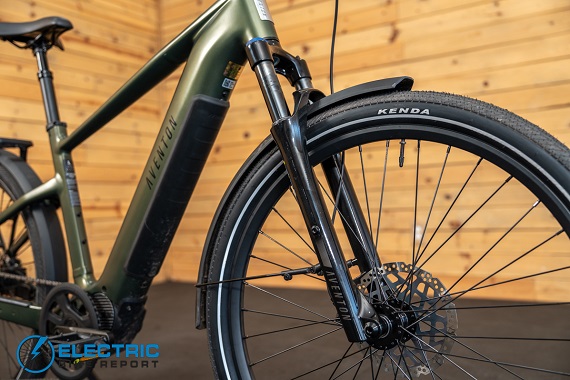
The suspension fork on this version of the Level 4 is upgraded, with 100mm of travel.
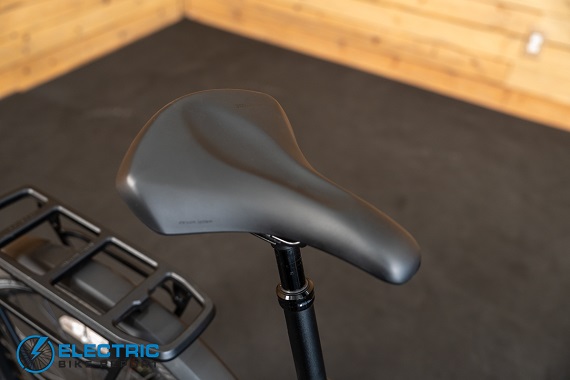
Aventon’s supportive custom saddle is mounted to a 50mm suspension seatpost.
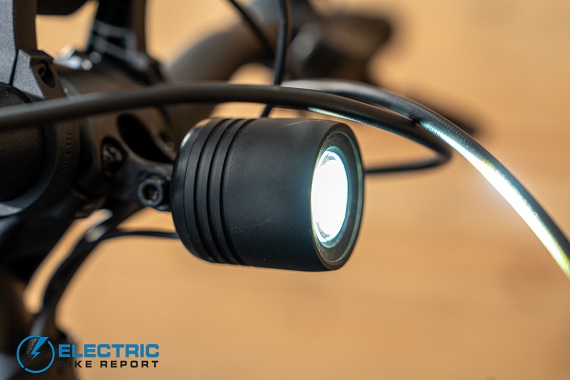
The small integrated LED headlight is surprisingly bright for its size.
Aventon Level 4 ADV Review: Ride Quality
As a well-designed and robustly-equipped commuter, the Level 4 ADV’s ride quality is great. In comparison to many simpler e-bikes, the topic is more complex in this case; we’ll examine all aspects of the Level’s ride quality below.
Beginning with sizing and fit, Aventon offers the Level 4 ADV in a total of five sizes, divided between the HS and ST versions of the bike. The high-step model, which has three sizes, is designed for riders between 5’4” and over 6’3” (we typically estimate about 6” in height per frame size). The step-thru frame fits those between 5’3” and 6’1”.
At 5’11”, I was well within the recommended height range for the Large size frame we tested. I found the bike’s somewhat stretched out and forward-leaning riding position comfortable yet appropriately sporty-feeling. I enjoyed efficient, ergonomically-correct leg extension and a comfortable handlebar position, thanks to the bike’s 400mm seatpost and adjustable stem.
Comfort is created by a combination of a supportive (but not too hard) sport-style saddle, relatively slim ergonomic rubber grips, a suspension fork with 100mm of travel, and a suspension seatpost with 50mm of travel. Overall, the bike felt great to ride, blending a cool, somewhat aggressive riding position with a high degree of softness.
The bike’s riding position and feel worked well in combination with its handling. The ADV felt agile and quick, and its suspension effectively softened the ride without giving the bike a loose or divey feeling in corners. Having recently tested the Level 4 REC, I can say that the ADV felt noticeably more nimble due to its lower weight, despite its sister model handling well, too.
As mentioned in the Speed Test section earlier, Aventon’s custom mid-drive motor felt natural and responsive but also smooth. It produced some noticeable noise—a gentle whirring sound—while riding, but I did not find it to be obtrusive.
Considering the bike’s powerful mid-drive and suspension, the ADV has significant potential as an SUV-style e-bike. I wouldn’t mind seeing Aventon add knobbier hybrid tires to increase the bike’s off-road capability, though, of course, consumers can make changes after purchase.
In my experience, the ADV’s electronic shifting system is somewhat of a mixed bag. Shifting via button presses feels cool and high-tech, but it felt a bit less responsive than the REC model’s trigger-style shifter. As a result, I found myself needing to plan ahead when approaching hills to account for the extra time required to reach the right gear.
The automatic shifting generally functioned well despite its inherent limitations. As a reactive system, it switches gears in response to changes in cadence, speed, terrain, etc. I found that it worked best with its sensitivity set to its maximum, though it was not as proficient at downshifting as when upshifting.
Combined with the Level 4 ADV’s Auto assist mode, however, the auto shifting feature makes the overall experience of riding a “fully automatic” e-bike remarkably low-effort and enjoyable. This feature is likely to broaden the bike’s appeal to consumers who are newer to cycling, which may not otherwise be the case with a mid-drive-equipped e-bike that does not ship with a throttle.
Like many of Aventon’s other models, the Level 4 REC brings a truckload of cool tech to the table. Its color display features a sharp new user interface, including a clean, easy to read layout and a rubberized button pad on the left handlebar.
Some of the ADV’s security features, including its battery and wheel locks, can be accessed via the bike’s settings menu. Many of the bike’s deeper features, however, require the Aventon app to be paired with the display. Once a user connects to the app, they can track ride data, interact with other Aventon e-bike owners, employ additional security features, track the bike’s location, and adjust the motor and electronic shifting system.
Among the extra security measures are a motion detection and alarm system, a geofencing feature, an auto-lock function, and the ability to set a passcode requirement upon startup. When enabled, unusual impacts or motion can trigger the alarm and send notifications to the owner’s phone. In the unfortunate and unlikely event of theft, the app can also be used to remotely disable the bike, preventing its use until it is recovered.
The geofencing feature is an intriguing option that has a few potential uses. By setting boundaries that create prohibited or allowed areas on a GPS map, users might ensure their bike does not leave a specific location when parked, prevent older children from entering unwanted areas, or control how large a zone of travel their bike has for other purposes.
As we’ve come to expect from Aventon, the Level 4 ADV offers an impressive array of features, a comfortable ride, and plenty of capability for daily use. It has a couple of potential areas for improvement, but its overall ride quality is excellent.
Sponsor
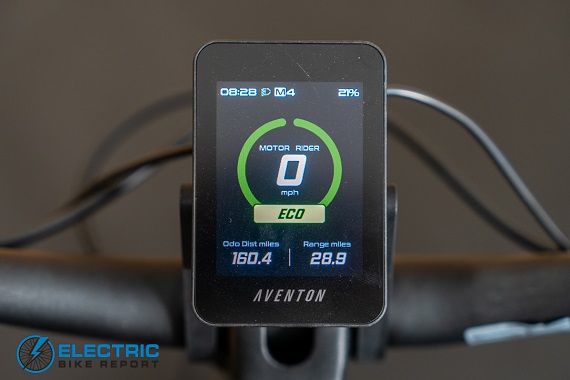
Aventon’s new display UI looks clean and includes customizable ride data screens.
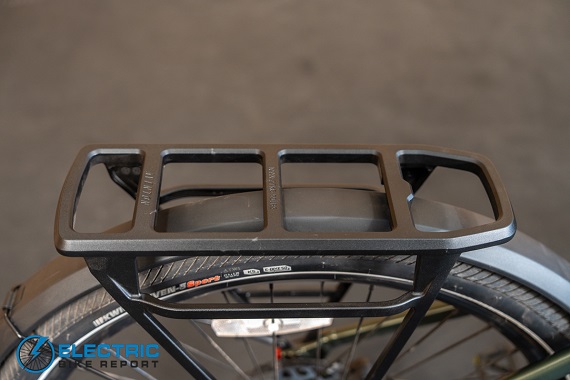
The included cargo rack can carry up to 59 lbs.
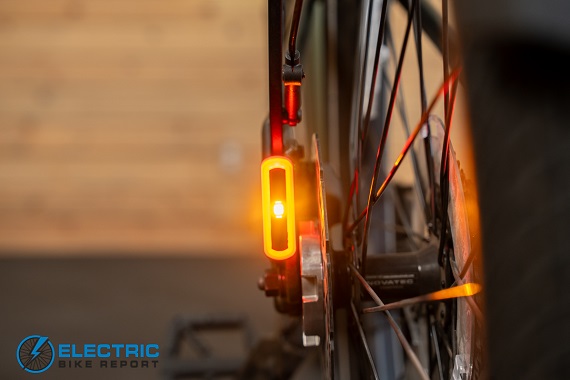
For communication on the road, the ADV includes rear LED turn signals.
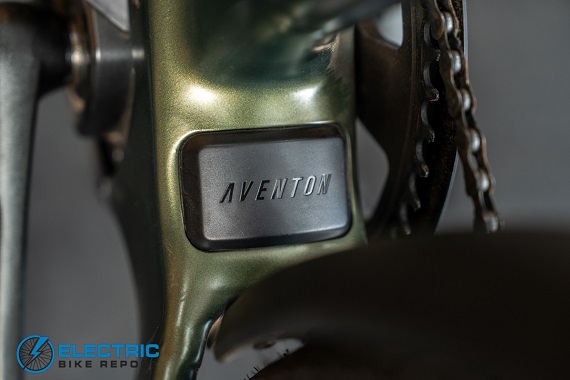
Aventon’s 4G-enabled ACU module allows for OTA updates, location tracking, and more.
Aventon Level 4 ADV Review: Summary / Where to Buy
As a mid-drive-equipped commuter e-bike, the Level 4 ADV is impressive and interesting to me because it offers features that appeal to riders of all styles and experience levels, instead of just die-hard cyclists.
Walking into this review, I expected an e-bike geared primarily toward those who wanted the most natural pedal experience on a high-tech, long-range commuter. The Level 4 can certainly deliver that feel with its low and mid-powered assist levels, but its automatic shifting capabilities and Auto assist mode make it friendly for casual or newer riders as well.
As we hoped, the ADV performed extremely well in our testing, with balanced and intuitive programming, staggering range capabilities, strong climbing power, and great braking. Additionally, it offers a smooth, comfortable, and sporty ride, along with Aventon’s standard suite of security and ride tuning features.
We identified the slightly delayed electronic shifting and the lack of brake light functionality as areas for improvement. Those things aside, however, the ADV package includes premium features, upgraded components, and a great overall experience that makes the Level 4 easy to recommend.
This version of the bike is likely to appeal to avid, active cyclists seeking a boost, new riders seeking a premium e-bike with a low-effort ride, and anyone looking to spend more time commuting on two wheels instead of being stuck in rush hour traffic.
Happy Riding! Make sure to let us know if you have any questions or if you think we left anything out in this review of the Aventon Level 4 ADV down in our comments section.
Sponsor
Sponsor
Reader Interactions
Leave a Reply