AIMA Big Sur Sport 2.0 Review | Fun Size & Spunky
Feb 14, 2026
 0 Comments
 Share
Share
The 2nd-gen Big Sur Sport is versatile, nimble, peppy, and responsive. It’s also remarkably customizable to suit the style and preferences of its rider.
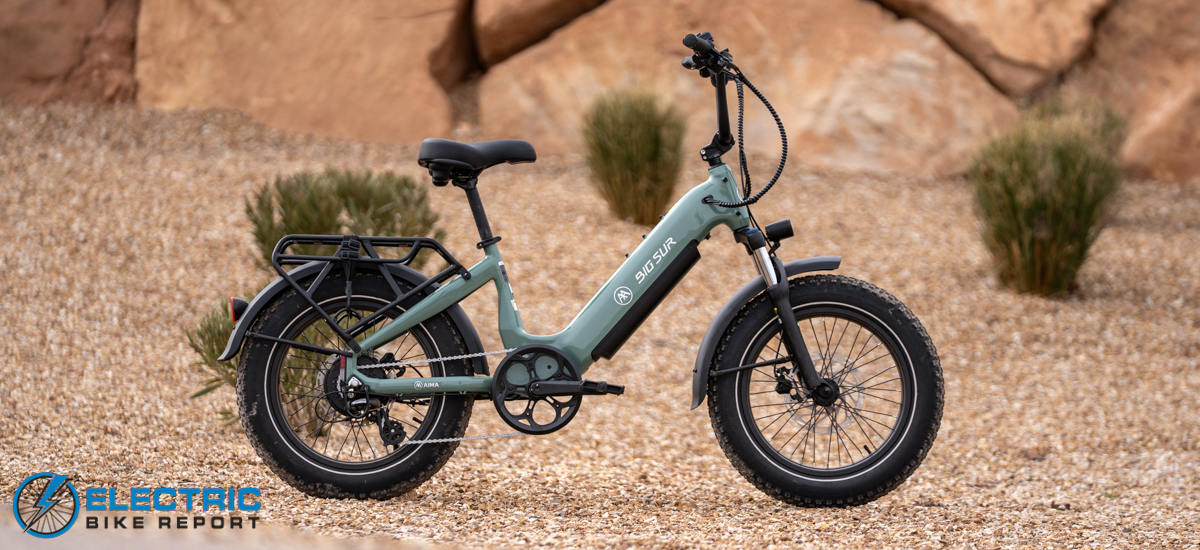
E-bike brands put a ton of effort into the design and engineering of their products, with the goal of making bikes that are comfortable, practical, and appealing. With each new generation of e-bikes, new models build on the successes of the old. Depending on their intended use and audience, bikes have become either more versatile or more focused.
For example, many electric cruisers have become more cushy and feature-packed to broaden their appeal, while eMTBs have grown more responsive and powerful to better tackle difficult terrain. In most cases, e-bikes seem to take themselves more seriously as they evolve, with more refined designs, better components, and a more grown-up feel.
The AIMA Big Sur Sport 2.0 is a little different. It’s clearly a step forward for the brand, offering improved geometry, a larger battery, and a more customizable ride experience than the brand’s previous Sport model. On the other hand, it clearly still prioritizes fun, with its agile handling and responsive, powerful motor.
One of this second-gen bike’s standout features is the ability to switch between torque and cadence-sensing modes. The former is best for those who prefer active pedaling with power proportionate to rider effort. The latter is more ideal for hilly terrain, carrying high payloads, or low-effort cruising. With both options at your fingertips, the bike can adapt in moments to different environments and uses.
AIMA also offers a fully customizable pedal assist system via the Big Sur Sport 2.0’s display or the Bafang Go app. Riders can set speed and/or power limits for each of its pedal assist settings, tune the system’s responsiveness, and alter its acceleration force. The result is a highly personalized ride experience that isn’t limited by default programming.
We put the Big Sur Sport 2.0 through our standardized testing to discover how it would perform when compared to similar e-bikes we’ve tested. Continue reading below to see the results and our corresponding analysis!

Sponsor
E-Bike Category:Fat Tire / Utility
E-Bike Class:Class 1 (pedal assist to 20 mph)
Class 2 (throttle to 20 mph)
Class 3 (pedal assist to 28 mph)
Class 2 (throttle to 20 mph)
Class 3 (pedal assist to 28 mph)
Sponsor
AIMA Big Sur Sport 2.0 Video Review
 Pros
Pros- The Big Sur Sport 2.0 is peppy and fun, with a 750W hub motor and Class 2 or Class 3 speeds.
- Its ride experience is hugely customizable, with swappable torque and cadence sensing modes and five programmable pedal assist settings.
- The Big Sur Sport’s performance is great across the board, with average to well above average performance in our Speed, Brake, Range, and Hill Tests.
- The Bafang Go app offers turn by turn navigation, motor tuning, ride data tracking, and more.
- It has a high payload capacity of up to 400 lbs, with up to 59 lbs on its MIK HD cargo rack. It’s also compatible with locking accessories, including child seats.
- The bike is stable and highly maneuverable thanks to its 20×4” fat tires.
- It’s competent and comfortable on or off-road, with knobby tire tread, a plush saddle, and an 80mm suspension fork.
 Cons
Cons- While max speed is another option that can be customized, alterations can only be made by technicians at authorized dealers.
- Considering the extent of other personalization options, we hoped for more than the bike’s single paint color.
ELECTRICAL SPECS & FEATURES
- Battery: Removable Internal Lithium-Ion, 48V, 20Ah (960Wh)
- Charger: 48V, 3 Amp Fast Charger, 7-8 Hours to a Full Charge
- Display: BAFANG E-system TFT DisplaySmart Function FindMy, Navigation, Calls, Notifications
- Motor: Rear Hub Motor, BAFANG, 750W, 1200W Peak, 85 Nm Torque
- Headlight: Integrated Headlight
- Taillights:Tail Lights, and Turn Signals
- Pedal Assist: 5 PAS Levels, Customizable w/Torque & Cadence Modes
- Claimed Range: 40-75 miles
- Throttle:Throttle on Demand
- App:Bafang Go
- UL Certification:UL2849 Compliant
Weight & Dimensions
- Claimed weight: 77 lbs
- Tested Weight: 78 lbs
- Rider height range: 5’0”-6’3”
- Total payload capacity: 400lbs
Components & Accessories
- Brakes:Tektro Hydraulic Disc Brakes, 203 mm Rotors
- Fenders: Plastic
- Fork:ZOOM Suspension Fork, 80mm Travel, Adjustable Preload, Lockout
- Frame: 6061 Single-Butted Aluminum Alloy Frame
- Drivetrain: Shimano 7 Speed, 52T Chainring, 11-28T Cassette
- Grips: Ergonomic Comfort
- Saddle: AIMA Comfort Saddle
- Handlebar: Aluminum Alloy Double Wall, 31.8mm, 680mm
- Kickstand: Aluminum Alloy Kickstand
- Pedals: 9/16″ Alloy Platform
- Tires: 20″ x 4.0″
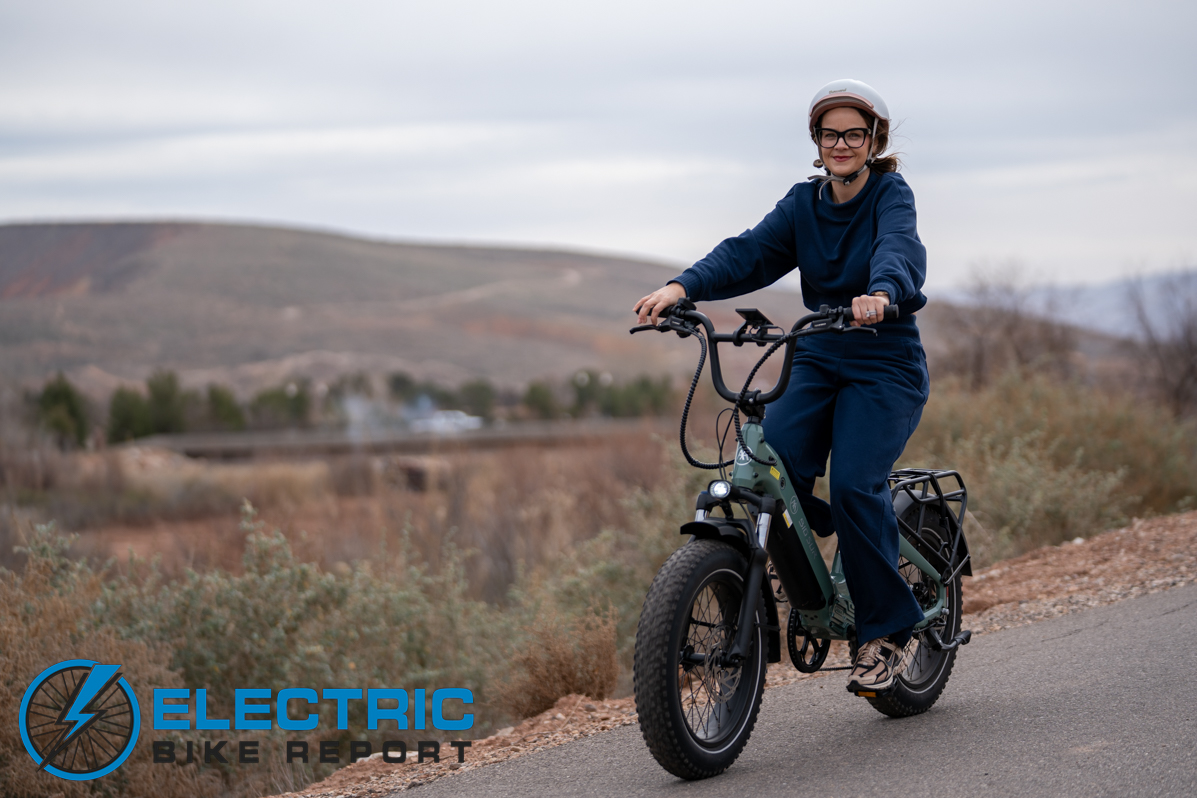
Class 2 or 3, torque or cadence—you can choose the Big Sur Sport’s feel and speed.
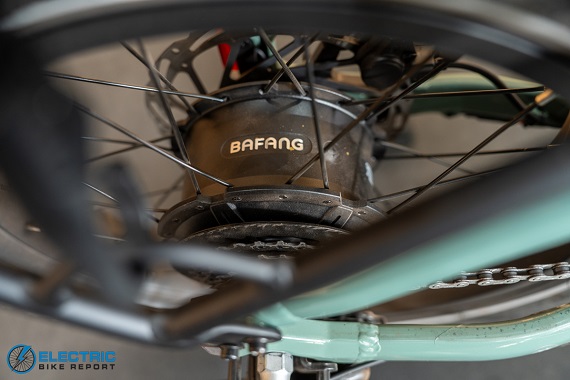
A powerful 750W hub motor propels the bike with peppy and responsive acceleration.
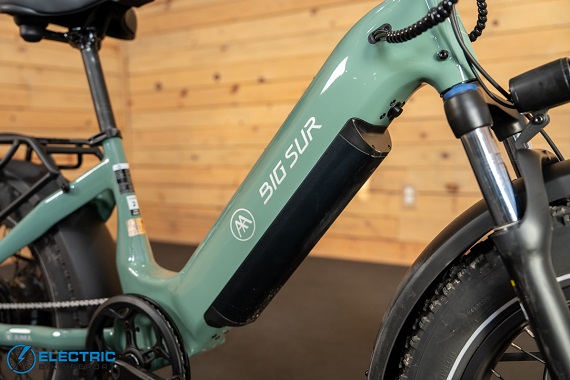
A massive 960 Wh battery projects from its dock in the bike’s down tube.
AIMA Big Sur Sport 2.0 Review: Speed Test
While often one of our shortest evaluations, our Speed Test with the AIMA Big Sur Sport 2.0 was relatively lengthy due to its broad range of customization options. To perform this test, I rode the bike in both its Class 2 and Class 3 settings on a flat, paved shared-use trail using both its torque and cadence-sensing modes.
While riding, I recorded my average speeds in each of the bike’s five assist levels: Eco, Tour, Sport, Sport+, and Boost. My results are graphed above.
As a fat tire e-bike weighing nearly 80 lbs, pedaling the Big Sur Sport 2.0 without power was relatively tough; the bike’s weight required some extra effort to move, while the efficiency of my pedaling was restricted due to the bike’s geometry and riding position. Fortunately, upon kicking on the motor, the experience became much easier and more enjoyable.
In the bike’s default torque sensing mode, it required only light pressure on the pedals to deliver a helpful boost, with less and less effort needed as I increased its power level. With the Class 2 maximum of 20 mph, I reached top speed in the third assist setting, with no (or little) difference due to the speed restriction in Sport+ and Boost.
The Big Sur Sport’s power levels seemed much more balanced and better distributed in Class 3 mode than in its Class 2 settings. In this test, my speed increased consistently as I stepped up through the bike’s assist levels. As expected, the motor’s power backed off upon reaching 28 mph, so my average speed fell just below the Class 3 maximum.
When riding in cadence mode, I approached the Class 2 maximum speed in the second assist level, Tour mode. I measured slight increases in velocity when moving up from there, but most of my results for this test hovered around 20 mph. In Class 3 mode, the bike again showed a more balanced distribution of power, though my results started to level off in Sport and came in nearly identical in Sport+ and Boost.
I have a few thoughts about this breakdown:
First, while many of my results were similar as I approached the top end of the bike’s speed limit, it’s worth noting that my speeds would likely be better distributed when carrying cargo or riding uphill.
Second, while many e-bikes with cadence sensors limit speed in each assist level to ensure a more evenly distributed increase, the Big Sur Sport 2.0 limits power output by default instead. Users can choose to restrict speed and/or power when customizing the bike’s programming, but this standard approach makes for a more natural-feeling experience.
On a less customizable e-bike, I would likely critique the default programming for providing less meaningful differences in speed/power in Class 2 mode when compared to Class 3. In the Big Sur Sport 2.0’s case, however, the bike’s power output can be completely tailored to its rider’s preferences, riding environment, weight, cargo carrying needs, and beyond.
Overall, the bike showed no difficulty in reaching its top speeds. Additionally, it provided steady, safe acceleration in cadence mode and responsive yet smooth power in torque mode. As such, there isn’t much to critique, aside from stating that riders may need to anticipate adjusting the programming depending on their needs.
One aspect that prospective buyers should be aware of is that AIMA does not share the access code required for adjusting the bike’s top speed/Class. Authorized technicians at the brand’s dealers can make adjustments, but this may be inconvenient for those who want or need to make changes regularly or in quick succession.
As a final part of this test, I tested the Big Sur Sport’s throttle to see how quickly it could reach 20 mph. It felt powerful but not scary, with quick acceleration off the starting line and steady ramping up to maximum speed.
In summary, there may be some slight room for improvement in the bike’s default programming, but it proved capable, confident, strong, and safe in this test. The customization it offers is truly impressive, allowing its speed, feel, sensitivity, etc. to be adapted to its rider.
Sponsor
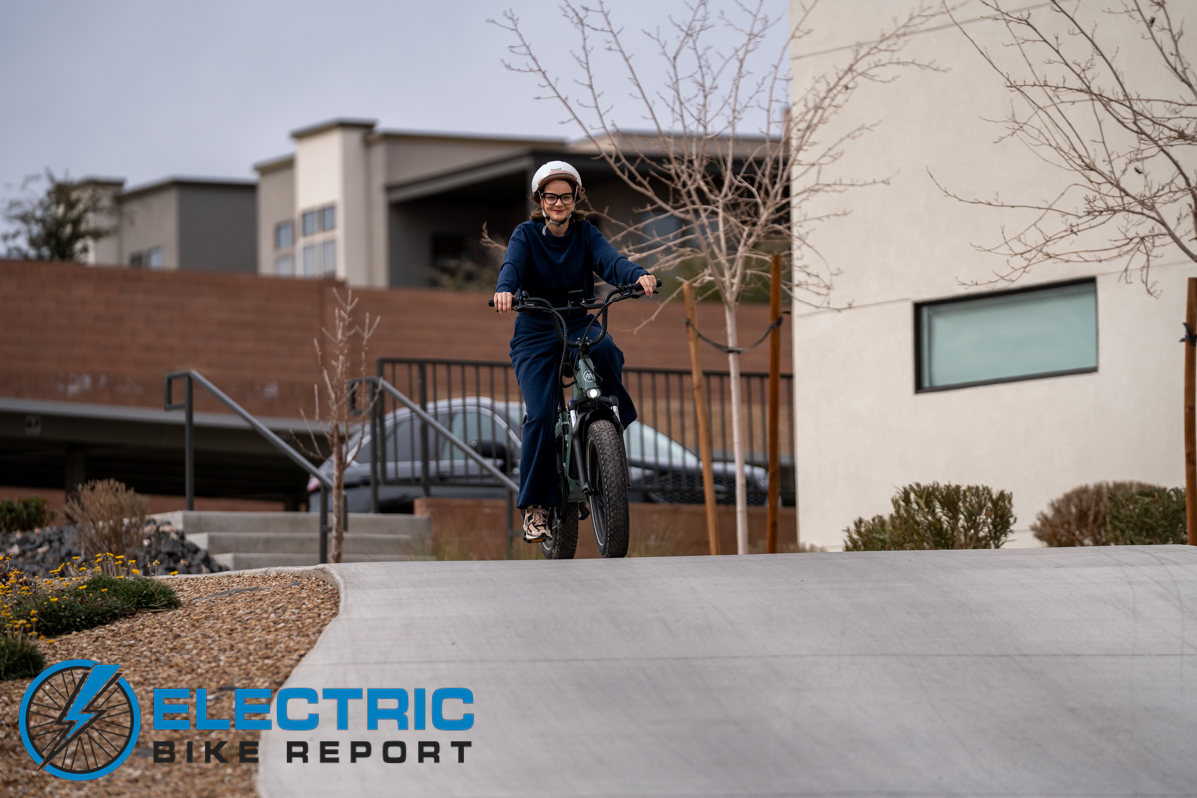
With a recommended height range of 5’0” to 6’3”, the Big Sur Sport offers a relaxed and comfortable ride to a wide range of riders.
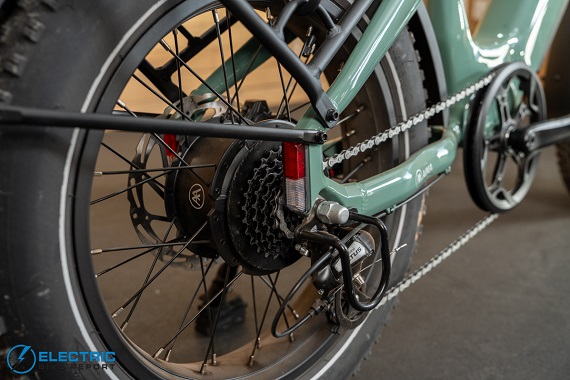
A 7-speed drivetrain supports pedaling up to 28 mph with plenty of flexibility for hills and flats.
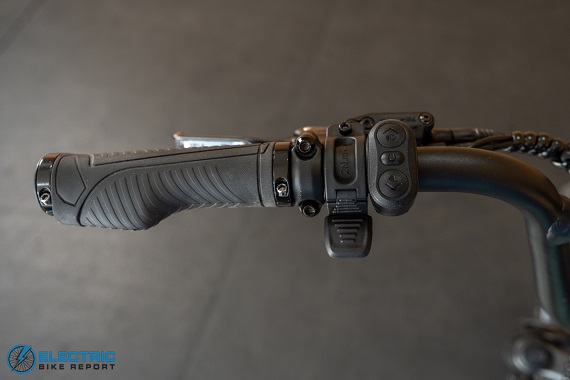
The bike’s small control panel and throttle are mounted right next to the comfortable ergonomic rubber grips.
AIMA Big Sur Sport 2.0 Review: Range Test
AIMA equipped the Big Sur Sport 2.0 with a massive 960 watt-hour (Wh) battery. With such an ample supply of “juice,” the brand advertises that it is capable of 40 to 75 miles of range. We tested this claim using the method explained in the graphic above; our team of testers covered 79.8 miles in Eco and 35.1 miles in Boost using the bike’s default programming.
At face value, this shows that AIMA’s advertising is accurate, but we can analyze the bike’s results deeper by comparing them with those of similar models we tested previously. This group of e-bikes averaged 34.5 miles using their lowest assist level and 67.3 miles using their highest.
As such, the Big Sur’s mileage was relatively average in Boost but well above average in Eco. This can be further supported by calculating the watt-hours used per mile (Wh/mi) during our tests.
With its 960 Wh battery, the Big Sur Sport 2.0 used 12 Wh/mi in Eco and 27.3 Wh/mi in Boost. Its competitors, which had batteries averaging 751 Wh, used a similar 11.3 Wh/mi in their low-assist tests and a more efficient 22.1 Wh/mi in their max-assist tests. This shows that, while the Big Sur’s motor is relatively power hungry, AIMA specced it with a large enough battery to offset the difference.
It is worth noting that we tested the bike using its torque-sensing mode, with a 20 mph (Class 2) maximum speed, and without cargo. Riders moving faster, using the cadence-sensing mode, and/or carrying extra weight should expect fewer miles, though changes to the bike’s programming may at least partially mitigate this.
Our testing shows the potential for riders to cover extremely long distances or take multiple trips between charges when using a relatively low amount of assist. Those using maximum power output will achieve fewer miles, but should still be able to cover multiple short commutes, errand runs, or leisure rides before the battery is drained.
AIMA includes a 3-amp charger which can recharge the battery in under 7 hours. We wouldn’t mind a faster, higher-amperage charger to accommodate the Big Sur Sport’s huge capacity, but the standard unit should work well for overnight charging.
Sponsor
Sponsor
AIMA Big Sur Sport 2.0 Review: Hill Test
We tested the AIMA Big Sur Sport 2.0’s hill climbing ability in two separate tests using its highest pedal assist level and on throttle power alone. In both cases, we used its default speed and power settings. Our test rider, Justin, reached the top of our test hill (see above) with nearly the same results in both tests.
On throttle power, he completed the test in 1:48 at an average of 16.8 mph. When pedaling in Boost, his time and average speed were 1:47 and 16.9 mph, respectively.
In both cases, the bike came in average to slightly above average when compared to similar fat tire utility e-bikes we’ve tested; these models had throttle times of 1:48 and max assist results averaging 1:50.
These results are particularly impressive when considering that, by the numbers, the Big Sur Sport 2.0 has no real advantage over its competitors. Its motor produces a relatively average output of 1200W and 85 Nm of torque, while our comparison group averaged 1216W of peak power and 84 Nm of torque.
In fact, the Big Sur had a slight disadvantage; the bike weighed 78 lbs, while its competitors averaged 74 lbs. With relatively average motor output and a slightly higher weight, we’d have expected its results to skew somewhat below average. Instead, it exceeded our expectations, though it’s worth noting that the difference between its results and the category average are within the margin of error.
Even assuming strictly average performance, however, the Big Sur Sport 2.0 succeeded; such results show that its specs and real-world capabilities are comparable to similar models on the market.
With such great climbing performance, riders should expect to be able to tackle even steep hills with relative ease, even when carrying a passenger or a full load of cargo. The results speak for themselves; the Big Sur Sport 2.0 is well-suited for riding in hilly areas, giving riders the option to throttle or pedal when approaching inclines.
Sponsor
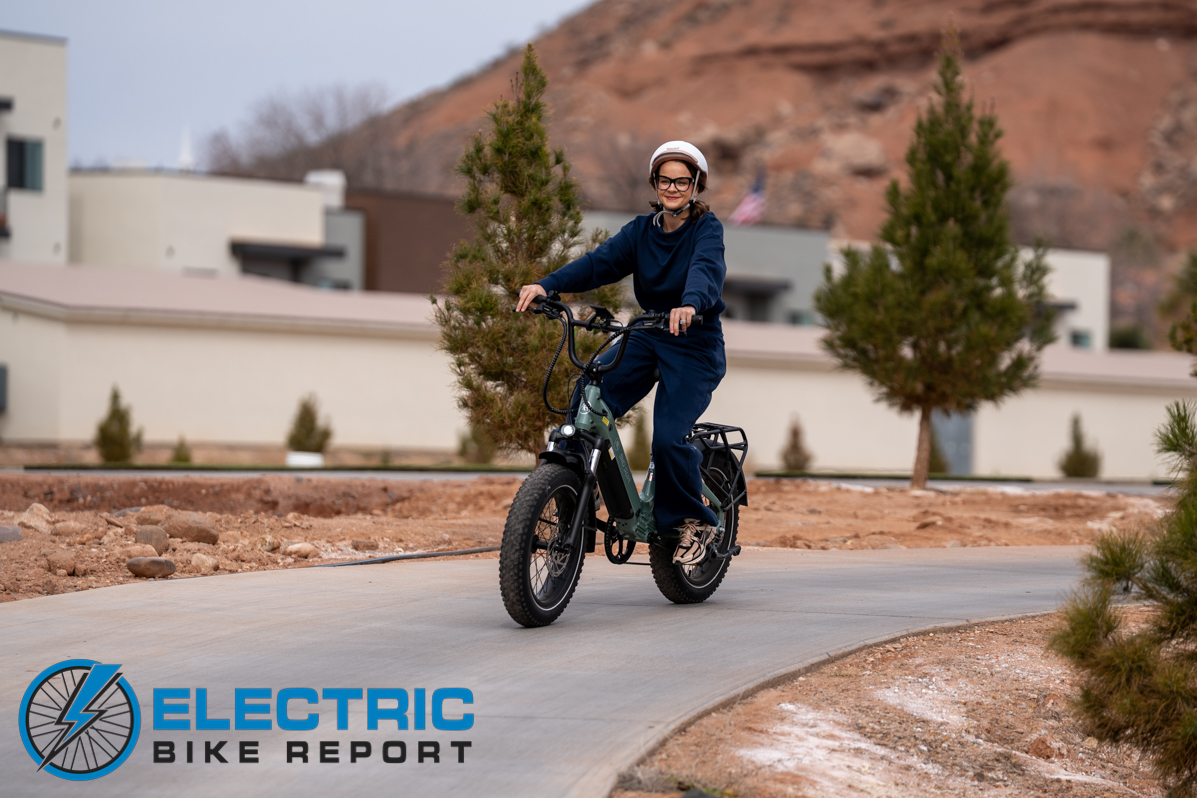
This bike is extremely versatile, making a fun commuter, errand runner, or adventure bike—on or off the beaten path.
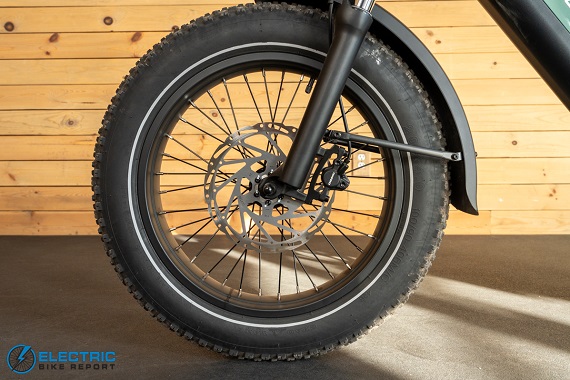
Large 203mm brake rotors help to provide reliable stopping power even under load.
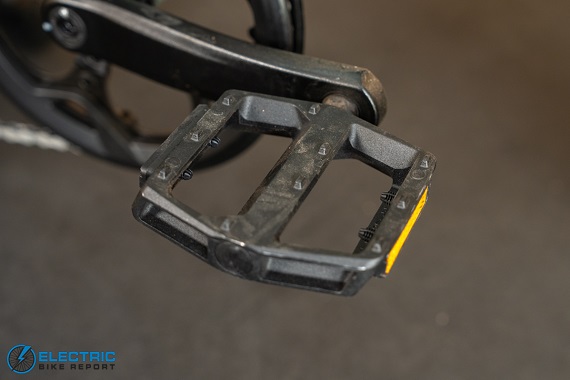
The plastic platform pedals are relatively basic but totally functional.
AIMA Big Sur Sport 2.0 Review: Brake Test
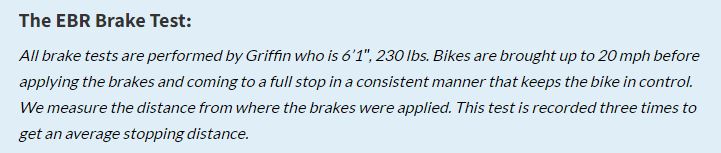
The Big Sur Sport 2.0 impressed us with both its brake specs and its real-world performance. When testing its Tektro HD-E3520 brake system in our Brake Test, the bike landed an average stopping distance of 19’ 5” when measured using the method explained above.
A group of similar models, including the utility-style e-bikes found on our list of the best electric cargo bikes, averaged a result of 20’ 1” in our testing. This shows that the AIMA Big Sur Sport is somewhat faster than average at coming to a stop—a fact that largely comes down to one aspect of its brake system.
AIMA chose a common brake system for the bike, which includes a motor cutoff feature that enables brake light functionality. It has consistently performed well in our testing, but the brand went a step further than the norm by equipping larger than average brake rotors.
In contrast with many similar models with 180mm rotors, the Big Sur Sport 2.0 has larger 203mm rotors that are more effective at dissipating the heat created when the brakes are applied. By staying cooler, its brakes are more effective at controlling speed and bringing the bike to a stop.
I noticed the brake system’s great performance on my own test rides; it felt strong and capable without feeling aggressive or scary. As such, we can say that the Big Sur has appropriate and safe brakes for its size, speed, and intended purpose.
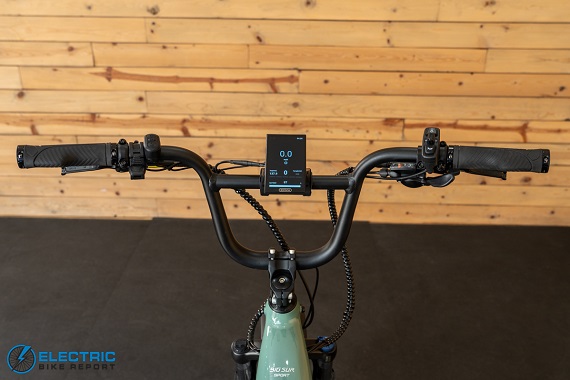
The BMX-style handlebars are sturdy, providing comfort and great steering control.
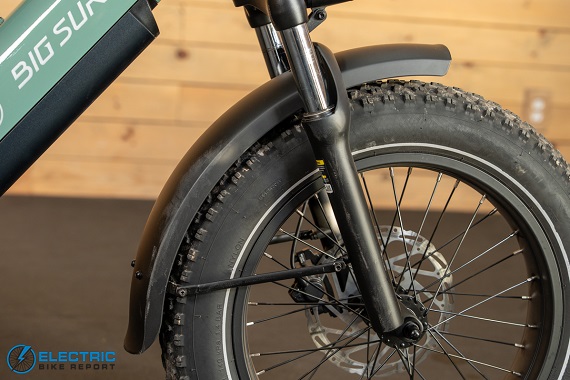
The suspension fork provides 80mm of travel to smooth and soften the ride.
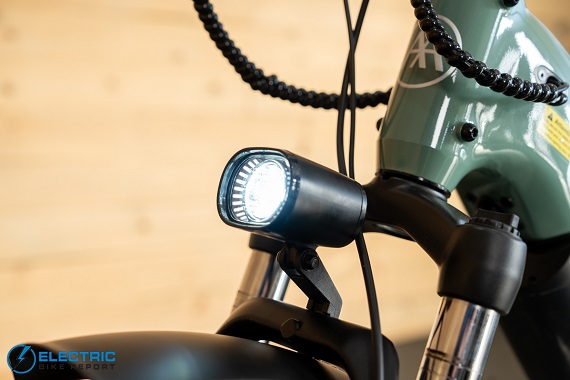
A bright LED headlight that attaches to the suspension fork and includes a daytime running light.
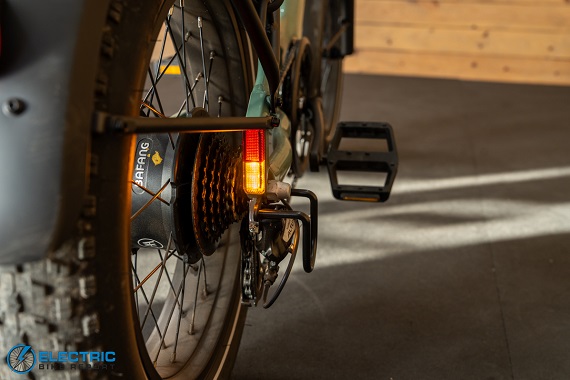
Indicator lights on the seat stays include turn signals for road safety.
AIMA Big Sur Sport 2.0 Review: Ride Quality
As a measure of overall ride feel, comfort, responsiveness, user-friendliness, etc., the Big Sur Sport 2.0’s overall ride quality is great! Many factors influence the bike’s feel, which I will break down in the section below.
Like many similar bikes on the market, AIMA offers the Big Sur Sport 2.0 in a single frame size. It is advertised to be suitable for riders between 5’ 1” and 6’ 3”, which seems reasonable based on my experience. At 5’ 11”, I found the bike comfortable, but I was clearly near the top end of its range of accommodation.
As I mentioned in the Speed Test section above, pedaling efficiency was limited somewhat by the bike’s style and geometry. While the seatpost offers about 6 inches of adjustment in saddle height, it did not allow me to reach full leg extension even at its highest point. On other styles of e-bike, this may be a problem, but with such a powerful motor and responsive pedal assist system, I was comfortable and did not experience any strain.
The bike’s sturdy BMX-style riser bars come with ergonomic rubber grips, a centrally-mounted color display, a button pad and throttle lever on the left handlebar, a control module on the right, and plenty of real estate for other handlebar-mounted accessories. A benefit of this cockpit setup is that the handlebar angle can be adjusted to change the bike’s reach for comfort.
With relatively small but wide 20×4” fat tires, the Big Sur Sport is highly maneuverable yet ultra-stable when riding and cornering. Their knobby tread gives the bike traction on paved surfaces and on looser ground, making it suitable for dirt or gravel roads and paths. They also add an extra layer of cushion, softening the ride in combination with the 80mm suspension fork.
AIMA included an appreciable feature package that includes integrated lights, turn signals, fenders, and an electronic horn. I liked the user-friendly nature of the controls for these features, which includes a toggle switch for the turn signals and highly tactile buttons for the lights and horn.
As a utility-style e-bike, the Big Sur Sport also includes a high-capacity MIK-HD cargo rack. Capable of supporting up to 59 lbs, this rack can be outfitted with a wide range of third-party accessories. In addition to storage baskets and bags, it’s also compatible with panniers, a pet carrier, a child seat, and more.
The Big Sur Sport 2.0’s user interface is relatively simple and straightforward. Its color display shows expected ride data, such as speed, remaining battery charge, estimated range, etc. Users can change the display’s appearance, switch between torque and cadence sensing modes, and adjust other settings through the display menu.
As I touched on in the introduction, riders can also pair the bike to the Bafang Go app. This tool can track rides manually or automatically and be used to make more granular adjustments to the bike’s responsiveness and performance. It can also be set up to display additional ride data, such as cadence or motor output, or mirror turn-by-turn navigation or messages to the bike’s display.
The Big Sur Sport 2.0 was my first experience with the app. I found it robust and relatively easy to learn. While many e-bikes pair with apps that are relatively simple and unnecessary, this was not the case here; Bafang has crafted a useful and user-friendly ride companion.
My only remaining point of critique is simple but worthwhile when considering the bike’s price of around $2k. It is possible that AIMA will offer more options in the future, but at least at the time of writing, it has only one (albeit unique and appealing) Sage Green paint option.
Otherwise, the Big Sur Sport 2.0 is well equipped and well put together. It’s lively, fun, comfortable, and nimble, making for an enjoyable and versatile e-bike.
Sponsor
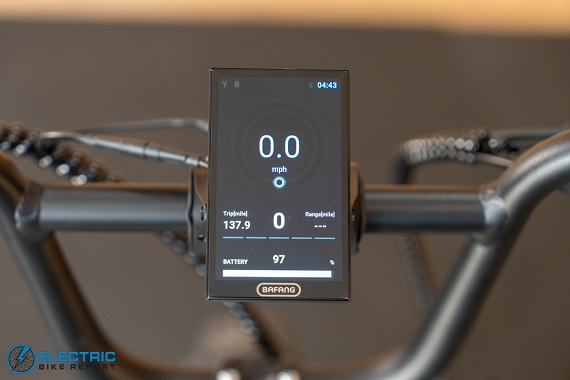
The color display is well organized and offers three themes to choose from.
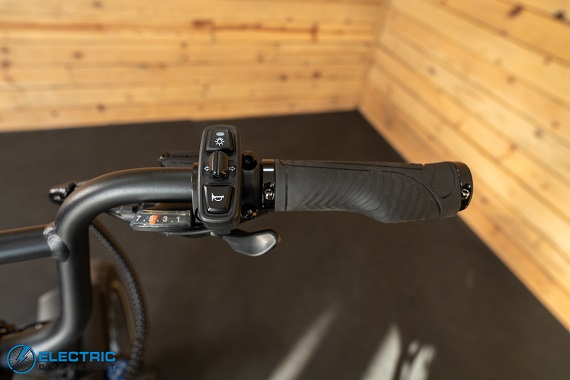
A module on the right handlebar controls the lights, turn signals, and electronic horn.
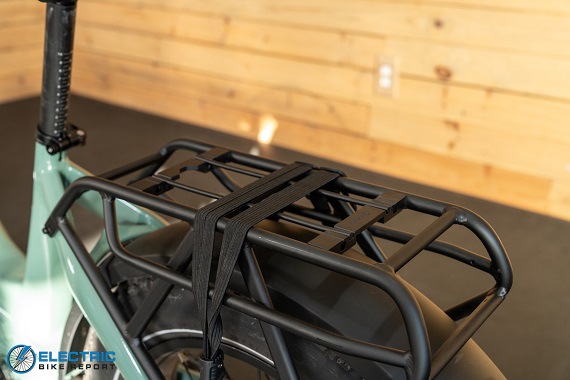
The bike’s cargo rack, which includes bungees to keep your load secure, can carry up to 59 lbs.
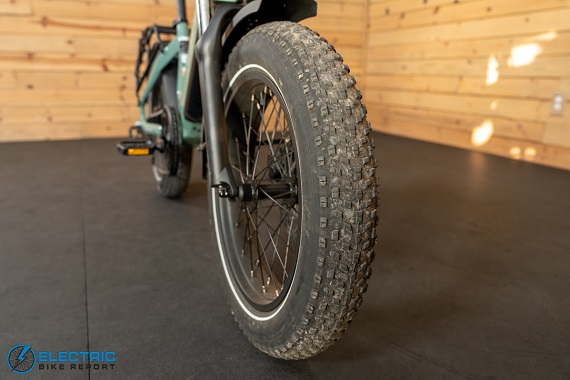
Not only do the 20×4” fat tires allow for light off-roading, they provide an extra layer of ride cushioning.
AIMA Big Sur Sport 2.0 Review: Summary / Where to Buy
As a professional reviewer, I appreciate when brands make thoughtfully designed, well-specced e-bikes with great performance. When this happens, it makes my job of recommending such products easy. The AIMA Big Sur Sport 2.0 proved to be a great bike when judged by these factors, but also because of how thoroughly it prioritizes fun.
The bike scored well in all areas of our testing, generally meeting or exceeding the performance of similar models we’ve evaluated. With great braking, climbing performance, and range, it’s a smart choice for those seeking a safe, practical, and capable ride.
Its default programming showed some slight room for improvement, but the ability to completely customize the bike’s pedal assist system largely negates our critique. The only downsides we pointed out were simply things buyers should know in advance: the bike has just one color option, and changes to its maximum speed must be made through a dealer.
Otherwise, the Big Sur Sport 2.0 continues AIMA’s trend of making high-quality, great performing, smartly designed e-bikes. The brand is still relatively new to us (at the time of writing), but thus far, we have been consistently impressed by each of its models we have tested.
The Big Sur Sport 2.0 is responsive, speedy, maneuverable, and loads of fun to ride. It also happens to be one of the most thoroughly customizable e-bikes we’ve tested, with options for riders of all styles and experience levels.
Those seeking a youthful, energetic, stable, and versatile e-bike for leisure, commuting, errand-running, and more should absolutely have this fun-size utility e-bike on their radar. Let’s be honest—with the hectic nature of daily life, I think we could all use a bit more fun in our lives.
Happy Riding! Make sure to let us know if you have any questions or if you think we left anything out in this review of the AIMA Big Sur Sport 2.0 down in our comments section.
Sponsor
Sponsor
Reader Interactions
Leave a Reply