Pedego Element 2 Review | A Surprisingly Versatile Workhorse
Nov 25, 2026
 0 Comments
 Share
Whether used for work or play, this fat-tire adventure bike offers a fun, hugely customizable experience, and the ability to carry lots of cargo or a child passenger.
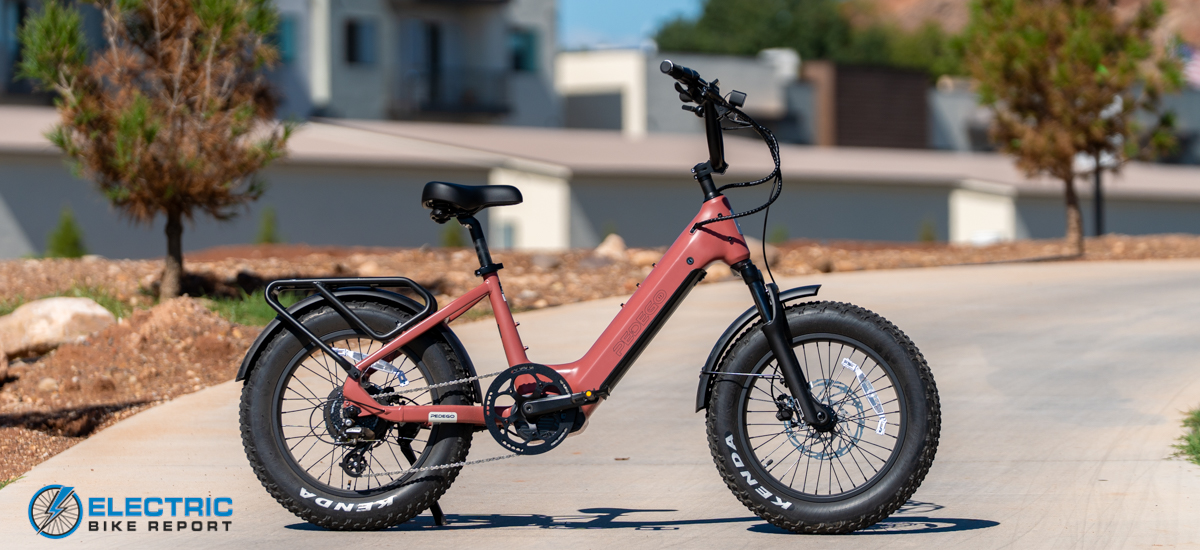
An e-bike’s category can tell you a lot about its personality. After all, every bike’s geometry, components, user interface, and handling make each model feel unique.
Commuters, for example, tend to take themselves fairly seriously, being equipped to get their riders from point A to point B reliably and consistently. Cruisers are much more relaxed and easygoing, providing their riders an opportunity to enjoy their surroundings in comfort.
Other e-bikes, like the Pedego Element 2, defy simple categorization. This e-bike’s relatively small size and its high-rise handlebars show some BMX influence in its design, while its knobby 4-inch-wide tires are borrowed from full-size fat-tire e-bikes or off-road-capable folding bikes. Its huge cargo/passenger capacity of 100 lbs, paired with its total payload capacity of up to 440 lbs also reflects a utility e-bike connection.
If I had to summarize the bike concisely in slang terms, I’d say it’s a bit like a reverse mullet hairstyle: party in the front, business in the back.
With this combination of characteristics, the Element 2 is clearly intended to balance fun and practicality. Advertised as a “20-inch adventure fat-tire” e-bike, it’s the sort of ride you can take to the workplace, the grocery store, and the multi-use trail all in the span of a day.
As a Pedego product, it also benefits from the brand’s network of brick-and-mortar sales and service locations, its custom programming/user interface, and its nearly unparalleled 5-year warranty.
At face value alone, it’s a compelling e-bike for those who want to have their cake and eat it, too. But here at Electric Bike Report, deeper dives are our specialty. Continue reading our full review below to see how the Element 2 compares to similar models in our series of standardized performance tests!

Sponsor
E-Bike Category:Fat Tire / Utility
E-Bike Class:Class 1 – 20mph Pedal Assist
Class 2 – 20mph Pedal Assist & Throttle
Class 3 Ready (Participating Locations) – 28mph Pedal Assist
Sponsor
Pedego Element 2 Video Review
 Pros
- Riders have a huge amount of control over how the Element 2 rides. The bike offers three performance modes, torque and cadence-based pedal assist, and motor tuning in torque mode.
- The Element 2 feels capable without being overpowered. Whether you choose its torque or cadence mode, the bike balances strength with control.
- It blends BMX, fat tire, and utility styles, giving it a fun, playful, and easygoing feel.
- Pedego offers an industry-leading 5-year/5000 mile warranty on the frame, battery, and original Pedego parts and components.
- The Element 2 has an impressive 440 lb total payload capacity and includes an MIK-HD cargo rack that can haul up to 100 lbs.
- The bike’s 20×4 fat tires, front suspension, and spring saddle make it comfortable and capable in various types of terrain.
 Cons
- While the bike’s single frame size should work for most riders, those on the taller side shouldn’t expect full leg extension.
- Restarting the bike turns off the OTA update mode; we’d prefer a set-it-and-forget-it approach.
ELECTRICAL SPECS & FEATURES
- Battery: 48V17.4Ah 835Wh, UL2271 Certified Pack, UL2580 Certified Cells, LG 21700, Removable Battery
- Charger: 48V 3A, 6.5Hr Charge Time (From 0% SoC)
- Display: 3.5″ Color Display, 500 Nits Brightness – 2 Assist Modes (Cruise & Torque), 3 Performance Modes (Mellow, Standard, Pedego)
- Motor: 48V, 750W, 1200W Peak, 90Nm Torque
- Headlight: 100 Lux Handlebar Mounted Headlight
- Taillights: Frame Integrated with Active Brake Light, Running Light and Turn Signals
- Pedal Assist: PedalSense® Cruise or Torque Assist
- Claimed Range: Up to 81 Miles
- Throttle: Pedego Twist Throttle
- App: Pedego App
- UL Certification: UL 2849 Certified, UL 2271 Certified, Batteries Made With UL 2580 Certified Cells
Weight & Dimensions
- Claimed weight: 68.3 lb / 30.98 kg w/o Battery | 77 lb / 34.93 kg w/ Battery
- Tested Weight: 77.1 lbs w/ Battery
- Rider height range: 5’1″ – 6’1″
- Total payload capacity: Up to 440 Lb
Components & Accessories
- Brakes: Tektro HD-E3520 Hydraulic Disc Brakes w/ Power Cut-Off Sensor, 203mm Front Rotor, 180mm Rear Rotor
- Fenders: Front & Rear Aluminum | Rain/Mud/Dust Fenders
- Fork: Aluminum, 75mm Travel Suspension Fork w/ Preload Adjustment, Thru Axle
- Frame: 6061 Aluminum Alloy
- Drivetrain: Shimano Acera 8 Speed, 52T Chainring, Shimano 12-32T CS-HG200-8 Cassette, HyperGlide Technology, Corrosion Resistance, 267% Effective Gear Range
- Grips: 116mm Left, 66mm Right with Lockring Ribbed, Nonslip, Vibration Dampening
- Saddle: Comfort Saddle – (254 x 223 x 90mm), Black Leather, Foam Cushion
- Handlebar: Aluminum, 700mm Width, 210mm Rise, 20* Sweep, 31.8mm Clamp
- Kickstand: Frame Mounted Side Kickstand
- Pedals: Aluminum Platform Pedals – 111.5 L x 100W x 22mm H
- Tires: Kenda K1188, 20″ x 4.0″, K-Shield
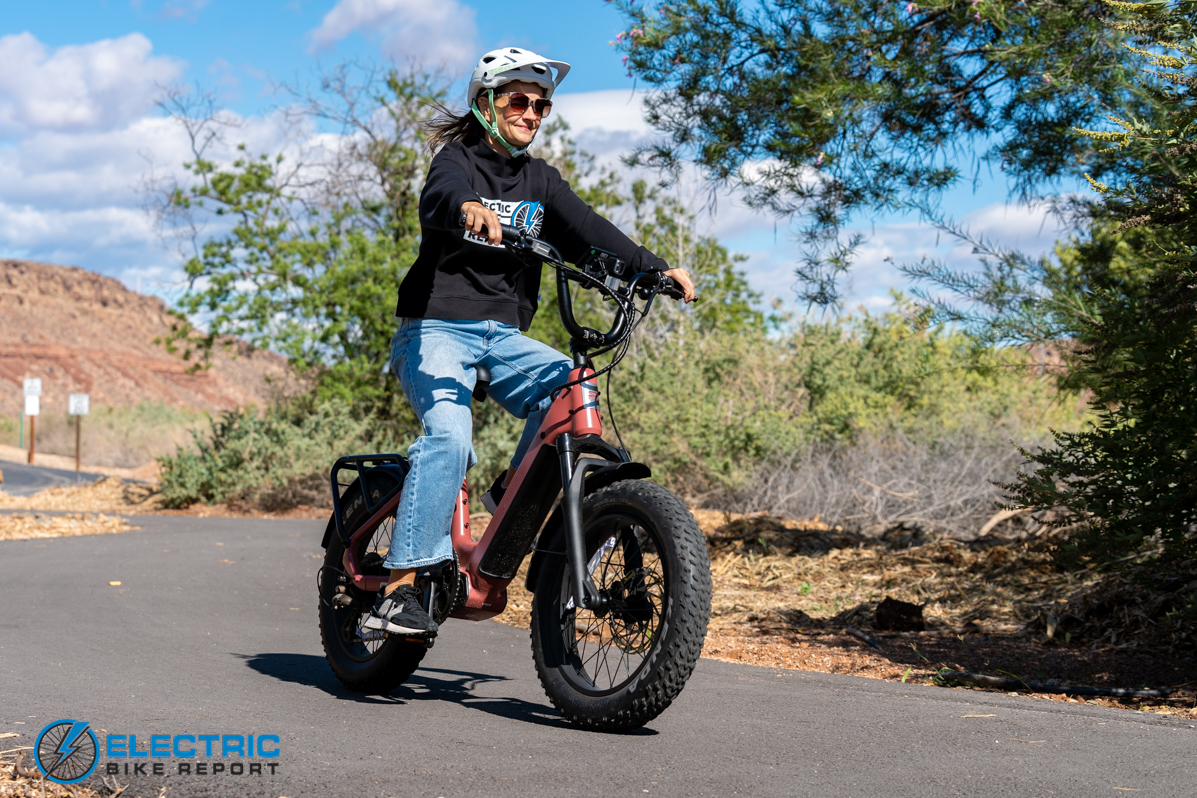
The Element 2 is available in three color options: Marsala (pictured), Dark Shadow, and Warm Sand.
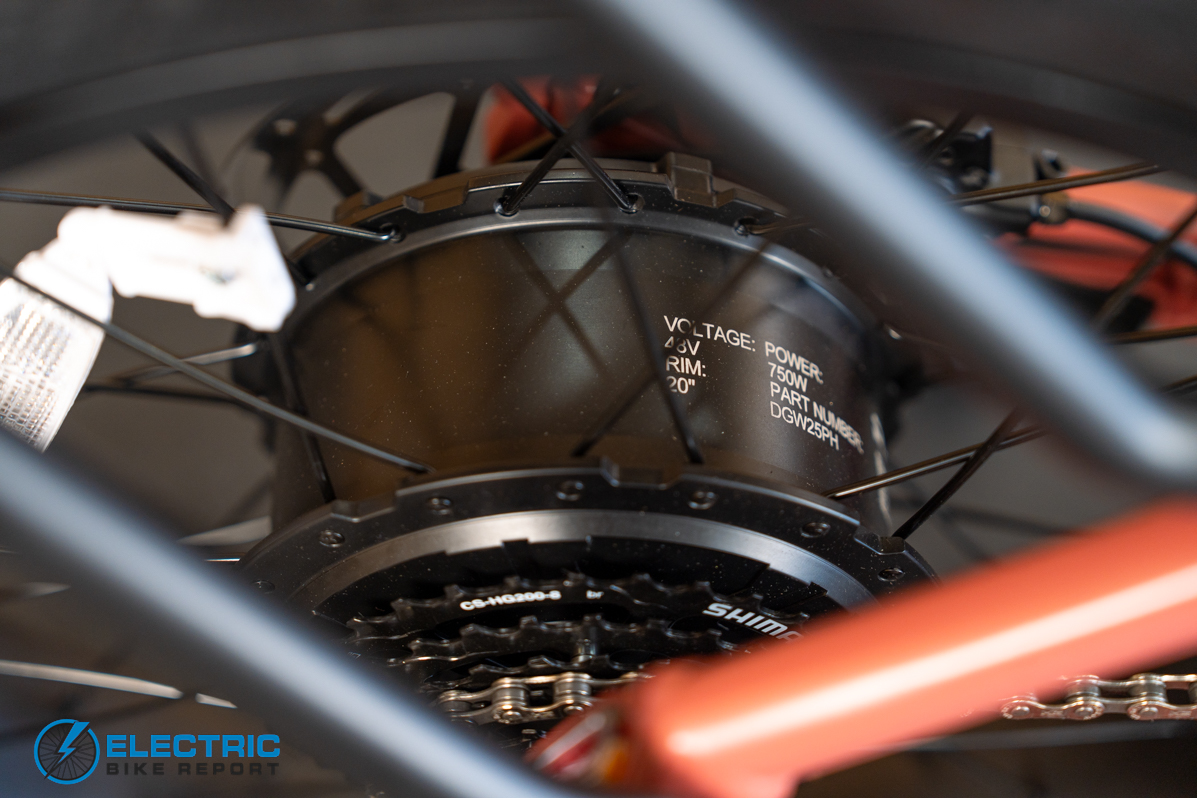
A powerful 750W rear-hub motor offer pedal assist via either torque or cadence sensors.
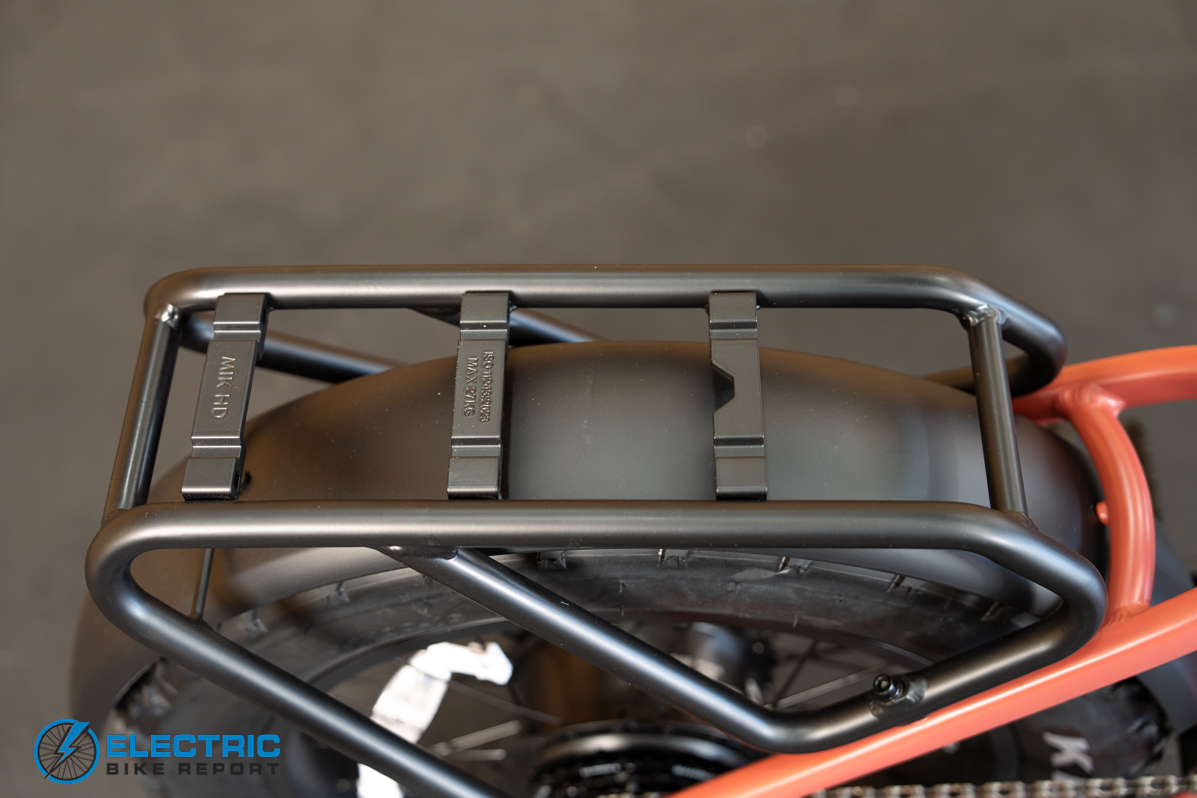
The MIK-HD cargo rack is compatible with locking baskets, bags, and other accessories.
Pedego Element 2 Review: Speed Test
The Pedego Element 2 started off strong in our Speed Test. I rode the bike on a flat section of our local paved shared-use trail using both its torque and cadence-sensing (Cruise) modes. In both tests, I recorded my average speeds in each of the bike’s assist settings, using the data to build a model of its speed and power distribution.
I also tested the bike with both its default Class 2 (20 mph) and unlockable Class 3 (28 mph) settings. Buyers should note that adjustments to Class 3 mode can only be made by authorized Pedego dealers where permitted.
Starting without the bike’s pedal assist system (PAS) active, the bike’s roughly 77-lb weight was apparent. As is common with e-bikes in this weight class, I had to push on the pedals with a moderate level of effort to get rolling, though the bike became much easier to pedal once it was on the move.
As shown in the graph above, the Element 2 has three power levels in its torque-sensing mode and five levels in Cruise. In both tests, the bike’s programming was intuitive and predictable, with incremental increases in power throughout.
In the torque-sensing mode, the lowest assist level provided a minimal boost in speed, though it did effectively remove the bike’s weight, thereby making it easier to pedal. The middle level maintained a natural feel while making my pedaling much more rewarding. PAS 3 gave me even more return for my effort, bringing me to high speeds with only light pedaling.
These results made sense when diving deeper into the motor tuning function available through the bike’s settings menu. By default, PAS 1 is limited to 10% of the motor’s output, while PAS 2 and 3 step up to 40% and 100%, respectively. Personally, I’d likely bump up the bike’s lowest assist level a smidge, but overall, this balance worked well.
The Element 2’s torque-sensing mode also felt extremely responsive. Its motor adjusted power instantaneously in response to small changes in my pedaling. Keeping the ride smooth required me to apply a consistent amount of force and maintain a relatively steady cadence, so there was a slight learning curve, but the overall experience felt remarkably adaptive.
In the bike’s cadence-sensing mode, each of its five PAS levels corresponds to a preset speed limit. PAS 1 delivered an approachable, easily controllable pace, while PAS 5 brought the bike to its 20 or 28 mph maximums. The other settings were evenly distributed between these extremes, allowing for easy control over the bike’s riding speed.
In fact, the bike’s programming looks excellent, with measured increases in speed and power between all assist levels in both torque and cadence modes. We give Pedego kudos for taking this approach to programming, since it makes a bike feel intuitive and predictable, since riders don’t experience unexpected surges when stepping up to higher power levels.
The bike also has three riding modes that dictate its speed limit and acceleration force. In Mellow mode, the bike has gradual acceleration up to a maximum of 15 mph. The Standard mode offers a balanced experience with speeds up to 20 mph. Pedego mode increases the bike’s acceleration force, allowing it to quickly reach top speed—though I noticed that the differences were most noticeable in the bike’s cadence-sensing Cruise mode.
Overall, the bike offers a wide range of experiences for riders with different experience levels and preferences. By default, its programming is intuitive and balanced, but it’s also highly customizable, leading us to give it two solid thumbs up in this portion of our testing.
Sponsor
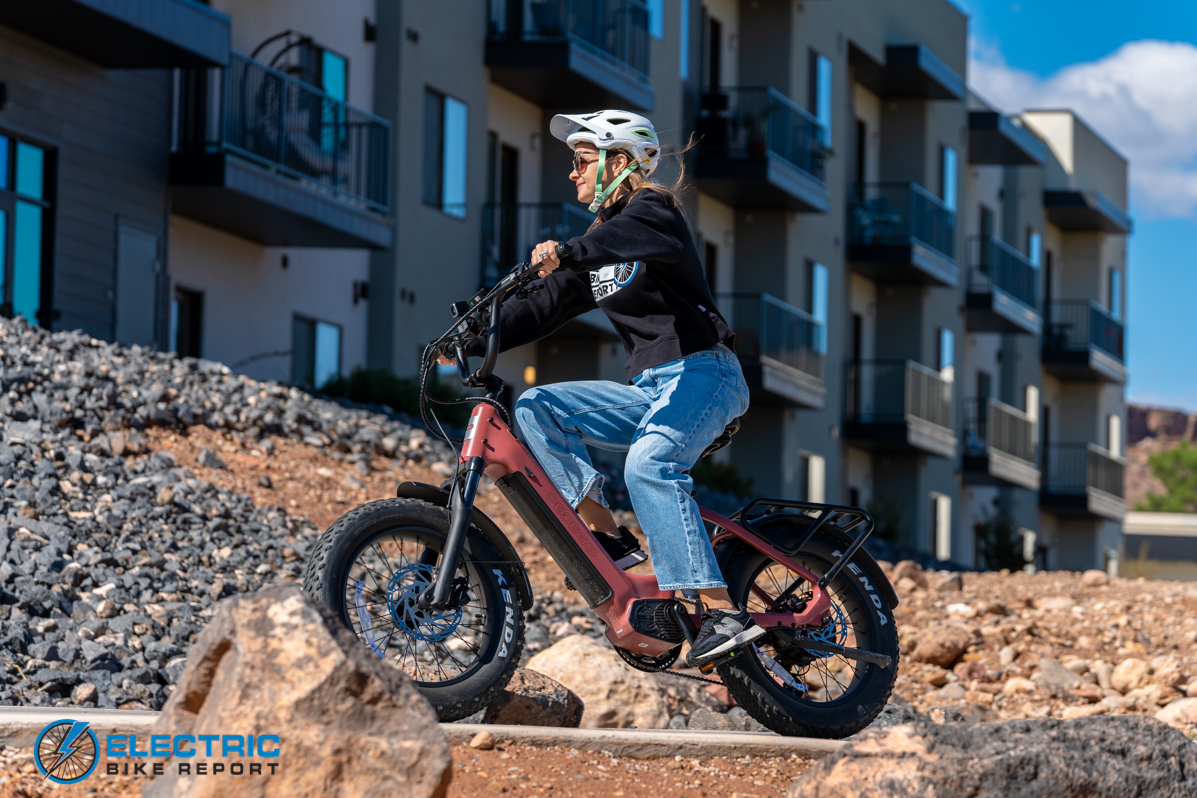
While the bike is advertised for riders up to 6’3″, we found it best suited for those of short to average height.
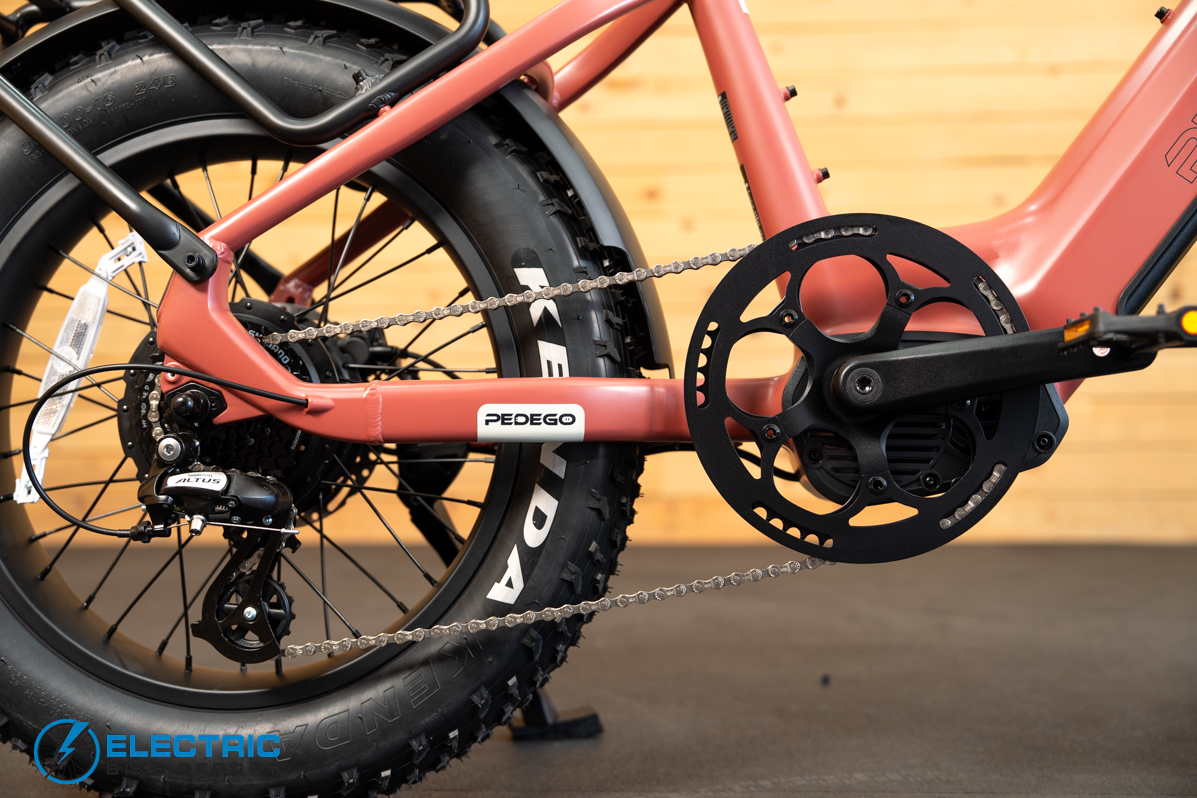
An 8-speed drivetrain provides gearing to support the Element 2’s Class 3 speeds (where legal).
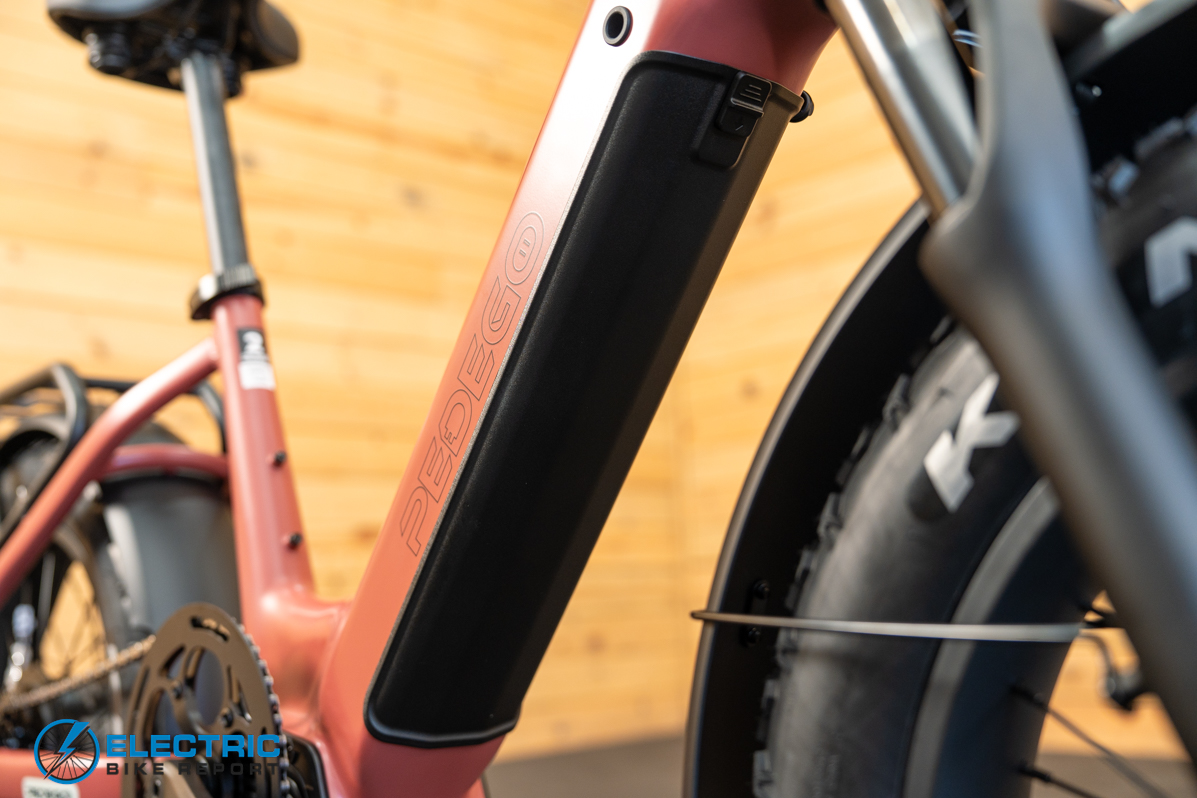
Pedego advertises that the 835 Wh battery can power the bike up to 81 miles.
Pedego Element 2 Review: Range Test
In our Range Test, we didn’t quite meet Pedego’s advertised range potential with the Element 2, but regardless, we feel the bike did a solid job for its specs and style. We tested it in torque mode using both its highest and lowest assist levels. In both cases, we started with a full charge and rode until its battery was depleted.
Using PAS 3, our test riders traveled 35.3 miles with a single charge of the bike’s 835 watt-hour (Wh) battery, while in PAS 1, they managed 63.3 miles. This second result fell below Pedego’s claimed 81-mile range, but when compared to similar e-bikes we’ve tested, which averaged 34.7 and 68.6 miles, the Element 2 falls well within the norm.
Interestingly, our results show that the bike’s motor was somewhat less efficient than average. When calculating its energy consumption by dividing battery capacity by its mileage, the Element 2 used 13.2 watt-hours per mile (Wh/mi) in its PAS 1 test and 23.7 Wh/mi in PAS 3. Similar e-bikes averaged 11.4 and 22.7 Wh/mi in their highest and lowest power levels, respectively.
Pedego seems to have largely counteracted this by including a larger-than-average battery; similar models we’ve tested carried batteries with 766.3 Wh of capacity, while the Element’s power pack offers a more generous 835.2 Wh.
Regardless of the specifics, the big-picture results reflect real-world usability. A minimum of 35 miles of range means that most riders should expect to get multiple trips on a single charge, regardless of where or how they ride.
Of course, it is worth noting that we tested the bike in its most efficient setting without cargo. Riders using its cadence mode and/or carrying a heavy load will likely see fewer miles, though we still feel comfortable saying most folks should be accommodated.
With the included 3A charger, Pedego advertises a 6.5-hour charge time for a fully-depleted battery. Considering its substantial size, we wouldn’t mind seeing a faster charger included with the bike to shave down charging times. Pedego offers faster 4A “superchargers” for many of its older models, but whether it plans to do so with its new lineup remains to be seen.
Sponsor
Sponsor
Pedego Element 2 Review: Hill Test
Continuing its trend of solid performance, the Element 2 also gave a strong showing in our Hill Test. Our test rider, Justin, took two passes up our test hill, called the Devil’s Backbone (see above), to evaluate its climbing power. On throttle alone, he completed the test in 2:02 at 14.9 mph on average. In PAS 3 using torque mode, his result shortened to 1:52 at 16.2 mph.
A group of comparable e-bikes we’ve tested averaged similar results of 1:54 on throttle and 1:50 using pedal assist. These bikes all shared similar weights, torque ratings, peak power output, etc., so the close nature of their results makes sense.
For context, our comparison group averaged 75 lbs with 1194W of peak power and 84 Nm of torque. The Element 2 weighed a slightly heavier 77 lbs with slightly higher motor output of 1200W and 90 Nm of torque.
Interestingly, we tested two additional Pedego models with the same motor specs and slightly different weights: the Latch 2 and Ridge Rider 2. These bikes, which both weighed 74 lbs, completed both of their hill tests 1-1.5 mph faster than the Element 2. This leads me to believe that the relatively small difference in results was due to a combination of weight and slightly more conservative programming.
I personally tested the Element 2 at our secondary test location, Pilot Hill, and found the bike both powerful and capable. When using the bike’s throttle, it climbed steadily without issue or hesitation. Pedaling in torque mode felt active but easy (and a bit faster), while cadence mode was appropriately more relaxed. This last test also had my fastest result.
Clearly, the bike is well-equipped to handle hilly terrain, and it is powerful enough to do so without struggle. It’s also able to complete the task in a variety of ways, allowing riders with different preferences to approach hills however they prefer.
Sponsor
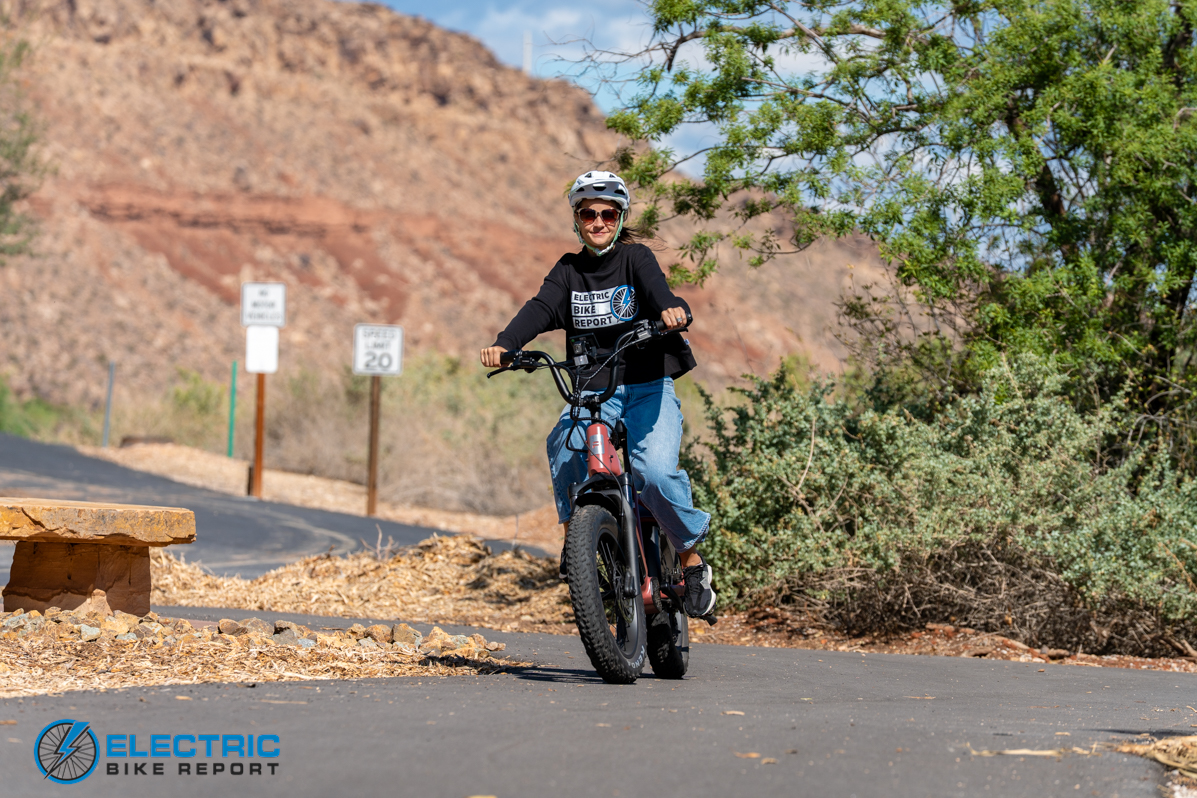
Whether relaxing or running errands, the Element 2 offers a fun, cool, and versatile way to enjoy the scenery.
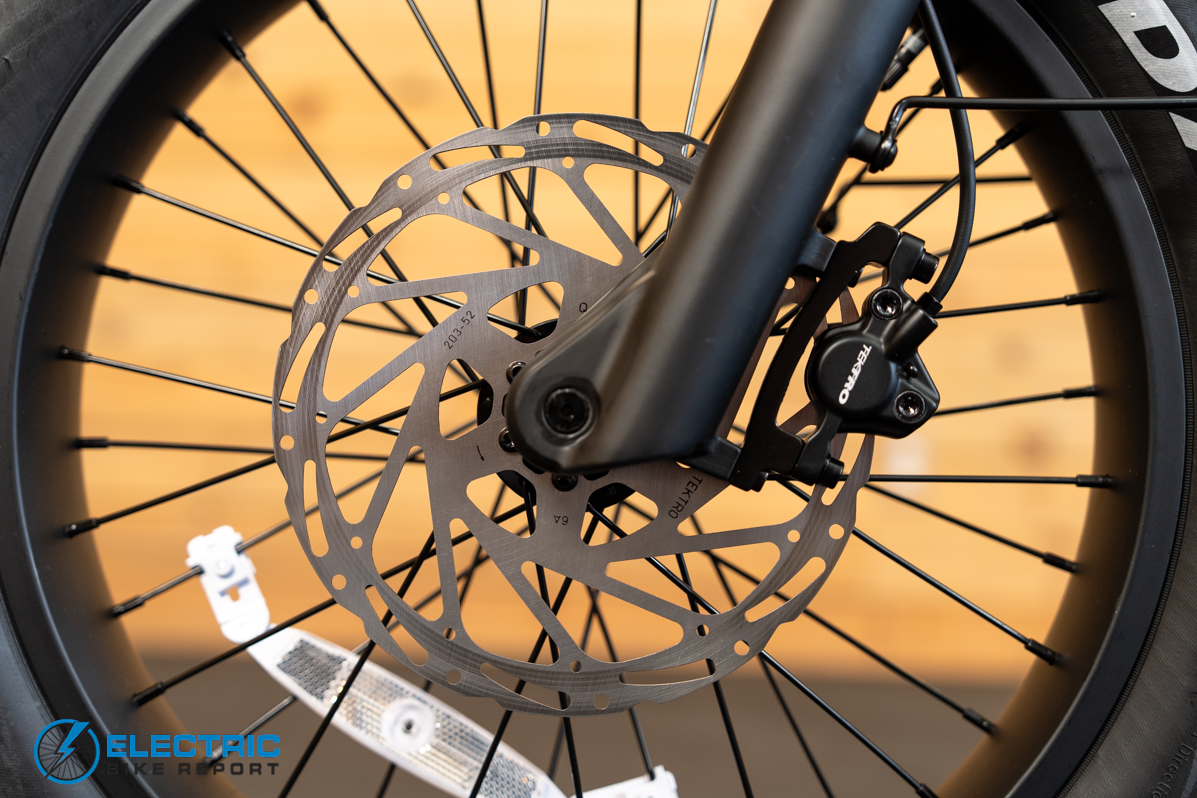
Tektro hydraulic disc brakes provide strong, consistent stopping power.
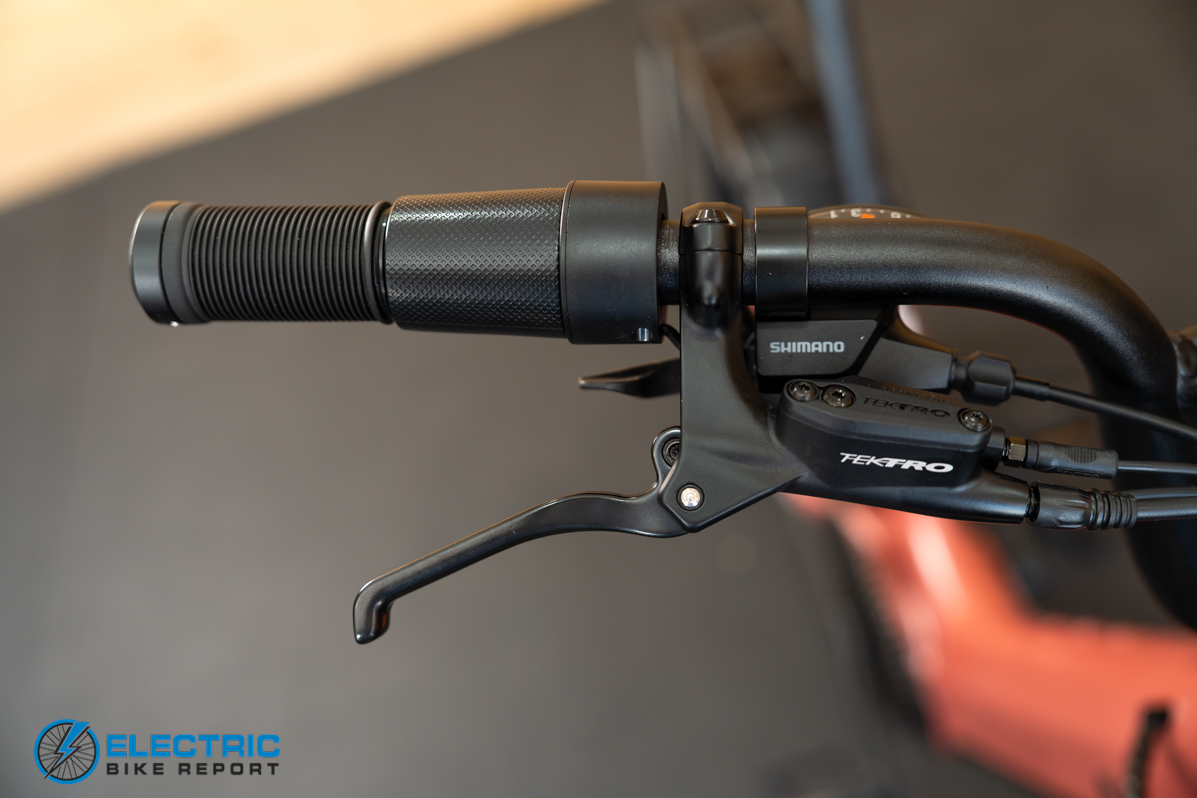
The right handlebar hosts a half-twist throttle for when you want to take it easy.
Pedego Element 2 Review: Brake Test
As expected, the Element 2 performed solidly in our Brake Test. We brought the bike up to 20 mph, applied its brakes at a set of traffic cones, then measured how far it traveled before coming to a complete, controlled stop. We averaged three such measurements for a final score of 18’6″.
For comparison, a group of similar e-bikes stopped in an average of 18’11”. Our general average for all e-bikes is closer to 21’5″, so the Element improved on an already excellent category average by a small margin.
This outcome was no surprise, considering the bike’s brake setup. For starters, the Element 2 is equipped with the common—and, more importantly, proven—two-piston Tektro HD-E3520 hydraulic brake system. Additionally, Pedego paired this system with a 203mm front brake rotor and a 180mm rear rotor, instead of the dual 180mm rotor setup that we see more often.
Larger front brake rotors are impactful, since a bike’s weight transfers to the front wheel when braking. The rotor’s larger size helps it dissipate heat faster, which prevents fade and preserves braking force under repeated use.
Both our test results and my personal experience reinforced the theory here, as the Element’s brake system functioned safely, consistently, and effectively. Braking felt trustworthy and predictable, matching the bike’s speed and weight well.
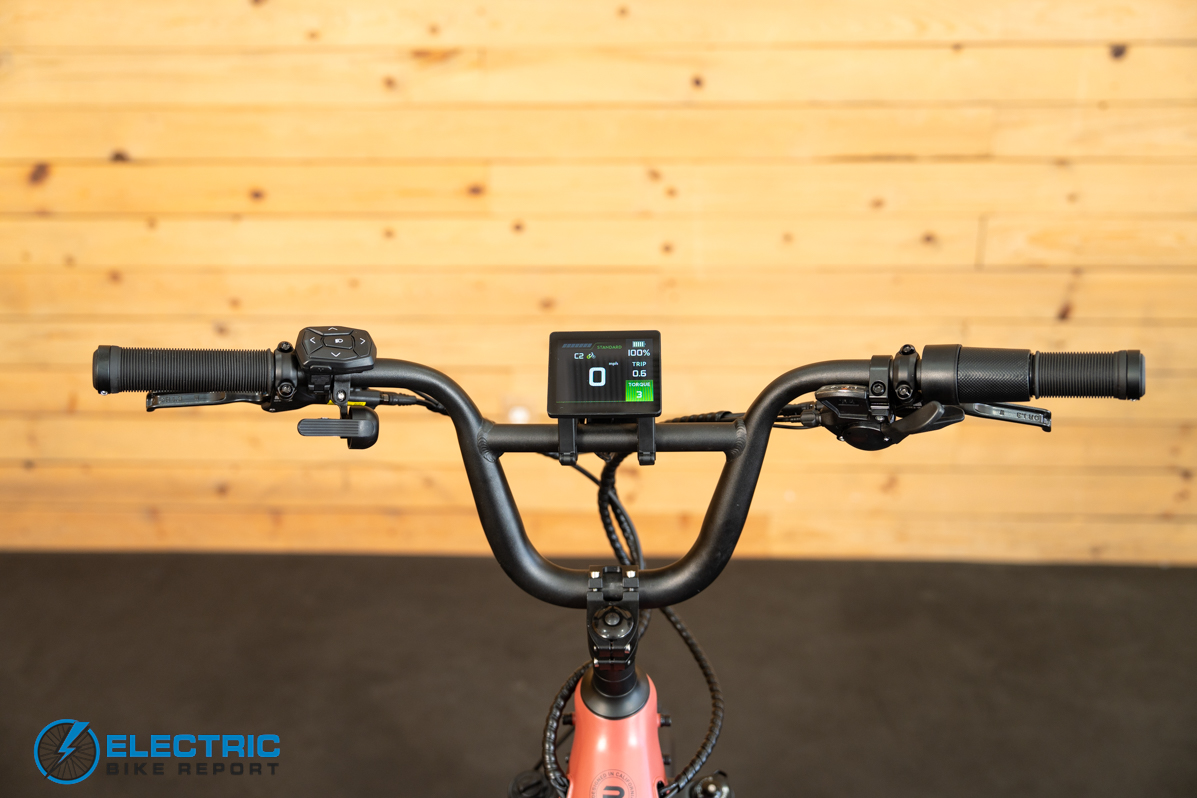
Sturdy BMX-style handlebars offer easy reach adjustment and control over steering.
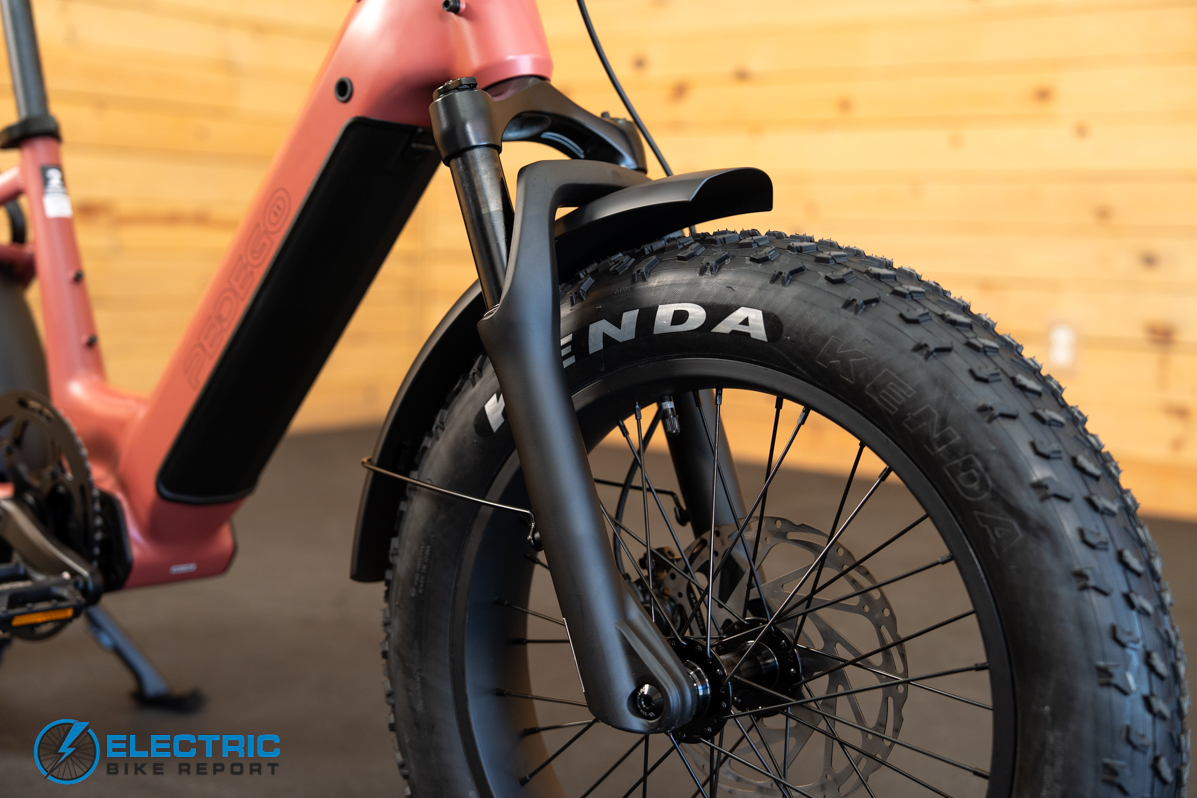
The bike is equipped with a coil suspension fork with 75mm of travel.
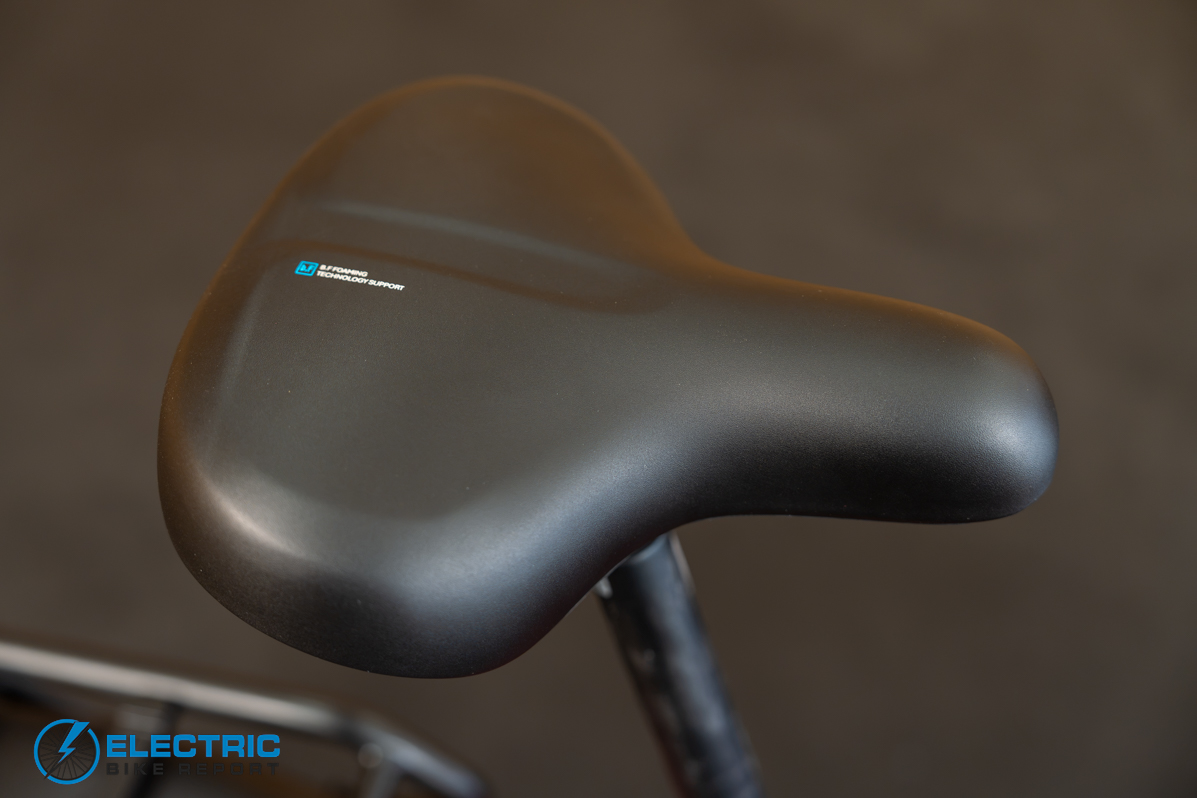
The elastomer spring saddle does a lot of heavy lifting when it comes to soaking up bumps.
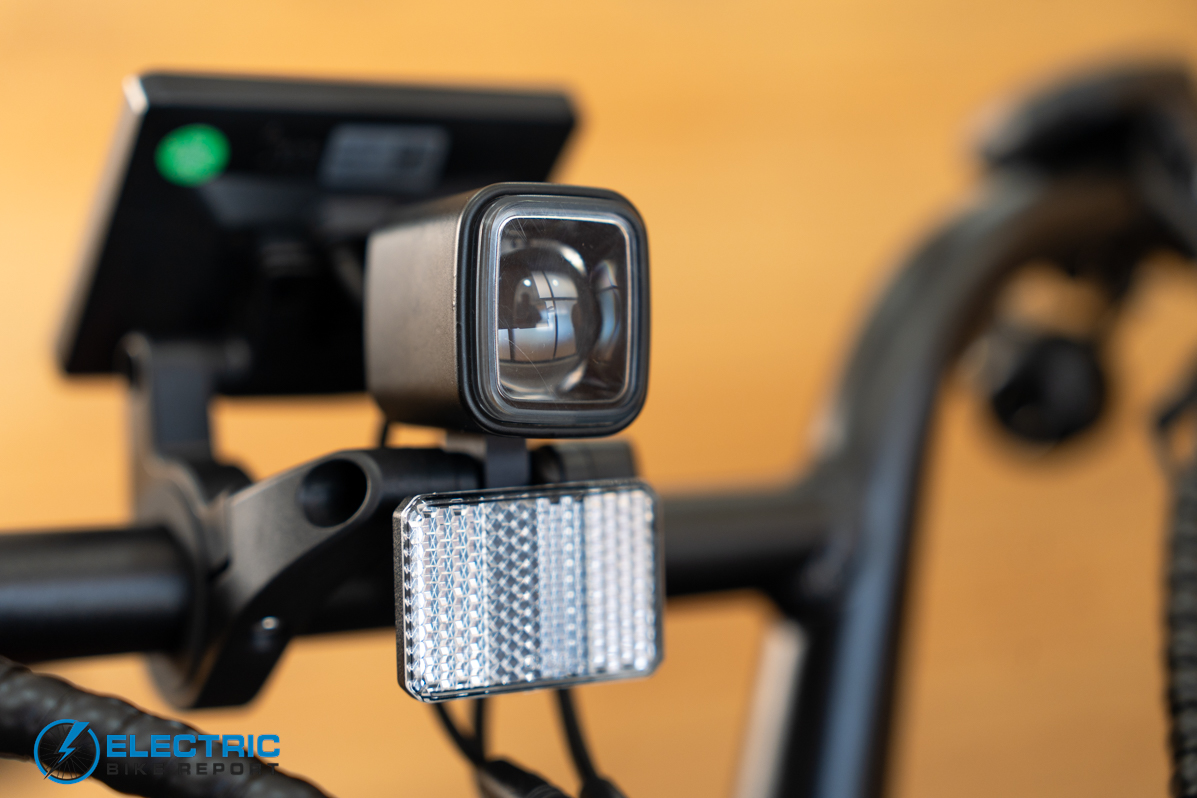
A LED headlight shares the same mounting bracket as the bike’s display.
Pedego Element 2 Review: Ride Quality
We’ve seen generally strong performances from the Element 2 in this review, but how the bike rides is something we can’t measure objectively. My experience was generally positive, but there were a few noticeable areas with room for improvement. The bike’s ride quality is what we’ll examine here—this includes its fit, adjustability, comfort, handling, and operation.
The bike comes in a single frame size advertised to fit riders from 5’1″ to 6’1″. Like many other e-bikes of this style, the Element 2 is designed to offer a relaxed, slightly sporty ride with a mostly upright posture and a relatively low seating position. It offers a long seatpost for saddle height adjustment and a set of high-rise BMX-style handlebars with an adjustable angle.
Being 5’11”, I found the bike’s recommended height range somewhat generous. While I was generally comfortable riding it, I would likely need to make some changes to adjust its fit. From my perspective, the handlebars were noticeably low, and despite having the saddle at its highest position, my legs felt somewhat cramped.
Fortunately, the bike’s responsive, powerful motor was able to largely offset the lack of leg extension (especially in cadence mode or using the two highest torque mode assist levels). Still, this experience leads me to say that the bike is sized best for those of shorter to average height. Taller riders may need to consider swapping the stem and/or seatpost.
Credit where credit is due: the bike’s ride is generally smooth and enjoyable. The 75mm suspension fork, 20×4″ fat tires, and elastomer spring saddle combine to soften the impact of bumps, dips, and other types of rough riding conditions. Riders can also lower the air pressure in the tires to add more cushion—this is also good for extra grip when off-roading.
In terms of handling, the Element 2’s size makes it playful, maneuverable, and fun to ride. Its weight also keeps it stuck to the ground, while its wide tires help it to feel stable when riding and cornering. It’s a great blend that really defines the bike’s style; the bike is capable, but by feel, it also doesn’t take itself too seriously.
As we’ve covered above, there’s plenty of muscle behind the ride, and the responsive pedal assist system is a huge highlight. Riders who want the adaptive, intuitive feel of an analog bike will surely appreciate the Element 2’s torque-sensing mode, while those who prefer a more relaxed and controlled feel may prefer the cadence-based cruise mode.
While there is a Pedego app that can be paired with the bike, I like that it’s not necessary to access the Element 2’s customization options. In truth, the app is relatively basic, offering navigation and OTA updates, while the bulk of the bike’s features are accessible through the display’s settings menu. Overall, its interface is robust and intuitive, though this was one other area with room for improvement.
There were three elements (pun intended) of our test bike that could be updated through the Pedego app: the display, the motor, and the controller. Updating each one required setting the bike to “OTA mode” via the settings menu, connecting the app, then downloading/installing the update. We encourage Pedego to require this setup process only once so that the process of updating all of the bike’s systems can be done faster and easier.
One aspect we haven’t touched on much is the Element 2’s cargo/passenger-carrying capability. With an MIK-HD rear cargo rack, the bike is compatible with a wide range of locking accessories, and it is able to carry up to 100 lbs. Pedego sells a variety of optional extras owners can use to outfit the bike, including child seats, storage bags, baskets, and more.
Overall, the bike comes well-equipped for daily use, but it’s great to see so many upgrade options. Additionally, the Element 2 offers a lot to appreciate for a wide range of riders, including commuters, leisure riders, and off-road explorers.
Sponsor
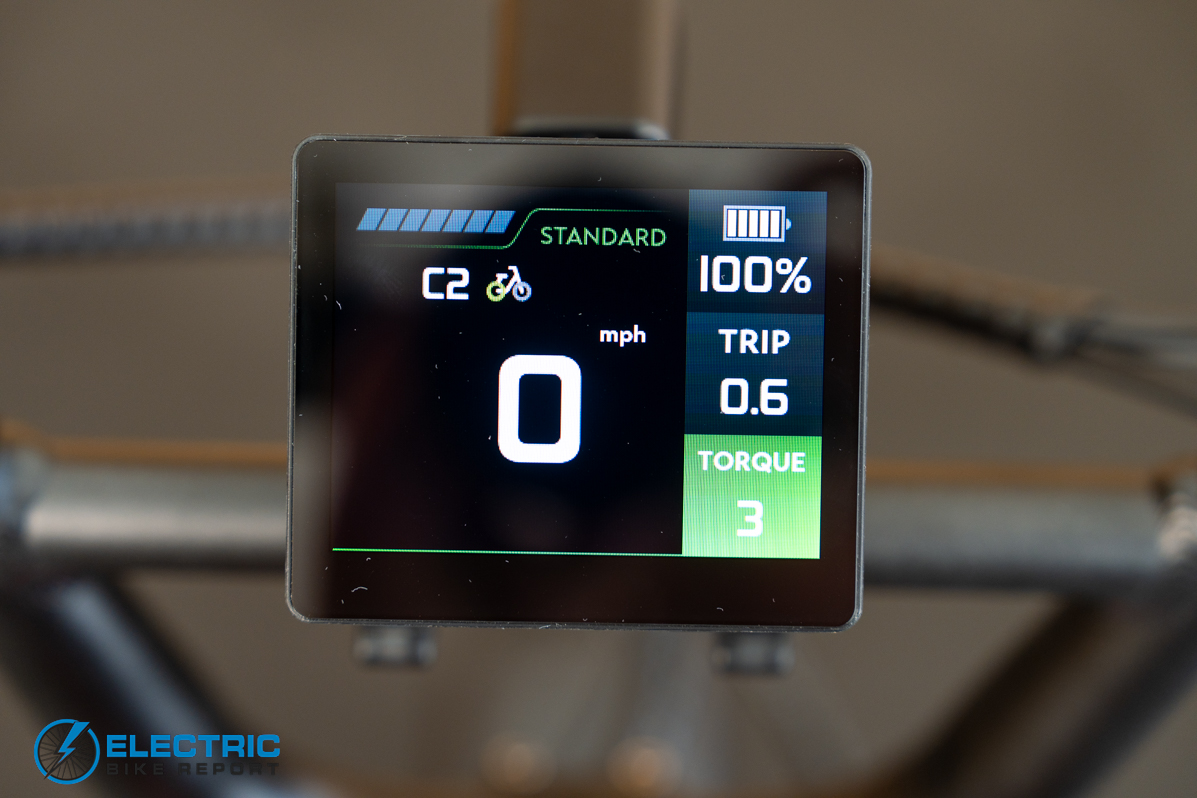
A central color display presents ride data, such as speed, charge level, sensor mode, etc.
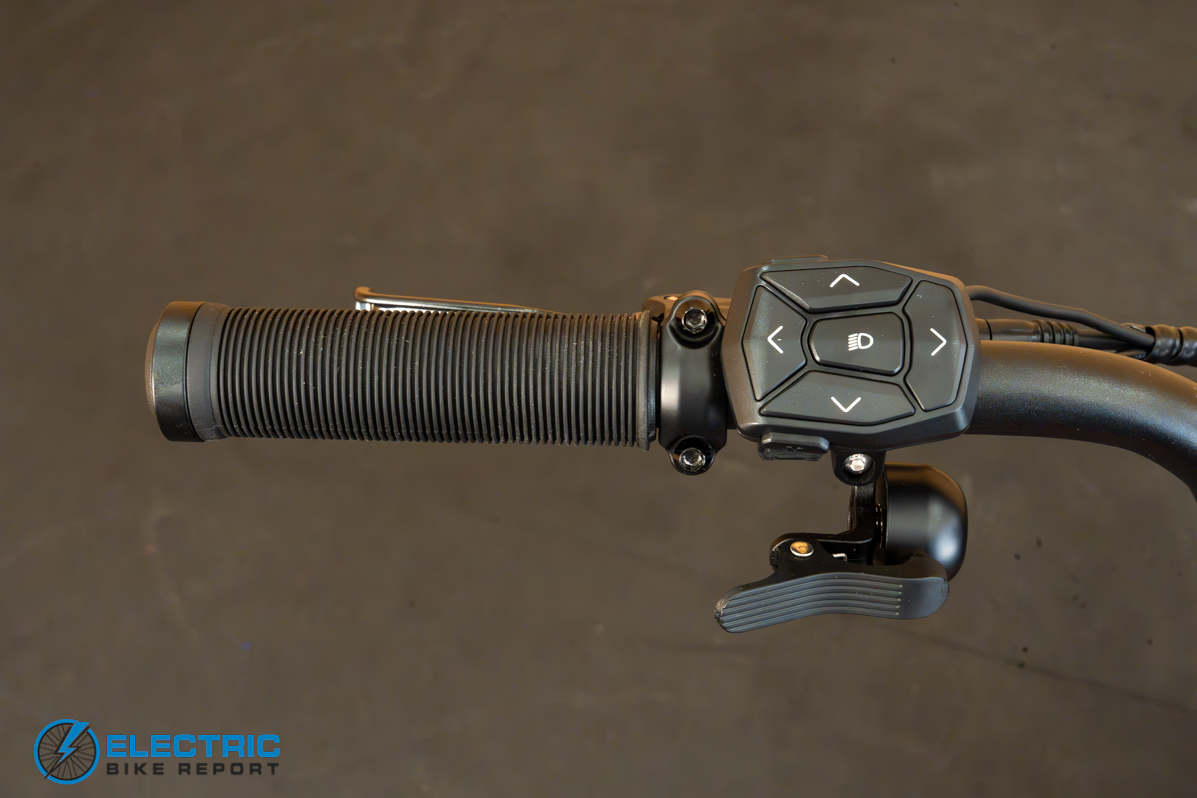
The Element 2 is operated by a handlebar-mounted remote on the left side.
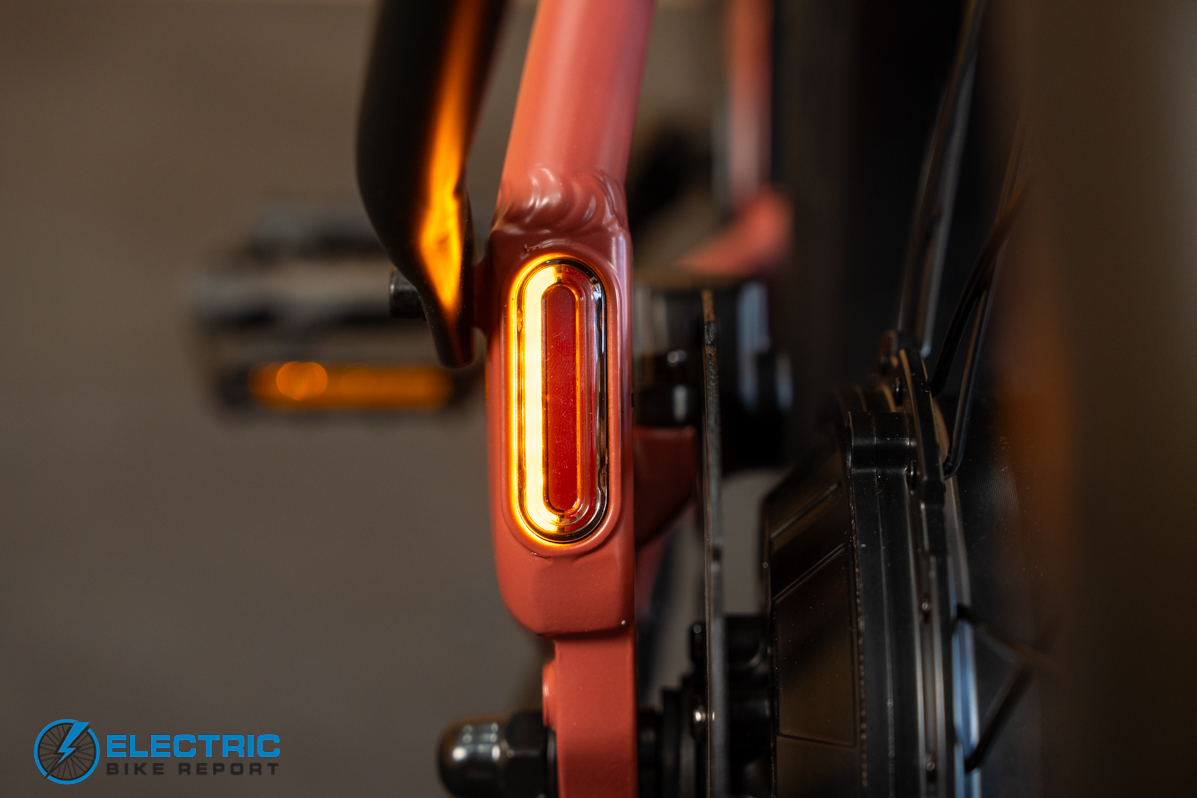
LED Brake lights and turn signals are integrated into the seat stays.
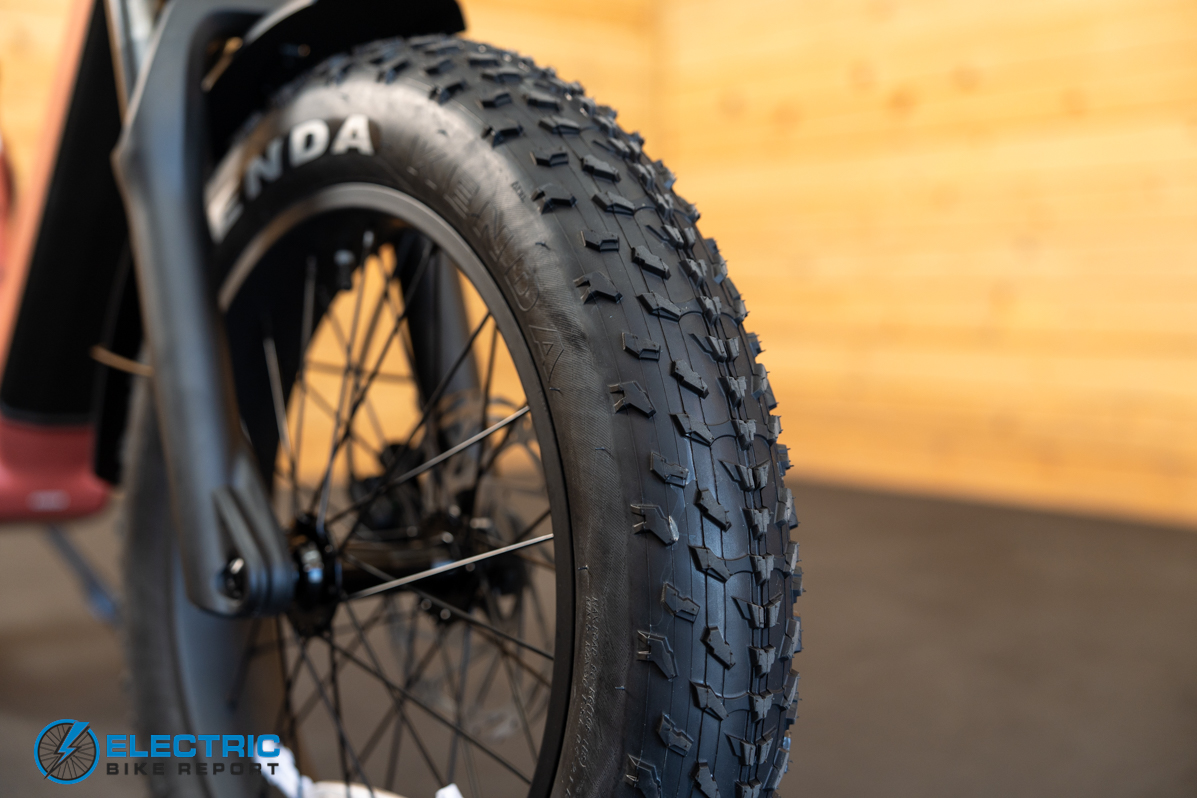
Knobby 20×4″ fat tires help to smooth the ride and provide off-road traction.
Pedego Element 2 Review: Summary / Where to Buy
As I mentioned briefly in the Hill Test section above, the Element 2 is one of three of Pedego’s newest models that we were sent for testing and review. These are the first new models released by the brand following its purchase by Urtopia’s parent company. As such, we were excited to see how that change would present itself in Pedego’s latest products.
Clearly, there is a reason why Pedego became—and has largely remained—one of the most established e-bike brands in the US. The Element 2 performed solidly in our testing, with average to above-average results in all areas. Such scores show that it is appropriately specced and able to keep pace with its peers, making it a solid option for those seeking an e-bike of its style.
Again, the bike is an uncommon blend of influences, with its relatively small size, knobby fat tires, and high carrying capacity. It’s likely to have slightly more niche appeal than some of Pedego’s other models because of this factor, but for those seeking a versatile, fun-size workhorse, the Element 2 proved to be a capable, appealing option.
Still, there is one consideration prospective buyers should keep in mind, and one area we encourage Pedego to improve on. The bike’s sizing is likely best for riders of short to average height; taller riders should be able to make it work, though they shouldn’t expect full leg extension. Additionally, we encourage Pedego to streamline the OTA update process so that it only requires one pairing with the app.
Otherwise, we imagine that the Element 2 would be enticing for relatively youthful riders wanting a blend of practicality and playfulness. With a host of riding modes and customization options, plus compatibility with a wide range of cargo and passenger accessories, it’s a remarkably versatile e-bike. The Element 2 could easily serve as a commuter, an errand-runner, a camping bike, a leisure cruiser, an explorer—or all of the above!
Happy Riding! Make sure to let us know if you have any questions or if you think we left anything out in this review of the Pedego Element 2 down in our comments section.
Sponsor
Sponsor
Reader Interactions
Leave a Reply