Tarran L1m Review | A Smart, Savvy, & Strong Cargo E-Bike
Oct 29, 2026
 0 Comments
 Share
This premium-tier cargo bike offers responsive pedal assist, high-tech security features, and enough carrying capacity for adult passengers.
Cargo e-bikes commonly fall into one of a few categories. At one end of the spectrum are highly affordable products; bikes that are built to get the job done while having some tradeoffs in ride or build quality, and/or performance. E-bikes in the middle often cover all the bases for comfort, value, and performance, though they may not be particularly flashy.
Models like the Tarran L1m, however, aim to offer an elevated experience, with premium components, uncommon features, and no shortage of integrated technology.
For example, the Tarran is equipped with a powerful, smooth, and responsive custom mid-drive motor with up to 100 Nm of torque. It features a locking kickstand, NFC security cards, and location tracking via 4G LTE network. It also includes a full-color touchscreen display, Bluetooth pairing with the Tarran app, and compatibility with 3rd-party smart helmets.
On paper, there’s a lot to appreciate—and my first test ride revealed two standout qualities of the bike. The first was a remarkably smooth, helpful, and natural-feeling pedal assist system, thanks to the bike’s custom 250W mid-drive. The second was an impressively customizable and comfortable fit, which is due to its myriad of adjustment points.
Of course, a premium experience is usually accompanied by a corresponding price. The base model, the L1m (Manual) we tested, retails for around $4,200 at the time of writing, while the top-tier L1s (Superior) has a price tag of just over $6,000.
This may be somewhat steep for casual riders, but one of our goals in this review is to determine whether the L1’s price is justified for those who are serious about replacing a car with an e-bike, or those who simply prefer top-shelf products.
Continue reading below to discover how the bike performed in our standardized Speed, Brake, Range, and Hill Tests. We’ll examine how the Tarran L1m compares to similar longtail cargo e-bikes we’ve tested, and ultimately provide recommendations for who this bike is best suited for.

Sponsor
E-Bike Category:Cargo
E-Bike Class:Class 1 (pedal assist to 20 mph)
Sponsor
Tarran L1m Video Review
 Pros
- Pedaling feels seamless and smooth, thanks to the L1m’s custom mid-drive motor. It provides helpful, responsive power with up to 100 Nm of torque.
- The bike is remarkably adjustable, allowing a wide range of riders to find a comfortable fit. Elements include a dropper seatpost, a telescoping and angle-adjusting stem, and more.
- Tech is a core part of the L1’s experience, with a touchscreen display, 4G/LTE connectivity for location tracking and OTA updates, plus a locking kickstand and NFC security cards.
- The bike’s carrying capacity is impressive, with a cargo rack that can carry up to 231 lbs (enough for adult passengers) and a total weight limit of around 385 lbs.
- It’s easily storable, with the ability to stand (and roll) vertically so as to take up a much smaller footprint.
- The L1m makes it easy to track rides, with optional automatic tracking and syncing with 3rd party apps like Strava.
- The bike is compatible with a huge range of optional cargo and passenger accessories, including the Snap-n-Lock GuardRail that opens for loading children, then locks for secure riding.
- Owners who don’t want to spring for the upgraded L1s can add its electric dropper post, camera system, and turn signals separately.
 Cons
- We love the bike’s overall tech package, but we encourage Tarran to include turn signals on the base model—not just the top-tier L1s.
- Mirroring navigation to the display is great, but we’d like to be able to do so without leaving the paired phone unlocked with the app open.
ELECTRICAL SPECS & FEATURES
- Battery: 693Wh (47.19V/14.7Ah) Capacity, Samsung cell, removable
- Charger: 48V/3A
- Display: 5.2-inch TFT TouchScreen with TarranOS
- Motor: Gobao Mid-drive Motor, 100Nm torque, Rated continuous power 250W, Maximum power 750W
- Headlight: Sate-lite C19, 150Lux, with high and low beam
- Taillights: Sate-lite M18, increased brightness under deceleration, powered by main battery
- Pedal Assist: 4 Levels
- Claimed Range: Up to 105 mi
- Throttle: N/A
- App: Tarran App
- UL Certification: UL 2271 & UL 2849 Compliant
Weight & Dimensions
- Claimed weight: 75 lbs (without battery)
- Tested Weight: 79 lbs (without battery), 87.5 lbs (with battery)
- Rider height range: 5’1″ – 6’5″
- Total payload capacity: 385.5 lbs (based on tested weight)
Components & Accessories
- Brakes: Tektro HD-T5140 4P, 4 finger, 5mm Pad, 5mm hose, Black; TR180-54, 180MM, 2.3MM Thickness, 1 Piece 6-bolt
- Fenders: Plastic Front Fender, Rear Wheel Cover
- Fork: Suntour SF22-MOBIE34-CGO, 15*110, 20″, 80mm travel
- Frame:
- Drivetrain: MicroSHIFT ADVENT X, 10-speed, 48T Chainring, 11-42T Cassette
- Grips: Velo Silicon Commuter Grips
- Saddle: Velo Commuter Saddle, Lever-actuated Dropper post, 34.9mm, Travel 150mm
- Handlebar: Ergonomic Alloy Handlebar, width 640mm
- Kickstand: Tarran E-Lock Kickstand
- Pedals: Plastic Platform, Grip Tape
- Tires: Maxxis Metroloads Pro, 20×2.4
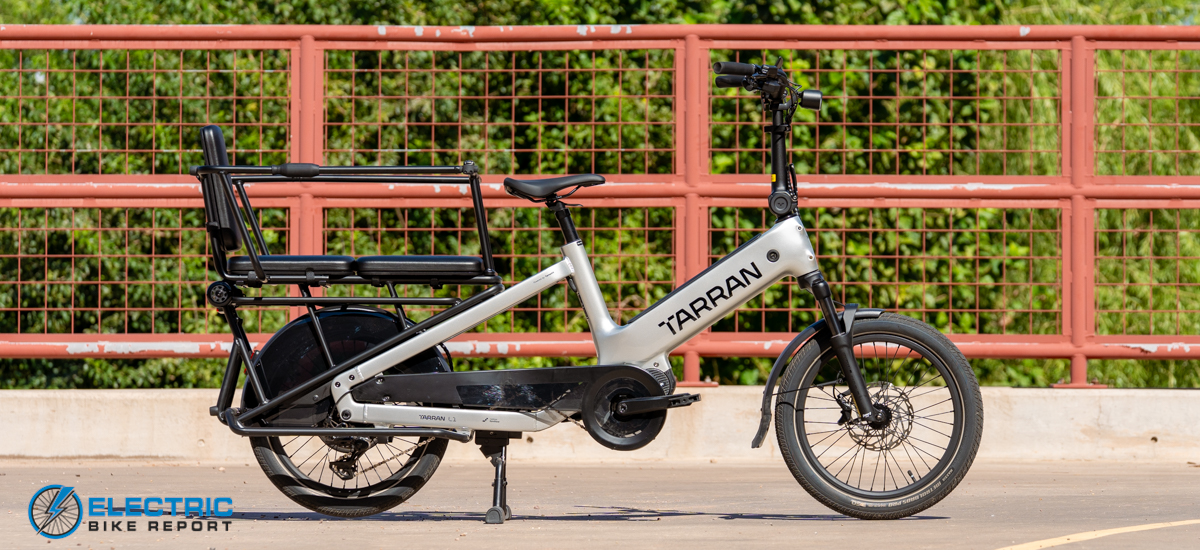
At around $4,200, there’s no doubt that the L1m is one of the more premium cargo e-bikes we’ve tested, but its price is justified through great components, performance, and integrated tech.
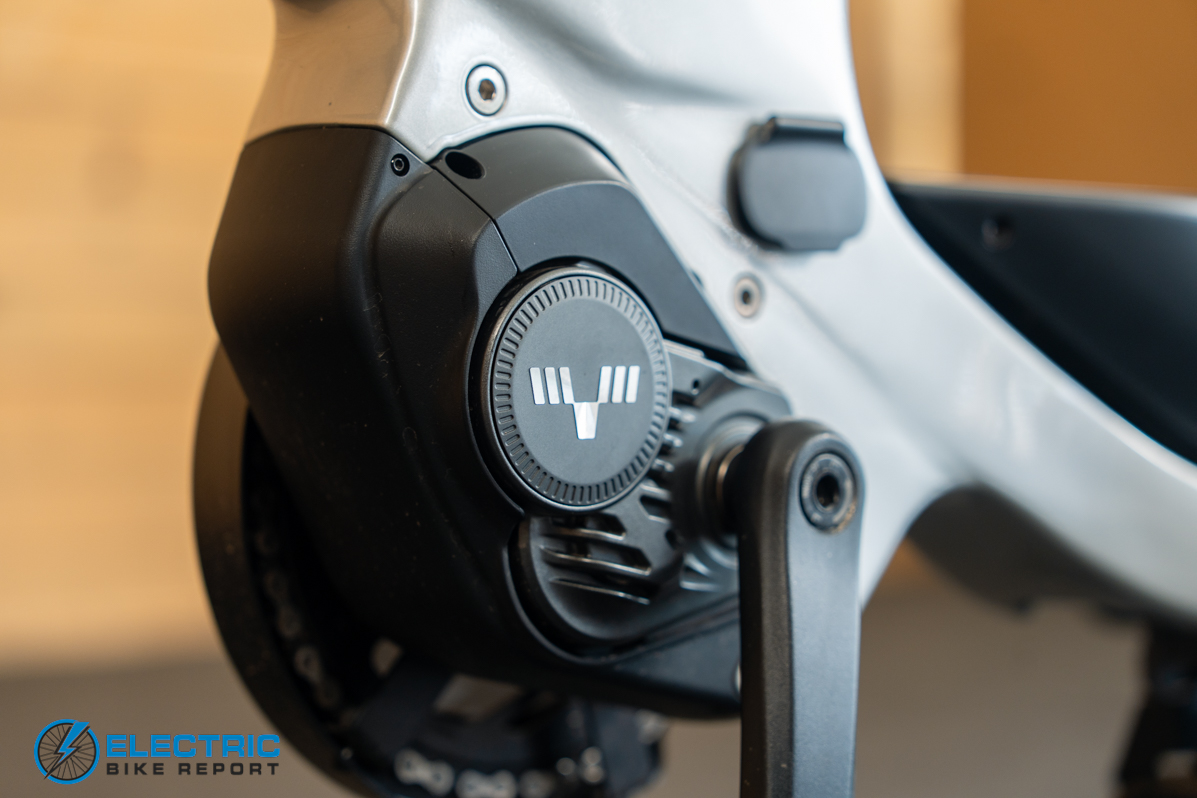
A custom Gobao mid-drive offers smooth, natural pedal assist and plenty of muscle for moving cargo and passengers.
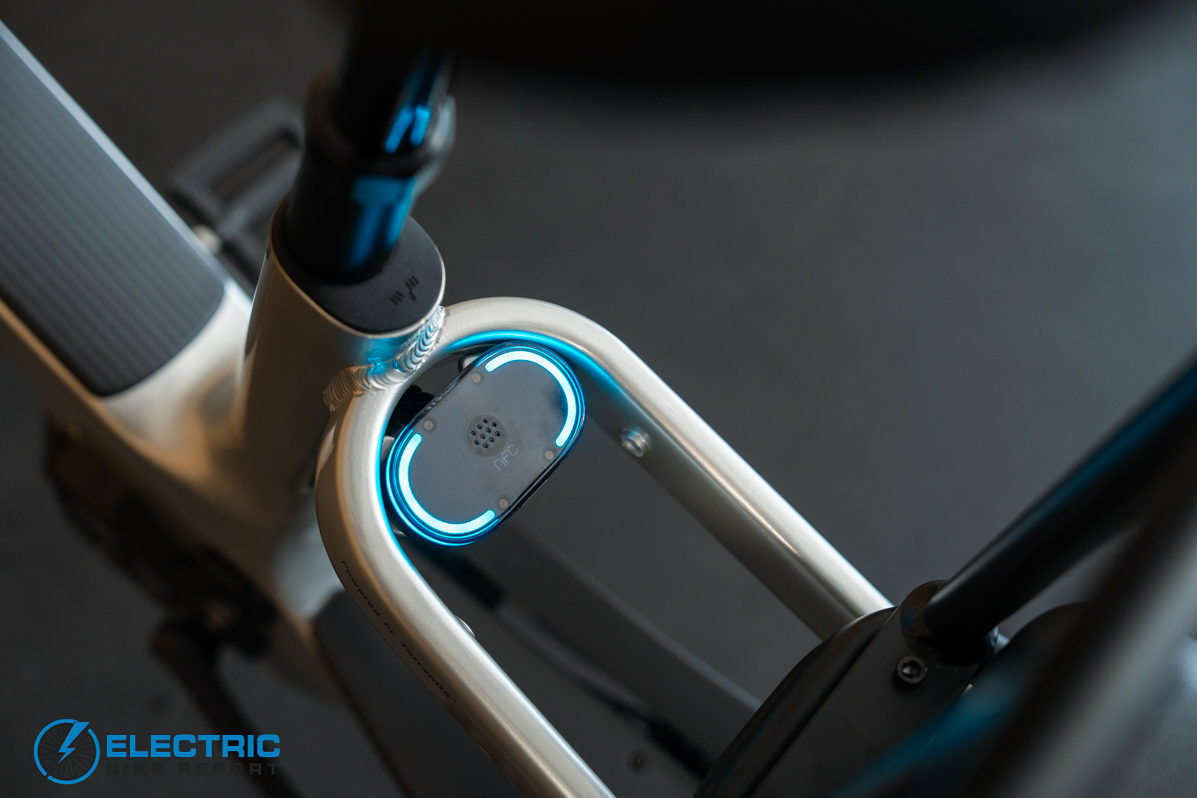
The bike can be unlocked via the NFC card reader behind the seat tube or the Tarran app.
Tarran L1m Review: Speed Test
We conduct our Speed Test on a flat segment of our local paved shared-use trail system. Our main goal in this test is to understand how fast a bike can go—both at maximum speed and in each of its assist levels. We use this information to analyze its programming, with an ideal bike offering meaningful, intuitive jumps in power between power levels.
As a Class 1 e-bike, the Tarran L1m can reach a maximum speed of 20 mph. It has four assist levels: Eco, Auto, Standard, and Turbo, with the caveat that Auto seems to fluctuate between the full range of the Eco and Standard levels. As such, I didn’t record an average speed for this mode, but results from the three basic assist levels can be seen above.
The generally linear pattern shown by the data in this graph reflects generally intuitive programming; each step up in power corresponds to a predictable increase in speed. Pedal assist also felt remarkably smooth and proportional to my effort, making the overall experience enjoyable and seamless.
I spent most of my time on the bike in Standard and Turbo. Eco felt the most suitable for riders seeking a workout or hoping to conserve power. Auto seemed best for those who prefer an analog-like feel with extra help when needed. Standard felt like a great general-purpose setting, and finally, Turbo felt best for those wanting the fastest and easiest pedaling for flats, hills, and carrying heavy loads.
All in all, the Tarran’s ability to reach its advertised maximum speeds and its intuitive programming gave it a great start in our testing!
Sponsor
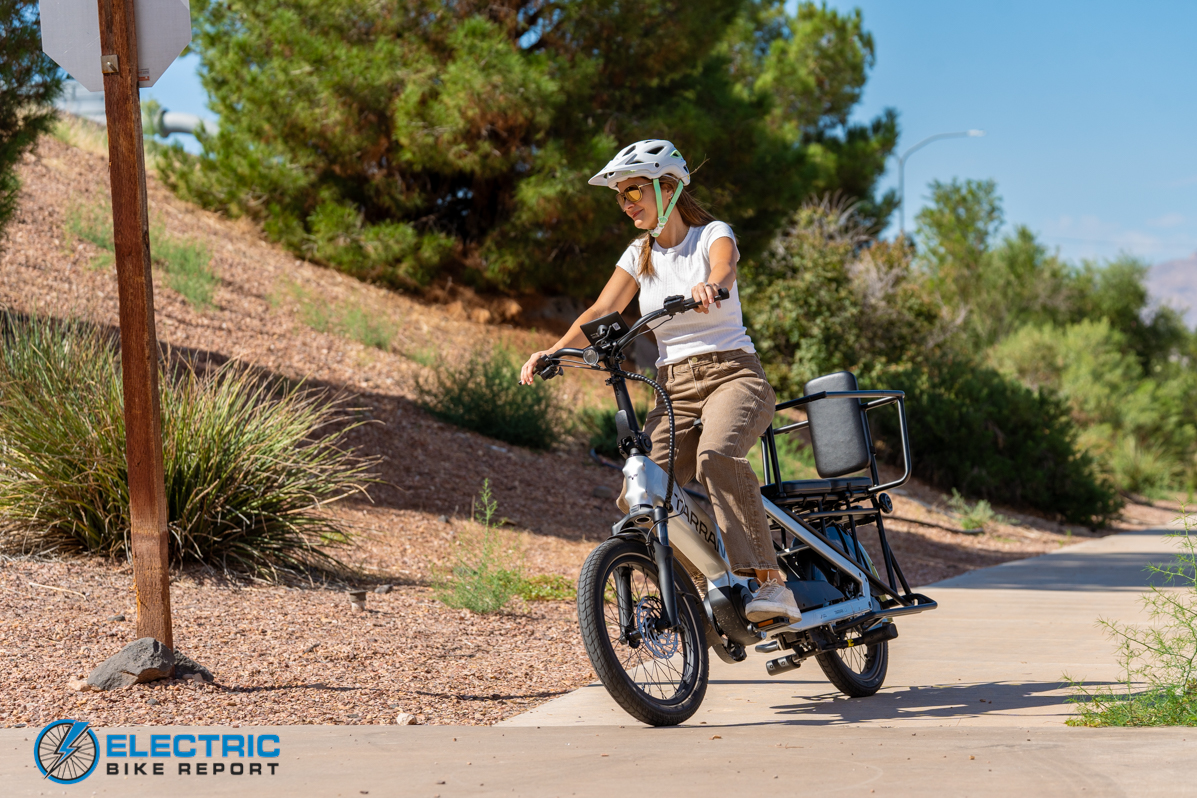
As a Class 1 e-bike, the Tarran L1m offers pedal-assist-only to a maximum of 20 mph.
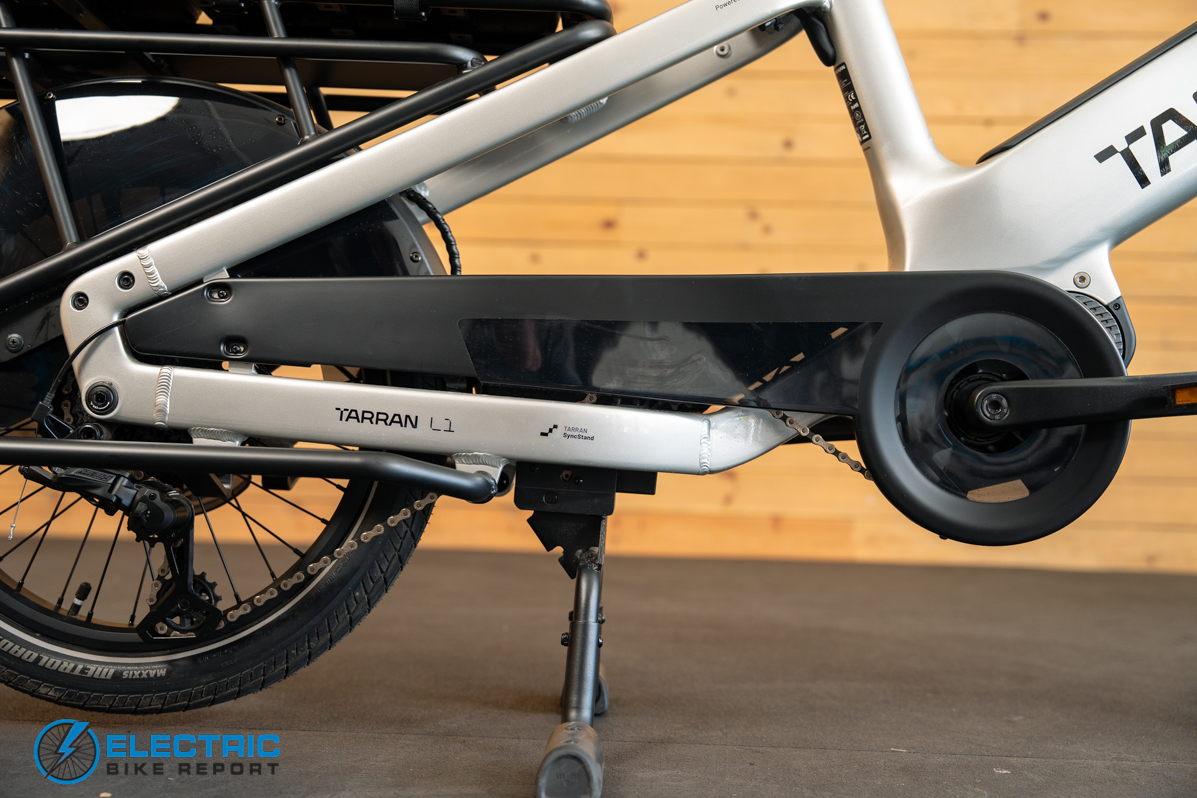
A chain guard covers the 10-speed Microshift Advent X drivetrain.
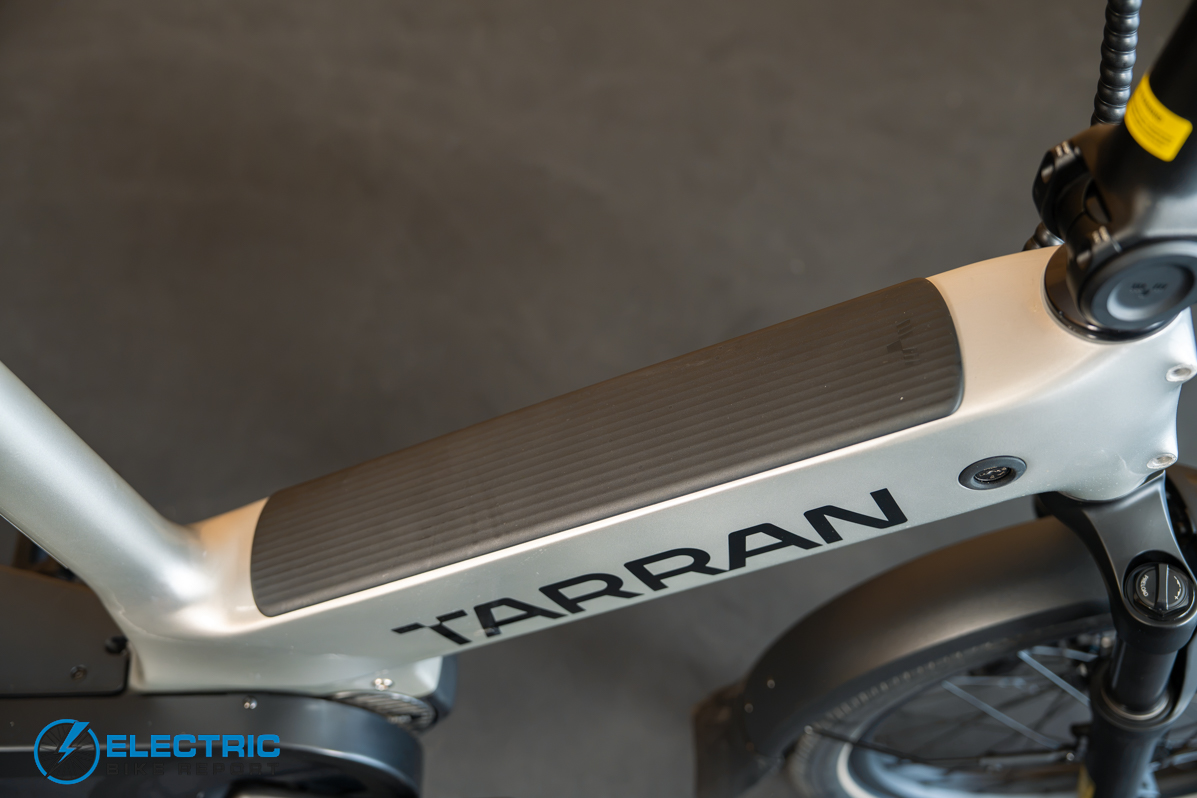
The bike’s 693 Wh battery gives it solid, useful range—see our test section for details.
Tarran L1m Review: Range Test
The L1m’s performance in our Range Test was relatively average, showing that it is both capable and appropriately specced. We performed two range tests where we pedaled the bike until its fully charged battery was completely depleted: once using the Eco assist level, and again using Turbo.
The bike traveled 41.5 miles in its highest power level and 70.0 miles using its lowest, while similar longtail cargo e-bikes we’ve tested using the same method averaged 35.7 and 70.1 miles. Obviously, the largest difference was in the bike’s Turbo mode result; it exceeded the average by roughly 6 miles.
This difference was reflected in the bike’s energy consumption, calculated by dividing its battery capacity (in watt-hours) by its mileage. Our group of comparison models averaged 19.7 watt-hours per mile (Wh/mi), while the L1m used noticeably less energy at 16.7 Wh/mi. Its average of 9.9 Wh/mi in Eco is identical to the category average in low-assist.
Ultimately, the bike performed well here, despite our result falling significantly under the 105-mile maximum range Tarran advertises. Its real-world range is entirely usable for grocery runs, family outings, delivery work, etc. It’s also generous enough that most riders should get multiple trips or long rides from a single charge.
As always, it’s important to note that we perform our testing without added weight from cargo or passengers. Riders carrying a high payload should expect fewer miles than we achieved.
When it comes to recharging, the L1m includes a relatively standard 3A charger that can fully recharge the 14.7 amp-hour (Ah) battery in a reasonable five hours. Riders who are using the bike for delivery work may consider upgrading to the optional 8A charger, which can bring the battery to 80% in 1.5 hours or recharge it fully in 2.2 hours.
Sponsor
Sponsor
Tarran L1m Review: Hill Test
We tested the L1m’s climbing power using its highest pedal assist level at our standard Hill Test location, called the Devil’s Backbone (explained above). Our test rider, Justin, finished this test in a respectable 2:13 while averaging a speed of 13.6 mph.
Comparing the Tarran’s result to those of other cargo e-bikes is relatively difficult, as most other models we have tested had rear-hub motors instead of mid-drives. The rear-hub motors found on cargo e-bikes are typically more powerful than mid-drives, and deliver power differently, thereby making them much faster on hills.
Case in point: this full group of similar models completed their hill tests in an average of 1:56, over fifteen seconds faster than the L1m—despite the Tarran being capable and well-equipped for its role.
At the time of writing, we have only tested two other mid-drive-equipped cargo e-bikes at the Devil’s Backbone, but both were slower. These bikes completed their pedal tests in 2:19 and 2:29, respectively, making the L1 slightly to significantly faster.
When compared to these other mid-drive cargo models, the L1m is middle-of-the-road in terms of weight, but its motor is the most powerful of the bunch. It can produce 750W of peak power and 100 Nm of torque, while the other bikes were somewhat more limited at 600-700W peak and 85-90 Nm of torque.
The L1m’s power was enough to give it a solid score in our Hill Test, but in addition to this formal measure of its climbing abilities, I tested it again at our secondary location, Pilot Hill. My first trip felt active and engaging while also feeling remarkably pleasant and easy.
On a second trip up the hill, with my coworker Ryan as a passenger, the trip was noticeably slower, and required a bit more input from me, but it handled the hill like a champ. The bike’s gearing range was wide enough that I dropped to a low gear and spun my way to the top of the hill with moderate effort.
Clearly, the L1m is well-suited for its role as a cargo and family bike. It’s plenty capable of carrying a full payload, even up and over some steep and intimidating hills.
Sponsor
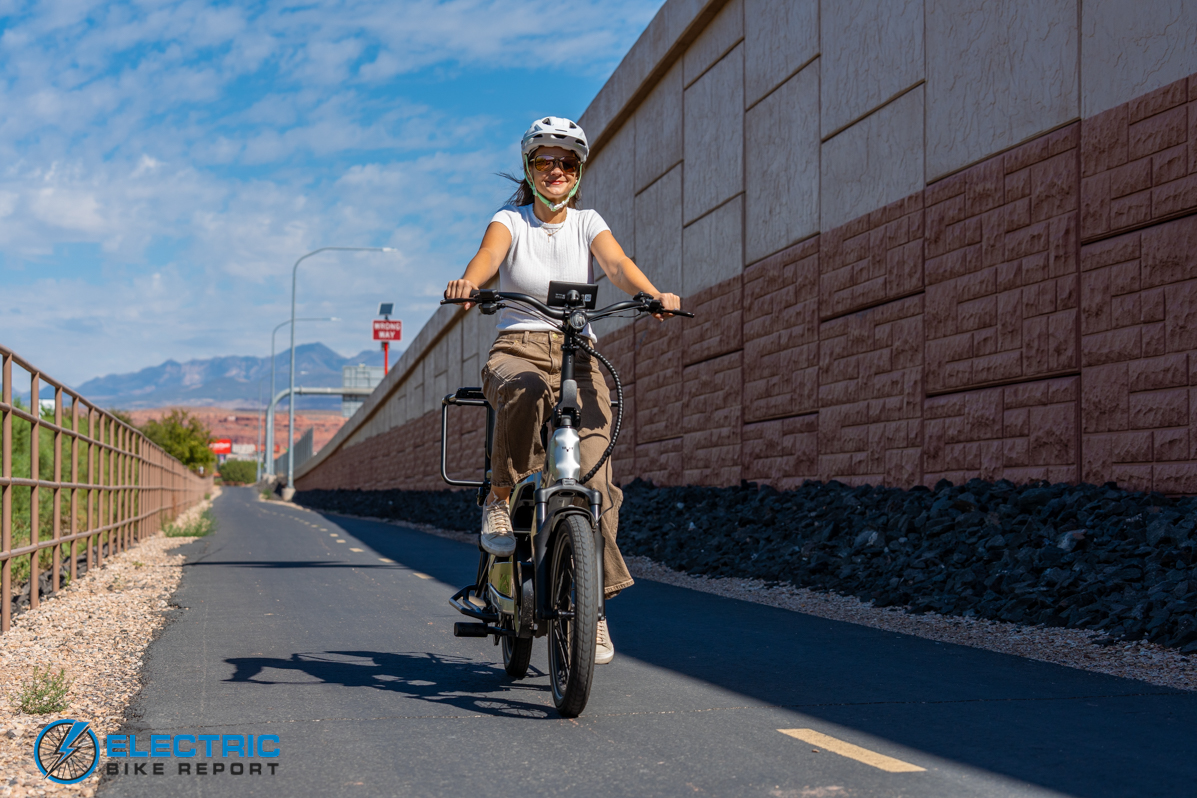
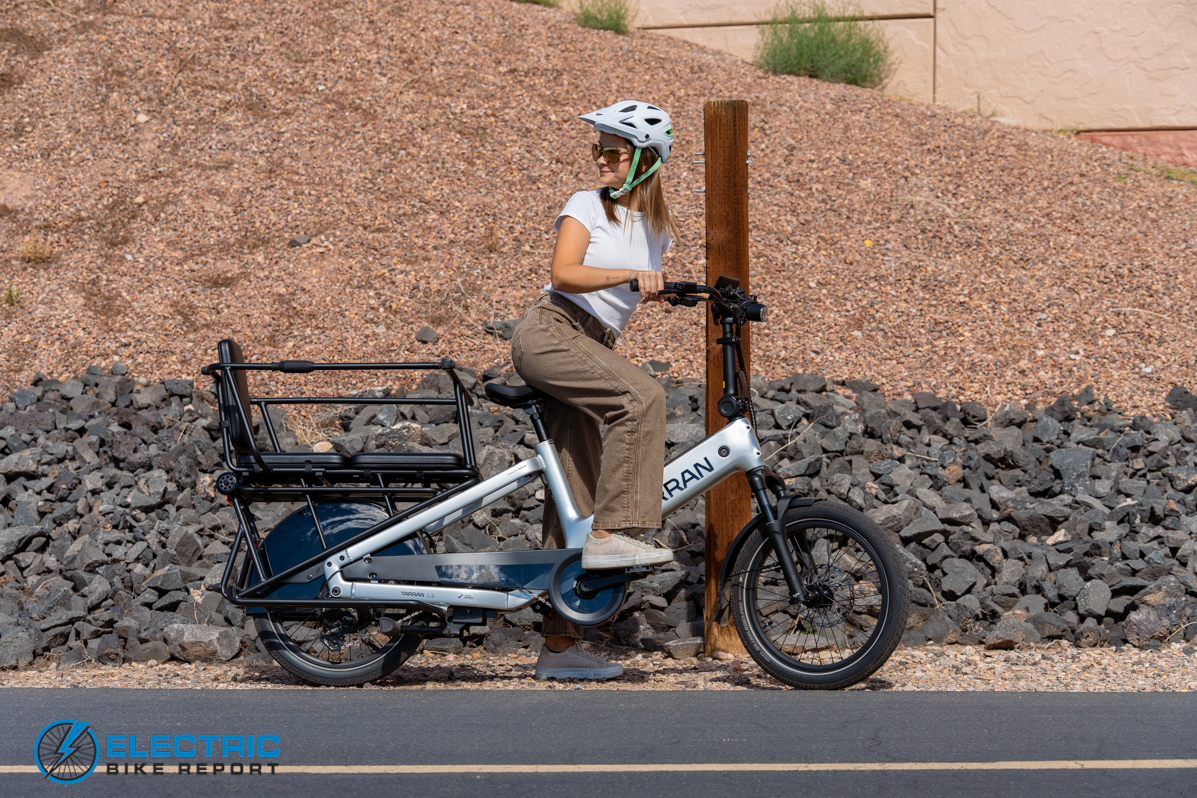
The L1m is highly adjustable, fitting riders from 5’1″ to 6’5″.
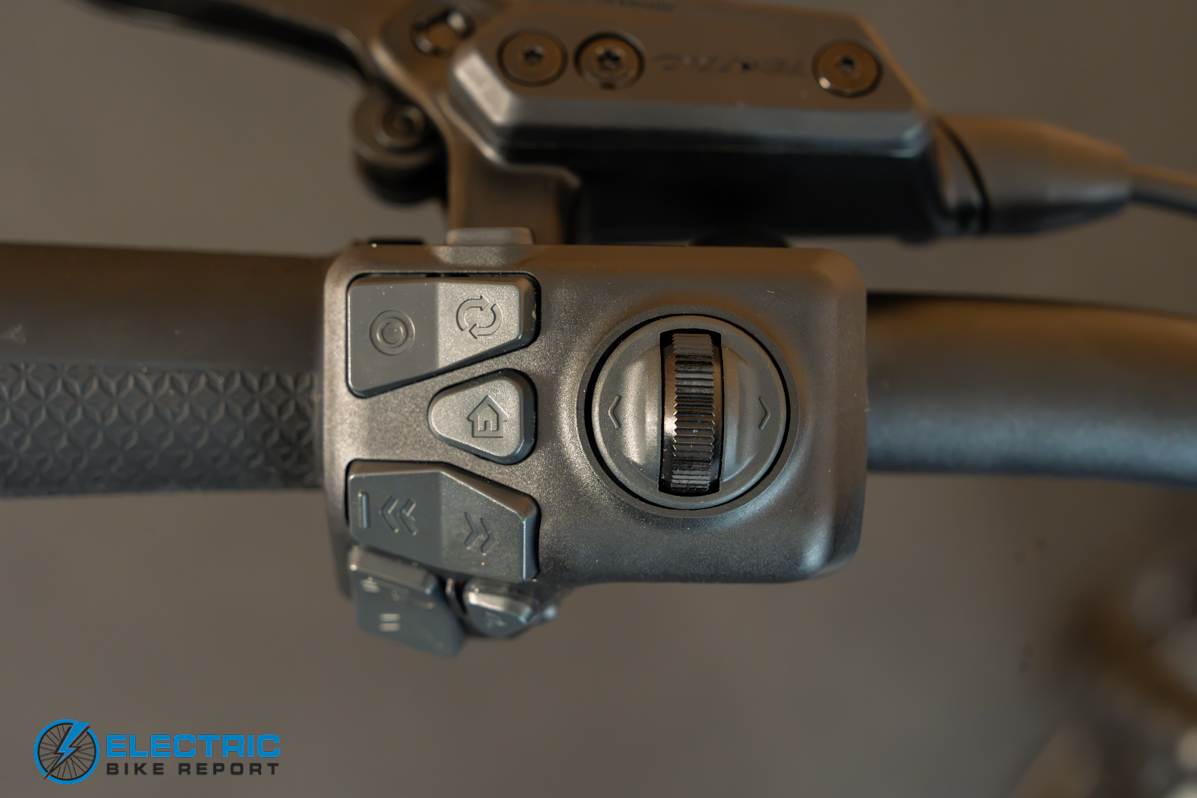
Many of the control panel’s buttons only function when upgrades are added; new riders may need some practice.
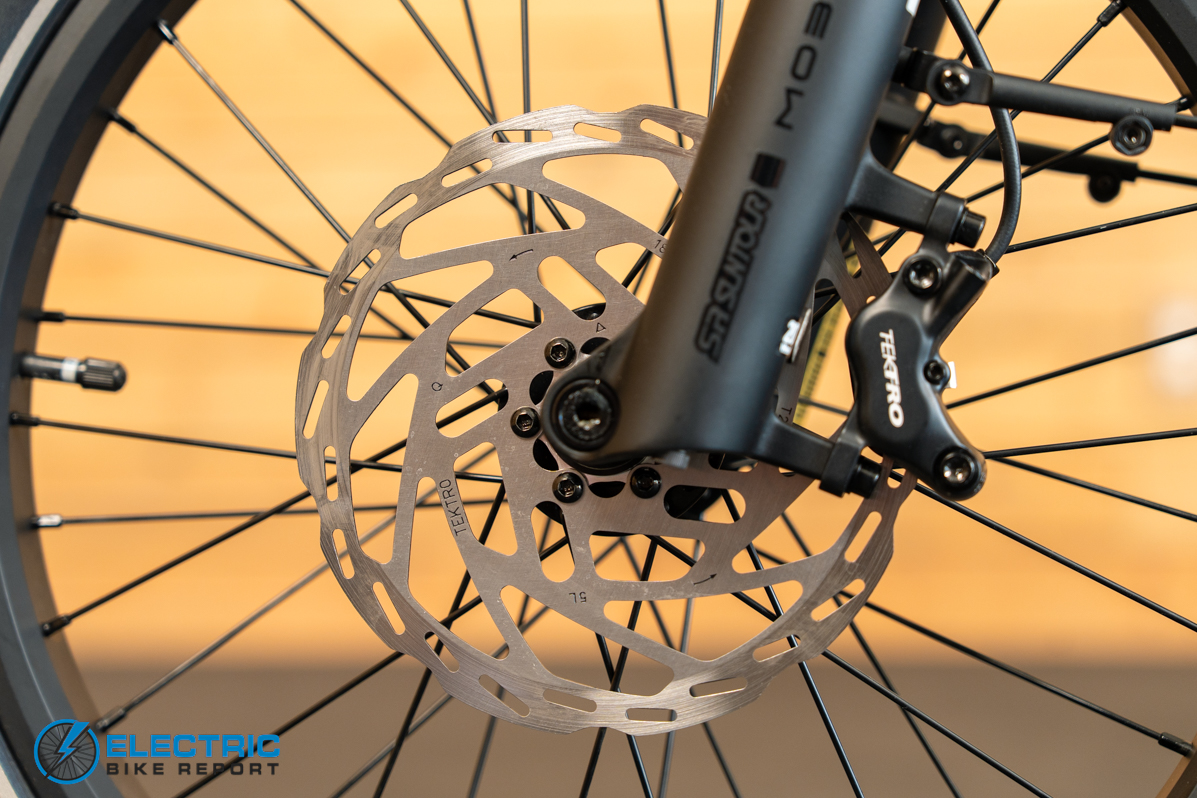
Four-piston Tektro brakes, 2.3mm-thick rotors, and 20″ wheels give the L1m remarkable braking power.
Tarran L1m Review: Brake Test
Our Brake Test was an area of massive success for the Tarran L1m, though that did come with a caveat.
We tested it by bringing the bike up to 20 mph, applying the brakes as it crossed a set of traffic cones, then measuring the distance it traveled as it came to a controlled—but fast—stop. Our tester, Michael, performed three separate tests using this method, then we averaged the results to smooth over any inconsistencies.
The L1m’s average stopping distance was just 14’11”, making it not only the fastest stopping cargo bike—but the fastest stopping e-bike—we have tested to date. For context, other longtail cargo e-bikes we’ve tested averaged 19’4″, which is still very strong when compared to most other styles of e-bikes.
It’s relatively easy to pinpoint the reasons for the L1m’s success; it has a trifecta of strengths that correlate with impressive performance in this test.
First, the bike is equipped with powerful 4-piston brakes: the HD-T5140 hydraulic disc brake system from Tektro. Compared to 2-piston systems, this brake set uses larger brake pads that apply more even pressure to the rotors when the brakes are engaged.
Second, the L1m’s 180mm front and rear rotors are thicker than average, at 2.3mm (versus more common 1.8mm-thick rotors). These rotors can absorb more heat, which allows the brakes to maintain strength after repeated use.
Third, the L1m has 20″ diameter wheels—a common feature on cargo e-bikes. This keeps the bike’s center of gravity low, and also grants its brake calipers more leverage than they would have on a bike with larger wheels.
The caveat I mentioned relates to the L1m’s adjustable stem. Tarran selected a stem with a dual-stage mechanism at its rotating base that includes both a quick-release lever for convenient adjustments and a set of interlocking safety teeth for secondary security.
While it may be isolated to our test bike, we noticed that the cam mechanism at the base of the stem moved under braking (when weight shifted to the front wheel), despite the quick-release being tightened properly. Fortunately, the secondary mechanism engaged to prevent our testers from suffering any harm.
We were able to tighten the stem so that the quick-release held strong, but this effectively eliminated its adjustability; the lever became too tight to use. If this problem is not limited to our test bike, we encourage Tarran to use either a different cam stem (we’ve had a good experience with a model from ZIHRD) or a static stem paired with BMX-style handlebars, which would offer similar adjustability (albeit without the quick-release mechanism).
We appreciate Tarran’s intention with the component they selected; as we’ll cover in the next section, the bike’s adjustability is a highlight. The company has also proved willing to hear feedback and make changes if needed; after our review is complete, Tarran will inspect our returned test bike and provide feedback.
Stem issue aside, the L1m’s braking performance was excellent, proving that the bike is specced appropriately for its size, weight, and purpose.
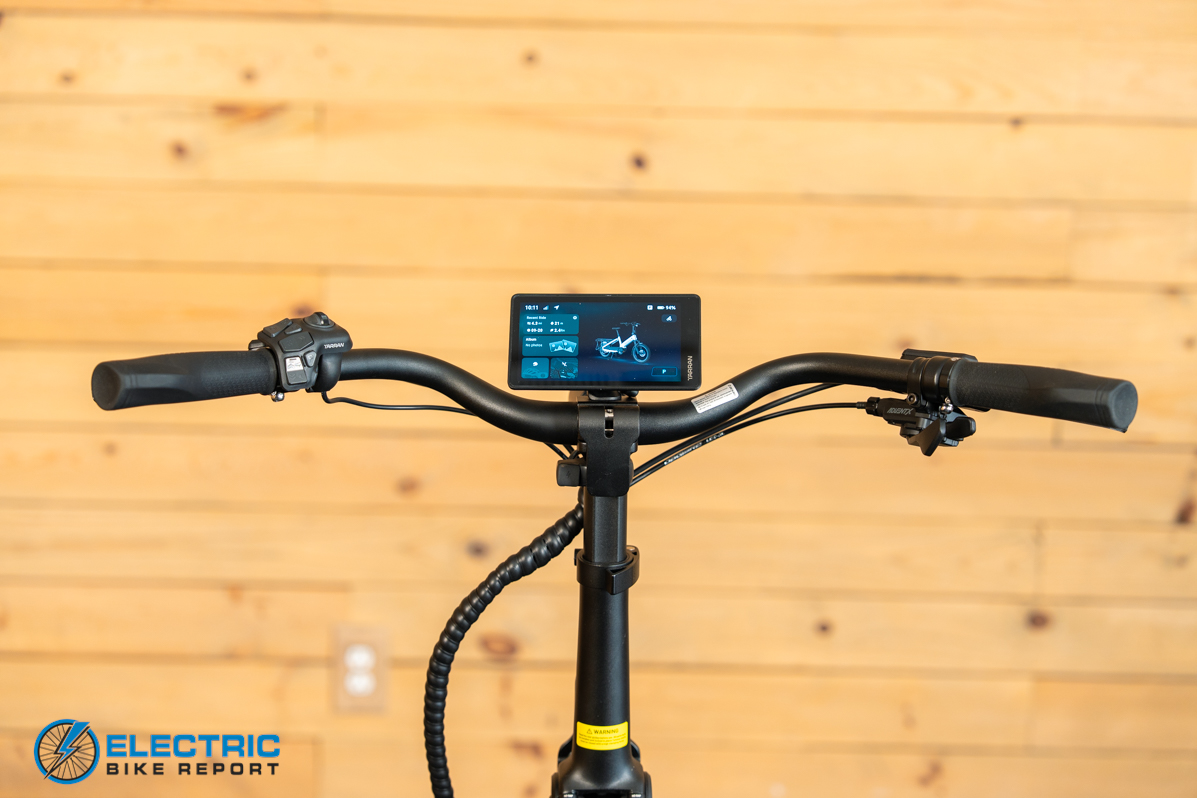
A large color touchscreen display dominates the cockpit, showing loads of useful ride data.
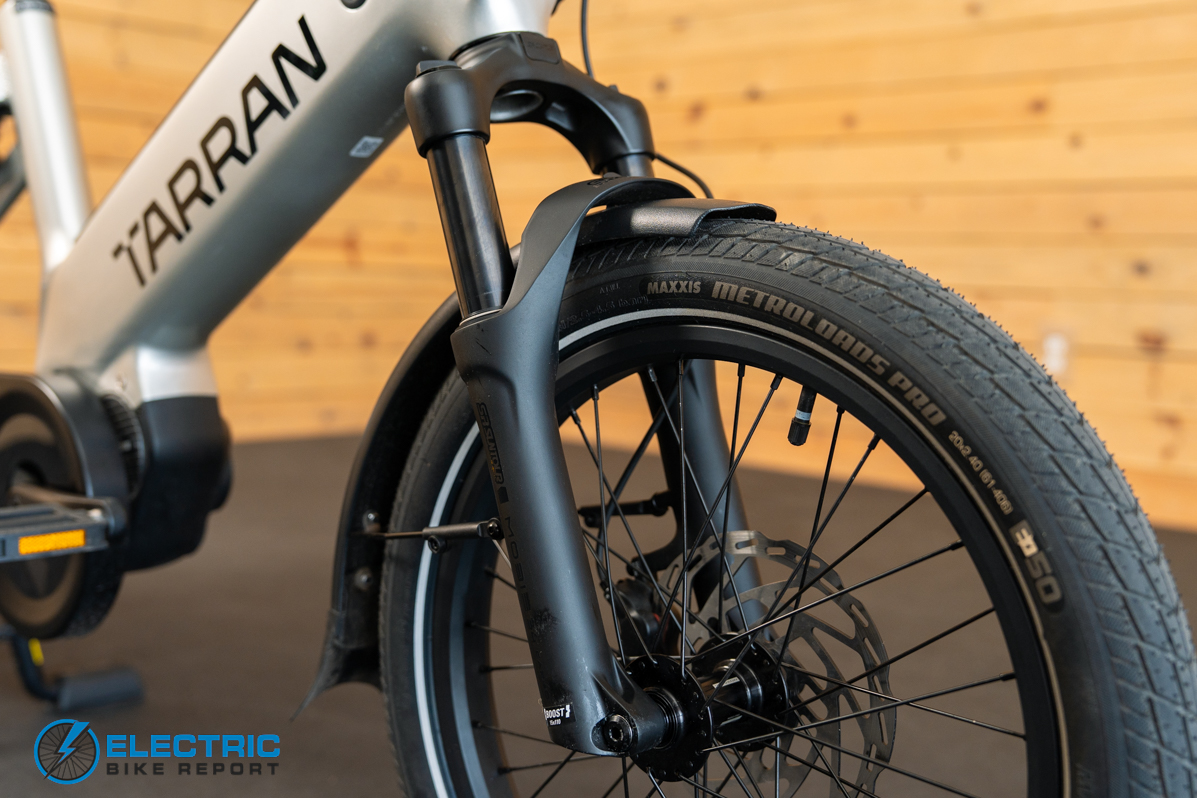
The Suntour Mobie suspension fork felt sturdy and effective at smoothing bumps.
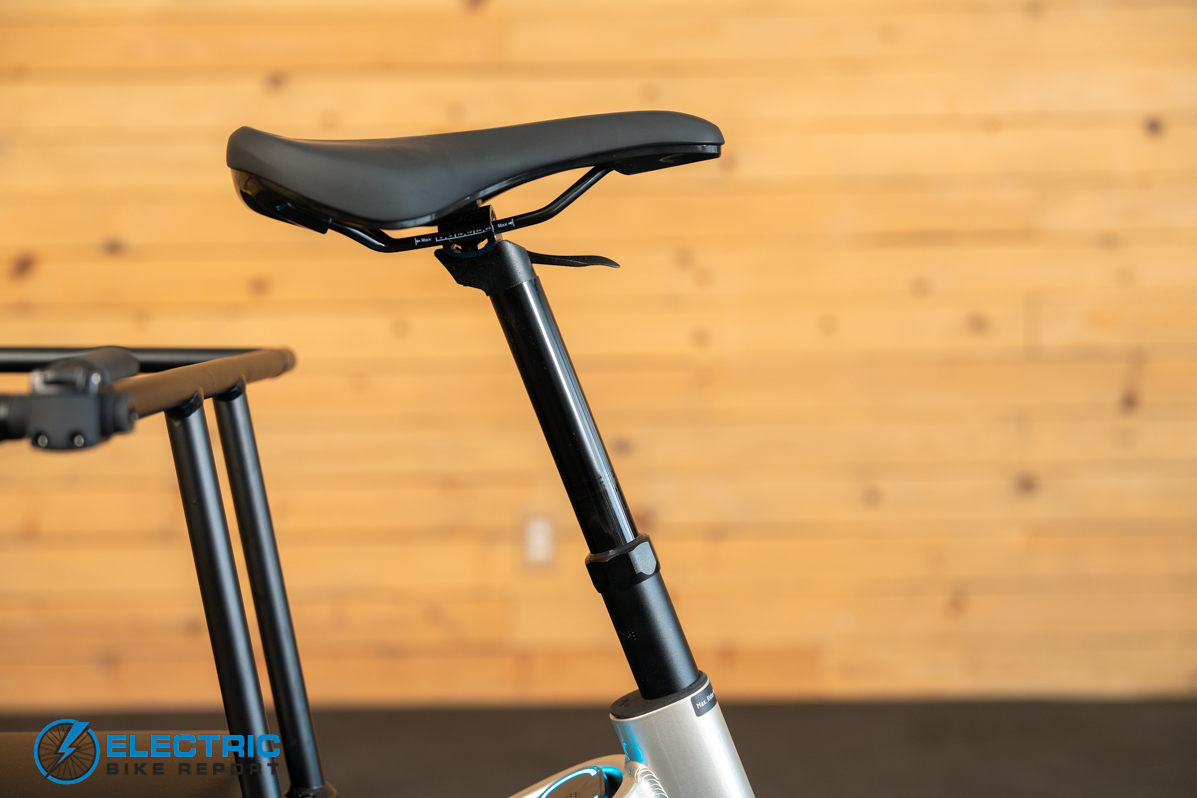
The L1m’s dropper seatpost uses a quick-adjust lever, while the upgraded model features an electronic mechanism.
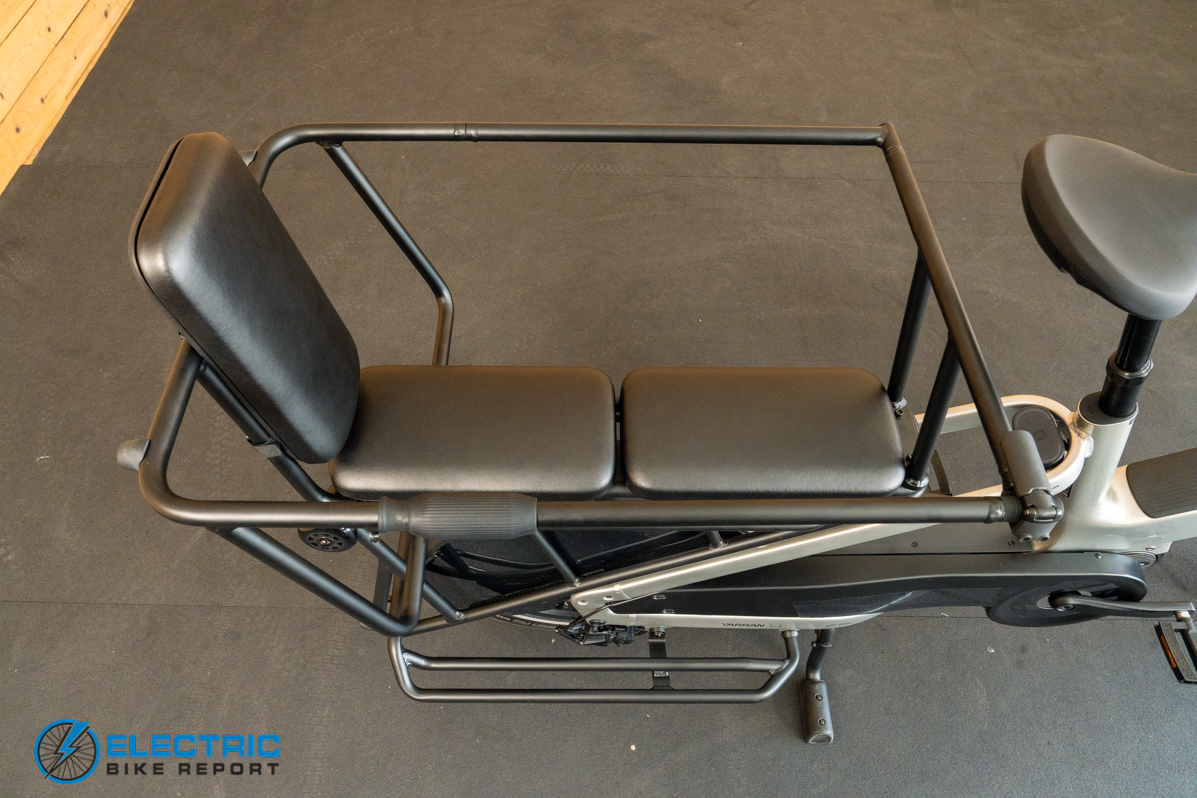
Tarran sent the pictured child passenger kit, including a hinged handrail, to equip on our test bike.
Tarran L1m Review: Ride Quality
As we’ve seen the Tarran L1m performed well in our standardized performance testing, but in this section, we’ll dive deeper into the subject of how the bike feels to ride. Overall, it delivered a comfortable, high-tech experience, though it’s not without some room for improvement.
Sizing and adjustability are major highlights of the bike. Its single frame size accommodates riders from 5’1″ to 6’5″ through a myriad of adjustment points. As with nearly all e-bikes, the L1m’s saddle can be adjusted on its rails, and it offers height adjustment at the seatpost—150mm of length, plus an additional 150mm via the included quick-adjust dropper.
On the front end, a telescoping stem also allows for rotation adjustment to change the bike’s reach, and another quick-release clamp on the top of the stem allows the handlebar angle to be adjusted. All in all, it’s one of the most adaptable e-bikes I’ve had the chance to ride, with plenty of ways to ensure a comfortable fit.
The 80mm suspension fork and 2.4″-wide tires did a great job of keeping the ride smooth. As for contact points, the bike’s ergonomic rubber grips and sport-style saddle felt well-balanced between soft and supportive. I’d likely swap out the grip-tape-coated pedals for a set of studded platforms for extra grip, but the default setup felt great otherwise.
In terms of handling, the L1m steers and corners predictably. With Ryan onboard as a passenger, some frame flex was noticeable, but not to an unusual degree. Starting up while carrying a full payload felt somewhat shaky, and I had to countersteer somewhat to compensate for some added pull to the side, but all of these characteristics are normal for a loaded longtail cargo bike.
As I’ve touched on above, the motor’s smooth, refined feel and seamless power delivery were highlights. At times, it was easy to forget I was riding an e-bike when going by feel—pedal assist often faded into the background. Even when carrying cargo, the bike felt natural and intuitive, though it was more clear then that the motor was doing a significant amount of work to make my experience easy.
The L1m’s user interface was another highlight, with the Tarran app and the bike’s touchscreen display combining to make the riding experience feel advanced and convenient.
The interface’s aesthetic looks clean, sharp, and well-organized. Riders have immediate access to ride tracking, bike settings, and, once paired with the app, navigation. When a route is planned via the app, it can be mirrored to the display—a cool feature that looks great, though it does require the paired phone to be left unlocked to work correctly. While this is a minor point of critique, I’d love to be able to close/lock my phone and keep it in my pocket while riding.
That limitation aside, the app is extremely useful. Since the L1m is connected to 4G/LTE networks, the app can be used to track its location and monitor movement notifications when the bike is set to Sentry Mode. Perhaps most importantly, the app can be used to lock/unlock the bike, which I found a slightly more user-friendly solution than using the included NFT security cards.
FYI, about the LTE connectivity—these features are free for the first year of ownership, but like other bikes with this feature, an annual subscription (around $50) is required for subsequent years.
As I touched on in the introduction, the Tarran L1 comes in two spec tiers: the m (Manual) base model, and the fully-equipped s (Superior) model. Both are equipped with the same base specs, though the Superior model features an auto-shifting Enviolo CVT, an electronic dropper post, turn signals, onboard cameras, and a self-deploying motorized kickstand.
Owners of the L1m can add on many of the Superior’s features to upgrade the bike over time, which is great for buyers who don’t want to spring for the $6k+ model right out of the gate.
Overall, the bike’s control panel may present a bit of a learning curve to new riders; it’s loaded with buttons and even a dial—the functions of which aren’t immediately apparent. Fortunately, the bike’s operation is relatively straightforward once you understand the button layout, but buyers should be aware that, without the Superior model’s add-ons, many of the L1m’s buttons don’t function, since they have nothing to operate.
I appreciate the fact that Tarran divided the bike into two models, both for riders with lower budgets, and those who simply don’t need some of the top-tier features.
My only real point of critique here is that, considering the fact that many riders of the L1 will be carrying child passengers and riding on streets, the base model doesn’t include turn signals. I encourage Tarran to outfit the bike with these going forward—which could be easy, considering that its taillight seems to have the option for integrated turn signals already.
Otherwise, the bike feels worth its price, with a connected, comfortable, and premium user experience. It arrives fully functional as a cargo bike, though many riders will likely need to outfit it with some of Tarran’s wide range of optional accessories to get the most from it. As you might expect, this will add cost to the bike—so plan accordingly.
One final note is that the L1 can stand and roll vertically for storage in relatively small areas. This allows the bike to reduce its footprint and take up less space, which is extremely convenient for those without a garage or large living space.
Sponsor
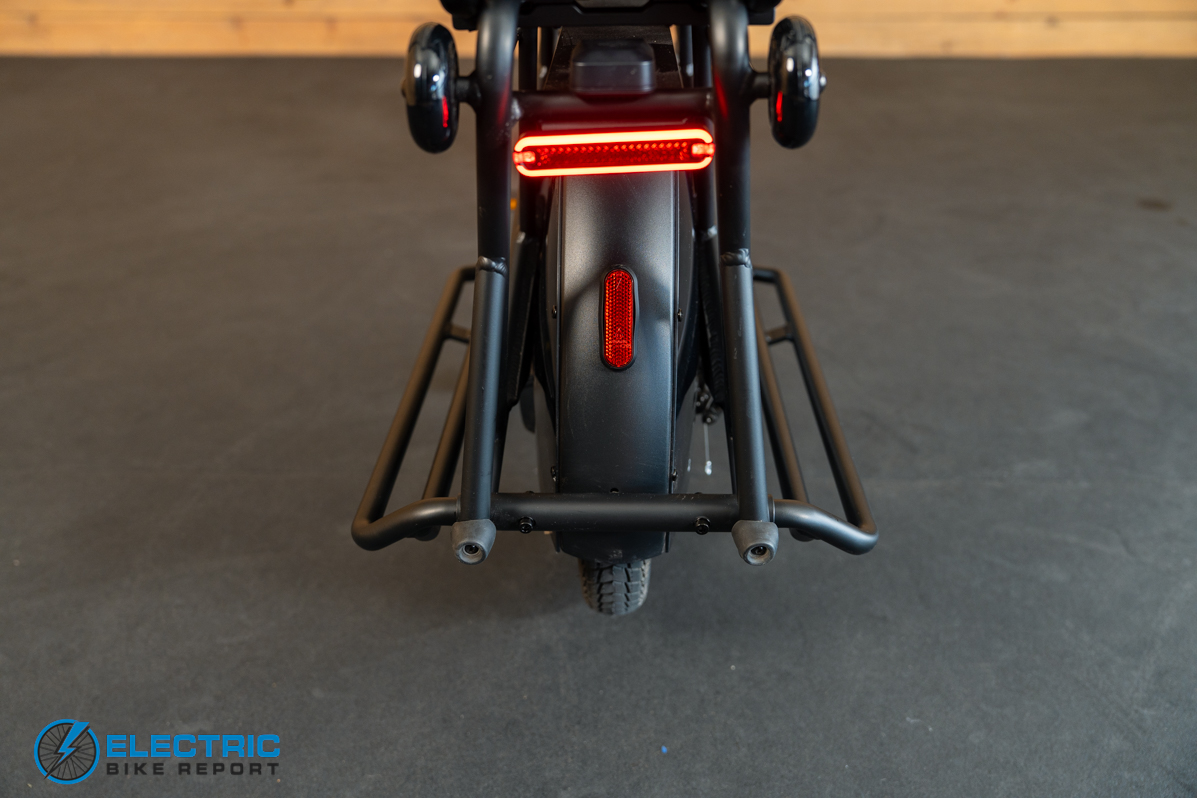
While the bike doesn’t have lever-activated brake lights, the tail light gets brighter when it senses deceleration.
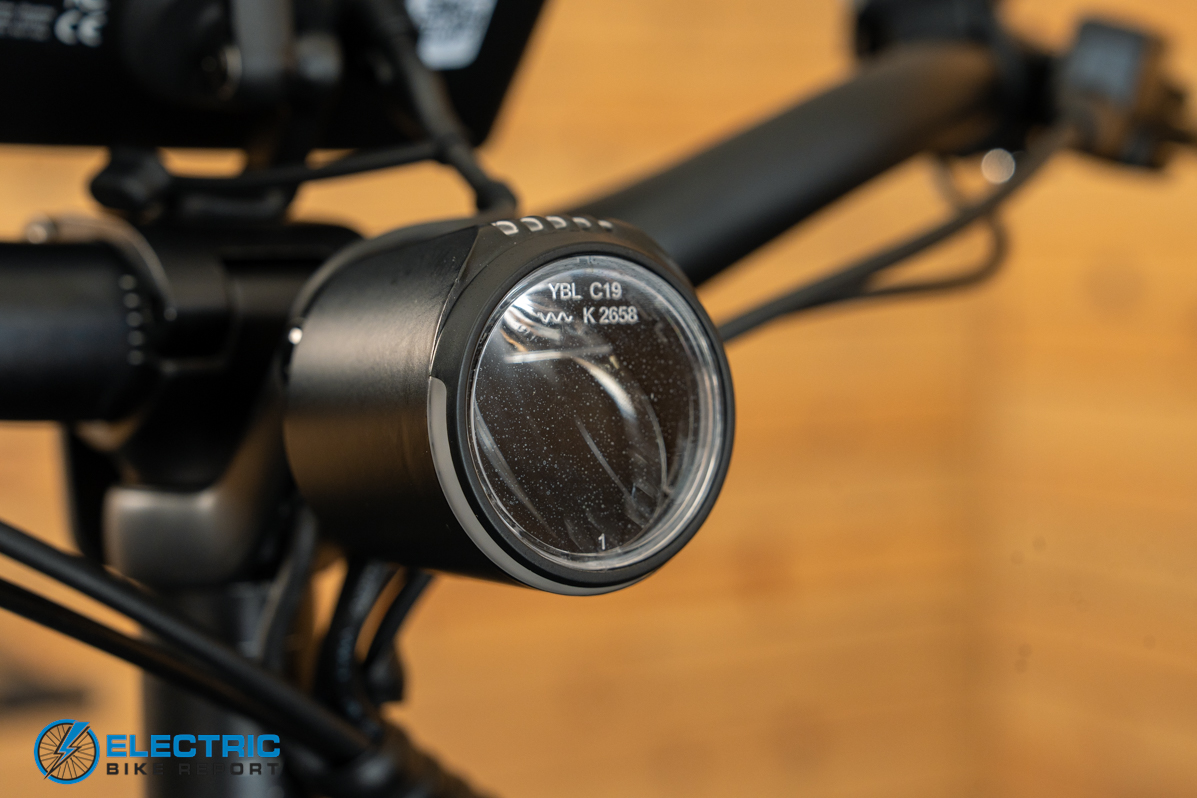
The integrated LED headlight includes low and high beams for visibility.
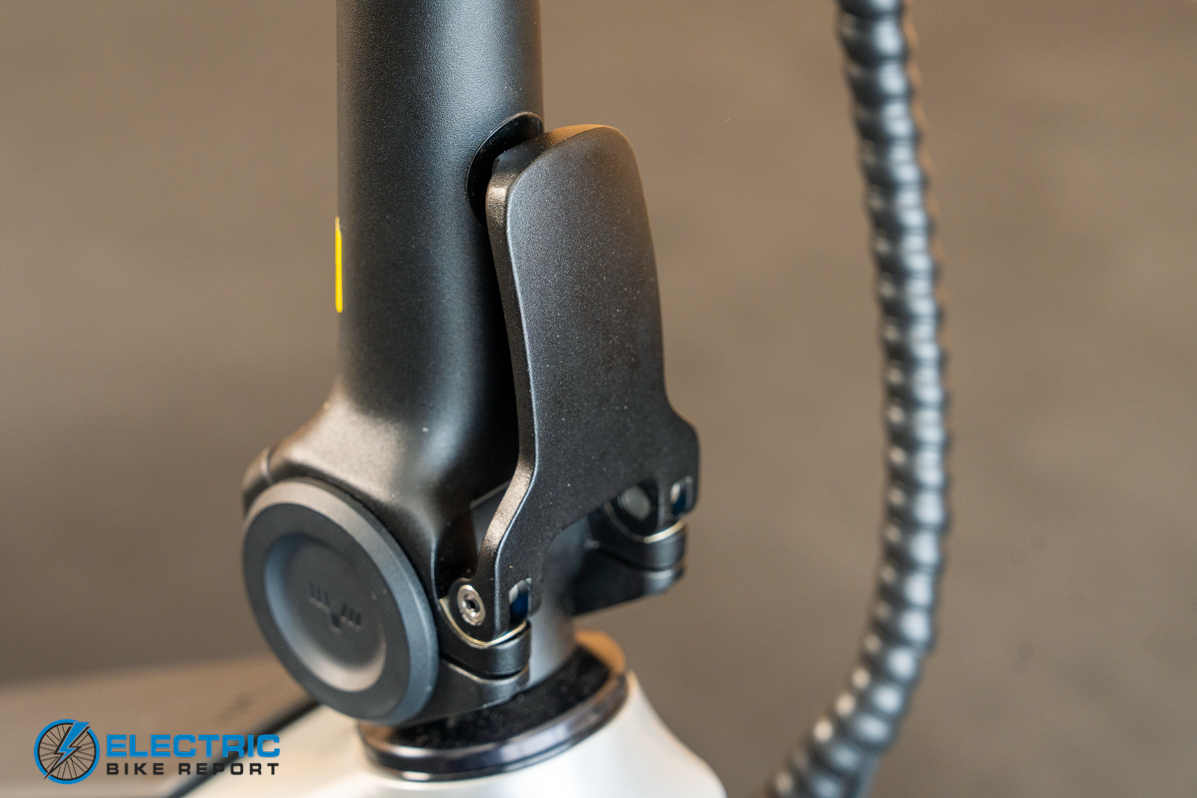
The stem’s cam mechanism includes a quick-release lever and a secondary set of interlocking teeth for security.
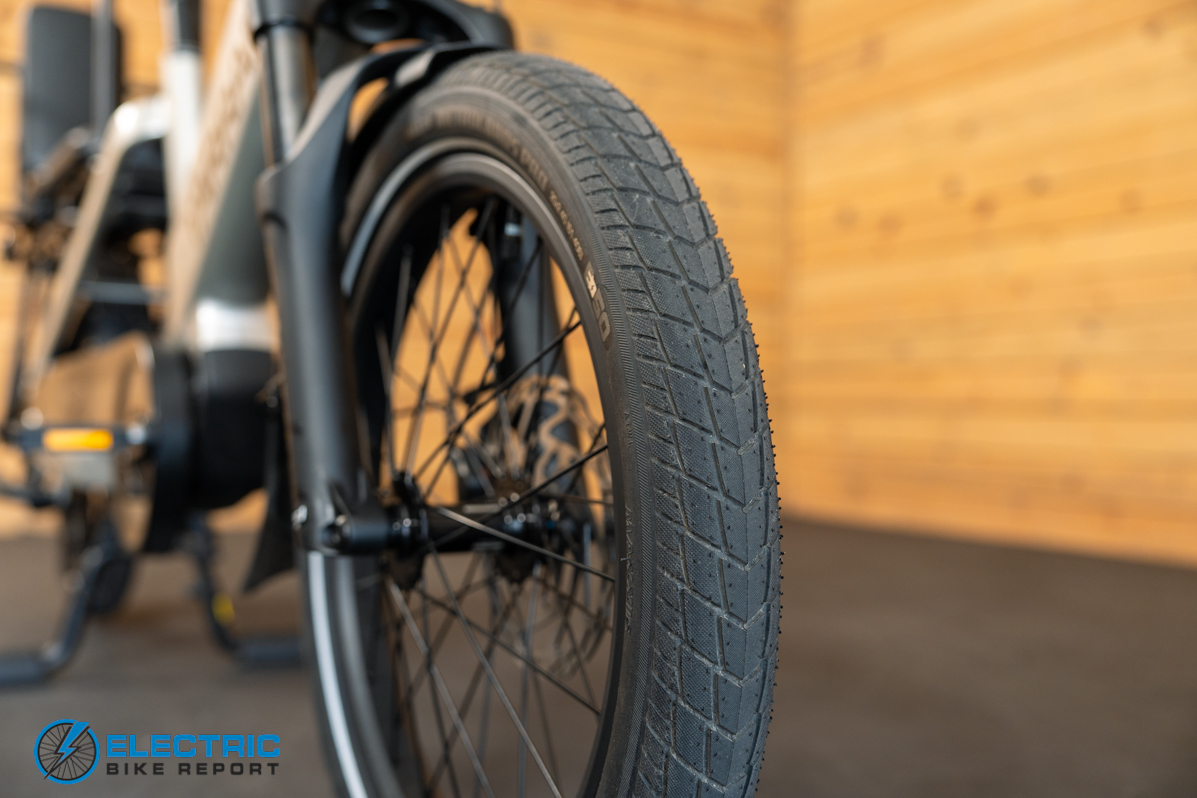
20×2.4″ Maxxis tires keep the bike feeling stable and maneuverable while also smoothing the ride.
Tarran L1m Review: Summary / Where to Buy
We had the opportunity to get a sneak peek of the Tarran L1 at this year’s Sea Otter event in Monterey, California. At the time, the brand was unknown to us, and the bike had not yet launched, but we were intrigued by its potential. Now that we’ve had a chance to ride and test the L1m, we can confidently say that it holds a lot of promise.
With features like 4G/LTE connectivity, a locking centerstand, a touchscreen display, a responsive mid-drive motor, and a high enough payload capacity for an adult passenger, there’s no doubt that the Tarran L1m is one of the most high-tech, well-equipped, and secure cargo e-bikes we’ve tested to date.
It’s also a solid performer. As shown by our testing, the bike has smooth power delivery with intuitive programming, useful and completely usable range, strong climbing power for a mid-drive-equipped e-bike, and remarkably capable brakes. Additionally, it’s comfortable to ride, highly adaptable to various uses, and seriously upgradable for those who want even more advanced capabilities and features.
As with any e-bike, it still has some areas with room for refinement. We encourage Tarran to make some small quality of life improvements by including turn signals on the base model and streamlining the screen mirroring feature when using navigation. Additionally, if the stem issue we encountered is not limited to our test bike, we suggest that the company make a switch to a sturdier option.
Otherwise, the Tarran L1m is sure to appeal to riders seeking a premium e-bike with the ride quality and performance to effectively substitute a car. Whether used for delivery work in a city where theft is a risk or simply as a daily errand-runner for family outings, this e-bike is equipped to handle the demands of high-capacity hauling while providing a refined user experience.
Happy Riding! Make sure to let us know if you have any questions or if you think we left anything out in this review of the Tarran L1m down in our comments section.
Sponsor
Sponsor
Reader Interactions
Leave a Reply