Lectric XPress Lite Review | Lighter On Your Arms & Wallet
Oct 13, 2026
 0 Comments
 Share
Share
The XPress Lite is a mid-weight urban e-bike with an affordable price tag and a simple but customizable experience.
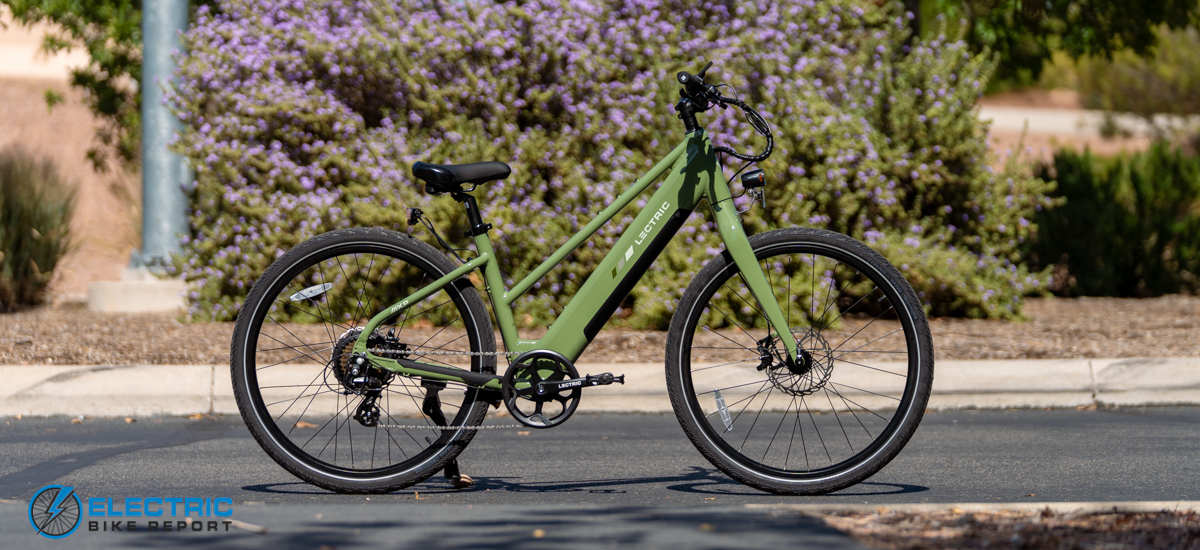
Let’s be honest: not everyone needs an e-bike that’s decked-out with loads of features and accessories. Some riders, for example—especially those who prioritize portability, ease of use, and maneuverability—might opt for a simple, light-to-mid-weight city e-bike instead of a fully equipped but heavy commuter.
If you’re in that camp, the Lectric XPress Lite might be the bike for you.
This e-bike has a fair amount of overlap with Lectric’s XPress2 commuter/cruiser, but trades its heftier sibling’s suspension fork, fenders, cargo rack, large battery, and highly powerful motor for a slimmer, lighter-weight, and slightly more stripped-down design.
The XPress Lite is equipped with a 500W rear-hub motor that offers both torque- and cadence-sensing pedal assist. The bike’s assist system is a huge highlight; paired with the bike’s manageable weight of around 54 lbs, it offers a wide range of power levels to choose from, including analog-like low-power settings and relaxed full-power modes.
In short, it aims to offer a simplified experience—while still being useful and highly adaptable to its rider’s preferences and style. Importantly, it’s also remarkably affordable, with a price point of around $1,100 (at the time of writing). This makes the XPress Lite Lectric’s lowest-priced full-size non-folding e-bike.
At a time when gas prices and the general cost of living seem to only get higher, that sounds like a pretty appealing deal in our book.
Of course, we’ve only covered the basics so far; there is far more to investigate in terms of the XPress Lite’s performance and ride quality. In this review, we’ll explore and explain its results in our usual series of standardized tests. We’ll also compare its performance with that of similar models to help you pick the best bike for your needs and budget.
Scroll down for more information and detail about the Lectric XPress Lite!

Sponsor
E-Bike Category:City
E-Bike Class:Class 1 (pedal assist to 20 mph)
Class 2 (throttle to 20 mph)
Class 3 (pedal assist to 28 mph)
Class 2 (throttle to 20 mph)
Class 3 (pedal assist to 28 mph)
Sponsor
Lectric XPress Lite Video Review
 Pros
Pros- Affordability! As the entry-level XPress model, the Lite offers a budget-friendly, feature-light alternative to the XPress2.
- It has a wide range of experiences, from relaxed to exercise-focused. The bike has a wide range of power levels, as well as both torque and cadence-sensing assist modes.
- The bike feels planted, but its handling is also responsive and sharp, with a lively motor and a high level of agility.
- It offers a great balance between options/features and ease of use; the bike is well equipped and largely adaptable, while also being easy to simply hop on and ride.
- Lite also means (relatively) lightweight; at around 54 lbs, this version of the XPress is far easier to lift and transport than its costlier 72-lb sibling.
- The XPress Lite’s mid-step frame feels both sturdy and easy to get on and off. There’s also plenty of adjustability in saddle height.
- Like many of Lectric’s other models, the bike includes a clean, appealing, and easy-to-read color display.
 Cons
Cons- The 5’4″ to 6’4″ height range should work for most folks, but the bike’s single frame size and 275-lb payload capacity may be limiting for short or heavy riders.
- The battery charge meter drops in increments of 10%. We encourage Lectric to use a more granular and accurate readout in the future.
ELECTRICAL SPECS & FEATURES
- Battery: 48V, 374.4 Wh (7.8 Ah)
- Charger: 48V, 2A smart charger
- Display: Detachable 3.5-inch TFT color display
- Motor: 500-watt nominal brushless gear hub motor (864-watt peak) with 61.2 Nm of torque
- Headlight: Integrated LED, 90 lumen
- Taillights: Integrated Star Union rear light with running light, brake light, and turn signals
- Pedal Assist: 5-Level PAS – Eco, Tour, Sport, Sport+, Turbo
- Claimed Range: Up to 45 miles
- Throttle: Left thumb throttle
- App: None
- UL Certification: UL 2849 & UL 2271 Certified
Weight & Dimensions
- Claimed weight: 45.6 lbs (without battery)
- Tested Weight: 53.5 lbs (including battery)
- Rider height range: 5’4″ – 6’4″
- Total payload capacity: 275 lbs
Components & Accessories
- Brakes: NUTT hydraulic disc brakes, 180mm rotors
- Fenders: Optional
- Fork: Lightweight aluminum front fork with quick release thru-axle
- Frame: Aluminum 6000
- Drivetrain: Shimano Altus 8-speed drivetrain with trigger shifter, 46T chainring, 11-32T freewheel
- Grips: Ergonomic Rubber, Lock-on
- Saddle: Custom sport saddle
- Handlebar: Aluminum, 680mm wide, 40mm rise, 31.8mm diameter
- Kickstand: Aluminum
- Pedals: Aluminum, quick release
- Tires: Chaoyang 27.5×1.95″, puncture-resistant, Slime installed to prevent flat tires
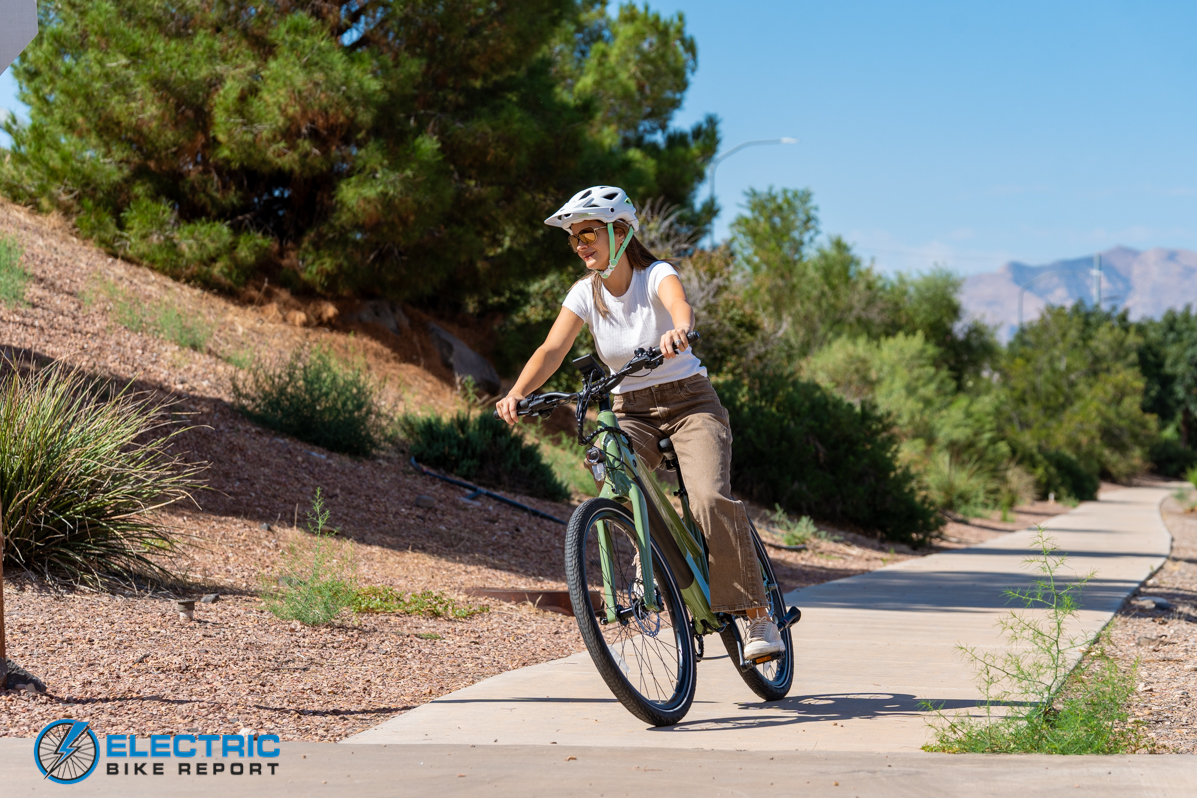
Switching between sensor modes, Classes, and torque profiles is easily done through the bike’s settings menu.
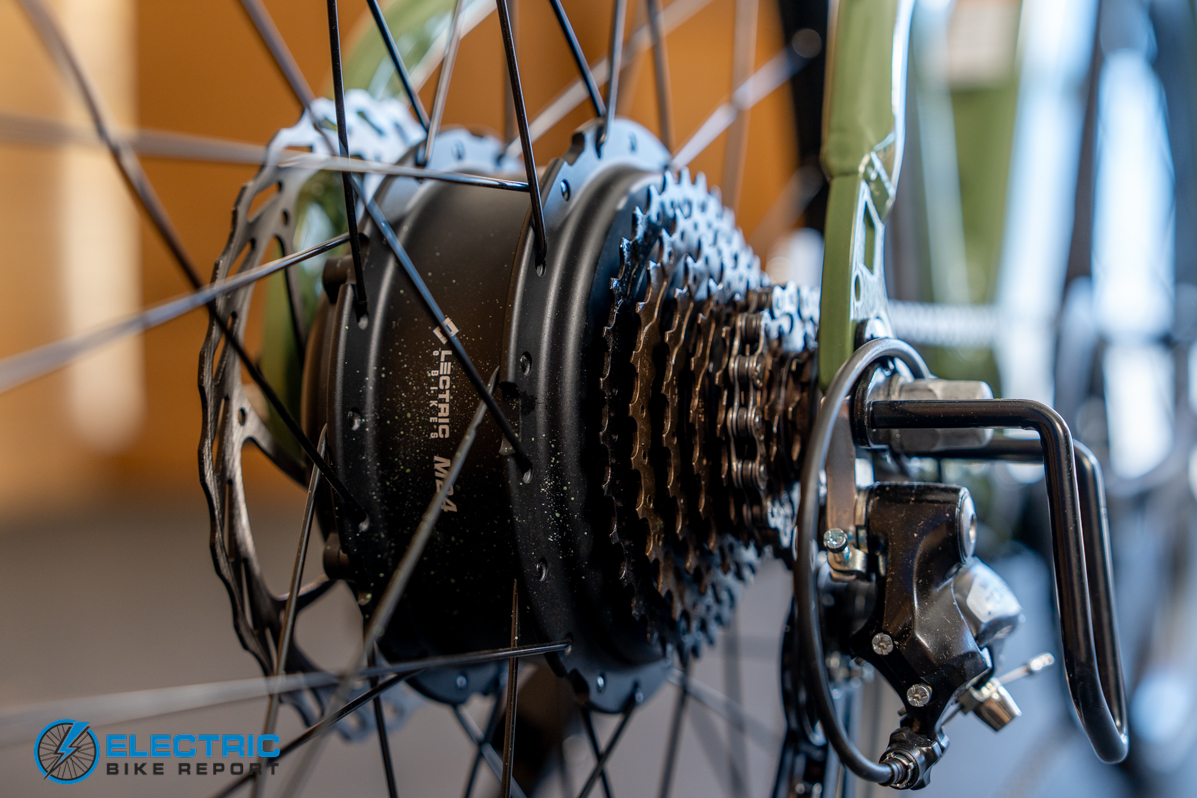
A 500W hub motor provides muscle when it’s needed without overpowering the ride.
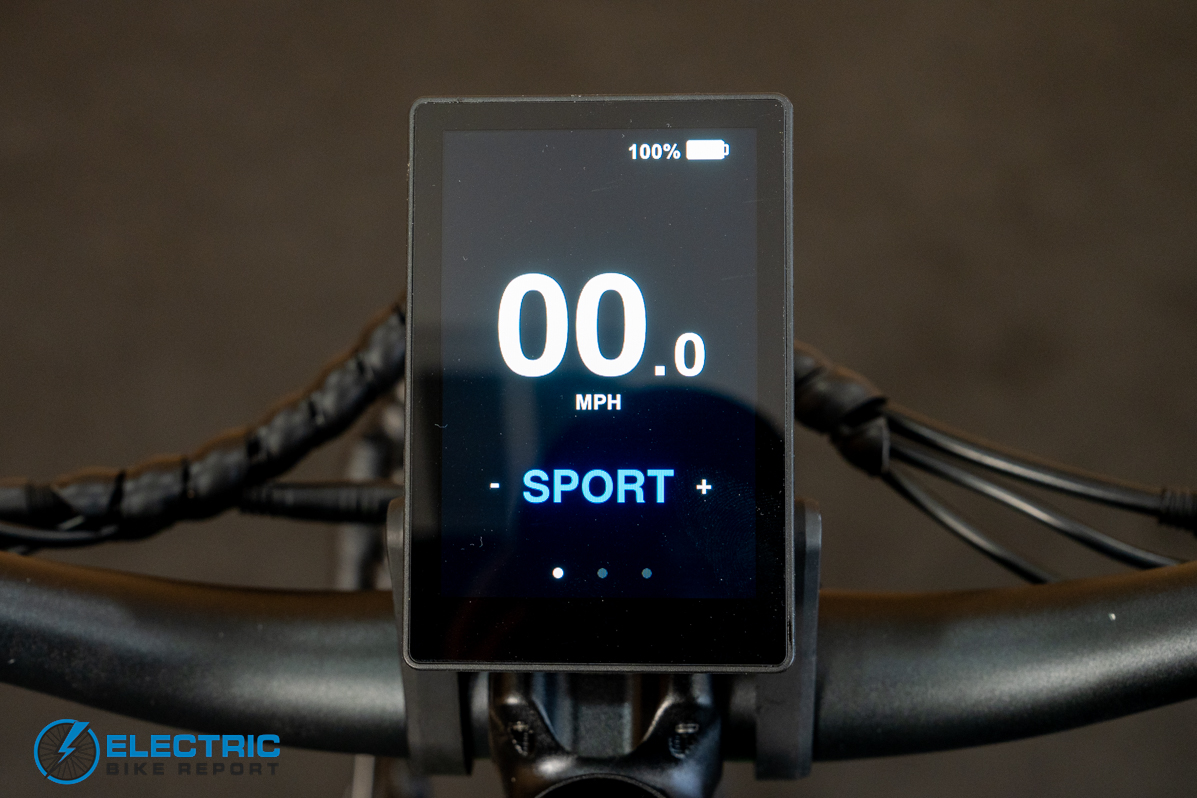
Lectric’s custom TFT color display is clean and easy to read.
Lectric XPress Lite Review: Speed Test
As a Class 1, 2, and 3-capable e-bike, the XPress Lite can be set to offer pedal assist to 20 mph, throttle to 20 mph, and/or pedal assist to 28 mph.
We tested its ability to reach these speeds in our Speed Test, while also measuring its average speed in each of its five assist levels. We recorded our findings in four different configurations, using both torque and cadence-sensing pedal assist with both maximum speed limits. Our results are shown above.
I started this test without pedal assist to get a feel for the bike’s weight and handling. Overall, it felt well-balanced. The bike’s 54 lb weight was noticeable when starting up, but once I was moving, the relatively slick tires and 8-speed drivetrain made pedaling generally comfortable. I wouldn’t want to pedal it uphill without the motor, but cruising a mile or two on flat ground if the battery dies wouldn’t be a problem.
One of the first things that stood out to me about the pedal assist system was the fact that, in torque mode, the XPress Lite’s two lowest power levels had a remarkably analog-like feel. There, the motor delivered helpful power that offset the weight of the bike and reduced the amount of effort needed to move the bike, but it didn’t completely overpower my input.
The higher assist levels delivered the experience we’ve come to expect from Lectric: a low-effort, highly rewarding feel with minimal pressure needed to achieve comfortable, quick speeds.
In cadence mode, pedaling was low-effort across the board; instead of responding to the amount of pedal pressure I applied, the motor’s output was steady and consistent. Lower power levels gave me relatively gradual acceleration and slow-building speed, while higher levels were faster and more urgent.
As for the XPress Lite’s power distribution, we saw a range of patterns, depending on the selected sensor mode and speed limit. In both Class 1 / 2 tests with a 20 mph maximum speed, the bike reached its limit in the three highest assist levels. This is relatively common on bikes with Class 3 capabilities; it shows that the bike had the power to easily reach higher speeds, but it was being held back.
In the Class 3 torque test, the data reflects my experience: there are two low-power levels with measured increases in power, followed by three higher assist levels that step up the power while still being progressive.
In the Class 3 cadence test, the speed/power increases were more consistent, with a tapering off toward the top end. In my experience, the bike didn’t fully reach the 28 mph ceiling, but generally held speed just below that limit after I gave it a bit of help.
I found the bike to be the most intuitive to use in Class 3 torque mode, and I relied most heavily on the second assist level, Tour. With these settings, Eco felt best for conserving power or getting more of a workout, while the three higher assist levels were more suitable for traveling faster and tackling hills.
In addition to these pedal tests, I also tried out the bike’s throttle. By default, throttle power is tied to the assist level, with lower levels offering gradual acceleration and higher settings providing more oomph. In Turbo, the bike picked up quickly without feeling too forceful, while in Eco, the acceleration was gradual and calm. Riders can also set the bike to offer full force in all assist levels.
Overall, we feel that the bike performed well here; it offers a wide range of settings to suit the needs of different riders. It has acceleration levels to suit both new and experienced riders, and riding modes for those seeking an active feel, a relaxed vibe, and everything in between.
Sponsor
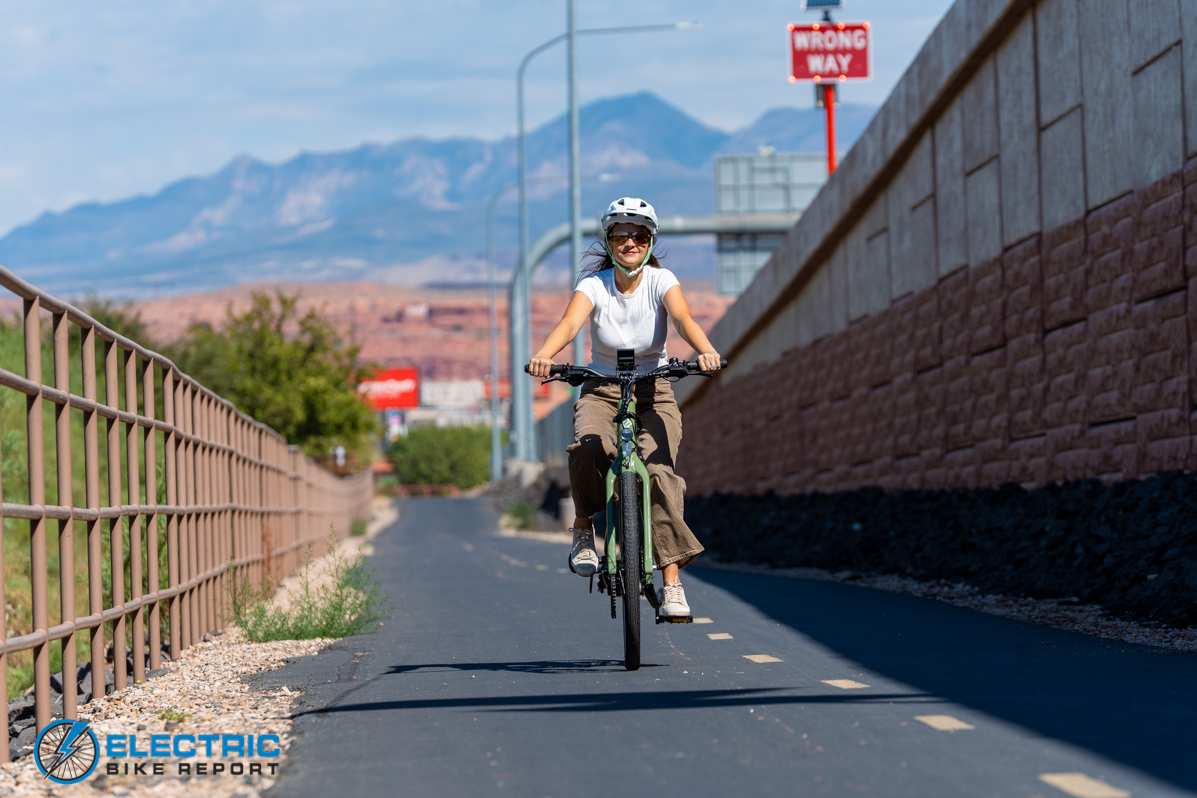
The XPress Lite is a solid all-purpose e-bike: ride it to work, enjoy an evening cruise, or take it out for some light to moderate exercise.
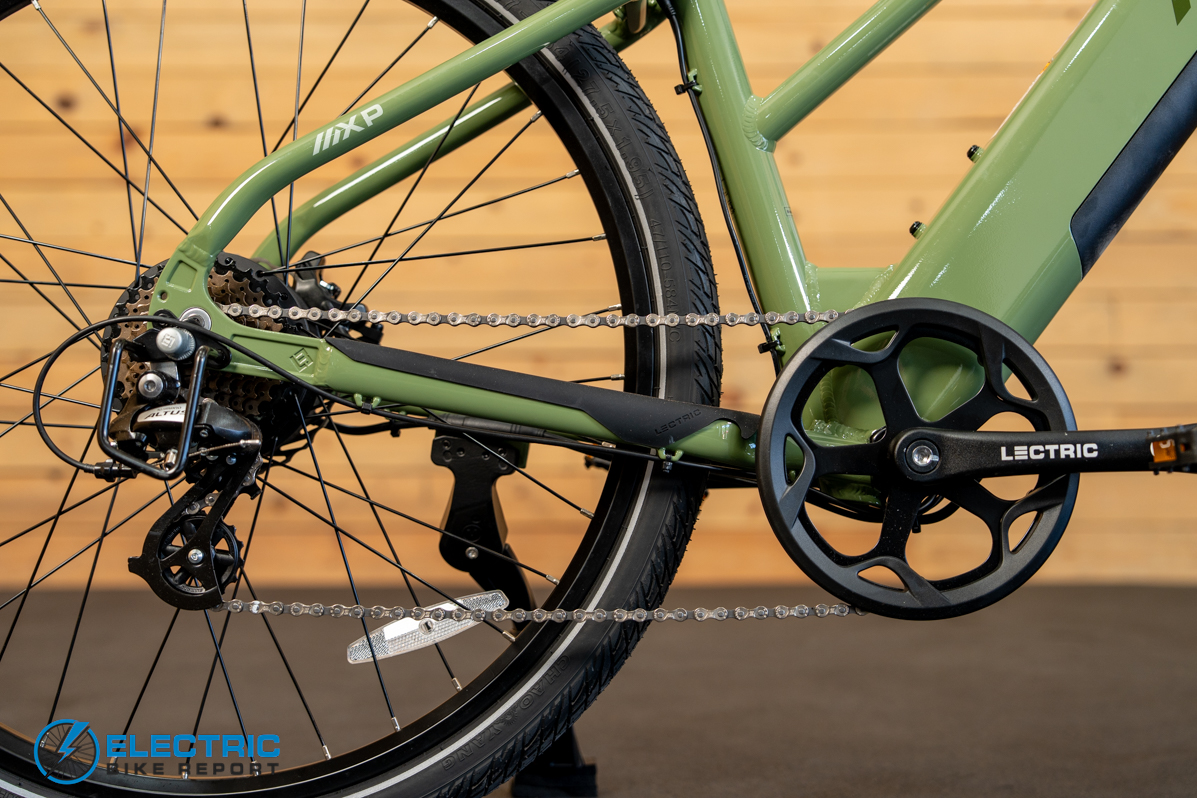
An 8-speed drivetrain offers gearing for steep or flat terrain and speeds up to 28 mph.
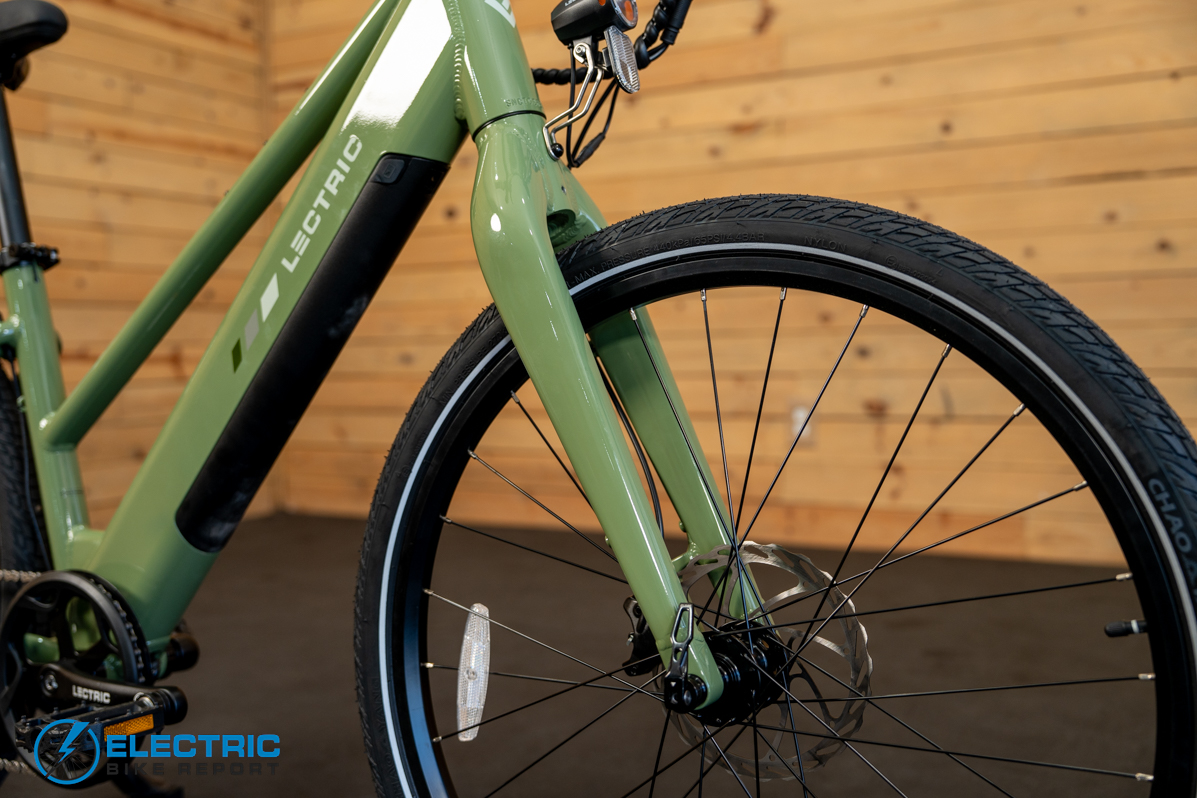
The bike’s 374 Wh battery can be easily removed for charging and slots into place under the down tube.
Lectric XPress Lite Review: Range Test
As with most e-bikes we review, we tested the XPress Lite’s range by riding it in Eco and Turbo modes while recording the distance our test riders traveled. In both cases, we started with a full charge and ended when the battery was fully depleted.
This approach gives us a real-world minimum and maximum range that most riders should expect to fall between. The XPress Lite’s 374 Wh battery powered the bike for 22.4 miles using its highest assist level and 42.2 miles using its lowest.
Lectric advertises a range of up to 45 miles, which our testing supports.
Comparing the bike to similar models we’ve tested isn’t exceptionally straightforward, as its weight of 54 lbs places it firmly between lightweight city e-bikes and fully-equipped commuters. These styles typically weigh between 40 and 75 lbs.
As such, we combined these groups, since there is a good chance that prospective buyers will consider models from both categories. Our comparison group averaged 35 to 71.3 miles in their high- and low-power tests, which may make the XPress Lite appear under-specced as a result.
The caveat is that many of the models in our comparison group carried larger batteries. With an average of 601 Wh of battery capacity, it makes sense that many could travel farther, since they simply had more energy to use.
Realistically, the XPress Lite held up well. When comparing its energy consumption, calculated by dividing battery capacity by mileage, we can see that the bike used 8.9 watt-hours per mile (Wh/mi) in its Turbo test and 16.7 Wh/mi in Eco. The models in our comparison group used an average of slightly less to slightly more energy: 8.5 Wh/mi in their lowest assist levels and 17.4 Wh/mi in their highest. As such, we consider the XPress Lite to have performed very well for its specs.
Of course, price is another factor. Many e-bikes in our comparison group exceeded the XPress Lite’s roughly $1,100 price point. Many neared the $2,000 mark. It is expected that there will be some tradeoffs on e-bikes with lower prices; we also consider the XPress Lite’s lower range a fair exchange for its significantly more affordable price.
One area with some room for improvement is the bike’s charge meter. As with other Lectric models, the XPress Lite’s display shows the charge level through a percentage-based readout that drops in 10% increments. For better accuracy and prediction of remaining mileage, we encourage the brand to use a more granular readout in the future.
Minor point of critique aside, the bottom line is that the XPress Lite’s range is plenty usable. Riders using the lower assist levels should be able to cover multiple round trips for an extended commute, while those using the highest levels should manage a full day’s travel at minimum.
Keep in mind, however, that we performed our testing with the bike set to its default 20 mph maximum speed. Those switching to Class 3 mode will likely find their range reduced to some degree.
Sponsor
Sponsor
Lectric XPress Lite Review: Hill Test
Our Hill Test results for the XPress Lite were interesting, to say the least. Overall, the bike performed well, though it’s the context of its results that are the most worthwhile to dig into. As we go through the results, keep in mind that the bike’s motor produces 61.2 Nm of torque and peaks at 864W, while its nominal rating is 500W.
As with all other models we used for comparison, we tested the XPress Lite at our test hill, the Devil’s Backbone. See above for an explanation of this challenging hill. Our test rider, Justin, performed a throttle-only test, then returned to the starting point for a max-assist (Turbo) test.
He completed both portions of the test successfully, with a throttle result of 2:13 at 13.6 mph on average. His pedal time was significantly faster at 1:53 and 16.0 mph.
To paint a full picture of the bike’s performance, I compared it both with a group of city and commuter e-bikes—and all other bikes we’ve tested at this location with 500W rear-hub motors.
Compared to the group of city/commuter e-bikes, which finished both portions of their testing in 2:04, the XPress Lite was 9 seconds slower in its throttle test and 11 seconds faster when pedaling. The bikes in this group had higher motor output (967W and 66 Nm of torque), which seems to have given them an advantage in the throttle test, though the XPress Lite’s slightly lower weight may have given it an edge in the pedal test.
Our group of 500W e-bikes were generally slower across the board: they completed their throttle tests in 2:16 and their pedal tests in 2:11, respectively. The XPress was lighter by around 9 lbs and had higher motor output of around 55W, which may explain the difference in this case.
My personal experience lines up well with the bike’s formal test results. I took the bike to our secondary location, Pilot Hill, and tested it in much the same way that Justin approached his test runs. I added one additional pedal test using the bike’s cadence-sensing mode (Justin only performed his pedal tests using the torque mode).
For me, the XPress Lite’s throttle felt steady, but not particularly speedy. Its torque-sensing mode felt the most lively, though I did have to push a bit harder into the pedals than I expected as the hill reached its steepest point. Cadence mode felt somewhere between the two, with an unhurried pace—but also a very low amount of effort required from me along the way.
One additional thing to mention regarding the XPress Lite’s climbing power is that, prior to this 500W model, we tested a pre-production version of the bike with a 350W motor. That bike suffered some overheating issues, and we were pleased to work with Lectric behind the scenes to recommend changes. Admirably, Lectric paused the launch of the bike to diagnose and correct the problem, which just goes to show that they’re committed to making quality products that perform well.
Ultimately, the XPress Lite proved capable on hills. On throttle power, it takes a relatively calm and gentle approach. While pedaling, it can be faster—while also being more active—but it also has options for riders who want the motor to do most, but not all, of the heavy lifting.
Sponsor
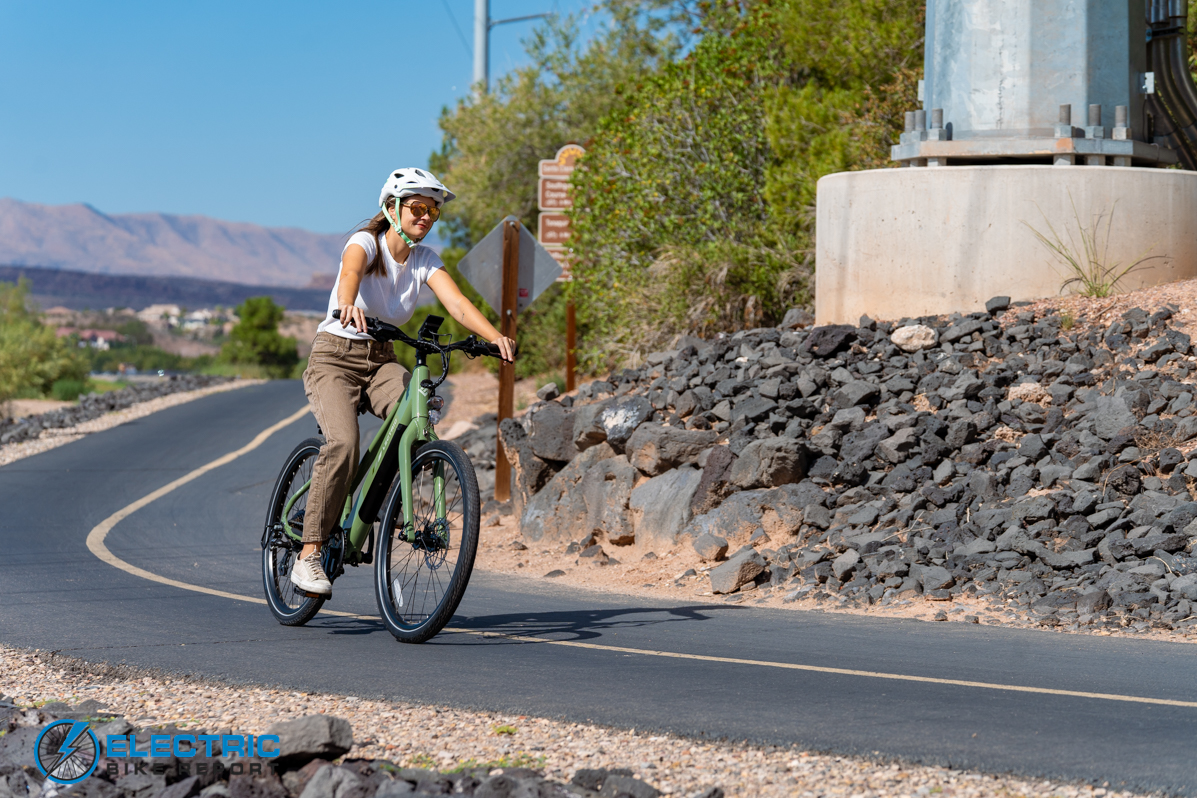
Compared to many other, more aggressive city e-bikes and commuters, the XPress Lite’s riding position is relatively upright and relaxed.
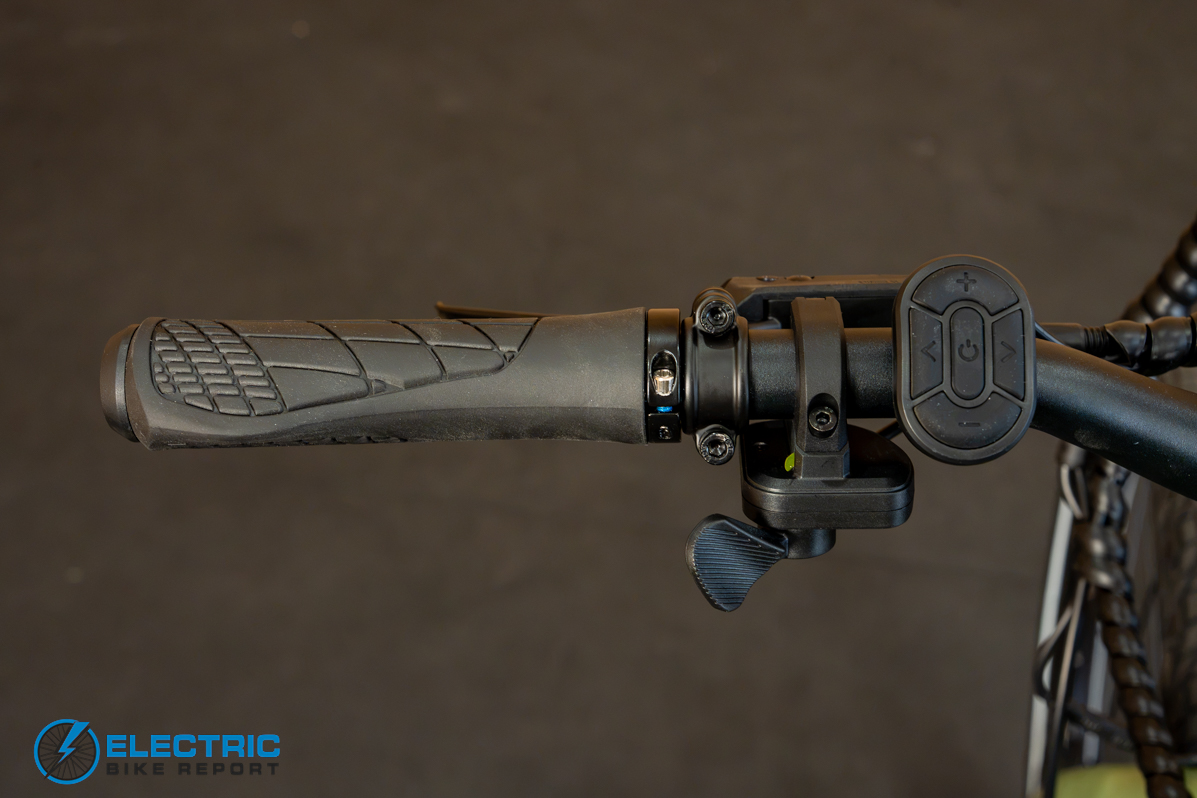
A thumb throttle sits next to the left grip for easy reach and comfortable use.
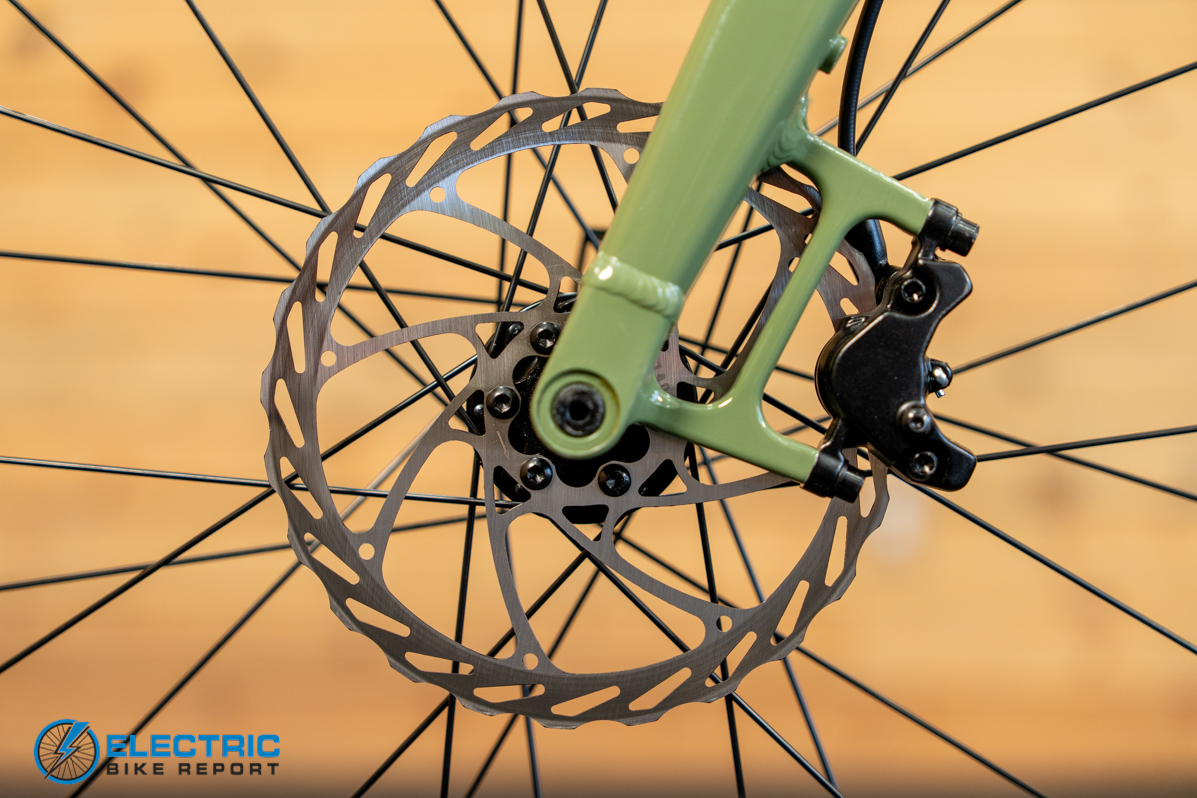
Lectric outfitted the XPress Lite with two-piston brakes and 180mm rotors.
Lectric XPress Lite Review: Brake Test
The XPress Lite’s hydraulic brake system performed well in our Brake Test. It is equipped with an unbranded set of brakes, though given their shape and the model number (M232) printed on the brake lever, we assume they are manufactured by Nutt. Regardless, the bike uses two-piston calipers paired with 180mm rotors on both wheels.
To evaluate its braking power, our test rider, Michael, applied the brakes at a marked line after reaching 20 mph. Once he brought the bike to a fast but controlled stop, he measured the distance it traveled as it slowed. The average braking distance after three test runs was 21’5″.
As with other tests above, we included models from both the city and commuter categories for comparison; these bikes averaged a score of 21’10”. As such, we can consider the XPress Lite’s performance average to somewhat above average.
Many factors affect braking performance, including a bike’s weight, brake system, wheel size, etc. As I’ve touched on previously, the XPress Lite is relatively mid-weight when compared to similar city and commuter-style e-bikes we’ve tested. Its tire size lines up better with most commuters, while its brake system wouldn’t be out of place on an e-bike of either style. These factors seemed to balance out well to give the bike its solid score.
I was pleased to see that the XPress Lite tested so well. In my experience, the brakes worked to modulate speed and bring the bike to a stop, but they seemed to lack some bite. Going by feel, I might have expected a longer stopping distance, but I’m happy to be proven wrong. Clearly, the brakes did their job appropriately!
Brakes are another area where Lectric made improvements between the pre-production and final versions of the XPress Lite. The previous model used a 180mm front rotor and a 160mm rear rotor, while this final version is equipped with dual 180mm rotors. We didn’t get to run the pre-production version through our Brake Test, but we’re pleased to note that the company upgraded the rear rotor to give it some additional stopping power.
All things considered, we can safely say that the XPress Lite is specced with a safe and effective brake system.
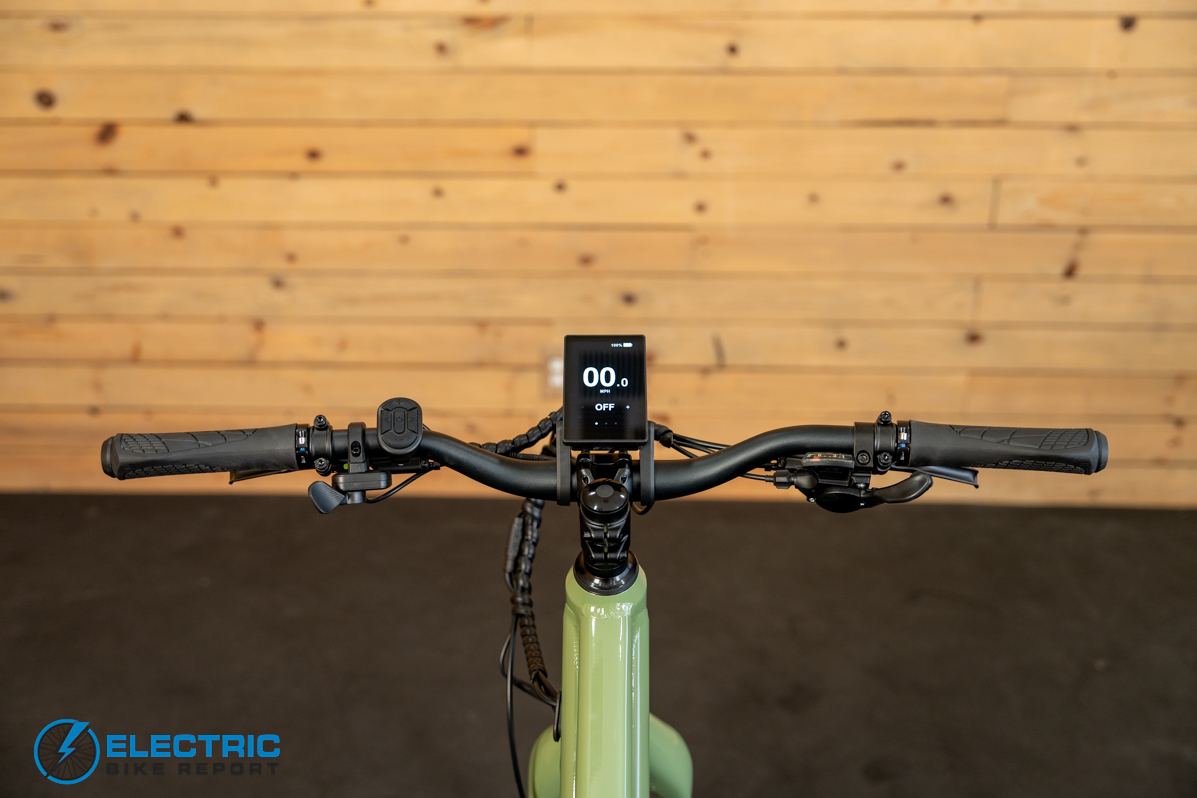
The 680mm handlebars include 40mm of rise to make the riding position more upright.
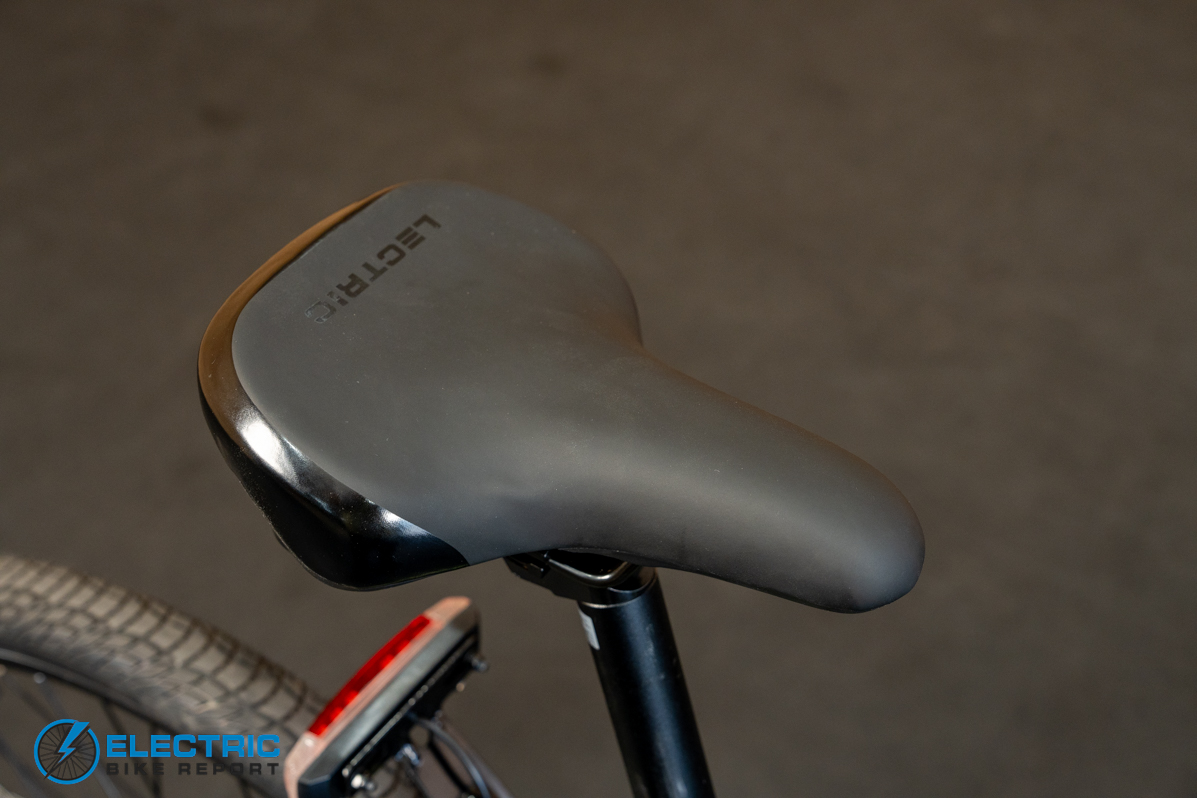
A custom sport saddle offers comfort without impeding pedal movement.
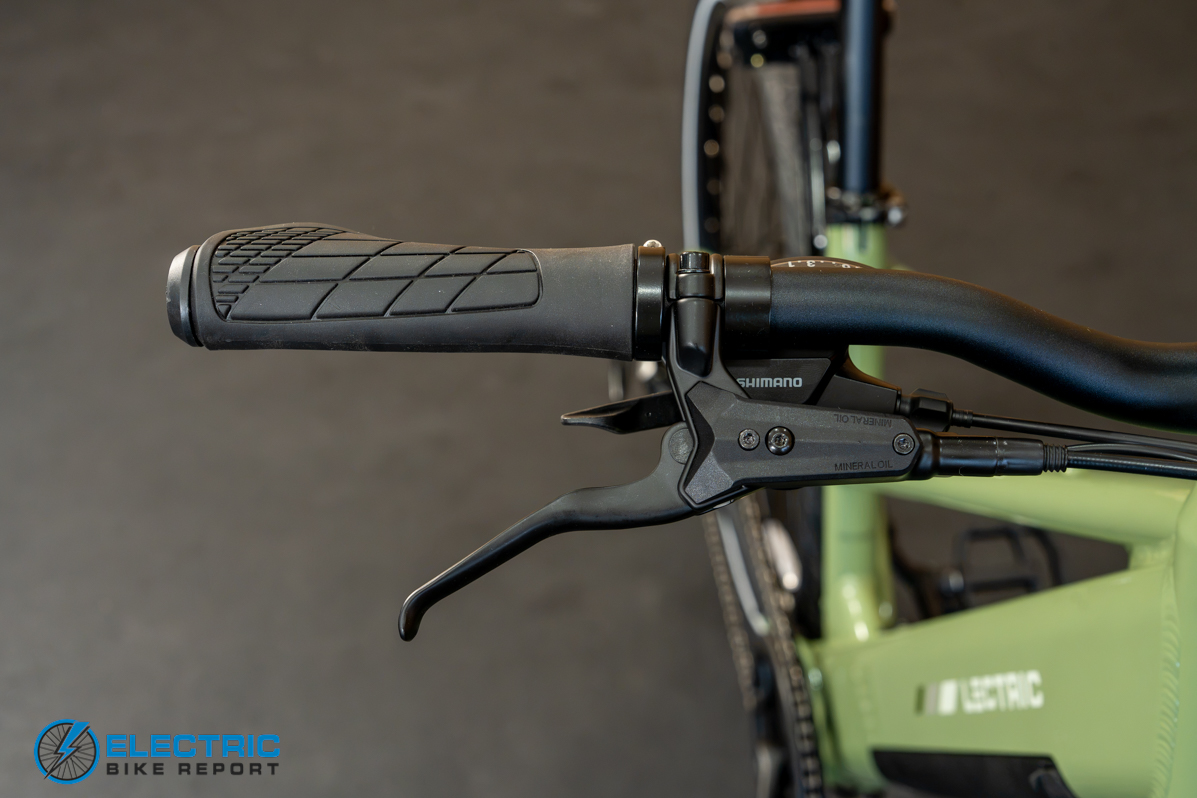
Lock-on ergonomic rubber grips provide support and comfort—plus they always stay in place.
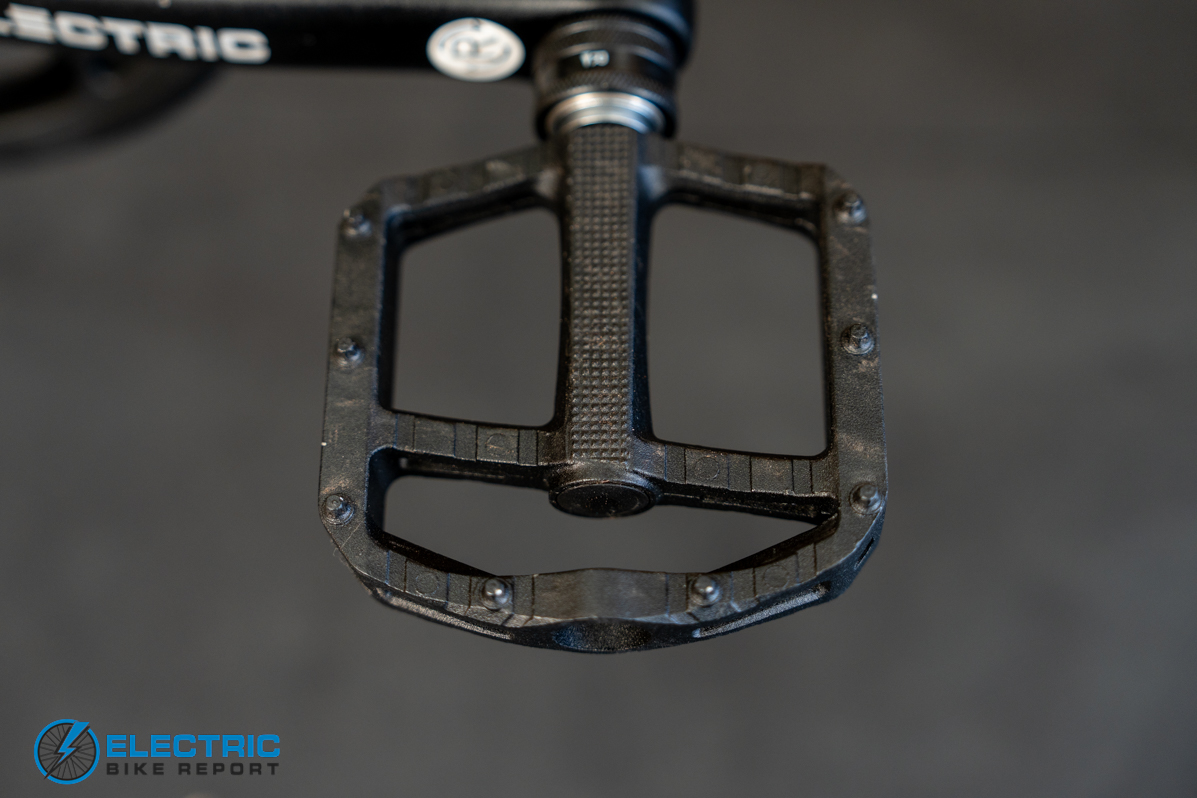
Lectric’s quick-release aluminum pedals are sturdy and easy to attach, remove, or replace.
Lectric XPress Lite Review: Ride Quality
A bike’s ride quality factors in all aspects of its feel and user experience. From my point of view, one of the XPress Lite’s defining characteristics is its balanced blend of simplicity and adaptability. The bike is both relatively feature-light and easy to grasp, while also offering a relatively wide range of power levels, speeds, and behaviors (as touched on in the Speed Test section above).
In terms of how the bike felt to ride, I’d say it was relatively spartan but comfortable. Lectric offers just a single mid-step frame size intended for riders from 5’4″ to 6’4″. As a 5’11” rider, I was fortunate to fall in the middle of the range, and I found the bike’s geometry and proportions well-suited to my size.
The bike’s design balances sportiness and comfort with a relaxed but forward-leaning riding position. Most of its adjustability lies in the seatpost, which offers a 12″ range of saddle height positioning. By default, I found the reach on the mid-to-short side, which helped to encourage a relatively upright posture. Some riders may need to swap out the stem or handlebars to adjust the fit, but the bike’s setup should be generally accommodating.
Regardless, the XPress Lite does have its limitations. I expect it to be comfortable for the majority of riders, but its single size and 275-lb payload capacity may be somewhat limiting to short and/or heavy folks. In many cases, Lectric offers its e-bikes in high-step and step-thru styles with slightly different height ranges, and this treatment wouldn’t be out of place here.
As for contact points, the standard setup is completely workable; the XPress Lite includes supportive ergonomic rubber grips, the company’s custom sport-style saddle, and a set of quick-release aluminum pedals. This is an area where many of Lectric’s e-bikes overlap, and it’s a comfortable package that’s also a step up in quality from many similarly-priced models.
Like many similar bikes of its style, the XPress Lite does not include any form of suspension, but its tires and saddle help to offset bumps and dips. You’ll still notice them, but their effect is softened instead of feeling harsh or jarring.
In terms of handling, the bike feels both responsive and planted. Its weight grants the bike more maneuverability than most commuters, but makes it feel more stuck to the ground than most city e-bikes. In my experience, it’s a nice blend.
I’ve mentioned the range of power levels and the bike’s two sensor modes in the Speed Test section above, but I haven’t mentioned one other setting that affects the XPress Lite’s feel. Riders can choose between a standard or increased torque multiplier, which essentially affects how easy the bike is to pedal. Those choosing the standard mode can enjoy a more natural, “bike-like” feel, while those who prefer an easier experience can select the increased setting.
In general, the motor is smooth, quiet, and quick to engage. I had one instance of the motor output surging somewhat when applying the throttle, but this was rare and short-lived.
Touching back on the start of this section, the bike’s user interface is an area where it shines. While I appreciate e-bikes that are high-tech and feature rich, the options can sometimes feel like too much—the XPress Lite offers a customizable experience through its display menu without the need for complicated apps or confusing settings menus. Lectric’s color TFT display is also a clean, polished touch.
Right out of the box, the XPress Lite is just that—pleasantly “lite” on both features and accessories. Potential buyers who are looking for a bit more might want to consider the fully-equipped Lectric XPress2 we reviewed separately, though the brand does offer a range of accessories for those who are satisfied with the Lite’s range, power, and price.
Riders who are new to e-bikes may consider the XPress Lite as an upgradable, budget-friendly option. At around $1,100, it’s generally a simple, solid starting point—with the option to be outfitted with fenders, a cargo rack, panniers, side mirrors, or other accessories after purchase.
Ultimately, the bike’s ride quality and user experience are straightforward and appealing, while also being adaptable to a wide variety of riders.
Sponsor
A rigid aluminum fork keeps the handling crisp and predictable.
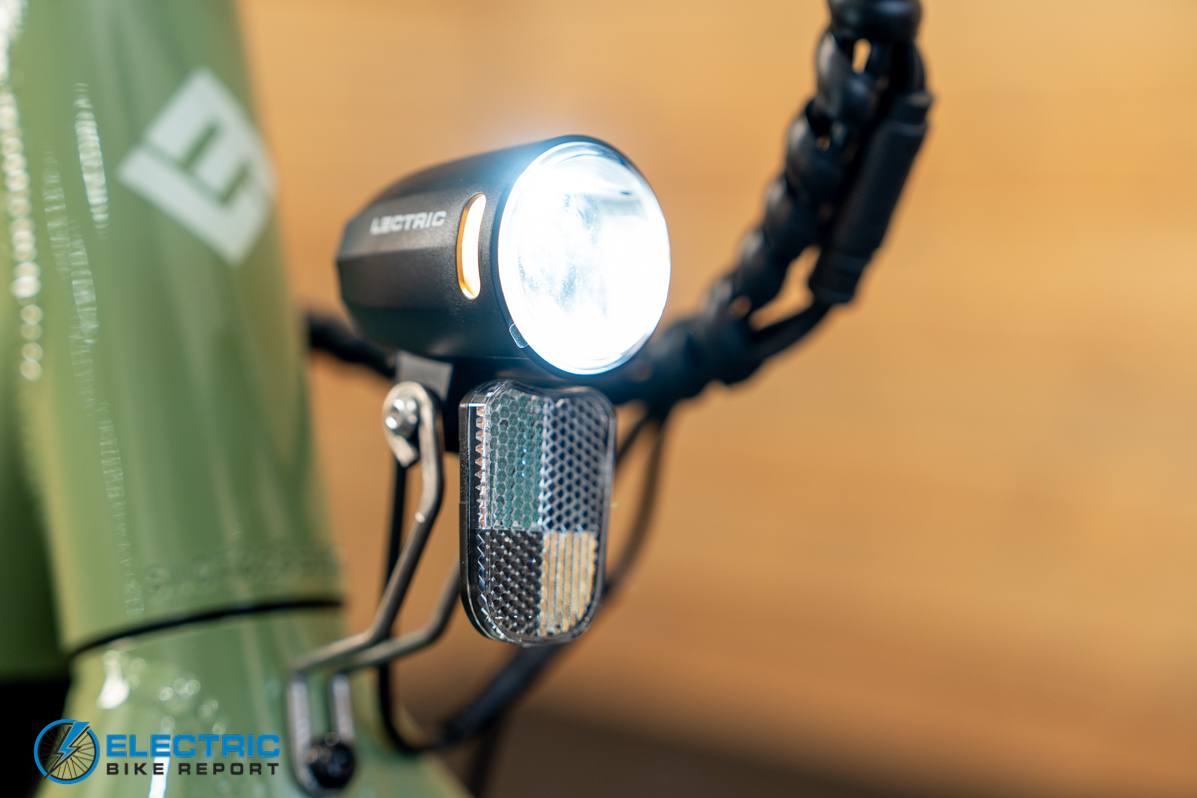
A bright LED headlight is powered by the bike’s battery.

The bike’s taillight functions as a brake light when the levers are squeezed, and also includes turn signals.
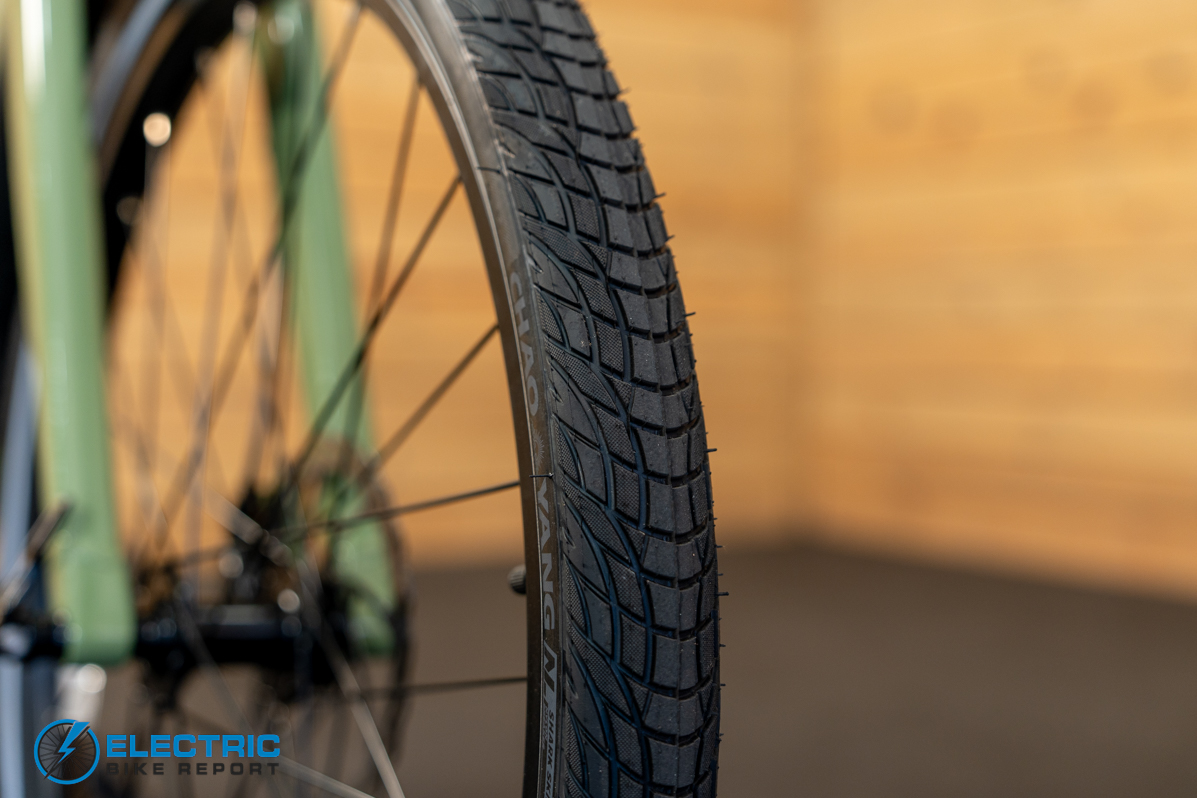
The XPress Lite comes with puncture-resistant street tires that also have Slime sealant installed in their tubes.
Lectric XPress Lite Review: Summary / Where to Buy
Considering that e-bike brands often release models across many—if not all—categories and styles, it’s a no-brainer for Lectric to gear the XPress Lite toward those who prefer relatively feature-light urban rides, while simultaneously offering the XPress2 to those wanting a more robust experience.
As we’ve determined, the XPress Lite sits in a relatively unique position between a city bike and a commuter. Considering its mid-size weight, it’s likely that it will appeal to riders who don’t mind a bit of additional heft in exchange for an extra dose of power. After all, that’s one major highlight of Lectric’s e-bikes—they prioritize ease and fun, which makes getting on the bike and going for a ride something you want to do.
At around $1,100, it’s also highly enticing from a pricing standpoint. Factoring in tariffs and the rising cost of most goods, it’s getting more and more difficult to find an e-bike in this price range that’s comfortable, capable, and well-put-together.
Based on our testing, the XPress Lite performed well for its specs, with many options for speeds, sensor modes, and power levels. It also demonstrated practical range, steady climbing capabilities, and strong braking performance. In short, it’s a value-packed e-bike that gives you above-average bang for the buck.
Its flaws are relatively minor: its sizing and weight capacity may exclude some riders, and a more granular battery charge meter is something we hope to see on the next iteration of the bike.
Otherwise, in our experience, the XPress Lite is a straightforward, manageable, and highly affordable product, which is exactly what we’d expect it to be given its manufacturer. It’s a bike that’s easy to recommend for new riders and budget-conscious shoppers. We also feel it would be a great fit for those looking for a capable, easy-to-grasp e-bike that won’t break your back if you need to lift it.
Happy Riding! Make sure to let us know if you have any questions or if you think we left anything out in this review of the Lectric XPress Lite down in our comments section.
Sponsor
Sponsor
Reader Interactions
Leave a Reply