This E-Bike Proves Less Can Be More | Cikada Urban Cruise Review
Oct 12, 2026
 0 Comments
 Share
Share
This light, nimble, and simple city eBike is a perfect example of how less is often more.
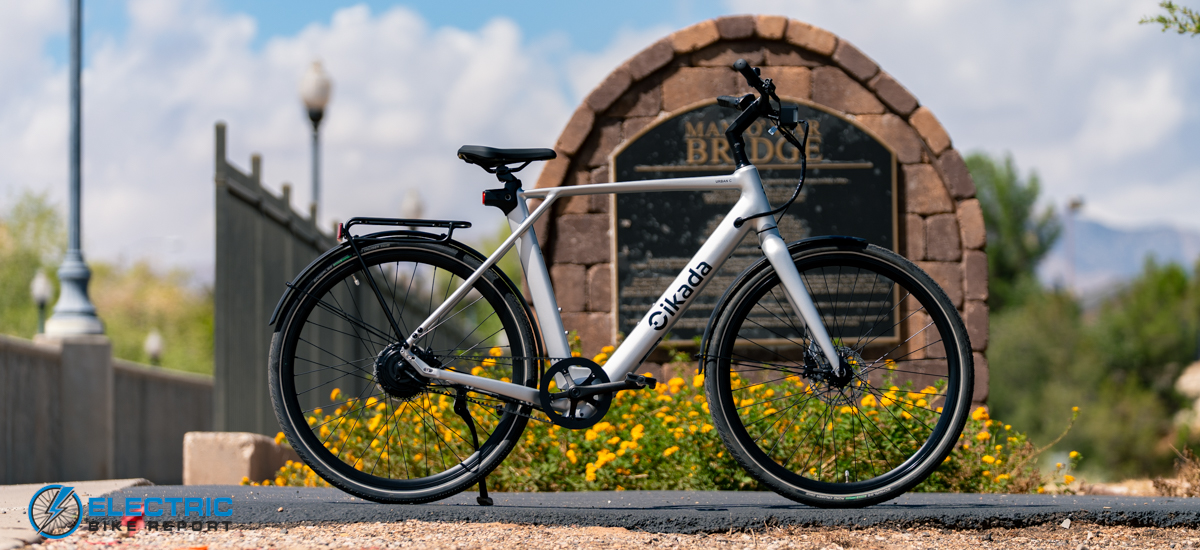
We’ll begin this review with an architecture lesson; The subject is famous German-American architect Ludwig Mies van der Rohe. In the design world, he’s known for applying a minimalist, simplified approach. His take was that “less is more”. Actually, this now-common phrase was popularized by him as a motto for modern architecture.
Mies believed that removing clutter and excess was the key to good design. Certainly, there are many ideas surrounding the question of “good design”, but his philosophy struck a chord with many.
I’m not sure if Cikada eBikes had him in mind when they gave us the Urban Cruise, but it seems plausible. This City eBike features a straightforward approach, both in terms of functionality and design. The idea is simple: a lightweight, practical, and stylish bike for zipping around city streets.
This bike was actually recognized with 2026 iF design award – but it’s not all looks and no substance. The Urban Cruise comes equipped with a belt-style drivetrain, 350W hub motor, integrated stem display, and Shimano hydraulic disc brakes.
It’s also light. The bike weighs in at 47 lbs, and the 700c Schwalbe tires make for a nimble and fast rolling experience. A rear rack, headlight, and taillight are all present to cover commuting needs.
So, the philosophy is clear – but how does this bike handle our testing? Does “less is more” work in the eBike world?
We put the Cikada Urban Cruise through our full range of tests to find out.

Sponsor
E-Bike Category:City
E-Bike Class:Class 1 (Pedal assist to 20 mph)
Class 2 (Throttle to 20 mph)
Class 2 (Throttle to 20 mph)
Sponsor
Cikada Urban Cruise Video Review
 Pros
Pros- The Urban Cruise feels nimble and maneuverable like a city bike should.
- Multiple frame sizes are available so riders can get a more specific, better fitting bike.
- Smooth, refined pedaling experience thanks to the belt drive and torque sensor.
- The Urban Cruise is low maintenance, also thanks to its belt drive.
- At about 46.5 lbs, it’s on the lighter side for eBikes, which makes it easy to transport or store.
- The PAS system is simple, but rewarding. It’s a well-programmed bike.
- The fast rolling tires allow riders to keep and gain speed with ease.
 Cons
Cons- We’d like to see an option for class 3 speeds on the Urban Cruise – this would make it a stronger commuter.
- We’d like to see some changes to the braking system; specifically, a motor cutoff feature and larger rotors.
ELECTRICAL SPECS & FEATURES
- Battery: Powerflow 36V 9.8Ah (327.6 Wh)
- Charger: 2.0 A Charger
- Display: FocusRide Stem Integrated 2 inch
- Motor: Dynaforce 350W Hub Motor, 40nm torque
- Sensor: Torque
- Headlight: Integrated
- Taillights: Integrated
- Pedal Assist: 3 levels
- Claimed Range: 34 miles, 53 miles with range extender
- Throttle: Thumb Activated
- App: Cikada Connect
- UL Certification: UL 2849 and UL 2271
Weight & Dimensions
- Claimed weight: 46 lbs
- Tested Weight: 46.54 lbs
- Rider height range: 3 sizes, total range from 5’3″ to 6’5″
- Total payload capacity: 265 lbs
Components & Accessories
- Brakes: Shimano MT200 Hydraulic Disc Brakes
- Fenders: Alloy
- Fork: Rigid
- Frame: 6061 aluminium
- Drivetrain: Dayco Belt Drive, single speed
- Grips: Velo Plastic
- Saddle: Seamless foam, road style
- Handlebar: Alloy Flat Bar
- Kickstand: Included
- Pedals: Platform, Metal
- Tires: Schwalbe Road Cruiser K-Guard 700C
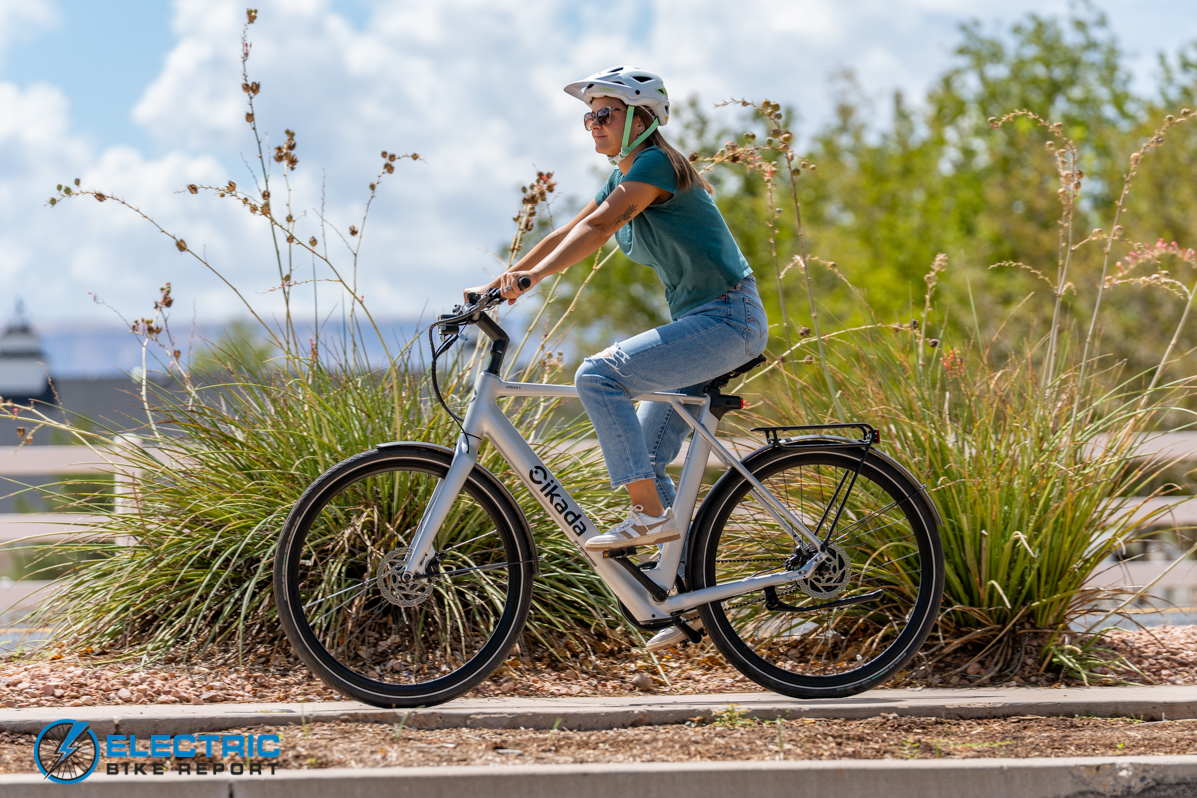
Cicada offers this bike in two colors – Matte Black and the Cement Gray seen above.
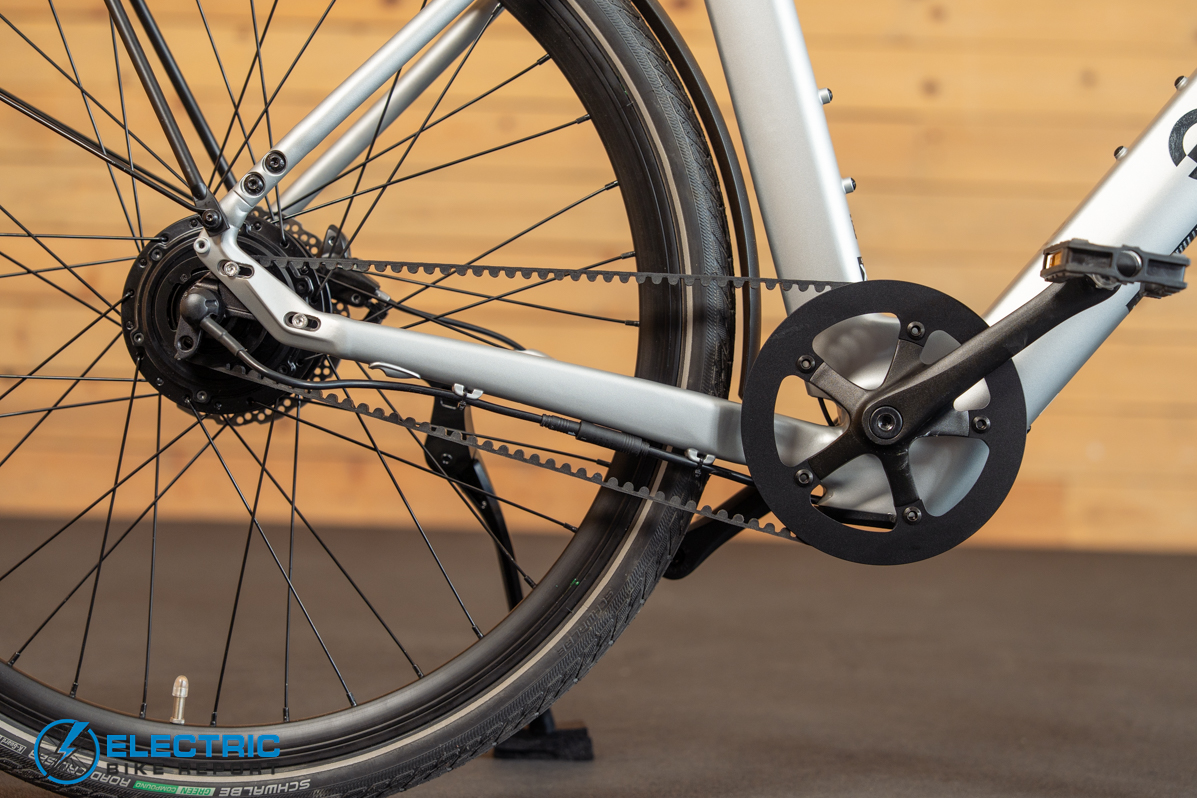
Belt drives have several upsides, one of which is being low maintenance.
Even the name is minimalist.
Cikada Urban Cruise Review: Speed Test
The Urban Cruise features a straightforward setup; a single speed belt drive, a torque sensor, and three pedal assist levels. This bike is refreshingly simple – it’s uncomplicated, but well programmed.
As always, I began the speed test by pedaling using leg power alone. Due to the light weight and narrow tires, the Urban Cruise is noticeably manageable without motor assistance. I averaged 11.3 mph with no help from the PAS system.
I jumped to Eco, where I averaged 14.9 mph. Cruise settled at 16.2 mph, and Sport topped out at 19.1 mph.
The numbers are clear, and they line up with the real world experience; this bike offers good programming and clear separation between each assist level. Each increase feels like an approachable, but still significant jump in power.
The Urban Cruise’s torque sensor is impressively intuitive. I found it to be responsive, natural, and smooth; it seemed to deliver a near perfect amount of power for each situation. This, combined with the belt-style drivetrain, makes for a very refined pedal experience.
I did notice that the single speed can struggle to keep up as you accelerate to higher speeds. In order to maintain class 2 speeds, I had to quicken my cadence, but not dramatically so. This is expected; it’s in the nature of single speed eBikes.
I also tested the bike’s thumb activated throttle. The Urban Cruise requires that you’re already in motion before using the throttle – you can’t use it from a dead stop.
Once in motion, the throttle is effective, but gradual. It will reach near class 2 speeds (up to 19.5 mph), but it takes its time getting there. Regardless, it’s still useful.
The Urban Cruise’s speed test results are inline with the bike’s general philosophy: Simple, straightforward, and well-done. The programming and pedal experience feel polished and well-though-out.
Sponsor
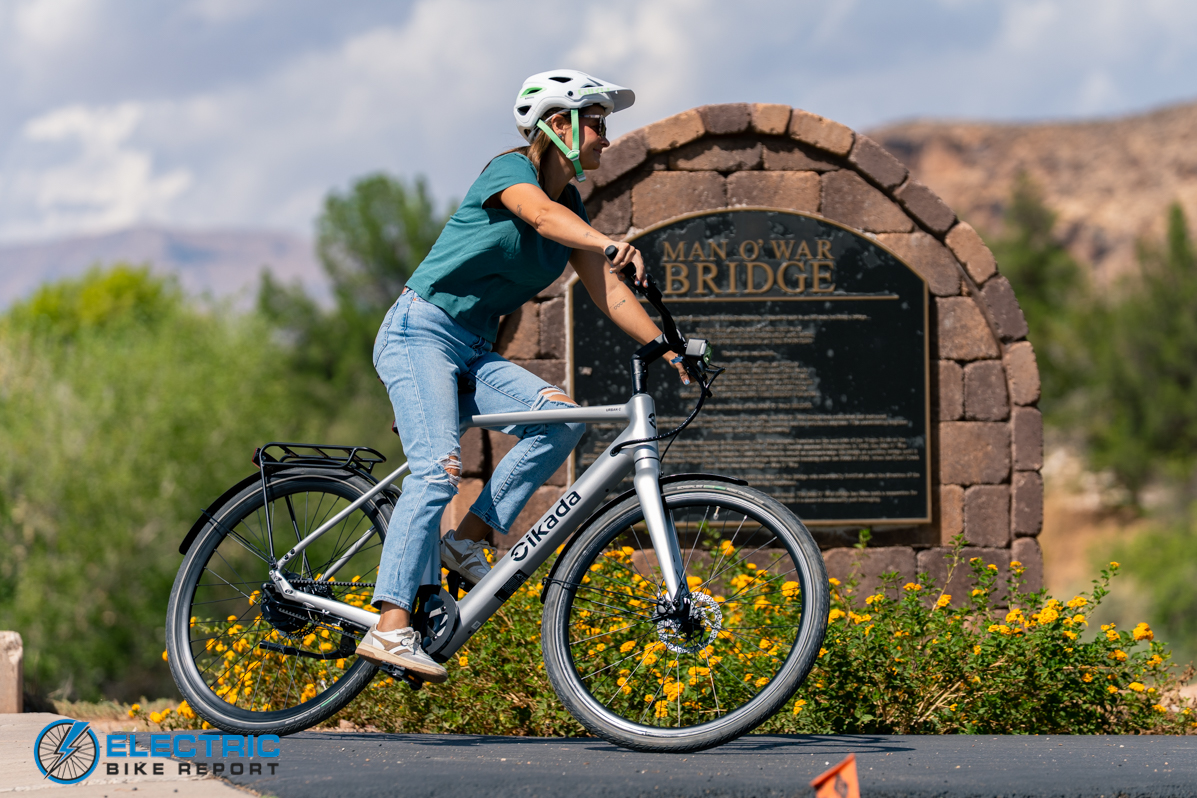
This bike is beautifully light on its tires.
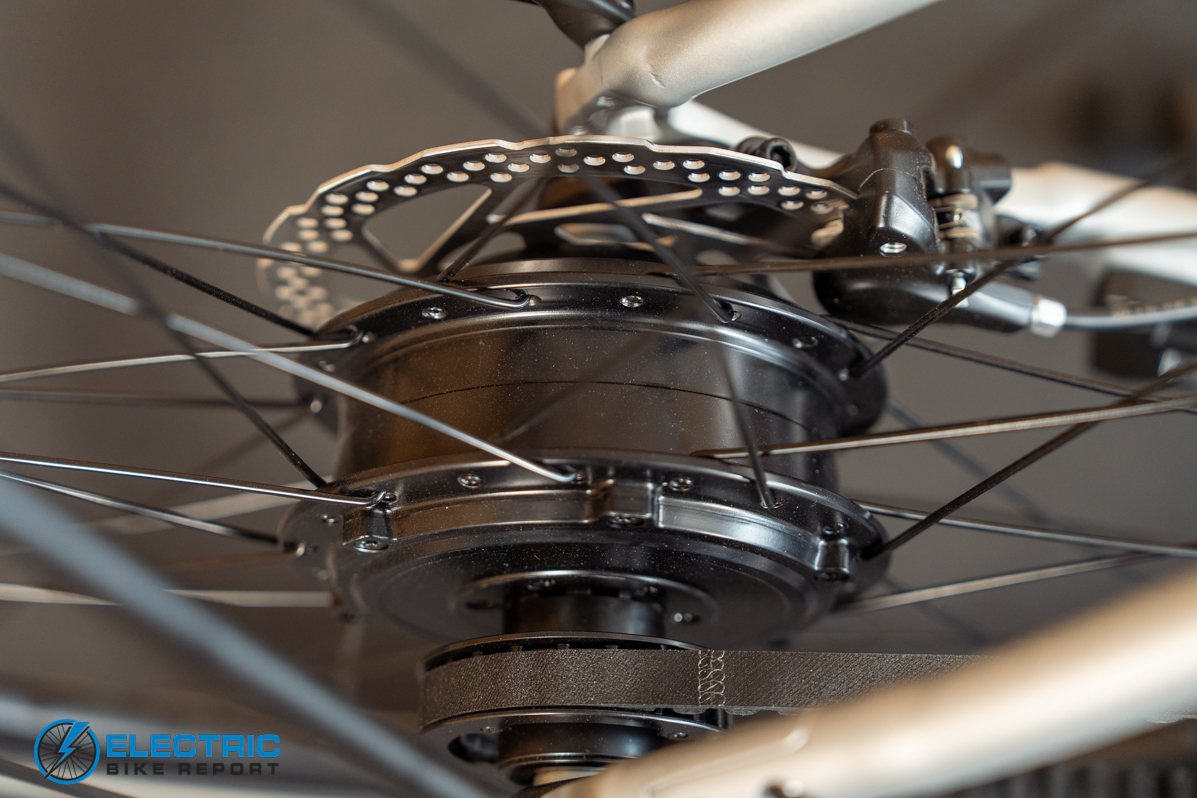
I found the 350W motor to be just present enough – not overpowered, but still helpful.
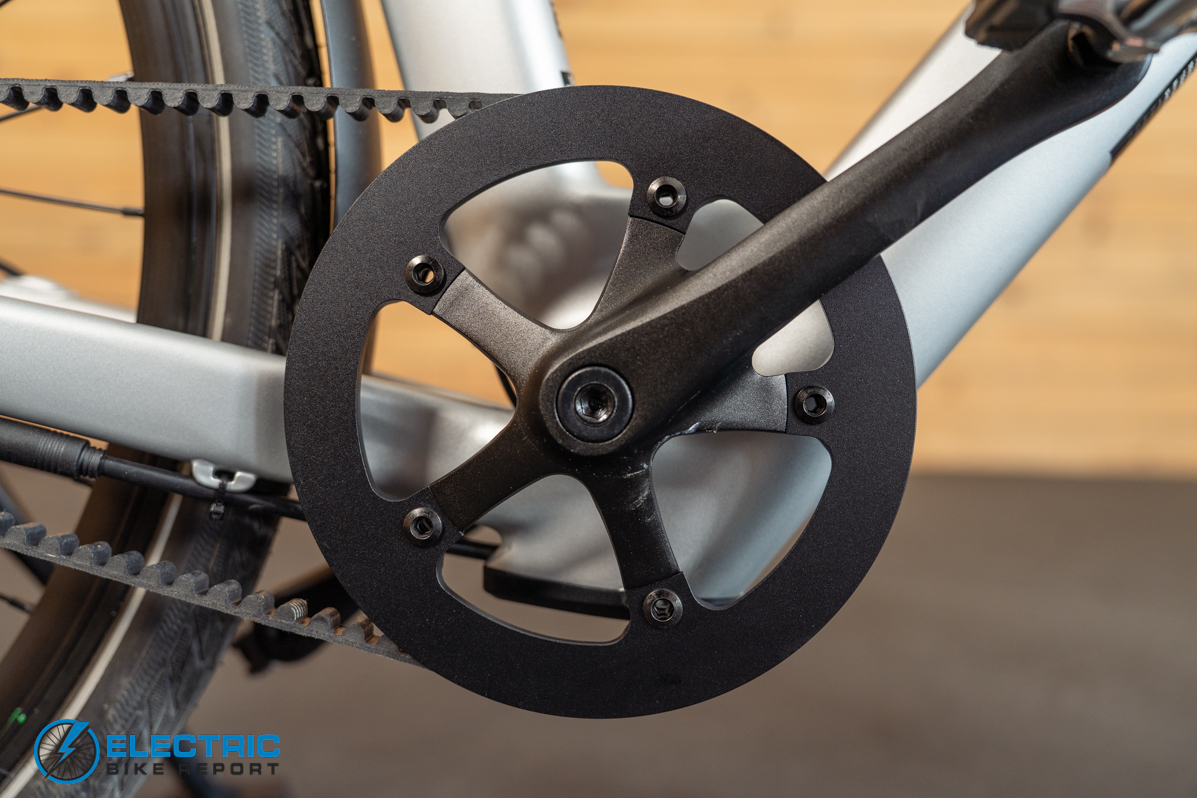
The Urban Cruise offers a basic, but refined pedal experience.
Cikada Urban Cruise Review: Range Test
At first glance, the Urban Cruise could pass for an analog bike. The 353 Wh battery is stored away in the downtube, but you’d only notice it if you knew what you were looking for.
Cikada claims a range of up to 34 miles with the standard battery. Our results slightly exceeded this: In our range test, the Urban Cruise did 35.6 miles using low power settings and 22.3 miles on maximum power.
The average distance for similar bikes using low power settings is 54.7 miles, which is beyond the Urban Cruise’s showing. The maximum power test results were closer, as the class average was 26.29 – still slightly further, but only by a few miles.
When we dove into the Urban Cruise’s test results, we found that it tends to give more power than average in its lowest PAS level. This is evident in a few areas: First, it averaged 13.5 mph over the course of the low power test, while the average was slower at 11.9 mph. Additionally, we calculated its energy usage by dividing watt hours by mileage. Here, this bike used 9.9 Wh per mile, while the mean was 6.7 Wh per mile.
Put simply, more power = less range. However, Cikada does offer an optional range extender that they claim will enable up to 53 miles total – While we didn’t have this accessory available for testing, it does offer an extra 234 Wh of capacity.
For quick city errands and cruising, this is likely enough mileage. A full 35 miles is a long way in urban areas, so this bike does still have enough capacity to be useful and practical. However, if longer rides are in the cards for you, the range extender could be a worthy investment.
Sponsor
Sponsor
Cikada Urban Cruise Review: Hill Test
As a general rule, city bikes aren’t typically hill crushers. They’re designed to be lightweight, mobile, and efficient. With that said, they do still offer an easier climbing experience than an analog bike would.
The Urban Cruise generally held true to this; It did not complete the climb on throttle alone, which was also the case on about half of the comparison class. In the pedal test, the Urban Cruise finished in 3:00 at 10.1 mph, which is behind the class average of 2:29 at 12.1 mph.
Is it a fast hill climber? No, not particularly. Does it make hill climbing easier? Yes.
I want to give credit where it’s due, as well as provide some background. Like I mentioned, city bikes are almost never top performers in this test – they generally have smaller motors in the interest of staying light. However, the motor is still beneficial; it does take away significant rider effort.
With that said, there are some more powerful options in this category; a few have 500W motors, and many have more torque than the Urban Cruise. With 350W and 40Nm, this bike isn’t a total powerhouse.
However, I didn’t find the bike to feel super underpowered. You do have to pedal, but I felt that the motor was constantly present. As it stands, the lighter power doesn’t ruin my interest in the Urban Cruise – a little more would be welcome, but this one still gets the job done.
Sponsor
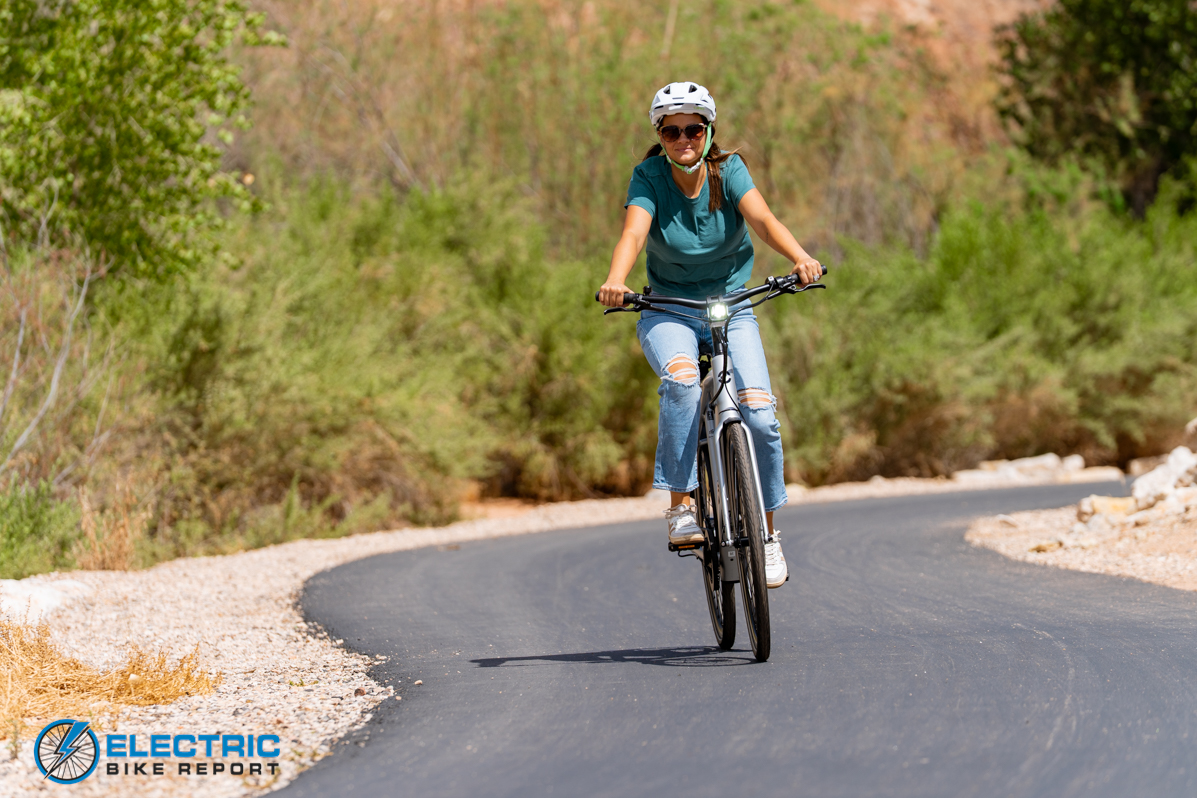
Notice the balanced riding position; not too forward, but not too upright either.
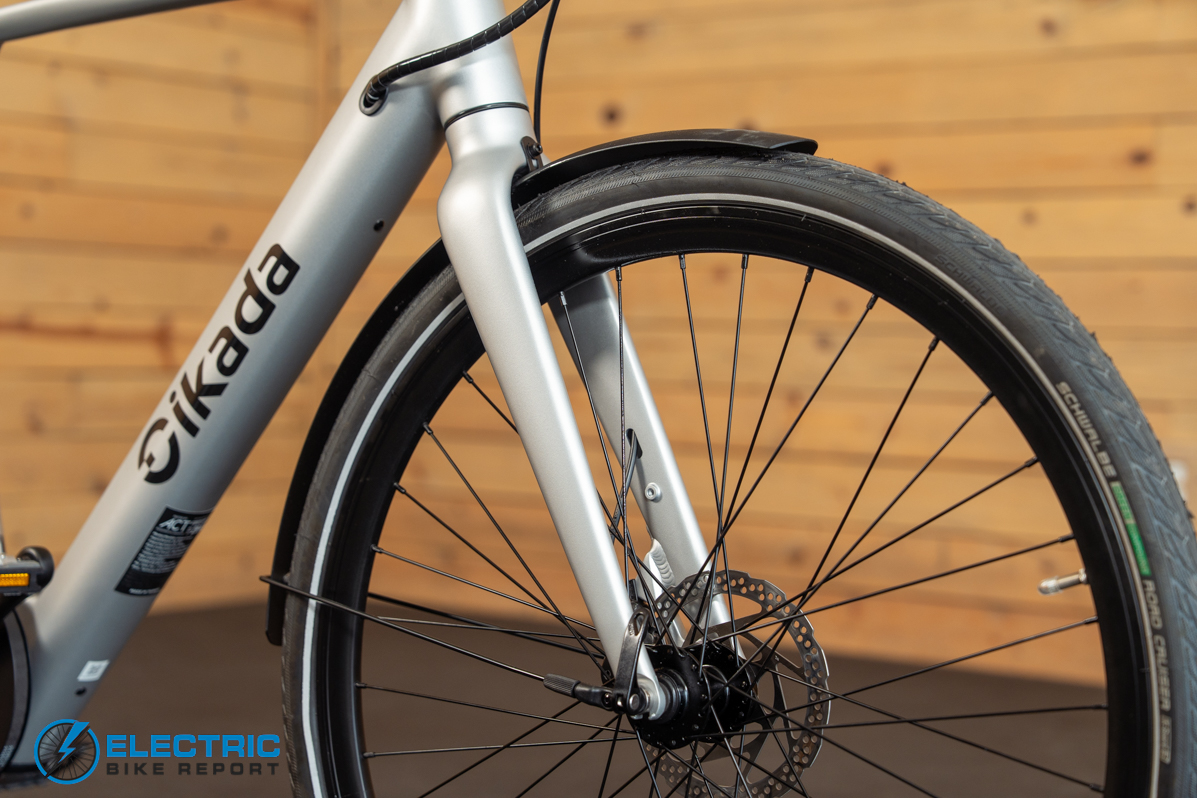
The rigid fork is part of a nimble, lightweight package.
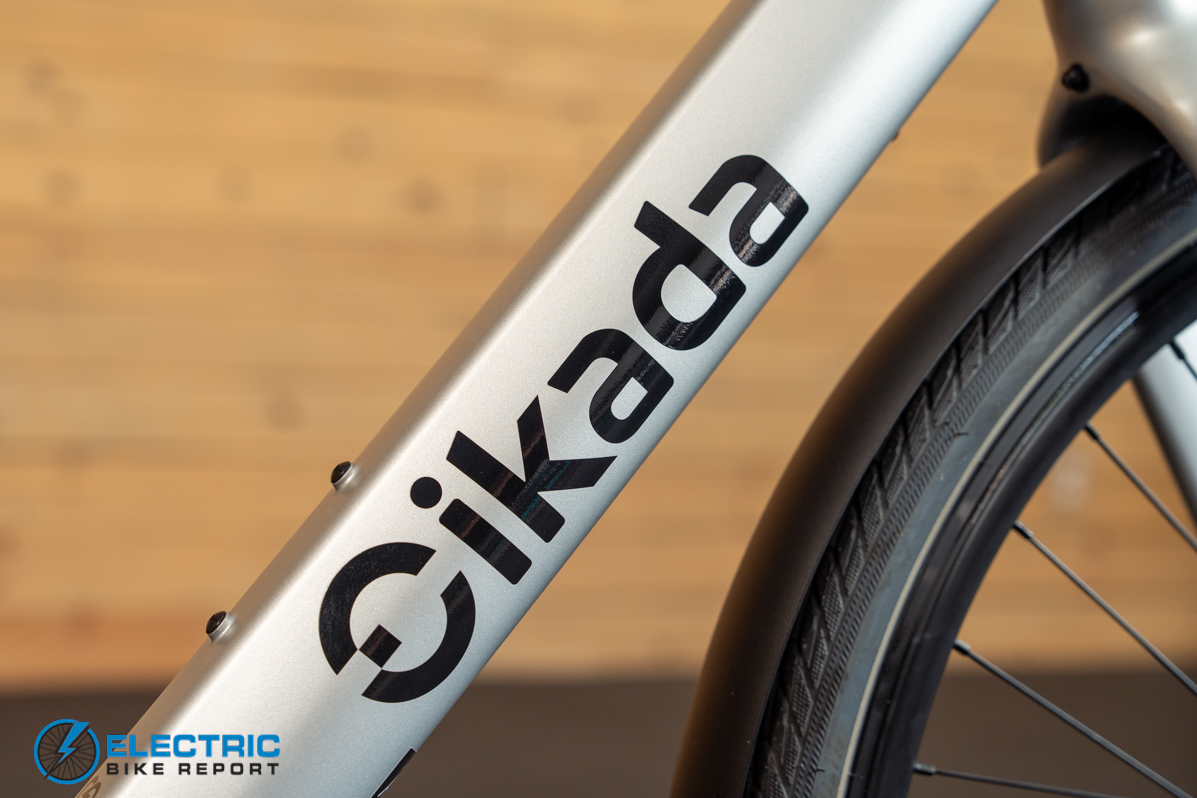
At first glance, it’s easy to miss the typical eBike cues – this could pass as an analog bike.
Cikada Urban Cruise Review: Brake Test
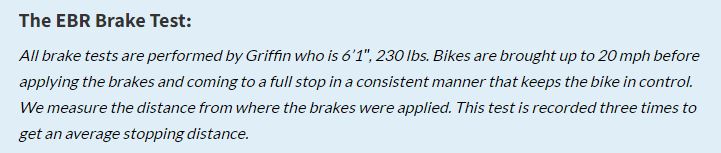
Braking is an important part of the package if you’re going to be weaving through traffic on crowded city streets. Over three runs, the Cikada Urban Cruise recorded an average result of 26 feet 7 inches, while the category average was 22 feet 6 inches.
Most city bikes are not monstrously powerful when it comes to braking; narrow tires and lighter weight don’t bode well for huge stopping ability. With that said, the Urban Cruise is still not quite where we’d like it to be.
The issues I mentioned above are likely factors in the results, but the brake system itself also leaves a bit on the table. Shimano MT200 brakes are paired with (relatively) smaller 160mm, 1.75 mm thick rotors front and rear; I sometimes found the brake levers to feel slightly soft, and they also don’t have a motor cutoff feature.
With all of this said, the Urban Cruise isn’t an imminent threat to safety; I’ve put quite a few miles on it at this point, and the brakes have been reliable and safe enough. I wouldn’t look to bomb hills at speed, but for usual cruising, they’re passable.
We’d recommend that Cikada makes a few upgrades. First, increasing the rotor size up to 180 mm could boost performance and power. A slightly thicker rotor could also help with durability.
Secondly, a braking system with a motor cutoff would benefit the Urban Cruise. EBike specific brakes tend to feel a bit more refined and in-sync with the rest of the experience, so we’d like to see that here.
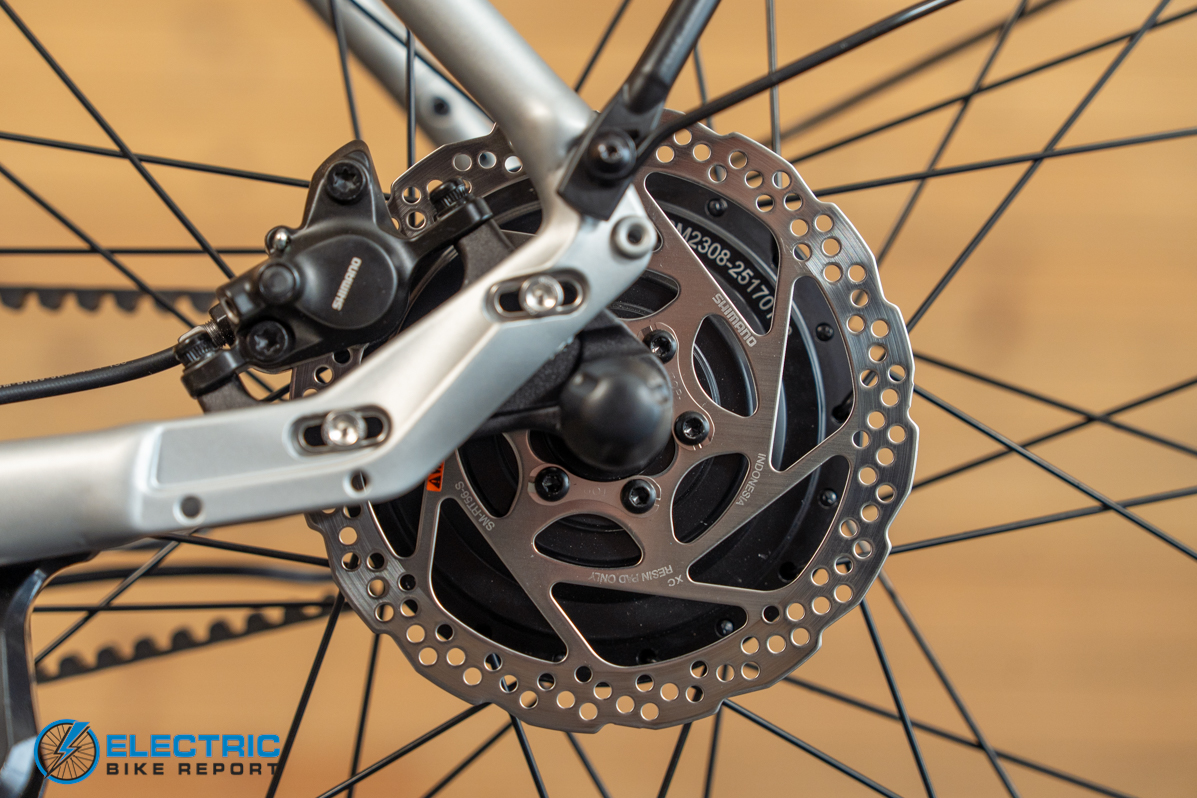
The 160mm rotors are on the smaller side, but they get the job done.
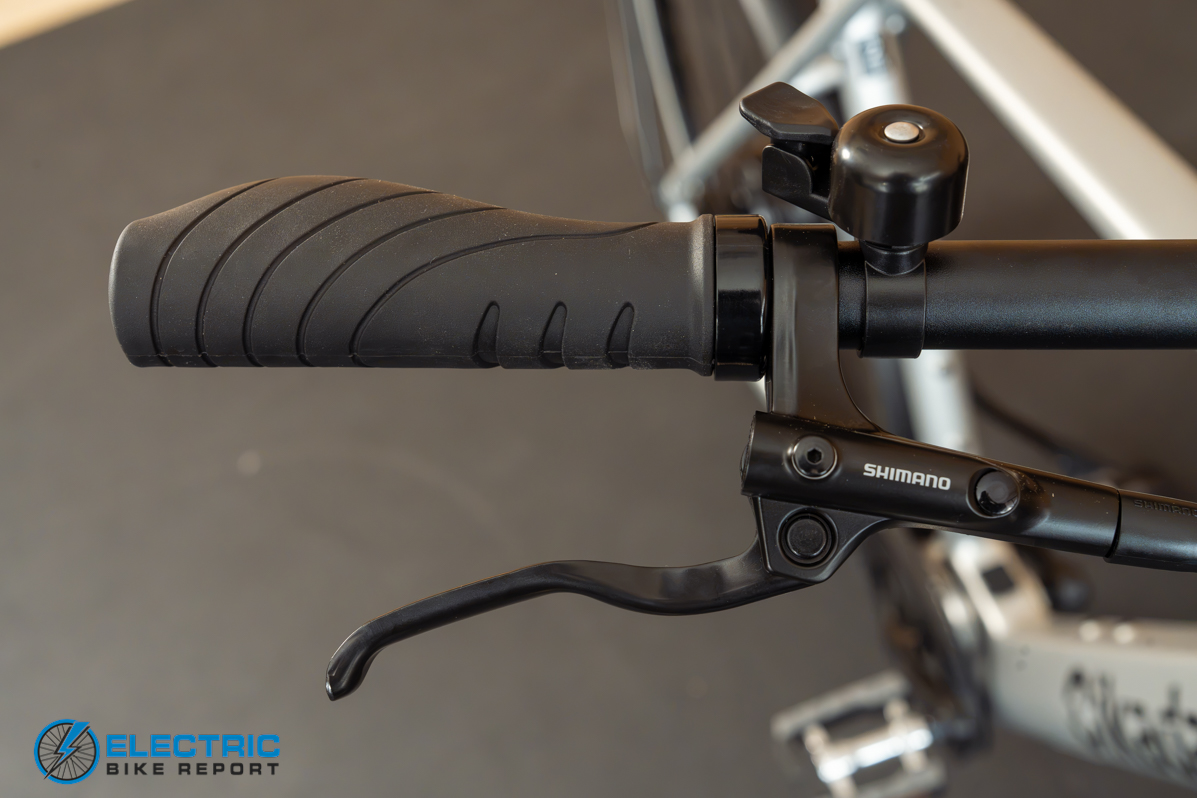
We’d like to see eBike specific brakes on the Urban Cruise.
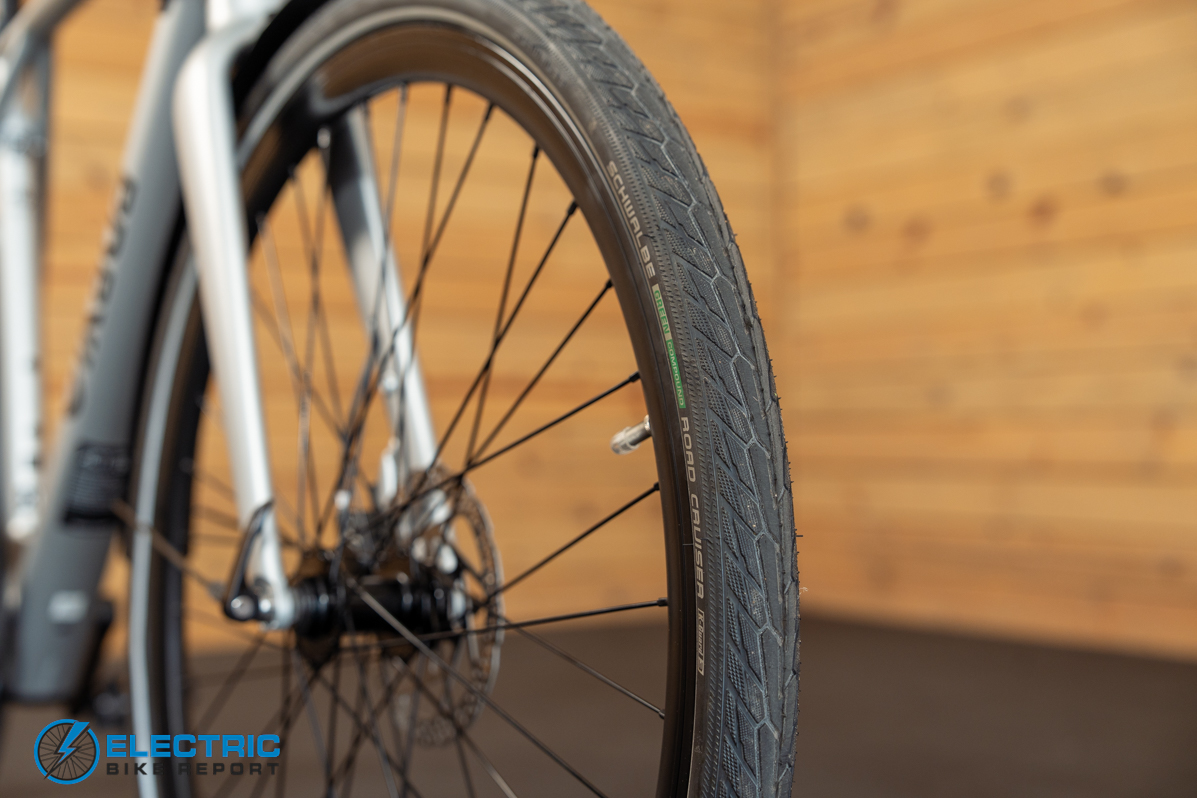
Despite the narrower size, I found these schwalbe tires to give good grip.
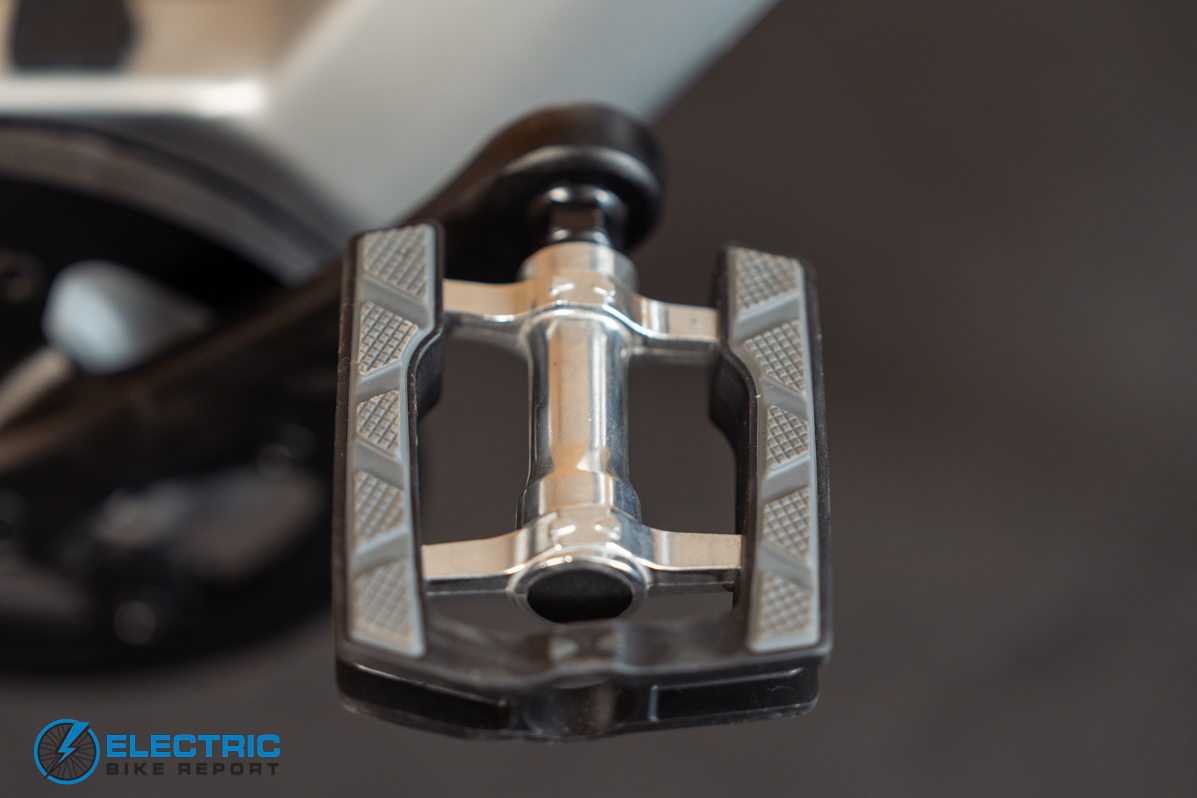
The pedals have a solid metal construction with this pattern for grip.
Cikada Urban Cruise Review: Ride Quality
This is an area where the light weight and streamlined approach pays dividends. The Urban Cruise is not a cushy, luxurious bike – but it has several strengths in terms of ride quality.
The first is that the handling is spot on. The Urban Cruise feels nimble, responsive, and effortless. It’s reminiscent of an analog bike; and I mean that as a complement. I almost forgot that the motor and battery were there.
There are a few reasons for the sharp steering. The first is that this bike is fully rigid, meaning no suspension. Every input to the handlebars goes directly into the pavement, with nothing interrupting that communication. This, along with the narrower tire width, make this bike feel catlike.
Power delivery is another strength of the Urban Cruise. I found the motor to be remarkably smooth. It does require that you pedal with some effort, but the low weight and rolling resistance make it easy to do so. My pedal input and the torque sensor seemed to be in sync with each other about 90% of the time – it’s hard to catch the motor off-guard, and it engages with decent quickness.
Cicada offers three sizes on this bike, with the total height range being from 5’3″ to 6’5″. We received the XL size, which fits riders from 5’11” to 6’5″.
I’m about 6’3″, and found the sizing to be very accurate. The fact that several options are offered is a big plus; I can almost always get by on a unisize eBike, but it usually requires some sort of compromise. The Urban Cruise was comfortable for me both in terms of leg extension and reach. While I can’t speak for the other two sizes, our tester suggests that Cikada understands geometry.
City style eBikes do often mean some compromise in certain areas. Like many others in its class, this bike has no suspension. As a result, you will notice bumps and uneven pavement more – this is the tradeoff for light weight and responsive handling.
The riding position is also fairly aggressive; it’s not as poised as a road bike, but not as relaxed as a stepthrough cruiser. I felt that the stance matched up well with the bike’s city-focused mission – a slight forward lean, but not “race mode”.
Simplicity is a central theme on the Urban Cruise, but Cikada still offers a tech experience for those who want it. A passcode can be set for security, and the brand offers an app with ride tracking and maintenance data.
The app is fairly simple, and so is the settings menu, but they are useful. For example, the app counts the battery cycles, which is great from an upkeep point of view. We would like to see an option for class 3 speeds, but otherwise, the uncomplicated approach works well here.
In summary, ride quality is a strength on this bike. It stays solidly in its genre; this very much feels like a city eBike, and a good one at that.
Sponsor
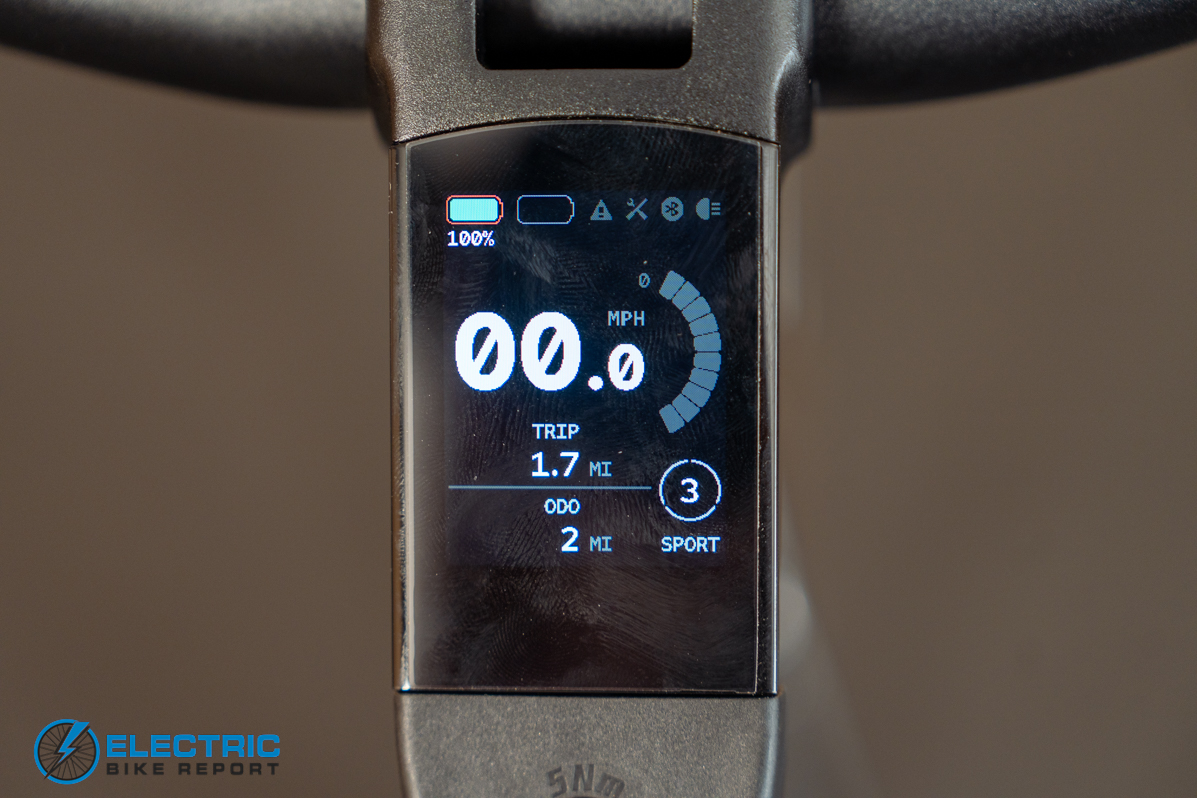
Check out the smooth, stem integrated display.
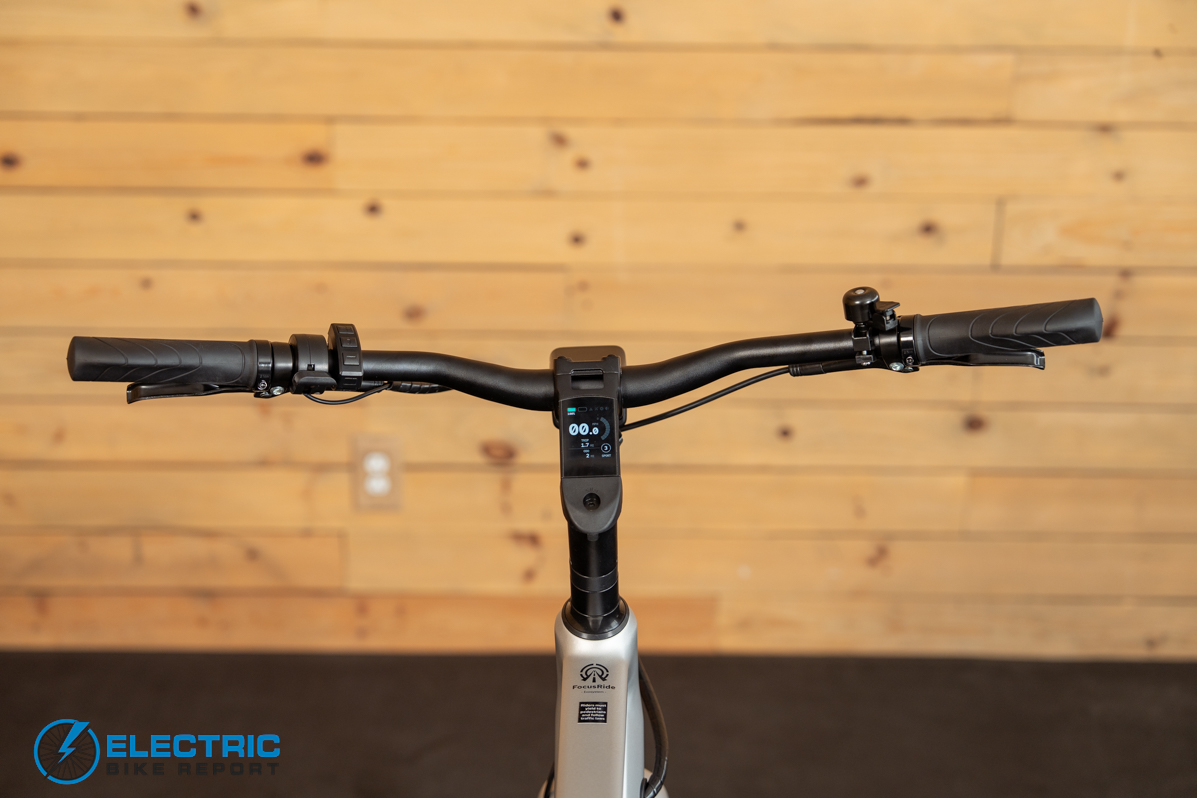
These flat handlebars are a great fit for the Urban Cruise.
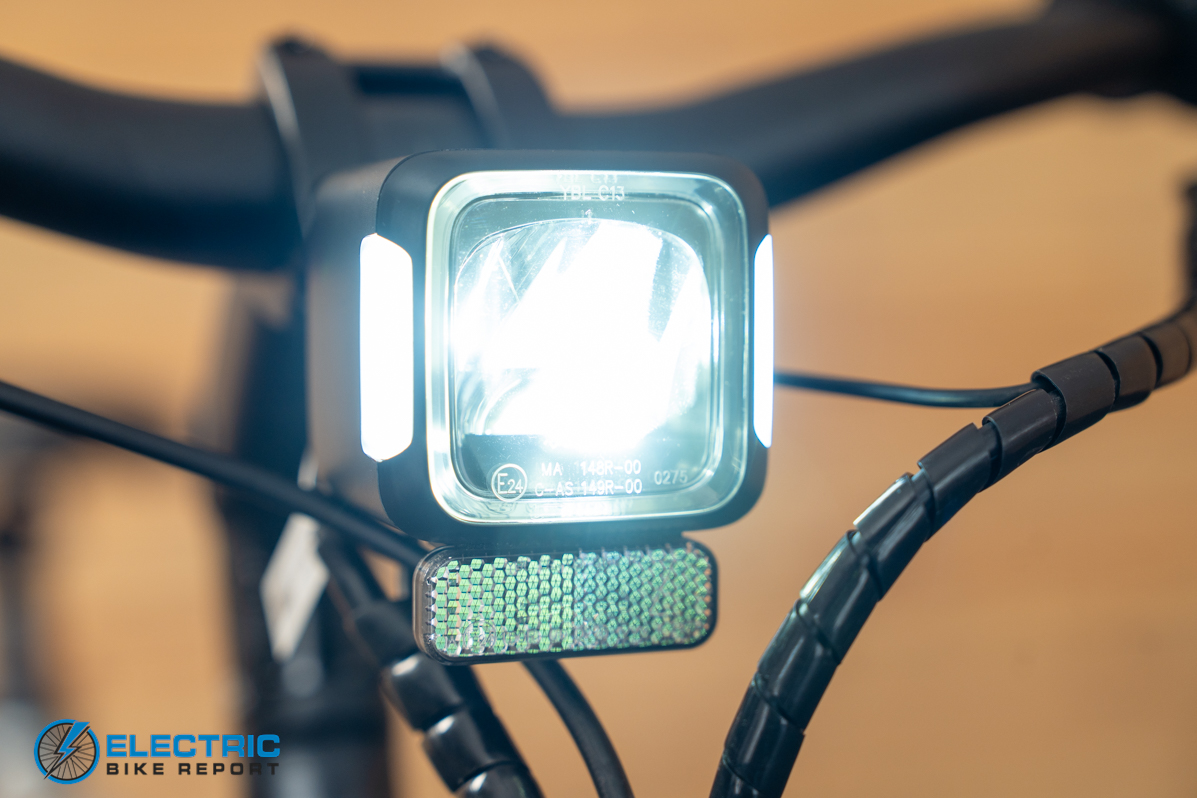
Visibility is key in the city; an integrated headlight helps you see and be seen.
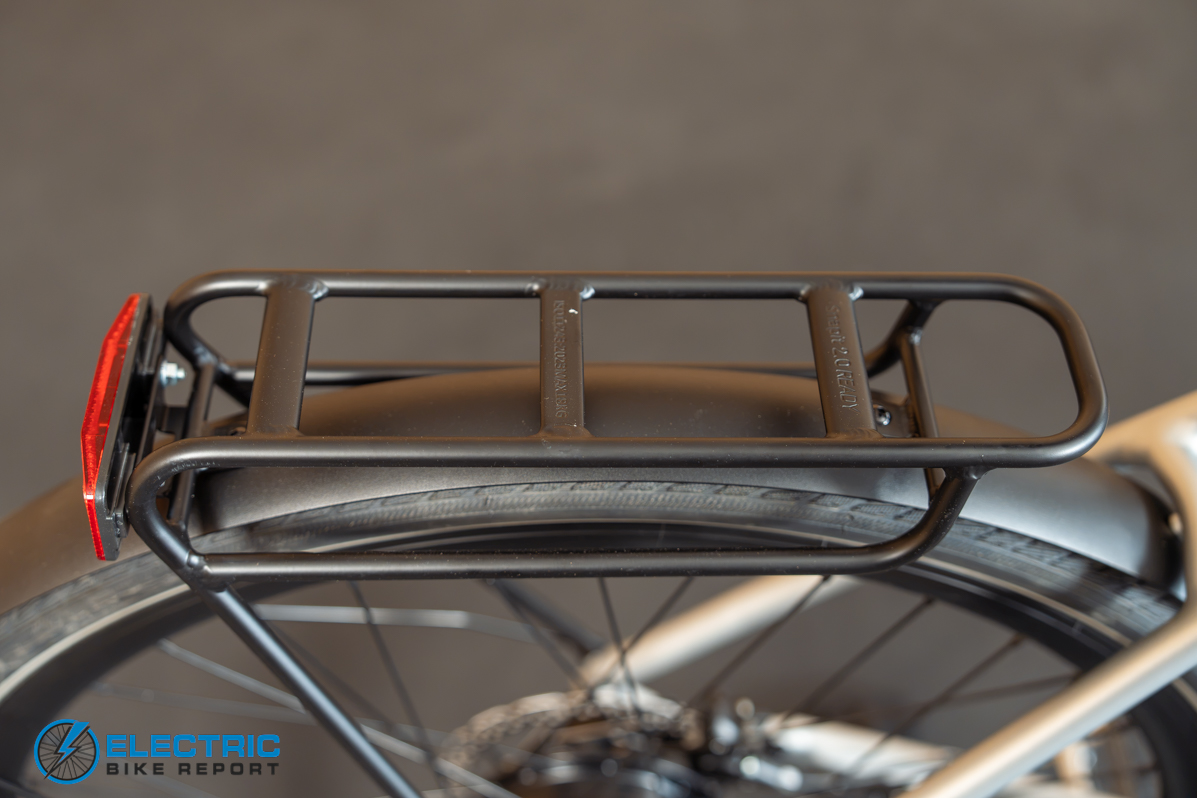
The rear rack is good for 39 lbs, which isn’t massive, but it’s enough for some essentials.
Cikada Urban Cruise Review: Summary / Where to Buy
In our world, “less is more” seems like a fading concept sometimes. We have endless choice in everything – sure, there are positives to this, but sometimes, you just want to hop on your bike and ride.
That’s what I like about the Urban Cruise. This bike is simple, reliable, and uncomplicated, which allows you to focus on the joy of riding.
There’s no doubt that the Urban Cruise is for a specific type of rider. The ideal fit for this bike is someone who likes a streamlined, low-maintence product. Expect to put in some pedaling effort, and understand that it doesn’t pack earth-shattering power.
With that said, if you’re interested in smooth handling, light weight, practicality, and a bike that puts a smile on your face, this is one to look at. To me, this bike has all of the tools to complete its urban focused mission. It’s a great option for city riding.
The main area for improvement is on the braking system. We’d like to see Cikada upgrade to a eBike specific setup with a motor cutoff, as well as potentially larger rotors. These brakes are usable, but this would help improve the Urban Cruise.
All in all though, this bike has the right stuff! It’s a genuinely good city ride, and it’s hard to imagine not having fun on this bike.
Happy Riding! Make sure to let us know if you have any questions or if you think we left anything out in this review of the Cikada Urban Cruise down in our comments section.
Sponsor
Sponsor
Reader Interactions
Leave a Reply