GOTRAX Ranger 16 Review | A Safe & Manageable Mini Moto
Sep 30, 2026
 0 Comments
 Share
Share
This fun-size moped-style e-bike offers an approachable, appealing entry point for young riders—and an affordable, confidence-inspiring option for their parents.
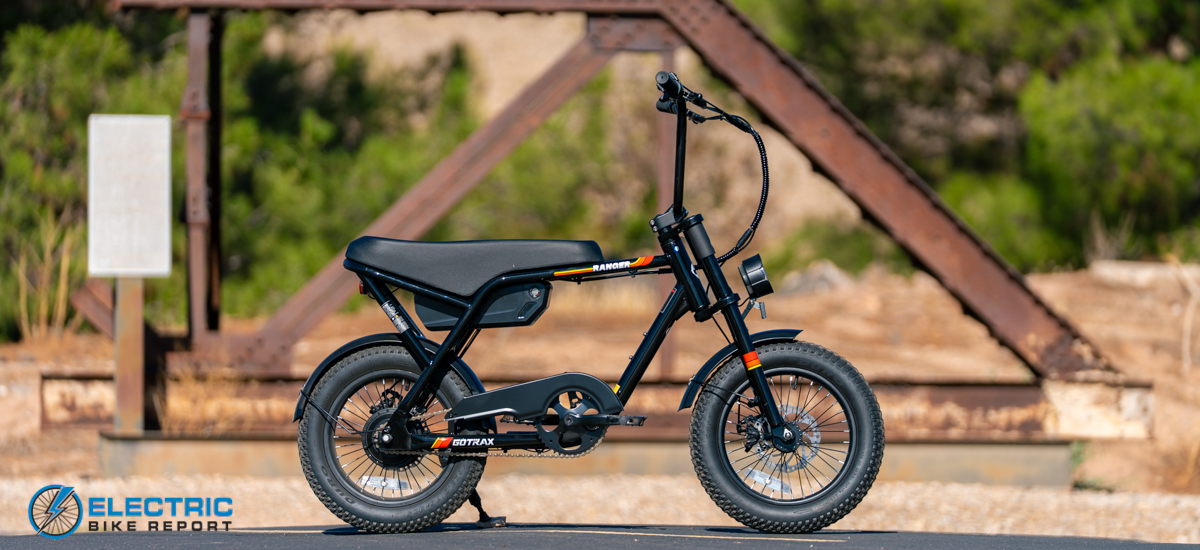
Moped-style e-bikes have experienced a relatively recent surge in popularity, and as such, we’ve tested and reviewed our fair share of models in this category. In our experience, bikes of this style are typically fun, powerful, comfortable, and cool-looking, making them especially appealing to young riders.
There’s just one problem.
Historically, many of these devices have exceeded the speed and power limitations of street-legal e-bikes, making them potentially unsafe for inexperienced kids and young adults. Fortunately, following a crackdown on these high-speed, high-power e-motos in many states, many brands have released appealing e-bikes that are both legal and safe.
The GOTRAX Ranger 16 is one such model. As a Class 1 and 2 e-bike equipped with a 350W rear-hub motor, this miniature moped-style e-bike is aimed at youth wanting a fun and edgy e-bike—and, perhaps more importantly, parents who want a reserved and affordable product that won’t get their kids hurt or in trouble with the law.
The Ranger 16 has a clear moto-inspired design, a comfortable and thickly-padded seat, knobby, multi-surface tires, and enough power to make the ride practical and fun—without threatening to throw its rider off.
Ultimately, balancing safety with a cool factor is a difficult line for an e-bike brand to walk, but based on our first impressions, the Ranger 16 threads this needle well. It checks the boxes for appealing aesthetics, overall functionality, budget-friendliness, controlled acceleration, safe speeds, and comfort.
But how does it compare to similar models we’ve tested? See our full review below to find out!

Sponsor
E-Bike Category:Moped
E-Bike Class:Class 1 (pedal assist to 20 mph)
Class 2 (throttle to 20 mph)
Class 2 (throttle to 20 mph)
Sponsor
GOTRAX Ranger 16 Video Review
 Pros
Pros- The Ranger 16 is both fun and fun-size, thanks to its mini moto inspired design, thumb throttle, and controlled 350W motor.
- It’s among the most affordable e-bikes we’ve tested, priced at a very reasonable $549.
- The bike is comfortable to ride, with a set of adjustable handlebars and a thickly-padded seat.
- The Ranger is simple and easy to use, thanks to its single-speed drivetrain, throttle, three assist levels, and basic (but informative) display.
- It has playful, nimble handling, thanks to its combination of 16×3″ tires and relatively low weight of around 58 lbs.
- Features such as the integrated LED lights (with brake functionality), fenders, and a chain guard add value to an already appealing bike.
 Cons
Cons- Throttle After Pedal (TAP) and gradual acceleration give it a safe feel, but we encourage GOTRAX to add the option for parents to limit speeds below 20 mph.
- While it’s hard to argue with the price, we’d appreciate seeing a faster 2 or 3-amp charger included.
ELECTRICAL SPECS & FEATURES
- Battery: 36V, 281 Wh (7.8Ah)
- Charger: 36V/1.5A
- Display: LED Digital
- Motor: 36V, 350 Watts
- Headlight: Integrated LED
- Taillights: Integrated LED with Brake Light Function
- Pedal Assist: 3 Levels
- Claimed Range: Up to 40 Miles
- Throttle: Right Thumb Throttle
- App: None
- UL Certification: UL 2849 Certified
Weight & Dimensions
- Claimed Weight: 56.9 lbs
- Tested Weight: 57.8 lbs
- Total Payload Capacity: 165 lbs Max Rider Weight
Components & Accessories
- Brakes: Dual J.A.K. Mechanical Disc Brakes, 160mm Rotors F/R
- Fenders: Plastic Front and Rear
- Fork: Dual Crown Rigid
- Frame: High Carbon Steel
- Drivetrain: Single Speed Chain Drive, 42T Chainring, 16T Cog
- Grips: Rubber
- Saddle: Padded Moped Seat
- Handlebar: High-Rise BMX-Style, 640mm
- Kickstand: Included
- Pedals: Plastic Platform
- Tires: 16″ x 3″
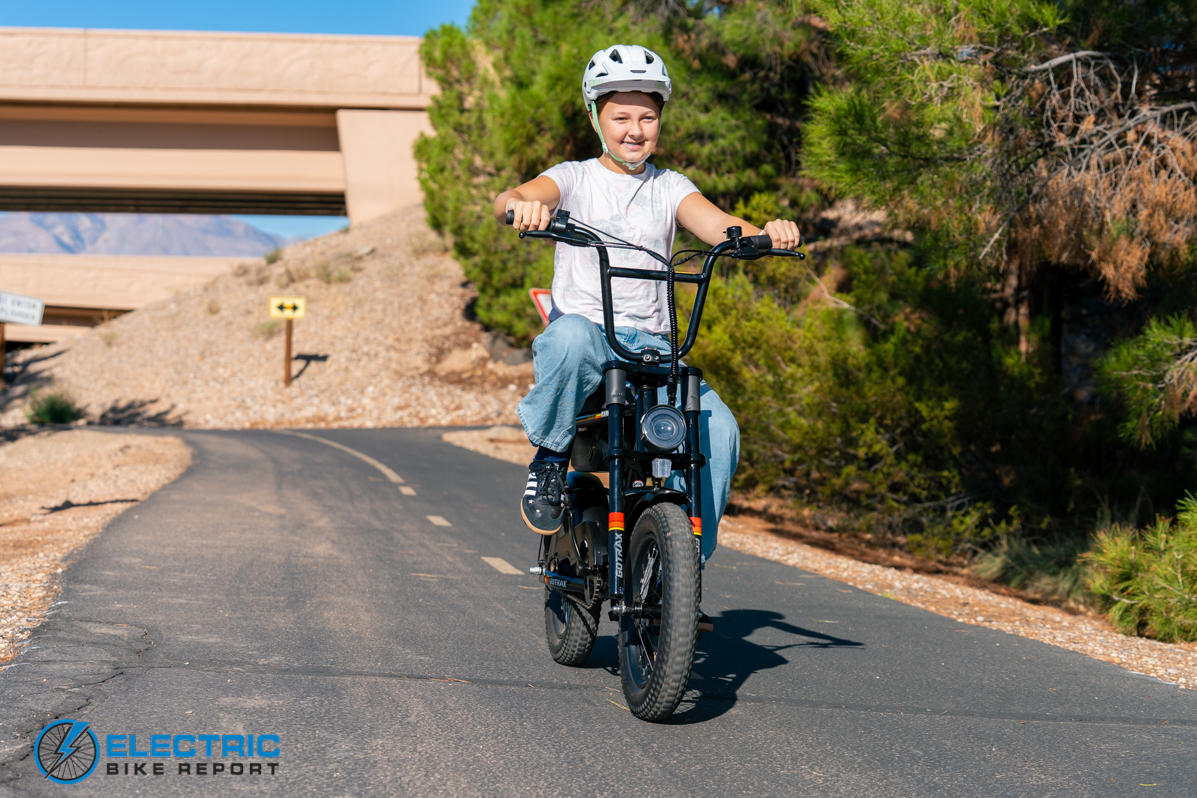
With two Ranger models, GOTRAX offers a fun, moped-style e-bike for the whole family.
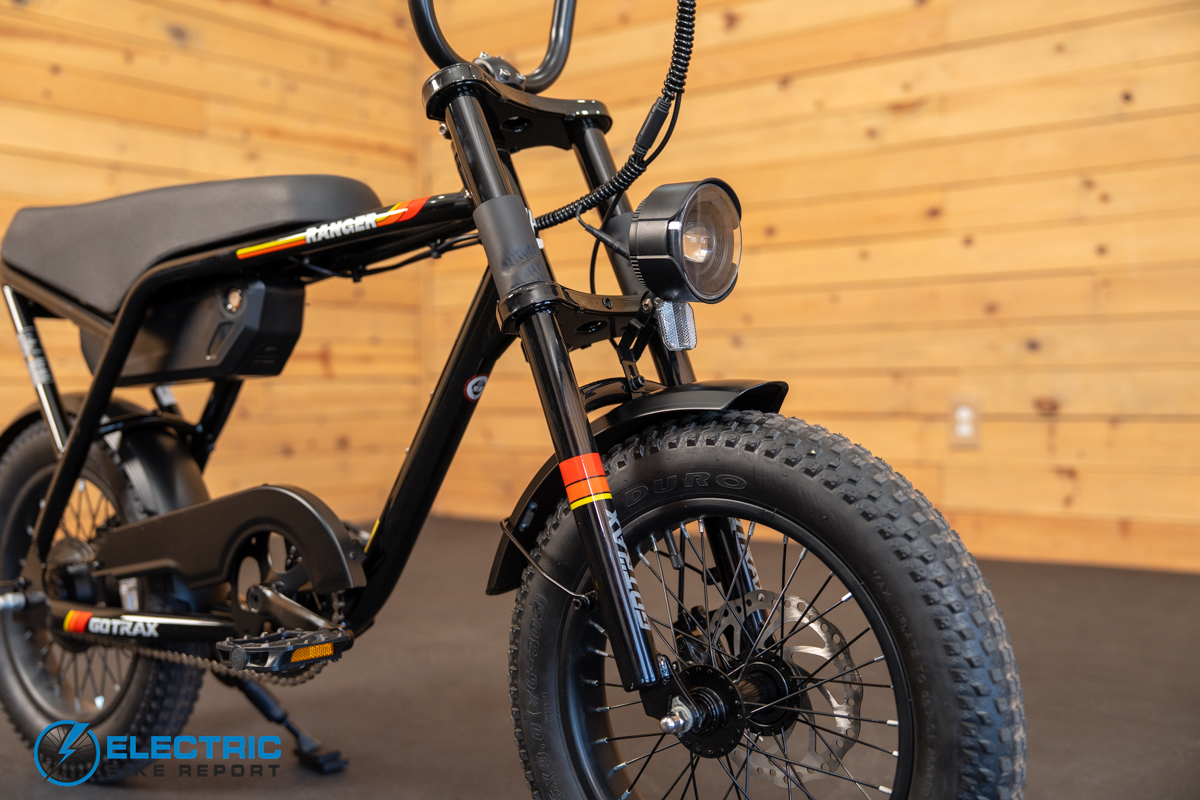
With a rigid dual-crown fork, knobby tires, and a large headlight, the Ranger 16 embraces a moto-style aesthetic.
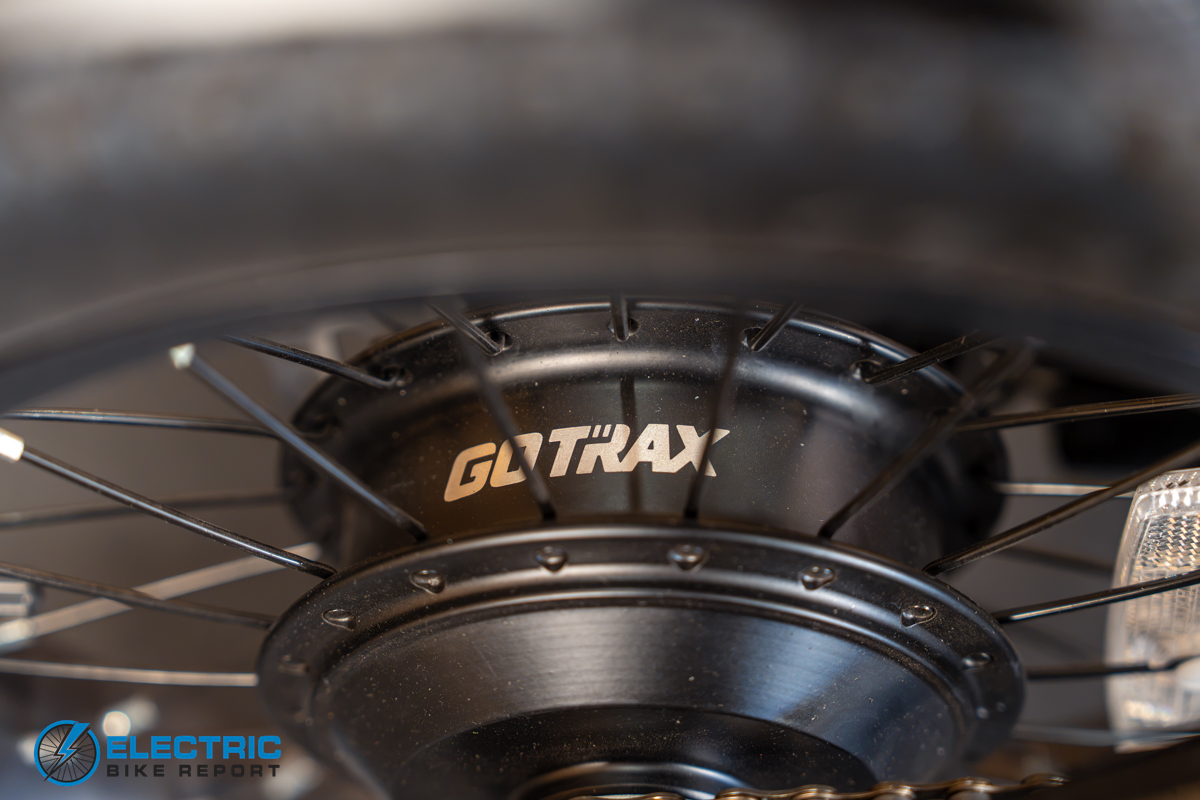
A 350W rear-hub motor powers the bike gently enough for safety and quickly enough for fun.
GOTRAX Ranger 16 Review: Speed Test
Whether using throttle or pedal assist, the GOTRAX Ranger 16 has a maximum speed of 20 mph. It has a right-hand thumb throttle and three levels of cadence-based pedal assist.
For those unfamiliar with e-bikes, this essentially means that riding is relaxed and easy; the Ranger 16’s motor does most of the work as long as the throttle lever is depressed or the pedals are turning (even casually).
I tested the Ranger 16’s throttle and three pedal assist system (PAS) levels by riding in each mode on a flat, paved section of shared use path. Along the way, I monitored my average speed to get a sense of the difference between each assist setting. My results are shown in the graph above.
Starting without pedal assist, the Ranger 16 surprised me somewhat by how pleasant it was to move without power; I attribute this to its relatively low weight when compared with other moped-style e-bikes we’ve tested. I remember thinking that I wouldn’t want to pedal it uphill with only my leg power, but standing provided more leverage when needed.
Moving up through the bike’s three PAS levels, I observed three well-spaced jumps in speed and power. Each assist level corresponds to a preset speed limit (roughly 6, 13, and 20 mph, as shown), which makes each mode clearly defined and intuitive.
From my perspective, PAS 1 provides a slow, controlled speed to get a feel for the bike. PAS 2 ramps up to an approachable but more useful speed. PAS 3 reaches top speed, while doing so at a safe, predictable pace.
When testing the throttle, I noticed that it uses Throttle After Pedal (TAP) programming, meaning that the bike has to be moving via pedaling or a moderate shove-off before the throttle will engage. I appreciate this approach, as it prevents riders from accidentally triggering the throttle, though I do have a couple of wishlist items for the next iteration of the bike.
First, and perhaps most importantly, I’d love to see a “parent mode” that would allow the top speed of the bike to be limited. After all, 20 mph may be a bit fast for young, new, and inexperienced riders. We’ve tested some similar e-bikes with this feature, making them ideal for parents who wish to ensure their children travel at safe speeds when riding.
Additionally, while the bike was comfortable to pedal, tying throttle speed to the PAS level (so they share the same speed limits) would make the Ranger 16 more user-friendly. Finally, as an experienced rider, I would appreciate the ability to deactivate the TAP feature to make it more functional from a complete stop.
As it is, however, I give kudos to GOTRAX for the bike’s intuitive programming, predictable and easy-to-handle acceleration, and fun overall experience.
Sponsor
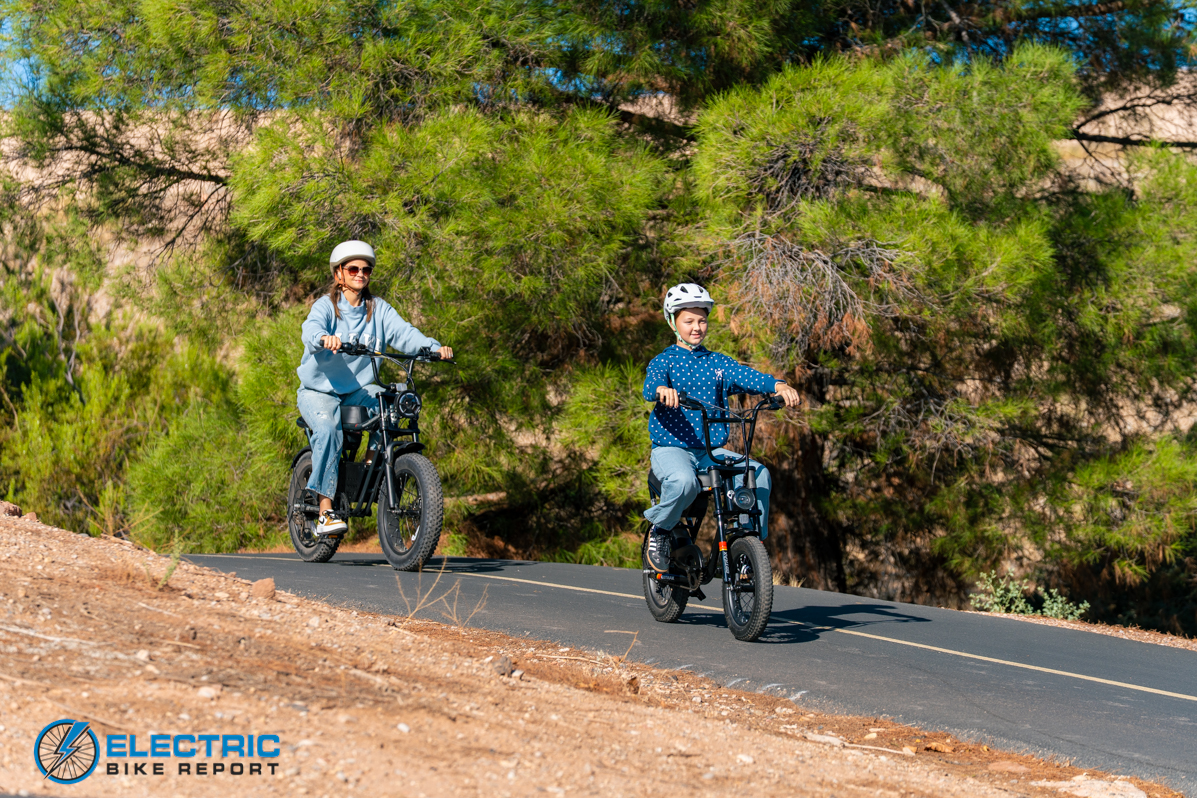
The Ranger 16 is ideally suited for neighborhood cruises, short commutes to school (where allowed), and rides with friends and/or family.
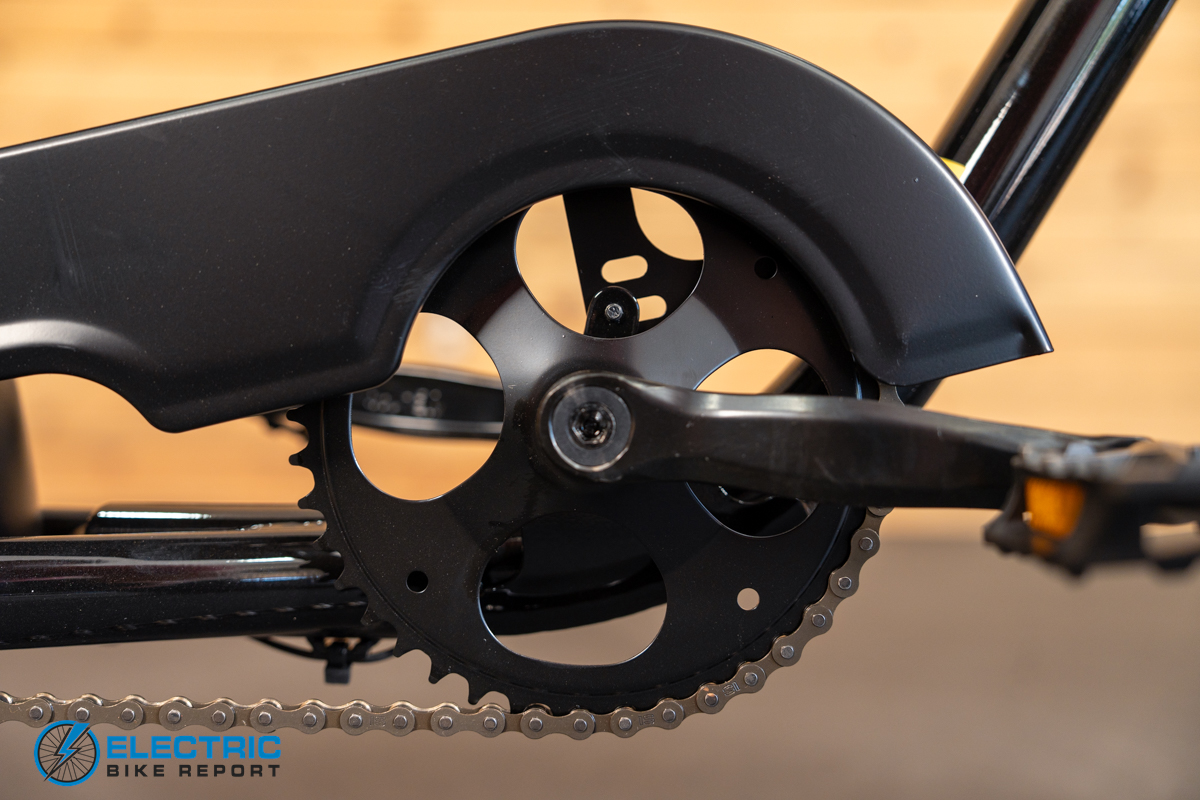
The bike’s single-speed chain drive is shrouded by a chain guard.
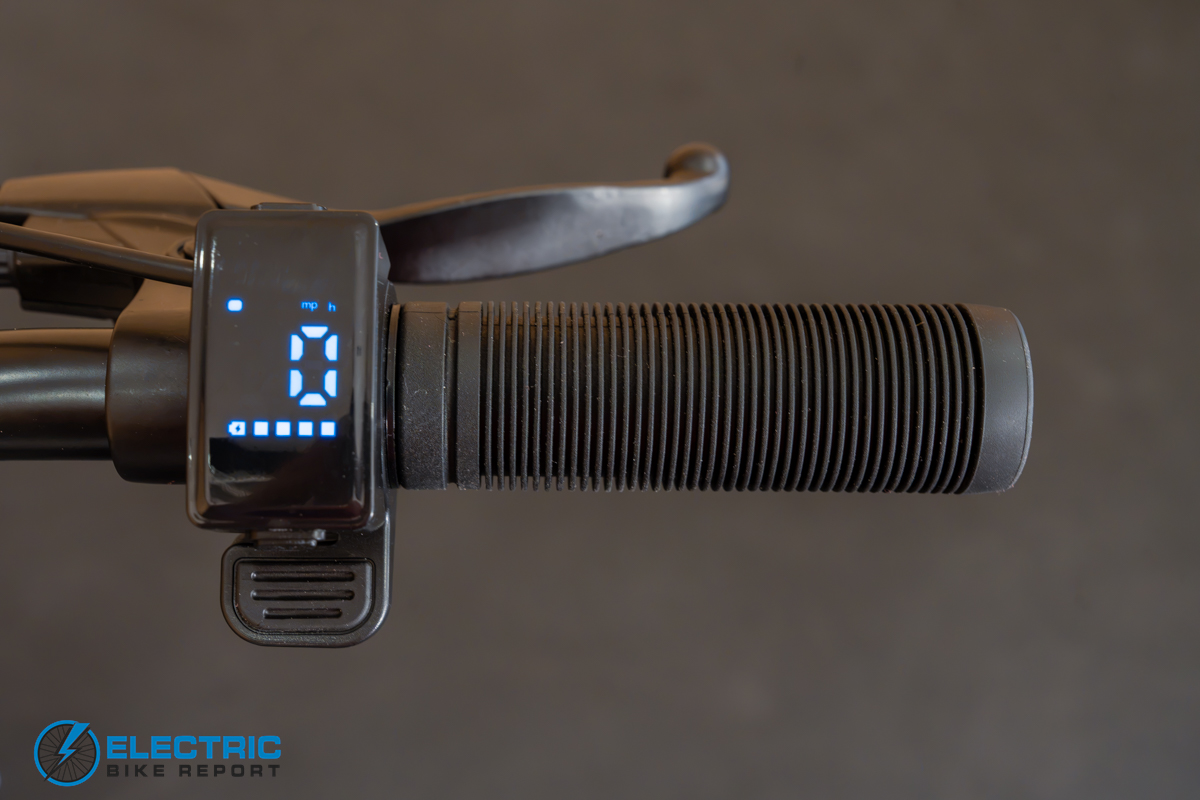
A throttle lever connected to the small but useful display gives another option for getting around.
GOTRAX Ranger 16 Review: Range Test
Our Range Test answers the question of how far a bike can travel on a single charge. Given the Ranger 16’s moto-inspired design, we tested it using only throttle power, since its design is not the most conducive to pedaling. The bike traveled 13.3 miles with its 281-watt-hour (Wh) battery.
While other e-bikes averaged exactly 30 miles in their throttle-only range tests, the Ranger 16’s results were clearly well below this figure. With that in mind, comparing the Ranger 16 with other models is tough for a couple of reasons.
First, all other similar models we’ve tested have been powered by significantly larger batteries and more powerful motors. The Ranger 16’s 350W motor uses less energy than most other bikes, making its battery size more appropriate for its needs, but 281 Wh appears small when compared to the 678 Wh average of similar models in our database.
Additionally, the Ranger 16 differs significantly in price. At the time of writing, the bike is sold on GOTRAX’s website for $549, making it the most affordable moped-style e-bike we have reviewed. Even the standard, full-size GOTRAX Ranger, the next-most-affordable bike we also tested, sells for a much higher $799—other models only go up from there.
Furthermore, while many of these other models are full-size e-bikes meant for adults who may need to commute to work and run errands afterward, the Ranger 16 is a smaller kid-size e-bike with a focus on less-demanding leisure rides.
To be clear, the bike’s total payload capacity is 165 lbs, while I am around 210 lbs; my additional weight likely reduced its range in our testing. Younger riders who weigh less may be able to extend its range beyond my distance.
Ultimately, given its price point and intended audience, we feel that GOTRAX specced the bike adequately. Riders looking to cover long round trips may need to bring a charger and plug in once they arrive at their destination, but the Ranger 16’s modest battery size should accommodate most young users taking leisure rides with friends or cruising to the neighborhood hangout spot.
One area with room for improvement is the Ranger 16’s 1.5A charger. In our experience, faster 2A chargers have been standard for many years, and upgraded 3A and even 4A chargers have become more commonplace relatively recently. We understand that there must be some tradeoffs to achieve the bike’s remarkably low price, but a basic 2A charger would shorten charging times significantly.
Case in point: by the numbers, the included 1.5A charger should take roughly 5 hours and 15 minutes to fully charge the 7.8 amp-hour (Ah) battery when it is depleted. A standard 2A charger would charge the same battery in under 4 hours.
Sponsor
Sponsor
GOTRAX Ranger 16 Review: Hill Test
Our Hill Test is an area where the Ranger 16 fell somewhat behind the pack, though this was not unexpected given its modest 350W motor.
We tested it at our standard test location, the Devil’s Backbone (see the graphic above), using exclusively its throttle and its highest level of pedal assist in two separate trials. The bike was unable to complete its throttle test, though it was successful when our test rider pedaled in PAS 3. Justin’s trip up the hill clocked in at 3:48 with an average of 8.0 mph.
To date, we have only tested one e-bike equipped with a 350W hub motor capable of climbing our test hill on throttle power alone. With this in mind, the fact that the Ranger 16 didn’t have the muscle to complete this portion of the test is not only expected—it’s a feature, not a bug. GOTRAX clearly intended it to feel safe and controlled, though this does give it some inherent limitations.
In its pedal test, the Ranger 16’s result was decidedly slow, though again, this is to be expected. Other moped-style e-bikes we’ve tested averaged a time of 1:54, though these bikes had significantly more power across the board. Our comparison group averaged 1274W of peak power and 90 Nm of torque; while we don’t have the Ranger 16’s maximum output, we can expect both numbers to be far less.
In my experience, hills did present some obstacles for the bike, especially when throttling. I could make it up relatively small hills, albeit slowly, but for medium to large hills, pedal effort was required.
Case in point: at our secondary test location, Pilot Hill, throttle power again proved insufficient, but I was able to pedal to the top with an unhurried pace and a moderate level of effort. This showed me that the bike could handle some climbing, though it was most comfortable and enjoyable when cruising on relatively flat terrain.
Of course, there is one big factor to consider: both Justin and I exceed the Ranger 16’s total payload capacity. Riders who fit within its recommended weight limit may have an easier and more enjoyable experience when tackling hills—but given its 350W motor, I wouldn’t expect drastic changes.
Sponsor
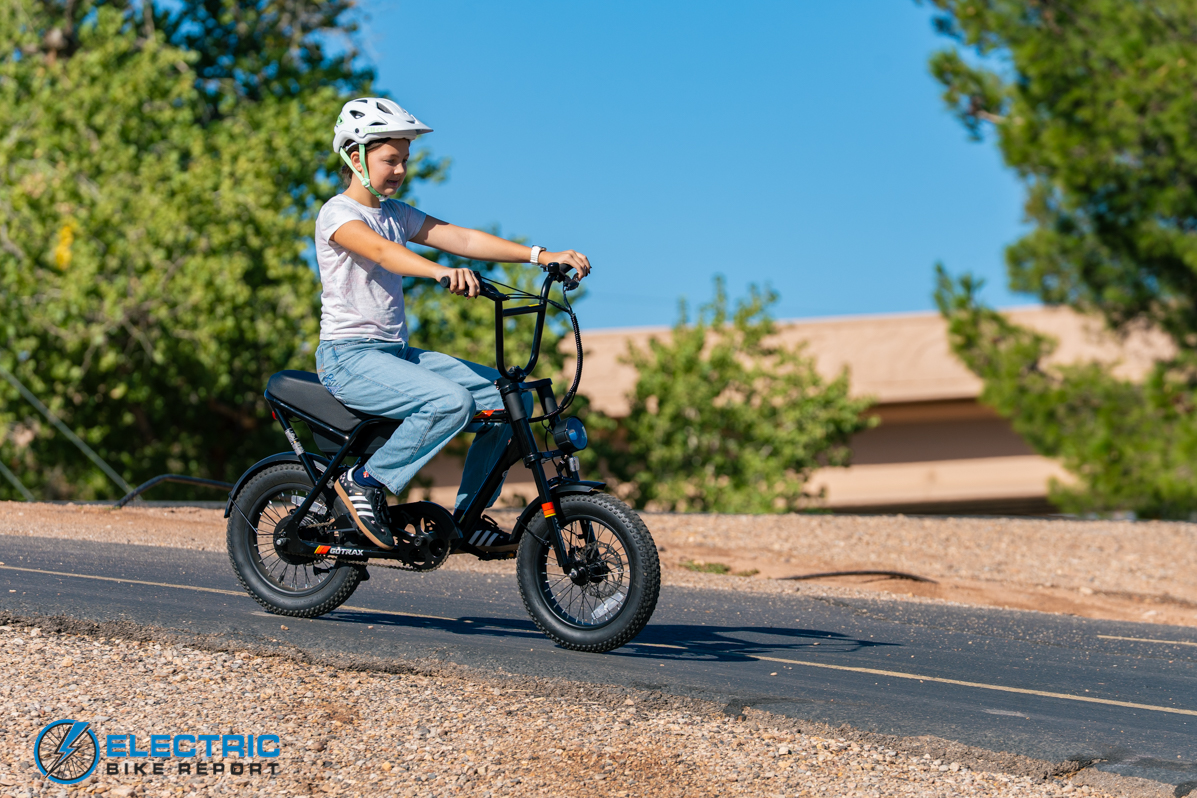
The Ranger 16 is ideally suited for neighborhood cruises, short commutes to school (where allowed), and rides with friends and/or family.
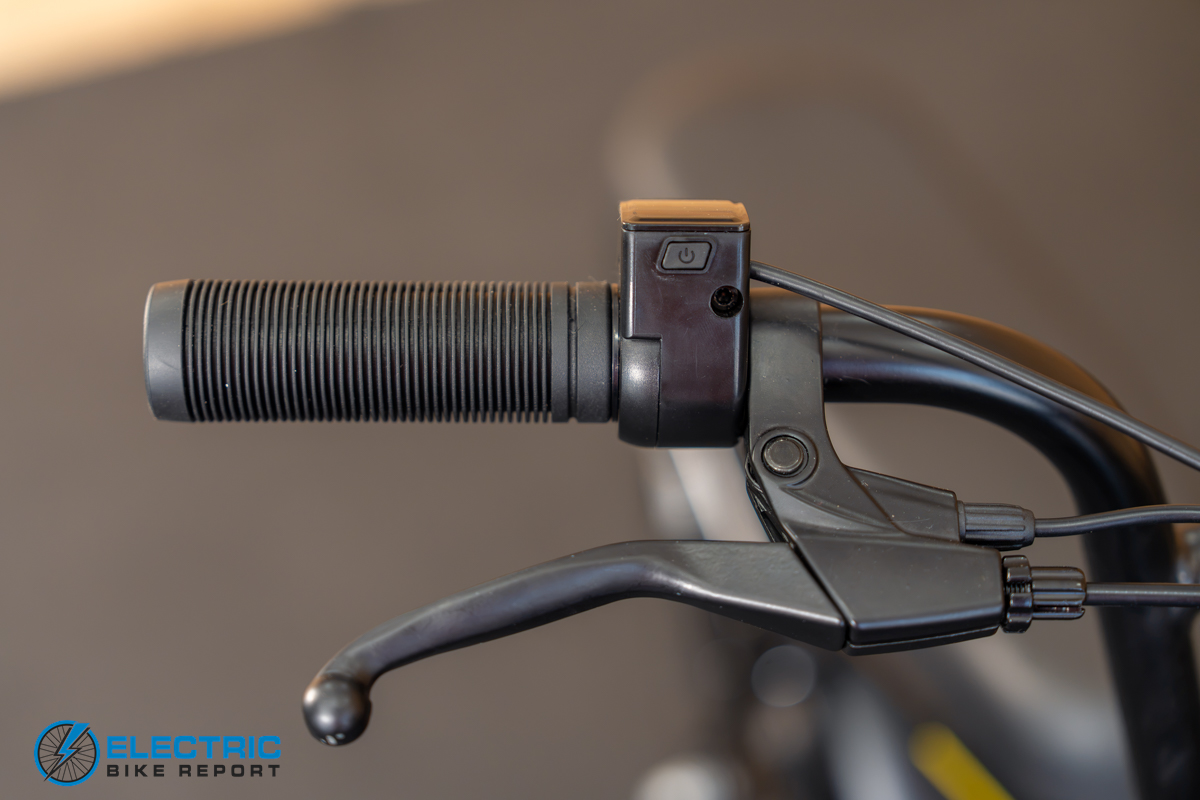
With a mechanical brake system, the brake levers themselves require moderate grip strength.
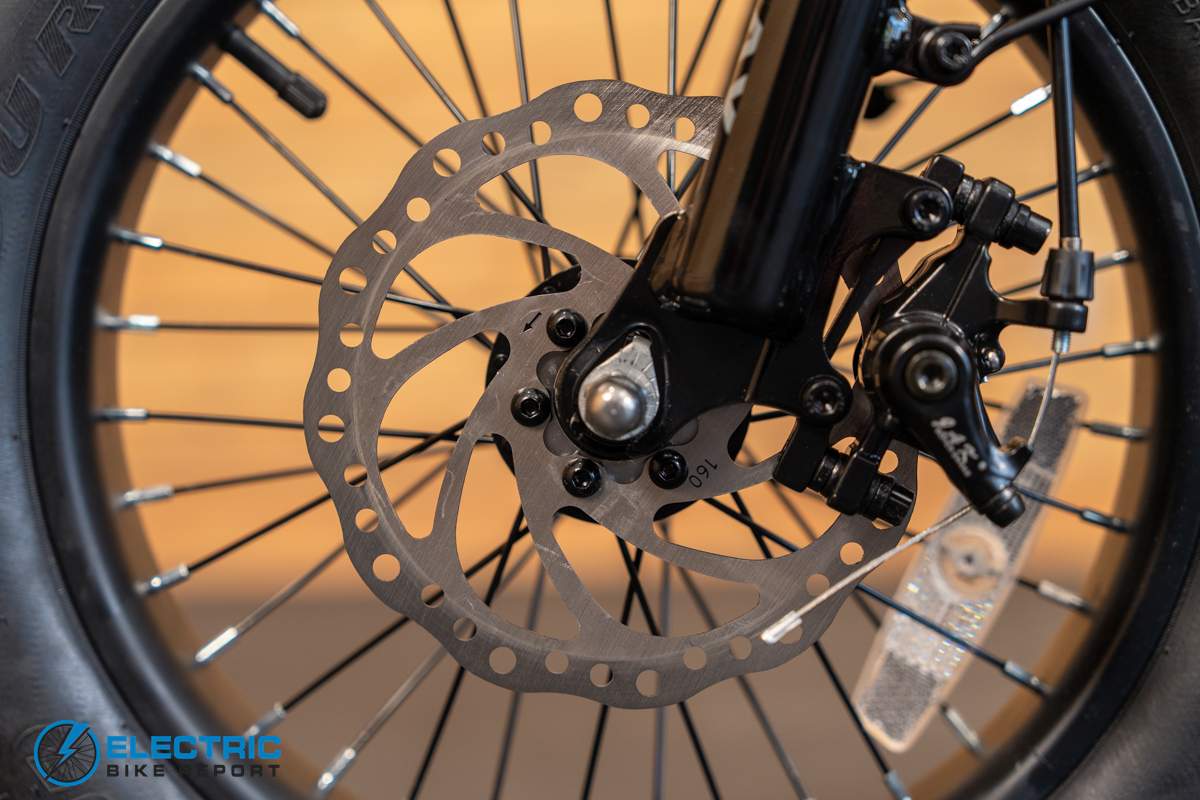
We found the Ranger 16’s brakes to be generally well-matched to its size, weight, and speed.
GOTRAX Ranger 16 Review: Brake Test
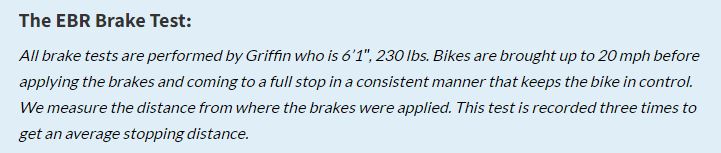
Our Brake Test was an area that the Ranger 16 pleasantly surprised us. We brought it up to maximum speed (20 mph), applied the brakes as it crossed a set of traffic cones, then measured the distance it traveled before stopping. Its average across three test runs was a highly impressive 18’10”.
Similar moped-style e-bikes we’ve reviewed averaged a still-solid 19’8″, placing GOTRAX’s mini moto 10″ shorter in comparison. This was especially noteworthy because the Ranger 16 is equipped with mechanical disc brakes, instead of the more common hydraulic systems on other models—that also tend to perform better.
We attribute the Ranger 16’s great results to a few factors. First, as a bike weighing under 60 lbs, it is significantly easier to bring to a stop than its heavier cousins, which often exceed 80 lbs. Second, while its absence of suspension makes it somewhat less effective at softening bumps, its rigid frame/fork are more effective at transferring energy to the front wheel, making braking more efficient overall.
Additionally, while we’re not certain, it’s possible that the Ranger 16’s low center of gravity may also have given it an advantage.
By feel, the brakes have solid bite and offer good modulation. They’re also relatively quick, and are clearly effective at bringing the bike to a stop safely.
Still, there are a handful of downsides to its brake setup: in my experience, the levers have a relatively long pull requiring a fair amount of grip strength, and the brakes themselves can be a bit loud. None of these things are abnormal for mechanical brake systems, so I’m not including them as formal critiques, just things to be aware of.
In practice, mechanical brakes do have some advantages over hydraulic systems, including lower cost and less maintenance, which can certainly justify their use. With those things in mind, as well as the Ranger 16’s overall test score, we consider it to be specced safely and appropriately for both its speeds and price.
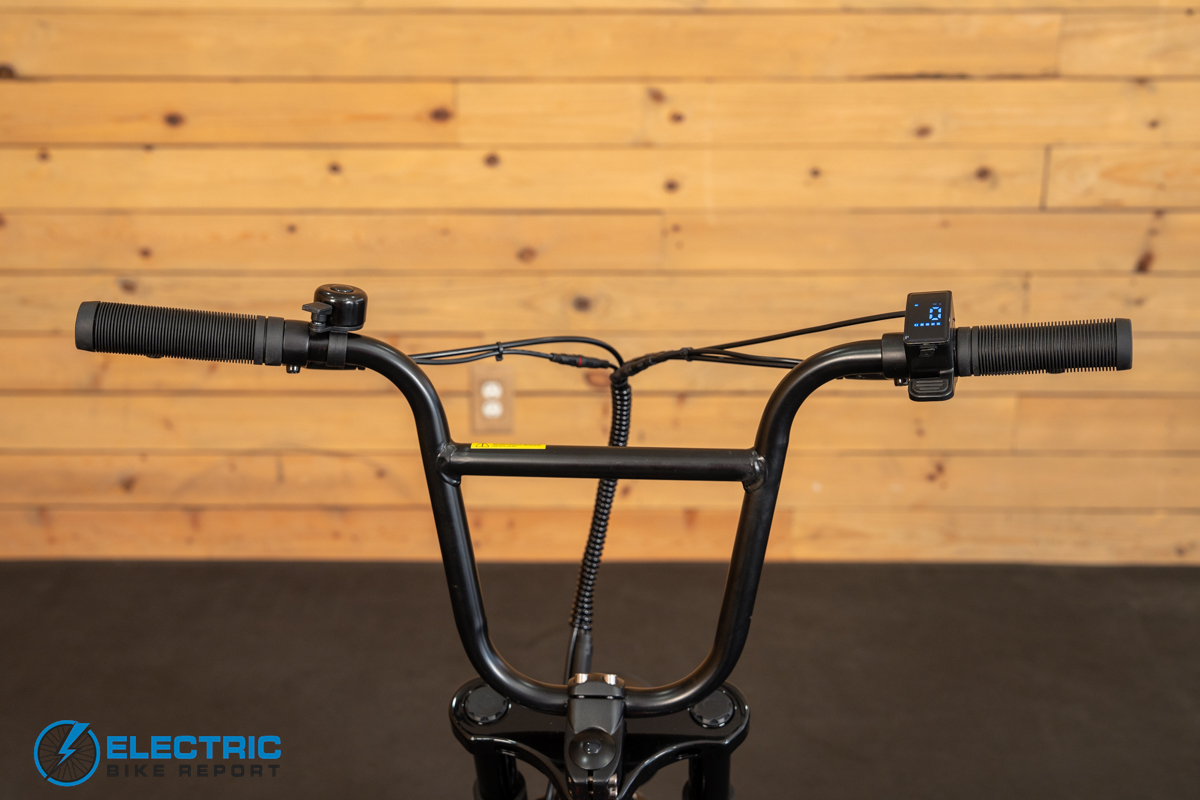
High-rise BMX-style handlebars offer a cool look, comfort, and plenty of adjustability.
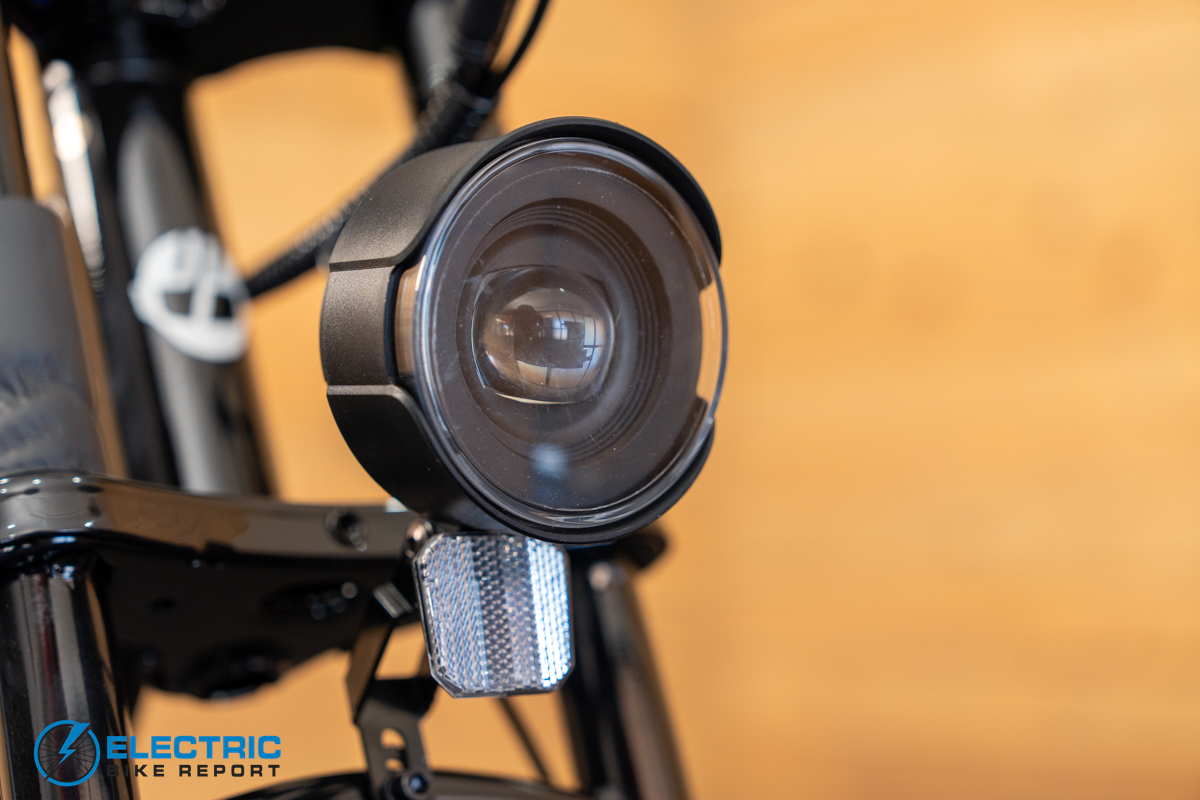
A large integrated LED headlight provides light when riding during evenings or early mornings.
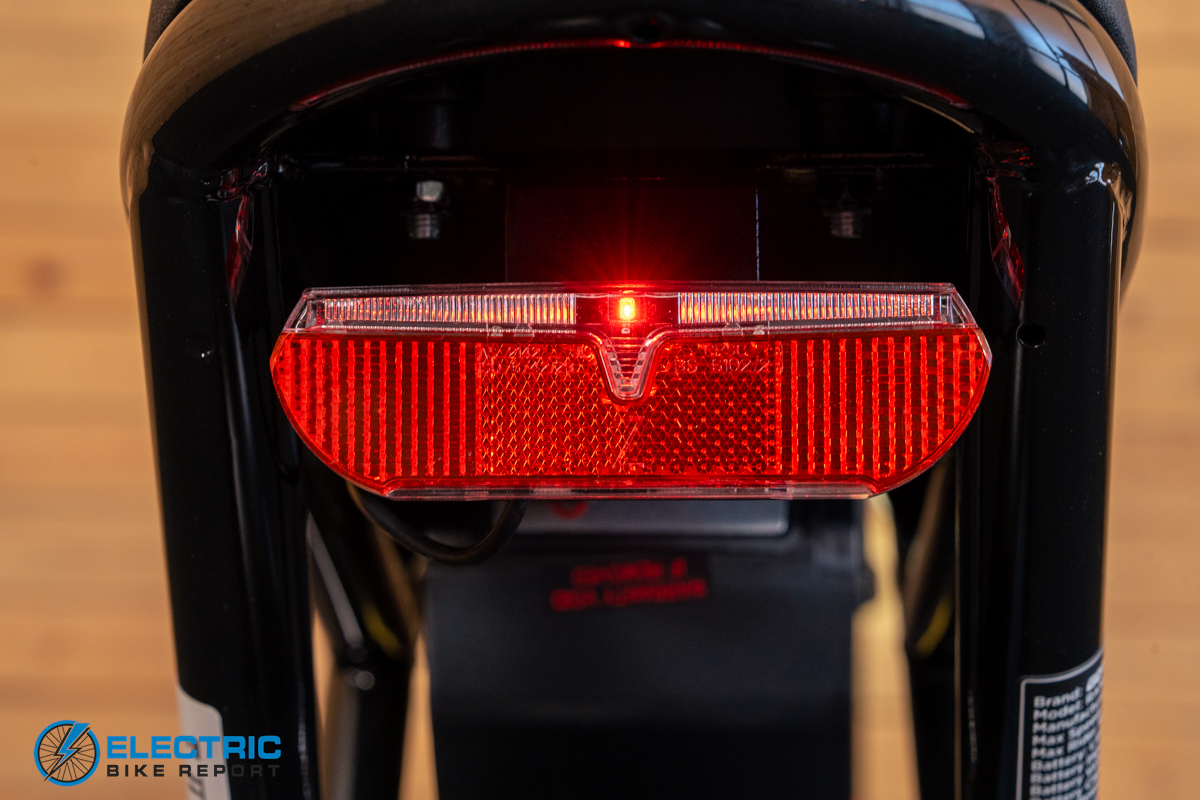
The integrated tail light serves as a brake light when the brake levers are squeezed.
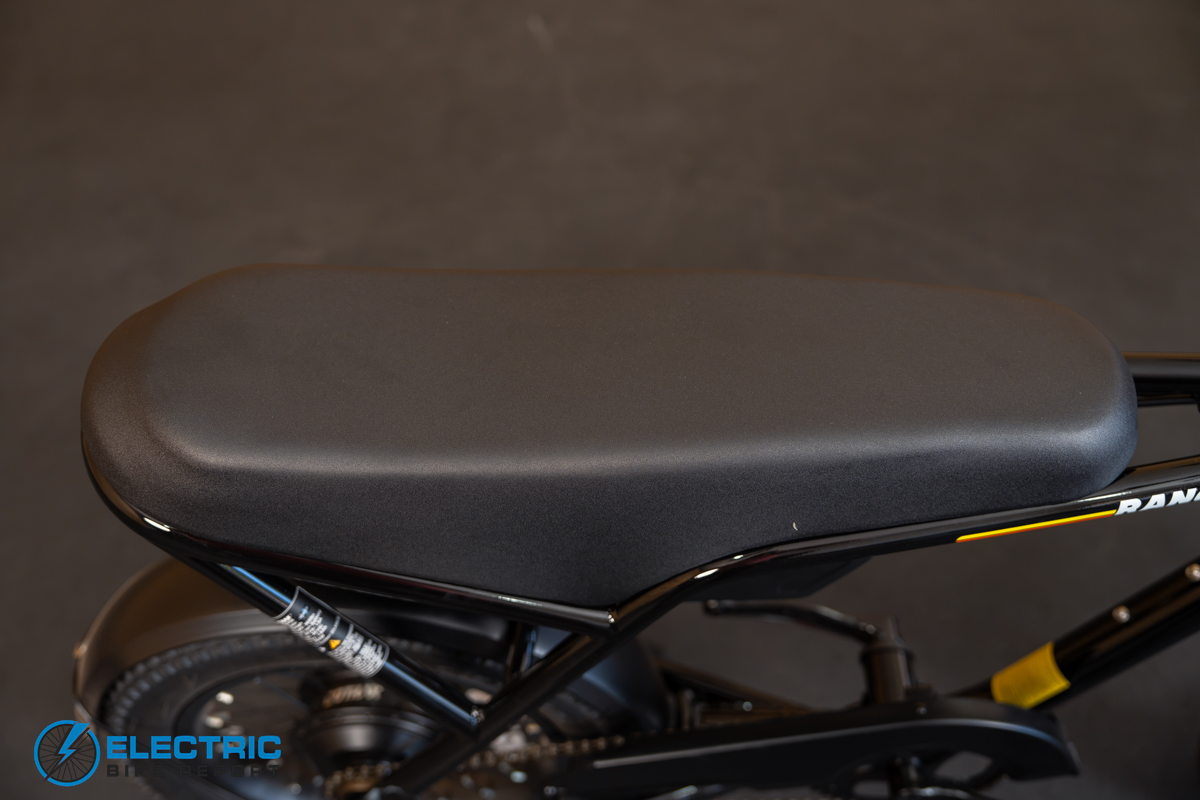
We found the padded bench-style seat soft and comfortable.
GOTRAX Ranger 16 Review: Ride Quality
Ride quality is one of the more unique aspects of the Ranger 16—primarily due to its small size. As I’ve mentioned above, I exceed the bike’s maximum rider weight of 165 lbs by a good margin, but I found it comfortable, sturdily constructed, and a heck of a lot of fun to ride!
While the bike is of relatively short stature, I found it unexpectedly comfortable to ride. Sure, there’s somewhat of a cramped feel when pedaling, but even significantly larger moto-inspired e-bikes tend to share this aspect. Ultimately, I liken the feel of sitting on the bike to sitting on a staircase with your feet one or two steps below your bum.
As far as adjustability goes, the Ranger 16 is expectedly limited. Like most other e-bikes of this style, its padded bench-style seat is static, so there is no way to alter leg extension other than scooting forward or back on the saddle. The BMX-style handlebars, however, can be rotated toward or further away from the rider, thereby changing reach and overall comfort.
I already mentioned the absence of suspension; while this does inescapably make bumps more noticeable, I thought the bike’s ride was adequately smooth. Its saddle is thickly padded and able to absorb many bumps, and its 16×3″ tires also add a bit of cushion. You may still want to stand or lift yourself off the saddle when encountering big bumps, but if the road is relatively smooth, you should be in good shape.
In terms of handling, I found the Ranger 16 relatively nimble, but also somewhat twitchy. Named for its small-diameter wheels, the bike is uncommonly lightweight and extremely maneuverable, but its 640mm handlebars felt somewhat narrow. It’s possible, however, that this could be less of a concern for riders who are smaller than I.
GOTRAX equipped the bike well for its price. It features basics like the thumb throttle and handlebar-mounted LED display, but it also includes useful extras such as integrated lights, fenders, and a chain guard. There are even brake lights—which aren’t even a guarantee on e-bikes 4x the Ranger 16’s price, proving its solid value.
The overall pedal experience is extremely relaxed and low-effort. A cadence sensor ensures that the motor delivers power as long as the cranks are turning, so it’s easy to move the bike with a casual approach and only light pressure on the pedals.
Overall, the bike is remarkably straightforward and easy to operate, which makes it ideal for new riders. The simple LED display shows only the most relevant ride data, and makes it easy to select one of three pedal assist levels. Riders can either engage the thumb throttle or pedal the single-speed drivetrain without worrying about gear changes. Personally, I’d prefer a half-twist throttle to the thumb lever for comfort on longer rides, but the current setup is definitely not a dealbreaker.
One final aspect of the Ranger 16’s ride quality to mention is the fact that, since the bike sits low, rider visibility is something to be aware of. When riding around vehicular traffic, I noticed that drivers seemed to have a more difficult time seeing me than when riding a taller bike. Standing certainly helped, but I might recommend getting a brightly colored helmet and avoiding a dark wardrobe to maximize visibility.
The bottom line is that the Ranger 16 is exactly what it needs to be: an enjoyable, easy to use e-bike that’s fun and well put together.
Sponsor
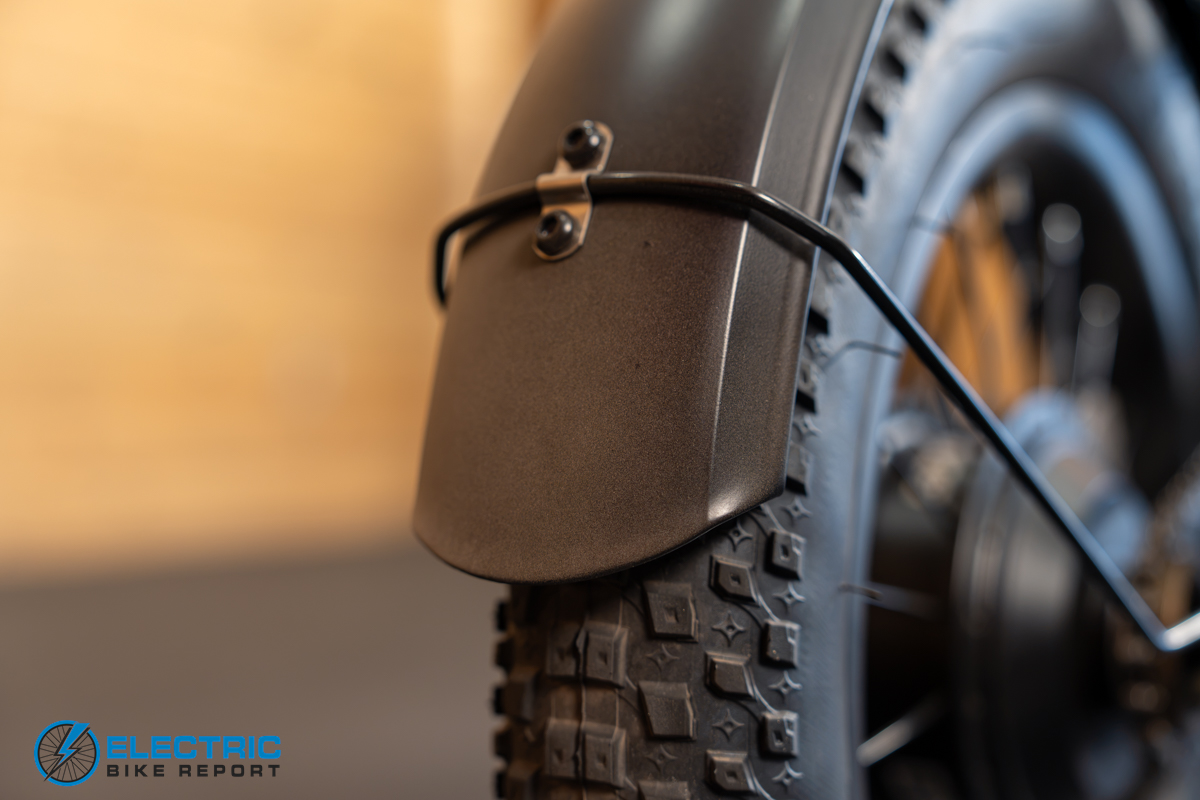
Both wheels are covered by plastic fenders.
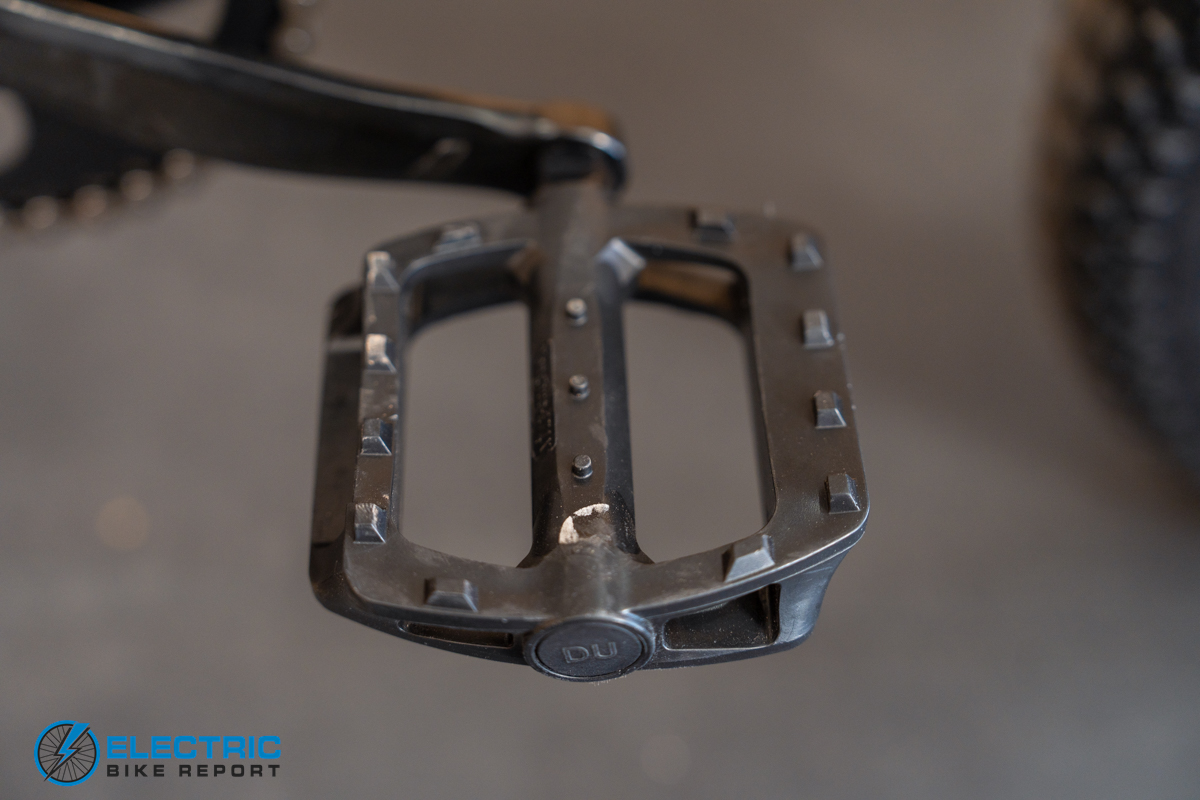
Plastic platform pedals include studs for grip.
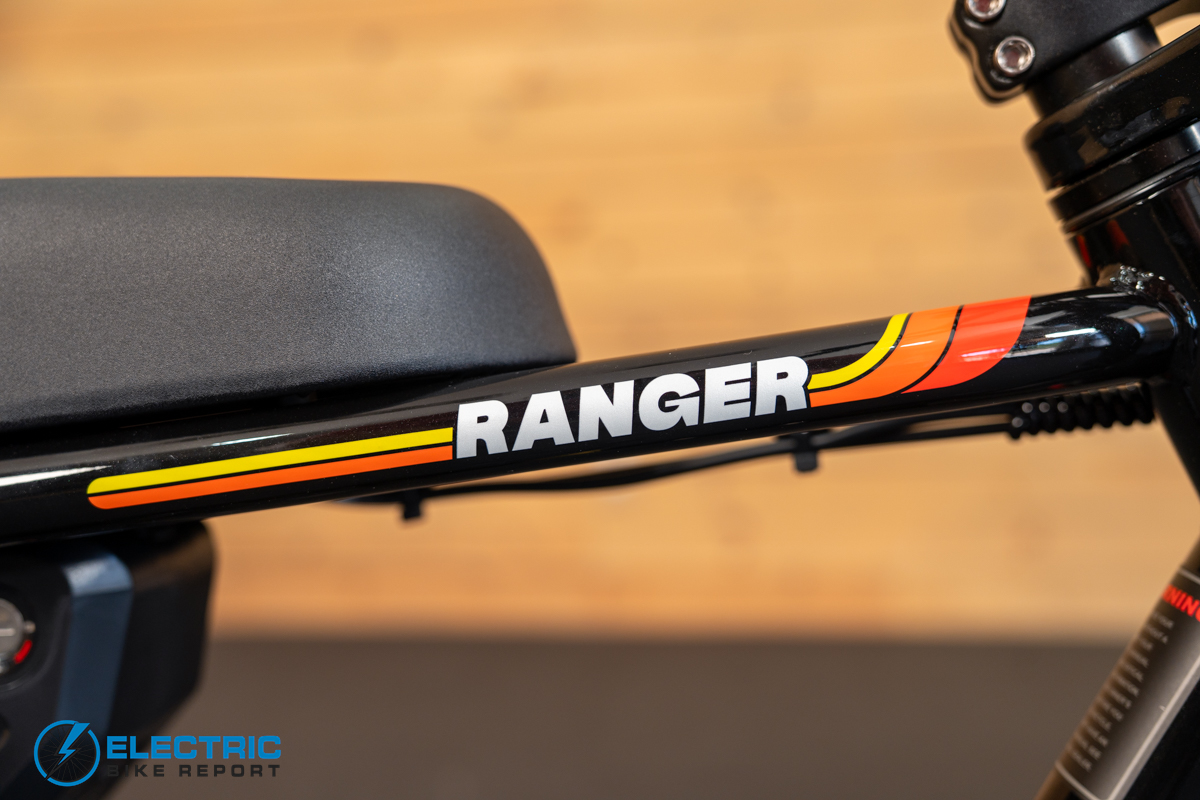
The Ranger 16 features a black paint job with orange, yellow, and white accents / logos.
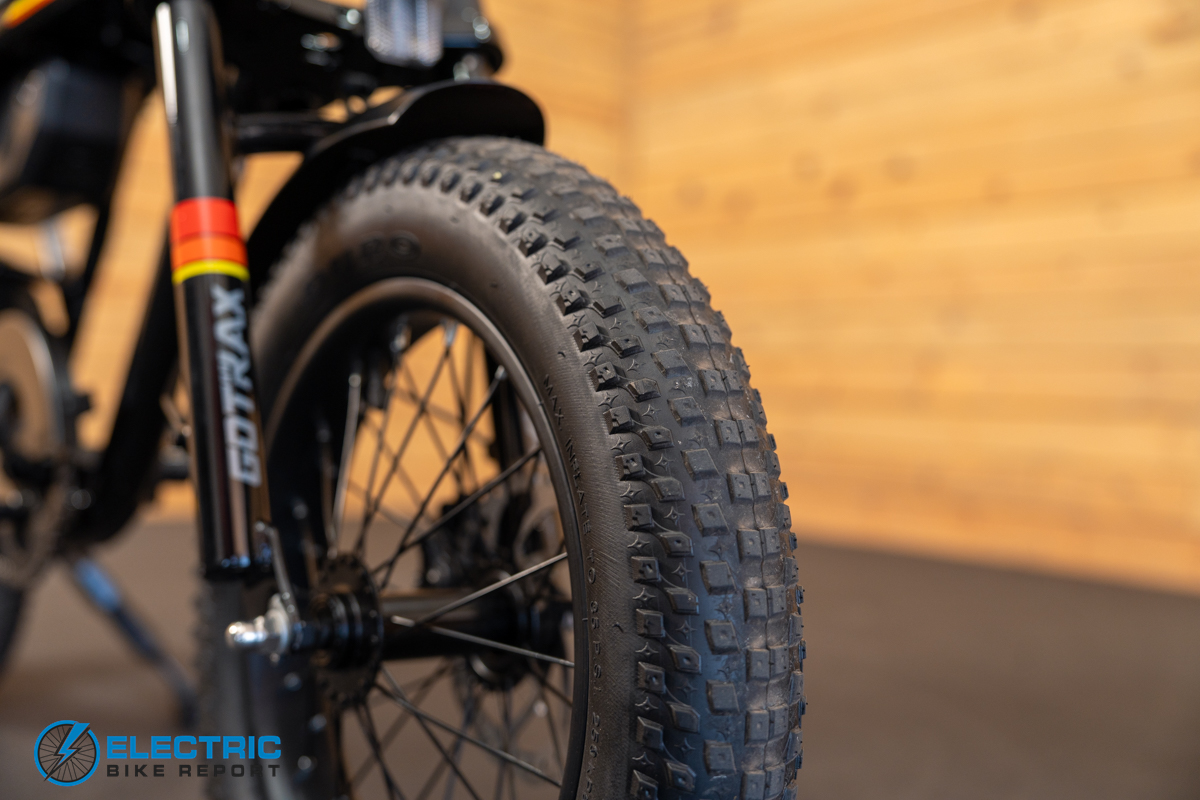
Knobby tires allow for limited off-roading on relatively smooth dirt or gravel.
GOTRAX Ranger 16 Review: Summary / Where to Buy
While youth-oriented e-bikes are becoming more popular, the GOTRAX Ranger 16 is still a relatively uncommon take on a model in the moto/moped-style category. Its small size, modest payload capacity, and conservative motor make it appropriate for young riders, while its overall comfort and cool looks are likely to make it attractive, too.
Perhaps most importantly, the bike’s low price, manageable acceleration, and solid performance will surely make it appealing to parents. While I am not personally a parent, I can appreciate the concern that is inherent to being in that role. After consulting with other members of our team who do have kids, we collectively feel that the Ranger 16 does it right.
In terms of measurable performance, the bike generally met, and in some cases, exceeded our expectations. Its Speed Test result showed intuitive programming and controlled speeds, while its Range Test mileage reflected usable, if not particularly enormous potential. Its Hill Test revealed one of the bike’s most significant limitations, though its Brake Test score rounded out our testing with safe, reliable stopping power.
We identified only a couple of areas with room for improvement, though neither is glaring. The ability for parents to limit the bike’s maximum speed below 20 mph would be ideal to ensure safety and peace of mind, while a faster charger would increase the bike’s (already great) value and shorten charging times.
Otherwise, there’s a lot to love about this bike—even for a fully grown adult! The Ranger 16 is fun, playful, easy to grasp, and generally enjoyable to ride. Of course, GOTRAX also offers the larger, more powerful, and more expensive (but still value-packed) full-size Ranger for those who want additional capability, but the Ranger 16 offers a calmer, more controlled, and even more affordable option in a fun-size package.
Happy Riding! Make sure to let us know if you have any questions or if you think we left anything out in this review of the GOTRAX Ranger 16 down in our comments section.
Sponsor
Sponsor
Reader Interactions
Leave a Reply