Puckipuppy Labrador Pro Review | Good Dog, Good Deal
Sep 10, 2026
 0 Comments
 Share
Share
This full suspension, fat-tire eBike offers good value if you’re willing to live with some quirks.
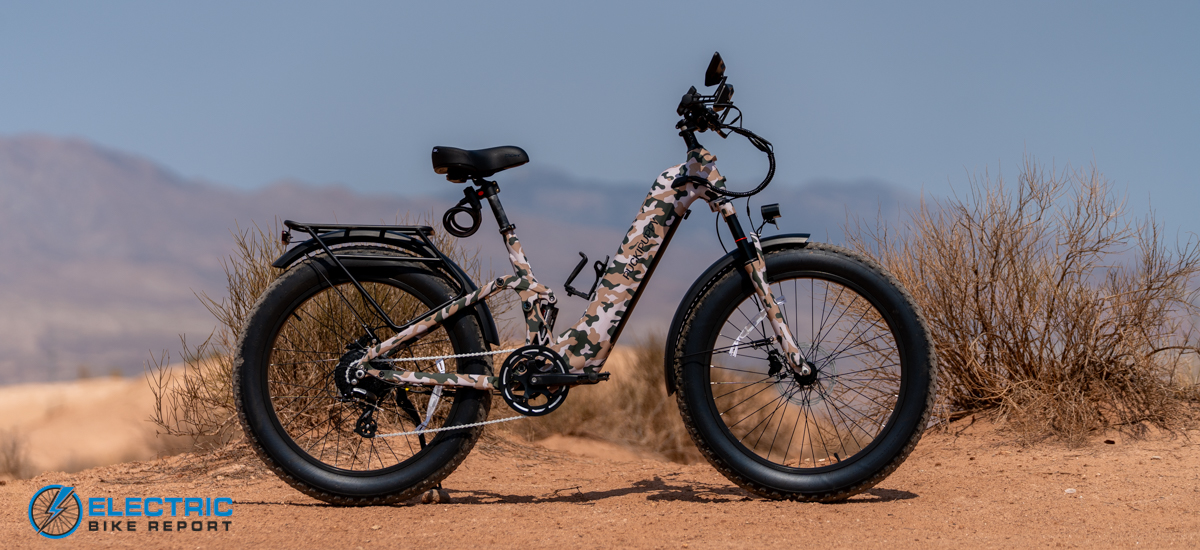
There’s a lot of good reasons to look at the Puckipuppy Labrador Pro ST. Maybe you’re intrigued by the fact that it offers full suspension at an affordable price point; maybe it’s the powerful 750W motor, or the all-terrain capability.
The truth is, while I recognize that there are a lot of logical, “adult” reasons to like this bike, it’s not just the specs that win me over. If I’m really honest, it’s the fact that this bike looks like an overlanding monster.
The fat tires, beefy frame, and (in our test bike’s case) camo colorway mean that this bike definitely looks the part. If Brad Pitt rode an eBike in World War Z, it would probably look something like this.
However, as much as the Labrador Pro appeals to my inner 14-year-old, I also recognize that the mature eBiker probably looks at more than just the paint job before they buy a bike. Growing up isn’t always fun, but it is necessary.
So, while this bike looks great, there are some questions to answer. The reality is, eBikes at this price point do have to make some compromises, and the Labrador Pro promises a lot for the money. On paper, the basics are all present – but does that translate to real world viability?
We put the Labrador Pro ST through our full range of tests to see if this bike is more than just an eye-catcher. Read on to see how it did!

Sponsor
E-Bike Category:Fat Tire
E-Bike Class:Class 2 (Throttle to 20 mph)
Class 3 (Pedal Assist to 28 mph)
Note: The tested bike exceeds class limitations
Class 3 (Pedal Assist to 28 mph)
Note: The tested bike exceeds class limitations
Sponsor
Puckipuppy Labrador Pro Video Review
 Pros
Pros- The Labrador Pro is good value; full suspension isn’t often seen at this price point.
- A removable display adds a layer of security, another impressive feature for the money.
- Off road versatility, due in part to the fat tires, but also to the suspension fork and rear shock.
- There is solid power here – the 750W motor peaks at 1350W.
- Several unique and interesting color options, including the camouflage our test bike had.
- Puckipuppy frequently includes gifts and extras with the purchase of the Labrador.
 Cons
Cons- The bike’s weight, along with some alignment issues, make the handling feel stiff.
- There is no pedal assist limited to 20 mph, and the class 3 pedal assist will reach above 28 mph.
- PAS 1 is slightly light on power – we’d recommend using PAS 2 as an economical option.
ELECTRICAL SPECS & FEATURES
- Battery: 48V 20 Ah (960 Wh)
- Charger: 48V, 2.0 A Charger
- Display: LCD Color Display
- Motor: 750W Hub Motor, 1350W Peak, 85 nm torque
- Headlight: Integrated
- Taillights: Integrated
- Pedal Assist: 5 levels
- Claimed Range: 80 miles
- Throttle: Thumb Throttle
- App: None
- UL Certification: UL 2271 and UL 2849 by SGS
Weight & Dimensions
- Claimed weight: 87.1 lbs
- Tested Weight: 84.0 lbs
- Rider height range: 5’3″ – 6’4″
- Total payload capacity: 400 lbs
Components & Accessories
- Brakes: Logan Two Piston Hydraulic Brakes
- Fenders: Plastic
- Fork: Coil Suspension Fork, 110 mm travel
- Frame: Full Suspension Alloy Step-thru
- Drivetrain: Shimano Acera 8 Speed
- Grips: Rubber Butterfly Style
- Saddle: Comfort Style
- Handlebar: Alloy Flat Bar
- Kickstand: Alloy, Included
- Pedals: Platform
- Tires: 26 x 4.0 Unbranded Fat Tires
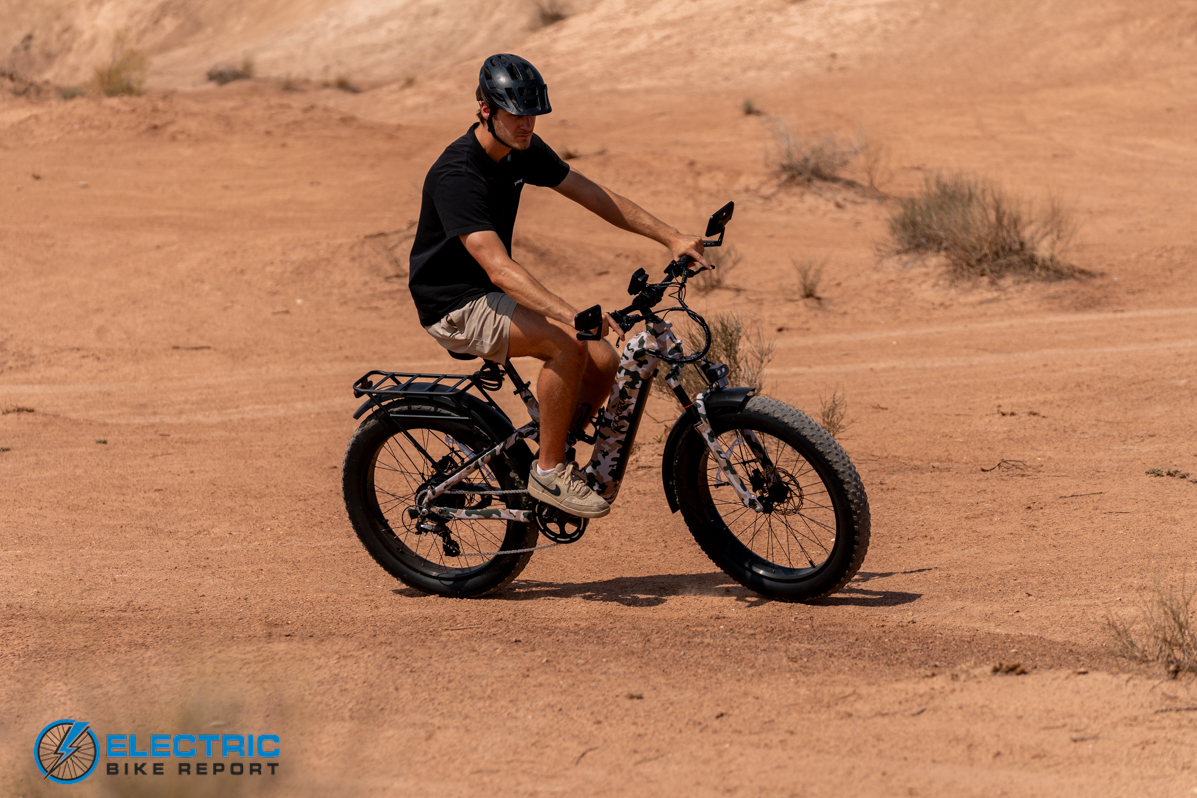
The Labrador Pro ST is capable both on the pavement and where the road ends.
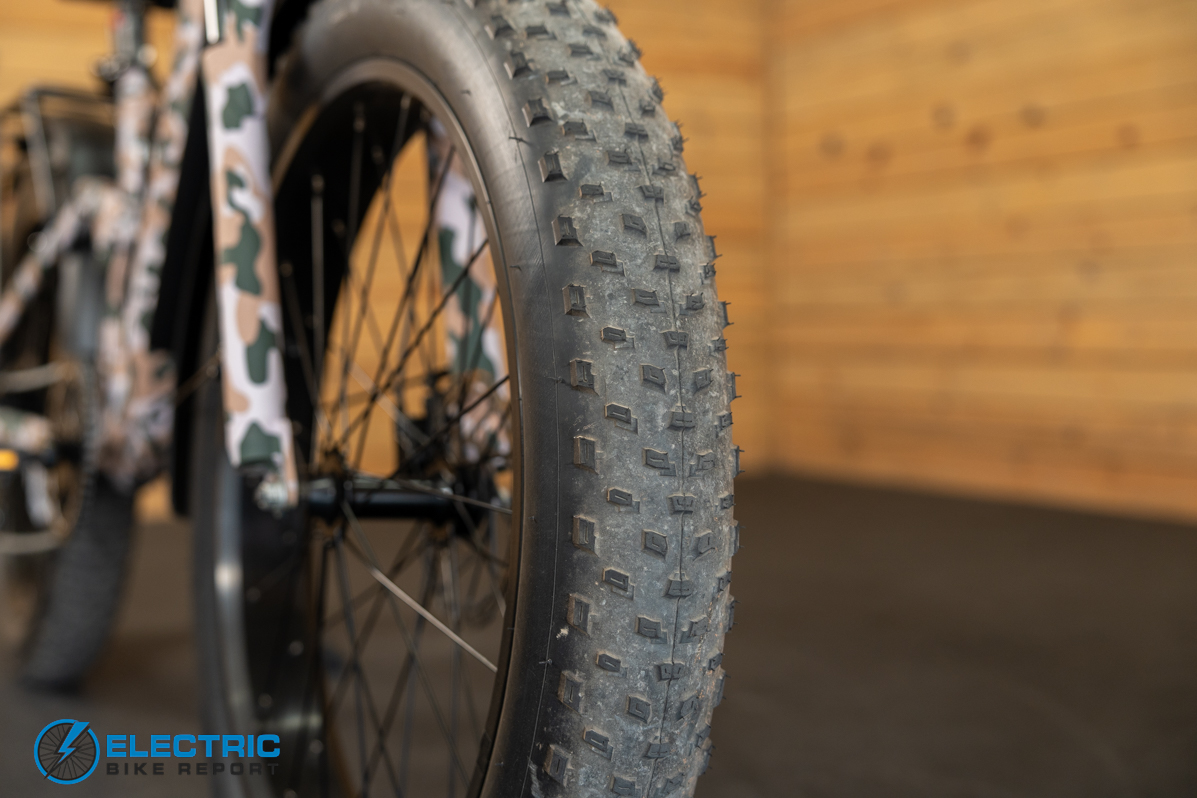
Fat tires are one of the defining features of the Labrador Pro ST.
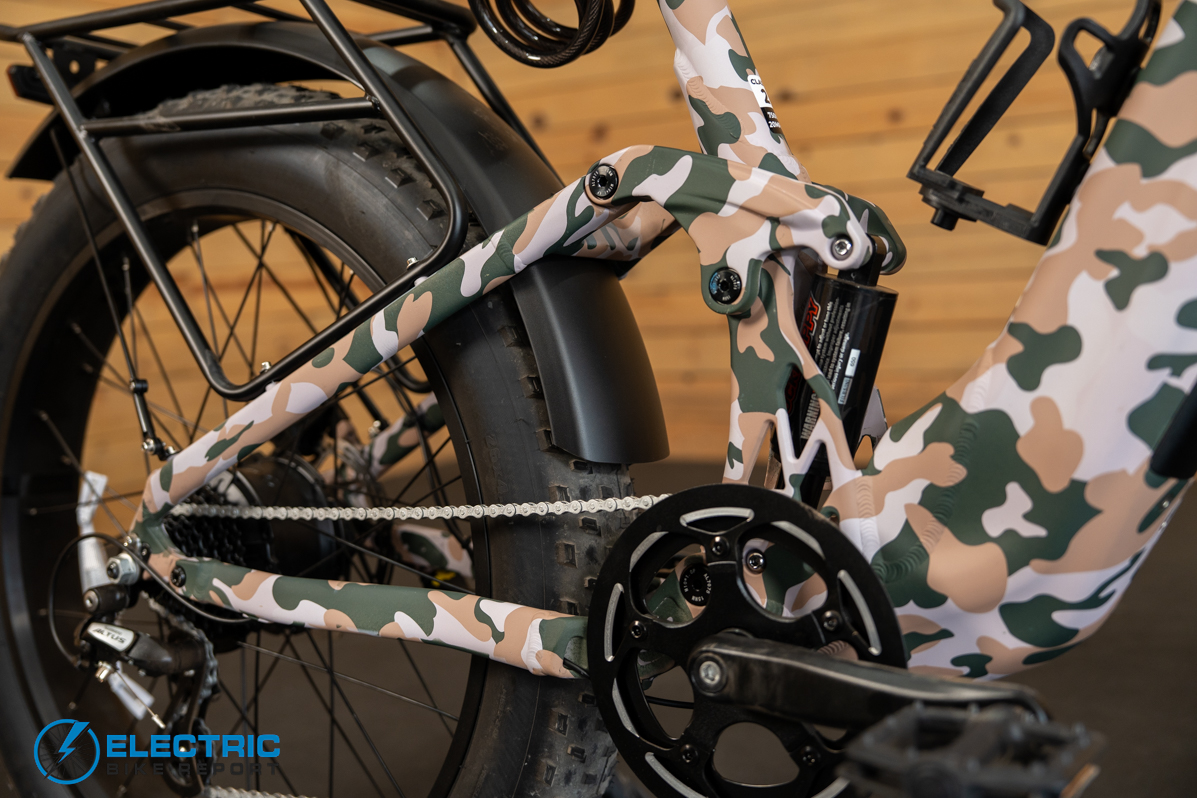
Full suspension at this price? Pretty sweet.
Puckipuppy Labrador Pro Review: Speed Test
How a bike moves through the assist levels is a key part of how it feels. The purpose of the speed test is to gain some insight into a bike’s programming and pedal experience. The Labrador Pro uses a combination of torque and cadence sensors and is capable of class 3 speeds.
While this bike uses a combination of torque and cadence sensors, it still responds to the amount of force the rider puts in; due to this, I completed the speed test as if I was using a torque sensor. Frankly, it primarily feels like a torque sensor anyway.
My speed test yielded the following results:
– No Assist: 8.5 mph
– PAS 1: 8.8 mph
– PAS 2: 11.8 mph
– PAS 3: 15 mph
– PAS 4: 17.4 mph
– PAS 5: 30.1 mph (Top speed)
It’s worth noting that these are roughly the average speeds in each PAS level. So, for example, PAS 5 settles around 23 mph, but will actually reach 30.1 mph with increased pedaling input. The Class 3 cap is 28 mph – we recommend that Puckipuppy sets a hard speed limit there.
Beyond that, the above numbers show somewhat consistent, progressive increases in power. The only other critique is that PAS 1 offers relatively scant assistance – it does ease rider effort compared to pedaling without the motor, but it’s still on the meager side.
As a general rule, the Labrador Pro asks for some input to the cranks in order to get the power – but, once you push on the pedals, the grunt is there. The pedal assist is supportive and powerful, but I found that you do need to keep a swifter cadence to maintain cruising speeds.
I wouldn’t say that this bike is a lot of work to pedal, but it does require consistent attention to keep the motor engaged. If your effort drops off, the motor will do the same. As a result, you do have to work to upkeep class 3 speeds.
The Labrador Pro has a sticker on it that says “Class 2”. It does have a throttle that is limited to 20 mph, but no options for a pedal assisted limit of 20 mph. This technically means it’s not a class 2 bike; regardless, the throttle is gentle off the line, but gets up to speed with respectable urgency.
To sum this all up, I’d describe the Labrador Pro as a bike that rewards effort with substantial power. It’s not an effortless pedaling experience, but it’s not a grind either.
Sponsor
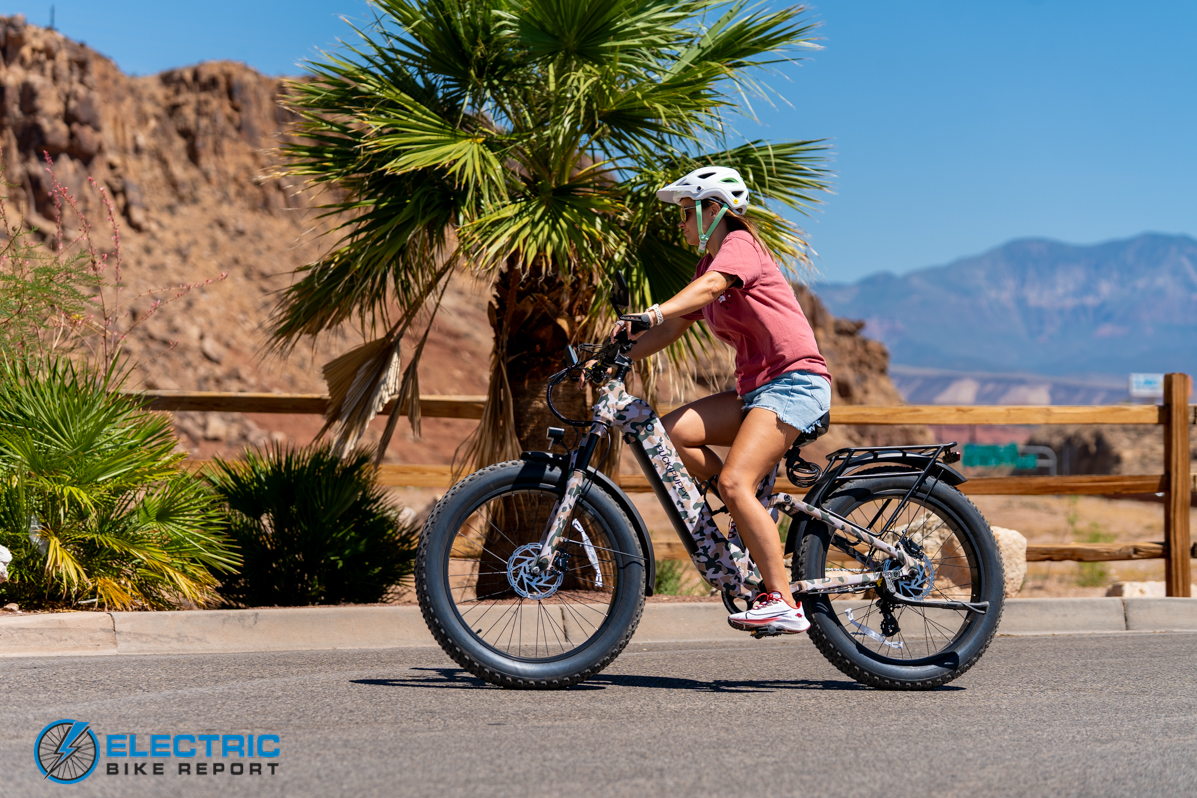
This bike is available in 5 colorways: Metallic Gray, Dark Blue, Gray/Green, Blue/White, and the Camouflage on our test bike.
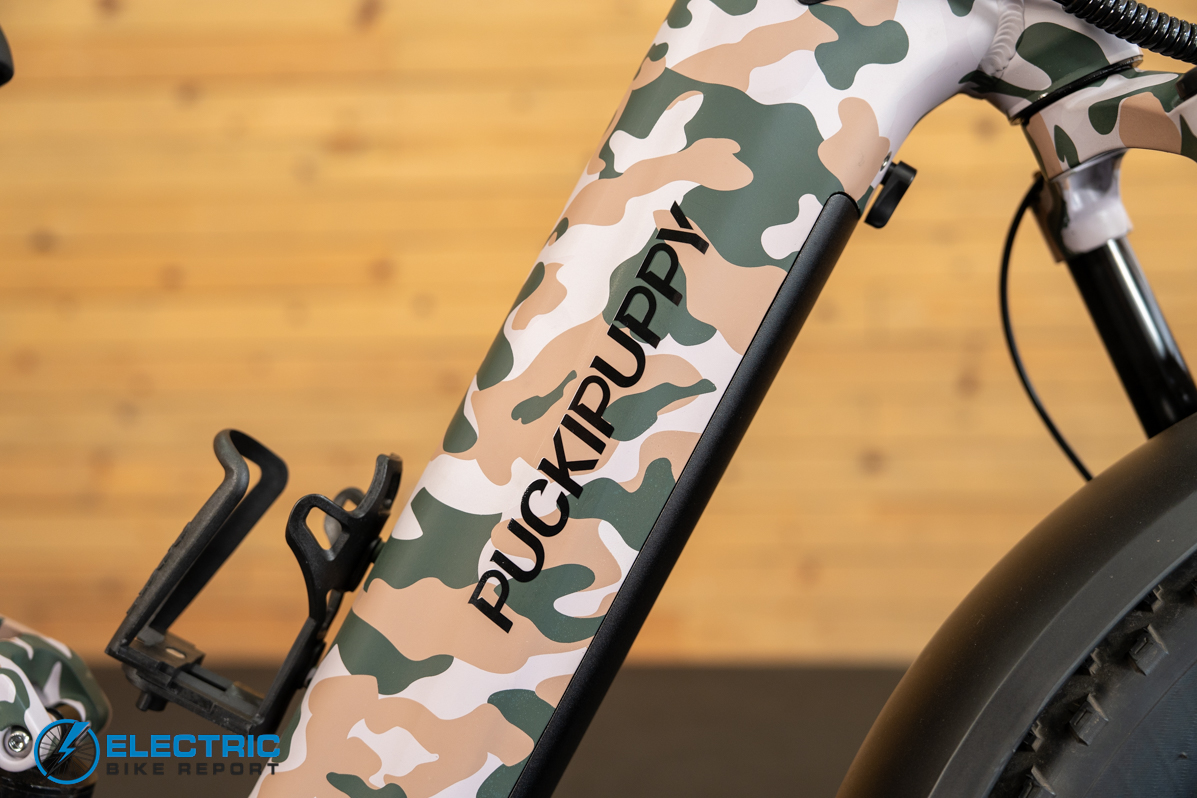
The camo looks great, and it’s also practical if you’re a hunter.
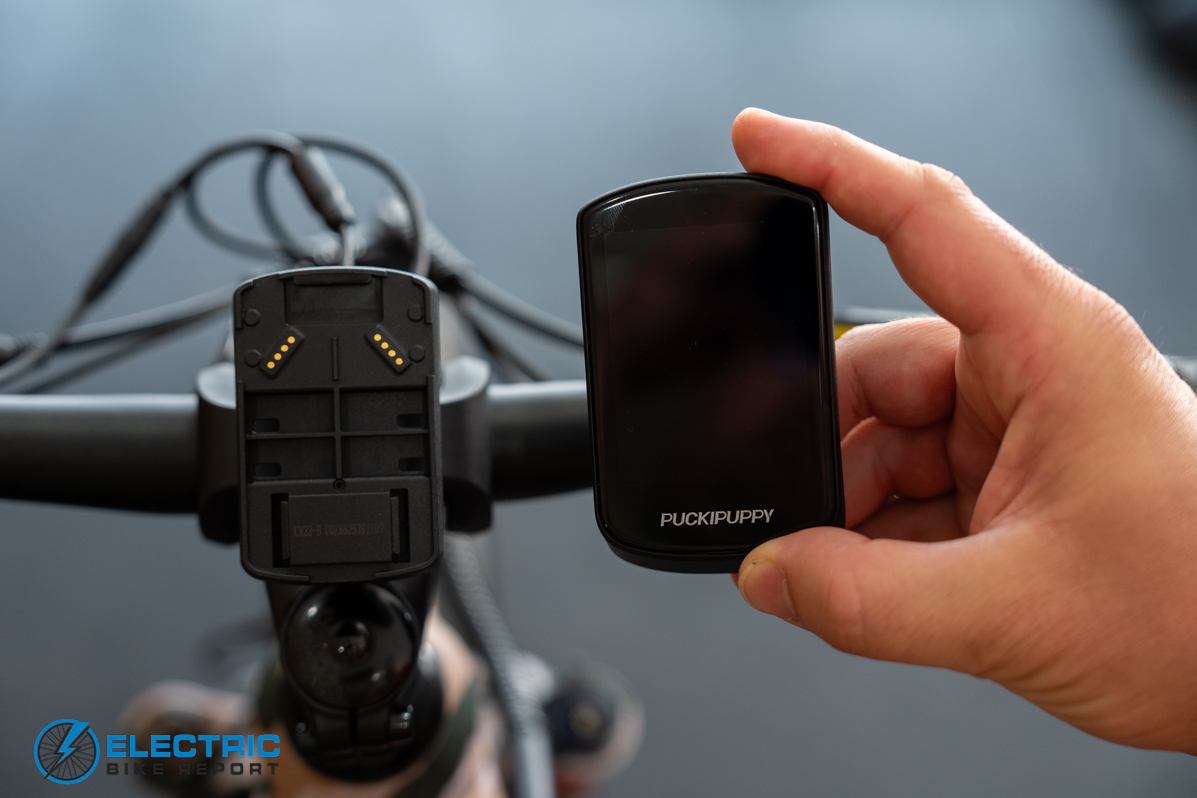
The removable display acts as a “key” – which adds a nice layer of security.
Puckipuppy Labrador Pro Review: Range Test
So, how long will this puppy dog go before it’s tired out? (Promise I’ll try and keep the canine references to a minimum, but I had to do at least one).
The Labrador Pro ST did 61.18 miles using low power settings; the category average was 73.72 miles. In the high power test, the bike did 45.31 miles, while the class average was about ten miles shorter, coming in at 35.41.
There are some layers to these results. First, I want to call out that for the low power run, we tested the Labrador Pro in PAS 2. We did this because, as discussed in the speed test, PAS 1 is slightly light on power.
The increased power settings are undoubtedly part of the explanation for the slightly shorter range. Regardless, over 60 miles still enables very solid practicality. I think it can be easy to get lost in the numbers, but let me put it this way: this bike has enough range to traverse across most major cities, and I suspect that the majority of buyers will be more than satisfied with the battery capacity. In most cases, it’ll get the job done.
As for the high power test, the Labrador Pro’s 45 mile outing is very impressive. The 960Wh battery is on the larger side, which is likely a partial contributor to this result. However, it’s also worth noting that the bike averaged slightly lower speeds than usual in the max power test. The average is about 17.3 mph, while the Labrador Pro recorded 16.3 mph; not a massive gap, but it could indicate that the motor is drawing slightly less from the battery, which would also increase range.
Overall, the Labrador Pro is a pretty energetic dog – you’ll need to take it out for a decent while before it’s ready for bed.
Sponsor
Sponsor
Puckipuppy Labrador Pro Review: Hill Test
The Labrador Pro ST’s hub motor peaks at 1350W and produces 85 nm of torque. With these numbers in mind, we’d expect a decent showing in our hill test.
Generally speaking, the results are respectable: The Labrador Pro posted a 1:49 at 16.6 mph in the pedal test, which is just a hair faster than the average of 1:50 at 16.6 mph. On throttle, the Labrador Pro did 2:05 at 14.5 mph, which is slightly behind compared to the average of 1:55 at 15.8 mph.
In the pedal test, this bike does require a tad more effort than the average, but not in an outlandish way. We found that the bike required gearing down slightly more than usual to compensate, but the motor is powerful enough that this isn’t a serious holdup. It’s still massively easier than climbing a hill on an analog bike – or even other, less powerful eBikes.
The throttle numbers are slightly slower, but the bike still has no issues climbing hills. All of the bikes in the comparison class are equipped with 750W motors, and as a blanket statement, are all solid hill climbers. It’s not quite as fast as some of its classmates, but the throttle is still solidly capable.
Fat tire bikes are often hefty, and this one is no exception. This bike has enough power to handle its weight, as well as climb steep hills. For the money, it delivers on its promise.
Sponsor
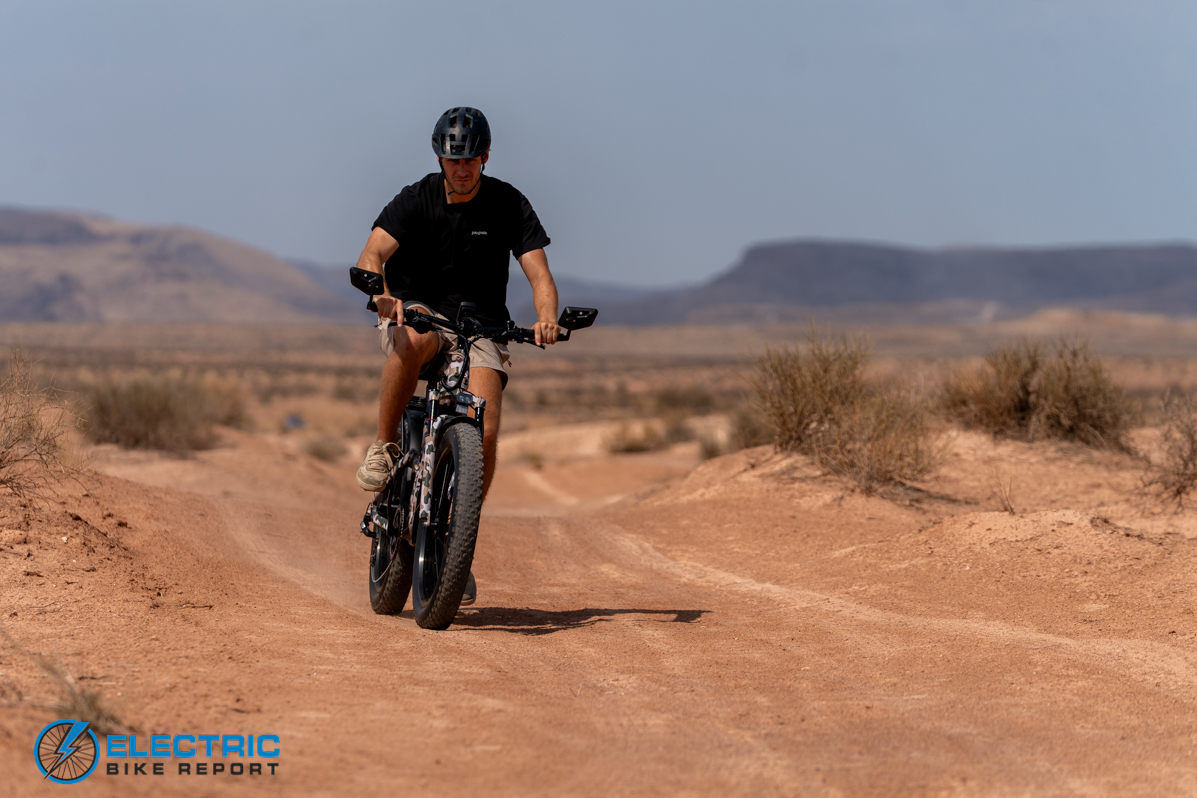
Full suspension comes in handy when the roads turn to dirt.
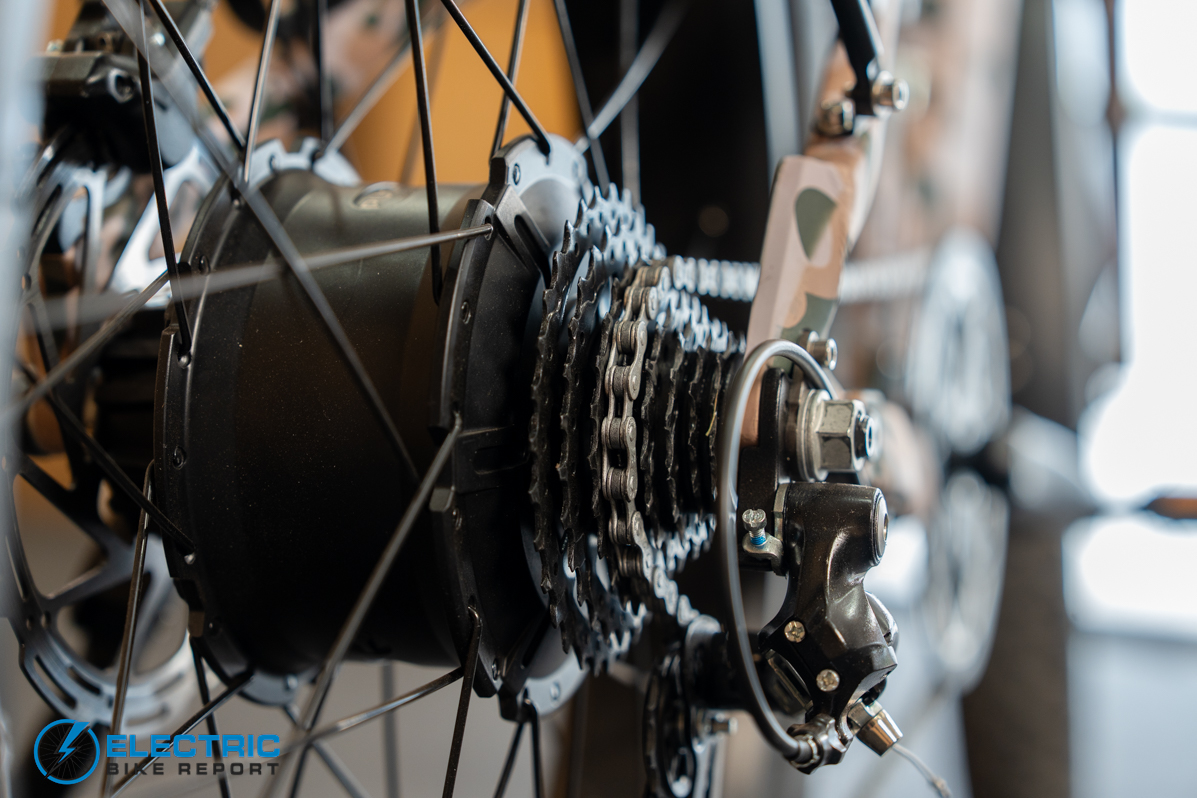
The 8 speed drivetrain is no-frills, but it’s reliable and functional.
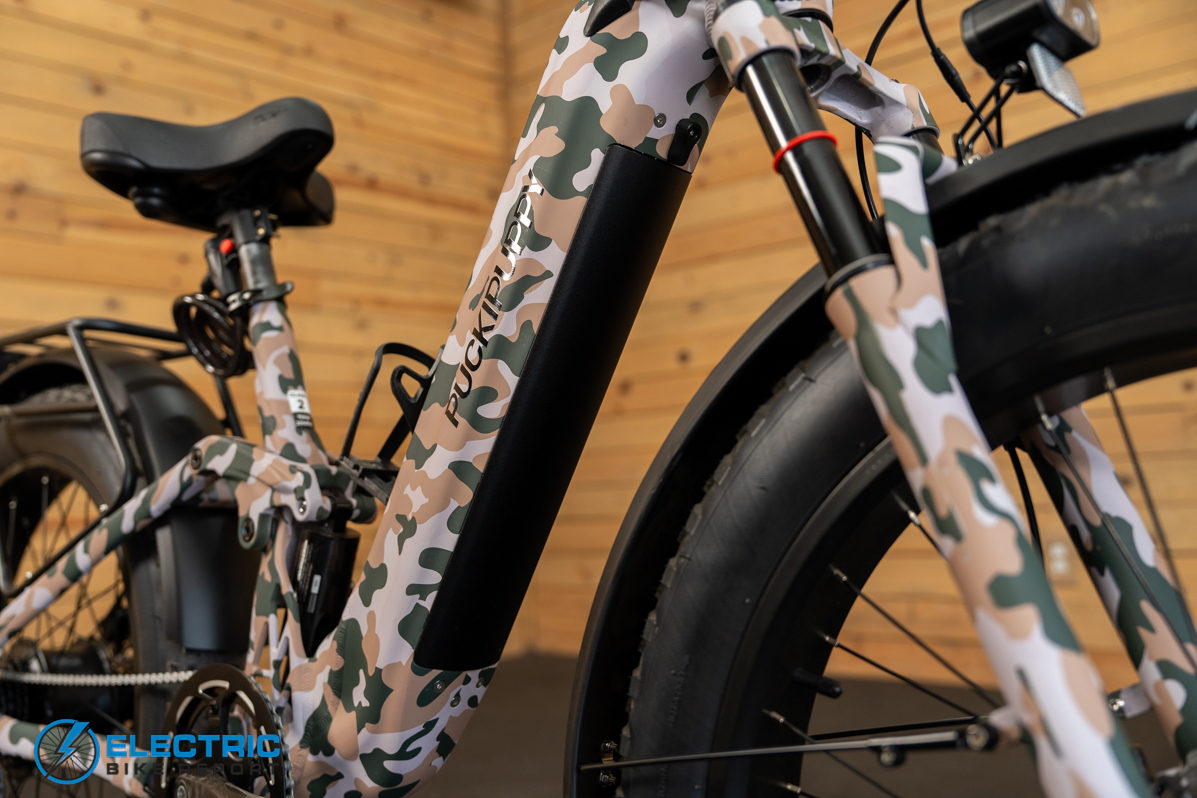
Battery removal is easy via the downtube.
Puckipuppy Labrador Pro Review: Brake Test
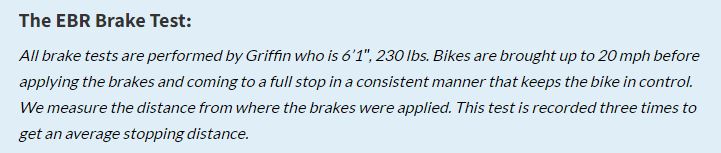
Over three runs, the Labrador Pro ST posted an average stopping distance of 23 feet 5 inches. This puts it marginally behind the group of similar bikes in its category, which recorded an average of 21 feet 11 inches.
While the Labrador Pro is slightly behind the curve here, it’s still within the target area of what we’d call safe. The bike is equipped with Logan 2 piston hydraulic disc brakes and 180 mm, 1.85 mm thick rotors – a setup we’ve seen from Puckipuppy before.
These brakes felt similarly to the other Logan brakes I’ve used – that is to say, solidly reliable, but not premium. Not only is this okay, it’s expected! The Labrador Pro is priced in budget territory, and for that, you’re getting brakes that do the job solidly well. The modulation is fair and the power is decent. From my perspective, it’s difficult to complain about these for the price, but we’d like to see Puckipuppy add a larger front rotor – this could increase stopping power and durability.
It is worth noting that they do exhibit some fade and sponginess after hard usage. We noticed this after heavy application down a steep hill. This isn’t a dealbreaker, as they’re still safe and usable, but it is something to be aware of if you’re planning on very long and steep descents.
The bottom line is that these aren’t top-tier brakes, but they’re safe and solid. They check the box.
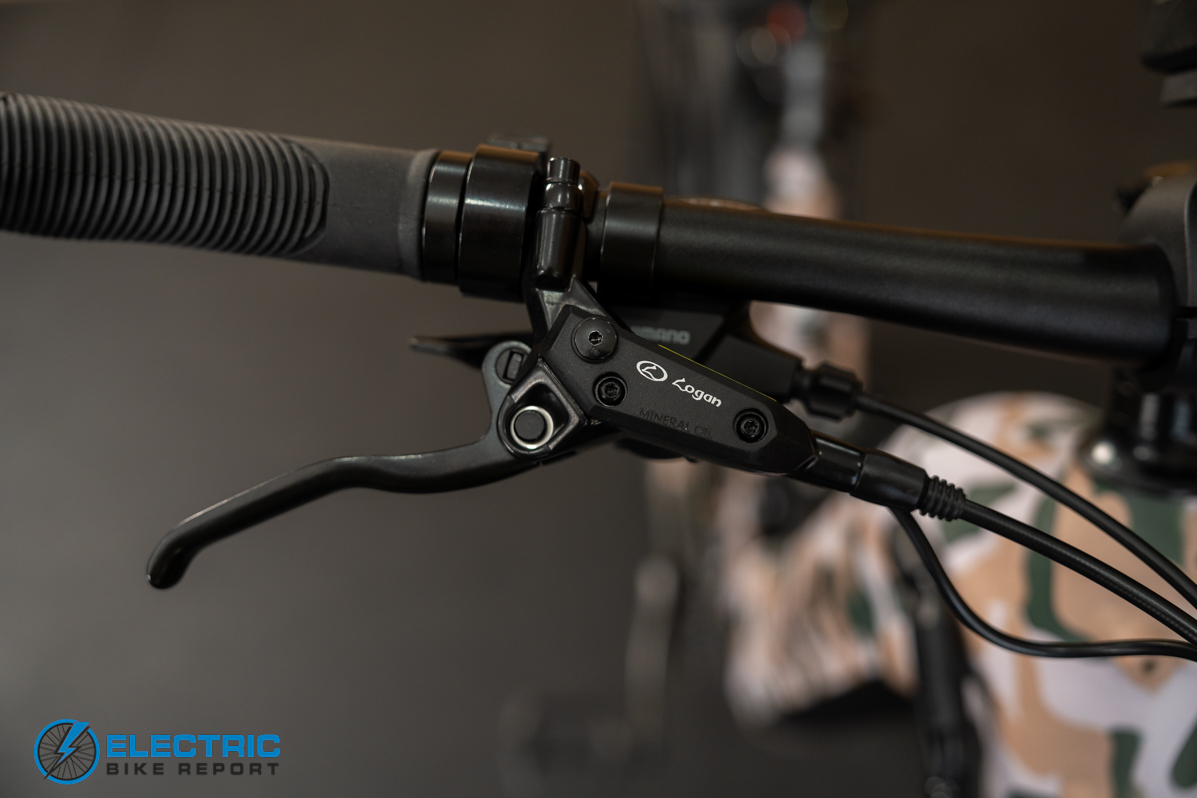
I’ve seen Logan brakes on other Puckipuppy bikes before, and they felt similar; reliable, but not premium.
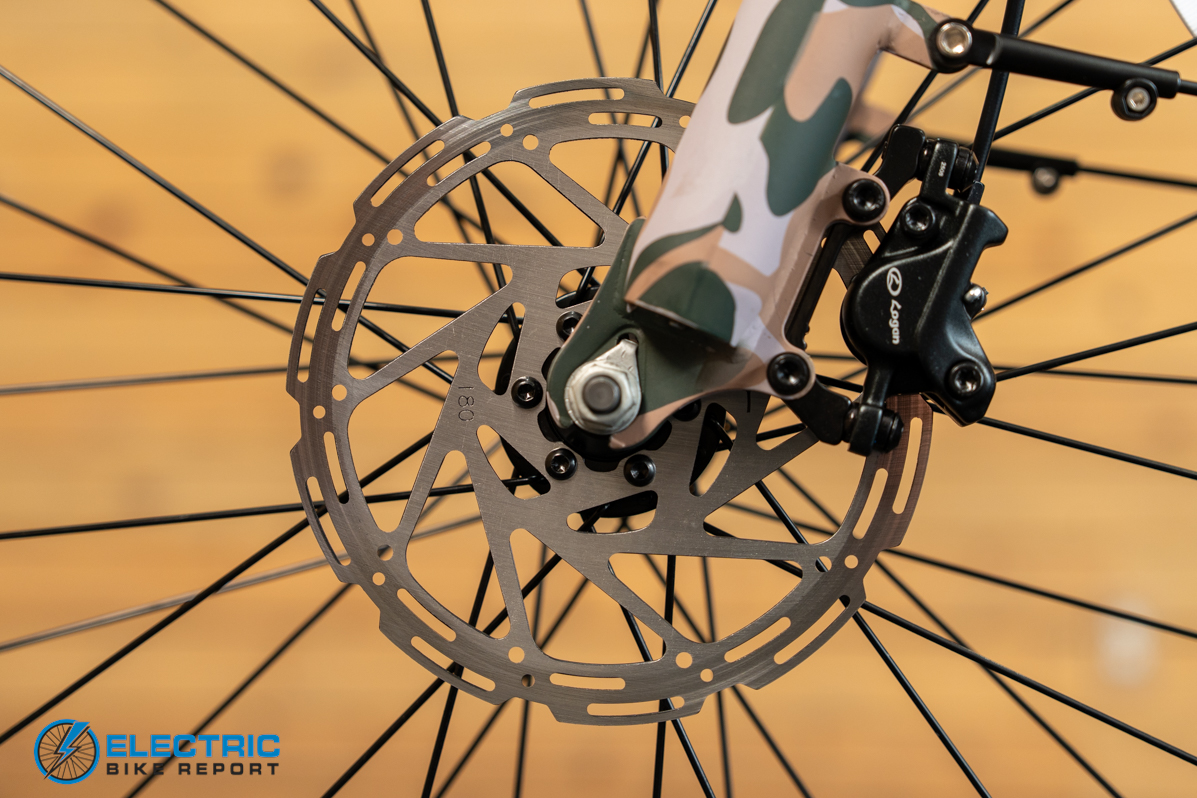
We’d recommended that Puckipuppy adds a larger rotor to the front – this could improve stopping power, as well as reduce fading.
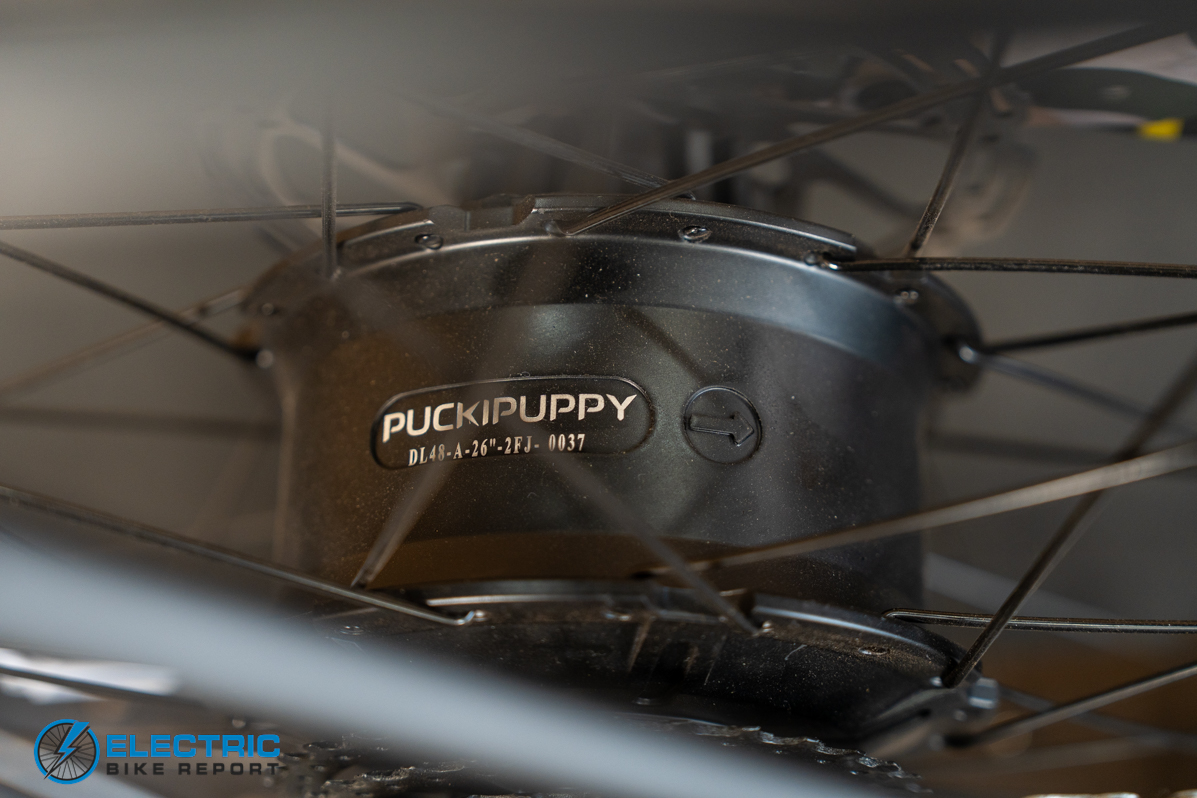
The 750W nominal motor peaks at 1350W, and offers 85 nm of torque.
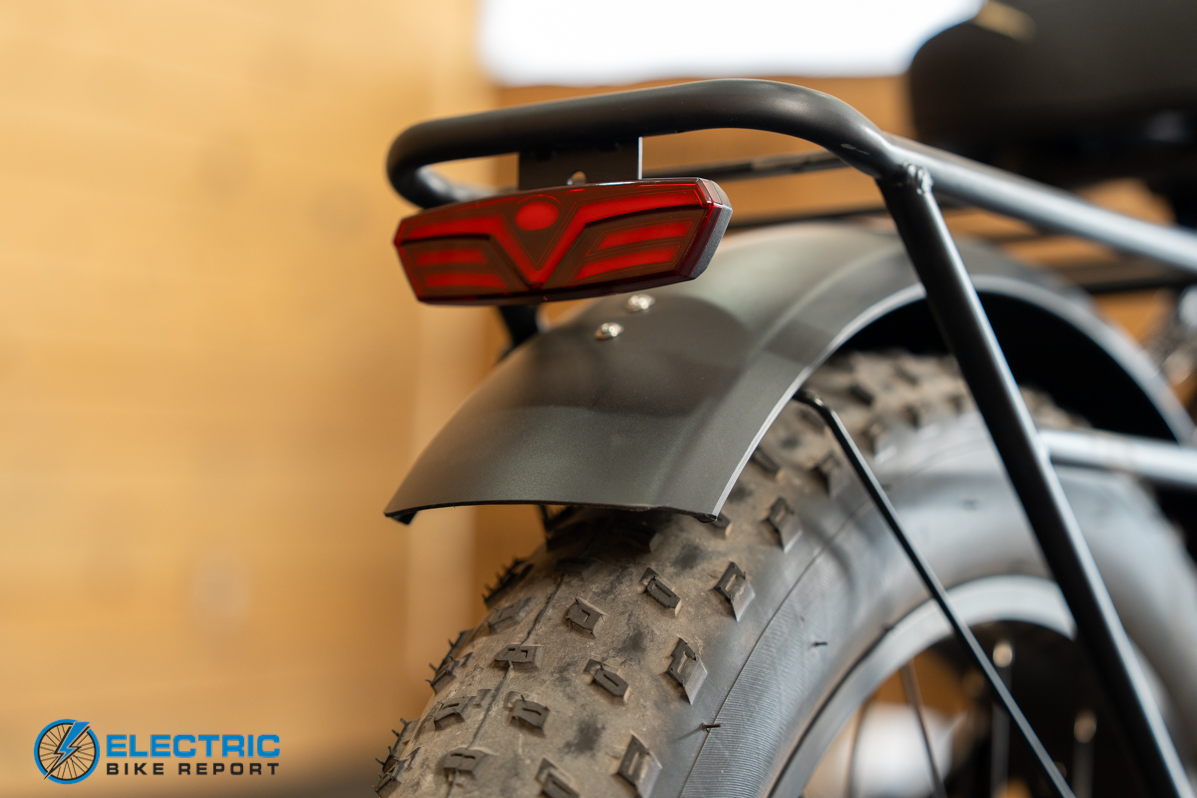
An integrated taillight is a win from a safety point of view.
Puckipuppy Labrador Pro Review: Ride Quality
The ride quality section is about communicating how riding a bike actually feels. Yes, the metrics of range and power do matter, but ride characteristics are equally as important. Our evaluation here primarily consists of sizing, comfort, handling, motor engagement, and the bike’s features.
Let’s begin with the fit of the Labrador ST. Puckipuppy says that the bike will accommodate riders from 5’3″ – 6’4″, which feels slightly ambitious – I’m about 6’3″, and found the fit and riding position to be passable, but not perfect for taller riders. I wasn’t able to get full leg extension, and the reach felt mildly cramped. This isn’t uncommon for me on unisize bikes, but I’d say that in terms of ideal fit, the Labrador Pro tops out closer to 6’1″.
Additionally, while this is a stepthrough frame, riders on the shorter end of the spectrum may also be a bit mismatched. Fit is obviously personal, but this isn’t a small bike, either. As a result, I’d shrink the size range by an inch or two on both ends of the scale.
Beyond the metrics themselves, the riding position feels more forward than it does on many stepthrough frames. I actually liked this; it’s not as aggressive as high step options, but less upright than the usual cruiser. The Labrador Pro ST is equipped with flat handlebars, which contributes to the balanced and neutral stance.
In the way of handling, the Labrador Pro feels a little unconventional. Most fat tire bikes tend to feel big and heavy, and this follows suit. However, there’s more than just that – I noticed that the bike tends to track either left or right quite strongly, and correcting its path requires some conscious steering. I wouldn’t describe this as a nimble or overly maneuverable bike.
We also noticed an alignment issue with the fork. It seems like the front wheel sits just slightly off center from the rest of the bike, which also affects steering; This could be limited to our test bike, but we’d encourage Puckipuppy to take a closer look at fit and finish.
With that said, the full suspension setup combined with the 26 x 4.0 fat tires makes for a very cushy ride. The Labrador Pro makes quick work of bumps and rough terrain. It’s capable on and off the pavement – This is the true upside of the fat tires.
Motor engagement is another key facet of ride quality. The Labrador Pro’s motor is quick to step in if you push into the pedals with gusto – With a more casual pedal input, the sensor will wake up after two or three pedal strokes.
There are several other bells and whistles that come standard on the Labrador Pro. A removable display and mirrors help add more value to an already affordable platform. We’ve also noticed that Puckipuppy frequently includes extras – sometimes it’s a huge accessory pack, other times we’ve seen a free battery. The items seem to rotate, but there’s almost always additional gear to bolster the value proposition.
Candidly, the ride quality of this bike does come with some caveats. While the suspension, comfort and motor engagement are good, the bike isn’t quite as refined as more expensive options. However, if you’re willing to live with a few mild foibles, it offers good bang for your buck.
Sponsor
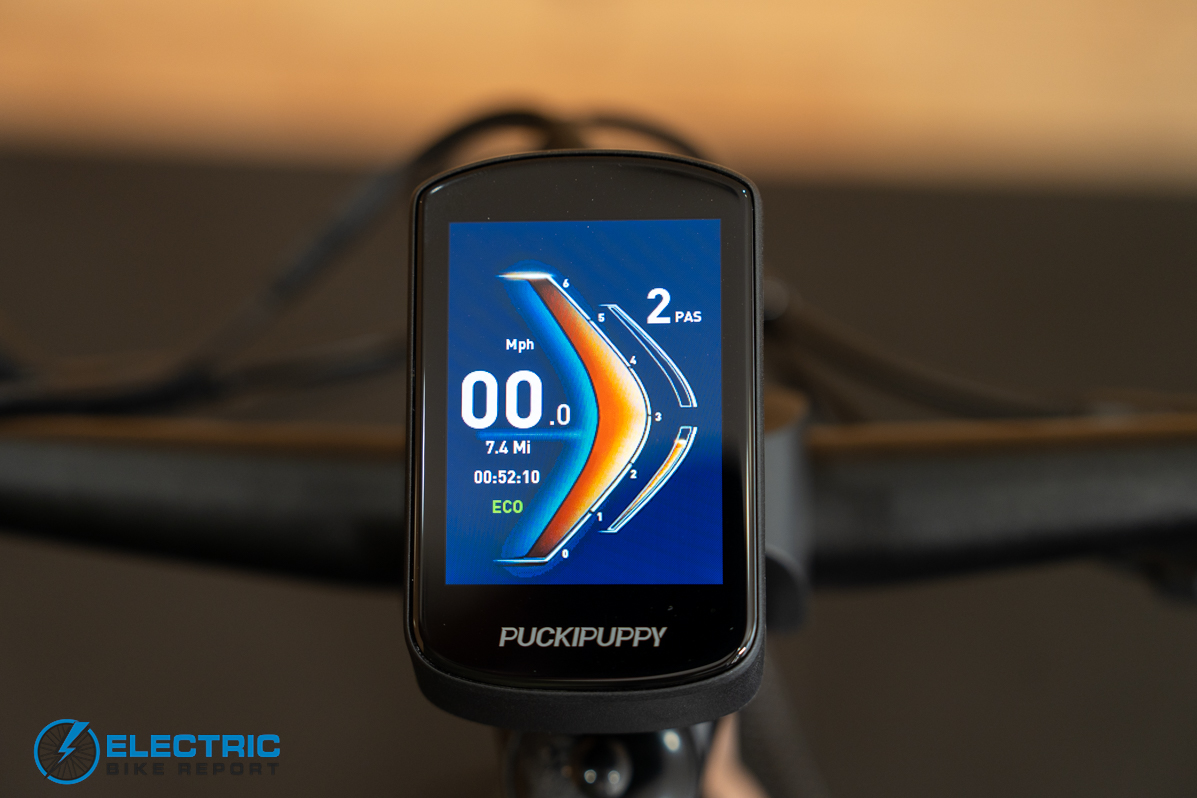
That central boomerang is the battery meter.
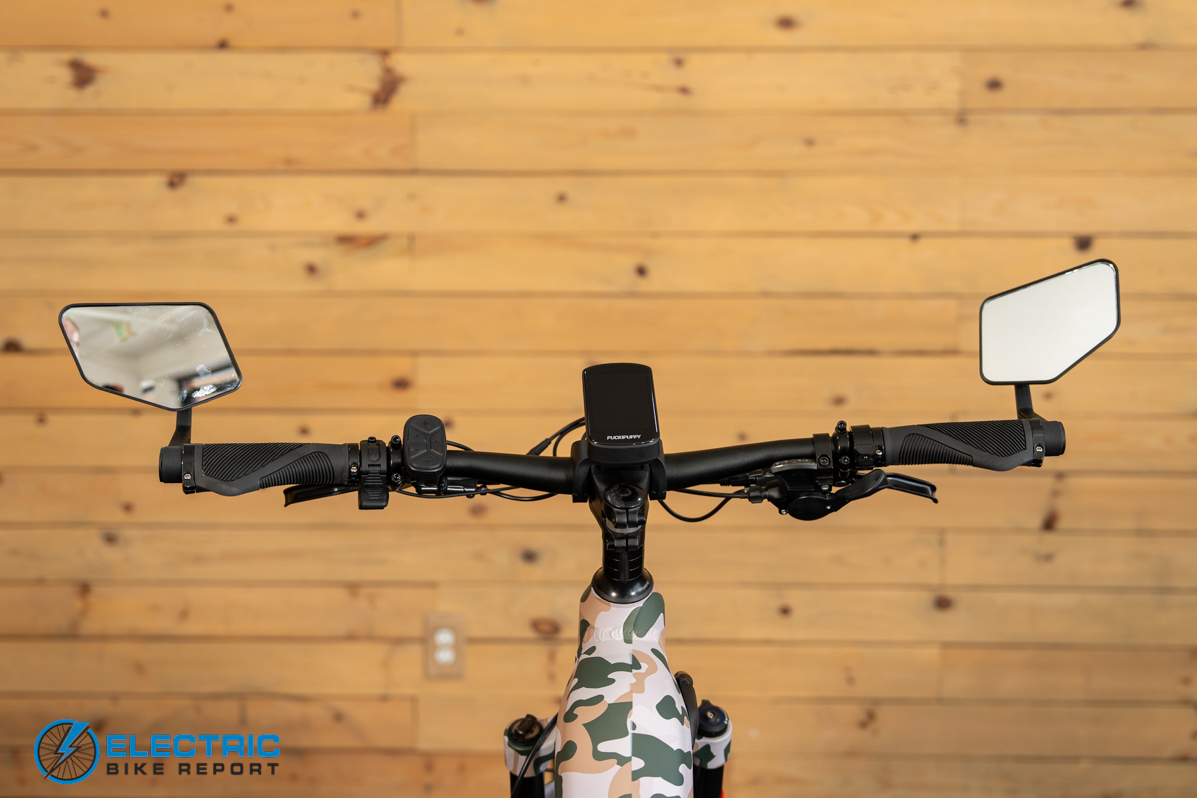
Flat bars make the riding position a bit more forward than other step-through frames; I actually liked this.
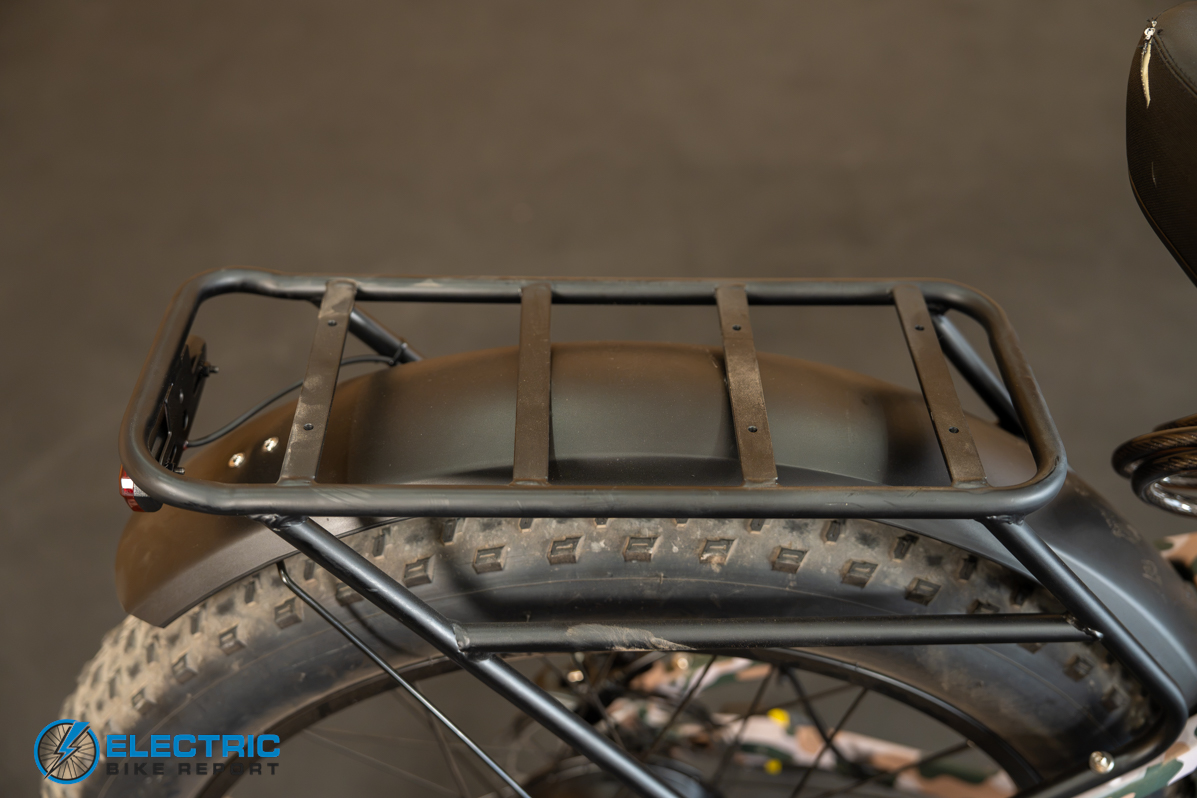
The rear rack would be great for a tackle box or other outdoor essentials.
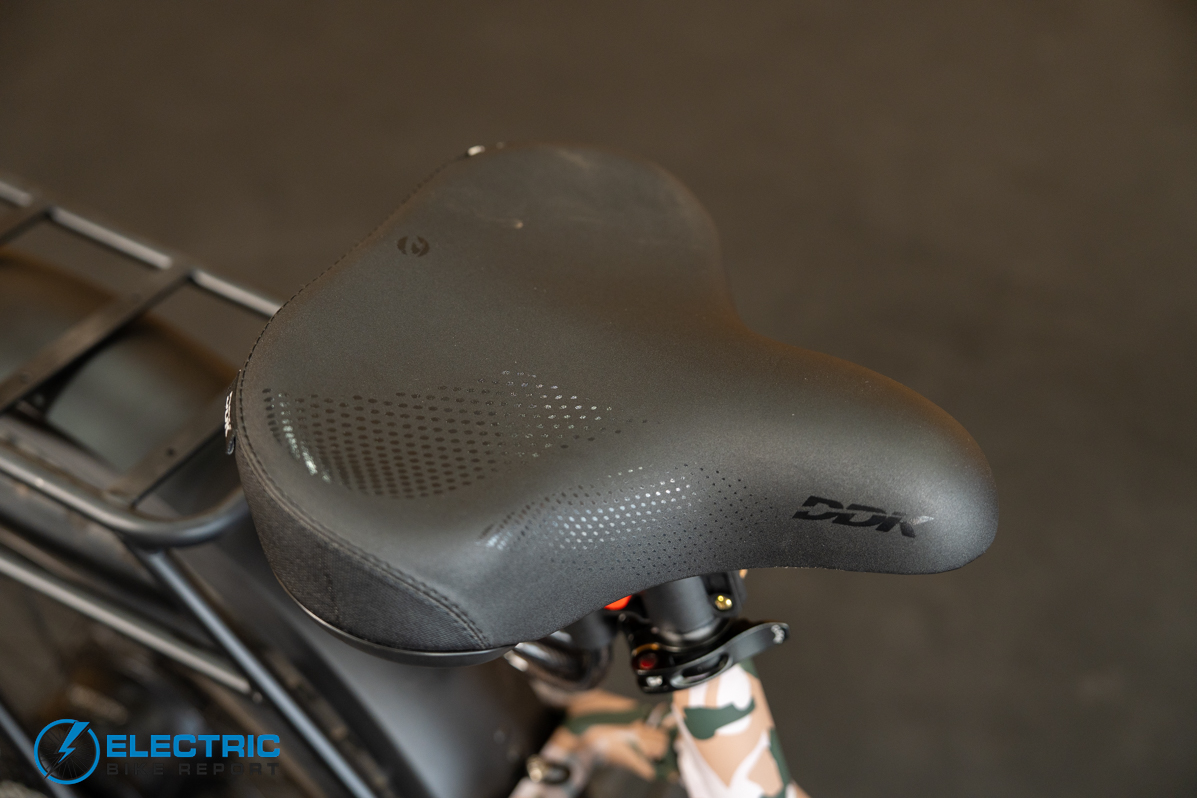
The saddle is very large and very cushy.
Puckipuppy Labrador Pro Review: Summary / Where to Buy
For the right rider, the Labrador Pro ST does have some genuine strengths. The core formula is sound: Full suspension, fat tires, 750W motor, and an awesome paint job – all for a very reasonable price.
Generally, the Labrador Pro checks all of the boxes across the board. The performance isn’t earth shattering, but it’s very respectable. Its max power range results were very good, the ride is smooth, and it has the right stuff for hill climbing.
Riders who are interested in off-road adventures are also taken care of. This is a sound choice for campground or forest road outings.
This, combined with the bike’s versatility, price, and good looks, make this a solid option for those who are looking in the budget segment. The extras included by Puckipuppy are also worth a good look.
With that said, no bike is perfect, and this one does have some quirks. The handling takes some getting used to, and we’d like to see Puckipuppy offer a proper class 2 pedal assist mode, as well as cap the bike at class 3 speeds.
The fork alignment is also an area that we’d recommend Puckipuppy reevaluates. I don’t foresee it being a safety issue, but a tighter fit and finish would be welcome.
On economically-oriented bikes, compromise is common. There’s a fair amount of value here if you’re willing to overlook some minor eccentricities; I certainly had fun on this bike!
Happy Riding! Make sure to let us know if you have any questions or if you think we left anything out in this review of the Puckipuppy Labrador Pro ST down in our comments section.
Sponsor
Sponsor
Reader Interactions
Leave a Reply