

Tern HSD P10E Review: A Compact Cargo E-Bike That Can Replace a Car
Aug 11, 2026
 1 Comments
 Share
Share
This premium hauler is smooth, stable, and practical – plus, it might just be one of the best utility bikes around.
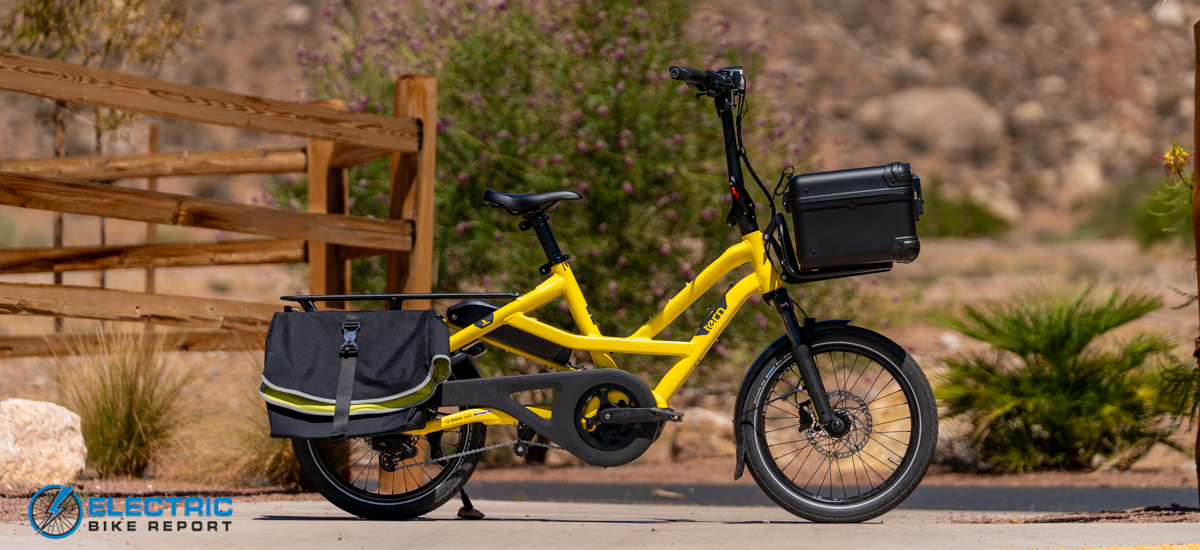
Traffic is everyone’s least favorite thing. Standstill backups are never fun, but I can specifically remember a time when I missed a turn while trying to navigate the maze of New York City. It felt like I was trapped in a game of Tetris – gridlock everywhere.
I can also remember watching cyclists cruise past in the free-flowing bike lane. Clearly, they were going faster than I was. It seemed like a good solution, but not for me; I had a trunk full of my grandparent’s groceries, and while I knew about utility/cargo bikes, I assumed they were good for small stuff. A pizza or single bag seemed reasonable – but a whole haul didn’t feel practical.
What I didn’t understand at the time was that some cargo bikes can actually function as a replacement for a car. The Tern HSD P10e is one of them.
Like many modern cargo bikes, the HSD is capable of a full grocery load, or even a passenger. The 419 lb payload, 250 W mid-drive motor, and a 545 Wh battery all indicate that this bike has the goods for real utility. However, while the key fundamentals are present, the HSD is actually even more impressive as you dive into the details.
Automatic shifting, app connectivity, and a whole host of custom-made parts are just the tip of the iceberg. The attention to detail is the story here – this bike is impressively well thought out. However, as good as it seems, can it really become your go-to transportation? We did an in-depth review on the HSD P10e to find out.

Sponsor
E-Bike Category:Utility, Cargo
E-Bike Class:Class 1 (Pedal assist to 20 mph)
Class 3 (Pedal assist to 28 mph)
Class 3 (Pedal assist to 28 mph)
Sponsor
Tern HSD P10e Video Review
 Pros
Pros- Outstanding quality and design. The HSD is capable of serious utility, but still feels nimble.
- The Bosch Flow App offers a number of useful features, including ride tuning, security, and navigation.
- The cargo bike fundamentals are here. Passengers, pets, and cargo are all fair game.
- Very well-specced. Tern has equipped this bike with quality components, some of which were designed for their bikes specifically.
- The Bosch autoshift feature is intuitive and reliable.
- Best of both worlds – The HSD offers lots of tech, but also has the familiarity of an analog bike.
- Very good range. See our testing down below for details.
 Cons
Cons- We’d love to see a center mounted kickstand – this would make the bike more stable for loading cargo.
ELECTRICAL SPECS & FEATURES
- Battery: Bosch PowerPack 545
- Charger: 100-240V, 4A Fast Charger
- Display: Bosch Purion 200
- Motor: Bosch Performance Sport
- Headlight: Tern Valo Direct, 190 Lumen Integrated
- Taillights: Herrmans LED
- Pedal Assist: 7 swappable levels, 4 active at one time
- Claimed Range: 35-67 miles
- Throttle: None
- App: Bosch Flow
- UL Certification: UL 2849
Weight & Dimensions
- Claimed weight: 62.6 lbs
- Tested Weight: 75.54 lbs (with accessories)
- Rider height range: 4’11” – 6’7″
- Total payload capacity: 344 lbs
Components & Accessories
- Brakes: Magura Hydraulic Disc Brakes
- Fenders: Alloy
- Fork: Suntour Tern Custom
- Frame: Alloy, patented design
- Drivetrain: TRP E.A.S.I. 10 speed with Bosch eShift, Tern Custom
- Grips: Ergon
- Saddle: Tern by Velo
- Handlebar: Tern Sweep
- Kickstand: Included
- Pedals: Platform
- Tires: Schwalbe Big Apple, 20 x 2.15
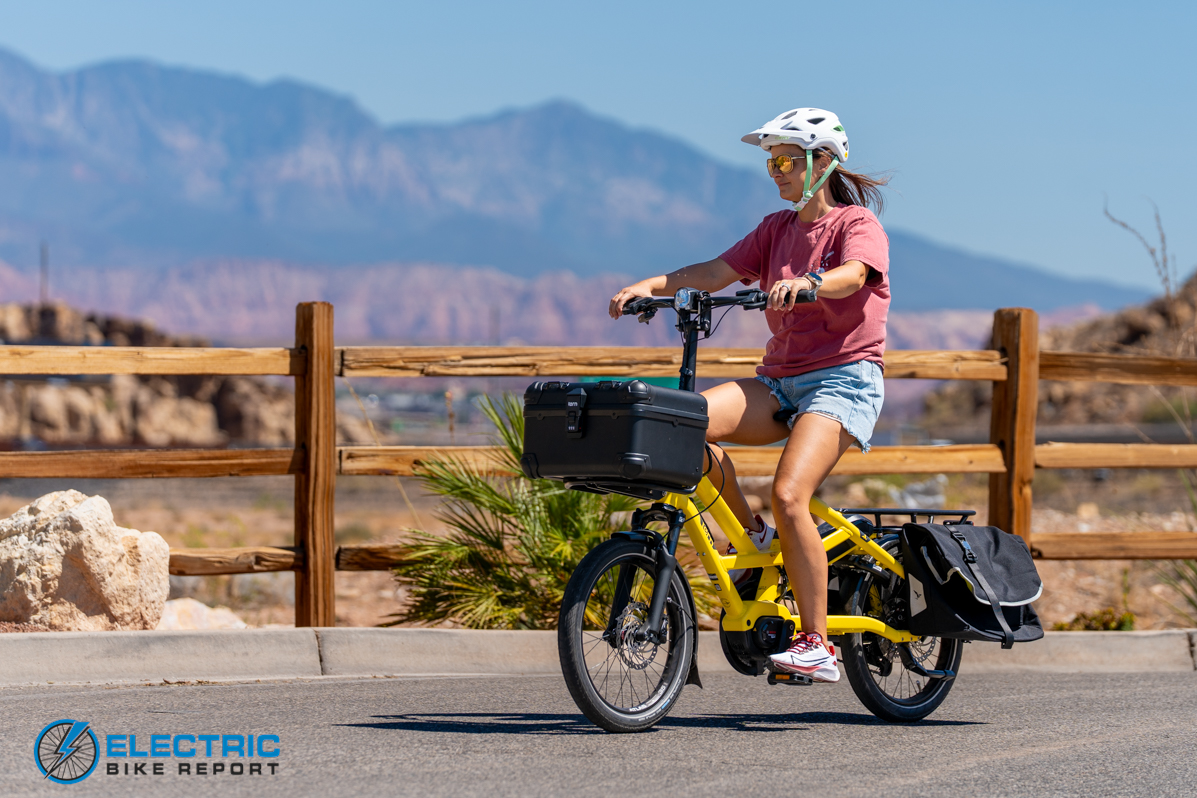
Tern’s specialty: Attention to detail.
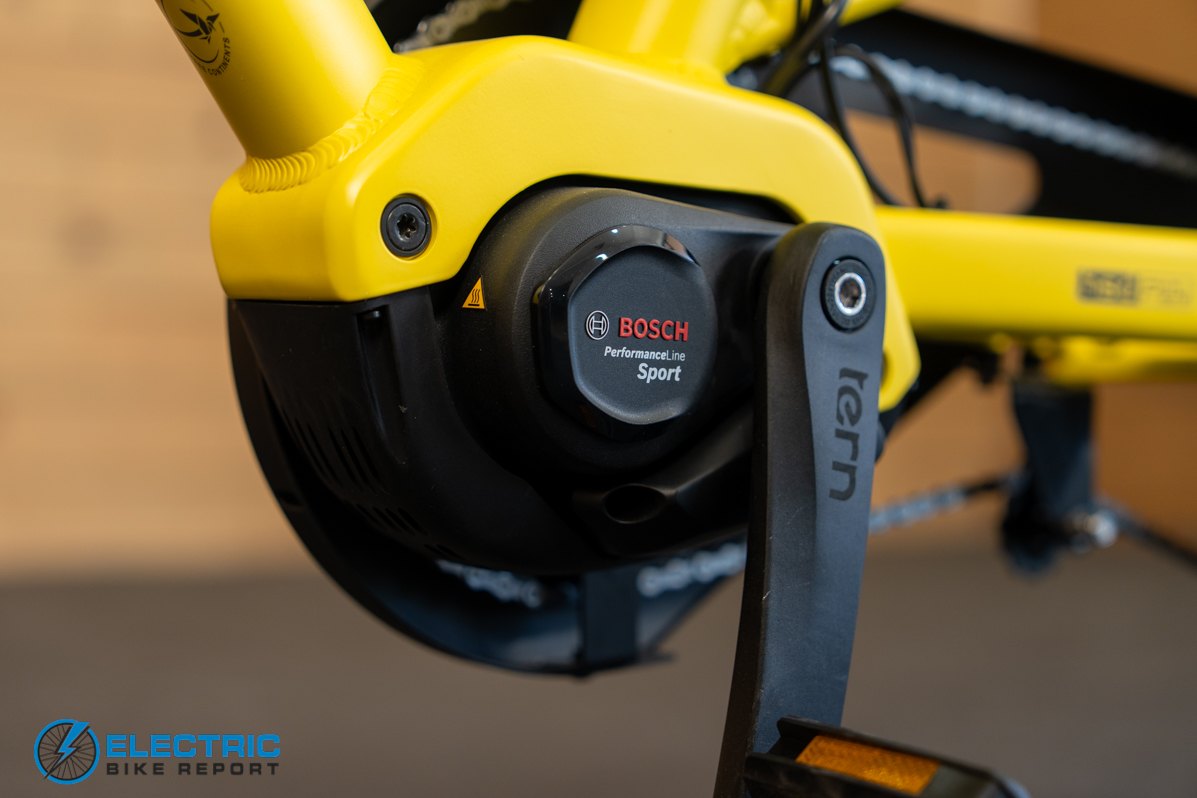
Like many other Bosch motors, this mid-drive is smooth and natural.
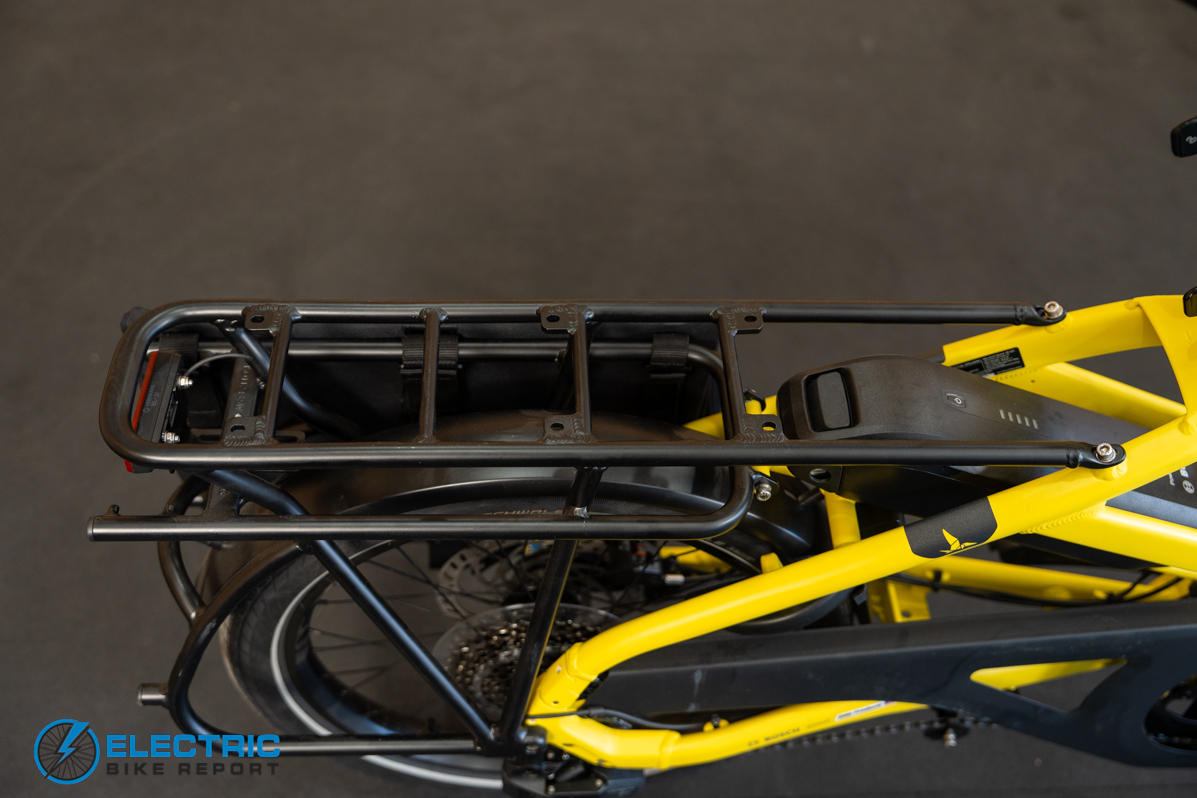
The rear rack is good for a solid 176 lbs.
Tern HSD P10e Review: Speed Test
We designed our speed test to gain an understanding of a bike’s programming, as well as to see if it will reach its advertised speed limits. Programming can have a significant impact on the pedaling experience and general feel of a bike; a well-programmed bike tends to move through the assist levels incrementally. This means that each step up in assist is approachable, but still a noticeable difference in power.
The HSD ships as a class 3 bike, but can also be set to class 1 speeds via the flow app. I tested the bike in both configurations.
To start out, I began pedaling with no assist. The HSD pedals better than I expected with no motor power, but with that said, it’s still not a breeze. Especially with cargo, I’d be quick to turn on the motor. I averaged 8.5 mph without assist power.
Then, at class 1 speeds, I averaged 9.5 mph in Eco, 13.5 mph in Tour, 15.7 mph in Sport, and 20 mph in Turbo.
At class 3 speeds, I averaged 9.3 mph in Eco, 12.6 mph in Tour, 16.3 mph in Sport, and settled at 22.6 mph in Turbo. In Turbo, I was able to get more output from the motor if I pedaled harder, and the speed peaked at 25.5 mph.
Like many other Bosch mid-drive setups, the pedaling experience here is very natural. Each power increase is subtle, but I could feel the motor reducing my effort. A key takeaway on this bike is that the experience feels centered on minimizing effort, not breaking acceleration records. This is characteristic of mid-drive motors; rear hub options tend to feel as if they’re pushing the bike forward, while mid-drives focus on amplifying rider input.
This means that this bike does feel powerful – but not in a “blast-off” sort of way. It’s more like your muscles suddenly become supercharged; you’re still using them, but it’s much, much easier.
As for the power spacing, the levels are nicely separate. Each increase is deceptively subtle. While a jump in assist doesn’t result in a big punch of torque, the power does noticeably increase, and I’d generally describe the HSD as having very approachable power.
Overall, the HSD posts good results and exhibits smooth programming. The Bosch mid-drive feels as expected – natural and engaging.
Sponsor
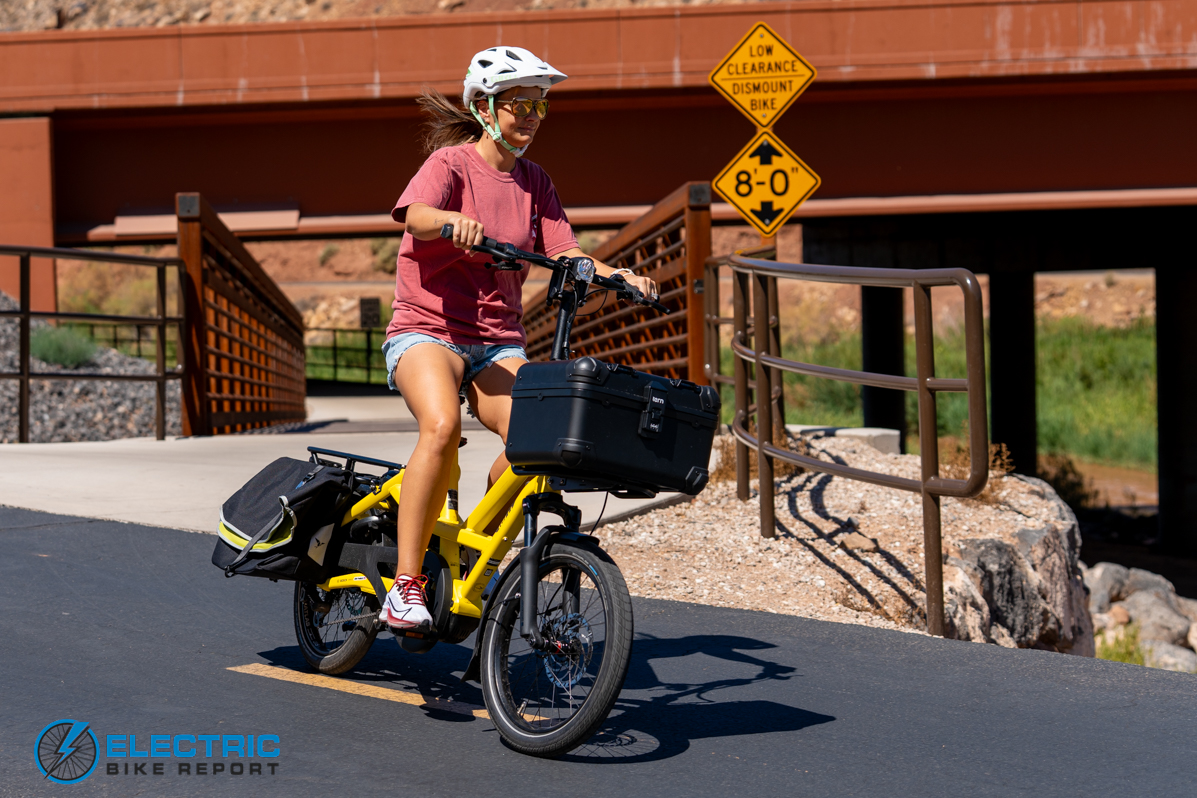
You’re not limited to just the rear rack and pannier bags; the front box is also a great hauling accessory.
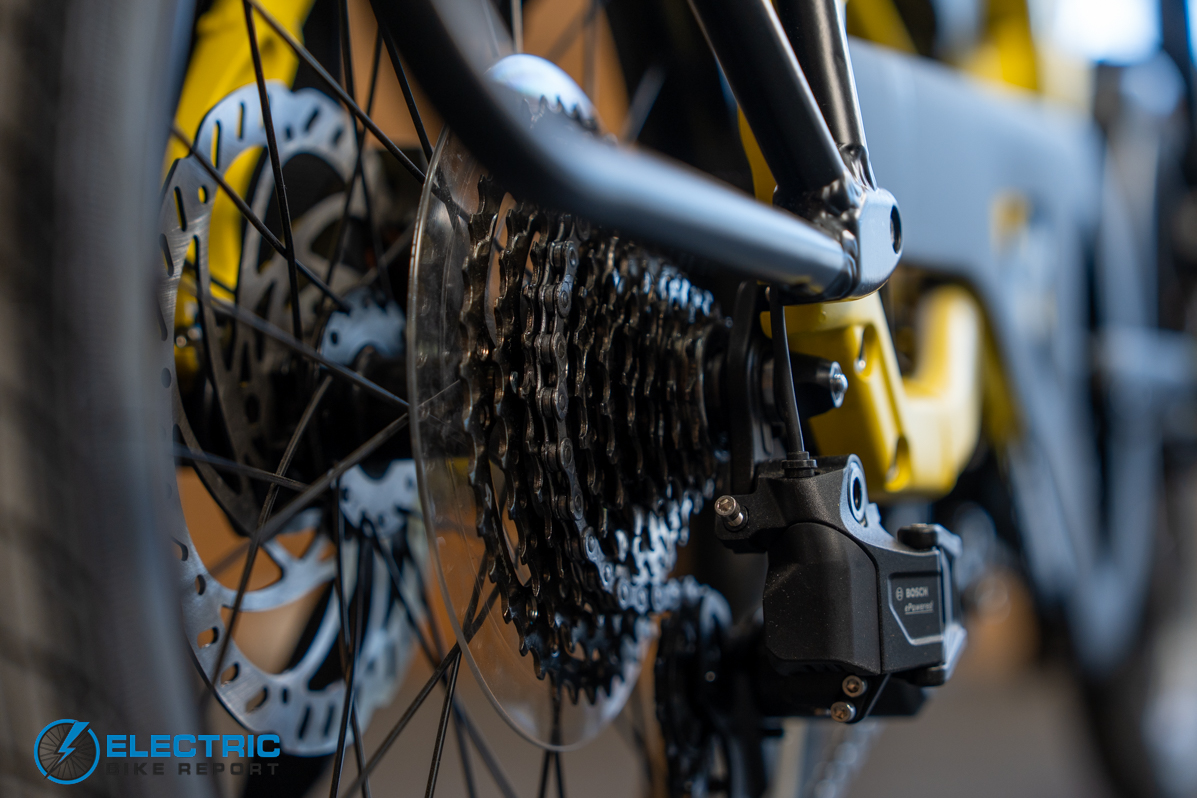
TRP and Bosch team up for the automatic shifting system – it works well, and the HSD is a great candidate for this feature.
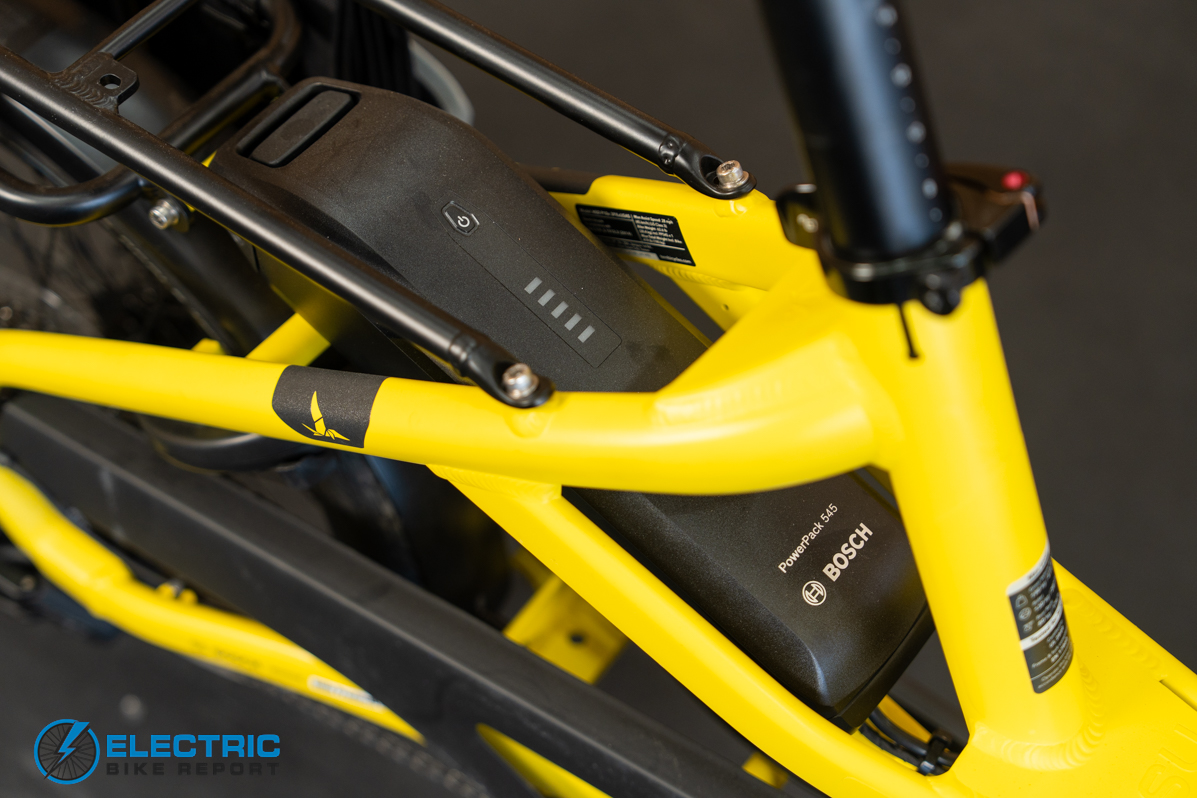
The open battery housing provides easy access.
Tern HSD P10e Review: Range Test
Using the hill test process explained above, we tested the HSD’s low and high power settings. In Eco mode, the bike went 85.16 miles, which is noticeably above comparable bikes – they averaged 68.39, which isn’t a small number to begin with.
On maximum power, the HSD did 30.35 miles. Here, the similar bikes’ average was ahead of the Tern, coming in at 34.9 miles.
Let’s start with the minimum power test. The HSD does very well here, as the bikes in the comparison class already post an impressive mean of almost 70 miles. This bike goes significantly further, going above and beyond an already high bar.
It’s worth noting that in Eco, the assist power is relatively modest. The motor is definitely still present, but it doesn’t feel like you’re just effortlessly cruising. This mode’s more conservative grunt could be a contributor to the extra distance.
However, the flow app offers ride tuning options – so, if you’d like a little more output, you can increase the motor power and sensitivity. Just be aware that this can bring down your range. Regardless, 85 miles is a great result for a low power test.
In Turbo, the bike’s results are slightly behind the average, but only by a few miles. 30 miles is still enough for most commutes and grocery trips, and in no way is this a poor or limiting result.
Again, we did find that the HSD felt more analog-esque in the max power test. The mid drive is likely the driving force behind this, and while the power is much more present than it is in Eco, Turbo still requires some input. With that said, we were able to maintain a 16.9 mph average speed over the course of the max test, which is right on par with other similar bikes. So, despite a somewhat traditional feel, this bike is still easy to carry speed and cruise on.
Broadly speaking, the HSD is a good range performer. The low power results are outstanding, and while the high power test is a little behind, it’s still in the neighborhood of average.
Sponsor
Sponsor
Tern HSD P10e Review: Hill Test
The HSD summited the Devil’s Backbone segment in 2:20, averaging 12.2 mph along the way. This is considerably slower than the category average of 1:48 at 16.9 mph.
The reason for this is relatively straightforward. The HSD’s peak wattage sits at 700, which, compared to its contemporaries, is noticeably less. Most other options in this category peak at over 1100 watts; some as high as 1440 watts. However, it’s also worth noting that essentially all of the other bikes in the class use rear hub motors, which means there isn’t a true 1 to 1 comparison here. Mid drive motors are simply different – while these are all cargo/utility bikes, it’s something of an apples-to-oranges comparison in this case.
There is another layer to this, though. Despite the wattage numbers being on the low end, the torque is actually towards the top of the class, coming in at 90 nm. This means that the bike is actually quite easy to pedal uphill, even with cargo. Think of this as a diesel pickup truck – it’s not going to be the fastest around the track, but it can tow a boat behind it. The HSD is similar.
I found this in my own testing. I loaded up the bike with 60 lbs of cargo, then performed my own hill test up another local incline. No doubt, the HSD isn’t a speed demon. However, I was able to summit with minimal effort, even with cargo in the back.
The main takeaway here is that while this bike isn’t a fast hill climber, it does the job of making inclines easier for the rider, and hauling cargo up a hill is very doable. While our hill test is very helpful in understanding part of the picture, the numbers don’t always communicate the full story. Again, if I could sum this up with an analogy – the HSD is a diesel workhorse, not a race car.
Sponsor
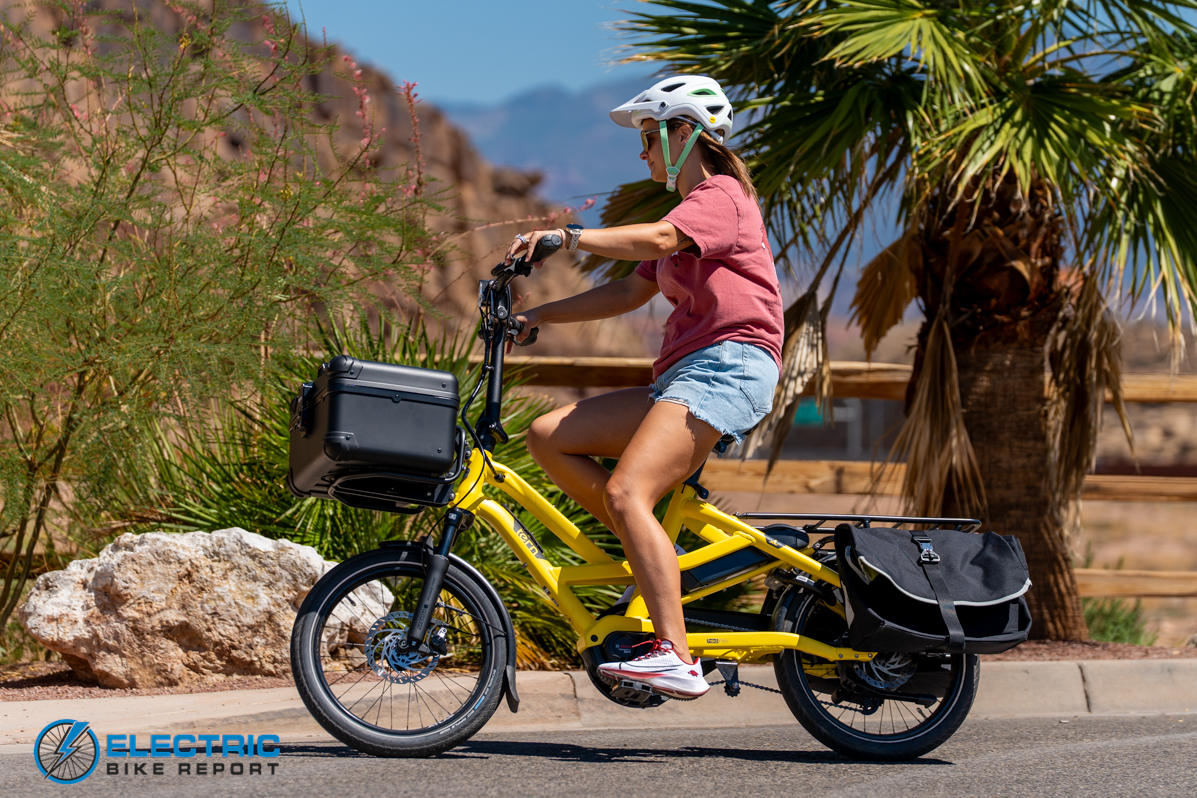
Despite the cargo/utility DNA, the HSD is surprisingly nimble.
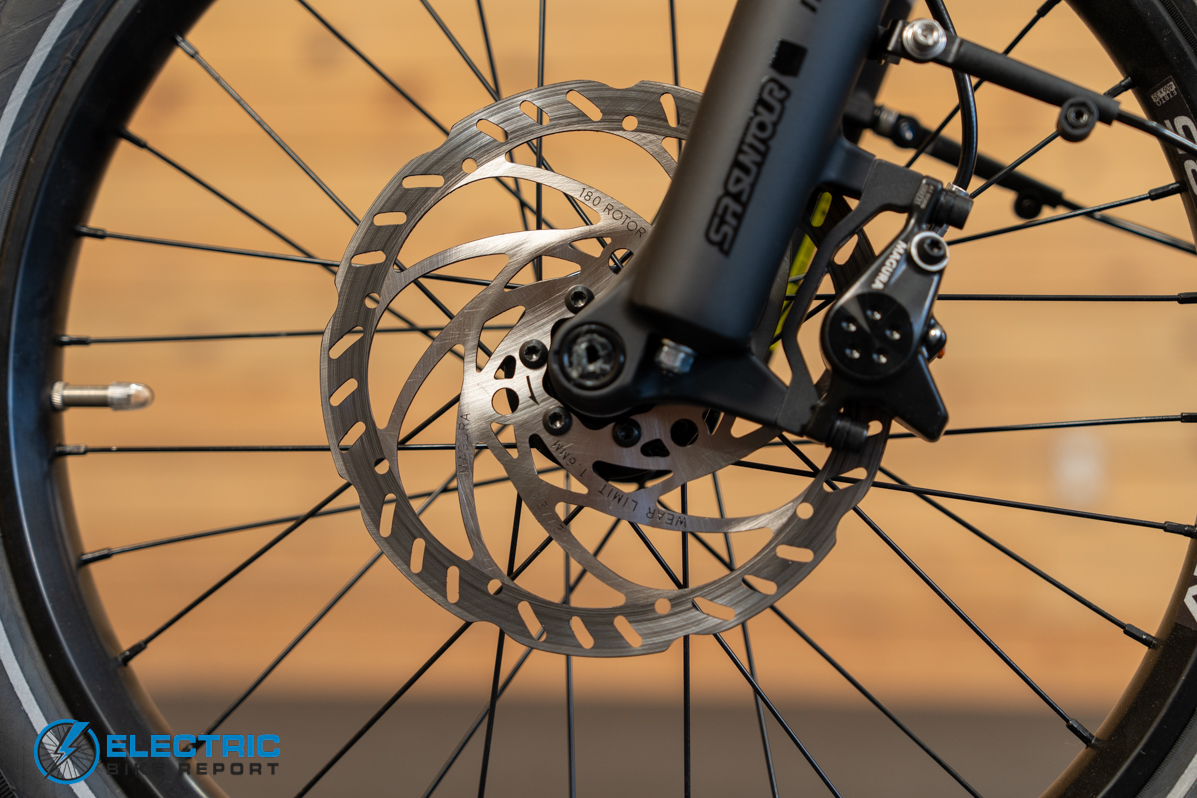
180 mm rotors front and rear.
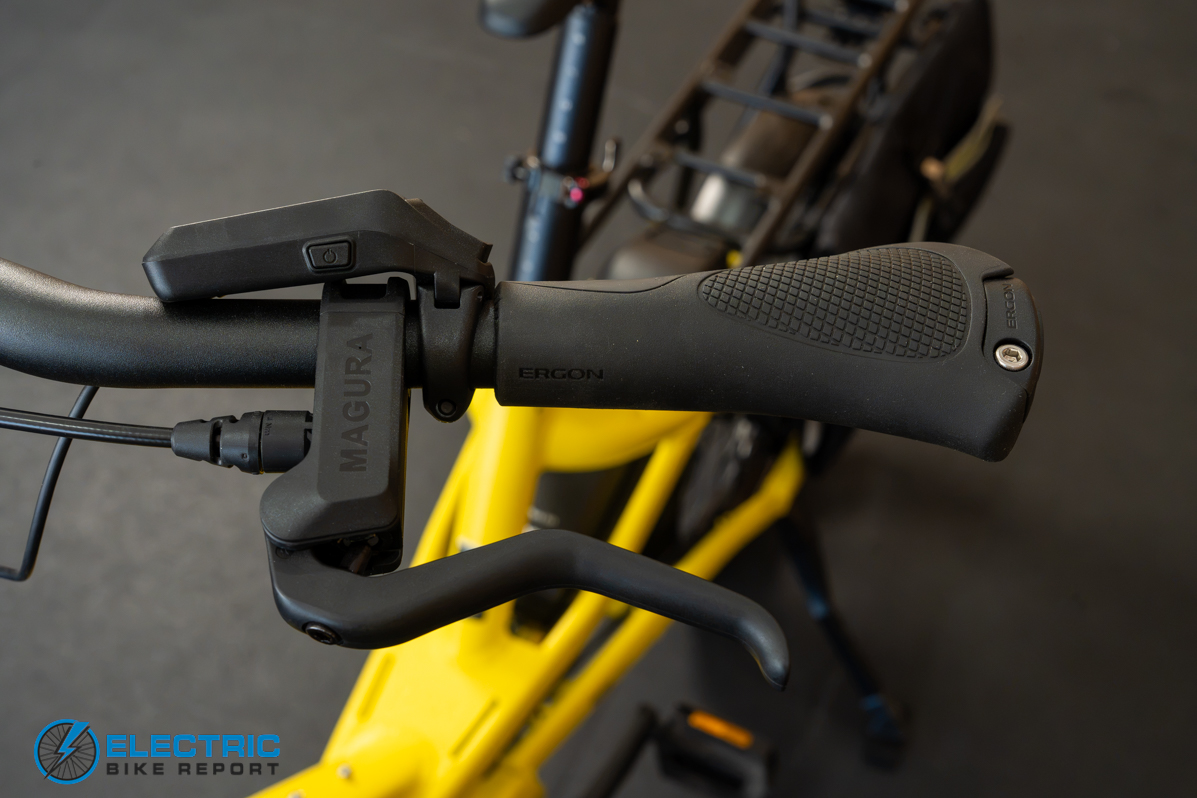
While these brakes are an entry level option, it’s still great to see Magura’s name on the levers.
Tern HSD P10e Review: Brake Test
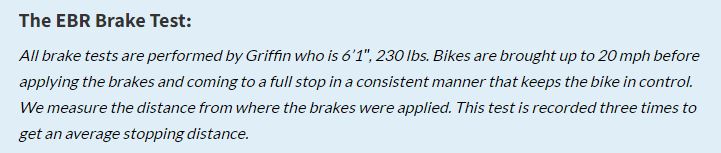
Using the brake test process outlined above, the HSD P10e came to an average stopping distance of 19 feet 1 inch over three runs. This is almost exactly in line with the category average of 19 feet 2 inches.
This category is full of bikes with good stopping power, so the competition is stiff. It’s also worth mentioning that as a group, these bikes post a shorter stopping distance than other categories of Ebikes. So, the HSD is on par with (even slightly better than) an already above average class.
This bike comes equipped with Magura MT A2 2 piston Hydraulic disc brakes and 180 mm rotors. Typically, we’ve found Magura brakes to be very powerful and reliable. This setup is a solid one, and it does post good numbers, but we did notice some sponginess creeping in on the front brake. With a brake bleed and lever adjustment, the softness improved considerably, but it wasn’t a perfect fix.
It’s hard to say the exact cause of this, but I’d chalk it up to a potential mechanical issue. The brakes still have decent power and modulation, but this is Magura’s entry level model. This setup doesn’t quite have the gusto of some of their higher end models – I will admit that the bar here is very high, as Magura’s other options are excellent. These are still solid brakes that do the job well. They’re safe and solid.
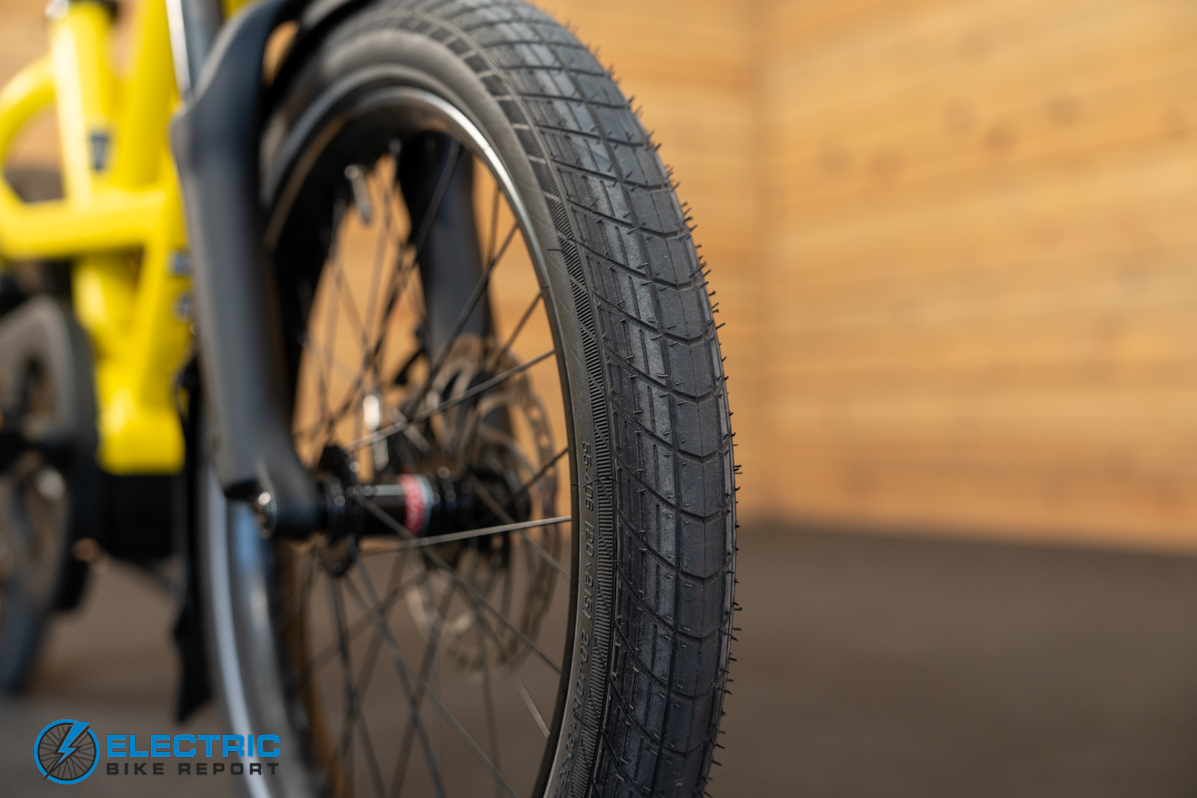
The Schwalbe Tires provide solid grip.
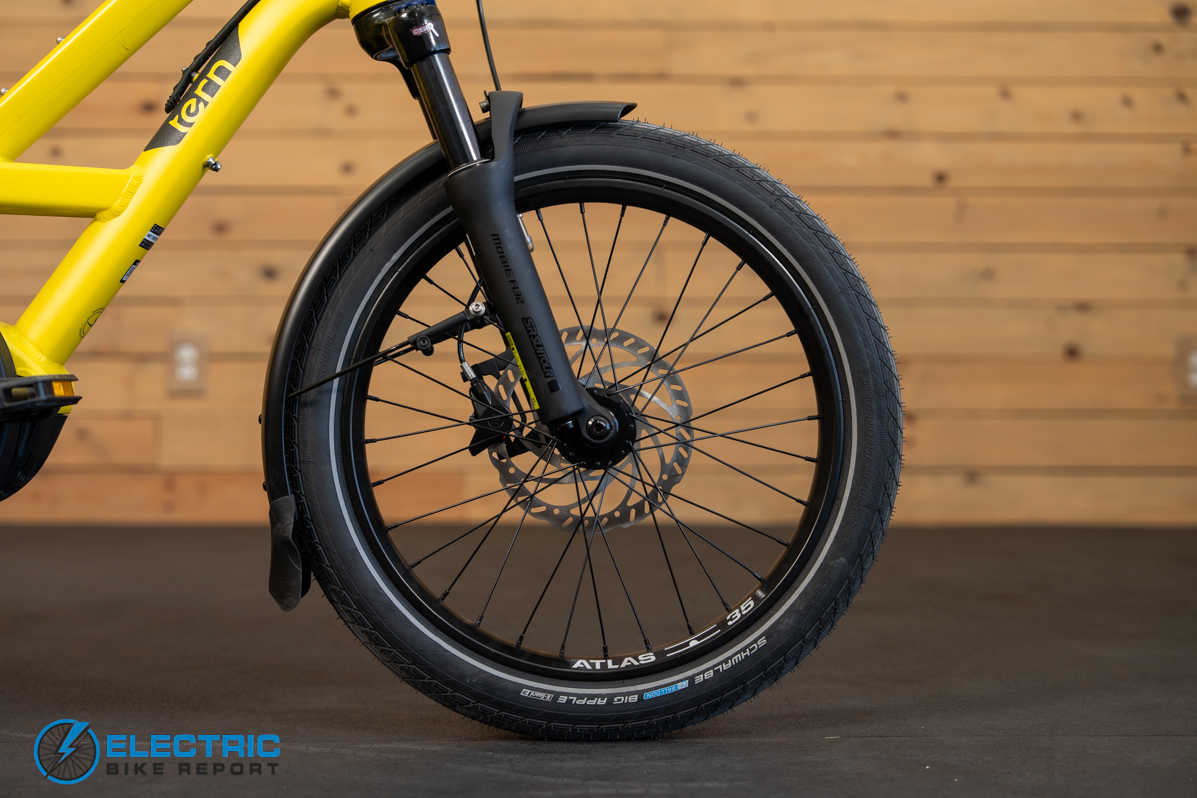
The Suntour suspension fork was made custom for Tern.
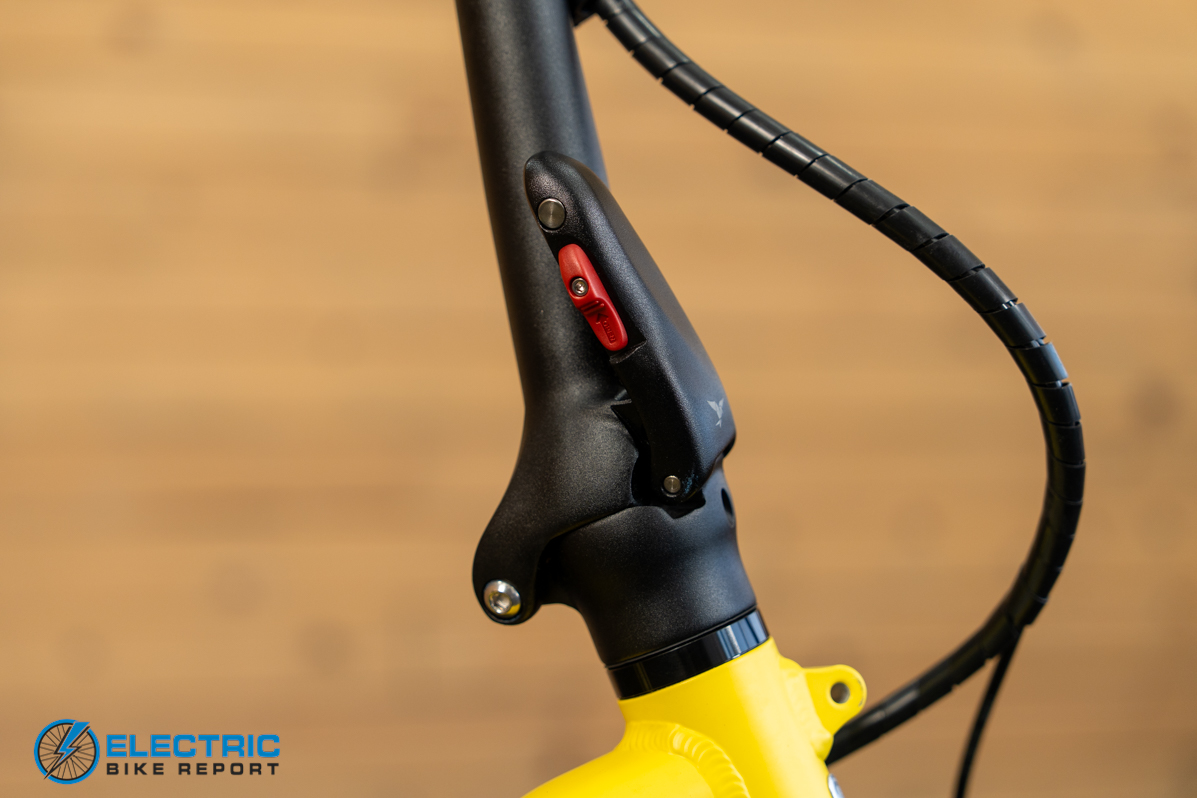
A fold-down stem helps save space – great for city living.
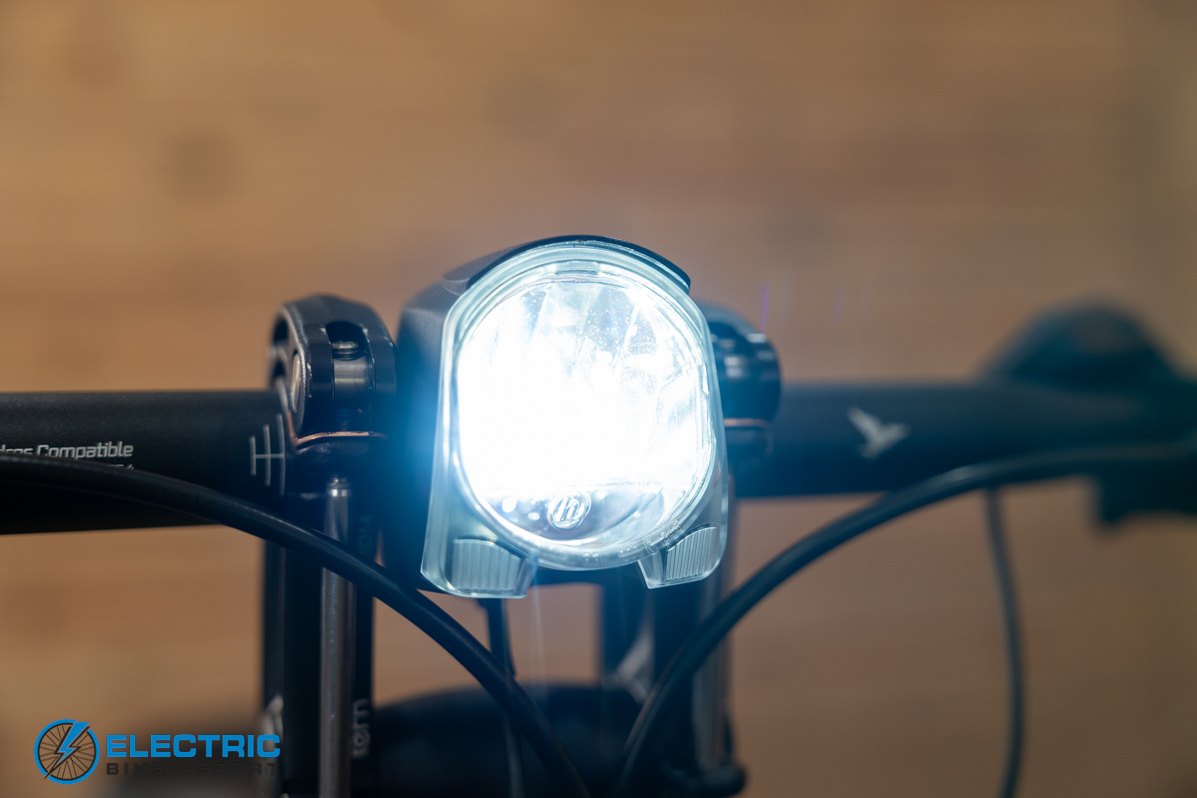
An integrated headlight makes sure you’re covered after the sun goes down.
Tern HSD P10e Review: Ride Quality
I mentioned that the real strengths of this bike lie in the details. The defining characteristic of the HSD is that Tern thought of the little things – and those “little” things stack up to make a big difference.
A glance at the spec sheet helps illustrate my point. Several components, including parts of the drivetrain and the suspension fork, were built specifically for Tern. It’s not just the components, either; just about everything is well-thought-out. For example, the stem folds down to save space, and the frame can stand up for upright storage. Yes, really.
The Bosch eShift/TRP EASI system is also part of the package. If shifting manually isn’t your thing, this bike will actually do it for you (just like an automatic transmission in a car). Generally, I found this to work very well. You can also fine tune it to shift at whatever cadence RPM you select. The only area where it struggles is when encountering a sudden hill; it still works, but it isn’t able to predict an incline, so I found myself in the wrong gear for a short time. Happily, you can still shift manually when in auto mode, so this is a very minor critique.
The Flow app is a continuation of these helpful features. Ride tuning, navigation, and security features are all part of the package here. I’d like to point out that Bosch’s app really is top notch. It’s intuitive, and the ability to adjust the power output is a very valuable option. For those that want a charged and peppy experience, I found that maxing the output to the full 700W and increasing the motor sensitivity to +5 was where the bike felt most powerful.
While Tern’s attention to detail is certainly a big part of the story here, it isn’t just flash with no substance. The fundamentals are also here, and they’re equally well-done.
The seatpost has enough adjustment range for a wide range of inseam sizes. At 6’3″, I was able to get ideal leg extension, and the reach felt comfortable as well. Tern lists the size range as suitable for riders from 4’11” to 6’9″. While I do think this bike is very accommodating, up to 6’9″ feels a bit ambitious. Riders of that height could still likely ride this bike, but it would be somewhat cramped.
The HSD is very smooth. The front suspension fork is very plush, and the bike is incredibly stable, even with cargo in the back. Despite the stability, this bike is surprisingly nimble, especially compared to other cargo bikes. With cargo in the back, the handling does change a bit, but this is expected. The bike retains its stability, but is slower in and out of corners. It would be unreasonable to add 60 lbs of cargo and expect the same agility. The steadiness under load is there, and that’s the most important part.
The rear rack is capable of 176 lbs, and a seat can be added for passenger transportation. Tern also sent us a front cargo box, which adds even further storage capacity. This bike is a prime option for hauling cargo, big and small.
It’s worth noting that in general, the HSD has a more analog feel to it. This is common with Bosch mid-drives; the pedaling experience is much more natural. If you’d prefer a more leisurely pedal experience, you can use the app’s ride tuning to achieve that – just increase the motor output and sensitivity.
Overall, the ride quality on the HSD is excellent. There are essentially no major gaps; the fundamentals are sound, and the array of features make this a great practical option.
Sponsor
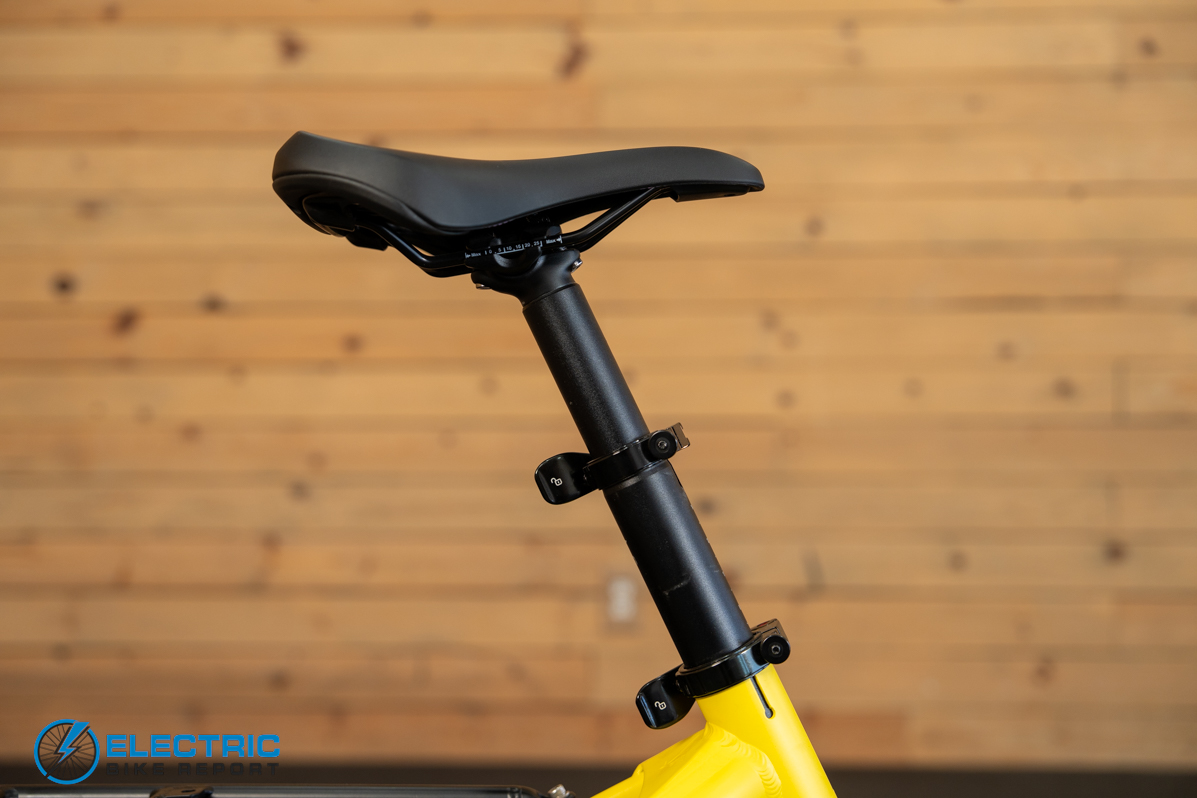
Even with my long inseam, I was able to get good leg extension thanks to the multiple points of adjustment on the seatpost.
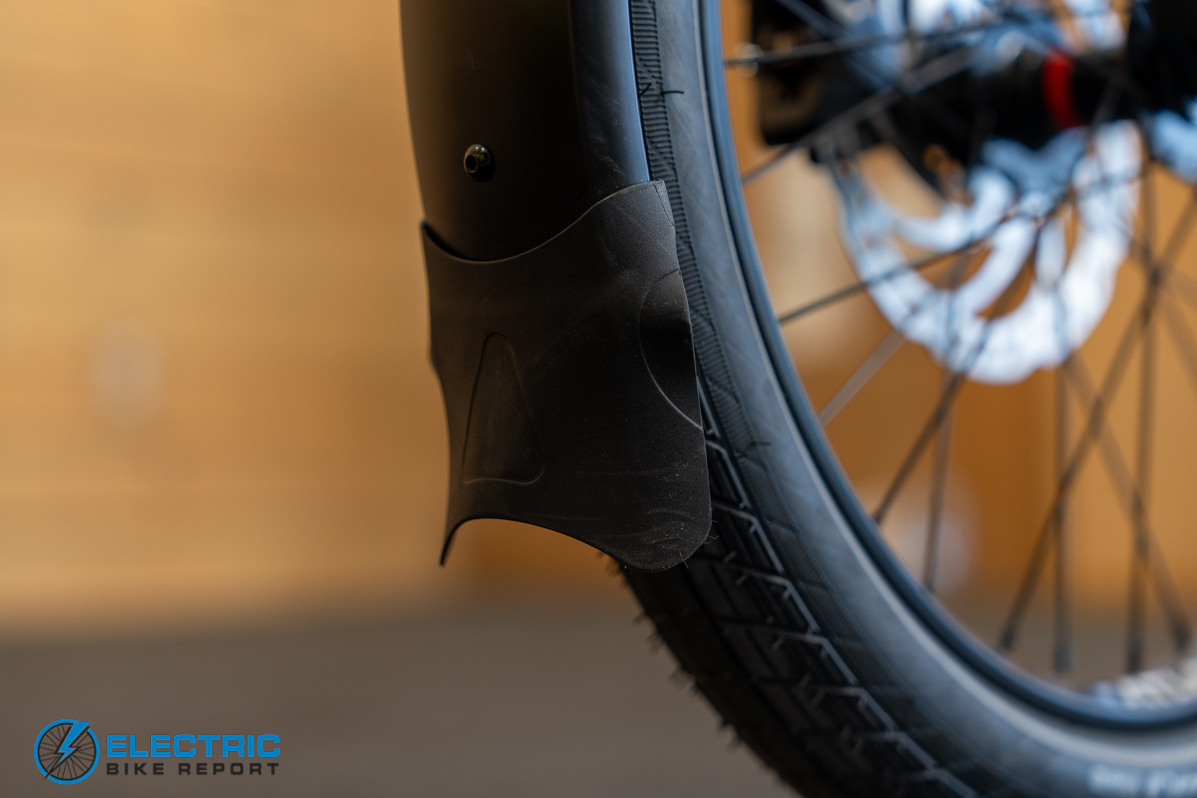
The fenders are full coverage.
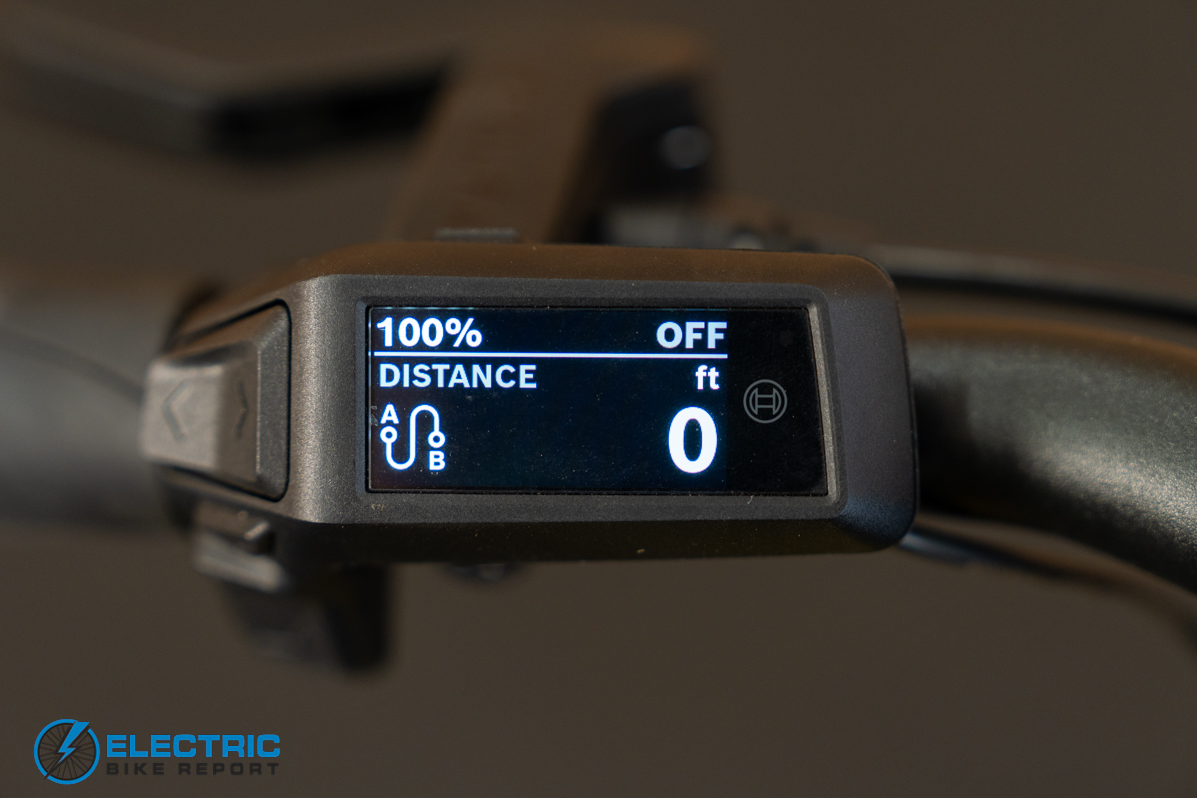
Bosch’s Purion 200 display is clean and clear.
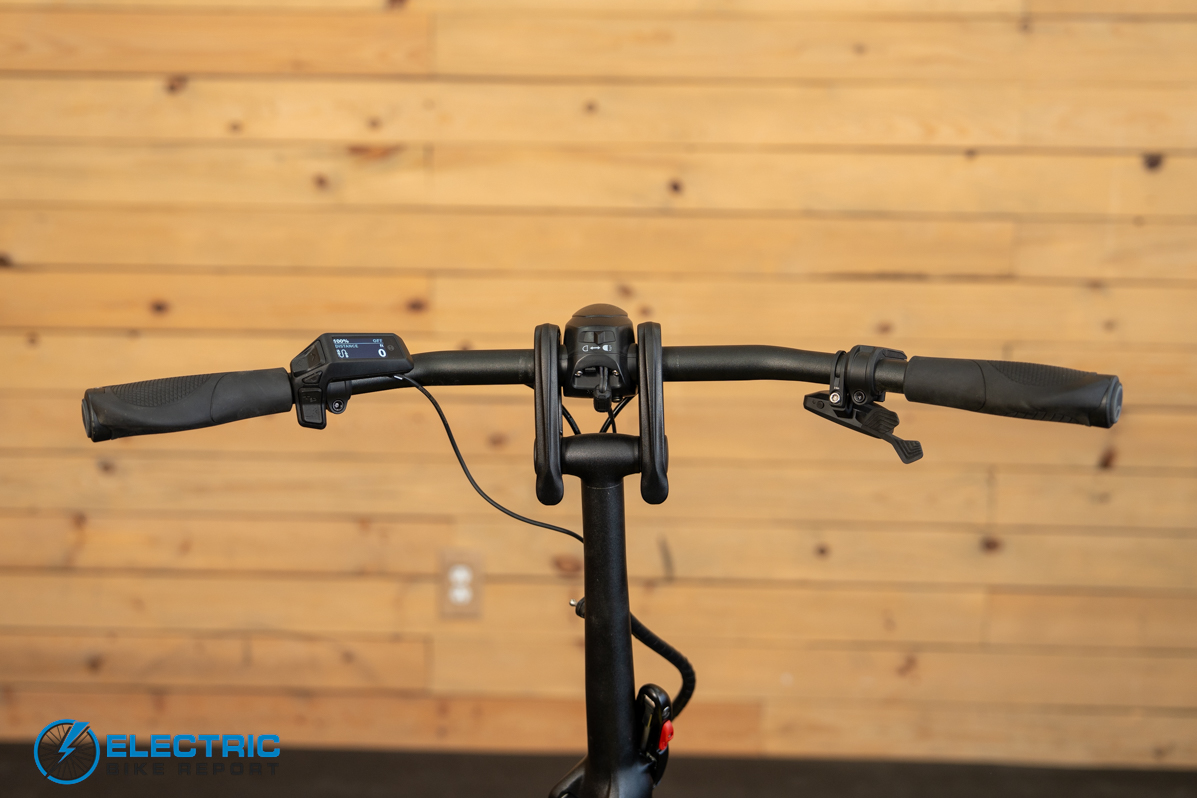
The stem is adjustable to accommodate different rider sizes.
Tern HSD P10e Review: Summary / Where to Buy
I want to revisit my initial question. Is this a legitimate option for those who want less time in the car? Can it really take over the job of getting passengers and freight where they need to be?
In a nutshell, the HSD does about as much as an Ebike can do to achieve that. For city living or local errands, this is a genuine option for those that want to spend less time behind the wheel. It’s practical, reliable and seriously well-thought out. The fundamental stuff like the cargo capacity, sizing, range, and ride quality are all very solid, and they make the HSD a really good Ebike. But, the details here are what makes this a great alternative to a car. Things like the security features and standup storage help negate some of the traditional cons of using an ebike as transportation.
In addition to the practicality, I love that the HSD can offer both a high tech and analog experience. Riders really do get the best of both worlds – this bike manages to strike a balance between the familiarity of traditional bicycles and the convenience of modern options.
There’s no doubt, this is a premium product. The price is high, but if you’re serious about spending less time behind the wheel, this builds a rock-solid case.
This is overall a great option if you want a premium, practical, and reliable utility Ebike. It really can take on much of a car’s occupation.
Happy Riding! Make sure to let us know if you have any questions or if you think we left anything out in this review of the Tern HSD P10e down in our comments section.
Sponsor
Sponsor
Reader Interactions
Comments
Leave a Reply




I believe the bike you reviewed is the more expensive HSD P10e Sport and not the standard P10e (which is Class 1 with 75nm torque).