A Fat Tire Folding E-Bike That Doesn’t Break the Bank | GoTrax F3 Review
Jul 18, 2026
 0 Comments
 Share
Share
The F3 is a budget-friendly fat-tire folder that’s built for exploring.
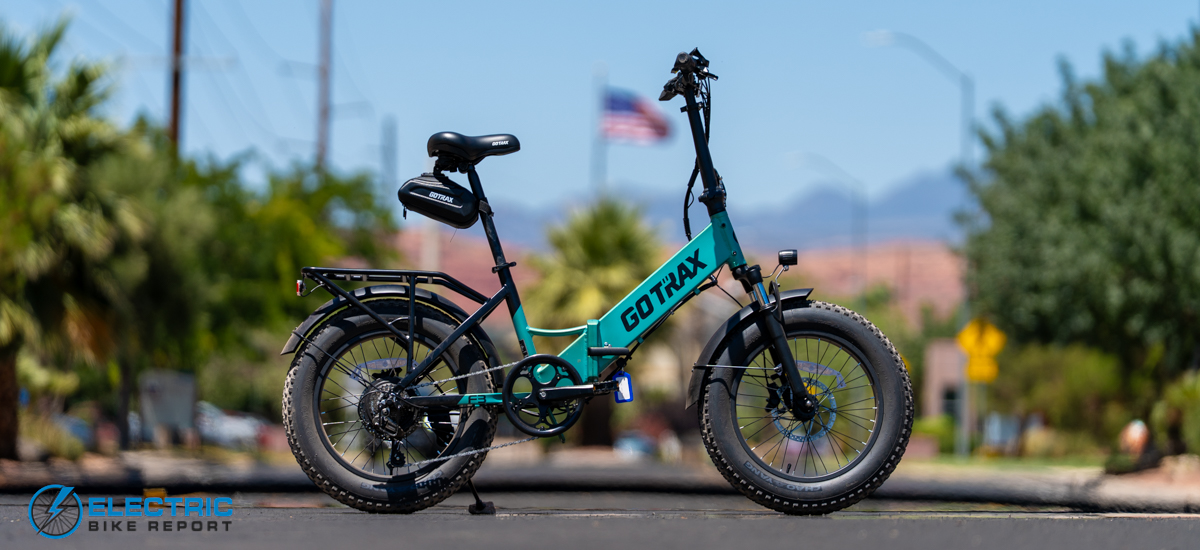
I’ve recently had the privilege of reviewing multiple Ebikes from GoTrax – namely, a few of their folding Ebike options, the F2 and Efold. These bikes packed impressive value for money and a stripped down approach that honed in on basics, not extras.
While I thought the fundamentals-first mindset served these bikes well, there’s no denying that some riders prefer some extra niceties on their Ebikes. GoTrax knows this, too – and they have a bike that just may deliver on that front.
The GoTrax F3 is a fat-tire folding Ebike for riders that want something in the middle of value and luxury. These riders want some added creature comforts, but at a reasonable price; they’re not looking for filet mignon, but they’d like something better than a fast-food burger.
The F3 is equipped with a 500W motor, 672 Wh battery, and hydraulic disc brakes. It also has class 2 / 3 optionality, 5 assist levels, and a torque sensor. Fat tires work with the front suspension to deliver a smoother ride, and several extras are included.
In other words, it offers more than the Efold and F2. However, this bike’s little brothers are less costly, and lighter.
So, can this bike meet the high bar that the other GoTrax folders have set? Additionally, does the F3 have the performance to hang in with other fat-tire folders? We put it through our real world tests to find out!

Sponsor
E-Bike Category:Folding, Fat Tire
E-Bike Class:Class 1 (Pedal Assist up to 20 mph)
Class 2 (Throttle to 20 mph)
Class 3 (Pedal Assist to 28 mph)
Class 2 (Throttle to 20 mph)
Class 3 (Pedal Assist to 28 mph)
Sponsor
GoTrax F3 Video Review
 Pros
Pros- At $899, it’s one of the more affordable bikes in its class.
- Its 500W motor is strong, and the bike is a solid hill climber.
- The wide, knobby tires offer off-road optionality as well as extra cushion.
- The F3 brakes well – see our test below for details!
- GoTrax adds in several extras, including a seat bag, phone holder, lock, mirrors, and tire levers.
- It’s a solidly comfortable bike with good adjustability.
 Cons
Cons- PAS 1 only offers assist at very low speeds, making it a relatively impractical mode.
- The 20 x 4.0 inch tires have some inherent limitations – smaller wheels don’t carry speed as well as larger ones, and adding fat tires into the mix causes a fair amount of rolling resistance.
ELECTRICAL SPECS & FEATURES
- Battery: 48 V 14 Ah (672 Wh)
- Charger: 54.6 V 3.0 A
- Display: LCD Digital
- Motor: 500 W Hub Motor
- Headlight: Integrated
- Taillights: Integrated
- Pedal Assist: 5 levels
- Claimed Range: 60 miles
- Throttle: Twist
- App: None
- UL Certification: UL 2849
Weight & Dimensions
- Claimed weight: 58.3 lbs
- Tested Weight: 66.54 lbs
- Rider height range: Not Specified, estimated 5’2″ – 6’3″
- Total payload capacity: 264 lbs
Components & Accessories
- Brakes: NUTT Hydraulic Disc Brakes
- Fenders: Alloy
- Fork: 40 mm Coil Fork
- Frame: Alloy, Folding
- Drivetrain: Shimano Tourney 7 speed
- Grips: Rubber Butterfly Style
- Saddle: GoTrax Comfort
- Handlebar: Alloy Flat Bar
- Kickstand: Yes
- Pedals: Folding
- Tires: 20″ x 4″ Knobby Tread
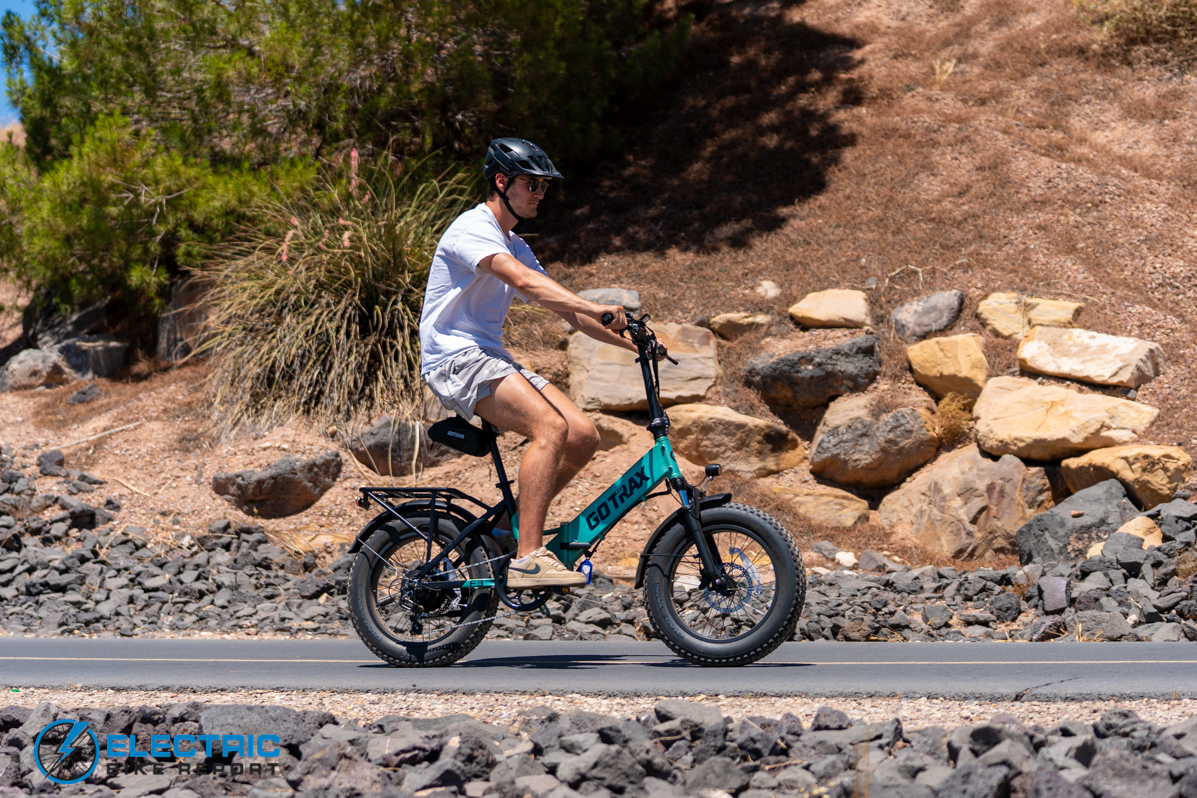
While this is a folder, it’s a full sized-bike when it’s not in storage mode.
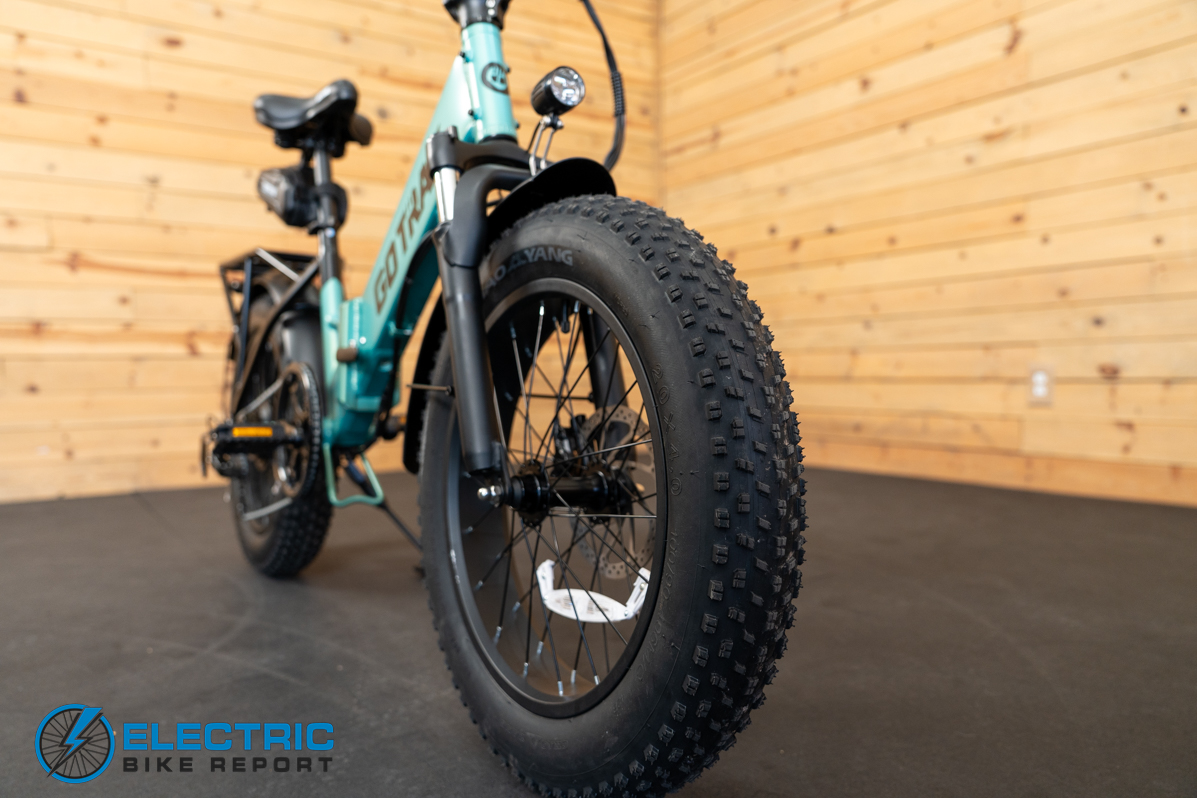
Wide tires for the win!
The F3 is the largest folder in GoTrax’s lineup.
GoTrax F3 Review: Speed Test
Our speed test is designed to understand how a bike feels through its assist levels; each PAS setting should provide a useful amount of assist to the rider, while also feeling distinct from the other levels. Well-programmed bikes tend to increase power delivery incrementally with each assist increase.
The F3 is equipped with a torque sensor and can be set to fit class 1, 2, and 3 regulations. We tested the bike in both class 2 and 3 modes to get a feel for the programming.
I started pedaling under my own power with no electric assist. I averaged about 8.3 mph while doing this. The fat tires combined with the nearly 67 lb weight make this bike taxing to pedal without the motor – I’d recommend trying not to run out of battery.
From there, I turned on the assist and recorded my average speed in each level. This portion was done in class 2 mode.
After increasing to PAS 1, I continued to sit at 8.3 mph – the motor didn’t activate. At lower speeds, PAS 1 will provide assist, but above roughly 8 mph, it cuts out. Because of this, I expect most riders to skip the first assist level. From there, I averaged 11.6 mph in PAS 2, 14.2 mph in PAS 3, 16.5 mph in PAS 4, and topped out at 20 mph in PAS 5.
I then tested the bike’s class 3 setting. I settled at 10.6 mph in PAS 1, 15.5 mph in PAS 2, 19.5 mph in PAS 3, 23.5 mph in PAS 4, and 28 mph in PAS 5.
These numbers show a generally well programmed bike – notice the linear and even increase in speed throughout each assist level. The numbers line up with the real world experience as well; each power increase felt predictable, but also bespoke and separate from the last. However, there is a caveat.
As I mentioned, PAS 1 only provides assistance up to about 8 mph. Most riders will exceed this speed very naturally, and so this assist level isn’t particularly practical. PAS 2 is the more usable low power option – we’ll discuss more about this in our range test.
As for the throttle, I tested the acceleration from a full stop to 20 mph. The F3 is peppy off the line, and the acceleration is smooth – definitely a fun part of the bike.
The key takeaways from the F3’s results are as follows: The bike is largely well programmed in both class 2 and 3 modes. The only critique is on PAS 1 – an increased speed limit would help make it a more useful mode. Beyond that, these are good marks.
Sponsor
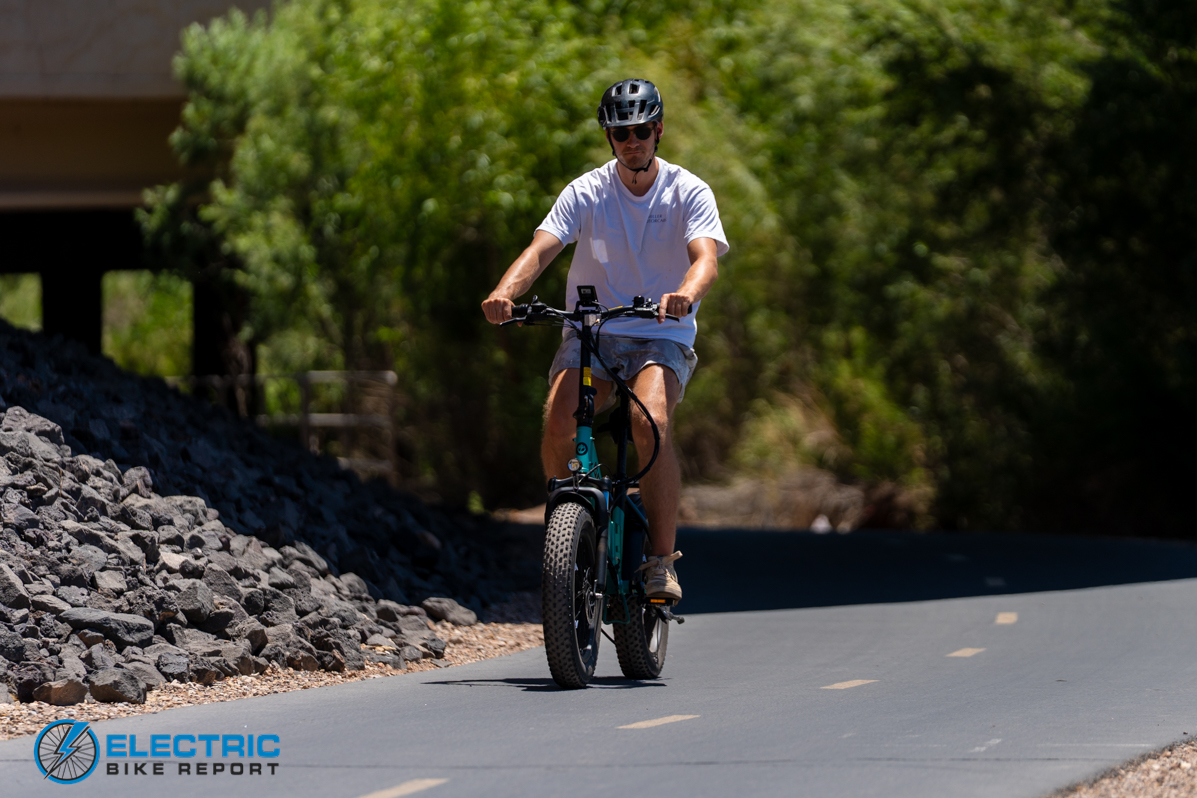
Unfold, hop on, and off you go.
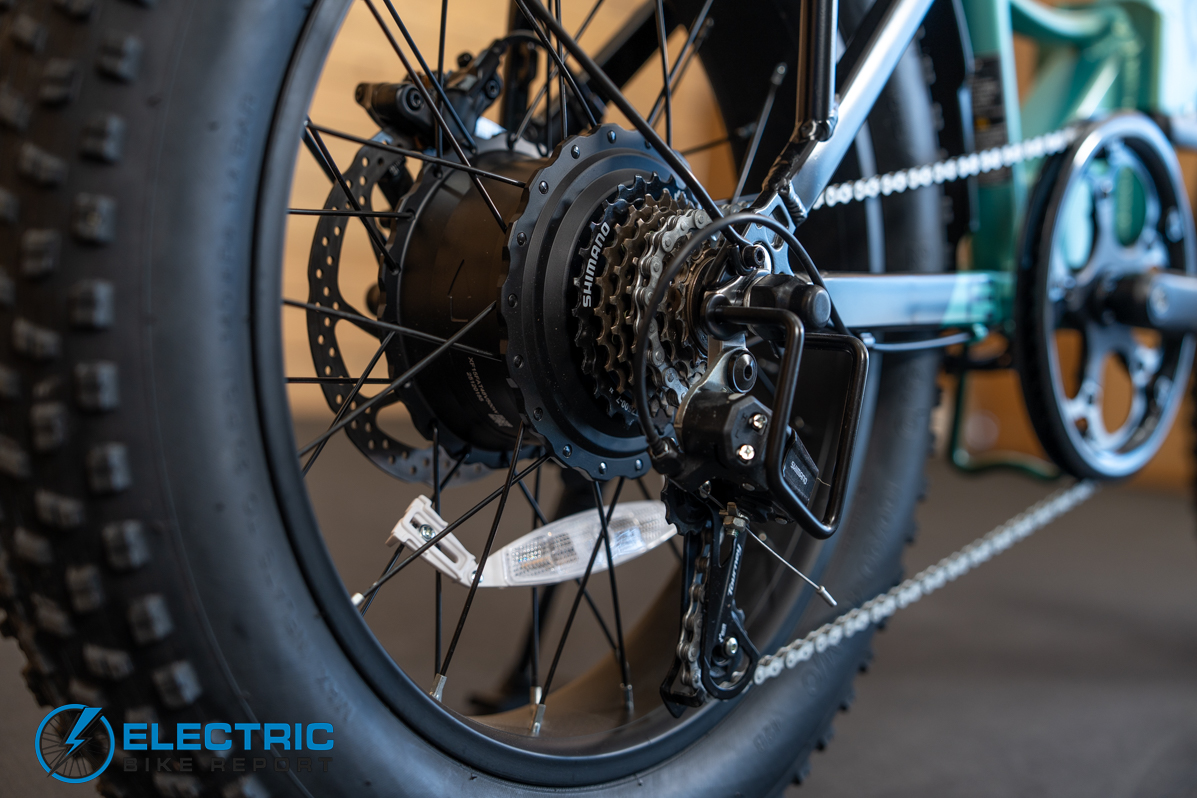
Shimano’s Tourney drivetrain makes for clean and reliable shifting.
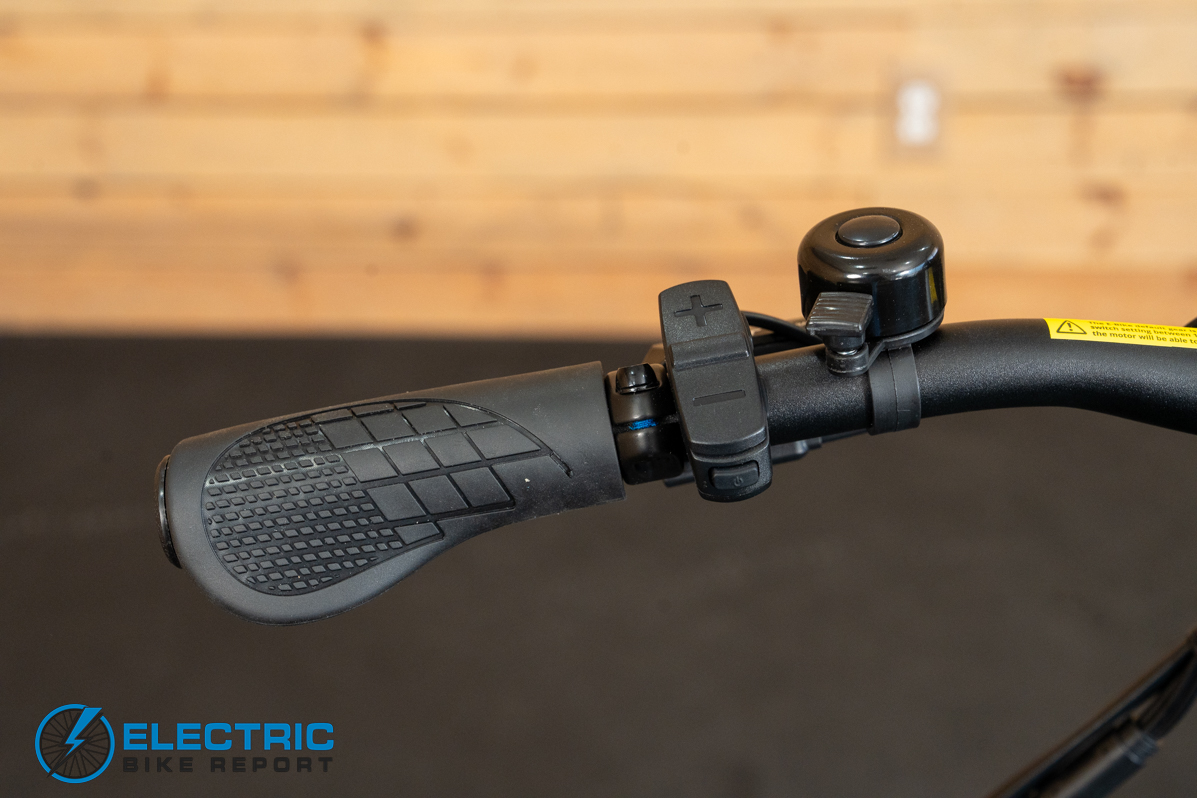
The simple +/- control pad is intuitive and easy.
GoTrax F3 Review: Range Test
Our range test consists of two separate trials – one using the lowest PAS level, and another using the highest. The low power test is used to find the maximum range that the bike can provide, whereas the high power run is used to find the range when the bike is using its most powerful settings.
In the low power test, the F3 stretched to an impressive 74.02 miles using PAS 1. The category average sits at 66.14 – about 8 miles shorter than the F3’s showing. However, as much as the numbers show a good result, there is a caveat.
I mentioned in the speed test that PAS 1 has a very low threshold for assist power. If you exceed roughly 8 mph in the lowest assist level, the bike will stop providing power. Once again, we’d expect that most riders will naturally reach higher speeds, and therefore will look to increase the PAS level pretty quickly.
Because we are testing the maximum distance this bike’s motor can take riders, we tested the range in PAS 1. So, while 74 miles is a long way, the F3 averaged 7.78 mph over the course of the test. Essentially, to reach the same sort of mileage, you’d have to keep the bike under 8 mph, as increasing the PAS level can shorten up range numbers. I’d expect the practical range to be a bit shorter.
Speaking of practical range, the high power test saw the F3 reach 32.26 miles; almost exactly on par with the class mean of 32.71 miles. In addition to the fact that this is a solid result, the PAS 5 setting is much more usable.
I’d also like to point out that this bike does offer significantly more mileage than the F2 and Efold. This is to be expected, as the battery here is significantly larger, but if you’re comparing between GoTrax folders, this one takes the cake in terms of range.
Sponsor
Sponsor
GoTrax F3 Review: Hill Test
Our hill test method is as follows: Our test rider, Justin, climbs Devil’s Backbone (our hill test segment) twice. Once using throttle only, again using the pedal assist. This climb is taxing for Ebikes; but the F3 stood up to the task.
On throttle alone, the F3 made the climb in 1:56 at an average speed of 15.6 mph. This is a respectable time, coming in just a hair behind the average of 1:54. The comparison class is also stiff competition; several of the fat-tire folding Ebikes we’ve tested have 750W motors. Even with its 500W powerplant, the F3 manages to stay close to the pack, and avoids the label of “underpowered” entirely.
The pedal test builds the case even further. This bike summited in 1:49, which is actually above average compared to its class, which sits at 1:58. Plain and simple, this is a good result. The F3 has the stuff for hill climbs.
As I mentioned, GoTrax offers multiple folding Ebikes, and this is the most expensive of their lineup. When it comes to the hill test, the extra cash isn’t wasted; the F3 does climb better than the F2 and Efold. Their performances weren’t bad, but crushing hills isn’t quite in their wheelhouse. While the F3 isn’t elite here, it’s very solid, and this is the GoTrax folder I’d choose if I was tackling a lot of elevation.
Sponsor
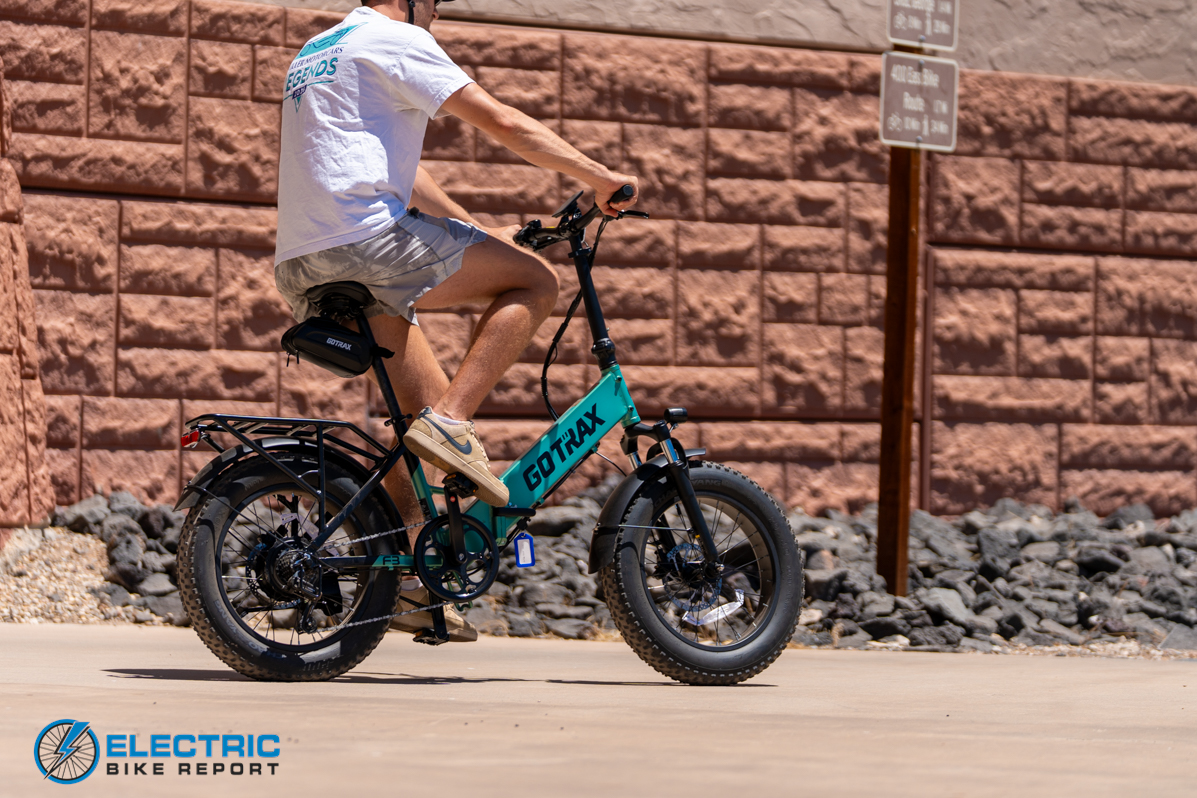
Pictured here is the Seafoam Green colorway.
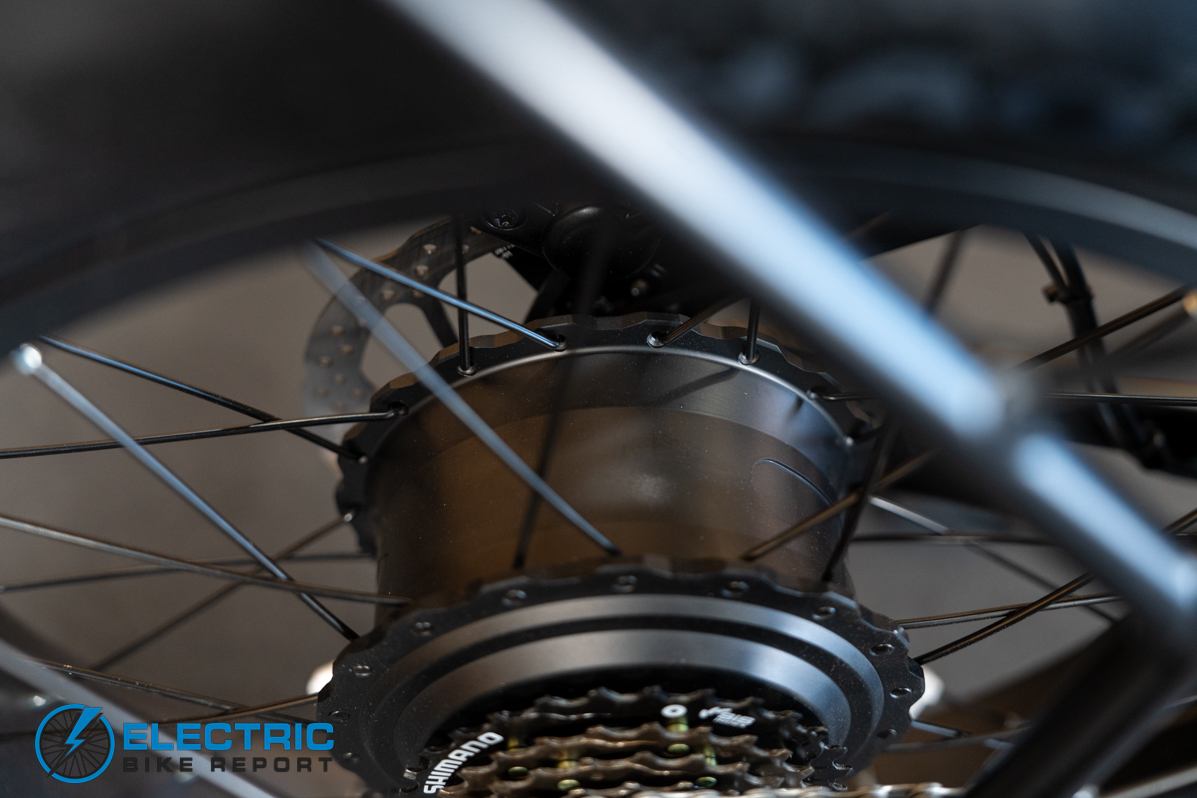
The 500W hub motor is matched up with a torque sensor.
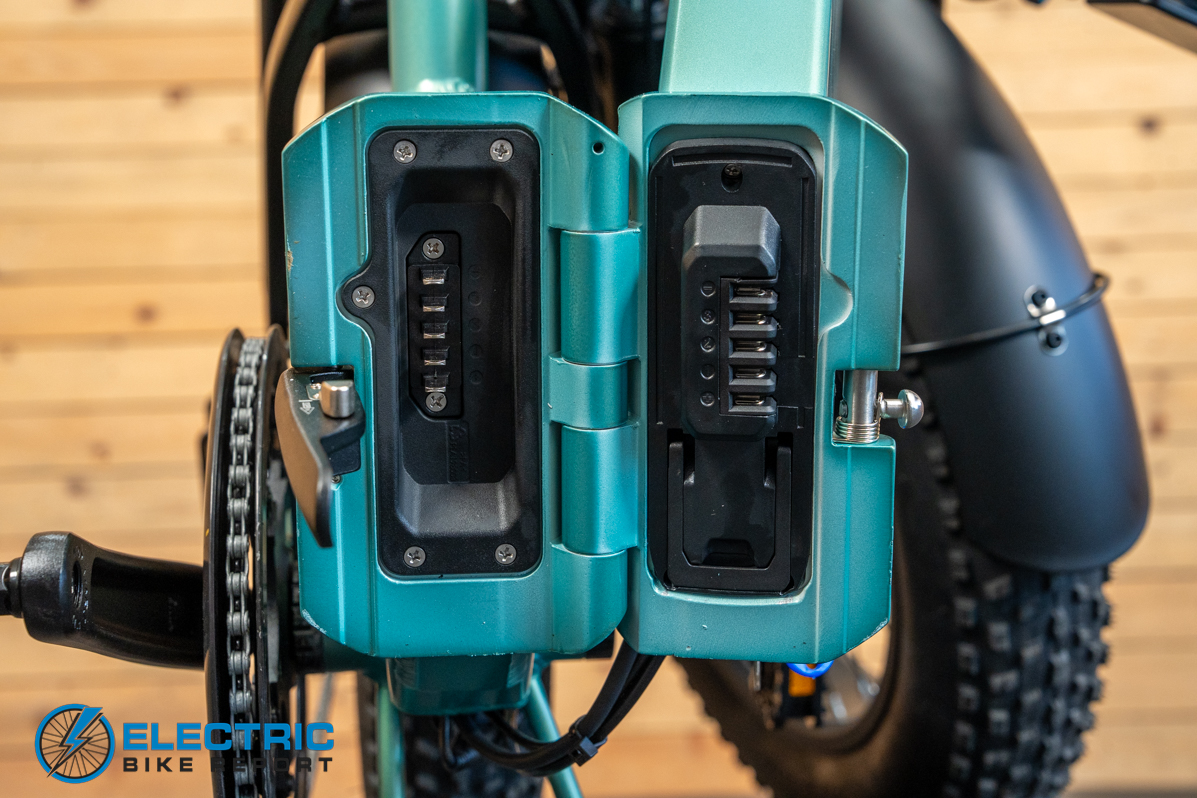
You’ll need to fold up the frame to access the battery.
GoTrax F3 Review: Brake Test
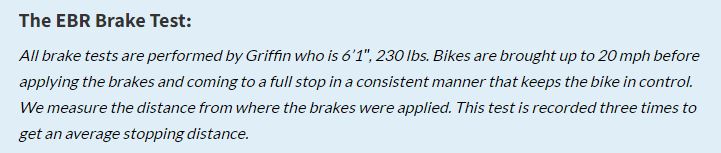
The F3 has a number of strengths, and its brake test performance is one of them. We tested the bike’s stopping power using the method outlined above, and simply put, it did well.
The F3 stopped at an average distance of 18 feet 11 inches. Similar bikes we’ve tested averaged 19 feet 5 inches in this test – not dramatically longer, but still a noticeable difference.
GoTrax equipped the F3 with NUTT hydraulic disc brakes and 180 mm rotors. This bike’s little brother, the F2, has a similar setup – it also yielded above-average test numbers. In addition to the solid brake hardware, the 20 x 4.0 inch tires have a sizable contact patch – these two attributes combined make for good results.
The brakes feel powerful from the get-go. Some systems are effective, but grabby and overly sensitive. With these, I was able to feel the tires’ purchase on the pavement immediately, but not in a startling way. The feel of these brakes is genuinely very good.
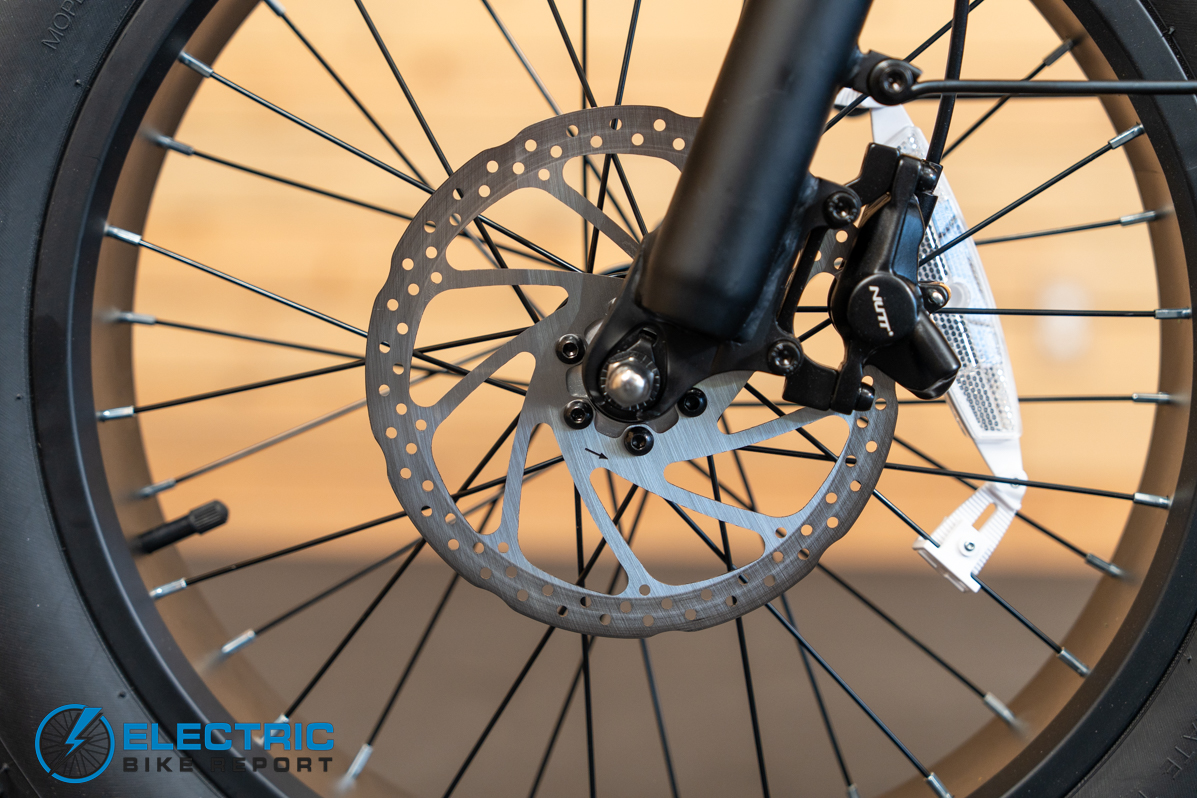
180 mm rotors in the front and rear.
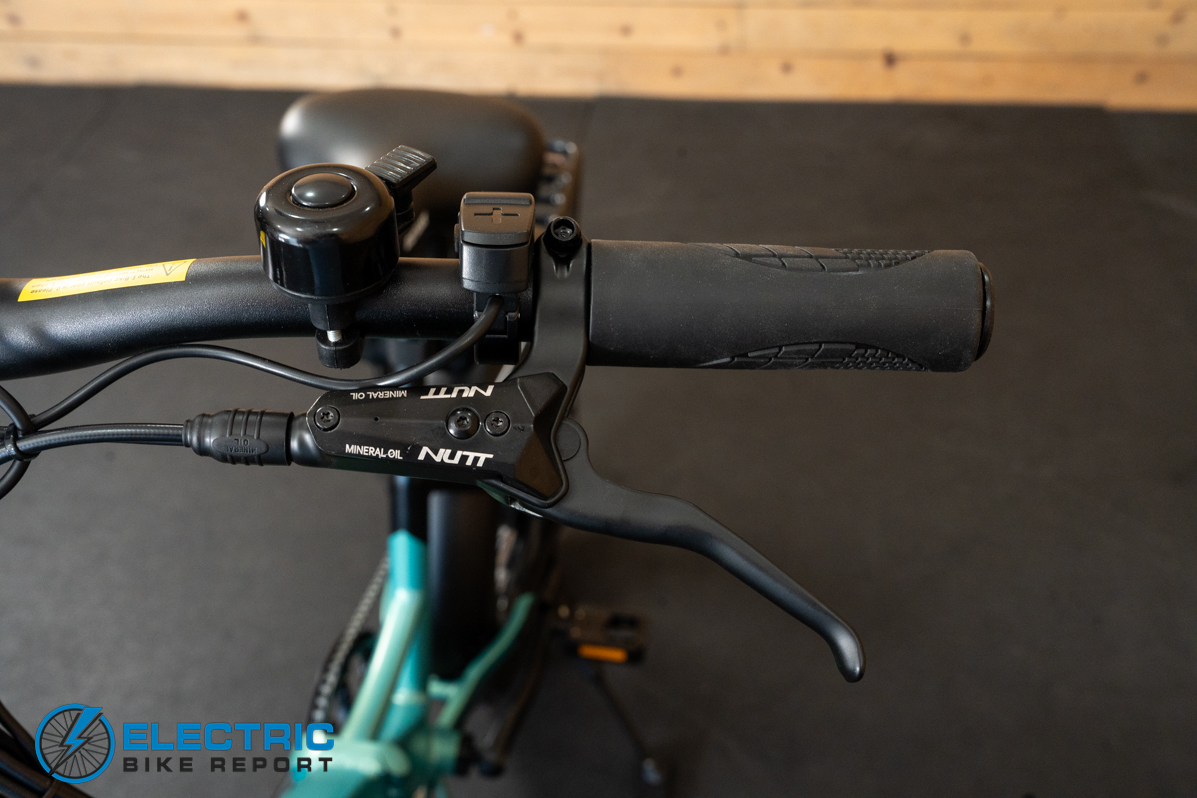
We’ve seen these brakes on other GoTrax bikes – they’re a trustworthy option.
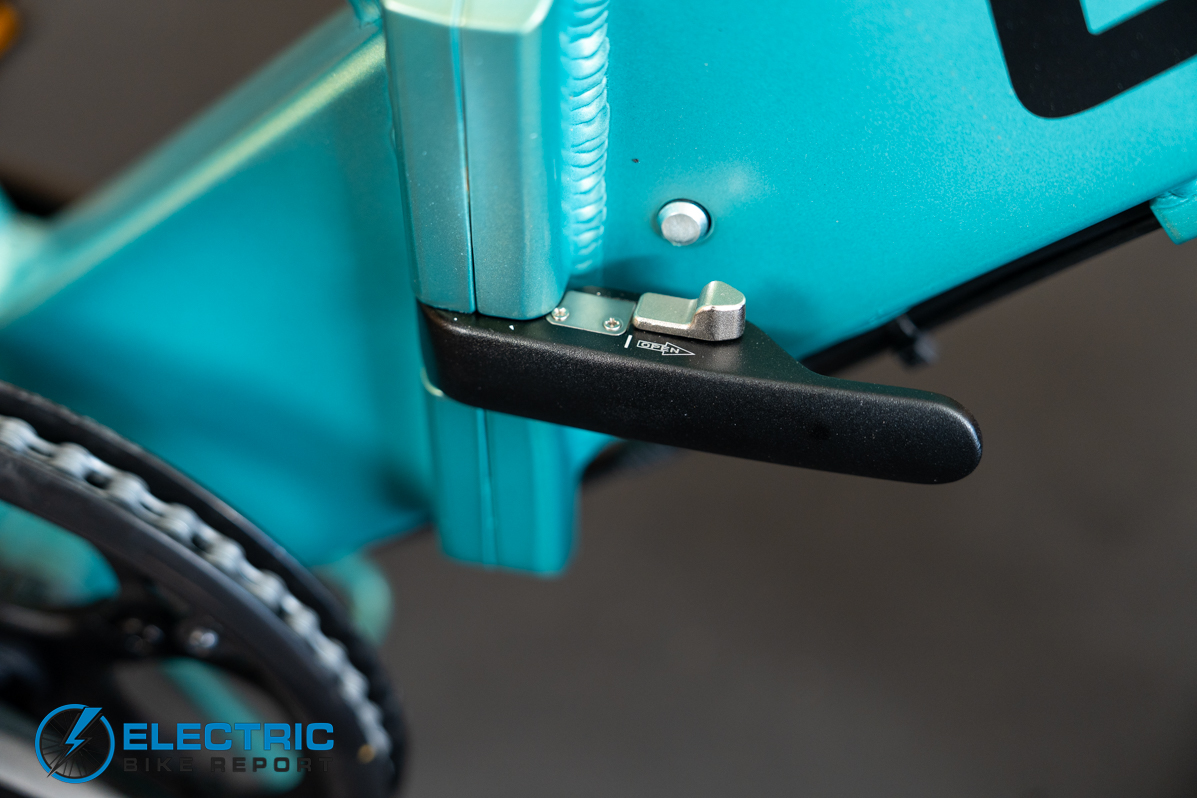
This latch feels sturdy and secure.
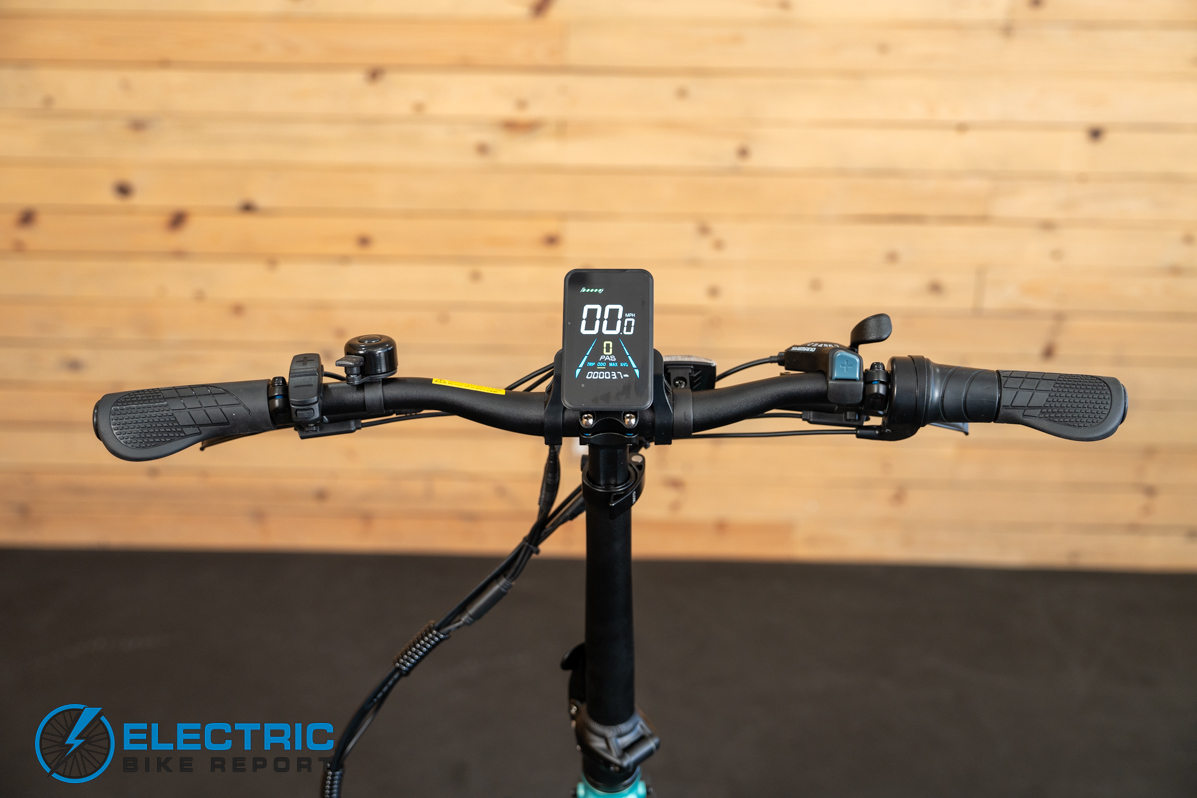
The display is large and easy to read.
GoTrax F3 Review: Ride Quality
The F3’s scope is a bit broader than some folding EBikes. While portability is a part of this bike’s package, there’s a lot more to it.
Off road capability is an example of this. The fat, knobby tires give riders the option to venture away from paved paths – I tried some of this myself, and the F3 generally does well off road. The bike has a stable feel, even on loose dirt, and I could feel the 4 inch tires smoothing out the bumps. For additional cushion, GoTrax also equipped the bike with front suspension. It’s a coil fork with roughly 30-40 mm of travel and a lockout. Frankly, it’s not the most refined suspension, but we don’t expect otherwise on a sub-$1000 bike.
On pavement, the bike keeps its settled handling. However, while the fat tires have some positives, there are some drawbacks as well. The bike feels settled, but also mildly sluggish. It’s reluctant to make quick movements, and the rolling resistance is noticeable – it doesn’t want to coast when on flat terrain, so I had to keep pedaling to sustain momentum. This is common for bikes with tires of this size, and it isn’t a huge issue, but it is there. Additionally, the motor helps level the playing field.
For additional cushion, GoTrax has equipped the bike with front suspension. It’s a coil fork with roughly 30-40 mm of travel and a lockout. Frankly, it’s not the most refined suspension, but we don’t expect otherwise on a sub-$1000 bike. The wide tires help pick up the slack as well.
As for the riding position, the F3 has riders in an upright stance with significant weight bias towards the saddle. GoTrax doesn’t provide a size range, but I’d estimate that riders from about 5’2 to 6’3 are in workable territory. I’m about 6’3, and was impressed with the F3’s adjustability. I was able to get comfortable leg extension using the seatpost, and the bars can be raised or lowered to tailor riding position.
Value has been a key hallmark for GoTrax, and the F3 comes with some extras to support that. A seat bag, lock, phone holder, mirrors and tire levers are all included.
As for the motor engagement, the F3’s torque sensor feels natural and responsive. The motor engages fairly quickly – usually within a quarter turn of the cranks. This is another point of separation between this bike and its little brothers. There’s a refinement in the pedaling experience that is slightly above what I found in the F2 and Efold.
The F3 is the largest and heaviest of the GoTrax folding family. GoTrax claims that it weighs 58 lbs; we weighed it, and found it was actually about 67 lbs. This isn’t abnormally heavy, but it’s not lightweight either. Removing the battery may help ease the strain when transporting the bike.
To sum it up, the F3 offers a decent package in the way of versatility and performance. The size of the tires have positives and negatives, but this is the case with most fat tire Ebikes. If you’re alright with the extra size and rolling resistance, there isn’t much to dislike about the F3’s ride quality.
Sponsor
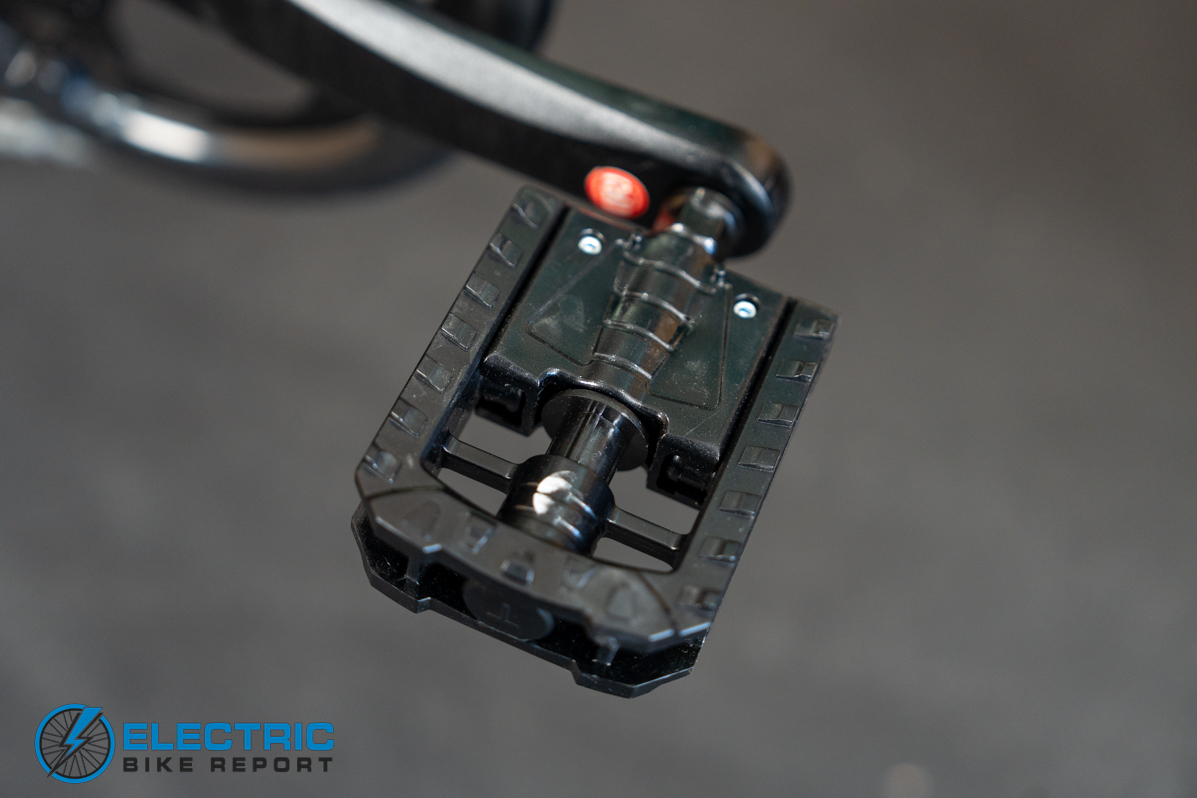
Even the pedals fold up!
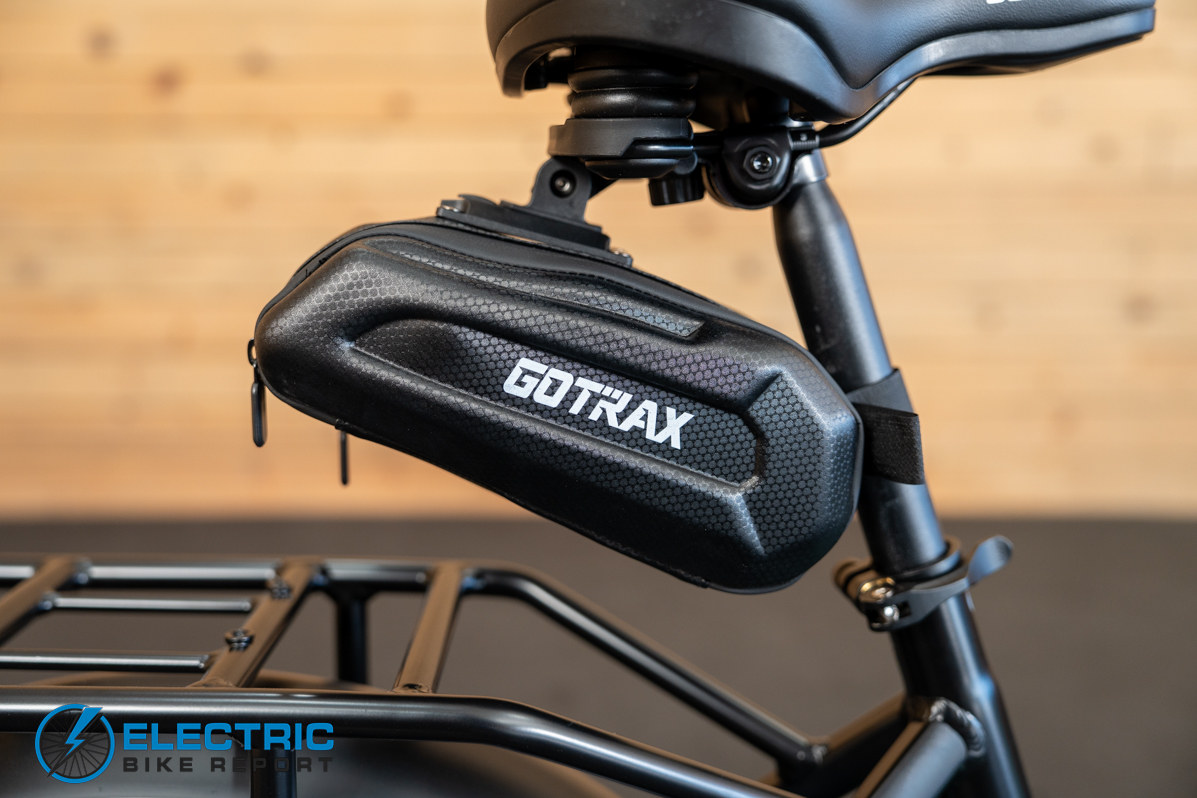
Just one of several extras that come with the F3.
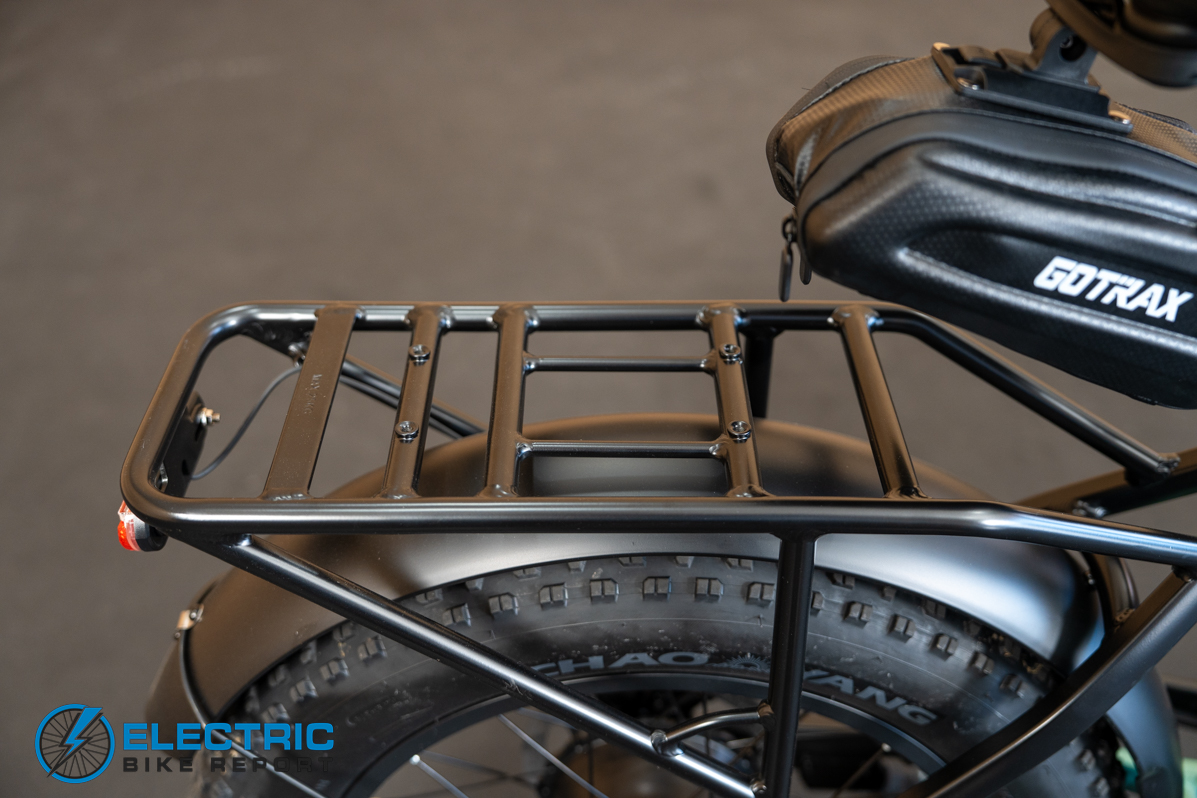
The rear rack is great for groceries and other cargo.
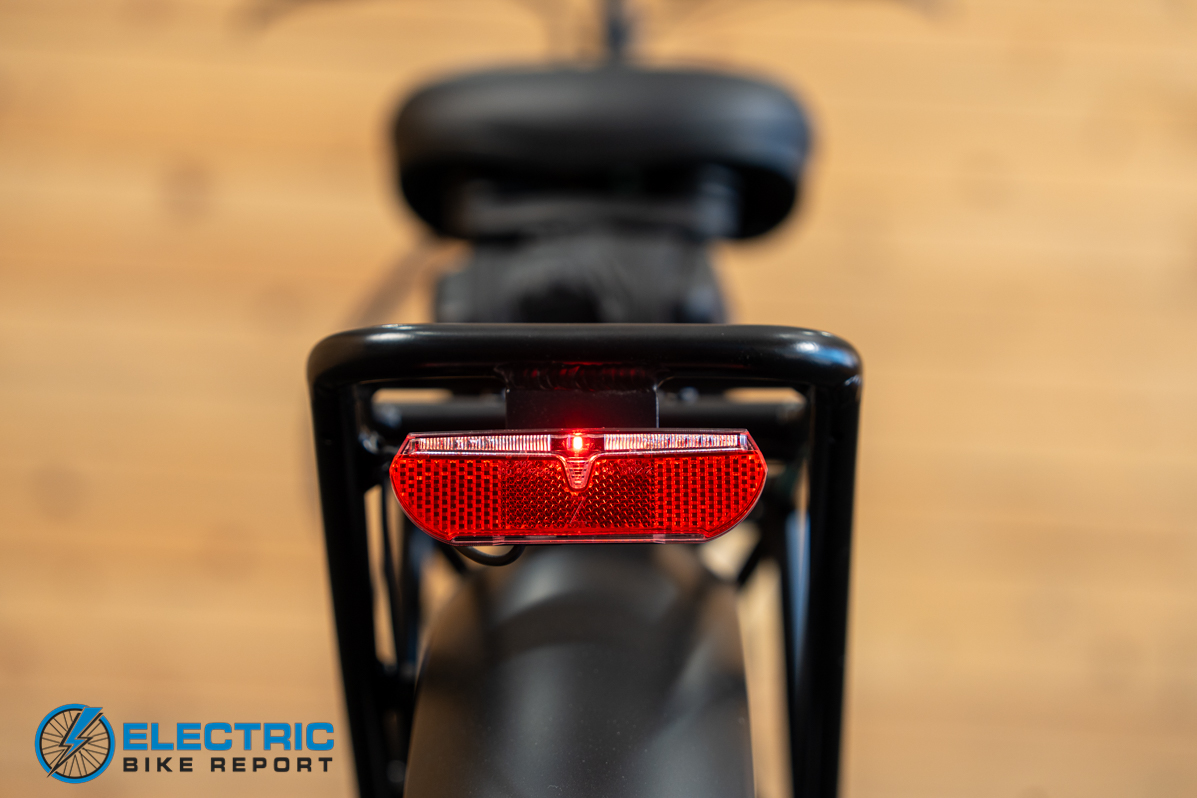
A taillight for added visibility.
GoTrax F3 Review: Summary / Where to Buy
Having tested a variety of folders from GoTrax, I can confirm that they’re all solid bikes with unique value propositions. This one is still oriented to be affordable, but with extra optionality. The off road chops, added comfort factor, and sufficient motor power are the main hallmarks of this bike.
The F3 is a good fit for riders who want a bike that is comfortable and up for anything. It would do well as a campground bike or a grocery getter, and the performance is all there.
We’d like to see improvement on the PAS 1 programming. The low speed cap limits the level’s usability, and fixing this would improve riders’ ability to choose the amount of power they’d like. The rolling resistance also may be a hang up for some riders, but this is a common trait of bikes in this class; it’s more of a data point than a definitive con.
Beyond that, the F3 is a solid option if you’re looking for a fat-tire folding Ebike. It’s got comfort and versatility at a reasonable price, and that’s something anyone can appreciate.
Happy Riding! Make sure to let us know if you have any questions or if you think we left anything out in this review of the GoTrax F3 down in our comments section.
Sponsor
Sponsor
Reader Interactions
Leave a Reply