Kingbull Literider 2.0 Review: Versatile, Powerful, But Not Perfect
Jul 11, 2026
 0 Comments
 Share
Share
This fat-tire folder has some real strengths, but it also has room to grow.
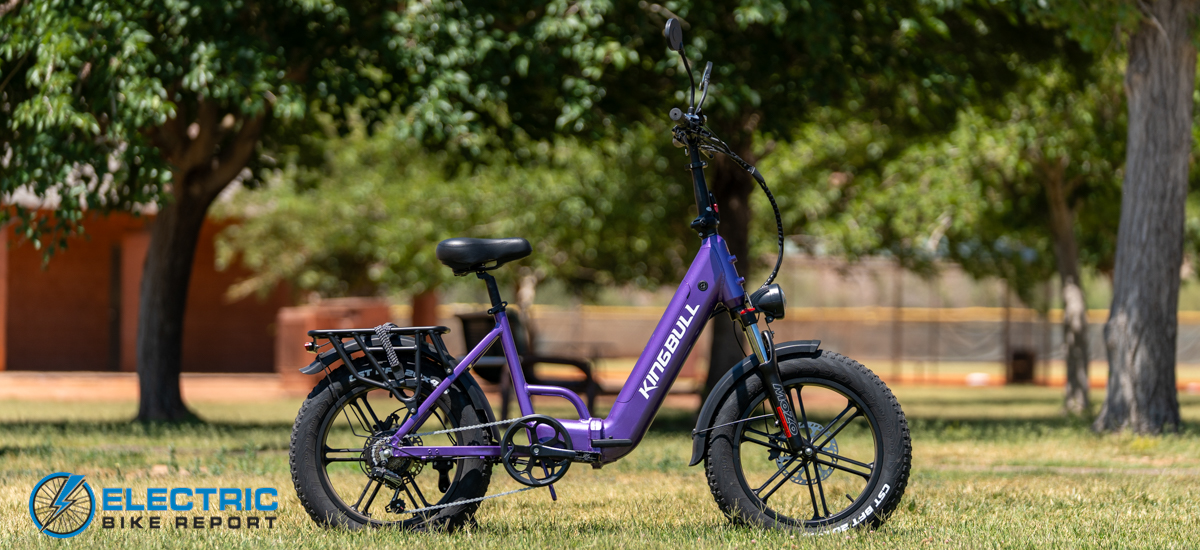
In the world of folding Ebikes, there’s tremendous variance. Some are designed to be as light and as compact as possible; others prioritize comfort and versatility as their central targets. The Kingbull Literider 2.0, despite its name, is in the latter category. This is a fat tire folder for riders that want adaptability and niceties while still gaining some of the benefits of a folding Ebike.
This bike is truly multifaceted. It has the fixings for comfort, utility, and convenience; a 750W hub motor, 150lb capacity rear rack, and class 3 optionality make this a jack of many trades. But is it a master of any of them?
We put the Literider 2.0 through the ringer to find out. Read on to see how this fat tire folder performed in our comprehensive tests!

Sponsor
E-Bike Category:Folding / Fat Tire
E-Bike Class:Class 2 (Throttle to 20 mph)
Class 3 (Pedal assist to 28 mph)
Class 3 (Pedal assist to 28 mph)
Sponsor
Kingbull Literider 2.0 Video Review
 Pros
Pros- Versatile – This bike has a mix of commuter, utility, and cruiser DNA.
- The motor is powerful, and the bike does decently in our hill test.
- Impressive range results, especially on the high power tests.
- Smooth and comfortable ride, largely due to the fat tires and suspension fork.
 Cons
Cons- The standard brakes are behind the curve in our testing, and they feel very soft and spongy. A brake upgrade is highly recommended.
- The bike’s programming could be improved, particularly in class 2 mode. See our speed test for details.
ELECTRICAL SPECS & FEATURES
- Battery: 48 V 720 Wh
- Charger: 2.0 A Smart Charger
- Display: 4.0 color display
- Motor: 750 W hub
- Headlight: LED Integrated
- Taillights: Integrated
- Pedal Assist: 5 levels
- Claimed Range: 55 miles
- Throttle: Twist
- App: None
- UL Certification: 2849
Weight & Dimensions
- Claimed weight: 71 lbs
- Tested Weight: 72.46 lbs
- Rider height range: 5’2″ – 6’6″
- Total payload capacity: 400 lbs
Components & Accessories
- Brakes: Dyisland Two Piston Hydraulic
- Fenders: Plastic
- Fork: MOZO Fatman Coil, 60 mm
- Frame: Folding, Step through
- Drivetrain: Shimano 7 speed
- Grips: Plastic
- Saddle: Eco leather comfort saddle
- Handlebar: Flat Alloy
- Kickstand: Yes
- Pedals: Foldable
- Tires: 20 x 4.0 CST puncture resistant
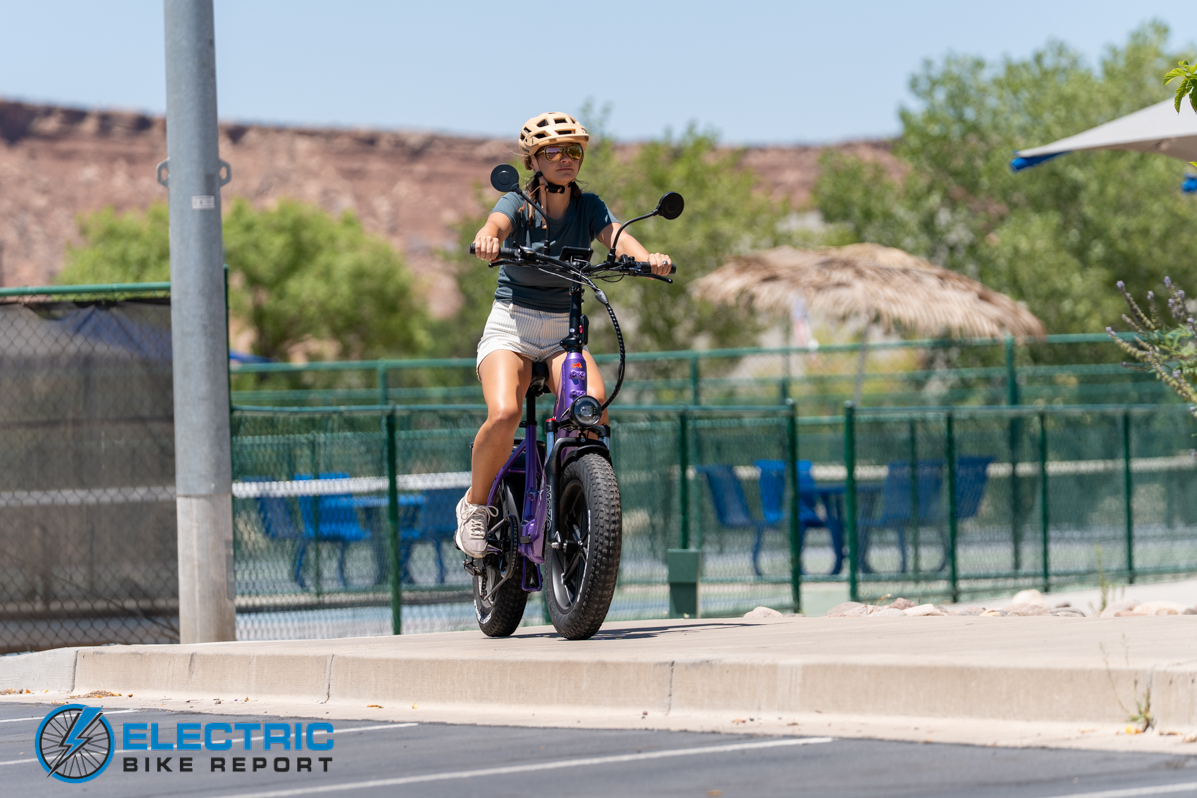
Despite its folding ability, the Literider 2.0 rides like a full-size Ebike.
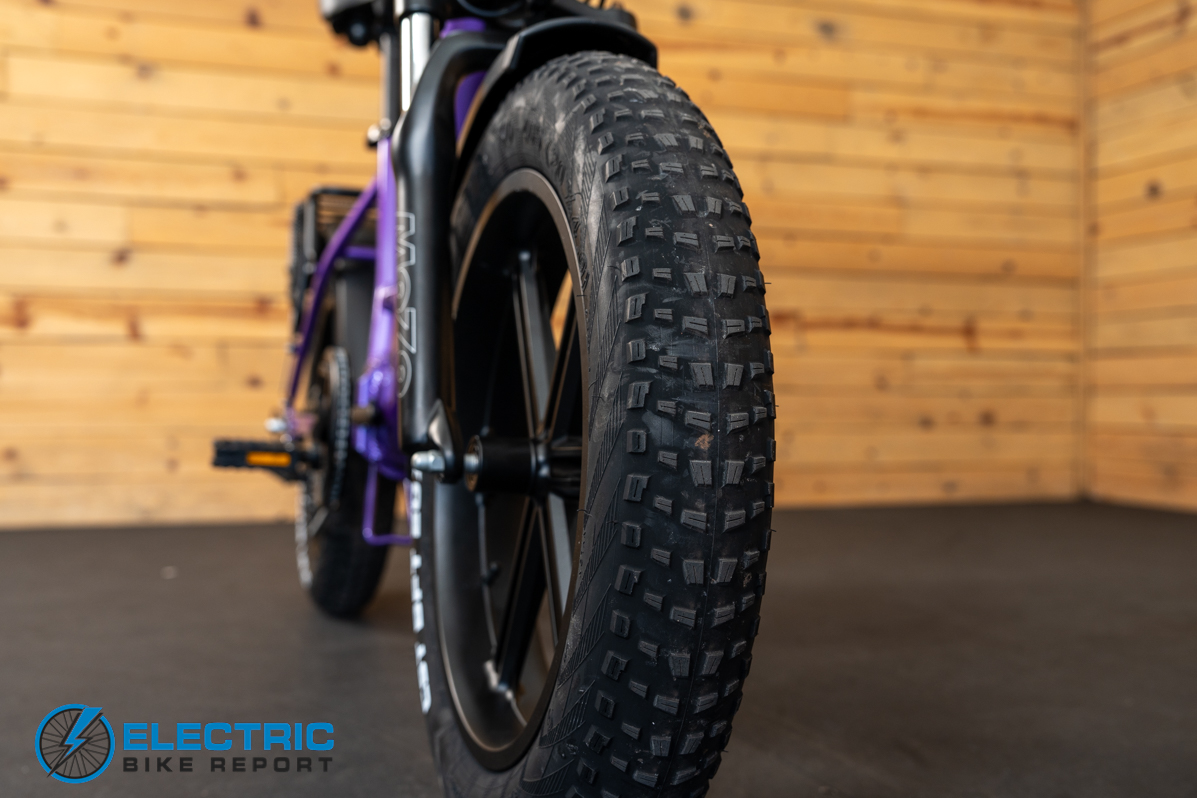
Knobby, fat tires provide grip and stability.
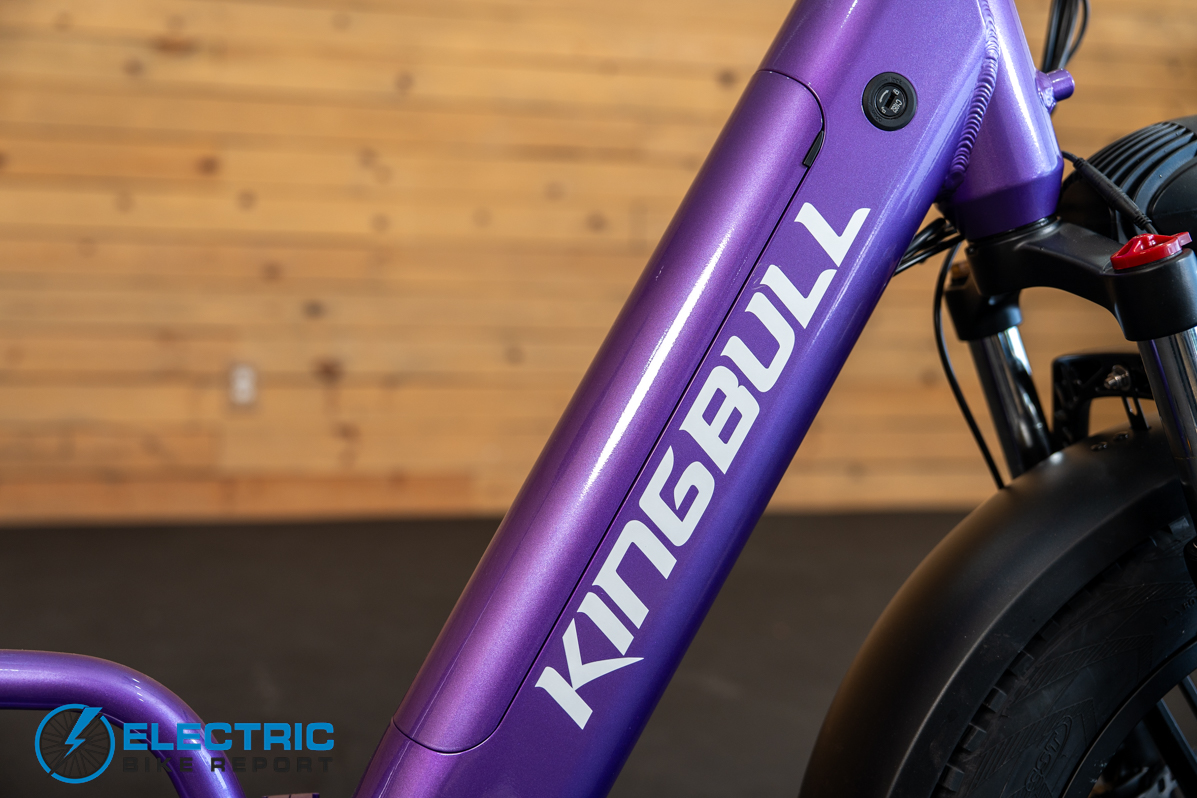
The 720 Wh battery gives the Literider 2.0 its respectable range.
Kingbull Literider 2.0 Review: Speed Test
There’s a lot to cover on the Literider’s speed test. The bike has both class 2 and class 3 capability, as well as a twist throttle.
Starting in class 2 mode, I began my test pedaling under my own power, averaging about 7.7 mph. Considering this bike’s fat tires and hefty frame, I was eager to turn on the pedal assist. I jumped up to PAS 1, where the bike settled around 9.6 mph. From there, I averaged 14.5 mph in PAS 2, then 19.4 mph in PAS 3 – just shy of the class 2 speed limit of 20 mph. Because I came very close to the 20 mph speed limit so early in the assist levels, PAS 4 and PAS 5 didn’t have any room to go further. They both topped out at 19.4 mph.
In class 3, the first several assist modes yielded almost identical results to the class 2 test; 9.6 in PAS 1, 14.5 in PAS 2, and 19.5 in PAS 3. However, with the speed cap now raised to 28 mph, PAS 4 had room to breathe; it reached 24.5 mph. PAS 5 saw the bike settle at 27.7 mph.
A key observation here is the remarkably similar results between class 2 and 3 modes in the low assist levels. As I said, the speeds are almost identical. This suggests that the programming of the bike is extremely similar, if not the same, between the two modes. It feels like the bike was programmed for class 3 use, and the class 2 option was not altered to fit its lower speed limit.
The speeds jump by about 5 mph with each assist level in both class 2 and 3 modes. That is somewhat intense, but it does feel reasonably progressive when in class 3 mode. However, we’d love to see programming that’s bespoke to the bike’s class 2 setting. The current setup essentially gives riders fewer power options in class 2, as PAS 4 and 5 are hampered by the speed limit.
The Literider’s 750W motor feels powerful in the throttle test. There’s a slight delay off the line, but the speed quickly picks up. It doesn’t quite hit the 20 mph threshold, topping out at 19.4 mph.
While it’s good that the bike doesn’t jolt or lurch off the line, a smoother takeoff would be welcome. Right now, it feels more like lagging power delivery rather than an intentional speed gradient.
Overall, these results are satisfactory. Improving the class 2 programming would really help this bike feel more refined, and we’d love to see that happen. The current setup is still usable, but could be limiting due to the overlap in assist modes.
Sponsor
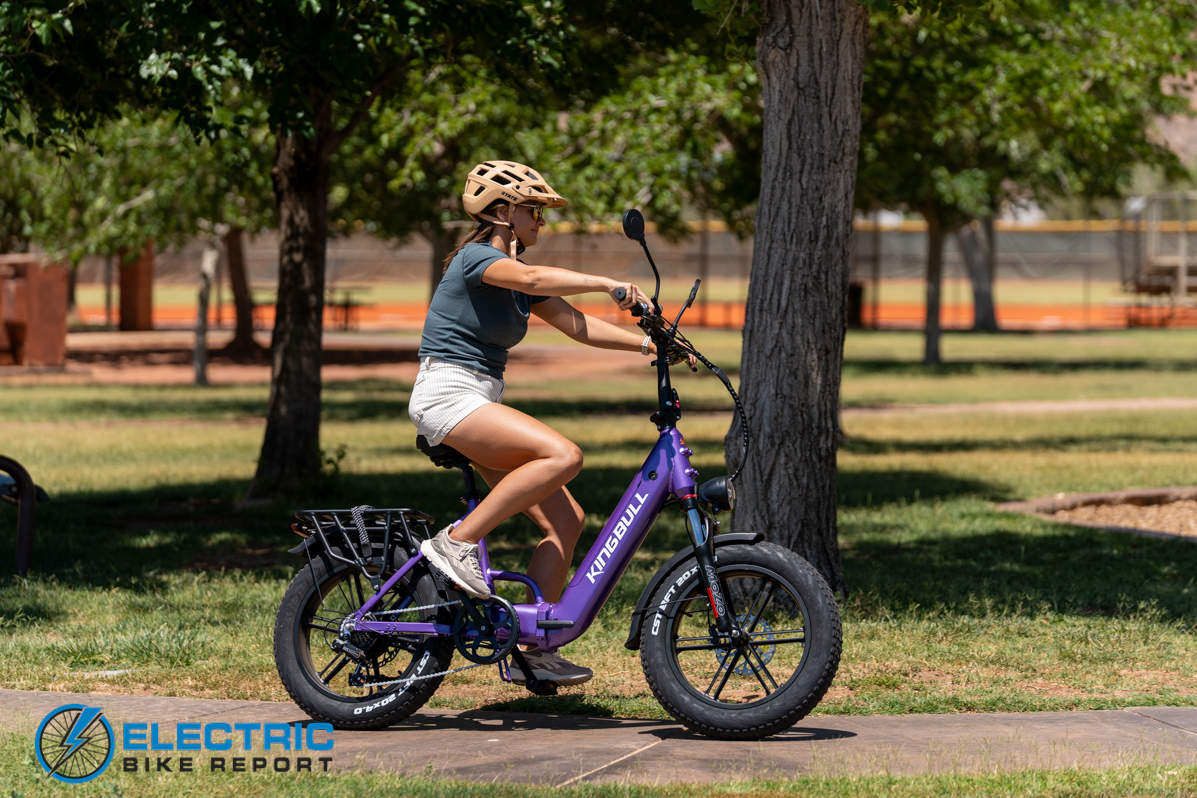
A great way to get to and from the pickleball courts.
Shimano’s 7 speed drivetrain is slightly undergeared for the 750W motor, but the shifts are clean and reliable.
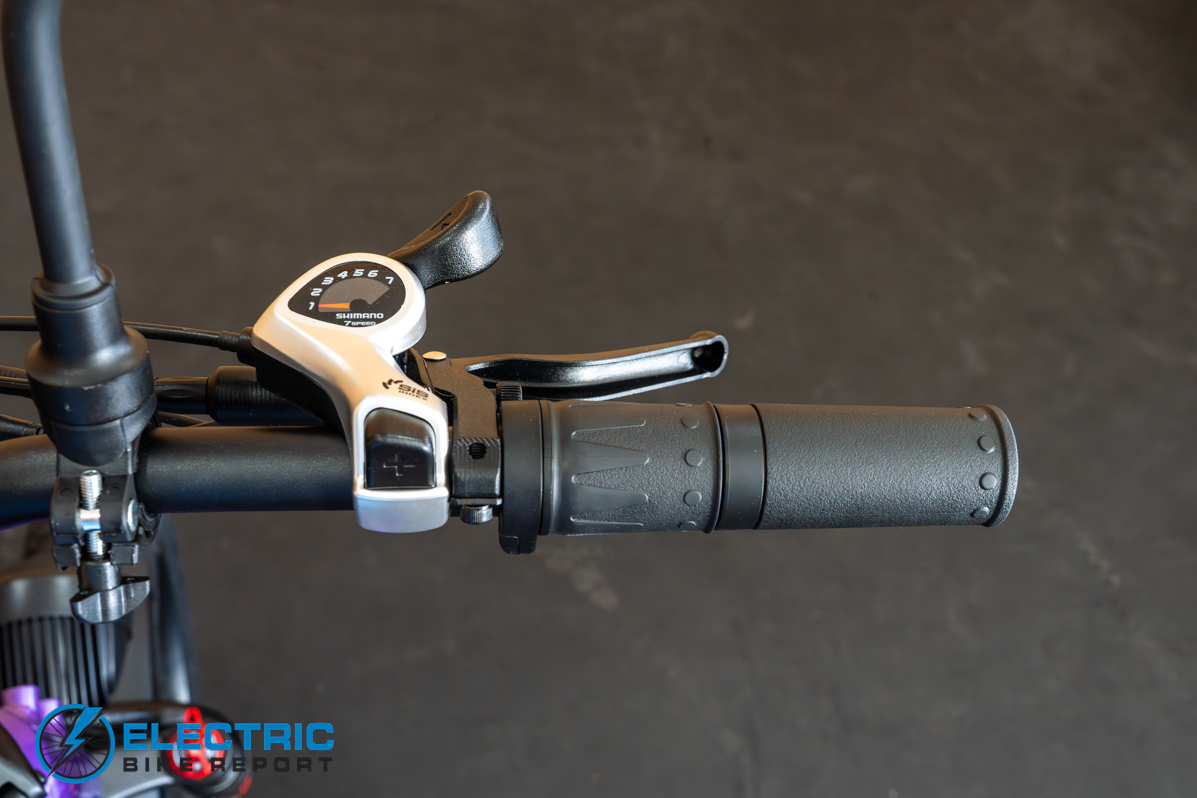
The thumb shifter is simple and intuitive.
Kingbull Literider 2.0 Review: Range Test
Kingbull estimates the Literider 2.0’s range at 55 miles. In our low power test, the bike actually outperformed this, stretching to 60.75 miles. Additionally, when compared to a group of similar bikes, the Literider came in just above the 59.05 average.
We also tested the bikes range in its maximum assist level, which yielded a 34.81 mile result. This is also above average, but by a much more significant margin, as the class average was 27.87 miles.
There are a few key takeaways here. From a practical perspective, the full power test is a real win for the Literider. It has enough range here to afford riders multiple outings between charges, even at full tilt. This really strengthens the Literider’s case as a commuter or grocery getter.
Impressively, this range comes at a lower price than several bikes in the comparison.
Part of this showing comes down to the battery hardware. The 720 Wh battery is on the larger side, and this extra juice pays off. However, it’s not just down to the extra capacity; the Literider 2.0 also gets credit for its efficiency, especially on the max power test. When calculating efficiency by dividing watt hours by mileage, the Literider was impressively trim at 20.68 Wh per mile (max power test). For perspective, the category average was 24.71 Wh per mile.
In short, range is a strength for the Literider 2.0, and it’s up to the task of longer rides or space between charges.
Sponsor
Sponsor
Kingbull Literider 2.0 Review: Hill Test
On the face of it, the Literider has the right stuff for hill climbs. Our test rider, Justin, tackled Devil’s Backbone (our hill test location) once using the pedal assist mode, and again using only the throttle.
This bike yielded some slightly unexpected results in the throttle test. It reached the summit in 2:10 at an average speed of 13.9 mph; a bit slower than the category average of 2:01 at 15.2 mph. We weren’t expecting this, as the Literider’s motor does feel decently powerful. However, further investigation showed that the motor’s peak power output is 1056 W, and it produces 80 nm of torque; neither of these numbers are drastically low, but they are on the more modest end of the spectrum for this class of bike.
In the pedal test, the Literider 2.0 was actually above average, as it finished the climb in 1:52 at 16.2 mph. The averages here were 2:00 flat and 15.4 mph.
The Literider 2.0 is a capable hill climber, and these results are solid, particularly in the pedal test. While it wasn’t the fastest using throttle only, it still gets the job done, and we’d say that the Literider is up to the challenge of ascending challenging grades.
Sponsor
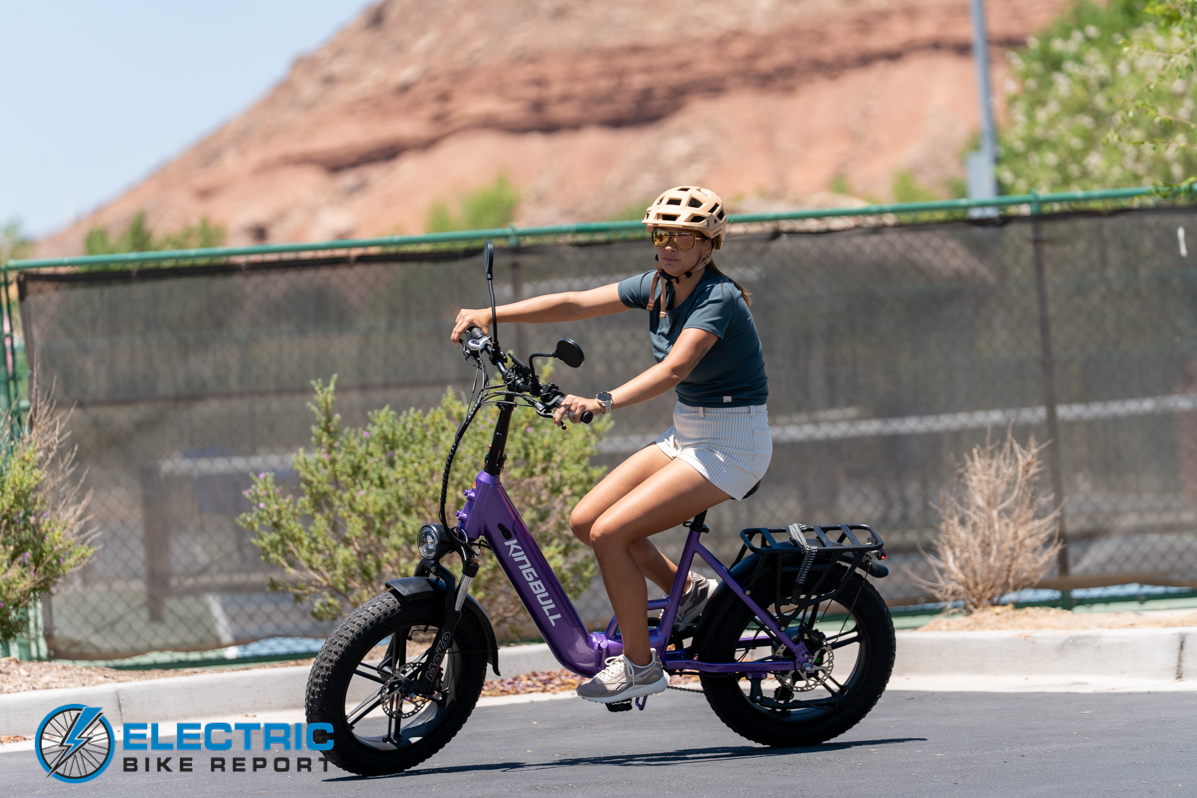
The Literider 2.0 is compatible with lots of optional extras, including a rear seat and a front basket.
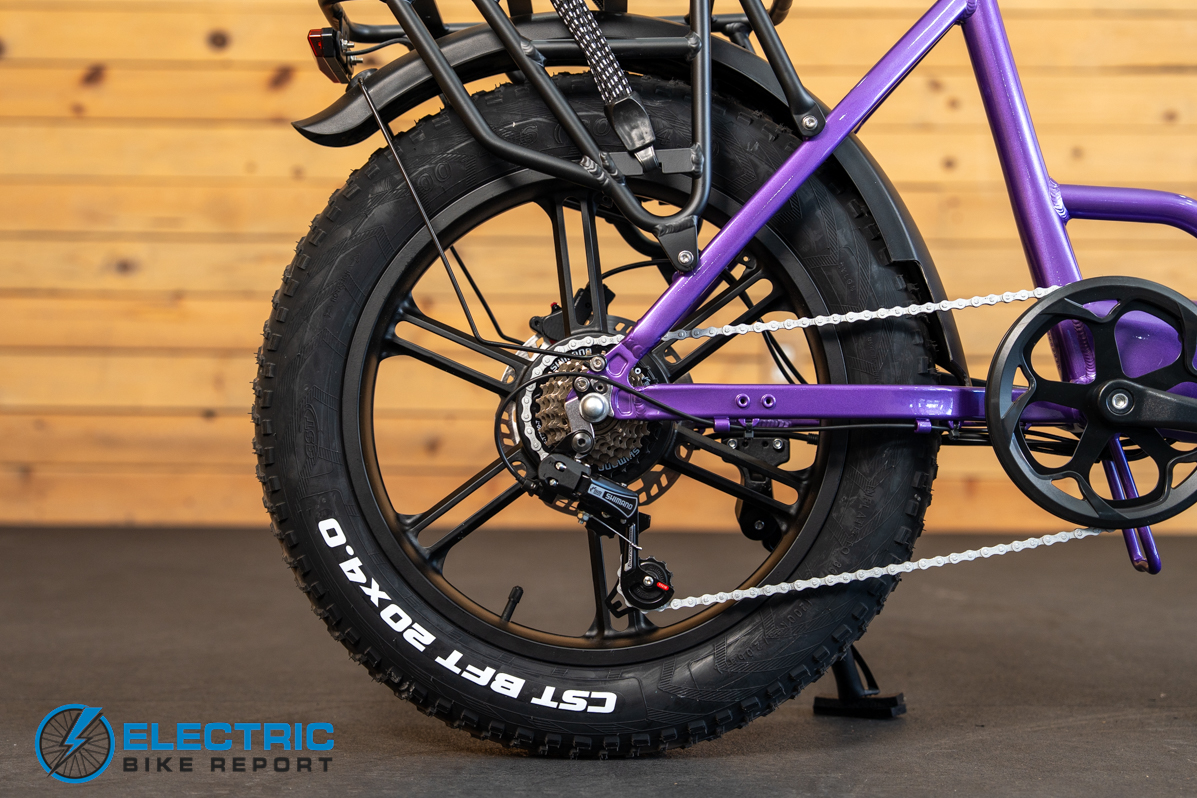
The rear rack comes standard!
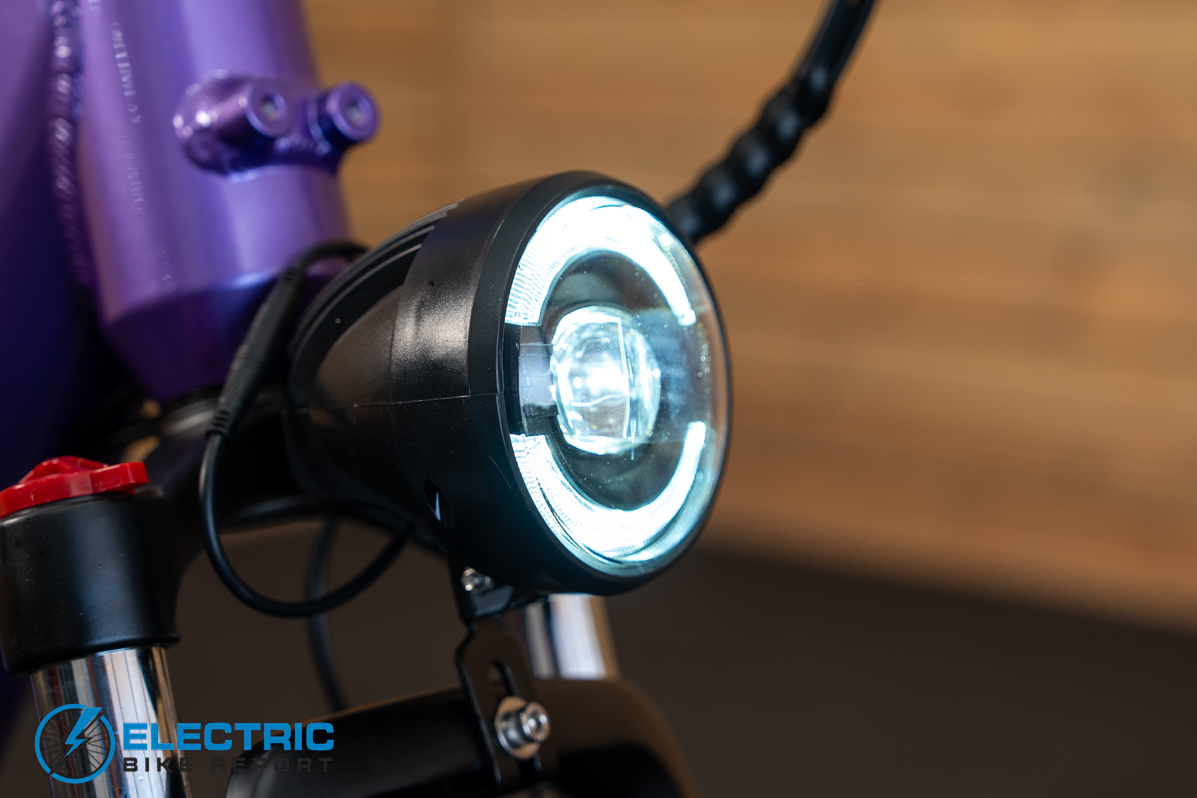
Integrated headlights are perfect for riding after dark.
Kingbull Literider 2.0 Review: Brake Test
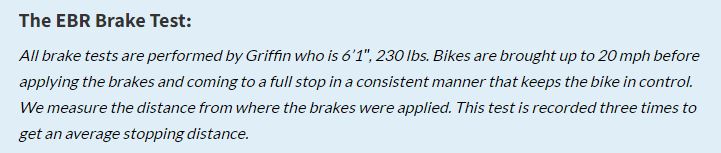
The Literider 2.0 is equipped with Dyisland two piston hydraulic brakes, which yielded a 26 feet 4 in average stopping distance. This is considerably longer than the comparison bikes – the average stopping distance for the category was 19 feet 11 inches.
The numbers line up with the real world experience, as these brakes don’t feel confident. There’s a sponginess and lack of feedback from this system that isn’t as confidence inspiring as other setups.
I wouldn’t go as far as saying these brakes are unsafe; at class 2 speeds or for light city riding, they’re fine, but there is definitely room for improvement here. With cargo or a passenger on the rear rack, having solid brakes becomes a priority, and we would recommend riders upgrade the brakes themselves if they plan on carrying cargo, as the bike may not be safe without that upgrade.
The reason for this requires me to nerd out for a few sentences. These brakes have some of the smallest reservoirs we’ve seen, meaning there is less fluid to actually activate the brakes. Several factors are at play in good braking performance, but there are a few key repercussions of the smaller reservoir.
One of the biggest is increased sensitivity to anything that’s out of place in the system. If there’s any leaks or air contamination, the brakes will lose performance quickly. This isn’t good for any hydraulic disc brakes, but the smaller reservoir makes it especially susceptible. Think of it this way: if I spill a barrel of oil into a small pond, the impact is likely to be significant – it could change the whole ecosystem in that body of water. If I spill that same single barrel into the ocean, it’s not necessarily harmless – but the oil is unlikely to overwhelm the entire biome.
Additionally, less fluid doesn’t distribute heat as well – the fluid can actually boil, introducing air bubbles into the brake lines – which causes the contamination issues I just discussed.
The simple version is that better stopping power would benefit this bike a lot. We’d recommend a brake upgrade for any rider planning on using the rear rack for cargo or passengers.
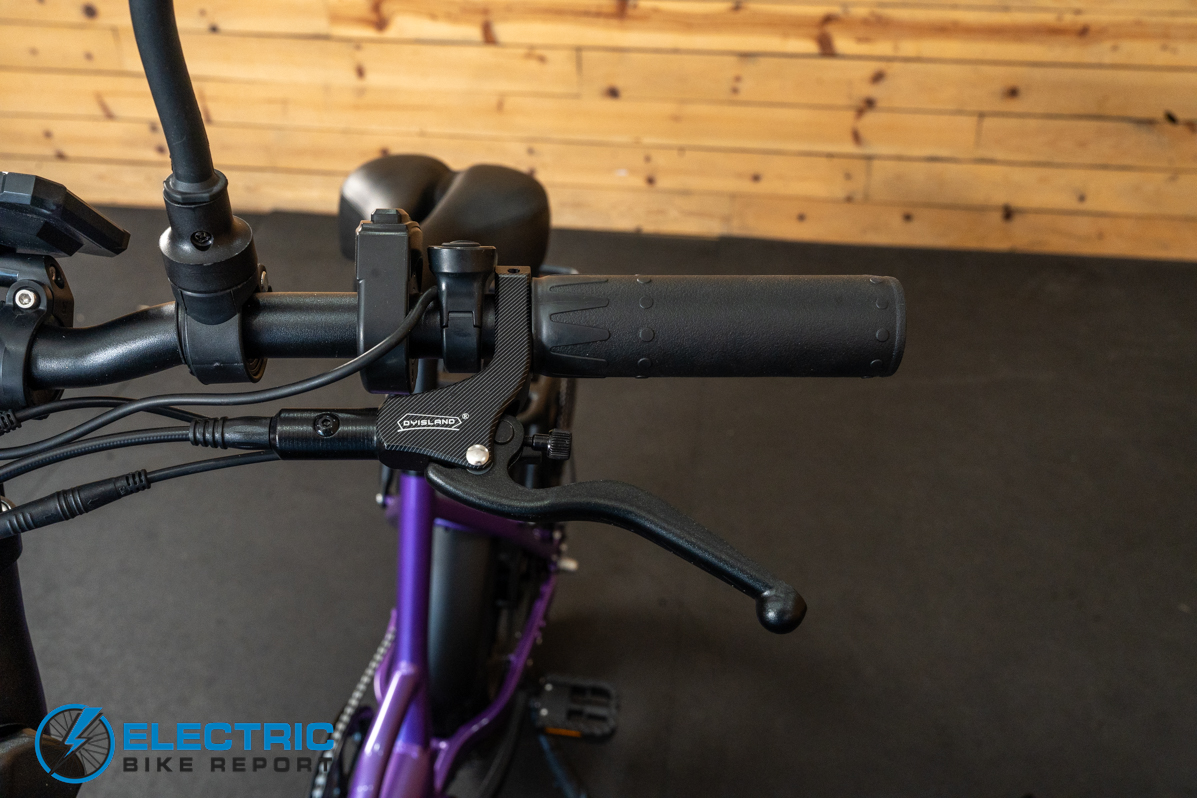
The reservoir we discussed in the brake test is located right next to the lever itself.
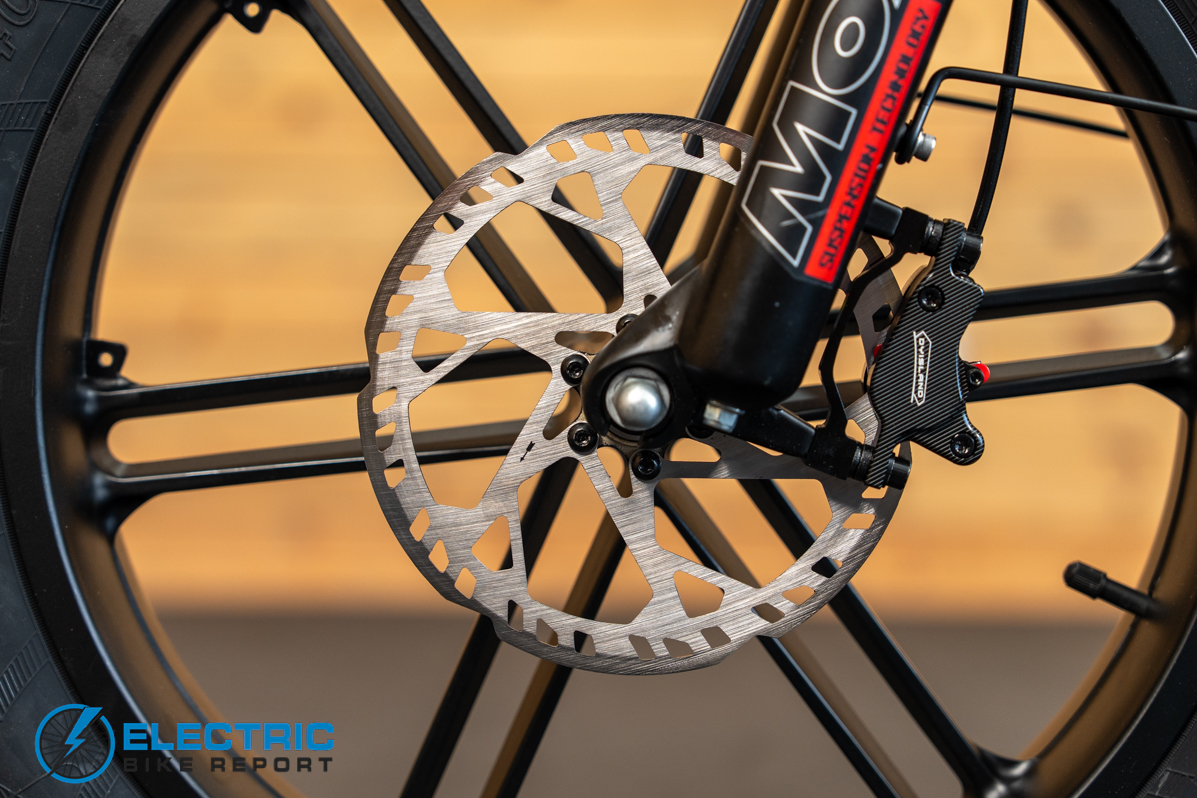
180 mm rotors front and rear.
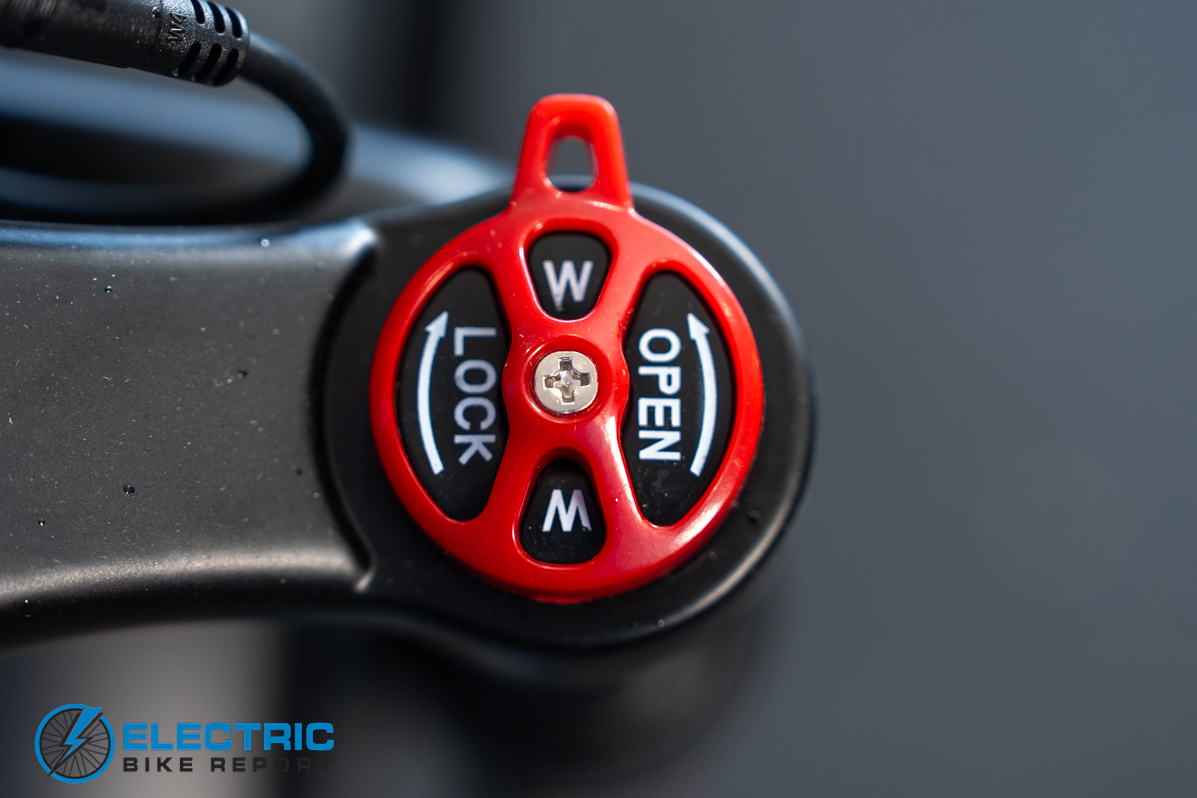
The coil fork can be locked out if you want a more rigid ride.
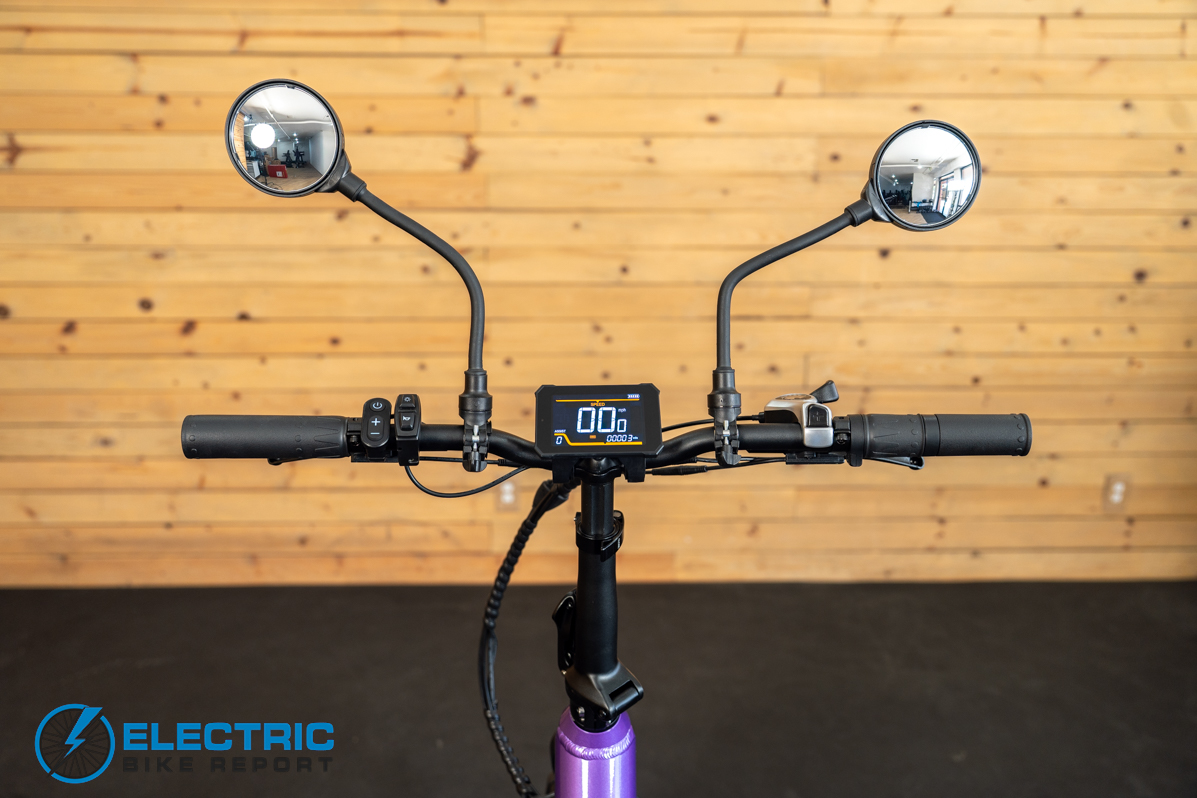
Mirrors are an underrated feature.
Kingbull Literider 2.0 Review: Ride Quality
The folding Ebike category has grown to be extremely broad, and folders have been made to suit all kinds of use cases and ride styles. Some modern folders are designed for last mile commuting – resulting in a simple, bare bones approach where comfort is an afterthought. Others overlap with utility Ebikes, feeling much more stable and robust.
My point is, folders come in all shapes and sizes. This means that in terms of ride quality, they all feel radically different – especially ones on opposite sides of the spectrum. Just because they all fold, doesn’t mean they all feel the same.
The Literider 2.0 definitely leans toward the larger and more utilitarian side of the folder spectrum. It has fat tires, an optional passenger seat, and a rear rack for storage. This, combined with its 750W motor, make the bike versatile – it’s equipped for more than just leisure rides.
This doesn’t mean that leisure is out of the question. The front suspension, paired with the 20 x 4.0 tires, smooth out bumps quite well. The saddle isn’t quite as plush, but this is often a matter of preference, and can be easily changed. Riders are positioned upright with a bias of weight towards the saddle rather than the bars, and the reach is a bit lengthy, but not outrageously so. The positioning is largely comfortable – but the extra weight on the saddle does become noticeable after a few miles. Kingbull offers a suspension seatpost upgrade (or there are 3rd party options) which isn’t an absolute necessity, but it would be a reasonable purchase if you plan on taking longer rides.
Kingbull provides a sizing guide that establishes the “suitable” height range is between 5’2″ and 6’6″, but they also specify that it will be most comfortable for riders between 5’3″ and 5’10”. I think this is a fair characterization, and I’d actually stretch the comfort range up by an inch or two; I’m about 6’3″, and felt that the bike was reasonably comfortable, but I was slightly hunched over. If you’ve read any of my reviews by now, you’ll note I say this about most bikes. It’s not a knock on the Literider; the fit is solid, and the adjustable stem and seatpost make it workable for a wide variety of sizes.
Handling wise, the bike feels quite large. I’d liken it to a bayliner as opposed to a jet ski; It’s not very nimble, and we noticed some flex coming in and out of corners. That said, the fat tires do provide solid grip, and it does feel pretty settled at cruising speed.
Portability is always an important feature of folding Ebikes, but as I mentioned, they come in all shapes and sizes. The Literider isn’t designed to fit in the smallest of spaces. Rather, it feels like a full-size bike that can fold up to a manageable footprint. The folded dimensions are 38″ x 21″ x 33″. If math isn’t your thing, picture about the size of a large piece of luggage.
The Literider weighs in at 72.46 lbs, which isn’t abnormal for this style of bike, but it’s heavy enough that having a friend help with transport would be beneficial. Removing the battery is also an option, as it weighs almost 9 lbs on its own.
This bike’s adaptability is arguably its greatest strength, and it pairs well with the solid level of comfort to make a versatile option.
Sponsor
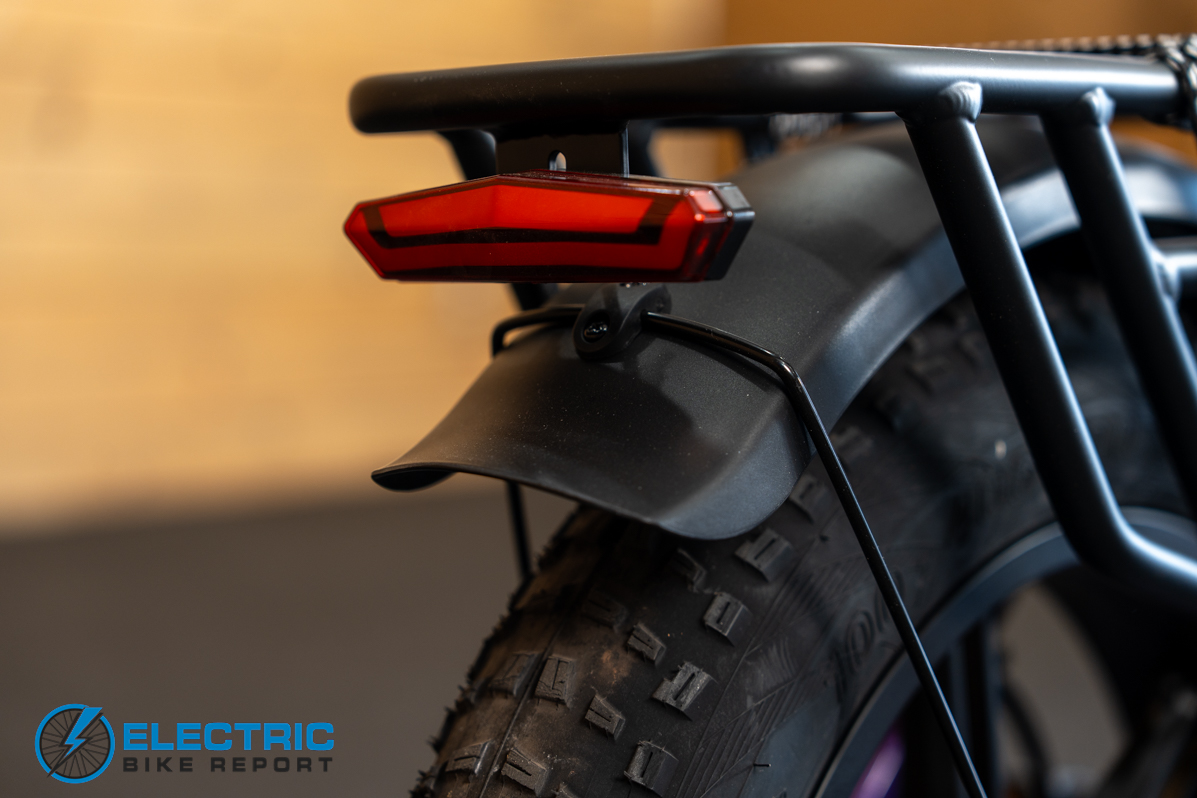
A reactive taillight is a nice plus in the safety department.
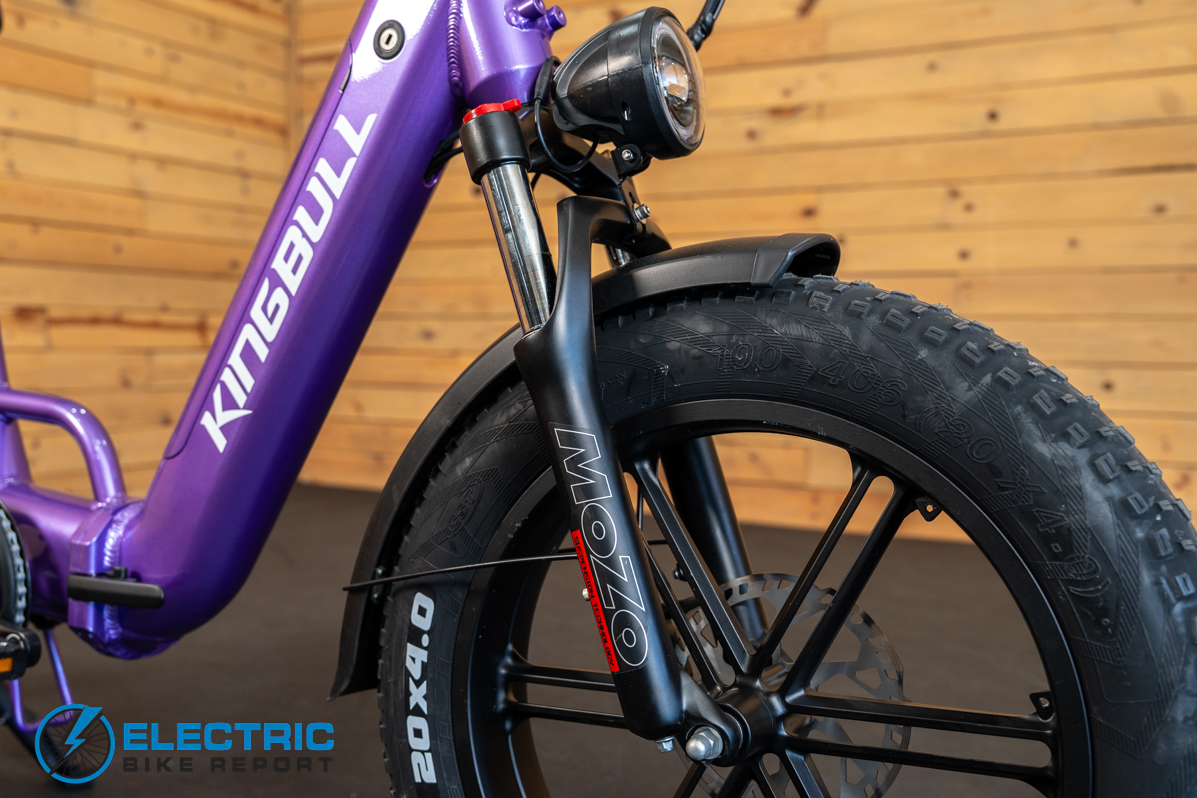
The MOZO 60 mm coil fork smooths out the bumps.
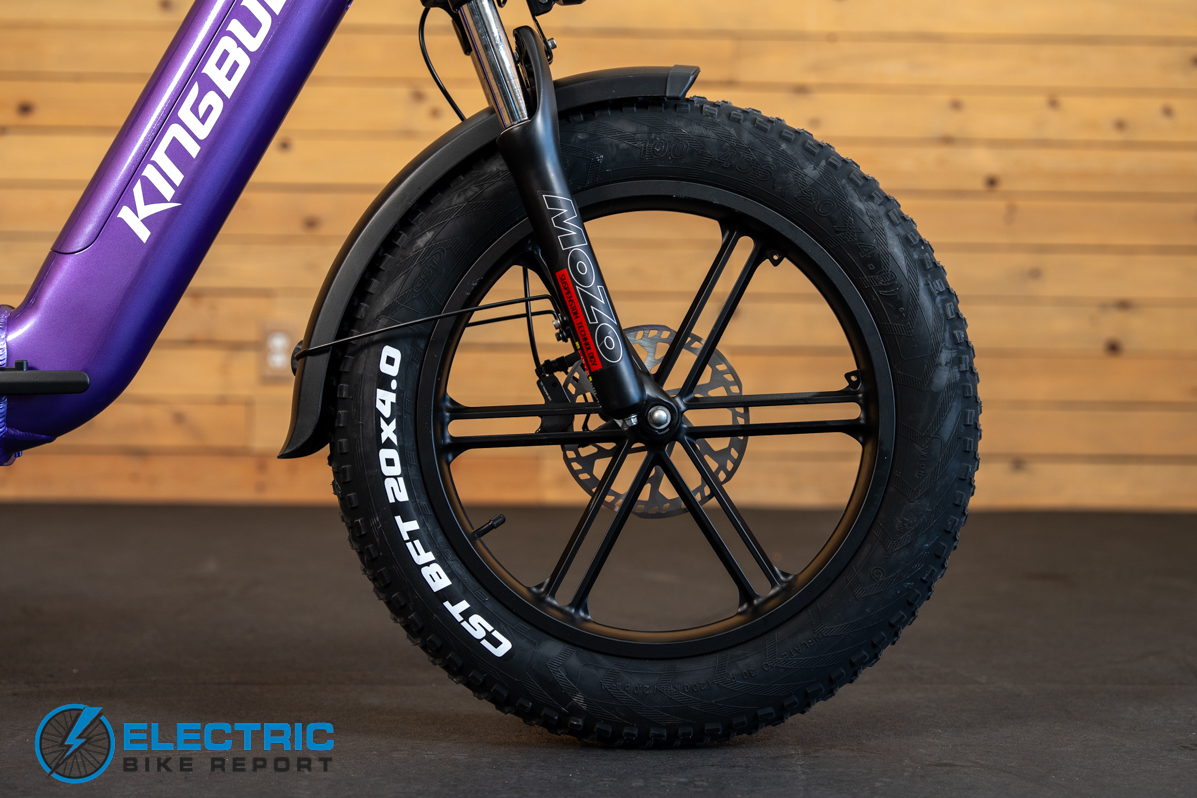
Solid spoke alloy wheels keep things simple.
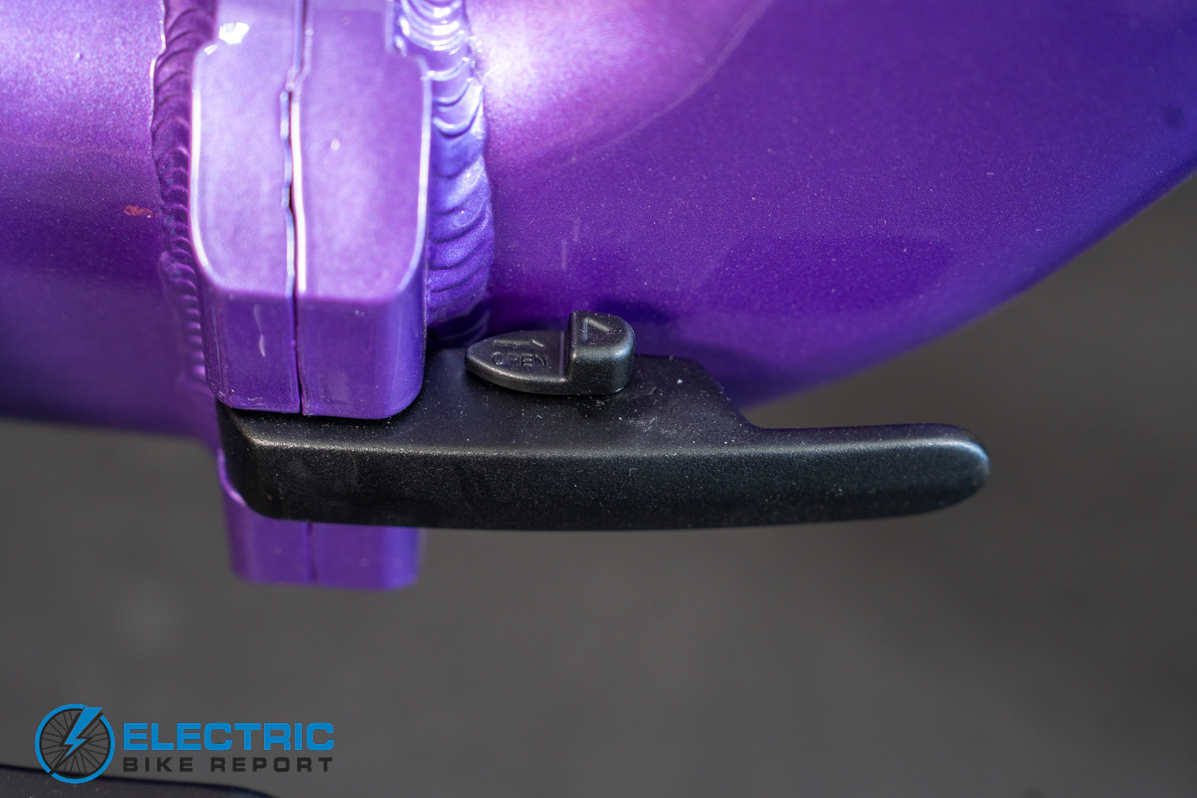
This latch lock is perfect for uncomplicated folding and unfolding.
Kingbull Literider 2.0 Review: Summary / Where to Buy
In short, the Literider 2.0 has a solid core to build on. The range is good, the motor is powerful, and it checks the box as far as comfort. The versatility is another upside as well.
The next level for this bike would be improved brakes and programming. As I said, this is a good foundation, but reevaluation in those areas could help build the case for the Literider. The potential is there, and we’d love to see it realized, because there are some real assets here.
Happy Riding! Make sure to let us know if you have any questions or if you think we left anything out in this review of the Kingbull Literider 2.0 down in our comments section.
Sponsor
Sponsor
Reader Interactions
Leave a Reply