GoTrax Efold Review | A Bargain for Everyone
Jun 26, 2026
 0 Comments
 Share
Share
This focused folder is one of the most affordable Ebikes we’ve ever tested.
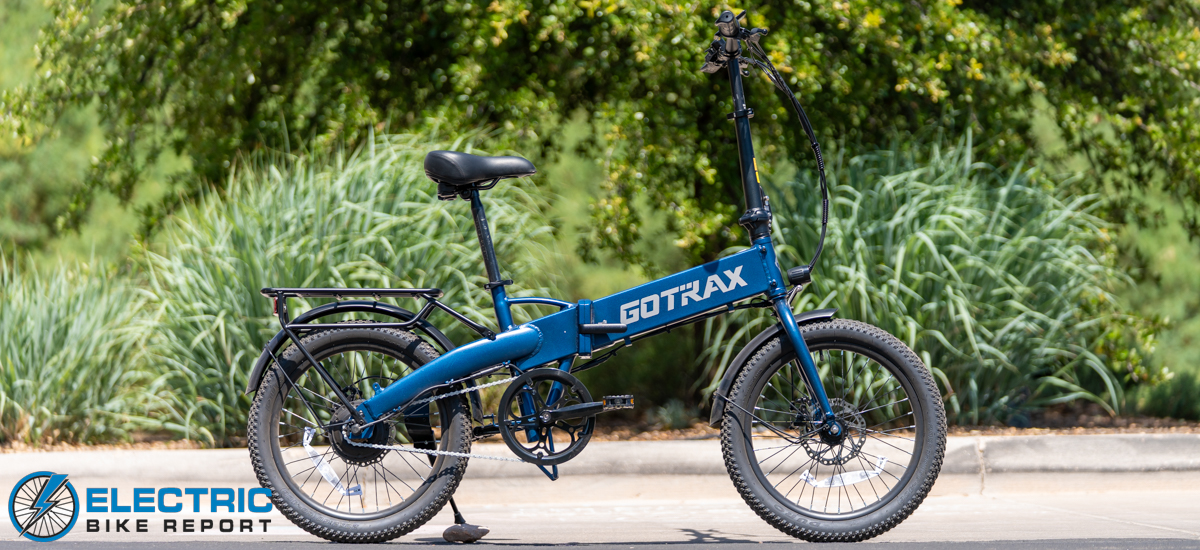
We’ve had the chance to test several bikes from GoTrax here at Electric Bike Report, and one of the company’s recurrent strengths has been providing good value. Their bikes are remarkably affordable, even compared to other options in the budget segment. And yet again, bang for buck is the theme – currently at $498, the GoTrax Efold is no different.
The mission of the Efold is simple. This is a bike that promises portability and practicality with no frills; it’s very focused. The headlines are a 350 W hub motor, folding capability, and five pedal assist modes; a great fit if you’re looking for a light, portable Ebike for short trips and errands.
However, at this price point, the question is always the same: Did they really do it? Can a 500 dollar Ebike really be worth it? Let’s go for a pedal and find out.

Sponsor
E-Bike Category:Folding
E-Bike Class:Class 1 and 2, pedal assist up to 20 mph, throttle up to 20 mph
Sponsor
GoTrax Efold Video Review
 Pros
Pros- Very affordable – currently at $498, the Efold is the most inexpensive bike we’ve ever tested.
- Good build quality, especially compared to other options in the $500 range.
- The Efold is practical – it folds well, and it’s relatively lightweight for easy transport and storage.
- A rear rack and integrated headlight come standard.
- Solid range for its price point.
- UL 2849 certified, which is great at this price.
 Cons
Cons- The single speed does have some limitations – the gearing isn’t able to keep up with the motor, and there’s a fair amount of ghost pedaling at and above PAS 2.
- We’d love to see some improvement with the programming, specifically raising the PAS 1 speeds.
ELECTRICAL SPECS & FEATURES
- Battery: 48V 7.8AH
- Charger: 48V 1.5A
- Display: LED Digital
- Motor: 350W
- Headlight: Integrated
- Taillights: Reflector
- Pedal Assist: 5 levels
- Claimed Range: 40 miles
- Throttle: None
- App: None
- UL Certification: UL 2849
Weight & Dimensions
- Claimed Weight: 49 lbs
- Tested Weight: 52.84 lbs
- Rider Height Range: Not specified
- Total Payload Capacity: 264 lbs
Components & Accessories
- Brakes: Mechanical disc brakes
- Fenders: Plastic
- Fork: Rigid
- Frame: Alloy folding
- Drivetrain: Single speed
- Grips: GoTrax Rubber Ergonomic
- Saddle: GoTrax Comfort
- Handlebar: Alloy
- Kickstand: Yes
- Pedals: Folding
- Tires: 20 x 2.6
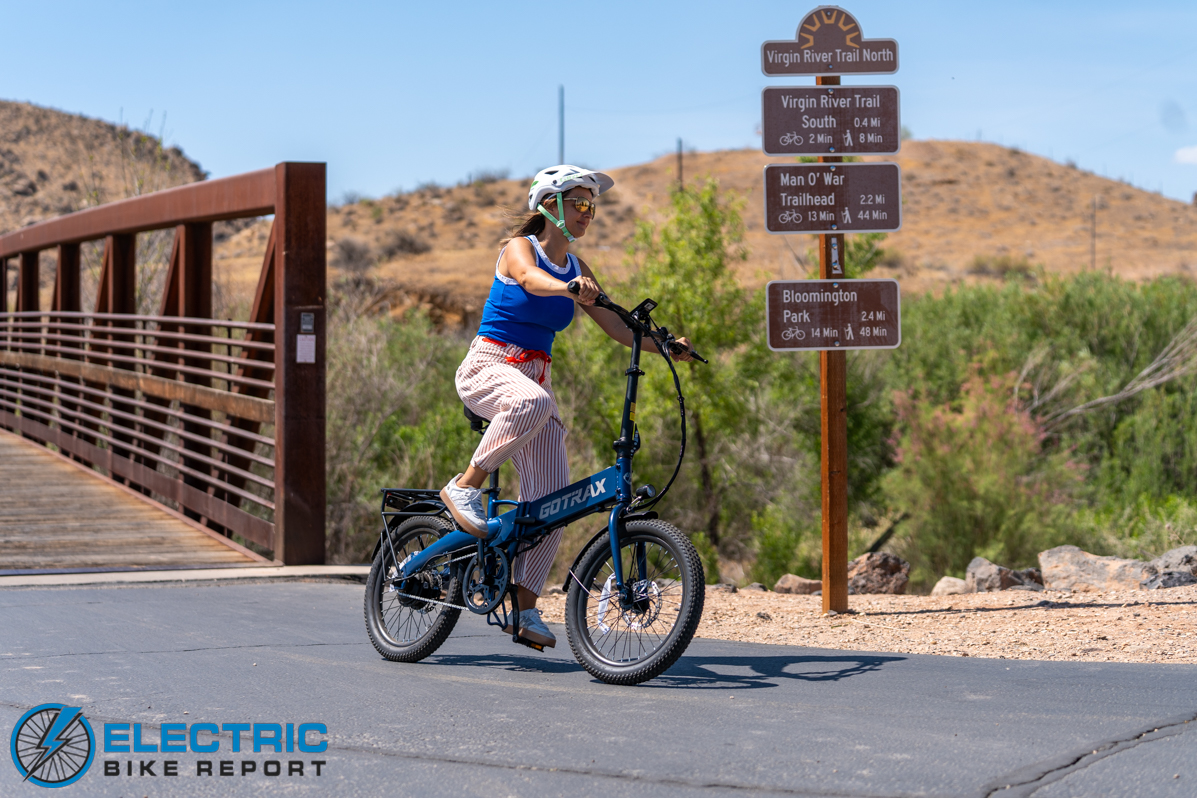
The Efold feels at home on quick commutes.
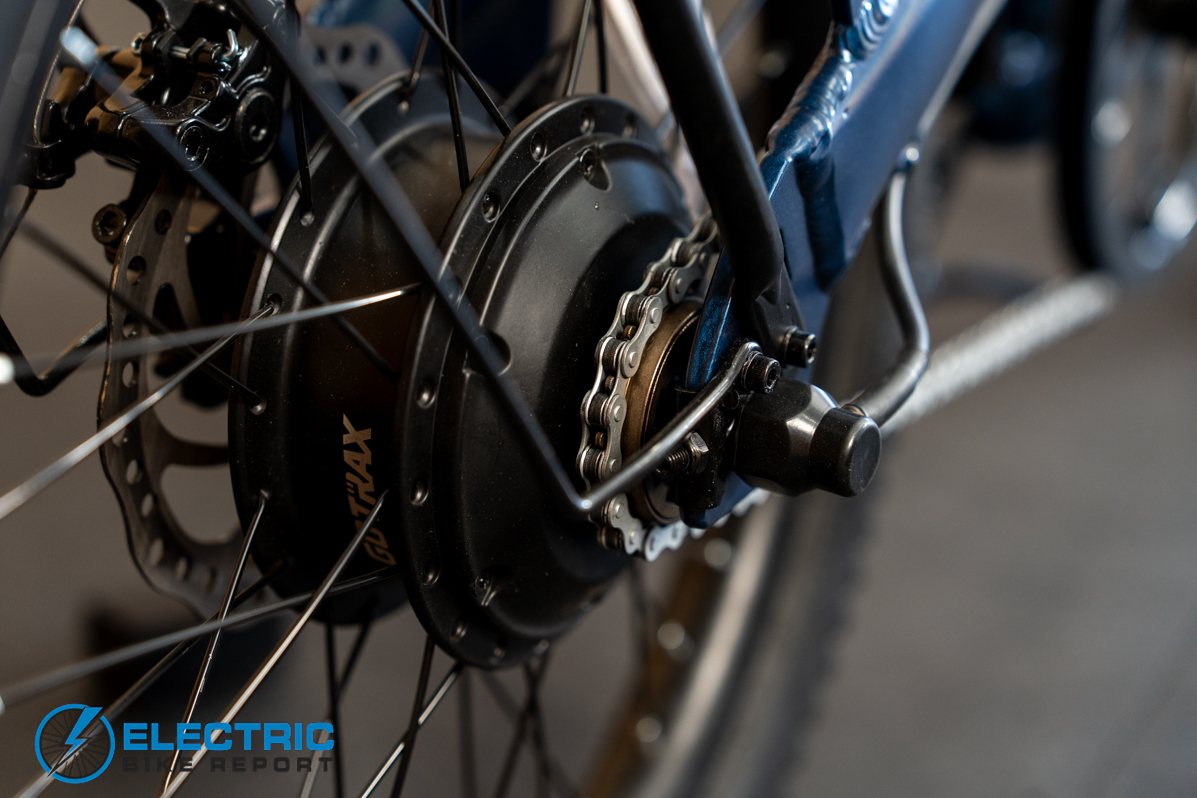
A single speed keeps things simple.
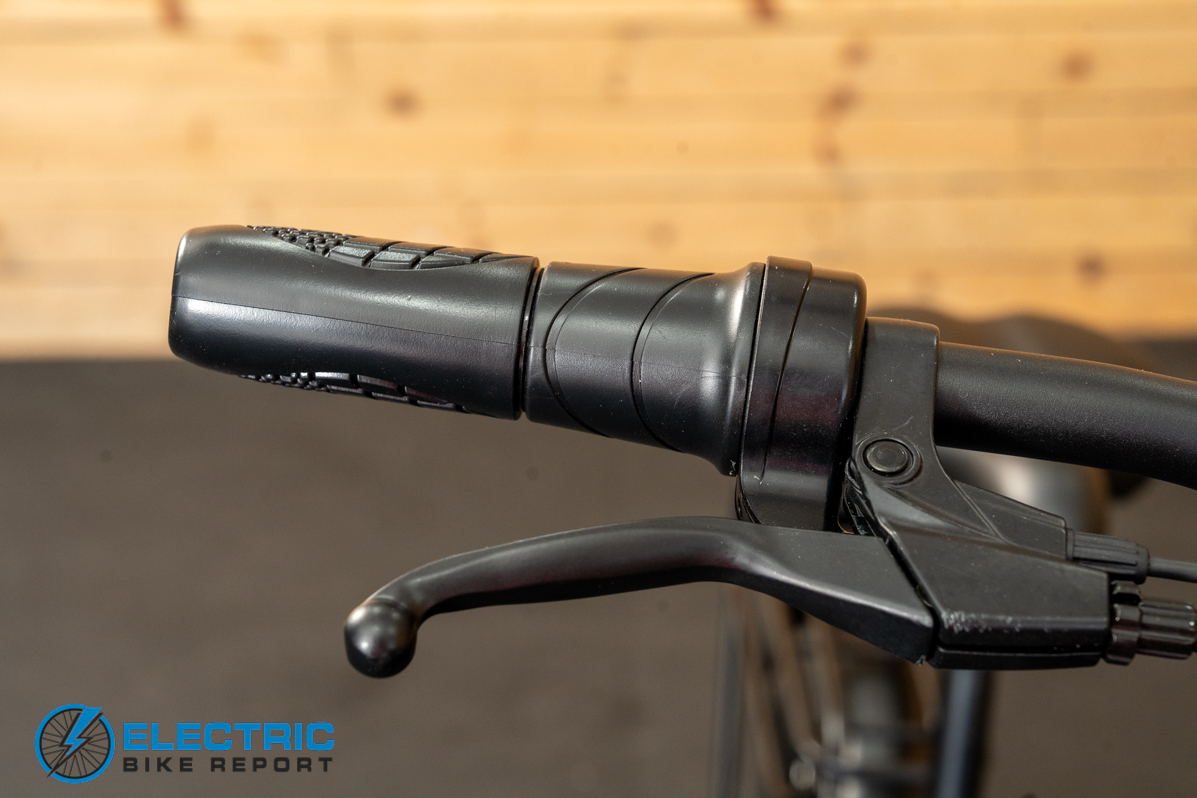
We could see many riders making use of the Efold’s throttle.
GoTrax Efold Review: Speed Test
There are a few things to consider when analyzing the speed test for the Efold. A huge factor of how this bike’s programming felt is the fact that it’s a single speed – there’s only one gear to handle every situation this Ebike finds itself in.
On one hand, this is the beauty of electric assist. When that single gear doesn’t have enough low end range, the motor can step in and level the playing field. Conversely, there are limitations to single speed drivetrains, which we’ll get into below.
Another consideration is the power delivery. In each assist mode, the motor only provides boost up to a certain speed cap; this isn’t uncommon, but it does affect the feel of the programming, especially in the low assist modes.
Beginning with no pedal assist on, I averaged about 8.6 mph at a natural cadence. From there, I increased to PAS 1. It was difficult to tell that the motor had engaged; after a few turns of the crank, I started to feel a very slight amount of assistance, and my speed increased to 9.6 mph.
In PAS 2, the motor starts to feel much more present. In fact, once it reached its settling speed of 11.6 mph, I was beginning to feel some ghost pedaling. In this assist mode, the motor was just barely outrunning the single speed drivetrain. To engage the gears, I would’ve had to pedal at just a slightly faster pace than would have been comfortable.
The ghost pedaling continued through the rest of the assist levels. I averaged 13.5 mph in PAS 3, 16.5 in PAS 4, and topped out at 20 mph in PAS 5.
As I said, the Efold’s drivetrain setup puts it in a unique situation when it comes to programming. The bike’s motor is essentially doing all of the work above PAS 2 (due to the ghost pedaling), and so the power curve through the assist levels is almost completely dictated by the bike’s default setup; in other words, my pedaling input didn’t contribute to the results much.
Each step up from PAS 1 to PAS 3 feels predictable and incremental. The speed climbs about 2 mph with each increase, but there is a caveat. PAS 1 is programmed to settle around 9.6 mph, which feels a bit slow to start the curve at. Most riders will hit that speed ceiling at a natural cadence and feel the need to intensify the assist quickly. Beyond the first three assist levels, the jumps in power become less incremental, as seen in the numbers. Each increase in the higher tiers feels rapid and assertive.
I also tested the Efold’s twist throttle. From a standstill, the acceleration isn’t particularly quick, but it is smooth. On flat paths, it doesn’t struggle to hit the 20 mph speed cap. The 350W motor isn’t a monster powerhouse, but it does enough for a decent result in the throttle test.
At a glance, the Efold’s programming could use some improvement. I suspect that most riders will skip past PAS 1 due to the somewhat low assist speed. The high power modes could also use more predictable acceleration. My recommendation would be to raise the PAS 1 speed just a bit more – not only would that make PAS 1 a more comfortable mode, but it could help shift the curve towards the top speed, meaning the higher assist levels could more approachably work up to 20 mph.
However, there are some solid upsides. The throttle is good, and the programming quirks don’t mean that the bike isn’t functional and useful. There’s still a lot of value here, and the assist mannerisms aren’t a deal breaker. The Efold still offers real capability at a bargain. It doesn’t have the most refined programming, but for the price, it doesn’t need to.
Sponsor
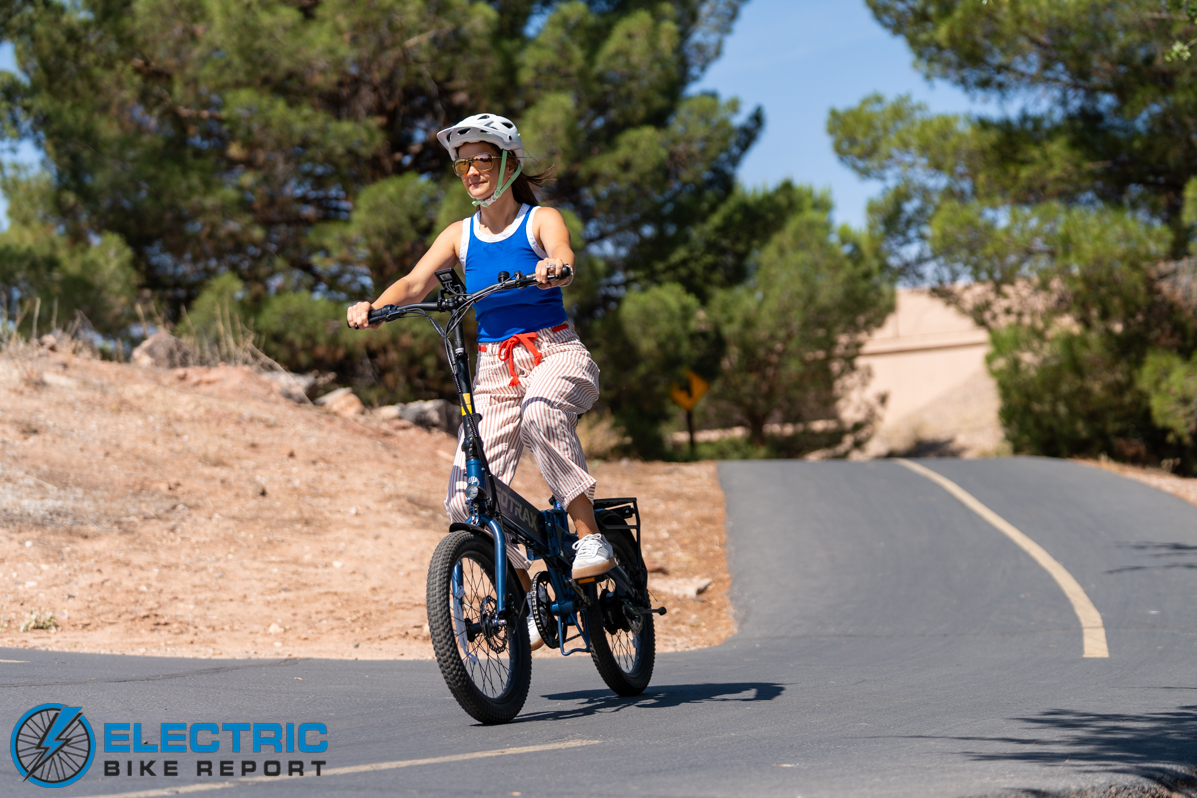
Blue is the only available color.
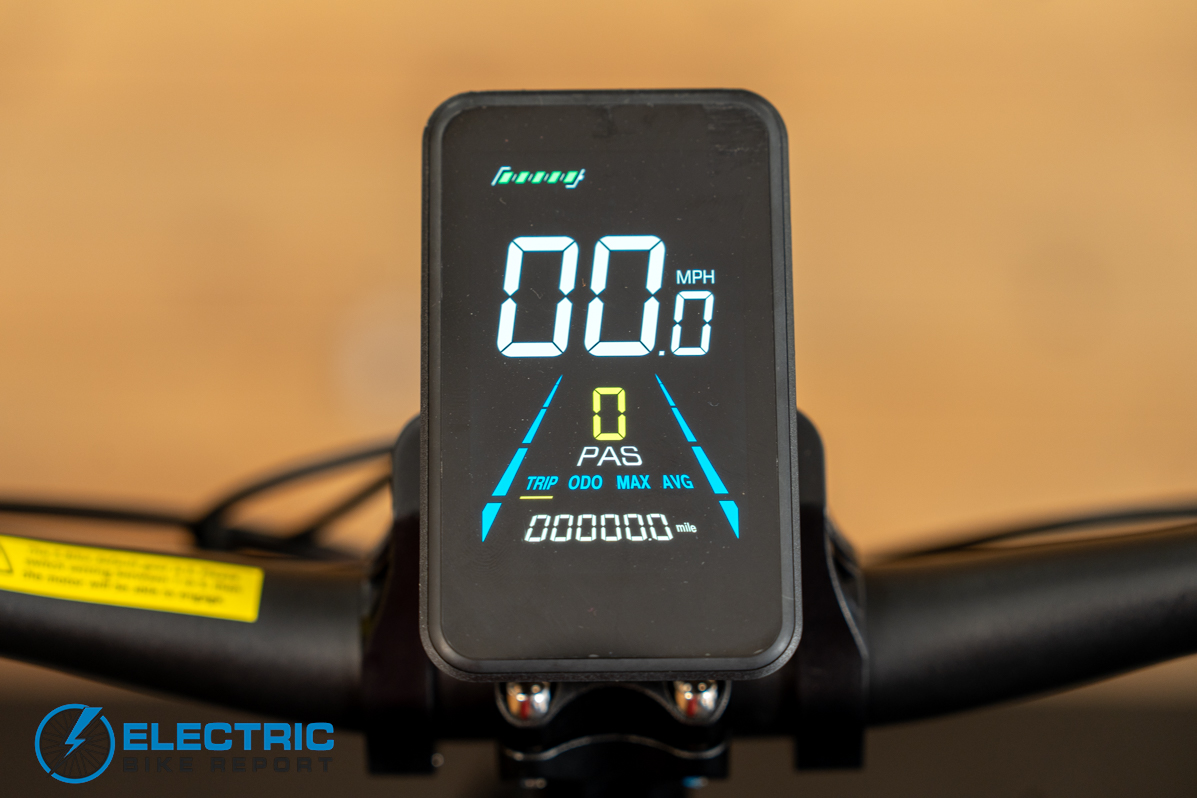
A clean display that shows all the need-to-knows.
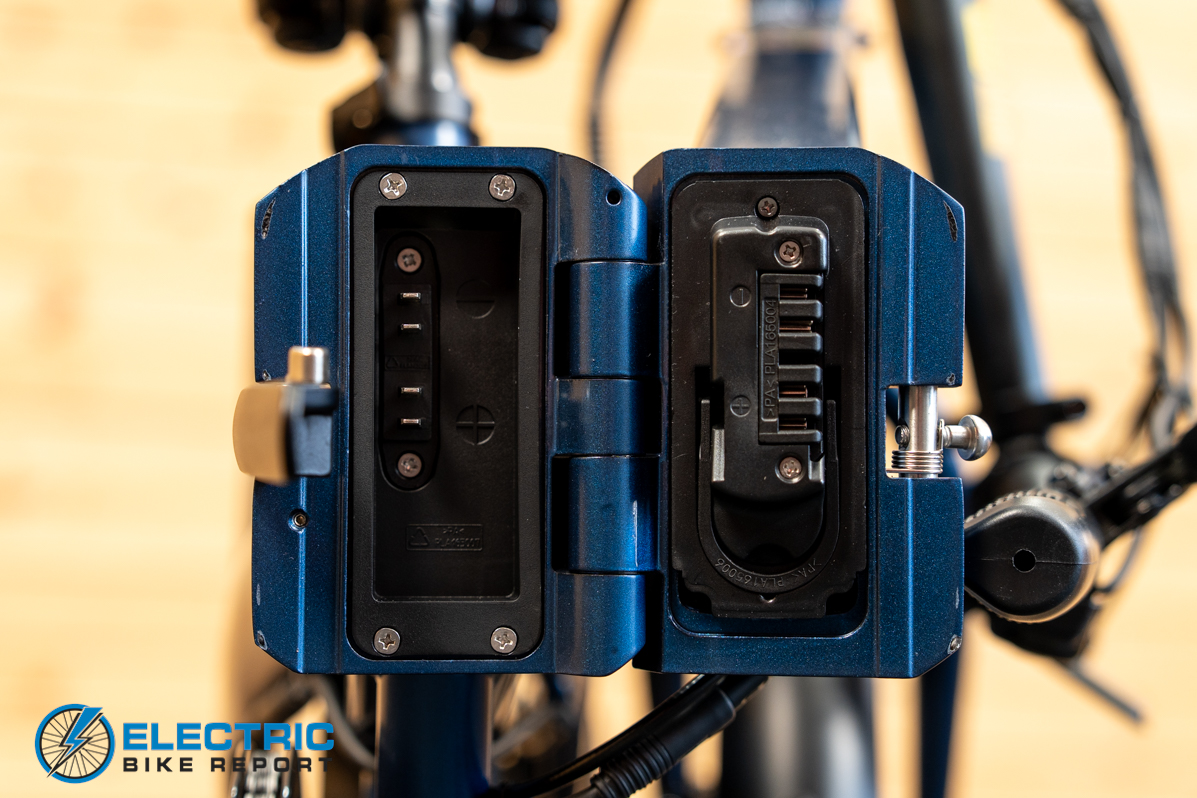
The battery is stored away in the downtube – pretty slick.
GoTrax Efold Review: Range Test
We tested the Efold’s range on both minimum and maximum assist power. GoTrax claims the Efold will do 40 miles on its 374 Wh battery; Coming in at 41.57 miles, our low-power test found a similar result. However, some of the programming issues I discussed in the speed test are also present here. As I mentioned, this bike’s PAS 1 configuration has a bit of an awkward speed limit at 9.6 mph. Because of this, I was having to very intentionally manage my speed during the range test. Our goal is to see how far the motor will go; and to keep it engaged in PAS 1, I had to stay at uncomfortably low speeds. As I said in the speed test, I expect most riders to skip the lowest assist level. Of course, the higher levels will get less range – just something to be aware of.
The Efold does technically sit below average compared to the broader segment of folding Ebikes, but there’s something to consider: This bike is significantly less expensive than almost everything in its class. Additionally, when we narrowed the parameters to bikes with almost identical specs, the Efold actually came in right on par with the 40.46 average. This is even more impressive when price is taken into account. Even in the more specific, modified category, the Efold is the most affordable. Not by a small margin, either.
On max power, the Efold went 18.34 miles. Sticking with the narrower comparisons, this is very close to average, as the mean for the class is 19.22. Once again, the performance is on par with bikes that cost considerably more, and this is the key takeaway for the range test. The Efold offers solid range for a steal.
Sponsor
Sponsor
GoTrax Efold Review: Hill Test
The headline figures on the Efold don’t suggest a hill-crushing monster. This is common for these lighter weight folders; especially at this price point, the question is more about if climbing hills is a realistic expectation of the motor, rather than how it stacks up against the times of other bikes.
The Efold completed the Devil’s Backbone hill climb in 3:10, averaging 10.2 mph along the way. Not a blistering time – but as I said, the fact that this bike climbed the hill on throttle only is a win by itself. Most of the similar bikes we’d compare it to didn’t. In fact, there isn’t really a category average number that I can report back, as the sample size of similar bikes that completed the climb isn’t large enough.
The pedal test saw the Efold make the climb in 2:48 at an average speed of 11.6 mph. Again, not overly quick, but we don’t expect it to be. The average of similar bikes was 2:35 and 11.5. In other words, the Efold is on par here.
Like I said, this bike isn’t designed to blast up steep inclines, and that’s okay. This performance is respectable. If you were to find yourself having to tackle a big hill on the Efold, it isn’t ideal, but it’s also doable, particularly in pedal assist mode.
Sponsor
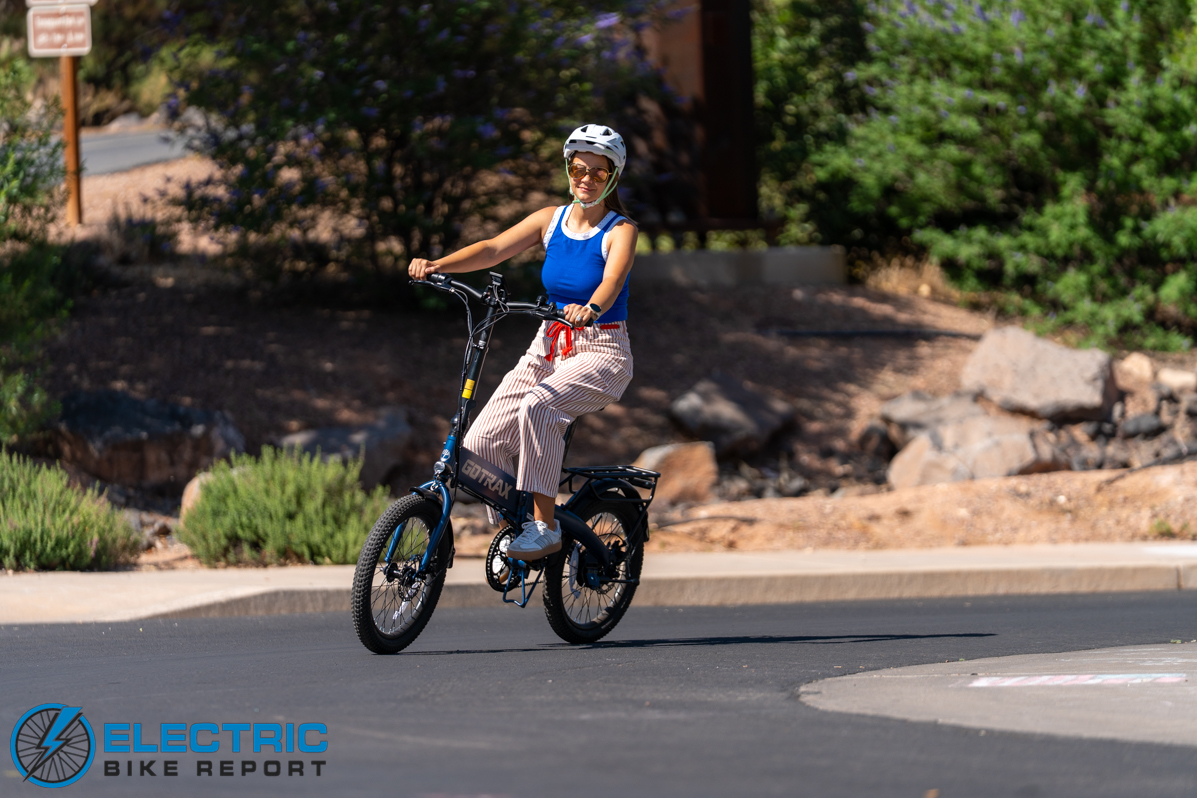
In addition to being practical, the Efold is a ton of fun to ride.
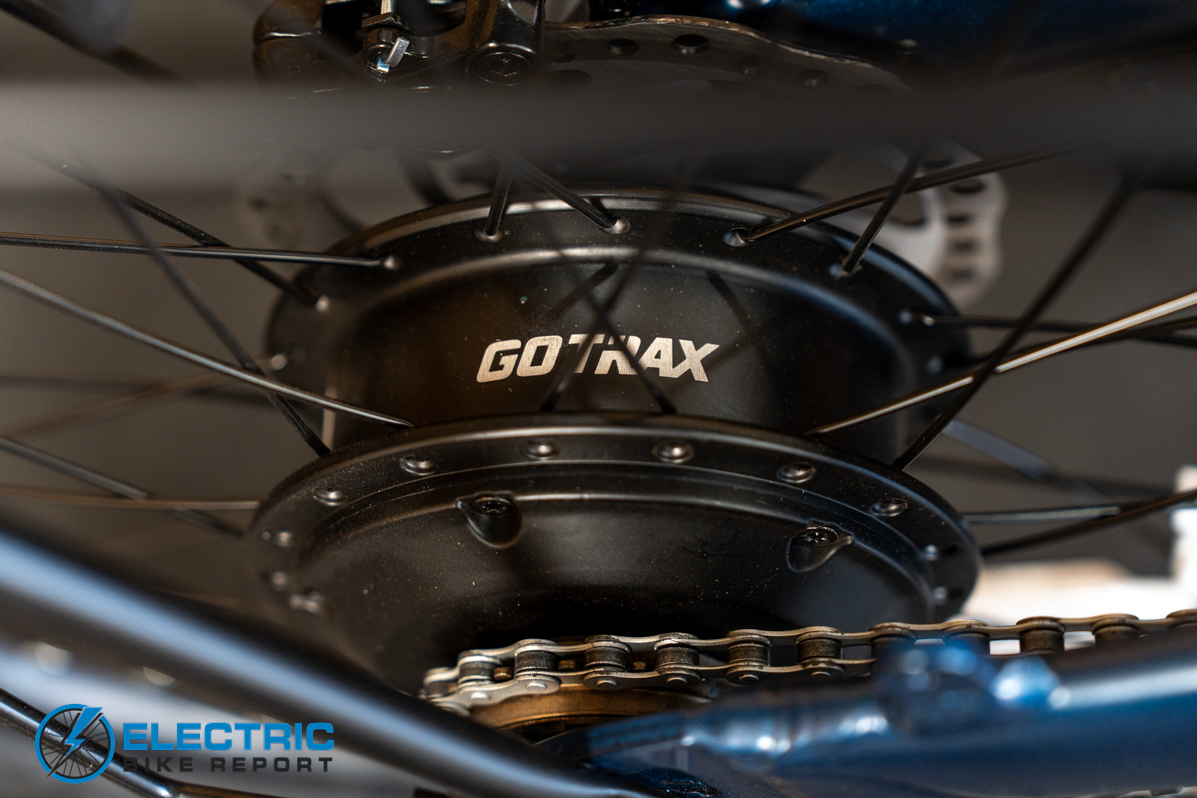
The hub motor has just enough power.
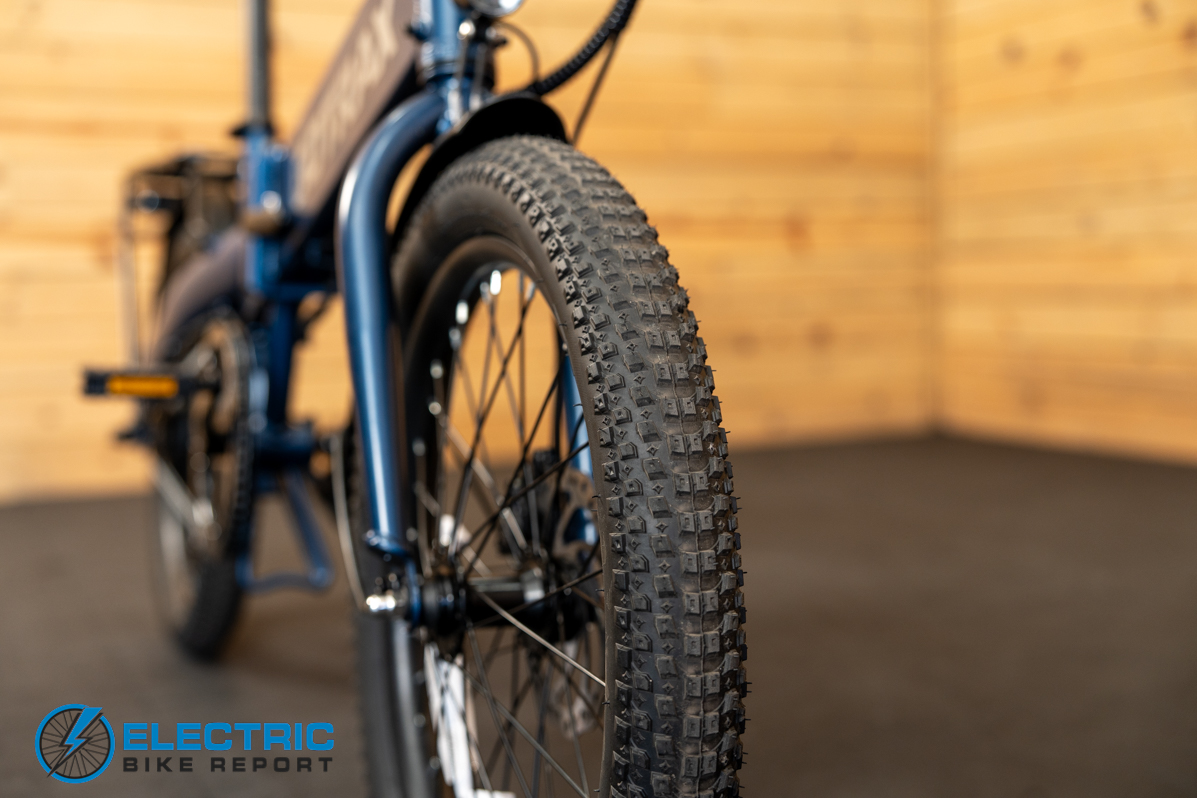
Knobby tires provide solid grip.
GoTrax Efold Review: Brake Test
The Efold is equipped with a set of mechanical disc brakes paired with 160 mm rotors front and rear. This setup is becoming less common, and could be described as “a bit last season”, as more and more Ebikes are moving to hydraulic systems. Generally, hydraulic brakes provide better performance, but there are some upsides to GoTrax’s choice here.
First and foremost, mechanical brakes cost less. On a bike that costs $498, we don’t expect the latest and greatest, and this configuration helps keep the cost down. Moreover, mechanical brakes are easier to self service or adjust; there’s no complicated process to service them, unlike hydraulics.
Lastly, these brakes do provide respectable performance. The Efold had an average stopping distance of 22 feet 9 inches in our testing. This isn’t a groundbreaking showing, but it’s well within the range of what we’d call safe. Additionally, we compared this result to other bikes with mechanical disc brakes, and the category average there was 22 feet 4 inches. The Efold is close to average here, but it’s worth noting many of those bikes are a few years older.
As with many mechanical brakes, the modulation and feel isn’t overly refined. It is much more effort to brake than modern systems, and the braking doesn’t necessarily feel as confident. However, these cable style brakes are tried and true. They’ve been on bikes for decades now, and they’ll serve riders well enough. If stopping power is at the top of your list, GoTrax also makes the F2 (the Efold’s big brother) which is equipped with hydraulic brakes. But, if not, the Efold does a fine job in the way of braking, especially for the price. In summary, this is a solid result.
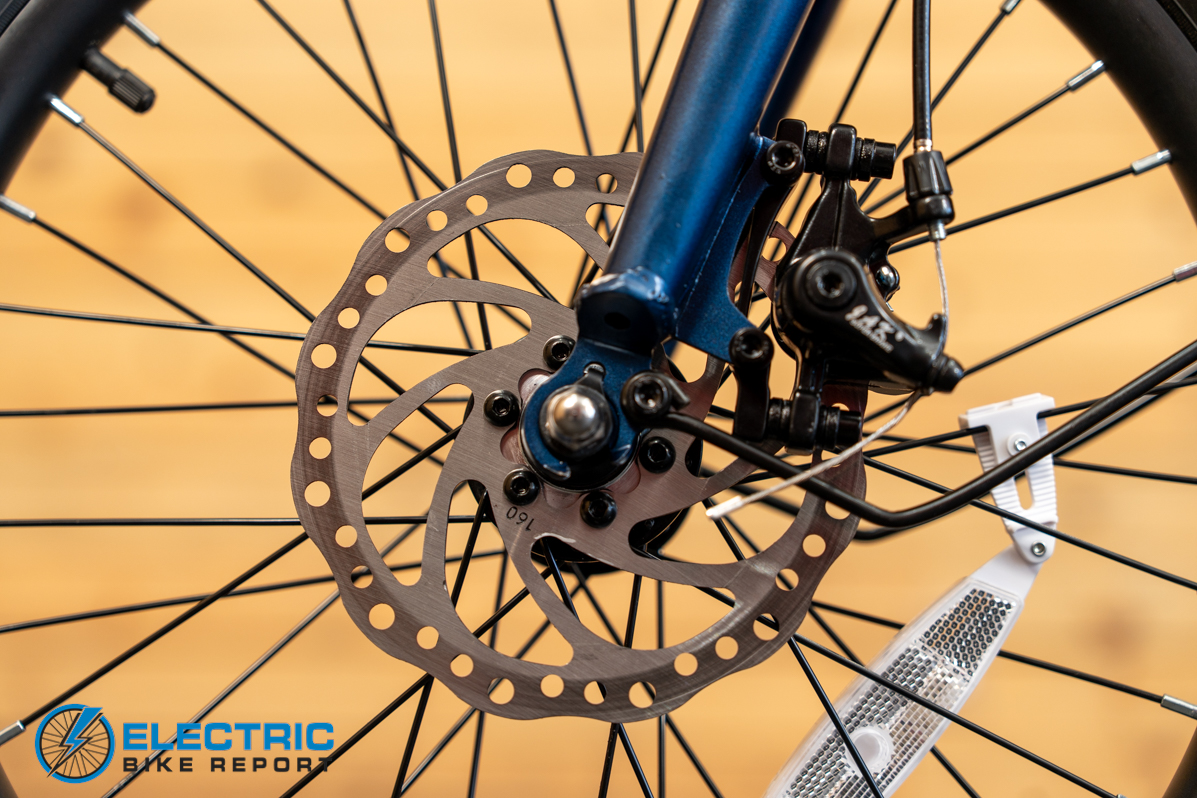
Note the cable – that activates the caliper.
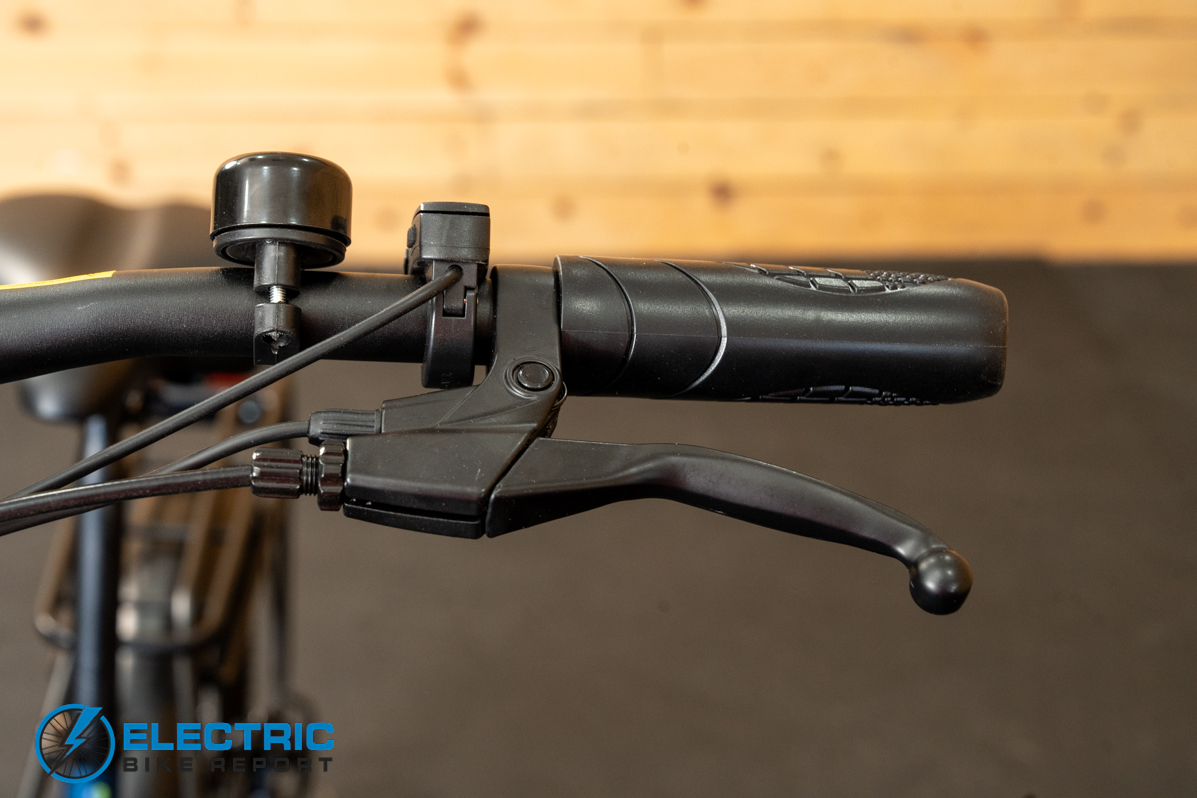
You do have to pull on the levers a little harder than usual to activate the brakes.
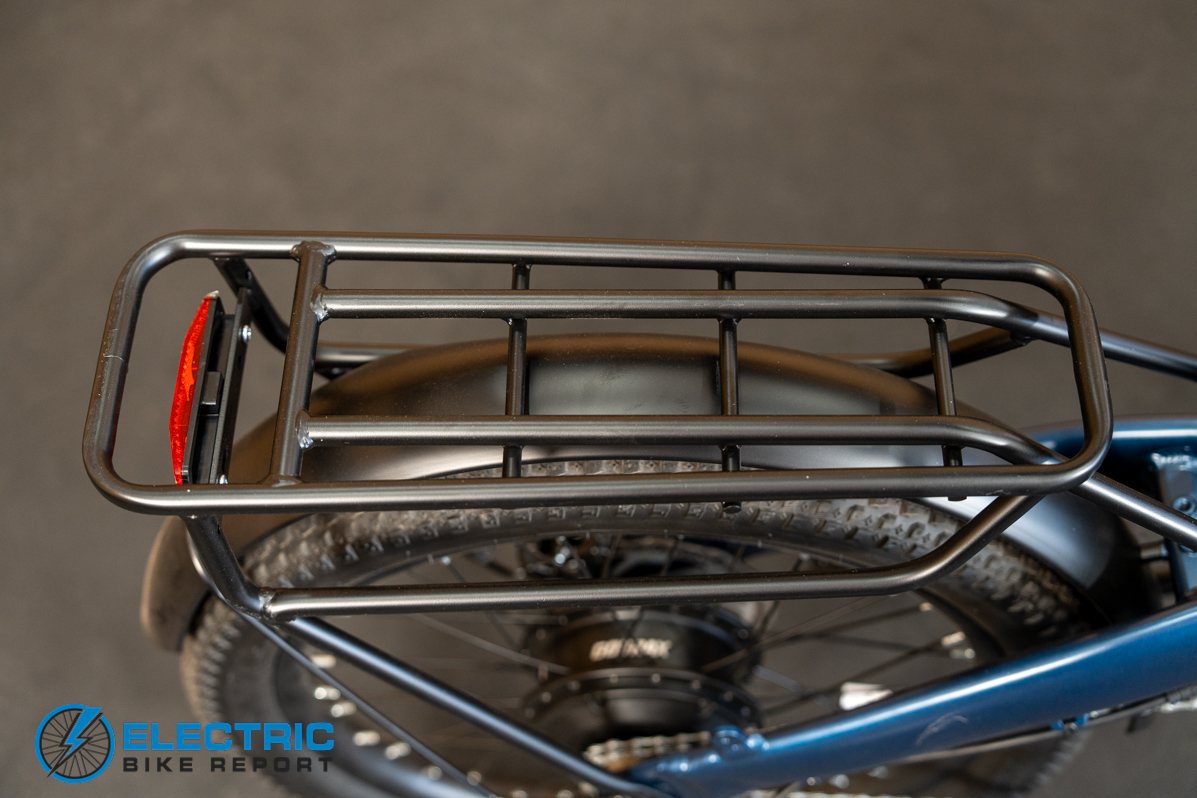
The Efold can transport more than just its rider.
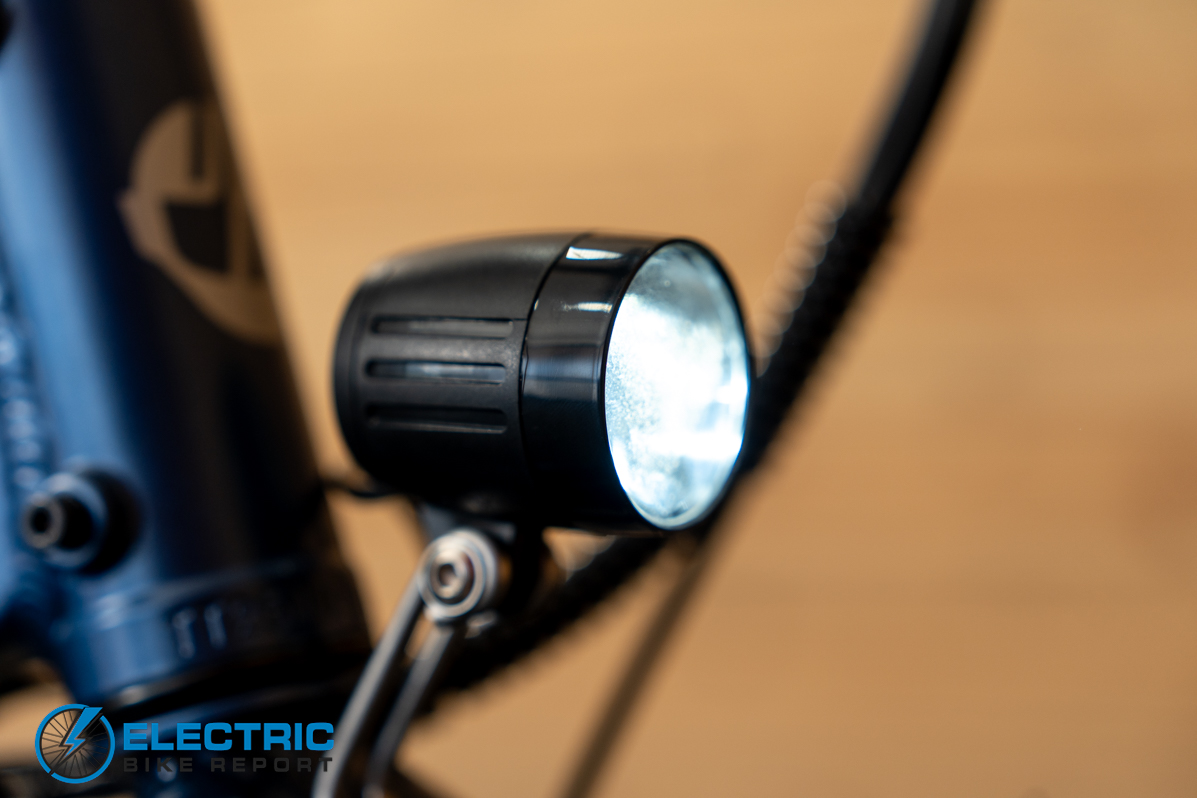
An integrated headlight is impressive at this price.
GoTrax Efold Review: Ride Quality
From my perspective, this section is where the Efold really shines. Ride quality has several layers to it, and the Efold covers its bases well.
The first key point is that many bikes at this cost don’t feel nearly as well-built as the Efold. Simply put, this bike exudes quality and sturdiness, and I quickly developed a sense of confidence in the bike.
Leonardo Da Vinci once said “Simplicity is the ultimate sophistication”, and while I doubt he was talking about Ebikes, he’d be proud of the Efold’s adherence to this sentiment. This bike keeps things straightforward; a rigid fork, 20 x 2.6 tires, and watchful engineering are the pillars of the ride quality. Sticking with the basics has paid off for GoTrax, both here and on other bikes. The Efold isn’t packed with complicated components or features, but that’s a good thing. This bike’s simplicity is a massive factor in why it feels so well-built.
Some may take issue with the Efold’s approach here, and I can understand the logic behind that. The lack of suspension does make bumpy paths more noticeable, and I wouldn’t describe this bike as a plush cruiser. That said, to me, this is only an issue on lengthy rides. If I was embarking on a long-mileage trip, this wouldn’t be my choice, but for commuting or zipping around town, I found its upright riding position to be plenty comfortable. GoTrax doesn’t provide a fit range for this bike, but it does have an adjustable stem and seatpost. I’m about 6’3, and while I wouldn’t say it was a perfect fit for me, it wasn’t wildly off either. I’d say most riders will be able to make the Efold work, especially considering it’s not meant for extended treks.
Handling wise, it leans more towards nimble and playful rather than steady. It’s not unstable by any means, but it doesn’t have the grounded feel of the fat tire folders. You could still use its rear rack for smaller hauls, but don’t expect a utilitarian feel; the Efold is more about quick, practical transportation.
The Efold’s cadence sensor isn’t the most sophisticated. Like the brakes, we felt that the motor engagement felt mildly outdated. It usually takes a full cycle of the pedals before the power makes itself known. That said, this isn’t always the case. The power delivery is somewhat irregular – sometimes the motor would engage after a half pedal crank, others it would take two full spins before I felt anything.
Of course, perspective is key here. We don’t expect a bike that costs so little to have the intuitive engagement of pricier options. However, because this bike is a single speed, it isn’t always easy to start off with no momentum, and the delayed engagement is no help there. The biggest area for improvement is in the consistency; the delayed power would be less of an inconvenience if the engagement felt similar every time.
The single speed also causes some ghost pedaling on flat terrain. The gearing simply doesn’t have enough range to accommodate the motor. The choice in drivetrain was likely made to be cost efficient, and considering the price, it’s hard to argue with this decision. If you can live with the ghost pedaling, there isn’t a whole lot to complain about otherwise.
Sponsor
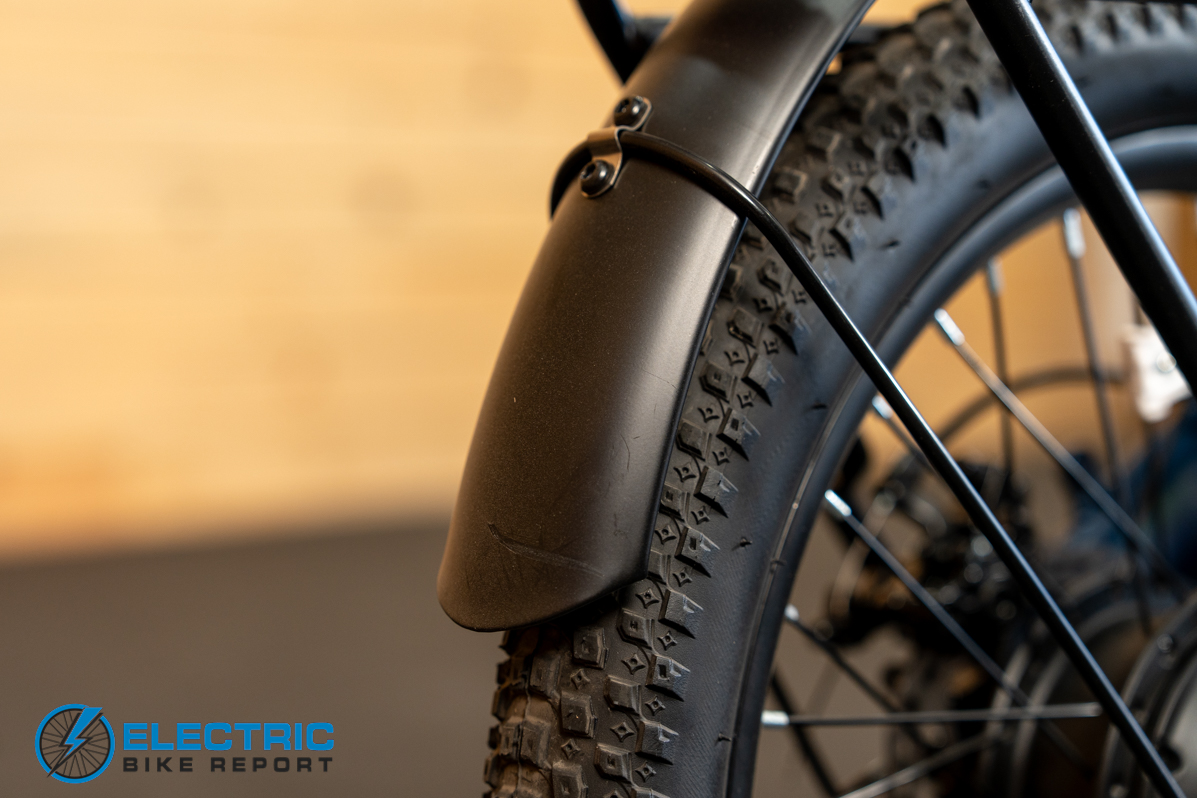
Plastic fenders are a basic but functional choice.
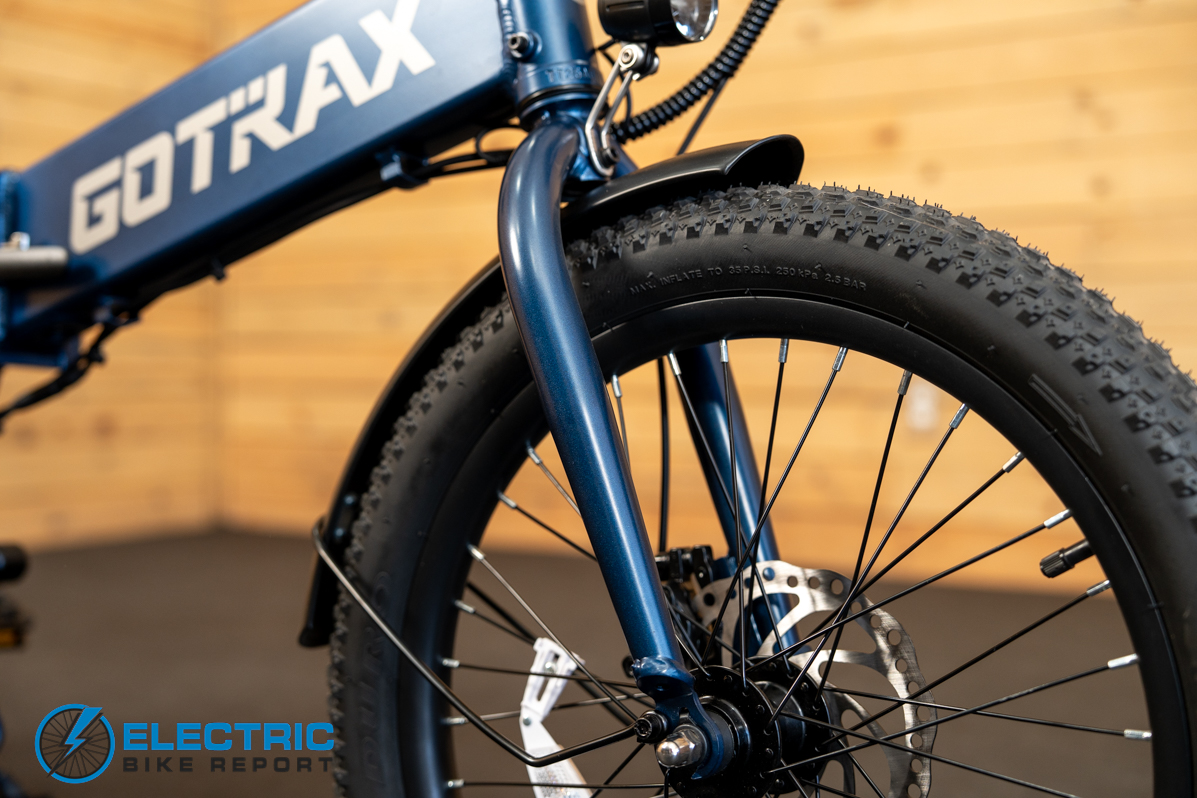
A rigid fork keeps things simple.
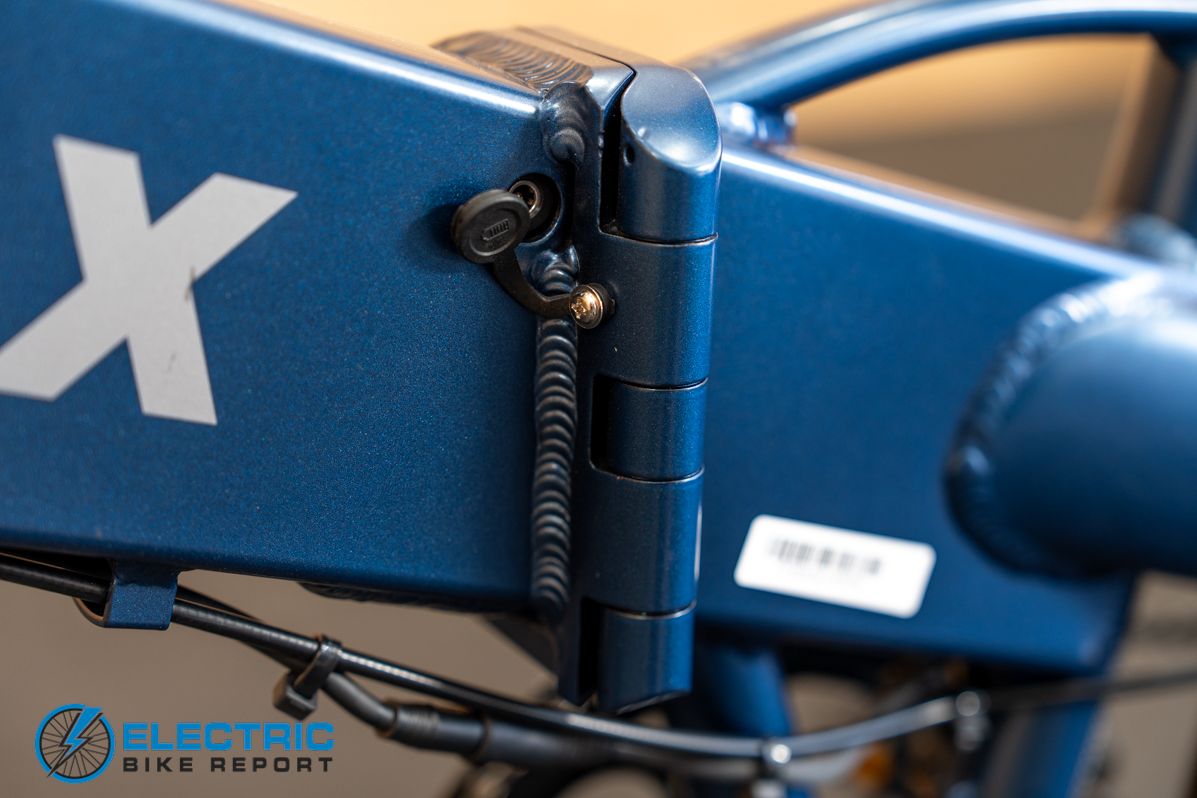
The folding hinges feel sturdy.
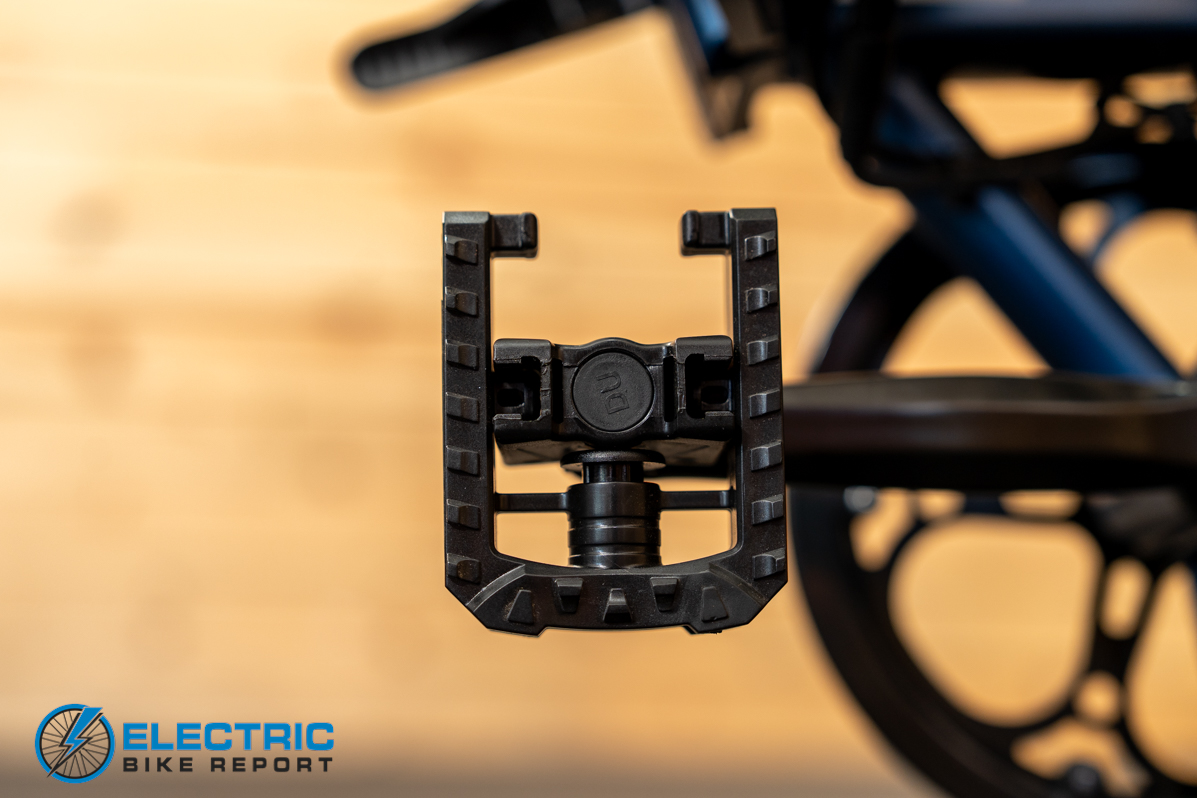
Even the pedals help save some space!
GoTrax Efold Review: Summary / Where to Buy
I’m going to take off my reviewer hat for just a moment to say that I personally like this bike a lot. I understand it has a few areas for improvement, namely in the gearing and programming, but I feel that the pros outweigh the cons.
I love bikes, but I recognize that they aren’t cheap. The Efold packs real fun, practicality, and quality at a price that’s very accessible, which means more people will get to experience the joy of riding. And that’s what it’s all about, right?
In a sentence, the Efold punches above its weight, and it’s excellent value for money. If you’re on a tight budget but want an enjoyable and usable folder, the GoTrax Efold is a good place to start.
Happy Riding! Make sure to let us know if you have any questions or if you think we left anything out in this review of the GoTrax Efold down in our comments section.
Sponsor
Sponsor
Reader Interactions
Leave a Reply