Hawaii Targets E-Bikes & E-Motos, Bosch’s Performance Update 2.0, Tern Partners with BikeInsure | TWR Ep 81
May 03, 2026
 0 Comments
 Share
Share
Plus Bike Advocacy Groups Unite for Proper Oversight, Abundant E-Bike Trails in Michigan, Velotric Breeze vs Tempo Comparison, & More!
In this week’s e-bike news, more state legislation is in the works—this time in Hawaii. By separating e-bikes from electric motorcycles & other high-power electric vehicles and setting legal standards for their operation, the state hopes to encourage safety and appropriate conduct. Will its push to require all e-bikes to be registered make waves?
Bosch has rolled out a new over-the-air (OTA) performance update for specific mid-drive models, boosting their torque and assist power to stay competitive with rival brands. The company also now allows many of its systems to pair directly with Garmin Edge cycling computers. What else does Bosch have in the works?
Additionally, Tern has partnered with BikeInsure to offer new and existing customers access to e-bike insurance plans. With claims of low premiums and streamlined claims processes, the service aims to offer damage and theft protection. Is this a smart move for you?
Continue reading below for more information and answers to these questions—or, you can enjoy watching or listening to our news coverage and more via the links above.
Sponsor
Sponsor
This Week’s E-Bike News Headlines
An E-Bike Bill in Hawaii Seeks to Define E-Bikes and Ensure Rider Safety

Image Source: Adventure In Hawaii
We will cover the main points of the state’s bill, HB 2021, below. First and foremost, this legislation would formally define the three-class e-bike system in Hawaii.
Following the widely-accepted definitions in PeopleForBikes’ Model Legislation, Class 1 e-bikes would offer pedal-assist up to 20 miles per hour. Class 2 e-bikes could be self-propelled via a throttle up to 20 mph. Class 3 e-bikes would offer pedal-assist up to 28 mph and be equipped with a speedometer. The bill would require an e-bike to have operable pedals and a motor of no more than 750 watts.
HB 2021 would also define “high speed electric devices” as having motors over 750 watts and being capable of speeds exceeding 28 mph. It would ban these devices from public roadways, bike lanes, bike facilities, sidewalks, and other public areas. Class 1, 2, and 3 e-bikes, however, could be used on sidewalks with a maximum speed of 10 mph.
Continuing with age requirements, the bill would raise the minimum age for unsupervised operation of Class 2 and Class 3 e-bikes from 15 to 16, allowing younger riders to use e-bikes when accompanied by a parent, guardian, or other adult. Anyone under 18 would need to wear a helmet when operating a bicycle on streets, bike paths, or other public property.
Among the bill’s most unique measures is the establishment of “safe riding behavior” requirements for e-bike riders. E-bikes would generally need to be operated with all wheels on the ground, with the rider facing forward and seated normally. Stunts such as wheelies, riding on handlebars, standing or kneeling on the seat, and other reckless maneuvers would be prohibited on public roads.
Additionally, e-bike manufacturers and sellers would need to add labels showing the bike’s class, top motor-assisted speed, and motor wattage. Any sellers shipping to Hawaii, including those operating online, would need to disclose whether a model is legal for public roads, sidewalks, or bike lanes. If bike makers or retailers violate these requirements, the state Department of Transportation could fine them up to $500 per infraction.
The bill would also keep e-bikes subject to Hawaii’s existing permanent registration requirement and $30 registration fee, though registered bikes would not need insurance. Those without registration would be prohibited from operating an e-bike on a public road, sidewalk, or bike path. Those who fail to comply could receive a citation or temporary impoundment of their bike.
The bill also cracks down on the use of high-speed electric devices by students. Electric motorcycles and similar devices with “ghost pedals” would be prohibited on all public K–12 campuses. Following the previous provisions for registration, public high schools could require county registration and decals for e-bikes brought onto campus.
As of April 24th, the bill was in conference committee, where members recommended it pass with amendments.
Our Take:
This bill is the latest in a series of sweeping legislative changes affecting e-bikes and higher-powered e-motos. More and more states are aiming to better divide and define these groups of devices for the sake of safety. The trend was prompted by an increasing wave of complaints, accidents, and injuries related to e-motos and their reckless use by young riders.
We support Hawaii’s efforts to encourage safety and create new definitions for various types of mobility devices. We do not, however, support the push for e-bikes following the 3-Class system to be registered, since this treats them more like cars and less like bicycles. It makes much more sense for e-motos and other high-power devices to require registration, since they are more likely to be traveling at high speeds around automobile traffic.
Bosch releases Performance Update 2.0, Garmin Interfacing, and Details on Upcoming Features
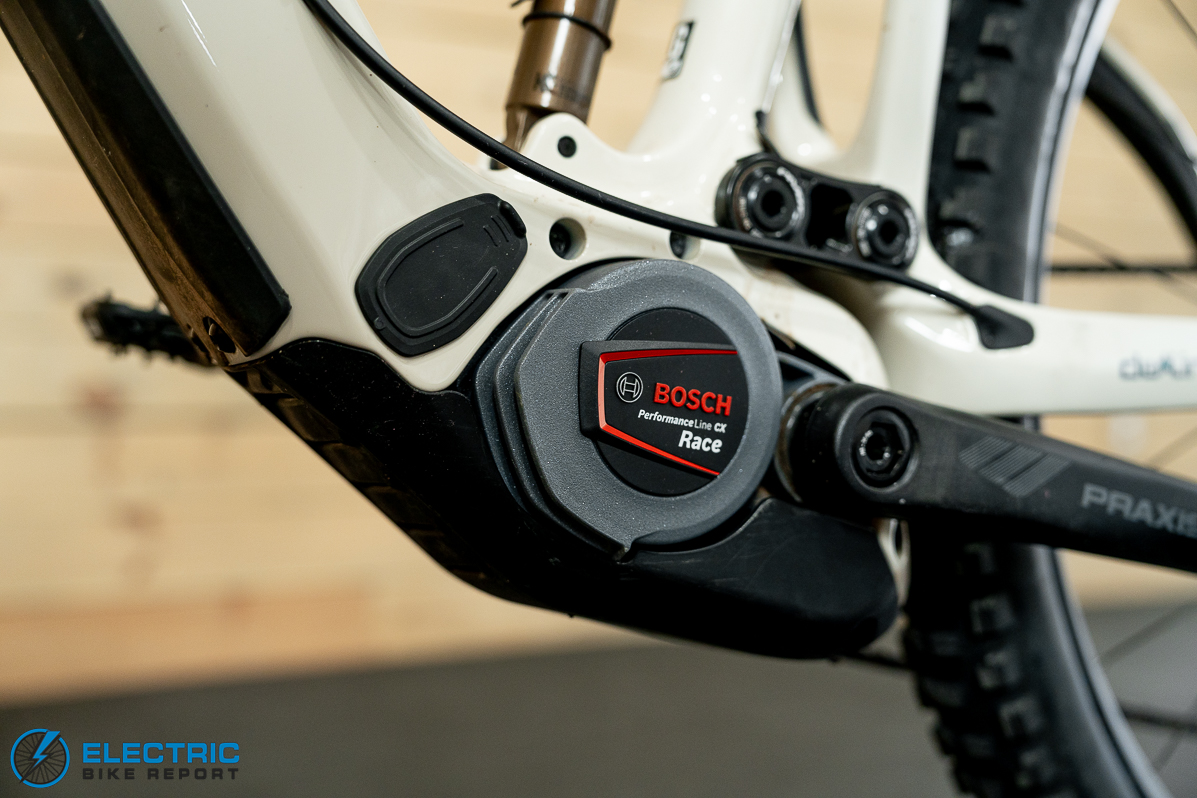
Following in the wake of similar motor power increases from brands like Specialized and Amflow, riders with Bosch’s Performance Line CX and CX-R mid-drives have access to the Performance Update 2.0 starting on May 4th. With this OTA update, users can increase their torque output to 120 Nm and raise support to 600% in Race, Turbo, eMTB+, Cargo, and Auto modes through the Bosch Flow app.
In contrast with some of its competitors’ approaches, Bosch says the goal of this update is not simply to make the motor more powerful all the time. Instead, the software is designed to recognize challenging moments and deliver short bursts of peak support only when needed.
This situation-specific power delivery will be enabled when riders encounter steep or technical terrain. Bosch expects that it should help preserve the pre-update range and reduce drivetrain wear by allowing the system to return to a more efficient level after the more demanding section is behind.
The company is also adding a new Live Data Interface that can pair with third-party GPS bike computers. Garmin is Bosch’s first partner, but fitness watches, smart glasses, helmets, apps, and other products from other brands might also work with this technology in the future.
Right now, certain Garmin Edge cycling computers can connect to Bosch-equipped e-bikes via Bluetooth. At the time of writing, supported Garmin models include the Edge 550, 850, and 1050. The Edge 540, 840, 1040, and Edge MTB are also compatible, with integration available through Garmin’s public Beta program.
Once an Edge is connected, the Garmin display will show essential e-bike data, including rider power, cadence, and speed. Other metrics, such as total distance, battery charge percentage, remaining range, and the status of Bosch’s eBike Lock theft protection feature can also be seen.
When implemented, a smart Range feature will be able to show estimated remaining distance based on the rider’s planned course.
By allowing its systems to pair with Garmin devices (and those from other brands), Bosch aims to give more flexibility to its users. It allows Bosch-equipped e-bikes to use the rider’s preferred digital setups instead of forcing them to use only its proprietary hardware or the Flow app. It is also more economical, as it doesn’t require a separate power meter to be added.
Additionally, Bosch announced a few upcoming features and products. Later this year, it will release a 12A charger capable of charging three times faster than its current 4A chargers. The brand claims its ultra-fast charger will be able to charge a PowerTube 800 battery to 50% in just an hour. The device should be available toward the end of 2026.
At around the midpoint of this year, riders will also be able to adjust the length of the overrun of the Extended Boost feature with some motors. The overrun for each riding mode will be able to be customized separately in the eBike Flow app, providing up to 2.2 yards of extra power for overcoming technical sections with enough room for only a partial pedal stroke.
Finally, a Drivetrain Tensioner feature will soon be available for the Performance Line CX and CX-R motors. which will improve motor response for improved control and performance in technical sections when in eMTB+ and Race modes.
Our Take:
While Bosch has, relatively firmly, placed itself on the side of delivering natural-feeling pedal assist that doesn’t entirely supplant rider effort, the Performance Update 2.0 seems to be the company’s way of acknowledging consumer demand for more power.
We’re curious to experience the updated programming to see how the power delivery feels. Having experienced high-torque motors from Bosch’s rivals, the 120 Nm maximum sounds promising—as does the Garmin integration, Drivetrain Tensioner feature, and customization for Extended Boost.
Bosch’s continued development and commitment to the refinement of its products shows why the brand is a staple among high-end e-bikes. As demand for higher power output grows, there now seem to be two camps: one in favor of pushing limits and another that prefers a more conservative approach. The Performance Update 2.0 seems to be a way to stand in one camp while perhaps luring riders from the other.
Tern Partners with BikeInsure for Optional Theft & Damage Coverage
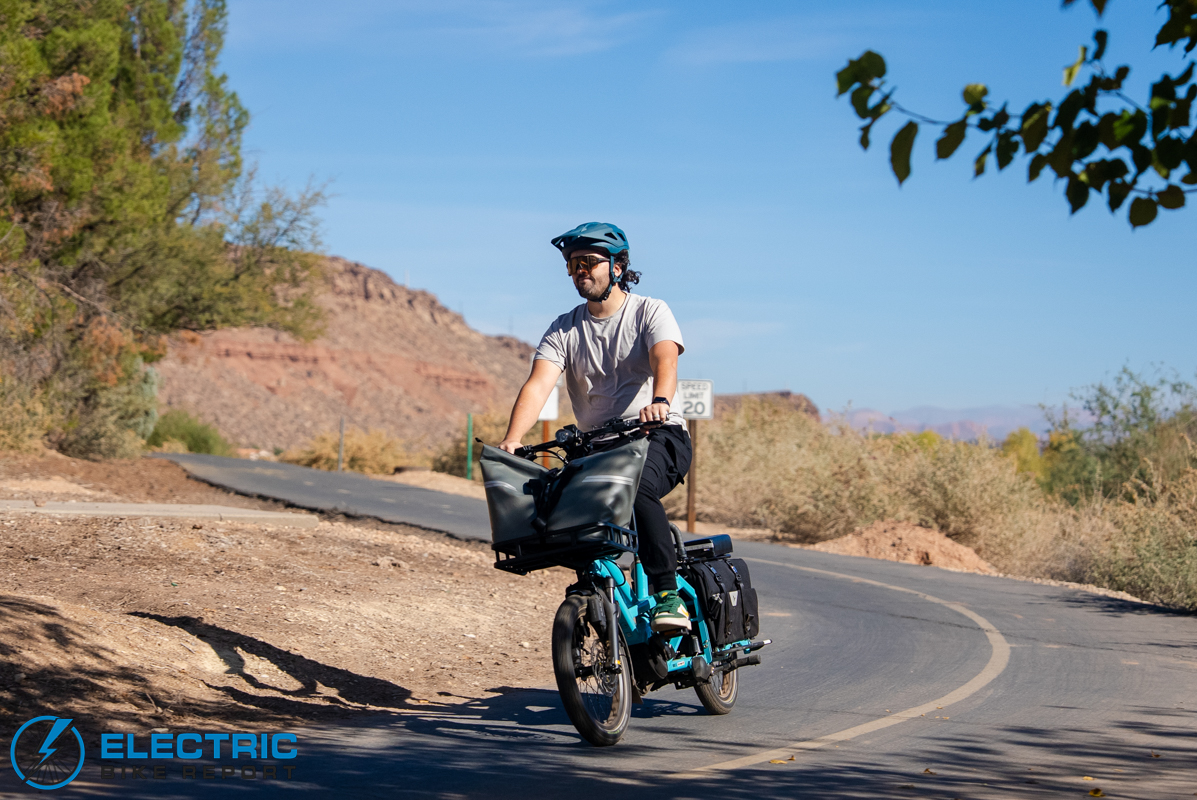
This partnership between Tern and BikeInsure is a multi-year agreement designed to give Tern customers easier access to dedicated e-bike insurance. Considering that electric bikes are often excluded from homeowners and auto insurance policies, owners without standalone insurance may be left without meaningful protection for their high-value e-bikes.
While Tern has an excellent warranty that accompanies its products, the program is also meant to fill a gap that standard manufacturer warranties do not cover. A warranty may cover defects in materials or workmanship, but it typically does not cover theft or accidental damage—both things that are covered under BikeInsure’s plans.
Steve Boyd, Tern’s GM in North America, said, “Electric bikes represent a meaningful investment, and customers want clarity on how to protect that investment from unexpected events. Our collaboration with BikeInsure simplifies that decision with a two-minute enrollment for a dedicated electric bike insurance solution covering new and previously purchased Tern e-bikes, including valued non-stock accessories. This approach allows Tern customers to enjoy their bikes with greater peace of mind and ride with confidence.”
Since BikeInsure’s coverage is a standalone policy, claims are handled directly through the company, and therefore, do not affect a rider’s homeowners or renters insurance policy. The company claims to have a streamlined claims process that can help customers repair or replace their bike quickly after a covered loss. Additionally, its deductibles are reportedly low, though we expect that will vary depending on the bike in question.
BikeInsure offers plans for many new and previously-purchased Tern e-bikes, allowing riders who already rely on the company’s folding or cargo e-bikes to get coverage. Signup is designed to be fast and simple; those interested can get more information through the Bike Insurance page on Tern’s website.
Our Take:
While we don’t support e-bike insurance being made mandatory (this is a separate issue), we’ve received a variety of questions and comments from readers and viewers who are interested in getting coverage. After all, an e-bike is an investment that most riders would be upset to lose. Plans such as those from BikeInsure could offer peace of mind for many consumers.
Considering that Tern’s products are often relatively high in cost, it makes sense for the brand to partner with an insurance company that can offer plans to owners of its premium e-bikes. It’s encouraging to hear that BikeInsure is putting a focus on the user-friendliness of its application and claims process. We hope to hear that the company follows through on providing a useful, affordable, and easy solution for e-bike insurance.
Sponsor
Gear Highlight – The RUX Cooler Cube (5L)
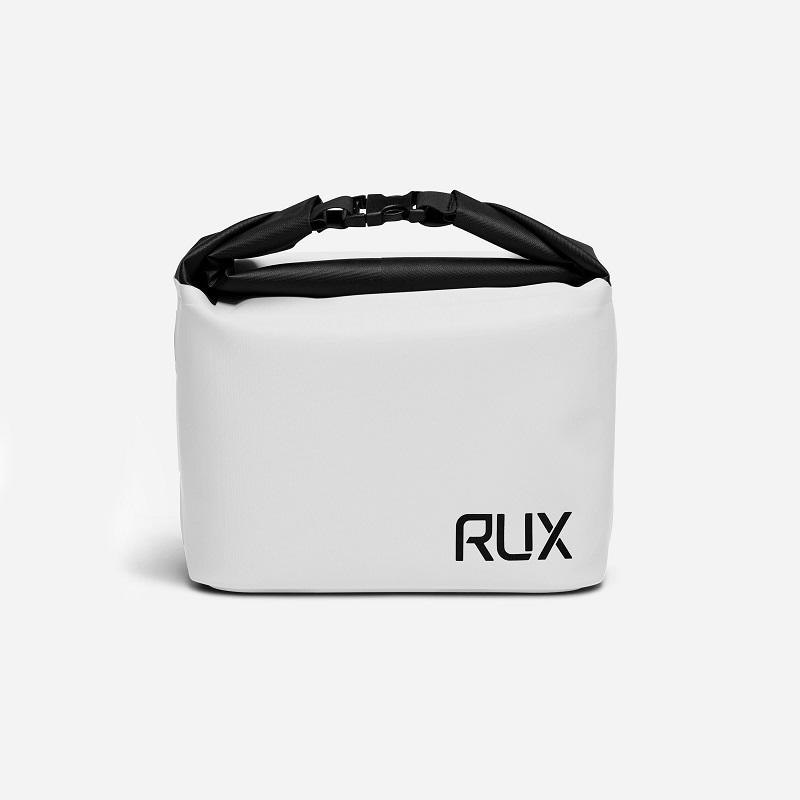
Image Source: RUX
RUX, a maker of soft, weatherproof storage bags and containers, sent us their small Cooler Cube to try out. This cooler/lunchbox can fit food and/or beverages—up to a full 6-pack—keeping them cool and dry until the end of your ride.
The cooler uses a dry-bag design and durable construction, and is made of nylon fabric coated with heavy duty polyurethane. It also uses memory foam to create an insulating barrier and protective layer for the goods stored inside. This construction allows it to pack flat when needed while effectively keeping its contents cool and protected.
- Carries 5L
- Four can fit into a 25L RUX Cooler Bag or RUX Bag
- Measures 8.6 x 6.3 x 6.3 in
- Features multiple lash points for various ways of mounting it or tying it down
- Compatible with a shoulder strap or silicone straps to wrap around a handlebar
- Available in 4 colors
- Costs around $80
You Asked, We Answered. Questions Covered In The Weekly Recharge
- How can I ensure a bike’s reliability, longevity, and serviceability?
- Why do we sometimes review products that fall outside the traditional three-class system?
- What city e-bike is best for a rider seeking low weight, a throttle, integrated tech, and at least 25 miles of range?
- How does the Velotric Tempo compare to the Velotric Breeze 1?
E-Bike Deals Found This Week
- Ride1Up’s Spring into Action Sale
- Portola Clearance Starts May 4th! This bike is gonna be just $795, making it one of the best deals at that price point—and one of our most-recommended folding e-bikes.
- The Revv 1 moped-style e-bikes are between $100 and $500 off! The FS is probably the smartest buy at $1,995
- Specialized’s Sale
- Turbo Vado SL 2 4.0 EQ – fully-equipped, natural-feeling alloy commuter – $700 off, down to $3,300
- Turbo Tero X 5.0 – full-suspension commuter/eMTB hybrid – up to $1,300 off with prices as low as $4,200
Make sure to tune in to the full episode to see the e-bike trail system highlight and rider of the week! Want to be featured in future episodes? Comment on any YouTube video or page of the website, or send to [email protected].
Sponsor
*Please help support our efforts at Electric Bike Report. We work hard to provide the highest quality content, news, and reviews for our readers – and our sponsors make all of this possible. Please visit our sponsors from their ads on our website and let them know that you appreciate what they do for the e-bike industry and Electric Bike Report
Sponsors
Sponsor
Reader Interactions
Leave a Reply