Magnum Wave Review | Sit Back & Low, Pedal Forward, Then Go
Apr 29, 2026
 0 Comments
 Share
Share
This pedal-forward cruiser e-bike offers a winning combination of stylish looks, controlled power, solid performance, and a relaxed feel.
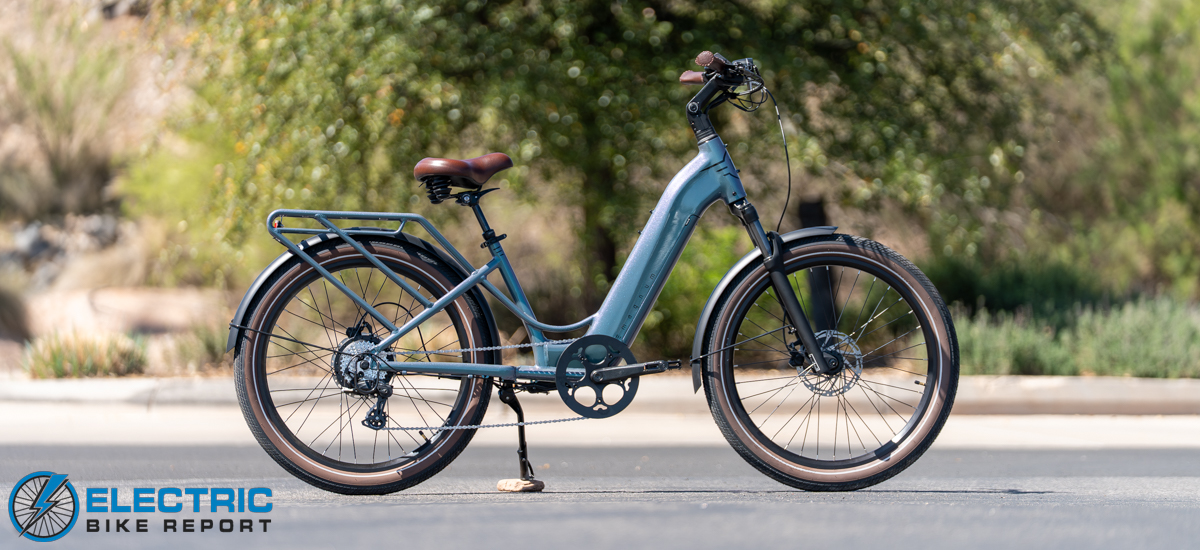
A bike’s style is largely defined by its geometry—the proportions of, and relationships between, its frame elements and the points its rider directly contacts. Without getting into the weeds, bike geometry largely balances performance and comfort. Road bikes, for example, tend to prioritize the former, while cruisers often focus more on the latter.
The Magnum Wave is a cruiser-style e-bike that aims to maximize comfort with pedal-forward geometry. While it’s not the first of its kind that we’ve seen take this approach, the Wave is among the most committed. With its bottom bracket moved forward and its seat tube angled back—or slackened—the bike feels like a cool, stylish low rider.
This ultra-relaxed design is what separates the Wave from other cruiser-influenced e-bikes in Magnum’s lineup—and many similar models on the market. It reduces hip and knee strain while pedaling. Additionally, it helps riders to feel more stable, allowing them to reach the ground with both feet while stopped.
I appreciated the Wave’s casual, laid-back feel on my first test ride, along with its approachable power and responsive pedal assist system. By default, the bike used torque-based assist, dishing out more power when I pushed harder on the pedals. Riders looking for a lower-effort experience, however, can switch to cadence mode via the display.
Clearly, the Wave’s priority is comfort, user-friendliness, and adaptability. Overall, I found that it succeeded in these areas, but like any e-bike, it has its limitations and tradeoffs. See our full review below to learn about our experiences and to see how its performance compares to similar models we’ve tested.

Sponsor
E-Bike Category:Cruiser
E-Bike Class:Class 1 (pedal assist to 20 mph)
Class 2 (throttle to 20 mph)
Class 3 (pedal assist to 28 mph)
Class 2 (throttle to 20 mph)
Class 3 (pedal assist to 28 mph)
Sponsor
Magnum Wave Video Review
 Pros
Pros- The Wave offers controlled but helpful power, with a 500W rear-hub motor, up to six pedal assist levels, and thumb throttle.
- Riders can swap between torque and cadence-sensing modes to change between an active or low-effort pedaling experience.
- Its pedal-forward design fits riders as low as 4’ 10”, allows users to plant their feet while stopped, and helps to reduce strain while pedaling.
- The Wave delivered impressive results in its high-power range test, exceeding the performance of many similar models we’ve tested.
- Four paint options help the Wave stand out from the crowd, with unique choices like the multicolor, chameleon-style Ocean and metallic-flake Chroma Green.
- The bike rides smoothly, thanks to its combination of a 100mm suspension fork and elastomer spring saddle.
- Overall, the Wave is easy to use and operate, with a simple cockpit layout, an uncomplicated control panel, and no app or overwhelming settings menus.
- The welded cargo rack adds visual flair and can support a useful 55 lbs. An optional front basket can be added to increase utility.
 Cons
Cons- The stem-mounted display is nice, but it’s not easy to read when the handlebars are set for an upright riding position. We recommend a more easily readable display.
- We experienced a few motor hiccups, with the bike either exceeding its set speed or “stuck” below it. We encourage Magnum to implement more consistent programming.
ELECTRICAL SPECS & FEATURES
- Battery: 48V, 720 Wh, Samsung 21700, Li-NMC
- Charger: 54.6V 2A Charger
- Display: Magnum VeloFox Stem-Integrated Color Display
- Motor: Sutto 500W (800W Peak) Hub-Drive; brushless; planetary geared, 65 Nm torque
- Headlight: Integrated 80 lumen front light
- Taillights:Integrated multi-function rear light (flashes when brakes are pulled)
- Pedal Assist: Torque Sensor Pedal Assist
- Claimed Range: 50 miles (80 Kilometers)
- Throttle: Thumb Throttle
- App:None
- UL Certification:UL2271 & UL2849 Certified
Weight & Dimensions
- Claimed weight: 71 lbs
- Tested Weight: 73.6 lbs
- Rider height range: 4’10” – 6’2”
- Total payload capacity: 330 lbs
Components & Accessories
- Brakes:Tektro Hydraulic 180mm rotors
- Fenders:Front and rear full coverage fenders included
- Fork:26inch wheel, thru-axle, 100mm travel, w/ lock out
- Frame: Aluminum Alloy
- Drivetrain: 8-speed Microshift Acolyte, 52T chainring, 11-32T cassette
- Grips: Faux leather ergonomic
- Saddle: Selle Royal Cruiser w/ elastomer springs
- Handlebar: Cruiser style
- Kickstand: Center-Mounted Single Side Adjustable Length
- Pedals: Wide alloy Platform with Reflectors
- Tires: Innova 26 x 2.4 multi surface w/ Siping
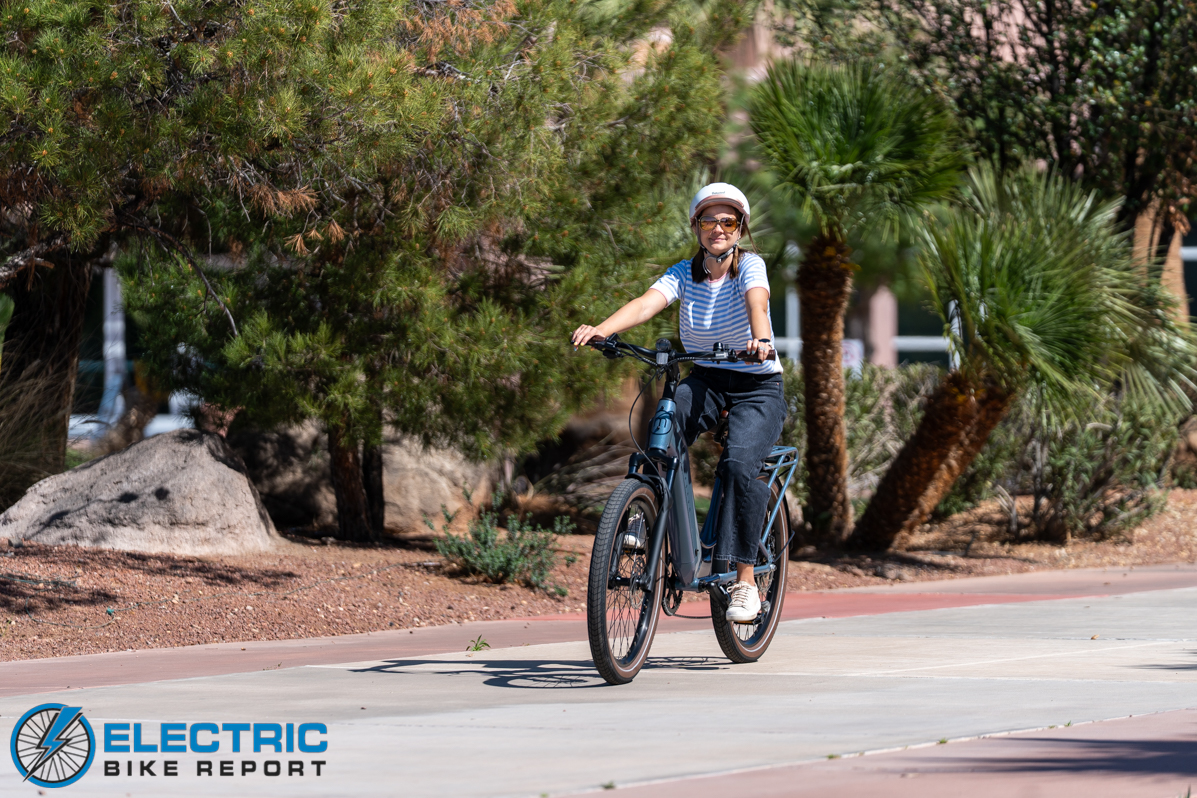
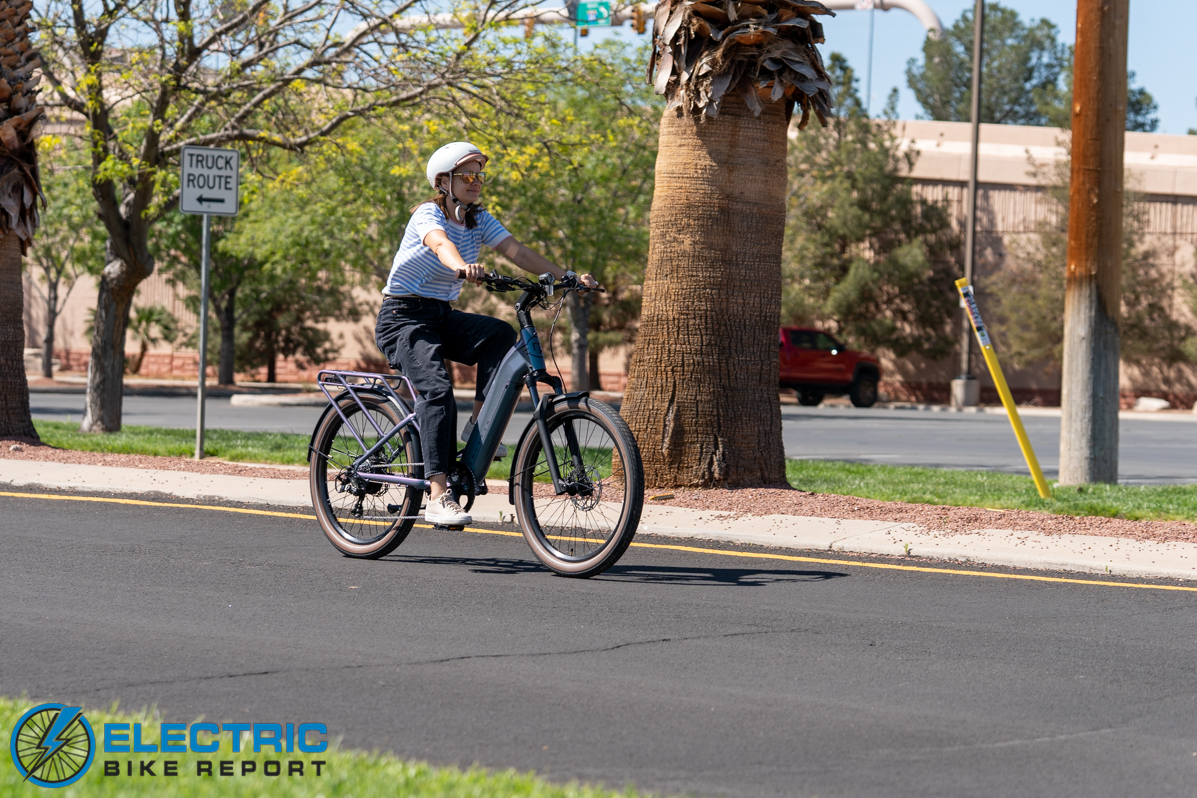
The Wave’s pedal assist system is relaxed and approachable, complementing its easygoing feel.
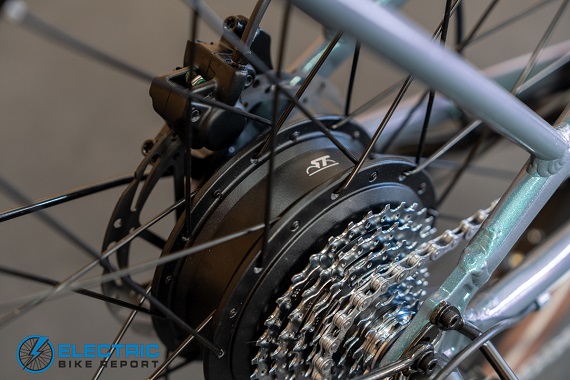
The 500W rear-hub motor provides ample power through torque or cadence modes
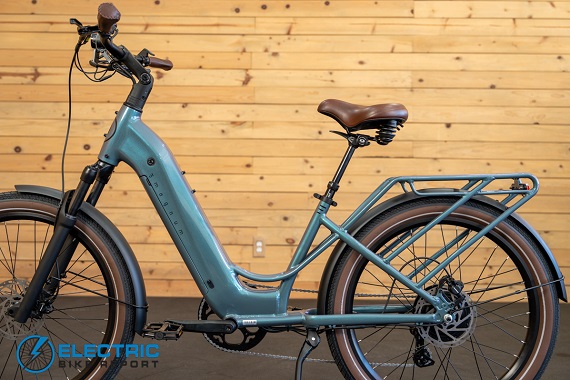
To complement its name, the Wave has a swooping support tube for its cargo rack.
Magnum Wave Review: Speed Test
I tested the Magnum Wave by riding on a flat, paved path in each of the bike’s pedal assist levels. I made several passes using all four combinations of the bike’s torque-sensing and cadence-sensing modes with both Class 2 and Class 3 speed settings. As I pedaled, I monitored and recorded my average speed in all assist levels: these results are graphed above.
You may notice that, when in Class 3 mode, the Wave offered me two additional pedal assist levels. This is a different approach than that taken by most brands; instead of adding additional power levels to reach speeds above 20 mph, most bikes simply increase the power/speed of their assist levels when in the faster riding mode.
Beginning my test by riding with no pedal assistance, I found the bike to be relatively comfortable to move on leg power alone. The bike’s gearing allowed a low-effort experience, though the bike’s weight slowed me down a bit.
In its default torque-sensing mode, the lower pedal assist levels stepped up steadily in power before tapering off somewhat as I approached the maximum. In Class 2 mode, the 20 mph ceiling seemed to limit the bike, while in Class 3 mode, its motor had more room to flex.
In both torque tests, there were small variations in my results. This was due to the bike’s ability to vary its power in response to my effort, and my effort naturally fluctuated from moment to moment.
In contrast, the cadence-sensor tests were almost perfectly aligned, with measured increases in power and speed between each assist level. My Class 2 results in Eco, Tour, Sport, and Turbo matched those of my Class 3 test, with two additional steps up to Boost and Hyper that followed the same trajectory.
In all of its riding modes, the bike felt controlled and safe, with steady acceleration and manageable power. As expected, the Wave felt responsive and adaptive in its torque mode—much like an analog bike. In cadence mode, it carried me up to preset speed limits that increased as I moved through its assist levels, making it easy to control my velocity.
While it was rare, there were a handful of times where the bike seemed stuck below its programmed maximum speeds, and others where its motor carried me well above this limit. This may have been an issue limited to our test bike, but regardless, we encourage Magnum to ensure better accuracy in the production models.
Otherwise, I found the bike’s throttle easy to use. It felt much the same as the pedal assist system—capable and steady without being overpowered or punchy. The result was an e-bike that very much matched its cruiser styling; it felt helpful and fun while maintaining a relaxed and easygoing attitude.
Sponsor
Riders can switch between Class 1, 2, and 3 modes, as well as torque and cadence-sensing modes, through the bike’s display menu.
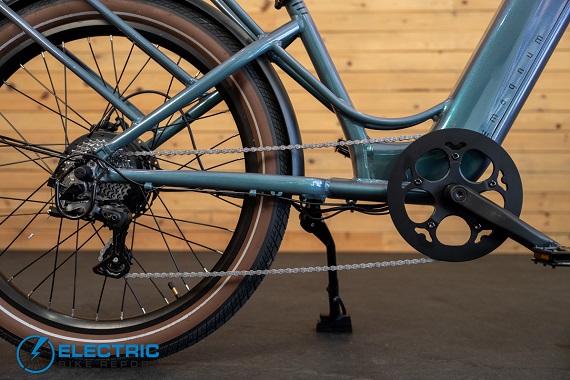
The 8-speed Microshift Acolyte drivetrain is familiar and effective, with an effective gear range.
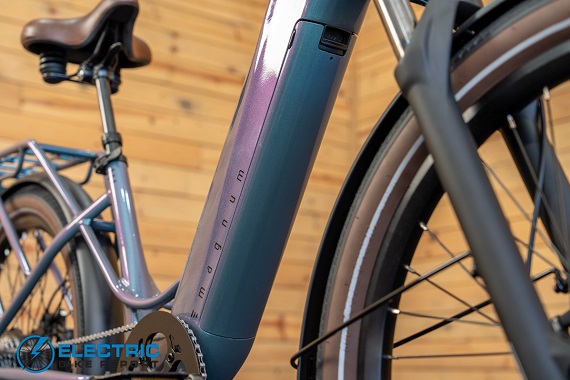
A 48V, 720 Wh battery tucks neatly into the underside of the down tube and is painted to match the frame.
Magnum Wave Review: Range Test
While Magnum advertises a range of up to 50 miles with the Wave’s removable but fully-integrated 48V, 720Wh battery, our testing showed the bike capable of even longer rides from a single charge. We tested the bike on two real-world rides using the method explained above.
In these tests, our riders covered 50.1 and 73.4 miles in their max-PAS and low-assist settings, respectively. Similar e-bikes we tested averaged 35.7 and 70.2 miles, respectively, making the Wave’s capabilities average to significantly above average in comparison to its peers.
The Wave had two primary advantages in this test, including a larger-than-average battery and a more energy efficient motor.
The battery, which has an additional 51 Wh of capacity when compared to the 669 Wh cruiser average, seems to have played into the Wave’s Eco mode results the most. When calculating the amount of energy its motor used per mile in this test, the Wave’s result of 9.8 watt-hours per mile (Wh/mi) is right on par with the cruiser category average, giving it a small amount of extra fuel to travel beyond the average distance.
In its Turbo mode range test, the Wave was much more conservative in its energy consumption. While other e-bikes in this category averaged 18.8 Wh/mi, Magnum’s cruiser used just 14.4 Wh/mi, allowing the bike to stretch its charge well beyond many of its peers.
We tested the Wave in its Class 2 mode, which limited its speed to 20 mph. Additionally, we used its default torque-sensing mode, which is more efficient than the cadence mode due to its variable power output. Riders who set the Wave to Class 3 and/or cadence mode should expect to travel fewer miles per charge, though the difference will vary.
The bike’s results were excellent in both tests. Considering the Wave’s impressive energy efficiency, however, there is less reason to be concerned with conserving power; riders who enjoy using high assist levels should find the bike well-suited for their style.
A realistic range of 50-70+ miles gives riders plenty of flexibility in how they use the Wave. Whether used for short leisure rides, longer day trips, or regular commuting, most riders should expect multiple round trips from a single charge. Magnum packages the bike with a 2A charger, which can recharge the battery in roughly 7.5 hours.
Sponsor
Sponsor
Magnum Wave Review: Hill Test
One of an e-bike’s greatest appealing factors is its ability to assist riders when dealing with hilly terrain. To test the Magnum Wave’s climbing power, we used the method and location described above. The bike performed well, with a throttle result of 2:13 at 13.6 mph to the top of the Devil’s backbone. Its pedal test results were faster, at 1:55 and 15.8 mph.
These results place the Wave relatively average to above average in relation to its peers; similar bikes, including many of the best cruisers we’ve tested, averaged a slightly faster 2:08 when throttling up the hill and a somewhat slower 2:02 when pedaling.
Overall, the bike met and slightly exceeded our expectations based on its specs. Its motor power is similar to the average in our comparison group (800W peak with 65 Nm of torque, versus the category’s 900W, 65 Nm average). At 74 lbs, however, it is heavier than average and more difficult to move uphill, so we would not have been surprised with slower times.
I performed a series of my own tests at our secondary location, called Pilot Hill. My throttle and max-assist pedal tests in the Wave’s torque-sensing mode aligned well with our formal test results at the Devil’s Backbone; the throttle was steady and capable, but the bike was noticeably faster and felt more powerful in Turbo.
I also tested the bike in Turbo using its cadence-sensing mode. Interestingly, while many e-bikes that offer swappable sensor modes are often faster in their cadence modes, the Wave was somewhat different. Pedaling still felt easy, but this was the slowest of my three tests, with my throttle result between the two pedal times.
Our test results speak for themselves: the Wave is more than capable of climbing hills, whether running solely on throttle power or assisting its rider when pedaling. It may be somewhat on the heavier side for a cruiser-style e-bike, but it proved every bit as powerful as many of its peers—even if its spec sheet might suggest otherwise.
Sponsor
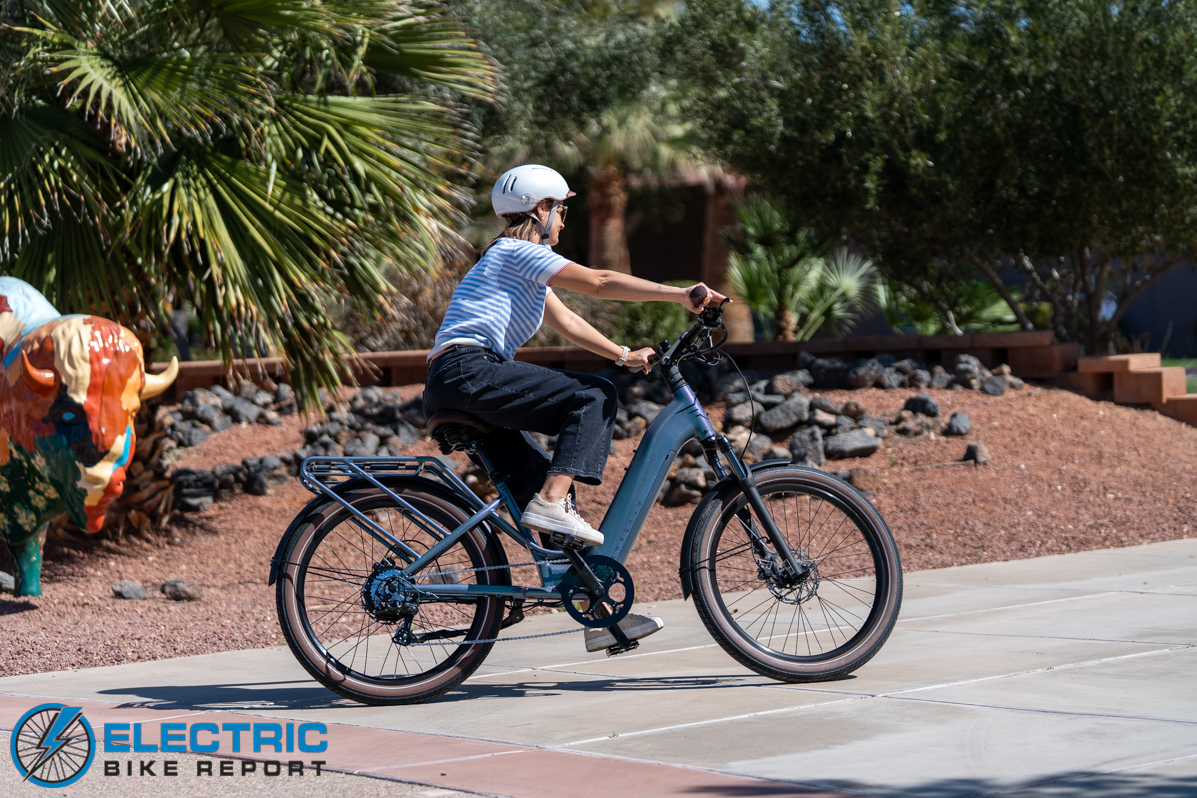
By default, the bike has a relatively sporty forward lean, but its riding position can be adjusted to be more upright.
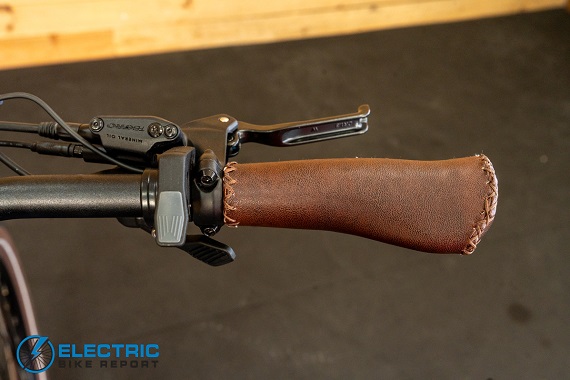
A thumb-operated throttle lever sits on the right handlebar near the shifter.
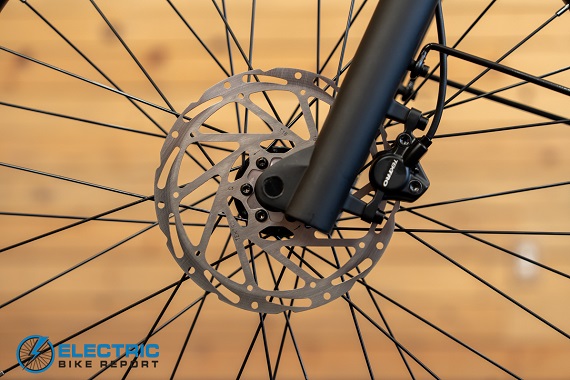
The Wave’s Tektro hydraulic brake system includes 180mm front and rear rotors.
Magnum Wave Review: Brake Test
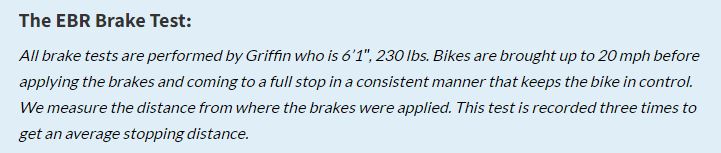
The Magnum Wave proved very capable of safe, rapid braking when we tested it using the method above. Our three test results averaged to a stopping distance of 19’7” — over a foot and a half shorter than the 21’3” cruiser category average.
Once again, reasons for the Wave’s success are not obvious; the bike is somewhat heavier than average but uses a familiar hydraulic brake system (Tektro’s HD-E3520) that is common among similar models we’ve tested previously. Based on its weight, we would expect slower-than-average braking, but the bike proved more capable than anticipated.
Part of the bike’s impressive braking performance may be related to its geometry and riding position. While this is speculation, it makes some sense to me that with 26-inch wheels, a slackened seat tube, and a naturally more forward-leaning riding position than many cruisers, less weight would be transferred to the front wheel when applying the brakes. If this is accurate, the rear brake would share more in contributing stopping force.
Regardless, in my experience, braking felt strong, confidence-inspiring, and safe. As expected, the system modulated speed well when riding downhill and provided rapid deceleration with steady pressure on the levers. As a result, the Wave earned our stamp of approval in this test.
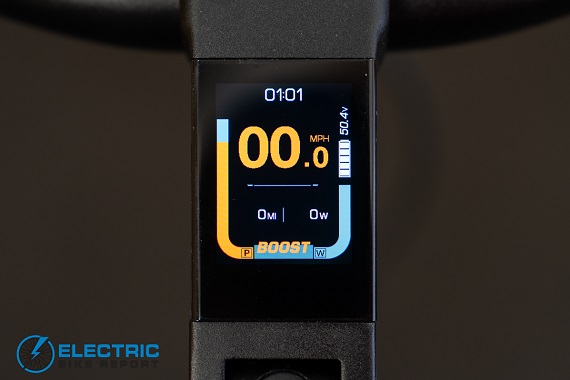
The stem-integrated Velofox display is clean, color-coded, and well-organized.
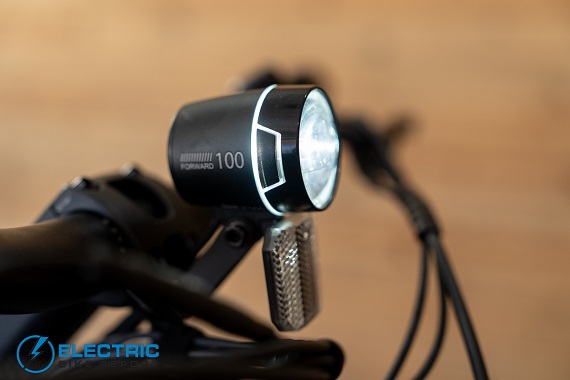
An integrated LED headlight adds visibility in low light conditions.
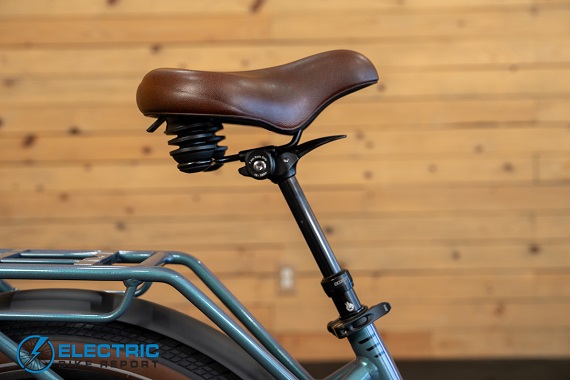
The included spring saddle is comfy, accommodating, and matches the grips.
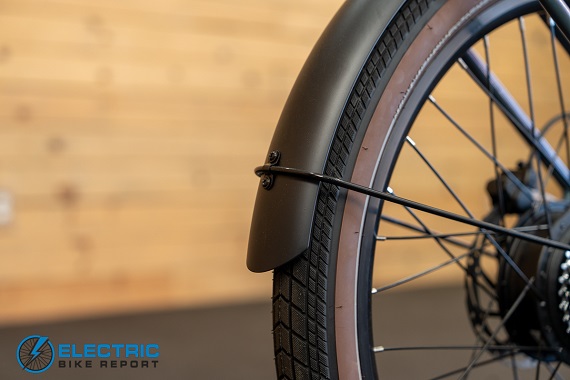
Both wheels have full-coverage fenders to keep clothes clean on wet roads.
Magnum Wave Review: Ride Quality
A bike’s ride quality is a summary of how it feels to ride and operate. Ride quality takes into account many factors, including its style, geometry, comfort, user interface, motor responsiveness, and more. Overall, I found the Magnum Wave easy to ride and use, though there are a handful of considerations prospective buyers should keep in mind.
I found the bike well-sized and generally comfortable for my height and weight (5’11” and 210 lbs, respectively). Magnum advertises that the Wave’s single-size frame fits riders as low as 4’10”, and our contact confirmed that the top end sits around 6’2”, depending on the rider’s inseam measurement.
The bike offers a fair amount of adjustability, with 7 inches of adjustment in saddle height and an adjustable stem for handlebar height, reach, and riding position changes. Buyers considering the bike should be aware that the riding position may be naturally more forward-leaning than expected for the Wave’s style, though this is somewhat flexible.
I found a generally comfortable fit with the handlebars raised almost to their full height, which brought my posture to a more upright position. I enjoyed the ergonomic, strain-free nature of the pedal-forward geometry. I couldn’t help but feel somewhat C-shaped upon first riding the bike, but I became much more used to it after a moderately-long test ride.
As I’ve come to expect from many cruiser-style e-bikes, the Wave’s ride was smooth and cushy, thanks to the combination of its suspension fork, spring saddle, and 26×2.4” tires. All three help to reduce the force of impacts and absorb road vibrations, while the tires also aid in riding stability and traction.
Handling felt expectedly relaxed, meaning that the bike generally steers predictably, neither sluggish nor remarkably nimble. It feels appropriate for low-stress commuting, leisure riding, and other situations where users can take their time and appreciate their surroundings.
The Wave does a great job of balancing ease of use and functionality. It comes equipped for regular use, with features like integrated lights and turn signals, fenders, a throttle, and a cargo rack rated for 55 lbs. It also includes a sleek stem-integrated full-color display, though this could be somewhat difficult to see.
As a side effect of the bike’s geometry and riding position, riders who want an upright, comfort-centered posture will likely need to angle the stem to a near-vertical orientation. Doing so places the display at a low, potentially downward-facing position; an adjustable, handlebar-mounted screen would likely be a more user-friendly solution.
Otherwise, I appreciated the Wave’s handful of impactful customization options, which were accessed through the display’s settings menu. In addition to basic system and screen options, riders can switch between sensor modes with a few button presses or select different Class settings after entering a security code.
One final aspect of the bike that’s worth mentioning is its appearance. Magnum recently adopted a more unified design style with a handful of relatively unique color options that set their bikes apart. We were partial to our test bike’s shifting, chameleon-like Ocean color, but all blend classic and modern aesthetics effectively.
Overall, the Wave is a comfortable, approachable e-bike with an appealing design, useful features, and a charming feel. Like all e-bikes, it has some areas with room for improvement, but it generally succeeds at what it sets out to be—a relaxed cruiser that’s user-friendly and fun to ride.
Sponsor
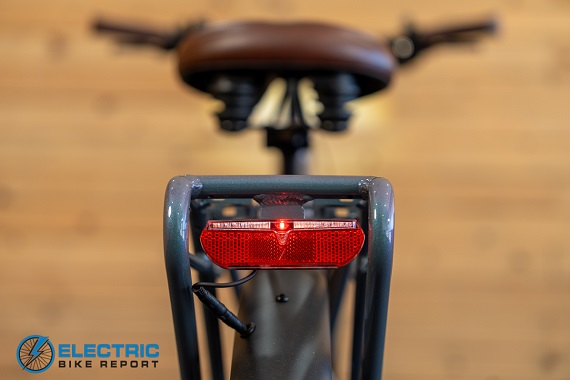
A tail light with braking functionality sits below the cargo rack.
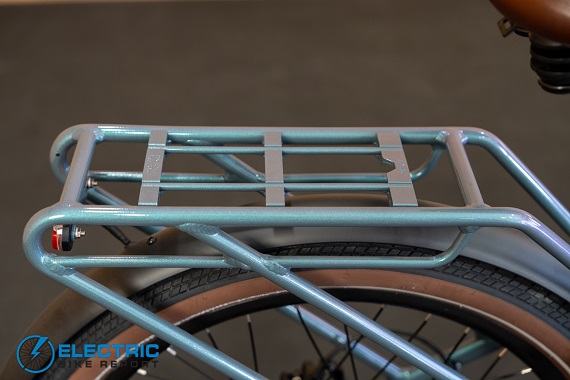
Riders can carry up to 55 lbs on the frame-integrated cargo rack.
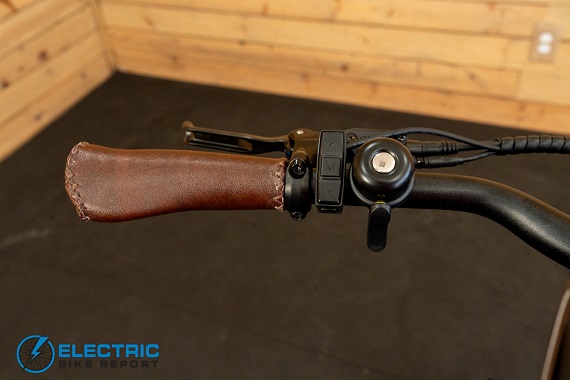
The bell has a compartment for an Apple AirTag (not included).
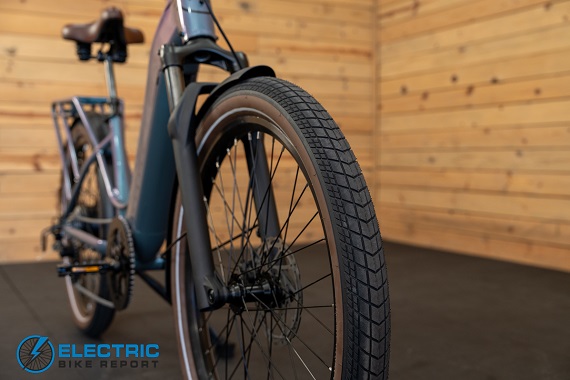
The Wave rolls on 26×2.4” Innova all-weather commuting tires.
Magnum Wave Review: Summary / Where to Buy
At first glance, it may be tough to decide which of Magnum’s e-bikes is right for you. After all, many of their latest models share a similar cruiser-influenced design and appearance, with small—but important—details that change their feel and target audience. The Wave is likely the brand’s most cruiser-feeling cruiser, with a laid-back approach to pedaling.
In our experience, Magnum’s lineup has been consistently solid, and the Wave followed the same pattern. It performed well in all areas of our testing, showing intuitive and well-balanced power levels, excellent max-assist range, strong climbing power, and rapid, safe braking.
Additionally, the bike’s ride felt relaxed, smooth, and controlled, making it well-suited for consumers seeking the benefits and characteristics of a cruiser-style e-bike.
Our largest critique was related to the display, which may be difficult to read for riders who prefer an upright seating position—but likely fine for those comfortable with a sportier forward lean. Additionally, our test bike showed some inconsistencies in programming and speed, which could probably be fixed with a quick software update.
Otherwise, we’d bet that many riders looking for a stylish, approachable, accessible, and well-outfitted yet easy to use e-bike would find the Wave appealing. Its pedal-forward design complements its relaxed vibe, while its customization options and adjustability make it able to be tuned for a variety of riders and riding styles.
If you’re seeking an easy-pedaling but not overpowered cruiser for getting around, enjoying your local scenery, breathing fresher air, and living a more active lifestyle, the Magnum Wave might just be the ticket.
Happy Riding! Make sure to let us know if you have any questions or if you think we left anything out in this review of the Magnum Wave down in our comments section.
Sponsor
Sponsor
Reader Interactions
Leave a Reply