Retrospec Chatham Rev+ 2 Review | This Cruiser E-Bike Keeps It Simple… But Is It Good?
Apr 08, 2026
 0 Comments
 Share
Share
An affordable, approachable retro-styled e-cruiser with an easy ride, solid climbing power, and a comfy, cushioned feel.
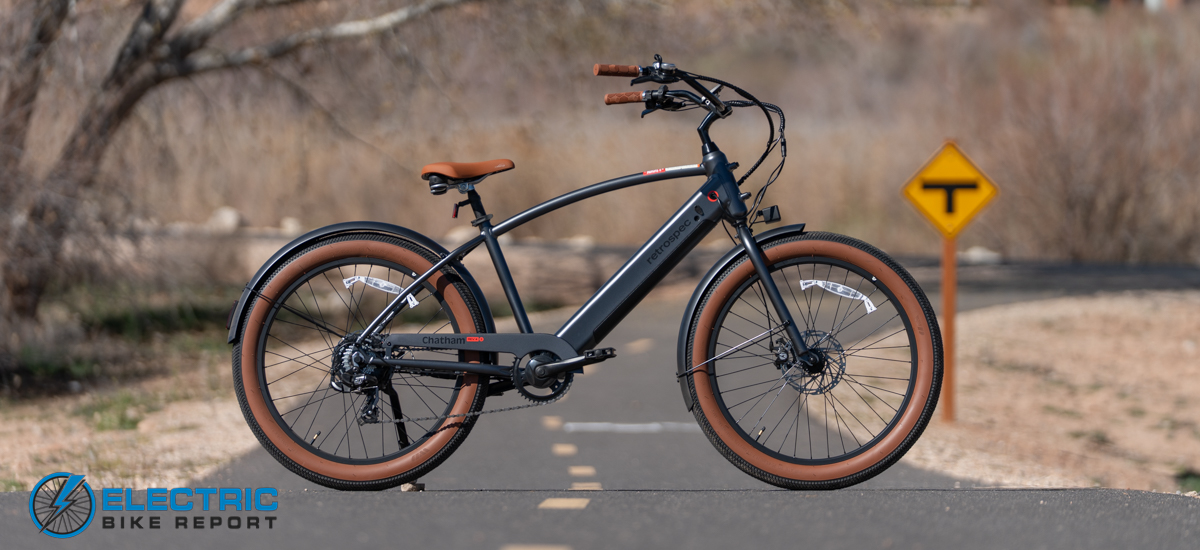
Most e-bikes match their vibe to their appearance. Powerful all-terrain e-bikes are often bulky and aggressive-looking, similar to a Jeep. Speedy commuters are commonly stretched out and streamlined like a sports car. Relaxed cruiser-style e-bikes, on the other hand, are often retro-styled and colorful, reminiscent of a classic convertible.
Depending on the frame style and color, the Retrospec Chatham Rev+ 2 might give you different impressions. The step-thru frame’s mostly-pastel color selection might give you the sense that it’s limited to the calmer, more relaxed side of the aisle, but we found the somewhat sportier style of the high-step model to be more reflective of its potential.
Retrospec equipped the bike with a peppy yet controlled 500W rear-hub motor. Paired with a cadence sensor, the Chatham pedals easily up to preset speed limits—slow and casual on the low end or strong and lively on the high side. Additionally, with 65 Nm of torque, it can make relatively short work of hilly terrain.
Of course, the Chatham can also be just as chill and comfortable as you might expect for a typical cruiser. It features the category’s characteristic upright riding position, along with a supportive but not overly-wide saddle. Its wide, swept-back handlebars feel ergonomic and easy to hold on to, while making steering expectedly relaxed and laid-back.
These were my initial takeaways from my first test ride, but how does the Chatham Rev+ 2’s real-world performance compare to that of similar cruiser-style e-bikes we’ve tested? The full review below covers these details and more!

Sponsor
E-Bike Category:Cruiser
E-Bike Class:Class 1 (pedal assist to 20 mph)
Class 2 (throttle to 20 mph)
Class 2 (throttle to 20 mph)
Sponsor
Retrospec Chatham Rev+ 2 Video Review
 Pros
Pros- The ride is relaxed, fun, and easy, with a cadence-sensing 500W hub motor and a throttle. Moving the bike is as simple as hitting the throttle lever or lightly turning the pedals.
- Cruising feels both stable and cushy, thanks to the Chatham’s 26×3” mid-fat street tires. They keep the bike planted while smoothing cracks, bumps, etc.
- This bike is great for new riders and those who don’t want a lot of complexity. The user interface is easy to learn and speed is simple to manage.
- It’s a solid hill climber, with 65 Nm of torque and an above-average result in our Hill Test.
- The Chatham Rev+ 2 works for riders of all types. Both high step and step-thru frames with multiple adjustment points allow it to fit a wide height range from 5’2” to 6’4”.
- It has some serious style! The two frame types come in six color options and blend classic looks with contemporary sleekness.
 Cons
Cons- Its mechanical brakes and 7-speed drivetrain performed well, but we challenge Retrospec to include higher-tier components in the future for added value.
ELECTRICAL SPECS & FEATURES
- Battery: 500Wh/48VLG 21700 cells; Charge on or off bike, UART BMS
- Charger: 2A, Approximately 5-6hrs Charge Time
- Display: Full Color TFT Center Mounted
- Motor: 48V/500W geared, 770W Peak, 65 Nm Torque
- Headlight: Integrated LED
- Taillights:Integrated LED with Brake Function
- Pedal Assist: 1-4 PAS, Throttle and Walk-Mode
- Claimed Range: 52+ miles
- Throttle:Thumb throttle Left side
- App:None
- UL Certification:UL2849 & UL2271 Certified
Weight & Dimensions
- Claimed weight:
- Tested Weight: 62.8 lbs
- Rider height range: 5’7″-6’4″
- Total payload capacity: 350lbs
Components & Accessories
- Brakes:5 Star Lever with Integrated Bell; Tektro Mechanical Caliper with Tektro Anti-Vibration 180mm Rotors and Semi-Metallic Pads
- Fenders: Full Coverage
- Fork:Rigid steel
- Frame: Aluminum, 6061
- Drivetrain: Shimano Tourney 7 speed, 42T chainring, 14-34T cassette
- Grips: Lock-on Comfort
- Saddle: Selle Royal Gel Saddle
- Handlebar: Alloy cruiser
- Kickstand: Aluminum Chainstay Mounted, 40MM Bolt Pattern
- Pedals: PP Platform with Non-Slip Tread
- Tires: 26×3.0 with Puncture Protection
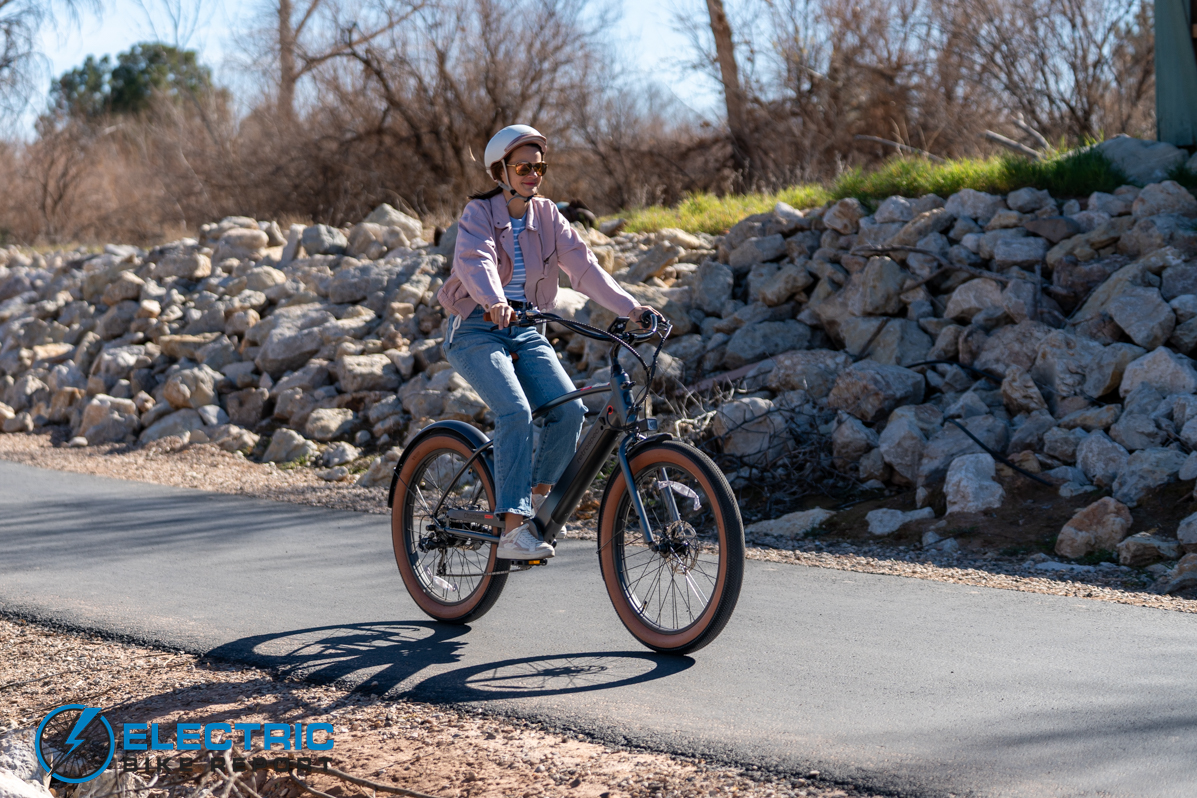
The high-step and step-thru frames have a combined recommended height range of 5’2” to 6’4”.
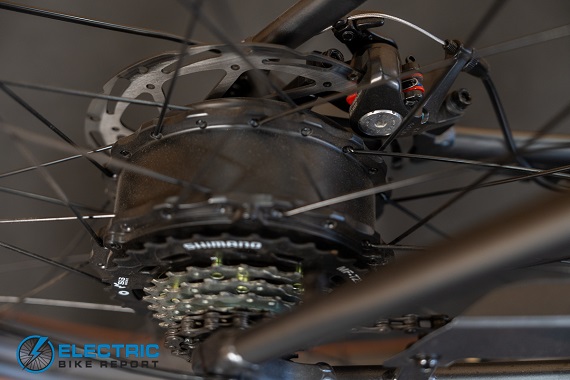
A 500W motor feels controlled and capable, with plenty of power for hills.
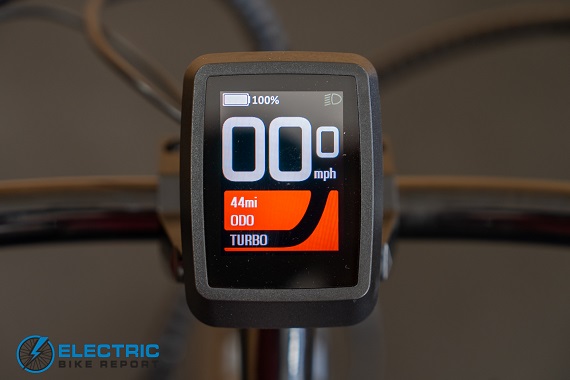
With four pedal assist levels and a color display, the bike is easy to ride and use.
Retrospec Chatham Rev+ 2 Review: Speed Test
In our Speed Test, my goal was to identify the Chatham Rev+ 2’s preset speed limits and discover if it could reach its Class 1 & 2 limit of 20 mph. To test this, I rode the bike on a flat, paved path while recording my average speed.
Starting without power, the bike felt relatively heavy, requiring some effort to get moving. Once rolling, however, maintaining speed on flat ground was comfortable. Climbing uphill with no pedal assistance, however, would likely be tough—an incentive to keep an eye on battery power while riding.
As shown above, the bike’s motor delivered a steady increase in speed and power once I engaged the pedal assist system (PAS). The speed limits of its four assist levels seemed to be 10 mph, 14 mph, 17 mph, and 20 mph, with my average speeds landing just slightly higher as I pedaled.
The light, approachable power of Eco felt well-suited for new riders, while Tour and Sport seemed great for casual, everyday riding. Considering that Turbo reached the 20 mph ceiling strongly and speedily, this mode was best for climbing hills and getting to destinations as quickly as possible.
By default, the throttle reaches maximum speed steadily in each assist level, but an optional mode in the bike’s settings menu allows throttle speed to vary depending on PAS level. When enabled, Eco’s throttle power felt easy and gradual, while Turbo maintained a steady but controlled feel; Tour and Sport fell between these bookends.
Overall, the Chatham Rev+ performed exactly as we hoped for a cruiser-style e-bike with cadence-based pedal assist. Its power distribution is balanced and intuitive, providing granular control over speed. Its optional throttle mode was a bonus, offering multiple acceleration levels for riders of different preferences and experience levels.
Sponsor

Riders can cruise up to 20 mph using either throttle power or pedal assist.
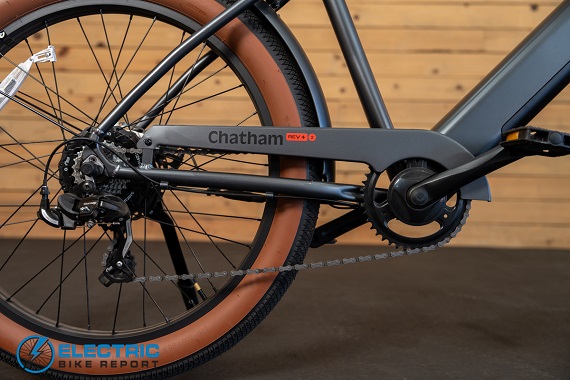
The 7-speed Shimano Tourney drivetrain is covered by a chain guard.
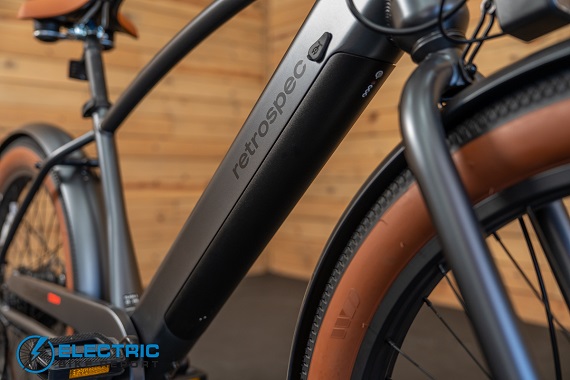
A removable, fully integrated 500 Wh battery looks clean while making charging easy.
Retrospec Chatham Rev+ 2 Review: Range Test
Retrospec’s product page for the Chatham Rev+ 2 advertises up to 52 miles of range, and our testing supported this claim. We used the process explained above to find its real-world minimum and maximum mileage from a single charge; our test riders traveled 24.5 miles in Turbo and 49.1 miles in Eco.
A group of similar, popular e-bikes currently on the market averaged roughly 32 and 65 miles in their testing, placing the Chatham somewhat behind the pack. There are, however, a couple of significant factors influencing its performance in this test that we should explain and explore.
First, Retrospec’s cruiser has a somewhat smaller-than-average battery, and in the realm of e-bikes, size can matter. Our comparison group averaged 638 Wh of battery capacity while the Chatham Rev+ 2 carried just 500 Wh, so it had a smaller “gas tank” to rely on.
Additionally, the Chatham uses a cadence sensor that provides steady power for a relaxed pedaling experience. Many similar models in our comparison group came equipped with more efficient torque sensors that adapt motor output in response to rider effort. These e-bikes stretched the charge of their larger batteries further, but required a more active experience while doing so.
In reality, the Chatham Rev+ 2 performed well, as evidenced by a measure of its energy efficiency. When dividing battery capacity by mileage to find the number of watt-hours used per mile (Wh/mi), the bike lined up closely with similar models. It expended 10.2 and 20.4 Wh/mi in its low- and high-power tests, respectively, while other bikes averaged 10.0 and 20.3 Wh/mi.
While not quite able to cover as much ground as some other e-bikes, the Chatham’s range potential is practical for both daily commuting and short or infrequent leisure riding. Most riders traveling at full speed should expect at least a single round trip per charge, while those riding slower or for short distances might extend the charge further.
When the battery is connected for recharging, the included 2A charger takes just over 5 hours to complete the process.
Sponsor
Sponsor
Retrospec Chatham Rev+ 2 Review: Hill Test
The Chatham Rev+ 2 performed well in our Hill Test, where we compared its throttle and max-PAS climbing power to that of similar e-bikes we’ve tested. Using the method above, our test rider, Justin, recorded a throttle result of 2:07 with an average speed of 14.3 mph. When pedaling in the bike’s highest assist level, he clocked a 1:52 result at 16.2 mph.
Similar models, including many of the best cruiser-style e-bikes, averaged 2:07 on throttle and 2:04 using max assist. This makes the Chatham equal with the average throttle result and a few seconds faster when pedaling.
A bike’s weight, torque output, and peak motor power are some of the biggest factors that affect climbing speed and performance. The Chatham Rev+ 2’s weight and torque are in line with its competitors’ averages. Surprisingly, its peak power output is 77W—significantly below the average of 934W—yet it was able to outperform many of its peers.
It’s worth noting that many of the Chatham’s competitors use torque sensors, which require at least moderate engagement from the rider when pedaling uphill. With a cadence sensor, Retrospec’s cruiser requires less effort and, depending on the hill, may be able to do essentially all of the work to cruise up and over it.
I performed a similar throttle and mas-PAS test at our secondary location, Pilot Hill, which is near to our office. There, the bike’s results made sense in the context of my experience; the throttle felt steady and controlled, while pedaling was easy, relaxed, and noticeably faster.
All in all, our formal test and my personal experience prove that the Chatham Rev+ 2 are well-suited for those living in hilly areas. The bike offers riders the option to throttle or pedal over most hills, with the latter option being a bit faster.
Sponsor

Cruisers like the Chatham Rev+ 2 are meant for casual, comfortable rides.
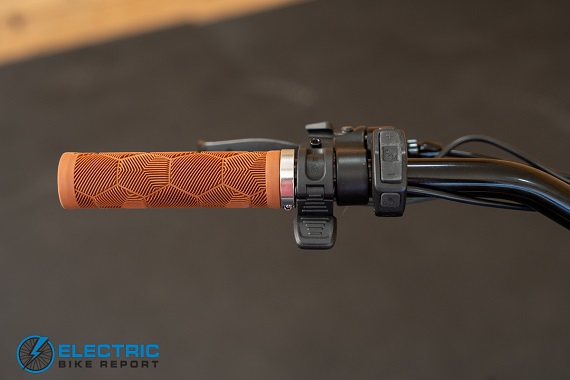
The left handlebar includes lock-on rubber grips, a throttle lever, and a small button pad.
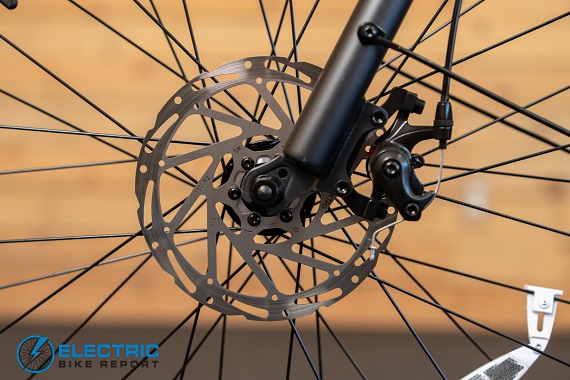
The bike uses Tektro Aries mechanical disc brakes with 180mm rotors.
Retrospec Chatham Rev+ 2 Review: Brake Test
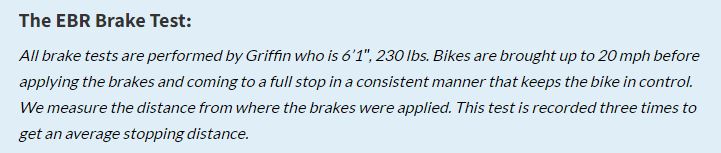
We were impressed with the Chatham Rev+ 2’s braking performance; its average stopping distance, when measured using the method above, was just 19’5”. Similar models averaged 22’0”, over a foot and a half beyond the Chatham’s result.
This result is particularly noteworthy because of the bike’s brake system. In contrast with most similar models we’ve tested previously, the Chatham is equipped with Tektro Aries mechanical disc brakes. While it proved effective, mechanical brakes are typically less powerful than hydraulics, often requiring more time and grip strength to do their job.
Considering that the Chatham’s weight is relatively average among similar models, another factor influencing its test may have been its wider-than-average tires. Other cruisers we’ve tested have often been equipped with 2-2.5” wide tires, so the wider contact patch of the Chatham’s 3” tires could have aided it in slowing down faster.
Personally, I found that the brake system’s feel mirrored its test score. When applying the brakes, stopping the bike did require a moderate level of grip strength, but the system brought me to a stop quickly and forcefully without feeling too aggressive.
Based on its performance, we rate the Chatham Rev+ 2 as properly specced with safe, strong, and capable brakes.
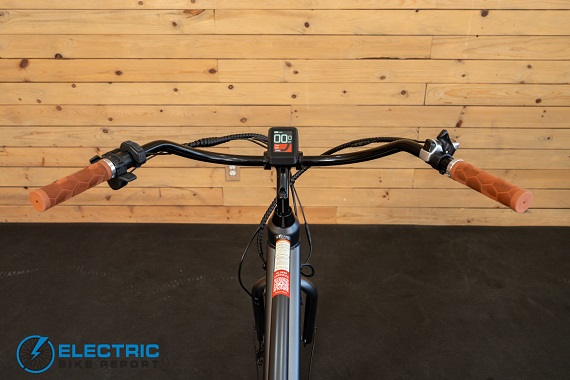
As a cruiser, the Chatham has wide, backswept handlebars for comfort.
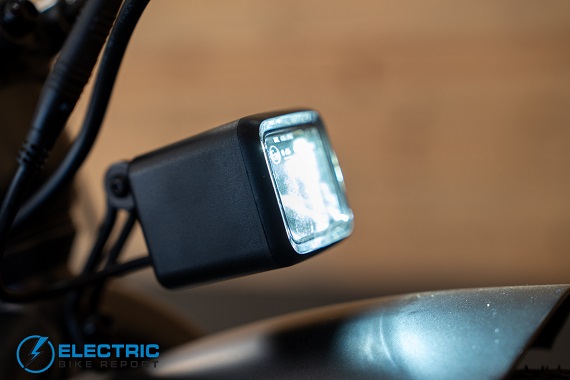
Retrospec included a powered LED headlight to ensure you can see at night.
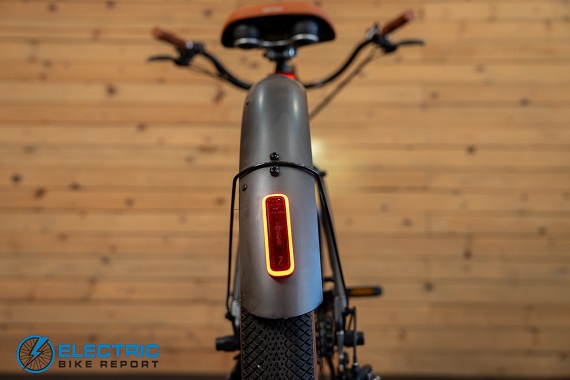
The bike’s tail light functions as a brake light when you squeeze the levers.
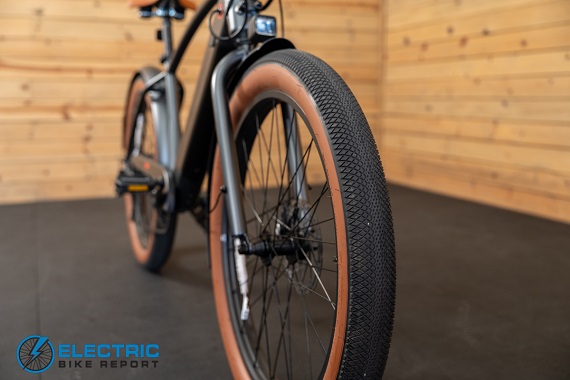
One of the Chatham’s best features is its stable and squishy 26×3” tires.
Retrospec Chatham Rev+ 2 Review: Ride Quality
Walking in (or, I suppose, riding) to the Chatham Rev+ 2, I expected the bike to be relaxed, comfortable, stable, and user-friendly. The bike met and exceeded those expectations, though it is not without some room for improvement. Let’s explore the many factors that influence how the bike feels and functions below.
As I mentioned in the introduction to this review, the Chatham is available in both high-step (HS) and step-thru (ST) frame styles. Both have a single size; the ST fits riders from 5’2” to 6’1”, while the HS—the version we tested—accommodates taller riders between 5’7” and 6’4”.
My height of 5’11” places me firmly within the recommended height range for the HS frame, and I found it generally comfortable. I enjoyed the bike’s upright riding position, and while its handlebars felt somewhat low, this is not unexpected or unusual for the cruiser style. Additionally, the wide, swept-back handlebars and textured rubber grips felt ergonomic and easy to hold on to.
The bike offers multiple adjustment points that allow riders to personalize their fit. The saddle height and forward/backward placement can be adjusted via the seatpost and rails, respectively. The quill-style stem can be raised or lowered to alter handlebar height, and the angle of the bars can also be changed.
The Chatham Rev+ 2’s handling was very characteristic of a cruiser. Steering was predictable, though not too sharp or aggressive. The handlebars and hand placement encouraged relaxed maneuvering that complemented the bike’s overall feel and comfort level.
While there are no suspension elements like a fork or seatpost, the bike’s saddle and tires serve as a sufficient substitute. The gel saddle felt supportive and soft without impeding pedaling, and the 26×3” tires ensured a stable ride while adding an appreciated layer of softness and shock absorption (especially considering the bike’s rigid fork).
I noticed that the Chatham’s motor was quick to engage, supplying pedal assist after only a quarter-turn of the cranks. With four power levels to choose from, it could feel gradual, forceful, or something in between; these settings ranged from matching my expectations for a cruiser to being somewhat livelier than I anticipated. The result was a bike that could feel calm or energized depending on how I wanted to ride.
Retrospec equipped the bike with some useful accessories, including integrated lighting, fenders and a chain guard. Commuters looking to carry a storage bag or a paper sack full of groceries can add either a rear rack or front basket, and the company offers a range of other accessories to outfit the bike further.
The bike is generally specced relatively simply and functionally, but considering the Chatham Rev+ 2’s price point of around $1,500, I challenge Retrospec to include a handful of higher-tier components. Hydraulic brakes and an 8-speed drivetrain would add value—especially since these are common among most e-bikes in this price range.
That critique aside, I believe the Chatham’s simplicity will make it approachable for new riders and those who have not been on a bike in years. I enjoyed the straightforward nature of its user interface; the clean color display is operated by a small control pad, its four assist levels are intuitive. All other controls are relatively common among electric and analog bikes, making the Chatham familiar and easy to grasp.
There’s also the matter of the bike’s appearance. Looks are subjective, but we appreciate the classic-meets-contemporary style of both Chatham Rev+ 2 frame styles. The HS model’s three color options match its slightly edgier styling, while the mostly lighter tones of the ST version feel more vibrant and fun.
All in all, the Chatham Rev+ 2 offers great ride quality—especially for those who value comfort, approachability, and simplicity.
Sponsor
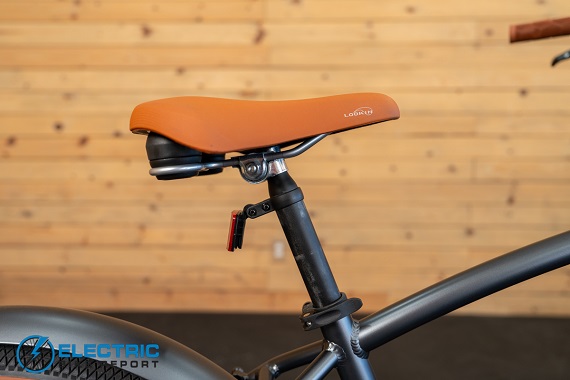
A Selle Royal gel saddle keeps you supported and comfortable without impeding pedaling.
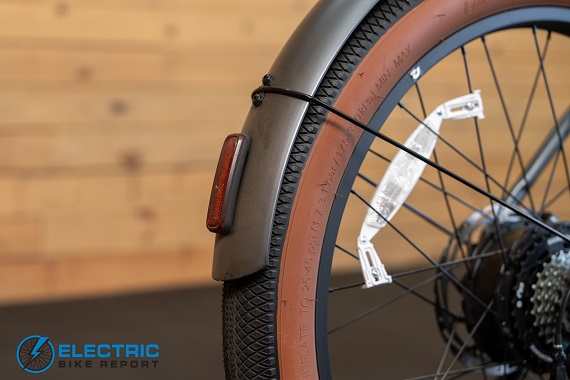
The Chatham Rev+ 2 includes full coverage fenders to keep you dry while riding.
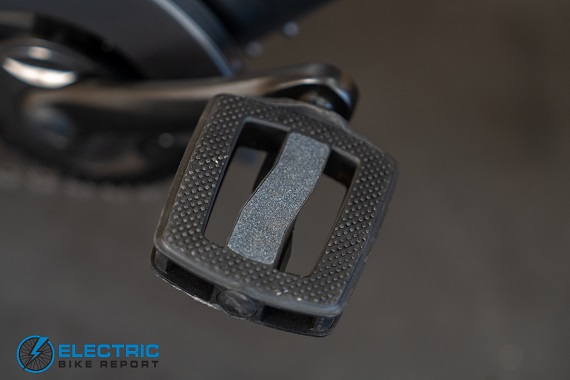
Plastic platform pedals include texture and grip tape to keep your shoes in place.
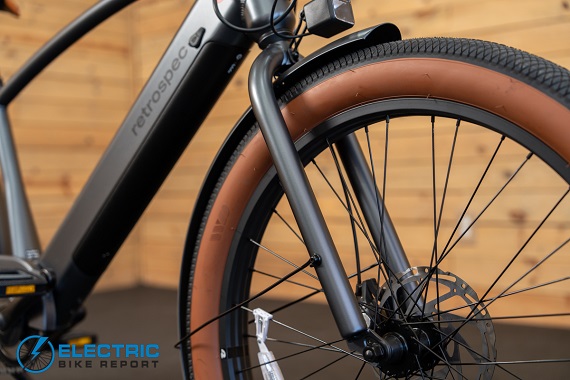
A rigid steel fork ensures that the bike handles predictably.
Retrospec Chatham Rev+ 2 Review: Summary / Where to Buy
Having reviewed the first iteration of the Chatham Rev+ and the more simplified, budget-friendly Chatham Rev 2 previously, I was excited and curious to see the Rev+ 2’s changes. Much of the bike is the same—which proves it had a solid foundation—but upgrades like the color display and simplified pedal assist system stood out.
While the previous version of the bike was one of the punchier cruisers I’ve tested, the Chatham Rev+ 2 toned down its power to some degree. This, combined with its simple feature package and user interface will likely make it more approachable and appealing for aging riders who might not be familiar with e-bikes or those whose last ride was years ago.
Considering its specs, the bike performed well in our testing. It trades some energy efficiency for ease of pedaling, yielding a combination of practical range, intuitive power levels, great climbing power, and effective braking. In fact, it was tough to find a point of critique that didn’t come down to personal preference—though no e-bike is perfect.
Aside from some room for improvement in a handful of its components, the Chatham Rev+ 2 is a solidly-performing and well-put-together e-bike that is well-suited for fans of classic beach cruisers. Riders in hilly areas, those who enjoy easy pedaling, and folks who prefer simplicity to an overabundance of features will appreciate its relaxed and enjoyable approach.
Happy Riding! Make sure to let us know if you have any questions or if you think we left anything out in this review of the Retrospec Chatham Rev+ 2 down in our comments section.
Sponsor
Sponsor
Reader Interactions
Leave a Reply