Ride1Up Vorsa FT Review | The Do-It-All Choice For Fat Tire Riders?
Mar 10, 2026
 0 Comments
 Share
Share
Ride1Up’s versatile Vorsa platform now comes in a fat tire variant. This model is a bit more stable, while still feeling powerful and ready for all-day tasks and fun.
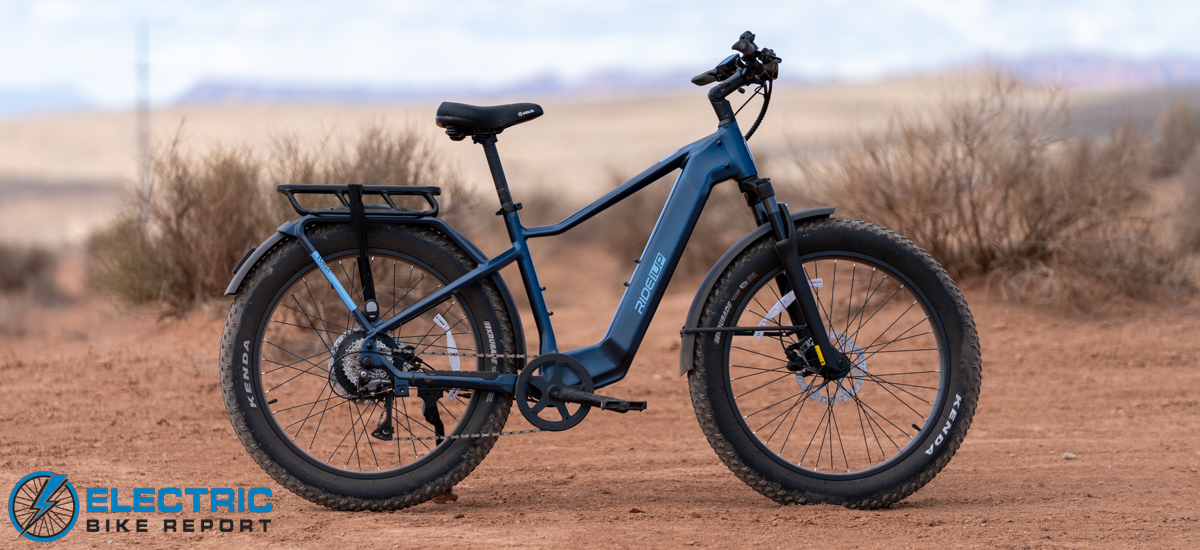
The Vorsa platform is Ride1Up’s do-it-all solution to riding one bike that can do a bit of everything. Commuting, cargo carrying, and lets not forget joyrides. The new Vorsa FT we’ve spent the last several weeks reviewing puts a different spin on that premise, providing riders, the wider fat tires for more stability and traction control for off-roading, if the extra weight and handling differences don’t matter all that much to you.
The Vorsa’s been one of my favorite bikes for a while now, and the Vorsa FT still hits on many of the same high notes: this bike has a powerful motor with a terrific torque sensor which makes me feel both supercharged, yet in-sync with the bike. But it also let’s people swap to a cadence sensor for near-effortless access to power too.
The bike’s component package is solid all around, with nice quality of life inclusions. The display is great, with a lot of customization options, and the ability to connect Apple Find My, the stem lets you switch body positioning from engaged to more relaxed, and the rear rack helps separate this bike from other fat tires with a massive 150 lbs carrying capacity. 180 total if you get the rack extender (with more room for supplies to boot). With that, you can even carry a second passenger.
The fat tire variant here as some advantages over the standard model, namely trading some agility in for better stability, something many people will greatly value. There’s some ways the bike could enhance the settings experience, and the bike would have an even greater value-add with a faster charger, but the experience overall is still one of the better bang-for-your-bucks in the e-bike world from a bike that can accomplish so many tasks, and is a genuine joy to ride.

Sponsor
E-Bike Category:Fat Tire
E-Bike Class:Class 1 (pedal assist to 20 mph)
Class 2 (throttle to 20 mph)
Class 3 (pedal assist to 28 mph)
Class 2 (throttle to 20 mph)
Class 3 (pedal assist to 28 mph)
Sponsor
Ride1Up Vorsa FT Video Review
 Pros
Pros- Great motor experience. Strong top-end power with a higher torque rating than most, plus a genuinely good torque sensor feel. And if you want the easy button, you can swap to cadence mode for near-effortless power.
- Great handling. The bar and adjustable stem make it easy to ride in a relaxed, upright posture or a more engaged stance. Paired with the fat tires, it still feels nicely balanced on-road.
- Highly versatile rear rack. The 150 lb rating is roughly triple what many fat tire e-bikes offer, and there are tons of ways to build it out with accessories like an extender, panniers, child seats, or a buddy seat for an adult passenger.
- Thoughtful braking setup. The larger rear rotor makes it easier to confidently use the rear brake for speed control, especially when the bike is loaded down.
- Sturdy, composed frame. Even at faster downhill speeds, the bike feels planted without excessive vibration.
- iOS GPS tracking. Apple Find My compatibility adds a nice layer of security.
- Solid value. It’s more capable than most by the numbers, costs less than many competitors, and still looks good doing it.
 Cons
Cons- Sensor swapping could be smoother. Switching between torque and cadence is nice, but if you do it often you’ll likely want to re-adjust power settings each time for the best experience.
- Slow charger. The 2-amp charger is slower than the 3-amp units we commonly see on similar bikes. The upside is the bike’s range is strong enough that you won’t need to charge as often..
ELECTRICAL SPECS & FEATURES
- Battery: 15Ah Retention Flamingo with Samsung 50GB cells with Precise CanBus protocol SOC
- Display: Ride1Up vivid color “most customizable” one-touch OLED display with iOS GPS integration
- Motor: 750W Angled-gear AKM hub motor with 95nm of torque
- Controller: 48V 25A water-resistant sine-wave controller
- Headlight: 100 lux front light
- Taillights:Fender-integrated braking light
- Pedal Assist: 5-level PAS, Intui-Drive torque sensor system or R1CBC cadence system
- Claimed Range: 30-60 miles
- Throttle:Thumb lever, modular
- App:N/A
- UL Certification:UL 2271 certified 2849 compliant
Weight & Dimensions
- Claimed weight: 70 lbs
- Tested Weight:
- Rear Rack Weight Capacity: 150lb rated semi-integrated modular rack, can expand to 180lbs with attachments
- Rider height range:
- Total payload capacity: 440 lbs
Components & Accessories
- Brakes:Star Union 2-piston hydraulic brakes 203mm R, 180mm L rotors
- Fenders: Front and rear 2.8″ metal alloy fenders
- Fork:Exsho, 100mm coil spring suspension fork with hydraulic lockout
- Frame: Aluminum, one size XR, 1 size ST, three color options
- Drivetrain: Shimano Acera 8-speed, 42t, 11 – 32t cassette
- Grips: VLG ergonomic silicone grips
- Saddle: Velo Black Iron Bow
- Handlebar: Riser bars; 680mm width; 35mm rise; 31.8mm bar clamp; 15° sweep, 15° rise; 31.8mm bar hidden cable stem
- Kickstand: Included
- Pedals: Plastic
- Tires: 26″ x 4″ Kenda Krusade Fat tires with Thorn Protection
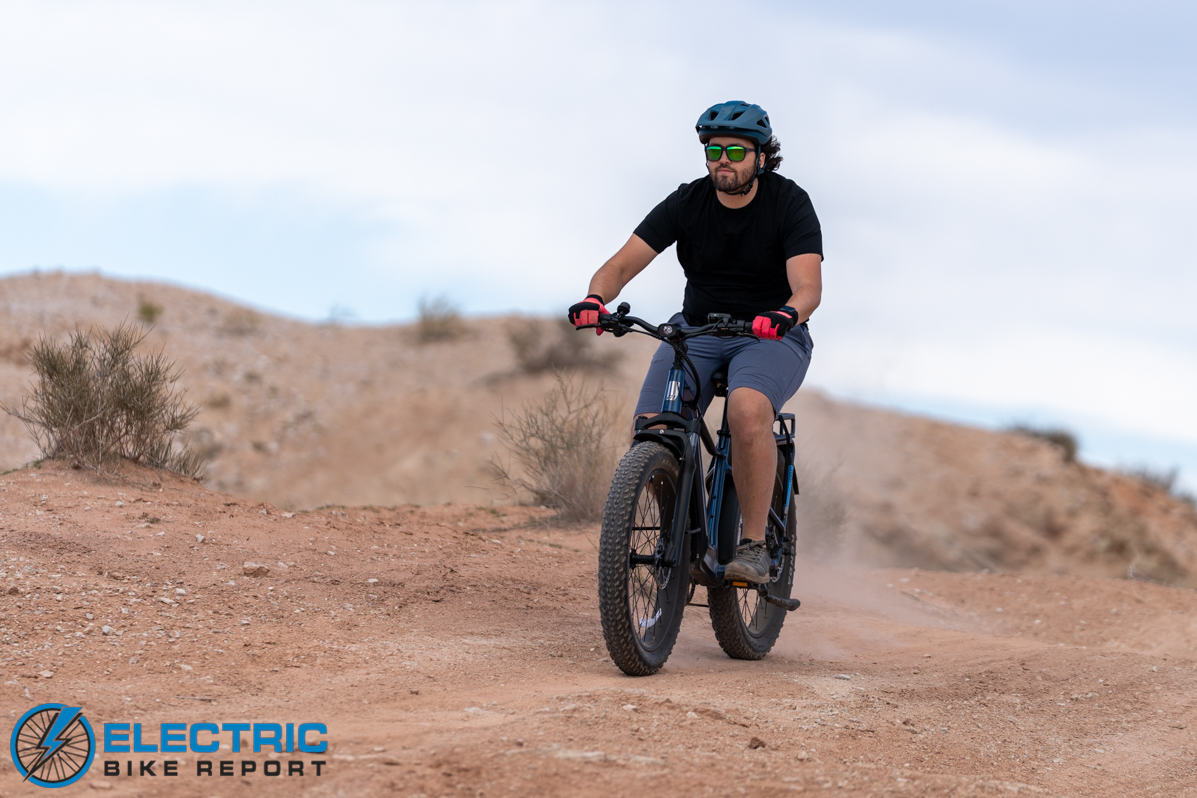
At home ripping around the dirt! The Vorsa FT brings that fat tire versatility.
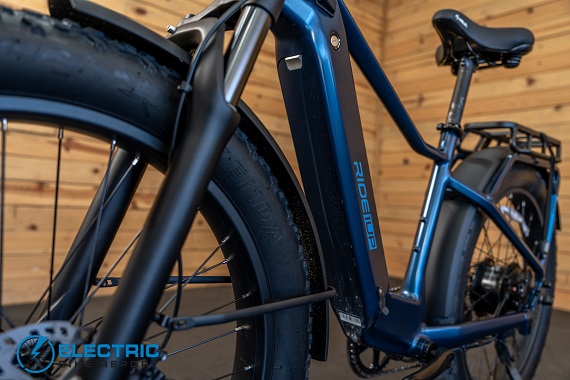
I love that the battery doesn’t overbulk the frame, but still gives the bike ample range.
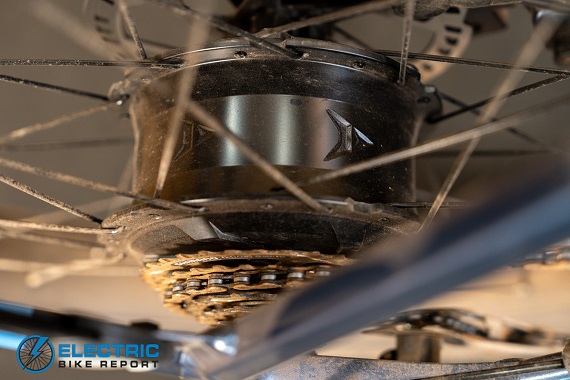
Hub motors: great for speed, throttle use, and kicking it into high gear.
Ride1Up Vorsa FT Review: Speed Test
This bike has no issue hitting some fun speeds. You can see in the chart above how things shake out across Class 2 and Class 3 limits, and with either sensor engaged.
With the Vorsa FT, I ended up liking both sensor options for different reasons. In torque sensor mode, the overall speed profile felt spot on. Power builds naturally, acceleration stays manageable, and you get that “this thing is powerful” feeling without losing the sense that you’re still contributing. The Intui-Drive system is smooth, and it’s one of the nicer torque-sensor/hub-motor pairings I’ve used.
Cadence sensor mode took a bit more work to dial in. Switching from torque to cadence is easy enough, but the bike’s stock amperage and torque settings felt too punchy for cadence riding. Those settings seem optimized around the torque sensor, and they become overkill once cadence is doing the “on/off switch” thing. In the default setup, every mode was basically rushing up to 20 mph.
After some tinkering, I adjusted the settings into 20% increments and ended up with a more usable, predictable cadence experience, especially if you’re the type of rider who prefers cadence full-time.
Overall, the Vorsa FT feels set up for success. It rides really nicely in torque mode out of the box, and with a quick round of optimization, cadence mode can be exactly what you want too. The one change I’d love to see from Ride1Up is the ability to save preset profiles, because if you switch between torque and cadence often, it would be great not to redo your power settings every time.
Sponsor
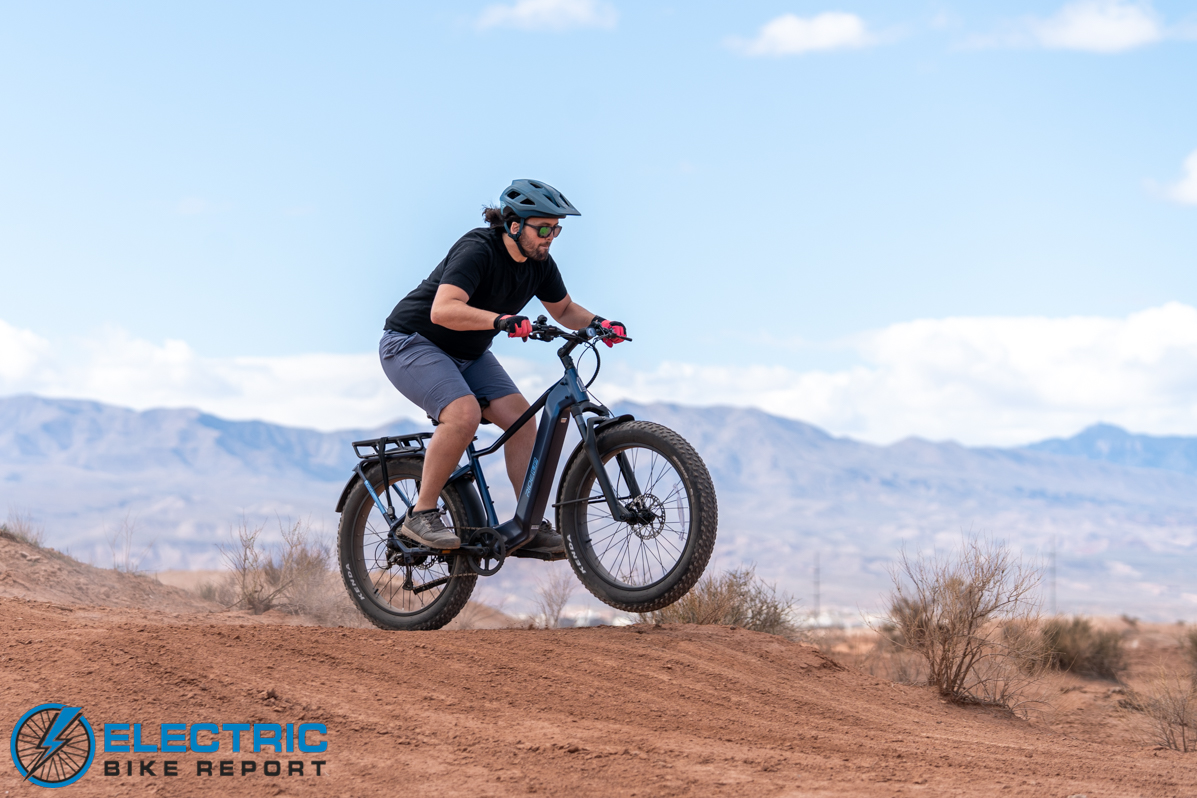
The bike feels stable and composed even at speed. It’s a confident frame for sure.
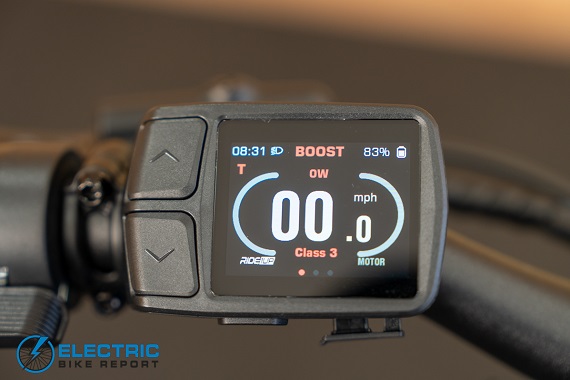
Ride1Up’s best display. Clear and easy to follow, and plenty to customize in the settings.
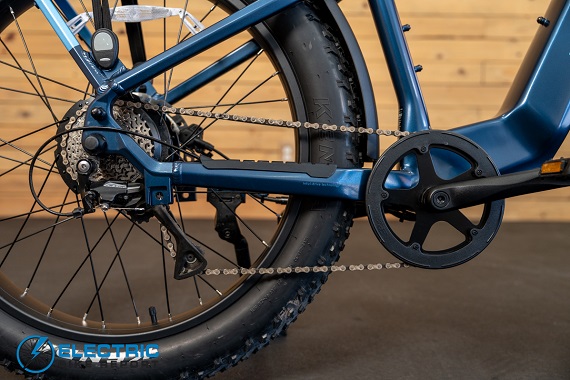
Good gear range from the drivetrain. No troubles pedaling all the way up to class 3 speed limits.
Ride1Up Vorsa FT Review: Range Test
Back when we reviewed the original Vorsa, I geeked out over how it delivered one of the most efficient range test results we’d ever seen. Well, lightning struck twice, because the fat tire sibling turned in a class-leading performance too.
Using the torque sensor and testing at our standard 20 mph max speeds, the Vorsa FT went 39.3 miles on max power and 87.7 miles on min power. Those are substantial numbers for a 720Wh battery. The mileage speaks for itself: that’s enough range to cover the vast majority of riders’ needs for several days, or even a full week of daily riding. It’s even more impressive when you consider it achieved those results on a fairly standard-size battery for this category.
Looking at efficiency, the bike landed at 8.2 Wh/mi on min and 18.3 Wh/mi on max. Both are top-three results within our fat tire category, which helps explain how it managed to stretch that battery as far as it did.
As always, your results will vary depending on factors like rider weight, terrain, wind, tire pressure, and how hard you push the assist. But as a real-world ballpark, this was a spectacular showing, and it puts the Vorsa FT among the rangiest fat tire e-bikes we’ve tested.
The one downside is the 2-amp charger, which feels a bit slow by today’s standards. I can mostly look the other way since the bike goes the distance, but the charging experience is one area Ride1Up could improve in the future.
Sponsor
Sponsor
Ride1Up Vorsa FT Review: Hill Test
The Vorsa FT is built to handle hills. A 750W motor brings plenty of muscle, and it can peak at nearly double that output. Pair that with 95 Nm of torque, and you’ve got a setup that can flatten most climbs.
On our Devil’s Backbone hill test, the Vorsa FT reached the top in 1:51 on throttle, averaging 16.3 mph. When pedaling (still using the torque sensor), it improved slightly to 1:49 with an average of 16.6 mph.
Those are strong numbers, and they beat the fat tire category average by a few seconds. It’s also worth noting that the bike’s default settings don’t tap into the motor’s full potential, and you can bump the output up if you want more. That’s a helpful option for larger riders, or for anyone making use of the rear rack’s high carrying capacity.
Overall, the Vorsa FT feels smooth and confident on climbs, and it never comes across as strained when the grade kicks up.
Sponsor
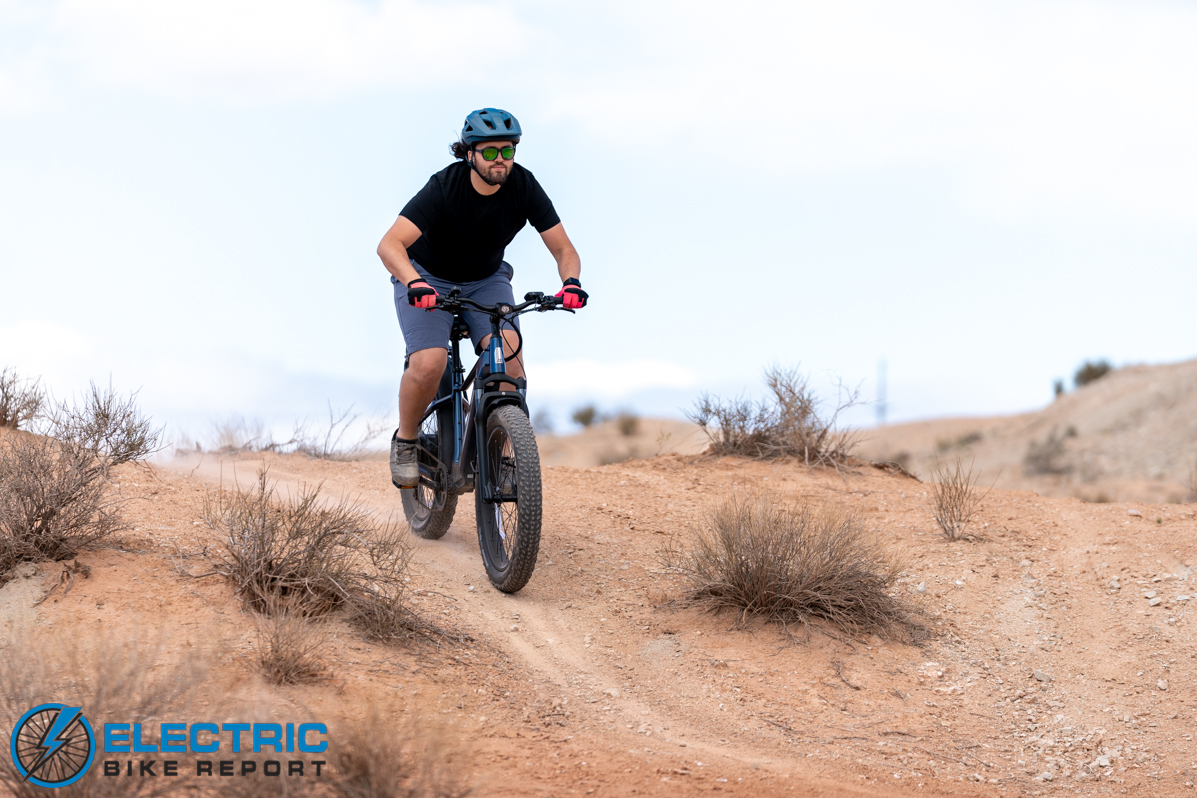
You don’t have to stick to the dirt… but we sure had a lot of fun in it!
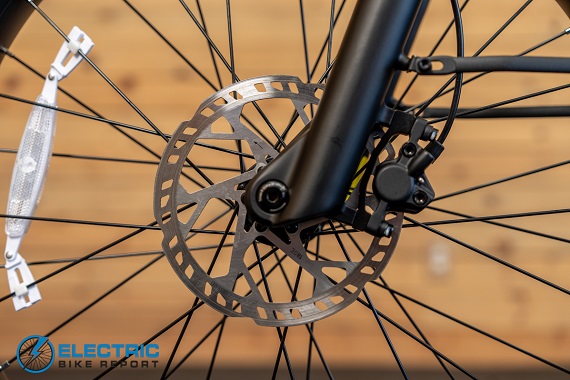
The brakes are reliable stoppers.
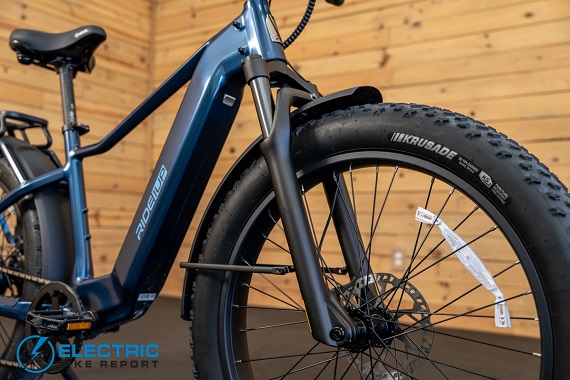
The fork is on the budget end, but it’s all you need for paved riding, and holds its own on some mild terrain.
Ride1Up Vorsa FT Review: Brake Test
The Vorsa FT uses an atypical brake setup, though it’s not unheard of. It comes with Star Union hydraulic brakes paired to a 180mm rotor up front and a 203mm rotor in the rear. Normally, if a bike runs mixed rotor sizes, you’ll see the larger rotor on the front since it handles more braking force. But because Ride1Up leans into the Vorsa platform’s cargo-carrying identity, the bigger rear rotor makes sense. It gives you a little more rear-end braking authority, which can help keep things controlled when you’re loaded up with gear, or carrying a passenger.
In practice, I found the setup works really well. If you’re someone who naturally favors the rear brake, you’ll appreciate the extra bite and control back there. And if you tend to brake “properly” with both, or rely more on the front, there’s still plenty of braking power on tap.
That said, our usual testing routine took a detour here. I’ve been the primary tester for our last 300-ish brake tests, but I had a crash prior to testing and had to call in my colleague John to run this one instead. Since we’ve used my results as a consistent control point for a long time, John’s numbers should be taken with a small grain of salt, simply because riders can differ in how hard and how quickly they apply the brakes.
With John testing, the Vorsa FT stopped in an average of 24’2”. That’s inside our 25-foot minimum benchmark for safe braking, though it’s a couple feet longer than our overall average. For reference, when I tested the original Vorsa, I recorded 22’6”, and I suspect I would have landed closer to that figure again if I’d been able to run the test myself.
Bottom line: I think the brakes are safe and effective. And I also think the rear-heavy rotor choice is a thoughtful detail for a bike that’s clearly meant to be ridden with weight on the rack, and for riders who want a little extra rear brake control to keep cargo in check.
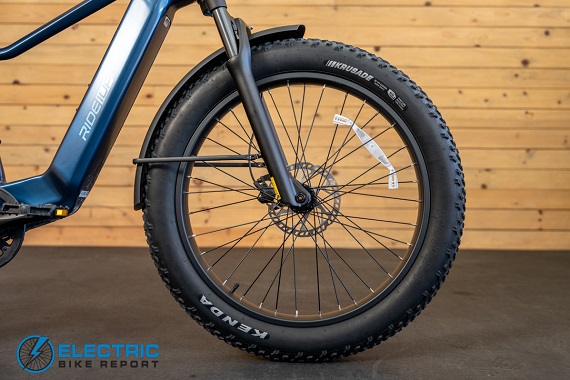
Kenda Krusade tires roll well, have enough tread for an easier time in loose dirt, and have solid puncture protection.
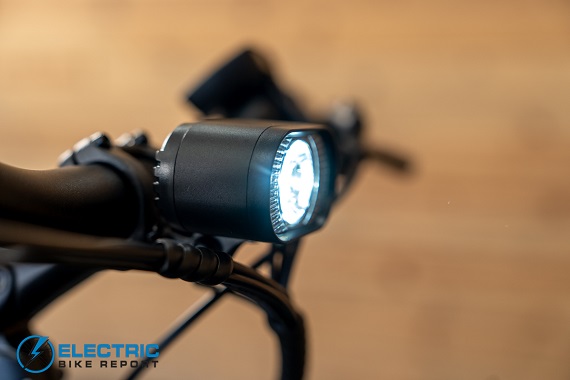
Included headlights for extra visibility is always a win.
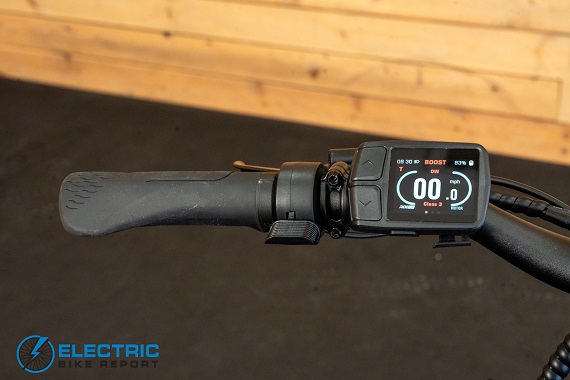
Throttle on the left for when your legs would like a break.
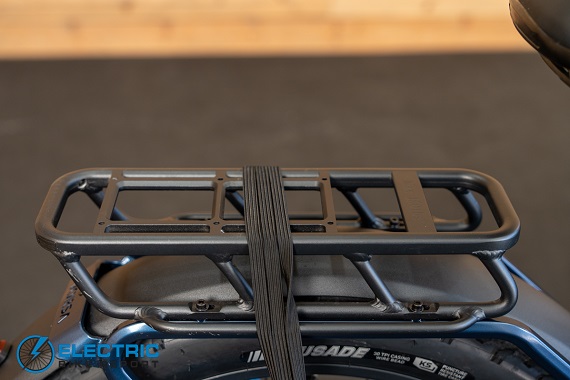
The high capacity racks is one of the Vorsa FT’s standout features. 150 lbs is a lot of cargo hauling capability!
Ride1Up Vorsa FT Review: Ride Quality
Fat tire e-bikes are praised for their versatility, and the Vorsa FT is no different. It does a lot really well, but it also brings a few tricks that most other fat tires simply don’t match.
Let’s start with the handling, which I thought was genuinely nice. The adjustable stem helps you dial in fit for different builds and preferences. You can run a more forward-leaning, engaged position (great for off-road exploring and quicker commutes), or bring it up into a more upright, relaxed posture for casual cruising. The 680mm handlebar adds to that comfort-first feel with some rise and sweep. Overall, it’s comfortable by default, but you can still lean into a sportier stance when you want.
The Kenda fat tires are a big part of the ride quality. You can drop pressure on pavement to soften the ride, or run them a bit lower for extra grip over hardpack dirt. The tread has enough bite to feel confident off-road, and it’ll dig into looser surfaces like dirt and sand better than the average tire.
Up front, the Exsho spring fork sits on the budget end of the spectrum, but it does its job. It smooths out chatter on paved roads and makes light off-road riding more enjoyable than a rigid setup. That said, it’ll be the limiting factor if you’re aiming for anything particularly rough or rugged.
The frame feels sturdy beneath you. The bike is on the heavier side, but fat tire e-bikes rarely imply “lightweight,” and in this case the weight translates into a ride that feels solid and composed when speeds climb. Even barreling downhill at nearly 35 mph, it didn’t feel overly twitchy or excessively buzzy. It just feels planted.
The rear rack is one of the Vorsa FT’s defining features. Plenty of racks are rated for 50 lbs, but this one is rated for a whopping 150 lbs. There’s also an optional rack extender that increases usable length and boosts capacity to 180 lbs. With a couple well-chosen accessories, the Vorsa FT can turn into a legitimate cargo machine, and that kind of versatility fits the whole “jack-of-all-trades” mission.
And with the smaller wheel diameter and extra width, you could argue it’s even easier to carry cargo on this model than the standard Vorsa.
I also like the included accessories: a headlight for visibility, fenders to keep you dry, and an integrated tail light built into the rear fender. Even little touches like the slap guard don’t go unnoticed. The small stuff adds up.
The display is another standout. It’s a brighter color screen, the settings menu is extensive, and there’s a lot you can customize to make the ride behave the way you want. You can even pair it with Apple Find My for a bit of added security.
Sponsor
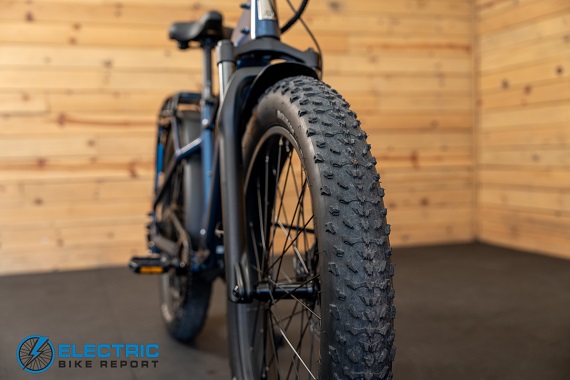
They’re more about function, but the knobby tires give the bike a mean (in a good way) look.
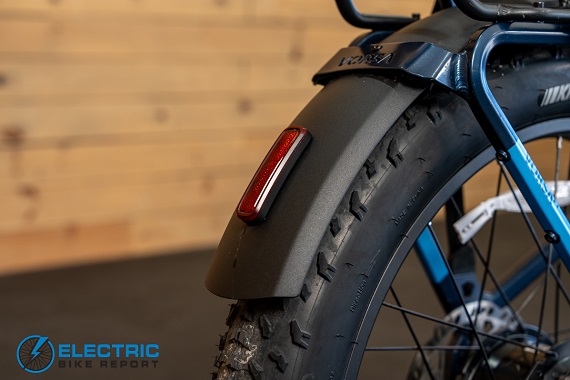
Not only are fenders included, but the rear one manages to get a tallight built in it too.
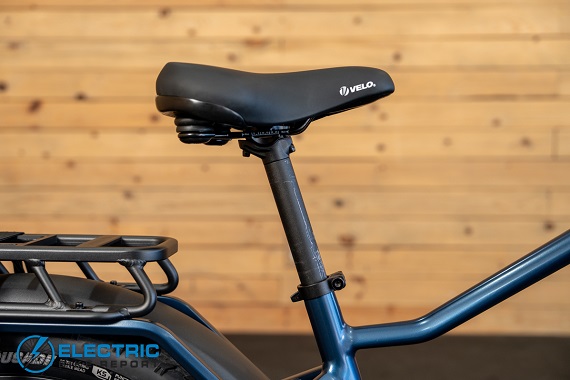
Decent squish in the saddle for some support but plenty of comfort.
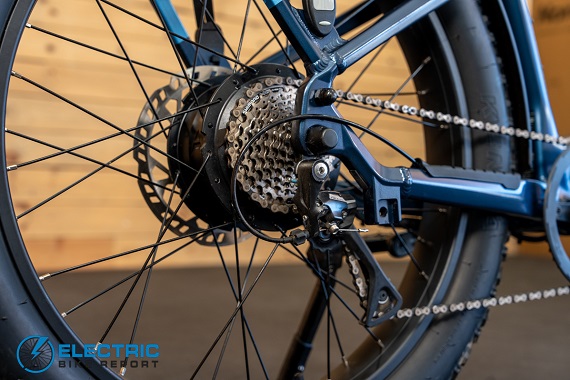
8-gear drivetrain gives you some pedaling options, and the shifting was reliable.
Ride1Up Vorsa FT Review: Summary / Where to Buy
I already considered the Vorsa one of the most versatile and fun e-bike options out there right now, especially for the value. The FT simply adds another layer of choice, so if you like what fat tires bring to the table, you can now get that same Vorsa formula in the Vorsa FT.
In reality, you can feel some differences between the standard model and the FT in a few areas, but the simplified version of “this one has fat tires” is accurate enough. It’s a little easier to balance, certain off-road situations get easier (sand and snow in particular), and you gain some added confidence from the extra footprint. The tradeoff is that it’s a touch heavier and slightly less agile in its handling.
What doesn’t change is the core appeal. The Vorsa FT has loads of power, highly impressive range, and a serious calling card with its rack capabilities. That rear rack makes it feel like a cooler-looking cargo bike, and it gives you the option to haul gear or carry a second passenger more comfortably without feeling like you’re pushing the bike beyond its comfort zone. Honestly, I think the wider tires and smaller wheel diameter may even make it a little better suited to hauling than the regular Vorsa.
Bottom line: the Vorsa FT keeps the same terrific value, sharp look, and well-rounded performance that made the Vorsa such a standout. If you want a fat tire e-bike that can handle a little bit of everything, it’s a compelling option among the fellow fatties.
Happy Riding! Make sure to let us know if you have any questions or if you think we left anything out in this review of the Ride1Up Vorsa FT down in our comments section.
Sponsor
Sponsor
Reader Interactions
Leave a Reply