Biomega BER Review | Sleek Simplicity
Feb 26, 2026
 0 Comments
 Share
Share
Biomega set out to craft art on two wheels and bring a refined Scandinavian design to the States. The lightweight BER shows you can enjoy form and function.
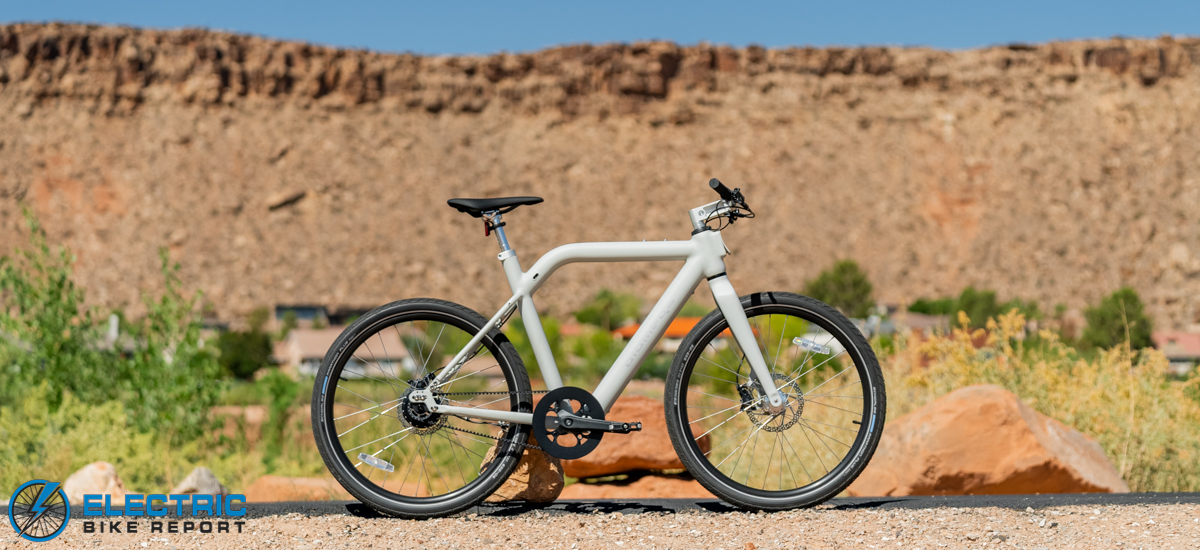
Bicycles have existed in one form or another for more than two centuries, and in that time, manufacturers have refined frame shapes that both ride well and withstand the rigors of the road. The classic front and rear triangles can be dressed up in countless ways, or dressed down into something minimal without ever feeling plain.
The Biomega BER fits the latter description: familiar yet distinct. “Simple, timeless, and elegant” are three words Biomega used at one point to define the BER on its product page, and there’s validity to that. It’s as clean as glass after rain. But how does it ride?
Biomega equipped the BER with a lightweight motor-and-battery combo that keeps the overall weight low and the handling crisp. The ride quality is excellent, and it’s so light and seamless in its construction that I initially mistook it for carbon. The aluminum frame and fork feel balanced and responsive, whether you’re taking tight turns or cruising on a leisurely joyride.
The Hyena drive unit adds just the right level of support, helping you reach speed and climb hills that would be a challenge on most single-speed setups. It doesn’t rocket you forward, but it certainly kicks on nicely for such a compact system, and engages easily with a light touch required of its torque sensor.
Premium touches like the Gates carbon belt drive and Shimano Deore brakes elevate the BER further. The belt drive is a highly desirable feature on city commuters for its low maintenance, while the brakes have excellent control and confidence.
Safety and style intersect in the lighting department. A handlebar-integrated headlight complements the bike’s sleek lines, while five miniature LEDs in the seatpost bring visibility to the sides and rear.
Most of the BER’s shortcomings are minor. The type of stuff that’s less of an outright miss and more of a calculated tradeoff. In the grand scheme, they’re easy to forgive given how well Biomega balanced form and function.
I’ve tested plenty of design-award-winning bikes that looked great but rode poorly. These have left me with hesitance when I see marketing touting design so heavily up front. Yet, after several weeks with the BER, it’s changed my skepticism to optimism: thoughtful design and good ride quality can indeed coexist.
For all the Biomega BER’s details, see the full review below.
***Note: our test model was a preproduction unit. Some aesthetic changes will be made to the final units to accommodate more internally routed cables, and possibly other small tweaks.

Sponsor
E-Bike Category:City / Commuter
E-Bike Class:Class 1
Sponsor
Biomega BER Video Review
 Pros
Pros- Striking design. The BER is all about understated style, with a unique frame and thoughtful details that add up. It turns heads without resorting to flashiness.
- Lightweight aluminum build. Coming in under 40 lbs, it feels agile and responsive on the road, plus it’s easy to lift or carry when needed.
- Clean belt drive system. We’re always fans of belt drives on single-speeds for their low maintenance, quiet operation, and long-term reliability.
- Deft handling. The combination of a shorter wheelbase, and narrow handlebars gives the BER a lively, quick-handling character that suits city riding perfectly.
- Capable motor setup. The Hyena drive unit feels peppy and supportive on flats, and it climbs better than you’d expect from such a compact motor.
- Unique lighting design. The handlebar-integrated headlight and seatpost-embedded rear LEDs add both style and safety without cluttering the bike’s clean look.
- Great braking performance. Shimano Deore hydraulic brakes are great choice. They’re powerful, smooth, and a clear step above what most city e-bikes include.
 Cons
Cons- Our pre-production model’s charge port cover felt flimsy, but Biomega’s final production model design will address this issue with a sturdier cover design.
- Single-speed tradeoff. The gearing makes hills more manageable but requires a faster cadence to hit and hold 20 mph top speeds on flats.
ELECTRICAL SPECS & FEATURES
- Battery: 36V, 7AH, 250Wh
- Charger: 2 amp output
- Display: N/A
- Motor: Hyena MRC-E250 rear motor, 36v, 250W (425W peak), 40Nm torque
- Headlight: Integrated into handlebars, 150 lumen
- Taillights:Seatpost integrated five-LED (top two protrude for side view, bottom three are flush for seat height adjustments)
- Pedal Assist: Hyena ST-SQ-1 Torque Sensor, 3-level assist
- Claimed Range: 18-31 miles
- Throttle:No
- App:Hyena (HRA)
- UL Certification:UL 2849 & 2271 certified
Weight & Dimensions
- Claimed weight: 37.5 lbs
- Tested Weight: 39.8 lbs
- Rider height range: 5’6-6’4
- Total payload capacity: 270 lbs
Components & Accessories
- Brakes:Shimano Deore, 2-piston hydraulic, 180F/160R
- Fenders: Mount locations, fenders not included
- Fork:Aluminum
- Frame: Aluminum, two sizes, four colors (Dragon Black, Aspen White, Pan Gray, Marc Orange)
- Drivetrain: Gates Single Speed Carbon Drive, 55t-22t
- Grips: Rubber
- Saddle: Velo Saddle
- Handlebar: 640mm alloy
- Kickstand: sold seperately
- Pedals: Platform
- Tires: Schwalbe Marathon Plus 26” X 2”
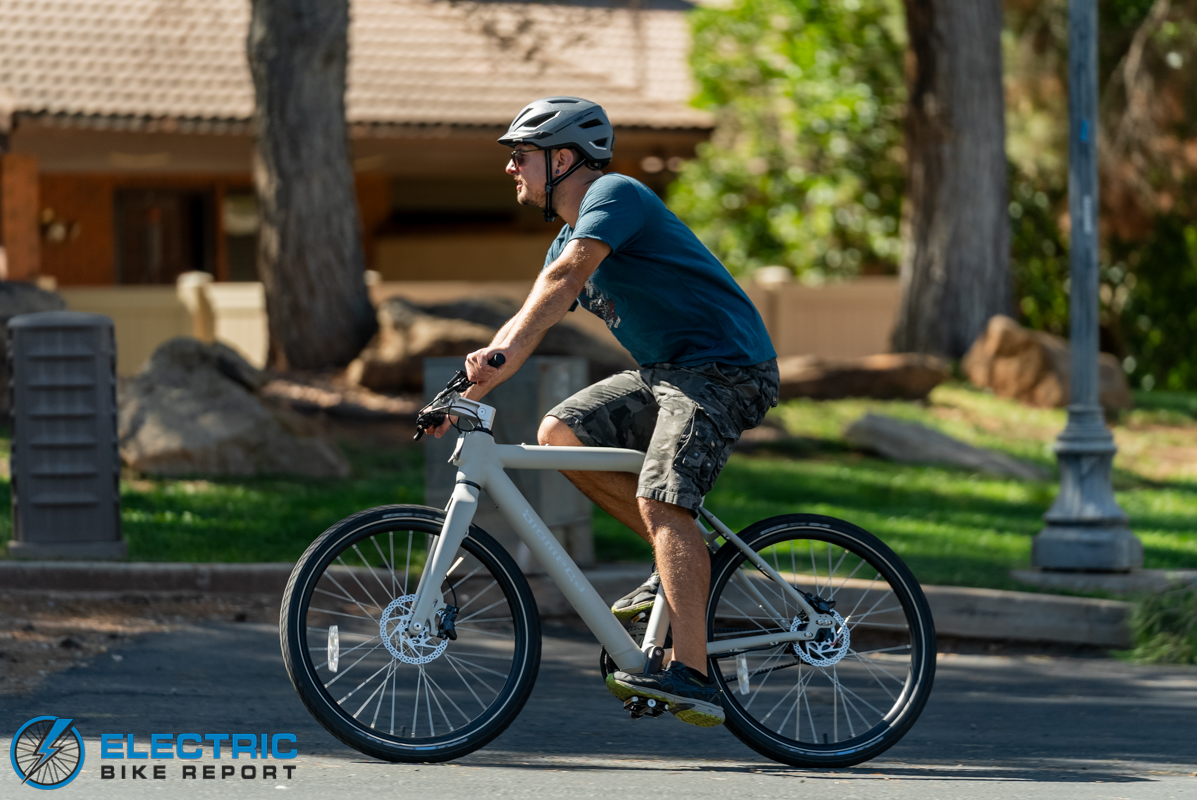
The BER gets it’s name as a nod to the city Berlin.
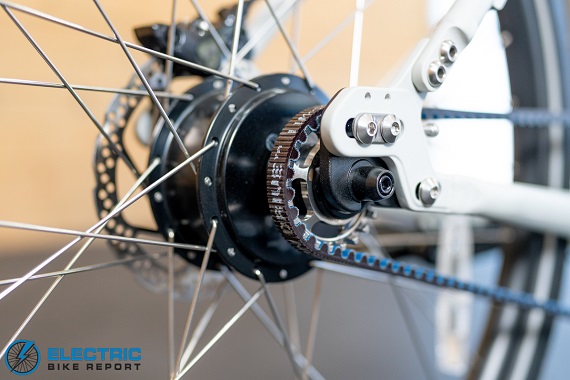
The Hyena motor is a diminutive size, but it’s always punched above its weight class.
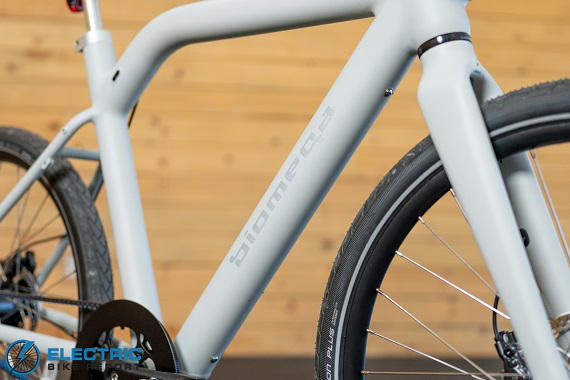
You’d hardly know there is a battery in the downtube, but sure enough, it’s in there.
Biomega BER Review: Speed Test
The Hyena drive unit Biomega uses on the BER looks modest on paper as a 250W hub motor with 40Nm torque, but it’s a fitting match for a bike this light (39.8 lbs in our testing). A small punch of power goes a long way here. The motor feels peppy enough to get up to speed smoothly, and the torque sensor responds with a mild bite through the belt, though not without a few limitations.
- No motor: 10.3
- Eco: 11.9
- Tour: 16.1
- Sport: 18.7
While the motor doesn’t seem to have hard speed caps, those figures represent the realistic averages before the rider’s effort begins to outweigh the assist.
The caveat comes in Sport mode. Although the BER technically reached above 19 mph for me, it took noticeable effort. At a comfortable, average cadence, I was closer to 18.5 mph, and it took some quick pedaling to trigger enough torque-sensor response to go faster.
Balancing a single gear for both speed on flats and hill-climbing power is a tough equation for any torque-sensor system. Not easily reaching the Class 1 top speed of 20 mph is a common tradeoff on single-speed belt drives without an internal gear hub. Would a larger front belt ring have helped it spin faster? Likely, yes, but that would then come at the expense of the BER’s better-than-expected climbing ability (more on that later). Overall, it’s a reasonable compromise, and Gates belts are beloved for good reason so I wouldn’t change a thing.
I like how quiet the ride is. You can hear a slight hum fo the motor, but it fades into the background. The torque sensor is one of the more sensitive units I’ve tried, it doesn’t kick on too strongly, but with just a little bite in the drivetrain the motor will eagerly go where some require a bit more force. That’s eye of the beholder for good or needing improvement, though.
One design choice I especially appreciated was the tire setup. The Schwalbe Marathon Plus tires, sized 26” x 2”, offer slightly lower ground clearance that improves balance, while the 2-inch width adds welcome cushion to smooth out rougher city pavement. Biomega could have easily gone with narrower 700x40c or 45c tires like many urban bikes, but the added girth gives the BER a subtly softer, more planted ride.
Sponsor
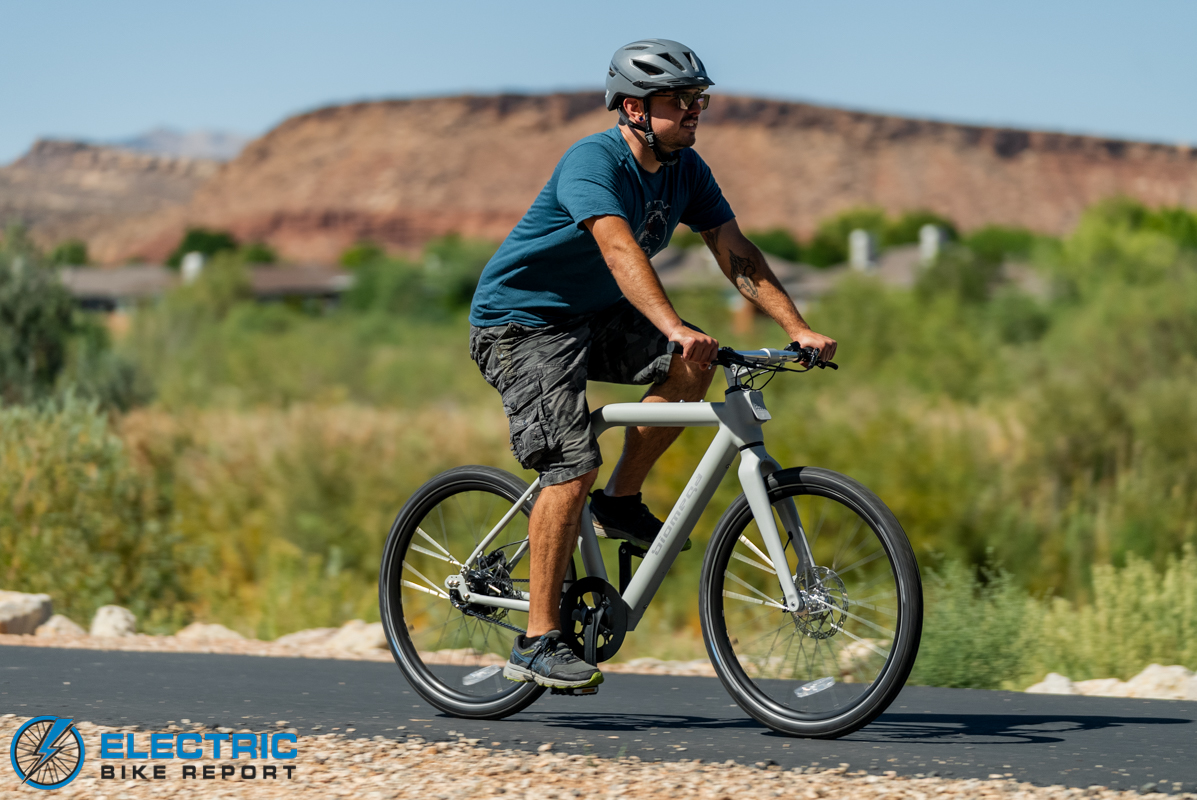
The BER is a smooth ride with lively handling. It holds speed well, and is fun in the corners.
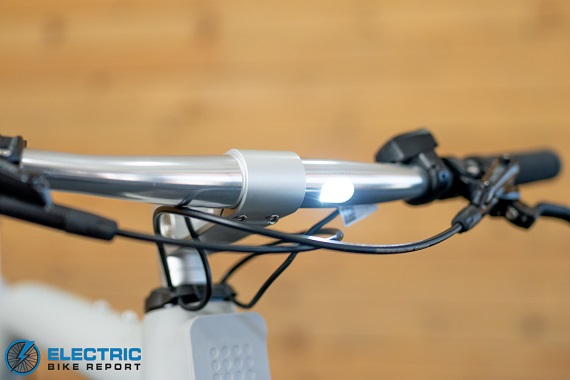
This is one of my favorite touches with the headlight embedded in the handlebar. The cables can obstruct it, though.
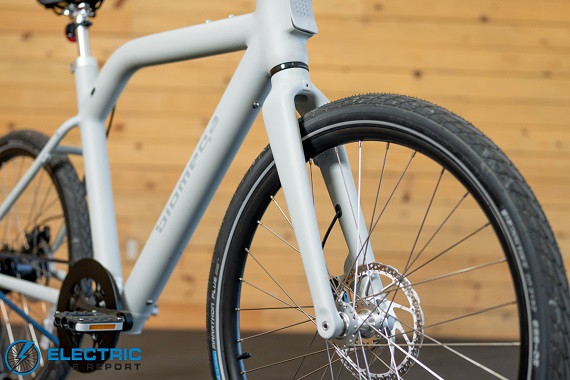
The thru-axle helps with the handling as does the fully rigid fork.
Biomega BER Review: Range Test
A 250Wh battery is certainly on the smaller side, but that’s part of how the BER achieves such a low overall weight. It’s not necessarily a drawback either as a 250W motor keeps power demands in check, giving us a solid 1:1 ratio of watt-hours to motor watts.
Our range test results showed the bike is capable in shorter to medium commute environments:
- Eco power: 31.4 miles
- Sport power: 20.4 miles
Those numbers aren’t breaking any distance records, but they are hitting efficiency ones. At 8Wh/mi in Eco and 12.4Wh/mi in Sport, the BER squeezes more from its small battery than most bikes in our database. For context, our all-bike averages sit at 11.8Wh/mi and 21.8Wh/mi, and even compared to its city-bike peers (8.3 / 14.9Wh/mi), the BER comes out ahead. It’s making every watt-hour count.
A big part of that comes from some smart programming tweaks. Full disclosure: we worked with Biomega to recommend dialing Eco assistance down quite a bit, as the original power levels were too high to maximize mileage. The updated tune still gives meaningful assistance but stretches the distance much more effectively.
Two additional things work in the rider’s favor here: system tuning and range-extender options.
With Hyena’s HRA app, you can fine-tune the motor output at all three assist levels. If you want to ride conservatively and stretch your range, you can. If you want more punch and aren’t worried about distance, that’s an option too.
Hyena also offers a 5Ah range-extender battery that mounts in the bottle-cage area. It adds roughly 71% more capacity, which based on our data translates to an estimated 34.8–53.7 miles of additional range. It will add a couple of pounds and a bit of cable clutter, especially with the charge port located at the headtube, but the extended mileage may be worth the tradeoff for some riders.
Sponsor
Sponsor
Biomega BER Review: Hill Test
Single-speed bikes aren’t known for their hill-climbing prowess, but that’s one of the joys of electric assistance, as it makes the unpleasant easy, and the “yeah right” possible with a little effort.
The BER reached the top of our Devil’s Backbone test hill in 2 minutes and 34 seconds, averaging 11.8 mph. Did it take some huffing and puffing to get there? Sure, but not bad at all for a half-mile climb at an 8% grade.
That time is a bit behind our current e-bike average of 2:07, but still respectable given the BER’s specs. In fact, it outperformed several bikes with larger motors, which speaks to the Hyena system’s punch and the bike’s overall light weight.
A few things stood out from this test. As mentioned earlier, the drivetrain’s gearing may slightly limit top-end speed on flat ground, but here, that gearing pays off. It strikes a smart balance that keeps the bike workable on climbs without feeling punishing. A larger belt ring would make starting and climbing less pleasant.
All things considered, the BER proved to be a surprisingly capable climber. The lightweight frame certainly helps, but Hyena’s drive system deserves credit too. It’s a motor we’ve seen on a few other bikes, and it consistently punches above its weight while maintaining a pleasantly quiet operation.
Of course, this is still a single-speed bike with a modest battery, so it’s best suited to mostly flat terrain or mild rolling hills. But when a big climb appears on your route, the BER can handle it with a little help from your legs.
Sponsor
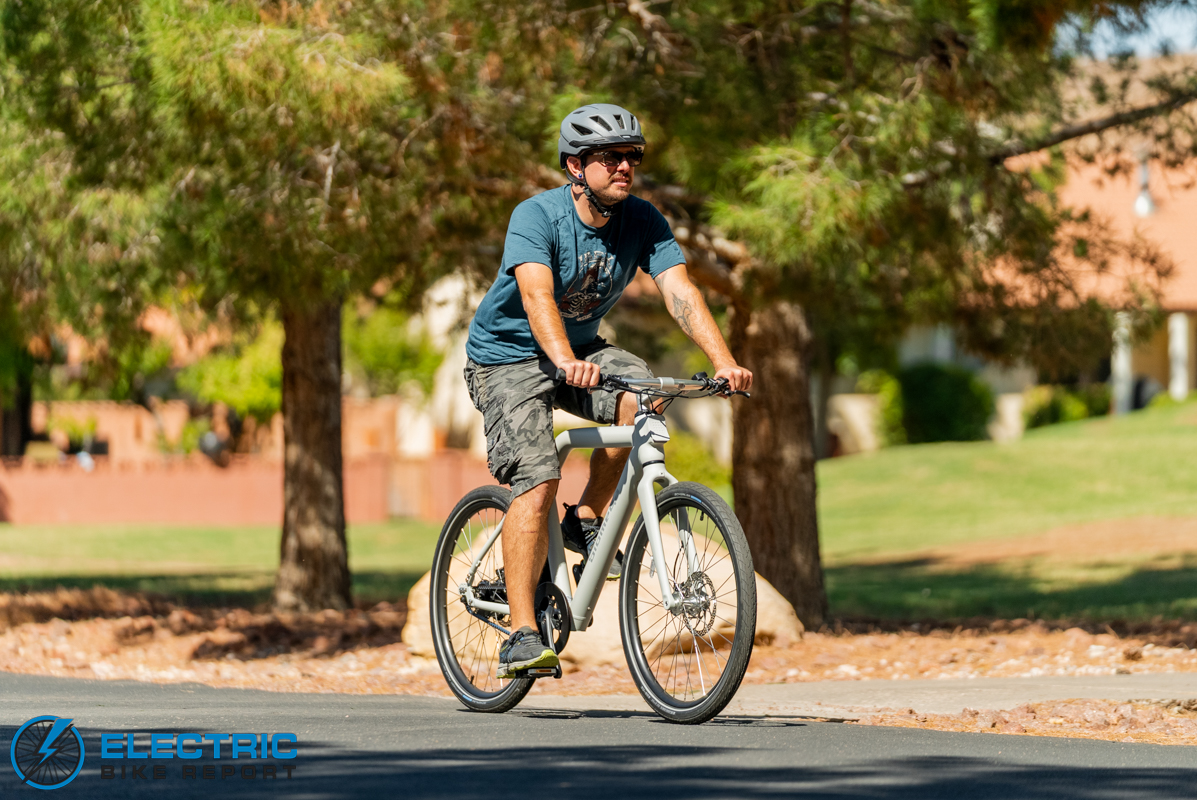
A subtle standout: the BER is a bike that invites a closer look.
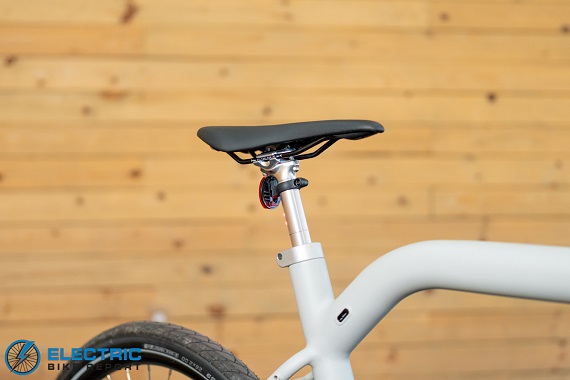
The saddle wasn’t my person favorite, but that’s personal and easily swapped.
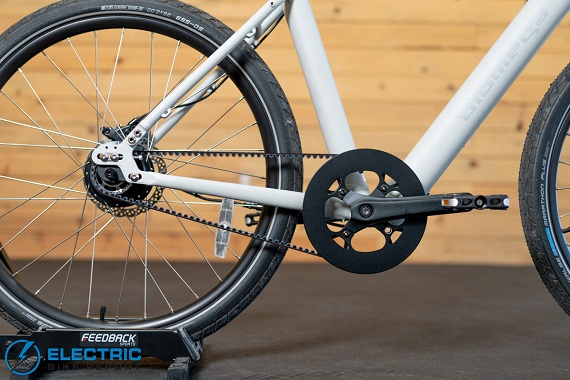
The Gates belt drive is always a welcome feature that’ll keep you clean and doesn’t require much maintenance.
Biomega BER Review: Brake Test
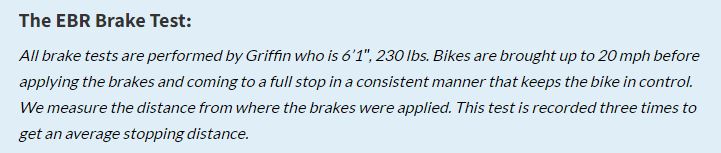
For all the attention given to the BER’s design, Biomega didn’t overlook practical spec inclusions, especially when it comes to braking.
The bike’s Shimano Deore brakes are a welcome sight. They deliver solid stopping power with an easy, single-finger lever pull. It’s a setup you’d commonly find on some mountain bikes, which makes it feel a bit over-equipped—in a good way—for something this light.
In our testing, the BER stopped at an average distance of 21 feet, 3 inches. That’s nearly a full foot shorter than the all-bike average. That’s excellent performance for a lightweight city e-bike.
Too often, brands treat lightweight builds as an excuse to go light on braking. I appreciate that Biomega didn’t. Instead, they spec’d a confident, quality system that complements the BER’s overall refinement and inspires trust on the road.
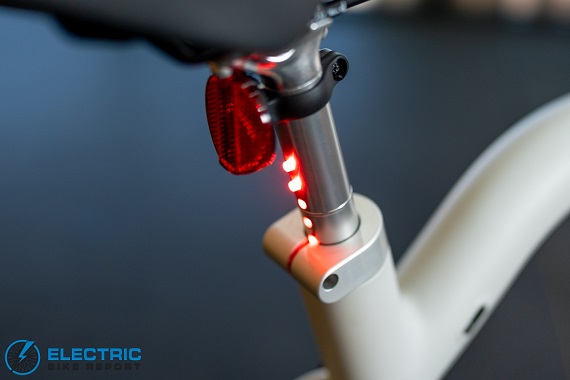
Again, the lighting on the bike is pretty cool. I like how the top two protrude for a little enhanced side visibility.
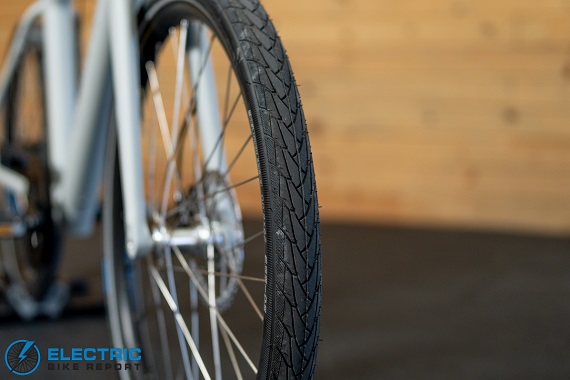
The slick tires roll really well.
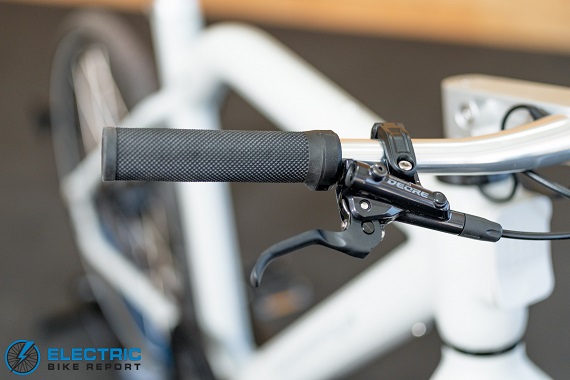
Shimano Deore on a city bike? Not seen often, but I’ll happily take it!
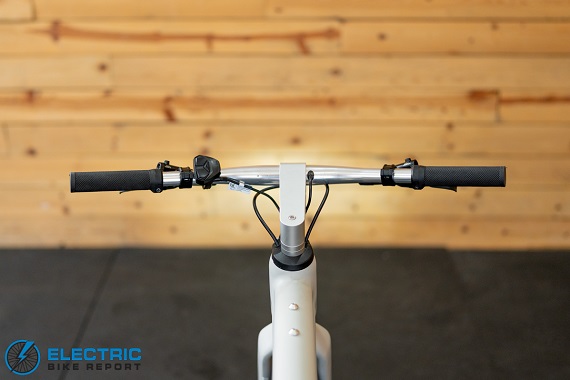
Minimalism done well. The small handlebar isn’t cluttered at all, which isn’t true for most similar bikes. .
Biomega BER Review: Ride Quality
The BER has a classic yet distinctive feel. The frame is made from aluminum, but the build quality is high enough that I initially mistook it for carbon fiber. The welds are impressively clean, and the overall weight reinforces that premium impression.
A quick note: our test bike included a few preproduction quirks—namely, some visible external cables and extra routing points on the frame that won’t appear on the final production version we’re told. So the starting point was good, but the final production should be even better.
The BER is available in two frame sizes (S/M and L/XL), accommodating riders from roughly 5’4” to 6’4”. It’s a fairly compact bike with a shorter wheelbase and handlebar reach, giving it a lively, agile feel that I really enjoy on city bikes. Biomega is also offering four distinct color options, so there’s some welcome variety for riders who like to match form with function. You can check those out by clicking the button below.
There’s good rigidity to the ride, aided by the thru axle. It’s the type of thing that feels highly responsive. No, there isn’t any suspension, but if you’re not adverse to rising off the saddle from time to time, the precise feel is a genuine joy.
One standout design choice is the integrated lighting. The handlebar houses a built-in headlight, eliminating the need for bulky external mounts and keeping the cockpit clean. Cables can occasionally get in the way and partially obscure the beam though.
The rear lighting is equally clever: five small LEDs are embedded into the seatpost, with two extending slightly outward to enhance side visibility. It’s a sharp, cohesive design touch—though worth noting that a long jacket could potentially obscure the lights.
If there’s one design element I wasn’t completely sold on, it’s the battery cover. The charging port is tucked into the headtube, sealed with a cap to protect it from the elements. Ours didn’t sit completely flush, and I could see it being torn off or stretched over time. That may just be a preproduction issue, but it’s something worth keeping an eye on.
One final note: Biomega is both new and not new. The brand has been around for years, built a cult following overseas, was sold, and then later reacquired by its original founder. Their renewed focus is on the U.S. market, so they might feel new here, but they aren’t an unknown quantity. That background helps build buyer confidence, especially when paired with UL certifications and a service/dealer network that they’re said to be actively expanding. It feels less like a newcomer taking a swing and more like a niche brand returning with a refined vision.
Sponsor
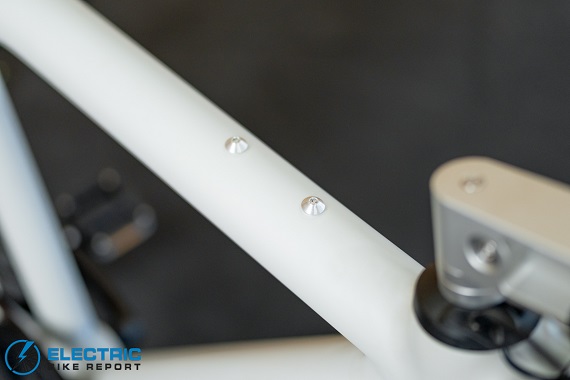
There are mounting options for a bottle cage, or a range extender if you want to ride longer between charge ups.
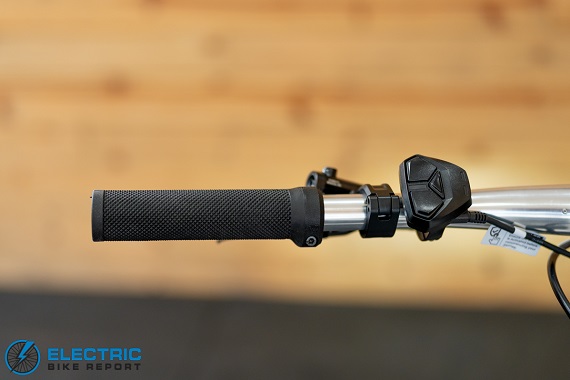
Easy grips that fit the look.
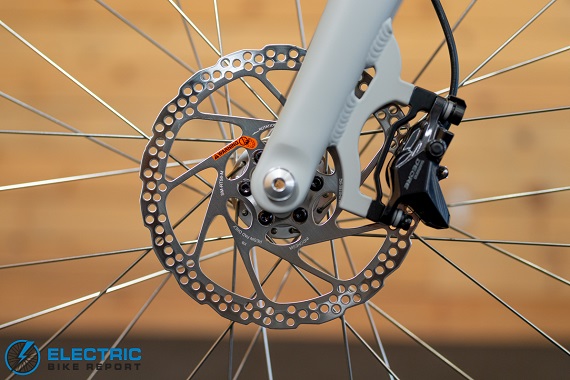
No corners cut. Not only do you get hydraulic brakes, but the front rotor is 180mm for better performance too.
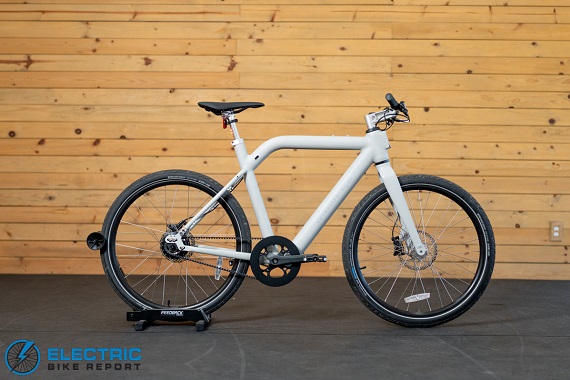
Biomega has multiple bikes on display in art exhibits. This one could be next.
Biomega BER Review: Summary / Where to Buy
Full transparency: I was skeptical when the BER first showed up for testing. I’ve ridden a few design-award-winning e-bikes before, and it was clear they won a beauty pageant and not a functionality one. They were great to look at, but not so great to ride. It left me questioning whether a bike could emphasize aesthetics without sacrificing basic performance. Fortunately, Biomega proved it’s possible to have both.
This is a genuinely cool bike. I like designs that stand out for subtle, thoughtful reasons, not necessarily by screaming for attention, and the BER rewards a closer look. The more time you spend with it, the more clever details you notice: the way the frame joins seamlessly, the integrated lighting touches, even the distinctive stem.
Out on the road, the BER delivers a ride that feels almost dreamlike. Its lightweight frame doesn’t compromise stability; it enhances agility. The bike feels sprightly, responsive, and composed all at once. The Hyena motor performs reliably, and I’ll always appreciate a clean, quiet belt drive on a single-speed setup.
Our test unit was preproduction, so a few small details still need refinement, but Biomega appears well on track to stick the landing. Overall, the BER impressed me as a fun, distinctive, and well-executed ride that breaks from the norm in all the right ways.
Happy Riding! Make sure to let us know if you have any questions or if you think we left anything out in this review of the Biomega BER down in our comments section.
Sponsor
Sponsor
Reader Interactions
Leave a Reply