AIMA Big Sur 2.0 Review | Big, Burly, and Buckets of Fun
Mar 06, 2026
 0 Comments
 Share
Share
This cruiser-influenced fat-tire e-bike offers an easy, comfortable, highly customizable ride and great performance across the board.
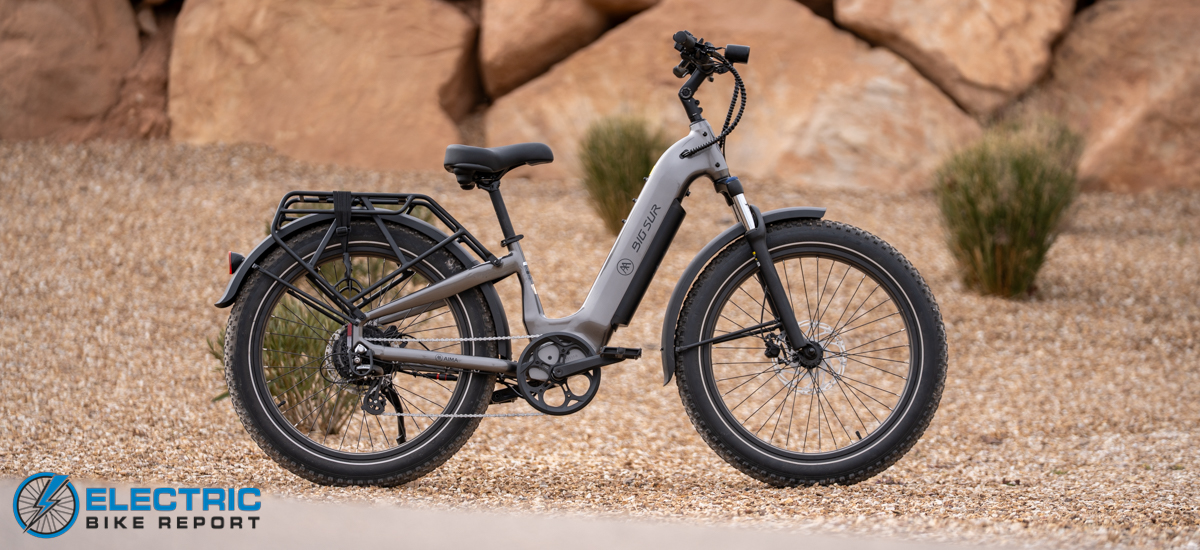
When testing and reviewing every e-bike, there are certain expectations I have up front, which largely depend on the category it fits into. I expect beach cruisers to have retro styling, relaxed handling, and an extremely comfortable ride. Commuter-style e-bikes should be ergonomic, well-equipped for daily use, and loaded with high-capacity batteries.
Generally speaking, fat tire e-bikes like the AIMA Big Sur 2.0 are powerful, plush, stable, and smooth—and that’s exactly what I found when hopping on the bike for the first time. It felt sturdy, planted, controlled, and comfortable, making it well-suited for casual cruises and intrepid adventures.
The bike surprised me, though.
In short, the Big Sur 2.0 is among the most customizable fat tire e-bikes I’ve ridden. Users can adjust the speed and power of each assist level through the display or the Bafang Go app. Additionally, it offers both torque and cadence-sensing modes for either an active or relaxed pedal experience. However you prefer to ride, you can make this bike your own.
On top of that, it’s simply a well-equipped bike. It sports an enormous, semi-integrated 960 Wh battery, a responsive and smooth 750W Bafang motor, and a powerful Tektro hydraulic brake system. It also features integrated lights, turn signals, and an MIK-HD cargo rack that can be outfitted with locking storage bags or even a child seat.
With all the expected baseline specs and features of a well-put-together fat tire e-bike, and a few extra surprises that help to set it apart from the pack, my hopes were high that AIMA had knocked this one out of the park. We put the bike through our standardized Speed, Brake, Range, and Hill tests to find out how well it compared to its competitors.
The full review below covers our findings!

Sponsor
E-Bike Category:Fat Tire
E-Bike Class:Class 1 (pedal assist to 20 mph)
Class 2 (throttle to 20 mph)
Class 3 (pedal assist to 28 mph)
Class 2 (throttle to 20 mph)
Class 3 (pedal assist to 28 mph)
Sponsor
AIMA Big Sur 2.0 Video Review
 Pros
Pros- Power delivery is smooth, responsive, and ample, making pedaling both fun and easy.
- The feel of the ride can be fully customized. Riders can switch sensor modes, tune the motor, customize speeds, and more.
- Like other AIMA models we’ve reviewed, it performed well in all areas of our testing. See below for the data and our full analysis!
- In addition to customizing motor output, the Bafang Go app offers navigation, ride data tracking, battery health monitoring, etc.
- The Big Sur is accommodating for riders of all types, with a 5’2”-6’2” height range, a 400 lb payload capacity, a 17.5” standover height, and an adjustable stem.
- It’s well-equipped with a color display, MIK-HD cargo rack, integrated lights and turn signals, fenders, etc.
- It’s ideally suited for cruising on or off-road. Its knobby fat tires and 80mm suspension make the ride comfortable, stable, and smooth.
 Cons
Cons- While the bike’s can be swapped from Class to to Class 3 mode, changes must be made through a dealer.
- Some riders may find the Big Sur’s single frame size and Titanium Gray color limiting.
ELECTRICAL SPECS & FEATURES
- Battery: Removable Internal Lithium-Ion, 48V, 20Ah (960Wh)
- Charger: 48V, 3 Amp Fast Charger, 7-8 Hours to a Full Charge
- Display: BAFANG E-system TFT Display, Smart Function: FindMy, Navigation, Calls, Notifications
- Motor: Rear Hub Motor, BAFANG, 750W, Peak Power: 1200W, Max Torque: 85Nm
- Headlight: Integrated Headlight
- Taillights:Integrated Tail Lights, and Turn Signals
- Pedal Assist: 5 PAS Levels
- Claimed Range: 40-75 miles
- Throttle:Throttle on Demand
- App:Bafang Go
- UL Certification:UL2849 Compliant
Weight & Dimensions
- Claimed weight: 82 lbs
- Tested Weight: 83.4 lbs
- Rider height range: 5’2″-6’2″
- Total payload capacity: 400 lbs
Components & Accessories
- Brakes:Tektro Hydraulic Disc Brakes, 203 mm Rotors
- Fenders: Plastic
- Fork:ZOOM Suspension Fork, 80mm Travel, Adjustable Preload, Lockout
- Frame: 6061 Single-Butted Aluminum Alloy Frame
- Drivetrain: Shimano 8 Speed, 52T Chainring, 11-34T Cassette
- Grips: Ergonomic Comfort
- Saddle: AIMA Comfort Saddle
- Handlebar: Aluminum Alloy Double Wall, 31.8mm, 680mm
- Kickstand: Aluminum Alloy Kickstand
- Pedals: 9/16″ Alloy Platform
- Tires: 26″ x 4.0″
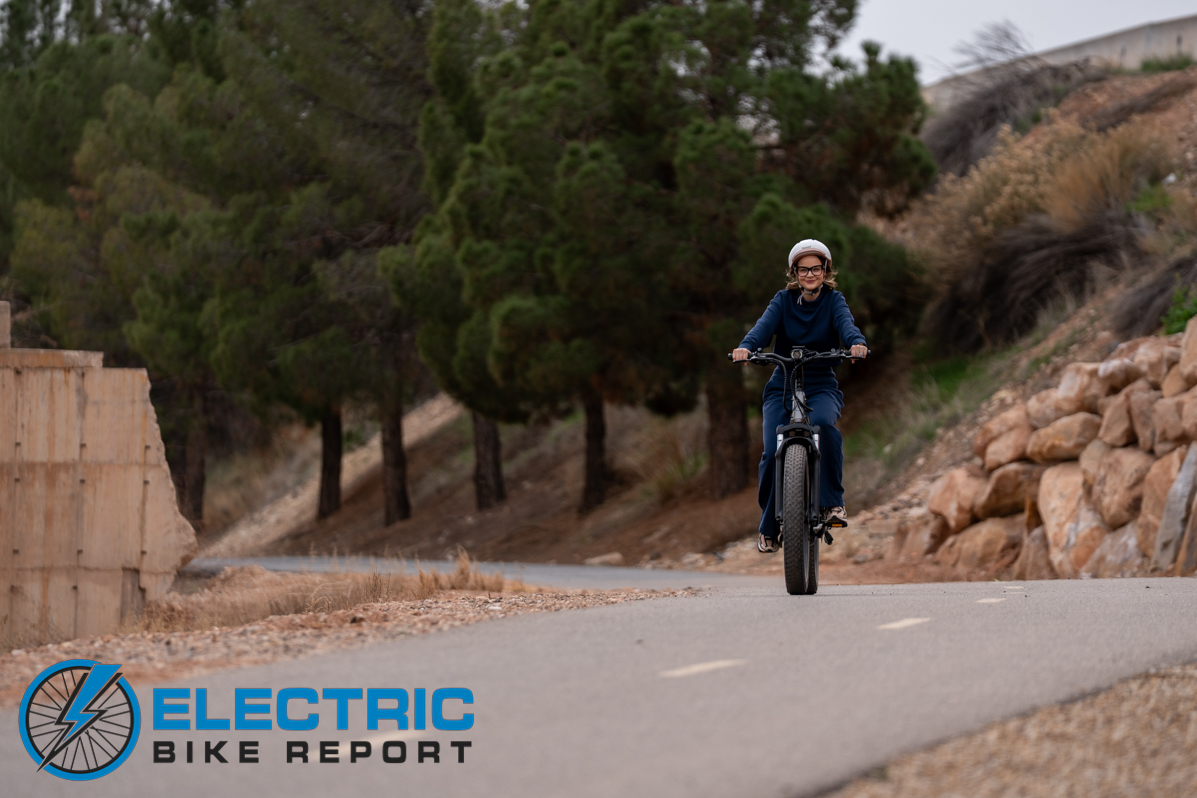
The Big Sur 2.0 rides comfortably and smoothly, making it ideal for everyday cruising or light adventuring.
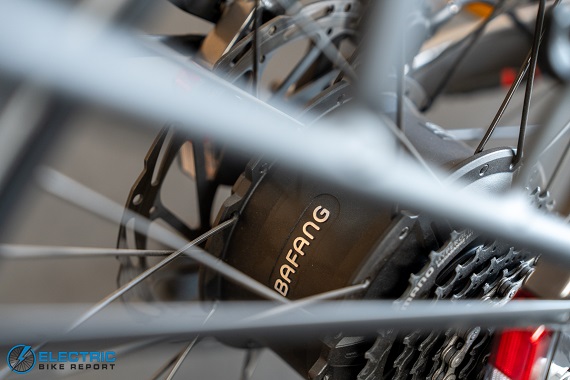
A powerful 750W Bafang rear-hub motor propels the bike using either torque or cadence sensing modes.
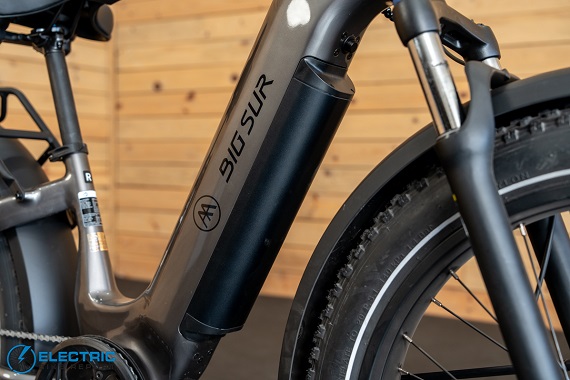
The bike’s enormous battery is semi-integrated into the underside of its down tube.
AIMA Big Sur 2.0 Review: Speed Test
AIMA’s Big Sur 2.0 is a Class 2 e-bike by default, meaning that it offers throttle and pedal assist up to 20 mph. Users can also have the bike unlocked to higher Class 3 speeds, offering pedal assist to 28 mph (but no throttle) through AIMA dealers. We tested the bike in both settings using both torque and cadence-sensing modes on a flat, paved path.
My average speeds in each pedal assist level from all four tests are shown in the graph above. A deeper analysis of the data is below.
Beginning with the two torque-sensing mode tests, the bike delivered relatively balanced, incremental jumps in speed and power between all five of its assist levels.
In the Class 2 test, the 20 mph speed cap clearly limited the bike (a common occurrence on e-bikes that can switch between classes), as my average speeds clustered around this cap in PAS 3, 4, and 5.
Once unlocked to Class 3, the motor had more room to breathe, and my average speeds were more evenly distributed.
In the cadence-sensing mode tests, the Big Sur 2.0’s pedal assist levels are not limited by speed, but instead, power. As such, the output of the lowest level was enough to carry me to a relatively fast cruising speed.
Because of this, there was not much room for an even distribution of speeds in the Class 2 test, but my results in Class 3 mode were much more balanced.
On a less-customizable e-bike, I would say that the Big Sur’s programming had some room for improvement in Class 2 mode. As it is, however, the bike offers a solid starting point for new riders who want to personalize its power levels and feel.
I found that its default setting felt safe and generally approachable, allowing riders to choose from a steady, low-effort experience in cadence mode or a more active, analog-like ride in torque mode.
Considering that the standard programming is better balanced for riding in Class 3 mode, my only real critique is that adjustments must be made by technicians at authorized dealerships. Sharing this option with its customers would make it more convenient for riders who live far from one of these brick-and-mortar locations and/or those who might change their mind about which settings they prefer.
Otherwise, I was pleased to note that the Big Sur 2.0 felt powerful yet controlled, making for easy pedaling, confident climbing, and reliable acceleration. When testing the bike’s throttle, I found it extremely friendly, with a gradual start followed by steady ramping up in speed.
Sponsor
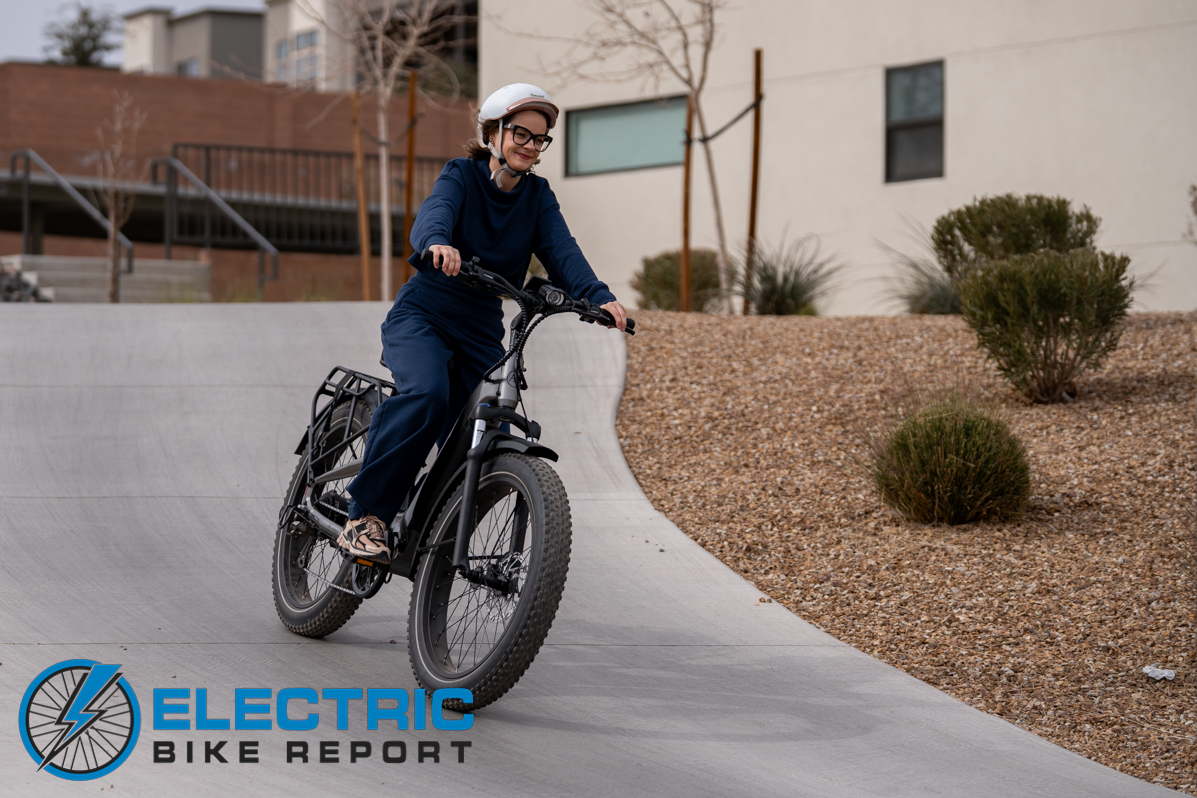
By default, the Big Sur 2.0 can reach 20 mph via its throttle and pedal assist system.
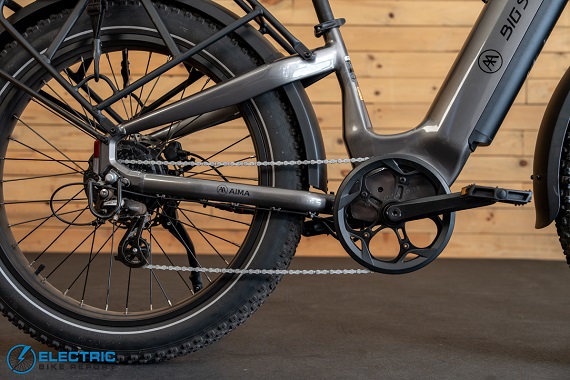
AIMA equipped the Big Sur 2.0 with an 8-speed Shimano Altus drivetrain.
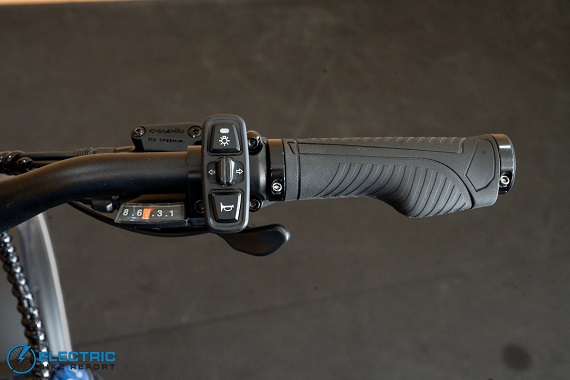
A rapidfire shifter sits next to the control module for the bike’s lights and turn signals.
AIMA Big Sur 2.0 Review: Range Test
With its 750W rear-hub motor and gigantic 48V, 960 watt-hour (Wh) battery, AIMA estimates that riders should expect 40 to 75 miles of range from a single charge. Our two Range tests, consisting of both max-assist and low-power trials (as explained in the graphic above), verified this advertised claim with results of 38.6 and 79.0 miles.
Both of these results line up well with the Range Test results of similar fat tire e-bikes we’ve tested; a group of comparable popular models tested recently averaged 36.5 and 75.2 miles, respectively. With the exception of one mid-drive-equipped e-bike, these models boasted similar 750W motors and batteries averaging 847 Wh of capacity.
So why did the Big Sur 2.0 not exceed the averages by a larger margin with an additional 113 Wh of battery capacity? In short, because the bike used slightly more energy per mile on average than its competitors, as explained below:
By dividing battery capacity by the number of miles traveled, we can determine that the Big Sur 2.0 used roughly 12.2 watt-hours per mile (Wh/mi) in its PAS 1 test and around 24.9 Wh/mi in PAS 5. Our group of comparison models averaged 11.7 and 23.6 Wh/mi; the differences between these figures are relatively small, but they do add up over many miles.
Still, average performance (or slightly above-average, in the Big Sur’s case) is excellent, as it shows that the bike in question is appropriately specced to match its peers. Those who use the bike’s cadence-sensing mode should expect fewer miles, however, as this setting’s steady motor output reduces its energy efficiency.
We’re highly satisfied with the Big Sur 2.0’s results; they show that riders should be able to enjoy multiple rides before needing a recharge, no matter what power level they select. We’re also confident in saying that riders should have plenty of charge for commuting, leisure riding, and urban or light off-road exploration.
The bike is shipped with a 3A charger that can power up a depleted battery in under 7 hours, allowing for convenient overnight charging.
Sponsor
Sponsor
AIMA Big Sur 2.0 Review: Hill Test
Fat tire e-bikes are loved for their ability to flatten hills; their powerful motors allow riders of all ages and experience levels to tackle otherwise intimidating climbs with confidence. To ensure that the AIMA Big Sur 2.0 was up to the task, we used the process explained above to test its throttle and pedal-assisted power in the same way we have tested its peers.
Using 100% throttle power alone, our test rider, Justin, reached the top of our test hill in 1:48 at 16.8 mph on average. When pedaling in PAS 5, that time was reduced to 1:44, with a faster average speed of 17.4 mph.
Similar fat tire e-bikes we’ve tested averaged 1:56 and 1:54, respectively, making the Big Sur noticeably faster than average, though the reasoning behind that is not extremely clear.
Weight, torque, and peak motor power are all factors that influence a bike’s results in this test. With a weight of 83 lbs, a maximum torque output of 85 Newton meters (Nm), and a motor that peaks at 1200W, the Big Sur is relatively average in all three areas.
The group of similar models used for comparison averaged a slightly lighter 82 lbs, a slightly higher 90 Nm of torque, and a slightly lower peak of 1150W. We’d expect these small differences to (more or less) cancel each other out, but the Big Sur 2.0 managed results that were 8-10 seconds faster than its peers.
My personal experience on the bike justifies its speedier climbing times, especially when pedaling uphill. I found it remarkably easy to reach the top of our challenging secondary test location, called Pilot Hill, with only relaxed pedaling and a light amount of effort. The Big Sur also had no trouble when throttling, proving itself relatively unphased by the test.
In conclusion, riders should expect a fun, easy, and low-to-no-effort experience when dealing with average or large hills. Our test proves that this e-bike would be a great match for those who live in areas with varied terrain.
Sponsor
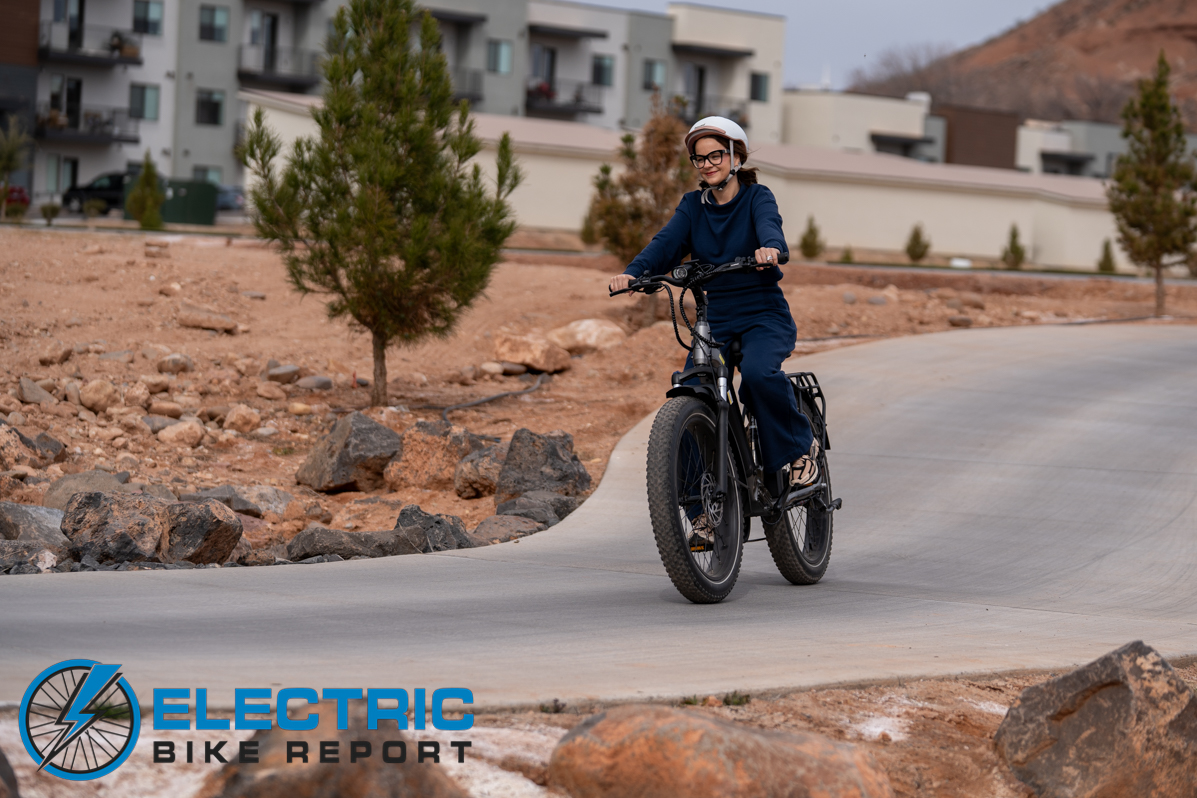
While its riding position is adjustable, the bike’s geometry encourages a relatively upright and relaxed posture.
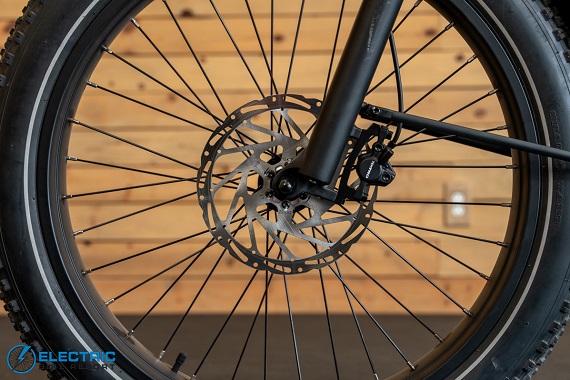
The Big Sur’s hydraulic brake system delivers reliable stopping power.
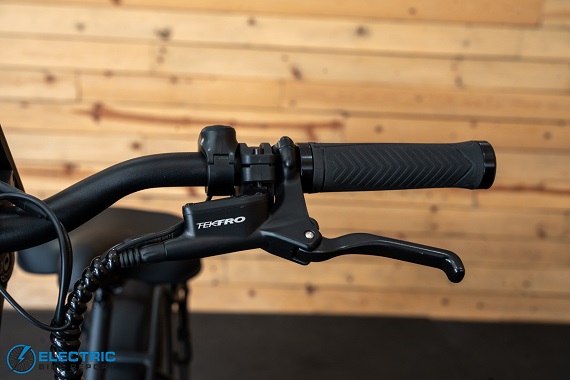
Brakes are operated by Tektro levers on both handlebars.
AIMA Big Sur 2.0 Review: Brake Test
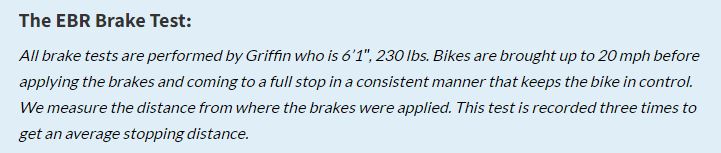
As you might expect, our Brake Test evaluates an e-bike’s ability to stop safely and predictably. Using the method above, we determined the Big Sur 2.0’s average stopping distance to be 22’8”. This distance places it firmly within the bracket we consider to be safe and trustworthy.
Similar models, including many of the best fat tire e-bikes we’ve tested, averaged 21’8” in our testing, placing the Big Sur 2.0 exactly one foot beyond average. Once again, the reason for its difference is not immediately apparent, but I do have an educated guess.
Many factors influence this test, including a bike’s weight, brake system, tire tread, etc. As mentioned above, the Big Sur 2.0’s weight of 83 lbs is relatively average. Its brake system, the hydraulic Tektro HD-E3520, is a common two-piston system we’ve tested numerous times; it has proven consistent and reliable. Finally, the Big Sur’s 26×4” knobby tires are a standard for the category, so nothing stands out as unusual unless we dive deeper.
On the positive side, AIMA smartly equipped the Big Sur 2.0 with larger-than-average 203mm brake rotors, which are more effective at dissipating heat and increasing overall stopping power than more common 180mm rotors.
A factor that could potentially decrease the bike’s stopping power is geometry; its uncommonly upright riding position encourages comfort, but distributes the rider’s weight differently than many of the somewhat sportier models we’ve tested with a more forward-leaning posture.
Case in point: a group of upright cruiser-style e-bikes we tested averaged 22’9” in their brake tests—just beyond the Big Sur 2.0’s result.
Despite its somewhat longer than average score, the Big Sur 2.0’s brakes felt capable and strong overall. At times, modulating speed when riding downhill required me to apply a fair amount of pressure to the brake levers, and I experienced a not-unusual amount of skidding after hard braking, but the system had the bite and force to bring me safely and quickly to a stop throughout my testing.
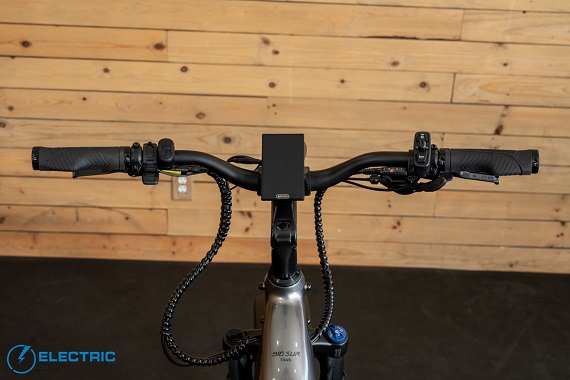
An adjustable stem allows riders to set the handlebar height and adjust reach for comfort.
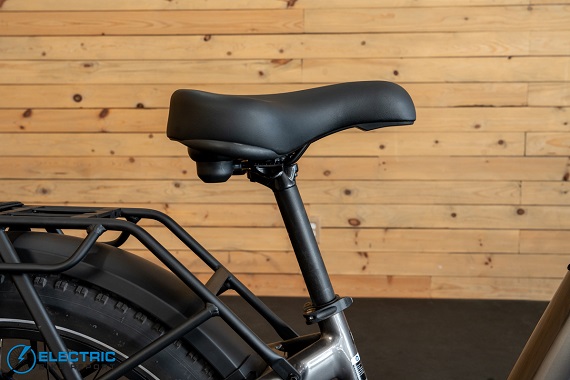
The Big Sur 2.0’s saddle is thick, wide, and cushy—perfect for long cruises or commutes.
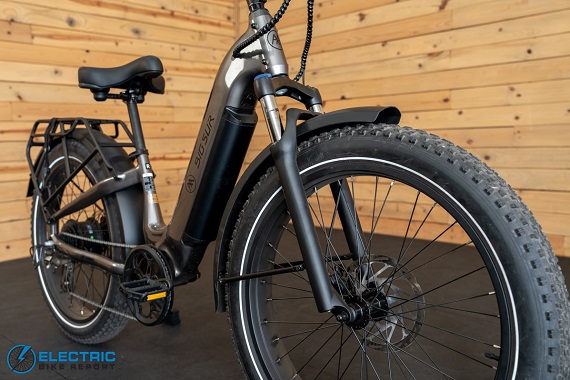
An 80mm suspension fork works in combination with the knobby fat tires to smooth and cushion the ride.
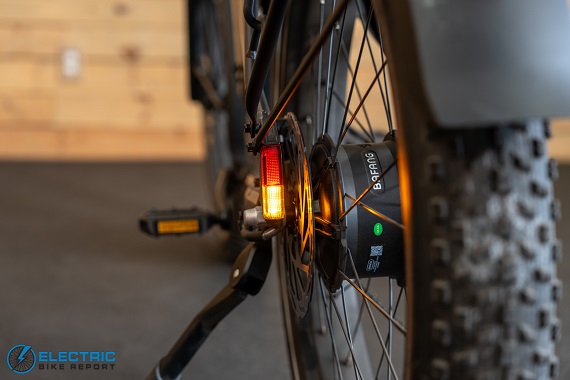
The bike’s tail lights include turn signals to communicate with other cyclists and motorists.
AIMA Big Sur 2.0 Review: Ride Quality
A bike’s ride quality is a comprehensive summary of how it feels to ride and operate. This broad category of analysis involves the bike’s geometry, fit, features, motor engagement, suspension, and many other factors. The Big Sur 2.0’s overall ride quality is great, though there are a few points prospective buyers should be aware of.
In terms of sizing, the bike has a single step-thru frame that fits riders from 5’2” to 6’2”. While this bracket should encompass the vast majority of riders, it potentially leaves out some folks on the extreme ends of the height spectrum; we wouldn’t mind seeing an additional size or a high-step model (with more than a single color option) offered with future iterations of the Big Sur.
At 5’11”, I found the bike generally comfortable, though the relatively steep angle of its down tube resulted in the cockpit feeling a little tight. The bike’s six inches of saddle height adjustment wasn’t quite enough to provide full leg extension, but the powerful motor and the sensitivity of the torque sensor largely made up for this. I greatly appreciated the adjustable stem, which allowed me to set a comfortable and ergonomic handlebar height.
The Big Sur 2.0’s saddle is thick, supportive, and soft, making it appropriate for comfortable and relaxing cruises. Its ergonomic rubber grips are also similarly cushy and easy to enjoy. The bike’s ride is softened further by its 80mm Zoom suspension fork and 4” fat tires, which can be adjusted for comfort and traction.
Many of its features are reminiscent of a cruiser, and much of its design reinforces this intent. In addition to its relatively upright, comfortable riding position, the bike’s fenders seem to be integral; their removal (which we typically recommend for off-roading) could allow mud to reach the down-tube-integrated battery.
Additionally, the bike is loaded with urban-friendly features, such as brake lights, turn signals, and an MIK-HD cargo rack. We always appreciate these features for their safety and utility factors—the cargo rack can be equipped with standardized third-party accessories that lock into place, including cargo bags or a child seat.
Handling is generally predictable, though I noticed the bike’s weight, particularly when cornering. Despite feeling as though it naturally wanted to oversteer, however, its steering stayed true. Like all fat tire e-bikes, the Big Sur 2.0 felt stable while riding, with a wide contact platform with the ground and knobby tread for grip on dirt or gravel.
As mentioned above, the pedal assist system felt extremely responsive and the motor’s ample power made for easy pedaling. I also found it notably quieter than many other rear-hubs I’ve tested, with only a gentle whirr instead of a potentially distracting whine.
Of course, there is the bike’s user interface and programming customization options to cover. Its electronic components are operated by two modules: a simple button pad on the left handlebar that turns it on/off and adjusts power levels. The right handlebar hosts a module for its lights, turn signals, and horn, which offers a tactile, user-friendly feel.
Riders can change the color display’s theme and switch between sensor modes via the settings menu or adjust motor output through the display or app. The display offers control over the set speed and power limits for each assist level, while the Bafang Go app adds another metric for sensitivity. Bafang’s app can also be used for ride data tracking (manual or automatic), navigation, and phone message synchronization with the display.
Overall, the bike’s feature package, user interface, and app options are robust without being overcomplicated. The Big Sur 2.0 is cushy, well-equipped, and both enjoyable and easy to use.
Sponsor
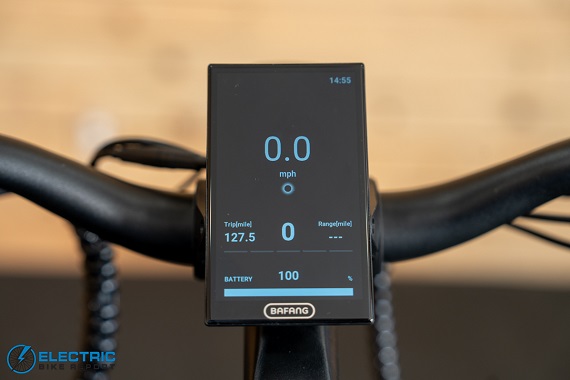
A color display offers three appealing and well-organized themes.
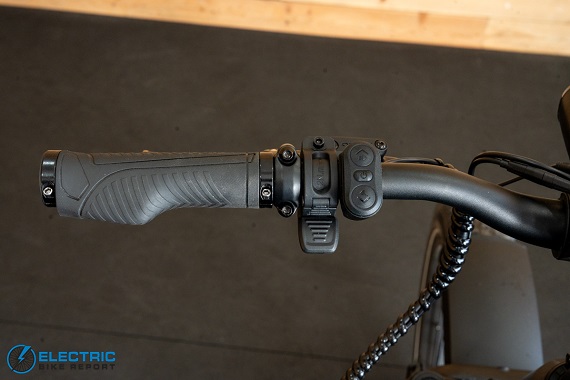
The bike throttle and pedal assist system are controlled by modules on the left handlebar.
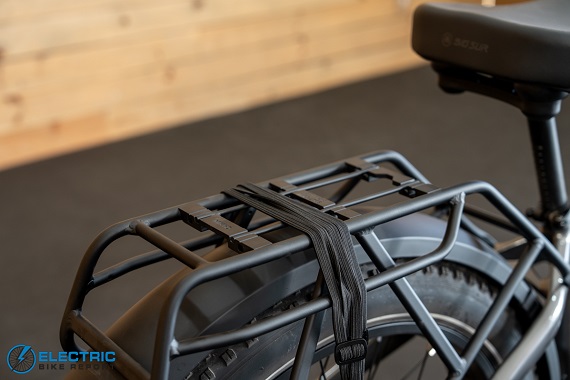
The Big Sur 2.0 is equipped with an MIK-HD cargo rack that can carry up to 59.5 lbs.
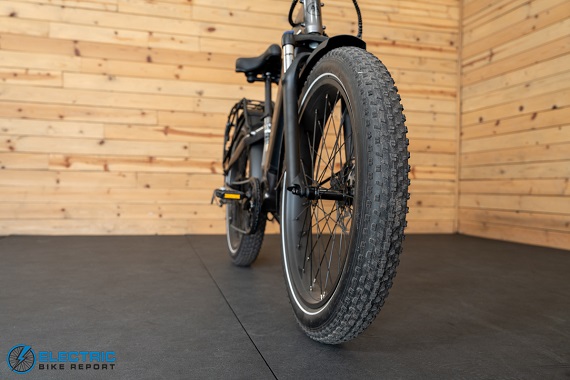
Fat tire e-bikes are defined by their 26×4” knobby tires, which are stable and grippy on all types of terrain.
AIMA Big Sur 2.0 Review: Summary / Where to Buy
The Big Sur 2.0 is the successor to one of our audience’s most requested e-bikes. Despite hearing time and time again how satisfied buyers were with their purchase, we couldn’t comment on the bike until after we put it through our full evaluation process—and I’m glad to be able to say that every commenter who raved about it was spot-on.
Highly customizable e-bikes are not new, but in my experience, they can be tough to balance. Bikes that offer too many options can present a significant learning curve to new riders, while those with too few options feel lacking.
The Big Sur 2.0 strikes a great balance between these extremes, with a great feel right out of the box, and lots of meaningful choices for those who wish to explore them.
The bike performed well across the board, with test results that proved it to be a rockstar in the range department, a capable hill climber, and safe when stopping matters most. Its default pedal assist system programming was solid, and clearly tuned for its standard torque-sensing mode. It also offers an impressive number of choices for riders who want to personalize its feel and performance.
We identified only a few minor areas worthy of critique, which have been relatively consistent across most AIMA e-bikes we’ve tested. We feel that it would be more convenient for bike owners to be able to adjust their own speed settings instead of bringing their bike to a dealer. Additionally, while the Big Sur’s single frame size and color will likely appeal to most folks, more options would be welcome.
Otherwise, the Big Sur 2.0 is well-suited for riders across a wide range of heights, weights, ages, and experience levels. Its design, features, and customization options make it a great option for riders seeking a daily commuter, a sturdy leisure bike, an errand-runner, a light adventure bike—or a combination of each of these roles.
Happy Riding! Make sure to let us know if you have any questions or if you think we left anything out in this review of the AIMA Big Sur 2.0 down in our comments section.
Sponsor
Sponsor
Reader Interactions
Leave a Reply