

NJ to Require E-Bike Registration & Insurance, CA Proposes Strict Power Limits, Canyon Releases Updated eMTBs | TWR Ep 67
Jan 25, 2026
 5 Comments
 Share
Share
Plus Canyon’s EU Workforce Reduction, RXY Helmet Recall, Single-Speed Gear Ratios, Lectric’s Merits, and More!
This week, in the world of e-bike news, big changes are afoot. The state of New Jersey passed a new law negatively affecting all e-bike riders, while a proposed law in California further tightens restrictions on e-bike power. We also saw a positive follow-up to a previous recall on two Canyon e-bikes.
New Jersey’s governor signed a law requiring all e-bike riders to obtain a license, registration, and insurance to continue using their bikes legally. This law punishes e-bikes while trying to reduce safety concerns caused by faster and more powerful electric motorcycles.
A member of California’s State Assembly submitted a bill proposing a restriction on the maximum power output of e-bike motors to 750W. A current loophole in recent legislation allows motors to temporarily exceed that limit.
Canyon has debuted new versions of its Spectral:ON and Torque:ON eMTBs with reinforced batteries. While smaller in capacity than previous versions, they promise improved durability, faster charging, and practical range.
For more details on these stories, continue reading below. We cover additional topics in our weekly podcast, which is accessible via the links above!
Sponsor
Sponsor
This Week’s E-Bike News Headlines
E-Bikes in New Jersey Now Require Licensing, Registration, and Insurance
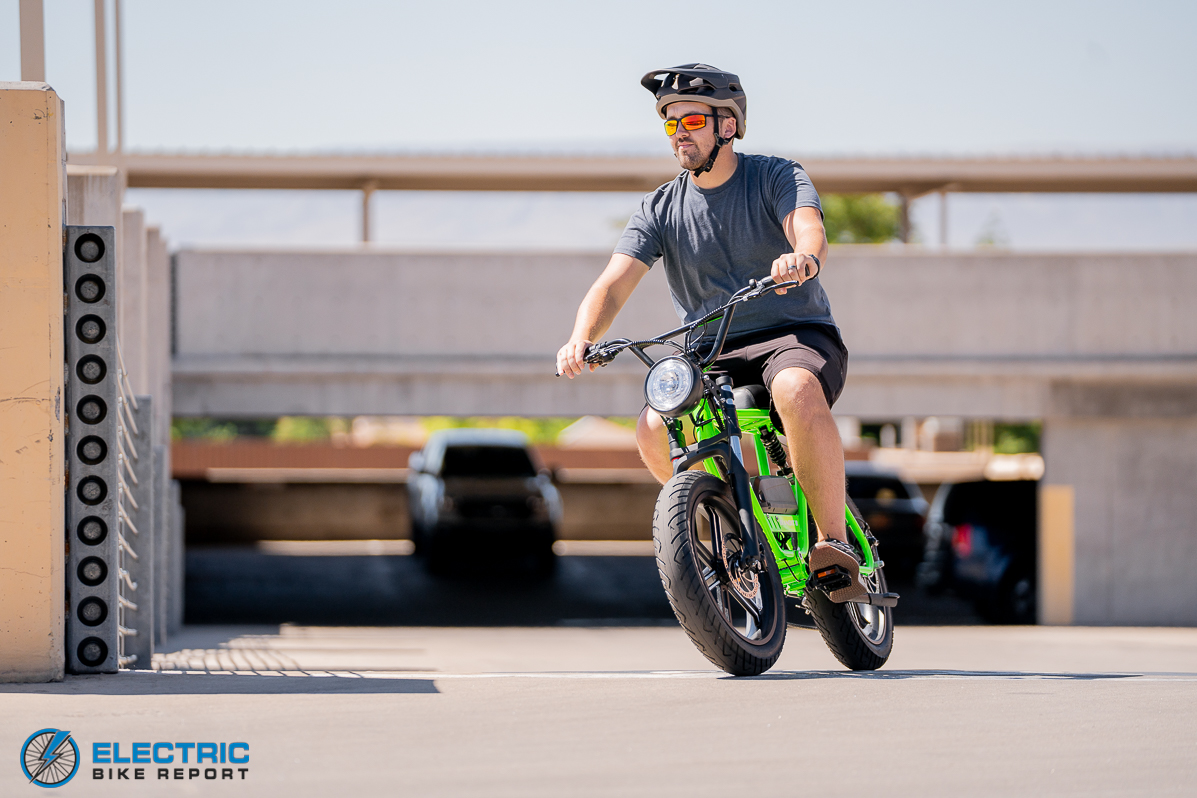
Under a new law signed by NJ’s Governor, e-bikes are now included under the classification of motorized bicycles. This requires e-bike riders to obtain licenses, registration, and insurance to operate their bikes legally. The law allows for a grace period of six months for e-bike owners to comply.
The new legislation also redefined the three typical e-bike classes within the state. E-bikes with pedal assist up to 20 mph are now called “low-speed electric bikes.” Those with throttles that can reach up to 28 mph are now “motorized bikes,” while “electric motorized bicycles” are those with pedals that can exceed 28 mph.
The state also passed new age restrictions, requiring that riders at least 15 years of age possess a motorized bike license. Riders with a standard driver’s license can operate an e-bike if they are at least 17.
Another change prohibits the online sale or advertisement of electric motorized bicycles (in most cases, e-motos) in New Jersey for a period of one year. This ban went into effect immediately following the signing of the law.
These measures aim to increase safety, as e-bike related crashes and fatalities have risen. The latest example was a 13-year-old boy who was killed when getting hit by a truck while crossing an intersection.
New Jersey State Senate President Nick Scutari said, “The dramatic increase in the use of e-bikes has created greater dangers for their operators, other motorists, and pedestrians. They are faster, more powerful, and far more prevalent. Their popularity with young people, coupled with their inexperience as operators, puts them at greater risk. We are in a new era of e-bike use that requires updated safety standards to help prevent accidents, injuries, and fatalities. Requiring registration and licensing will improve their safe use and having them insured will protect those injured in accidents.”
Both the League of American Bicyclists (LAB) and PeopleForBikes (PFB), however, seem to support additional clarification to the new law. Their concern is that it treats electric bikes and electric motorcycles as the same, while punishing e-bike owners for problems caused by faster and more powerful e-motos.
The League of American Bicyclists believes that e-motos/dirt bikes should be regulated separately from e-bikes. PeopleForBikes seems to agree, and is currently working on drafting an amendment to the new legislation to address this concern.
Regarding the law, Dr. Ash Lovell of PFB said “We are currently cooperating on draft language for a new bill to address the issues created by this legislation and redirect the focus of regulatory and safety efforts on e-motos, the high-speed electric mopeds, motorcycles, and dirt bikes being marketed to kids in New Jersey and across the country and the same devices involved in recent fatal crashes that led to this bill.”
Our Take:
In many cases, e-bike use has expanded as an affordable alternative to cars for low-income populations. In its current form, this bill makes it harder for safe, law-abiding riders of “low-speed” e-bikes to get around. By requiring them to jump through administrative hoops and unnecessarily adding cost, the law effectively restricts some NJ residents from riding an e-bike.
The goal of this legislation is admirable, and we generally support measures intended to increase safety. However, we agree with both LAB and PFB that the law unfairly punishes e-bikers, while the real targets should be more specifically identified as electric motorcycles and dirtbikes.
The conflation of e-bikes and e-motos within New Jersey’s laws also highlights a need for the two categories of electric vehicles to be separated and better defined at a federal level.
A California Bill Seeks to Limit E-Bike Motors to a Max of 750W
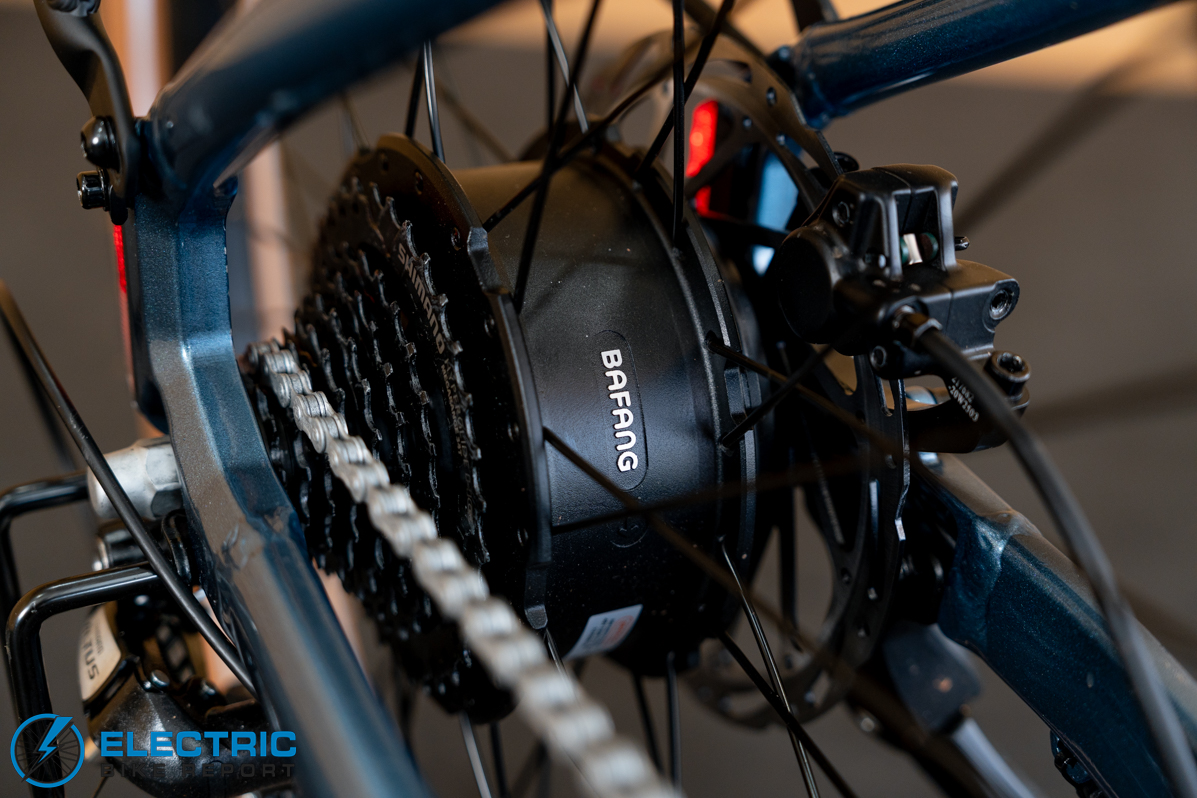
The proposed Assembly Bill 1557 has the goal of eliminating the loophole that allows e-bike motors to temporarily exceed California’s 750W power limit. The introduction of this bill follows last year’s SB 1271, which separated the three classes of e-bikes, preventing Class 1 and 3 e-bikes from being equipped with throttles. It also restricted e-bike motors to a 750W maximum.
E-bike brands have limited the nominal power output of their motors to 750W, meaning that they can run continuously at that limit without sustaining damage or overheating. Since the current law does not specify whether the 750W limit applies to continuous or peak power, however, brands still allow motors to temporarily peak above that limit under certain conditions.
The bill was introduced by a democratic legislator named Diane Papan, who attributes this technicality to a rise in crashes and injuries.
Our Take:
It is true that e-bike-related crashes have been on the rise, but we strictly believe that excessive speeds above 28mph, poor infrastructure, and improper or irresponsible use are more to blame than motor power.
Again, this bill seems to have good intentions, but we believe that its focus is misguided. Allowing a motor to peak beyond its nominal rating allows e-bikes to feel lively off the line. It also allows motors to fight extra resistance when climbing hills with above a 3% grade. Finally, it provides instant torque delivery when riders need to accelerate quickly for safety or better maneuverability.
When an e-bike’s motor peaks above its nominal rating, it effectively allows the bike to sprint for 30 to 60 seconds when needed. In our experience, this allows heavier riders (200+ lbs) to have a much better riding experience, giving them the same feel that, for example, a 160-lb rider might experience on an ebike. It also allows riding an e-bike to be a much safer experience.
We would rather see better enforcement of speed restrictions and the establishment of educational programs to encourage the safe and responsible use of e-bikes. Think of it like this: despite having massive differences in power, drivers of both a Honda Civic and a Lamborghini Revuelto can share city streets as long as they obey the same posted speed limits. We feel that e-bikes should be regulated similarly.
Canyon releases updated version of the Spectral:ON and Torque:ON eMTBs
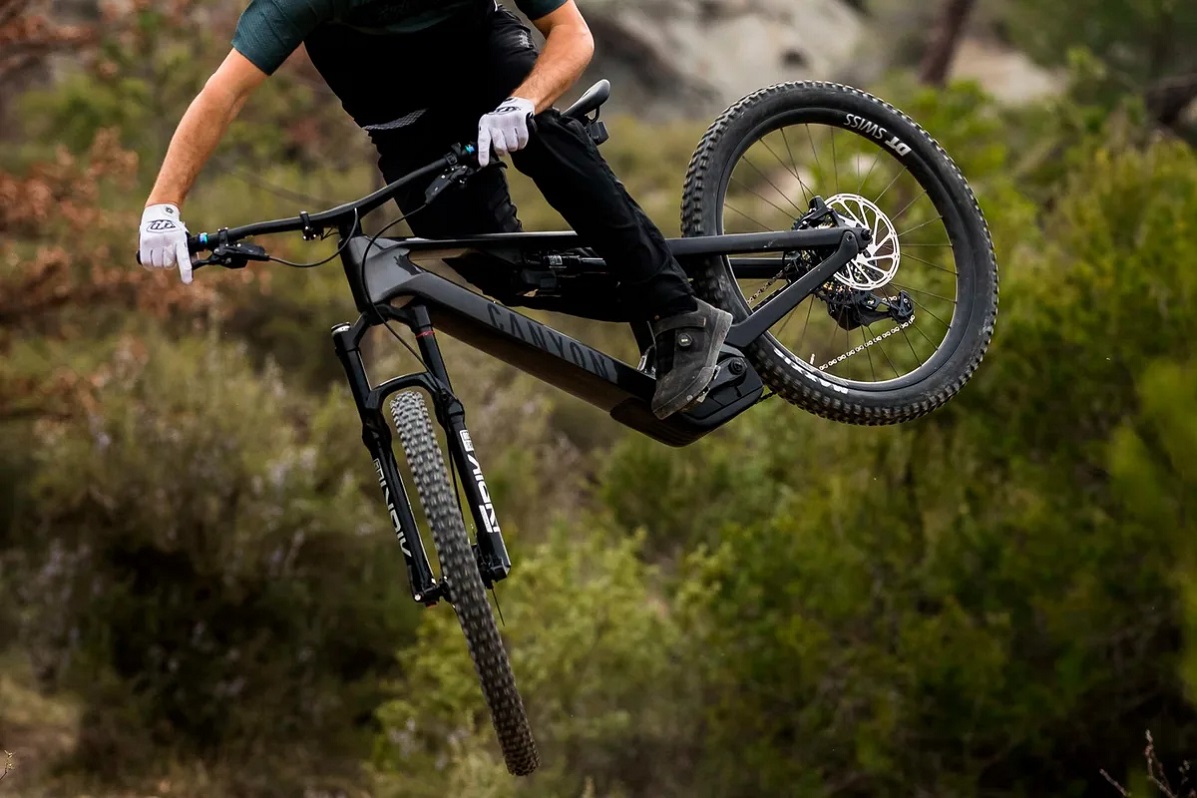
Image Source: BikeRadar
The release of these updated models from Canyon follows the company’s late-2024 stop ride notice and recall of batteries for both eMTBs. At that time, the batteries had plastic housings that could crack. If this happened, water could make its way inside the battery and potentially cause fires by creating a short circuit.
Canyon’s new models use tougher aluminum casings and end caps designed to better withstand impacts and regular use in demanding conditions—such as the rough terrain in which eMTBs thrive. The new batteries are also double sealed to prevent moisture intrusion and include an internal membrane.
The difference is apparent in the power packs’ IP (Ingress Protection) ratings. The recalled batteries for both the Spectral:ON and Torque:ON were IP4 rated, while new ones are IP7 rated, allowing them to be submerged in up to a meter of water.
The batteries have also changed in capacity. Previous models, which were built from 5.0 Ah cells, totaled 900 Wh of capacity. The new e-bikes carry batteries with a smaller capacity of 800 Wh, which are assembled from larger 5.6 Ah cells. Canyon states that the new batteries are lighter (a total savings of 150g), capable of faster / smart charging, and have better overall weight distribution.
New Spectral:ON and Torque:ON eMTBs have a claimed range of up to 53 miles or up to 6200 feet of climbing. The Spectral:ON is also available at a lower price than its original debut: the bike entered the market at $5,249 but is now sold for $3,899. Otherwise, the updated are the same as their previous iterations.
Our Take:
We’ve discussed and announced many recalls, but rarely have we seen a brand follow one of these incidents with such an impactful redesign. Assuming that the new aluminum-encased batteries prove as effective as Canyon hopes, we wouldn’t be surprised if this approach is adopted by more manufacturers.
Sponsor
You Asked, We Answered. Questions Covered In The Weekly Recharge
- How does the Aventon Soltera 3 ADV’s single-speed drivetrain compare to the belt drives of other similar models? Is it difficult to pedal?
- Would we be excited about an Aventon Aventure M equipped with a belt drive and CVT?
- Why do we like and highly recommend e-bikes from Lectric?
- Are there any good full-suspension e-bikes with 750W mid-drives below $2,000?
- Why did Bosch’s new security measures win a Worst in Show award at this year’s CES?
- Which e-bike should riders choose between the new Lynq Current or Segway Myon?
E-Bike Deals Found This Week
- Velotric’s New Year, New Bike Sale
- Discover 2 customizable cruiser/commuter hybrid – $200 off, down to $1,799
- Plus free suspension seatpost
- Nomad 2 sleek, comfy fat tire e-bike – $100 off, down to $1,899
- Plus free storage bag
- Roadster V3 peppy, responsive, light city e-bike – $100 off, down to $1,395
- Vorsa cargo-carrying SUV-style commuter – $100 off, down to $1,595
- Plus free pannier bags
Make sure to tune in to the full episode to see the e-bike trail system highlight and rider of the week! Want to be featured in future episodes? Comment on any YouTube video or page of the website, or send to [email protected].
Sponsor
*Please help support our efforts at Electric Bike Report. We work hard to provide the highest quality content, news, and reviews for our readers – and our sponsors make all of this possible. Please visit our sponsors from their ads on our website and let them know that you appreciate what they do for the e-bike industry and Electric Bike Report
Sponsors
Sponsor
Reader Interactions
Comments
Leave a Reply




AFAIK, the NJ law applies to off road bikes as well as bikes ridden by visitors, so they have basically killed “e’s” there as well as tampering with the recreation industry.
well just in case there was any doubt the e-bike industry will now be quite effectively be killed and the domestic manufacturers of e-bikes many of them will be going out of business without a shadow of a doubt; if its got an electric motor its going to be so prohibitively expensive; I am going to get a regular motorized gas scooter because at least if I am going to have to get a license, registration and insurance then at least I am going to get much unlimited range transport distances and much faster speeds going up hills and instant refueling capability; considering a motorized gas scooter has no limits quite literally as opposed to e-bikes that is the only rational common sense choice left to me by rational choice and I love the idea of the motorized gas scooter or motorized gas scooter.
You can’t review and sometimes rave about high powered E bikes and then hide behind the “it’s electric motorcycles causing the problems……….. ;(
My understanding of NJ’s new ebike requires DOT approved motorcycle-style helmets.
The good news is that for adults, a valid NJ driver license is sufficient, however, the ebike does have to be registered.
I think it’s those kids with the Surrons popping wheelies through green grass at a park and on sidewalks who triggered this new law.