

Rad Power Bikes RadRunner Review | A Classic Made Current?
Dec 06, 2025
 2 Comments
 Share
Share
The base model of Rad’s quintessential utility e-bike rides as good as ever while boasting new safety, security, and ride-enhancing features.
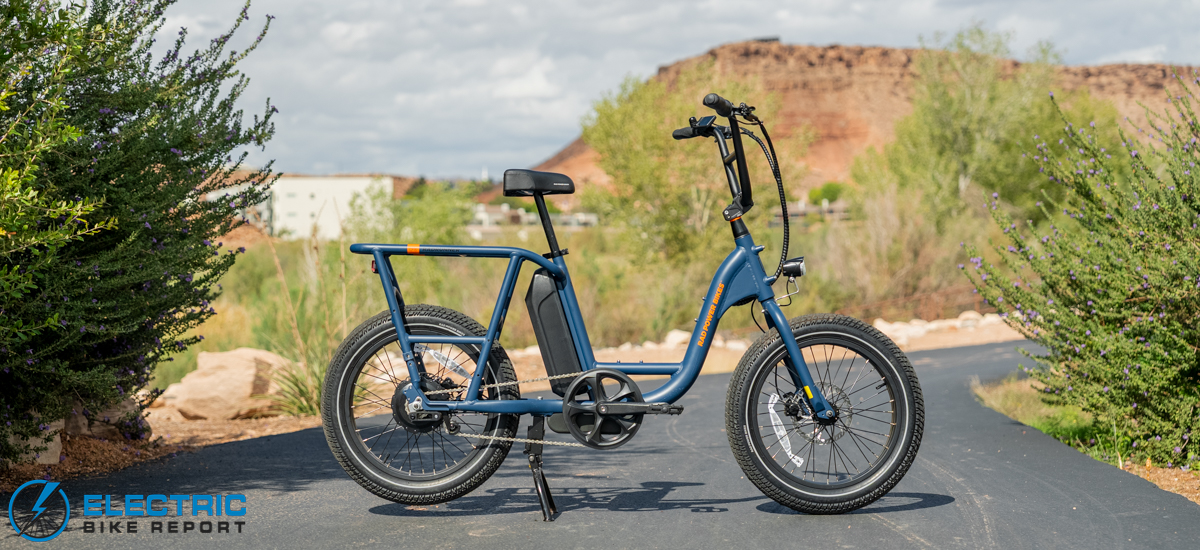
The RadRunner line of short-tail cargo/utility e-bikes is iconic.
Since the first model was released in 2019, the series has featured heavy-duty, accessory-compatible cargo racks and manageably-sized, easy-to-mount frames. When combined with the steady and approachable pedal assist Rad Power Bikes is known for, these features make all RadRunner models capable, reliable, and extremely versatile.
Along with the brand itself, Rad Power’s RadRunner line has gone through quite an evolution. Most recently, the company simplified its naming conventions and re-released its three utility models: the basic RadRunner we’ll focus on in this review, the upgraded RadRunner Plus, and the high-tech RadRunner Max.
Most similar to the former RadRunner 2, the RadRunner is an entry-level e-bike that prioritizes affordability; its roughly $1,500 price point makes it one of Rad’s lowest-priced e-bikes. Still, with a respectable 320-lb payload capacity, a robust 750W motor, and an easy-to-use interface & pedal assist system, it doesn’t sacrifice functionality.
With its re-release, Rad Power Bikes included a handful of performance, safety, and experience-enhancing upgrades on the RadRunner. The bike features a color display with a clean and straightforward interface, a Gemma hydraulic disc brake system, a fire-resistant SafeShield battery, and a new set of custom all-terrain tires.
We tested the RadRunner’s Class 2 speed capability, its maximum and minimum range potential, its hill-climbing performance, and its new brake system in a series of standardized tests. See our full review below to get the full scoop on Rad’s latest family- and budget-friendly utility e-bike!

Sponsor
E-Bike Category:Cargo/Utility
E-Bike Class:Class 1 (pedal assist to 20 mph)
Class 2 (throttle to 20 mph)
Class 2 (throttle to 20 mph)
Sponsor
Rad Power Bikes RadRunner Video Review
 Pros
Pros- The RadRunner is extremely easy to use. Its single-speed drivetrain requires no shifting, and its motor’s cadence sensor allows for near-effortless pedaling.
- The bike’s motor delivers steady and approachable power, making it feel both capable and controlled.
- It has impressively crisp, nimble handling as a result of its rigid fork, 20” wheels, and BMX-style high-rise handlebars.
- For improved safety, Rad equipped the bike with a potted Safeshield battery and hydraulic disc brakes.
- A price of around $1,500 makes the Radrunner one of Rad Power Bikes’ most affordable models.
- The appealing, easy-to-read color display offers appreciated features, such as maintenance reminders and a security pin on startup.
- The RadRunner is compatible with a huge range of optional accessories, from a passenger kit to pet carriers to cargo bags/baskets and beyond!
- The bike’s two color options (Classic Blue and Forest Green) add personality to the ride.
 Cons
Cons- The included saddle wasn’t our team’s favorite, but Rad offers three alternate options for purchase separately.
- While the bike’s programming makes pedaling easy, rebalanced power levels would make controlling speed easier when riding without cargo.
ELECTRICAL SPECS & FEATURES
- Battery: Safe Shield Advanced External Battery (13 Ah), 624 Wh, UL Certified
- Charger: 48VDC, 2 Amp Rad Power Bikes smart charger, operates on 100V-240V AC power outlets
- Display: Rad Power Bikes color display.
- Motor: Rear hub 750W 60 Nm
- Headlight: 40 lux 100 lumen LED headlight
- Taillights:Integrated taillight with brake light
- Pedal Assist: Pedal cadence sensor, 5 PAS levels, plus a zero assist option
- Claimed Range: Estimated 17-55+ miles per charge
- Throttle:Half-twist grip throttle
- App:N/A
- UL Certification:UL Certified to UL 2849 and UL 2271
Weight & Dimensions
- Claimed weight: 65 lb (29.5 kg), 55 lb (25.0 kg) with battery removed
- Tested Weight: 64.4 lbs
- Rider height range: 4’11”-6’2″ (150-188 cm)
- Total payload capacity: 320 lb (145.2 kg), 275 lb (124.7 kg) max rider
Components & Accessories
- Brakes:Gemma Hydraulic GA-950E, 180mm x 1.8mm, 6 bolt brake rotors
- Fenders:Available to purchase separately
- Fork:Rigid Steel Fork, straight, bolt on
- Frame: Aluminum
- Drivetrain: Single-speed, 52T chainring, 16T Freewheel
- Grips: Lock-on ergonomic comfort grips
- Saddle: Moped-style saddle with extra padding
- Handlebar: Aluminum, 27″ (68.6 cm) wide
- Kickstand: Dual leg, spring loaded, steel
- Pedals: Forged aluminum platform, CrMo axle with reflectors, standard 9/16″ x 20 TPI threading
- Tires: Custom Rad tire 20″ x 3.3″ with puncture protection and reflective stripe, Multi-surface tread pattern
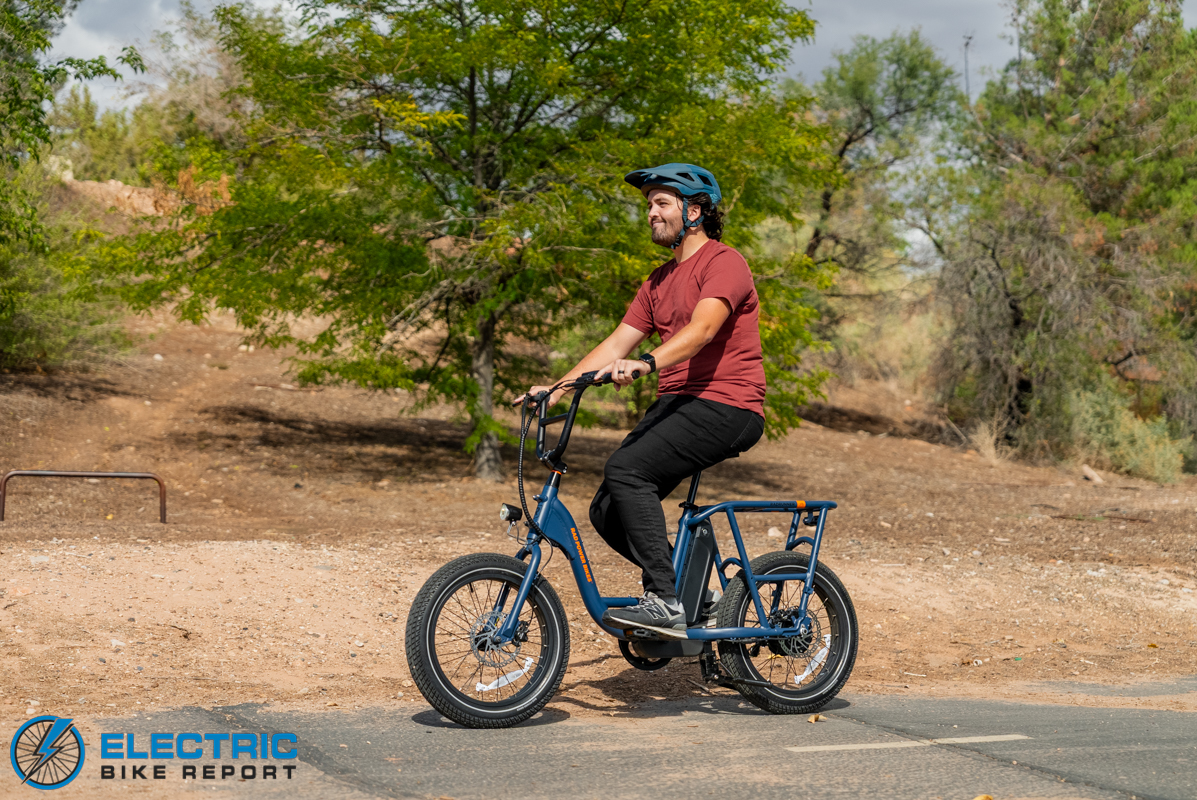
The RadRunner blends cargo-carrying capability with reliable power and predictable steering—a winning combination.
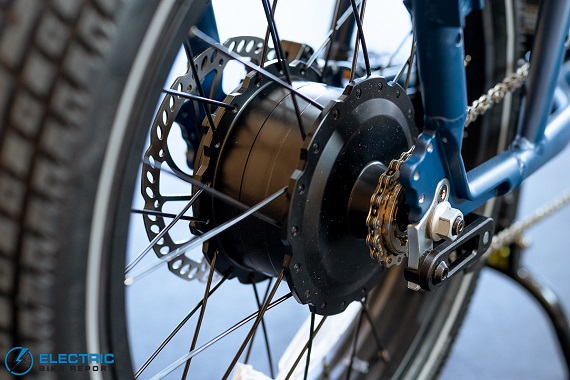
The bike’s 750W motor feels both powerful and controlled, making the ride easy and fun.
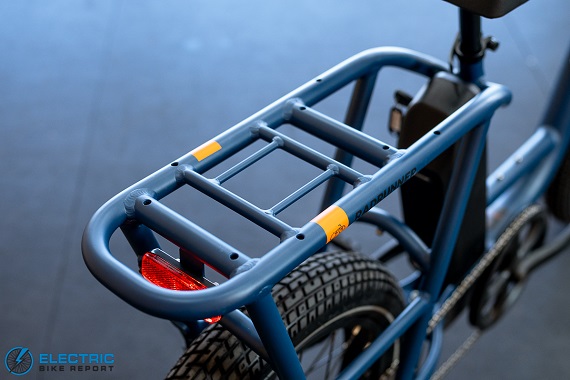
A frame-integrated cargo rack can carry up to 120 lbs, whether that be a passenger, a load of groceries, or just about anything else.
Rad Power Bikes RadRunner Review: Speed Test
As a Class 2 e-bike, the RadRunner has a maximum speed of 20 mph via either its throttle or pedal assist system (PAS). It also offers five PAS settings to suit different types of terrain and payloads of various weights. We tested the bike’s speeds in each assist level and its throttle acceleration while riding on a paved, shared-use path.
My results, which are also graphed above, were as follows:
- No PAS – 9 mph
- PAS 1 – 14 mph
- PAS 2 – 20 mph
- PAS 3 – 20 mph
- PAS 4 – 20 mph
- PAS 5 – 20 mph
Two details are important to consider when looking at this data. First, the bike’s display does not show tenths of a mile per hour; with more granular readings, I would expect some slight differentiation between the results of PAS 2 and PAS 3 based on feel.
Second, we performed our test on mostly flat paths when riding without cargo. These conditions allowed the motor to easily reach the bike’s top speed, but we would expect different results when carrying more weight or on a grade.
With these things in mind, we found the bike’s programming and power distribution to be functional, though a rebalancing that favors less power output would give more speed control to riders traveling without cargo.
Overall, though, we appreciated the RadRunner’s feel and functionality. Pedaling under power was remarkably easy, thanks to the bike’s cadence sensor; instead of delivering more/less power in response to harder/softer pressure on the pedals, the motor output was steady and consistent while requiring only that the cranks were constantly turning.
I found PAS 1 or 2 most useful when riding without cargo, and I only experienced the need to use higher assist levels when I encountered hills (with a single-speed drivetrain, the PAS settings function almost like gears). When riding on mostly-flat paths, I could cruise without needing to adjust settings, which made the RadRunner feel remarkably easy to use.
Its pedal assist system also felt responsive, with power that engaged quickly after only a quarter-turn of the cranks. This effectively allows riders to pedal without needing to rely on the throttle to get moving when stopped.
When using the bike’s throttle, its acceleration came on strong while still feeling under control. The RadRunner’s motor felt quite capable of moving a fully-loaded bike without being too punchy or fast, which matched our experience with previous bikes from Rad Power.
Overall, the RadRunner performed well in this test. It reached its advertised maximum speed easily while feeling safe and user-friendly, though some adjustments to its programming could allow riders cruising without power to have more control over their speeds.
Sponsor
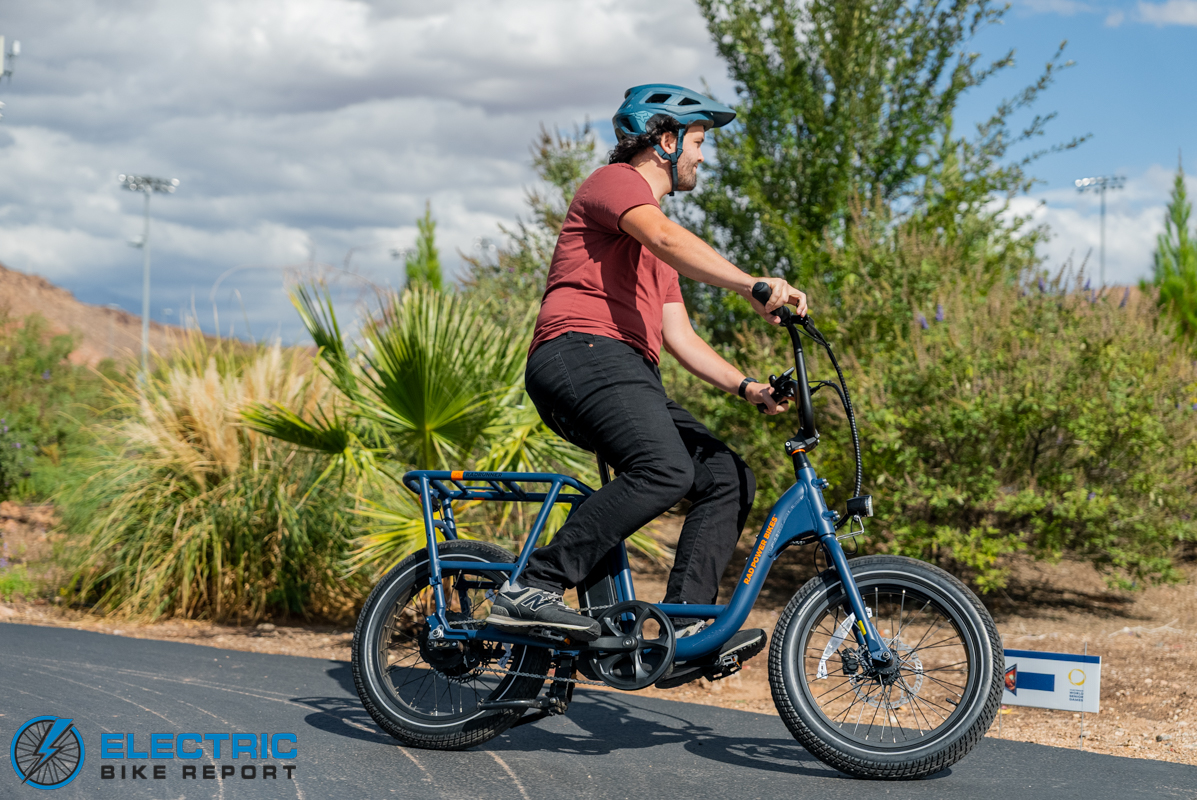
One of the RadRunner’s hallmarks is its nimble handling; the bike is zippy and highly maneuverable.
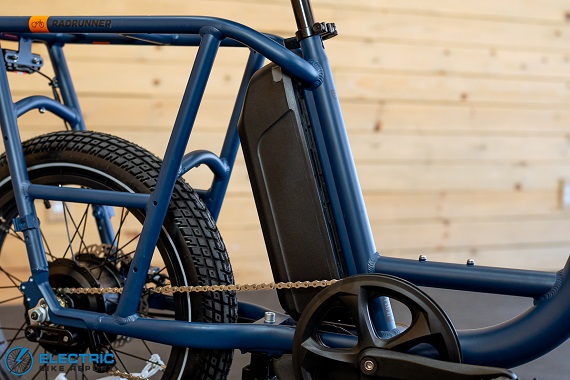
The removable battery uses heat-absorbing, resin-encased cells, making it fire resistant.
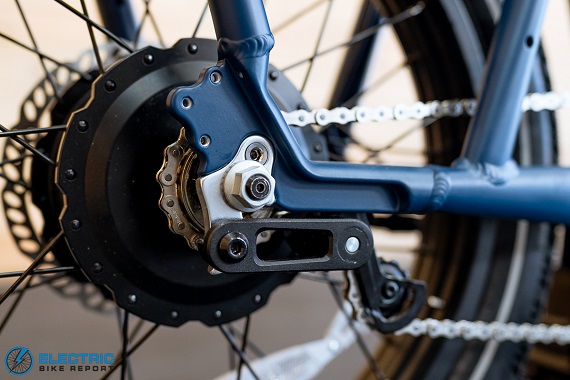
With a single-speed drivetrain, riders do not need to shift. Just hop on, select your power level, and pedal.
Rad Power Bikes RadRunner Review: Range Test
The RadRunner includes a removable, UL 2271-certified 624-Wh battery that Rad Power Bikes advertises gives the bike a range of 17 to 55+ miles. We tested the bike’s range using the method explained above. With results of 26.9 and 44.8 miles, our test riders exceeded the advertised minimum range but fell somewhat shy of the advertised maximum.
Both results are notably below-average when compared to similar e-bikes we’ve tested; a group of comparably-specced and priced models averaged 37.3 and 69.0 miles.
Two factors likely contributed to the RadRunner’s results. First, the bike’s battery is relatively small compared to those of its peers. Second, since it relies on a cadence sensor instead of a torque sensor (most similar models paired their motors with torque sensors that resulted in variable power output), its pedal assist system was less energy-efficient.
Case in point: the RadRunner expended 13.9 watt-hours per mile (Wh/mi) in its PAS 1 range test and 23.2 Wh/mi in its PAS 5 test. On average, similar models we’ve tested used 11 and 20 Wh/mi, respectively.
While the RadRunner is equipped with a 624-Wh battery, the comparison group carried batteries that averaged 732 Wh. This additional capacity, especially when combined with more efficient torque sensors, allowed the comparison group to stretch its battery charge across a greater distance.
Our tests suggest that riders could travel 13-14 miles on the highest power level before needing to turn around. Considering that most e-bikers we interact with tend to stick relatively close to home, we expect most RadRunner riders to be satisfied with our results.
It’s important to note that we performed our testing with no weight on the bike’s cargo rack; those carrying cargo or passengers should expect fewer miles. Still, our Speed Test indicated that those in relatively flat areas may not need to ride in the bike’s highest assist levels, so it’s conceivable that such users may find themselves on the high end of our results.
When recharging is needed, tThe RadRunner includes a 2-amp charger that can power up the battery in roughly 6.5 hours.
Sponsor
Sponsor
Rad Power Bikes RadRunner Review: Hill Test
Climbing power is essential when hauling groceries, kids, or other cargo, which is why we subject e-bikes to the Hill Test explained in the graphic above. The RadRunner completed our test in 2:01 on throttle power alone, while added leg power helped it complete a second max pedal assist test in 1:48.
For comparison, a relatively small group of similar models tested at our new Hill Test location, the Devil’s Backbone, averaged 1:49 on throttle and 1:50 when pedaling. As such, the RadRunner placed slightly below average in its first test and roughly average in its second.
While its results may not seem that impressive in relation to its peers, the RadRunner exceeded our expectations based on its motor specs. Like all models from Rad Power, the bike’s motor does not peak above its stated nominal 750W rating. This limits its climbing power but grants it the steady, safe, and controlled feel that we’ve come to expect from the brand.
In contrast, the motors on most of the bikes used for comparison could peak above 750W when climbing; they averaged a maximum of 1,029W. Additionally, the RadRunner’s motor produces up to 60 Newton-meters (Nm) of torque—a relatively low amount when compared to the 78 Nm average of similar models.
Why was it able to approach the average among similar models if its motor is less powerful? The answer likely comes down to weight; at around 64 lbs, the RadRunner is relatively light for its style. Similar models we tested weighed closer to 80 lbs, which meant that their motors had more resistance to counteract when traveling on an upward slope.
In my experience, the RadRunner handled hills with confidence, even if it was not a speed demon. The bike’s throttle carried me over a few intimidating hills without complaint. When pedaling, the experience was more active and engaging than riding on flat ground (my effort contributed more to moving the bike), but I never felt strained or tired.
It is again worth noting that we perform our formal testing without cargo for the sake of easier comparison. As such, the bike’s times/speeds would likely be lower when more of its payload capacity is used.
Still, this version of the bike was every bit as capable as previous iterations have been for us, proving that the RadRunner is a classic for good reason!
Sponsor
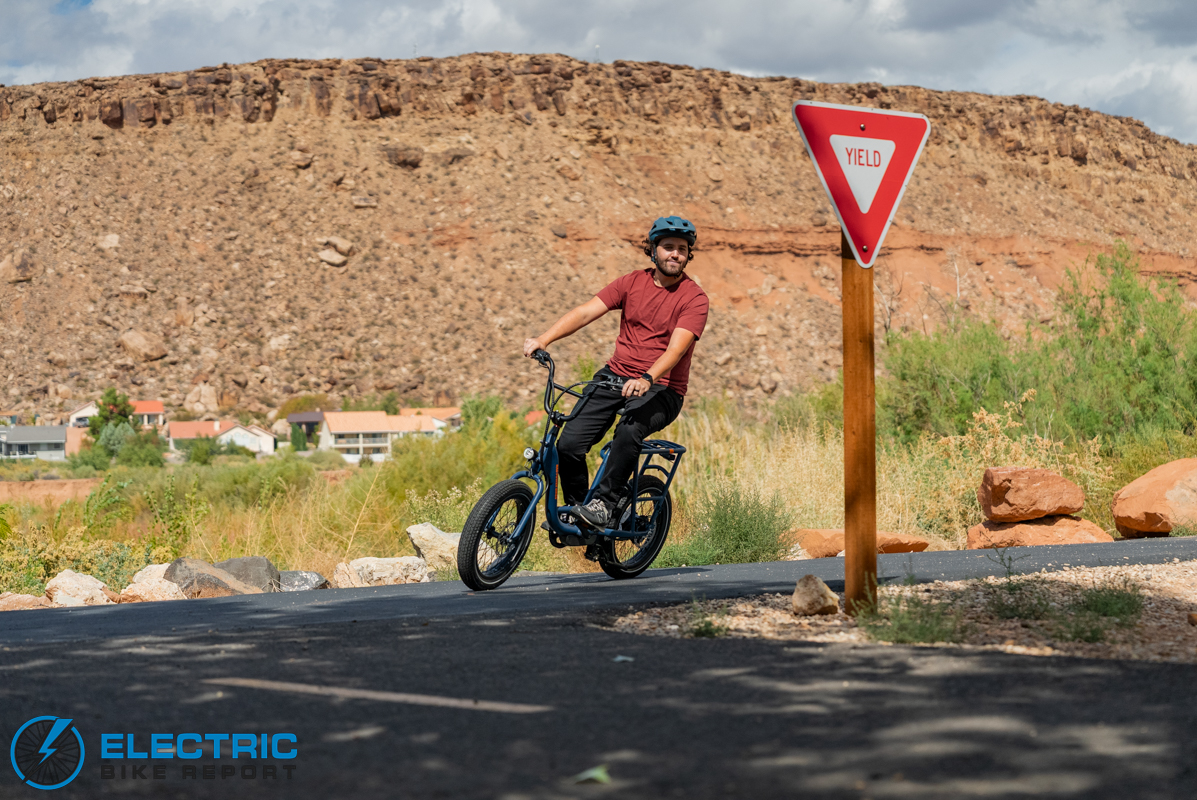
The RadRunner is a Class 2 e-bike with a 20 mph maximum speed with both its throttle and pedal assist system.
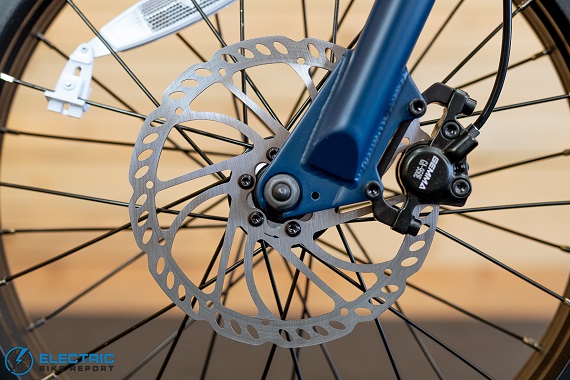
One of the RadRunner’s upgrades is a set of hydraulic disc brakes from Gemma.
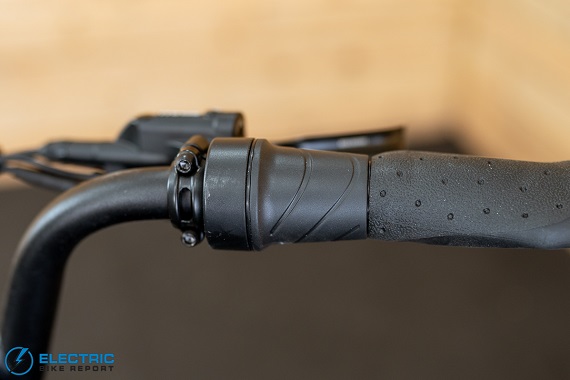
A half-twist throttle on the Runner’s right handlebar fits its vibe and feel.
Rad Power Bikes RadRunner Review: Brake Test
When we last tested a comparable RadRunner model, the RadRunner 2, the bike was equipped with mechanical disc brakes. These proved effective in our testing, but hydraulic disc brakes typically provide more consistent stopping force, better modulation over speed, and require less grip strength to engage.
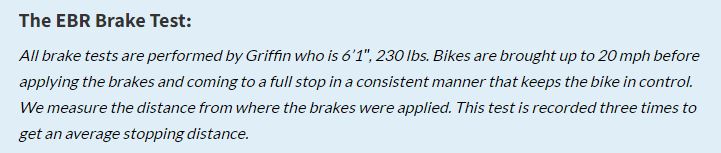
For this reason, we were pleased to note that the RadRunner included a Gemma hydraulic brake system, pairing two-piston calipers with 180mm rotors on both wheels. These brakes resulted in an average stopping distance of 20’ 6”, which is on par with similar models we’ve tested; these bikes averaged 20’ 4”. Again, we perform our testing with no added cargo.
In the context of our testing, average results are fantastic; they indicate that a bike is specced appropriately and able to match the performance of comparable models on the market. With this in mind, we’re extremely satisfied with the RadRunner’s results.
Based on my personal experience, I would not have been surprised to see shorter-than-average results from the RadRunner’s Brake Test. During my time on the bike, I noticed that its brakes felt powerful and extremely quick when bringing the bike from top speed to a complete stop. They felt safe and strong without seeming too aggressive.
With great test results and excellent real-world performance, we can confidently say that the RadRunner’s brakes are safe and effective.
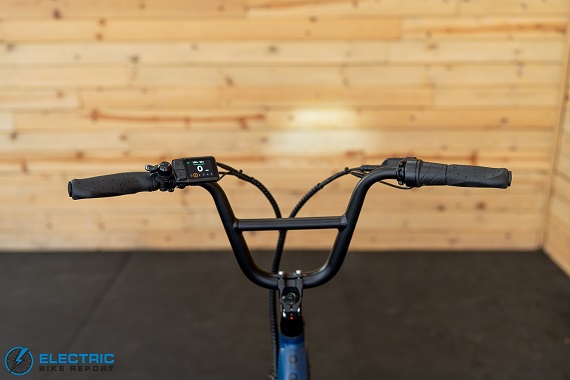
The Runner’s BMX-style handlebars are sturdy and comfortable, providing excellent steering control.
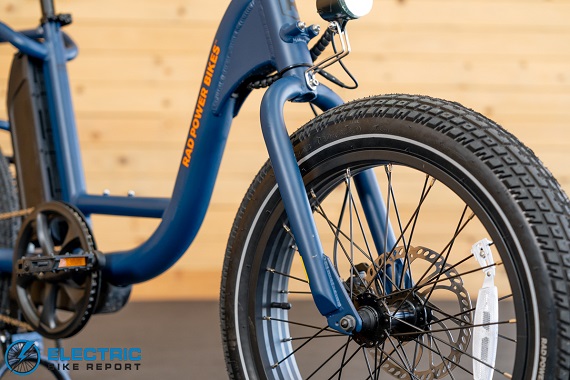
A rigid fork helps the RadRunner’s handling to be precise and predictable.
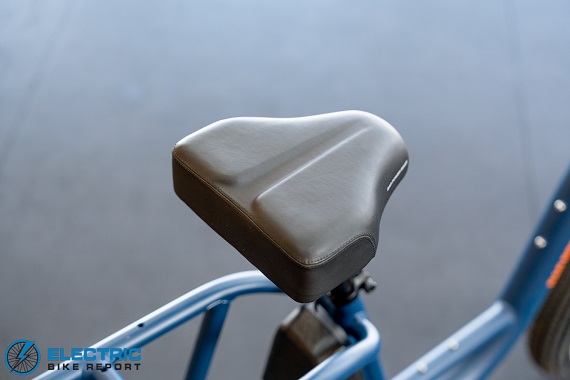
The standard saddle is relatively blocky. We’d likely swap it for a more traditional shape.
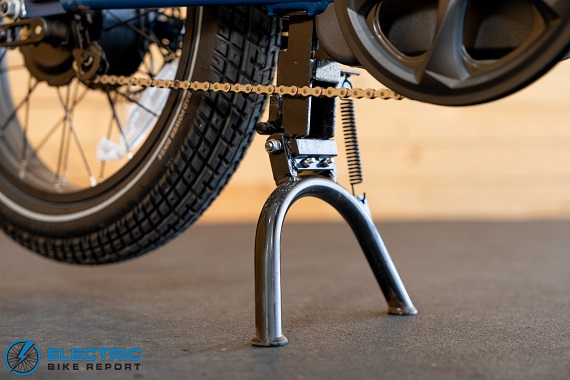
A dual-leg center stand helps keep the RadRunner stable when loading up.
Rad Power Bikes RadRunner Review: Ride Quality
As a measure of how a bike feels to ride, the topic of ride quality can be subjective, but we do our best to take an objective view during our evaluation. In general, the RadRunner’s ride quality was great, though we identified at least one area with some room for improvement.
Rad Power Bikes manufactures a single frame size for the RadRunner. Its long seatpost and combination of a threadless stem and BMX-style handlebars grants a relatively wide range of adjustability, making the bike suitable for riders between 4’ 11” and 6’ 2”.
At 5’ 11”, I found a generally comfortable fit, though I opted to set the saddle slightly lower than I usually do (when leg extension matters) so as not to make the handlebars feel too low.
I liked the overall feel of the handlebars and grips. They were comfortable and allowed for easy operation of the throttle and display/control panel, though I would have preferred lock-on grips to the movable press-fit variety.
The bike’s saddle has not changed much since the RadRunner’s release. While some riders may appreciate it, our team found its stubby wedge shape to be relatively uncomfortable on long rides. Fortunately, saddles are easily swapped, and Rad offers three other options with various shapes, thicknesses, and widths to accommodate other preferences.
I found the bike’s handling to be playful and quick; the bike’s relatively short wheelbase, rigid fork, and 20” wheels gave it a nimble and maneuverable feel. With no suspension, bumps were noticeable, though the RadRunner’s 3.3” wide tires helped to absorb bumps and smooth the ride.
Rad Power Bikes advertises the Runner’s custom tires to be suitable for all types of terrain. I was somewhat skeptical considering their textured but relatively smooth tread, but I was pleased to note that they performed well on dirt and gravel. Their width provides stability, while making it possible to ride with relatively low pressure to improve shock absorption and grip.
As I referenced earlier in this review, the bike is remarkably easy to use. Without the need to shift, it’s possible to set your preferred assist level, hop on, and ride. Operating the bike is simple; users need only to adjust power levels via the arrow buttons on the display, then pedal or twist the throttle to get moving.
Rad’s color display is another highlight; it presents well-organized ride data in an easy-to-decipher format. It also offers two appreciated features: an optional 4-digit security pin and maintenance reminders for the drivetrain, brakes, and tires. Owners can monitor the status of each individually or all three elements in one combined tracker.
As far as accessories are concerned, the RadRunner includes only the basics: the frame-integrated cargo rack and an integrated light system that incorporates brake light functionality. Rad offers a myriad of optional accessories to expand the bike’s utility, including cargo storage, pet carriers, seating options, and many others.
Overall, the RadRunner is exactly what it needs to be: simple but effective. It’s an entry-level e-bike designed to provide an easy experience for parents, errand-runners, leisure riders, and beyond. From our perspective, it fits the bill admirably.
Sponsor
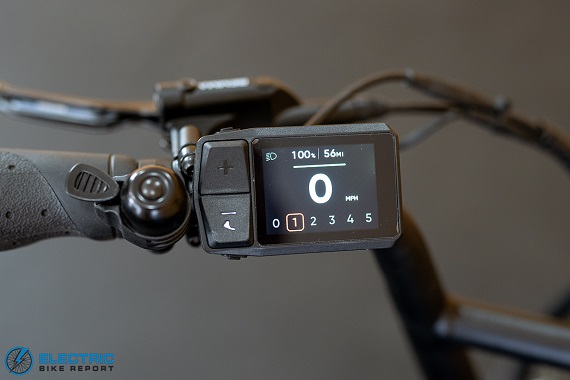
The bike’s display is well-organized and easy to read.
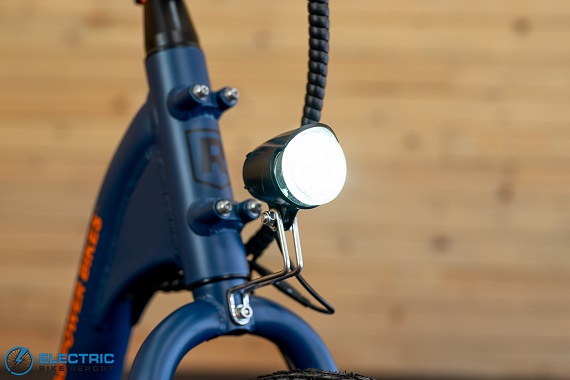
By default, the integrated lights kick on automatically in low-light conditions.
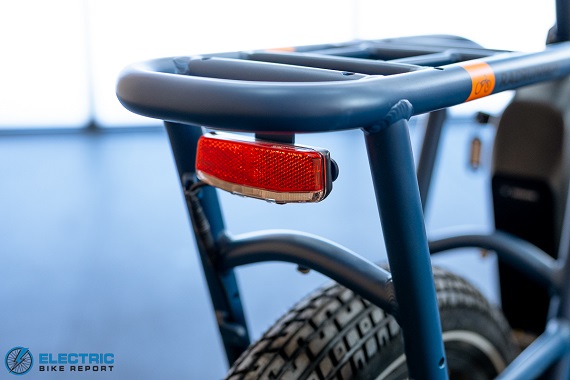
The Runner’s tail light functions as a brake light when the brake levers are squeezed.
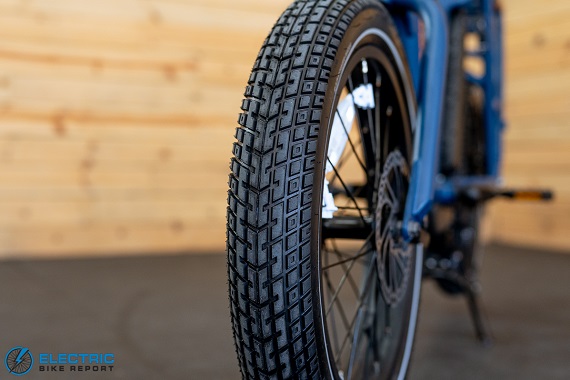
Rad’s custom tires provide stability and cushioning. They functioned well on dirt, gravel, and paved surfaces.
Rad Power Bikes RadRunner Review: Summary / Where to Buy
As the old saying goes, if it ain’t broke, don’t fix it! The RadRunner is—and always has been—a solid, dependable, and versatile e-bike for new and experienced riders alike. In its latest iteration, the entry-level version of the bike is more affordable than ever while offering practical upgrades that give its classic design more contemporary functionality.
Since the company’s founding, Rad’s mission has centered around encouraging more people to substitute their automobiles with bikes. With its ability to be adapted for various uses, its powerful but family-friendly motor, and its simple operation, the RadRunner has been instrumental in meeting this goal.
The bike generally performed well in our testing, though it showed some areas with room for improvement. We liked the Runner’s controlled and approachable power levels, its ease of use, and its capable motor. It comfortably met and maintained Class 2 speeds, it climbed hills effectively, it braked safely and reliably, and it provided usable, practical mileage.
In contrast, we expect the bike’s programming would feel better balanced when carrying cargo, but altered programming would be more user-friendly for those cruising without a heavy load. Additionally, while Rad offers a variety of saddle options for separate purchase, the standard seat wasn’t the most comfortable on long rides.
Minor flaws aside, we feel the RadRunner is a tried-and-true classic that is well worth its price. We’re pleased to note that Rad Power Bikes equipped the bike with useful, modern upgrades that include an ultra-safe battery, an effective hydraulic brake system, and a clean, color display with optional security and maintenance features.
As it stands, the RadRunner remains one of our most recommended e-bikes due to its steady, consistent performance.
Whether you’re a new rider seeking an affordable, safe, and fun family e-bike, a commuter looking for ways to spend less time in your car, or an aging cyclist wanting an easy-to-use bike that won’t strain your joints, we think you’ll appreciate what the Rad Power Bikes RadRunner has to offer.
Happy Riding! Make sure to let us know if you have any questions or if you think we left anything out in this review of the Rad Power Bikes RadRunner down in our comments section.
Sponsor
Sponsor
Reader Interactions
Comments
Leave a Reply




How about:
Company closing in 34 days
CEO position listed for termination
Active federal safety warning on batteries
No warranty support post-closure
Great bike and great value. I have the original roadrunner , and after almost five years the only problem I have had is the brake light has burned out. As a senior I always had to take taxi’s every where, the bike paid for itself in the first year. No more taxi’s! . I have heard that rad bikes is shutting down, hope not cause I will need replacement parts and add on’s .